
What was understood and what was lost over a decade
This is something of a long-time coming, a background project based largely on a series of video games that capture a now long-lost era of pop culture. An aesthetic that can best be described as urban neo-gothic horror. Video games that were edgy because they made use of what they lacked technologically, benefitting from sixth generation console limitations. Uglier graphics, standard definition resolution, subpar draw distances; video game developers and by extension many film and TV directors were between the word-of-mouth/magazine coverage era and the algorithm, ludicrous speed reactions. What am I getting at? Well, if you’re a regular subscriber or you tune in regularly to this blog you may or may not have an idea of the video games I’m about to bring up:
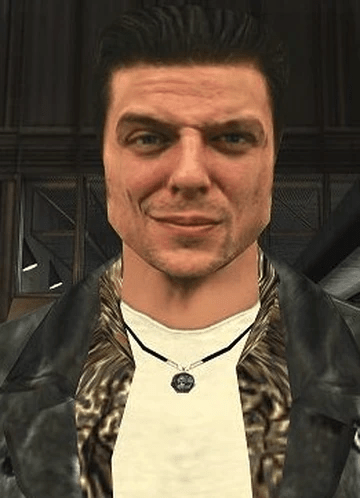
Yes, I have documented adoration for this series, but it doesn’t stand alone here. Max Payne is joined by a library of video games of this era, all of which were developed by different people, but could each sit neatly side-by-side with one another and none of them would feel too out of place. In fact, some of them overlapped. What are all these gritty, urban gothic video games with edgy horror undertones? In my list, they are:
- Grand Theft Auto III (2001)
- Max Payne (2001)
- The Getaway (2002)
- Manhunt (2003)
- The Suffering (2004)
I’ve written about all of these (sorta). And they’re all immediately contrasted with another edgy video game that fell flat, not just for me, but for a lot of critics. Namely, said video game is:
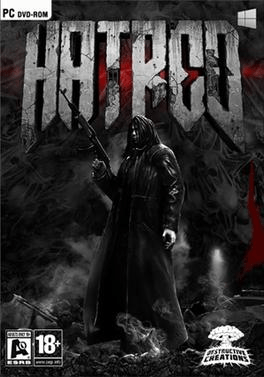
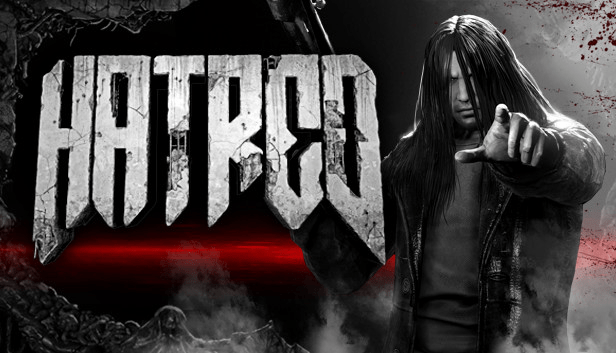
Released on June 1, 2015, it’s purpose was to strut around, catching controversy like it was a rare Pokemon. It instead got shunned for its shallowness and dirty gameplay instead. And we’ll bend it over and examine it’s asshole later. Right now, it’s gonna sit in the chair and think about what it couldn’t do.
Now to start this edgy analysis with a game I actually like:
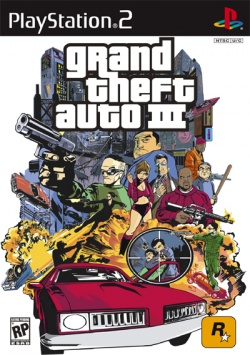
Intended to be even edgier than the final product, GTA III’s release and content were compromised by post-9/11 anxiety. Allusions to terrorist attacks and the light blue NYPD liveries were swapped for black like the police liveries of departments on the west coast these days.

NYPD patrol cars aren’t colored this way anymore.
The thing about GTA III that puts it neatly into this urban gothic box have to do with the atmosphere. Pull back from Claude and his mute visage, step back from the missions, the cookie-crumble cars, the enemies that can sleep you instantly. What does this rendition of Liberty City look like? Bleak? Industrial? Depressing? Careless in atmosphere? If any of these were your answer, congratulations, you see not an accurate rendition of a northeast American city, but a British interpretation of a northeast American city with Dundee, Scotland serving as influence.
Yes, really. Take a closer look at how things are spelled or said, and you’ll notice a bunch of Britishisms that slipped through the cracks of not just III, but the other two games too. To be fair though, DMA Design/Rockstar North relocated from Dundee to Edinburgh, but the Britishisms meld well with the backdrop of a city that sleeps on some of the most horrific crimes that can still happen in a modern city. The instruction booklet for GTA III as well as the box art had the taglines of “Worst Place in America” and “Lock Your Doors.”
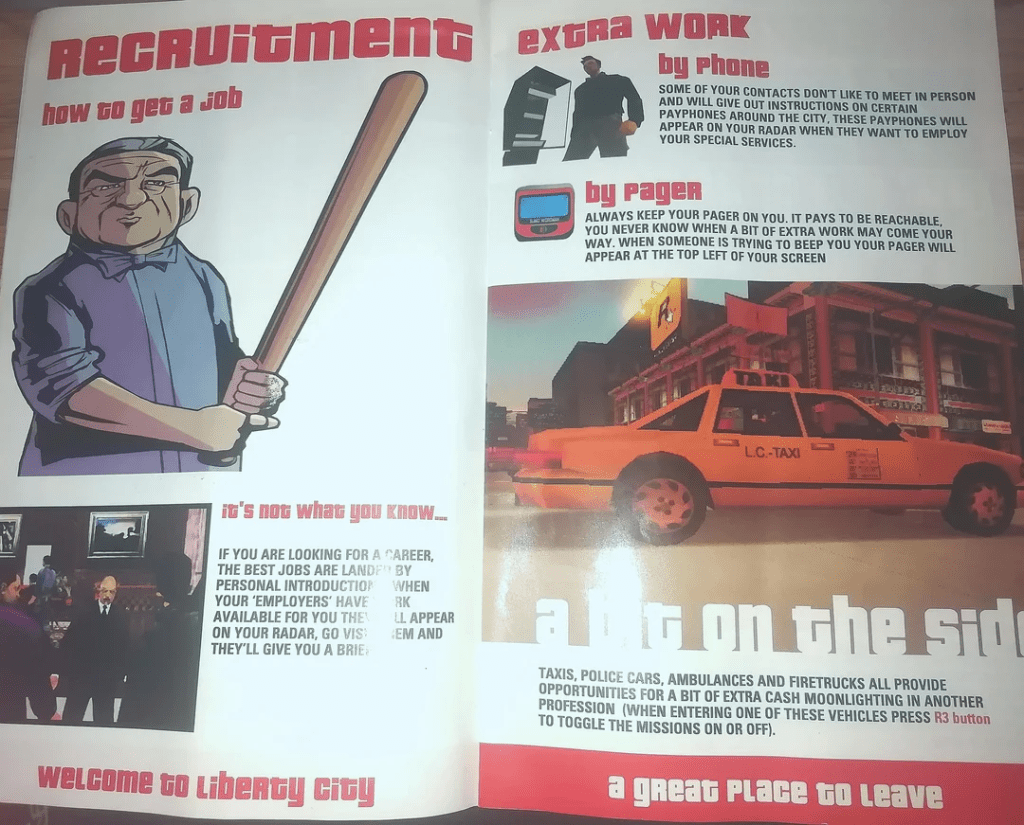
These British devs took the ever-loving piss out of American culture at the time, and they did it with a backdrop as menacingly hideous as the heavily-industrialized Liberty City. The underground gangster aesthetic, the rust of the Rust Belt creeping into what should be a rendition of the largest city in America, the grittiness of gangsta rap providing the soundtrack; GTA III is an ugly game, not because it failed at something but because it serves as a time capsule of the things regular media dare not touch looking as real as it could for 2001.
Picture this: it’s early November 2001. You and your mates hear about a new video game causing a stir, and you wanna check it out. Head to Blockbuster to rent it out, try it out a bit, have a punch-up with a gang, cause a brawl, get the cops on your arse, steal a car and try to book it, but you get busted or wasted.
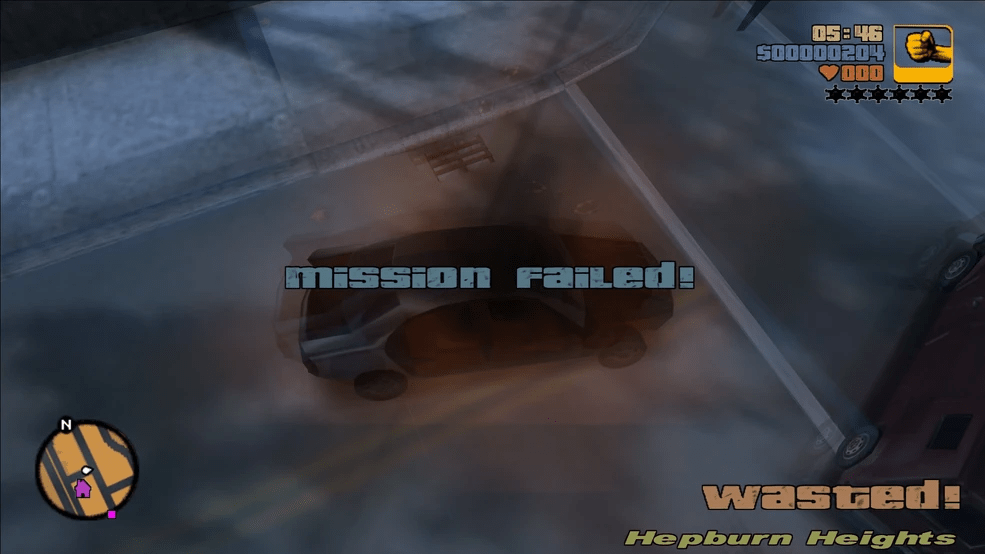
F[honk]king amazing, innit?
Even if you’re not a Brit or were even alive at the time, the era of slow gritty urban hellscape realism was utterly reliant on what the PS2, Xbox, and Windows XP couldn’t do compared to their… I’ll call it as I see it, their decadent descendants in the PS5, Xbox Series X, and Windows 11. The drawbacks of the sixth generation were a lot like the drawbacks of heavy censorship on TV. The FCC wouldn’t let us be or let we be we and tried to pull our shows off of MTV, so people weaponized it to creative degree. Longtime subscribers know that my favorite example of that is in Aqua Teen Hunger Force, supplanting the tinnitus-inducing bleep with any sound effect that can be found.
Now GTA III is still a darkly comical satire, but that’s what makes it matter alongside its descendants and contemporaries. One of which I’ve slobbered all over like a Hungry, Hungry Whore before, so let’s get a move on into:
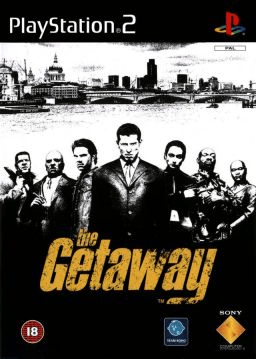
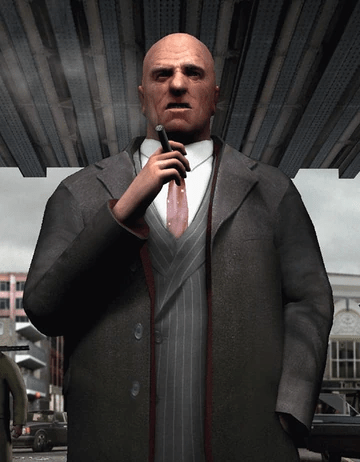
Now onto the one that not only makes sense to Brits, but to Londoners. The game that painstakingly took a sliver of the City of London borough and put it into a video game. What makes GTA III’s ugliness similar to The Getaway’s ugliness? Well, the urban gothic ugliness in this one is that of an ex-con jumping through hoops for an old racist tosser who just kidnapped Hammond’s boy. Charlie Jolson. The old bugger puts Mark through it, making him do his dirty work, and ultimately using that dirty work to double-cross Hammond by turning every faction against him. Without much to pushback against or even fight back, Mark had to fight forward at gunpoint. He doesn’t f[oi!]king want to, but what else can you do when a smoky old geezer with a double Churchill cigar threatens to throw your son’s corpse in the River Thames if you don’t do what he wants when he wants it?
Pulling back again from Marky boy’s desperate situation flipping London on its head, what comes to mind when you think of London?
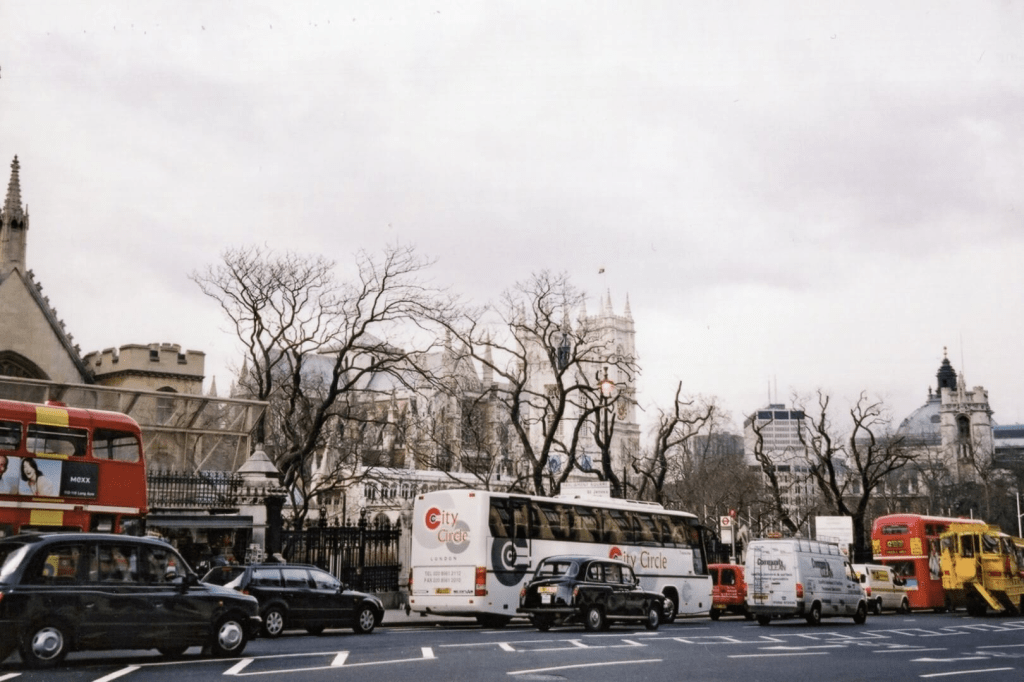
The geography itself already did the work for Team SoHo. Nothing much needed to change in the creation of the game, they just had to take what was known, add a little of what wasn’t well-known at the time (you wouldn’t believe how slow 2002 internet was T^T), remakes it into a cinematic British gangster set piece, and voila~! Urban British gothic crime story about a man who wants his boy back but has to play errand boy for the Grim Reaper in one of his uglier forms.
ಠ▃ಠ
If your first thought is, “Don’t trust this bloke to keep his word,” that thought should be amended to, don’t trust him to promise you a ham sandwich because the ham may not be.
Which certainly makes the bugger so much more of a compelling antagonist than a lot of others you fight or play as. Let’s not mince words here, Claude of Liberty City is an antagonist in roughly everything he does. His mutism came from a time before GTA had voiceable protagonists like Tommy Vercetti (remember the name) and Carl “CJ” Johnson, and worked to make him the venerable Ghost of Liberty City. Give him a gun and he brings you a graveyard. But that mutism has been sited as a drawback over the years. Only Rockstar can one-up themselves while perpetually asset flipping.
For Team SoHo’s Jolson, on the surface, he can pretty much serve as a force of will. He owns damn near the entire city’s underworld and his connection to the National Front, a British far-right neo-Nazi political party (one of a few far-right parties actually), means he knows how to finesse a narrative with the right framing device, namely Marky boy turning up and disrupting s[guns]t in Yardie and 14K territory. So this old geezer sends you on a variety of suicide missions and reneges at the last leg to flip the city’s underworld against you because he knew from day one you weren’t gonna be loyal. You scream at him from the other end of the receiver to release your boy, for God’s sake.
So what’s the urban gothic setting here? London. Enough said. It’s enough of a joke that the sun doesn’t rise or set in England anymore that the the Brits had to take a quarter of the world just to see it and gradually give it back piecemeal because they saw so much of it that it doesn’t interest them anymore.
But at least the Brits have seen and studied the sun, unlike the residents of this next game:

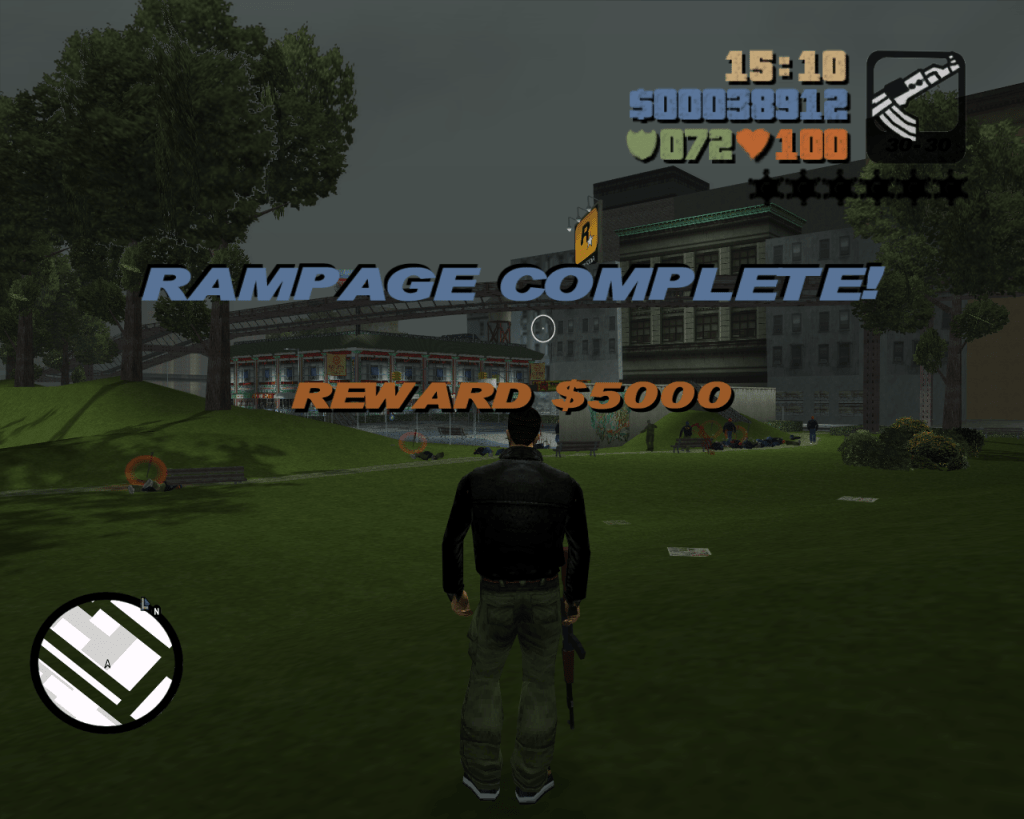
It’s dark, it’s nasty, it spotlights everything the contemporary media would get roasted for touching: psychopathic killers, skinheads, pedophiles, cultists, doomsday preppers; everything Rockstar got s[clang]t on by virtue of developing/publishing the GTA series and some of that wasn’t even part of the games! Only the psychopathic killers part and that’s because of the rampages.
Eminem – Without Me plays in the background.
But the GTA series made the rampages ridiculous. Outside the plot of the games being isolated to their own games, sometimes connecting over the course of the 3D era, sometimes Claude, Tommy, Carl, Toni, or Vic could find the skulls and just let ‘er rip.
Manhunt forces you to think. You’re not Superman, you definitely do not fight for truth, justice, and a better tomorrow. You’re trapped in a snuff film you were coerced into after your execution merely puts you to sleep for twelve hours. The director, Lionel Starkweather’s main mission statement is to film you torturing people for survival and sell the tapes on the dark web as James Earl Cash, the star actor killing for sport. Each kill stylistic, each enemy type nasty and irredeemable, even Cash is essentially a forced serial killer. He starts off on death row, clearly he was an asshole if he got that far.
The setting of Carcer City is essentially the deepest, darkest pits of the Rust Belt heading towards its most logical conclusion. A taste of Ragnarok without Fimbulwinter’s prelude — by my estimate, that already happened in Max Payne. The city is dirty and so are the people who merely exist to overfill three graveyards… and there isn’t a mass shooting or genocide angle to it. That comes later.
Wait your turn, Jeffrey Cuddletrousers!
Cash doesn’t wanna spend another second in what is definitely even worse than Claude’s Liberty City. There’s a neo-Nazi and a pedophile around the corner and who knows what they’re gonna–well, we know what they’re gonna do. And that’s why this one also works. Liberty City is dark and industrial, The Getaway takes you to the side of London that the city doesn’t want you to see, and Manhunt makes you a participant in its illegally dark game.
And the last urban gothic horror set piece is set in a prison in a state that has an honestly untapped history:
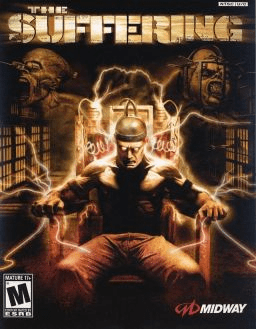
Tapping into the history of Maryland from colony to slave state to a section of its corrections department letting psychos run the POW prison all contribute to a system so broken, the dead thirst for vengeance and violence on anything still breathing. Torque’s personal hell is preparing for the electric chair after supposedly murdering his family in cold blood, but possessing no memory of the deed, which is something the Gods of Olympus wouldn’t let Kratos have.
She tried to meet him halfway, but Zeus blocked her every chance he got.
Carnate Island’s Abbott Prison has all of Maryland’s history, short of the local Amerindians that were there when Europeans arrived. An interesting thing to realize is that Maryland’s slave state history is acknowledged in this game, but feels noticeably invisible compared to the rest of the south including its immediate neighbor and everywhere else. Weird geography, border state, sent men to fight the Confederacy while being a slave state itself, and one of several POW camp sites in World War II come together to unleash a true force of Hell on Earth. Even without the lore dumps explaining aspects of the prison, the obsolete execution methods, or infamous inmates and prison guards, the world of Carnate Island is disastrously meaningful. It’s not just a prison of nightmares, it is the prison of nightmares, yours notwithstanding.
Now, I’ve been edging and teasing this the whole post, but it’s time to get it out of the cuck chair and give it the explosion it needs. Get over here, Hatred. Come to the whipping stockade.
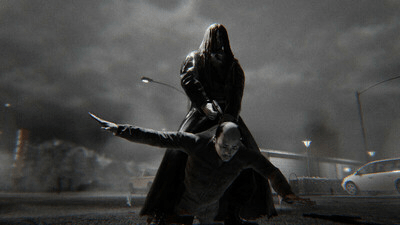
Do you wanna know why I hold the other games in higher regard or near-reverence compared to Hatred? They used the environments to tell a story. Liberty City is dark and gritty and was built on more than just dead bodies. It keeps generating bodies to kill and not all of them are Claude’s doing. London’s gray atmosphere was just a snapshot of the actual city doing much of Team SoHo’s work for them, they just had to build the game around that. Carcer City is one of the last places I’d wanna be dropped into. And if I break the law in Maryland and they send me to Abbott, then I may as well either tunnel to China or just hang myself to save the monsters the trouble. Hatred doesn’t do any kind of worldbuilding or humanizing, it shows you how the game runs, puts you into the killer’s nihilistic combat boots and orders you to gun everything down from the concrete upwards. This Zero Punctuation review says as much:
Channel: The Escapist
So did Extra Credits.
Channel: Extra Credits
The latter of these argues that Hatred was less about edginess and more about sadistic tendencies. Not my thesis, but not one that should be swept aside either. Edginess just because is my thesis here, and the two can work in tandem as theses. The other games brought urban gothic aesthetics to life by way of the setting. Liberty City takes the ever-loving piss out of American culture from a limited lens; The Getaway pays homage to British gangster cinema; Manhunt delves into how far violence can go before it becomes meaningless spectacle–and it’s pretty naked with it; The Suffering turns yesterday’s sins into today’s real-world fears.
Even Downfall and American History X go into tired Nazi officials monitoring Hitler in his final days and cataloguing hate group pecking order mentality respectively. Select video game levels, like “No Russian” in Call of Duty, are controversial because of what they depict, but I argue necessary to cement what kind of antagonist Vladimir Makarov is and how far he’s willing to go to enact a cause. A Russian irredentist who manufactures a casus belli for all-out war, and CoD is a military shooter first.
Hatred is void of any of that. It doesn’t give me anything to laugh at like GTA III did, anything to look forward to like Max Payne does every year I play it, or The Getaway for that matter, it doesn’t make a spectacle of even its core mass shooter function, and it doesn’t have centuries of horror to provide the backdrop like The Suffering. It just stands there with loose-ass underwear dumping turds in between the holes and pretending that they’re part of it all. Having said that though, Hatred is unapologetically honest about what it is. Whether the devs had quality or shock value at the forefront, it does its job better than other games of this ilk, namely propaganda games. Hatred is at least an entertainment product that functioned as a mediocre product.
Propaganda games, if you haven’t heard of them before this, are merely recruitment tools. There’s some that don’t mean to do harm like America’s Army: Proving Grounds and there’re games like Ethnic Cleansing and ZOG’s Nightmare, both put out by separate but equally appalling programmers for white nationalist, neo-Nazi causes. This post proves that I like edgy content, but Hatred is a failure of meaningfully edgy content and the other two are the other two.
Content aside, the thing to note about all of these games is that they were time capsules of the grisly urban gothic setting they encapsulated with all the slow-crawl media frenzy Streisanding them to fame and fortune. Hatred, I had only learned about after a WatchMojo video showcasing 2015s Worst Games and the other two came from a different top 10 list on the worst games to ever exist or in another Extra Credits video on Propaganda Games, and ZOG’s Nightmare was obviously on the extreme end. From least to most provocative: America’s Army: Proving Grounds; select video games put out by governments to steer its users to the ideal conclusion (Pathways knows what it is), and the white power video games that, racist content aside, are largely unf[nein]king playable. One could argue it’s a psyop these days, and my research on these modern neo-Nazis shows how dumb they and their efforts are.
Make an edgy game if you wanna, everyone always does, but it’s better to give it substance it can thrive on then caricatures it can weaponize without much else to serve the game-world.

