If you’re a regular viewer of The4thSnake and you follow his opinions on the HD continuation of the Mortal Kombat franchise or you simply keep tabs on WB Games and NetherRealm Studios, a conclusion you can draw is that the games started to get… complacent and stick to familiar angles come MK11.
What was understood and what was lost over a decade
This is something of a long-time coming, a background project based largely on a series of video games that capture a now long-lost era of pop culture. An aesthetic that can best be described as urban neo-gothic horror. Video games that were edgy because they made use of what they lacked technologically, benefitting from sixth generation console limitations. Uglier graphics, standard definition resolution, subpar draw distances; video game developers and by extension many film and TV directors were between the word-of-mouth/magazine coverage era and the algorithm, ludicrous speed reactions. What am I getting at? Well, if you’re a regular subscriber or you tune in regularly to this blog you may or may not have an idea of the video games I’m about to bring up:
The final part of this Legacy Video Game Trilogy concludes with a hard reboot that still has the sensibilities to pay homage to the most awkward yet charmingly nostalgic part of its existence. So to recap: MK Deadly Alliance gave us an ungodly pairing in the two sorcerers Quan Chi and Shang Tsung, whose combined strength and abilities gave them the leverage to revive the Dragon King’s Army and wreak havoc on all the realms, without Shao Kahn f[screams]king them over or Liu Kang stopping them.
Not without Raiden’s intervention and before I continue on that, I had time to watch some MK 4 endings and in both Raiden’s and Fujin’s endings, Raiden accepts ascension to the position of Elder God while Fujin replaces him as Protector of Earthrealm. Raiden chose him as a successor and Fujin accepted it. But in Deadly Alliance, Fujin doesn’t appear until 2006’s Armageddon. Plot-hole? Not so. On the production side of things, the devs didn’t think Fujin had the recognition and popularity as the Thunder God so they put him back in this game in arguably one of his better looks.
What I’m about to bring you is a video game series that is completely out of season and extraordinary mainly because of the team that developed it: The Suffering and its sequel Ties That Bind.
Yeah, I wasn’t kidding about it being a Midway game.
With more time and care, these could’ve helped the old games
This post was originally supposed to be about different archetypes in anime, though I’m delaying that to sometime in December as I don’t yet have enough research to discuss those in full detail. This week, however, I’ll bring up something that has crossed my mind before, but not with enough frequency to expand upon: forgotten plot points from the 3D Mortal Kombat universe.
The original idea came from a MojoPlays video that I couldn’t f[head rip]king find until a few minutes before writing this because I misremembered the title. Abandoned Story Threads instead of Forgotten Plot Points; potato, potahto. Either way, the video can be viewed on the MojoPlays channel through the link below.
Credit: MojoPlays
The gist of the video is that throughout the series, the Mortal Kombat games have introduced plot points that were about to heat up only for the devs to go in a different direction. With over 30 years out on the market, you’ve got your pick of the litter to choose from. For this week, it’s the 3D games from MK Deadly Alliance to Armageddon. Here’s the f[scream of pain]king short version: starting with Deadly Alliance, Quan Chi escaped from a fiery ass-whoopin’ at Scorpion’s hands, discovering the Dragon King’s “undefeatable” army in the process and bringing these mummified warriors to Shang Tsung where they formed a bond based on ignorance.
Context:
Channel: Kamidogu
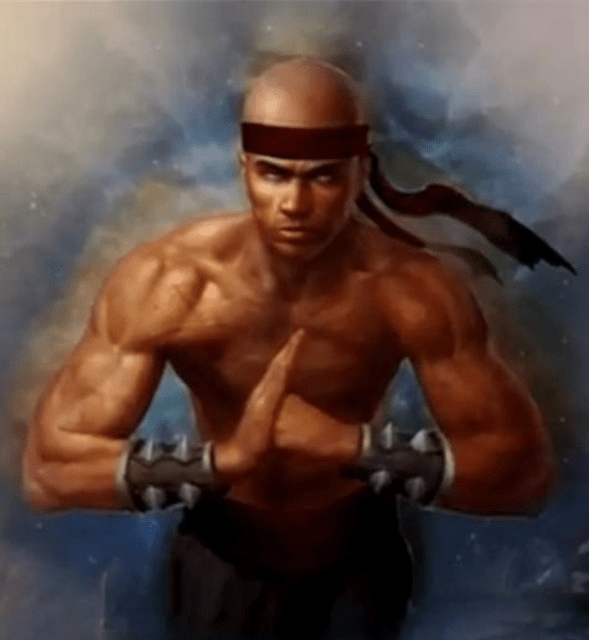
After the Deadly Alliance is formed, they remove all obstacles that would block them from ruling all existence. Not happy sucking up to Shao Kahn for millennia, they kill him in his throne room then make their way to the Wu Shi Academy where Shang Tsung finally gets to consume the soul of the greatest warrior in Mortal Kombat History: The Great Kung Lao I mean, Liu Kang!
OGs can’t be beat!
So with Liu Kang and Shao Kahn dead, they operate a tournament under false pretenses in Outworld and use the defeated to return the mummified army to life with the goal of marching on Earthrealm with malicious intent. Raiden saw this from the heavens and organized the remaining warriors across the realms to stop them. Fun fact, you can find archived websites and forums debating the plot points of then-upcoming games, like this website MKSecrets.net, which for some reason still looks like it was made in 2001 even though it has details on MK1 (2023)… I thought that was most Japanese websites…?
Anyway, MK: Deception picks up from the premise of Deadly Alliance only the sorcerers were too powerful for all of the warriors (could’ve probably sent them all as a group, but MK9 proves that that wouldn’t have helped much) and so at his wits end, Raiden challenges them himself. Not even a thunder god could defeat the sorcerers and realizing that their goals were nearly complete, what was left was the amulet Quan Chi stole from Shinnok in MK4. He hangs onto it defeating Shang Tsung in the process, only to have Onaga reborn (hinted at from Reptile’s ending in the last game) and return to reclaim the army that the sorcerers so generously returned to life with the souls of conquered fighters.
All three men realize that danger was marching towards them and while they managed to temporarily hold them back, Raiden uses a last ditch attack on the Dragon King. It failed to even scratch him and he grabs a hold of the amulet which will be needed to form the six Kamidogu into a single entity.
Channel: MKIceAndFire
As for how Onaga acquired the Kamidogu, well it involved tricking a young boy named Shujinko and leading him across reality by the nose for 40 years. If this game were canon, that would’ve come back to bite Onaga in the ass, only for Shujinko’s efforts to go unrecognized as redemption and still get punished by a Dark Raiden. This will become important later.
Shaolin Monks was a bit of a beat ’em up remake of MKII (kinda) and I’d already talked about that before, so we’re skipping it considering it has nothing to do with the 3D trilogy anyway.
Armageddon was supposed to cap it all off and the more I’ve thought about it, the more it felt like a final send off before Midway got the crappy ideas out of the way in time to file for Chapter 11 bankruptcy in 2010.
Let’s not be too harsh though, it did help pave the way for the Injustice line.
Story-wise, the protector god of Edenia, Argus, is made aware that between the actions of the sorcerers and Shujinko being duped for that long, the warriors of the realms were learning more about the construction of the realms than the Elder Gods would be comfortable with and proposed to Argus to come up with a solution. He suggested total annihilation to protect the realms from their own residents, but his wife Delia suggested depowering them all since there were many heroes who fought tooth and nail to defend the realms from evil, not the least of which was Shao Kahn and Shinnok (whom we learn later was banished to the Netherrealm for eternity for treachery, leaving Quan Chi to do the heavy lifting through the Brotherhood of Shadow).
They’re granted the power to do this and choose to do so by making a competition of things for their sons Taven and Daegon. If things went to plan, the two men would engage in a friendly competition, grab their weapons and armor and race to defeat their mother’s firespawn (half-brother?) Blaze to achieve full godhood as both of them are demigods. In reality, the two brothers, under the watchful eye of a pair of dragons, Orin and Caro, are set on a different path. Caro, who was the guardian dragon of Daegon, lost contact with Blaze believing it to be an early sign to set him on his path. Instead, Daegon forms the Red Dragon clan in Caro’s name and signs off on unethical science experiments for the purpose of choking existence into coughing Blaze up. The way its presented makes me think of Unit 731 in Manchuria and its surgeon general Shiro Ishii. If you don’t know, look it up at your own peril.
This makes Daegon the antagonist of the Konquest mode and through no fault of his own Taven loses sight of the purpose of his quest. And his frustration and confusion at this whole course of events is best reflected at the several times he’s questioned and even considered abandoning ship. The quest stopped being fun for him as he lost the things he cherished. Blaze appeared at the end to catch him up to at least what the true purpose of the quest was and Taven is a hero if we compare him to the Ancient Greek model similar to Perseus or Theseus. Self-serving at times, but the guy still knows the difference between good and evil. Daegon’s descent into evil seems random until he learned that he was supposed to lose the quest and decided to take matters into his own hands, hence the birth of the Red Dragon.
Dropped and abandoned plot points are still a problem for the series as it’s developed a reputation for introducing points and leaving them to collect dust. We barely get five minutes with the concept before the devs (read: Ed Boon and John Tobias) moved onto something else. You could say the fandom is also to blame for this as dedicated fans have asked (demanded) the team to release canonically deceased characters as DLC, but staying with the 3D games where the problem expanded, there’s more to say about it during this era than anywhere else in the series.
Starting with Deadly Alliance, Shao Kahn was established to be killed in the intro to this game, with Deception and Shujinko’s story acting as a prequel taking place some years before the events of Deadly Alliance where it all converges. Shujinko himself was invited twice by the White Lotus Society and later by Shang Tsung himself to represent Earthrealm in the tournament but couldn’t attend for different reasons. The White Lotus got tired of waiting for him to power up (never mind that the tournament is hosted every 50 years) and due to his cleansing journey with Nightwolf, he had to go back to the Netherrealm to gather more hatred, from none other than the ghost of Hanzo Hasashi.
This part doesn’t necessarily screw around with the timeline as egregiously as following plot points, but Armageddon is where it all breaks down. Canonically dead characters are resurrected off-screen and based on what we know we can connect the dots, but often the devs are a bit cagey when it comes to showing how, who and/or why characters are returned to life. The 2011 continuity shows that Quan Chi has brought Noob and Sindel back to life and claimed the souls of those killed by Sindel herself in the eleventh hour, but it’s not shown whether he brought Shao Kahn back to life or if he did why he’d do so, or even why the rest of the villains would agree to this arrangement.
Channel: BruskPoet
I’m not saying this moment in the story is bad, I like it a lot. But the nonexistent explanation for how all this can come to be is what sours me on it somewhat. I’d say there’s no care for a consistent timeline especially in a fighting game (something that doesn’t escape Tekken), but I think it’s more along the lines of the devs wanting their personal favorites to shine brighter than the others, which is why the franchise works better as video games and toy lines than it does movies.
Most of the time…
For what it’s worth, the characters have been mostly consistent with a few touch ups here and there, but if you ask people like The4thSnake, there’s a lot under the hood that could use some light to heavy rewiring from individual characters to whole ass f[swords clashing]king plot points, like what I’ve been writing about here. I’m a bit torn personally, because it brings a charm not found in other series, but this many plot holes treats the timeline like a redheaded step child. Doesn’t stop people from trying, as I’ve stated before, I rewrote MK: Shaolin Monks myself like it was Dragon Ball as that was what I was watching at the time.
Why bother with the 3D games, though? Well, of all the plot points introduced and left by the wayside, the 3D games did it the most and the worst of any other era, which seems to be the result of developmental inconsistencies prior to release on store shelves. It certainly hasn’t stopped people from trying though and it likely will keep going for as long as there is a Mortal Kombat to fix. Nothing too serious at this point, but it’s both fun to expand on what was and offer critique for one of the series most tumultuous times in its history.
About two weeks ago, a teaser was released for the next installment in the Mortal Kombat franchise slated for released in September of this year. The gist of the teaser was that post MK 11 Aftermath, there’s a new timeline and therefore a new god because Kronika and her merry band of lackeys have been defeated or written out of history as to not muck anything up like they did the first time.
In spite of what I wrote above, the announcement doesn’t reveal much, though it still requires a general knowledge of the plot line of the games from 1992 to the 3D era of the 2000s for why it was soundly rebooted in 2011 and the timeline post-2011, both of which I think I can safely say I have knowledge in.
To set a primer, Ed Boon and John Tobias began working on a fighting video game with digitized sprites for the actors in 1991 for arcades. A small team of programmers, actors with an intermediate or advanced knowledge of martial arts, and a marketing team brought the dream to light, but with a twist: blood. Unlike other video games like Final Fight or Streets of Rage or more appropriately Street Fighter, Mortal Kombat got grizzlier with the inclusion of blood and the option to kill the opponent in the ring by dismemberment
In the era where video games were the same as children’s toys, Mortal Kombat and Night Trap, a video game released the same year as MK, were the subject of intense political debate over what is appropriate for a child to see in fictional media. You and I both know that try as one may, there’s no realistic way to imitate the exaggerated violence seen in a video game, but nevertheless the extremeness in the game led to the creation of the Entertainment Software Rating Board or ESRB.
The ESRB is responsible for the guidelines for parents when it comes to purchasing video games for their kids. When it was created, most adults rarely played video games, or aged out of it with time (not including parents), and were likely to be unaware of what was in the game. But with a specific letter marking on the cover of the box, a parent can best determine what their child can play on paper. In my experience, it takes a trusting or admittedly negligent adult to let their child get away with playing something like GTA or Call of Duty, a problem that persists even now.
Still, whatever would come out of these government hearings on interactive entertainment wouldn’t matter much to gamers and arcade goers of the time. The controversy and the marketing worked wonders that Ed Boon and Midway Games could make more sequels in the 1990s and eventually get the games on home consoles when Mortal Kombat: Deadly Alliance was given its’ own spotlight during E3 2002.
As for the plot of the Midway Games, the evil emperor of Outworld Shao Kahn has absorbed another realm into his empire and has his sights trained on Earthrealm. The Elder Gods put their foot down and give the realm a chance to fight back through a tournament. Over the course of a millennium, 10 consecutive tournaments are meant to take place with the last one determining the fate of the realm. Shao Kahn’s representative on earth is a sorcerer named Shang Tsung who has the power to take souls and replenish his youth. Basically, he’s immortal, and every time a fighter dies in the tournament he takes their souls, though he has different methods of stealing souls if he wants to (and he always does). The tournaments are spread out over the course of fifty years, which means theoretically someone can fight in two tournaments if they’re healthy and lucky enough to live to be that old.
MK 1992 begins at the 10th tournament, and the final boss of the game is Shang Tsung who additionally can shapeshift. I have fond memories of this levitating old man transforming into the sub-boss Goro while I was playing the game in the Midway Arcade Treasures collection.
But when he does lose, the character Ed Boon et al determines to be the default protagonist, Bruce Lee clone number 1009 Liu Kang is chosen to be the champion of Mortal Kombat. At the same time, Shang Tsung is reprimanded and demoted by Shao Kahn who decides to take matters into his own hands and becomes the final boss of 1993’s Mortal Kombat II, complete with a larger cadre of characters representing Outworld and Earthrealm.
History repeats itself and the heroes soundly defeat Shao Kahn, but the power hungry emperor isn’t done yet. By 1995’s Mortal Kombat 3, the man is desperate to have Earthrealm in his expansion pack, and at the risk of sounding like a cheerleader for several historical conquerors, Shao Kahn could’ve studied the techniques of Alexander the Great, Napoleon, and militarily Adolf Hitler to learn why throwing your men at the frontlines like this doesn’t work or what worked for the defenders at the expense of the invaders, but then again, Shao Kahn has almost always been a one-track conqueror. Even a little bit of credit is too much for a character like him.
By 1997, Mortal Kombat 4 played with 3D graphics to give us another cast of ne’er-do-wells to fight. Shinnok, and his protégé Quan Chi. I admit that my exposure to MK4 is limited with the exception of some of the character endings making it to MK: Deadly Alliance’s krypt as unlockables, but one that I remember was that if playing as Quan Chi, the sorcerer betrays Shinnok and everyone else to hold infinite power. In another ending, the character Baraka takes serious issue with this and attempts to kill the sorcerer who just so happens to have necromantic powers and becomes another skeleton in Quan Chi’s graveyard, funny enough.
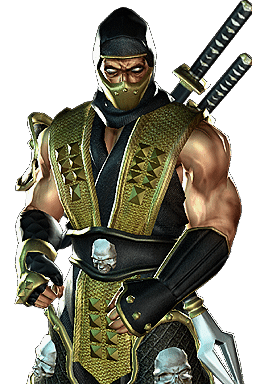
Quan Chi himself was written as the source of Scorpion’s woes. For the longest time, it was believed that the rivalry between himself and Sub-Zero was due to Sub-Zero’s clan of Lin Kuei warriors exterminating him, his clan the Shirai Ryu, and his family, when in MK4 it was revealed that the Lin Kuei never went after Scorpion’s wife and son. That was Quan Chi’s doing, and when the dunderhead revealed his hand in an attempt to be rid of his lapdog by transporting him to the Netherrealm, Scorpion grabbed the sorcerer at the last minute to exercise his misdirected vengeance on the sorcerer, leading into Mortal Kombat: Deadly Alliance.
Released in November 2002, Mortal Kombat: Deadly Alliance did 3D much better than its predecessor and had more room to expand on existing mythology thanks to cutscenes and extra content in the game’s krypt. With a payment of a specific amount of koins, different stuff can be unlocked from pre-production art to full characters and their alternate costumes to movies and interviews with the staff and many more.
Plot-wise, the game includes an introductory movie narrated by the thunder god Raiden to a gaggle of Earthrealm warriors whom he plans to lead in a coming battle. Quan Chi survived Scorpion’s onslaught in the Netherrealm and escaped into a hidden tomb containing the mummified remains of Outworld’s ancient dragon king. To make matters worse, he teamed up with Shang Tsung and the two sought to remove the obstacles in their way to power.
By Mortal Kombat’s rules, Shao Kahn was revived which teaches you all you need to know about how seriously death is taken in this universe. It’s not like in Naruto where a reanimation jutsu can revive a character by way of a sacrifice; most of the time, characters tend to Kratos their way back into the world of the living because “I decide when I die!”
Anyway, the Deadly Alliance takes out Shao Kahn and in a ballsy move for a creative in any industry, they take out Liu Kang himself. The champion of Mortal Kombat is killed and his and other dead warriors’ souls are used to revive the mummifed army of the dragon king. If they succeed, Outworld and eventually Earthrealm will fall at their hands.
Raiden had previously ascended to the position of Elder God, but the chaos and peril unfolding in the realms coupled with the Elder Gods’ inaction to it all motivated him to relinquish this position and take charge personally. Almost every warrior died or defected to the side of evil and 2004’s Mortal Kombat: Deception begins with a new narrator.
In Deception, the Konquest mode takes the player through the past of Shujinko and his journey to recover the Kamidogu, or godly tools, to be transported to the Elder Gods. This lifelong journey introduces Shujinko and puts him at different points in the Mortal Kombat timeline. As a matter of fact, he helped Scorpion find Quan Chi in the Netherrealm and was one of the first to learn of Liu Kang’s death with further developments pulling the two in different directions with a significant point of divergence. I wrote above that most of the warriors representing the good guys died or defected, but in Shujinko’s case, spoiler alert, he’d been an unknowing tool of a greater evil, worse than anything the Deadly Alliance could ever conceive and had been hard at work performing this evil for decades until the big reveal at the end of MK: Deception’s Konquest mode.
Before Shujinko defeated his enigmatic puppeteer, Onaga had marched into Outworld to take back his army and empire by force. Raiden and the Deadly Alliance knew the dangers that would come with an Onaga victory and sought to stop it, even to the point of self-destruction (which happens to be one of Raiden’s fatalities in Deception), but it proved fruitless when Onaga was revealed to be the sole survivor when the blast eliminated everything… or so it would seem. Raiden also lived, but was so corrupted by mortals messing with reality that he set out on a new mission to strike back pre-emptively.
Following Shujinko’s victory against the dragon king, Raiden appeared before him as punishment for allowing Onaga to even get as far as he did. The intentions of either didn’t matter to the immediate consequences, nor was it important to the corrupted thunder god that he rectified his mistake. Raiden wanted blood reparations and Shujinko wouldn’t be the only one to face this wrath.
Speaking of messing with reality, Mortal Kombat: Armageddon was the first time that it would happen in the MK universe and owing to its name, Armageddon was what was at stake at the time. Every fighter in Mortal Kombat history (including maligned characters) fought each other in the realm of Edenia, in a large crater where a pyramid dedicated the realm’s protector god Argus would later rise housing a fire spawn creature named Blaze. At Blaze’s death, the victor would set off a reaction with one of two outcomes: annulment of all abilities or total extermination.
In this game’s Konquest mode, the creators of the quest Argus and his wife, sorceress Delia, designed the quest with a winner in mind, their eldest son Taven. If things went right, he and his brother Daegon would engage in a quest sold to them as a friendly competition where they’d acquire weapons and armor to defeat Blaze and become full gods instead of the demigods they are now. Thing is, they intended for Taven to win it all, but when Daegon was awoken earlier than expected, he found out about this and went on a third, unpredictable path; he founded the Red Dragon clan and spent the last few centuries finding Blaze who it’s revealed was kidnapped and hypnotized to watch over the last dragon egg in MK: Deception. Bad sense of direction? Incompetence? Bull manure? Well, it’s convenient either way that in Armageddon’s Konquest mode Daegon’s clan had better luck ambushing his own brother than he did in finding the main element in the quest.
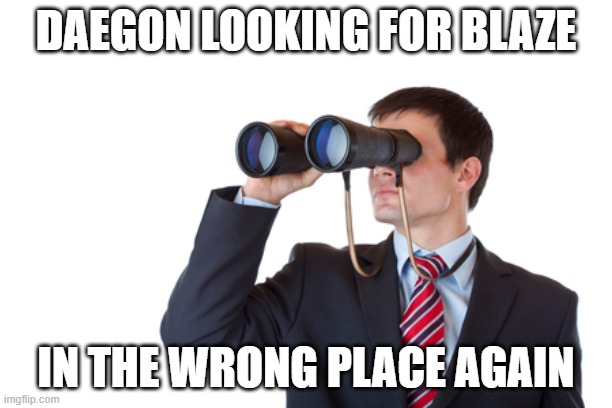
I made this meme just now. I’m probably wrong about Daegon’s efforts here, but with what I learned this late into the 3D era, it’s still a bit weird that he put more of his time in trying to kill his brother than in finding Blaze first. It makes it even weirder knowing how technologically advance the Red Dragon clan was to perform human experiments on their own members attempting to turn them into hybrid dragons like Reptile.
Anyway, Taven fights his way to Edenia intending to defeat Daegon out of necessity before being persuaded by Blaze himself to finish the quest. At the end of this, we can conclude that Taven became a god as intended and one of the adverse affects of the quest was that instead of death or depowering, everyone got stronger and the realms remained in peril, for which Taven would have to serve as the bulwark against extinction. And so the 3D era ends in a bit of a whimper.
The developer side had several troubles to deal with themselves. Mortal Kombat successfully franchised to get an animation and toy line ups and comics, but spin-off games were Midway’s Achilles’ heel. 2000 saw the release of Mortal Kombat: Special Forces, a game that Ed Boon wants everyone to forget.
If the co-creator won’t aid the game, why would anyone else, right? Before that, 1997 also saw the release of Mortal Kombat: Mythologies which was meant to tell the stories of individual characters beginning with the one who appears in every installment: Sub Zero, but the controls, graphics, and full AMV cutscenes saw hardly any returns on investment and so they didn’t bother with another spin-off until Mortal Kombat: Shaolin Monks in 2005, a game with excellent beat ’em up mechanics even if the roster is quite small. A sequel to this called Mortal Kombat: Fire and Ice was in pre-production, but the only traces of its existence come in the form of concept art before the project was canned between 2006 and 2010 when Midway’s assets were sold to Warner Bros. following a Chapter 11 bankruptcy.
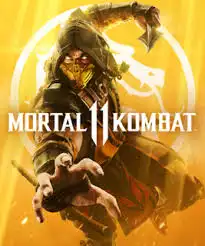
By 2011, Ed Boon and co. started again under the new studio NetherRealm Studios and redid much of the story of the first three games in Mortal Kombat 2011, colloquially known as MK9. By the end of the game, Shao Kahn was soundly defeated and in the immediate aftermath, Quan Chi and Shinnok redo this timeline’s events of MK4, but with a twist. 25 years and the old generation of characters had had children of their own, many of whom joined in the fight to not only defeat evil but to contain it.
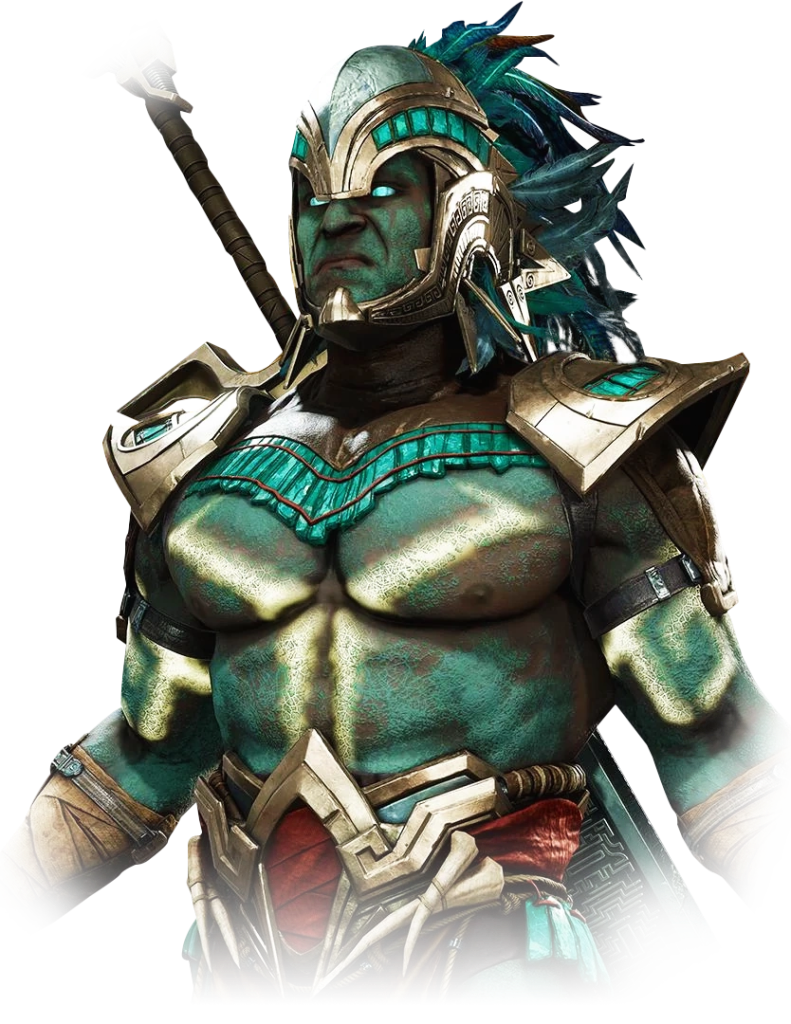
The connecting element this time around is Shinnok’s amulet which can’t be destroyed and thus needs to be heavily guarded around the clock. The problem here is that there are saboteurs around and the new leader of Outworld, Kotal Kahn, doesn’t easily trust Earthrealm. Things don’t go as bad for them until halfway through when Earthrealm chooses not to eliminate immediate threats and dangers where they spring up, even when they would all make sense.
The saboteur in question is a character named D’Vorah, who went down in history as one of the less welcome additions to the roster in recent memory. The point of divergence here is that Shang Tsung and Quan Chi don’t form the Deadly Alliance (though there’s a neat reference in MK9’s story mode). There’s also no Onaga and Blaze despite there also being references to them both. So no Deadly Alliance, and no Quan Chi to betray Shinnok. Instead, Shinnok is summoned behind enemy lines and finally for a necromancer, Quan Chi’s ability to command the dead is explored in this timeline when he has the souls of fallen heroes who dream of taking their revenge on Raiden, who still goes dark in this timeline.
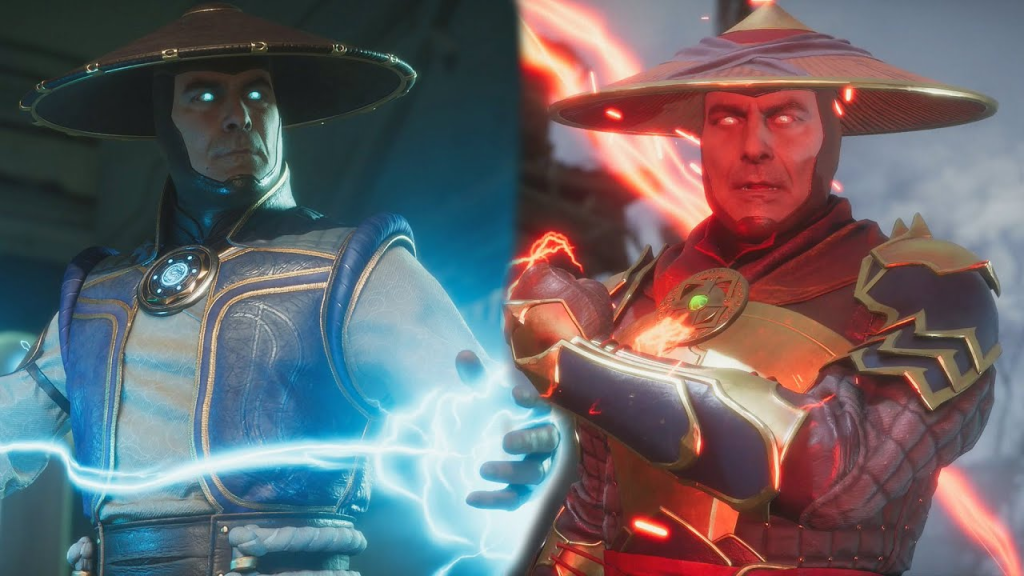
The shoe’s on the other foot now with Dark Raiden taking the plunge against evil like how Shao Kahn opted to be the final boss in the other games. This time, Shinnok’s mother Kronika and his sister Cetrion rearrange the timeline to maintain the balance between light and dark, one of the most important instances being the fallout between Liu Kang and Raiden. Once they realize this on their way to stop Kronika herself with a new cadre of friends and an army to command, Raiden and Liu Kang combined to form Fire God Liu Kang which, fun fact is how MK: Mythologies ends.
This time, their fighting chances have gotten better and with Kronika’s defeat, Liu Kang has a new timeline to oversee, which is where we are. Based on what I wrote and what I know I have a few ideas of what to expect based on what happened, but there’s no guarantee everything will live up to my predictions even slightly. The Aftermath DLC in MK 11 ended with Shang Tsung’s defeat and Liu Kang starting with the ancestor of Kung Lao, the fabled Great Kung Lao who lost favor when he was defeated by Goro in the old timeline. My first and so far only prediction is that this time, Liu Kang cheers this one on and Kung Lao’s bloodline becomes venerated instead.
After that, remains to be seen. Ed Boon’s been doing this for 30 years and has a great love and respect for his own series, often dropping hints and teasers for fans on Twitter, so we can expect further updates from him in the lead up to MK 12 or Mortal Kombat 1 as it’s going to be known as.
I have opinions on sequels named the same as the original that can best be summarized in this episode of You Know What’s Bullsh-t?!
This week, I’m recommending the YouTube channel h0ser, recently rebranded as hoser.
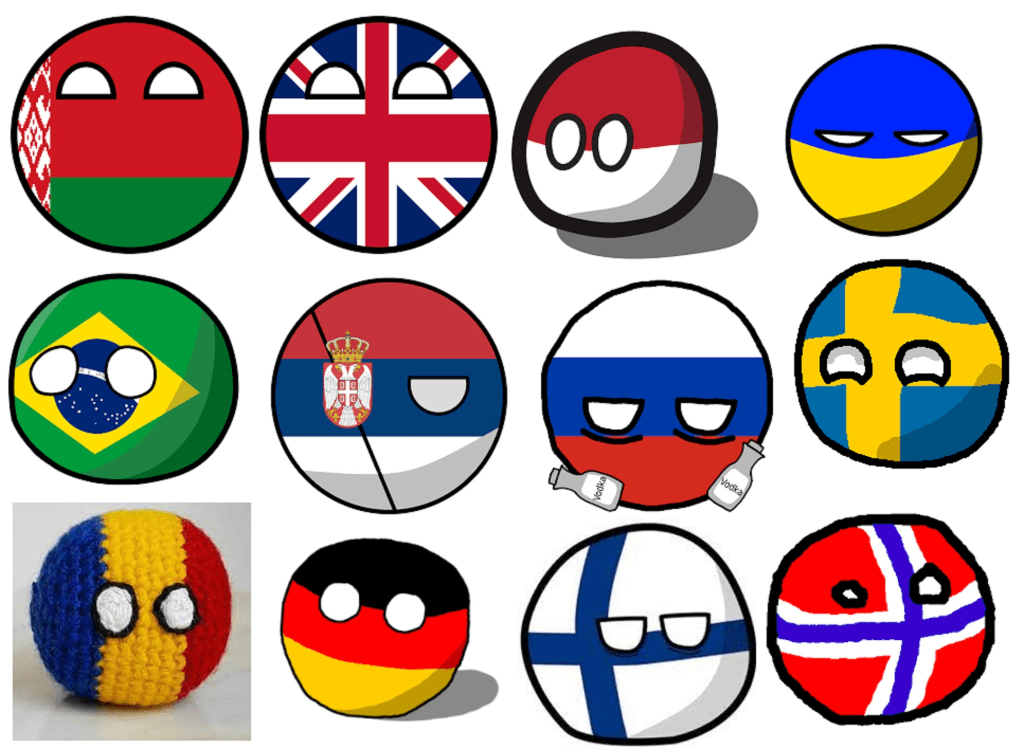
The channel talks about history and geopolitics in a comedic manner, often with insert country’s most common animal here as a stand in for the nation in question, painted in the country’s flag. A buffalo for the US, a bulldog for the UK, a bear for Russia and the Soviet Union, etc. An old approach to when the channel did this through countryballs method.
Those of you who want to learn more about the world, hoser is one of many sources for that knowledge.
This topic has been in my notes for a few weeks, and up until recently I thought about first talking about what I love most about the racing game genre before listing off my personal best through worst. I should admit, though, that the games chosen for this were chosen partly for nostalgic reasons but also to see how well they hold up. My appreciation for racing games goes back to an old collection of Hot Wheels toys, funny enough.
There was almost no escaping these little cars. While the cars could be found in most pharmacies and dollar stores and in the bargain bin at select department stores, toy stores held the associated sets and tracks and all of them were awesome. Most often, these were battery-powered loops that propel the cars on assembled tracks that go in multiple different directions. I don’t care what anyone says; no matter your opinions on the 2008 Speed Racer movie, toy manufacturers nailed it when they gave us toys and cars based on the movie. Still got nothing on the LEGO sets, though.
I didn’t own the above set, by the way. These things were huge.
To connect the toy cars to the digital cars I raced around in on the TV, these two ran concurrent with each other. I used to collect loads of toy cars and spend a lot of time with racing games, though not to the same extent as the fighting and adventure games. Still, I spent a lot of time with racing games and so for my best through worst:
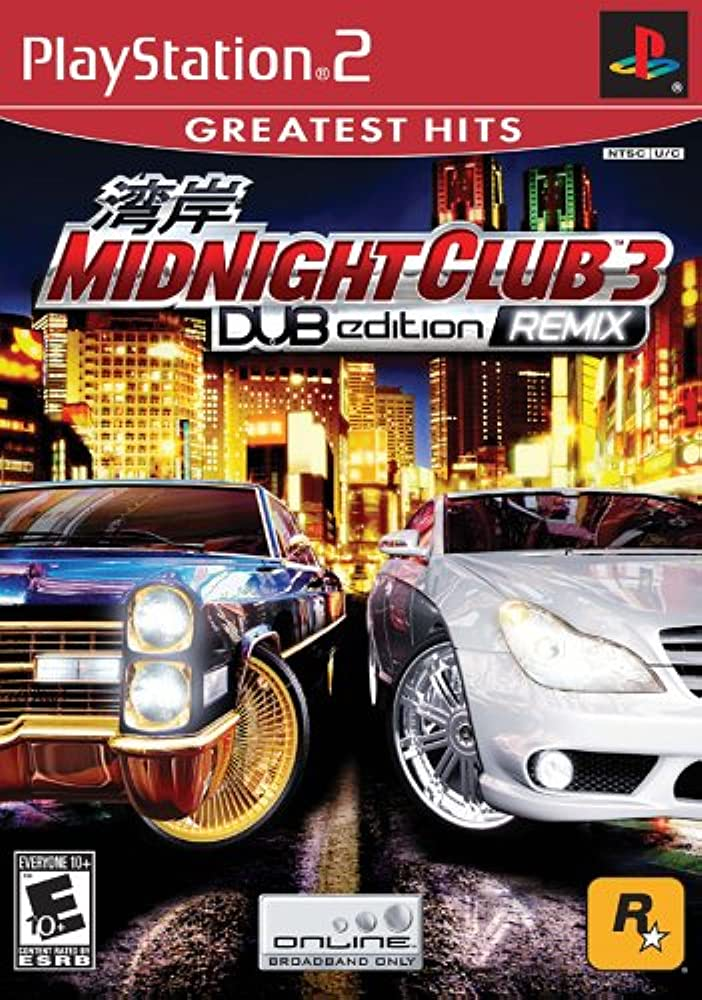
Best: Midnight Club 3: Dub Edition Remix (2005)
Mid: Need for Speed: Hot Pursuit 2 (2002)
Worst: L.A. Rush (2005)
I think this post will get quite a bit long for each of these three, and before I expand on why I put these games where I put them in lieu of probably better options, this is a personal list that I know won’t walk the same stride as others’ personal lists, I have better memories with these games (emulated or otherwise), and for the game in the Worst category, there are objectively worse games like Crazy Bus or Big Rigs: Over the Road Racing, but those were glorified tech demos that could be written off as a joke like Hong Kong 97. You’d have to put them on the same pedestal as actual games we celebrate or despise and that’s too much for those piles of crap. I don’t like to go for low-hanging fruit. Now for the list.
Midnight Club 3: Dub Edition Remix
This version of the game specifically is what I remember best as the game I finished 100% many times over, and as a personal achievement, I managed to do it on the PS2 emulator with just the keyboard. Thank god for long fingers!
The third in the Midnight Club series it follows up from its predecessors with longer races, more challenges, bigger cities, secrets and easter eggs and more. Customization options and an open world to explore let the player get creative during a race. More than once while driving through the cities, I came across these routes to find secrets or prepare to the best of my ability for a race that would most likely take a certain route.
The Dub Edition tagline for the regular and remix versions for the game stem from the game’s partnership with the car magazine Dub, who spruce up a prize car from a tournament in their style to include the Dodge Magnum, the 2006 Dodge Charger, the Chrysler 300C, the Cadillac Escalade EXT and others. The game has three scaled-down, fictionalized versions of the U.S. cities of San Diego, Atlanta, and Detroit, and the remix version includes the Tokyo Challenge. All three cities are headed by a mechanic and his auto parts garage:
San Diego’s mechanic, Oscar, heads the Six-One-Nine Customs;
Atlanta’s garage is Apone Team Racing run by the garage’s namesake,
And Vince’s garage is in Detroit. No fancy name unfortunately.
For Tokyo, Speedway is the garage there.
As you progress through the career mode, you’re told over a type of transceiver or cell phone that a new racer is in the city ready to challenge you. Racers driving a certain type of car denote a car club they belong to and upon their defeat, they send word of you to the club who invites you to partake in their races for a prize across the three cities. Additionally, tournaments can be entered for prize cars, customized by Dub or open for customization at the garage.
The customization options are quite extensive. Most likely riding the wave of the Fast and Furious franchise, nearly every car can have extensive body work done to it, essentially turning a station wagon into a supercar and earning you even more speeding tickets because none of the cars you have are street legal anymore. Imagine explaining that to the traffic cops…
The car classes and types matter mainly to the car clubs stateside, but in the remix version with Tokyo included, there are class and car type specific tournaments, and the kicker is that you don’t necessarily have to finish the American races first before flying to Japan. The first tournament you’re offered will require a vehicle class not available until you’re 4/5 done with Detroit, but the way you unlock tournaments in Tokyo is that instead of challenging individual racers, street races which are represented by red dots in the States are represented by purple diamonds, three of which unlock the next tournament. So theoretically, you can complete some races in the US, head to Japan and complete a tournament there, then come back to the US with the prize car, rinse and repeat.
Then, there’s the soundtrack, which couldn’t be anymore mid-2000s. Hip hop artists, post-grunge bands, techno bands, electro-pop; as I recall, select genres went hand-in-hand with the underground racing scene as depicted in media. I have no idea if this was representative of the lifestyle back then, but if so then that’s pretty cool. It makes the replays all the more enjoyable to watch.
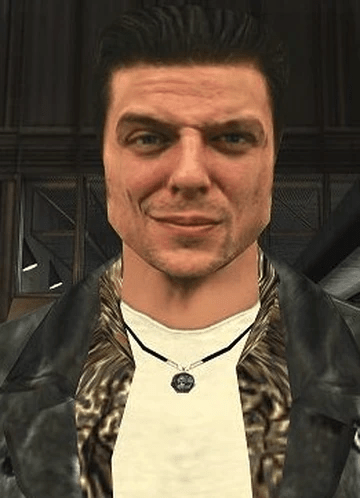
The car clubs have an extra feature for certain cars. Specific types can gain one of three abilities: Zone, Agro, and Roar. Zone is a type of Max Payne-like slow motion ability that allows the Tuner cars, Exotic cars, Sports Bikes and select Luxury Sedans to weave through traffic in slow mo. This ability is earned by driving as clean as possible through the city. Agro is applicable to the rest of the Sedans and SUVs and is a type of boost that allows the driver to slam through traffic at a breakneck pace, breaking necks with all the wreckage caused by ramming other cars off the streets. Driving into other cars and causing general damage is how you earn this ability. Roar is exclusive to Muscle Cars and Choppers and it sends a blast of wind to scatter heavy traffic out of the way. Drifting and power sliding unlocks this ability. All three can be used a total of five times, and going by my playthrough of each ability, they’re not meant to be a one-size-fits-all solution when a race goes sideways. Zone helps you get through traffic, but it builds up as slow as its ability performs and a single crash can set the bar down as it accumulates. The draw of Agro ability is that you can send offending vehicles to the moon and the impact is literally diminished if you activate it on a free road. The same goes for Roar, but the consequences are doubly so if the vehicles don’t spread out how you hope. You have to think a bit more strategically before activating either of these three.
Lastly, there’s the secrets. The three U.S. cities have RockStar logos that net you extra customization options in the garage from more riders on bikes, to license plates to decals and more.
Above all, not only do I recommend it, I highly recommend you set up your controller if you go the emulation route. Contorting your fingers like miniature twister is better as a party trick than to play games. I write from experience.
Need for Speed: Hot Pursuit 2
My next words on this game specifically will surely sound a bit contradictory depending on how you see racing games. The customization options giving me a range of choices heavily influenced my rating of Midnight Club 3 despite me spending less time with it. Need for Speed has little in the way of customization, there’s no overarching plot to become a legendary racer in the underground street racing scene, and the options for cars and tracks is so limited that it’s nonexistent.
That being said, I’m still playing this game and the game modes on display do a lot to make up for what I thought was so perfect about MC3. Granted, NFS HP2 came out in Q4 2002 while MC3 was released around Spring 2005, so older racing games will feel like clean-picked skeletons compared to what would succeed them all, but judging games of this era by their own merits reveals that they’re less about style and more about substance. Midnight Club drips style, but Need for Speed before the EA corruption of the 2010s leaks substance.
Multiple game modes and challenges can be completed and the departure from other games is that there isn’t always an emphasis on getting perfect scores. Some challenges will still let you advance even if you finish in second place. As another divergent example from what’s expected of Midnight Club, transmission systems can be adjusted to suit the player depending on the car: automatic, manual, and semiautomatic transmission. The game is also designed more around skills than simply picking up and playing.
You know how Midnight Club has precise locations based on real-world cities, just scaled down massively from what residents of each would recognize of them (especially for 2005)? Well, the maps in Need for Speed are less precise and more like general amalgamations of a city in a given location. The Mediterranean coastline, the Pacific coast, Australia, the American Southwest, etc. The game also feels less like a smorgasbord of real-life cars and car concepts that with the benefit of hindsight didn’t always pan out.
This concept H3T, for instance, is different from what was sold in 2005 and ‘6, by the way. As a matter of fact, the car brands in NFS were less luxurious and well known and more specific to certain regions if not known to the wider car aficionado demographic. Opel, the now-defunct HSV, one of Ford’s foreign manufacturers, all feature in the game. The cars that you start off with tend to have a top speed of around 125 MPH with an average 0-60 acceleration rate of 5.3 seconds. The further down the line you advance, the top speed rounds to around 200 MPH with a shorter rate of acceleration. With the speeding cars comes new ways to maneuver around the tracks.
Speaking of the tracks, going back to a comment I made about the cars in MC3 losing street legality, they’d all be suited for a race track like how they’re all designed in this game. The tracks within NFS Hot Pursuit all have secret pathways and shortcuts to take but depending on the version you have it may be somewhat different. I emulated the PS2 version and pirated the PC version and the menu selection screens are all different; the PS2 version seemed to be the snazziest of all the available versions, whereas the PC, Xbox, and GameCube layouts are all the same.
Skills play a role in more than just driving and handling. The Hot Pursuit game modes where cops are placed at different points along the track can add an extra layer of difficulty to the challenge and you’ll normally only have that split-second to decide how to avoid them. NFS has a reset button for when you screw up during the race, but in my experience it there are less opportunities to use it during Hot Pursuit mode because the police will catch up to you and ticket you. So best to save those for when you’re out of sight of the police or outside Hot Pursuit mode.
The cops in this game are also aggressive. They’re not GTA-aggressive, but as I recall, in the PC version they’ll deploy helicopters the longer you resist. I know they also do that in the PS2 version though I rarely keep them around for that long to find out. This mode isn’t one sided though — there’s a mode to play as the cop and nab speeding racers as well.
I don’t know if this is true of all EA games from before or even now but their design philosophy, considering Medal of Honor, Need for Speed here, and Battlefield seemed to be based partly or wholly on gaining and refining skills than button-mashing throughout the whole play session. This isn’t a philosophy that’ll resonate with everyone and EA has since divorced themselves from this for darker desires in recent memory, but as I said with Midnight Club 3, find a way to play it and see the game for yourself. It might be too your taste if Midnight Club proves too flashy.
L.A. Rush:
This game is why this blog topic exists. It’s because I hate this game so much that I decided to write this week’s topic. Thing is, for years, I’d never had the words to illustrate my gripes with this game until recently. The YouTube channel BlueTag did the digging and the review on what this game has to offer because I knew damn well I wasn’t gonna put this tripe in my emulator, so here’s the corresponding video.
To spoil the video a bit, this game was developed by Midway Games’ British branch in Newcastle, the same Midway Games that flooded arcades from the 1980s until their 2010 bankruptcy, gave us Mortal Kombat and the subsequent ESRB rating system, and surprise sleepers like SpyHunter and Stranglehold. According to BlueTag, the finer details surrounding development are lost to history, but the game’s inner workings hint at a severe lack of communication between internal departments.
The physics engine is incredibly flimsy for a racing game let alone driving. Slip a finger on the accelerator and the car will hit the nearest wall at Mach 4, with reciprocal results. Forget tanks for cars that could take a beating; this game cinematically emphasizes the damage that comes with totaling the car when this happens.
Funny enough, the main protagonist is supposed to have a fleet of cars, but there’s only one that features prominently in the game at the beginning. L.A. Rush is another game sponsored by a major car promoter, this time MTV’s Pimp My Ride with Xzibit and Lil Jon in tow, but unlike Dub, Pimp My Ride doesn’t have much to offer. Or rather, the Dub team will let you win cars done by them where as PMR often upgrades your ride without you seeing the bodywork or messing around with it until it’s finished. You also stand to lose half your cash to a ride whose paintjob is a surprise until the end.
Speaking of money, you have to pay an entry fee to compete in a race and if you mess up and want to start over and do better, you can’t restart the race from the menu. You have to back out and come back in and pay the entry fee again. Like the other games, cops also play a role in this game but considering the consequences in the other games, this is simultaneously a worse and lax punishment at the same time: it’s lax because you bribe the cops to get them to back off, but it’s worse because you lose money on entry fees anyway so this is another way to lose your money.
Cutscenes meanwhile show the protagonist, whose name I never registered, I think his name was T or something, having already achieved street racer heaven. Then the bad guy shows up, promising to take your stuff which he does. After a few weeks, your cars are all confiscated including the jet black Hummer you rock up to the mansion in, leaving you with a suburban sedan that you have to use to get your cars back, often while under pursuit, and with the crappy physics and whatnot, this is more of a chore than anything.
As for the map, I’m not a native Angeleno, but I’ve heard from the Wikipedia article, that a section of L.A., namely the Valley was absent. Seems weird to put in, but in a racing game a map and layout can make or break a race if not the whole game and what I presume to be a notable location within the L.A. region was done a disservice by its omission. If this is the case, then whatever could’ve been done with the Valley may have killed further interest.
All things considered, if eight year old me was smart enough to see the problems with this back then it should be a warning to how unplayable a game could be, especially the PC port which I learned was worse off than the console version. If you have that Tibetan Buddhist level of patience, give it a go. If not, watch the gameplay and prepare yourself for outdated, cringey dialog, even for a game from the mid-2000s.
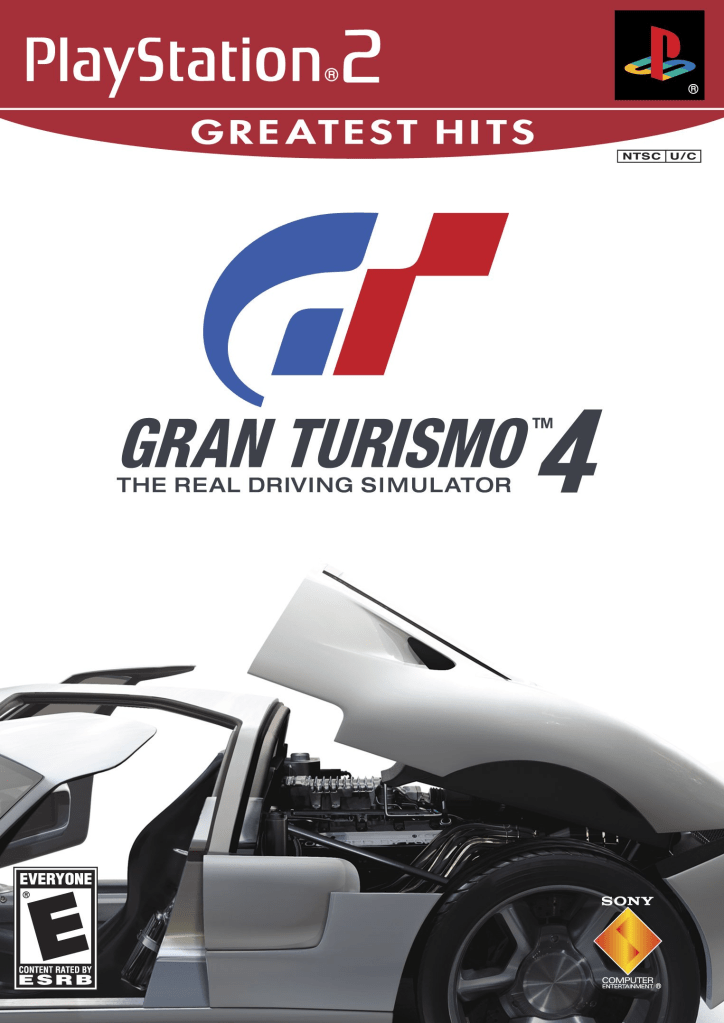
Before I move on to the YouTube recommendations, I want to mention a last minute game I also played on the PS2 back in the day, but have fewer moments with: Gran Turismo 4.
My memories with this are hazy as of now, but if I get the chance to emulate and play it, I’ll surely put my thoughts in, no questions asked.
Now for the channel recommendation: Rev says desu. This channel is a commentary channel on mostly anime and anime news and often features the wrong opinions to laugh at and lambast from some of the worst people to speak on a given matter on Twitter. Originally shortform in length, Rev has gotten around to longer videos for more to discuss. Wherever you start, if you like his content be sure to subscribe to him, he makes videos regularly.













 Opinions on Entertainment