What was understood and what was lost over a decade
This is something of a long-time coming, a background project based largely on a series of video games that capture a now long-lost era of pop culture. An aesthetic that can best be described as urban neo-gothic horror. Video games that were edgy because they made use of what they lacked technologically, benefitting from sixth generation console limitations. Uglier graphics, standard definition resolution, subpar draw distances; video game developers and by extension many film and TV directors were between the word-of-mouth/magazine coverage era and the algorithm, ludicrous speed reactions. What am I getting at? Well, if you’re a regular subscriber or you tune in regularly to this blog you may or may not have an idea of the video games I’m about to bring up:
Yeah, I intended for this week’s post to be about the Fate franchise, but that behemoth requires attention that I can’t split from a bunch of other things work and non-work related. The dedication necessary to commit to it exists, but it’s going to be broken off from several other things I either need to do or am viewing first. Something something undivided attention, something something divided like a math problem, something something… yeah, I can definitely do it, but whether I remember to knock it out before Christmas this year is up in the air with all the moving parts laid out and getting ready to be laid out so instead, I’ll knock out some thoughts and opinions for once about things I care about.
Yet it was available for free on Tubi a few years ago
Due in no small part to its popularity and wide appeal, Shonen action-battle series get all the media attention at home and abroad, unintentionally hiding other genres in the process. So it’s not a big surprise or concern when people erroneously claim that the longest running animanga series is One Piece, or JoJo’s Bizarre Adventure, or Dragon Ball. All have been running for decades, with the latter two debuting at the end of the Showa era. The subject of this post however has been in serialization since 1968.
Getting back to the end of year wrap up of content, I’ve definitely watched more anime this year in between my regular duties in the Army. A lot of what I’ve been watching this year has been stuff I’ve written about on this blog yonks ago, but also some new stuff that can (and probably should get) their own posts, but this being a speedrun like before I shipped out to Fort Lost in the Woods for training is gonna be a brief overview of some stuff I got a look at this year, but didn’t necessarily finish. I may add more to the watch times of these respectively and give them the reviews that they deserve, but I’m probably gonna do what I normally do and play it by ear. Here’s the anime lineup:
Texhnolyze
Ghost in the Shell: Stand Alone Complex
Clevatess
Frieren
Neon Genesis Evangelion
With a bonus. If you were to ask me if it was anime, it falls under “Yesn’t.” It’s based off a manga and has an anime adaptation that is currently four seasons in, but it’s doing something different.
About time I addressed a noticeable pattern of mine
Between Hong Kong cinematic action pieces of yesteryear and Japan’s golden age of cinema, I’ve been quite busy exploring the directors of East Asia. So far, I’ve addressed four powerful names in the cinematic world (John Woo, Akira Kurosawa, Yasujiro Ozu, Kenji Mizoguchi), but this is only the tip of the iceberg, as I’ve definitely seen more than just those for in both the live-action and animated worlds. And before I expand on that, I thought I’d address that for a few seconds:
I love this era of literal memes, it beats brainrot 100% of the time.
The draft for the triple comparison between Max Payne 3, Sleeping Dogs, and Spec Ops: The Line has been finished, but before I publish that I first wanted to get my thoughts on the last of these three out of the way. Spec Ops: The Line, a 2012 third-person shooter whose stated-mission purpose was to examine the era of the “modern military shooter,” and knock it down a peg. Unfortunately for it in that regard, the message was very ignored as Call of Duty and surprise return Medal of Honor had both had their releases around the same time. Black Ops II on November 13 and Warfighter on October 5. When did Spec Ops release? June 26 that year. It was released at a time when these types of games were all the rage, wearing the skin of a similar game while also lambasting the Bush administration for the Iraq and Afghanistan Wars. By my estimate, it was successful at only one of those, but only because so many other media outlets talked about it as it was happening. For a laugh though, take a gander at this:
The title of this post is meant to have two purposes: to highlight how media can become lost and the modern era’s means of recovering lost media. There isn’t always a perfect method to prevent lost media nor is there a perfect means to recover lost media without sacrifice to the media in question. I’ve faced this problem personally while gaming and emulating games, but I’ll get to that soon.
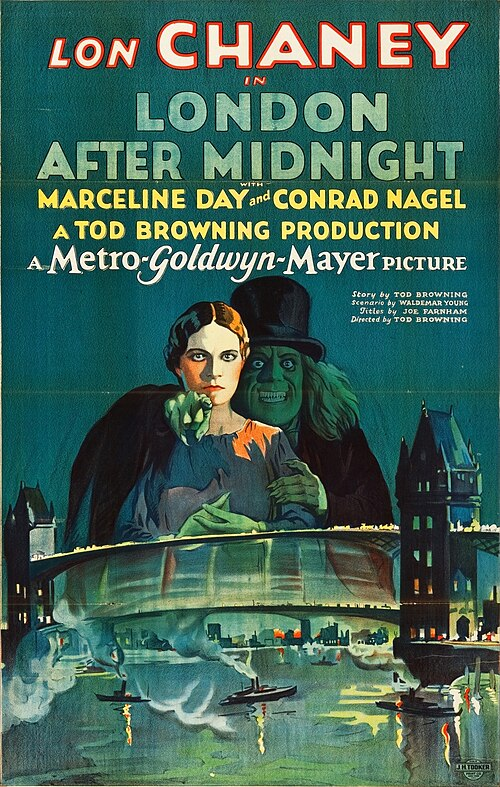
A brief overview of lost media is any piece of media whose preservation methods were either nonexistent or severely compromised to the point that part, most or the entire medium is effectively ruined or destroyed. Surviving copies can’t be located or recovered because they either don’t exist or sometimes won’t be released publicly, even after the copyright expires or the original author dies. For the longest time for obvious reasons, this has mostly applied to film, like so:
This film was released in 1927. It was kept in the MGM vault for decades until all surviving copies were destroyed in the 1965 vault fire. As of this writing, it only survives in posters like this and surviving still shots.
Although I’m as much a piracy advocate as Gol D. Roger, it’s not like the legacy services don’t occasionally give us something worth viewing. The way I got into watching movies primarily on YouTube (before looking elsewhere if what I wanted wasn’t available) began with that time I started to binge all the Terminator movies in rapid succession, next to a viewing of Saving Private Ryan.
Full disclosure, the first topic lined up was meant to be about the Senran Kagura series, but I haven’t been playing it as much as of late. Work-related stuff among other things took my time, and for the style of gameplay, I’ve seen better. At least it has an anime adaptation. Next to that, was about a series that was subject to limited release outside of Japan — Idolmaster, only I’ve mentioned it before and without access to the whole of the franchise, I’m not able to review it in the manner I’d like. Typically, I start at the beginning, but the circumstances that created this series in particular are only available in Japanese arcades with the Xbox 360 port dying with the console, making the first installment in this franchise semi-lost media. So instead, we’re sticking with Nihon and talking about their movies.
As far as old movies go, whatever I could get my hands on I’d always given it a watch. In community college, I watched 1932’s Scarface and 1933’s King Kong. I managed to find the 1982 film The Wall based on the Pink Floyd album of the same name. I recommend all three by the way. And all of these plus similar films have been my go to for years, from my piracy era to my movie theater era. I’ve heard from the Extra History channel on YouTube in their series on Japanese Militarism that when it comes to studying societal changes in the Axis Countries during WWII, Germany and Italy get over-studied while Japan frustratingly has been under-studied or brushed aside, presumably because they don’t have an equivalent to Hitler and Mussolini, or rather no civilian equivalent with the Japanese military dragging the society down into Hell with them one assassinated politician at a time. I bring up the historical blind spot in an admittedly faulty comparison to my own approach to the Japanese film industry. I’m American, after all, my first movies are going to be American. Sometimes, British cinema will spillover.
Guess I was always a sci-fi fan, I was just denying it because the genre was so broad.
Hollywood has a century and change with a wealth of films and genres to back it up, but it’s obviously far from the only producer of groundbreaking films. On the other side of the world on the Pearl River Delta, there’s a city in Guangdong Province that’s been a part of the British Empire longer than it’s been Chinese, and a look through city streets and select-people’s names shows this.