
Toy company extraordinaire brought down by hemorrhaging money
Last week’s gap was a “woke up and chose violence” moment. This time, for something back on track: Midway!
This blog has talked about individual Midway Games, but hasn’t brushed up on the developer-publisher itself. Best to round out the picture by looking at the factory’s skeleton then so we can learn how the Mortal Kombat developer went under in 2010. Midway’s origins are certainly a story worth telling, they may have gotten famous in the 1980s and ‘90s in the arcades, but they began in 1958 as any other toy company in Chicagoland. Pinball, party games, amusement park distribution, cheap carney games made for ripping off unsuspecting children. I swear that baseball hit the bottles! Gimme my prize, old man!! The eventual shift to video games by the late ‘70s and beyond is consistent then with their philosophy. Bought by Bally in 1969, they expanded into arcades, distributing known titles and developing their own, one of their earliest being Space Invaders.
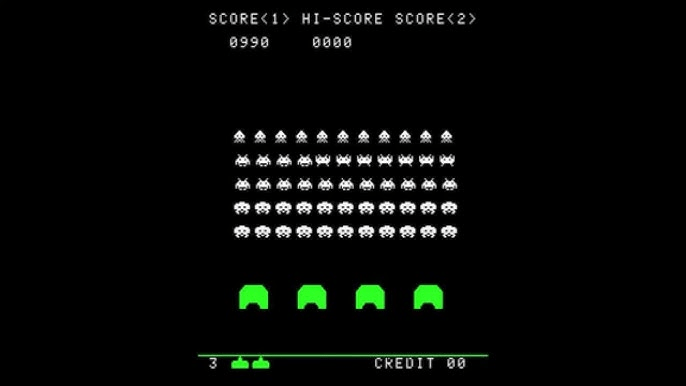
Beep, beep, beep, blast!
For North American distribution, these guys made Pac-Man and Ms. Pac-Man a household name. It was a gilded age for arcades and also quite short-lived. Keep in mind, that the gaming industry back then was mostly carried by Pong. There was only one game, but 20 billion different devices running that game in arcades, on early consoles like the Atari 2600 and the Magnavox Odyssey, on toasters, on walls, on lamps, on tree trunks—market oversaturation brutally killed the gaming industry back then, hurt worse by the release of admittedly experimental, but otherwise manure-level “games” on later consoles like the 2600 or the NES. The most catastrophic being that of E.T.
An early tie-in for the movie, the window was extremely small and putting together digitized Legos in six weeks could work in theory, but those who were there saw the end result of applying it in practice and apply it they could not. The difference between bugs and glitches then and now is that today’s bugs and glitches are prettier, cost 18 terabytes of data, and need to be connected to the internet despite being singleplayer. So where was Midway in the middle of all that? Sitting undisturbed in the arcades where a couple of quarters could get you to Pac-Man level 256 where things got funky.
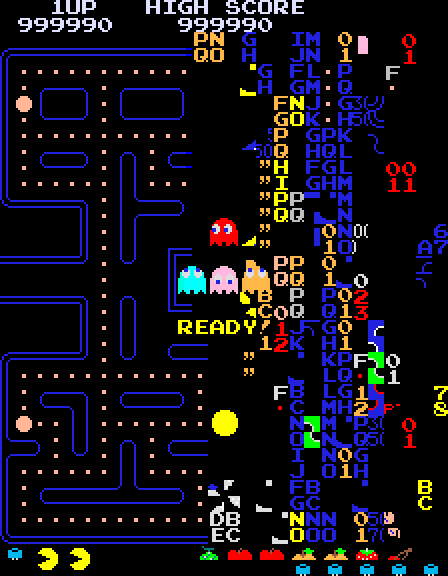
Now it’s time to get funky!
By the late 1980s, Midway was a solid pinball and arcade cabinet manufacturer-distributor with association Williams Electronics and Bally Manufacturing. These combined forces worked together crafting machines, entertainment machines for you, me and every ‘90s kids’ favorite wallaby. But what would they have as their most famous video game series? Rampage? Paper Boy? Galaxian? Nay, it was:

I won’t look down on you if you weren’t there for this era, I barely caught the tail end of it with Ermac whooping my ass at Mach s[souls]t. And if there’s a difference between those who saw Tetris get released and those who simply grew up with its colossal number of ports (right here), then I represent a portion of those who grew up playing the home release of Mortal Kombat trying to play the arcade games. It didn’t translate as well as I’d hoped, but I wasn’t raised on quitting juice, I was breastfed!
Mortal Kombat was originally meant to challenge Street Fighter II. Developed by four dudes in eight months, the framework in place and one that Midway let Ed Boon and John Tobias use until 1995 was digitized sprites of neon-colored actors imitating ‘70s Bruce Lee and Jackie Chan flicks. Funny enough, a bunch of these mo-capped actors are retired martial artists and such. They even tried to grab the Muscles from Brussels to star in the game, but depending on the source he either couldn’t do the motion capture, outright rejected the offer in favor of a competitor, or his agency did. Not that Boon Tobias was salty per se, but it’s been said that Johnny Cage is a direct parody of the Belgium’s Most Muscular Waffle.
Buns and thighs
Meanwhile, Jean-Claude Van Damme I Screwed Up went on to act in the 1994 Street Fighter live-action movie whose only claim to acclaim should be the monumental work put in by Raul Julia as M. Bison, going out with a bang later that year from stomach cancer. And Street Fighter took a reputational hit while MK3 released the year after that and broke into Hollywood with campy action movie goodness. Suffice it to say, the ‘90s were great for Midway…
…now where did it go wrong? Right around the late ‘90s, actually. Reaching its zenith, around the time of the first movie and MK3, consoles didn’t stop releasing. Disgruntled Nintendo personnel crafted the PlayStation in a wizard’s lair (but forgot to clean the cauldron after use, rude), Nintendo themselves continued to make hanafuda cards and SNES, Sega was crapping out console after console and finding some way to put their blue mascot on them all, the Neo-Geo, and the 3DO admittedly came and went earlier, but also helped to shift the market console-wards with arcades becoming more and more cumbersome to travel to and from.
Yeah, I only ever went to arcades when I was in summer day camp and we traveled by rented school bus to go there. Great memories, but I probably wouldn’t wanna handle the logistics of that either.
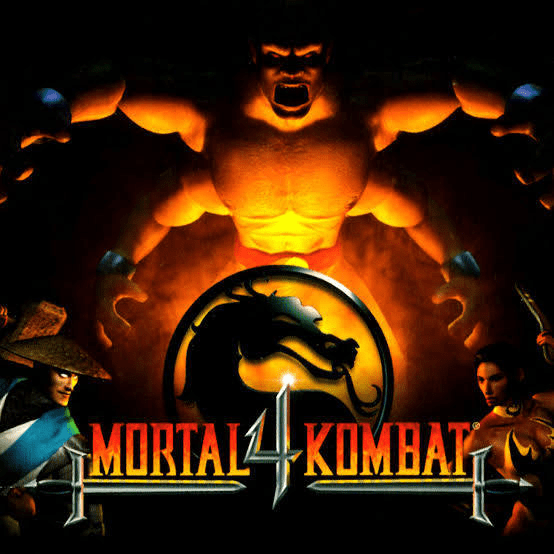
Now, Mortal Kombat would see a myriad of ports to different consoles, some of which I listed here over the years, and the last main title being 1997’s MK4 reaching arcade cabinets. General reception at the time and now disregard it as a high school or college project. Those are my words, by the way. The reception was probably not that harsh…
They weren’t harsh enough
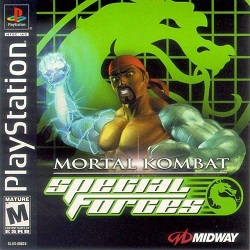
A professional developer’s first go at 3D games was seen as a huge step back into a shallow grave with Grand Theft Auto, Fallout, and Abe’s Odyssey serving as the pallbearers, and the implementation of 3D like this into a violent video game just elevated critics and news reporters even more. Even Ed Boon acknowledging its missteps didn’t do much to drive the attention away, but fortunately, they had enough cash to work on further future projects. MK: Mythologies – Sub-Zero released the same year to similarly ugly criticism, and no one has ever played Mortal Kombat: Special Forces because it doesn’t exist. It doesn’t exist. It doesn’t exist.
F[Scorpion’s spear]K!
Saying it thrice doesn’t make it true, dammit! Nevertheless, the innocent quarters sent to slaughter in the arcade era made for further funding and with the writing on the wall in blood, Midway’s arcade division was officially shuttered by 2001. The next year, Mortal Kombat returned to force with a new graphics engine and an expansive mythology beyond the old comic books of the 1990s. Mortal Kombat: Deadly Alliance fixed what the other three games broke over its back and if you believe the 3D era of Mortal Kombat was MK4 and not Deadly Alliance, then this was a time when Mortal Kombat got weird and for better or worse, these games took the spotlight away from some other titles that blessed the 2000s. Highlighting just a few gems and coals really quick in no particular order, there was Area 51, Rampage as said before, The Suffering and its sequel Ties That Bind, NFL Blitz, L.A. Rush, SpyHunter and several others for distribution in North America, developed by smaller devs in association with Bandai Namco and Square Enix. Yeah, yeah, this kind of s[footstomp]t happens all the time. Still does.
But you probably didn’t notice some of those other titles with Mortal Kombat’s strange mechanics taking the spotlight. For me, Chess, Puzzle, and Motor Kombat were nifty little additions. The series didn’t have to take itself seriously and in many ways it didn’t. Hell, one of the composers made a cameo in MKII!

TOASTY!
But it’s not like this was enough to save Midway in the new millennium. Their machines stopped robbing us of our hard found quarters sandwiched between couch cushions and underneath desks and chairs, and Midway carried themselves in stride belting out game after game after North American release of obscure JRPG after game, but MK was the company’s face. Not even a collaboration with John Woo and Inspector Tequila for 2007’s Stranglehold could help, then again market trends change faster than people change their underwear so for all the trouble I went through to blaze through that Hong Kong-infused Max Payne clone may seem like a waste, but waste not, want not is my motto and I try what I can to live it to varying degrees of success.
Midway’s twin peaks were before the turn of the millennium and ever since the arcade cabinets lost relevance, the money’s run empty ever since with Mortal Kombat’s 3D era eating up what was left. If you pay close attention to the mechanics and art direction from Deadly Alliance to Deception to Shaolin Monks to Armageddon, you can pinpoint and examine what part of the games had the most attention and what parts had the least. Deadly Alliance put a lot into the engine, but was basically a 3D arcade game. Deception did more with its Konquest mode and Chess and Puzzle Kombat modes but even these weren’t spared the cutting room floor in some areas. Konquest mode segments are either rushed, scrapped, or unfinished and it looks like they had a bunch of ideas that would never be explored.
Shaolin Monks revamped the free roaming Konquest idea, took out the RPG-esque side questing and gave us a Streets of Rage/Final Fight-like beat ‘em up! Hell yeah, after about 12 or 13 years. Probably could’ve done this sooner, but the biggest sacrifice suffered by this game is its plot. Mortal Kombat’s framing has almost always been some flavor of otherworldly warriors fight to the death in bloodsport in a mystical tournament with the wider plot being an evil conqueror tries to take over the earth but the tournament is implemented as the ultimate legal arbitration before the conqueror reminds us of his evil.
Channel: Leah Stevens
But Shaolin Monks is largely only good if you ignore the writing or try to rewrite it like Dragon Ball. Guess I have to perform a séance then to get inside Toriyama’s head. And also learn Japanese well enough to talk to him. And yet it funnily enough had more on its plate than Armageddon that suffered the most from rushed and unfinished development. The two-year wait time for games might have worked well enough at the time, but without enough time to let the dough rise, the bread gets lumpy, the booty gets soggy, and it doesn’t even clap audibly when I—

Sorry, we’re still talking about video games, right?
This one gave us Motor Kombat and by far the largest cast of any Mortal Kombat game to begin with, resurrecting some maligned characters and reintroducing those who fell by the wayside over the course of Midway’s last puffs of air, but to do that a bunch of other stuff needed to get the boot. Fighting styles were chopped to two (boo), but Motor Kombat was introduced (yay); Konquest mode has a bunch of cut content (boo), but it makes for an interesting plot that ties everything together concerning Blaze (yay); and the cardinal sin this game commits is that unique fatalities are not here at all.
(⊙ˍ⊙)
Yeah, put in the different unique button inputs and roughly every character can do exactly the same f[bone crunch]ing fatality as everyone else. You can call it Copy Paste Mortal Kombat and in some spaces that’s exactly what it is. Mortal Kombat without fatalities is like Doom without the unique kills. Wait a minute
Quantity over quality aside, you really see here how much the budget was beginning to dry up with stages and select plot points dropping off into the Pit without a designated recovery team to wade through the spikes and get them back. Then again, one can argue Deception also had this problem and I’ll put my hat in the ring and say that Shaolin Monks was also a victim of this in some capacity. For Deception, it picked up a bunch of characters that were supposed to debut in Deadly Alliance, but the roster was filled up so Dairou had to wait for Deception to finish.
As for Deception’s Konquest mode, a side plot concerning the Wu Shi Academy’s selection for a champion to represent Earthrealm happens if you talk to specific elderly masters. The most Shujinko walks away with is a White Lotus Society headband since his quest, while it took priority, didn’t have a deadline, so Shujinko nearly spends his adult life leveling up for nothing while they go with a champion anyway, and it feels doubly worthless when those old masters are killed by the Deadly Alliance. In my post about the 3D MK series, I noted that if Quan Chi and Shang Tsung were smart, they would’ve selected whose souls to steal and transplant into the Dragon King’s Undefeatable Army, and most of those would have to be fighters. With human aging being a joke in this franchise (a census taker in Seido asks for people’s ages, with one woman being 354 years old; Kitana is 10,000; Goro is at least 2,000 or more years old, etc.), you can bet your sweet bippy that some of those stolen souls are ancient kung fu masters exhibiting loads of tropes that erupted with Bruce Lee, Jackie Chan, and the original Karate Kid that they didn’t really start walking back or reinventing until after the 2011 reboot.
But I’m jumping the bladed hat again. The main point here is that from Deadly Alliance in 2002 to Armageddon in 2006, Mortal Kombat existed in a strange window that for some would either be on brand or out of place. For me, there were plenty of developers taking the piss out of their own products at the time with GTA being so satirically black Dave Chappelle would give applause and Sony Computer Entertainment letting David Jaffe put Kratos in a cow suit and a potato suit. Even in MK9, Ermac’s shrinking fatality is comedic and Boon and Tobias never really abandoned friendships; they just came back after a decades-long hiatus.
For all of the 3D games’ weirdness and charm, of all the things to feel like an NTR-level betrayal would be none other than:
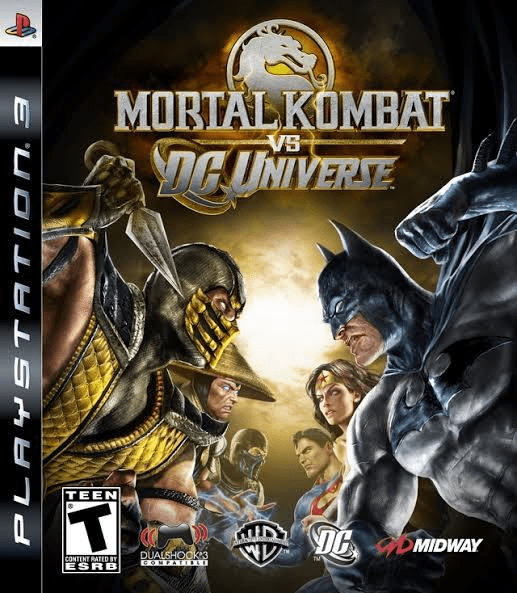
It sounds both absurd and fantastic. Scorpion and Michael Keaten squaring the f[batarang]k up, but look under the hood, and trouble is a foot that the developers weren’t allowed to remove by contract. Another game that on the one hand, had fatalities, but on the other had to censor them because Warner Bros. and Daddy DC explicitly stated that the Justice League must maintain its family friendly image and my reaction to googling executive meddling in MK VS DC was this:
(╯°□°)╯︵ ┻━┻
Bull f[broken chair]ing s[door slam]t.
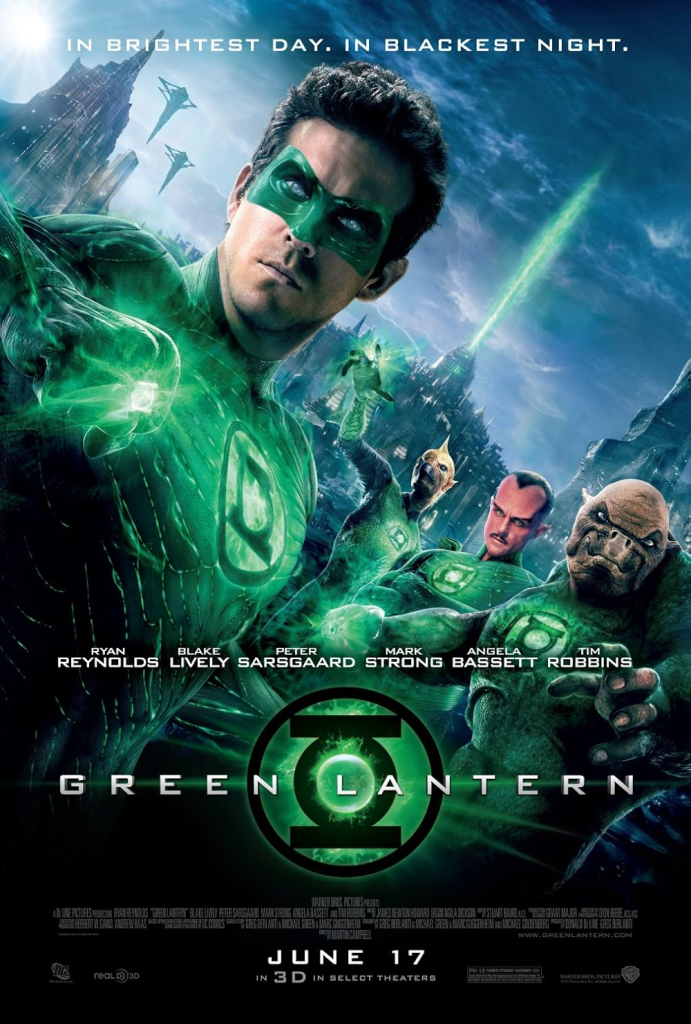
This game came out the same year as The Dark Knight, and well after series like Teen Titans and Batman Beyond. Cherry-picking? Actually, maybe. Those might be outliers to the standard, but a DC funded Batman or Superman or Green Lantern film at the time…
ಠ_ಠ
…provided the studio can stop helicopter parenting the project. A neat script about an interesting plot concerning a beloved character can easily feel f[pig squeal]ked if DC execs get their hands on it and gangbang it into a wheelchair with or without Warner Bros. approval. Midway must’ve been feeling desperate to grovel before these girthy presentations for nearly $50 million, and another hot take I have here is DCEU was always gonna collapse and their heavy-handed approach didn’t help, but an early sign of trouble had to do with the treatment of their characters to third parties. Sony can pretend to be a team player by letting Netherrealm Studios and Warner Bros. keep Kratos’ personality intact for the funnier fatalities, and for DC, I take it that they need to be convinced to take darker risks for their characters or straight up don’t understand why certain characters are dark to begin with. You know how many times Joker’s thrown Harley out on her ass in the cartoons? And then there’s the emotional and physical abuse, who’s to say she doesn’t have scars and bruises in that HBO cartoon she’s in?
Thus Midway came to a bitter end in 2009 with Warner Bros. eating the remaining assets and greenlighting Mortal Kombat 9 for 2011, considered by many to be a great game if not the apex of the reboot games, and not for nothing, MK VS DC may have cut too much trying to trim its own fingernails, but the idea to gift us 2013’s Injustice and the 2017 sequel is at least one thing DC hasn’t bungled in the last decade. One… they still have a plethora of sins to pay back.
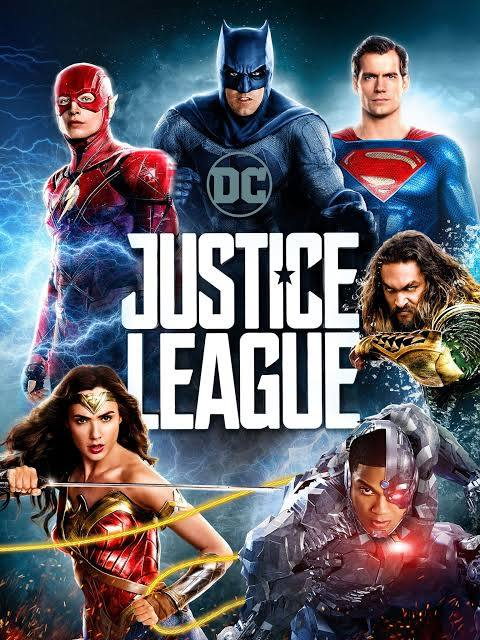
I want my money back, Joss Whedon!! (ノಠ益ಠ)ノ彡┻━┻
 Opinions on Entertainment