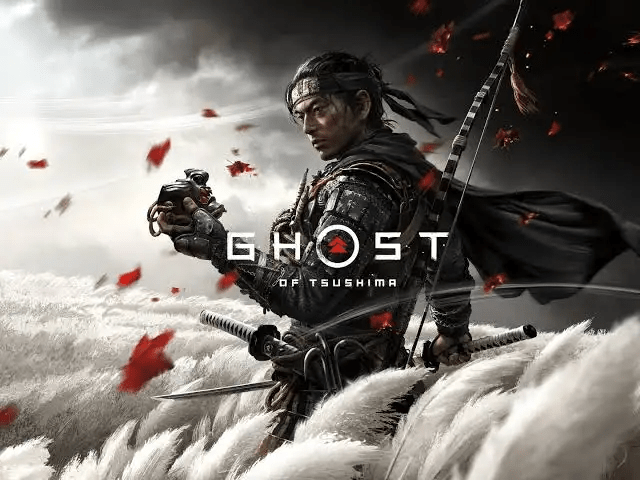
At this point, I’m milking Red Ninja for every ryo it owes me which isn’t something I normally do. I occasionally bring around my love for God of War Greek era and Max Payne as well as my contempt for the concept of Chainsaw Man and Tatsuki Fujimoto, not because I want to bury something to propel the other, but because I want to bring awareness to a multitude of different things that travel in similar circles. Since this is meant to be the conclusion of the Red Ninja recount series, the final part of this impromptu investigation into how a neat concept hung itself on its own cord by accident is going to be Ghost of Tsushima:
Sony’s a d[clang]khead for abandoning PC ports of popular games, I may never get to play Ghost of Yotei ಠ_ಠ.
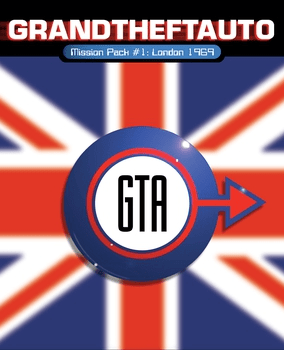
Although the GTA series routinely satirizes American culture from the safety and comfort of the same three locations–budget NYC, discount Miami, and dollar store Los Angeles, plus surrounding areas–the heart and soul of the series is Britain and there was an expansion pack for the original GTA, set in London and featuring James Bond of all people.
Not for nothing, I welcome more games set in the UK to break the mold for a change
One of the few Rockstar products nearly banned in the U.S.
Banning and heavily scrutinizing entertainment products has been a time-honored tradition ever since Mortal Kombat, Night Trap, and Doom were released in the early 1990s. Violence, gore, and in Night Trap’s case, violence against women. All of these follow on a legacy of learning too late that being devil may care about the contents of an entertainment product can lead to controversy and public outcry. Not all of these can be accurately predicted, but if I didn’t do my research on Jaws or Gremlins before taking my kids there, I’d really have only myself to blame if the kids have nightmares.
Never mind the boat, you’re gonna need to explain to the misses why Timmy doesn’t like sharks all of a sudden before sleeping on the couch tonight.
Circling back to a post from earlier this month about lost media (yes, I’m still on this train, just follow along here), I humbly direct ye all to the world of the Flash game.
Complete games were made with this ancient software
A promise was made a few weeks ago to make a post about corruption in three action/adventure games released on 2012. This will be that post. As for what I have on the schedule, expect a review about a gender-role flipped isekai manga over the weekend.
Max Payne 3, Sleeping Dogs, and Spec Ops: The Line are a trio of 2012 video games that all deal with corruption and were in several ways criminally underrated by gamers at the time. Three pretty niche series, even despite the graphical showing with something to say about each of their own themes plot-wise. We’re going to look over the plots of all three and what I believe are the reasons they were all overlooked even now.
Last week, I brought up the subject of some video games acquiring the same label that has forever gripped early films: lost media. Where, in some capacity, surviving copies of the original, plus the original, have been destroyed deliberately or accidentally. This time there’s video games that have surviving copies but aren’t made available the world over. In many ways, the gamers are not only innocent, but tend to be victims of arbitrary laws. In places like Brazil, Venezuela, or Argentina, video games are released at ridiculous prices. If an American or British or Australian player can get the same video game for 60 locally, their South American counterparts are paying many times that in reais, pesos, or bolivars (provided that currency hasn’t collapsed again).
This is true of much of the developing world. I’m a proud piracy advocate, as regular readers know, and this extends not just to animanga, but also of video games, movies, and TV. And I still do so despite having the income able to afford multiple subscriptions. Why? Well, circling back to those posts about my history with emulation, as much as I like modern gaming, some classics can’t be beat. And they’re either hard to find or hard to acquire through traditional means.
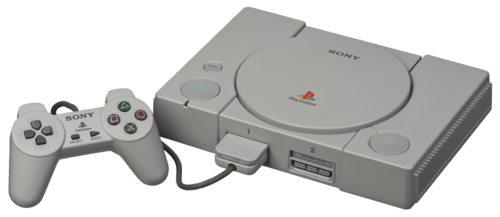
Tell me, who the f[THX sfx]k still has this in 2025? Does it still run? Name the Top 5 Best-Selling PS1 games from memory!!
Last week, I talked about different anime series that have crossed my radar. Popular series that everyone but me has seen. Some of them I was avoiding due to the reputation of their fandoms or a disinterest in the content of the show.
This would’ve come out on Friday, but I had to pack my two bookbags for the holidays. Thought I was gonna look a gift of two weeks* of holiday leave in the mouth? (Actually, 11 days, but I also have a 4-day pass.)
I chose the topics for the year many months ago. In the case of visual novels, I didn’t think I’d have a lot to say about them, but when I got one for free this summer on Steam, it initially got me thinking about how I feel about them… for a bit. Then I stopped largely due to my play style. I do get absorbed in video game narratives — I felt compelled by MK: Shaolin Monks enough to try to fix the narrative like a weekly anime a la Dragon Ball — but my play style successfully blends dialogue with button pressing. Mortal Kombat, God of War, Call of Duty, the Naruto games, Midnight Club, Need for Speed; indicting myself here, the action is the selling point.
But I still decided to give that free VN a chance, specifically this one:
The goal of Find Love or Die Trying is to romance one of the five girls on a televised game show not dissimilar from The Bachelor/ette. If you fail to get even one of them to fall for you, you die. So specifically it’s a dating sim game. I recall tuning into DashieGames in the latter part of high school when he was playing that one dating sim puzzle match game HuniePop, where that game’s goal is to score with all the girls.
I know what visual novels are, and there’s a chance you’ve come across some yourself or even their most famous anime adaptations (Fate, Clannad, Danganronpa, etc.), and I was about to say that they’re not for me, but that’s just not true. I just forgot because I have way more memories of being very involved in other video games not limited to the ones listed above. The truth is more that I’m a bit torn on VNs somewhat. I’ve run into several in my childhood, especially on the practically defunct Stickpage, and while not VNs themselves, the Choose Your Own Adventure template of Telltale Games’ video game adaptations of popular properties as well as Don’t Nod Entertainment’s Life is Strange series served as something of an introduction to VNs or something close to a VN.
I still have my copies of Minecraft: Story Mode Seasons 1 and 2, I’ve watched gameplay of Life is Strange 1, Before the Storm, and 2, along with criticisms of each (for more information on LiS, see GCN, Dumbsville, or uricksaladbar on YouTube for more details), and if you’re familiar with games like these you might see the path I’m walking down here. Diet VNs or not, these tended to have more player involvement than something like Doki Doki Literature Club or literally Highschool Romance. Clearly, I’ve got a preference for one type of game over the other, but it’s not like I won’t give a VN the time of day. I did stick around Find Love long enough to reach at least one ending, and a few years ago I watched an old playthrough of The Anime Man playing Highschool Romance; I watched all the endings on his channel. This is what it looks like.
So why are VNs toward the middle of my tier list? Is the limited involvement that it comes with, prioritizing the reading and storytelling over the action? I doubt it… if that were the case I probably wouldn’t have seen the Telltale Games through to the end or bothered watching that Anime Man gameplay of it. I think it’s effort necessary to get through a VN. Don’t get me wrong, I think VNs can tell great stories with the right kind of writing, setup, and characters. The 4chan sponsored VN Katawa Shoujo about romancing girls with disabilities is said to be one such example of amazing storytelling, but I think part of what keeps me from exploring more further has to do with length.
This may sound weird for me since I’ve stuck around some long running anime and have several novels in my possession right now as well as a published novel out available for purchase, but part of the difference between a physical book or a graphic novel or even a webcomic would probably be the visible page count. With the exception of Choose Your Own Adventure, few books or other such media have branching paths. Sometimes what I do when looking at a book in Barnes and Noble or any other bookstore or even with books I own, I count the pages of the chapters. I don’t always have the time to just read for fun and in those instances I count how many pages a chapter has and whether there’s page breaks for me to stop on just in case I need to put it down and divert my attention elsewhere. They’ve become to me what most mobile games are for someone on public transit.
Visual novels on the other hand feel more deceptive. Because so many have branching paths and multiple choices affecting the narrative, a single run could theoretically take moments of your life away, especially if you plan on going back to unlock different endings. This might come from the side of me that wants to experience a lot of things at different moments or it might be something else, but seeing how long some VNs can be can get pretty daunting. I could do it, but seeing the progress bar move at the speed of sleep might motivate me to try another look for speedrun to watch on YouTube or try one myself to juxtapose.
More popular VNs like Fate also notoriously ridiculous launching points. Gigguk took the piss out of this a few years ago with his video on getting into Fate, but it touches on another problem with some VNs: starting point.
Channel: Gigguk
To be fair, I’ve heard from Fate fans that the memes of where to start getting into Fate take it overboard at times, and I like to believe there’s some truth to that, but other times VNs can run on for very long and seemingly have no clear path to walk on. From the outside looking in, they can look like they’re all over the place narratively. I don’t always like taking notes when I’m reading, but a labyrinthine writing style can make that look like a National Guard deployment to an approaching disaster.
I’ve called my own levels of patience into question before, but it looks like I draw the line at really long VNs, though more of a dotted line than a solid one. I could see myself getting into more VNs if I knew where to look for more, and ideally none that are years long or seconds short. The Highschool Romance dating sim gives me an idea and I may go back to Find Love in the future (especially since I started a second run and didn’t finish), but until then I’m probably gonna keep VNs towards the middle of my personal list. I recognize the appeal and I could see myself getting absorbed in them one day, but it’ll take a while for that to happen. For an in-depth look at what a visual novel is and what most of them consist of, see this video from Get in the Robot for more details:
Channel: Get in the Robot
This week’s channel recommendation is Company Man.
Company Man is a channel dedicated to exploring the businesses and markets that have since become household names in the U.S. and abroad. Restaurant chains, pizzerias, candy companies, grocers, and numerous others. Often in my writing, I’ll make obscure references to famous products or companies and whatnot and I like that Company Man offers a lot of insight on the history and success or sometimes failures of many of the brands we grew up with or heard about. It may not sound as ecstatic or exciting, but I think it’s interesting to explore these different brands.