
One of the few Rockstar products nearly banned in the U.S.
Banning and heavily scrutinizing entertainment products has been a time-honored tradition ever since Mortal Kombat, Night Trap, and Doom were released in the early 1990s. Violence, gore, and in Night Trap’s case, violence against women. All of these follow on a legacy of learning too late that being devil may care about the contents of an entertainment product can lead to controversy and public outcry. Not all of these can be accurately predicted, but if I didn’t do my research on Jaws or Gremlins before taking my kids there, I’d really have only myself to blame if the kids have nightmares.

Never mind the boat, you’re gonna need to explain to the misses why Timmy doesn’t like sharks all of a sudden before sleeping on the couch tonight.
Although not present for the 1993-4 hearings, DMA Design, now Rockstar North (because no true Scotsman would associate themselves with England anything) released a successful series of video games alluding to the act of motor vehicle theft but not necessarily exclusive to such an act. Yes, I am referencing the Grand Theft Auto series and as noteworthy as the attempts to bury this series over the years are, a different Rockstar property was almost the victim of a successful attempt on its life.
For all the flak GTA got against it for its “realistic violence” (let’s be charitable, 2002 graphics were considered realistic at the time), this game originally got what it might as well have been asking for.
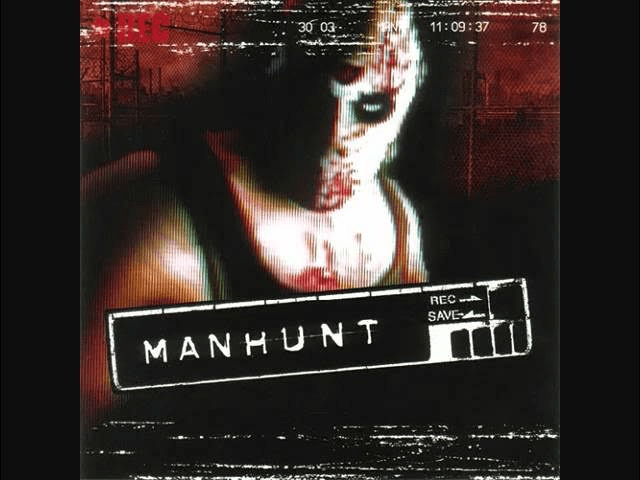
The content within was made for the dark web
Released on November 18, 2003 for PS2 and then the other then-current platforms the following April, Manhunt gave the audience very little to the imagination regarding its content. Roughly every object that can cause pain in the real world is itself an equippable weapon, but the weapons themselves weren’t on trial here. Or rather, it wasn’t just the weapons getting a heavier look this time around.
But we’ll get around to that soon. The story is as follows: Carcer City, death row inmate James Earl Cash is put to death by lethal injection in public. Privately, he was merely knocked out by presumably less harmful drugs than what costs millions to pump into an actual live person in the most remote parts of the country. Afterwards, a voice, referring to itself as “The Director” leads Cash around by the nose, whispering into his ears the different functions.
There’s the Hoods, who can best be described as a very loose confederation of low-level blue collar criminals from thieves to murderers to rapists to dealers. This amalgamation of crime and villainy is enough to even get crooked cops on the take. Next to that is the Skinz, a white power skinhead group that, if you know anything about how the Rust Belt came to be, makes for a really depressing state of the region. As for why these neo-Nazi larpers would be after Cash’s head when he’s both white and shaven-headed, well the answer to that has long chain in British and American colonial, citizenship, and race laws on the whole, but the short version deals with perception. Purity, or “join or die” mentality for those who fit the mold on paper, and it’s not like the Nazis were s[nein]t-talkers about that either.
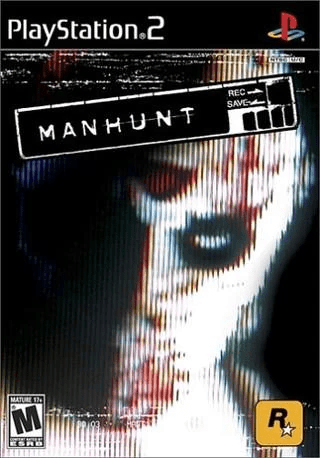
Putting the Skinz on the cover of the game’s box art works for shock value if you ask me
After these yo-yos, it’s the Wardogs, a paramilitary group made up of veterans, survivalists, and mercenaries. Pulling from real-world examples, outside of foreign volunteers and conscripts who choose or are forced to fight respectively, mercenaries have never come cheap and paramilitaries typically fight for themselves or the highest bidder, though sometimes they have an ideological goal in mind. Real world paramilitaries include the historical SS and select conscripts fighting for Imperial Japan, and in more recent history there’s the American militia movement from the early 1990s, the Tamil Tigers from the Sri Lankan Civil War, paramilitaries based in the British Isles during the Troubles, some ethnic-based groups from Southeast Asia, notably the Philippines, and numerous others. And I bring up these examples to suggest that the Director has the resources to finance this s[clapperboard]t himself. I’m not crazy enough to watch snuff films and even doing research on them is murky at best, so I don’t know what kind of budget those cinematic horror shows have. Probably not as much as a Hollywood production, but again I’m showing my lack of knowledge.
Following the doomsday preppers are the Innocentz whose name is an apt and disturbing perversion of their patterns of behavior. It should be kept in mind that all criminal organizations are secret societies, but not all secret societies are criminal organizations. In this case, the Innocentz work in tiers each more terrifying than the last from the trademark gangbanger to the thanatistic cult faction to the mentally deficient pedophilic faction, thereby making them the most disturbing enemy in the gang.
And the last round of nasties you fight are the Smileyz, a gang of escaped mental patients who are bizarrely the most vaguely explained faction. They’re not strictly anything, not gangbangers, or white supremacists, or pedophilic cultists; the Wiki makes them out to be the grayest blur in the game.
All things considered, this era of games was churning out edgy and thematically dark games left and right. GTA III and Vice City, Mortal Kombat: Deadly Alliance, Max Payne 3 and this. The more emboldened developers felt to release edgier video games, the harder the backlash and the more highly praised the games were to the audience no matter the reviews. A not insignificant portion of these fell victim to cult classic status, neither hurting nor helping the sales of the PS2, but certainly adding to that platform’s library all things considered.

Credit: r/gaming, u/veterinarygamer
And the PS2 clearly had an expansive library!
I highly doubt that Midway Games cared very much about their public image since their revenue came mostly from the arcades, but DMA/Rockstar was taking home the lion’s share of the media’s attention. The fact that their philosophy was too downright tease their critics was nothing short of genius. These days, I know better than to engage with trolls and ragebait, but the savviest of creators can farm their critics for karma, and successfully. This is the philosophy of Rev Says Desu, or more historically, circus freak shows.
The IJA’s 7th Division was a circus all its own
Aside from nanny state countries that historically coddle their populace and refuse their people the right to decide for themselves what they do and don’t like, the US of A damn near banned it thanks to the graphic violence. Mortal Kombat would’ve reasonably been written off as fantasy with all the ninjas, sorcerers, soul-stealing wizards (Farewell Cary-Hiroyuki Tagawa), upright lizards, and whatnot, if it wasn’t for the use of digitized actors and inclusion of blood and finishing moves. For Manhunt and Grand Theft Auto, the fact that these are plausible and can be readily seen by ordinary people away from a computer or TV screen adds to the controversy. No one’s ever seen a fire-summoning ninja throw a grappling hook from his hand, but thanks to the news everyone’s heard of cartels, bank robbers, gangs, and prison escapees.
But even these are classic horror movie tropes. Most of the time, the criminal knows the victim, and most of the time criminals target members of their own communities. The 1 in 10 percent that the media likes to fearmonger over are all rarities. They do still happen but not to the extent that you’d believe.

RNGesus really needs to hate your existence if a guy like this spawns in front of you in the midnight hours.
It’s not like Manhunt is lost on me, the dark atmosphere and easter eggs make it something of a neo-gothic treat, like that time I watched The Addams Family movies and Beetlejuice. But putting it with its contemporaries just makes it a product of the era. As for the gameplay, it’s as strict a stealth game can be, rewarding creativity in sneaking up and killing and punishing any player averse to this gimmick. Not for nothing, it shows that as much of a monster that the Director tries to make Cash out to be (and he’s definitely up there, death row is spared for the worst outside of wrongful convictions), he’s certainly a crafty bastard if you think about it. When there’s 20 of the Skinz or the Innocentz or the Smileys and only one of Cash to go around, your options are limited and outright combat is a last resort.
It certainly demands patience, but can sometimes test your patience. If you’re not careful, the enemy can sense you about to slit them up with a broken piece of glass. Or they can gang up on you with bats or nail guns while all you have are the Kanye West Supreme Brick, your fists, and Philip J. Fry’s lucky seven-leaf clover. Fortunately, the game predates the Ubisoft Assassin’s Creed tailing missions, so there isn’t any worry about having to tail an enemy to a certain location, nor is there a requirement to slice everyone up into lamb chops outside of designated spaces, so you could only cut up a few guys, sneak past the others, get to the goal, rinse and repeat. It might bring down your slasher/snuff film score at the end, but rigid grading systems like this aren’t worth s[grenade]ting your organs out over.
One notable enemy in the game goes by the name of Piggsy. I haven’t reached him yet, but the Director’s use of him as an enforcer when he looks like this:

Definitely harkens to horror movie directors like Wes Craven and Tom Six.
The game and its sequel (which was initially banned in the U.S.) are both available for purchase on Steam, but the game being as old as it is requires some mods to get it working, even if you pirate it from SteamUnlocked. If you’d like to play yourself, consider this guide on the Steam forums if you run into issues like I did.
 Opinions on Entertainment