
Tsukurimashou
Calling back to a recent post, I once again searched for anime to watch on a whim and with how easy it is to pirate and upload on YouTube (for a time at least), my search led me to another series that needs no introduction: Azumanga Daioh.
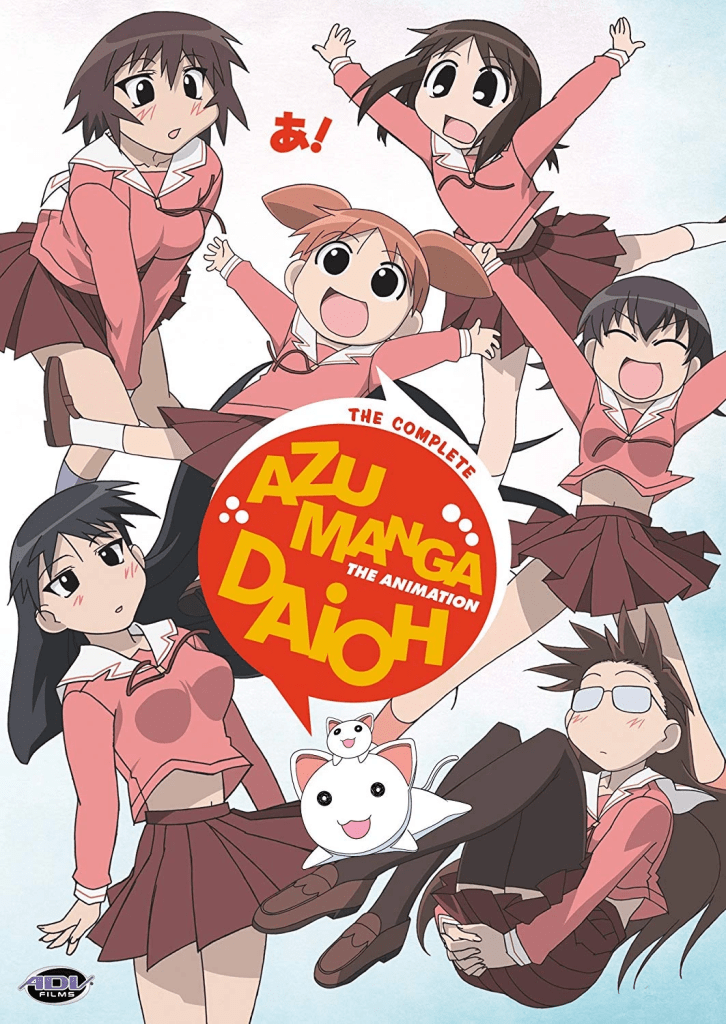
A four-panel manga series running from 1999 to 2002, Kiyohiko Azuma’s famous series is about a group of girls navigating their high school and personal lives, with occasional peeks into the lives of two of their teachers. Its anime adaptation follows the manga nearly beat for beat in the sense that every episode is split into different segments. Four-panel manga all have the same layout and are most commonly found in comedy manga series like Azumanga, and are not limited only to Japan. Western comics also have the formula down pat if you’ve ever read the comic strips in newspapers.
As far as plot is concerned, Azumanga is a slice of life series under the “Cute Girls Doing Cute Things” umbrella, a legacy of its era in the moe blob of the 90s going into the 2000s. From start to finish, the manga panels have the star characters and their friends doing really uninteresting stuff, but often in a comedic way. The anime is the same, and having seen it from start to finish the anime translates the humor quite well to the small screen.
But it still requires a working knowledge of Japanese culture and comedy to understand why it’s like this. Going in blind may not leave as much of an impression compared to going in with this knowledge. The cultural barrier was still standing strong in 2002, and a problem one can see at least with the dub is an old bugbear that only exists when trying to view older anime dubbed in English: poor translations.
One of the strongest concerns in the dub vs sub debate online is whether the translators/localizers, etc. can correctly interpret the scenes and localize them for western audiences without doing away with the original context and humor. Numerous examples of poor translations in the early days exist, but one that makes the rounds regularly online is the Pokémon scene where Brock shares his onigiri rice balls.
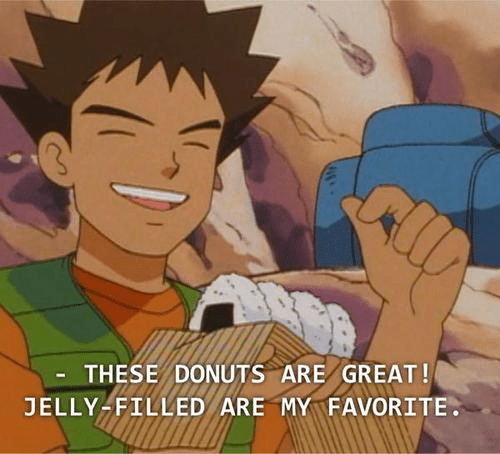
By now, everyone has seen onigiri. When it comes to cultural boundaries breaking apart, food also plays a role in that–not just language or history. The faulty dubbing issue isn’t as persistent as it was back in the day, but the concern still exists for many anime fans in the form of internet/video game slang showing up in the subtitles. Personally, I see why this specifically can ruffle some feathers since more and more people watch anime these days and may not always be the same people browsing social media regularly.
From my perspective, Azumanga has a few of these issues here and there, but they didn’t stop me from watching it all the way to the end. As a matter of fact, this series and Azuma’s other series, Yotsuba to!, are a pair of internet darlings. The off-color humor in both series is a source of numerous memes and no-context compilations of the funniest moments from the Azumanga anime due to the style of surreal comedy employed.
Humor like this can show the author’s attention to detail, especially when a seemingly unimportant gag or detail returns in a later episode or two.
Of course, the series isn’t just a barrel of laughs from start to finish. The characters all share intimate moments between each other and in their own personal lives. The character, Yomi, for example is featured in the opening weighing herself, highlighting an insecurity that gets light in the series. Chiyo, being the youngest character, has big shoes to fill with being gifted enough to attend high school at the age of 10. Osaka, real name Ayumu Kasuga, is the outsider, the awkward round peg outnumbered by a bunch of square holes. Her nickname is based on her home city of Osaka and the general perception non-Osakans have of the locals in that prefecture, sorta like how in the U.S. everyone has perceptions of everyone else based on what state they’re from.
Little moments like these help to flesh the characters out and with a small cast to work with, Azuma wasn’t as bogged down trying to give everyone the time of day. This doesn’t necessarily mean that smaller casts are better, but that it takes real care to ensure everyone in a work of fiction is given a piece of the pie. It isn’t always perfect and it doesn’t always need to be as long as all loose ends are tied up. Thankfully, the details in the series are all easy to keep track of through easy-to-remember clauses: one likes animals and tries to pet a finnicky alley cat; one is extra hyper and loaded with energy; one is prone to zoning out at random; one is a sports fanatic; and the list goes on.
Azumanga Daioh is the type of series that one can sit down and relax and have a few laughs while watching these girls go through high school. Its last episode is a neat and tidy conclusion that offers thanks to the viewers as a final goodbye, though I see myself going back for little things in the show.
If the playlist was still available in the English dub I’d provide a link but sadly, the channel that had all 26 episodes dubbed has been removed as of writing this. There still exists the subbed versions on YouTube and the good old-fashioned eyepatch wearing, peg legged, hook hand approach to viewing this series.
With any luck I’ll finally get done with the Undead Unluck anime and provide my thoughts. I’ll do what I can to have it out before the end of the month.
 Opinions on Entertainment
[…] their daily lives which overwhelmingly revolved around high school. Joining the moe trifecta of Azumanga Daioh and Lucky Star comes K-On! A series about an extracurricular club centered around light […]
LikeLike
[…] roughly about schoolgirls doing otaku things rather than cute things with music or just silly things goofily. Damn, I’m not making a good case for myself […]
LikeLike