Stop me if this sounds familiar in, not just animanga, but in media on the whole. A short guy way in over his head takes chances with the taller, at times stoic or stoic-presenting girl. By way of his bumbling charm, he wears her down and she agrees to one date. Turns out shortman is a charmer beyond all and the two are an item. Maybe they have a family and live on a tropical island with a talking turtle.
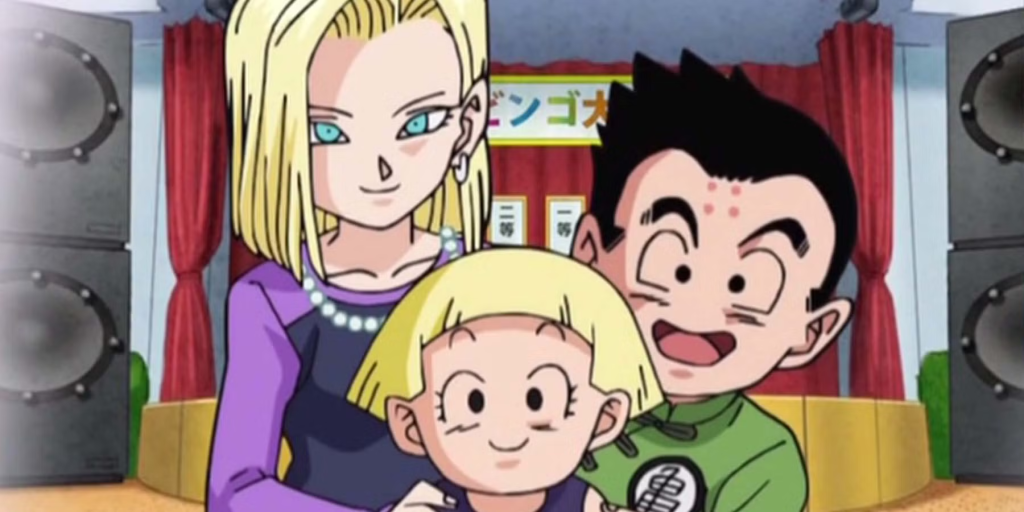
Admittedly, she made the first move, but Krillin won out in the end, so why split the hairs that Krillin has now been able to grow out?
Animanga came to the western Anglophone world in the early 1960s with Osamu Tezuka’s magnum opus Astro Boy, and about 20 years later came Dragon Ball and its more famous successor Dragon Ball Z, both penned by Akira Toriyama. Since then, the floodgates have introduced not only more anime to follow, but also different ways in which one defines a certain era.
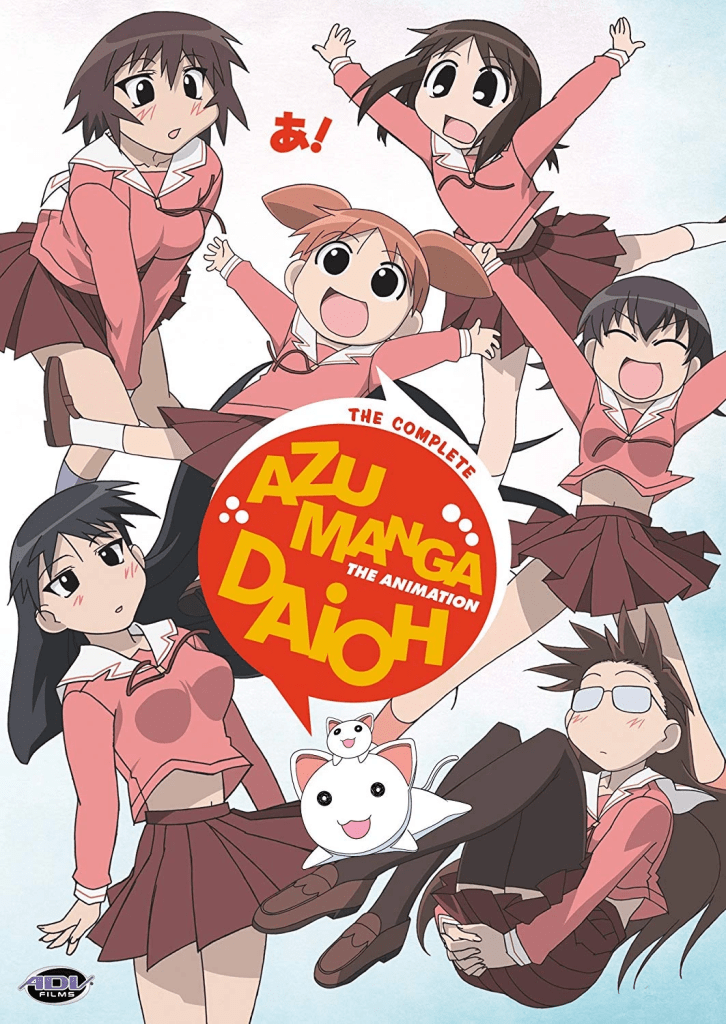
Calling back to a recent post, I once again searched for anime to watch on a whim and with how easy it is to pirate and upload on YouTube (for a time at least), my search led me to another series that needs no introduction: Azumanga Daioh.
A four-panel manga series running from 1999 to 2002, Kiyohiko Azuma’s famous series is about a group of girls navigating their high school and personal lives, with occasional peeks into the lives of two of their teachers. Its anime adaptation follows the manga nearly beat for beat in the sense that every episode is split into different segments. Four-panel manga all have the same layout and are most commonly found in comedy manga series like Azumanga, and are not limited only to Japan. Western comics also have the formula down pat if you’ve ever read the comic strips in newspapers.
As far as plot is concerned, Azumanga is a slice of life series under the “Cute Girls Doing Cute Things” umbrella, a legacy of its era in the moe blob of the 90s going into the 2000s. From start to finish, the manga panels have the star characters and their friends doing really uninteresting stuff, but often in a comedic way. The anime is the same, and having seen it from start to finish the anime translates the humor quite well to the small screen.
Channel: DarkDecietNarcissu
But it still requires a working knowledge of Japanese culture and comedy to understand why it’s like this. Going in blind may not leave as much of an impression compared to going in with this knowledge. The cultural barrier was still standing strong in 2002, and a problem one can see at least with the dub is an old bugbear that only exists when trying to view older anime dubbed in English: poor translations.
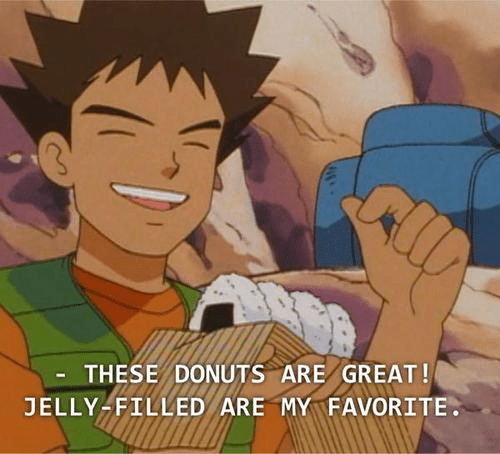
One of the strongest concerns in the dub vs sub debate online is whether the translators/localizers, etc. can correctly interpret the scenes and localize them for western audiences without doing away with the original context and humor. Numerous examples of poor translations in the early days exist, but one that makes the rounds regularly online is the Pokémon scene where Brock shares his onigiri rice balls.
By now, everyone has seen onigiri. When it comes to cultural boundaries breaking apart, food also plays a role in that–not just language or history. The faulty dubbing issue isn’t as persistent as it was back in the day, but the concern still exists for many anime fans in the form of internet/video game slang showing up in the subtitles. Personally, I see why this specifically can ruffle some feathers since more and more people watch anime these days and may not always be the same people browsing social media regularly.
From my perspective, Azumanga has a few of these issues here and there, but they didn’t stop me from watching it all the way to the end. As a matter of fact, this series and Azuma’s other series, Yotsuba to!, are a pair of internet darlings. The off-color humor in both series is a source of numerous memes and no-context compilations of the funniest moments from the Azumanga anime due to the style of surreal comedy employed.
Channel: Brolita
Humor like this can show the author’s attention to detail, especially when a seemingly unimportant gag or detail returns in a later episode or two.
Of course, the series isn’t just a barrel of laughs from start to finish. The characters all share intimate moments between each other and in their own personal lives. The character, Yomi, for example is featured in the opening weighing herself, highlighting an insecurity that gets light in the series. Chiyo, being the youngest character, has big shoes to fill with being gifted enough to attend high school at the age of 10. Osaka, real name Ayumu Kasuga, is the outsider, the awkward round peg outnumbered by a bunch of square holes. Her nickname is based on her home city of Osaka and the general perception non-Osakans have of the locals in that prefecture, sorta like how in the U.S. everyone has perceptions of everyone else based on what state they’re from.
Little moments like these help to flesh the characters out and with a small cast to work with, Azuma wasn’t as bogged down trying to give everyone the time of day. This doesn’t necessarily mean that smaller casts are better, but that it takes real care to ensure everyone in a work of fiction is given a piece of the pie. It isn’t always perfect and it doesn’t always need to be as long as all loose ends are tied up. Thankfully, the details in the series are all easy to keep track of through easy-to-remember clauses: one likes animals and tries to pet a finnicky alley cat; one is extra hyper and loaded with energy; one is prone to zoning out at random; one is a sports fanatic; and the list goes on.
Azumanga Daioh is the type of series that one can sit down and relax and have a few laughs while watching these girls go through high school. Its last episode is a neat and tidy conclusion that offers thanks to the viewers as a final goodbye, though I see myself going back for little things in the show.
If the playlist was still available in the English dub I’d provide a link but sadly, the channel that had all 26 episodes dubbed has been removed as of writing this. There still exists the subbed versions on YouTube and the good old-fashioned eyepatch wearing, peg legged, hook hand approach to viewing this series.
With any luck I’ll finally get done with the Undead Unluck anime and provide my thoughts. I’ll do what I can to have it out before the end of the month.
History – it’s the story of us. – The Cynical Historian
Fitting that I started this with a quote from a YouTube recommendation I gave out last week. So I did have this planned for yesterday, but postponed it due to dental work, and as of writing this post-oral surgical care by way of a saltwater rinse and ice.
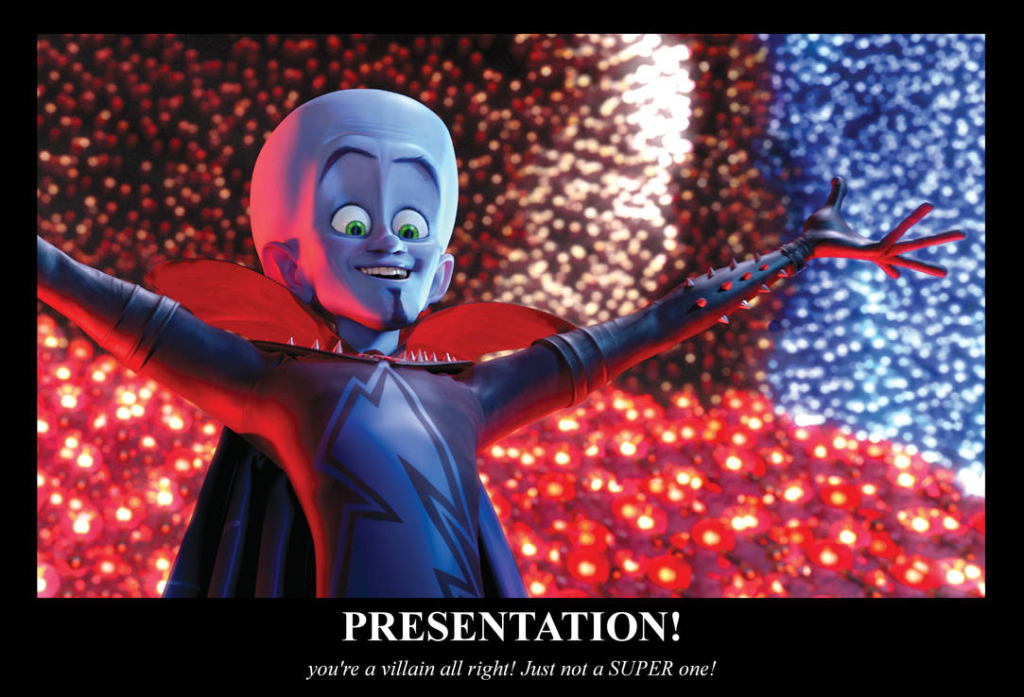
Feeling better now than I did last night, I’d like to get to a topic I’ve come to love: history. I didn’t really come to appreciate the subject until high school and most of it came down to a succession of teachers who otherwise did their jobs well, but failed to make it appealing to me. I liken it to one of the many memes to have come from the Megamind movie: the difference between a villain and a supervillain is in the presentation.
Credit: LindeRock, DeviantArt
You know the saying a great salesman can sell ice to a snowman? Or any of the other ones along those lines? I like to think that’s applicable to teaching. A good teacher can make the worst student give a damn about math and science and watch them pass with flying colors. And as previously stated, a conga line of boring and ineffective teachers failed to get me to care. Then when I was in the 10th grade, I had a teacher who was beloved by everyone in his class. He counted as one of the few who could bring entertainment to an otherwise dull subject.
This was about 9 to 10 years ago during the 2013-14 school year, so my memory of everything I learned in school from that time is naturally hazy. But there were a few standout lessons from that class. Being a global history class, the world wars did show up, but like in real life, the Second World War in history class kicked it up a notch. Stop me if this sounds familiar, but when it came to the D-Day and Normandy landings, did your teacher ever show you this scene from Saving Private Ryan?
Channel: MovieClip
One of the most iconic and effective scenes in cinematic history, if it’s realistic enough to trigger PTSD in even the youngest veterans in 1998, it’s realistic enough for a high school history lesson. Funny enough, I believe high school was the second time in all my schooling that I’d seen that scene; the first time being in middle school in the 7th grade.
Another lesson I recall from 10th grade was the life of Nelson Mandela. A South African lawyer and politician, standing against apartheid, getting jailed for life only to be released by President F. W. de Klerk in 1990 and becoming the first black president of South Africa after successful implementation of free and fair elections in 1994, dying at the age of 95.
He also has his name on a widespread false memory phenomenon. Doing some quick research on the Mandela effect by the way, it might have been a crossing of the wires between the numerous “Free Mandela” campaign slogans and his hospitalization while incarcerated, but I don’t think there’s a definitive answer for why it was so widespread until his death.
Still, I and others from that class remember him doing an excellent job and while not straight A’s, I remember doing well enough to advance to the next class. Slightly curious now what was given out in the AP classes. Since leaving high school though, I’ve gradually been getting more and more of my history lessons from YouTube of all places, most notably, Extra Credits and their series, Extra History.
I know there’s probably a handful of reasons for why many U.S. history lessons gloss over or outright omit select historical eras like timing or the credits of the teacher/professor, but the deficit of some meaningful history lessons is definitely felt when there’s an entire smorgasbord of history and history adjacent channels on YouTube alone and it’s not even the History Channel anymore.
In the case of Extra History, I remember first watching their debut history topic on the Punic Wars and when I was in college for the Spring 2017 semester, the Seminal Tragedy series helped me write up a report on World War I. My choice for that topic was because of the 100th anniversary of U.S. entry into World War I coming up that year. Interestingly, I did this for an English course, not a History one. It was an exercise in reading and writing comprehension, and I believe I got a decent grade for that.
As for my history journey, again as a subscriber to Extra Credits, now Extra History which was split off from the latter, there was a time in YouTube history where different creators would collaborate on different projects, often two different versions of the same subject on their respective channels. These days, especially in the HistoryTube sphere, they’ve expanded to include multiple history YouTubers covering aspects of the same or similar topics, like Revolutions, the YouTuber’s home state or country, or for special occasions, Holocaust Remembrance.
In one such collaboration, the E.C. crew collaborated with Cody Franklin of AlternateHistoryHub. Right as they wrapped up their series on the Articles of Confederation, Cody barged in at the end to propose a scenario where the U.S. kept the Articles of Confederation on the books.
Channel: AlternateHistoryHub
Following that, this branched out into the discovery of multiple different YouTubers who cover history occasionally or make it their specialty. M. Laser, Oversimplified, The Cynical Historian, Knowing Better, Overly Sarcastic Productions and others. I know that earlier I made it sound like an indictment on the school system that numerous topics in history aren’t covered very well, if at all, but I’ve done the research on why this would be the case and I can see the other side of this debate.
In the U.S., I’ve heard that most schooling is meant to be generalized in the hope that the student will eventually find something that’ll click with them in the formative years. Then again, when I was in school, college and university was looked on and admired with the same praise saved for a famous statue. On the one hand, it may increase the chances of someone becoming passionate enough to make a subject their entire life (or in the worst case scenario, their personality), but it’s not a 100% guarantee. People don’t work that way.
But whatever, these things do happen sooner or later, and as I’ve written about in October, one of my passions became writing and literature, such was the case of both this blog and another one from two years ago. Getting back to history, I do owe gratitude to my high school history teachers for inspiring my deep dive into history as well as the several dozen or so history YouTubers picking up the slack, even when the YouTube algorithm refuses to acknowledge their contributions to the subject. Some of these channels, I’ve recommended before but I do so again for some subjects in which I can say the channel in question is a specialist.
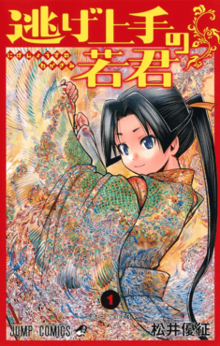
For my take, I often use history in the plots of my novels, whether as a centerpiece for a character or an event that would be in the back of a character’s mind. Other times, I come across a reference to an event in other media or look up the event that inspired X to read up on whether the reference is true for the former or if creative liberties are being taken for the latter, such as the case with the manga, The Elusive Samurai.
Having said that though, I seriously doubt I could ever become a seasoned historian. The research and groundwork of it all doesn’t seem all that appealing or even particularly challenging. Maybe this is me writing from the mindset of a student and there’s a historian reading this who’ll shed some light on the process of writing a dissertation or getting certified to teach history especially on a given subject, but I think I’m satisfied with just tracing the sources back on Wikipedia or Encyclopaedia Britannica.
For this week, I’m recommending the channel TLDR News and its subsidiaries.
TLDR News is described as a network of short form news content channels with the intended aim of taking the world’s headlines and boiling them down into a digestible, easy to understand, video format. Each of the channels is specialized to a region. Since their British, TLDR News is centered on British news cycles concerning politics, economics, and society. The EU variant covers issues facing Europe, the US for the United States, Global for the rest of the world, Daily runs down the top headlines of the day with a segment saved at the end for good news and uplifting stories and finally, this year, they’ve done a relaunch of their business channel covering corporate and business news. The link to their main UK channel is above and from there you can find their other channels as well as their social media links in the about sections of their YouTube channels.
Also, if you’re already subscribed to it, you can find them on the streaming service Nebula.