
A game whose title is an easily ignored command
Zero Punctuation’s review of a 2013 action-adventure video game based largely on f[clock ticking]ing with people’s memory and further contributing to collective false memory, or the Mandela effect, was on my mind not too long ago. On sale on Steam, Remember Me is something of a spearhead to Don’t Nod Entertainment’s later time-manipulation faff about, Life is Strange, only What’s Your Name Again? is more sci-fi than that other game about early-2010s hipsters and young adults who’re better off crowding Starbucks locations in Portland and making a mockery of the acoustic guitar.
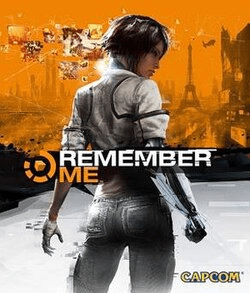
Maybe, like Yahtzee suggested, it’s the butt that’s talking. “Remember Me!” Who wouldn’t?
My time with the game is only just beginning, yet the introductory story and setting tell you a lot about the world. A megacorporation promises to erase people’s negative and most traumatic experiences and promote the preservation and strengthening of positive and transformative ones in favor. Basically, the monetization of airheaded nostalgia, best suited for a video game that takes the piss out of 1950s Americana a la Grease and with a Chainsaw-wielding Cheerleader.
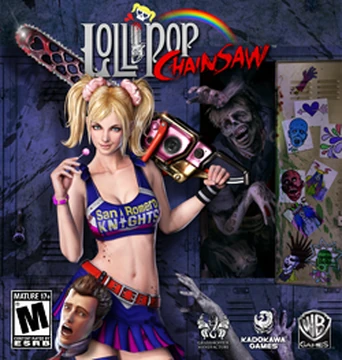
Or at least that’s how it presents itself. The sci-fi dystopia setting immediately turns this into 1984 on steroids with the reality of selling mind-altering drugs for profit. China learned this after Britain poisoned Guangdong with their opium, something the Triads actually did historically before leaning on designer drugs not seen since a vigilante cop gunned his way up to the source of the problem.
Once the sales pitch of Mind Rapes 50% Off is out of the way, the game proper cuts to the protagonist, Nilin, a memory hacker-remixer who can treat peoples memories the same way a DJ and audio mixer combines the individual sounds of instruments to overlap them into music video audio. I think. I’m not a musician or audio mixer in the professional sense; testing on OBS is nothing above an experimental process ¯\_(ツ)_/¯.
Nilin starts off resisting a total memory wipe to the best of her ability, and all she has is her name, the behind-the-scenes look of the megacorp, Memorize, and a voice directing her to a resistance group that sees how the sausage is really made and opts to fix that one memory at a time. Quick, reader! What’s the best way to defeat your opponent? Mental chess? Xiangqi? Shogi? Mahjong? The Art of War?

I kinda made myself laugh by imagining one of this being said by one of the Cantonese VAs for Sleeping Dogs.
The answer to that question is to make him your friend. So far, the first major instance of mental f[rewind button]kery is to alter the memories of an assassin on Memorize’s payroll and turn her into an “ally.” Then the ball gets rolling. This is the furthest I’ve gotten in the game so far, which helps me quite a bit since I can’t spoil what I haven’t seen and the associated Wikipedia page doesn’t count. I can read all about Jonathan Irons double-cross in Seattle on Wikipedia, but experiencing it firsthand is where it’s at. Say what you will about that game, I’m pretty sure the barracks cat outside has; but memes and mockery aside, it had a neat story… and chose to lock the damn Zombies mode behind a f[cash register]king paywall! ಠ_ಠ

(ノಠ益ಠ)ノ彡┻━┻
So instead we’ll focus on the most important part of the game: mechanics! So what exactly is memory hacking, aside from a tool you’d probably use to force an unpopular teacher to forget when an assignment was due? Memory hacking is pretty much exactly what it sounds like: a dive into the target’s memory’s to uncover critical moments in their life and change them. It’s a deceptively simple puzzle mechanic that plays into the narrative and can unlock unique scenes based on the context. So far, the assassin’s memory of her husband’s expensive operation is falsely remembered as a botched operation, so instead of gunning for you for money, she forms a transactional temporary partnership.
All this leads in the direction of combat mechanics and while it’s more in-depth than what 2008’s Mirror’s Edge had as a “combat system,” and Amnesiac’s Memory is less complicated than That Time Kratos Threw Down With Conor McGregor In Norway, but it inherits a couple of mechanics from Sleeping Dogs that make it a bit less refined. The game shows you that too many mind f[heave]ks makes you an addict and turn you into a perfect candidate to be Gollum’s bride.

I jest but someone has, is, or will write a confession to this character.
Paying homage to the time-honored tradition of social ostracism, these leper colonies are hidden deep beneath Neo-Paris where the game takes place (sorry, forgot about that bit. Hmmm, forgot…) so that no one sees the harsh after-effects of this aggressive, inorganic mental cleanse. If Twitter has taught me anything it’s that the best medicine involves turning off the computer, muting your phone, going outside, and talking to people. Short version: touch grass. Matter of fact, f[gun-cocking]k the grass, marry the grass, start a family with the grass. Come on, it doesn’t bite.

Hell of a lot better than erasing your memory ’til you’re mentally retarded.
As for the resistance to megacorporation angle, I’m a bit torn on this because I see two sides here: On the one hand, resisting authoritarianism and downright autocracy is a time-honored French tradition that Poland never abandoned, and other European nations perverted with a dash of Wilsonianism, so Don’t Nod is merely writing what may be hammered into every little French child’s head from birth ’til croissant-flavored death. On the other hand–and I’ll have to reignite my French Piss Taker General passion inherited from Britain for this–that part about resistance in Paris and self-determination is something of a theme that’s more or less defined the place since Louis XVI and Marie “Cake Ye Shall Have” Antoinette found out their heads were detachable.
Be that as it may, circling back to the combat, in Sleeping Dogs, it’s combat upgrades typically come with any mission and Jade statue that can be returned to Sifu Kwok. Triad upgrade points to better blend in as a sanhehui (三合会) member; police upgrade points to better access cop-exclusive goodies and hacks; and Jade statues to return to Sifu Kwok in exchange for martial arts moves that Wei promises to not use for devilish tricks like Sifu’s other ne’er-do-well students. It’s a multifaceted system of combat that didn’t really need any further refinement, even with some of the DLC content recontextualizing for the sake of the odd HK Golden Age of Cinema callback.
For Remember Me, the combat system is on a spectrum, with overly easy/nonexistent being 2008’s Mirror’s Edge to medium and decent being Sleeping Dogs to needlessly complicated being 2018 God of War–and this is purely for the upgrading part. Remember Me sits nestled between Mirror’s Edge and Sleeping Dogs, though slightly tilted Mirror’s Edge-wards with how easy it is to get knocked down if you don’t know what you’re doing against the leper, I mean Leaper enemies, notably the big ones that can slap the paint off a wall… from the other side.
Other reviewers who got further along then me also claim that it goes too far into sci-fi babble, lobbing too many terms that constitute Alt-Tabbing out to dictionary.com. Sounds familiar…

My final note is that as a look into what would eventually lend itself to the Life is Strange series, Remember Me is something that at least deserves to be remembered as opposed to the cruel ironic fate it has now. There was a lot learned from what became of that one-off venture to turn Life is Strange into the multi-series phenomenon it is now, though its star has waned a little in recent years. Matter of fact, the Remember Me Wikipedia page mentions that the pitch for a sequel to Remember Me was in Capcom’s hands since they published the 2013 game, and Capcom ultimately decided to take it out of their hands and place it in the dustbin. Wonder what other games were being published by them that won out?
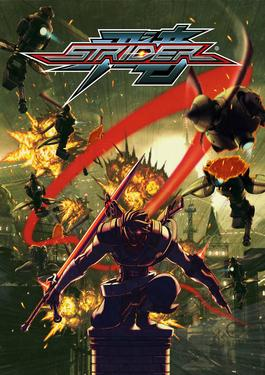
Oh relax. They rebounded! With Resident Evil 7: Biohazard and 8: Village, where Ethan Winters trades Louisiana for Romania.

Short version: Remember Me is something to be archived, Life is Strange built around its memory aspect, and Lady Dimitrescu is (not) the final villain.


[…] an essential and simplified piece of the game that it stands on with parkour taking center stage. Remember Me and Mirror’s Edge with a zombie infection twist. Probably not the first to try it, and most […]
LikeLike