
Like an ape-themed Crusader Kings
Before I start, I meant to have something out at least by Friday, but I delayed it because I had recently graduated from AIT on Fort Eisenhower and took ten days of leave to relax and unwind from the grind. I was enjoying the vacation. It also would’ve been close to when my leave would end so it would’ve cut into time I needed to repack and organize all of my s[drum roll]t. Couple that with jet lag that comes with a six-hour flight from Baltimore to El Paso and adjusting to a new climate and time zone, and I was in no shape to write anything. I’m back now and ready to get back in the groove, though like AIT, now that I’m part of the big Army, time could be taken away from me at the drop of a hat, so if nothing is out by Friday or Saturday, that’ll be the reason for it. Now the post!
This one had been a long time coming, personally. My exposure to the Planet of the Apes franchise was all the way back in 2011 when older family members took me to the movies to see Rise of the Planet of the Apes. At the time, I never realized it was the second reboot in a film franchise that began all the way back in 1968 with Charlton Heston as the star, which in turn was borne from a French sci-fi novel that was published five years prior in 1963.

Bet you didn’t know it was a book first, did ya?
Those in my family who took me were definitely old enough to remember the Charlton Heston movies, and it wasn’t until 2014’s Dawn (that I believe I pirated back then) that I had heard more about the franchise, particularly from James Rolfe of Cinemassacre and Angry Video Game Nerd fame that I learned that the franchise goes back five decades. Here’s the video:
Admittedly, he’s made more videos about the Planet of the Apes franchise, including a 2017 review of War (also linked here), so if you want more of his opinions on the franchise check out the channel and search for Planet of the Apes.
Hell, without meaning to I’ve done a lot of research on the franchise from the lightning in a bottle performance of Charlton Heston–regularly parodied for years on end–to the franchise’s worst fears manifest in the 2001 reboot starring Marky Mark and the Accursed Bunch, which I believe prompted the 2011 reboot trilogy. The premise is definitely an interesting one and a long-lasting one considering all the movies. Wonder how much a box set would cost of all of them?
The original ended with Heston’s character realizing that apes and humanity have reversed their roles and he didn’t find out until he came back to earth from a rocket ship. Spoiler? Honestly, not necessary. Like I said, the ending of the movie had been parodied to death ever since, so I hesitate to label it as such. Don’t let that stop you from checking out the original if you’d like to see where the franchise got its bearings.
I personally never saw the original films or the Mark Wahlberg reboot, all I know was that it was put to rest in the ’70s after one or two failures (someone with more knowledge will correct me if that’s not the case), and the 2001 reboot was so bad that whatever plans there were for a sequel were shelved permanently until the next decade, which brings us to the new more successful trilogy.
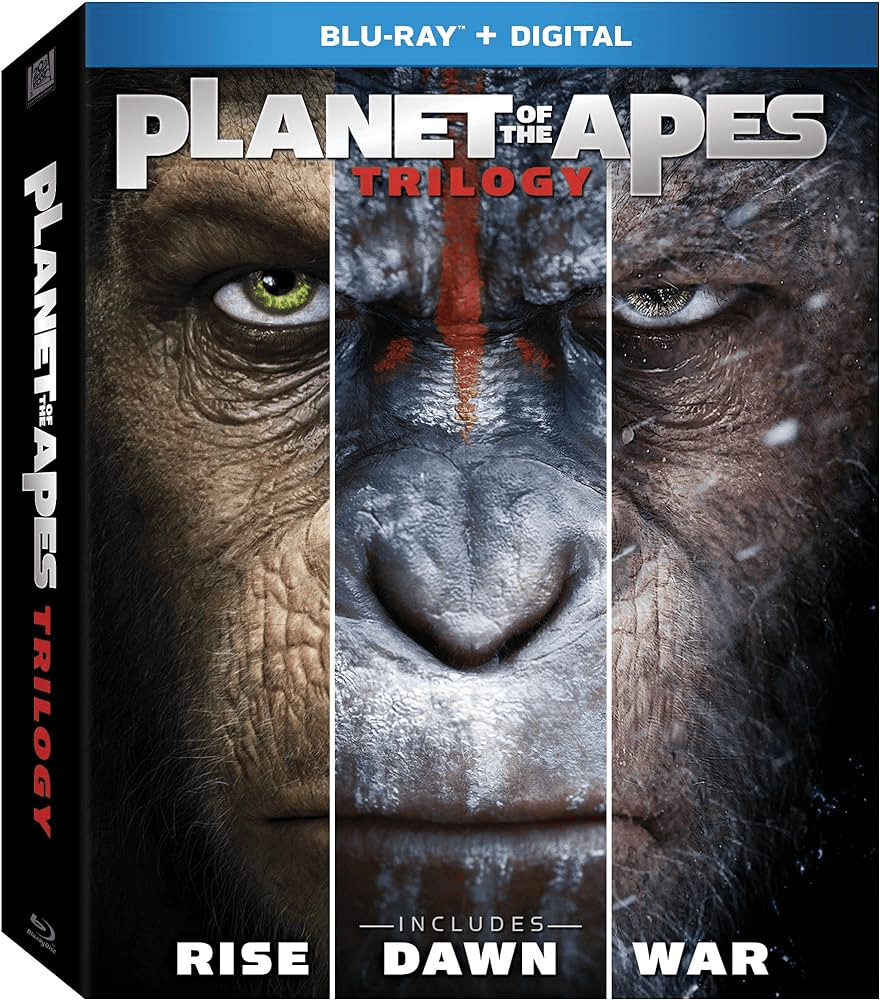
It isn’t everyday that a trilogy produces installments better than the last, but if the Rotten Tomatoes scores are still worth anything then the reboot trilogy got better and better with each installment. To catch you up to speed, Rise establishes the beginning of the ape revolution, dawn shows the tensions between humanity and apes, and war shows the culmination of peace talks broken down by a failure to communicate, ironic for the apes since they’ve evolved past the need for communication through sign language–and fitting for humanity since the simian flu in lore robs them of their ability to communicate through anything other than sign language.
Seven years later, 2024 brings us Kingdom of the Planet of the Apes, and much has definitely passed since we last saw any of the apes. Generations after the reign of Caesar, the apes who have long taken over as the dominant species on earth, have fallen into the same trap that plagues humanity even today: tribalism. Different clans of ape with their own philosophies, religion, societies, etc. have popped up, each accusing the other of being different or wrong and in need of fixing.

Almost reminds me of a certain lesson taught to us by a revolutionary known as Huey Freeman.
The different clans within the film all have their own sets of rules, some militaristic, some religious, and a bunch of others that we don’t see directly, but can be implied to be elsewhere in the world. One such clan is that whose traditions center around taming and training birds of prey, namely eagles. The protagonist who belongs to this clan is named Noa, and part of a bonding ritual in his clan involves taking an egg from a nest at a high peak and returning it unscathed to the clan.
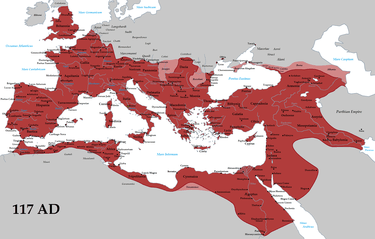
His clan is attacked by “followers” of Caesar who bring him to the main villain of the film, Proximus Caesar, an ape with a Julius Caesar complex the size of the Roman Empire at its peak.
One ape, Raka, whose clan had done research and catalogued Caesar’s teachings, explains that these so-called followers have a distorted view of Caesar. Not their fault since his struggle couldn’t be written down and chronicled, but the central focus of Caesar’s struggle had been lost to time. Raka tells Noa that Caesar’s core teaching was “apes together, strong,” an important scene you may remember from Rise when Maurice asked why he gave a cookie to Rocket, one of the more combative apes in custody.
Seeing as the apes are divided by clans like early humans were (and modern humans still are), that lesson had been forgotten. Raka also tells Noa of humanity’s many accomplishments prior to the global world-ending virus; Proximus is also aware of these now antiquated human achievements and inventions, but the tone of voice separates their characters. Raka boasted of humanity’s achievements on the mission to tie the world together while Proximus boasted of humanity’s achievements on the mission to keep the world divided.
Like a warlord, Proximus is dead set on getting humanity’s warfare capabilities, locked behind a giant vault. Throughout the movie, Noa’s character is drip-fed to the audience. Unlike Caesar who was a diplomatic figure with the charisma and courage to sway even the most violent of apes, Noa isn’t a particularly violent character. He’s a soft-spoken, pacifistic character who resorts to violence as an absolute last resort. He uses his words more so than his paws, but it’s not like he doesn’t have flaws of his own.
The state of the world being what it is in the franchise, most apes are lucky if they lay eyes on a wild human. When Noa does see a human, he’s not the most trusting, likely a product of how he grew up. But with Raka acting as a more knowledgeable foil to the young, ignorant but still growing Noa, he learns more about humans from him than even his elders knew, which shows how much knowledge of the old world is lost. In comparison, archeological sites in recent history have rewritten what we thought we knew about early settlements and civilization, like the eastern Turkish structure Göbekli Tepe, said to be older than the first civilization estimated to have been built between 9600 and 8200 BCE. Archeologists are still learning about it as we speak.
“Ape-themed Crusader Kings” is a bit of a joke, but there’s some truth to it. It’s not unheard of for media to look to mythology or religion as a source of inspiration, several video games have become famous for it. In this case, the way Noa is written appears to be Christlike, which may set him up for such a role in the future in this series, provided there is a sequel to Kingdom. Going by audience and critical reception, it looks like there will be and I think there’s going to be a theme in the titles. This successor is called Kingdom and there’s a bunch of early Christian and even ancient Roman themes within the film. Rome itself began with a kingdom, established a republic and then built an empire before it split and the west fell to ruin. My guess for a sequel would probably something along the lines of Republic of the Planet of the Apes, followed by Empire of the Planet of the Apes, just to keep the theme going.
Of course, this is subject to change and whatever’s cooking in the writers’ minds may or may not line up with what I’m thinking of, but as it stands, Kingdom is a welcome addition to the Apes franchise (don’t let the naysayers bray at you like the donkey-headed homunculi they are). I saw it on a streaming service recently, and if you have the means to do so, be sure to sign up and stream it in your own time whenever you’d like, or if you’re a physical media enjoyer, A. based, and B. wait for a DVD release so you can watch it whenever you’d like. Its an age-old franchise with a hell of a lot of lore and history to uncover. Have fun!
 Opinions on Entertainment