Followers and newcomers will know that my tour of unsung media lacks borders. From the safety and comfort of these great United States, I always look outward. My favorite series, medium notwithstanding, have influences upon influences that go back seemingly for millennia. Max Payne? The squinty Finnish bloke who brought us that combined The Matrix with Norse mythos with John Woo operatic gun-fu. God of War? The title alone should tell you it’s Greek before it clues you in to the ancient tragedies and legacy Claymation Greco-Roman film adaptations of the late ’60s and ’70s. Mortal Kombat? Started as a love-letter to kung-fu films, added a flair of body horror–and being the target audience makes it difficult to understand why parents didn’t like it in the ’90s. Then again, consider what made headlines in the ’90s in America:
Among other things, the first black president did NOT have sexual relations with that woman.
Although I’m as much a piracy advocate as Gol D. Roger, it’s not like the legacy services don’t occasionally give us something worth viewing. The way I got into watching movies primarily on YouTube (before looking elsewhere if what I wanted wasn’t available) began with that time I started to binge all the Terminator movies in rapid succession, next to a viewing of Saving Private Ryan.
Hollywood has a century and change with a wealth of films and genres to back it up, but it’s obviously far from the only producer of groundbreaking films. On the other side of the world on the Pearl River Delta, there’s a city in Guangdong Province that’s been a part of the British Empire longer than it’s been Chinese, and a look through city streets and select-people’s names shows this.
Regular viewers will know that in the animanga space, I’m fairly okay with keeping up with series, especially when they merchandise and franchise out like Naruto or Dragon Ball. In the west, however, this gets trickier and more challenging for a number of reasons. Reboots/remakes/retcons, etc., screw with canon so much that it starts to look like a hentai doujin with some of the most accursed tags. Franchising itself, I highlighted just now, but it’s not always done neatly or with a solid plan. For example, Star Wars is the champion and great-grandfather of all references. People are insane enough to catalog every single reference to George Lucas’ brainchild, but what makes this an insane task specifically for this franchise is George Lucas getting in the way of his own vision by constantly remaking everything. Creatives tend to be this way, as I would know, but I’d probably not be this uptight about my own projects.
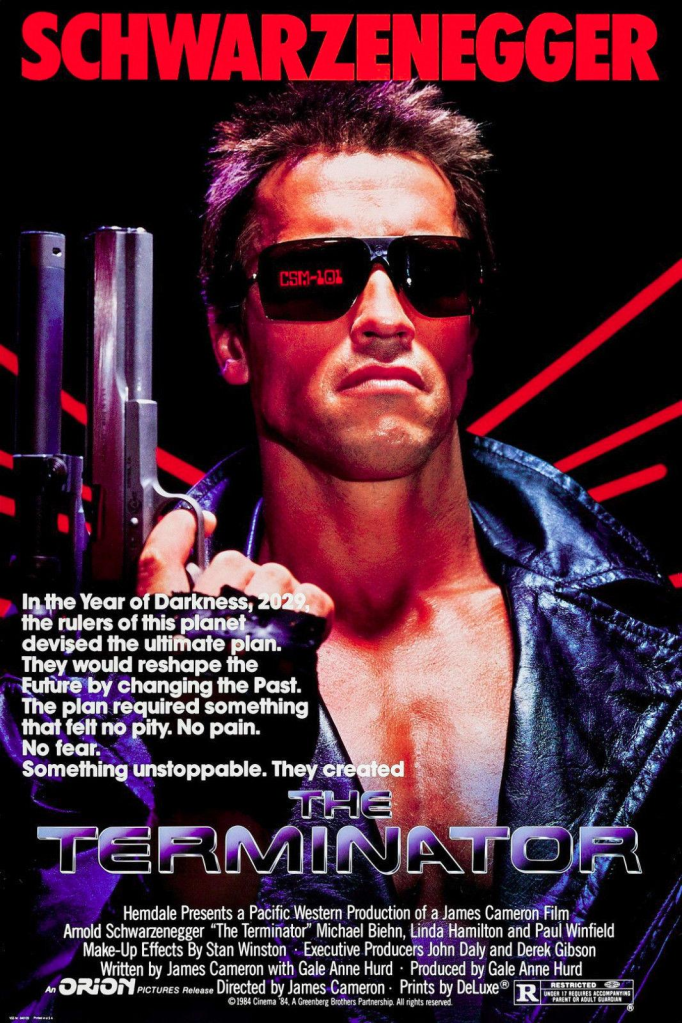
There are a few series whose franchises I’ve followed with full or near-consistency to say that I approach expert level knowledge. Those three are Deadpool, the reboot Planet of the Apes trilogy, and the topic of this post, Terminator. But while Merc with a Mouth and Upright Apes were more gradual, I started to follow the Terminator franchise more closely around 2014.
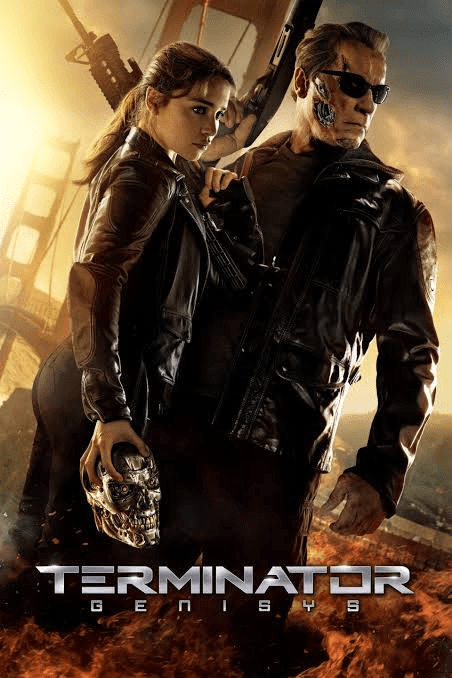
I don’t recall specifically what brought this on, but I think it might have been a rumor of sorts of an upcoming movie at the time, the fifth one in the franchise and on reflection one of the least warmly received sequels probably since 2009’s Salvation, Terminator: Genisys.
If I was a cynical asshole, I’d probably write up a snarky review about how the franchise only exists because Arnold made it so in the 1980s, his absence in Salvation proves that he was the adhesive holding it all together, and his return in this one is both a proof of concept while also reminding us that glue eventually ages too. Both harsh and what it would look like if not written by a fan but a critic looking to get paid for every character in their document. But I’m vaulting over the USS Theodore Roosevelt on this one.
The sudden confirmation of another movie made me want to play catch-ups, hold the mustard, on the franchise and I did so in an era prior to my current methods of pirating. Pre-adpocalypse, YouTube let you get away with nearly anything visual media-wise though some artists’ estates and family were hook-deep into the copyright claim booth (or I’d remember being able to listen to Jimi Hendrix’s Little Wing at the time), but my first way to look into the franchise was on YouTube, right next to a now deleted channel that had the full length version of Saving Private Ryan. It’s still possible even now to find channels daring to upload full- or seemingly full-length versions of the original 1984 movie, but be careful. Sometimes editing tricks are used to get past the censorship and burn away minutes of your life.
Terminator 2: Judgment Day couldn’t be found on YouTube so I went to a now-defunct torrenting site to watch it. The fate of that site is one shared by several, taken down in a global effort to crack down on piracy. Did it lead to arrests? I didn’t care honestly. Watching movies without spending the pennies to do so was still a challenge for me personally, but I kept trying. I did it with 300 and would nonetheless keep doing it until I discovered services like Tubi and was able to pay for Netflix.
Then of course there was Terminator 3: Rise of the Machines which came out when I was about 4 years old. So technically, this was my introduction to the series, considering I watched it at a babysitter’s house at the time. Rewatching it at 16 and comparing it to the last two films, it was a decent addition to the series as a whole, but not as good as 1 or Judgment Day.
All things considered, I think the third film is looked on two harshly. Dark Fate tried to rewrite it starting here and personally I don’t think Rise of the Machines deserved that. Salvation, however…
I’m exaggerating, but if I had to use a metaphor, if Terminators 1 and 2 were the exciting points, 3 is the midpoint before Salvation starts going down hill, and gradually. I admit that I’m a bit biased here largely because I was watching them all in rapid succession in the lead up to Genisys. Hell, I’d caught up to all the movies long before it was ready for a theatrical release and by the time it released, I once again relied on the dark powers of piracy.
I saw it the following year when I was 17. I don’t remember the trailers spoiling it for me as much, but putting the major plot points, twist included, is almost never a good sign. But I pushed on through and to recap all the movies (spoilers, but it shouldn’t matter anymore):
Terminator 1: cyborg is sent back to kill the mother of the resistance. The resistance has the same idea and sends an agent back to save the mother (and also father the leader of the resistance)
Terminator 2: cyborg is captured and reprogrammed by the resistance to save the leader as a child when the same thing is tried again with an even deadlier model. Mom is also there, in an asylum, “why are you booing me, I’m right” style.
Terminator 3: leader of the resistance afflicted with trauma at the killer cyborgs trying to kill him all his life, another one is his guardian and they try to destroy SkyNet at the source. Love story subplot, chased by Terminatrix, Terminatrix fails, but SkyNet lives on in backup hard drives (I can’t remember it that well)
Terminator 4: full-blown war, leader of resistance sees to combat meanwhile death row inmate is lethal injectioned and transformed unknowingly into a cyborg to get close to the leader but deviates from its mission purpose, leader almost dies but the deviant cyborg/ex-death row inmate saves him at the eleventh hour, SkyNet is disturbingly patient
Terminator 5: resistance ongoing, SkyNet’s next trick is to kill the leader and make a cyborg of him, meanwhile father of the resistance goes back to 1984 as usual (fanservice detected) to find that the timeline’s been f[dial-up modem]ked very thoroughly, they go back to the present (2017) to fight with better weaponry (I think), the Golden Gate Bridge falls for the millionth time in history (it happens a lot in action movies for some reason), cyborg leader of the resistance is defeated, SkyNet still operates…
…and thus was born an effort to rewrite the damn movies. Or at least that’s what the media thought at the time. Dark Fate was the franchise’s last ditch effort at recapturing the magic and to do the third movie justice since it doesn’t fit as neatly into canon as one would’ve hoped pre-release, but the efforts were in vain.
As a fan of the series, Genisys was the let-down that keeps on letting down. It started out well but the grave got so deep, Satan needed to come up and tell the funeral directors that that’s not how grave digging works. I don’t wanna be harsh on the Terminator franchise, the concept does still play on a lot of fears and anxieties, many of which are becoming true 40 years later, but to see where it is now is disappointing. The only thing I have to show for it now is an uncanny apprehension for anything A.I. It took me longer than normal to even try using chatbots and I treat them like Wikipedia or r/AskReddit most of the time. I guess I’m just still testing it. For what it’s worth, if you’re going to go into the franchise yourself, watch the first 3 movies and then maybe go watch the Sarah Connor Chronicles TV series.
And then finish it off with the R-rated uncut version of Robocop 1 and 2 for more sci-fi action gore.
Before I start, I meant to have something out at least by Friday, but I delayed it because I had recently graduated from AIT on Fort Eisenhower and took ten days of leave to relax and unwind from the grind. I was enjoying the vacation. It also would’ve been close to when my leave would end so it would’ve cut into time I needed to repack and organize all of my s[drum roll]t. Couple that with jet lag that comes with a six-hour flight from Baltimore to El Paso and adjusting to a new climate and time zone, and I was in no shape to write anything. I’m back now and ready to get back in the groove, though like AIT, now that I’m part of the big Army, time could be taken away from me at the drop of a hat, so if nothing is out by Friday or Saturday, that’ll be the reason for it. Now the post!
This one had been a long time coming, personally. My exposure to the Planet of the Apes franchise was all the way back in 2011 when older family members took me to the movies to see Rise of the Planet of the Apes. At the time, I never realized it was the second reboot in a film franchise that began all the way back in 1968 with Charlton Heston as the star, which in turn was borne from a French sci-fi novel that was published five years prior in 1963.
Bet you didn’t know it was a book first, did ya?
Those in my family who took me were definitely old enough to remember the Charlton Heston movies, and it wasn’t until 2014’s Dawn (that I believe I pirated back then) that I had heard more about the franchise, particularly from James Rolfe of Cinemassacre and Angry Video Game Nerd fame that I learned that the franchise goes back five decades. Here’s the video:
Credit: Cinemassacre
Admittedly, he’s made more videos about the Planet of the Apes franchise, including a 2017 review of War (also linked here), so if you want more of his opinions on the franchise check out the channel and search for Planet of the Apes.
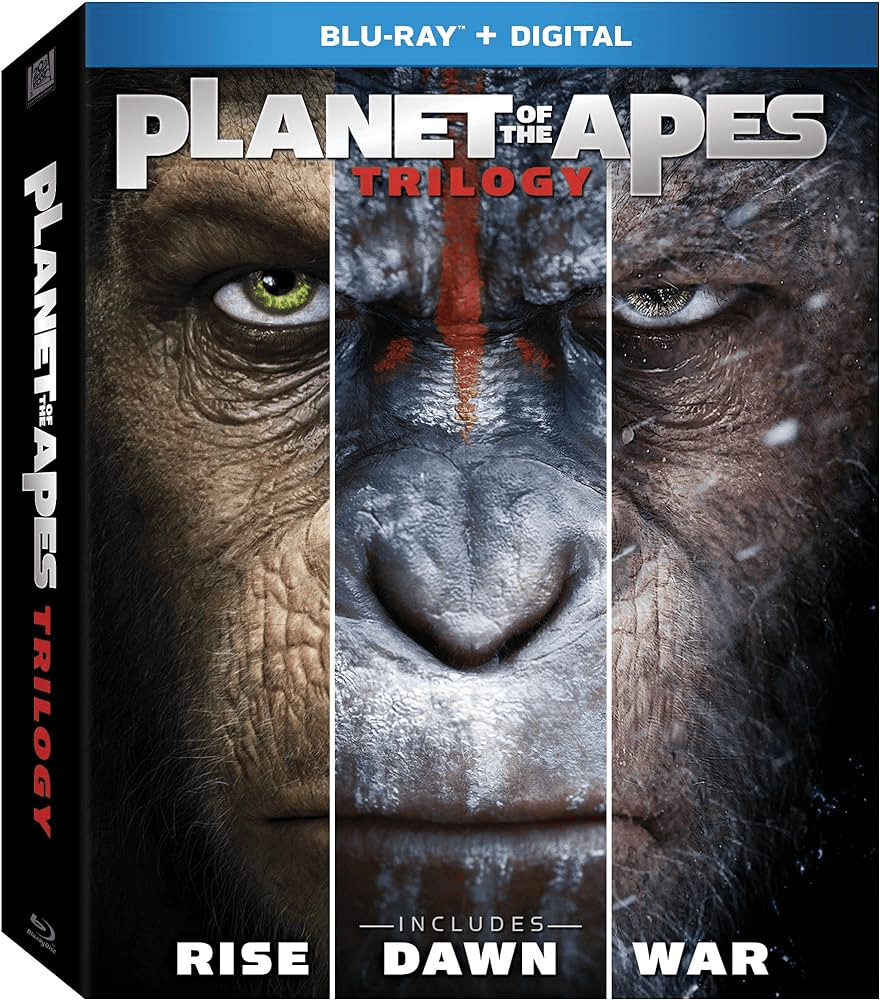
Hell, without meaning to I’ve done a lot of research on the franchise from the lightning in a bottle performance of Charlton Heston–regularly parodied for years on end–to the franchise’s worst fears manifest in the 2001 reboot starring Marky Mark and the Accursed Bunch, which I believe prompted the 2011 reboot trilogy. The premise is definitely an interesting one and a long-lasting one considering all the movies. Wonder how much a box set would cost of all of them?
The original ended with Heston’s character realizing that apes and humanity have reversed their roles and he didn’t find out until he came back to earth from a rocket ship. Spoiler? Honestly, not necessary. Like I said, the ending of the movie had been parodied to death ever since, so I hesitate to label it as such. Don’t let that stop you from checking out the original if you’d like to see where the franchise got its bearings.
I personally never saw the original films or the Mark Wahlberg reboot, all I know was that it was put to rest in the ’70s after one or two failures (someone with more knowledge will correct me if that’s not the case), and the 2001 reboot was so bad that whatever plans there were for a sequel were shelved permanently until the next decade, which brings us to the new more successful trilogy.
It isn’t everyday that a trilogy produces installments better than the last, but if the Rotten Tomatoes scores are still worth anything then the reboot trilogy got better and better with each installment. To catch you up to speed, Rise establishes the beginning of the ape revolution, dawn shows the tensions between humanity and apes, and war shows the culmination of peace talks broken down by a failure to communicate, ironic for the apes since they’ve evolved past the need for communication through sign language–and fitting for humanity since the simian flu in lore robs them of their ability to communicate through anything other than sign language.
Seven years later, 2024 brings us Kingdom of the Planet of the Apes, and much has definitely passed since we last saw any of the apes. Generations after the reign of Caesar, the apes who have long taken over as the dominant species on earth, have fallen into the same trap that plagues humanity even today: tribalism. Different clans of ape with their own philosophies, religion, societies, etc. have popped up, each accusing the other of being different or wrong and in need of fixing.
Almost reminds me of a certain lesson taught to us by a revolutionary known as Huey Freeman.
The different clans within the film all have their own sets of rules, some militaristic, some religious, and a bunch of others that we don’t see directly, but can be implied to be elsewhere in the world. One such clan is that whose traditions center around taming and training birds of prey, namely eagles. The protagonist who belongs to this clan is named Noa, and part of a bonding ritual in his clan involves taking an egg from a nest at a high peak and returning it unscathed to the clan.
His clan is attacked by “followers” of Caesar who bring him to the main villain of the film, Proximus Caesar, an ape with a Julius Caesar complex the size of the Roman Empire at its peak.
One ape, Raka, whose clan had done research and catalogued Caesar’s teachings, explains that these so-called followers have a distorted view of Caesar. Not their fault since his struggle couldn’t be written down and chronicled, but the central focus of Caesar’s struggle had been lost to time. Raka tells Noa that Caesar’s core teaching was “apes together, strong,” an important scene you may remember from Rise when Maurice asked why he gave a cookie to Rocket, one of the more combative apes in custody.
Seeing as the apes are divided by clans like early humans were (and modern humans still are), that lesson had been forgotten. Raka also tells Noa of humanity’s many accomplishments prior to the global world-ending virus; Proximus is also aware of these now antiquated human achievements and inventions, but the tone of voice separates their characters. Raka boasted of humanity’s achievements on the mission to tie the world together while Proximus boasted of humanity’s achievements on the mission to keep the world divided.
Like a warlord, Proximus is dead set on getting humanity’s warfare capabilities, locked behind a giant vault. Throughout the movie, Noa’s character is drip-fed to the audience. Unlike Caesar who was a diplomatic figure with the charisma and courage to sway even the most violent of apes, Noa isn’t a particularly violent character. He’s a soft-spoken, pacifistic character who resorts to violence as an absolute last resort. He uses his words more so than his paws, but it’s not like he doesn’t have flaws of his own.
The state of the world being what it is in the franchise, most apes are lucky if they lay eyes on a wild human. When Noa does see a human, he’s not the most trusting, likely a product of how he grew up. But with Raka acting as a more knowledgeable foil to the young, ignorant but still growing Noa, he learns more about humans from him than even his elders knew, which shows how much knowledge of the old world is lost. In comparison, archeological sites in recent history have rewritten what we thought we knew about early settlements and civilization, like the eastern Turkish structure Göbekli Tepe, said to be older than the first civilization estimated to have been built between 9600 and 8200 BCE. Archeologists are still learning about it as we speak.
“Ape-themed Crusader Kings” is a bit of a joke, but there’s some truth to it. It’s not unheard of for media to look to mythology or religion as a source of inspiration, several videogames have becomefamous for it. In this case, the way Noa is written appears to be Christlike, which may set him up for such a role in the future in this series, provided there is a sequel to Kingdom. Going by audience and critical reception, it looks like there will be and I think there’s going to be a theme in the titles. This successor is called Kingdom and there’s a bunch of early Christian and even ancient Roman themes within the film. Rome itself began with a kingdom, established a republic and then built an empire before it split and the west fell to ruin. My guess for a sequel would probably something along the lines of Republic of the Planet of the Apes, followed by Empire of the Planet of the Apes, just to keep the theme going.
Of course, this is subject to change and whatever’s cooking in the writers’ minds may or may not line up with what I’m thinking of, but as it stands, Kingdom is a welcome addition to the Apes franchise (don’t let the naysayers bray at you like the donkey-headed homunculi they are). I saw it on a streaming service recently, and if you have the means to do so, be sure to sign up and stream it in your own time whenever you’d like, or if you’re a physical media enjoyer, A. based, and B. wait for a DVD release so you can watch it whenever you’d like. Its an age-old franchise with a hell of a lot of lore and history to uncover. Have fun!
I was originally gonna rattle off some of my favorite movies and what I liked about them, but I thought I’d get more mileage out of listing off my history with the medium, so I’ll go with that. I may list off some of my favorite movies recently or movie genres by the end, so look forward to that.
Getting to the topic of how my taste in movies developed, like all things, will be complicated. The history of that even more so, but to the best that I can remember, funny enough, it began with my mom and her siblings. The area of the Bronx that I grew up in had several local theaters in the 1960s and 70s, many of them are abandoned or were torn down in favor of a retail store or local pharmacy, but some that have stayed have significantly minimized their presence or reach. There might have been a trend in the 80s and 90s concerning access to cinema, probably with access to VCRs going stronger than an ox at this time, or some major movie distributor like AMC getting a huge boost, but I can’t say for certain whether any of these were the case. But if I ask my mom or aunts, they might say that it was.
Whatever the answer is to this chicken-or-egg scenario, it did mean that VHS tapes would be made in surplus over the years until they fell out of fashion with the rise of DVDs by 2002, only for those now to be seen as obsolete thanks to digital releases, but I’m getting ahead of myself.
For context, I was born in 1998, and, according to Legacy Box, VHS lost popularity around 2002-03. Some of the first movies I’d watched were formatted for a VCR and one of those happened to be a movie adaptation of a certain yellow sponge who lives in a tropical fruit.
Since it came out in 2004, I’m not entirely certain how it got to my house. I’m pretty sure an older relative of mine got it for me, but it’s been so long and whatever VCRs we still have these days is likely no longer compatible with modern TVs now. I’m confident that VHS releases of beloved movies of yesteryear have since become collector’s items due to the rarity, even at the time of release.
The SpongeBob movie certainly got some out of me as a kid, but at that time, anything animated was my bread and butter and seeing the porous cube for an extended adventure was a ginormous win. For other animated movies, I definitely remember watching a certain pair of movies as a kid. The first one was about an Inuit man who learned the hard way of what it’s like to disturb nature and lives his life as a bear as penance.
And I would only go on to continue watching Disney animated features of this making because that’s what Mortimer Mouse does best. He and Jimmy Carter may be the most prolific nonagenarians at work. Brother Bear was on DVD, and thus still compatible with modern TVs. Even back then, there were fewer problems regarding DVD players than there were with VHS tapes, so rewatching some of my favorite scenes from Ursa Fraternity was damn easy.
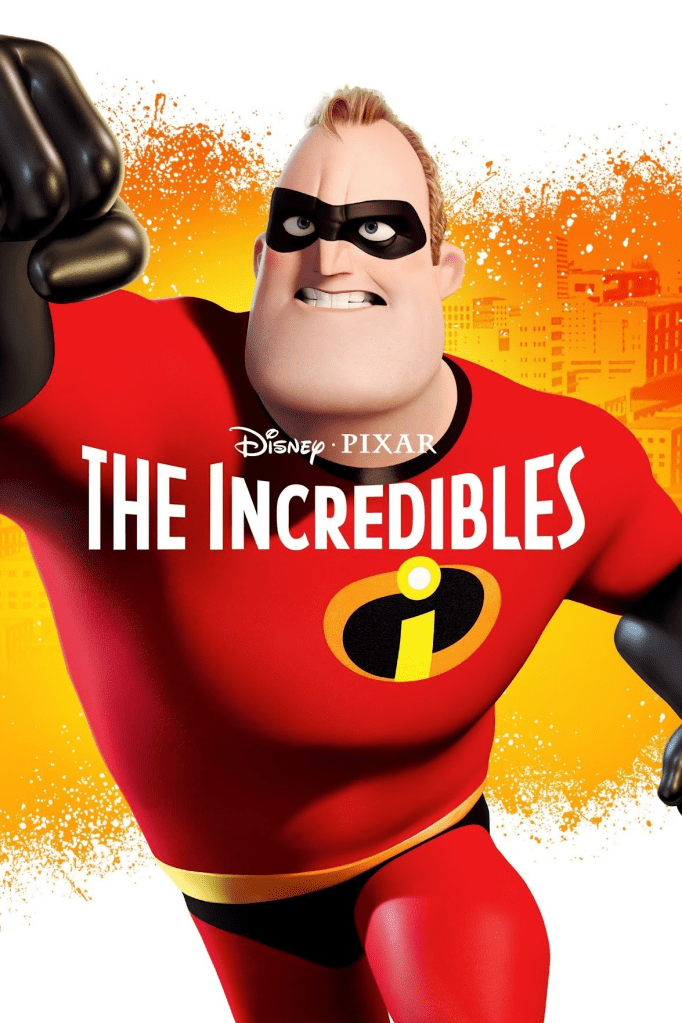
The second one was about a superpowered family juggling life between saving the day and the boring parts of Americana that get glorified for the sake of a joke on TV.
Also a 2004 release but on DVD, this was my go-to when the adults were busy watching MTV or BET sitcoms and movies, and I watched this movie a disturbing number of times because I was an only child and my options for entertainment, though present, were limited. Cell phones weren’t necessary in the early-to-mid 2000s and no good parent would let a child out after dark unless they genuinely knew what they were doing. I could go to the park, though that often meant waiting on my mom to take me there even though it was down the block from where I lived. So TV and video games for the rest of my childhood.
Between all of these, a reasonable conclusion to jump to would be that from a parenting standpoint, the movies I was allowed to watch at around 4 or 5 years old didn’t fall outside of established parental guidelines and from a child’s standpoint, heroes and villains here, monster fights there, save the day, get the girl, the classic Superman formula.
On the opposite end of the spectrum, because my mom was single at the time and my grandma hadn’t retired until 2004, this meant leaving me in either my grandma’s care or that of a neighbor who comparatively had three children and was seen as the go-to for some of the other neighbor kids. So 6-year-old, only child me often had to spend time with some of these kids who were not very far from their immediate siblings. So that was neat.
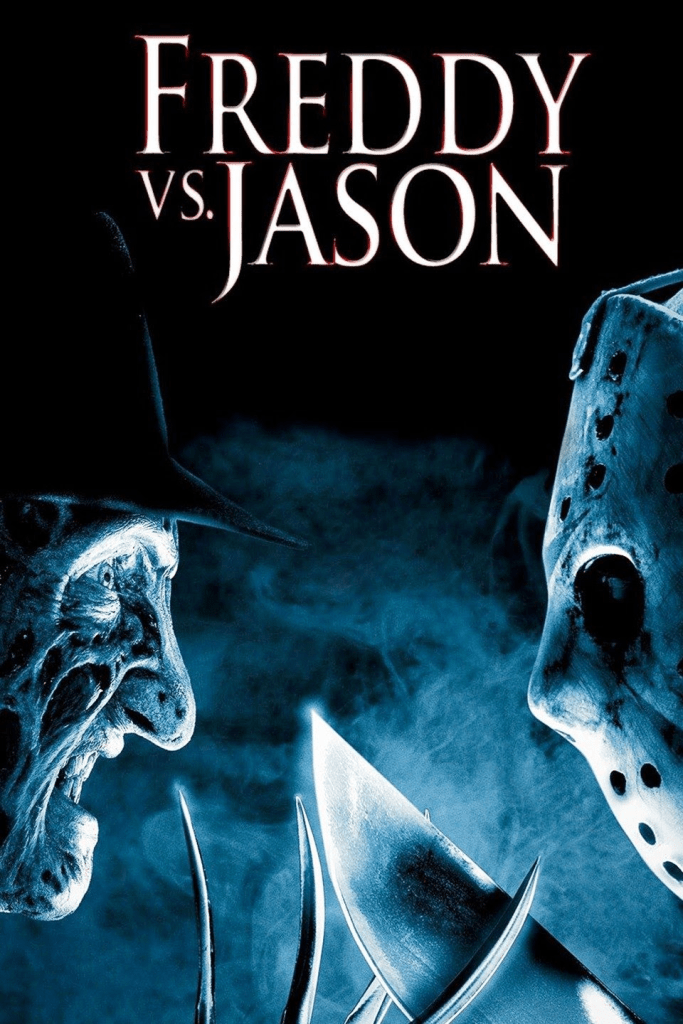
In line with that pattern, it might be because a lot of these kids were somewhat older, but for whatever reason, if I wasn’t witnessing MTV devolve in real time, I was watching a slasher movie. Of the ones I was unfortunate to see at a young age, the one about the masked machete wielder stuck with me for an uncomfortably long time. His collaboration with a sweater-wearing burn victim from the nightmare realm did me no favors, though there was a reason for me why the machete wielder was the worst of those two.
The other slashers and horrors were largely forgettable, but every goddamn time something reminded me of Jason Voorhees, I’d get mental images of a grizzly slaying. And why Jason? Why not Michael Myers, or Freddy Krueger, or Predator, or the Aliens from Alien? For me, it was because Jason and by extension Michael were so calm and collected. They walked into frame with a clear vision and a creativity only a psychopath could appreciate. Their flare for the gory and incorrect ways to use a lawn ornament and the fact that either one of them could do so much with just so little made it even more dramatic than it probably was. If they didn’t use their powers for nefarious purposes, they might be the first people to thrive in the middle of a zombie apocalypse. I’m pretty sure they’d be tailormade for the first part of The Last of Us 2 since that part of the game starts in a Wyoming winter and Max Brooks of World War Z fame wrote that in such a scenario the coldest climates are ironically the hottest spots on earth.
Needless to say, I didn’t start appreciating Jason or Michael until I was around 16 and part of that was because on reflection, so many horror movies at the time telegraphed and prioritized their jump scares over their stories that the money that should’ve gone to the screenwriter and storyboard artist went to the pockets of the soundtrack composers, and every time the brass section went nuts during a jump scare, the composers would need to run back to the store to get a new safe to hold all that cash. It was annoying!
Cliffordlonghead (YouTube), Nickelodeon, Viacom
Friday the 13th, Halloween and others did that as well, but not every five minutes. I think one day I’ll dedicate my research to the history of film scores.
By the time I was 15 or 16, trips to the theater fell to the wayside, reflecting a growing trend of home streaming and home video releases as Blockbuster shuttered its brick and mortar stores while Netflix thrived online, especially with shows like Breaking Bad being made available for streaming on the platform in the years following its airing on AMC, as well as many Netflix originals, short lifespans notwithstanding.
Followers of this blog can remember how clear and precise my words were when I admitted to emulating and pirating certain video games. What I didn’t mention until now was that it didn’t start with video games. I remember watching 300 on pirate sites in anticipation for the 2014 follow-up. And about a year later, after watching The Terminator on YouTube on a probably now deleted account, I heard through the grapevine that a fifth Terminator was releasing soon and when I later watched the trailers myself, I vowed to pirate it sometime in the future.
I avoided major spoilers for Terminator: Genisys while pirating online or catching the others on TV and by the time I saw the fifth one by way of piracy, my opinions on the fifth Terminator movie are thus:
I paid for nothing and still felt robbed. Okay, let’s dial it back. The first two movies and somewhat the third all did well enough to prepare you for what was to come about the prophecy about SkyNet launching on August 29, 1997 and the immediate aftermath that subsequent releases felt like they were written into a narrow corner and had to dig themselves out with a spoon and crossed fingers.
If I were to rate the series having only seen the movies, my opinions on them all are this:
The Terminator (1984): Fantastic. 4.5/5
Terminator 2: Judgment Day (1991): Also fantastic, like the original. 5/5
Terminator 3: Rise of the Machines (2003): Interesting take on the premise. 3.2/5
Terminator: Salvation (2009): Memorable only because of Christian Bale’s temper tantrum on set. Otherwise, missing crucial elements. 2.3/5
Terminator: Genisys (2015): Nice that you’ve got Arnie back, but are we still on the same timeline as Salvation or what? 2/5
My opinions on Genisys isn’t isolated either; other critics and viewers thought much the same. Call it for what it is, but if 2014 was starving for good games, 2015 was starving for good movies. Or rather, I remember more bad movies getting the adverts than I do the good or better movies largely because many of the studio heads were losing faith in these potential box office bombs. It might have cost the studios some dough, but from my perspective, being nose deep in the novel Black Mass in anticipation for its movie adaptation that year, it’s a good thing I spent that year invested in my own interests instead of following trends or I would’ve been even more disappointed with Fifty Shades of Grey.
This was a better film to have Dakota Johnson’s and Johnny Depp’s names on compared to what else they were in that year.
The latter half of the 2010s became the era of the Crazy News Segment and it was around that time I decided that Facebook wasn’t my style. Retreating into the movies at this time slowed down as I was dedicating myself to community college and whatnot, but I was still watching movies. The newer stuff coming out was putting me to sleep, so I went to some classics.
In my latter years of high school and all through college, I’d entertained the idea of joining the Army and thought I’d get a general idea of that through movies. Good idea? Bad idea? Well, the movies I’d watched that came to mind for me as quintessential war movies were centered around either of the two World Wars or Vietnam. I’m still searching for a good Korean War movie though.
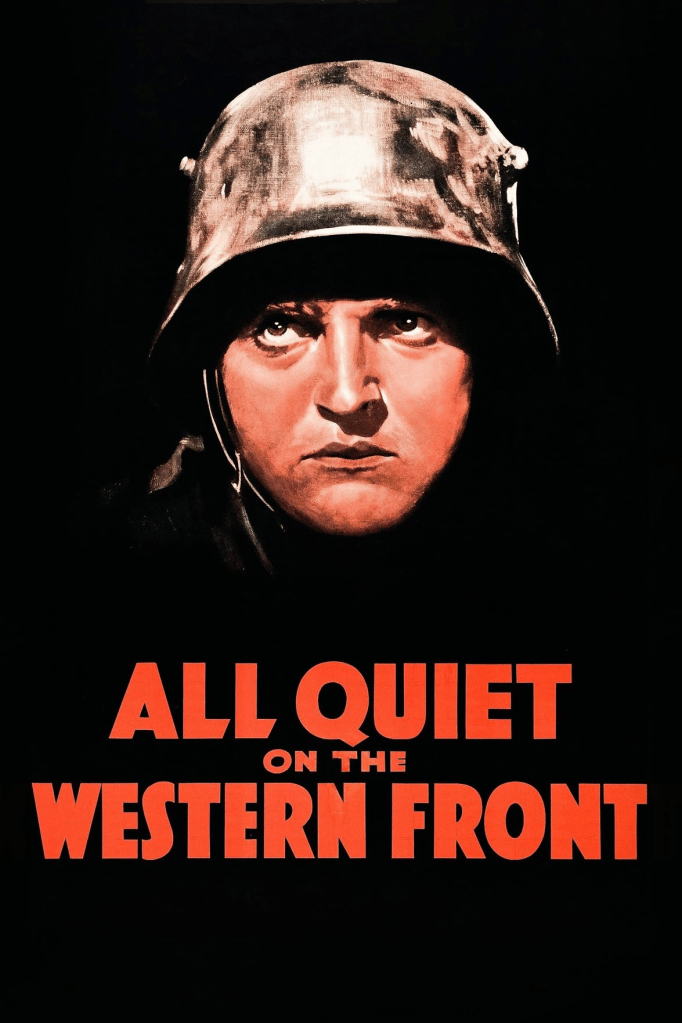
In the U.S., copyrights are good for at least 75 years, and with the copyright long expired on one of these by the time I was able to watch it, technically, it wasn’t piracy. As I recall, this particular film and similar were archived online. If this is the case every time a movie gets that old, then as time goes on, whenever I want to watch an old movie, I have a beeline.
This movie was an adaptation of a diary of a German WWI vet, and as of 2022 was the first of about three so far.
World War I movies, I feel, have been muted by the clearer battle lines of its deadlier successor. You have villains, heroes, and a happy ending, hence why numerous intellectual properties in the decades since the end of World War II have looked on to the Nazis and the Wehrmacht as the perfect archetype for a villainous force of nature. Allow me to complain somewhat, but there were other armies of equal or worse brutality to look at for a template. Not saying you can’t keep using the Nazis or their 10,000 paramilitaries for reference if you want; just that it pays to look elsewhere from time to time. Consider your options.
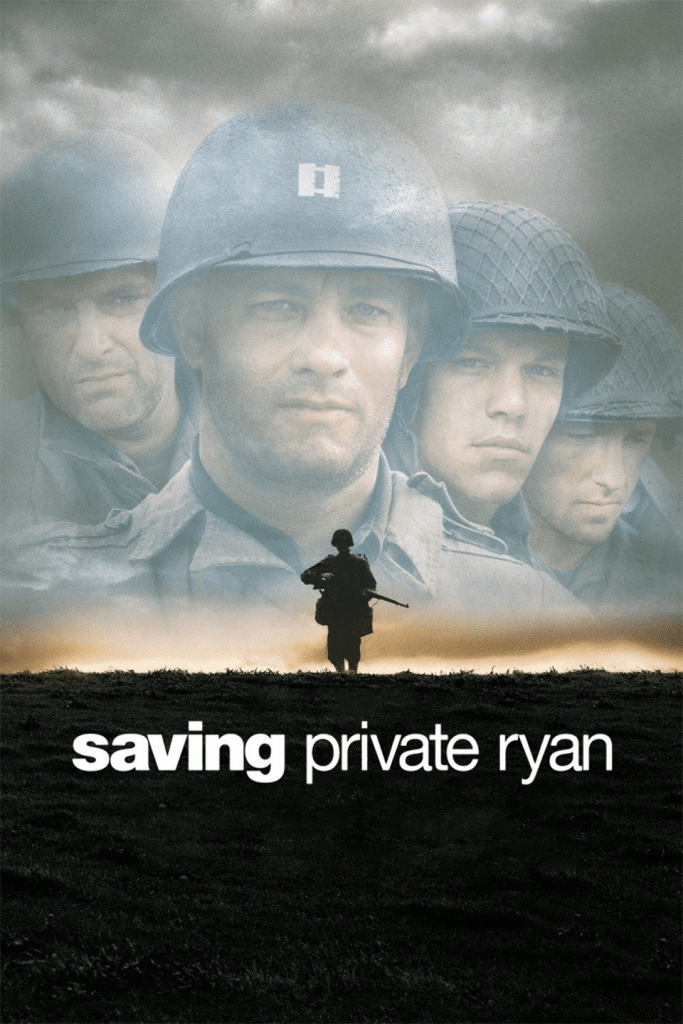
And speaking of movies about the deadlier successor, an impromptu reconnaissance platoon sent into France to ship the sole survivor of the Normandy landings out of a family of five brothers back home, complete with a perilous journey through the occupied north.
And for better or worse, veterans of all strides who would otherwise take their stories with them to the grave were motivated to share them by proxy after watching the movie. It’s a fact.
In the case with Vietnam War movies, the diplomacy of the war itself at the time leads me to believe that it was a sign of things to come. Light my on the pyre for this, but experiences with guerilla fighting in Indochina probably would’ve helped to better inform post-9/11 warfighting policies in the Middle East if we stopped looking at things the same way we looked at World War II. False equivalency, you say? I do still have a point. Accounts from the French experience leading up to occupation by Germany in WWII draw toward the conclusion that if France had realized Round 2 would be a different fight, they would’ve been able to stave off occupation or at least better liberate themselves than in our timeline.
Similarly, U.S. military history has a gap between the fall of Saigon and the Gulf War that probably reminds folks of the current recruiting crisis the DoD doesn’t need as it’s the second time there’s been a military shortfall at home. In my eyes, the Vietnam-era movies serve a purpose and have important lessons that only now we seem to be adhering to–that is to say know your enemy and yourself; set and understand your goals; and one of the biggest lessons from the jungles of former French Indochina, make sure the populace is on your side. No one wants to be sent to fight in a country they can’t find on a map only to lose and come back and get harassed for what they were forced to do.
As for movies I’ve seen about the conflict itself, there are two that stand out that you probably know about. One was about a rogue special forces field grade who needed to be taken out and the other was about the most sympathetic of McNamara’s Misfits for the first half while also criticizing the nature of warfare in general in the second half.
As told by retired SEAL Commander Jocko Willink in this video, if a servicemember commits a crime overseas or goes rogue in-country/while deployed, their punishment is determined mostly by rank and performance prior to the crime. For example, if a private or private first class is under scrutiny, they could face any combination of forfeiture of pay, reduction in rank, imprisonment, or for severe crimes, execution for conduct unbecoming. Higher ranking enlisted soldiers may face that as well, but so far the highest ranking enlisted soldier I know of that has ever faced such a penalty was the 10th Sergeant Major of the Army Gene McKinney, and he wasn’t even reduced by that much. Below Sergeant Major of the Army is command sergeant major, and below that is either first sergeant or master sergeant depending.
Officers like that of Colonel Kurtz are in command of a large number of servicemembers, generally brigades. Being that high up in a chain of command with that much time in service (over 20 years avg.), he would’ve been captured and interrogated for what he’d done and any penalties would likely come from whoever was the Secretary of Defense at the time.
Now for that one about a McNamara-grade recruit…
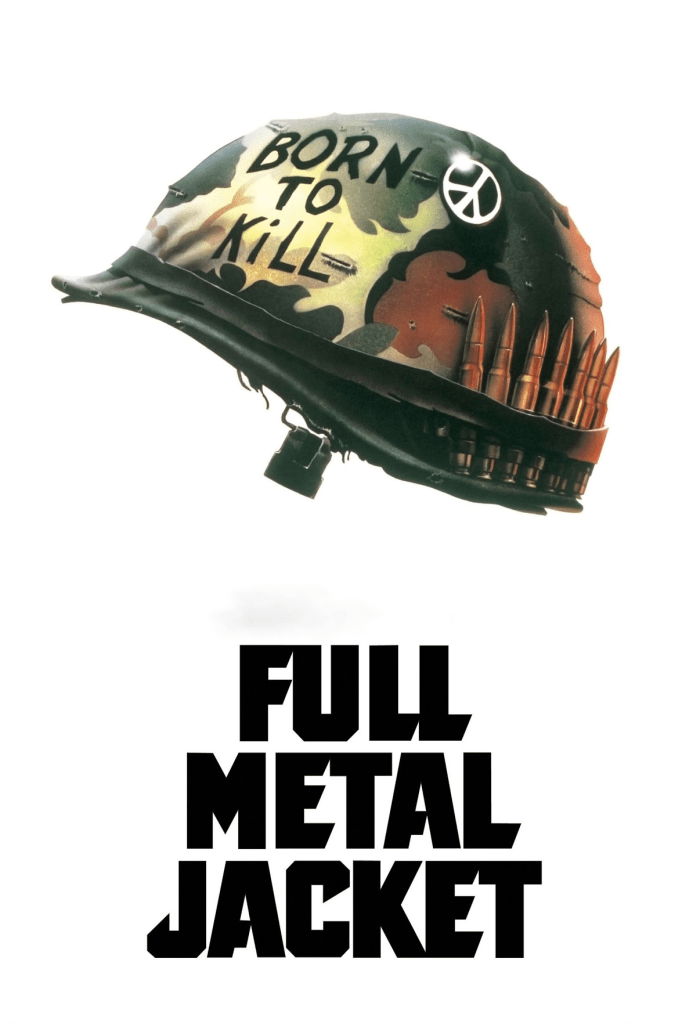
In my experience in basic training, FMJ was the one to get the most love out of the trainees because we saw ourselves in those starry-eyed virgin recruits even if events depicted were exaggerated. R. Lee Ermey’s portrayal of a Marine DI was exaggerated for drama’s sake, and in the Army we didn’t have footlockers, and compared to the men who would be sent to Vietnam, our drills were, due to several factors, fairly lenient with us. That said, we still got the dog crap smoked out of us because the good idea fairy visited our battle buddy that day; or we learned to lock our lockers and secure our stuff when half of it was across the bay and other half was under my battle buddy’s bed in pieces.
That being said, looking at GySgt. Hartman’s conduct as a drill instructor, he would likely have been investigated for inciting hazing against Pvt. Leonard Lawrence/Gomer Pyle. Similarly, for how the boot camp section of the movie ends, even though those Marines were graduating and whatnot, the precursor to the NCIS would’ve gotten word of crimes in the barracks like a [spoiler warning] murder-suicide, especially if an SNCO like Gunny Hartman was involved in some way. With an even hand, after the dead are laid to rest, the whole platoon could forget about ever getting to Vietnam, though at this point in history, stuff was getting swatted to the wayside because the war effort was more important.
Fast-forward to Bush Jr. in Iraq boosting numbers for the 2007 surge and a round of stop-loss orders and most of those who were deployed at the time need three sets of hands to count the number of people who got in despite being previously disqualified for moral or medical reasons. Bonus points if the moral waivers offended in uniform. How do I know this? The Military subreddit among others holds the answers.
Above all, war films showed me that there’s always a gray zone even in the darkest moments in our lives or in history. Not everything has an easy answer.
Sorry if things got serious at the end there. Let’s take it back a few notches. My favorite film genres? Right now, it’s the war films since I clearly had more to say about them in this post. My Army brain isn’t gonna look at them the same way again, but for what it’s worth, the experiences from basic training to duty station to deployment to discharge are military-wide. Retired servicemembers from different ends of the political aisle will feel a connection because at one point they were clowns in the same circus. From this genre: Full Metal Jacket, Saving Private Ryan, Patton, and for atmosphere a Soviet Belarusian film called Come and See.
For something more humorous, comedies obviously work, but the talent lies with the writing and the characters. Done well, and I can see myself going back to a classic I enjoyed. Done poorly, and I’m praying to God, Lord Buddha, and Tom Selleck’s mustache that the writers of the god-awful “comedy” I was forced to watch walk into a door. From this genre: Identity Thief, Fargo, The Mask, History of the World, and Spaceballs.
And for action/adventure, my video game brain has been hardwired to expect a Point A to Point B plot with a clear goal and character arc. I don’t always get that, but when I do, my butt’s in the chair, my eyes are on the screen, and if I like what it opens with, I reserve judgment until the credits roll. If I don’t like it, I’m nitpicking from start to finish. From this genre: Red and Red 2, The Terminator until the third movie, London Has Fallen (kinda), RoboCop uncensored, and I want to put a martial arts film in here, but I haven’t seen any as of late. Bruce Lee’s Fist of Fury will serve as a placeholder for now.
This was late, I know. We were having issues with our cable, and I was summoned to try to fix it until we phoned it in to the service provider. Hopefully, next week’s post will be on time.