VTubers II: Oshi Boogaloo

Never said I was immune to the craze

Two years ago, I dedicated a post to what was then a more recent upswing in Japanese pop culture spreading far and wide: the virtual youtuber, VTuber for short. Sometime later, about a month, around the same time as the release of Call of Duty: Modern Warfare III 2023 and how loved and adored that game’s campaign was, I watched two videos about the game. The first one was by The Act Man, chastising the game for such a sorry excuse of a presentation and structure. The second was a Vtuber reacting to that Act Man video. This one, specifically:

Channel: SmugAlana

The VTuber in the thumbnail of the above video is one I watch regularly and I’ll get to those soon, but she’s not the first one I began watching. Sometime, after my first venture in the Army around November 2021, a Japanese VTuber who was recent to the Anglophone world showed up in my YouTube recommended feed. This Japan-based VTuber is known as Kamizuki Naki, an independent English-speaking VTuber who debuted a few weeks before I had discovered her.

I was aware of VTubers, but didn’t pay them much mind. 98% of the time in 2022, I had been too focused on trying to return to the Army, and much of my content consumption was redirected elsewhere. By 2023, after one recruiter gave me the red light (and I started this blog hoping to achieve a career in writing), I started watching more and more VTubers. Kamizuki was one of the regulars, but with more and more VTubers debuting from different parts of the world, what began as a largely Japanese phenomenon had followed the footsteps of animanga and taken the world by storm, so much so that a little shark girl sung Take Me Out to the Ball Game at a Dodgers game.

She now lives as a cat-shark named Sameko Saba because she couldn’t keep the model

As I’ve said before in that post two years ago, I’ve accepted VTubers as another arm of Japanese culture sinking its hooks into the world, and a fine addition at that. I admit I was a bit apprehensive when they became popular due to no one having a lot to do in 2020, but over the years, with my viewership being taken up by the Trash Taste podcast and their individual and combined collaborations with VTubers like Ironmouse, Mori Calliope, Rainhoe, Haruka Karibu and others, I was gradually exposed to more VTubers like them. Eventually, I have built a rotating reportoire of VTubers that I regularly come back to and check on. I’m quite sparing with the subscription button and with a lot of VTubers being more active on Twitch than YouTube because that platform is more live streamer friendly, so the VTubers I follow and the VTubers I’m subscribed to don’t always overlap. But when they do, they show up on my feed regularly. Then again, YouTube’s recommended system sometimes overpowers its subscription system, so if you’re subscribed to a bunch of channels and your favorites get drowned out by the others, you’re bound to miss a few of them.

Around 2016 when Joey of The Anime Man/Trash Taste fame starred with Kizuna AI, the Queen Mother of All VTubers and Virtual Content, it was done by way of her titular agency, which is standard fare in many VTuber circles. Many of the famous ones like the aforementioned Gawr Gura, Mori Calliope, Kurone, Oozora Subara, Takanashi Kiara and many more tend to be tied to Japan-based talent agencies, the two largest being VShojo and Hololive and the former of these falling into controversy over donations and revenue owed to and withheld from Ironmouse, who genuinely needed the money to cover a serious medical condition.

Channel: Ironmouse

In solidarity with Ironmouse this year, many other VTubers called it quits and went independent or got scooped up by different agencies.

Suffice it to say, VTubing is as expensive as being a regular YouTuber or other such content creator when all the expenses are added up. Designing a unique model, rigging it to react to your movements, dedicating assets to the animations, in some cases dedicating a webpage to your content; many VTubers do align with agencies, but not all do. Some are able to do it independently like Kamizuki Naki and SmugAlana. Others adopt VTuber models for commentary, as is the case with Rev Says Desu and Hero Hei, both content creators who were previously faceless voices on their own respective channels, recently adopting VTuber models.

Now let’s break this down just a bit: a content creator represented by a large company uses an idealized and heavily designed persona to entertain masses of fans. Sounds a lot like idols, doesn’t it? Well, there is a connection between VTubers and idol culture and my opinions on the latter as one of several reasons for avoiding the series Oshi no Ko (the other being that series’ fanbase). With how corrosive behind the scenes actual idols’ personal lives can be due to the control they tend to surrender to the agencies, the sacrifices demanded to be seen as this Pygmalion-esque husk for worship makes the business of idols unappealing. VTubers have similar issues with inside toxicity at times, but in its own unique way that doesn’t always involve the agency or the individual VTuber in question.

So why do I flock to VTubers more? I don’t watch a lot of agency-associated VTubers, so I can’t say what I’ve seen of them, but the independents thankfully seem to have more control over their personal affairs and finances. There also seems to be less pressure to fake a persona with the intricately-designed model being the stand-in, not to mention these characters have their own associated lore. There’s an elevated level of creativity to VTubers, but with only the viewer/audience perspective to look at, I’m definitely missing a few salient points that expose the complexities of VTuber culture.

For as carefree as the community looks, a carefully crafted image needs to be presented to give off the illusion. As for the controversy side, this is also a unique issue that VTubers grapple with be it from their own audience, themselves, fellow VTubers, or their agencies. One such VTuber, Sinder, had a brazier lit beneath her feet for badmouthing and double-crossing VTubers Bao the Whale, Buffpup, and Silvervale after these three bent over backwards to help get her on her feet, as well as hiding a secret relationship with her manager and fellow VTuber Red/REDACTED. In an attempt to alleviate the heat, she published an encyclopedia of sorts contextualizing everything and the short version of it is Sinder’s unreasonable at best and downright psychopathic at worst. The controversy is why I know about her and this video by Evanit0 breaks down the follow-up to this betrayal of hers:

Channel: Evanit0

All the power to those who can separate art from artist I suppose

I’m not an expert on all things VTuber nor am I privy to every controversy to arise from the medium, but between VShojo imploding on itself and Sinder backstabbing fellow VTubers, these controversies arose accidentally. They both fully intended to do harm, but VShojo wasn’t counting on Ironmouse to blow the lid, nor was Sinder accounting on the other VTubers to fire back on their own platforms. If you’re gonna threaten someone, make sure they can’t fight back.

But a lot of that arose by accident. It’s rare for something to arouse intended controversy and I was made aware of one such group whose stated mission purpose is to achieve that. Another SmugAlana reaction, this time to YouTube channel, RoyaltyIsHere, to the indie VTuber group, VTards, and with a name like that, the associated “talents” were swinging at the fences. Waking up and choosing absolute violence.

It’s times like these I wish I had the Discord-style unique emojis/emoticons

The short version is that five VTubers formed a group with the goal of going against the grain of what was considered politically correct, i.e. an edgy forum welcome on the internet in the late 1990s or early 2000s when the general attitude was f[keyboard]k authority, f[drum roll]k the man, as a result of the whole grunge era fighting back against the consumer age of decades past. And I’d welcome more of that, but the controversy that swamped the group since debut had to do not just with their deliberate attempts to arouse controversy but mostly in what they believed.

I promise I’m not s[neighing]ting you when I say that one of them held neo-Nazi beliefs, larping as Hatsune Miku’s evil twin: Nachisu Miku. Along with another member allegedly commission loli art of Anya Forger from Spy X Family, only more disturbingly erotic.

Side note: Emoticons are an artform that need to return; I’m honestly not certain if these Google-searched images are effective for a topic like this

Regrettably or fortunately depending on how your wheels turn, the group was short-lived. Soon after Royalty’s video, the group had fallen apart. There are VTubers who arouse controversy without meaning to. SmugAlana, whom I mentioned plenty here, does so simply because she grew up speaking Russian to her family, leading to the absolutely false assessment (on Reddit and Twitter) that she’s a shill for Putin’s Russia. Call me biased because I’m subbed to her, but I don’t recall any reverence or pride in Putin’s government. After Alana comes Leaflit & Asari, a mother-daughter VTuber duo, mostly run by the daughter, Leaflit. The two are Japanese-Americans from California who’ve since relocated to Butt-Kiss, Texas (I think), and while SmugAlana tends to cover whatever crosses her feed, politics notwithstanding, Leaflit does have a clear slant covering current events. The lion’s share of her content is some kind of political-babble, which I say requires a specific type of mindset. If you live on the internet, move out. This shouldn’t be treated as a hotel and I shouldn’t have to explain why.

But seriously, even if you lean one way politically, exposing yourself to multiple points of view can broaden your worldview. I bring this up because the permanent internet residents regularly attempt to target Leaflit & Asari for harassment with erroneous connections to the American far-right. Yeah, I’ve taken the piss out of this corner of the internet on this blog before and the only thing I take seriously about them is that they take their own convictions very seriously. But like their enemies who fled to South America after World War II (they don’t know they exist on Twitter), or who they think are their enemies (they think they’re a laughingstock, all things considered), this part of the internet isn’t worth committing to memory.

An even more politically active, current events VTuber, with a crazy associated lore, Kirsche Verstahl. She also courts controversy, half the time for content like Rev Says Desu and the other half because her detractors, more or less, lie through their teeth about her. I don’t follow her as closely as the other two or however many I named here or before, but nonetheless, Kirsche, Leaflit, SmugAlana and others who’ve incited unnecessary controversy are all the proof you need to know that their detractors and haters don’t watch them whatsoever, merely parroting lies about them. A time-honored tradition of lying about someone you hate because your desire to see them fail can only get so strong.

If nature birthed the concept of hatred, humanity made it an art form a million times over

All in all, VTubers are another arm of the idol industry with its unique rules and controversies and myriad of personalities. While not under the same limitations put on idol groups like, for instance, AKB48, thanks to the fantasy angle of the VTuber model, different circumstances surround the individual VTuber and associations they fall under. There’s tons of variety in who you choose to view on a regular basis. There is one more VTuber I wanna recommend before I close this post out: Scarle Yonaguni.
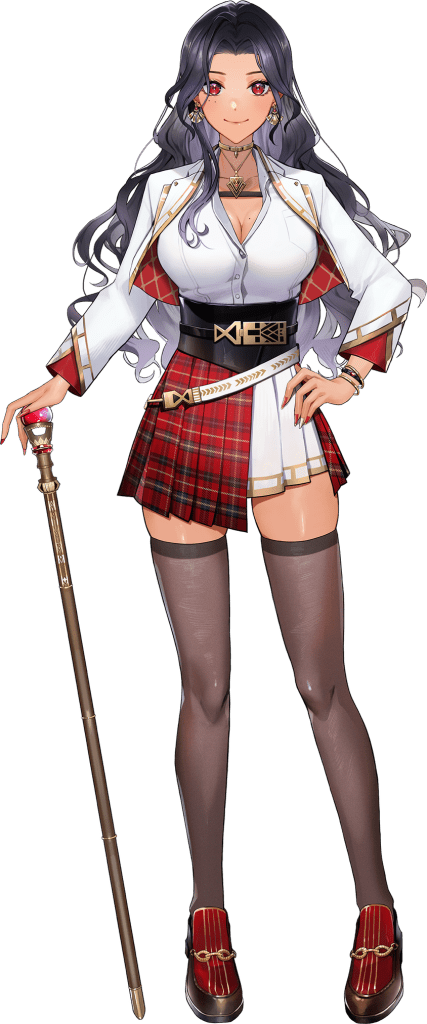
https://www.twitch.tv/scarleyonaguni

https://youtube.com/@scarleyonaguni?si=537-iDpDPfe9sVGc

Like I said, many of these VTubers stream more on Twitch than they upload individually produced videos. Find them there if you can spare the hours.

Also, you may notice that the overwhelming majority of these VTubers are female and tend to have massive boobs for their models. Male VTubers are often and sadly lacking in the audience count. After nearly a decade, it’s still a majority female-creator/male-viewer space with no obvious signs that the tides are changing save for NuxTaku, Rev Says Desu, and Hero Hei who are some of the only male VTubers I can name.
The World of Japanese Live-Action Cinema

Same continent, Different History

Full disclosure, the first topic lined up was meant to be about the Senran Kagura series, but I haven’t been playing it as much as of late. Work-related stuff among other things took my time, and for the style of gameplay, I’ve seen better. At least it has an anime adaptation. Next to that, was about a series that was subject to limited release outside of Japan — Idolmaster, only I’ve mentioned it before and without access to the whole of the franchise, I’m not able to review it in the manner I’d like. Typically, I start at the beginning, but the circumstances that created this series in particular are only available in Japanese arcades with the Xbox 360 port dying with the console, making the first installment in this franchise semi-lost media. So instead, we’re sticking with Nihon and talking about their movies.

As far as old movies go, whatever I could get my hands on I’d always given it a watch. In community college, I watched 1932’s Scarface and 1933’s King Kong. I managed to find the 1982 film The Wall based on the Pink Floyd album of the same name. I recommend all three by the way. And all of these plus similar films have been my go to for years, from my piracy era to my movie theater era. I’ve heard from the Extra History channel on YouTube in their series on Japanese Militarism that when it comes to studying societal changes in the Axis Countries during WWII, Germany and Italy get over-studied while Japan frustratingly has been under-studied or brushed aside, presumably because they don’t have an equivalent to Hitler and Mussolini, or rather no civilian equivalent with the Japanese military dragging the society down into Hell with them one assassinated politician at a time. I bring up the historical blind spot in an admittedly faulty comparison to my own approach to the Japanese film industry. I’m American, after all, my first movies are going to be American. Sometimes, British cinema will spillover.

Guess I was always a sci-fi fan, I was just denying it because the genre was so broad.

Only recently have I been watching Japanese films and a lot of them are damn old, coming from legendary names in Japanese cinema, Akira Kurosawa, Yasujiro Ozu, and one other one I discovered whilst researching this topic, Kenji Mizoguchi. These three directors formed the foundation of post-WWII Japanese cinema in the 1950s during the Golden Age. By the time they were making film after film, Japan already had a storied cinematic history, though looking at the world the country left behind in and entered in favor of, one can see what kinds of films were being made especially during the late Taisho and early Showa periods. The short version of the history of the motion picture largely boils down to an amalgamation of centuries’ long efforts to get pictures to move by themselves, a means to record a moving flipbook and similarly, movements of this type popped up in East Asia.

Early films, as you can expect, are unimpressive considering what populates our screens, streaming services, and theaters today, but to Frederick Harrison Burgh in 1898, regular photos of the every man to his left and right were given life before his eyes. I didn’t exactly take any history of cinema courses, but I can also imagine a playwright of some kind looking at the first film directors in human history and incorporating the ideas into his plays or straight up becoming a film director himself in part or whole–to varying degrees of success. Maybe a combination of these, who knows?

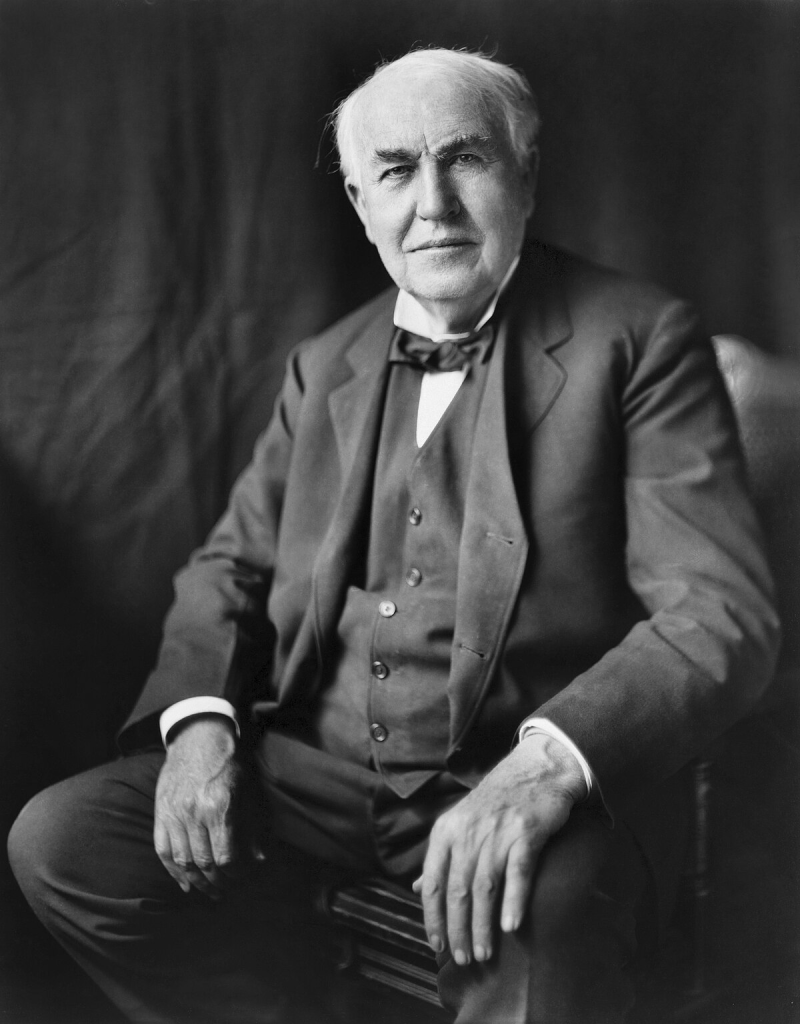
Even when Japan had more or less completed industrialization or neared its zenith, they weren’t done learning from western innovators, such as Thomas Edison.

Far from the progenitor of filmmaking, his inventions and contributions to cinema in particular formed the foundation of this industry worldwide. When the industry erupted in Japan, elements of kabuki and rakugo have made their way in over time. Narration, depictions of bygone eras, romanticism; different country, similar tropes about legendary figures. Just watch any western and compare it to the reality of the cowboy.

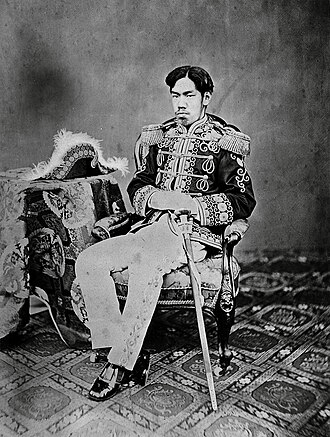
In this case, Japan had the shogunates and numerous tales of courageous warriors to adapt to film. Miyamoto Musashi, Tomoe Gozen, the main belligerents of the Genpei War; even the monarch has been depicted in film. Meiji was a fixture of post-WWII cinema for a time and looking at the Meiji era it’s easy to see why. A teenage emperor spearheads reforms that put an island nation on equal footing with the west over the course of about 45 years. Meiji was the emperor during the establishment of the Empire of Japan, his reforms reshaped the military into a powerhouse capable of knocking China and Russia around, empires many times the size of Japan itself and they were weak to Japanese might. Nationalist or no, you can’t help but laud an era of rapid industrialization and the man who helped with that.

These days, we can look at the era objectively, but the World Wars era emboldened and inspired filmmakers world wide. Wartime propaganda to motivate the populace to accept rations for the troops, instructional movies on the safety and operation of equipment and maneuvers, pre-mission briefs with the commanders in the war room before the march to battle: if done right, it can get the public firing on all cylinders and bolster the war effort significantly. If done wrong, the populace will be made complicit or forced to go along with the military’s worst actions. A tool of Japanese militarism, factions of junior officers in the Imperial Army and Navy formed individual groups all along the nationalist side of things. On the tame end, films released in this era in authoritarian nations helped lead to the cult of personality around certain authoritarians. Hitler had one, Mussolini had one, and I doubt he was aware of it, but Hirohito had a cult of personality as well, fostered by a radical faction working under the worst evolution of the national slogan, the latest one being “Revere the Emperor, Destroy the Traitors.”

The wild end of the propaganda spectrum can lead to the fabrication of enemies and dubious reasons to subjugate them. Most tools at their disposal were used for this purpose and led to ultimately dire consequences. Militarism could only last so long though and the dismantling of the Japanese colonial empire and subsequent occupation meant starting over again, with a new constitution and a self-defense industry with limited expeditionary capabilities.

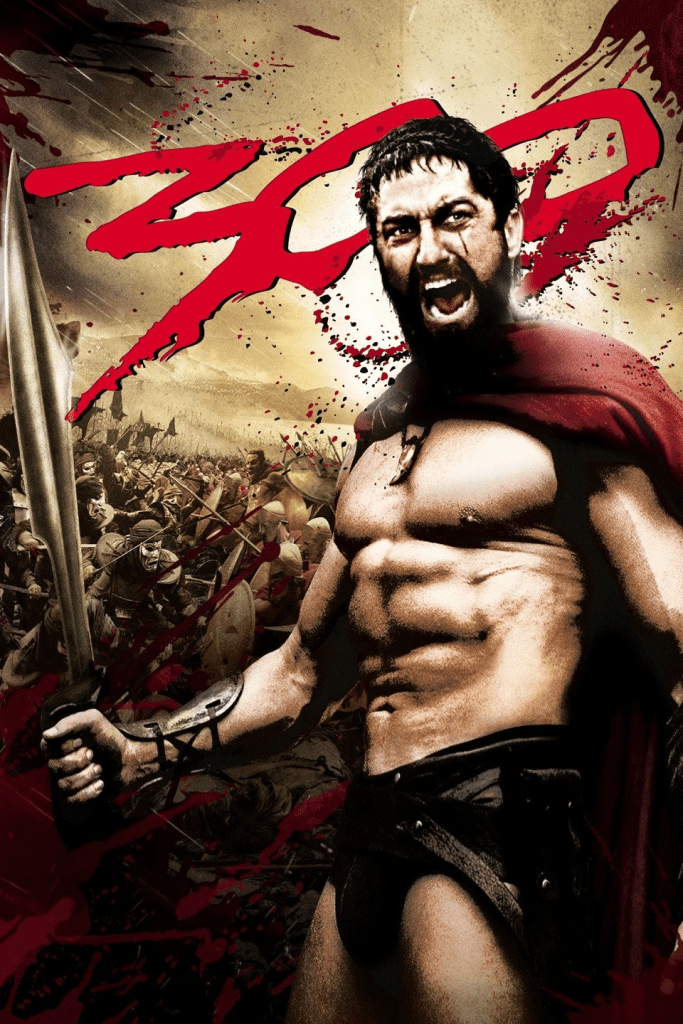
So where does filmmaking factor into all of this? Adaptable stories for one thing. Think of all the western films featuring Ancient Greece and Rome, even in a stylized/fictionalized manner.

Obviously, the Spartans had armor, these masters of warfare weren’t stupid.

As mentioned before, any knowledgeable filmmaker can make Japanese historical films, circling us back to the likes of Kurosawa, Ozu, and Mizoguchi. So far, I’ve only watched Kurosawa films, but I do want to talk about the others anyway. Kurosawa was an inspiration to many. He was to film what Osamu Tezuka was to animanga. The first time I watched him was in college during a course on Asian Art during the Japanese section. The film in question was called Ran and it was Kurosawa’s version of Shakespeare’s King Lear in a manner of speaking, which itself, when I saw it, drew parallels to the power struggle that emerged from the division of the Carolingian Empire in the 9th century. All three stories involve a ruler of some kind who chooses to divide power among his heirs in near-equal status; all three fail to realize that the water of the womb doesn’t always bind and that siblings may bicker, but rich siblings don’t pull any punches; all three heirs immediately raise armies to rob the others of their territory; and all three explain in a gruesome showing why much of the known monarchic world defaulted to primogeniture. This model is criticized heavily by historians but without a better alternative, what were medieval kingdoms gonna do? Let a woman rule? Well, sometimes…

Queen Eleanor by Frederick Sandys, 1858

Remember when I mentioned western influence in Japan? Expanding beyond technology, this opens up a wider question on Japanese appeal to medieval Europe, of which the short answer to that is exoticism, same as how many westerners and weebs exoticize Japan and at times the rest of East Asia, hence why a lot of East Asian celebrities and such adopt western names.

Samurai tales were Kurosawa’s bread and butter and a great influence on samurai stories thereafter. One such film I had the pleasure to watch while on CQ was Yojimbo: the tale of an anti-hero ronin with a bullish demeanor who fights off gangs after getting to know an innkeeper family.

Moving onto Yasujiro Ozu’s output, he didn’t make samurai tales, instead favoring contemporary, slice of life films about everyday life. Exclusively Japanese life? Yes and no. Obviously, the setting is going to be in Japan, but the lifestyle of the people in his films being relatively modern make it relatable to many people globally. These aren’t disillusioned ex-samurai with a lot to gain in a changing Japan; these were regular people with commonfolk stories, easy to tell and far away from the realm of fantasy. I only recently discovered a few of Ozu’s films on the Internet Archive site, and I do plan on giving them all a proper viewing.

The last of the Golden Age Japanese directors is Kenji Mizoguchi, who I mentioned I discovered while drafting this post. Google and his Wikipedia page both tell me that his films historical dramas with a focus on women’s lives. How feministic! He was the oldest of the trio and being born when Meiji was still emperor and thus would have been exposed to the lives of not just female entertainers (geisha) but also of women going into a rapidly advancing Japan. This leads me to believe that, like much of the western world, Japan in particular was about to approach the subject of a woman’s place in life but not with the right approaches or interests at heart in mind. Or when the society did so, it was a mixed bag of controversial successes and failures. Like their male counterparts, women enjoy many of the same privileges enshrined in western societies, but some age-old challenges still linger, many of which became a central theme of Mizoguchi’s movies. Like most of the other media I have listed, I also plan to watch a few Mizoguchi films. I hadn’t made any concrete plans to write about them in any capacity, but I do wanna get back into it at some point–things have been looking a bit too anime otaku-centric as of late.

Not a shift, but an addition to my typical lineup.

You Dropped This, Queen of Karuta

Another niche series about Japanese culture

Certainly has been a while since I’ve covered a more niche animanga series, one that had a marketing push on the associated streaming sites, notably Crunchyroll and the now-defunct VRV in 2018. I remember as I’d paid them no mind whilst watching Boruto or FLCL or Soul Eater. Recently, I’d been looking more into Chihayafuru as I’d found very few people talking about it and due to more and more action-heavy series getting adapted that year and the years to follow, it’s no wonder it flew under the radar. As I’d looked further into it, it got me thinking about a series I’d talked about sometime last year: Akane-banashi.

Both are about traditional Japanese cultural products that require research for outsiders to get an idea of what it entails, but can still be enjoyed without prior knowledge; both feature female protagonists engaged in a sport of the mind, further broadening the definition of what a sport is or can entail; both of those female protagonists have a giant competitive edge in said sport; and personality-wise, both girls have a tomboyish history that shines when engaged in their respective sports.

Akane-banashi’s specialty is rakugo, where a lone performer tells any number of comedic stories on a center stage. Normally, they’re old folktales from Japanese history and mythology, and the last time I read the manga, they hardly strayed from the style of storytelling expected of the time they written/spoken, but can sometimes be adapted to more modern audiences, similar to the 1996 adaptation of Shakespeare’s Romeo and Juliet.

For Chihayafuru, the tradition this time is Karuta, a card game based on matching similar looking cards, though in the series it’s more about Japanese poetry. This version of the game has a caller who reads a portion of a poem written in Hiragana and the player nabs the card as fast as they can. Experts can get them before the stanza is fully read aloud. The main lead protagonist is Chihaya Ayase.

Initially, she was (and still is) supportive of her big sister’s modeling future, but became infatuated with Karuta after being introduced to it by a boy from Fukui Prefecture named Arata Wataya. The impoverished little boy didn’t have a lot to his name, living in a dirty, cluttered dwelling with 80% of his clothes being hand-me-downs from relatives. Further isolating him from the rest of his Tokyoite classmates as a child was his “hick” accent. For some reason, people outside of Tokyo Prefecture are referred to like this, which I think is ridiculous, but then again, I live in a country that celebrates even linguistic diversity, so personally, not much separates a Mississippian from a Michigander or a Nevadan. All Americans, different circumstances.

Still, while Arata struggles to fit in, he’s a Karuta prodigy at a young age, taking to heart the adage of: “If you’re going to do one thing, be good at that one thing,” like Zenitsu’s Thunder Breathing.

One-trick pony? It’s easy to say that, but different series like Golden Kamuy capitalize hard on one-trick pony characters, from Sugimoto’s extreme (and painful) survivalism to Shiraishi’s Houdini tactics to Ushiyama’s history as a dangerous judoka. Being good at one thing really only matters if its applicable to other things and in this case, Karuta is both the main connecting element for all the characters and the center of a competition within the series.

Learning from Arata the fundamentals of Karuta, Chihaya is encouraged to go big and make it her dream to become a de facto Karuta world champion, mostly because Karuta doesn’t really exist outside of Japan with the same claim to fame as Mahjong or Hanafuda. Along with the two, an old friend Taichi joins them and his contrast to himself is stark both financially and socially. Taichi is a rich Tokyoite who can actually afford to be petty while Arata’s childhood poverty humbles him greatly. As such, Taichi starts off spoiled and jealous, but his best excuse is due to the high expectations put on him by his family, namely his strict mother. And you thought wealth would be easy!

Yet as the three rejoin as adolescents, they found an afterschool club called the Mizusawa Karuta club and work towards the goal of becoming Karuta champions. I’m still checking the series out as of writing, having only completed episode 1 and the first chapter (and thus getting the research from the Wikipedia page), but other things that stand out is that it’s my first Josei series. Josei is typically aimed at a demographic of young women and is notorious for its inclusion of romance into the plot. Josei itself, sadly, doesn’t get as much exposure as Shonen, Seinen, or Shojo genres which is part of what hurts series like Chihayafuru compared to Akane-banashi, which is under the Shonen genre and licensed by Shonen Jump and Viz Media.

Couple these with the niche of Karuta, whoever expected the series to get wide praise would’ve had to fight sleepless nights for something to hardly ever come from conventional animanga media outlets. And that’s quite a shame. No matter what you think of the concept, the series is beautifully drawn and animated–the production quality narrows the gap between itself and something like The Elusive Samurai.

Channel: Crunchyroll

Speaking of animation, it’s worth pointing out that Chihayafuru was adapted by Madhouse, responsible for Overlord, Trigun, and No Game No Life. This also brings me to another matter going back to Akane-banashi. Niche subjects especially those that would be found in a book on Japanese history and/or culture don’t often get the animanga treatment and if/when they do, not always successfully. Rurouni Kenshin benefits from the battle aspect more so than its setting, as does Samurai Champloo because both series have a concept that has universal knowledge: the samurai and the ronin.

Akane-banashi and Chihayafuru differ by offering battles of wit instead of battles of physical strength and power. They both also rely on parts of Japanese culture that rarely get outside notoriety, leading to limited viewership. I have no idea if the performance of the Chihayafuru anime is a case for why not everything will get an anime adaptation or should not, but if by some chance that was the metric in use, then it’s not a fair assessment to make. Even then, it wouldn’t be the first time the art of rakugo was animated.

Be honest, you only know what this is because of its hyper-energetic ending animation.

No matter the future of Akane-banashi, it still has a future, whereas Chihayafuru’s manga ran from 2007 to 2022 and its anime running from 2011 to 2020. Once again, I call upon my advocacy of piracy to view the anime and/or the manga with little issue.

The Elusive Samurai Anime Review

A burgeoning franchise based on medieval Japan

Long time subscribers (and newcomers who’ve searched the archives) know how I feel about history and even Japanese history as a weeb. I’d been following this series by Yusei Matsui since the first chapter was licensed for English by Viz Media in late January of 2021. After three years, about 17 volumes (plus more to follow), an anime adaptation, and figures set for release sometime next year; of all the things that could’ve happened to this series, franchising was probably the last thing I expected even for promotional purposes. Then again, this isn’t the first series to get a boost in merchandise time of debut notwithstanding.

Save for the OVAs and the lost 2007 movie, 25 years is a hell of a wait for a proper adaptation.

I’ve already written about the time period Nige Jouzu no Wakagimi takes place in, but as a refresher and to catch newcomers up to speed: between 1180 and 1185 in the Genpei War between the Taira and Minamoto clans, the Minamoto won out and established the Kamakura shogunate in the namesake city of Kamakura where it would be under the de facto rule of the Hojo clan, a Minamoto ally by the 1330s. The retired Emperor Go-Daigo plotted with Hojo clan retainers, the Ashikaga, with the purpose of returning control of Japan from the shogunate to the imperial court.

Following these plans initially, the Ashikaga betrayed the Hojo and led a siege spearheaded by the Ashikaga brothers, Takauji and Tadayoshi, with the purpose of mass elimination of the Hojo clan.

Of course, they had retainers of their own, Ogasawara Sadamune, Ichikawa Sukefusa, Nitta Yoshisada, and several others who rally to the Ashikaga cause. All but one of the Hojo survives, Tokiyuki, who carries more value as the heir to the previous ruler or shikken Takatoki compared to his half-brother Kunitoki, whose mother was a concubine.

These people all did exist in Japanese records, but English-language sources are scarce and my Japanese isn’t proficient enough to try to search through the original sources to look more into their personal lives, but as a spoiler, Hojo Tokiyuki made it all the way to the 1350s running endlessly from the forces of Ashikaga Takauji, escaping until his eventual capture and execution by forces loyal to Ashikaga in the Spring of 1353.

As for Go-Daigo, well Ashikaga seemed to have used the opportunity to betray the Hojo to also betray the emperor. Paying lip service to the idea of a civilian-run government, Go-Daigo’s Kenmu Restoration as it’s known these days was short-lived and Ashikaga implemented the Ashikaga Shogunate in 1336 until it eventually collapsed during the Sengoku era, paving the way for the last shogunate, Tokugawa, until 1868. Never trust a traitor. Though the entire time of the Ashikaga’s brutal rise to power, there were technically two courts in the north and south of Japan which is why this era is also known as the Nanboku-cho period and why there are two sets of emperors whose claim to legitimacy is dubious.

I remember reading about the anime adaptation last year, prompting the first ever full-length post about it the day of. Now that it’s here, I can finally share my thoughts on the adaptation. Clover Works pulled out all the stops to bring this series to the small screen. I’m almost 26 and in all my years as a weeb, I’ve never seen a more beautifully animated piece of media, not even when Toonami pranked us years ago by showing the original dub of Masaaki Yuasa’s 2004 film Mind Game.

Some sore spots exist with the use of CGI in select scenes in the anime, but they don’t really do anything harmful to the overall plot of the series. I admit, I was worried slightly with how much attention other anime were getting around it especially with regular updates on Reddit, but then again, a single social media forum isn’t and shouldn’t be seen as the poster child for all discussion on media, least of all anime. Healthy discussion does exist, but with how big anime has become, I think it’s time for the medium to go back to its roots as showcased in late 90s-early 2000s discussions are concerned, namely, a small group of friends, enthusiasts and connoisseurs (with a strict member limit) who meet up and talk about the latest series and other anime news. Reddit and Twitter are cramping anime’s style, you know?

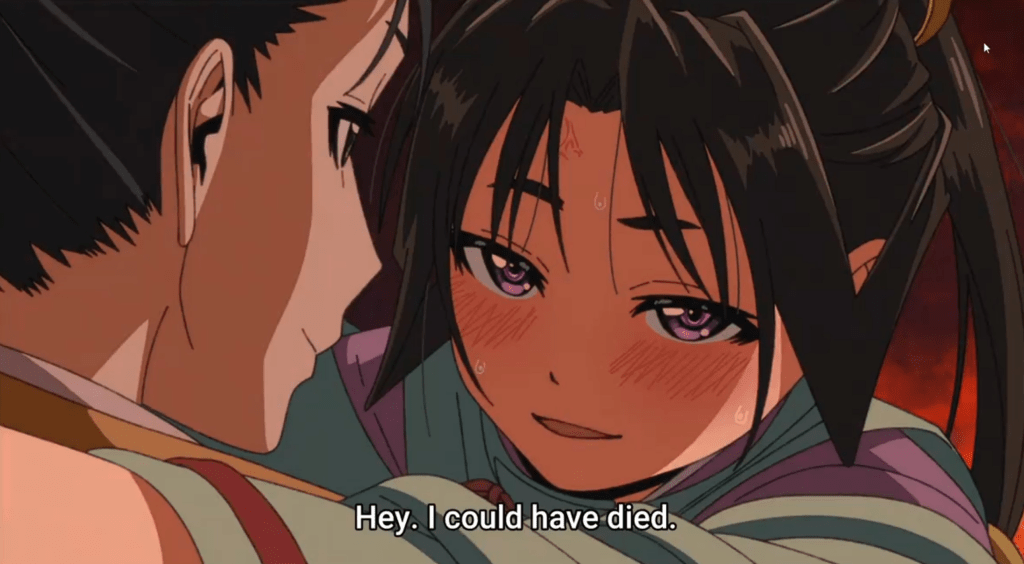
Following on from that point, if you want more evidence that social media is more curse than blessing, I made a discovery about seven or eight episodes in. I didn’t know this at the time, and I know better than to share misery, but in the first episode (spoilers again), there’s a scene where the chief of the Suwa Grand Shrine, Suwa Yorishige, pushes Tokiyuki off a cliff to join his family and be killed, when he shows his max experience in evasion and makes it back up the cliff, he flies into Suwa’s arms, and angrily tells him that he could’ve died down there. Though angrily in this context may not be what you imagine.

Matsui’s pride in femboy characters strikes again, as a disturbingly noticeable percentage of Japanese Twitter saw this scene and exploded with… excitement. I’m not responsible for this scene, but I still feel an apology is owed to someone. Maybe Shinzo Abe’s ghost for all of that excitement going into crumpled up tissues and not the rest of the population for procreation. Sorry, was that vulgar? Have a meme.

Pictured is my reaction to Japanese Twitter’s “awakening.”

Eh, it counts as engagement, so success? I’m still collecting and reading the manga, which I encourage you to do however you see fit. Follow along with the anime (which ends the 1st season at chapter 31), continue in the manga, or if you’ve done/are doing that, then wait with me for the figures to release. Time’s on our side.

On a final note, I heard rumors that a second longer season was in the works. We’ll have to wait for confirmation on that.

You’re Under Arrest: The Buddy Cop Anime

Meme tourism brought me here

I’m not making up that statement by the way, I did find this anime through a meme. This one specifically:

Channel: Vinicius Costa

I highly doubt that a single meme motivated everyone who saw it to dig deeper into what the anime was about, especially since on My Anime List it’s quite low in popularity for a ’90s anime, but reviews on both MAL, and even on Amazon for the novelization going as far back as 2000 give it high praise, so the conclusion to draw from this observation is that the series is yet another cult classic series.

Created by Kosuke Fujishima and running from 1986 to 1992, You’re Under Arrest, also known as Taiho Shichauzo in Japanese, is essentially a buddy cop manga. Like Gunsmith Cats, the series has a pair of tomboy protagonists with a rotating cast, but unlike Gunsmith Cats, it has more than the manga and an OVA to its name. Actually, the Wikipedia page lists three TV seasons, multiple OVAs, a movie and even a video game. One essentially wins a popularity contest at the time of release and then some while the other sees renewed interest after decades of sitting on a shelf with a family of dust bunnies. Maybe this is an indictment on the cultures of the targeted audiences–the western audience championing the lampooning of a government agency (even though they’re not that bad in the series) whereas the Japanese audience loves and adores the portrayal of the police in the series because it rings somewhat true of Japanese police behavior IRL.


It could be something else I haven’t looked at, but for all intents and purposes, You’re Under Arrest had a lot more going for it so if Fujishima had any doubts of success, those doubts must’ve been dashed when it came time for the anime release. Released in 1996, season 1 of the series starts off with an introduction to our two leads, Natsumi Tsujimoto and her partner against crime, Miyuki Kobayakawa. Other characters include but are not limited to Ken Nakajima, Yoriko Nikaido, and interestingly a trans character Aoi Futaba.

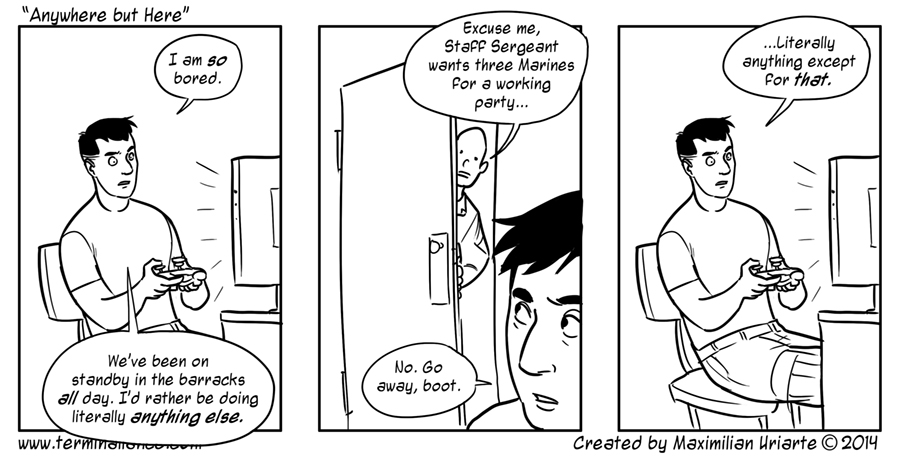
As a buddy cop series, it sorta fits the bill of what could be seen in shows like Brooklyn Nine-Nine. It doesn’t take itself too seriously and shows the more relatable human elements between the cast members. Uniformed or not, there will never not be an organization of people being weird or spontaneous on an off day. Talk to veterans about the stupid things they’ve done in service during their time off and you’ll be cracking like an egg from all the jokes and off-color humor.

Credit: 22 January 2016; Uriarte, Maximilian; Terminal Lance Comics

For plot, most of the time the characters are either goofing off or just performing their duties as police officers. It’s framed as the sort of episodic anime series that you can kick your feet up to, though it’s not light on the action either. The policing part of the job in You’re Under Arrest is a mix of the standard issuing of tickets, tracking down minor law violations and whatnot to tracking down and arresting criminals, aiding the elderly and defenseless, and overall being a pillar of the community. And spending enough time on the internet may open you up to some snarky comments about policing in most western countries, but that’s getting off topic.

Unless you are that type of person, it’s an unoffensive series that has a lot of heart, humor, and complexity to it. The characters are fun and energetic, and (slight spoiler) for those who have feelings for each other, there comes the question of whether this is a conflict of interest. Are the risks worth it to be with each other and whatnot.

This video also says much of the same about the series:

Channel: Anime Top Scholar

While viewing the series, one thing I noticed was the meticulous attention to detail, especially for a hand-drawn ’90s anime. Little to no details are left out from objects or people reflected in windows, to water effects during rain or storms even to the response of the gauges in the vehicles. Fujishima and the people at Studio Deen did well on their research for the series. There are some minor errors as expected–no one is perfect–but it’s not too much of a distracting unless you’re a certain type of person.

Users on MAL gave it an overall score of 7.6 out of 10. Normally, I stray away from a numbers system not so much out of principle or preference, but largely because to a certain degree I understand the argument that a numbers rating system trivializes or undermines the whole review. Spending all that time to write a long- if not well-thought out opinion piece on a certain piece of entertainment, brought to its knees by a scale. Not changing my rule, but for the most part, I’d bump it up to a solid 8 out of 10.

The full series is available on YouTube, as someone was based enough to share it for the rest of us without concern for monetization. Trying my best not to jinx it, but if you search it up on YouTube one day and the playlist is absent, you already know what to do.

I was never here.

Wave, Listen to Me!

Radio Coming Back from the Dead

You’d be surprised what a spontaneous Google search can reveal. It’d been yonks since but I remember stumbling upon an anime adaptation of a manga that unfortunately flew under the radar for reasons I’ll share later. Known in English as Wave, Listen to Me! and in Japanese as Nami yo Kiitekure!, the manga tells of a Sapporo-based restaurant worker who finds herself as the newest voice of a late night radio show by proxy. A drunken rambling to an ex-TV executive gets her into this world and she doesn’t even realize what had happened until she and her peers recognized her voice coming out of the radio in the restaurant she works at. Talk about stumbling face first into fortune, right?

Well, fortune isn’t exactly how she sees it and legally no lawyer would unless a negotiation and settlement would be reached. Reasonable people call this a discussion, we here in the real world call this the high road most copyright strikers on YouTube refuse to take.

All things considered, this is the kind of series that lives up to its stated mission goal. Although I’m not a wave, I certainly am listening. (See what I did there?) The protagonist, Minare Koda, found herself in this world thanks in no small part to Mr. Al Cohol. For me, I found my way into blogging purely out of desperation for employment of some kind. I had just graduated from community college and I didn’t want the degree to just sit there and look nice, though now I know that this is a fate that befalls many arts degrees.

A majority of the focus in the series is on the radio, the station, the show Minare works on, etc. but it doesn’t focus on the inner workings of running a radio show or performing in one. It’s not like Akane-banashi where the story introduces the reader to the history and culture behind rakugo performances. And honestly, it’s not like it really needs to. If the pandemic was proof of anything, it doesn’t take a lot to just grab some equipment and start podcasting. Some of the people who gained popularity through the medium have been doing it for years or decades by then. They just got more listeners because of the lockdowns.

Rather, Wave, Listen to Me! reminds me of a couple of other series I happened to stumble upon from that old article a few years ago: House of Five Leaves and Ristorante Paradiso both written by Natsume Ono, both of which I’ve seen, and one of which I tried talking about on my first blog, but will likely devote time to again once I get to rewatching them both.

The connecting element between the three Seinen series is that it’s not about the practice, it’s about the people engaged in the practice. Wave, Listen to Me! takes care to dive into the people’s personal lives and show you what goes on in their lives outside of work. Pretty much how a slice of life should be. Describing the rest of the cast, well, do you remember when you were a kid you saw all the adults engaged in admittedly mundane activities, but it looked like they had everything sorted out? Then when you became an adult you realized everyone was essentially bulls[bull noises]ng the entire way and no one had anything sorted out? That’s what it felt like watching Wave, Listen to Me! except me being 25 (around the same age as Minare in the series) I had gotten smart to this around the time I was in college.

Minare is given a lot of responsibilities in the restaurant, not all of them relating to waitstaff, but that and coupled with her personal woes may or may not be the reason she drowns herself at the bottom of a beer glass weekly. She’s such a mess that her downstairs neighbor brings her back up to her apartment on his back. Her boss and coworkers aren’t all that much better either. The ex-TV exec, Kanetsugu Matoh, recorded her without her consent and even though it works out in both of their favors, an even worse person could easily have a lot of fun with that. Hell, her boss at the restaurant is one such example, and this could be a minor indictment on the series itself. For starters, this character gropes the bums of men whenever he takes pictures with male celebrities who come to dine. Do with that information what you will.

Now, all of that is interesting on its own, but what about the diminished attention this series has? Why haven’t I heard about it until now or before? Normally, with unsung and unknown series, that’s a matter of debate unless outright stated by the creator themselves on the status of the series and in the case of the anime adaptation, it was like a bunch of other short term anime series: an advertisement for the manga. But I think I have a few theories on why Wave, Listen to Me! slid through the cracks.

One part of it may have to do with the release schedule: April 2020, so exactly four years ago (my, how time flies). The year of the pandemic, the riots, and what amounts to an almost-pocalypse in retrospect.

Barely a week in and people were crying about a potential war! It’s just a dark joke now.

I don’t know about the rest of the world, but the month before Wave, Listen to Me! debuted, the U.S. went into a lockdown and news of lifts kept getting pushed back every three weeks with TV moving out of studios and podcasts dropping from the sky left and right to pass the time until a vaccine could be mobilized. As for Japan, a more health-conscious country, guidelines were stricter and generally everyone was encouraged to maintain safety and even move their work home with them, hence why a look at 2020’s anime repertoire doesn’t look as stacked as what preceded or succeeded it since. Loads of projects were canceled or postponed until the pandemic was declared reduced or over.

That said, I believe that even if there wasn’t a pandemic that year, the marketing would’ve done a lot to make or break the reception of the series. Don’t get me wrong, this is a great series. But a bad or badly received trailer can straight up assassinate interest in a show, as explained in this video about demos:

Channel: Extra Credits/History

There’s also this trailer for the 2018 TV series Titans:

Channel: Rotten Tomatoes TV

In both of these examples, Spec Ops: The Line and Titans were both given positive reviews post-release, but the initial reception based on their respective marketing led to a lot of people counting their chickens before they began to hatch.

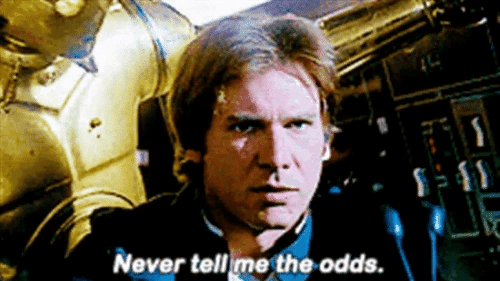
For Wave, Listen to Me!, good marketing could help promote it at the time. No clue if it would have the longevity to still be talked about even now if this were the case, but we’ve seen stranger things happen. To quote a smooth-talking, galactic smuggler:

YouTube recommendations are still a thing, albeit biweekly for now. And for this week, I bring you Mrs. Eats.

https://www.youtube.com/@MrsEats

One of a handful of Japanese YouTubers whose content is in both Japanese and English, Mrs. Eats likes to show people the ground perspective of life in Japan, at times in a comedic way with her husband. Additionally, her videos uncover several misconceptions many people, especially foreigners, may have about Japanese culture, lifestyle, or even entertainment. Sounds like it’s up your alley? See the link above.

How I Found VTubers

Like most things, it was slow and steady

The topic of VTubers is somewhat old hat as of writing this so nothing I write will be new, but my posts since the beginning have mostly always been like that so structurally, nothing’s changing. As for the topic itself, others have mentioned VTubers in the past before and more succinctly so I won’t go into the history as much here. But in case you’re curious on what VTubers are, Gigguk is down below to catch you up to speed. Granted, the video is from October 2020, but all things considered the landscape hasn’t changed all that much.

Channel: Gigguk

All in all, there’s some debate over the beginning of VTubing, but it’s widely accepted that the VTuber Kizuna Ai is the one to spread the idea and popularize it worldwide. Kizuna Ai debuted in November 2016, and many more have followed, mostly of Japanese origin though several from outside Japan, notably the U.S. and U.K. have had their own similar debuts. It wasn’t until 2020, that I was exposed to many of the VTubers mentioned in the video above and the talent agencies (known as tarentos in Japan) that host them and these days many of the notable and newer ones have in some manner populated my feed.

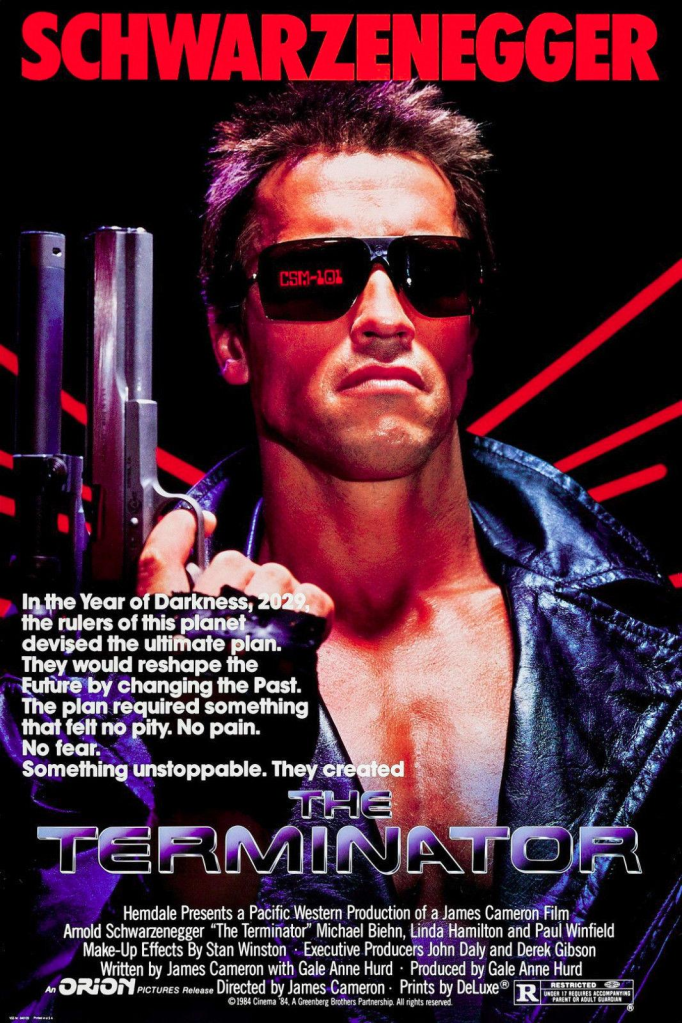
Call me paranoid and nonsensical, but I’d never had that much trust in a machine or any such program. The irony to this was that when I was in Army boot camp initially, I was set for a military occupational specialty (MOS) that would’ve had me working with telecoms networking at the time and here I am with a man vs. technology complex. It’s not all that special, humans have always looked at the strange and foreign with suspicion, but for me it’s just irrational. When I was 16, I binged all the Terminator movies in the lead up to the great disappointment known as Terminator: Genisys and I’ve always chalked that up to the reason I look at new tech with the stink eye.

Nowadays, I don’t really mind the direction AI tech is going since most of the time we’re merely putting in silly prompts and in my case, general history questions. Could we one day mess around and find out Skynet style? Who knows? We’ve got to wait and see. For my exposure to VTubers, it wasn’t around 2019 going into ’20 that I’d gotten more exposure, mostly by proxy through the Trash Taste Podcast when the boys invited VTuber Mori Calliope to the show.

Channel: Trash Taste

And it wouldn’t be the only time a VTuber appeared on the podcast or even individually with the boys on their own channels. Speaking of Kizuna Ai, Joey had her on his channel a few years ago. Gigguk did a few rare collabs with the likes of Hime Hajime, and followers of CDawgVA, the thickest Welsh boy, are very familiar with his dear friend Ironmouse and the pathetic VTuber Rainhoe. These are all jokes, of course. Check them all out when you have the time.

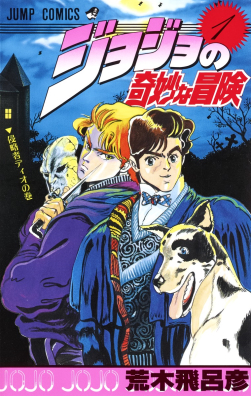
I’d say that VTubers like these helped introduce me to others in my feed as well as the talent agencies that host them. As explained by Gigguk in the first video here, some of the appeal of VTubers comes from the personality themselves and/or the associated lore, other times there’s something unique that comes with VTubers especially in the realm of video gaming where you’ll find a lot of them, and the rest of the time they’re recounting humorous or embarrassing stories or otherwise screwing around. No matter how many clips I find in my feed, this one of VTuber Amano Pikamee making a JoJo reference is always a personal favorite of mine.

Channel: Giobun

But even outside the realm of traditional entertainment, sometimes YouTubers outside Japan have jumped aboard the trend themselves for a variety of reasons and purposes. Back in April, I recommended the YouTube channel Rev Says Desu for his commentary on controversies in and around the anime community, notably in online forums like Twitter. Rev himself uses a VTuber model in his videos and often due to the nature of the content within his videos, he’s normally subject to demonetization at the least and harassment at the most, largely because many of the people he puts on blast from Twitter are a minority of firebrands. Most of Twitter isn’t like that I’m aware, but this is more of a problem of popular and social media giving a lot of power to people who demonstrate that they shouldn’t have it. An age-old bugbear that should’ve been exterminated years ago.

On a more lighthearted note, the messing around, joke around, fun type of VTuber is the kind that has its appeal the world over and has inspired individuals outside Japan as well as English language options being made available for Japan-based VTubers, including but not limited to those associated with the Nijisanji and/or Hololive agencies, sometimes spawning collabs and memes especially in forums like r/Animemes or its sister forum r/goodanimemes. For a while, Gawr Gura and Watson Amelia were featured quite a bit in these subs as one example.

Creator: phdpigeon

And there’s lots more fanart and such to go around.

For my mileage, I’ve come to accept that VTubers are another arm of Japanese pop culture jumping ship and spreading to the rest of the world and rapidly. As Gigguk had mentioned in the above video, some would argue that it’s a fad, a passing fancy, but 2024 is down the street and we still have VTubers debuting these days long after Kizuna Ai helped break the mold, most likely with aid from pioneers from years before. Whatever comes after VTubers I think it’ll be a while before we see it.

This week’s recommendation is a channel known as The4thSnake.

https://www.youtube.com/@The4thSnake/about

I’ve mentioned this channel on other posts before. This channel is dedicated mainly to fighting games, their lore, and individual plot points, but takes it a step further by mentioning the plots of specific characters over the course of a series’ timeline, clarifying messy plot points, among other stuff. The4thSnake specializes in Mortal Kombat lore and collabs loads of times with another channel I’ve mentioned before: TrueUnderDawgGaming. And since Mortal Kombat 1 has been out for about a month at this point, both of them are set to capitalize on the new lore brought about by this latest installment of Mortal Kombat.

My Favorite Podcasts

How I found my favorite series to listen to

Before I start off proper, I want to say that I had a draft lined up for a hypothetical compare and contrast post between God of War’s Kratos and Grand Theft Auto V’s Michael DeSanta/Townley, based on some throwaway lines that I looked too into, specifically Thor lamenting that Kratos wasn’t the same as the Ghost of Sparta that physically deconstructed Mt. Olympus the hard way; and Trevor refusing to let Michael forget that he was a bank robber, a thief, a career criminal like he is and trying tooth and nail to bring him back into the fold. As you would expect, the comparison was very apples to oranges. RockStar doesn’t hang onto most of their cast from previous games. There’s a balance there between old nostalgia and new characters, and RockStar has a rotating body of protagonists compared to SCE Santa Monica. As a result, most RockStar characters have self-contained arcs while Kratos spent the better part of about nine games growing from pride to mournful to determined to vengeful in a manner of writing that whether by accident or on purpose mirrors the story structure of ancient Greek epics and recently Norse epics. One is a parody of American pop culture and the other is loosely inspired by Greco-Roman tales of adventure. If there’s a grain of truth to something like infinite monkey theorem, then I could probably produce a Shakespearean comparison between these convincingly, but until then I’ll keep it on the backburner.

So let’s get to the topic of podcasts.

I’m writing this from the perspective of a listener, not a seasoned podcaster. But I’ve spent a pretty long time listening to several so I figured I’d throw some pennies into that fountain. How I started was with Rooster Teeth Productions’ namesake podcast. It began around 2009 as the Drunk Tank, but at the time needed to switch names at a later date if it hoped to attract sponsors. I think, after a few years, Drunk Tank as a name would’ve been great for a podcast.

I found this out a few years ago on YouTube thumbing through the old videos because I wanted to see how much they’ve grown over the years. The first episode of the Rooster Teeth Podcast/Drunk Tank was much, much shorter than anything that had been produced after nearly a decade as an active podcast. An hour and ten minutes in 2009 compared to about three hours or more after 2014. Incidentally, the podcast wasn’t what made me an active subscriber of Rooster Teeth’s website or their YT channel. There were honestly different opportunities for me to become a subscriber early on that were brushed off. The first time was in 2013 around the Halloween season when I was 20 videos deep into a Dead Space 3 Let’s Play video, and RT’s gaming division, Achievement Hunter, bought ad space for an admittedly creative Halloween costume to show off. Almost fifteen-year-old me wanted to get back to the sci-fi action horror. I subbed to RT in 2018 after catching clips of their anime-style show RWBY in a WatchMojo.com video, and have since discovered their network of content in the Rooster Teeth podcast and Achievement Hunter’s Off Topic podcast, both of which I listened to while in college and during the pandemic.

As of writing this, they have several more podcasts that they produce, including Red Web, Black Box Down, F**kface (yes, really), and a few others, some of which I’ve listened to or are still listening to to this day. Halfway through the pandemic and in the leadup to my enlistment in the Army, I was somewhat spoiled for choice and bounced around podcasts like I bounce around YouTube channels.

A podcast I was tuned into briefly was the Joe Rogan Experience podcast. Weird story for that one, select media outlets had mentioned Joe Rogan’s name before but in a negative light. Naturally, I took to listening to some episodes myself and the context of the conversation about Rogan was out of a concern that he’d been inadvertently promoting then-unproven COVID-19 precautions as cure-alls by allowing controversial practitioners to speak on his show. When I thumbed through his episodes, I found that as an entertainer and commentator by trade, there’s no shortage of eccentric people. Rogan knows this and going back to WatchMojo.com, they have different videos detailing Rogan’s many different guests, some of which have gotten “interesting.” Here’s one video:

The sensationalism seen in modern media tends to lift firebrand personalities and ideologues to a point where a full story isn’t guaranteed. Personally, I put the blame on sensationalism around horror stories and reports, but an unintended benefit of that is wherever I see this type of outrage media, I’m at least patient enough to keep an ear to the ground and wait for every detail to be discovered before I pass judgment.

For the JRE itself, I like to think of it as a catch-all type of podcast. There’s no single point of focus; every guest is unique and brings many individual takes and opinions with them. This rotating body of personalities makes for a unique experience for each episode. Political outlets would make me believe that he’s made his platform a home for fringe ideals and beliefs, but that’s not what I found. Individuals of this stride do come on the JRE but so do many others. All in all, my conclusion is that outrage bait in modern media is very ineffective as expressed in this video:

For Joe Rogan, it’s also very misleading. Talking heads in American media can make you believe the wrong thing about a person, but then you see more of what they have to show for themselves and in my experience I’ve shaken my fists at demagogic rhetoric for lying to me and I’ll continue to do so. For more obviously political podcasts, Tim Pool is more consistent in that field, among others who were also guests on the JRE. I also think he was dealt a bad hand, especially during the height of the pandemic. All things considered, the U.S. at the time had a frustrating response to the pandemic, and I think some journalists really wanted to vent at the time. I’ve no horse in that race, so I won’t comment further on that.

As for the rest of the podcasts I’ve listened to or subscribe to regularly, the ones under the RT umbrella do have a singular focus most of the time. Red Web is hosted by Achievement Hunter personalities Trevor Collins and Alfredo Diaz and delves into unsolved mysteries, some of which have a criminal element, others tend to be centered around modern phenomena like cryptocurrency or strangely placed architecture or local abnormalities and cryptids. I emailed them once in 2021 to see if they had plans on doing an episode about the Toynbee tiles which I have seen in Lower Manhattan when I was in college.

They do have an episode on these mysterious tiles, though I can’t claim to have been the inspiration for that episode. Black Box Down is all about aviation incidents throughout history. From the early days of Wilbur and Orville Wright to modern airline industries and carriers, there’s always a story surrounding an aviation mishap of some sort. One thing I’ve noticed during a filler episode (don’t remember which one) was that most of the audience had either never flown, rarely flown, or held some irrational fear of flying in some capacity. But when they learn more about aviation and planes, the fears are alleviated somewhat.

Personally, we never made enough to fly continuously growing up. Other family members have taken me flying twice to Miami and Orlando for Disney World and Universal Studios theme park respectively, so I never had a fear of flying or aviation. Nor have I really had as much of an interest in flying. So what’s the draw for me? Well, I also wanted to know the secrets behind why planes fall out of the sky and whatever you think that may be, a lot of times it comes down to luck. It may have something to do with terrorism in a post-9/11 world, but flashy articles about aviation are likely to be older than that. You’d be shocked to learn that air hijackings were common during the Cold War era and most of the time the planes landed safely.

BBD’s hosts are also Rooster Teeth personalities, Gus Sorola and Chris Demarais. To my knowledge, this podcast is going to cease production soon as one of the hosts, Gus, has plans elsewhere, but if you want to catch up, the Rooster Teeth website and podcast apps have all the episodes.

F**kface is hosted by three more RT personalities, Geoff Ramsey, Gavin Free and Andrew Panton. The premise behind this podcast is a series of personal stories of the three guys being idiots. Funny and embarrassing stories from childhood, school, work, etc. It’s the podcast equivalent of “if you ever feel like an idiot, remember [insert overlooked example of stupidity here].” F**kface is one of my favorite podcasts, partly because its relatable and also because I’m not always in a learning mood like with Red Web and BBD. Sometimes I wanna turn my brain off.

Speaking of which:

Trash Taste Podcast is the crown jewel podcast that I subscribed to back in 2020 during the pandemic and haven’t looked back ever since. Of all the podcasts I’ve looked at (and they aren’t that numerous honestly), TT is the one that I could forget about for a while and come back to, which was what happened after I was medically separated from the Army.

Trash Taste started off with the goal of being the prime anime podcast and has gradually morphed into a slice of life experience about living in Japan, specifically the Tokyo Metro area which might itself be a city-state like Singapore. Just sayin’, I’d love a manga series at least that took place in Matsuyama or Fukuoka or something. I won’t stop ’til I find that series.

If the name is familiar to readers, then you may recall that I recommended Trash Taste and the three hosts’ YouTube channels all the way back in February of this year. The three hosts are the anime YouTubers, British-based Connor Colquhoun or CDawgVA and Garnt Maneetapho or Gigguk, and Australian-based Joey Bizinger or The Anime Man. All three of them began their journeys on YouTube mostly independent of each other, but with a soft spot for anime.

Garnt’s first videos were reuploads from 2007 reviews he did of series like Bleach, FLCL, Lucky Star, and K-On! as examples. Early on, the inspiration of Zero Punctuation was strong, but similar to what befalls many creators, Garnt eventually found his footing and got to reviewing anime his way. So if the first video is titled “Bleach Review,” a review of Chainsaw Man or Call of the Night would be something along the lines of “Manga’s Newest Best Boy,” with Pochita in the thumbnail somewhere. Additionally, with many anime getting slated for adaptations in a year, a smart move on Gigguk’s part was to quickly summarize the anime of the season.

Connor’s early videos were made up of prank calls while impersonating the star character of the Black Butler anime. He also briefly hosted a podcast based around voice acting, which is what the VA in his online handle stands for. Connor’s content doesn’t really separate himself from his hobbies; he makes himself quite clear that he’s a gamer, a JoJo fan, a Hunter x Hunter fan, a Black Butler enjoyer, and a voice actor. As an added bonus, he mentioned a few times on his channel, in collabs and on the podcast itself that initially, his audience was 93% female, hence the moniker on the associated subreddit “The 93%.”

Finally, Joey. Unlike the other two, Joey the Anime Man has a closer connection to Japanese pop culture being half-white, half-Japanese, or in Japanese law, a hafu. He’s very in tune with his Japanese side to the point where his articulation is better than most Japanese people in Japan. Much of his older content, from my point of view, was rather short form. He started off with anime-centered content (read: hot takes), but was also doing a bunch of other stuff as well. Anime news, manga recommendations, and also gameplay videos, which he has long since moved away from.

All three do still make content on their individual channels, stream on Twitch and upload the VODs for those who are unable to tune in on Twitch live. All of these are recommendations all their own if you’re capable of supporting their content.

The reasons for choice in podcasts are all complex and varied, but I remember listening more closely to the Rooster Teeth and Off Topic podcasts so that I could have non-distracting background noise for homework assignments. I had the radio in the background tuned to my city’s classic rock radio station perpetually since around middle school. It relaxes me. But around the time I was in college, I wanted more. So I turned to podcasts, which admittedly was rough around the edges in the beginning. Only now have I realized after trial and error that you don’t exactly need to put all of your undivided attention into a podcast episode 100% of the time. You can, but all in all, I like to think most podcasters expect a healthy mix of active and passive listeners.

I should also mention that years before Trash Taste debuted in 2020, Gigguk had an anime podcast on his own channel known as Podtaku, a portmanteau of Podcast and Otaku, but as explained in this video, that podcast ran into a whole host of problems surrounding direction and timing:

I’m certain there are OGs who remember these days, and thanks to these experiences, the anime community arguably has one of the best podcasts to date, even if it’s more about living in Japan then just anime alone. And I think that’s for the best — Podtaku practically walked so Trash Taste could run.

The Elusive Samurai

The life and times of Hojo Tokiyuki

Clawing out of the deep recesses like the happiest Spartan breaking free from Hades wasn’t without its few perks. To date, this is the third manga presented to me by Viz, so if it feels as though they’re sponsoring me, they aren’t. But I’d be open to covering the works they’re allowed to license to the west if the opportunity comes knocking especially now that two of those series are set for anime releases in the near future: this series and the one about the zombie or something. I don’t know…

But while Bad Luck Unkillable has a trailer with voice over and all that, Running from the Samurai in Medieval Japan only gave us a teaser trailer which works for me as I have as much time as I feel is appropriate to play catch-ups with the manga.

For research on this post, I’ve had to skim through and remind myself of who’s who, while also brushing up on this period of Japanese history, so wherever there’s a mistake, I’ll amend and correct it once I read up on both. The premise of The Elusive Samurai is thus: the Hojo clan, who held sway over the shogunate and sent most of their own members to work with the imperial family and court, is represented by their two members, current shikken (regent) Hojo Takatoki and his son and heir, Hojo Tokiyuki. Ambitious members of the Ashikaga samurai clan allied with the Emperor Go-Daigo in an attempt to return the imperial court to its seat of power, i.e. overthrow the Hojo-ruled Kamakura shogunate in favor of the emperor. During festivities, the Ashikaga launch their siege on Kamakura and nearly exterminate the Hojo clan. When the dust settles, the Ashikaga realize that the heir, now-shogun, Hojo Tokiyuki has survived and escaped. With the Ashikaga now in power, they use their resources to hunt down and exterminate the boy and every one of his allies.

Brief history lesson: on paper, the imperial court sat at the top of the pillar with the most power, followed by the shogunate, and while they were in power, the shikken. In reality, the Hojo clan shikkens were more powerful than both the shogunate and the imperial court combined. This was the result of the 12th century Genpei War that pitted the Taira and Minamoto clans against each other. Minamoto no Yoritomo won out and as part of the spoils of victory, the imperial court behaved as a figurehead, a position that Go-Daigo was clearly not happy with, hence the Kenmu Restoration’s goal of reversing these circumstances. Fun fact: Kublai Khan found this out the hard way in the lead up to military actions against the imperial court and shogunate when the Mongol-led Yuan dynasty attempted to add the Japanese islands to their list of possessions. Couldn’t go east in the long run so he went hard west.

And thus we learned from the Mongols why it pays to think very hard about an amphibious invasion. Back to the manga, over the course of the Kenmu Restoration period, Tokiyuki-sama embarks on a quest to gain allies and build a force of formidable warriors who can return the Hojo clan to their former glory. It might go in a different direction in the long run considering in real life, the Kenmu Restoration was short-lived and to my interpretation the Ashikaga turned on Go-Daigo and restored the shogunate long enough to stay in power until 1573. Interestingly, this created a split in the historicity of the Japanese emperor’s line of succession briefly with Japan holding two capitals until the Azuchi-Momoyama period.

Seriously, I’ve gotta stop jumping the gun here. Alright, so Tokiyuki isn’t completely alone in his quest. He starts out with a few retainers at his side and actually has support from the head of the nearby Suwa clan in the form of Suwa Yorishige who I believe is loosely inspired by the samurai of the same name, though the real life Suwa Yorishige succeeds the fictional one by two centuries. Also, manga Yorishige is reimagined as medieval Japanese Nostradamus with all his predictions about the future and funny enough common manga tropes. Makes me think of Koro-sensei though more self-aware of the manga he’s in.

Structurally, I see a bunch of references to JRPGs like Chrono Trigger or early Final Fantasy. Protagonist with a long term goal, comrades at his side, godlike guide, encroaching force of evil closing in from all sides; the comrades especially exhibit several archetypes in several RPGs, the thief, the brute, the mage, etc. If I was alive in the 1980s, I probably wouldn’t have imagined how many manga series became franchises with spin-offs and video games in tow, but if I had Yorishige’s level of foresight and I could see Dragon Ball getting video games and all that, then I think I can also see other manga following suit. Whether The Elusive Samurai follows suit remains to be seen, but even if it was a fan creation, I could see an Elusive Samurai RPG-style game soon. It’s also worth noting that the art style and writing will feel familiar to fans of Assassination Classroom and that’s because it’s from the same man: Yusei Matsui. Overall, by itself, it seems to be having fun with the historical setting and subject material. Taking the piss outta historical figures is a worldwide pastime, after all. In comparison with Kill School, the most comparable thing they have is the femboy protagonist. Not sure if that’s Matsui’s bread and butter, but these days that might be the case.

The YouTube channel recommendations are coming back for April. Also, Tomorrow being April Fool’s Day, I’ll cover Toonami and Adult Swim’s yearly tradition when those stars align. Look forward to that.