The story of one of the best demon hunters with a supplement
Making another breakthrough in legacy video game franchises this time with Devil May Cry, the story of Dante, a supernatural gun for hire who hunts down every paranormal entity on earth to keep these forces from invasion and conquest. In his arsenal are a pair of handguns lovingly dubbed Ebony and Ivory to reflect their coloring, one blued and one chromed, so if you were in the market for a pair of collector’s items, you’ve gotta make sure Dante’s dead enough to pilfer his weapons. A sword is also attached to his back and seems to do roughly the same amount of damage as the buster sword from Final Fantasy VII.
The series debuted in 2001, spearheaded by Capcom when they were still respectable and didn’t pimp out the Resident Evil series over the course of the 2000s. Now let me see if I’ve got this right: a man named Dante ventures through hellish conditions to bring the light of the lord to humanity. Yes, the independent game wiki and associated Wikipedia page both mention the Divine Comedy as a source of inspiration, but unlike Dante Alighieri’s satire of the Holy See, Capcom’s crack adds 2000s edginess that’d be replicated in the likes of God of War and Max Payne, adds a skills-based combat system mostly based on your ability to move and shoot (though less balletic John Woo/Matrix-like than Max Payne, and more Soul Eater’s Death the Kid sans the strong pinky action).
Kid must do push-ups with his pinkies to be able to pull this off
To add on to the God of War aspect that would define its Greek Saga (and to a lesser extent Norse), the game features light puzzle-solving, as well as the fixed camera angles that were a staple of Resident Evil until at least 2005’s Resident Evil 4. And not dissimilar from God of War, the fixed camera can sometimes be a little uncooperative especially in combat. At least it’s not enough to make you wish you could go back in time and heavily scrutinize the dev-team for this. And whatever complaints there were at the time were addressed when the games were remastered in HD by 2018. So rest assured, the franchise is still kicking.
Funny enough, I recall a cardboard advert of Devil May Cry 4 back in 2008 featuring deuteragonist, Nero…
I’m still new, as I thought this was Vergil at first
…and sadly I was way too broke at the time to get it. My PS2 was still marching on and I wouldn’t see a seventh-generation console until 2013… when it was ending. Coupled with console exclusivity and DMC would enter my life yonks later by way of PCSX2. Similar to my introduction to the Yakuza series which I wrote about here.
As of writing, my interpretation of the series is more browsing the Wikipedia page for reference as I just started exploring the game. I at least wanna get through 80% of the first game though before I start lore dumping, just so that I know I understand the plot. Still a recommendation—that goes without saying. It’s old enough and developed enough to garner new players, myself included, after many years. Maybe a future post could compare the original and the remaster, something I have an idea for regarding Yakuza and the Kiwami games.
So until I learn more about the children of Sparda, let’s move onto Flash games.
I’ve waxed poetic in the past about my lovely childhood with Flash games and directed you viewers to an archive of most of the games that were sacrificed the same day Flash died. Be it CQ or staff duty in the Army, when it comes to graveyard hours, I’ve got as much time as can be spared, plus the weekend and recovery to rediscover what all those hours on the computer were dedicated to in between my scheduled assignments during school and what was allowed during day camp depending on what days had the fun counselors and what days had the wet blankets. The fun ones literally said, “Anything but a chat room,” and the wet blankets opposed violent video games and looking at what I was playing, many of them were slightly north of bloody and viscous, but thankfully for them not bloody enough for Mortal Kombat.
So, Tiberius, what did you rediscover? Several things I’ve played before on the functionally vegetative Stickpage among some others. The one that a friend introduced me to when we were around nine years old was the Sift Heads series.
This was peak at one point in time
I’ve mentioned this in passing before on this blog, but now to unpack it in detail. By now, it’s a franchise accessible on any device that allows you to game from the beefiest, sexiest computer Best Buy or other stores like JB Hi-Fi can give you, but it didn’t begin like that. If the Flash Games Archive or the developers are honest about the game’s history, the series of stick-figure shooter games debuted in March 2006, featuring protagonist Vinnie, an ex-mafioso taking scores in the Windy City by way of lightspeed boring machines for your brain. $5,000 please.
Performing a series of contracts for the highest bidder, Vinnie shows himself an effective killer, and when he’s offered a chance to become a full-time mafioso, he declines, declaring to work solely for himself. Freelancing gives him the flexibility to choose his contracts. As a downside, this means that turning down the wrong people makes him popular with the wrong people, like Max Payne, only there isn’t a cemetery plot dedicated to his dead family because his wife got a dossier from a morally absent pharmaceutical company, so Vinnie can still call Chiraq home and travel the world in search of heads to sift.
The third and fourth installments add more lore to Vinnie to go along with the plot progression, but the prequel, creatively numbered 0, goes into his past. The short version is that he was born in 1975 and had been killing things from day 1. A cat that mauled his favorite teddy (funny how he remembered that considering memories don’t usually start developing until the age of four or so, unless his mother told him), a toddler who played with his favorite toy car, and an annoying seventh grade teacher who was killed falling out of a two-story window. Tried to fix the AC, should’ve called the repairman; they still had them by 1987. By 1993, 18-year-old Vinnie, driving in a Plymouth Barracuda with an open bottle, is pulled over in a roadside stop. Speeding off irks the Chicago PD who tragically lost their lives in a car crash. Yeah, happened a lot back then. Now all of that silliness out of the way, the late 1990s sees Vinnie accept his first contract. The son of a crooked cop is kidnapped by a major drug smuggler and Vinnie needs to pop the guy and free the son. By 1998, the smuggler is no more and the dirty cop’s dirty son is free as a bird.
New millennium, 2005. Another major contract is taken and Vinnie, now 30, has gotten more creative with his hits.
Probably the best bounty hunter in Chicago
The next series of games sees a few chickens come home to roost, with a relative of a contract in Japan tracking him down and attempting to kill him. This character is known as Kiro, which doesn’t sound like a name that would be found in Japanese, more so a romanization of “kiroguramu,” but I’ve not got any influence over the series, so we’re rolling with it. An ex-yakuza on the run from his own family plus the triads for a misunderstanding that got a lot of people killed.
Vinnie has the opportunity to kill this guy but instead spares him. No one put a price on his head, so he’s not worth the trouble. Guess we know now where his priorities are. If there ain’t no money, this s[guns]t ain’t funny.
Spoiler for Stone Ocean: the anime wasn’t able to include this scene. Disney’s lawyers are too strong.
AFAIK, every game with “Sift” in the title is archived on this site, so feel free to explore what makes these stick figures so compelling. And on that note: Johnny Rocketfingers.
Seems this was re-released on Steam, I didn’t know that ¯\_(ツ)_/¯
Crack-smoking, swears-using, drug-dealing, beer-swigging, cigarette-smoking; Johnny Rocketfingers doesn’t play games despite being the protagonist of one. An older game from 2003 (I didn’t realize it was that old either), Johnny boy is asked by a screeching harlot to recover her daughter from hoodlums for a price, enough to buy him a truckload of crack. That’s not a joke, by the way.
The game has branching dialogue paths, but only one path is canon while the rest are there for s[lighter]ts and giggles. Illusion of choice? To an extent, but you can explore the non-canon choices if you’re curious.
So, Johnny agrees to get the girl back for a price and goes on an adventure knocking down hoodrat after hoodrat in creative ways. A cat to maul a bouncer, a doll to distract a guard, a can to distract two more guards and an action sequence that results in Johnny getting held captive and tied to a chair.
But that’s all malarkey after busting out and delivering a “child” to the woman in exchange for that sweet, sweet crack money. But the gang catches up to him and I guess Chiraq starts to resemble Iraq post-insurgency with bodies littering a city street.
And wouldn’t you know it, Johnny Rocketfingers has a sequel with more to the point-and-click Choose Your Own Adventure style of gameplay. There’s more interactions, more people to interact with, things to collect and more. What’s more, it’s in color as well so we see more and more how ridiculous this simply-drawn character looks next to more detailed NPCs.
Being in a game doesn’t mean Johnny plays them
Lover of puzzles and the crack epidemic’s immediate effects Johnny may be, he can’t stop messing with the wrong ones. Everyone knows better than to rip off a dealer, but leave it to this guy to straight up rob and try to stiff the guy. Consequences come a-knocking when Johnny mid-swig is surrounded on all sides by three Knicks rejects. With a broken bottle in one hand and ashes in the other, all three litter the floor of the bar and Johnny drives off while the drug dealer’s henchman calls the boss in a phonebooth, which simultaneously dates the game and adds to the character of the environment. Side note, I always wanted to call someone on a payphone, but there were obsolete by the time I was grown.
The next morning, Johnny gets a knock on the door of his rundown apartment in the projects (my, the memories of my childhood flood at the mention of that) and the drug dealer’s goons aren’t playing. The rest of the game is spent gathering information on these guys through roundabout favors, or favor, for there is only one that matters. Talk to the hooded dude hanging out on the corner and he’ll tell you what he knows—vaguely—if you recover his Zippo lighter.
While doing that, Johnny commits random acts of theft, vandalism and robbery of a parking meter (the old-style ones for individual parking spaces on the curb), force-feeding seltzer to a pigeon to get into its nest, boozing up a bum to take his pocket change; this all sounds random the way I’ve written it, but it all adds up in action.
Getting the Zippo is the interesting part because it’s in a storm drain guarded by a sewer gator. Yes, that’s merely the projects in Brooklyn or the Bronx, but home pride refuses to let me take the piss out of NYC, even if it could use it. Johnny arms himself with a rusty pipe in an attempt to get the gator to f[roar]k off, but the leather-headed bastard is a stubborn bitch. It corners Johnny in a drainage pipe, but finagling with tools dug out of the rubbish bins of the city get him some trinkets to try to open the drainpipe and send the gator flying.
Patient or foolish enough to toy with his food, but anyway, the gator is out, and we find that this dragon was guarding a treasure trove that Johnny would never get his hands on. And looking at where he lives and how he lives, that much weight in gold doesn’t know how to shut up; the boy’d get clipped if he had even a dollar on hand, never mind valuable Civil War bonds. The real prize is the Zippo, which, when recovered, is the price to pay for information on the main antagonist faction, Thug Inc. If you think it sounds dumb to name an organization like that, this article about Murder Inc. begs to differ.
Budget Slim Shady doesn’t reveal much about the organization. For the most part, their location is a well-guarded secret, but one of their spots is in a certain part of the city. The coins collected from the parking meter are used to pay for bus fare and before Johnny disappears to knock some skulls around, Dollar Store Eminem is revealed to be a Thug Inc. member by way of the ring on his finger.
Something, something insider threats and all that s[sparks]t
To cap it off, this game’s sense of humor has you walk into an obvious trap, pointed out by—and I’m not making this up—a giant, glowing sign that reads: “This way to gang hideout.” Luckily, this is a game or the cops would be all over it, but then again if the dealer is as powerful as portrayed then he’s probably this universe’s Big Smoke, with a section of local PD in his pocket… or just confident no officer would look too heavily into the slums. Johnny walks into the alley, playing it Bogart, when he’s surrounded by similar looking thugs to when he was at the bar the other night. He survives the onslaught until the big boss comes back with a gun in hand. This time, the boss doesn’t survive and gets himself capped, knee capped that is. Then at the end, Johnny’s at the bar again and another chicken returns to roost. The same woman who got the circus freak in the last game hires a real PI (should’ve done that in the first place, dumb ho) to beat the f[knuckles]k outta Johnny and the credits roll.
Unstoppable
He was found dead at 32 from a crack and speedball overdose. The bartender barely missed him. /j
The last Flash game that I wanna close off with is based on another Flash game featuring a semi-famous character. Called Andre’s Adventure: The Quest for the Hammer is based on a similar beat ‘em up game called Combo Factory, and I recall Andre being a central character in that game in mid-2010, though he’s appeared in different games and animations at the time.
Standard fare, pointy-clicky, attack-y the baddie; Andre’s trademark hammer has grown legs and walked away, and he goes through some kind of supernatural militia to get it. The enemies themselves aren’t fully supernatural; they’re all regular dudes with guns. The supernatural element comes in the form of zombies and Andre’s dark clone: Erdna. If you’ve played Combo Factory, you might notice that the moves used against Dark Andre are not at all dissimilar from those in that game, suggesting either some of the programmers who made that game also helped develop this one, or the devs, while different people, were paying homage to a stick figure icon of sorts. Either way, it seemed to have been a collaborative effort back then. The impact of this orange supernatural crime-fighting stickman are definitely lost on today’s internet, but until I get those mind control Chum Bucket helmets from the SpongeBob movie, I can’t speak for anyone but myself when I say that this one was a classic.
They’re all available on the Flash Archive site and function as they did back when computers were cathode rays and bulky motherf[typing]kers, so those of you who weren’t around or were too young or just old enough to experience these in their halcyon days and want a hit of nostalgia, give it a go when you’re able.
The end of the year is on the horizon and the last few posts before 2026 will be a review of some animanga I’ve viewed and video games I’ve played this year. Not all of them having released this year, just things that I didn’t play until this year if that.
The time has arrived once again to do what I do best and talk about an obscure piece of media with zero problems showing breasts and p[nyan]sy. Last year’s post about High School DxD, Shimoneta, and Monster Musume was a teaser; Valentine’s Day’s post about Scarlet Maiden was a personal introduction to AO/R18+ gaming; Spring’s post about FlipWitch – Forbidden Sex Hex was a continuation; and countless other lewd andraunchy animanga series have been showcased on this blog. This time around, I bring you a trio of hentai video games. Like Scarlet Maiden and FlipWitch, follow the Metroidvania formula in shape and art style with endless travel and backtracking, pixelated graphics, a list of bosses without a discernible order in which to defeat them, and several others. These three games are known as:
Midnight Castle Succubus
Tower and Sword of Succubus, and;
Castle in the Clouds.
I’ll cover them in chronological order in this blog. As usual, I haven’t finished them all 100% but have spent enough time with all of them to get an idea of the least played ones to understand what was being emulated design-wise. Now onto:
The one that loves Castlevania so much that it rubs its sweaty tits all over the original video game cartridge, Midnight Castle Succubus was developed by Pixel Teishoku and Libra Heart and published under the Critical Bliss horny umbrella on September 18, 2020. Its premise is that every century, an evil succubus lays waste to the lands, slaughtering all men (presumably to add them to her army, like another video game character that I know of), and unleashing hordes of horny monsters to kidnap and molest every woman they can find.
Somewhat connected sidenote: I read further along in Redo of Healer (my soul is not safe), and the second princess Norn is shown to be a somehow worse monster than most of the others in the Jioral Kingdom; the succubus by that description makes me think of a toned down Norn.
The protagonist of this venture is a crimson-haired nameless beauty who specializes in the art of the whip. For that, I’ll call her Beatrix. Her mission is essentially defeat the succubus, save the people, rescue the rape victims, don’t get raped herself; that last one happens whenever you die so it follows the FlipWitch variant of combat, but is thankfully more generous with the saves than FlipWitch was, so I can steamroll a level and knock the teeth out of Muscle Fat Ogress, die, come back and not have to worry about losing a trinket I collected along the way because I had the foresight to save prior.
Speaking of trinkets, the game offers quite a handful. Crowns and orbs, for the most part, with throwable weapons for pickup, almost all of which seem to have been airlifted from the 2D side-scrolling Castlevania games. For the characters, Beatrix doesn’t necessarily venture alone. She can recruit a quartet ranging from the mage, the monk, the thief, and the warrior. I have yet to find the mage, and there’s a power up you can grab from a wizard that allows you to be able to summon all four of them at once as opposed to swapping them out one-by-one. Not to mention another power up that lets you use your untapped succubus powers.
I have also yet to unlock this feature in the game and at 80% completion (map traversal notwithstanding), I’m not even done with the game. Classic Castlevania lovers are sure to get a kick out of it and lewd game enjoyers will surely enjoy select loading screens of Beatrix in various scenes of undress along with a handful of the women to save being aggressively passed around by horny orges while the boss protects them in their forced breeding endeavors. If that’s two much for you, the game has a SFW version so you don’t have to worry about innocent eyes rolling out of their sockets from two cubicles over. Now onto:
This game advertises itself as a 3-in-1, but so far I’ve only ever been able to play Tower and Sword. The third game, Succubus Hunter, I haven’t been able to access due to a technical issue with the game’s coding. Maybe this is some kind of odd developer oversight or I need to contact the lord of sex in order to get to work on any one of my machines, but anyway, it came out a month later on October 30, spearheaded by Japanese dev Libra Heart on a solo venture and carried once again by Critical Bliss.
In Tower, a succubus is void of nearly all her powers and needs to traverse a skyscraper, f[squelch]ing and plucking all the way up until she can f[uoggh!]k her lovers to death as the prince of darkness intended.
Taking a page from Scarlet Maiden, the design of this succubus, whom we’ll call Matilda, is that of more pieces of abnormally thick tooth floss covering only the important bits so that I don’t have to put the censors to work (wish I had better ones to use though, since those black squares don’t get paid enough), easily removed so that when it comes to magicking the life force out of a demon’s soul (read: penis), she gets ever stronger. Wait ’til Matilda gets to Level 100 and you’re jizz causes her to grow wings so that she can engage in endless flight. That’s the kind of magic that fuels anti-masturbation propaganda. “No, honey, I wasn’t wanking to that tramp over there! the Demon Matilda stole me seed! You’ve to believe me!!” And that’s how marriages fail. – Friar Maxwell, c. 1584.
I’m not certain if there’s a SFW version, but if there is it’d defeat the purpose of the goal of the game. Put these nun clothes on, dearie, won’t you please think of-wait, sexy nuns are thing, that’s a poor example.
For the second in this functional 2-in-1:
From stealing Alucard’s codpiece to raiding Zelda’s elf-eared panties, comes Sword of Succubus, whereby traversing the world is very dangerous without protection… and a sword. The succubus this time, Yolanda, gains the power of a holy sword by which to defeat the king of the demons. Now, succubi are only creatures, praying on mankind’s sexual temptation, so a being who robs you of your seed through her tits going on to do the same to Lucifer is a bit like Tanya from Mortal Kombat fighting Shinnok.
Hold on…
An MK X arcade run perhaps?
The layout definitely calls out more to Zelda’s first outing as opposed to the Belmonts with the pixelated succubus waving a sword and by way of lucky magical charming powers getting the sword buried deep within her enemies’ pants. That description makes me think of a female Fleece Johnson or !shock! Silvia from the KonoSuba movie.
Tall, dark, beautiful, and capable of penetrating you effortlessly…!
As a white hat succubus of sorts, Yolanda carries in her ginormous tits (also covered by easily-removable tape) life-saving milk that is the source of her immense power. It can be deposited for upgrades or traded between Yolanda and fellow succubi because real recognizes real or in this case breast recognizes breast.
Technically, I’m stuck on the first world, but the way this game is mapped out is a bit weird. It might have been the same as the original Zelda game back in 1986, but I have yet to run that through a ROM, partly because my interest in Zelda is quite limited, having only played Phantom Hourglass some 15 years ago, and Zelda had already come a long way seeing as she’s HD and thicker than a tower of king-size snickers.
The map has different teleportation points to go from one area to another with three different points in the town to a cave to a desert area and that’s the furthest I’m in so far. Different people interact with you with different reactions depending on what you’re wearing or not. The above photo shows Yolanda’s full dress and with enough hits, the thong, nipple tape and sleeves fall off. She’s clearly comfortable fighting naked (and most likely covered in c[hmph!]m after using her charm magic) and can do so quite well until her health drops to zero and you’re greeted with a “Game Over! Try Again!” with her tits in view or her giant ass taking up 40% of the screen. Do they make doors wider to accommodate?
Until I’m able to access Succubus Hunter, I’ll add it to the review list later. Finally, we’ve got:
Those aren’t boobs; those are the earth-movers that Obadiah Stane was developing in Iron Man: Armored Adventures.
Pixel Teishoku and Libra Heart teamed up once again to lead the development of Castle in the Clouds with Critical Bliss coming in clutch for a release date on October 8, 2021. The gameplay is even more fluidic than Midnight Castle Succubus where you can start off running as opposed to unlocking it in that game where Beatrix has an admittedly cute run, like when Senku cured Ruri and the first thing she did was run around:
Channel: Crunchyroll
The protagonist of Castle in the Clouds, Lily (an actual named MC this time), starts off as an agile, nimble fighter, armed again with a whip and all the purchaseable upgrades from MCS being available from the first pixel. Penelope stumbles upon a gang of bandits who molest her at the command of their boss, a coldhearted female bandit we’ll call Rachel. You do get your revenge and then some in a boss battle against her, but as you progress through the game, you gain work as a sex worker. Great! So slaying monsters by day and conquering “monsters” by night.
Lily is a bounty hunter and her main motivation is coin which she hopes to gain by slaying monsters across the world with presumably the same type of whip she uses for her clients. Not that it makes any difference since she can buy more whips from the weapons shop and not just whips (or chains). Swords, scythes, axes, staffs; she’s got access to numerous weapons though she’s still no God of War: Ascension Kratos.
A general has to know how to use all sorts of weapons, you see.
Lily’s quest for coinage explains her agreement to take on sex work on the side and is an interesting side hustle of hers, to say the least. The game apes more from the rest of the 2D Castlevanias whilst combining elements from Metroid and rounding out the whole lewd Metroidvania picture. I explored more of this game than Tower and Sword, but not to the extent of MCS.
With multiple different locales, we probably add Mario 3 to the list of games this game owes money to.
Does this in any mean that the sex scenes are any different? Not really, it’s the same across the board, but there are a few additions that appeal to the teasing aspect so you creative minded gooners have something to look forward to. Plot-wise, it’s not all that different from a mature isekai or a hentai whose plot just so happens to be in an isekai. Lily accepts quests from the guild, takes on the quest, and gets rewarded in coin.
There’s more of the game that I’m missing, but the presentation it gives me at the first hurdle is one worth exploring once I’m done with the others or reach 90% in the others, whichever comes first… and considering the content, the players will c[ooh!]m first.
Looking at all three of these games, let’s ponder for a fact that a woman is the main character of all these games. Agree to disagree on the game over screens being some form of rape of the character by the respective enemy types, only in defeat is the woman helpless and towards the end most of the time, she’s not just in control of the situation but so overpowered, they could become some sort of evil queen with the whips and chains to boot. Let’s one up Spike Spiegel, f[araara]k women who can actually just kill you; lay down the red carpet for the woman who can enslave you.
Channel: Gianni Matragrano
All three of these on Steam are available for $13 each, which is appropriate for obvious reasons. Spend $39 now on all of them or wait for an upcoming sale to knock a few bucks off.
Circling back to a post from earlier this month about lost media (yes, I’m still on this train, just follow along here), I humbly direct ye all to the world of the Flash game.
Complete games were made with this ancient software
Also known as browser games, entire websites and browser game series owe their entire library to this software. Andkon, Stickpage, Miniclip, Y8; there’s a chance that if you were a kid or adolescent in the 2000s to mid-2010s, you might have visited at least one of these sites. For me, it was around the time I was nine years old during summer day camp, which would be around 2008. A friend of mine introduced me to a humble little browser series called Sift Heads.
Oh the memories.
One of the few Flash game series I had followed well into my adolescence, it was nice to see it become something of a franchise of sorts with an MMORPG and mobile game entry about a decade later. Older readers may see that and draw negative comparisons to the JibJab brothers and see warning signs at that, but AFAIK the original devs who cobbled this together in 2006 are still working on the game after nearly 20 years.
The main gist of these games is fancily dressed stick figure Vinnie (read: the only one wearing aviators) makes a living installing lead projectile implants into people’s heads, typically with a cigarette in his mouth. For a stick figure creation born from Adobe products, the devs put a lot of thought into the lore. Not so much that it looks like a DnD entry, but enough to make him seem endearing. The short version: born in Italy, mafioso father gets gunned down when he’s two and the widowed mother takes Vinnie to Chicago where all the mobsters end up when New York is too crowded. The prequel game Sift Heads 0 goes through the man’s comedic exaggerated youth as a natural born assassin, and going by the written historicity, while he did a few odd jobs for the Mafia as well, he didn’t start professionally killing people until around 1998 it seems.
A good writer of anything always keeps notes, so I like to think few things were changed. Added onto, but not significantly changed.
I’m pretty sure these days that Sift Heads has achieved “Can it run DOOM?” levels of legendary for being a niche little series about a stick figure who’s better at assassinating things than Lee Harvey Oswald. They’ve remade at least one of the games to my knowledge before support for Flash went kaput and for a time was one of the legendary Stickpage games. Next to this were the bevy of pointy-clicky action games: Andre’s Adventure, Creative Kill Chamber, Johnny Rocketfingers, and several others.
But those are all walking sticks with giant shootable/brain-able heads there, Tiberius. Surely, you played more than that as a lad, right? I did, indeed. To include a certified hood classic, I shall humbly direct you to: Bloxorz!
This game is so old, you’d be hard-pressed to find still shots in HD at minimum.
I don’t know about you, but in middle school, because of the way my education plan was crafted, I wasn’t able to join the rest of my class in the traditional gym class, having a private teacher to gear me up for the Special Olympics until her retirement and I aged out of it by the end of 7th grade. In the meantime at school, and once again during day camp until I aged out of it in 2011, Coolmath Games had (and still has) Bloxorz as one of its most iconic games. I’m not privy to the details of this, with most Flash games being sent to an unmarked, commoners’ grave, Flash may not have had as much of a base within that game’s code, meaning the devs used a different platform to get it up. Nice.
In a time where mobile gaming is near-par with console and PC gaming, it’s nice to see it’s humble first steps circa 2005, when colorful polygons brought us Oscar- and BAFTA-worthy projects like this:
Rest assured, dear reader, my research on the Evangelion fandom will come in time. A bit longer than Shinji will, IYKYK.
Reminiscing here, abandonware there, s[slap]tposting Eva games everywhere; this lookthrough of museum piece browser games isn’t a continuation of mourning what I consider lost media per se, it’s more a look of “that thing on your phone is a remake, I have access to the original.” And many people the world over had prepared for the death of Flash on New Years’ Eve 2020, so in preparation, a not insignificant amount of these games had been archived either by way of the Internet Archive and this website I found called Flashpoint Project. So whenever I feel it, I can search up something I played yonks ago and see if the muscle memory had worn off.
So far, no, but then again loads of these games are simple pointy-clicky games. Very few require the use of a keyboard, and even for more than just typing something. Obviously the more complex games that can be found on Steam or GOG or Epic Games do a lot more to wear down the keys on your keyboard, but I have yet to recall any other browser games that used more than just the mouse. Nevertheless, Flash has had a storied history bringing kids, tweens, teens, and probably that one 22-year-old baby-faced office worker at most 10 minutes of joy on his lunch break before he goes back to the grind.
Especially if this asswipe was his supervisor
Now, the games featured here aren’t an exclusively exhaustive list, and I could’ve put more on here, but to write about them more intimately past the introductory “this game existed, have a look” would necessitate it’s own post, and I’m only about a quarter through the desired topics for 2026. We’re not yet done with 2025. Take a look for yourself at the archives, not all of them are lost.
Before I piss off for the evening, I’m posting this on my birthday.
Hmmm, how colorless
Three years strong and this is the first post on my birthday. I’m 27 now. All that’s left is to become famous and join Amy Winehouse, Jimi Hendrix, Robert Johnson and Jim Morrison. IYKYK Part 2: Dark Boogaloo.
A promise was made a few weeks ago to make a post about corruption in three action/adventure games released on 2012. This will be that post. As for what I have on the schedule, expect a review about a gender-role flipped isekai manga over the weekend.
Max Payne 3, Sleeping Dogs, and Spec Ops: The Line are a trio of 2012 video games that all deal with corruption and were in several ways criminally underrated by gamers at the time. Three pretty niche series, even despite the graphical showing with something to say about each of their own themes plot-wise. We’re going to look over the plots of all three and what I believe are the reasons they were all overlooked even now.
For the first of these three: Max Payne 3
Aventura Brasileira
The nine-year difference between the unraveling of the second game sets this installment apart from the rest of the series by sending titular Max Payne to Sao Paulo instead of keeping him in the NYC tri-state area. And the game explains why he’s voluntarily exiled from the city. In flashback scenes, Max isn’t exactly done mulling over the plot of the previous two games, walking in on his family dying in the first game and seeing people he regarded as friends double-cross him in the second game. To be fair, none of them were expected to keep specific loyalties to him. His alliance with people like Alfred Woden and Vladimir Lem, as well as a love affair with assassin, Mona Sax, were all out of convenience.
They each answered to their own bosses, though the corruption angle was relatively muted in the first game. The only corrupt figure in the first game was fellow DEA Agent B.B., who was not only on the Aesir Corporation‘s payroll, but had also helped orchestrate the murder of DEA Agent Alex Balder. Which explains how this was an inside job, though this part seems more like an afterthought, all things considered. I’ve been trying to wrap my head around B.B.’s role, but I haven’t been able to reach any significant conclusions.
The face of a… winner?
For Max Payne 2, the interconnected web of conspiracies concerning Max himself unravel in the second half of the game, but are present from the beginning. Woden, being part of the Inner Circle, initially used Max’s services to remove the connections between Woden himself and Aesir’s president and CEO, Nicole Horne. For Woden, only he and Max were privy to the relationship and for Max, she ordered the death of Max’s wife and child, so the vendetta was fulfilled and everyone “won” in the end. As it turns out, Woden wasn’t the only one with a tentacle in another pie. Vlad had an affair with another detective, Valerie Winterson, who’d been ordered by Vlad to remove Mona Sax from the picture, further complicated by Mona’s relationship with Max. Imprisoning a contract killer is one thing, but when she’s dating your junior, it’s easy to see how things get complicated with this intricate test of allegiances. Needless to say, everyone failed. Winterson was gunned down by Max in an ultimatum, Woden, dying of cancer anyway, died trying to stop Vlad, and Vlad shot Mona in the back and later paid for it, thanks to Max.
Yet, none of that was why Max was in Sao Paulo in 2012. In the flashbacks, an altercation with a mob brat who fit right in on Jersey Shore led to the brat’s death and the comeuppance from his father. Max dealt with the mob before, going after key figures in the Punchinello Family, but the father of the brat Max killed in the bar necessitated a six-figure hit on Max. He could spend the rest of his life dodging mobsters or leave. Conveniently, a fellow beat cop who was in private security for the rich and famous in distinct parts of the world — including Brazil — entices him with an opportunity. The first one was to protect a divorced socialite onboard her yacht while traversing the Panama Canal–except that went to s[pill-popping]t when a far-right Colombian paramilitary stormed the yacht and massacred all the inhabitants. It’s worth noting that the pirates were tipped off about the incoming yacht in a plot to frame Max for the violence and plant dirty money onboard. Max can’t escape these inside job affairs, can he?
Fast-forward to the plot of the third game and lo and behold, the Mother of All Conspiracies puts Max and partner, Raul Passos, at the center of it all. Private security once again for the rich and famous of Sao Paulo, a trio of brothers of the Branco family, businessman Rodrigo Branco, politician Victor, and airhead socialite Marcelo, pay the duo to protect them and their family including Rodrigo’s trophy wife Fabiana. Things go wrong when armed gangsters from the Comando Sombra gang storm the penthouse and take Fabiana hostage. This is resolved quickly and to celebrate, these idiots helicopter into a nightclub in Sao Paulo. That time, Fabiana is taken and held for ransom. Most of the family is recovered, but the ultimate mission from Rodrigo is to get his wife back. The first lead takes them to a football stadium in Sao Paulo where the duo bring three million reais to the CS, only to be interrupted by a right-wing paramilitary group known as the Cracha Preto (Black Badge).
Three million short and no closer to finding Fabiana, the next lead takes Max and Passos several kilometers up the Tiete River. A seafaring compound for drug smuggling operations by the CS, they were merely holding the woman in transport until the pair gun their way through the CS, but let her slip through their fingers again. At this point, come the next performance review, Senhor Branco was speaking with the commander of the 55th Battalion of the “elite” Special Forces Unit (Unidade de Forcas Especiais) of the Brazilian Military Police. Passos and Max convince Rodrigo to let them continue their efforts, but the Cracha Preto crashes into the offices of the Fabricas Branco and shoots everything from the office chairs up. Once again, Max is confronted by a painful failure. He was able to secure the building but not fast enough to keep Rodrigo from danger where he was assassinated in the chaos on the main floor. Complicating things further, a bomb is planted in the office to erase the evidence of the murder of a specific individual. Not that Max walks away from the wreckage empty-handed, with a dying paramilitary confessing that they were said to be after Max and that Fabiana was taken to the Nova Esperança favela.
The Max we all know and love
Max upgrades to his baldheaded beardy look and investigates personally running into trouble not five minutes into his impromptu investigation. Another cop from Sao Paulo PD, named Wilson da Silva, is also on the case and conveniently bumps into Max, giving him the details on the people holding Fabiana in custody. This heavily armed slum gives Max a proper Brazilian welcome with lead trinkets which he does in typical fashion reciprocating in kind. By the time he makes his way up to the Emperor’s Palace, the man he’d been chasing since the penthouse crash, Serrano, has not just Fabiana, but her sister, Giovanna, and Marcelo in custody. Clearly, they weren’t happy that Max was a grade-A f[gunshots]k up in a world of f[rocket launcher]k downs and sought to buy Fabiana’s safety personally. This effort goes nowhere, and Serrano kills Fabiana in cold blood. Another tense negotiation ended with an antagonist’s bullet broken up by a bigger dog barking and slobbering into enemy territory. The UFE make the rounds in a trademark raid on the favela looking for fresh meat to sell on the black market.
This isn’t an exaggeration either—the police in Brazil do carry out raids at the heart of the favelas to curtail organized crime, usually in a bloody and performative manner, though of course not all of them are this corrupt. The instance shown in the game sees the UFE pull out all the stops and fearing that he might be next, Serrano and the CS abandon ship. Giovanna and Marcelo are escorted elsewhere to be killed, and Max is left to fight through these makeshift infantrymen to the ground level. It’d be one thing if the UFE were there to arrest only the gang members, but innocent civilians are being carted off and handed to, you guessed it, the Cracha Preto for a hefty sum of money.
Max eventually finds Giovanna and Marcelo in time to save only Giovanna as Marcelo had been set on fire in a tower of tires, known as a “microwave oven.” He avenges Marcelo and has to escort Giovanna to safety through a public bus stop. Actually successful for once, but Max is essentially left behind while Passos, who was phoned up beforehand, helicopters the mother of his love child out of there. Da Silva returns to inform Max that he’d been a plaything from pretty much the beginning—not just by the Brancos but also allegedly from the Panama job.
But that’s all a moot point as there are more pressing matters to attend to. Max learned and da Silva knew that the 55th was in bed with the Cracha Preto, but the level of corruption wasn’t well understood. Countries with troubled histories like Brazil can easily have their corruption written off as a legacy of authoritarianism or its military junta. But neither realized that they were involved in the organ trade until Max was set out to raid the condemned Imperial Palace Hotel. The paramilitaries were witnessed burning the dead in trash bags, the civilians carted off earlier were found and as we learn, Serrano was among those rounded up by the UFE. The movie Elite Squad (Portuguese: Tropa de Elite) shows how aggressive the Military Police can be in matters of gang crackdowns, but doesn’t accuse the BOPE of being corrupt themselves. Max Payne 3 does show the UFE’s corruption inside and out. The hotel was the belly of the beast that Max dealt with before moving onto the UFE HQ itself. Unveiling himself as the mastermind behind the grand conspiracy to rule Sao Paulo with an iron fist is none other than Victor himself.
If he’d been elected Mayor of Sao Paulo, he would’ve made things much worse
Remember when I said this was the Mother of All Conspiracies? No lies or hyperbole detected. The game ends with Victor facing a trial and being found hanged in his cell, either through suicide or through mob retaliation, seeing as he walking around the general prison population. For all its faults, this may be the one time lack of oversight or corruption did some good. I’m certain here in the U.S., an imprisoned government official would be placed in solitary for their own protection. In Mafia III, the Faster Baby DLC reveals at the end that white supremacist Sinclair Parish Sheriff William “Slim” Beaumontwas put in solitary for a 15-year stint, serving 12 before he was shot dead on his front porch in 1989 under mysterious circumstances. The black community had reason enough to hate him, but I think he was killed by fellow white supremacists for turning on them. Officer Tenpenny said it best: “Homies for life? Street loyalty? That’s all bullshit, Carl.” It really do be your own people.
Takes a traitor to know a traitor
Now, why do I think MP3 was overlooked? If you look at the cutscenes of this game and put them side-by-side with those of the first two games, it’s a major departure from the graphic novel neo-noir style it worked with. It would’ve been welcomed by fans to see it ape a modern comic book style, but RockStar spearheading the game’s development, absent of Sam Lake and Remedy Entertainment made it look and feel less like Max Payne and more of a spiritual successor. The first game was released in July 2001 on a shoe-string budget and had to do so much with so little. The last game was released in late May 2012 and cost RockStar some hundred million dollars to produce with a swanky new engine that showed how aged and disheveled Max looked after two games playing shootdodge in New York and New Jersey. The assumption was that beautiful-looking games sold like hot cakes, but MP3 was more like Hydrox cookies. The progenitor of the sandwich cookie overshadowed by the more successful Oreo.
Still Max got his proper send off and with the passing of his voice actor James McCaffrey in 2023, the only thing in the series’ future is a remake of the first two games at an as-of-yet unannounced release date. I’d welcome a spiritual successor, though, instead of a half-baked Max Payne 4. And on that note:
Sleeping Dogs – 九龍嘅遺產
歡迎嚟到香港
A spiritual successor to the True Crime series, Sleeping Dogs follows Hong Kong-born San Francisco cop, Wei Shen, and his transfer to the Hong Kong Police Force. The British legacy of colonization comes through in this game with nearly every Hongkonger in the game having a very western/English given name. Jackie, Winston, Vincent, Peggy, Sonny—you might know people with these names IRL. Goes to show that in recent history, Hong Kong and its territories were more British than they were Chinese. Speaking of British, the superintendent of the HKPF, Thomas Pendrew, is one of the only white people to be seen for miles.
Snoozing Mutts begins with Wei and his informant partner, Naz Singh, making a deal with the Triads. After a cop walks in on the deal, one of the Triads cleaves him up, Wei and Naz parkour their way out of Dodge, but are cornered by the police. At this opportunity, HK Police conduct an AAR on Wei and reveal that he’s being placed as the newest member of the Hong Kong-based Sun On Yee, this world’s stand-in for the real-world Triad group, Sun Yee On. His mission is to get close to key figures and unveil their main boss, starting at the bottom.
After this brief, Wei is put into a cell where he runs into a childhood friend from the Old Prosperity Projects, Jackie Ma. A budding gangster and soon-to-be Triad himself, Jackie gets Wei close to Red Pole (read: Lieutenant) Winston Chu, a foulmouthed, tattooed gangster operating out of his mother’s restaurant. Like their western counterparts, East Asian organized crime groups also make use of slice of life crimes from extortion to protection rackets to money laundering, but unlike their western counterparts, they like to present themselves as protectors of their neighborhoods, more so the Yakuza do this than the Triads as I’ve noticed in most crime media from this part of the world, so Winston’s operations being in the back of his mother’s restaurant is not unheard of at all.
Per the initiation, Wei survives getting surrounded by Sun On Yee, before Winston’s rival Sammy “Dogeyes” Lin shows up to antagonize Winston’s faction, the Water Street Boys. I know better than to walk into a new place like I own it, but Dogeyes pulls up wheeling his giant balls onto Winston’s coffee table. How offended was Winston at this? He went to a local fair to turn the vendors over to Winston’s side. Small, but noticeable losses that smack Dogeyes in the income. But the real prize here lies in a ketamine dealer, Ming, whom Wei tries and fails to get into police custody. In front of an interrogation table for the second time, Wei’s cover holds up well enough for Pendrew to reveal to the interrogating officer that Wei’s no ordinary thug, but one of their own. And I see why Wei wouldn’t initially want the Inspector Teng on the case either. He’s already got one mouthbreather, Raymond Mak, on his shoulder, he doesn’t want another one, but the powers that be have Teng as a secondary to Raymond.
One of Hong Kong’s finest
For the police side of things, Ming is nothing but a middleman. The true prize for the Sun On Yee is distributor Popstar. To get to him takes some more class-A acting that sees Wei catch him in the middle of a handoff that ends with a killing. Once that goes to the HKPF, Popstar goes to prison and soon after Winston shows that there’s a brain directing the brawn. Is it really a coincidence that Popstar goes down right as this new guy shows up? Though Winston didn’t think this up in a vacuum with enforcers like Conroy Wu giving him the idea simply because Wei failed a vibe check at his introduction. Thankfully for Wei and the plot he’s a seasoned thespian who was able to spin Popstar’s incarceration as an opportunity for Ming to eventually double-cross Winston and the Water Street Boys… had Ming not just taken a brand new ventilation system to the cranium. And you don’t need an undercover cop to learn how cutthroat organized crime is. Nor even the drug trade, at least if you’ve been anywhere near a TV to see the failures of the opioid epidemic and the war on drugs in real time.
So, Wei’s spared death and continues to get closer and closer to key figures in the Sun On Yee, even suggesting brilliant ideas for Winston and co. And once Wei actually meets the Dragon Head of the Sun On Yee, David Wa-Lin “Uncle” Po, rather than admit that most of the ideas were his, he hands off credit to Winston. This is a glimpse into face culture in East Asia. Even if you, the underling, are competent and capable of wiggling your way out of danger, the boss a.k.a. your superior, is the most important representative of your group, clan, guild, etc. So, by showing Winston to be the most competent and an infallible genius, Uncle Po grants him his favor. Better yet for his mission, Wei has seen the Dragon Head, a key figure in the Triads for his undercover mission.
山主的新义安
That said, undercover police work alongside plain old policing doesn’t get Wei a lot of love from his handlers, at least not Raymond. With a growing history in the triads, Raymond may be the one who most wants Wei off the mission during certain checkpoints. Ratting, snitching, internal security risks; whatever you wanna call it, there’s tons of checkpoints where it can go wrong for Wei and yet, only once has it been shown that his position was close to compromise, and that was resolved rather quickly in the beginning, but Raymond isn’t convinced and wants to leave this to whatever specialized organized crime unit HKPF can muster. Unfortunately for Raymond and fortunately for a time, for Wei, this is shot down each time by Superintendent Pendrew even after Winston and his bride, Peggy Li, are gunned down at their own wedding.
This removes an obstacle and puts Wei in Winston’s seat in the Sun On Yee, however, I look back on this mission and can’t see it as nothing but an inside job itself. In the mission, Winston asks Wei to bring the chairman his favorite wine. On his way back, gunshots go off inside, and the enemy isn’t dressed like a typical Triad gangster this time. The caterers are the ones who initiate the attack on the wedding, and they don’t discriminate. Once Winston and Peggy are dead, it’s free game. Uncle Po is wounded and recovering in the hospital on life support, and right after this, you go after the two people responsible for the hit: Johnny Ratface and Dogeyes, both of whom get their vengeance from Mrs. Chu, Winston’s mother.
Never mess with a mother’s babies
Now, I say it’s an inside job because of how it’s all set up. The Wiki says that Dogeyes orchestrated it and with Triad resources that’s easy to see, though if I’m allowed to put out a feeler for a bit, I question whether this was thought up independently or whether it came from another source. I’ll touch on this later, but for now, Winston’s death puts Wei in his shoes and Raymond’s lost faith in this entire endeavor. Pendrew still allows him to operate with carte-blanche but runs into conflict with Wei himself when he suggests that he should abandon the people who got him to his position in the first place. He doesn’t and Pendrew winds up double-crossing him at multiple points, notably at Uncle Po’s funeral. And it’s not like things get easier with Dogeyes turned into char siu. The next obstacle comes in the form of Big Smile Lee. He’d been trying to become the next chairman with Uncle Po incapacitated but another, Two Chin Tsao, so called because he could eat all of mainland China and still die of starvation, is suggested by Red Pole Broken Nose Jiang. A risk for the whole of the Sun On Yee? Sure, but it was Jiang’s suggestion that Two Guts Two Chin take the helm, though his past as a heroin addict has weakened his resolve to the point where most other Triads think him unfit to rule, even Jiang who might’ve simply made him a placeholder/seat-warmer of sorts. You later reaffirm his tetraphobia in his own house with a fellow Triad called Old Salty Crab.
Think of him as your mischievous uncle
The last leg of the game is where Big Smile Lee’s faction takes center stage as the main antagonists. His personal enforcer Mr. Tong kills Jackie and tries to kill Wei after Lee learns that Wei was undercover. A fierce final mission and battle sees Lee’s enforcers, Tong and Ponytail, dead and Lee himself thrown into an ice chipper face first. For all that he’s done, he should’ve gotten in feet first, but carrying an enemy into a deadly trap seems more like Like a Dragon shenanigans if Kazuma or Ichiban were different people.
Feels a bit useless though, knowing that Pendrew’s “hard work” is gonna get him promoted to Interpol. By this point, both Wei and Raymond know of Pendrew’s corruption but can’t touch him due to his status until Jiang, who also knows Wei is a cop, delivers a USB with video evidence of Pendrew murdering Uncle Po. Furthermore, the discussion between the two reveals that his corruption goes back decades with the two collaborating to reach their respective positions. The course of the game was where dispute erupted between them and Uncle Po gets one last callout before his funeral gets arranged. This is the evidence Wei uses to lock Pendrew up in the same prison housing most of the Triads put away by Wei. Most likely, general population where, like Victor Branco in Max Payne 3, he won’t get any protection. It doesn’t look like Hong Kong’s penal system is as draconian as its mainland counterparts, but with this many Triads inside, it’s gonna hurt.
So let’s look at why Sleeping Dogs is underrated. This review by Yahtzee Croshaw of Zero Punctuation/Fully Ramblomatic fame should get the point across, but to get it down to brass tacks: it was left to cult status. Praise for the star cast, voice acting, game design, world-building, and set pieces. Even Cantonese speakers who’ve played it could tell that a lot of care was put into the game’s use of English, Cantonese, and Honglish. A bit better than Zenless Zone Zero’s use of Cantonese during the Waifei Peninsula arc, which is a fictionalized stand-in for Hong Kong. It was still a cool easter egg though…
But to go back to the ZP review of Sleeping Dogs, setting aside the accusations of GTA clone, the main crux of the game is that Wei is supposed to be caught between two loyalties. Too much of a Triad for the HKPF and too much of a cop for the Triads, but he maintains his loyalty beginning to end. Not really atypical, real-life undercover police stick with their law enforcement agencies of employment even after the mission is completed, and continue to work for the police until eventual retirement, assuming that’s not their last case. This is a time-honored tradition IRL and in media. Off the top of my head, there’s two examples, real and fictional, of an undercover cop leaving the force.
In the co-op game, A Way Out, Vincent Moretti, is revealed to actually be an FBI agent who spearheads an elaborate operation to take down a drug dealer who’s since made a home in Mexico. After he’s killed, in his ending, he reveals himself to partner, Leo Caruso, and attempts to arrest him, but Leo dies after a gun battle. The ending sees him with his wife and infant daughter (whom they’ve been struggling to conceive for years) as he announces his retirement from law enforcement altogether. In real life, British cop Neil Woods spent 14 years undercover, rubbing elbows with the worst of the worst Britain ever had to offer. The experience took him to dark places and motivated him to write two books criticizing the heavy-handed approach to the war on drugs in Britain and America.
The real culprit for Sleeping Dogs’ status has to do with poor sales. The game cost the developers at United Front Games $30 million and when pushed out the door by Square Enix, they expected a better sales goal and a potential franchise, but with Sleeping Dogs being a spiritual successor to the True Crime series, this claim is one I have to call into question. Not to mention bigger releases from established franchises were releasing that year and the following year from the Tomb Raider reboot to Halo 4 to the announcement of Grand Theft Auto V to be released in September 2013. It still did well enough to earn its place as a great selling game in Britain and America, but not enough for Square whose real crown jewel was the Final Fantasy franchise. Thankfully, the Definitive Edition was released in 2014 complete with all the DLC and expansion packs, showing that even after United Front’s closure in 2016, the publisher still had faith in the game, which is more than can be said of the last game we’re looking at.
Spec Ops: The Line – Still a Hero, Son?
A real hero wouldn’t do even an eighth of what goes on in this game
Delisted and buried, Spec Ops: The Line may qualify for lost media if it wasn’t for all the gameplay videos released, the video analyses, and the ROMs that remain the only way to access the game these days. Even that’s difficult without a stable internet connection. While drafting up this post, I’ve had it quit on me multiple times until I did it through a mobile hotspot on my phone. Side note: it may be due to the location, but I’m positive that if my rig was in a bigger city with more traffic and therefore more customers on a livelier server, it would take considerably less time to download. RPCS3 is a bit finicky in some areas, but if it works well enough to let me play Mortal Kombat 9, flaws notwithstanding, then anything is possible.
Spec Ops: The Line follows on a time-honored tradition of adapting Joseph Konrad’s 1899 novella Heart of Darkness. A fictional tale of a sailor’s journey through Leopold II’s Congo Free State, it’s a harsh criticism of the Belgian king’s personal territory on the journey to find Kurtz, an ivory trader who’s taken a godlike role among the unsuspecting native tribes. Something that was given a glimpse of in, interestingly, Red Dead Redemption.
Trusting Dutch was a ruinous decision, but not the worst fate to befall American Indians, all things considered.
The tale ends with Kurtz meeting his end at the unnamed protagonist’s hands, something that’s consistent across nearly all media depicting the story, such as 1979’s Apocalypse Now where Captain Willard navigates the Mekong River with a Navy PT boat on a mission to find and kill rogue Special Forces Colonel Kurtz. Being in the Army now, this falls out of line with real-world military protocol. That high up and last assigned to a specialized unit, Kurtz would’ve been arrested and interrogated and likely would’ve faced a court-martial for desertion and treason, seeing as, like the character he’s based on, he also became a madman calling himself God among the native Vietnamese. He also meets his end by the protagonist’s hands.
Come Spec Ops: The Line time and the story beats are the same as Francis Ford Coppola’s troubled movie, but this time it’s a small squad of Delta Force operatives on a mission to find and apprehend Lieutenant Colonel John Konrad, which is consistent with protocol. Kudos. Col. Konrad’s mission was to provide relief to the citizens of Dubai in the wake of a sandstorm but tragedy strikes in the form of another sandstorm and the situation looks like post-Katrina New Orleans but worse… and sandy. The colonel takes matters into his own hands and worsens an already bad situation.
Delta Force operatives Capt. Walker, Lt. Adams, and Sgt. Lugo go in to relieve the situation. Thing is, Konrad is clearly not alone, seeing as the 33rd Battalion known as the Damned Thirty-Third is still in the city, and it’s on Walker’s assumption that the whole unit is rogue and therefore, free game. They’re in the way of the mission and as fellow soldiers, they put up a fierce resistance on the way to Konrad. The course of the game sees Walker make difficult decision after difficult decision culminating in a prosecutable war crime. The white phosphorus weapon system is a controversial weapon used by the U.S. military during the Iraq and Afghanistan wars. It’s chemical compounds leave horrific burns on all parts of the body that it meets. Despite Lugo’s objections, Walker greenlights its use on a compound that was actually housing civilians.
It’s common for trauma victims to retreat to a fantasy of their own design
This salient point is both a turning point for the group and a stark critique of military operations in the region at the time that led to the Iraq War’s inconclusive outcome the year prior in 2011 and Afghanistan’s failure a decade later. I remember watching gameplay of the game ages ago and the shock and awe of the results of this weapon… f[military drums]k everyone who says that these games glorify war; this is a perfect argument against that. The rest of the game gets considerably more nightmarish.
Even the loading screen tips get progressively more hostile, with messages advising the player that continuing forward is the worst choice to make. I wouldn’t be surprised if halfway through someone booted up a different game or simply put the controller down and had a walk. The last half and final leg of the game sees Walker get to Kurtz’s compound where plot-twist, he was dead the entire time. The herculean task of saving and rebuilding Dubai from scratch was too much for the man. Tragedies, unhappy civilians, dwindling resources, unpredictable outcomes; what sets Kurtz apart from the movie and book was that he didn’t try to make himself King of the Emiratis. Maybe doing so would’ve seen the game marked for banishment from the region, especially at a time when Middle Eastern-American relations were being put to the test in Baghdad and Kabul, as part of the reason Six Days in Fallujah couldn’t release in 2007, so the corruption angle isn’t so much rogue field-grade officer sells out his men for a golden AK. More on the point of rogue battalion-sized element overstays their welcome with good intentions. Or, in layman’s terms, why the U.S. hasn’t been very good at building democratic nations abroad in recent memory. The only success stories come from Germany and Japan post-WWII. Everywhere else has been a bag of trail mix.
Walker and co. also go in with the best of intentions but well after the gut-punch of using a chemical weapon on civilians, his sanity takes such a heavy hit that the pieces that used to be his brain warp his surroundings substantially. All that time he thought Konrad was mocking him from comms, it was all in his head. Moral choices were even corrupted by his gradually disintegrating psyche as a means of rationalizing the hell he’s in, lying to himself that he’s doing good when he’s another evil come to molest what’s left of the city.
Side note: for all the good that not just the U.S. military achieves, leaders can make or break an experience and looking at Walker as a soldier myself, there’s multiple instances where further harm could’ve been prevented had he simply called the mission a failure and gone home. Hell, Adams is another officer with him, he could’ve done it too. But let’s not ignore the human element. The game is designed as a critical satire, sans laughter, of the modern military video game at the time and military operations back then. I have the luxury of criticizing Walker with all that’s been made available from the game and real life. I won’t say too much about my leadership in the Army yet, but the working strategy is to simply learn from leadership good and bad. Retired and current servicemembers definitely have similar stories if you spend some time in the appropriate spaces. See r/Army and r/USMC among others for more details.
Back to the game: Walker at last gets to Konrad whose corpse was under heavy watch presumably since the start of the game. He then has a mind battle with who he thought Konrad was supposed to be, facing criticism after criticism after heavy criticism. Max always felt worthless in Max Payne 2 and 3, but he knew what kind of guy he was in those games. Walker could be shown a mirror and not realize Satan was in it in his own uniform. And here the game has multiple endings.
A destroyer in a cape is just another aura farmer
In both pre-endings, Konrad picks up his gun and aims it at Walker. In one ending, Walker, also aiming his weapon, can shoot back to unlock the post-ending. In the other, he can accept his fate and let Konrad shoot him, which is meant to be interpreted as a suicide. The final shot is the city in ruins as the screen goes black. The post endings have three paths. Soldiers are sent to retrieve the now broken Walker and here you get a last response. One ending, Walker shoots the soldiers dead. He grabs a radio from one and repeats the same line that he uses in the beginning, “Gentlemen, welcome to Dubai,” seemingly living the last of his days among the wreckage. Another ending, open fire on the soldiers and accept this upscale suicide by soldiers. His last moments are an audible flashback to one of his prior missions within Delta Force. Credits roll. Third and arguably the most haunting ending, surrender your weapon and return to base or more likely the U.S. to face a trial for treason and, going back to white phosphorus, crimes against humanity, though the political landscape of the time would likely see that charge ignored if brought up at all. The driver of the Humvee asks how he got through this hell, to which Walker replies, “Who says I did?” and whether this ending is canon or not, a close look at the background shows that it repeats, a sign that with all that goes on in the game, the nightmare is only starting for Walker.
Now the corruption claim I make here depends on definition. It gets muddier in this game. On the one hand, none of the characters collaborated with any enemy forces, sold soldiers down river, or anything of the sort. On the other hand, no one is really innocent of anything. On the surface, there’s the Damned Thirty-Third occupying the city and Walker’s group firing on fellow soldiers, but scraping a layer back, Dubai getting slapped with apocalyptic conditions shows the destruction of the social order. Mob justice was dished out to perpetrators of otherwise slice of life crimes like theft and of egregious sins like full on rape and murder. There wasn’t a gray area when applying mob law. Killing a man’s family was on the same level as stealing drinking water. Konrad was a fool to think his unit could put its best foot forward here and restore order and Walker was a fool to keep his faith in his mission. There’s an option to fire on civilians after they beat Lugo to death, though at that point I don’t think acting or abstaining makes much of a difference anymore. The gates of hell were coming to you, not the other way around.
Some may see Spec Ops: The Line and question why this instead of something like L.A. Noire which has corruption pretty much from the first case, as The Professional has a lore video on how deep-seated the corruption is:
Channel: The Professional
I omitted that as I thought it was too easy to make a case for L.A. Noire. It’s hidden for a lot of players in the beginning and doesn’t show its face once you get to insurance inspector Jack Kelso. Cole Phelps is a good protagonist on his own and Extra Credits critiqued him and his world. Sings the praises of enforcing the law with an even hand yet several cases show how uneven the long arm of the law is applied. A white kid gets off with having weed in the glove compartment of his car; a child molester, one of two, reports his car vandalized by the very brat he tried to rape, with another child molester being let go because he wasn’t guilty of murdering a woman – the police have more on the husband in that case and could probably get a warrant for both him and the rapist, the former for domestic violence and the latter for obvious reasons. Even Phelps and his partner on the ad vice desk, Roy Earle, accept a tip from a shady looking guy for a price, and the head of the whole weed distribution ring isn’t even personally charged with much. And some of this is well before Kelso gets a more important role. A look at the corruption of the LAPD in L.A. Noire would necessitate its own blog post. So look at Spec Ops: The Line as having a different kind of corruption, borne from good intentions with complicated answers to difficult issues. No one was gonna walk away from that blood-free.
Becoming the villain while still believing you’re a hero
Why was Spec Ops: The Line overlooked? Deliberate design choices played a role in its underperformance. Some critics couldn’t get through the stiff gameplay or are even critical of its story. The heavy themes are enough to turn off a casual and a far cry from seasoned CoD and BF veterans of the time. It deliberately made itself look ugly to tell players that the modern military craze had to stop at some point, though that point doesn’t really come across until CoD’s 2013 release of Ghosts. That game was hated for the way its campaign ended and come Infinite Warfare time, the sci-fi babble was a f[gun cock]k load of bulls[bang!]t. Battlefield 1 emphasizing the oft-ignored World War I was a step in the right direction, while CoD’s 2017 release went to World War II, its roots, and gave us a rare instance of the Holocaust in an interactive medium.
That said, the criticism, while wanted by the game’s designers, overlooks the message it was meant to convey. Modern military shooters were overrated by 2012, and even then, DICE and the combined developers of Sledgehammer, Infinity Ward, and Treyarch weren’t doing themselves any favors back then or even now with Black Ops 7 releasing later this year and Battlefield 6 releasing while I was drafting this post. But whatever, a series that fell asleep in 2002 came back a decade later to slap some sense into the gaming industry and died with the industry walking those slaps off with pride instead of shame.
Well, there you have it: Three games, all released in 2012, all overlooked back then and in some cases even now whether it broke off from a prior entry, it couldn’t make back its money, or its entire point was glossed over by a fickle crowd of gamers wanting the engagement they were used to. However, I’m not ascribing blame for looking these games over. For all the reviews and peeks I make on this blog, I can treasure my favorite pieces of media and lament that some of them don’t have as much audience love, but I still appreciate that they were given something of a green light and a chance to shine when they did, and no matter what happens to these games decades down the line, they’re all worth to committing to memory no matter what.
Last week, I brought up the subject of some video games acquiring the same label that has forever gripped early films: lost media. Where, in some capacity, surviving copies of the original, plus the original, have been destroyed deliberately or accidentally. This time there’s video games that have surviving copies but aren’t made available the world over. In many ways, the gamers are not only innocent, but tend to be victims of arbitrary laws. In places like Brazil, Venezuela, or Argentina, video games are released at ridiculous prices. If an American or British or Australian player can get the same video game for 60 locally, their South American counterparts are paying many times that in reais, pesos, or bolivars (provided that currency hasn’t collapsed again).
This is true of much of the developing world. I’m a proud piracy advocate, as regular readers know, and this extends not just to animanga, but also of video games, movies, and TV. And I still do so despite having the income able to afford multiple subscriptions. Why? Well, circling back to those posts about my history with emulation, as much as I like modern gaming, some classics can’t be beat. And they’re either hard to find or hard to acquire through traditional means.
Tell me, who the f[THX sfx]k still has this in 2025? Does it still run? Name the Top 5 Best-Selling PS1 games from memory!!
This is proof in my pudding. Granted, there is a museum dedicated to the history of video games — several, in fact — and I don’t need to take this matter on myself. But I want to. There’s too many godly classics getting shunted to the dustbins and not enough efforts at preservation, nor are there many developers or publishers or even CEOs who care about this matter.
Silence would’ve been better to hear from you, Jimmy boy.
What about the devs, publishers, and other video game heads who do care? Well, the problem that trips them up can come down to the intricacies of development. Never mind the ludicrous projects that are bringing us the likes of Grand Theft Auto VI in 2026 after 13 years in Los Santos, nor the dire straits that kept Duke Nukem Forever cooking for 12 years or Beyond Good and Evil 2 in limbo for longer than that; say a game enters development one year, is announced with trailers and gameplay footage in the next year or year-and-a-half, and finally the full product is delivered after 2.5 to 3 years. If there was trouble, at most it’ll be upwards of five or more years. What kind of trouble could such a game face? Many.
If it covers a touchy subject especially under concurrent politics, it may not see a wide release, if at all. There’ve been efforts to better educate the gaming population about subjects like the Transatlantic slave trade, the Holocaust, and other such concepts, but because of how weighted these subjects are critics have fired back at the idea of using a video game to discuss it when the time-honored tradition of boring the students with the dullest teacher has always been seen as the least controversial, failing to understand that that may not be the most effective means to go about it.
A more dynamic teaching style can mitigate this outcome if the lesson is on Philippine-American reconcentrados.
Creative developers can skirt past this by hiding the lesson in a different narrative, and not even in a completely digital format. It’s possible that there’s a board game or DND campaign whose inner lore includes such a plot point. Several anime I’ve seen touch on the subject with the oppressed being some other humanoid or human-like species.
As for video game series that have adapted other media, the series itself may not be under trouble or has a countermeasure of some kind if the game is unceremoniously canceled for whatever reason. Game can’t release? Reboot the franchise but on more platforms, it’s been done before.
My best example of this.
For the Ultimate Ninja series, I thought for the longest time that there wasn’t a 5th game. There was, but it never got to North America due to timing and dubbing issues, which is why we now have the more successful Ultimate Ninja Storm series. More arcs, better tech, more new moves from the series, and on more platforms than the originals.
Then there’s instances where developer-side things are perfect, but politically things are not. As I mentioned in last week’s post, region-locking/coding can keep you from accessing a product. For instance, the Senran Kagura games are mostly available outside Japan, but not all of them are; the iDOLM@STER series has overseas fans, but the games are largely Japan exclusive. How did it travel the world? Probably a con, or an otaku from Nagoya visited Houston once. Who knows? Then there’s Kantai Collection or KanColle (Japanese: 艦これ) that despite not being accessible to the wider world, has attracted fans outside Japan as well.
Did I mention this is a browser game?
At the part of the politic-side of things, licensing and import restrictions can make things interesting. Oft-times though, politics and laws don’t impede the wider release of a product, but human error within the dev studio keeps it from gaining an overseas audience. Or worse, some type of greed or hesitancy motivates the studio to keep it locally available despite pressure from the wider audience.
Fans have translated and dubbed this in the years since, Nintendo. What f[Mario coins]ing gives!?
Realistically, there won’t always be an opportunity to keep this from happening, and as time marches on, new technology will create new problems, but I’m not gonna stop forgetting what games and wider media used to look like and how patchy our earliest endeavors were at the beginning, and I think it’d be a crime if anyone else did either.
The draft for the triple comparison between Max Payne 3, Sleeping Dogs, and Spec Ops: The Line has been finished, but before I publish that I first wanted to get my thoughts on the last of these three out of the way. Spec Ops: The Line, a 2012 third-person shooter whose stated-mission purpose was to examine the era of the “modern military shooter,” and knock it down a peg. Unfortunately for it in that regard, the message was very ignored as Call of Duty and surprise return Medal of Honor had both had their releases around the same time. Black Ops II on November 13 and Warfighter on October 5. When did Spec Ops release? June 26 that year. It was released at a time when these types of games were all the rage, wearing the skin of a similar game while also lambasting the Bush administration for the Iraq and Afghanistan Wars. By my estimate, it was successful at only one of those, but only because so many other media outlets talked about it as it was happening. For a laugh though, take a gander at this:
Channel: Bloomberg News
Right after the Russo-Ukrainian War went hot.
But I’m somersaulting over the howitzer — let’s rewind. The main inspiration behind Spec Ops: The Line aside from the U.S.’s concurrent foreign policy in West Asia and a criticism of the state of the modern military shoot ’em up was the novel Heart of Darkness by Joseph Conrad and it’s very successful(ly troubled) film adaptation Apocalypse Now. The book was written to highlight the controversy of Leopold II outright owning and micromanaging his personal territory of the Congo in 1899 while the film took that, applied it to the Johnson and Nixon administration’s handling of the Vietnam War, very soon after the pullout and the fall of Saigon to the communists. Suffice it to say, not only was Spec Ops well within its own element by critiquing Bush and the war on terror, it follows a time-honored tradition of satirizing current events in a widely popular medium.
If it wasn’t obvious at the outset, there’s going to be spoilers. I’d encourage you to play the game for yourself, but after 13 years and a new generation of consoles and updates to operating systems, Yager Development hasn’t ported it to modern consoles and most digital storefronts have delisted it. It was a hassle for me to even find an emulated version and the one I have is beset with technical issues. None of them game-breaking, but if you’ve ever dealt with emulation before, you know that the game you emulate/pirate, etc. isn’t going to be the same game that would’ve been released years ago. An emulated game isn’t the same as one bought at GameStop or Best Buy. Alternatively, there’s searching endlessly online for a seventh-generation console and then ultimately a hard copy of the game, but as we progress further into digitization, hard copies will simultaneously be a thing of the past and a priceless collector’s item. Apologies for the rant. Now let’s get to Spec Ops.
The cover alone would’ve cost it sales if the gameplay didn’t after reviewers got their hands on it.
The game begins with Lieutenant Colonel John Konrad, commander of the 33rd Infantry Regiment authorizing a relief mission in Dubai after the city get’s blasted with wall-to-wall sandstorms. Trouble starts to sprout with the native Emiratis who take issue with the high and mighty US of A walking around as if they own the place. A peace deal/non-aggression pact is taken, but very soon broken by rogue actors among either the Emiratis or the Americans. Whatever the case, the ceasefire is short-lived and insurgents emerge to take back Dubai and handle it themselves. From what I know of history and geopolitics, this sounds eerily close to a similar problem that Somalia has been facing since theearly 1990s, but far less complicated than Somalia’s entrenched clan system. Or more like post-Gaddafi Libya. For a brief overture, the United Arab Emirates, where Dubai is located, didn’t suffer as terribly as its North African brothers in the Arab Spring, so trouble in paradise is somewhat unheard of but still within the realm of possibility.
The 33rd Infantry gets swamped with each of these problems and Col. Konrad declares the mission a miserable failure. He could’ve abandoned ship at the first sign of trouble and allowed his men to go back home, but he knuckled down and kept them there. As a result, the soldiers have gone stir-crazy fighting an unknown enemy, and I have to stop here momentarily. I fully understand what the game is intending, but I’m not so certain the devs at Yager know what they’re talking about. In Heart of Darkness, the Belgians were very much an invasive species meddling in on Congolese affairs, but there wouldn’t be a war to fight in the territory until 1915, because when empires go to war, so too do the colonies. Load up, Taiwan and Korea, you’re taking Tsingtao because Tokyo said so.
For Apocalypse Now, the Vietnamese were an amalgamation of southern Vietnamese communists receiving aid from the North Vietnamese Army, China, Laotian and Khmer communist forces and the Soviet Union. There were also veteran guerrillas who fought the Japanese in WWII, so this is the ultimate conflict where the U.S. wouldn’t be able to tell friend from foe anymore. Come Iraq and Afghanistan… the same problem from Southeast Asia followed into West and South Asia, but looking at the leaders and the countries of the time, stability was the one thing neither country had. Afghanistan had nearly as many civil wars as Rome did in the 3rd century and wouldn’t really have a case for nationalism whatsoever. Iraq, on the other hand, had a tenuous government in the hands of a dictator with an iron fist who would suffer from his own consequences thrice in a row over the years. What I’m getting at is, the situation for Iraq and Afghanistan was a top-down problem. The Belgian Congo had a “government” not much better than Leopold’s personal property, but nothing was threatening the Belgians until 1914; Vietnam had a series of governments from themselves to the French to Japan to the French again until decolonization, so there wasn’t a question of who would lead from where once the guns stopped firing. For Iraq, the cradle of civilization had rough years after Saddam’s capture and execution, but was able to get back on its feet and keep ISIS from rising to prominence ever again. Afghanistan’s last stable government was when it was a kingdom, toppled by communists, invaded by the Soviets, and subject to civil wars in the 1990s that saw the Taliban rise, fall, and gradually rise once again after playing the long game. And it hasn’t really been the same ever since.
I’m more than a little torn on this. On the one hand, Al-Qaeda and the Taliban weren’t an unknown enemy, but on the other, they blended in so well with civilian populations that the U.S. handling it personally was why there were accusations and even admissions of war crimes against an unarmed populace, but then again I don’t recall stories of soldiers rounding up civilians in concentration camp-style living conditions. Not from this conflict at least—the Philippines in 1900 surely but nothing from the Middle East in living memory. And no, Abu Ghraib doesn’t count because no one with the right mind was okay with that. All the soldiers involved have been shamed and disgraced. Say what you will about Bush-era foreign policy but for the love of God, don’t lie about it. Especially now, that we pulled out of Iraq during Obama’s first term.
Sorry about all the tangents, when it comes to myths surrounding the war on terror, I can’t help it.
The entire thing is incredibly complicated, so I look at criticism with an electron microscope. To get back to the meat of this review: 1st Special Forces Operational Detachment-Delta (SFOD-D), colloquially known as Delta Force sends a squad of soldiers, Capt. Martin Walker, Lt. Alphonso Adams, and Sgt. John Lugo to extract Col. Konrad and assess the physical and mental readiness of the Damned 33rd. They learn that the Emiratis may have been incensed to rise up thanks to meddling from Langley, and allow me this tangent. Every time I hear about the CIA, I get the urge to have sloppy drunken sex with a loaded shotgun. I’ve come to loathe the use of the CIA as a plot device for a lot what goes on in the world. True or not, it’s gotten lazy as hell, and I’m pretty sure it births new myths or perpetuates existing myths, some of which can be dispelled by the CIA themselves, but I doubt they’re allowed to do so, in case the public meddling is ruining an ongoing project.
Certainly would explain their Cold War behavior, eh?
Anyway, CIA perpetuates conflict in the UAE between the Army and the rebelling Emiratis and either neither the soldiers nor rebels are none the wiser or the “rogue” unit knows what’s up, but can’t get it through to the rebelling Emiratis because of high tensions. Meanwhile, these Delta Force operators have declared the unit rogue, their commander MIA, but still have faith that the mission can go on (it can’t), and over the course of the game, things keep getting worse and worse. The culmination of all of this cascades into one of the most disturbing moments in this game. More disturbing than the doctor harvesting organs from the Comando Sombra in Max Payne 3… or the doctor harvesting organs for the 18K in Sleeping Dogs… hmmm…
In Sleeping Dogs’ case, the police missions tend to be optional, but if you want super cop Wei Shen, then get to tagging and bagging!
They screwed up with the chargrill and have to make do with 70% of a burned meal. You know the trope of the traumatic experience being handwaved away with a hasty generalization? Like the one creepypasta where trauma victims, most commonly rape victims, retreat to a fantasy where they’re not being raped, heavily repressing the memory for as long as possible, at times for life? Well, that’s precisely what happens to Capt. Walker in this moment. This virtuous Special Forces officer who makes no mistakes and does nothing wrong f[gunshots]ks up once… colossally so, and admittedly should face a court-martial for the incident. In an admittedly weak defense, all three men weren’t in the right mind to make a sound decision, but to counter that, a period of R&R would be granted so that they could go and investigate the situation properly. For all that’s been going on in the plot so far, even the most bad ass Special Forces soldier would need to rest and Walker (because the plot wants it) doesn’t even rest for a second; and depending on your mindset, this is either a two-cent excuse for shock value or a magnificent pants-pull. Admittedly, I lean more pants-pull-wards, but this was well after the game was out and before my time in the Army. Now I’m towards the middle because I can see how someone would think this was cheap.
And the rest of the mission is almost never the same. The mental games and break from reality, Walker’s gradual descent into mental hell (complete with hallucinations of actual hell); the game stops pretending you’re the protagonist and downright calls you a monster for continuing to play. On the one hand, this can seem manipulative especially towards the end when you finally confront “Konrad,” but on the other hand, it takes “follow the objective marker” and kicks it into high gear. It reminds me of the Milgram experiment where participants were deceived into dutifully obeying atrocious directions. That experiment was one of several used to explain how the Nazis and German society could be complicit in crimes against humanity… though slightly undercut that the penalty was execution, even for the last-ditch militia propped up by Hitler himself, the Volkssturm.
Towards the end, you finally reach Konrad’s HQ, only to learn that he’s been dead the whole time and the voice in Walker’s ear was an auditory hallucination. That circles back to what I said earlier about traumatic experiences being hyper-repressed by the victim/survivor. “I’m not wrong! The world is wrong!!” Yeah, the devs didn’t want anyone to enjoy this, and this may have been where players kept yelling at Walker to abandon ship and declare the mission a failure. Being in the Army, I was doing that at the first sign of trouble, that being when a CIA agent was torturing a junior officer about three chapters in.
The series finale of the TV Show M*A*S*H revealed that the character Hawkeye blames himself for the death of an infant when a Korean woman smothers it, playing it off as a chicken all along. Walker did the same thing, passing off the deaths of civilians on Konrad.
Now there’s two endings in the penultimate chapter: 1. Let the apparition of Konrad gun you down, or 2. Shoot first and proceed to the final chapter which has three endings. Soldiers come to retrieve you and there are three responses: 1. Shoot them all dead and continue to live in the ruins of Dubai as a mad man; 2. Shoot and commit suicide by soldier because you’ve seen enough and this is the closest you’ll get to answering for your sins; 3. Surrender and let the soldiers take you back presumably for questioning and a court-martial. The last of these would see a mental health specialist determine Walker’s mental condition. If able to stand trial, that’s a burial plot 60 feet under Fort Leavenworth. If not, then wherever the line is drawn depends on whether Walker disobeyed orders and took charge of an authorized mission playing vigilante. He did and he did, which would be grounds for conduct unbecoming, though probably means something along the lines of a discharge of either general under honorable conditions or other than honorable discharge if evidence comes up short. As for the use of weapons on civilians, dishonorable. War crimes tribunal. 600 feet under the prison, let the casket melt. To further elaborate on the apparition of Konrad, him shooting you (or you shooting yourself) is an admission that the mission was an even worse failure than what Konrad tried to do by intervening, but shooting the apparition is an insistence that Walker was in the right all along and that every end justified the means, even the deaths of soldiers and civilians. No matter the outcome, Walker’s mind is essentially mashed potatoes. He might have been able to wave it off as Konrad’s doing, but after the shocking moment, the hallucinations, and the search for a golden nugget in a world of s[avalanche]t, there was no way.
Do I recommend the game then? Like I said, it was a struggle to find it as it’s since been delisted from digital stores, leaving emulation as the only way to experience it firsthand. And I don’t recommend it for the gameplay. It’s purposely clunky and cumbersome as an overall critique on the genre at the time but learning that neither CoD nor BF nor even Medal of Honor, belching its last before indefinite hiatus, took that lesson particularly to heart. Or rather the first two put their battlefields elsewhere while, as said before, MoH, went to sleep for the time being.
Also keep in mind that it was a critique on the Iraq and Afghanistan wars, which began under Bush Jr., continued under Obama (who by many accounts droned more people than his predecessor and successor), kept on under Trump’s first and officially ended under Biden, though to clarify, Obama saw the end of Iraq and Biden saw the pullout of Afghanistan. Being 13 years away from the release of the game and long after both conflicts have concluded, the message of the game has certainly aged. It’s not like a WWI-based game where warfare changed, but wars didn’t. The war on terror isn’t the same as a war against a nation where POWs are expected to be repatriated at the end. Knowing how Iraq ended, if the message was to end the wars or at least get out of Afghanistan at the time, it kind of falls flat with how complicated the whole ordeal was. Unless the message was, don’t make it America’s mess, we don’t need to keep seeing to it personally, there’s better ways to go about this, then fair enough, we didn’t need to commit as many to either conflict as we actually did. But would we still be Americans if we didn’t watch the tower fall in person?
America after winning a war, confident that the ideas died with the men…
Yahtzee Croshaw reviewed the game at the time and may have put it more succinctly as an outsider of sorts to American boondoggles in the sand. Now that all of that is done, to look at three 2012 releases and how well they tackle corruption.
The title of this post is meant to have two purposes: to highlight how media can become lost and the modern era’s means of recovering lost media. There isn’t always a perfect method to prevent lost media nor is there a perfect means to recover lost media without sacrifice to the media in question. I’ve faced this problem personally while gaming and emulating games, but I’ll get to that soon.
A brief overview of lost media is any piece of media whose preservation methods were either nonexistent or severely compromised to the point that part, most or the entire medium is effectively ruined or destroyed. Surviving copies can’t be located or recovered because they either don’t exist or sometimes won’t be released publicly, even after the copyright expires or the original author dies. For the longest time for obvious reasons, this has mostly applied to film, like so:
This film was released in 1927. It was kept in the MGM vault for decades until all surviving copies were destroyed in the 1965 vault fire. As of this writing, it only survives in posters like this and surviving still shots.
Yet as time has progressed, more and more forms of media have been created, to include video games which can also become vulnerable to media destruction. In one extreme case, Adobe Flash.
Five years have passed and I still miss it.
This critical piece of software was launched in November 1996 and has formed an important cultural touchstone on the internet ever since. Countless creators, new and veteran, have used it to make everything from videos to short films to even video games. There used to be countless flash games and even websites hosting those games. They were inescapable, until Adobe ceased support for the software on New Year’s Eve 2020.
A not insignificant portion of these games couldn’t be saved and are thus forever lost outside of admittedly s[dial-up]ty videos recorded in 144P in 2007. Yeah, they were hard to look at and aged really terribly, but having aged media is better than having no media. It shows the technological progress between, say, VHS tapes and Blu-Ray discs.
The crux in the custard I’m getting to is that efforts to preserve media have been undertaken for over a century, and while not perfect, as an advocate of piracy and emulation, I also advocate the preservation and, by extension, re-release of old media in as many forms as possible, especially when the format in question begins to deteriorate due to age. My grandmother clung tightly to old VHS tapes and while they may have been endlessly playable in 2005 for example, they had problems at the time and have considerably gotten worse since. Same for all the old floppy disks she never threw away.
In my documented experience on this blog, in order of difficulty from easiest to find to Raiders of the Lost Ark, video games have been fairly easier compared to movies. And movies are still easier to search up compared to TV series. I say fairly and not absolutely because digital stores like Steam and Epic Games Store have delisted video games before and will nonetheless do so again for a variety of reasons. MMORPGs are most vulnerable to destruction when the devs can no longer support the servers due to something like acquisition, shutdown, or “cost-cutting measures.” That last one is less excusable because video games haven’t had a better time to be profitable than the modern day. You can pick your favorite examples of this, but my pick for one of the best-selling video games ever goes to:
Once RockStar realized this game s[gunshots]ts platinum, it hasn’t turned the faucets off ever since. Notice the gap in time between this and Red Dead Redemption 2.
Time and tech is another factor for this. Games released on arcade cabinets or 16- and 32-bit consoles are merely a collection of pixels and a third party emulator is seldom needed. In some cases, they function the same as a browser game. Sixth-generation video games do require a third party emulator but I’ve yet to face any problems downloading them. Just needed to make space. Seventh-generation has proven the most difficult to emulate. On average a PS2 game can be downloaded to PCSX2, for instance, in several minutes to an hour or two, but PS3 and Xbox 360 games can take double or triple that, especially with a spotty connection. Maybe a signal booster would help, but the area of El Paso is surrounded by mountains, so the servers in this part of the country may be considerably weaker than more densely populated areas. Testing this out myself would cost me money and resources I don’t have.
I made mention at the end of the last post that I was planning on posting in the future a comparison of three underappreciated 2012 video games that tackled corruption in different aspects, one of those being Yager Development’s Spec Ops: The Line. Unfortunately, I couldn’t find a store front that was carrying the PC release as it had been delisted ages ago. I’ll elaborate on that in the post, but in order to play it, I had to download a console version for four hours.
This is what I mean when I say it’s important to preserve as much media as we can. Spec Ops: The Line was one such example of a hard to find piece of media. I was worried it was only available in YouTube playthroughs from years ago, but digital libraries keeping the files available online were a godsend for this endeavor. For other games, this isn’t going to be the case. All traces of the game in question could be lost forever.
This wasn’t the sole inspiration for this post. Actually, region-locking of movies was the inspiration, but with the Stop Killing Games initiative going viral, I might as well include it here.
Going back to MMORPGs and similar online games, if a developer goes under or gets eaten by another dev, it’s not their fault if their efforts to stay afloat don’t work. And as I said earlier, the argument of keeping the servers up is too expensive faceplants epically when video games continuously make tons of money.
Although not the original victim of media destruction, the earliest films were most vulnerable to it due to attitudes towards them since inception. A lot of the first examples from the late 19th century were admittedly glorified experiments consisting of multiple still shots giving the illusion of a picture moving independently, but these early examples helped to perfect the craft. Science yesterday, artform today. But a lot of these old films were made with hazardous materials, notably cellulose nitrate. It could catch fire easily and long before the marriage between sound and sight, many of the silent films of a century-plus ago can no longer be recovered. At first, the reasons for preservation were balked at, but efforts to try and preserve it have been made. I consider the zenith of home releases to be the VHS and succeeding DVD-Video eras as both formats have re-released tons of TV and movies with estimates in the hundreds of thousands.
Then we progressed to digital streaming after some time and my main concern with that has to do with licensing and even region locking. If the license expires, you might find yourself unable to view the series you paid for. And if you move from one region to another, you might have to invest in a VPN to see the series you paid for. In a more perfect world, this wouldn’t be the case, but now that buying is no longer owning, piracy is no longer theft.
I do make some concessions with this. I don’t pirate modern games because of the risk of anti-piracy software. Some of the games I do pirate are from dead developers.
No matter the form media takes, it’s always important to save it for the archives. Allow future generations to be able to engage with it, even if it hasn’t aged well graphically. Ed Boon may be perpetually embarassed by Mortal Kombat: Special Forces, but it’s not like nothing was learned from that. Yesterday’s mistakes make for tomorrow’s masterpieces.
I’m still in the process of drafting up that comparison between Max Payne 3, Sleeping Dogs, and Spec Ops: The Line, but I want to preface that with a review on Spec Ops: The Line first. Now that I’m able to play it on RPCS3, I’m in a better position to give my thoughts on more than just its plot.
Forgive me for using Google Translate for the title
Advanced weebs reading this are all too familiar with the Yandere trope, also known as “If I’m not the only woman you know, I will do things that will put me on a watchlist in multiple countries~!”
“You mean… you weren’t already…?” wondered the Wonder Bread male MC before he gets assaulted and threatened with snu snu.
To catch the newcomers up to speed, a yandere is any character (the most common ones being female) who’s so obsessively infatuated with the object of their lustful desires that they will cross legal and physical boundaries to be one with them. I made a joke in my Taste My Saliva post that Mikoto Urabe was Yandere-shaped what with the hentai protagonist haircut, her detached attachment (oxymoron?) to Tsubaki-kun, and her black belt in scissor-fu, but a common trait shared by many Yanderes is that they almost always follow through on the threats of violence and in more ways than one double as serial predators if not outright rapists. The objects of their “affection” rarely get a chance to consent, everything is a weapon if their creative enough, and short of a horror movie scenario, even if the object of their affection died naturally or by their hand, it doesn’t necessarily mean death would stop them.
I wouldn’t put it past NHentai or another such sight to have a tag in the same vein of “post-mortem erection.” Please do not introduce me to such a thing, I already have a hard time accepting Revenge of the Molesting Mage despite the decent, if formulaic, plot progression.
Now, with the knowledge that the Yandere is essentially a horny for romance horror monster archetype, I humbly introduce you to the horror game that took the Internet by storm at launch and has birthed a dynasty’s worth of memes: MiSide!
Awww, look at her! Look at how cute she is. Almost makes gore-y sex with your bloody, mangled corpse worth it…
…is what I would say if the rational part of my brain was missing. Her top is red and so are her flags. Developed by a pair of Russian coders forming the group, AIHASTO, MiSide is about a nameless, generic male protagonist getting suckered into an interactive video game about being a loving boyfriend/husband/significant other type to a fictional girl with a dark side that makes her the star of nearly any given true crime documentary and an average Tuesday in Rossiya.
After days of playing the game, you get literally suckered into the game to potentially live the rest of your life (trapped depending on how you look at it) with Yandere antagonist Mita. If you do certain actions beforehand, you can unlock the prerequisites to live a false life in the Matrix as the prized plaything of this drop dead gorgeous sociopath. Do something else and down the rabbit hole you go where you specifically are the rabbit and Mita the wolf on the prowl.
Fans of Beastars, erase this from your mental imagery right this second. The romance exhibited in the series is in no way comparable to the absolute horror in MiSide.
Slight spoilers for the specifics, there’s a few moments where you can poke around in the beginning when Mita says you don’t have to or even help her with more than what she asks for, as a sort of obedience test. Thanks to my gentlemanly behavior, I failed and was witness to real terror. So, the game contains more than one Mita and the one advertised on the game on Steam is Crazy Mita. The other variants have multiple different shapes and personalities and if I were to scrutinize more heavily, I’d say, they absorb elements from different genres and, dare I say, different horror movies; some of which I might have seen and some others I really need to, even a second viewing. I s[blyat]t you not, there’s a Playable Teaser reference in the game.
Never mind looking at legacy British and American horror movies and games, AIHASTO looked at Japan for this one.
This part also reminded many that Konami can’t get f[yarou!]ked hard enough for cancelling Silent Hills. But anyway, the carnival horrors gets progressively disturbing, surreal, and at times paranormal. That’s the most I’ll speak of on the plot because I wish for you to experience it for yourself.
How’s the gameplay? Well, looking back on it, I figure some extra inspiration came from Resident Evil 7’s and Outlast’s use of first-person POV. Jump scares come up in the select bits that they’re supposed to, but what else is implemented is the destruction of the 4th wall. Not dissimilar from the likes of Eternal Darkness or Doki Doki Literature Club (or even the nightmare sections in Max Payne plus its fourth wall break), Mita in her many forms talks directly to both the protagonist and the player. Although you choose the protagonist’s name, he still has dialogue and is as involved in the story as any other character, one of Mita’s several victims and the next on her impromptu serial killer list. Not content to mess about with the player, Mita also interacts with the environment in some manner. It’s not as extensive as tricking you into thinking you’re suffering from an audio problem or asking you to create a new folder in your files. But there was a clear inspiration from elsewhere.
For you the player, since the framework is a dark twist on a dating/life/social sim like… The Sims, the horror elements make a lasting impression, but so does the down time with some of the other Mita variants. Puzzle gameplay, dating sim gameplay, PvE co-op; all these elements would conflict with each other in a worse designed game, but for an indie, they play so well, that AIHASTO hasn’t just cooked–they have a whole recipe and MiSide is their beef stew. Please, sir. May I have some more?
Channel: Movieclips
Knowing Mita though, it’ll be my own still-beating heart or pumping veins…
You’re not entirely limited to running the f[gong]k away, as select sequences have you engaging in puzzle gameplay or even interacting in a playful way with some of the other Mita clones as the game by this point wants to still believe it’s a dating sim, even if Mita wants to harvest your organs for even worse purposes than making a couple thousand on the black market. Frankenstein’s monster…?
Horror is one thing, but some kind of horror comedy video game would be appreciated even slightly.
Suffice it to say, MiSide pays homage to all the old tropes within whilst putting its own spin on what it brings to the table, sort of like the video game equivalent of the Scream franchise when it debuted in 1996. Taking the piss out of every horror movie as the respective franchise lost favor to trends at the time and pumping it full of blood it harvested from a pig farm. For MiSide, I can’t say for certain whether horror games have lost their knife edge since, like isekai anime, I don’t particularly gun for it exclusively nor can I say that MiSide was trying the same thing here. For all I know, AIHASTO have been working on this brainchild for yonks before they decided to show the world what they were making. Add me to the list of other reviewers when I say that they succeeded.
Even post-release, it was still a work-in-progress of sorts what with all the patches since it released in December. Nevertheless, praise should go to all the voice actors who could convey the emotion in each of the featured languages. As an American, Russian anything can sound intimidating to me even if I’m just looking to get some pizza. With the devs being Russian, it was the first language patch to get the voicework. Down the line came the Japanese voicework and a quick clip of Japanese-speaking Mita vs Russian-speaking Mita, my American ears quickly applied different levels of dread on Mita in that one example. Finally, English-speaking Mita who finally translated the weight of the emotions in her scenes. Language, tone of voice, or merely silently reading the text as it appears on screen, the dialogue lines do well to translate the weight of a given scene to the player, and when it goes hand-in-hand with the gameplay, I can’t help but line up for seconds.
Chibi or not, this smug aura emits superiority… I am compelled to defeat her in a competition!
Earlier this year in February, I wrote about an Adults Only game called Scarlet Maiden, about a scantily clad heroine on a quest to defeat the Prime Evil one lewdening at a time. Once again, under the Critical Bliss publishing flag, I’ve found another AO-rated 16-bit game about slashing mooks and exposing boobs but with an emphasis on magic. The game in question: FlipWitch – Forbidden Sex Hex:
Should’ve known there’d be a bunch of fanart when looking for the title screen for this game, short of booting it up for the screenshot…
As the Flip Witch under the tutelage of a great witch named Beatrix, you’re main objective is to defeat the Chaos Witch, an Egypt-themed triclops witch messing with you and all the creatures of the land from her very own castle behind a door with six unique pyramid-shaped locks. To get them all, you have to traverse different realms and defeat the bosses to get the keys. Depending on your level, you’ll either eat dirt and be shown a game over screen where the monsters of a specific realm have their way with you, or you’ll blaze through relatively unscathed. This time, I’m torn over whether to conclude that this game uses permadeath as a feature since it doesn’t have a lives’ system, but on the other hand, there’s designated save points where you gain everything you used during your playthrough, crystal teleporters to fast travel between places you’ve been and a health restoration-like system in the form of a peach that gets upgraded with each quest you complete.
Speaking of quests, Beatrix’s secondary focus is to partake in such quests for health and magic upgrades. Some of these are found interspersed across the game enlarging your health and magic bars so that you can use more, to include the more taxing magic items, and others are gained by completing a certain number of quests. Reaching said number adds a little notification in the form of Beatrix’s sprite in the upper righthand corner to let you know that upgrades are available.
More quests mean more upgrades until you max everything out and steamroll the monsters like a one-man army. Or more like one man and one woman, both of which are you. The “flip” in FlipWitch refers to your ability to switch genders at will, an acquired skill that factors both into the quests and the game over screens, so male or female, something is gonna rise and ain’t gonna be a shield hero.
Didn’t even have to censor this one.
Combat this time around doesn’t give you the option to sex up a monster for upgrade points like Sin in Scarlet Maiden or even to add to the bestiary. For the most part, the monsters are more or less segregated to their own designated parts of the game map. For instance, only goblins roam the woodlands, demons stay in the demon realm of Jigoku, mermaids are in Umi Umi, etc., etc. and they all have their own unique game over screens for when you die and for what gender you were when you died.
The weapon variety is also limited to just your wand as opposed to any number of swords and other fantasy weapons like in Scarlet Maiden. Not to mention, the only enemy-types that do show genitalia are the female enemy types. The males do show d[spurt!]k, but often after the game over screen. So unlike Scarlet Maiden, the BDSM term “switch” has a different context. A more literal context. Where the game lacks weapon variety, it makes up for it in magic variety, by giving you more magical powers to use against enemies. The wand is capable of firing projectiles and select characters of different types that don’t give you quests give you different magic powers to use which require short tutorials to get the hang of.
As for the quests, the standard format they use is go to place, get quest, deliver thing to X, get sexy rewards. Like so:
The one twist these types of quests use is that specific costumes need to be bought with the coins you acquire through gameplay. Different costumes unlock different quests for different variations of a similar reward (sexy times), which ties into the whole Metroidvania aspect the game advertises. Nonlinear gameplay allowing for backtracking to important locations with new knowledge and more rewards and potential upgrades to finally defeat the Chao Witch…!
…which I’m very close to doing as of this writing. I’m so close!!
Recommendations? Give it a go. There’s keyboard controls like in Scarlet Maiden, but unless you’ve got the fingers for it, plug in a controller. Do what I did and program a PS3 controller to read like an Xbox controller; it’ll work the same. The fact that I’m very close to 100% completion and very close to defeating the Chaos Witch should all the recommendation needed for this game. The controls will feel slightly more sluggish at the beginning, but once you get used to it, especially after Scarlet Maiden’s fluidity and — for lack of a better term — bounciness, it’s pretty much a breeze. Currently on sale for the Summer Steam sales, but even not, $15 is a pretty good deal.
The final part of this Legacy Video Game Trilogy concludes with a hard reboot that still has the sensibilities to pay homage to the most awkward yet charmingly nostalgic part of its existence. So to recap: MK Deadly Alliance gave us an ungodly pairing in the two sorcerers Quan Chi and Shang Tsung, whose combined strength and abilities gave them the leverage to revive the Dragon King’s Army and wreak havoc on all the realms, without Shao Kahn f[screams]king them over or Liu Kang stopping them.
Not without Raiden’s intervention and before I continue on that, I had time to watch some MK 4 endings and in both Raiden’s and Fujin’s endings, Raiden accepts ascension to the position of Elder God while Fujin replaces him as Protector of Earthrealm. Raiden chose him as a successor and Fujin accepted it. But in Deadly Alliance, Fujin doesn’t appear until 2006’s Armageddon. Plot-hole? Not so. On the production side of things, the devs didn’t think Fujin had the recognition and popularity as the Thunder God so they put him back in this game in arguably one of his better looks.
Canonically, 7 feet tall.
Lore-wise, the death of Liu Kang made all the difference. Fujin hasn’t been demoted by way of a performance review; it’s just that Raiden’s attachment to half of his Shaolin Monk disciples influenced his decision to step down and see the fall of the Deadly Alliance personally. I don’t completely see this as an official source, since it came from r/MortalKombat and I wasn’t there when they were developing the game for release in 2002, but I’m glad I did.
Anyway, Raiden saw to it personally to essentially raise a militia of Earth’s best allies and defenders to destroy the Deadly Alliance. They failed, so much so that nearly all of them had become sacrifices for the undead army. Come Deception time, Raiden stood as the final bastion between freedom and conquest. At his defeat, the partnership between Quan Chi and Shang Tsung effectively evaporated and with the holder of Shinnok’s amulet (namely Quan Chi) being the one who can control the army, the two fight in Shang Tsung’s palace… and are immediately greeted by Onaga himself, coming to reclaim his rightful army that he knew was in the hands of the sorcerers.
The wiki explains that the Amulet has control over the army somehow (Boon and Tobias must’ve skipped that step), but its power and influence are superseded by Onaga’s heart. So you know you’re f[metal clanking]ked when the undead soldiers you painstakingly spent so much time and effort to revive, bow to their original master and not you. That reminds me of a Martin Mystery episode where an evil wizard attempts to revive Qin Shi Huang and the terracotta army only to realize that Emperor Qin was the furthest thing from a stable ruler and that in the show the terracotta army was created to keep the old emperor from getting out.
Misplaced balance of power and all that, Quan Chi, Shang Tsung, and Raiden temporarily work together to destroy Onaga, but two sorcerers and a temporary Elder God aren’t enough to destroy Onaga. Raiden’s last ditch effort doesn’t even dent him and worse he has the Kamidogu and Shinnok’s Amulet. He doesn’t need that for the army, but he does need it to merge the Kamidogu into one and morph into the One Being from which the realms were created. Oof, heavy stuff, huh?
By Armageddon time, it’s become apparent that the warriors in the realms are too aware of the forces that created them, and the Elder Gods consult with Argus and Delia, the Protectors of Edenia, to seek a solution so that none can threaten existence again. Argus suggested death, Delia suggested annulment, and so millennia ago, they created the firespawn Blaze so that his death in Mortal Kombat could bring about one of these outcomes, but a cascading effect seen over the course of the games led to an unintended outcome: even distribution of power. Not to mention, part of this plan was a quest which would test which of Argus’ and Delia’s sons, Taven and Daegon, would handily succeed them. The rules of primogeniture determined Taven the successor as the older brother, but Blaze was kidnapped and enslaved by Onaga’s holy men to guard the last dragon egg.
Blaze kept constant mental contact with their guardian dragons, Orin and Caro, but when he was kidnapped, that contact was lost and Caro mistakenly revived Daegon earlier than expected, kicking off much of the plot of the 3D era of games. At this revelation, Taven’s quest morphed from competition to a race to become the successor of Argus, seeing as the alternative was the Edenian equivalent of Shao Kahn. And they already had that… in the form of Shao Kahn!
Some of the endings, once again, connect as Taven is rewarded while Daegon is punished in Daegon’s ending. Raiden’s is a culmination of what he endured from Deadly Alliance to this, and Shao Kahn’s ending flows nearly seamlessly into the intro for Mortal Kombat 9. Rather than Taven become a full-god and see the failure of the quest, Shao Kahn ascended to the top of the Pyramid of Argus to defeat Blaze. In Armageddon, it was shown that Dark Raiden struck a deal with Outworld to spare Earthrealm if Raiden stopped Taven and Daegon from completing their quest. Something Light Raiden would NEVER do, even in desperation.
The opening cinematic of MK9 shows that this didn’t pan out as he’d hoped, seeing as Shao Kahn unsurprisingly reneged on that deal and used his newfound godhood to pummel Raiden before Raiden used his last moments to relay a message to his past self. The overarching crux of the message being “don’t become me,” but the most important one being “He must win,” where Past Raiden spends the game finding out who “he” refers to.
Thus, this game in the HD timeline redoes the first three MK games. The first third of the game is a near-mirror of the previous 1992 one, even with Sub-Zero’s death at Scorpion’s hands. And like the original it ends with Liu Kang’s victory in Mortal Kombat, but the intended outcome worsens the damage in Raiden’s amulet. It cracked when Raiden received the original “he must win” message and the course of the game shows it getting worse and worse.
The second third of the game is essentially a different Mortal Kombat II, and much so. Shang Tsung still got reduced to that of a fighter like in the original, but rather than it being simply a punishment for failure, the sorcerer convinced Shao Kahn to move the tournament to Outworld and fight on their terms. Raiden obviously said no, but this was less of an agreement between equals and more of a demand from a tyrant who forced his hand by unleashing Baraka’s Tarkatan horde on the Wu Shi Academy.
And that game is fantastic if you ignore its writing.
Forced to compete now on Shao Kahn’s terms, Raiden and the gaggle of Earthrealm warriors he’s recruited go to Outworld but also to investigate the real source of the cracks in the amulet and discover why Raiden’s efforts are failing fate. One of several notable changes here is that instead of Smoke becoming a cyborg like before, that becomes the fate of the new Sub-Zero Kuai Liang. If you recall, in the old timeline, Noob and Sub-Zero were brothers. Noob the more ruthless of the two when he was Grandmaster seeing as he led the charge against the Shirai Ryu and slaughtered them wholesale, but was further blamed for the murder of Scorpion’s family.
This didn’t change in the new timeline and Noob (originally Bi-Han) is still brutal, and is still innocent of the death of Harumi and Satoshi Hasashi. Nevertheless, Quan Chi pulling the strings from the sidelines once again birthed Noob Saibot and, in this timeline, Cyber Sub-Zero. Meanwhile, the tournament in Outworld commences and if you’ve ever played the original MKII and made it that far, you’ll notice that Kano and Sonya Blade are shackled in the background of the arena. This time around, Kano has no reason to be Shao Kahn’s prisoner since he’d sold him the Black Dragon’s service and arsenal, and Sonya was freed by Johnny Cage, Raiden, and Jax. Kitana, though, getting ideas from the Thunder God, investigated Shang Tsung’s flesh pits to discover her hybrid clone Mileena. With Kitana being the last remnant of Edenia’s ruling family, Shao Kahn’s plan in this and the other timeline was to replace Kitana with a loyal daughter.
Shao Kahn loses his Outworld tournament, but the future remains unchanged largely because of Quan Chi and his hidden agenda seeing as he hastens Shao Kahn’s recovery, revives and essentially reprograms Sindel to be evil, and kicked off an invasion of Earthrealm itself. Previously, Shao Kahn could never do this due to Sindel’s ward keeping him from setting foot there, but her revival and Quan Chi’s spell over her psyche making her more receptive to Shao Kahn’s tactics, lifts that barrier.
Raiden recruits even more warriors to defend Earth and repel the invasion, but finds failure after failure in the last third of this game’s glorified HD remake of Mortal Kombat 3. Kabal joins up, Cyber Sub-Zero is reprogrammed, Noob Saibot is defeated, but Raiden’s attempts at repelling Shao Kahn’s advances fail each time. Finally, he goes straight to the Elder Gods themselves who prove equally worthless in this timeline, barely batting an eye at Shao Kahn’s atrocities quoting: “Invasion itself is not a transgression, it is the merger of realms that is proscribed.” A distinction without a difference fallacy that the almighty Elder Gods fail to see themselves. Sort of like granting rights based not on race but on wealth.
In the time it took for the Elder Gods to heroically sit it out until the eleventh hour, Sindel herself decimated the defenders in no time, even her daughter. Johnny and Sonya got through with only bruises and so Earth’s final defenders were reduced to a four-man team, very much to Liu Kang’s growing resentment at Raiden’s ad hoc decision making.
Remember how I said, Light Raiden would never strike a deal with Shao Kahn to spare Earth? Well, those words are looking mighty delicious right about now as it seems that he’s about to bargain for Quan Chi’s participation to stop Shao Kahn, offering his soul and those of the fallen. But Quan Chi being a necromancer, he already has their souls in possession and after battling their revenants, Raiden realizes once again at the apex of destruction that evil needs to get within a stone’s throw of victory before the Elder Gods show themselves. “He must win” meant Shao Kahn merging the realms illegally. Mortal Kombat being the magical arbitration to decide this, violating it through conquest finally gets the Elder Gods to pass judgment and punishment.
This comes with protest from Liu Kang, who falls for the same pitfalls, as the original Raiden and doggedly vows to stand against Shao Kahn even in futilely. It costs him his life and true to his vision, Raiden does allow Shao Kahn to enter Earthrealm undeterred, feigning submission in an effort to get the Elder Gods to act, though not without taking his hits. Fans have called out Raiden for this foolishness, but across the game it shows how much he’s being put to the test. You can’t pass malice onto him for trying so hard to keep everyone alive and Earthrealm undamaged by Shao Kahn’s poison.
The pyrrhic victory gives us a glimpse into what comes in the next game. Mortal Kombat X (technically Roman numeral for 10) immediately follows the post-invasion chaos of Shao Kahn’s entry into Earthrealm. With Shinnok and Quan Chi leading coordinated attacks, Johnny, Sonya, and Kenshi (who made a glorious comeback in the new timeline even for a guest appearance in the last game) lead the charge from the ground while Raiden and Fujin intercept Quan Chi and Shinnok at the Sky Tower, home of Earth’s energy forces in the form of the Jinsei chamber.
They even meet the remnant versions of friends long passed, under the service of Quan Chi. With Shinnok now freed from the Netherrealm and facing the Earthrealm forces personally, like the other games we reach the apex of near destruction, but in a deus ex machina twist, Johnny Cage follows up from his character arc in the last game and becomes the unlikely hero we didn’t know we needed.
Yeah, one thing you’ll notice over the course of just MK9 is that while Johnny understands the gravity of the situation before him, writing it off as but a simple competition, his tone and attitude changes with each chapter. Meanwhile, Liu Kang is the one who grows further disillusioned and rightfully so. Witnessed the death of his best friend, tended to his wounded comrades, saw the Elder Gods sit by and let s[neighs]t unfold in unflattering ways, and he was witness to Master Raiden reach desperate levels to save Earth. I can’t say whether he would’ve had the same reaction in the original timeline if he lived to see it all since Shang Tsung killed him in Deadly Alliance. But if Taven’s reaction in Armageddon’s Konquest mode is any indicator, Dark Raiden was brilliant in how unexpected it was at the time, and it was after the sixth main installment where Raiden went off the deep end. Does he show up again here outside of a flashback? We’re getting to that.
After his defeat at Johnny’s hands, Shinnok is sealed within his own talisman, begging the question somewhat of why he’d have it, but going by the rules of a gun, it’s not designed to have any loyalty. The amulet is also incapable of being destroyed, so the most they can do is closely guard it round the clock, which they continually do for the next 25 years, after which the remaining combatants have moved on with their lives and the like.
Trauma bonding pushed Johnny and Sonya close enough to marry, reproduce, and divorce in that time frame over which we learn that their daughter, Cassie, has felt stuck between two worlds: Hollywood brat or military brat? Which seems like a really unique childhood to have though not necessarily envy. One lifestyle has you hounded by paparazzi for room temperature IQ tabloids, and the other has you moving at the same time as your parents depending on the needs of the branch of service, provided the marriage is strong enough to get through the military.
Then again, Jax’s daughter may have the comparatively more enviable of these two. Jacqui Briggs isn’t explicitly stated to be a military brat herself, but she more than likely has the hallmarks of one if we dissect the finer details. Unlike Cassie, Jacqui’s mother is simply an unseen NPC who most likely passed away long before the start of the game. For Jax, he, Scorpion, and Sub-Zero were the revenants who helped to defend Quan Chi’s lair during a raid by the Special Forces. In that particular mission, Johnny nearly died, but Sonya beat the piss outta Quan Chi while Raiden reversed the spell that would’ve created remnant Johnny Cage. Quan Chi’s defeat brought Jax, Scorpion, and Sub-Zero back to life and already this quasi-Mortal Kombat 4 is markedly different from the original in more ways than simply graphics.
Kenshi himself had a son named Takeda, and from the Kung family comes Lao’s cousin, Kung Jin. The MK kids are meant to be the new bloods though the fan reception was mixed to put it lightly. They’re tasked with assuring all of Earthrealm’s bonds and alliances and aiding Kotal Kahn, the new ruler and admittedly usurper of Outworld causing a civil war between himself and those loyal to Mileena who was chosen to succeed Shao Kahn after the Elder Gods ate him.
I personally like his portrayal and physical appearance, being Aztec inspired. Character-wise, he’s not a conqueror like Shao Kahn or power-hungry like Onaga. To use real political terms, he gives me “populist, isolationist” vibes. That said, he doesn’t really do away with Shao Kahn’s old policies like the liberal use of execution. He also keeps his own cabinet of characters old and new. The civil war between him and Mileena revealed everyone’s true colors. Without his original masters, Ermac defected. As did Reptile, suggesting he never respected Mileena very much as a construct of Edenian flesh and Tarkatan blood. The ones willing to serve Mileena as Kahnum of Outworld boil down to Tanya, who returns (yay!), Baraka, who doesn’t (boo!), Rain who isn’t DLC this time around *throws controller into next week*, and Kano, who’s loyalty is for rent. He’s still a treacherous money-hungry thug, but I doubt he’s as foolish as last time, even after a quarter-century sending Black Dragon-brand brutality to both sides to come out on top regardless… like Simeon Weisz in Lord of War.
Maybe I should review movies again, I’ve been watching a handful of them as of late.
I like the intricacies of this civil war so far, but they’re better experienced than explained, especially seeing as Kotal wins out over Mileena and immediately turns on the Kombat Kids for the greater good in his words. Between scares and enemy espionage, Kotal Kahn concluded that Earthrealm can’t be trusted to safeguard the amulet so it’s in the best interest of Outworld and the rest of existence if Outworld held onto it until Raiden could set his priorities straight.
Meanwhile, one of Kotal’s most trusted, D’Vorah, a Kytinn bug woman is revealed to be a disciple of Quan Chi and servant of Shinnok. Sonya resorts to bringing Jax out of retirement as a means to get Earth’s defenders back into the light and out from Netherrealm’s influence. This goes on for the last quarter of the game, though with significant trouble in the way. Jax helps apprehend Quan Chi, but this is short-lived when Scorpion learns from Sub-Zero that the mastermind behind his agony came from within the Lin Kuei. Seeing as the original Sub-Zero was also a victim, the trend of “inside job conspiracies” reappears in this game to haunt Hanzo Hasashi ’til the end of days.
Ever played the GTA IV mission where you bust out one of Derrick’s old friends only to blow his brains out? Similar thing here, Scorpion breaks into a military prison to kill Quan Chi who uses his last breath to summon Shinnok behind enemy lines. With D’Vorah’s aid, they invade the sky temple again, trap Raiden and infect the Jinsei chamber, with less effort than the initial invasion 25 years ago. And since Shinnok is a petty little bitch, he imprisons Johnny too. As Dark Shinnok, the fallen Elder God becomes Raiden’s worst nightmare.
At this point, the Kombat Kids have broken out of imprisonment and returned to Earth right as this all unfolds and stand as the last beacon of hope for Earth, a role Raiden played in Deception before turning dark himself.
Every time Mortal Kombat gets Dark Raiden, they chicken out before they can use him. The most action he gets is his own ending in Armageddon where he obliterates all realms except Earth to destroy all outside threats to Earth. MK X teased him at the end with a stern warning to the Netherrealm under new leadership to not even think about trying anything or they’ll share Shinnok’s fate.
Dark Raiden is a major part of the first two chapters or so of MK 11, but thanks to time travel shenanigans, he’s written out before he can exercise the fullest extent of his wrath. The mission from MK X is more or less complete with Shinnok defeated though I doubt Raiden was forthcoming with his fate. Not to mention, the villain this time around is the titan Kronika who masters an hourglass that writes the fates of all. I’m pretty sure I’ve played this trope before.
Time travel shenanigans aside, MK 11 takes away the heavy lifting Raiden would’ve done to protect Earthrealm by simply bringing everyone back from when they were at their best. This game does have a DLC arc that’s best explored away from the main series even though it flows into 2023’s M1K soft reboot. Re-touched upon in this game, Kronika not only manipulated events, but claims responsibility for driving a wedge in between Raiden and Liu Kang. Timeline after timeline, their power combined has shown to be a threat to Kronika. Using this to his advantage, Raiden stops fighting Liu Kang and they merge to form Fire God Liu Kang who was last seen in that god-awful Mythologies spin-off. Depending on the player, the game can end with human Raiden aiding Liu Kang as he remakes reality, or with Kitana long after she wins big as the new Kahnum of Outworld when a career-ending injury removes Kotal Kahn from power.
I’m not certain on whether M1K is the beginning of a new arc in the Mortal Kombat franchise. It’s the first one for the 2020s and has a hell of a lot of callbacks which thoroughly entertained the legacy fan in me. I’ve seen full gameplay of it, but haven’t experienced the rest of the game for myself yet, so I’ll cap this long post with my thoughts on the HD continuation. It almost follows the beats of the original series but diverges beginning in the third arc of MK9 and doesn’t look back in the rearview mirror. Shinnok still makes his comeback in this timeline’s answer to MK4, but doesn’t fall victim to Quan Chi’s machinations. Quan Chi isn’t even acknowledged as the true mastermind and even when they do treat him as such, the focus goes toward Shinnok who manipulated events from the start. So he’s no different from Armageddon’s Konquest mode, the point of divergence being that Daegon is the one who serves him instead of Quan Chi… or rather he plays them both. Honestly, MK’s biggest flaw is having loyal characters serving untrustworthy villains. Say what you want about Deadly Alliance, but Quan Chi and Shang Tsung understand fully that the partnership is purely transactional.
The villains this time around are aware of this aspect though seem to be blind to Quan Chi’s reach and influence. Not that he’s the most powerful villain or remains so for long as Kronika beats him to the punch in MK 11. It ultimately screwed over the revenants still under Quan Chi’s influence at the time of his death, but I say its for the best that he wasn’t alive to witness Kronika emerge from her chamber. Besides, the revenants can be restored after consultation with the Elder Gods, as long as they don’t take it literally.
All in all, this era in Mortal Kombat history gets a lot of praise in the beginning followed by loads of critique over what should’ve been done by whom during XYZ. All well and good, but it suffers from the same problem exhibited by the God of War series in that the games of the past are written off as weird and off-putting. But as a defender of this era of Mortal Kombat, flawed or not, this was a necessary step toward greatness, and the only regret(s) are that Shaolin Monks hasn’t been rewritten and remastered and we haven’t seen anything in the form of Chess Kombat, Motor Kombat or Puzzle Kombat in the last 20 years. I would gladly do embarrassing things to see this in the modern day again.

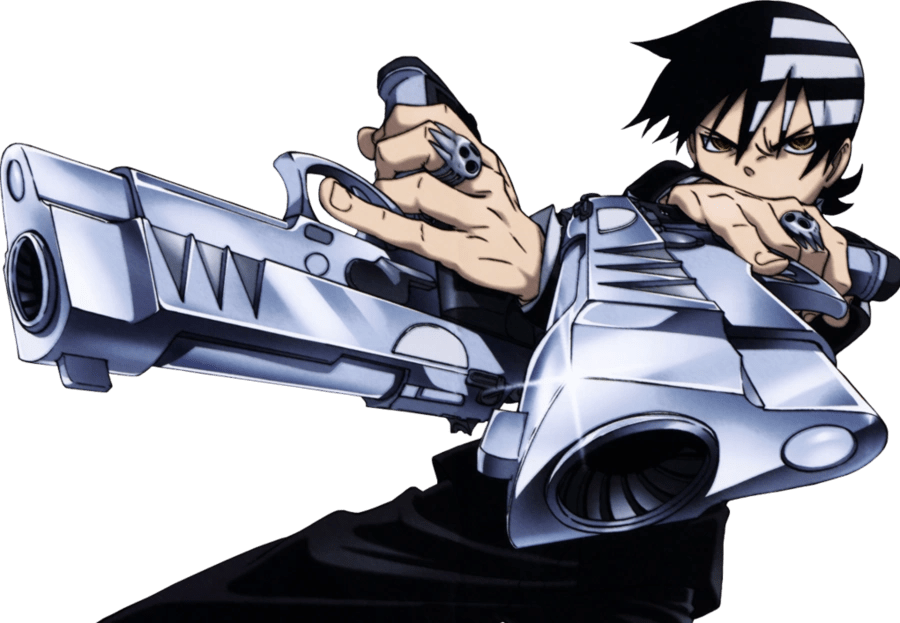



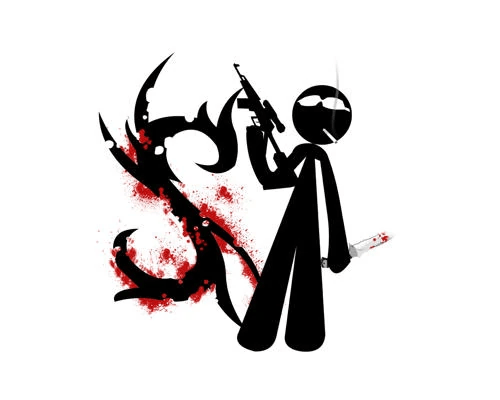
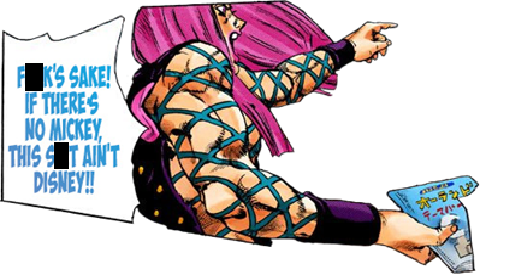







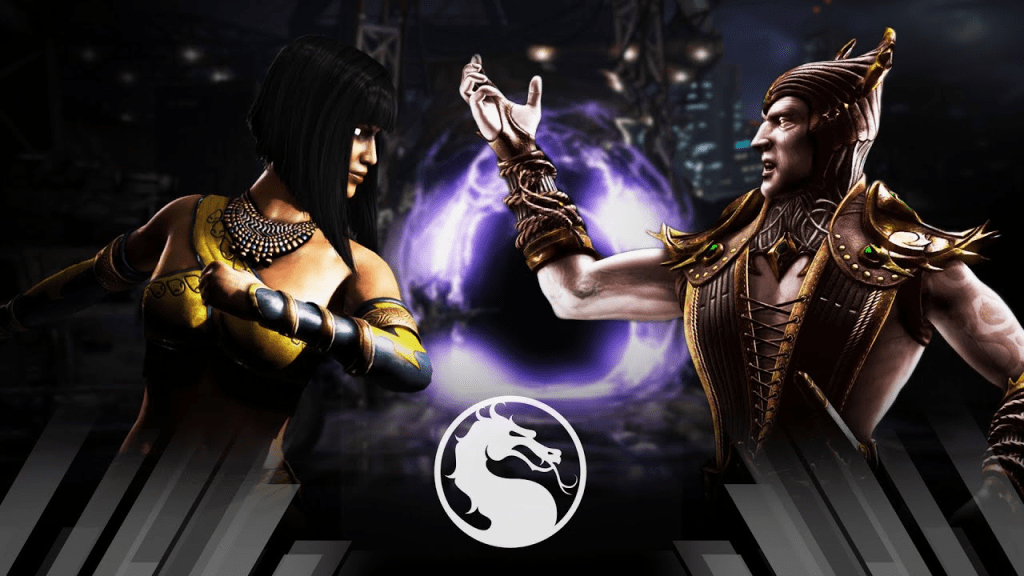

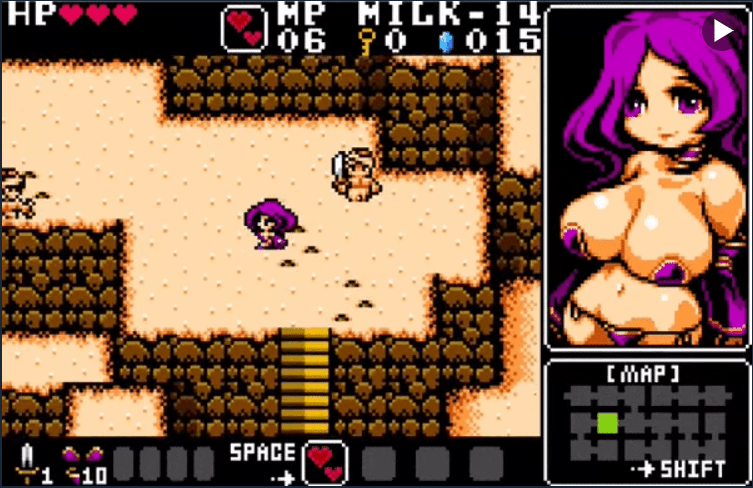

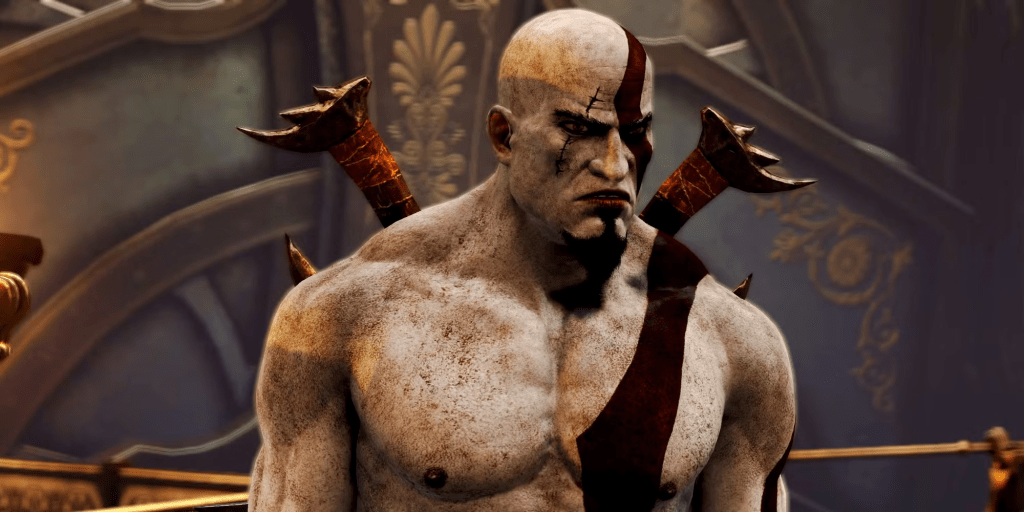


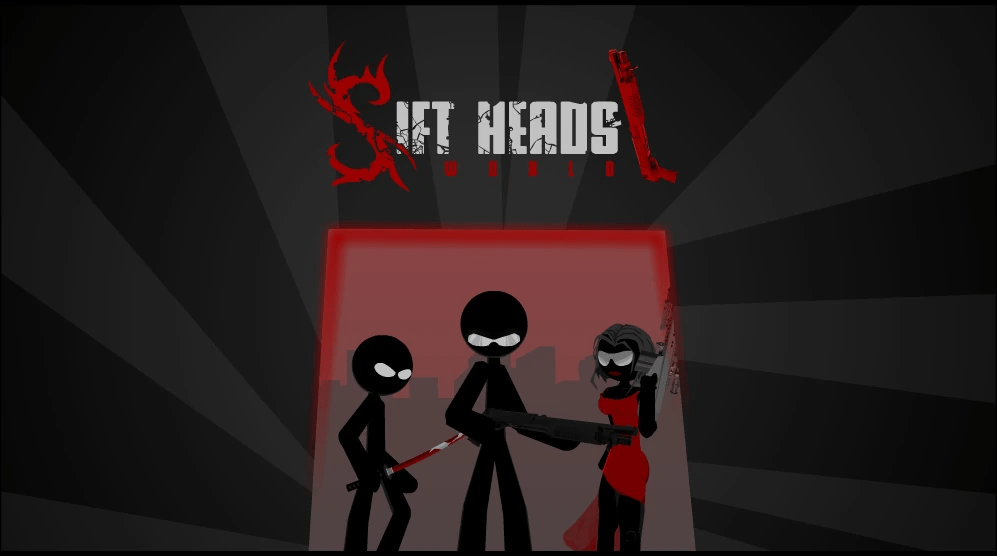

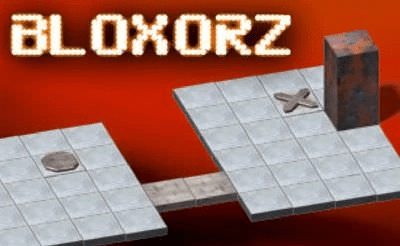






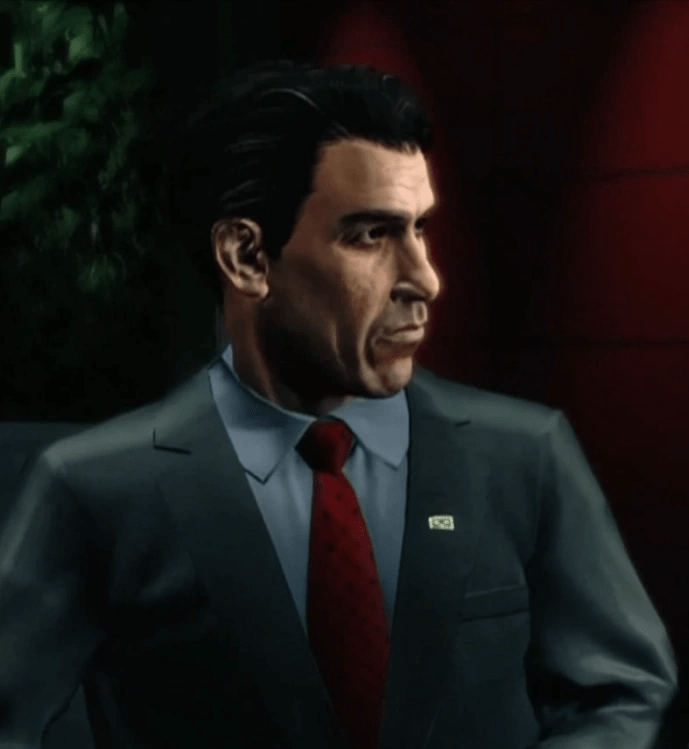


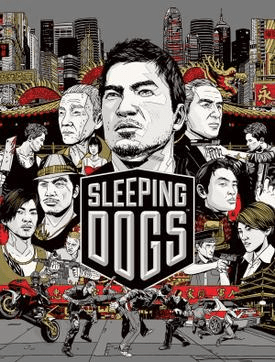

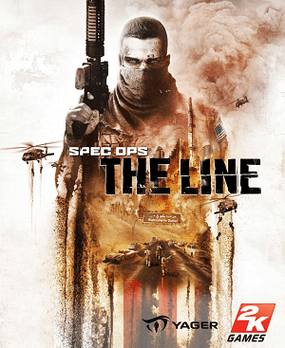
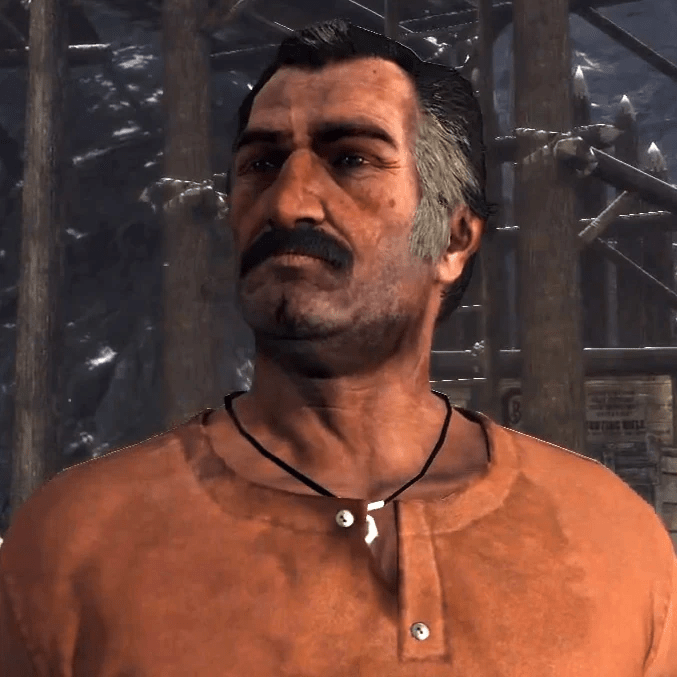

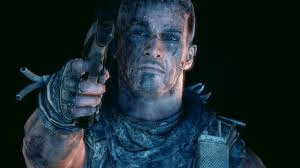
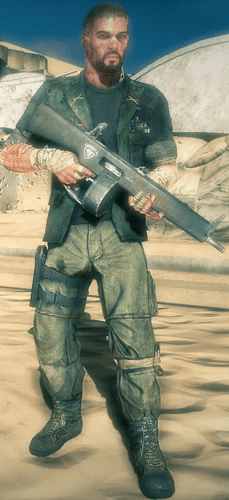
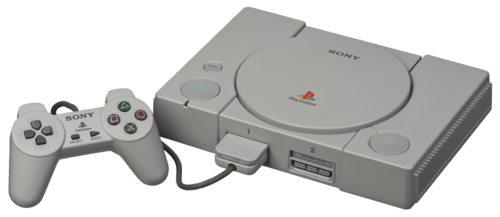


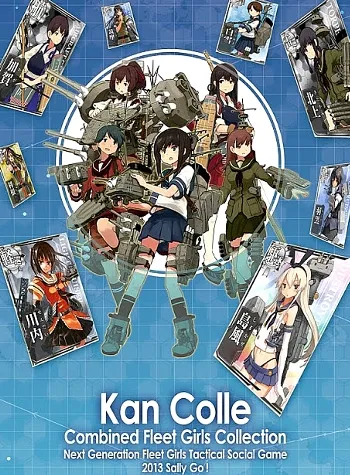


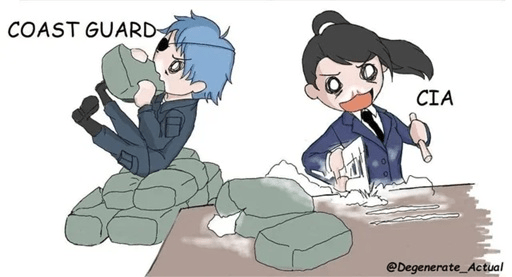
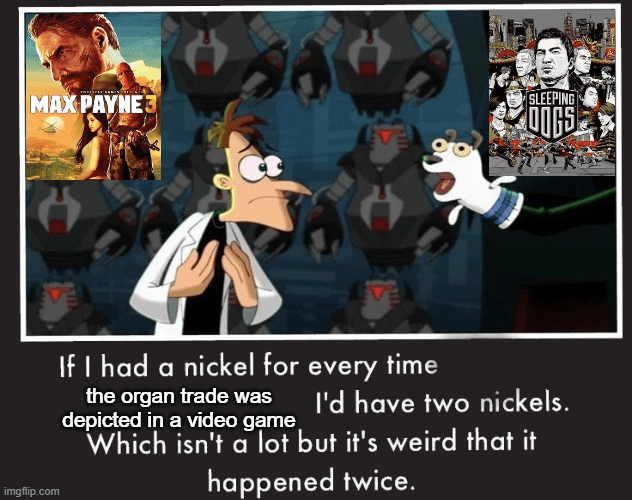
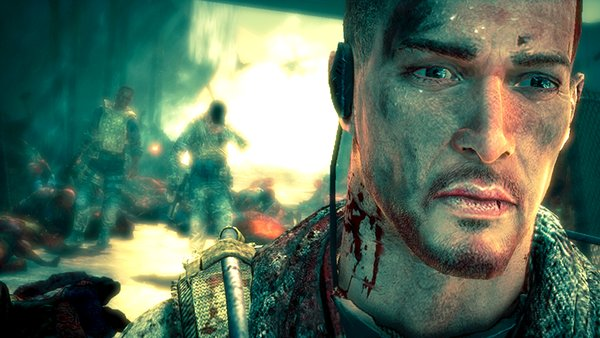











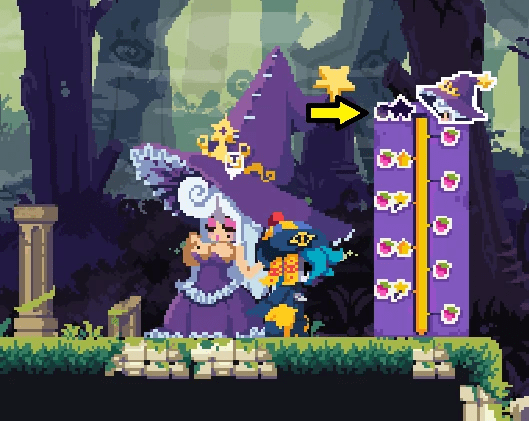






 Opinions on Entertainment