Circling back to a post from earlier this month about lost media (yes, I’m still on this train, just follow along here), I humbly direct ye all to the world of the Flash game.
Complete games were made with this ancient software
Also known as browser games, entire websites and browser game series owe their entire library to this software. Andkon, Stickpage, Miniclip, Y8; there’s a chance that if you were a kid or adolescent in the 2000s to mid-2010s, you might have visited at least one of these sites. For me, it was around the time I was nine years old during summer day camp, which would be around 2008. A friend of mine introduced me to a humble little browser series called Sift Heads.
Oh the memories.
One of the few Flash game series I had followed well into my adolescence, it was nice to see it become something of a franchise of sorts with an MMORPG and mobile game entry about a decade later. Older readers may see that and draw negative comparisons to the JibJab brothers and see warning signs at that, but AFAIK the original devs who cobbled this together in 2006 are still working on the game after nearly 20 years.
The main gist of these games is fancily dressed stick figure Vinnie (read: the only one wearing aviators) makes a living installing lead projectile implants into people’s heads, typically with a cigarette in his mouth. For a stick figure creation born from Adobe products, the devs put a lot of thought into the lore. Not so much that it looks like a DnD entry, but enough to make him seem endearing. The short version: born in Italy, mafioso father gets gunned down when he’s two and the widowed mother takes Vinnie to Chicago where all the mobsters end up when New York is too crowded. The prequel game Sift Heads 0 goes through the man’s comedic exaggerated youth as a natural born assassin, and going by the written historicity, while he did a few odd jobs for the Mafia as well, he didn’t start professionally killing people until around 1998 it seems.
A good writer of anything always keeps notes, so I like to think few things were changed. Added onto, but not significantly changed.
I’m pretty sure these days that Sift Heads has achieved “Can it run DOOM?” levels of legendary for being a niche little series about a stick figure who’s better at assassinating things than Lee Harvey Oswald. They’ve remade at least one of the games to my knowledge before support for Flash went kaput and for a time was one of the legendary Stickpage games. Next to this were the bevy of pointy-clicky action games: Andre’s Adventure, Creative Kill Chamber, Johnny Rocketfingers, and several others.
But those are all walking sticks with giant shootable/brain-able heads there, Tiberius. Surely, you played more than that as a lad, right? I did, indeed. To include a certified hood classic, I shall humbly direct you to: Bloxorz!
This game is so old, you’d be hard-pressed to find still shots in HD at minimum.
I don’t know about you, but in middle school, because of the way my education plan was crafted, I wasn’t able to join the rest of my class in the traditional gym class, having a private teacher to gear me up for the Special Olympics until her retirement and I aged out of it by the end of 7th grade. In the meantime at school, and once again during day camp until I aged out of it in 2011, Coolmath Games had (and still has) Bloxorz as one of its most iconic games. I’m not privy to the details of this, with most Flash games being sent to an unmarked, commoners’ grave, Flash may not have had as much of a base within that game’s code, meaning the devs used a different platform to get it up. Nice.
In a time where mobile gaming is near-par with console and PC gaming, it’s nice to see it’s humble first steps circa 2005, when colorful polygons brought us Oscar- and BAFTA-worthy projects like this:
Rest assured, dear reader, my research on the Evangelion fandom will come in time. A bit longer than Shinji will, IYKYK.
Reminiscing here, abandonware there, s[slap]tposting Eva games everywhere; this lookthrough of museum piece browser games isn’t a continuation of mourning what I consider lost media per se, it’s more a look of “that thing on your phone is a remake, I have access to the original.” And many people the world over had prepared for the death of Flash on New Years’ Eve 2020, so in preparation, a not insignificant amount of these games had been archived either by way of the Internet Archive and this website I found called Flashpoint Project. So whenever I feel it, I can search up something I played yonks ago and see if the muscle memory had worn off.
So far, no, but then again loads of these games are simple pointy-clicky games. Very few require the use of a keyboard, and even for more than just typing something. Obviously the more complex games that can be found on Steam or GOG or Epic Games do a lot more to wear down the keys on your keyboard, but I have yet to recall any other browser games that used more than just the mouse. Nevertheless, Flash has had a storied history bringing kids, tweens, teens, and probably that one 22-year-old baby-faced office worker at most 10 minutes of joy on his lunch break before he goes back to the grind.
Especially if this asswipe was his supervisor
Now, the games featured here aren’t an exclusively exhaustive list, and I could’ve put more on here, but to write about them more intimately past the introductory “this game existed, have a look” would necessitate it’s own post, and I’m only about a quarter through the desired topics for 2026. We’re not yet done with 2025. Take a look for yourself at the archives, not all of them are lost.
Before I piss off for the evening, I’m posting this on my birthday.
Hmmm, how colorless
Three years strong and this is the first post on my birthday. I’m 27 now. All that’s left is to become famous and join Amy Winehouse, Jimi Hendrix, Robert Johnson and Jim Morrison. IYKYK Part 2: Dark Boogaloo.
Two years ago, I dedicated a post to what was then a more recent upswing in Japanese pop culture spreading far and wide: the virtual youtuber, VTuber for short. Sometime later, about a month, around the same time as the release of Call of Duty: Modern Warfare III 2023 and how loved and adored that game’s campaign was, I watched two videos about the game. The first one was by The Act Man, chastising the game for such a sorry excuse of a presentation and structure. The second was a Vtuber reacting to that Act Man video. This one, specifically:
Channel: SmugAlana
The VTuber in the thumbnail of the above video is one I watch regularly and I’ll get to those soon, but she’s not the first one I began watching. Sometime, after my first venture in the Army around November 2021, a Japanese VTuber who was recent to the Anglophone world showed up in my YouTube recommended feed. This Japan-based VTuber is known as Kamizuki Naki, an independent English-speaking VTuber who debuted a few weeks before I had discovered her.
I was aware of VTubers, but didn’t pay them much mind. 98% of the time in 2022, I had been too focused on trying to return to the Army, and much of my content consumption was redirected elsewhere. By 2023, after one recruiter gave me the red light (and I started this blog hoping to achieve a career in writing), I started watching more and more VTubers. Kamizuki was one of the regulars, but with more and more VTubers debuting from different parts of the world, what began as a largely Japanese phenomenon had followed the footsteps of animanga and taken the world by storm, so much so that a little shark girl sung Take Me Out to the Ball Game at a Dodgers game.
She now lives as a cat-shark named Sameko Saba because she couldn’t keep the model
As I’ve said before in that post two years ago, I’ve accepted VTubers as another arm of Japanese culture sinking its hooks into the world, and a fine addition at that. I admit I was a bit apprehensive when they became popular due to no one having a lot to do in 2020, but over the years, with my viewership being taken up by the Trash Taste podcast and their individual and combined collaborations with VTubers like Ironmouse, Mori Calliope, Rainhoe, Haruka Karibu and others, I was gradually exposed to more VTubers like them. Eventually, I have built a rotating reportoire of VTubers that I regularly come back to and check on. I’m quite sparing with the subscription button and with a lot of VTubers being more active on Twitch than YouTube because that platform is more live streamer friendly, so the VTubers I follow and the VTubers I’m subscribed to don’t always overlap. But when they do, they show up on my feed regularly. Then again, YouTube’s recommended system sometimes overpowers its subscription system, so if you’re subscribed to a bunch of channels and your favorites get drowned out by the others, you’re bound to miss a few of them.
Around 2016 when Joey of The Anime Man/Trash Taste fame starred with Kizuna AI, the Queen Mother of All VTubers and Virtual Content, it was done by way of her titular agency, which is standard fare in many VTuber circles. Many of the famous ones like the aforementioned Gawr Gura, Mori Calliope, Kurone, Oozora Subara, Takanashi Kiara and many more tend to be tied to Japan-based talent agencies, the two largest being VShojo and Hololive and the former of these falling into controversy over donations and revenue owed to and withheld from Ironmouse, who genuinely needed the money to cover a serious medical condition.
Channel: Ironmouse
In solidarity with Ironmouse this year, many other VTubers called it quits and went independent or got scooped up by different agencies.
Suffice it to say, VTubing is as expensive as being a regular YouTuber or other such content creator when all the expenses are added up. Designing a unique model, rigging it to react to your movements, dedicating assets to the animations, in some cases dedicating a webpage to your content; many VTubers do align with agencies, but not all do. Some are able to do it independently like Kamizuki Naki and SmugAlana. Others adopt VTuber models for commentary, as is the case with Rev Says Desu and Hero Hei, both content creators who were previously faceless voices on their own respective channels, recently adopting VTuber models.
Now let’s break this down just a bit: a content creator represented by a large company uses an idealized and heavily designed persona to entertain masses of fans. Sounds a lot like idols, doesn’t it? Well, there is a connection between VTubers and idol culture and my opinions on the latter as one of several reasons for avoiding the series Oshi no Ko (the other being that series’ fanbase). With how corrosive behind the scenes actual idols’ personal lives can be due to the control they tend to surrender to the agencies, the sacrifices demanded to be seen as this Pygmalion-esque husk for worship makes the business of idols unappealing. VTubers have similar issues with inside toxicity at times, but in its own unique way that doesn’t always involve the agency or the individual VTuber in question.
So why do I flock to VTubers more? I don’t watch a lot of agency-associated VTubers, so I can’t say what I’ve seen of them, but the independents thankfully seem to have more control over their personal affairs and finances. There also seems to be less pressure to fake a persona with the intricately-designed model being the stand-in, not to mention these characters have their own associated lore. There’s an elevated level of creativity to VTubers, but with only the viewer/audience perspective to look at, I’m definitely missing a few salient points that expose the complexities of VTuber culture.
For as carefree as the community looks, a carefully crafted image needs to be presented to give off the illusion. As for the controversy side, this is also a unique issue that VTubers grapple with be it from their own audience, themselves, fellow VTubers, or their agencies. One such VTuber, Sinder, had a brazier lit beneath her feet for badmouthing and double-crossing VTubers Bao the Whale, Buffpup, and Silvervale after these three bent over backwards to help get her on her feet, as well as hiding a secret relationship with her manager and fellow VTuber Red/REDACTED. In an attempt to alleviate the heat, she published an encyclopedia of sorts contextualizing everything and the short version of it is Sinder’s unreasonable at best and downright psychopathic at worst. The controversy is why I know about her and this video by Evanit0 breaks down the follow-up to this betrayal of hers:
Channel: Evanit0
All the power to those who can separate art from artist I suppose
I’m not an expert on all things VTuber nor am I privy to every controversy to arise from the medium, but between VShojo imploding on itself and Sinder backstabbing fellow VTubers, these controversies arose accidentally. They both fully intended to do harm, but VShojo wasn’t counting on Ironmouse to blow the lid, nor was Sinder accounting on the other VTubers to fire back on their own platforms. If you’re gonna threaten someone, make sure they can’t fight back.
But a lot of that arose by accident. It’s rare for something to arouse intended controversy and I was made aware of one such group whose stated mission purpose is to achieve that. Another SmugAlana reaction, this time to YouTube channel, RoyaltyIsHere, to the indie VTuber group, VTards, and with a name like that, the associated “talents” were swinging at the fences. Waking up and choosing absolute violence.
It’s times like these I wish I had the Discord-style unique emojis/emoticons
The short version is that five VTubers formed a group with the goal of going against the grain of what was considered politically correct, i.e. an edgy forum welcome on the internet in the late 1990s or early 2000s when the general attitude was f[keyboard]k authority, f[drum roll]k the man, as a result of the whole grunge era fighting back against the consumer age of decades past. And I’d welcome more of that, but the controversy that swamped the group since debut had to do not just with their deliberate attempts to arouse controversy but mostly in what they believed.
I promise I’m not s[neighing]ting you when I say that one of them held neo-Nazi beliefs, larping as Hatsune Miku’s evil twin: Nachisu Miku. Along with another member allegedly commission loli art of Anya Forger from Spy X Family, only more disturbingly erotic.
Side note: Emoticons are an artform that need to return; I’m honestly not certain if these Google-searched images are effective for a topic like this
Regrettably or fortunately depending on how your wheels turn, the group was short-lived. Soon after Royalty’s video, the group had fallen apart. There are VTubers who arouse controversy without meaning to. SmugAlana, whom I mentioned plenty here, does so simply because she grew up speaking Russian to her family, leading to the absolutely false assessment (on Reddit and Twitter) that she’s a shill for Putin’s Russia. Call me biased because I’m subbed to her, but I don’t recall any reverence or pride in Putin’s government. After Alana comes Leaflit & Asari, a mother-daughter VTuber duo, mostly run by the daughter, Leaflit. The two are Japanese-Americans from California who’ve since relocated to Butt-Kiss, Texas (I think), and while SmugAlana tends to cover whatever crosses her feed, politics notwithstanding, Leaflit does have a clear slant covering current events. The lion’s share of her content is some kind of political-babble, which I say requires a specific type of mindset. If you live on the internet, move out. This shouldn’t be treated as a hotel and I shouldn’t have to explain why.
But seriously, even if you lean one way politically, exposing yourself to multiple points of view can broaden your worldview. I bring this up because the permanent internet residents regularly attempt to target Leaflit & Asari for harassment with erroneous connections to the American far-right. Yeah, I’ve taken the piss out of this corner of the internet on this blog before and the only thing I take seriously about them is that they take their own convictions very seriously. But like their enemies who fled to South America after World War II (they don’t know they exist on Twitter), or who they think are their enemies (they think they’re a laughingstock, all things considered), this part of the internet isn’t worth committing to memory.
An even more politically active, current events VTuber, with a crazy associated lore, Kirsche Verstahl. She also courts controversy, half the time for content like Rev Says Desu and the other half because her detractors, more or less, lie through their teeth about her. I don’t follow her as closely as the other two or however many I named here or before, but nonetheless, Kirsche, Leaflit, SmugAlana and others who’ve incited unnecessary controversy are all the proof you need to know that their detractors and haters don’t watch them whatsoever, merely parroting lies about them. A time-honored tradition of lying about someone you hate because your desire to see them fail can only get so strong.
If nature birthed the concept of hatred, humanity made it an art form a million times over
All in all, VTubers are another arm of the idol industry with its unique rules and controversies and myriad of personalities. While not under the same limitations put on idol groups like, for instance, AKB48, thanks to the fantasy angle of the VTuber model, different circumstances surround the individual VTuber and associations they fall under. There’s tons of variety in who you choose to view on a regular basis. There is one more VTuber I wanna recommend before I close this post out: Scarle Yonaguni.
Like I said, many of these VTubers stream more on Twitch than they upload individually produced videos. Find them there if you can spare the hours.
Also, you may notice that the overwhelming majority of these VTubers are female and tend to have massive boobs for their models. Male VTubers are often and sadly lacking in the audience count. After nearly a decade, it’s still a majority female-creator/male-viewer space with no obvious signs that the tides are changing save for NuxTaku, Rev Says Desu, and Hero Hei who are some of the only male VTubers I can name.
A man gets reincarnated into a world where traditional gender roles a flipped, in that women are the breadwinners who sexually objectify the opposite sex while men are demure homebodies to be seen and hardly heard from even during intercourse. Quick! Which isekai did I describe!?
If your answer was several, then great news! You understand how unoriginal the premise has become over the years. It may have had a spark in the beginning but with surprise comes formula comes borderline formulaic. There aren’t many isekai that reverse gender roles, but there’s enough to make it seem as though many follow the exact same story beats. Still, the subject of this post caught my eye, largely because of the premise and because it reinforces a meme I used in a prior post:
In matters concerning the pleasures of the flesh, women and men are equal. But sometimes people get competitive and develop superiority complexes… for some reason…
The manga in question is actually adapted from a light novel series, and there’s said to be more in the LNs than the manga considering it’s older, but I haven’t touched the LN yet. Anyway the series in question is Virgin Knight: I Became the Frontier Lord in a World Ruled by Women or in Japanese: Teisou Gyakuten Sekai no Doutei Henkyou Ryoushu Kishi. Another isekai, another title that gives away the premise. But let’s not be harsh–for as s[coconuts]tty as the title may sound, it’s not like it has nothing to show for it.
And this is just the manga cover
This is going to be written based on what I read in the manga as well as this Wiki page. The LNs were first written online on Kadokawa’s Kakuyomu site in 2021 and the manga followed two years after that, still there’s not a lot of information on the series on either the Wiki or Wikipedia, nor is there any certainty to the future of the series, seeing as the LNs are only four in number and the manga up to 11 chapters. Very little to take the piss out of, all things considered, especially when a more fleshed out isekai like Re:Zero or the Saga of Tanya the Evil have richer Wiki entries, both on that Wiki linked above, their own associated Wikis and plain old Wikipedia. So this post may be more barebones and subjective than my normal output.
The basic premise is that Japanese adolescent No. 14,289 gets isekai’d, but the manga skips over the isekai-ing event. Maybe it was Truck-kun again, for which I’m curious why no one put out a hit on him yet. He’s bound to have isekai’d a Yakuza or something; would the family not care that one of their kyodai got f[truck horn]ked up or what?
The protagonist gets reincarnated into a world where the freedoms enjoyed by men for time immemorial are enjoyed by women this time, faults included. So while we have our own male historical figures to study, this world reverses their gender so expect something like Cristina Colombo instead of Cristoforo, Leonarda da Vinci, Georgia Washington, and numerous others. Per this world’s rules, women are selected to be trained as squires and eventually become knights, but our boy, Lord Faust von Polidoro becomes the exception to this rule. This lone male knight surrounded by female knights still hasn’t gotten with the program that this is where men are lesser creatures, and would thus struggle being in a world where women are as comfortable with their bodies as men historically have been.
This is how the queen dresses by the way. Just imagine a topless fight between two noblewomen in this world. Oh wait…!
Eh, there isn’t any conclusive evidence that Austrian noblewomen fenced topless, but it’s a fun campfire story to get people’s imaginations running wild.
The introductory chapters explain how objectified men are, being sold as sex slaves, highly prized (for the bodies) and highly guarded (for the private use of their bodies), in some cases being passed around between every available woman, especially women in power, so theoretically a Viscountess has a private harem consisting of men who engage in any one of the BDSM subcategories. If she feels like sharing, these sex slaves are passed between this hypothetical viscountess and her entourage, always being used, spent, and emptied only to go through it all the next day… or hour.
By our standards, what I described is a regular day in the Jioral Kingdom Royal Palace, if not worse for the men.
For less sexually suggestive themes, if you know a thing about Ancient Greece, specifically Athens, then you know that Athenian society made second-class citizens of their women, with all the men having the influence in the day-to-day operations of the city-state from the politics to the foreign affairs to the military to the voting to the education and numerous other aspects of the way of life. It’s the same in this series as well, of course with women filling that role.
Writing that last paragraph, I just remembered this trope has a name: Lady Land, and it’s precisely what it sounds like. It’s a bit of a divisive trope for portraying what would happen if women in the west had near or precisely equal rights to men, with critics deriding it as paranoid bollocks. Personally, I’m in the same boat. I’ve lambasted the likes of MeToo and GamerGate as having been hijacked and perverted by radical firebrands and the like, but it’s worth committing to memory that movements like this aren’t as big in membership as the Internet likes to fear-monger over. In the case of the Lady Land trope, I could see someone from the 1890s or around that time organizing a list of why women shouldn’t have these rights, but these days such worries would be overblown and truth be told, sections of the Internet would kill to get that kind of sex slave action, failing to understand that love and lust are two distinct concepts despite the overlap.
As much as I make it sound like this isn’t worth the read, it’s tropes like these that get me thinking about how women used to be treated in legacy media. Age-old comic tropes getting flipped on their head to offer insight on the other side of the fence. Not saying the same dire straits don’t still affect women today, but to treat it as though there hasn’t been any evolution since at least the late ’60s is both a lie and part of a means to completely flip everything in a more female-centric role but for the worse. The terminally online like to think that patriarchy is the source of all ills and either think things will be different under a matriarchy (they won’t) or, worst case scenario, install some sort of matriarchal dictatorship. Silly conclusions to draw, but I’m a “cooler heads prevail” kind of guy.
Maybe my time watching British content creators gave me a stiff upper lip, it’s hard to take the Internet seriously when it gets like this at times
Only about 11 manga chapters, the first few introduce the world, explain how this world’s men are like Ancient Athenian women, i.e. possessing only the right to live and exist (typically as a sperm-filled turkey baster for noblewomen), and introduces the characters. The story follows lone male knight Lord Faust von Polidoro being given the floor to speak by the Queen Lisenlotte who makes Scarlet from Scarlet Maiden look fully clothed by comparison.
Abnormally thick tooth floss for clothing
Lisenlotte explains that the first princess Lady Anastasia whose set to inherit the throne is the one who gets the most resources against a uniformed standing army while the second princess Valiere is stuck with glorified conscripts to handle barbarians. Master Chief fighting the Covenant while the Reds and Blues glare at each other in Blood Gulch, or sending units in a Civ game to fight Cleopatra or Gandhi VS sending units to clear out barbarians so you can place a settler. The way this is done doesn’t fly with Polidoro (who’s fighting is own chastity belt in the face of obese boobs), who suggests letting Valiere take more professional soldiers with her during this trial. Queen Lisenlotte concedes and allows the royal coffers to flow equally into both her daughters hands, while still casting favor over Anastasia–primogeniture and all that. But the Lord’s pleas to reconsider undersupplying the youngest daughter gets the queen feeling some type of way. The last man to get her this giddy was her late husband, and presumably she feels something for Polidoro but wouldn’t make a move on him as he’s the spare’s advisor, though she contemplates whether letting him stay as the advisor to the second daughter or giving him to the first. Even as a knight, Lord Polidoro is but a piece of meat to these powerful women. Alternate universe female me would write the same thing.
Scraping away the prominent gender-flip, the tropes in play are quite typical of any old medieval European fantasy and by extension Euro-fantasy isekai stories that the genre loves to exoticize, like in From Bureaucrat to Villainess or My Next Life as a Villainess or I’ve Raped So Many Women that My Penis is Now Trans— I mean, Redo of Healer. Medieval Europe never appealed to me as much as Medieval Japan did, so I admit that I have a blindspot for this period of history as well as a bias towards East Asia, which has ramped up as of late with my viewership of East Asian media, to the point where my YouTube recommendation feed features Japanese YouTube channels, and I’ve found this comedic gem on Netflix:
The one time I actually give a damn about musicals
From what little I know of medieval European absolute monarchies, the politics of the world aren’t even hidden. Navigating internal royal politics is its own chore even for the one in charge, as you want everyone else who shares the power with you as well as those who will soon have that same power after you die are satisfied long enough to keep the realm from falling into disorder. Unwritten rules that rulers take to heart historically and when speedrunning the Age of Discovery in Europa Universalis IV or the Victorian age in the Victoria series. Actually, these concepts were catalogued in Sun Tzu’s The Art of War. In the case where war is inevitable, all precautions need to be taken to guarantee a victory, and not just on the battlefield.
The rest of the chapters are about Polidoro, Lady Valiere, and the entourage they take in battle with them to fight against the barbarians, with select panels dedicated to the rest of the cast, like Lady Anastasia, the captain of the army, the third in line for the throne, Duchess Astarte, and others. The LNs definitely have more content and I may have a light novel arc in the future, mainly to confirm this but more to the point because some series I like have better LN continuations than they do animanga.
I’ve heard that the light novels vary from the anime and I want to see if that’s true
The manga so far ends in the midst of a campaign against the barbarians with more to follow, but AFAIK, the mangaka Michizo is hibernating and short of entering the dragon’s lair to agitate the beast, whenever we get the next full chapter or even update, or god forbid, more information on the series, the best we have are crumbs. It’s completely available on MangaDex and other such pirate manga sites, but beware the AI porn ads on the sidebars. S[ooh!]t’s getting out of control, people. The androids must not win!!
Trunks and John Connor are our last bastions of freedom
A promise was made a few weeks ago to make a post about corruption in three action/adventure games released on 2012. This will be that post. As for what I have on the schedule, expect a review about a gender-role flipped isekai manga over the weekend.
Max Payne 3, Sleeping Dogs, and Spec Ops: The Line are a trio of 2012 video games that all deal with corruption and were in several ways criminally underrated by gamers at the time. Three pretty niche series, even despite the graphical showing with something to say about each of their own themes plot-wise. We’re going to look over the plots of all three and what I believe are the reasons they were all overlooked even now.
For the first of these three: Max Payne 3
Aventura Brasileira
The nine-year difference between the unraveling of the second game sets this installment apart from the rest of the series by sending titular Max Payne to Sao Paulo instead of keeping him in the NYC tri-state area. And the game explains why he’s voluntarily exiled from the city. In flashback scenes, Max isn’t exactly done mulling over the plot of the previous two games, walking in on his family dying in the first game and seeing people he regarded as friends double-cross him in the second game. To be fair, none of them were expected to keep specific loyalties to him. His alliance with people like Alfred Woden and Vladimir Lem, as well as a love affair with assassin, Mona Sax, were all out of convenience.
They each answered to their own bosses, though the corruption angle was relatively muted in the first game. The only corrupt figure in the first game was fellow DEA Agent B.B., who was not only on the Aesir Corporation‘s payroll, but had also helped orchestrate the murder of DEA Agent Alex Balder. Which explains how this was an inside job, though this part seems more like an afterthought, all things considered. I’ve been trying to wrap my head around B.B.’s role, but I haven’t been able to reach any significant conclusions.
The face of a… winner?
For Max Payne 2, the interconnected web of conspiracies concerning Max himself unravel in the second half of the game, but are present from the beginning. Woden, being part of the Inner Circle, initially used Max’s services to remove the connections between Woden himself and Aesir’s president and CEO, Nicole Horne. For Woden, only he and Max were privy to the relationship and for Max, she ordered the death of Max’s wife and child, so the vendetta was fulfilled and everyone “won” in the end. As it turns out, Woden wasn’t the only one with a tentacle in another pie. Vlad had an affair with another detective, Valerie Winterson, who’d been ordered by Vlad to remove Mona Sax from the picture, further complicated by Mona’s relationship with Max. Imprisoning a contract killer is one thing, but when she’s dating your junior, it’s easy to see how things get complicated with this intricate test of allegiances. Needless to say, everyone failed. Winterson was gunned down by Max in an ultimatum, Woden, dying of cancer anyway, died trying to stop Vlad, and Vlad shot Mona in the back and later paid for it, thanks to Max.
Yet, none of that was why Max was in Sao Paulo in 2012. In the flashbacks, an altercation with a mob brat who fit right in on Jersey Shore led to the brat’s death and the comeuppance from his father. Max dealt with the mob before, going after key figures in the Punchinello Family, but the father of the brat Max killed in the bar necessitated a six-figure hit on Max. He could spend the rest of his life dodging mobsters or leave. Conveniently, a fellow beat cop who was in private security for the rich and famous in distinct parts of the world — including Brazil — entices him with an opportunity. The first one was to protect a divorced socialite onboard her yacht while traversing the Panama Canal–except that went to s[pill-popping]t when a far-right Colombian paramilitary stormed the yacht and massacred all the inhabitants. It’s worth noting that the pirates were tipped off about the incoming yacht in a plot to frame Max for the violence and plant dirty money onboard. Max can’t escape these inside job affairs, can he?
Fast-forward to the plot of the third game and lo and behold, the Mother of All Conspiracies puts Max and partner, Raul Passos, at the center of it all. Private security once again for the rich and famous of Sao Paulo, a trio of brothers of the Branco family, businessman Rodrigo Branco, politician Victor, and airhead socialite Marcelo, pay the duo to protect them and their family including Rodrigo’s trophy wife Fabiana. Things go wrong when armed gangsters from the Comando Sombra gang storm the penthouse and take Fabiana hostage. This is resolved quickly and to celebrate, these idiots helicopter into a nightclub in Sao Paulo. That time, Fabiana is taken and held for ransom. Most of the family is recovered, but the ultimate mission from Rodrigo is to get his wife back. The first lead takes them to a football stadium in Sao Paulo where the duo bring three million reais to the CS, only to be interrupted by a right-wing paramilitary group known as the Cracha Preto (Black Badge).
Three million short and no closer to finding Fabiana, the next lead takes Max and Passos several kilometers up the Tiete River. A seafaring compound for drug smuggling operations by the CS, they were merely holding the woman in transport until the pair gun their way through the CS, but let her slip through their fingers again. At this point, come the next performance review, Senhor Branco was speaking with the commander of the 55th Battalion of the “elite” Special Forces Unit (Unidade de Forcas Especiais) of the Brazilian Military Police. Passos and Max convince Rodrigo to let them continue their efforts, but the Cracha Preto crashes into the offices of the Fabricas Branco and shoots everything from the office chairs up. Once again, Max is confronted by a painful failure. He was able to secure the building but not fast enough to keep Rodrigo from danger where he was assassinated in the chaos on the main floor. Complicating things further, a bomb is planted in the office to erase the evidence of the murder of a specific individual. Not that Max walks away from the wreckage empty-handed, with a dying paramilitary confessing that they were said to be after Max and that Fabiana was taken to the Nova Esperança favela.
The Max we all know and love
Max upgrades to his baldheaded beardy look and investigates personally running into trouble not five minutes into his impromptu investigation. Another cop from Sao Paulo PD, named Wilson da Silva, is also on the case and conveniently bumps into Max, giving him the details on the people holding Fabiana in custody. This heavily armed slum gives Max a proper Brazilian welcome with lead trinkets which he does in typical fashion reciprocating in kind. By the time he makes his way up to the Emperor’s Palace, the man he’d been chasing since the penthouse crash, Serrano, has not just Fabiana, but her sister, Giovanna, and Marcelo in custody. Clearly, they weren’t happy that Max was a grade-A f[gunshots]k up in a world of f[rocket launcher]k downs and sought to buy Fabiana’s safety personally. This effort goes nowhere, and Serrano kills Fabiana in cold blood. Another tense negotiation ended with an antagonist’s bullet broken up by a bigger dog barking and slobbering into enemy territory. The UFE make the rounds in a trademark raid on the favela looking for fresh meat to sell on the black market.
This isn’t an exaggeration either—the police in Brazil do carry out raids at the heart of the favelas to curtail organized crime, usually in a bloody and performative manner, though of course not all of them are this corrupt. The instance shown in the game sees the UFE pull out all the stops and fearing that he might be next, Serrano and the CS abandon ship. Giovanna and Marcelo are escorted elsewhere to be killed, and Max is left to fight through these makeshift infantrymen to the ground level. It’d be one thing if the UFE were there to arrest only the gang members, but innocent civilians are being carted off and handed to, you guessed it, the Cracha Preto for a hefty sum of money.
Max eventually finds Giovanna and Marcelo in time to save only Giovanna as Marcelo had been set on fire in a tower of tires, known as a “microwave oven.” He avenges Marcelo and has to escort Giovanna to safety through a public bus stop. Actually successful for once, but Max is essentially left behind while Passos, who was phoned up beforehand, helicopters the mother of his love child out of there. Da Silva returns to inform Max that he’d been a plaything from pretty much the beginning—not just by the Brancos but also allegedly from the Panama job.
But that’s all a moot point as there are more pressing matters to attend to. Max learned and da Silva knew that the 55th was in bed with the Cracha Preto, but the level of corruption wasn’t well understood. Countries with troubled histories like Brazil can easily have their corruption written off as a legacy of authoritarianism or its military junta. But neither realized that they were involved in the organ trade until Max was set out to raid the condemned Imperial Palace Hotel. The paramilitaries were witnessed burning the dead in trash bags, the civilians carted off earlier were found and as we learn, Serrano was among those rounded up by the UFE. The movie Elite Squad (Portuguese: Tropa de Elite) shows how aggressive the Military Police can be in matters of gang crackdowns, but doesn’t accuse the BOPE of being corrupt themselves. Max Payne 3 does show the UFE’s corruption inside and out. The hotel was the belly of the beast that Max dealt with before moving onto the UFE HQ itself. Unveiling himself as the mastermind behind the grand conspiracy to rule Sao Paulo with an iron fist is none other than Victor himself.
If he’d been elected Mayor of Sao Paulo, he would’ve made things much worse
Remember when I said this was the Mother of All Conspiracies? No lies or hyperbole detected. The game ends with Victor facing a trial and being found hanged in his cell, either through suicide or through mob retaliation, seeing as he walking around the general prison population. For all its faults, this may be the one time lack of oversight or corruption did some good. I’m certain here in the U.S., an imprisoned government official would be placed in solitary for their own protection. In Mafia III, the Faster Baby DLC reveals at the end that white supremacist Sinclair Parish Sheriff William “Slim” Beaumontwas put in solitary for a 15-year stint, serving 12 before he was shot dead on his front porch in 1989 under mysterious circumstances. The black community had reason enough to hate him, but I think he was killed by fellow white supremacists for turning on them. Officer Tenpenny said it best: “Homies for life? Street loyalty? That’s all bullshit, Carl.” It really do be your own people.
Takes a traitor to know a traitor
Now, why do I think MP3 was overlooked? If you look at the cutscenes of this game and put them side-by-side with those of the first two games, it’s a major departure from the graphic novel neo-noir style it worked with. It would’ve been welcomed by fans to see it ape a modern comic book style, but RockStar spearheading the game’s development, absent of Sam Lake and Remedy Entertainment made it look and feel less like Max Payne and more of a spiritual successor. The first game was released in July 2001 on a shoe-string budget and had to do so much with so little. The last game was released in late May 2012 and cost RockStar some hundred million dollars to produce with a swanky new engine that showed how aged and disheveled Max looked after two games playing shootdodge in New York and New Jersey. The assumption was that beautiful-looking games sold like hot cakes, but MP3 was more like Hydrox cookies. The progenitor of the sandwich cookie overshadowed by the more successful Oreo.
Still Max got his proper send off and with the passing of his voice actor James McCaffrey in 2023, the only thing in the series’ future is a remake of the first two games at an as-of-yet unannounced release date. I’d welcome a spiritual successor, though, instead of a half-baked Max Payne 4. And on that note:
Sleeping Dogs – 九龍嘅遺產
歡迎嚟到香港
A spiritual successor to the True Crime series, Sleeping Dogs follows Hong Kong-born San Francisco cop, Wei Shen, and his transfer to the Hong Kong Police Force. The British legacy of colonization comes through in this game with nearly every Hongkonger in the game having a very western/English given name. Jackie, Winston, Vincent, Peggy, Sonny—you might know people with these names IRL. Goes to show that in recent history, Hong Kong and its territories were more British than they were Chinese. Speaking of British, the superintendent of the HKPF, Thomas Pendrew, is one of the only white people to be seen for miles.
Snoozing Mutts begins with Wei and his informant partner, Naz Singh, making a deal with the Triads. After a cop walks in on the deal, one of the Triads cleaves him up, Wei and Naz parkour their way out of Dodge, but are cornered by the police. At this opportunity, HK Police conduct an AAR on Wei and reveal that he’s being placed as the newest member of the Hong Kong-based Sun On Yee, this world’s stand-in for the real-world Triad group, Sun Yee On. His mission is to get close to key figures and unveil their main boss, starting at the bottom.
After this brief, Wei is put into a cell where he runs into a childhood friend from the Old Prosperity Projects, Jackie Ma. A budding gangster and soon-to-be Triad himself, Jackie gets Wei close to Red Pole (read: Lieutenant) Winston Chu, a foulmouthed, tattooed gangster operating out of his mother’s restaurant. Like their western counterparts, East Asian organized crime groups also make use of slice of life crimes from extortion to protection rackets to money laundering, but unlike their western counterparts, they like to present themselves as protectors of their neighborhoods, more so the Yakuza do this than the Triads as I’ve noticed in most crime media from this part of the world, so Winston’s operations being in the back of his mother’s restaurant is not unheard of at all.
Per the initiation, Wei survives getting surrounded by Sun On Yee, before Winston’s rival Sammy “Dogeyes” Lin shows up to antagonize Winston’s faction, the Water Street Boys. I know better than to walk into a new place like I own it, but Dogeyes pulls up wheeling his giant balls onto Winston’s coffee table. How offended was Winston at this? He went to a local fair to turn the vendors over to Winston’s side. Small, but noticeable losses that smack Dogeyes in the income. But the real prize here lies in a ketamine dealer, Ming, whom Wei tries and fails to get into police custody. In front of an interrogation table for the second time, Wei’s cover holds up well enough for Pendrew to reveal to the interrogating officer that Wei’s no ordinary thug, but one of their own. And I see why Wei wouldn’t initially want the Inspector Teng on the case either. He’s already got one mouthbreather, Raymond Mak, on his shoulder, he doesn’t want another one, but the powers that be have Teng as a secondary to Raymond.
One of Hong Kong’s finest
For the police side of things, Ming is nothing but a middleman. The true prize for the Sun On Yee is distributor Popstar. To get to him takes some more class-A acting that sees Wei catch him in the middle of a handoff that ends with a killing. Once that goes to the HKPF, Popstar goes to prison and soon after Winston shows that there’s a brain directing the brawn. Is it really a coincidence that Popstar goes down right as this new guy shows up? Though Winston didn’t think this up in a vacuum with enforcers like Conroy Wu giving him the idea simply because Wei failed a vibe check at his introduction. Thankfully for Wei and the plot he’s a seasoned thespian who was able to spin Popstar’s incarceration as an opportunity for Ming to eventually double-cross Winston and the Water Street Boys… had Ming not just taken a brand new ventilation system to the cranium. And you don’t need an undercover cop to learn how cutthroat organized crime is. Nor even the drug trade, at least if you’ve been anywhere near a TV to see the failures of the opioid epidemic and the war on drugs in real time.
So, Wei’s spared death and continues to get closer and closer to key figures in the Sun On Yee, even suggesting brilliant ideas for Winston and co. And once Wei actually meets the Dragon Head of the Sun On Yee, David Wa-Lin “Uncle” Po, rather than admit that most of the ideas were his, he hands off credit to Winston. This is a glimpse into face culture in East Asia. Even if you, the underling, are competent and capable of wiggling your way out of danger, the boss a.k.a. your superior, is the most important representative of your group, clan, guild, etc. So, by showing Winston to be the most competent and an infallible genius, Uncle Po grants him his favor. Better yet for his mission, Wei has seen the Dragon Head, a key figure in the Triads for his undercover mission.
山主的新义安
That said, undercover police work alongside plain old policing doesn’t get Wei a lot of love from his handlers, at least not Raymond. With a growing history in the triads, Raymond may be the one who most wants Wei off the mission during certain checkpoints. Ratting, snitching, internal security risks; whatever you wanna call it, there’s tons of checkpoints where it can go wrong for Wei and yet, only once has it been shown that his position was close to compromise, and that was resolved rather quickly in the beginning, but Raymond isn’t convinced and wants to leave this to whatever specialized organized crime unit HKPF can muster. Unfortunately for Raymond and fortunately for a time, for Wei, this is shot down each time by Superintendent Pendrew even after Winston and his bride, Peggy Li, are gunned down at their own wedding.
This removes an obstacle and puts Wei in Winston’s seat in the Sun On Yee, however, I look back on this mission and can’t see it as nothing but an inside job itself. In the mission, Winston asks Wei to bring the chairman his favorite wine. On his way back, gunshots go off inside, and the enemy isn’t dressed like a typical Triad gangster this time. The caterers are the ones who initiate the attack on the wedding, and they don’t discriminate. Once Winston and Peggy are dead, it’s free game. Uncle Po is wounded and recovering in the hospital on life support, and right after this, you go after the two people responsible for the hit: Johnny Ratface and Dogeyes, both of whom get their vengeance from Mrs. Chu, Winston’s mother.
Never mess with a mother’s babies
Now, I say it’s an inside job because of how it’s all set up. The Wiki says that Dogeyes orchestrated it and with Triad resources that’s easy to see, though if I’m allowed to put out a feeler for a bit, I question whether this was thought up independently or whether it came from another source. I’ll touch on this later, but for now, Winston’s death puts Wei in his shoes and Raymond’s lost faith in this entire endeavor. Pendrew still allows him to operate with carte-blanche but runs into conflict with Wei himself when he suggests that he should abandon the people who got him to his position in the first place. He doesn’t and Pendrew winds up double-crossing him at multiple points, notably at Uncle Po’s funeral. And it’s not like things get easier with Dogeyes turned into char siu. The next obstacle comes in the form of Big Smile Lee. He’d been trying to become the next chairman with Uncle Po incapacitated but another, Two Chin Tsao, so called because he could eat all of mainland China and still die of starvation, is suggested by Red Pole Broken Nose Jiang. A risk for the whole of the Sun On Yee? Sure, but it was Jiang’s suggestion that Two Guts Two Chin take the helm, though his past as a heroin addict has weakened his resolve to the point where most other Triads think him unfit to rule, even Jiang who might’ve simply made him a placeholder/seat-warmer of sorts. You later reaffirm his tetraphobia in his own house with a fellow Triad called Old Salty Crab.
Think of him as your mischievous uncle
The last leg of the game is where Big Smile Lee’s faction takes center stage as the main antagonists. His personal enforcer Mr. Tong kills Jackie and tries to kill Wei after Lee learns that Wei was undercover. A fierce final mission and battle sees Lee’s enforcers, Tong and Ponytail, dead and Lee himself thrown into an ice chipper face first. For all that he’s done, he should’ve gotten in feet first, but carrying an enemy into a deadly trap seems more like Like a Dragon shenanigans if Kazuma or Ichiban were different people.
Feels a bit useless though, knowing that Pendrew’s “hard work” is gonna get him promoted to Interpol. By this point, both Wei and Raymond know of Pendrew’s corruption but can’t touch him due to his status until Jiang, who also knows Wei is a cop, delivers a USB with video evidence of Pendrew murdering Uncle Po. Furthermore, the discussion between the two reveals that his corruption goes back decades with the two collaborating to reach their respective positions. The course of the game was where dispute erupted between them and Uncle Po gets one last callout before his funeral gets arranged. This is the evidence Wei uses to lock Pendrew up in the same prison housing most of the Triads put away by Wei. Most likely, general population where, like Victor Branco in Max Payne 3, he won’t get any protection. It doesn’t look like Hong Kong’s penal system is as draconian as its mainland counterparts, but with this many Triads inside, it’s gonna hurt.
So let’s look at why Sleeping Dogs is underrated. This review by Yahtzee Croshaw of Zero Punctuation/Fully Ramblomatic fame should get the point across, but to get it down to brass tacks: it was left to cult status. Praise for the star cast, voice acting, game design, world-building, and set pieces. Even Cantonese speakers who’ve played it could tell that a lot of care was put into the game’s use of English, Cantonese, and Honglish. A bit better than Zenless Zone Zero’s use of Cantonese during the Waifei Peninsula arc, which is a fictionalized stand-in for Hong Kong. It was still a cool easter egg though…
But to go back to the ZP review of Sleeping Dogs, setting aside the accusations of GTA clone, the main crux of the game is that Wei is supposed to be caught between two loyalties. Too much of a Triad for the HKPF and too much of a cop for the Triads, but he maintains his loyalty beginning to end. Not really atypical, real-life undercover police stick with their law enforcement agencies of employment even after the mission is completed, and continue to work for the police until eventual retirement, assuming that’s not their last case. This is a time-honored tradition IRL and in media. Off the top of my head, there’s two examples, real and fictional, of an undercover cop leaving the force.
In the co-op game, A Way Out, Vincent Moretti, is revealed to actually be an FBI agent who spearheads an elaborate operation to take down a drug dealer who’s since made a home in Mexico. After he’s killed, in his ending, he reveals himself to partner, Leo Caruso, and attempts to arrest him, but Leo dies after a gun battle. The ending sees him with his wife and infant daughter (whom they’ve been struggling to conceive for years) as he announces his retirement from law enforcement altogether. In real life, British cop Neil Woods spent 14 years undercover, rubbing elbows with the worst of the worst Britain ever had to offer. The experience took him to dark places and motivated him to write two books criticizing the heavy-handed approach to the war on drugs in Britain and America.
The real culprit for Sleeping Dogs’ status has to do with poor sales. The game cost the developers at United Front Games $30 million and when pushed out the door by Square Enix, they expected a better sales goal and a potential franchise, but with Sleeping Dogs being a spiritual successor to the True Crime series, this claim is one I have to call into question. Not to mention bigger releases from established franchises were releasing that year and the following year from the Tomb Raider reboot to Halo 4 to the announcement of Grand Theft Auto V to be released in September 2013. It still did well enough to earn its place as a great selling game in Britain and America, but not enough for Square whose real crown jewel was the Final Fantasy franchise. Thankfully, the Definitive Edition was released in 2014 complete with all the DLC and expansion packs, showing that even after United Front’s closure in 2016, the publisher still had faith in the game, which is more than can be said of the last game we’re looking at.
Spec Ops: The Line – Still a Hero, Son?
A real hero wouldn’t do even an eighth of what goes on in this game
Delisted and buried, Spec Ops: The Line may qualify for lost media if it wasn’t for all the gameplay videos released, the video analyses, and the ROMs that remain the only way to access the game these days. Even that’s difficult without a stable internet connection. While drafting up this post, I’ve had it quit on me multiple times until I did it through a mobile hotspot on my phone. Side note: it may be due to the location, but I’m positive that if my rig was in a bigger city with more traffic and therefore more customers on a livelier server, it would take considerably less time to download. RPCS3 is a bit finicky in some areas, but if it works well enough to let me play Mortal Kombat 9, flaws notwithstanding, then anything is possible.
Spec Ops: The Line follows on a time-honored tradition of adapting Joseph Konrad’s 1899 novella Heart of Darkness. A fictional tale of a sailor’s journey through Leopold II’s Congo Free State, it’s a harsh criticism of the Belgian king’s personal territory on the journey to find Kurtz, an ivory trader who’s taken a godlike role among the unsuspecting native tribes. Something that was given a glimpse of in, interestingly, Red Dead Redemption.
Trusting Dutch was a ruinous decision, but not the worst fate to befall American Indians, all things considered.
The tale ends with Kurtz meeting his end at the unnamed protagonist’s hands, something that’s consistent across nearly all media depicting the story, such as 1979’s Apocalypse Now where Captain Willard navigates the Mekong River with a Navy PT boat on a mission to find and kill rogue Special Forces Colonel Kurtz. Being in the Army now, this falls out of line with real-world military protocol. That high up and last assigned to a specialized unit, Kurtz would’ve been arrested and interrogated and likely would’ve faced a court-martial for desertion and treason, seeing as, like the character he’s based on, he also became a madman calling himself God among the native Vietnamese. He also meets his end by the protagonist’s hands.
Come Spec Ops: The Line time and the story beats are the same as Francis Ford Coppola’s troubled movie, but this time it’s a small squad of Delta Force operatives on a mission to find and apprehend Lieutenant Colonel John Konrad, which is consistent with protocol. Kudos. Col. Konrad’s mission was to provide relief to the citizens of Dubai in the wake of a sandstorm but tragedy strikes in the form of another sandstorm and the situation looks like post-Katrina New Orleans but worse… and sandy. The colonel takes matters into his own hands and worsens an already bad situation.
Delta Force operatives Capt. Walker, Lt. Adams, and Sgt. Lugo go in to relieve the situation. Thing is, Konrad is clearly not alone, seeing as the 33rd Battalion known as the Damned Thirty-Third is still in the city, and it’s on Walker’s assumption that the whole unit is rogue and therefore, free game. They’re in the way of the mission and as fellow soldiers, they put up a fierce resistance on the way to Konrad. The course of the game sees Walker make difficult decision after difficult decision culminating in a prosecutable war crime. The white phosphorus weapon system is a controversial weapon used by the U.S. military during the Iraq and Afghanistan wars. It’s chemical compounds leave horrific burns on all parts of the body that it meets. Despite Lugo’s objections, Walker greenlights its use on a compound that was actually housing civilians.
It’s common for trauma victims to retreat to a fantasy of their own design
This salient point is both a turning point for the group and a stark critique of military operations in the region at the time that led to the Iraq War’s inconclusive outcome the year prior in 2011 and Afghanistan’s failure a decade later. I remember watching gameplay of the game ages ago and the shock and awe of the results of this weapon… f[military drums]k everyone who says that these games glorify war; this is a perfect argument against that. The rest of the game gets considerably more nightmarish.
Even the loading screen tips get progressively more hostile, with messages advising the player that continuing forward is the worst choice to make. I wouldn’t be surprised if halfway through someone booted up a different game or simply put the controller down and had a walk. The last half and final leg of the game sees Walker get to Kurtz’s compound where plot-twist, he was dead the entire time. The herculean task of saving and rebuilding Dubai from scratch was too much for the man. Tragedies, unhappy civilians, dwindling resources, unpredictable outcomes; what sets Kurtz apart from the movie and book was that he didn’t try to make himself King of the Emiratis. Maybe doing so would’ve seen the game marked for banishment from the region, especially at a time when Middle Eastern-American relations were being put to the test in Baghdad and Kabul, as part of the reason Six Days in Fallujah couldn’t release in 2007, so the corruption angle isn’t so much rogue field-grade officer sells out his men for a golden AK. More on the point of rogue battalion-sized element overstays their welcome with good intentions. Or, in layman’s terms, why the U.S. hasn’t been very good at building democratic nations abroad in recent memory. The only success stories come from Germany and Japan post-WWII. Everywhere else has been a bag of trail mix.
Walker and co. also go in with the best of intentions but well after the gut-punch of using a chemical weapon on civilians, his sanity takes such a heavy hit that the pieces that used to be his brain warp his surroundings substantially. All that time he thought Konrad was mocking him from comms, it was all in his head. Moral choices were even corrupted by his gradually disintegrating psyche as a means of rationalizing the hell he’s in, lying to himself that he’s doing good when he’s another evil come to molest what’s left of the city.
Side note: for all the good that not just the U.S. military achieves, leaders can make or break an experience and looking at Walker as a soldier myself, there’s multiple instances where further harm could’ve been prevented had he simply called the mission a failure and gone home. Hell, Adams is another officer with him, he could’ve done it too. But let’s not ignore the human element. The game is designed as a critical satire, sans laughter, of the modern military video game at the time and military operations back then. I have the luxury of criticizing Walker with all that’s been made available from the game and real life. I won’t say too much about my leadership in the Army yet, but the working strategy is to simply learn from leadership good and bad. Retired and current servicemembers definitely have similar stories if you spend some time in the appropriate spaces. See r/Army and r/USMC among others for more details.
Back to the game: Walker at last gets to Konrad whose corpse was under heavy watch presumably since the start of the game. He then has a mind battle with who he thought Konrad was supposed to be, facing criticism after criticism after heavy criticism. Max always felt worthless in Max Payne 2 and 3, but he knew what kind of guy he was in those games. Walker could be shown a mirror and not realize Satan was in it in his own uniform. And here the game has multiple endings.
A destroyer in a cape is just another aura farmer
In both pre-endings, Konrad picks up his gun and aims it at Walker. In one ending, Walker, also aiming his weapon, can shoot back to unlock the post-ending. In the other, he can accept his fate and let Konrad shoot him, which is meant to be interpreted as a suicide. The final shot is the city in ruins as the screen goes black. The post endings have three paths. Soldiers are sent to retrieve the now broken Walker and here you get a last response. One ending, Walker shoots the soldiers dead. He grabs a radio from one and repeats the same line that he uses in the beginning, “Gentlemen, welcome to Dubai,” seemingly living the last of his days among the wreckage. Another ending, open fire on the soldiers and accept this upscale suicide by soldiers. His last moments are an audible flashback to one of his prior missions within Delta Force. Credits roll. Third and arguably the most haunting ending, surrender your weapon and return to base or more likely the U.S. to face a trial for treason and, going back to white phosphorus, crimes against humanity, though the political landscape of the time would likely see that charge ignored if brought up at all. The driver of the Humvee asks how he got through this hell, to which Walker replies, “Who says I did?” and whether this ending is canon or not, a close look at the background shows that it repeats, a sign that with all that goes on in the game, the nightmare is only starting for Walker.
Now the corruption claim I make here depends on definition. It gets muddier in this game. On the one hand, none of the characters collaborated with any enemy forces, sold soldiers down river, or anything of the sort. On the other hand, no one is really innocent of anything. On the surface, there’s the Damned Thirty-Third occupying the city and Walker’s group firing on fellow soldiers, but scraping a layer back, Dubai getting slapped with apocalyptic conditions shows the destruction of the social order. Mob justice was dished out to perpetrators of otherwise slice of life crimes like theft and of egregious sins like full on rape and murder. There wasn’t a gray area when applying mob law. Killing a man’s family was on the same level as stealing drinking water. Konrad was a fool to think his unit could put its best foot forward here and restore order and Walker was a fool to keep his faith in his mission. There’s an option to fire on civilians after they beat Lugo to death, though at that point I don’t think acting or abstaining makes much of a difference anymore. The gates of hell were coming to you, not the other way around.
Some may see Spec Ops: The Line and question why this instead of something like L.A. Noire which has corruption pretty much from the first case, as The Professional has a lore video on how deep-seated the corruption is:
Channel: The Professional
I omitted that as I thought it was too easy to make a case for L.A. Noire. It’s hidden for a lot of players in the beginning and doesn’t show its face once you get to insurance inspector Jack Kelso. Cole Phelps is a good protagonist on his own and Extra Credits critiqued him and his world. Sings the praises of enforcing the law with an even hand yet several cases show how uneven the long arm of the law is applied. A white kid gets off with having weed in the glove compartment of his car; a child molester, one of two, reports his car vandalized by the very brat he tried to rape, with another child molester being let go because he wasn’t guilty of murdering a woman – the police have more on the husband in that case and could probably get a warrant for both him and the rapist, the former for domestic violence and the latter for obvious reasons. Even Phelps and his partner on the ad vice desk, Roy Earle, accept a tip from a shady looking guy for a price, and the head of the whole weed distribution ring isn’t even personally charged with much. And some of this is well before Kelso gets a more important role. A look at the corruption of the LAPD in L.A. Noire would necessitate its own blog post. So look at Spec Ops: The Line as having a different kind of corruption, borne from good intentions with complicated answers to difficult issues. No one was gonna walk away from that blood-free.
Becoming the villain while still believing you’re a hero
Why was Spec Ops: The Line overlooked? Deliberate design choices played a role in its underperformance. Some critics couldn’t get through the stiff gameplay or are even critical of its story. The heavy themes are enough to turn off a casual and a far cry from seasoned CoD and BF veterans of the time. It deliberately made itself look ugly to tell players that the modern military craze had to stop at some point, though that point doesn’t really come across until CoD’s 2013 release of Ghosts. That game was hated for the way its campaign ended and come Infinite Warfare time, the sci-fi babble was a f[gun cock]k load of bulls[bang!]t. Battlefield 1 emphasizing the oft-ignored World War I was a step in the right direction, while CoD’s 2017 release went to World War II, its roots, and gave us a rare instance of the Holocaust in an interactive medium.
That said, the criticism, while wanted by the game’s designers, overlooks the message it was meant to convey. Modern military shooters were overrated by 2012, and even then, DICE and the combined developers of Sledgehammer, Infinity Ward, and Treyarch weren’t doing themselves any favors back then or even now with Black Ops 7 releasing later this year and Battlefield 6 releasing while I was drafting this post. But whatever, a series that fell asleep in 2002 came back a decade later to slap some sense into the gaming industry and died with the industry walking those slaps off with pride instead of shame.
Well, there you have it: Three games, all released in 2012, all overlooked back then and in some cases even now whether it broke off from a prior entry, it couldn’t make back its money, or its entire point was glossed over by a fickle crowd of gamers wanting the engagement they were used to. However, I’m not ascribing blame for looking these games over. For all the reviews and peeks I make on this blog, I can treasure my favorite pieces of media and lament that some of them don’t have as much audience love, but I still appreciate that they were given something of a green light and a chance to shine when they did, and no matter what happens to these games decades down the line, they’re all worth to committing to memory no matter what.
Last week, I brought up the subject of some video games acquiring the same label that has forever gripped early films: lost media. Where, in some capacity, surviving copies of the original, plus the original, have been destroyed deliberately or accidentally. This time there’s video games that have surviving copies but aren’t made available the world over. In many ways, the gamers are not only innocent, but tend to be victims of arbitrary laws. In places like Brazil, Venezuela, or Argentina, video games are released at ridiculous prices. If an American or British or Australian player can get the same video game for 60 locally, their South American counterparts are paying many times that in reais, pesos, or bolivars (provided that currency hasn’t collapsed again).
This is true of much of the developing world. I’m a proud piracy advocate, as regular readers know, and this extends not just to animanga, but also of video games, movies, and TV. And I still do so despite having the income able to afford multiple subscriptions. Why? Well, circling back to those posts about my history with emulation, as much as I like modern gaming, some classics can’t be beat. And they’re either hard to find or hard to acquire through traditional means.
Tell me, who the f[THX sfx]k still has this in 2025? Does it still run? Name the Top 5 Best-Selling PS1 games from memory!!
This is proof in my pudding. Granted, there is a museum dedicated to the history of video games — several, in fact — and I don’t need to take this matter on myself. But I want to. There’s too many godly classics getting shunted to the dustbins and not enough efforts at preservation, nor are there many developers or publishers or even CEOs who care about this matter.
Silence would’ve been better to hear from you, Jimmy boy.
What about the devs, publishers, and other video game heads who do care? Well, the problem that trips them up can come down to the intricacies of development. Never mind the ludicrous projects that are bringing us the likes of Grand Theft Auto VI in 2026 after 13 years in Los Santos, nor the dire straits that kept Duke Nukem Forever cooking for 12 years or Beyond Good and Evil 2 in limbo for longer than that; say a game enters development one year, is announced with trailers and gameplay footage in the next year or year-and-a-half, and finally the full product is delivered after 2.5 to 3 years. If there was trouble, at most it’ll be upwards of five or more years. What kind of trouble could such a game face? Many.
If it covers a touchy subject especially under concurrent politics, it may not see a wide release, if at all. There’ve been efforts to better educate the gaming population about subjects like the Transatlantic slave trade, the Holocaust, and other such concepts, but because of how weighted these subjects are critics have fired back at the idea of using a video game to discuss it when the time-honored tradition of boring the students with the dullest teacher has always been seen as the least controversial, failing to understand that that may not be the most effective means to go about it.
A more dynamic teaching style can mitigate this outcome if the lesson is on Philippine-American reconcentrados.
Creative developers can skirt past this by hiding the lesson in a different narrative, and not even in a completely digital format. It’s possible that there’s a board game or DND campaign whose inner lore includes such a plot point. Several anime I’ve seen touch on the subject with the oppressed being some other humanoid or human-like species.
As for video game series that have adapted other media, the series itself may not be under trouble or has a countermeasure of some kind if the game is unceremoniously canceled for whatever reason. Game can’t release? Reboot the franchise but on more platforms, it’s been done before.
My best example of this.
For the Ultimate Ninja series, I thought for the longest time that there wasn’t a 5th game. There was, but it never got to North America due to timing and dubbing issues, which is why we now have the more successful Ultimate Ninja Storm series. More arcs, better tech, more new moves from the series, and on more platforms than the originals.
Then there’s instances where developer-side things are perfect, but politically things are not. As I mentioned in last week’s post, region-locking/coding can keep you from accessing a product. For instance, the Senran Kagura games are mostly available outside Japan, but not all of them are; the iDOLM@STER series has overseas fans, but the games are largely Japan exclusive. How did it travel the world? Probably a con, or an otaku from Nagoya visited Houston once. Who knows? Then there’s Kantai Collection or KanColle (Japanese: 艦これ) that despite not being accessible to the wider world, has attracted fans outside Japan as well.
Did I mention this is a browser game?
At the part of the politic-side of things, licensing and import restrictions can make things interesting. Oft-times though, politics and laws don’t impede the wider release of a product, but human error within the dev studio keeps it from gaining an overseas audience. Or worse, some type of greed or hesitancy motivates the studio to keep it locally available despite pressure from the wider audience.
Fans have translated and dubbed this in the years since, Nintendo. What f[Mario coins]ing gives!?
Realistically, there won’t always be an opportunity to keep this from happening, and as time marches on, new technology will create new problems, but I’m not gonna stop forgetting what games and wider media used to look like and how patchy our earliest endeavors were at the beginning, and I think it’d be a crime if anyone else did either.
The draft for the triple comparison between Max Payne 3, Sleeping Dogs, and Spec Ops: The Line has been finished, but before I publish that I first wanted to get my thoughts on the last of these three out of the way. Spec Ops: The Line, a 2012 third-person shooter whose stated-mission purpose was to examine the era of the “modern military shooter,” and knock it down a peg. Unfortunately for it in that regard, the message was very ignored as Call of Duty and surprise return Medal of Honor had both had their releases around the same time. Black Ops II on November 13 and Warfighter on October 5. When did Spec Ops release? June 26 that year. It was released at a time when these types of games were all the rage, wearing the skin of a similar game while also lambasting the Bush administration for the Iraq and Afghanistan Wars. By my estimate, it was successful at only one of those, but only because so many other media outlets talked about it as it was happening. For a laugh though, take a gander at this:
Channel: Bloomberg News
Right after the Russo-Ukrainian War went hot.
But I’m somersaulting over the howitzer — let’s rewind. The main inspiration behind Spec Ops: The Line aside from the U.S.’s concurrent foreign policy in West Asia and a criticism of the state of the modern military shoot ’em up was the novel Heart of Darkness by Joseph Conrad and it’s very successful(ly troubled) film adaptation Apocalypse Now. The book was written to highlight the controversy of Leopold II outright owning and micromanaging his personal territory of the Congo in 1899 while the film took that, applied it to the Johnson and Nixon administration’s handling of the Vietnam War, very soon after the pullout and the fall of Saigon to the communists. Suffice it to say, not only was Spec Ops well within its own element by critiquing Bush and the war on terror, it follows a time-honored tradition of satirizing current events in a widely popular medium.
If it wasn’t obvious at the outset, there’s going to be spoilers. I’d encourage you to play the game for yourself, but after 13 years and a new generation of consoles and updates to operating systems, Yager Development hasn’t ported it to modern consoles and most digital storefronts have delisted it. It was a hassle for me to even find an emulated version and the one I have is beset with technical issues. None of them game-breaking, but if you’ve ever dealt with emulation before, you know that the game you emulate/pirate, etc. isn’t going to be the same game that would’ve been released years ago. An emulated game isn’t the same as one bought at GameStop or Best Buy. Alternatively, there’s searching endlessly online for a seventh-generation console and then ultimately a hard copy of the game, but as we progress further into digitization, hard copies will simultaneously be a thing of the past and a priceless collector’s item. Apologies for the rant. Now let’s get to Spec Ops.
The cover alone would’ve cost it sales if the gameplay didn’t after reviewers got their hands on it.
The game begins with Lieutenant Colonel John Konrad, commander of the 33rd Infantry Regiment authorizing a relief mission in Dubai after the city get’s blasted with wall-to-wall sandstorms. Trouble starts to sprout with the native Emiratis who take issue with the high and mighty US of A walking around as if they own the place. A peace deal/non-aggression pact is taken, but very soon broken by rogue actors among either the Emiratis or the Americans. Whatever the case, the ceasefire is short-lived and insurgents emerge to take back Dubai and handle it themselves. From what I know of history and geopolitics, this sounds eerily close to a similar problem that Somalia has been facing since theearly 1990s, but far less complicated than Somalia’s entrenched clan system. Or more like post-Gaddafi Libya. For a brief overture, the United Arab Emirates, where Dubai is located, didn’t suffer as terribly as its North African brothers in the Arab Spring, so trouble in paradise is somewhat unheard of but still within the realm of possibility.
The 33rd Infantry gets swamped with each of these problems and Col. Konrad declares the mission a miserable failure. He could’ve abandoned ship at the first sign of trouble and allowed his men to go back home, but he knuckled down and kept them there. As a result, the soldiers have gone stir-crazy fighting an unknown enemy, and I have to stop here momentarily. I fully understand what the game is intending, but I’m not so certain the devs at Yager know what they’re talking about. In Heart of Darkness, the Belgians were very much an invasive species meddling in on Congolese affairs, but there wouldn’t be a war to fight in the territory until 1915, because when empires go to war, so too do the colonies. Load up, Taiwan and Korea, you’re taking Tsingtao because Tokyo said so.
For Apocalypse Now, the Vietnamese were an amalgamation of southern Vietnamese communists receiving aid from the North Vietnamese Army, China, Laotian and Khmer communist forces and the Soviet Union. There were also veteran guerrillas who fought the Japanese in WWII, so this is the ultimate conflict where the U.S. wouldn’t be able to tell friend from foe anymore. Come Iraq and Afghanistan… the same problem from Southeast Asia followed into West and South Asia, but looking at the leaders and the countries of the time, stability was the one thing neither country had. Afghanistan had nearly as many civil wars as Rome did in the 3rd century and wouldn’t really have a case for nationalism whatsoever. Iraq, on the other hand, had a tenuous government in the hands of a dictator with an iron fist who would suffer from his own consequences thrice in a row over the years. What I’m getting at is, the situation for Iraq and Afghanistan was a top-down problem. The Belgian Congo had a “government” not much better than Leopold’s personal property, but nothing was threatening the Belgians until 1914; Vietnam had a series of governments from themselves to the French to Japan to the French again until decolonization, so there wasn’t a question of who would lead from where once the guns stopped firing. For Iraq, the cradle of civilization had rough years after Saddam’s capture and execution, but was able to get back on its feet and keep ISIS from rising to prominence ever again. Afghanistan’s last stable government was when it was a kingdom, toppled by communists, invaded by the Soviets, and subject to civil wars in the 1990s that saw the Taliban rise, fall, and gradually rise once again after playing the long game. And it hasn’t really been the same ever since.
I’m more than a little torn on this. On the one hand, Al-Qaeda and the Taliban weren’t an unknown enemy, but on the other, they blended in so well with civilian populations that the U.S. handling it personally was why there were accusations and even admissions of war crimes against an unarmed populace, but then again I don’t recall stories of soldiers rounding up civilians in concentration camp-style living conditions. Not from this conflict at least—the Philippines in 1900 surely but nothing from the Middle East in living memory. And no, Abu Ghraib doesn’t count because no one with the right mind was okay with that. All the soldiers involved have been shamed and disgraced. Say what you will about Bush-era foreign policy but for the love of God, don’t lie about it. Especially now, that we pulled out of Iraq during Obama’s first term.
Sorry about all the tangents, when it comes to myths surrounding the war on terror, I can’t help it.
The entire thing is incredibly complicated, so I look at criticism with an electron microscope. To get back to the meat of this review: 1st Special Forces Operational Detachment-Delta (SFOD-D), colloquially known as Delta Force sends a squad of soldiers, Capt. Martin Walker, Lt. Alphonso Adams, and Sgt. John Lugo to extract Col. Konrad and assess the physical and mental readiness of the Damned 33rd. They learn that the Emiratis may have been incensed to rise up thanks to meddling from Langley, and allow me this tangent. Every time I hear about the CIA, I get the urge to have sloppy drunken sex with a loaded shotgun. I’ve come to loathe the use of the CIA as a plot device for a lot what goes on in the world. True or not, it’s gotten lazy as hell, and I’m pretty sure it births new myths or perpetuates existing myths, some of which can be dispelled by the CIA themselves, but I doubt they’re allowed to do so, in case the public meddling is ruining an ongoing project.
Certainly would explain their Cold War behavior, eh?
Anyway, CIA perpetuates conflict in the UAE between the Army and the rebelling Emiratis and either neither the soldiers nor rebels are none the wiser or the “rogue” unit knows what’s up, but can’t get it through to the rebelling Emiratis because of high tensions. Meanwhile, these Delta Force operators have declared the unit rogue, their commander MIA, but still have faith that the mission can go on (it can’t), and over the course of the game, things keep getting worse and worse. The culmination of all of this cascades into one of the most disturbing moments in this game. More disturbing than the doctor harvesting organs from the Comando Sombra in Max Payne 3… or the doctor harvesting organs for the 18K in Sleeping Dogs… hmmm…
In Sleeping Dogs’ case, the police missions tend to be optional, but if you want super cop Wei Shen, then get to tagging and bagging!
They screwed up with the chargrill and have to make do with 70% of a burned meal. You know the trope of the traumatic experience being handwaved away with a hasty generalization? Like the one creepypasta where trauma victims, most commonly rape victims, retreat to a fantasy where they’re not being raped, heavily repressing the memory for as long as possible, at times for life? Well, that’s precisely what happens to Capt. Walker in this moment. This virtuous Special Forces officer who makes no mistakes and does nothing wrong f[gunshots]ks up once… colossally so, and admittedly should face a court-martial for the incident. In an admittedly weak defense, all three men weren’t in the right mind to make a sound decision, but to counter that, a period of R&R would be granted so that they could go and investigate the situation properly. For all that’s been going on in the plot so far, even the most bad ass Special Forces soldier would need to rest and Walker (because the plot wants it) doesn’t even rest for a second; and depending on your mindset, this is either a two-cent excuse for shock value or a magnificent pants-pull. Admittedly, I lean more pants-pull-wards, but this was well after the game was out and before my time in the Army. Now I’m towards the middle because I can see how someone would think this was cheap.
And the rest of the mission is almost never the same. The mental games and break from reality, Walker’s gradual descent into mental hell (complete with hallucinations of actual hell); the game stops pretending you’re the protagonist and downright calls you a monster for continuing to play. On the one hand, this can seem manipulative especially towards the end when you finally confront “Konrad,” but on the other hand, it takes “follow the objective marker” and kicks it into high gear. It reminds me of the Milgram experiment where participants were deceived into dutifully obeying atrocious directions. That experiment was one of several used to explain how the Nazis and German society could be complicit in crimes against humanity… though slightly undercut that the penalty was execution, even for the last-ditch militia propped up by Hitler himself, the Volkssturm.
Towards the end, you finally reach Konrad’s HQ, only to learn that he’s been dead the whole time and the voice in Walker’s ear was an auditory hallucination. That circles back to what I said earlier about traumatic experiences being hyper-repressed by the victim/survivor. “I’m not wrong! The world is wrong!!” Yeah, the devs didn’t want anyone to enjoy this, and this may have been where players kept yelling at Walker to abandon ship and declare the mission a failure. Being in the Army, I was doing that at the first sign of trouble, that being when a CIA agent was torturing a junior officer about three chapters in.
The series finale of the TV Show M*A*S*H revealed that the character Hawkeye blames himself for the death of an infant when a Korean woman smothers it, playing it off as a chicken all along. Walker did the same thing, passing off the deaths of civilians on Konrad.
Now there’s two endings in the penultimate chapter: 1. Let the apparition of Konrad gun you down, or 2. Shoot first and proceed to the final chapter which has three endings. Soldiers come to retrieve you and there are three responses: 1. Shoot them all dead and continue to live in the ruins of Dubai as a mad man; 2. Shoot and commit suicide by soldier because you’ve seen enough and this is the closest you’ll get to answering for your sins; 3. Surrender and let the soldiers take you back presumably for questioning and a court-martial. The last of these would see a mental health specialist determine Walker’s mental condition. If able to stand trial, that’s a burial plot 60 feet under Fort Leavenworth. If not, then wherever the line is drawn depends on whether Walker disobeyed orders and took charge of an authorized mission playing vigilante. He did and he did, which would be grounds for conduct unbecoming, though probably means something along the lines of a discharge of either general under honorable conditions or other than honorable discharge if evidence comes up short. As for the use of weapons on civilians, dishonorable. War crimes tribunal. 600 feet under the prison, let the casket melt. To further elaborate on the apparition of Konrad, him shooting you (or you shooting yourself) is an admission that the mission was an even worse failure than what Konrad tried to do by intervening, but shooting the apparition is an insistence that Walker was in the right all along and that every end justified the means, even the deaths of soldiers and civilians. No matter the outcome, Walker’s mind is essentially mashed potatoes. He might have been able to wave it off as Konrad’s doing, but after the shocking moment, the hallucinations, and the search for a golden nugget in a world of s[avalanche]t, there was no way.
Do I recommend the game then? Like I said, it was a struggle to find it as it’s since been delisted from digital stores, leaving emulation as the only way to experience it firsthand. And I don’t recommend it for the gameplay. It’s purposely clunky and cumbersome as an overall critique on the genre at the time but learning that neither CoD nor BF nor even Medal of Honor, belching its last before indefinite hiatus, took that lesson particularly to heart. Or rather the first two put their battlefields elsewhere while, as said before, MoH, went to sleep for the time being.
Also keep in mind that it was a critique on the Iraq and Afghanistan wars, which began under Bush Jr., continued under Obama (who by many accounts droned more people than his predecessor and successor), kept on under Trump’s first and officially ended under Biden, though to clarify, Obama saw the end of Iraq and Biden saw the pullout of Afghanistan. Being 13 years away from the release of the game and long after both conflicts have concluded, the message of the game has certainly aged. It’s not like a WWI-based game where warfare changed, but wars didn’t. The war on terror isn’t the same as a war against a nation where POWs are expected to be repatriated at the end. Knowing how Iraq ended, if the message was to end the wars or at least get out of Afghanistan at the time, it kind of falls flat with how complicated the whole ordeal was. Unless the message was, don’t make it America’s mess, we don’t need to keep seeing to it personally, there’s better ways to go about this, then fair enough, we didn’t need to commit as many to either conflict as we actually did. But would we still be Americans if we didn’t watch the tower fall in person?
America after winning a war, confident that the ideas died with the men…
Yahtzee Croshaw reviewed the game at the time and may have put it more succinctly as an outsider of sorts to American boondoggles in the sand. Now that all of that is done, to look at three 2012 releases and how well they tackle corruption.
The title of this post is meant to have two purposes: to highlight how media can become lost and the modern era’s means of recovering lost media. There isn’t always a perfect method to prevent lost media nor is there a perfect means to recover lost media without sacrifice to the media in question. I’ve faced this problem personally while gaming and emulating games, but I’ll get to that soon.
A brief overview of lost media is any piece of media whose preservation methods were either nonexistent or severely compromised to the point that part, most or the entire medium is effectively ruined or destroyed. Surviving copies can’t be located or recovered because they either don’t exist or sometimes won’t be released publicly, even after the copyright expires or the original author dies. For the longest time for obvious reasons, this has mostly applied to film, like so:
This film was released in 1927. It was kept in the MGM vault for decades until all surviving copies were destroyed in the 1965 vault fire. As of this writing, it only survives in posters like this and surviving still shots.
Yet as time has progressed, more and more forms of media have been created, to include video games which can also become vulnerable to media destruction. In one extreme case, Adobe Flash.
Five years have passed and I still miss it.
This critical piece of software was launched in November 1996 and has formed an important cultural touchstone on the internet ever since. Countless creators, new and veteran, have used it to make everything from videos to short films to even video games. There used to be countless flash games and even websites hosting those games. They were inescapable, until Adobe ceased support for the software on New Year’s Eve 2020.
A not insignificant portion of these games couldn’t be saved and are thus forever lost outside of admittedly s[dial-up]ty videos recorded in 144P in 2007. Yeah, they were hard to look at and aged really terribly, but having aged media is better than having no media. It shows the technological progress between, say, VHS tapes and Blu-Ray discs.
The crux in the custard I’m getting to is that efforts to preserve media have been undertaken for over a century, and while not perfect, as an advocate of piracy and emulation, I also advocate the preservation and, by extension, re-release of old media in as many forms as possible, especially when the format in question begins to deteriorate due to age. My grandmother clung tightly to old VHS tapes and while they may have been endlessly playable in 2005 for example, they had problems at the time and have considerably gotten worse since. Same for all the old floppy disks she never threw away.
In my documented experience on this blog, in order of difficulty from easiest to find to Raiders of the Lost Ark, video games have been fairly easier compared to movies. And movies are still easier to search up compared to TV series. I say fairly and not absolutely because digital stores like Steam and Epic Games Store have delisted video games before and will nonetheless do so again for a variety of reasons. MMORPGs are most vulnerable to destruction when the devs can no longer support the servers due to something like acquisition, shutdown, or “cost-cutting measures.” That last one is less excusable because video games haven’t had a better time to be profitable than the modern day. You can pick your favorite examples of this, but my pick for one of the best-selling video games ever goes to:
Once RockStar realized this game s[gunshots]ts platinum, it hasn’t turned the faucets off ever since. Notice the gap in time between this and Red Dead Redemption 2.
Time and tech is another factor for this. Games released on arcade cabinets or 16- and 32-bit consoles are merely a collection of pixels and a third party emulator is seldom needed. In some cases, they function the same as a browser game. Sixth-generation video games do require a third party emulator but I’ve yet to face any problems downloading them. Just needed to make space. Seventh-generation has proven the most difficult to emulate. On average a PS2 game can be downloaded to PCSX2, for instance, in several minutes to an hour or two, but PS3 and Xbox 360 games can take double or triple that, especially with a spotty connection. Maybe a signal booster would help, but the area of El Paso is surrounded by mountains, so the servers in this part of the country may be considerably weaker than more densely populated areas. Testing this out myself would cost me money and resources I don’t have.
I made mention at the end of the last post that I was planning on posting in the future a comparison of three underappreciated 2012 video games that tackled corruption in different aspects, one of those being Yager Development’s Spec Ops: The Line. Unfortunately, I couldn’t find a store front that was carrying the PC release as it had been delisted ages ago. I’ll elaborate on that in the post, but in order to play it, I had to download a console version for four hours.
This is what I mean when I say it’s important to preserve as much media as we can. Spec Ops: The Line was one such example of a hard to find piece of media. I was worried it was only available in YouTube playthroughs from years ago, but digital libraries keeping the files available online were a godsend for this endeavor. For other games, this isn’t going to be the case. All traces of the game in question could be lost forever.
This wasn’t the sole inspiration for this post. Actually, region-locking of movies was the inspiration, but with the Stop Killing Games initiative going viral, I might as well include it here.
Going back to MMORPGs and similar online games, if a developer goes under or gets eaten by another dev, it’s not their fault if their efforts to stay afloat don’t work. And as I said earlier, the argument of keeping the servers up is too expensive faceplants epically when video games continuously make tons of money.
Although not the original victim of media destruction, the earliest films were most vulnerable to it due to attitudes towards them since inception. A lot of the first examples from the late 19th century were admittedly glorified experiments consisting of multiple still shots giving the illusion of a picture moving independently, but these early examples helped to perfect the craft. Science yesterday, artform today. But a lot of these old films were made with hazardous materials, notably cellulose nitrate. It could catch fire easily and long before the marriage between sound and sight, many of the silent films of a century-plus ago can no longer be recovered. At first, the reasons for preservation were balked at, but efforts to try and preserve it have been made. I consider the zenith of home releases to be the VHS and succeeding DVD-Video eras as both formats have re-released tons of TV and movies with estimates in the hundreds of thousands.
Then we progressed to digital streaming after some time and my main concern with that has to do with licensing and even region locking. If the license expires, you might find yourself unable to view the series you paid for. And if you move from one region to another, you might have to invest in a VPN to see the series you paid for. In a more perfect world, this wouldn’t be the case, but now that buying is no longer owning, piracy is no longer theft.
I do make some concessions with this. I don’t pirate modern games because of the risk of anti-piracy software. Some of the games I do pirate are from dead developers.
No matter the form media takes, it’s always important to save it for the archives. Allow future generations to be able to engage with it, even if it hasn’t aged well graphically. Ed Boon may be perpetually embarassed by Mortal Kombat: Special Forces, but it’s not like nothing was learned from that. Yesterday’s mistakes make for tomorrow’s masterpieces.
I’m still in the process of drafting up that comparison between Max Payne 3, Sleeping Dogs, and Spec Ops: The Line, but I want to preface that with a review on Spec Ops: The Line first. Now that I’m able to play it on RPCS3, I’m in a better position to give my thoughts on more than just its plot.


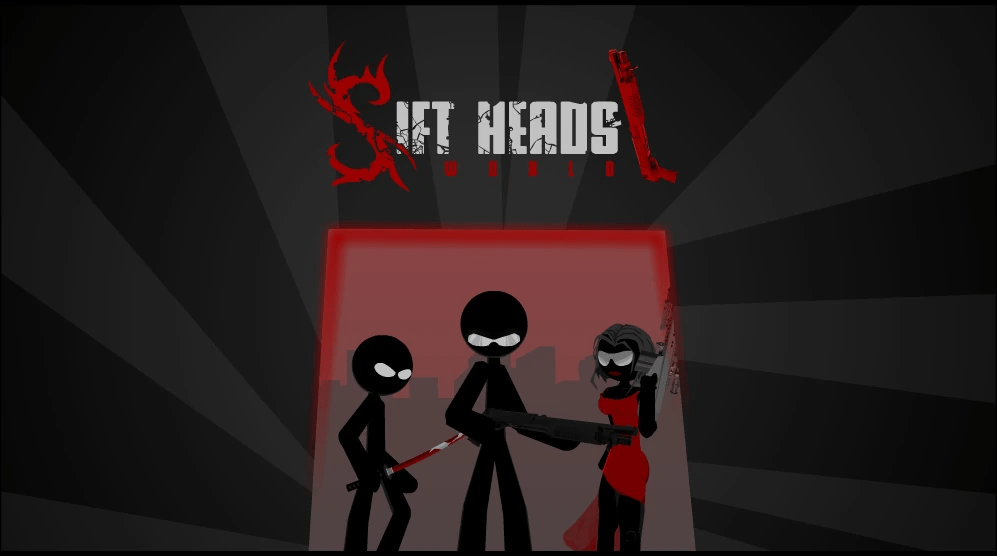
















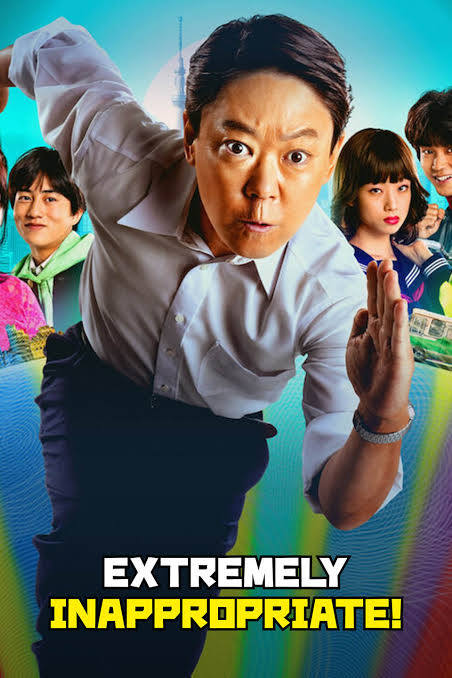




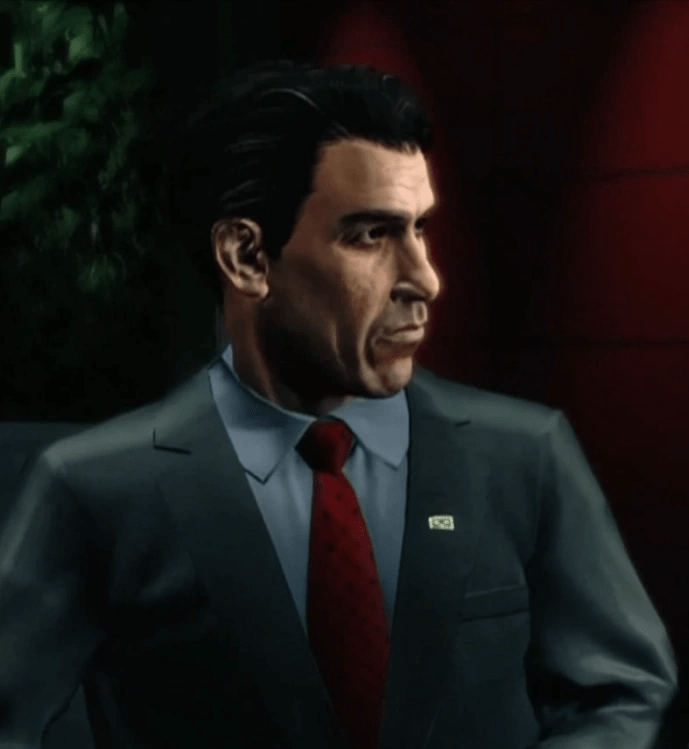




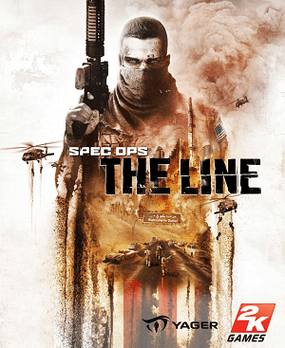
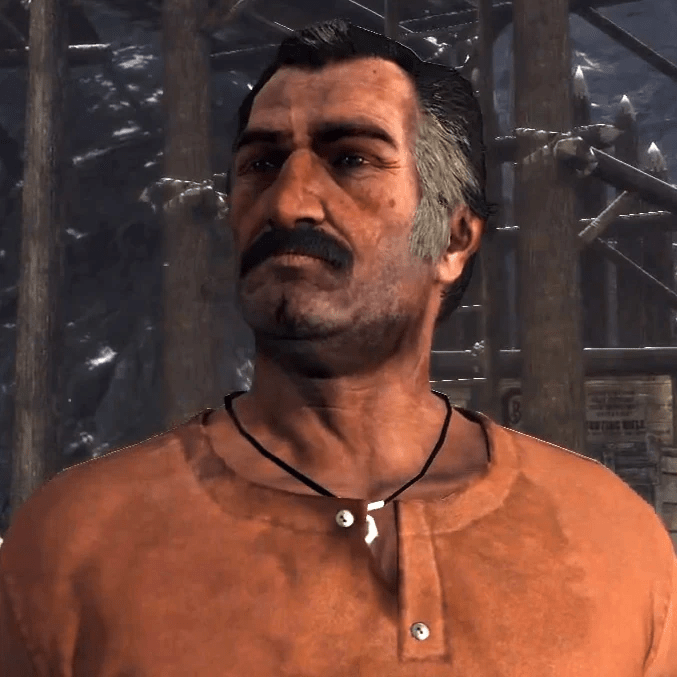

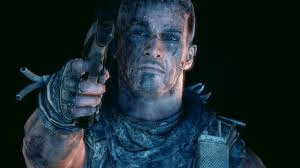
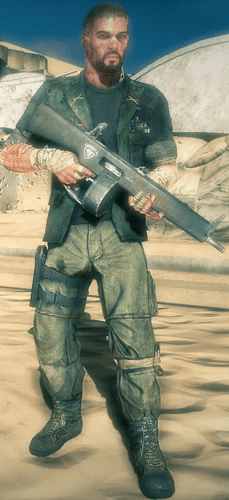



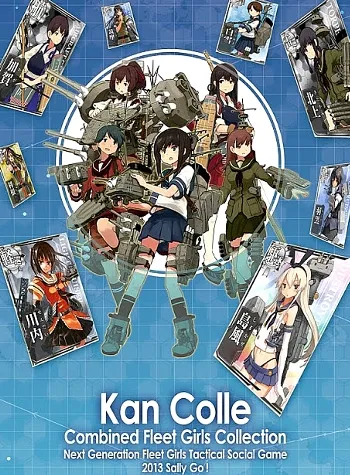
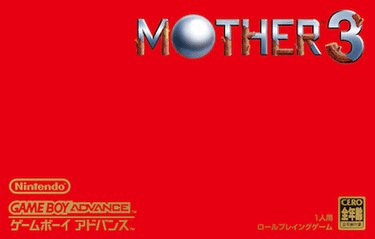


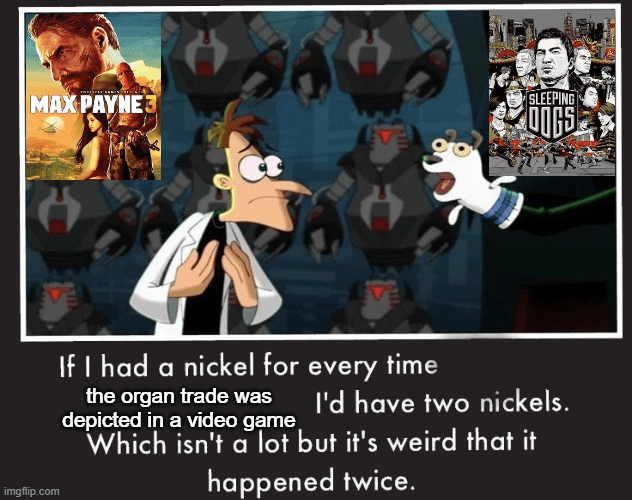
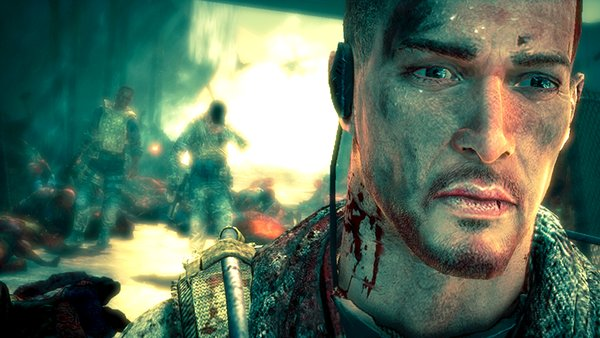
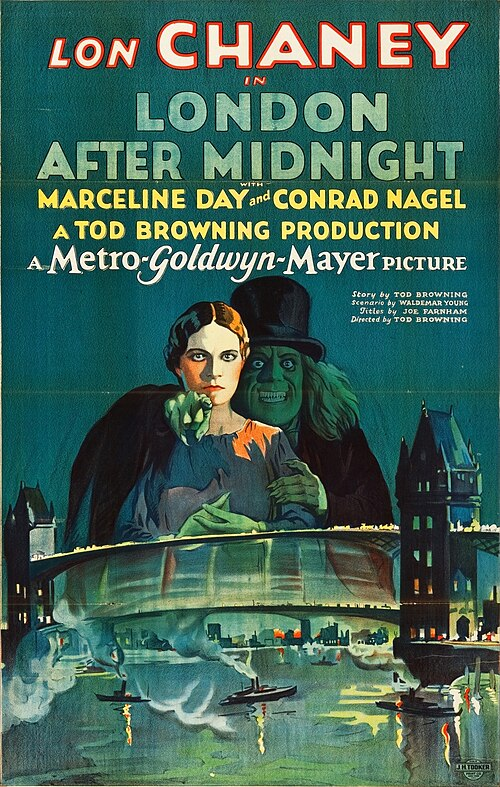




 Opinions on Entertainment