
Been a while since we’ve done one of these
Out-of-schedule topics haven’t been a thing on this blog in over two months since I wrote about BLACK TORCH rising from the grave. The next topic will cover an anime I was really on the fence about watching, so take this one as a calm before the storm, so to speak. And thankfully one I’d been looking forward to for years.
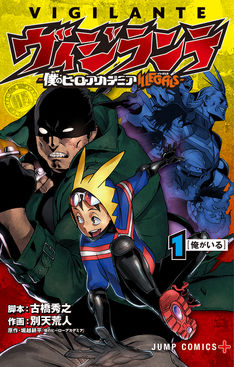
I’ve written about this manga before in the past, so here’s the cliffnotes version: college student Koichi Haimawari doesn’t fit the bill to be an officially licensed hero and so moonlights as Nice Guy in his neighborhood, as a sort of friendly neighborhood Spider-Man sans the tragic death of a popular brand of rice. One night, he and wannabe popstar idol, Pop-Step get jumped by a roving band of misfits and saved by this universe’s answer to Batman with a dash of Frank Castle sprinkled in.
Keep in mind, that that’s how the manga begins. The rest of the story covers a pivotal plot detail in the main storyline involving the Shie Hassaikai Yakuza’s use of an experimental Quirk-altering drug called Trigger, used to boost an individual’s Quirk to often disastrous results. The main tell that someone’s been using it is through their tongues, leaving them stained black from overuse. The main structure of Vigilantes is that the Pro-Heroes often can’t or (according to Stain) won’t stop smaller slice-of-life crimes as they’re expected to, so vigilantes tend to pick up the slack though under the cloak of darkness because vigilantism is illegal.
The hero system in this universe is used to denote what makes a villain, not a hero. Strict boundaries are put on heroes to stay within the law and legal limits, but villains and vigilantes aren’t bound by the same obligation. Even though a vigilante can cover a hero’s blindspots, not all of them subscribe to the same heroic ethos that binds most ordinary Pros so the legal system sees them as villains too, even though vigilantism birthed this same system. This is explained by one of Koichi’s senpai, Makoto Tsukauchi.

I’d highlight these as spoilers, but they’re more an explanation of the hero system as portrayed in all MHA media, adding nuance to a picture portrayed as black and white. Obligatory, honorable thieves, untrustworthy law enforcement; we’ve seen it all before, but to apply to superheroes tilts the picture significantly. The anime debuted last month and as of writing this is currently at eight episodes.
I cannot say for certain how many episodes or seasons it will have, but considering the cultural phenomenon MHA has become as a franchise in the last decade, it’s more than just a welcome addition to the franchise as a whole. It also fills in a few missing plot points from the original as a prequel set two years before Midoriya and Bakugo step off for UA High.
Going off the first episode, the anime opening follows the art style of the manga sticking closer to its western comic inspiration than the original does. Observe below:
Channel: TOHO Animation チャンネル
Studio BONES doesn’t miss a beat. Establishing shots of all the characters present, stylistic choices and art direction to fit them all with their appropriate themes – Koichi is shown using his Slide and Glide Quirk with the animation beginning with All Might and ending with Knuckleduster to show he’s gonna be different than his idol; Pop-Step dancing first with silhouettes of herself before they’re supplanted with fans who take heavy inspiration from Cyclops and Wolverine especially; and Knucklduster appropriately left an enigma for an upcoming reveal that manga readers already know. I made a promise not to spoil anything until we get there, so my lips are sealed and I will not ruin the surprise. The internet’s gonna lose it, I swear on it.
It sets up the anime well and I once again have to come to terms with simuldub. Growing up, most anime would take years to dub in English, let alone a different language from Japanese. Nowadays, thanks to social media, budding voice actors can contact dubbing studios, showcase their talents and through some other methods the public won’t see, they may be considered for certain roles. Voice actors have more insight into how this works, so don’t look to me for gospel in this aspect. I’m not a voice actor.
For what it’s worth though, the English VAs get the tone of voice really well. Kudos to their director. Confession: I was imagining the voices of Koichi, Pop, and Knuckleduster to be some variation of Todd Haberkorn, Kari Wahlgren, and Christopher Sabat respectively, though that may just be my own fantasy. Natsu Dragneel, Haruko Haruhara, and Piccolo walk into a bar… well, that’s just a fanfic now, but the manga gave a lot of leeway to imagine their voices until they were confirmed. Instead of legacy, the industry is giving rise to new faces. They don’t exactly have any household recognition yet like the aforementioned, but the grind of voice acting should put them on the map for future projects.

Credit: u/LolyHumter, r/TrashTaste
Characters this time are more varied and complex being on the older side. In the case of Koichi, with him being in college as opposed to high school, he’s shown to be much less insecure of his Quirk than Deku was. Granted, he wasn’t Quirkless at the outset, but we see the differences in a protagonist with a recently acquired Quirk and a protagonist who was born with one. Also being older makes him somewhat more humble in my eyes. Deku still has admirable goals, but I recall in the first episode how foolish several people thought he was wanting to be a Quirkless hero, until All Might saw him in action. I like underdog stories as much as the next guy, but there’s something refreshing about a character who doesn’t think about their powers all that much, merely using it as another tool in their arsenal.
Pop-Step is written completely differently than Uraraka. Not wanting to be a hero for the sake of her family or thinking that much about heroics on the whole. She already uses her Quirk for impromptu concerts so it’d be a bit ridiculous of her to try, although in the Vigilantes storyline, she technically is one by proxy. As the youngest one, she’s in high school being hinted at being around 16 or 17 years old (despite what some online have been saying, especially concerning her choice of costume).
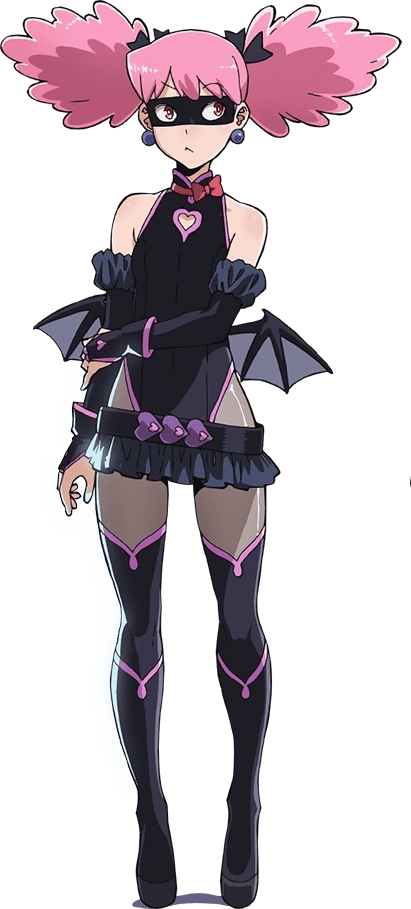
Those tights are an anime addition. Beneath that in the manga it’s all skin. The manga art shows more funny enough.
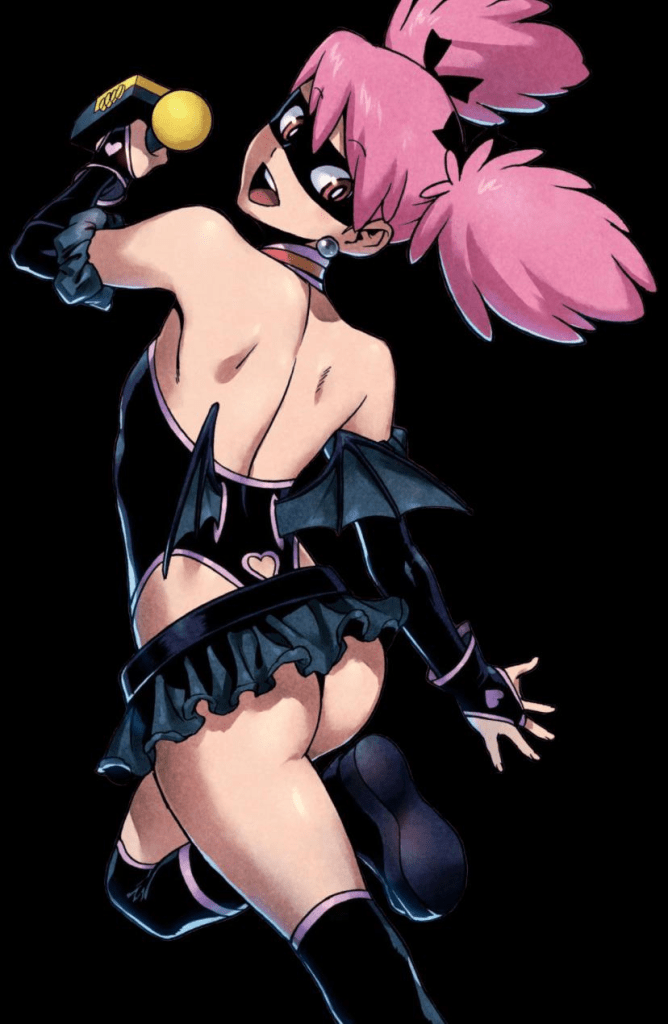
Lore-wise, this was her choice, but character design-wise, sometimes you gotta look at the writers and wonder…
But why get anal (no pun intended) about character designs? Manga readers know that Midnight used to look like this:

This costume design caused lawmakers to rewrite acceptable costume laws. If it wasn’t for that, a good portion of her career would be even more scandalous than it probably already is.
Kazuho Haneyama is instead very tsundere-coded. She’ll lend a helping hand and use her online influence to implore her loyal fans to keep a keen eye for Trigger users and encourage them to stay away from it. I’ve talked before briefly about my thoughts on East Asian idol culture, but if there’s an argument in favor of it, it can positively influence followers of a certain idol to raise awareness where it’s necessary. So Kazuho means well, but the tsuntsun comes out a lot when in close proximity to Koichi who unfortunately falls for a lot of the same traps that most would in his position when next to a tsundere. But she at least didn’t become the same type of Shonen female the genre’s been stuck with for decades.

I’m not as hostile to her as others have been, but Part I left a lot to be desired.
Finally, there’s Knuckleduster whose backstory is so heavy it needs to be shipped on a transpacific cargo ship. So keeping in line with where the anime is, he’s a dark gray character who lives up to the Batman comparisons even more than he lets on. Not to mention his first encounter with Shota Aizawa – better known as Erasure Hero: Eraserhead – shows that even pure adrenaline and energy can leave even the Pros tapping out for a breath of air. Coupled with the rest of his screen time and that brief encounter with just Aizawa reveals a few things about them. 1. Next to his first encounter with Koichi and Soga Kugisaki, you get more clues that he’s done this type of thing before, most likely in a past life; 2. The Pros shouldn’t rely so much on their Quirks for work, because they’ll eventually meet a villain or worse who’ll give them a run for their money (see the Paranormal Liberation War arc for more details); 3. Without endorsing his methods, Stain has a point about the Pros. Save for All Might, far too many heroes never know what they’re up against until they meet a Sisyphean endeavor, like the War arc in the main series.
On a final note, this post should be even more persuasion to check out the series in whatever medium you see fit. It’s still airing on Crunchyroll as I write this, so if you have the means to do so, check out it there. Or if you can’t or won’t for personal reasons (I won’t judge, and I can’t considering what I’ve been talking about for the better part of two-and-a-half years), you already know what I’m gonna say.

 Opinions on Entertainment