
The long-awaited two-in-one special
I put this off for a week so I could do some more research on both, by which I mean reading the Wikipedia page for one and advancing in the manga for the other. Haibane Renmei is but a short 1-cour anime series from 2002. I found out about it from the same article that introduced me to House of Five Leaves a few years ago (along with another one), and without delving into details, a friend of mine challenged me to recommend him some anime he’s never heard of. Well, he didn’t challenge me per se, but I took it as such and I figured I might as well put another brick in this anime wall I chose to build. No, it still ain’t finished.
Japanese for Charcoal Feather Federation, Haibane Renmei starts with a young girl experiencing a very vivid dream about falling from the sky. This being the only memory she has, the theme of the series is that the Haibane–angel-like beings–are named after the dream they had. Shortly after that, their wings grow from their back and they’re given halos to wear above their heads.

It was based on an unfinished manuscript by the same mind responsible for the surprisingly well-aged Serial Experiments Lain, which when it comes to trying to label it, makes it difficult, at least for me. There’s anime that are adapted from manga, which is the most common adaptation style; anime that are adapted from light novels, which is probably the second most common adaptation style; sometimes anime are home grown originals (a.k.a. anime originals), proof that the studios animating them can make something special from thin air; and sometimes anime are adapted from novels:

It’s definitely irregular for a rough draft to get a green light for an adaptation, but it’s not like it’s unheard of. Stranger things have happened in media.
Part of my research for Haibane Renmei involved looking over this blog post from 2017. The writer explains that the cult-classic series has been the topic of such fierce debate over the meaning of the series, not helped by Yoshitoshi Abe’s notoriously enigmatic writing style. As a mystery series, this can be viewed as a double entendre both due to the cryptic writing and because the only source available lies with the writer and short of booking a flight to Japan to ask him directly, I highly doubt he’s ready to share the raw words with a wider audience so the anime adaptation had to make do.
That said, this isn’t the type of Scooby-Doo, CSI, Columbo type mystery series where you’re given a puzzle to solve. It leaves a lot open to interpretation and according to that post I linked above, a lot of it tends to be incorrect. From a writer’s perspective, there’s a fine line between treating the audience like they’re five years old and throwing them out of a plane and expecting them to catch the parachute on the way down.
Is this me being too harsh? Perhaps, but the creative world is pretty cutthroat in a manner of speaking. We criticize ourselves in a much harsher tone than any other critic, yet both the critic and the artist are given a near equal amount of outside exposure so doesn’t that mean we’re both talented groups of people?

Something, something pot calls the kettle black…
I like to think of it as an art house project. I believe the late 90s to late 2000s was the era of moe and this series does something different from most shows of the era. It was the equivalent of taking an extended museum tour and filling out a survey at the end before being released to the gift shop. It’s for thinkers; the door is open enough for observers to take a peek but is neither too wide nor too narrow. If it were too wide, important stuff goes missing, but if it were too narrow then you wouldn’t be able to see the contents very well. It sits neatly in the middle and once you’re done with the series you can walk away with your own interpretations of what you think the series is about. Here’s a link to the playlist. Enjoy it while it lasts:
From a series you probably never heard of before now to a series you still probably haven’t heard of unless you eat anime memes like black beans: Mysterious Disappearances.
Before I elaborate on this series, I want to get this out of the way right now: giant boobs.

Alright, we’re done with that. Well, I’m done with that aspect. Explaining the fanservice in this series will honestly get redundant especially since both the anime and the manga do that in spades. The first chapter especially ends with an uncensored shower scene (spoiler alert).
As for the rest of the series, Mysterious Disappearances is a blending together of urban legend and centuries-old Japanese folktales. The name doesn’t do the series enough justice. Looking to legends and myths for inspiration, Mysterious Disappearances has it all in droves. The first episode actually drops hints from an old urban legend about the fictional haunted Kisaragi Station. Akidearest explains it further in this video below:
Basically, a few years ago, a Japanese vocaloid YouTuber’s videos spread by way of the recommendation system and the one thing that stood out was that their username and videos were mostly untitled, making use of zero width non-joiners or “invisible characters” read only by the computer. Anyway, the video referenced an old urban legend/creepypasta that only existed at the time on Japanese forums, namely 2chan in 2004. The urban legend in question was Kisaragi Station and was about a woman who noticed the train continued on for longer than usual. She gets off at the namesake station which was left unmapped and catalogs all of her interactions and findings at the phantom station, even wandering the tunnels until she was eventually picked up by a mysterious man who quickly dropped his helpful demeanor once she took the bait. Forums posters eagerly awaited for updates that never came after that.
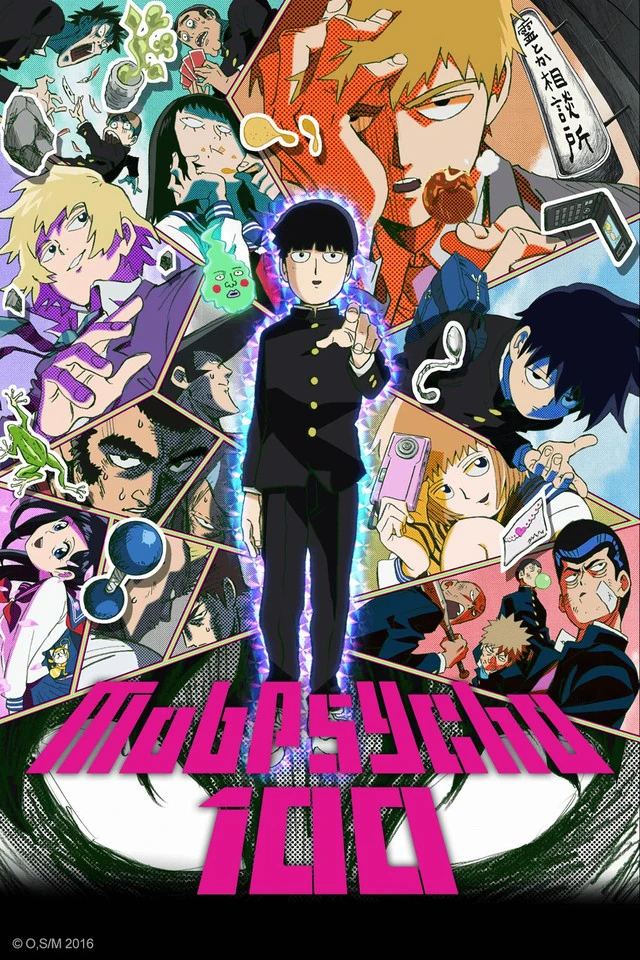
This was one of several references to Japanese urban legend in the anime. Many more follow as the series progresses. Unlike The Society of Gray Feathers, Dangerous and Disturbing Puzzles has more exposition baked into it. Both the manga and the anime explore the phenomena as they happen. Part of the appeal for me is the urban legend side of things. Fictional or not, these ghost stories tend to be somewhat credible even if they don’t match beat for beat. They’re the fun little stories about things that go bump in the night. The supernatural element keeps me engaged, much like when I was first introduced to The Adventures of Shigeo Kageyama: Boy ESPer.
The protagonist is the big breasted woman we saw earlier, Sumireko Ogawa, a novelist working in a bookstore. Aided by her coworker Ren Adashino and his sister Oto, the trio investigate and confront the sources of the mysteries personally, unraveling their secrets along the way.
One of the main plot devices is a droplifted book picked up by the bookstore owner himself and gifted to Ogawa on her birthday. The anonymous writer catalogued ancient poems from the real-life Manyoshu, a collection of anonymously written Japanese poems going all the way back to the Nara period (circa 750s C.E.). If read aloud, the poems act as a spell cast on the reader themselves provided certain conditions are met. The “spell” can be broken by way of reading the poem backwards, but as shown in the series, when Ogawa does so, she’s able to control the effects of the poems on herself at will.
Other important plot devices are the siblings themselves and the signs that only they can see: yellow diamonds with exclamation points in the middle. They appear whenever a supernatural event has occurred. Once the event has been solved, the siblings are shown to use anything recovered from their findings as payment for tickets back to their own home through–you’ll never guess–Kisaragi station! It all comes together! There’s a lot more to this, though I haven’t gotten that far yet and the manga is still ongoing so it’ll be years before we see where the author, Nujima, is taking this series.
What is certain though is that for those who like creepypasta fanservice and closeup shot style fanservice are going to be intrigued by the blend here. It seems quite ridiculous to highlight Ogawa’s body as the connecting element when Ogawa herself is the protagonist, but the series finds a way to make it work. Rather than fall into the age-old trap of “damsel in distress,” Ogawa being the adult amongst the children here gives her more of a leg up as the woman in charge here. You could argue that she’s technically the mother figure based on this description, but the counterargument to that is that while the three do work together, they’re not inseparable.
Scenes exist with all of them together or just one of them alone or with other minor characters. All of them are well-written with their own goals and desires and none of them feels as though they’re held up by the other. That it’s mainly psychological horror is another plus for me. Honestly, I would’ve been turned off by anything horror as a kid, but now that I’m an adult and I’ve watched a few of the classic horror movies before they were ruined by their own franchising (Friday the 13th, Halloween, Scream, etc.), I realized that there’s still better ways to horror and thriller and Mysterious Disappearances is a better example of that.
All 12 episodes are available on Crunchyroll, but if you don’t feel like watching 12 of the same old advertisements, then you already know what I’m gonna say.
Because I’m behind schedule, I doubt I can guarantee a full review of Undead Unluck season 1 by the 30th, not to mention another topic lined up was pushed back due to the research I did for these two series in this post, so instead I’ll try to get back on track either the 29th (tomorrow) or sometime during the 4th of July weekend. The next topic I have concerns a manga that never got off the ground. Here’s a sneak-peek:

Also, the recommendations should return too.
 Opinions on Entertainment
[…] riff]k? But on the other hand: It’s not the first time an anime was greenlit from the cutting room floor. Yoshitoshi Abe was able to get Haibane Renmei onto the silver screen; so why can’t Tsuyoshi […]
LikeLike
[…] let this spoiler for the first episode turn you off from the rest of the series or the manga. I’ve said before that I live for the occult and mystery stories like this and Dandadan satisfied that itch for a […]
LikeLike
It’s cool to see Haibane Renmei featured. I just rewatched it earlier this year and was impressed by how well it still holds up. It’s certainly quite an original series and an artsy one with great characters.
LikeLike
[…] able to find in English, the most notable examples on this blog being that of Nazo no Kanojo X and Haibane Renmei, where the mangaka doesn’t have easily accessible photos of themselves or evidence that […]
LikeLike
[…] numerous manga don’t get an adaptation for ages if at all with some getting greenlit from the cutting room floor. I don’t have any hard and concrete predictions to make for this, short of what I […]
LikeLike