
“On Speed” by Lightning McQueen
This topic has been in my notes for a few weeks, and up until recently I thought about first talking about what I love most about the racing game genre before listing off my personal best through worst. I should admit, though, that the games chosen for this were chosen partly for nostalgic reasons but also to see how well they hold up. My appreciation for racing games goes back to an old collection of Hot Wheels toys, funny enough.

There was almost no escaping these little cars. While the cars could be found in most pharmacies and dollar stores and in the bargain bin at select department stores, toy stores held the associated sets and tracks and all of them were awesome. Most often, these were battery-powered loops that propel the cars on assembled tracks that go in multiple different directions. I don’t care what anyone says; no matter your opinions on the 2008 Speed Racer movie, toy manufacturers nailed it when they gave us toys and cars based on the movie. Still got nothing on the LEGO sets, though.

I didn’t own the above set, by the way. These things were huge.
To connect the toy cars to the digital cars I raced around in on the TV, these two ran concurrent with each other. I used to collect loads of toy cars and spend a lot of time with racing games, though not to the same extent as the fighting and adventure games. Still, I spent a lot of time with racing games and so for my best through worst:
Best: Midnight Club 3: Dub Edition Remix (2005)
Mid: Need for Speed: Hot Pursuit 2 (2002)
Worst: L.A. Rush (2005)
I think this post will get quite a bit long for each of these three, and before I expand on why I put these games where I put them in lieu of probably better options, this is a personal list that I know won’t walk the same stride as others’ personal lists, I have better memories with these games (emulated or otherwise), and for the game in the Worst category, there are objectively worse games like Crazy Bus or Big Rigs: Over the Road Racing, but those were glorified tech demos that could be written off as a joke like Hong Kong 97. You’d have to put them on the same pedestal as actual games we celebrate or despise and that’s too much for those piles of crap. I don’t like to go for low-hanging fruit. Now for the list.
Midnight Club 3: Dub Edition Remix
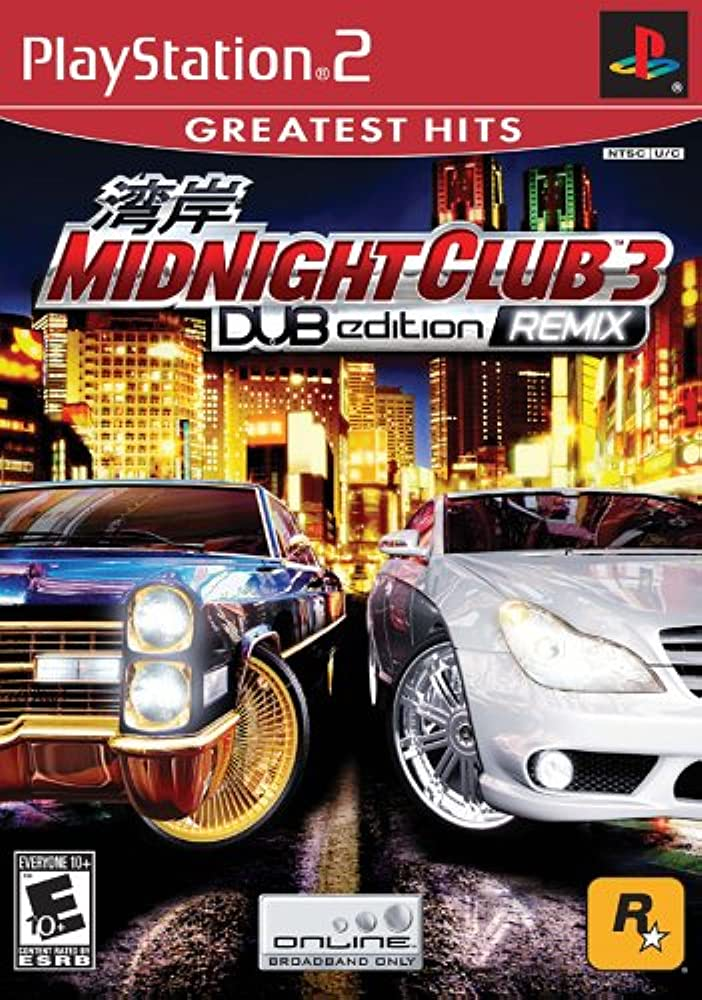
This version of the game specifically is what I remember best as the game I finished 100% many times over, and as a personal achievement, I managed to do it on the PS2 emulator with just the keyboard. Thank god for long fingers!
The third in the Midnight Club series it follows up from its predecessors with longer races, more challenges, bigger cities, secrets and easter eggs and more. Customization options and an open world to explore let the player get creative during a race. More than once while driving through the cities, I came across these routes to find secrets or prepare to the best of my ability for a race that would most likely take a certain route.
The Dub Edition tagline for the regular and remix versions for the game stem from the game’s partnership with the car magazine Dub, who spruce up a prize car from a tournament in their style to include the Dodge Magnum, the 2006 Dodge Charger, the Chrysler 300C, the Cadillac Escalade EXT and others. The game has three scaled-down, fictionalized versions of the U.S. cities of San Diego, Atlanta, and Detroit, and the remix version includes the Tokyo Challenge. All three cities are headed by a mechanic and his auto parts garage:
San Diego’s mechanic, Oscar, heads the Six-One-Nine Customs;
Atlanta’s garage is Apone Team Racing run by the garage’s namesake,
And Vince’s garage is in Detroit. No fancy name unfortunately.
For Tokyo, Speedway is the garage there.
As you progress through the career mode, you’re told over a type of transceiver or cell phone that a new racer is in the city ready to challenge you. Racers driving a certain type of car denote a car club they belong to and upon their defeat, they send word of you to the club who invites you to partake in their races for a prize across the three cities. Additionally, tournaments can be entered for prize cars, customized by Dub or open for customization at the garage.
The customization options are quite extensive. Most likely riding the wave of the Fast and Furious franchise, nearly every car can have extensive body work done to it, essentially turning a station wagon into a supercar and earning you even more speeding tickets because none of the cars you have are street legal anymore. Imagine explaining that to the traffic cops…

The car classes and types matter mainly to the car clubs stateside, but in the remix version with Tokyo included, there are class and car type specific tournaments, and the kicker is that you don’t necessarily have to finish the American races first before flying to Japan. The first tournament you’re offered will require a vehicle class not available until you’re 4/5 done with Detroit, but the way you unlock tournaments in Tokyo is that instead of challenging individual racers, street races which are represented by red dots in the States are represented by purple diamonds, three of which unlock the next tournament. So theoretically, you can complete some races in the US, head to Japan and complete a tournament there, then come back to the US with the prize car, rinse and repeat.
Then, there’s the soundtrack, which couldn’t be anymore mid-2000s. Hip hop artists, post-grunge bands, techno bands, electro-pop; as I recall, select genres went hand-in-hand with the underground racing scene as depicted in media. I have no idea if this was representative of the lifestyle back then, but if so then that’s pretty cool. It makes the replays all the more enjoyable to watch.
The car clubs have an extra feature for certain cars. Specific types can gain one of three abilities: Zone, Agro, and Roar. Zone is a type of Max Payne-like slow motion ability that allows the Tuner cars, Exotic cars, Sports Bikes and select Luxury Sedans to weave through traffic in slow mo. This ability is earned by driving as clean as possible through the city. Agro is applicable to the rest of the Sedans and SUVs and is a type of boost that allows the driver to slam through traffic at a breakneck pace, breaking necks with all the wreckage caused by ramming other cars off the streets. Driving into other cars and causing general damage is how you earn this ability. Roar is exclusive to Muscle Cars and Choppers and it sends a blast of wind to scatter heavy traffic out of the way. Drifting and power sliding unlocks this ability. All three can be used a total of five times, and going by my playthrough of each ability, they’re not meant to be a one-size-fits-all solution when a race goes sideways. Zone helps you get through traffic, but it builds up as slow as its ability performs and a single crash can set the bar down as it accumulates. The draw of Agro ability is that you can send offending vehicles to the moon and the impact is literally diminished if you activate it on a free road. The same goes for Roar, but the consequences are doubly so if the vehicles don’t spread out how you hope. You have to think a bit more strategically before activating either of these three.
Lastly, there’s the secrets. The three U.S. cities have RockStar logos that net you extra customization options in the garage from more riders on bikes, to license plates to decals and more.
Above all, not only do I recommend it, I highly recommend you set up your controller if you go the emulation route. Contorting your fingers like miniature twister is better as a party trick than to play games. I write from experience.
Need for Speed: Hot Pursuit 2

My next words on this game specifically will surely sound a bit contradictory depending on how you see racing games. The customization options giving me a range of choices heavily influenced my rating of Midnight Club 3 despite me spending less time with it. Need for Speed has little in the way of customization, there’s no overarching plot to become a legendary racer in the underground street racing scene, and the options for cars and tracks is so limited that it’s nonexistent.
That being said, I’m still playing this game and the game modes on display do a lot to make up for what I thought was so perfect about MC3. Granted, NFS HP2 came out in Q4 2002 while MC3 was released around Spring 2005, so older racing games will feel like clean-picked skeletons compared to what would succeed them all, but judging games of this era by their own merits reveals that they’re less about style and more about substance. Midnight Club drips style, but Need for Speed before the EA corruption of the 2010s leaks substance.
Multiple game modes and challenges can be completed and the departure from other games is that there isn’t always an emphasis on getting perfect scores. Some challenges will still let you advance even if you finish in second place. As another divergent example from what’s expected of Midnight Club, transmission systems can be adjusted to suit the player depending on the car: automatic, manual, and semiautomatic transmission. The game is also designed more around skills than simply picking up and playing.
You know how Midnight Club has precise locations based on real-world cities, just scaled down massively from what residents of each would recognize of them (especially for 2005)? Well, the maps in Need for Speed are less precise and more like general amalgamations of a city in a given location. The Mediterranean coastline, the Pacific coast, Australia, the American Southwest, etc. The game also feels less like a smorgasbord of real-life cars and car concepts that with the benefit of hindsight didn’t always pan out.
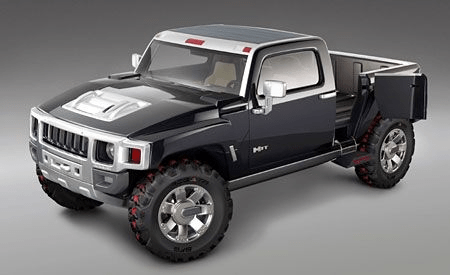
This concept H3T, for instance, is different from what was sold in 2005 and ‘6, by the way. As a matter of fact, the car brands in NFS were less luxurious and well known and more specific to certain regions if not known to the wider car aficionado demographic. Opel, the now-defunct HSV, one of Ford’s foreign manufacturers, all feature in the game. The cars that you start off with tend to have a top speed of around 125 MPH with an average 0-60 acceleration rate of 5.3 seconds. The further down the line you advance, the top speed rounds to around 200 MPH with a shorter rate of acceleration. With the speeding cars comes new ways to maneuver around the tracks.
Speaking of the tracks, going back to a comment I made about the cars in MC3 losing street legality, they’d all be suited for a race track like how they’re all designed in this game. The tracks within NFS Hot Pursuit all have secret pathways and shortcuts to take but depending on the version you have it may be somewhat different. I emulated the PS2 version and pirated the PC version and the menu selection screens are all different; the PS2 version seemed to be the snazziest of all the available versions, whereas the PC, Xbox, and GameCube layouts are all the same.
Skills play a role in more than just driving and handling. The Hot Pursuit game modes where cops are placed at different points along the track can add an extra layer of difficulty to the challenge and you’ll normally only have that split-second to decide how to avoid them. NFS has a reset button for when you screw up during the race, but in my experience it there are less opportunities to use it during Hot Pursuit mode because the police will catch up to you and ticket you. So best to save those for when you’re out of sight of the police or outside Hot Pursuit mode.
The cops in this game are also aggressive. They’re not GTA-aggressive, but as I recall, in the PC version they’ll deploy helicopters the longer you resist. I know they also do that in the PS2 version though I rarely keep them around for that long to find out. This mode isn’t one sided though — there’s a mode to play as the cop and nab speeding racers as well.
I don’t know if this is true of all EA games from before or even now but their design philosophy, considering Medal of Honor, Need for Speed here, and Battlefield seemed to be based partly or wholly on gaining and refining skills than button-mashing throughout the whole play session. This isn’t a philosophy that’ll resonate with everyone and EA has since divorced themselves from this for darker desires in recent memory, but as I said with Midnight Club 3, find a way to play it and see the game for yourself. It might be too your taste if Midnight Club proves too flashy.
L.A. Rush:

This game is why this blog topic exists. It’s because I hate this game so much that I decided to write this week’s topic. Thing is, for years, I’d never had the words to illustrate my gripes with this game until recently. The YouTube channel BlueTag did the digging and the review on what this game has to offer because I knew damn well I wasn’t gonna put this tripe in my emulator, so here’s the corresponding video.
To spoil the video a bit, this game was developed by Midway Games’ British branch in Newcastle, the same Midway Games that flooded arcades from the 1980s until their 2010 bankruptcy, gave us Mortal Kombat and the subsequent ESRB rating system, and surprise sleepers like SpyHunter and Stranglehold. According to BlueTag, the finer details surrounding development are lost to history, but the game’s inner workings hint at a severe lack of communication between internal departments.
The physics engine is incredibly flimsy for a racing game let alone driving. Slip a finger on the accelerator and the car will hit the nearest wall at Mach 4, with reciprocal results. Forget tanks for cars that could take a beating; this game cinematically emphasizes the damage that comes with totaling the car when this happens.
Funny enough, the main protagonist is supposed to have a fleet of cars, but there’s only one that features prominently in the game at the beginning. L.A. Rush is another game sponsored by a major car promoter, this time MTV’s Pimp My Ride with Xzibit and Lil Jon in tow, but unlike Dub, Pimp My Ride doesn’t have much to offer. Or rather, the Dub team will let you win cars done by them where as PMR often upgrades your ride without you seeing the bodywork or messing around with it until it’s finished. You also stand to lose half your cash to a ride whose paintjob is a surprise until the end.
Speaking of money, you have to pay an entry fee to compete in a race and if you mess up and want to start over and do better, you can’t restart the race from the menu. You have to back out and come back in and pay the entry fee again. Like the other games, cops also play a role in this game but considering the consequences in the other games, this is simultaneously a worse and lax punishment at the same time: it’s lax because you bribe the cops to get them to back off, but it’s worse because you lose money on entry fees anyway so this is another way to lose your money.
Cutscenes meanwhile show the protagonist, whose name I never registered, I think his name was T or something, having already achieved street racer heaven. Then the bad guy shows up, promising to take your stuff which he does. After a few weeks, your cars are all confiscated including the jet black Hummer you rock up to the mansion in, leaving you with a suburban sedan that you have to use to get your cars back, often while under pursuit, and with the crappy physics and whatnot, this is more of a chore than anything.
As for the map, I’m not a native Angeleno, but I’ve heard from the Wikipedia article, that a section of L.A., namely the Valley was absent. Seems weird to put in, but in a racing game a map and layout can make or break a race if not the whole game and what I presume to be a notable location within the L.A. region was done a disservice by its omission. If this is the case, then whatever could’ve been done with the Valley may have killed further interest.
All things considered, if eight year old me was smart enough to see the problems with this back then it should be a warning to how unplayable a game could be, especially the PC port which I learned was worse off than the console version. If you have that Tibetan Buddhist level of patience, give it a go. If not, watch the gameplay and prepare yourself for outdated, cringey dialog, even for a game from the mid-2000s.
Before I move on to the YouTube recommendations, I want to mention a last minute game I also played on the PS2 back in the day, but have fewer moments with: Gran Turismo 4.
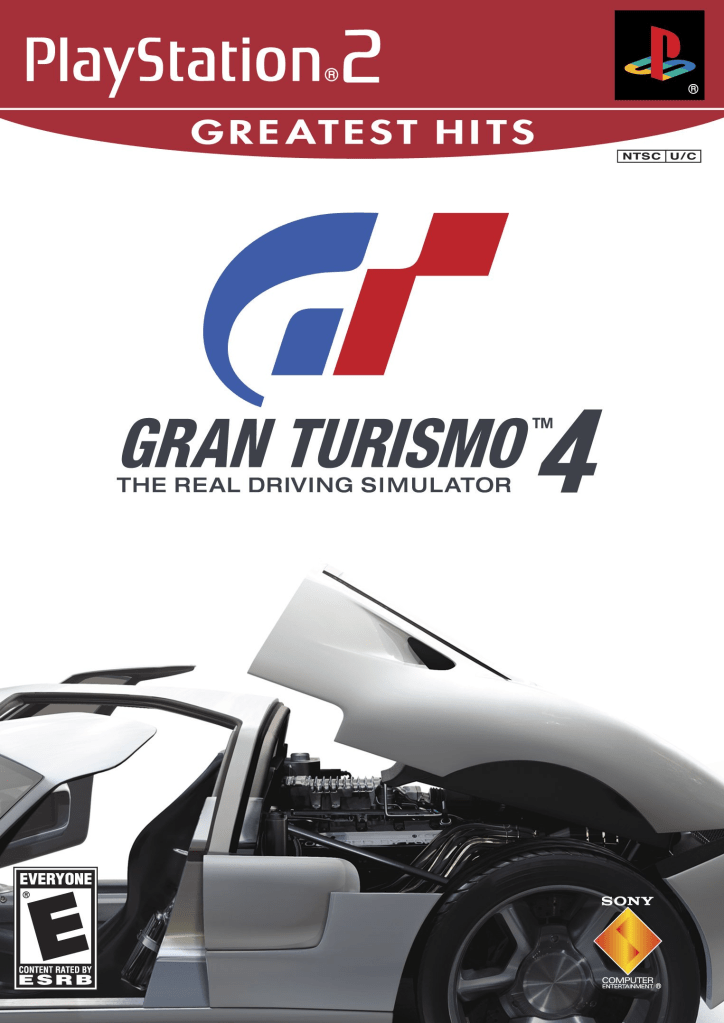
My memories with this are hazy as of now, but if I get the chance to emulate and play it, I’ll surely put my thoughts in, no questions asked.
Now for the channel recommendation: Rev says desu. This channel is a commentary channel on mostly anime and anime news and often features the wrong opinions to laugh at and lambast from some of the worst people to speak on a given matter on Twitter. Originally shortform in length, Rev has gotten around to longer videos for more to discuss. Wherever you start, if you like his content be sure to subscribe to him, he makes videos regularly.
 Opinions on Entertainment