Solo Leveling and Jujutsu Kaisen

A pair of anime darlings in this day and age

It isn’t everyday that new anime debut and take the world by storm… or maybe it is since the audience is starved for a brand new bevy of releases to christen the Big Three of Anime. The western anime fans are still in search of those that can lay Bleach, One Piece, and Naruto to rest and as far as contenders go, the early 2020s have so far seen two of them go back and forth in popularity: Jujutsu Kaisen and Solo Leveling.

JK debuted in 2018 as a serialized manga running for 30 volumes until 2024 and SL started sometime in 2016 and bounced between publishers online as a Korean webcomic until it got a physical release the same week as JK for 14 volumes of its own, releasing its final chapter in 2021. I admit that I was late to the party, coming on for both JK and SL only this year, and I’ve made better progress in the former than the latter, though still stuck on the first season. Not to mention how inconsistent I am with my viewing, so the remainder of this double bill will default to Wikipedia. Starting with the first:

A supernatural story involving yet another orphaned adolescent who gets chosen by a demonic power that doesn’t kill him but lies in his body as a host and comes out to puppet his latent abilities. Of these, is the famed Domain Expansion whereupon an alternate dimension opens up where the user is given free will to do whatever to win the battle. Something something victory is god and the user is pope fare. The orphaned adolescent is pure of heart, innocent Yuji Itadori. His sickly grandfather leaves this mortal plane with a dying message to always stay kind. Easy instructions to follow since that’s all he wants for himself and his friends.

Afterwards, he continues life in high school and runs into people with some of the aforementioned abilities, starting with Megumi Fushiguro.
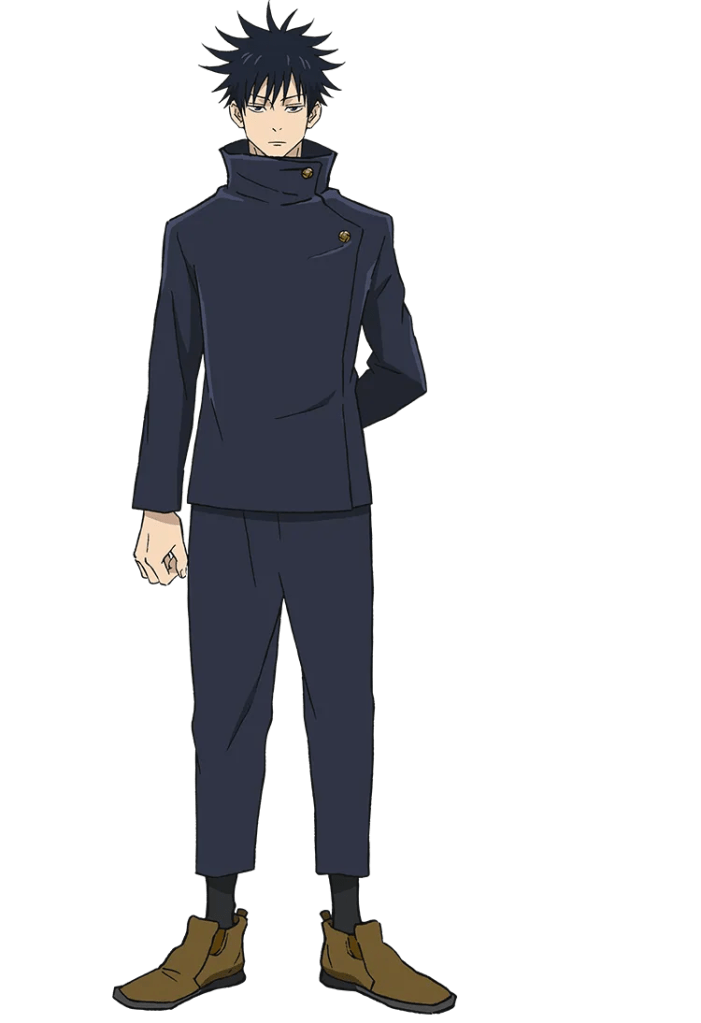
Fushiguro is what is known as a Jujutsu Sorcerer, part of a secret society of sorcerers tasked with protecting the innocent from ancient evil Curses. One way in which this is achieved is by collecting scattered demon body parts, some of which belong to the worst known as Ryomen Sukuna. In one such encounter, Fushiguro finds students who find Sukuna’s disembodied finger. Understanding the inherent evil in just the severed appendage but not yet knowing how it works, Yuji swallows it whole allowing Sukuna to dwell within his body.
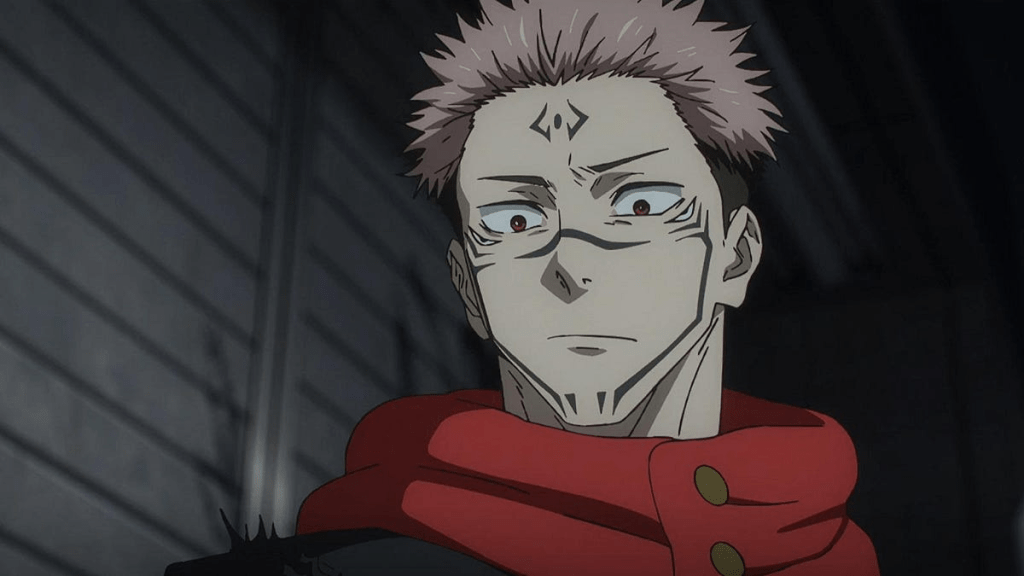
Here, the demon acts as Yuji’s id, or from what I’ve seen thus far, tries to. Yuji still maintains control of the flesh, but will call upon the evil within to get him out of a particularly tough battle. Though he has the powers of the demon at his beck and call, he’s not exactly an expert and in the eyes of the Jujutsu Sorcerers, he’s marked for exorcism and eventually execution. In the series, select individuals — to include Yuji — have the ability to control such evil, and before they become experts in this ability, they attend school at any one of Japan’s government-sponsored Jujutsu Sorcerer academies.

Bearing witness to this course of opening events is Fushiguro’s senpai, Satoru Gojo, who elects to stay the impending exorcism so that Yuji can learn how to control the demon within. The chimp has the rifle, but good luck expecting marksmanship or trigger discipline from the great ape, which is why he initially struggles to perform in combat. After Gojo helps Yuji transfer to the Tokyo branch of the Sorcerer academy, the series gets its proper start in the format we’re all familiar with and those of you who haven’t seen it, if the occult is up your alley, then give it a watch.

Personally, I liked the premise enough to progress to 2/3’s of the way through Season 1. Now, my work schedule has kept me from completely finishing the series and I’m notorious for bouncing between series. I’ve mentioned it yonks ago that I’m not a fan of the binge culture spearheaded by the likes of Netflix and I like to take my time with series, especially new ones. The cost of this is that a lot of time is put between viewings which leaves me to play catch ups in my head or do research prior to picking it back up or both. For what it’s worth, my memory works well enough to keep me from having to do that as frequently save for these blog posts–usually the next episode helps jog that memory.

This era of anime has since done away with the worst forms of Recap Syndrome that have stuck with the medium for decades, and I consider myself lucky enough to have such a memory, but for other people who binge their series, this is probably one of the most inconvenient times to discover anime. At least the pacing hasn’t taken a serious hit, and in some ways has improved due to the direction of the blowing wind now. For me, I maintain that spacing allows me to think about what I just watched, whereas binging gives me a lot all at once and there’s only so much I can take these days.

Back to Demon Hunter School…

…not that one.

The driving force that keeps me from forgetting about the series is the occult nature of it all as well as the drip feeding of Japanese folklore, namely the series’ interpretation of famous Yurei and Yokai mythology. Why didn’t I jump on it as it was popular? Especially since one of my favorites, High School DxD, is the occult with T n A? I don’t chase trends, especially as they air or debut, which is why it’s taken me ages to at least check out My Dress Up Darling for instance. Damn, this castle manor of anime endlessly expands. Did I steal the blueprints for the Winchester mansion or something?

Well, whatever, onto the rest of this double bill with Solo Leveling:

Alternatively titled, Only I Level Up, Solo Leveling has a few occult themes in it, but is merely wearing the skin of a homebrew DnD campaign. Contemporary South Korea has a map of different dungeons that are far too dangerous for the Republic of Korea Army to attempt to clear out by themselves, even with U.S. military aid, but a subsect of people exist with different abilities to help clear them based on their skill level. E-tier or worse? You get s[punch]t. B-tier or better? The dungeons get worse, but you come out better. Sooner or later, you’ll climb out of hell wearing the devil’s skin as a shirt and his head on your hip.

From that description alone, and based on other Korean media I’ve been exposed to, the tropes exist within the Korean online gaming market (sans CS:GO) with monsters and enemies that exoticize the different DnD races while holding back on the East Asian romantic picture of western European court and nobility. The protagonist here is low-level hunter Sung Jin-woo. He gets chosen by virtue of being the last of his hunting party when nearly everyone gets their s[crunch]t stomped in by the monsters and possesses an ability no other hunter has: the ability to level up, thus giving the title its purpose. Every other hunter has their abilities set in stone, but the powers that be choose him to be the one to level up from paltry E-tier to god pulverizing S-tier.

Credit: u/MaxSupreme369, r/SoloLeveling

I wrote ages ago about how historical and political circumstances led to the Korean government to heavily vet and scrutinize nonpolitical media and the likes for any anti-government, pro-North Korean/pro-communist sentiment, which I think severely limited outside exposure to webcomics (along with ancient Internet being even more closed off), and I maintain that these circumstances are why Korean webcomics are still in their discovery era even now as series are still being discovered, despite some of them debuting their first chapters years ago.

For Solo Leveling, a bevy of outside factors seem to have also influenced its central themes. The premise of dungeon raiding has deep medieval European roots, the caste system has medieval Asian roots, and as explained in this video, the concept of killing God and defying fate has specifically Japanese roots. At most, the only thing Korean about the series is its setting, Seoul, its characters having Korean names and abandoning the character design philosophy of “Mukokuseki,” where characters have nontraditional hair and clothing senses so that the viewer can self-insert into their favorite characters. I feel the concept is better used in Japan than Korea given geopolitics, and successive authoritarian Korean governments having a more noticeable thumbprint on what was previously allowed to print.

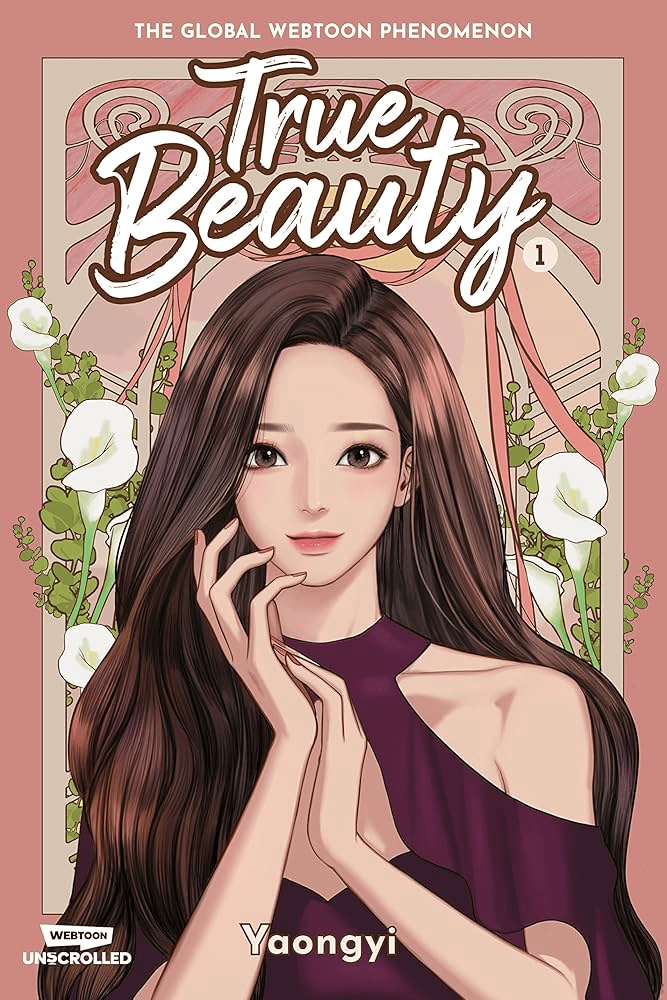
Fortunately, this hasn’t affected this specific webcomic all that much in a way that was noticeable to the untrained eye. But it still has a few of the same problems from the True Beauty webcomic, in that the main character needs an outside source to become a better version of themselves in order to be accepted by their peers.
I am still speaking from an outsider’s perspective, and if everything I’ve read about Korean culture is even somewhat true than I’d probably look to Europe as a source of freedom from my mundane at best Korean life.

Solo Leveling also deserves a watch for those who enjoy the DnD-ness of its format, but to measure it up against the likes of JK… I still lean more Jujutsu-ward than SL. Both are great in their own right, with interesting characters in a creative and compelling story, but at the risk of throwing Korea under the bus like its neighbors have done so historically, JK pulls me in much stronger than SL. This very blog is evidence enough that I game to a supremely unhealthy degree and if I’m being honest, the games are all the solo leveling I need. This isn’t me saying “I don’t like character arcs,” no sane person would say that; rather it’s me saying that “I don’t find Solo Leveling’s presentation to be my particular cup of tea.” Basically this meme format so as to not mince words:

Still, give it a watch if you wanna see Sung Jin-woo get a comically larger chin without having to Habsburg his way there.

Fat Otaku Today, 10/10 Girl Tomorrow

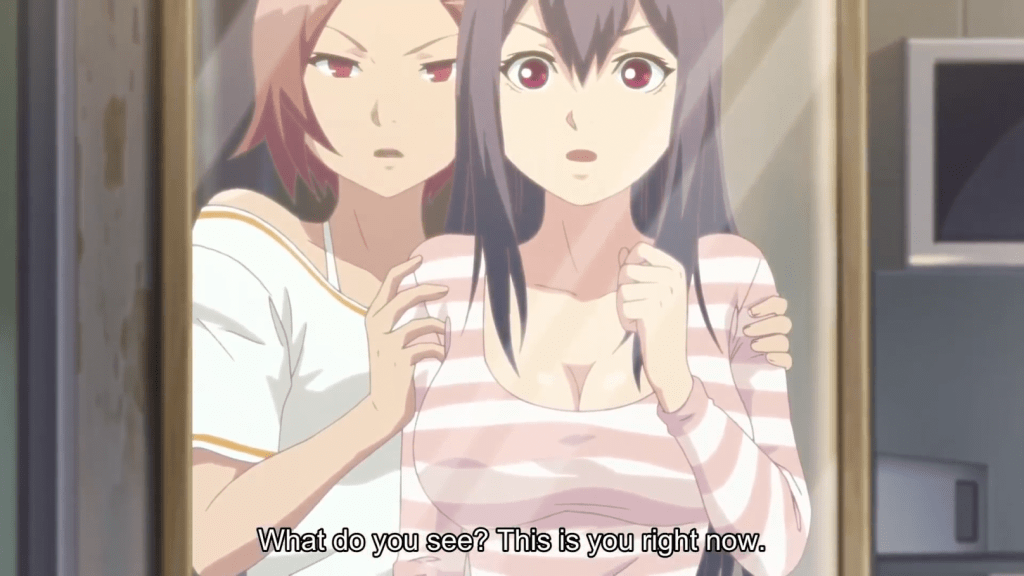
Who’s this chick in the mirror? Is that… me?!

You may remember in January when I wrote about my Korean manhwa arc of which a high number of the series put out was pornographic in art. Several series I remember fondly not just for the tits and ass on the page (read: my phone/computer screen), but because of some of the unique premises they played around with. Even some of the very Korean drama-esque stories had something interesting to keep me coming back. Observe:

This one, for instance, called Lady Long Legs, is about a man who pays a debt owed to a businesswoman by becoming her man-servant. There is porn in this one, but slight spoilers, it comes later than you’d think.

Circling back to my post on manhwa, the topic of this post is about a manhwa adaptation I watched in Spring of 2021, a few months out from my first excursion in the Army.

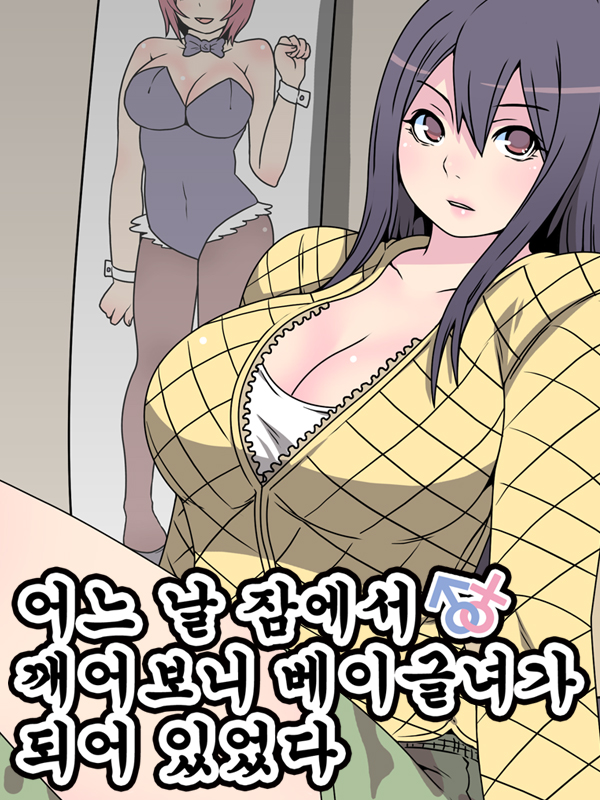
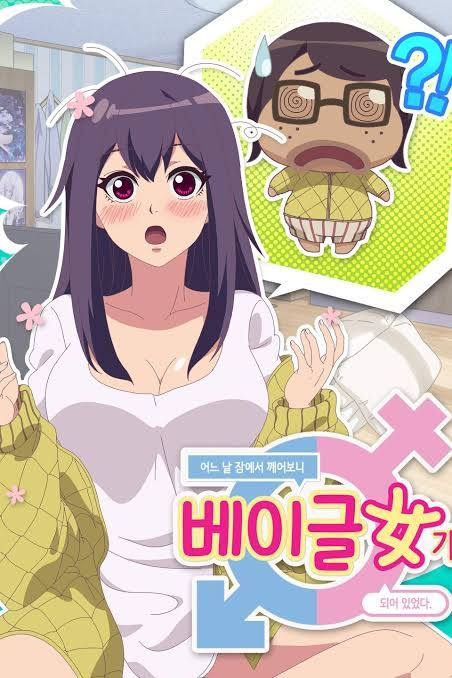
The series is called When I Woke Up, I Became a Bagel Girl and with a title like that, we already have to do a little bit of homework on Korean culture. The term “bagel girl” has nothing to do with bagels, so those of you who were looking out for that, I’m sorry. The best I can do is direct you to the closest bakery or Wawa if you live near one. The term is a play on words of sorts, where bagel girl is a Korean portmanteau of “baby face, glamorous body;” think of it like old cartoons where a smokin’ hot babe is referred to as “babe” or just “dollface.”

The protagonist is a 26-year-old virgin otaku named Bong-gi. No ladies that aren’t plastic or standing in dynamic poses on his shelf, no looks aside from those that cause onions to cry, no hope for the future seeing as he’s in a dead end job, and no confidence unless it’s on a screen in the dead of night. Alright, enough about myself, let’s talk about Bong-gi. Well, a lot of that is true of Bong-gi, so I’m definitely not one to judge. After a s[PS2 bootup]ty day at work, Bong-gi makes a beeline for his PC and games all night, snacking in the process. I mean no hyperbole when I say that’s extremely relatable, at least for me recently.

The next morning, he awakens in his waifu-splashed one-bedroom apartment, clutching his body pillow to answer the door only to discover that there are two large protrusions coming from his chest. He swears on best girl Hestia that he was a man the day before. What happened? Thankfully, he’s also curious or there wouldn’t be a series. An immediate comparison to make for “guy becomes girl” is either Gonna Be the Twintail or Ranma 1/2, but unlike those two series, Bong-gi can’t change gender at will, nor does he have any memory of it happening seeing as it happened in the dead of night while he was fast asleep. It’s also not an action series, but it’s not a pornhwa either, though it does have fun with the genderbend concept.

Just like its concept, the central plot of the series can be considered a bait and switch of sorts. If you went in thinking it was going to be a slice of life, think again. It’s more of a detective series with more beneath the surface than meets the eye. Without spoiling too much of the plot, the entirety of the series is based on this mystery plot with different twists and turns that give it a distinct thriller feel. I’m compelled to compare it to a telenovela or a soap opera.

Now to judge it on non-spoiler-y elements. I read many manga series and watch many anime series, as evidenced by this very blog. Manhwa is still a bit of a blind spot of sorts. As I mentioned above, I had a whole arc dedicated to this medium all through community college, however, but with the animanga scene exploding on its own home turf and abroad, whatever I wanted to watch or read from the Korean side of things has been a struggle. Either there’s not enough of it or it gets buried under a wave of other series from Japan. Tying back to my post on the history of manhwa, local Korean politics may or may not be responsible for this.

The youngest Koreans born under Japanese rule may at best be in their mid-to-late 80s, but the generations following still grew up under a military dictatorship hellbent on warning its citizens of what would happen if they bent the knee to the North in particular and the communists on the whole. As a result, in Korea (and by extension Taiwan), creative minds in both countries have been apprehensive about including anything remotely satirical. Some of the manhwa I’ve read (to include Lady Long Legs) have some reference to a real life Korean concept or even law. I’m a bit ashamed to admit that this was how I learned that the country still has conscription; just goes to show that the true opposite of love isn’t hate, but indifference. There wouldn’t be conscription there if they didn’t care about their wacky neighbor (but to be fair, neighboring the hermit kingdom isn’t easy).

I bring that up once again to highlight why manhwa seems to be getting the spotlight only recently. It could simply be Korean politics overpolicing media as a consequence of Cold War politicking; it could be viewers running out of material during the pandemic and reading whatever’s available; it could be a more subtle form of Korean pop culture spreading, sitting side-by-side with K-dramas, movies, and music; it might be all of these or none of these.

For me, it’s along the lines of adding to my fortress of consumable content. I have so many shows and movies in my watchlist that I barely get through all of them. I can watch a few episodes no problem, but I’m not 19 and my days of watching content ’til 2:30 AM are long behind me. Even if I didn’t have the responsibilities demanded of me by the military, I wouldn’t be able to sit there and browse anime to watch anymore. I’ve done it before, and while I haven’t exactly seen it all, the 24-hour binge is far from ideal or even recommended. I don’t even like 24-hour news cycles; you think I wanna watch the same specific series uninterrupted? For this reason, I adopted a method employed by Adult Swim ten years ago: the Double Shot method. It’s a reference to an old Adult Swim promo from the time.

I can’t find any evidence of it online, but as I recall, the programming block aired two consecutive episodes of a certain show for the hour and continue to the next show in it’s line up. For example, King of the Hill would air Episode 15 at 9 and then Episode 16 later at 9:30. The same for American Dad at 10 and 10:30, then Family Guy or Rick and Morty or China, IL at 11 and 11:30, and so on. So far, it’s a sound method that only fails when I feel lazy. Otherwise, it works. This being the second time, I’ve mentioned manhwa, my crystal ball doesn’t say with certainty whether it’ll come up again this year — I only have the first half of this year filled with blog topics — but it does highly recommend the series. As of writing, it’s available for free on Tubi and there’s generally no pressure to sign up if you haven’t already. As for the manhwa, most manhwa hosting sites are gonna be flooded with pop-up ads on the side for a crappy mobile game or porn site, even if you’re not reading a pornhwa. There’s no shortage of them, but I highly advise you be careful where you choose to read this if that’s more your angle.

Also, this series clues you in to how strict Korean beauty standards can be. Most places tend to be like this, but the cultural shock will give you a headache.

The Hunt for Unsung Manga

I’ve come across a lot of manga series over the years, and while I don’t remember all of them, if I had something similar to My Anime List, I’d probably rank the ones I’ve read or heard of in terms of read (past tense), reading, going to read, or no interest; and based on what I’ve recommended across this blog this year, I’d say that there’s going to be a lot of series that the average manga reader has never heard of or can’t find through conventional means. However long you’ve read manga or watched some of their corresponding anime, you’ve undeniably heard of series like Naruto, Bleach, Dragon Ball, or One Piece. And you know some recent trendsetters by name: Attack on Titan, Sword Art Online, KonoSuba, My Hero Academia, etc.

But be honest with me: before reading some of my entries from this year, did you ever know about Wave, Listen to Me? Or Rokudenashi Blues? How about House of Five Leaves? Mashle? Black Torch? No? Well, that’s to be expected. Some of these have only recently gotten their well-earned press and praise and the others rode that ship ages ago. Rokudenashi, for instance, is from the 1980s and it shows.

Only JoJo’s Bizarre Adventure still looks like this.

This quest of mine to find and screen through manga we’ve never heard of or haven’t heard much about is in equal measures personal and exciting. Personally, I don’t mind much of the series that get praised online these days or even IRL, but sometimes the praise can be a bit much. Although I enjoyed Chainsaw Man, my previous excursion with Black Torch by Tsuyoshi Takaki subconsciously colored my perception of the anime. It took me a while to realize how similar they were in structure, but fortunately for Tatsuki Fujimoto, CSM is more comical in comparison. Takaki’s manga seems to have been a victim of the times.

As for the excitement, call it the general sense of joy that comes with discovering something new. And it’s not these are hard to find. Google and Bing are likely to have them indexed and sites like Mangadex may have it in the archives. As for discovering the series myself, some series were the result of accidental Google searches. Others came from digging through the Manga Plus front page or reading an article about supposedly underrated series.

This one specifically came from when I was trying to Google Do You Love Your Mom, AKA the MILF-sekai.

Alternatively, there’s online forums dedicated to discussing manga, the most common one for me being Reddit. It is worth keeping in mind that sites like this will have a younger audience (i.e. early middle school to middle high school age), so what was popular when you were graduating is gonna be seen as old by the time some of these users are your age. I’m writing from personal experience and the weight of this gap is felt for me, but hey, at least Yu-Gi-Oh! and Pokémon still make the rounds, even through memes.

Another point to bear in mind is availability. There’s a difference between knowing the name of a series and knowing where to read it. Mangadex is a weeb’s go-to for series that are running but can’t be easily found, but there’s a chance the series in particular is available to the public in some form or another elsewhere. The only barrier in that aspect would perhaps be the age of the reader or just a trip to the local bookstore. Any Barnes & Noble employee worth their salt would know better than to let a high schooler go home with a raunchy series, but let’s be real there’s always a loophole. Grab a friend who’s older than 18 or go online like everyone else.

Going back to Mangadex, there’s no shortage there of the big four genres of Shonen, Seinen, Shojo and Josei, but if you want something 18+/hentai, then Mangadex will not help you. Even these sites have their limits, and that’s fine. Digging through a pirate site that’ll have what you’re looking for is tricky. In my experience, some pirate sites are overridden with pop-up ads that open a new tab bursting with malware, and it isn’t always when looking for hentai. Some Korean manhwa get scanned and translated into multiple languages by groups advertising these services on donation/contributor sites like Patreon, and many of the pirate sites that they end up on are all third party hosts.

Other sites like Webtoon or Toomics do host them free of all the issues that come with a pirate site, but sometimes have a string or two attached. I’m not lambasting these sites for putting walls up to entry. That’s what deserves praise. It may sound odd of me to admit to pirating while also condemning it, but I’ve been clear on where I stand on that. For some things that, thanks to the passage of time, have grown increasingly difficult to find conventionally, piracy is the most convenient* way to experience it firsthand; and I apply these same rules for series that have concluded or ongoing series that aren’t available in your region (*it’s not always reliable though).

For something ongoing, general or NSFW audience notwithstanding, if you’ve got the means to do so, it’s heavily implored that official releases are supported and as tempting as it is to head for the raw, untranslated version, I won’t act like I have the authority to stop you but for some series, unless you can read and speak fluent Japanese or Korean, I don’t recommend pulling double duty running the dialogue and speech bubbles through Google Translate. Depending on how it’s written, straight translations will contain slang and references that are gonna get lost that way. Translate has gotten better over the years, but it’s no substitute for a structured class. And finally, these languages have scripts that can and do show up as calligraphic works of art. I find it beautiful, but tracing the damn characters into Translate, especially on mobile, gets tedious quickly.

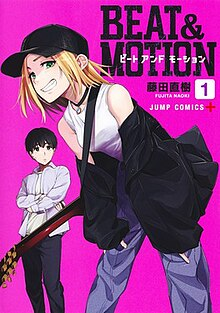
Now I’ve not abandoned or wholly used uncommon means of getting to my favorite series. I recently downloaded the Shonen Jump app on my phone and I have a tab on my computer logged into Manga Plus, and true to the title of this week’s post, I’ve discovered a new manga series that I’d like to explore further called Beat & Motion.

Take this as more of an exploration for how to discover new or underappreciated series and my experiences doing so. My method of doing so, though, is quite slapdash and haphazard, so if there’s a more sensible way of going about this, use that method to the fullest extent. Only go on sites you trust, and please use a VPN of some kind. Opera and its GX variant go a long way, but if you have the means to my recommendations come from those that I’ve seen sponsored on YouTube including but not limited to Dashlane, Atlas, Express, Nord, and Private Internet Access. I like to think everyone is in wide agreement that nothing ruins the fun of reading manga/watching anime more than when a simple mouse click puts you on a site with malware on it.

But of course remember to have fun with what you find.