Rooster Teeth On the Ropes

It really hurts to see.

I close off this weekend threefold dive on a depressing note about a company that I have an interesting relationship with. Not interesting in a negative way, more like in the sense that I found out about the company by proxy, but didn’t dedicate myself to watching it regularly until I discovered a series that really grabbed me. Notably, this one:

To elaborate further, I recall in early 2013 hearing about Dead Space 3 and at the time, I used to binge watch the YouTube channel TheRadBrad as my one and only source of gameplay on that specific game. Later in the year, I came back to play catch-ups on my way into the 10th grade and at the time, ads on YouTube weren’t as problematic as they are today. One of those ads was about a bunch of geeks from a channel called Achievement Hunter dressing one of their kids up in a suit full of screens and monitors to mimic the Internet.

This ad ran for quite some time, but I remember furiously mashing the mouse on the Skip Ad button because I needed, needed to watch more footage of this Dead Space 3 gameplay. I hadn’t thought about that ad ever since and I think when I tried looking for it on the Rooster Teeth website, I couldn’t find anything on it, but over the years, I’d be further exposed to Rooster Teeth by proxy, from old Achievement Hunter guides and references to what was then the game with the Guinness World Record for Most F-bombs Dropped.

Developer: 2K Czech, Publisher: 2K, Channel: Rooster Teeth

It lost this record to Grand Theft Auto V by a mountainous margin, by the way. By 2018, I was in community college and a subscriber of WatchMojo.com, one of their videos being published during the New Year being that of a video about online animated shows that were worth a watch, the runner-up as I recall being the anime-style series RWBY spearheaded by the late Monty Oum.
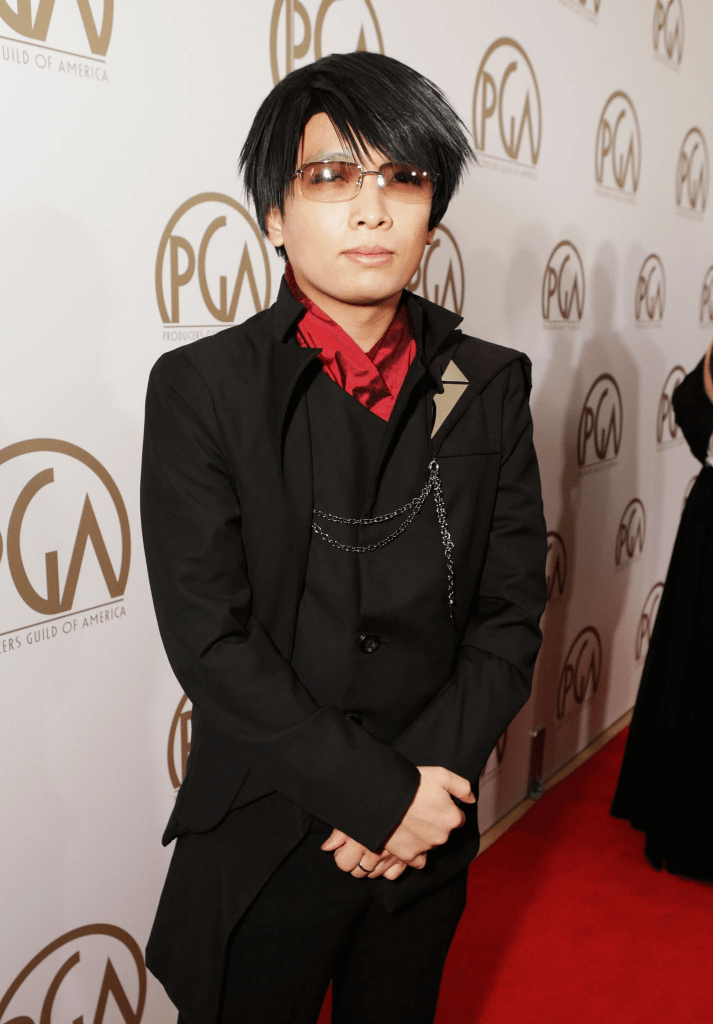
In my research years ago, I’d learned that the martial artist and cinematographer had credits in machinima (not that one) after choreographing a video known as Haloid, a blend of elements from Halo and elements from Metroid including their star characters, Master Chief and Samus respectively.

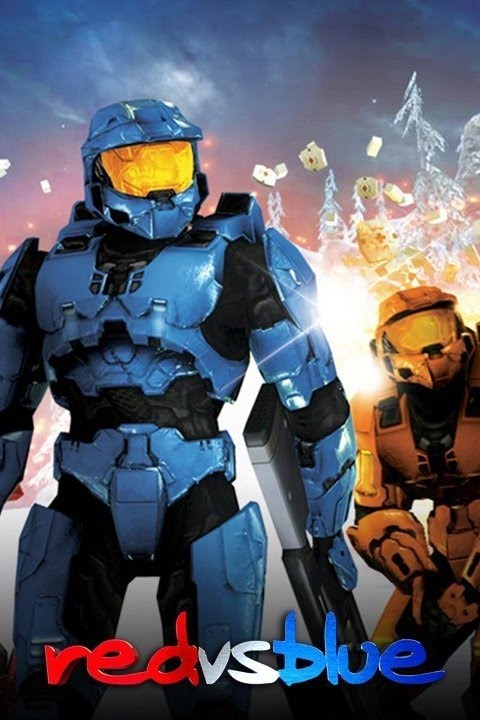
He sneak-peeked the last series he would ever work on on Rooster Teeth’s main channel in November 2012, debuted its first episode in Fall of 2013 and continued to work on the series until sadly losing his life due to an allergic reaction during a standard medical procedure in February 2015, after which RT vowed to pick up the slack and keep the show going. In the beginning, the CGI used to make the show was imperfect but the fighting choreography was stellar and spectacular. I remember hearing from a different WatchMojo.com video that when Bruce Lee was on camera, the studios had to slow it down to capture his moves, and I remember rewatching scenes like that whenever I came across Monty Oum’s work on either RWBY or Rooster Teeth’s other flagship series, Red vs Blue.
Following Oum’s death, RWBY’s animation started to look crisper, but at the cost of the plot. When I tried looking for evidence of trouble under the hood for RWBY, I couldn’t find a lot of information that was still available after all this time. The controversies around just RWBY are enough for their own blog post that I may make in the future, but from what I remember and have read in forums, creatives at RWBY or just in Rooster Teeth would pitch ideas only for others to steal and discredit them later on. The accusations are serious and outside of Twitlongers and written descriptions of the associated actions, there’s not a lot of physical evidence that is guaranteed to stay up with a history of slamming legitimate critics and trolls indiscriminately, but that’s getting ahead of the game. Still, it sets the tone for what’s going to be covered in this post. I’ve covered how I discovered and eventually subscribed to Rooster Teeth; here comes the part where I unearth the parts that drove me away from them, and for many watching, the story may sound somewhat familiar.

Long time fans of RT may recall when Levar Burton’s daughter Mica Burton joined the Achievement Hunter boys for a short time and appeared so far in about two episodes, a Minecraft Let’s Play and an Off Topic Podcast episode.

During the podcast appearance, I believe she brought forth a criticism leveraged against her, but in a display of the Streisand effect, further criticism and harassment followed. In April 2018, she moved back to LA to continue a career in acting, for a long time, it was speculated that fan backlash caused her to leave, but both Mica and her father pointed the finger at RT for failing to defend her during this time.

Sometime later in December 2018, Machinima’s (yes, that one) old assets and Rooster Teeth merged into Otter Media which was then bought out by Warner Bros. When companies merge, often that means that multiple people in similar roles at different companies are now in those same roles at one company and so the summer of 2019 brought layoffs to Rooster Teeth Productions with some of the Achievement Hunter crew on the chopping block as well. About 50 people were axed by September of that year and the following month, after riding the waves of success with Rooster Teeth original shorts and skits earlier that year, the company came down and hard.

One of the original founders, Burnie Burns, announced that he and his then-fiancé, Ashley, were off to start anew in Australia, technically making him the second figure to be absent from RT content except for RVB, the other being a man I always referred to as the Ghost of RT with how little he showed up, Jason Saldaña.
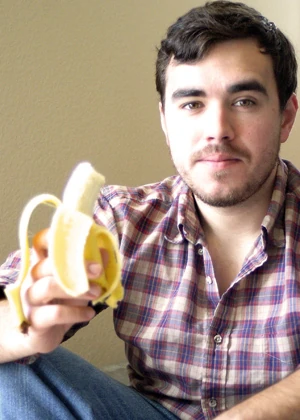
Then again, r/roosterteeth explained that Jason’s not the kind of guy to get in front of the camera like that, being present in only two skits to date, while the rest of his work is either voiced or far away from RT. And fair enough, founding a company doesn’t mean being its face, and I think Jason is one of the only few free of any RT-related controversies, unless this is his testimony:

Channel: Rooster Teeth

The controversies, however, would further mount. I said yesterday that 2020 would be forgotten due to all that went wrong that year though that was in the context of a manga that debuted that year. In this context, a lot went wrong for Rooster Teeth and then some. During the summer BLM protests, the company and much of the entertainment industry as a whole in the West vowed to make changes and have conversations about racism after witnessing then-Minneapolis cop Derek Chauvin kneel on George Floyd’s neck after nearly nine minutes, Rooster Teeth being one of them.

After this, the company seemed to be on a right track, quickly amending this injustice after heeding comments made by the Burtons before and former member Fiona Nova at the time, but trouble was still brewing behind the scenes. Rooster Teeth hasn’t had the best approach to handling criticism before or since. During one Off Topic Podcast episode in June 2020, they used to go by the internet-wide mantra of “don’t feed the trolls,” only to go back on this and fight them hard which some believe led to the adverse effect of two of their members being exposed for unsavory behavior, Ryan Haywood of Achievement Hunter and Adam Kovic of Funhaus, another RT production.

This was exposed in October 2020 when Kovic was fired for what I think was trespassing, though his transgressions were lumped in with Ryan Haywood’s behavior which was even worse. Over the years, it had been found out through doxing on 4chan that he was grooming several AH fans, some of whom were under the age of consent. Many of them came out and recounted being threatened into silence and in late October 2020, AH’s Jack Pattillo and Michael Jones issued a statement that Ryan was gone from the company for good. Any and all instances of his history at the company were scrubbed, save for archives from the last decade, his Twitch channel was axed in January of 2021 and that was seemingly the end of that save for a brief return to the Internet the first week of January.

That being said, scrubbing the company of unscrupulous personalities while keeping good people in seemed to be especially hard in the years since. Not exactly limited to RT as a whole (as attested by r/Army among others), but of all the places to have nepotism and favoritism, a production company with as of yet incomplete series is one of the worst places to have it. Away from the behind the scenes controversies that are causing people to leave, some shows are tanking or were ruined by executive meddling. Their show, gen:LOCK hit the ground running in the first season, but the second season makes Seven Deadly Sins season 3 look like a Spielberg production.

Channel: Mrcheese

And wouldn’t you know it, behind the scenes drama had an adverse effect on the production of this series while others either went on silent hiatus or were canned without our knowledge. RWBY still has no news behind, the series Recorded by Arizal has been silent since January 2021 (which was one series I was really looking forward to), and Nomad of Nowhere from a few years before that only has one season, but was set up for a few more to follow.

Now, most studios behind a lot of our favorite series and movies have had behind the scenes setbacks before, and only a few of the productions have been muddled or ruined by bad decisions from on high. But RT’s acquisition and shifting of hands and responsibilities seems to be a case of ruinous overstretching, and axing many decent series only to see a good series start strong and end badly.

So the problems that have kept me from any such RT-related content comes from:

  • the failure of the staff to take care of their members
  • behind the scenes controversies
  • firing or letting the wrong people go (see: Vic Mignogna)
  • putting the wrong people in positions of power; and
  • letting the wrong people head delicate projects (see: Gray Haddock)

They did get a success boost during the pandemic focusing on their several podcasts, some of which I listened to at the time, but it seems that those may be the last few reliable sources of income with recent videos failing to garner the same views as they had in the early-to-mid 2010s while the ones that do are trounced with an abysmal like-to-dislike ratio visible only to those who use the addons.

Several YouTubers have made videos on RT’s decline and possible downfall which seems more and more likely now that they’ve been moving their popular series onto their website, citing ad revenue issues. I read one comment under a Clownfish TV video that claimed that much of what’s been going on with Rooster Teeth has also happened to Machinima about a decade ago.

If that is the case, then it serves as a lesson for what the people can do to avoid this next time if RT goes under. It just crossed the 20-year mark since its founding and while I was there mainly for RWBY and Achievement Hunter, I wouldn’t have minded the changes made if they were consistent and kept up with the tempo of the company based on what I’d seen since. New personalities with their own comedic takes and such can keep things new and fresh and even produce their own talents within or without the talent, as seen with the Red Web podcast or the game show Chump. So it’s not like RT can’t attract talent; rather the people they have to answer to above them appear to be chasing short-term trends hoping for long-term benefits and it’s anyone’s guess really as to whether that means good or bad things for a project.

As for the future of RT, that’s up in the air. The personalities that left in the years prior have found their success in other ventures, and I believe the ones still there will be able to stay afloat wherever they end up. They’ve got repertoires of content that would make for a better revival of G4TV for example instead of what we got last year, but it’ll be a hard day for much of the long-time personalities and the diehard fans and the shows they love. It’ll take a hell of a miracle to bring them back up to speed if it still can. If you want a channel that covers Rooster Teeth more concisely, I personally recommend this channel: TheSneezingMonkey for more details.
https://www.youtube.com/@TheSneezingMonkey/about

Mortal Kombat 1

Another entry to the king of blood and guts

About two weeks ago, a teaser was released for the next installment in the Mortal Kombat franchise slated for released in September of this year. The gist of the teaser was that post MK 11 Aftermath, there’s a new timeline and therefore a new god because Kronika and her merry band of lackeys have been defeated or written out of history as to not muck anything up like they did the first time.

In spite of what I wrote above, the announcement doesn’t reveal much, though it still requires a general knowledge of the plot line of the games from 1992 to the 3D era of the 2000s for why it was soundly rebooted in 2011 and the timeline post-2011, both of which I think I can safely say I have knowledge in.

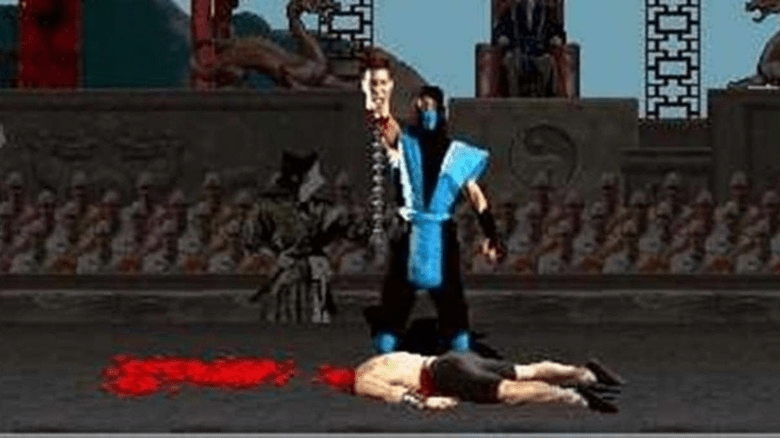
To set a primer, Ed Boon and John Tobias began working on a fighting video game with digitized sprites for the actors in 1991 for arcades. A small team of programmers, actors with an intermediate or advanced knowledge of martial arts, and a marketing team brought the dream to light, but with a twist: blood. Unlike other video games like Final Fight or Streets of Rage or more appropriately Street Fighter, Mortal Kombat got grizzlier with the inclusion of blood and the option to kill the opponent in the ring by dismemberment

In the era where video games were the same as children’s toys, Mortal Kombat and Night Trap, a video game released the same year as MK, were the subject of intense political debate over what is appropriate for a child to see in fictional media. You and I both know that try as one may, there’s no realistic way to imitate the exaggerated violence seen in a video game, but nevertheless the extremeness in the game led to the creation of the Entertainment Software Rating Board or ESRB.

The ESRB is responsible for the guidelines for parents when it comes to purchasing video games for their kids. When it was created, most adults rarely played video games, or aged out of it with time (not including parents), and were likely to be unaware of what was in the game. But with a specific letter marking on the cover of the box, a parent can best determine what their child can play on paper. In my experience, it takes a trusting or admittedly negligent adult to let their child get away with playing something like GTA or Call of Duty, a problem that persists even now.

Still, whatever would come out of these government hearings on interactive entertainment wouldn’t matter much to gamers and arcade goers of the time. The controversy and the marketing worked wonders that Ed Boon and Midway Games could make more sequels in the 1990s and eventually get the games on home consoles when Mortal Kombat: Deadly Alliance was given its’ own spotlight during E3 2002.

As for the plot of the Midway Games, the evil emperor of Outworld Shao Kahn has absorbed another realm into his empire and has his sights trained on Earthrealm. The Elder Gods put their foot down and give the realm a chance to fight back through a tournament. Over the course of a millennium, 10 consecutive tournaments are meant to take place with the last one determining the fate of the realm. Shao Kahn’s representative on earth is a sorcerer named Shang Tsung who has the power to take souls and replenish his youth. Basically, he’s immortal, and every time a fighter dies in the tournament he takes their souls, though he has different methods of stealing souls if he wants to (and he always does). The tournaments are spread out over the course of fifty years, which means theoretically someone can fight in two tournaments if they’re healthy and lucky enough to live to be that old.

MK 1992 begins at the 10th tournament, and the final boss of the game is Shang Tsung who additionally can shapeshift. I have fond memories of this levitating old man transforming into the sub-boss Goro while I was playing the game in the Midway Arcade Treasures collection.

But when he does lose, the character Ed Boon et al determines to be the default protagonist, Bruce Lee clone number 1009 Liu Kang is chosen to be the champion of Mortal Kombat. At the same time, Shang Tsung is reprimanded and demoted by Shao Kahn who decides to take matters into his own hands and becomes the final boss of 1993’s Mortal Kombat II, complete with a larger cadre of characters representing Outworld and Earthrealm.

History repeats itself and the heroes soundly defeat Shao Kahn, but the power hungry emperor isn’t done yet. By 1995’s Mortal Kombat 3, the man is desperate to have Earthrealm in his expansion pack, and at the risk of sounding like a cheerleader for several historical conquerors, Shao Kahn could’ve studied the techniques of Alexander the Great, Napoleon, and militarily Adolf Hitler to learn why throwing your men at the frontlines like this doesn’t work or what worked for the defenders at the expense of the invaders, but then again, Shao Kahn has almost always been a one-track conqueror. Even a little bit of credit is too much for a character like him.

By 1997, Mortal Kombat 4 played with 3D graphics to give us another cast of ne’er-do-wells to fight. Shinnok, and his protégé Quan Chi. I admit that my exposure to MK4 is limited with the exception of some of the character endings making it to MK: Deadly Alliance’s krypt as unlockables, but one that I remember was that if playing as Quan Chi, the sorcerer betrays Shinnok and everyone else to hold infinite power. In another ending, the character Baraka takes serious issue with this and attempts to kill the sorcerer who just so happens to have necromantic powers and becomes another skeleton in Quan Chi’s graveyard, funny enough.

Quan Chi himself was written as the source of Scorpion’s woes. For the longest time, it was believed that the rivalry between himself and Sub-Zero was due to Sub-Zero’s clan of Lin Kuei warriors exterminating him, his clan the Shirai Ryu, and his family, when in MK4 it was revealed that the Lin Kuei never went after Scorpion’s wife and son. That was Quan Chi’s doing, and when the dunderhead revealed his hand in an attempt to be rid of his lapdog by transporting him to the Netherrealm, Scorpion grabbed the sorcerer at the last minute to exercise his misdirected vengeance on the sorcerer, leading into Mortal Kombat: Deadly Alliance.

Released in November 2002, Mortal Kombat: Deadly Alliance did 3D much better than its predecessor and had more room to expand on existing mythology thanks to cutscenes and extra content in the game’s krypt. With a payment of a specific amount of koins, different stuff can be unlocked from pre-production art to full characters and their alternate costumes to movies and interviews with the staff and many more.

Plot-wise, the game includes an introductory movie narrated by the thunder god Raiden to a gaggle of Earthrealm warriors whom he plans to lead in a coming battle. Quan Chi survived Scorpion’s onslaught in the Netherrealm and escaped into a hidden tomb containing the mummified remains of Outworld’s ancient dragon king. To make matters worse, he teamed up with Shang Tsung and the two sought to remove the obstacles in their way to power.

By Mortal Kombat’s rules, Shao Kahn was revived which teaches you all you need to know about how seriously death is taken in this universe. It’s not like in Naruto where a reanimation jutsu can revive a character by way of a sacrifice; most of the time, characters tend to Kratos their way back into the world of the living because “I decide when I die!”

Anyway, the Deadly Alliance takes out Shao Kahn and in a ballsy move for a creative in any industry, they take out Liu Kang himself. The champion of Mortal Kombat is killed and his and other dead warriors’ souls are used to revive the mummifed army of the dragon king. If they succeed, Outworld and eventually Earthrealm will fall at their hands.

Raiden had previously ascended to the position of Elder God, but the chaos and peril unfolding in the realms coupled with the Elder Gods’ inaction to it all motivated him to relinquish this position and take charge personally. Almost every warrior died or defected to the side of evil and 2004’s Mortal Kombat: Deception begins with a new narrator.

In Deception, the Konquest mode takes the player through the past of Shujinko and his journey to recover the Kamidogu, or godly tools, to be transported to the Elder Gods. This lifelong journey introduces Shujinko and puts him at different points in the Mortal Kombat timeline. As a matter of fact, he helped Scorpion find Quan Chi in the Netherrealm and was one of the first to learn of Liu Kang’s death with further developments pulling the two in different directions with a significant point of divergence. I wrote above that most of the warriors representing the good guys died or defected, but in Shujinko’s case, spoiler alert, he’d been an unknowing tool of a greater evil, worse than anything the Deadly Alliance could ever conceive and had been hard at work performing this evil for decades until the big reveal at the end of MK: Deception’s Konquest mode.

Before Shujinko defeated his enigmatic puppeteer, Onaga had marched into Outworld to take back his army and empire by force. Raiden and the Deadly Alliance knew the dangers that would come with an Onaga victory and sought to stop it, even to the point of self-destruction (which happens to be one of Raiden’s fatalities in Deception), but it proved fruitless when Onaga was revealed to be the sole survivor when the blast eliminated everything… or so it would seem. Raiden also lived, but was so corrupted by mortals messing with reality that he set out on a new mission to strike back pre-emptively.

Following Shujinko’s victory against the dragon king, Raiden appeared before him as punishment for allowing Onaga to even get as far as he did. The intentions of either didn’t matter to the immediate consequences, nor was it important to the corrupted thunder god that he rectified his mistake. Raiden wanted blood reparations and Shujinko wouldn’t be the only one to face this wrath.

Speaking of messing with reality, Mortal Kombat: Armageddon was the first time that it would happen in the MK universe and owing to its name, Armageddon was what was at stake at the time. Every fighter in Mortal Kombat history (including maligned characters) fought each other in the realm of Edenia, in a large crater where a pyramid dedicated the realm’s protector god Argus would later rise housing a fire spawn creature named Blaze. At Blaze’s death, the victor would set off a reaction with one of two outcomes: annulment of all abilities or total extermination.

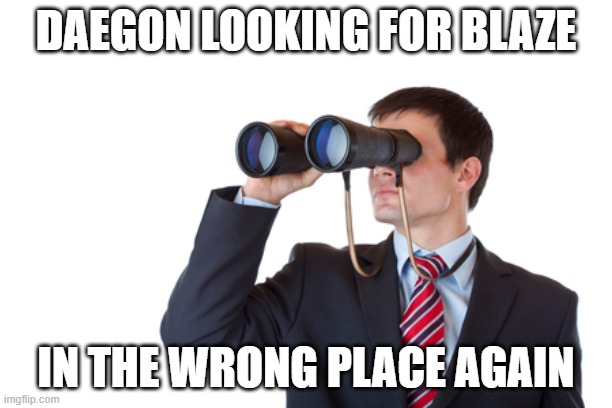
In this game’s Konquest mode, the creators of the quest Argus and his wife, sorceress Delia, designed the quest with a winner in mind, their eldest son Taven. If things went right, he and his brother Daegon would engage in a quest sold to them as a friendly competition where they’d acquire weapons and armor to defeat Blaze and become full gods instead of the demigods they are now. Thing is, they intended for Taven to win it all, but when Daegon was awoken earlier than expected, he found out about this and went on a third, unpredictable path; he founded the Red Dragon clan and spent the last few centuries finding Blaze who it’s revealed was kidnapped and hypnotized to watch over the last dragon egg in MK: Deception. Bad sense of direction? Incompetence? Bull manure? Well, it’s convenient either way that in Armageddon’s Konquest mode Daegon’s clan had better luck ambushing his own brother than he did in finding the main element in the quest.

I made this meme just now. I’m probably wrong about Daegon’s efforts here, but with what I learned this late into the 3D era, it’s still a bit weird that he put more of his time in trying to kill his brother than in finding Blaze first. It makes it even weirder knowing how technologically advance the Red Dragon clan was to perform human experiments on their own members attempting to turn them into hybrid dragons like Reptile.

Anyway, Taven fights his way to Edenia intending to defeat Daegon out of necessity before being persuaded by Blaze himself to finish the quest. At the end of this, we can conclude that Taven became a god as intended and one of the adverse affects of the quest was that instead of death or depowering, everyone got stronger and the realms remained in peril, for which Taven would have to serve as the bulwark against extinction. And so the 3D era ends in a bit of a whimper.

The developer side had several troubles to deal with themselves. Mortal Kombat successfully franchised to get an animation and toy line ups and comics, but spin-off games were Midway’s Achilles’ heel. 2000 saw the release of Mortal Kombat: Special Forces, a game that Ed Boon wants everyone to forget.

If the co-creator won’t aid the game, why would anyone else, right? Before that, 1997 also saw the release of Mortal Kombat: Mythologies which was meant to tell the stories of individual characters beginning with the one who appears in every installment: Sub Zero, but the controls, graphics, and full AMV cutscenes saw hardly any returns on investment and so they didn’t bother with another spin-off until Mortal Kombat: Shaolin Monks in 2005, a game with excellent beat ’em up mechanics even if the roster is quite small. A sequel to this called Mortal Kombat: Fire and Ice was in pre-production, but the only traces of its existence come in the form of concept art before the project was canned between 2006 and 2010 when Midway’s assets were sold to Warner Bros. following a Chapter 11 bankruptcy.

By 2011, Ed Boon and co. started again under the new studio NetherRealm Studios and redid much of the story of the first three games in Mortal Kombat 2011, colloquially known as MK9. By the end of the game, Shao Kahn was soundly defeated and in the immediate aftermath, Quan Chi and Shinnok redo this timeline’s events of MK4, but with a twist. 25 years and the old generation of characters had had children of their own, many of whom joined in the fight to not only defeat evil but to contain it.

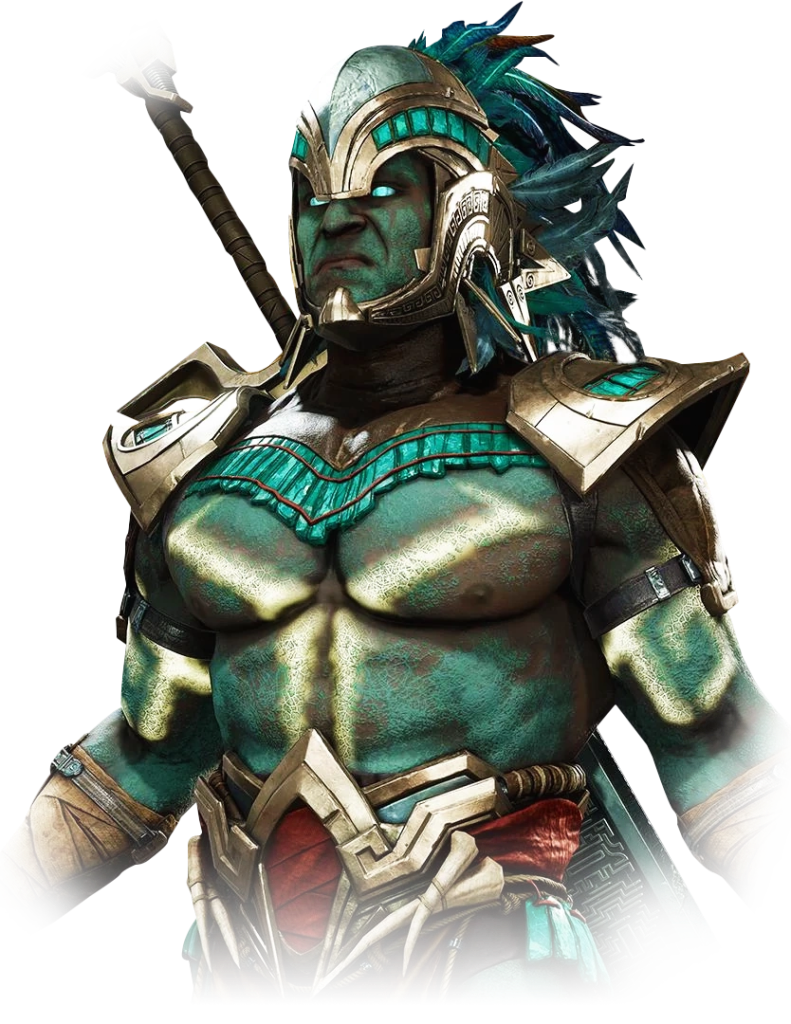
The connecting element this time around is Shinnok’s amulet which can’t be destroyed and thus needs to be heavily guarded around the clock. The problem here is that there are saboteurs around and the new leader of Outworld, Kotal Kahn, doesn’t easily trust Earthrealm. Things don’t go as bad for them until halfway through when Earthrealm chooses not to eliminate immediate threats and dangers where they spring up, even when they would all make sense.

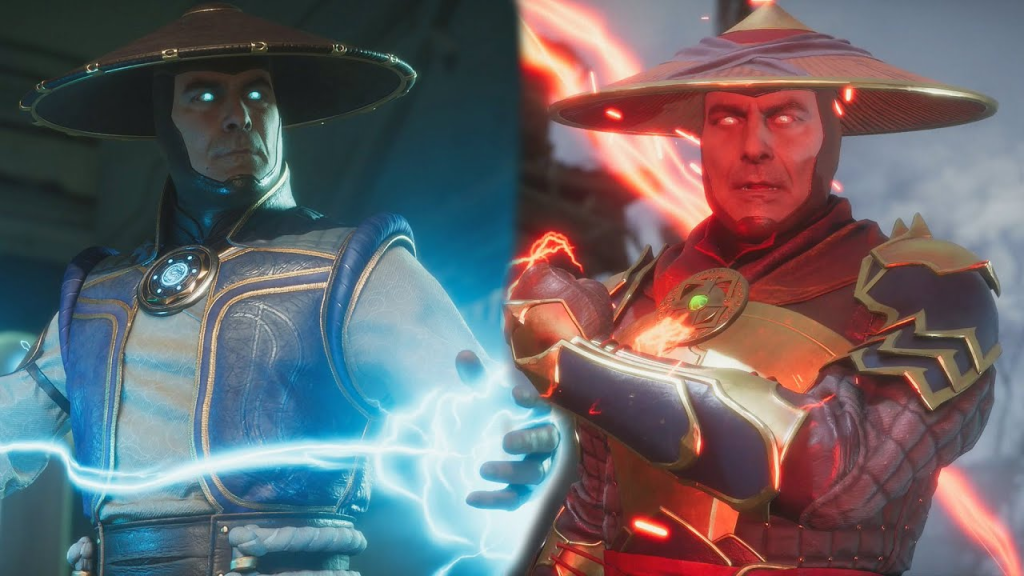
The saboteur in question is a character named D’Vorah, who went down in history as one of the less welcome additions to the roster in recent memory. The point of divergence here is that Shang Tsung and Quan Chi don’t form the Deadly Alliance (though there’s a neat reference in MK9’s story mode). There’s also no Onaga and Blaze despite there also being references to them both. So no Deadly Alliance, and no Quan Chi to betray Shinnok. Instead, Shinnok is summoned behind enemy lines and finally for a necromancer, Quan Chi’s ability to command the dead is explored in this timeline when he has the souls of fallen heroes who dream of taking their revenge on Raiden, who still goes dark in this timeline.

The shoe’s on the other foot now with Dark Raiden taking the plunge against evil like how Shao Kahn opted to be the final boss in the other games. This time, Shinnok’s mother Kronika and his sister Cetrion rearrange the timeline to maintain the balance between light and dark, one of the most important instances being the fallout between Liu Kang and Raiden. Once they realize this on their way to stop Kronika herself with a new cadre of friends and an army to command, Raiden and Liu Kang combined to form Fire God Liu Kang which, fun fact is how MK: Mythologies ends.

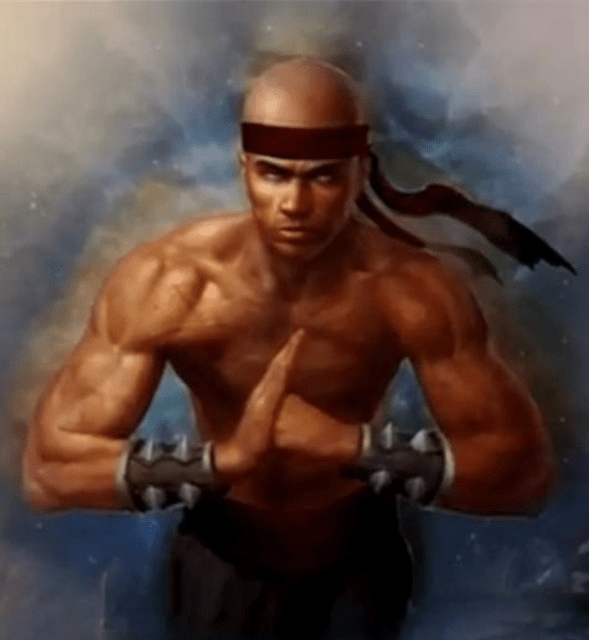
This time, their fighting chances have gotten better and with Kronika’s defeat, Liu Kang has a new timeline to oversee, which is where we are. Based on what I wrote and what I know I have a few ideas of what to expect based on what happened, but there’s no guarantee everything will live up to my predictions even slightly. The Aftermath DLC in MK 11 ended with Shang Tsung’s defeat and Liu Kang starting with the ancestor of Kung Lao, the fabled Great Kung Lao who lost favor when he was defeated by Goro in the old timeline. My first and so far only prediction is that this time, Liu Kang cheers this one on and Kung Lao’s bloodline becomes venerated instead.

After that, remains to be seen. Ed Boon’s been doing this for 30 years and has a great love and respect for his own series, often dropping hints and teasers for fans on Twitter, so we can expect further updates from him in the lead up to MK 12 or Mortal Kombat 1 as it’s going to be known as.

I have opinions on sequels named the same as the original that can best be summarized in this episode of You Know What’s Bullsh-t?!

This week, I’m recommending the YouTube channel h0ser, recently rebranded as hoser.

https://www.youtube.com/@h0ser/about

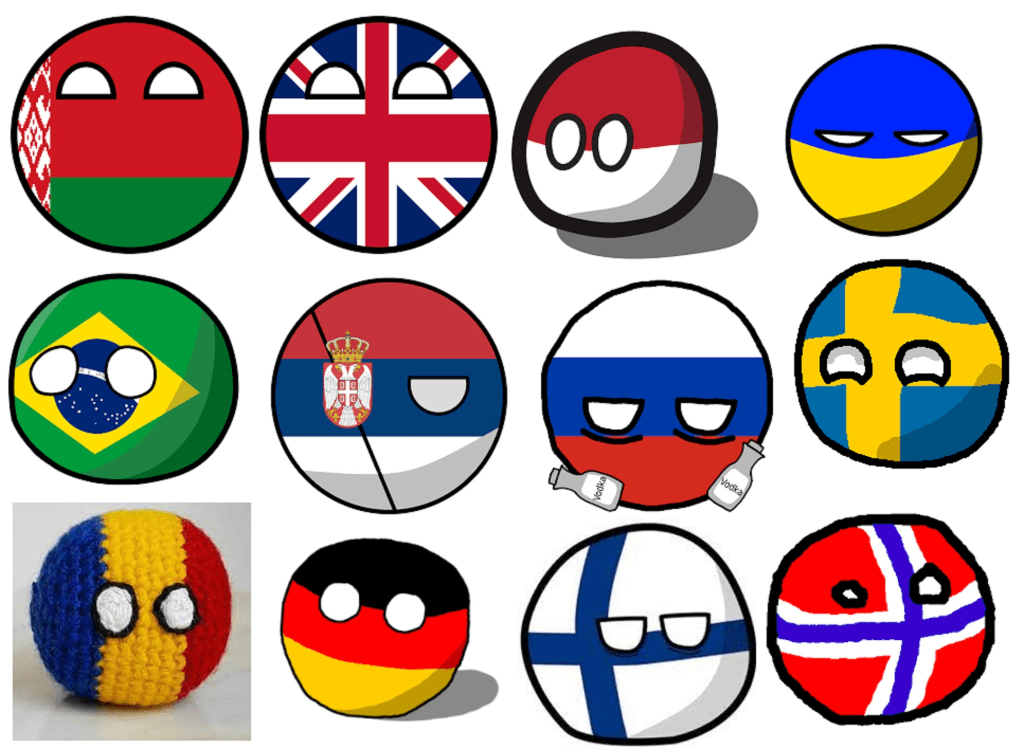
The channel talks about history and geopolitics in a comedic manner, often with insert country’s most common animal here as a stand in for the nation in question, painted in the country’s flag. A buffalo for the US, a bulldog for the UK, a bear for Russia and the Soviet Union, etc. An old approach to when the channel did this through countryballs method.

Those of you who want to learn more about the world, hoser is one of many sources for that knowledge.