
Stop me if this sounds familiar
A man gets reincarnated into a world where traditional gender roles a flipped, in that women are the breadwinners who sexually objectify the opposite sex while men are demure homebodies to be seen and hardly heard from even during intercourse. Quick! Which isekai did I describe!?
If your answer was several, then great news! You understand how unoriginal the premise has become over the years. It may have had a spark in the beginning but with surprise comes formula comes borderline formulaic. There aren’t many isekai that reverse gender roles, but there’s enough to make it seem as though many follow the exact same story beats. Still, the subject of this post caught my eye, largely because of the premise and because it reinforces a meme I used in a prior post:

In matters concerning the pleasures of the flesh, women and men are equal. But sometimes people get competitive and develop superiority complexes… for some reason…
The manga in question is actually adapted from a light novel series, and there’s said to be more in the LNs than the manga considering it’s older, but I haven’t touched the LN yet. Anyway the series in question is Virgin Knight: I Became the Frontier Lord in a World Ruled by Women or in Japanese: Teisou Gyakuten Sekai no Doutei Henkyou Ryoushu Kishi. Another isekai, another title that gives away the premise. But let’s not be harsh–for as s[coconuts]tty as the title may sound, it’s not like it has nothing to show for it.

And this is just the manga cover
This is going to be written based on what I read in the manga as well as this Wiki page. The LNs were first written online on Kadokawa’s Kakuyomu site in 2021 and the manga followed two years after that, still there’s not a lot of information on the series on either the Wiki or Wikipedia, nor is there any certainty to the future of the series, seeing as the LNs are only four in number and the manga up to 11 chapters. Very little to take the piss out of, all things considered, especially when a more fleshed out isekai like Re:Zero or the Saga of Tanya the Evil have richer Wiki entries, both on that Wiki linked above, their own associated Wikis and plain old Wikipedia. So this post may be more barebones and subjective than my normal output.
The basic premise is that Japanese adolescent No. 14,289 gets isekai’d, but the manga skips over the isekai-ing event. Maybe it was Truck-kun again, for which I’m curious why no one put out a hit on him yet. He’s bound to have isekai’d a Yakuza or something; would the family not care that one of their kyodai got f[truck horn]ked up or what?
The protagonist gets reincarnated into a world where the freedoms enjoyed by men for time immemorial are enjoyed by women this time, faults included. So while we have our own male historical figures to study, this world reverses their gender so expect something like Cristina Colombo instead of Cristoforo, Leonarda da Vinci, Georgia Washington, and numerous others. Per this world’s rules, women are selected to be trained as squires and eventually become knights, but our boy, Lord Faust von Polidoro becomes the exception to this rule. This lone male knight surrounded by female knights still hasn’t gotten with the program that this is where men are lesser creatures, and would thus struggle being in a world where women are as comfortable with their bodies as men historically have been.
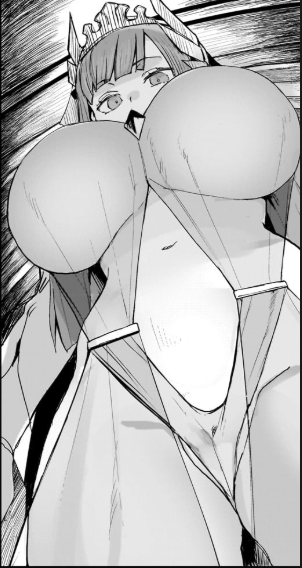
This is how the queen dresses by the way. Just imagine a topless fight between two noblewomen in this world. Oh wait…!
Eh, there isn’t any conclusive evidence that Austrian noblewomen fenced topless, but it’s a fun campfire story to get people’s imaginations running wild.
The introductory chapters explain how objectified men are, being sold as sex slaves, highly prized (for the bodies) and highly guarded (for the private use of their bodies), in some cases being passed around between every available woman, especially women in power, so theoretically a Viscountess has a private harem consisting of men who engage in any one of the BDSM subcategories. If she feels like sharing, these sex slaves are passed between this hypothetical viscountess and her entourage, always being used, spent, and emptied only to go through it all the next day… or hour.
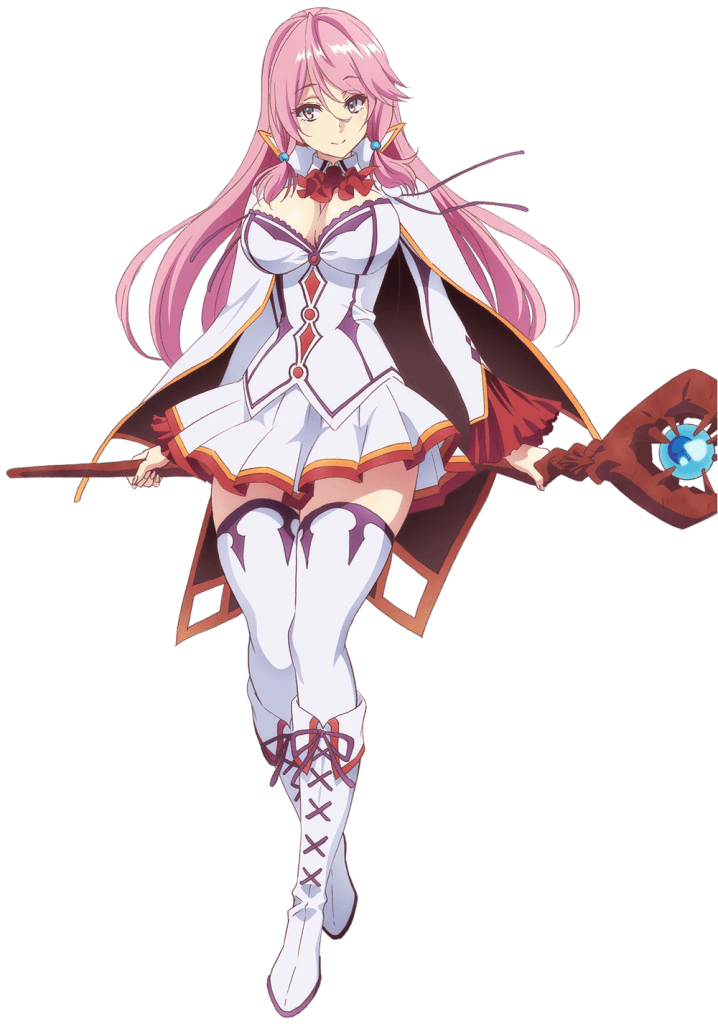
By our standards, what I described is a regular day in the Jioral Kingdom Royal Palace, if not worse for the men.
For less sexually suggestive themes, if you know a thing about Ancient Greece, specifically Athens, then you know that Athenian society made second-class citizens of their women, with all the men having the influence in the day-to-day operations of the city-state from the politics to the foreign affairs to the military to the voting to the education and numerous other aspects of the way of life. It’s the same in this series as well, of course with women filling that role.
Writing that last paragraph, I just remembered this trope has a name: Lady Land, and it’s precisely what it sounds like. It’s a bit of a divisive trope for portraying what would happen if women in the west had near or precisely equal rights to men, with critics deriding it as paranoid bollocks. Personally, I’m in the same boat. I’ve lambasted the likes of MeToo and GamerGate as having been hijacked and perverted by radical firebrands and the like, but it’s worth committing to memory that movements like this aren’t as big in membership as the Internet likes to fear-monger over. In the case of the Lady Land trope, I could see someone from the 1890s or around that time organizing a list of why women shouldn’t have these rights, but these days such worries would be overblown and truth be told, sections of the Internet would kill to get that kind of sex slave action, failing to understand that love and lust are two distinct concepts despite the overlap.
As much as I make it sound like this isn’t worth the read, it’s tropes like these that get me thinking about how women used to be treated in legacy media. Age-old comic tropes getting flipped on their head to offer insight on the other side of the fence. Not saying the same dire straits don’t still affect women today, but to treat it as though there hasn’t been any evolution since at least the late ’60s is both a lie and part of a means to completely flip everything in a more female-centric role but for the worse. The terminally online like to think that patriarchy is the source of all ills and either think things will be different under a matriarchy (they won’t) or, worst case scenario, install some sort of matriarchal dictatorship. Silly conclusions to draw, but I’m a “cooler heads prevail” kind of guy.

Maybe my time watching British content creators gave me a stiff upper lip, it’s hard to take the Internet seriously when it gets like this at times
Only about 11 manga chapters, the first few introduce the world, explain how this world’s men are like Ancient Athenian women, i.e. possessing only the right to live and exist (typically as a sperm-filled turkey baster for noblewomen), and introduces the characters. The story follows lone male knight Lord Faust von Polidoro being given the floor to speak by the Queen Lisenlotte who makes Scarlet from Scarlet Maiden look fully clothed by comparison.

Abnormally thick tooth floss for clothing
Lisenlotte explains that the first princess Lady Anastasia whose set to inherit the throne is the one who gets the most resources against a uniformed standing army while the second princess Valiere is stuck with glorified conscripts to handle barbarians. Master Chief fighting the Covenant while the Reds and Blues glare at each other in Blood Gulch, or sending units in a Civ game to fight Cleopatra or Gandhi VS sending units to clear out barbarians so you can place a settler. The way this is done doesn’t fly with Polidoro (who’s fighting is own chastity belt in the face of obese boobs), who suggests letting Valiere take more professional soldiers with her during this trial. Queen Lisenlotte concedes and allows the royal coffers to flow equally into both her daughters hands, while still casting favor over Anastasia–primogeniture and all that. But the Lord’s pleas to reconsider undersupplying the youngest daughter gets the queen feeling some type of way. The last man to get her this giddy was her late husband, and presumably she feels something for Polidoro but wouldn’t make a move on him as he’s the spare’s advisor, though she contemplates whether letting him stay as the advisor to the second daughter or giving him to the first. Even as a knight, Lord Polidoro is but a piece of meat to these powerful women. Alternate universe female me would write the same thing.
Scraping away the prominent gender-flip, the tropes in play are quite typical of any old medieval European fantasy and by extension Euro-fantasy isekai stories that the genre loves to exoticize, like in From Bureaucrat to Villainess or My Next Life as a Villainess or I’ve Raped So Many Women that My Penis is Now Trans— I mean, Redo of Healer. Medieval Europe never appealed to me as much as Medieval Japan did, so I admit that I have a blindspot for this period of history as well as a bias towards East Asia, which has ramped up as of late with my viewership of East Asian media, to the point where my YouTube recommendation feed features Japanese YouTube channels, and I’ve found this comedic gem on Netflix:
The one time I actually give a damn about musicals
From what little I know of medieval European absolute monarchies, the politics of the world aren’t even hidden. Navigating internal royal politics is its own chore even for the one in charge, as you want everyone else who shares the power with you as well as those who will soon have that same power after you die are satisfied long enough to keep the realm from falling into disorder. Unwritten rules that rulers take to heart historically and when speedrunning the Age of Discovery in Europa Universalis IV or the Victorian age in the Victoria series. Actually, these concepts were catalogued in Sun Tzu’s The Art of War. In the case where war is inevitable, all precautions need to be taken to guarantee a victory, and not just on the battlefield.
The rest of the chapters are about Polidoro, Lady Valiere, and the entourage they take in battle with them to fight against the barbarians, with select panels dedicated to the rest of the cast, like Lady Anastasia, the captain of the army, the third in line for the throne, Duchess Astarte, and others. The LNs definitely have more content and I may have a light novel arc in the future, mainly to confirm this but more to the point because some series I like have better LN continuations than they do animanga.
I’ve heard that the light novels vary from the anime and I want to see if that’s true
The manga so far ends in the midst of a campaign against the barbarians with more to follow, but AFAIK, the mangaka Michizo is hibernating and short of entering the dragon’s lair to agitate the beast, whenever we get the next full chapter or even update, or god forbid, more information on the series, the best we have are crumbs. It’s completely available on MangaDex and other such pirate manga sites, but beware the AI porn ads on the sidebars. S[ooh!]t’s getting out of control, people. The androids must not win!!
Trunks and John Connor are our last bastions of freedom
 Opinions on Entertainment