Mortal Kombat 1 released on September 19, 2023 and continues with the new continuity left over from the last game MK11. For a recap, MK 2011 (MK9) retold the story of the first three arcade games but with twists. MK X can be considered a divergent timeline than what was seen in Mortal Kombat 4 and Deadly Alliance. MK 11 is what I personally consider a joining together of Deception and Armageddon, and the new game goes full circle.
I had the pleasure of watching the YouTube channel MKIceAndFire play the game from start to finish, I believe with a review copy. I won’t spoil too much for the game, but continuing the trend of reboots, rehashes, and retcons like a late 2010s Marvel or DC Comic there are some changes that I welcome and some I think could’ve been done better. Of those I won’t change: Fire God Liu Kang.
From 1992 to 2023, seeing this franchise evolve over the years is amazing as a fan, so in celebration, I thought today I’d take a look at the franchise’s attempts at spinoffs; and I exclusively mean spinoffs, so updates like Ultimate MK3, Mortal Kombat Gold, or MK vs DC don’t count as most of these are laid out the same as their main contemporaries and don’t do anything different from the others or if they do, not enough.
Video games spawning spinoffs and spiritual successors is a time-honored tradition. Sleeping Dogs succeeds True Crime, the BioShock series to System Shock, and several others. Generally focusing on individual characters or inventing something new comes easy to video games and Mortal Kombat does that in spades, many times over. The first success coming from 2004’s Deception.
By himself, Shujinko’s journey across the realms to gather the Kamidogu though (spoiler) under false pretenses is a solid and interesting story to follow. The boy who dreamt of great things. As an addition to the MK franchise, his story definitely stands out while also adhering to age-old kung fu cinema tropes like that of the wise old foolish master. A combining of the old and new, though he’s currently limited to the 3D era with few references beyond that.
Fortunately, there’s a spinoff that by all accounts is considered perfect. Fluidic combat, leveling abilities, a reimagining of the characters, and a great big tournament with traversable realms, along with a co-operative mode. It’s MK: Shaolin Monks.
With all that had occurred in the franchise’s history, I like to think of this game itself along with the Konquest modes of Deception and Armageddon as culminations of what worked in the past coupled with new ideas that carried these games in particular to new heights. Having said that and considering the title of this post, it’s not hard to see the struggles endured by the franchise.
With even some main games struggling at the first hurdle, some of the updated versions helped somewhat to pick up the slack and can thus be forgiven for their faults. Few games age as well as some others. For spinoffs, though, Ed Boon and John Tobias seemingly had a desire to branch out beyond the main Mortal Kombat tournament or reimagine it somehow. The ideas they had were interesting, but the execution wasn’t what it could’ve been.
Starting with the first of these, the 1997 spinoff featuring the failed Mythologies series.
The Development section of the game’s Wikipedia page states that John Tobias wanted Mythologies to be a separate series, not dissimilar from the multiple series within the Sonic or Mario franchises. The reason for this was to better flesh out and develop the individual stories of the characters far exceeding the limits of the character endings and bios. The people at Midway chose Sub-Zero as their candidate and went with a side-scrolling platformer, also not unlike the more family friendlier video games of the era, or even Castlevania.
Unfortunately for Midway, the results of these efforts were executed poorly. If they were perfect, then the shape of the Mortal Kombat franchise as of now would be different. For their efforts, Mythologies failed at what it set out to do. Awful graphics for the time (and even now), frustrating controls, confusing layout, and uninspired enemy designs, and a difficult loop instead of a curve put this game below the bottom of the barrel.
Probably would’ve been better to spend more time in the oven. That same development section of the Wikipedia article explained that the team working on this game was much smaller and the techniques used a whole bunch of green screen and overlays. Not saying that more cooks in the kitchen would’ve produced a better meal, but if the size of the dev team was the culprit than a few more hands would’ve helped. Or if not that, then the old ways that worked for the other games were still available.
Could Mythologies have been made better? Perhaps. Whatever the defining factor is that gave us the Mythologies of this timeline than whatever another timeline got, I can’t say with certainty. As a positive for that game though, the costumes and set design were true to the original character designs and it’s cool to see someone loved Quan Chi’s appearance in MK4 enough to make that his alternate costume going forward. Observe.
Not to be deterred by one failure, the alchemists of Midway sought to try again some three years later with a worse attempt at a spinoff: Mortal Kombat: Special Forces. The specter of video game development hell would have it out for Midway at this stage it seemed. The moderately-sized dev team behind MK Mythologies was unlucky, but according to this game’s Wikipedia article and this article by Gaming Bolt, the development of the game was way more trouble for subpar returns.
Comparing MK4 from 1997 to Deadly Alliance from 2002 shows that for the former, the transition to 3D was neither easy nor pretty while the latter made use of what was learned the first time around to produce a better looking product. But MK4 is a game the old heads of Midway are at least somewhat proud of for not breaking too much and experimenting with a new trend at the time. Special Forces is infamous for being so maligned that Ed Boon hasn’t acknowledged it since its 2000 release on the almost retired PlayStation and for good reasons.
The technology at the time was well outside the dev team’s scope and experience, given how much of a chore it was just to get MK4 and the subsequent Gold up and running. As for what gameplay consisted of, it was quite ambitious at the time. An action-adventure beat ’em up with a revolving door of abilities and even weapons at the player’s disposal sounded way too good to be true for a 2000 game and it unfortunately was. These difficulties mounted with distressed developers jumping ship and leaving new folks with a mess to sort through.
Of these departures was John Tobias himself. One of the two men who brought us this franchise needed to dip out and take a much needed breather, and with news of this during the dev cycle, rumors abound that Special Forces was set to be cancelled soon. But the remaining devs continued forth in this perilous journey to bring the game out and their efforts sadly did go to waste.
Never mind cooking with a missing number of cooks; this is what happens when some of the cooks leave and new cooks fill their shoes without filling them in on what they’re finishing. Needless to say, ugly graphics, bad controls, a convoluted story, and last-minute changes to who the protagonist was supposed to be, the wider MK community has little love for this game and those who are joining but don’t know about this game, take it from those who do, you’re not missing much. Deadly Alliance has more bang for your buck.
I’d already said above that Shaolin Monks was perfection as far as spinoffs go and for a while I didn’t realize that it was also supposed to have a sequel. I tried looking into this more and for games that get canned for XYZ, many of those that don’t see the light of day at least have footage for the public to gaze upon. Like Eight Days, or Sonic X-Treme or Scalebound to name a few. In my research, I’d found that a developer known as Paradox Studios (not the makers of Europa Universalis or Hearts of Iron) were supposed to spearhead a sequel focusing on Scorpion and Sub-Zero with the working subtitle of Fire & Ice.
It would’ve been loosely based on the Mortal Kombat II ending to Scorpion’s arcade run where to atone for killing Sub-Zero’s brother, he vows to protect him as a savior and guardian. If you’ve played any of the recent Mortal Kombat games, there are several nods to this in a few select endings. My personal favorite being guest character Spawn’s from MK11.
Credit: MKIceAndFire
All things considered, the great focus paid to Sub-Zero and Scorpion culminating in an almost game that was canned on the drawing board makes it seem as though Fire & Ice was the one that got away. The reasons behind the cancellation had to do with Paradox Studios suffering from financial woes, as explained in this article from Game Informer. The most they could do was a concept level and character design before the project was tossed out with the bath water.
Still, the concept resonated enough for Ed Boon et al to keep referencing it some 15 years after the project’s premature death and for fans to produce a bevy of fanart and fanfics over what the story could’ve been about. Perhaps it could’ve been something like what Mythologies would’ve been with the fleshing out of other character stories; maybe the two would combine to beat down on Quan Chi only for him to be saved by one of the Brothers of Shadow or even Shinnok himself. The sky was the limit back then, and it still is. For all its faults, Armageddon was onto something with the character customization, something that made a comeback in MK11 with the different loadouts for each character.
Since the reboot in 2011, NetherRealm Studios (probably with insistence from WB Games) has been focusing on the main plot with nothing to show for a side plot to explore aside from the associated comics that most folks probably won’t realize are being released until they do some more digging. I’m hesitant to say that WB Games won’t allow a new Fire & Ice; while backwards compatibility is off the table for them, it’d help me greatly if I knew what their game plans were before I say anything. And with studios so tightlipped about projects and pitches, speculation is the best we can do until a statement is made.
Since this blog’s inception, its mission has been to provide interesting opinions, takes, predictions, and whatnot on different parts of entertainment. I think it’s safe to say that as of September 1, 2023, I’ve achieved that and then some, but most of the opinions expressed have ironically not been as personal as advertised. So to address that, I’m going to help expand the shortlist of video games I enjoy by bringing you all to a game that I can return to 100% of the time without fault.
Yes, unquestionably, the game that ropes me in like a pest in a snare is that of the hard-boiled ex-NYPD detective Max Payne. In a bit of a contrast to the video games I’ve talked about before, my introduction to MP was late. Very late, and at the end of the series’ ropes. It was an advert for the third game in Spring 2012 that caught my eye and a local brick and mortar game store near me had a sale on the other two video games.
I pulled a genius move and began with a first-time experience with the PS2 version of MP1, and interesting features of the game make it many times more memorable than anything put out by RockStar, Midway/NetherRealm, or any other developer from the era. I popped the disc into the console and got to playing the tutorial. Games these days have a nasty habit of holding your hand very tightly, so something like MP1 giving this much slack on the choke chain was a breath of fresh air for a start. If the tutorial is necessary, I say they adopt this model, or since we’re fast moving away from that era, we should bring it back.
The titular protagonist is as I described before, an ex-detective who accepts a transfer to the DEA after a tragedy breaks into his house and murders his family. That’s how the first game starts actually. There’s a part of me that simultaneously wants to recount the plot of the games, and avoid all spoilers and instead direct you to your online marketplace of choice so you can wish list it for a sale or pirate it if that’s not applicable, so to compromise we’ll summarize the main points of the games, introduce some of the characters, and layout some features that I’ve yet to see repeated anywhere else.
The first game begins with titular Max Payne talking to a colleague about a transfer to the DEA, which Max declines to stay close and safe with his family. Unfortunately, a tragedy barges in, murders his family, and purely for vengeance, he accepts the transfer into the DEA. It takes a few years but by the early winter of 2001, Max reaches the source of his pain. Buried deep within the wall of mobsters and junkies is a complicated plot spearheaded by a secret conspiracy that on reflection stands on par with something along the lines of 9/11, JFK, and moon landing conspiracies.
Set two years after the first game’s events, Max returns to the NYPD cleared of anything he did the last time with connections to powerful people. In this game, it’s learned that despite all their work and collaborating, the secret society that gets him out of dodge in this game isn’t the most loyal. They serve themselves first and the collaboration between themselves and Max was pure happenstance. The stars wouldn’t align that way again. Not to mention, another man who aided Max the first time was serving his own ends separate from the society.
Based on the characters you meet the first time around, you could probably take a bet or two on who would stick around and who would put a bullet in your head. Well, get ready to go broke because the circumstances flip like an overactive light switch. At times, it makes The Romance of the Three Kingdoms look like a schoolyard brawl, and Three Kingdoms is an appropriate comparison since most of the same enemies and then some come back for round two.
Now for something completely different. After almost a decade in hibernation, Max Payne 3 came to the shelves in 2012 and we’re far divorced from the setting of the first two games. Closing off the trilogy, MP3 gives us a protagonist with a severe drinking and painkiller dependency deep in Sao Paulo as a private contractor for an aristocratic family. Disaster follows Max like a wet dog and brings harm to the family he’s meant to protect.
A trophy wife gets abducted and Max has to fight tooth and nail to bring her back safe and sound. Following a bullet ridden trail through a river, Max investigates a favela, or Brazilian slum, for answers and finds out firsthand how cutthroat and unpredictable the arms trade can get. In the end, he learns that the family he’d been working for had been sold out by one of their own to corrupt officers and a militia involved in the human trafficking trade.
Yeah, the tone grew darker and darker with this final installment. Makes for some neat action, though.
The action tends to take a bigger focus than the story, as with most games. For the Max Payne series, the perfection lies in the shootdodging/bullet time mechanic.
Based on the video above, the way the mechanic works is that when Max dodges a hail of bullets, time slows down allowing the player to aim the weapon precisely at the enemies. Time stops when everyone is down or when the player lands on the other side of the room, whichever comes first.
Alternatively, there’s a manual slow-down that functions the same as the shootdodge, but without the dodging. Time just slows down and allows Max the freedom of movement to gun down everything from the dandelions on upwards. Yahtzee Croshaw of Zero Punctuation fame makes a point as well for the mechanic being a double-edged sword. It’s mostly effective when every enemy is down. If any are missed, just pop back up, finish the job, and to the next area you go.
The manual slowing of time is marginally better since you can toggle it on command and execute a plan to eradicate everyone in sight. One flaw with this would be the weapons in the enemy’s arsenal. Generally, the enemy’s are armed with pistols, machine pistols, and shotguns, but occasionally the one special enemy has something like a rifle or a grenade launcher that can send you into orbit in three seconds flat. Without clairvoyance, you’re left with trial and error to solve this problem and you’d better hope you’re allotted enough time to grab enemy weapons and ammo because the bosses can take hits like Senator Armstrong in Metal Gear Rising.
Across the games, there’s been a healthy cast of characters. I’ve already explained the man whose name is on the box art and newspapers, but there’s more. Such as the female counterpart to, and potential love interest of Max Payne: Mona Sax.
Mona Sax is a gun for hire, found to be chasing many of the same enemies that are also after Max. What also sets her apart is that unlike the typical assassin seen in media like, for example, Agent 47, Mona is shown to have a sly personality. As for her contracts, for the most part, it’s all business. If the target is competing for the devil’s position in hell, then she’s guaranteed to set her sights on you, especially for the money. But if the target is someone she happens to like or tolerate, then I can bet money myself that she can fake the target’s death.
The love angle comes into swing in the second game, but the circumstances going on in the background complicate things tremendously. They still have a lot of the same enemies, but not all of them. Sometimes Max’s enemies are Mona’s convenient allies and vice versa.
A head of the Russian mob, Vladimir Lem is a convenient ally in the first game. When he’s first introduced, he can be seen from afar eyeing Max’s exploits undercover within the mob, so his actual introduction is a long-time coming. When he finally shows his face, he lives up to many of the mobster movie stereotypes of old.
His first lines are a Corleone-style proposal to help Max get to the truth while Max solves a problem for him. Fast-forward two years, and there was more to Vlad than he was willing let on. Just goes to show that this isn’t business where people trust easily.
Alfred Woden is the mysterious one-eyed man drip feeding Max information on those who caused his pain years ago. You’d think he’d give it to him within first contact, but the details of the game keep him in his position of trickle down note-taking. But once everything is revealed in full, it’s go time.
This all goes well until the second game where the whole concept of trust experiences another Ring of Fire tremor.
The only supporting character to appear in the third game, Raul Passos fits the role of helping to isolate both Max and the player from a familiar environment, even though the lore explains that the two were coworkers in the NYPD before. Passos was the one who helped Max relocate to Brazil to start working as a contractor for the family, but even with a helping hand, things go terribly wrong.
Unlike the others, Passos doesn’t have anything else under the hood that royally screws Max over. Well, there is (minor spoiler), but it’s handily resolved rather quickly. Passos doesn’t betray Max and makes it long enough to escape without any scratches. If you’re looking for more details on the games, the Wikipedia, associated wiki pages, and reviews from back then are all available. And of course if you can afford to do so, Steam or similar online game stores are at your disposal and to my knowledge, RockStar hasn’t delisted the game from Steam. But on the off chance they choose to do so in their infinite wisdom, there’s another way to experience the series for yourself:
Normally, my blog posts tend to shed light on the obscure, the niche, the hardly known or talked about entertainment products that probably have only two “articles” dedicated to them, and by articles I mean something along the lines of a vague Wikipedia article or a social media post. This time, I want to talk about something that grabs headlines every holiday season and has done so reliably since around 2007.
What brought about a post like this? Well, in another episode of Piracy is the Best Policy, I emulated the PC version of Call of Duty: Black Ops for old times’ sake. I played it and its sequels yonks ago on console and I kept going back to gameplay of the mission where US Navy and Marines patrol the Mekong in the dead of night to the Rolling Stones so I thought I’d hype myself up. During gameplay, I realized a lot of things that caught my eye having briefly been a part of US Army basic training. Wrong uniforms, anachronistic weaponry, and confusion of the military branches were some of the worst headscratchers, but looking at the plot it reminded me of this article and subsequent video by WatchMojo.com about confusing video game plotlines.
Disclaimer: the video and article are both from mid 2015 and Black Ops was saved for an Honorable Mention, but all things considered, I think it still holds up even if the game specifically isn’t mentioned. So for a recap, the plot of Black Ops is that Marine officer and CIA Operative Alex Mason is being interrogated by unknown entities in the late 1960s about his extensive service record in the clandestine government office.
His prime objective in Black Ops is to thwart an incoming Soviet threat, but due to Soviet mind games involving a mysterious sequence of numbers, he gets turned around each time. Faulty intelligence in Vietnam, a failed assassination in Cuba (one of hundreds), brainwashing programs in a Russian prison, and a series of mounting catastrophes approaching the US motivate the CIA’s actions throughout the 1960s.
From that description alone, you’d get the impression that the espionage angle is front and center, but one thing the CoD franchise didn’t realize until the 2020 reboot was that there’s more to espionage than donning a uniform. Studying the target areas, polyglotism, and mirroring the customs and cultures of an area all go to that, but what Black Ops lacked was any use of gadgets. Concealed cameras, hidden compartments, hidden weapons, and other such gizmos were all a part of an operative’s arsenal and unless they were going to a warzone, operatives were casually dressed. You only ever get that in the first mission of the game. The rest of the time, it’s an Olympic swimming pool of action and adrenaline.
Not the first time something like this would be used as a slight against CoD. Modern Warfare 2 walked through a controversy concerning the “No Russian” mission.
A jumping the shark moment in the series, some argued that violence was hitting too close to home — keep in mind, that the annoyances of post-9/11 aviation and air safety were fresh. 9/11 internet memes would be years away. Others claimed that CoD could’ve and should’ve done better to shock the public if they were going for a gut punch. Speaking of which, the terrorist attack on London in Modern Warfare 3 was also seen by some as one of several ridiculous moments in that game.
To my knowledge, the plot of Black Ops II didn’t have many controversies from the media or the audience, but there was one from Zero Punctuation, notably about most of the good guys being white Americans in contrast to the predominantly Latino villains. Personally, this criticism holds some water, but not a lot. Admittedly, there’d be more mileage in the decision to interrogate a terrorist on an aircraft carrier while said terrorist hacks into the ship’s computer and turns its weapons on civilian targets. It’s also worth noting that this terrorist was personally connected to the protagonist Navy SEAL David Mason, Alex Mason’s son. My knowledge is limited on this, but since he surrendered to the Navy here, shouldn’t the NCIS have performed an investigation on him or something? I know in the campaign he asks for David personally, but why would the Navy honor that request? Seems like a lapse in judgment, developer ignorance, or both.
Well, all was well and good for CoD until the release of 2013’s Ghosts after which everyone who held a grudge against the franchise lobbied their complaints to any passerby who’d listen. The games after that would focus on a futuristic element until massive backlash to 2016’s Infinite Warfare, coupled with a “gun to head” marketing tactic of tacking a MW remaster to the reviled game caused Activision-Blizzard to focus on 2017’s World War II roots in a callback to the franchise’s beginnings in the early 2000s.
Was this a good move? Well, Black Ops 4 the following year would make it seem like a one off until Modern Warfare was fully rebooted in 2019 while Black Ops Cold War put more emphasis on the espionage in juxtaposition with the standard military campaign. Matter of fact, the lack of juxtaposition was a valid criticism Zero Punctuation had against Black Ops in 2010. You know a game is nuts when an earlier game has more stealth missions than the game built around clandestine operations.
As I was playing my pirated version of Black Ops, I kept finding all the stuff that would turn off anyone who’s served in the military or even military historians, the uniforms and anachronistic weapons being one of them. Also the overloaded action as noted by Yahtzee Croshaw led me to an old video on the CoD franchise and one pivotal moment in the franchise’s history came from the development side.
In the middle of the development of Modern Warfare 2009, Infinity Ward founders Jason West and Vincent Zampella were booted for conflicts of interest and insubordination. These vague accusations have never been elaborated on as of this writing, but according to the video, Activision-Blizzard CEO Bobby Kotick reneged on a promise to divvy up the revenue generated by Modern Warfare 2, leading to a mass resignation soon after.
In the end, West and Zampella settled the matter out of court in 2012 for an undisclosed amount of money. Whether this had a direct influence on the series for the next decade until Modern Warfare 2019, I can’t say with confidence, but indirectly it opened the door to industry-wide wage theft and abuse in this medium. Coincidentally, the controversy surrounding the working conditions at Team Bondi, the Australian developer of L.A. Noire, were made public by former employees, including those who never saw the game through to its end, and what is known of the fallout between Infinity Ward and Activision was enhanced by the studio-wide mismanagement of Team Bondi, and their subsequent bankruptcy. All the punishing work to make one game, nothing to show for it, and worst of all it didn’t live up to its hype, forever designating it to cult classic status.
Team Bondi and L.A. Noire is an extreme example, but it’s nowhere near unheard of. Any old Google search will reveal a plethora of games that were victims of meddling from publishers, tyrannical studio heads, unreasonable hours, or anything else known to hinder development, even to the point of cancellation. Former Escapist Magazine journalist Jim Sterling has multiple videos detailing the industry-wide abuses, and they’ve made Bobby Kotick a feature on their show, The Jimquisition.
Being relatively late to the CoD scene, I wouldn’t have known about this otherwise but most fans didn’t pay much attention to the legal troubles or several canceled video games due in part or in whole because of the Infinity Ward fallout, but it’s worth noting the narrative differences between them and the devs of Modern Warfare 3, Sledgehammer Games. Across the trilogy, the spectacle of the games crosses over into cartoonish levels of action to the point where it might as well be a parody, like In the Army Now pretending to be Saving Private Ryan but wound up like The Hurt Locker. If you don’t know, the veteran and military communities hate The Hurt Locker for many reasons.
For what it’s worth, CoD is at least trying to refine its story campaign even if the hardcore demographic is stuck in multiplayer scoring killstreaks with death machine or UAVs, but personally I think the Modern Warfare and Black Ops reboots are doing a good job with the juxtaposition. It remains to be seen if Modern Warfare III can continue that trend. If so, great. If not, then the best we’ve got is the upcoming Six Days in Fallujah which as of writing is in early access. And one day I’ll play all of these, ideally after buying them and installing them on a disk drive larger than two terabytes.
This week’s recommended channel is TrueUnderDawgGaming.
This channel is dedicated to news, lore, updates, and everything else concerning fighting games, most notably the Mortal Kombat franchise. With Mortal Kombat 1 releasing in the next month, TrueUnderDawgGaming and other such YouTubers have been keeping tabs on the upcoming characters for the game, making individual videos on the characters and their updated appearances as Ed Boon and NetherRealm Studios put the finishing touches on the game.
The channel’s runner is very familiar with the 3D Mortal Kombat era as well, with videos on select characters or even events from those games and showcasing move sets of characters from this era as well. Die hard MK fan? Fighting game enthusiast? Looking for fighting games to try out and learn about? Look no further than TrueUnderDawgGaming.
By the way, I have a surprise coming up. Between the time of this posting and next week’s topics, I’m going to post an update on a manga returning after August 21. Those of you who’ve been keeping up with the series may know what I’m talking about, but for those looking for a sneak peek, look to the post from July 28.
Here at Opinions on Entertainment, I’ve made clear where I stand on several forms of media, most notably video games. One of my earliest blogs talked about my experiences with PCSX2, the PS2 emulator. The games listed then compared to what I’ve played recently is significantly different, but to recap, I had some of the 3D Mortal Kombat games, both God of War games for that system, a pair of racing games, and several Naruto games. As of writing this, I’ve been both GoW games twice on normal and hard, beat Midnight Club and progressed as far as I could with NFS: Hot Pursuit 2, unlocked every ending in Mortal Kombat: Deadly Alliance, in Prince of Persia: The Two Thrones I believe I’m a few parkour sessions away from obliterating the Vizier.
For that last part, my exposure to the Prince of Persia series is limited to the PSP ports and the DS game as well as the ham-fisted attempt at a movie adaptation so I can’t definitely speak on what I think on the series as a whole without a well-rounded picture. But between Farah from The Two Thrones, Casca from Berserk, and most recently My Adventures with Superman’s take on Lois Lane, the tan tomboy waifu trough is never empty.
I doubt she fits the bill to a T, but from what I’ve seen in The Two Thrones, I’m beyond impressed.
The aforementioned games above cover only a swath of games I had on the real life PS2 and only the ones I remember sinking as many memory points towards. There are the GTA games that kid me never finished in any capacity, the Mortal Kombat games that I finished many times over spanning several years, all three of the Max Payne games on the consoles that I actually finished backwards compatibility on the Xbox 360, three of the Uncharted games, and so on. Since I started my gaming journey from the young age of four years, I’ve had several consoles and handhelds. The PS1 crawled so my PS2 could eventually sprint for a solid decade on my family’s old TV; the PS3 and Xbox 360 were last minute additions before their successors were made available the same year I picked them up, 2013; the Wii, though a gimmick honestly speaking, was a successful gimmick nonetheless; and due in part to outside expenses and the pandemic, if I wanted either an Xbox Series X or PS5, getting one for a good price was the best joke ever told since Peter Parker asked for advance pay.
And don’t even hedge your bets on Black Friday like I did when I got the Xbox One in 2014. That was a collaborative effort and now that I’m an adult, I’m on my own.
All that cataloguing of video game console history from about 2002 to the present, what about my history with PC games? Before we dive headfirst into that, I want to clarify what that could mean. Compared to console games, from my POV, PC games and their development is several levels more creative than what could be put on a console. Those of us who are old enough to remember, browser games tended to be powered by the magic of Adobe Flash and hosted on such sites like MiniClip, Y8 and Newgrounds. The schlock we convinced ourselves of being video games at the time aren’t all that hot anymore but trust me when I say that those were the groundbreakers that gave us the PC games of today. The same goes for games that came with Windows OSs like 3D Pinball and Minesweeper or even their Google recreations. Speaking of which, they’ve also broken some ground in that field with select Google Doodles.
All that said, including all of these as PC games meets technical definitions, but to me seems a bit like overkill, especially when a bunch of these are either point-and-click or keyboard function with only a few of them allowing for a switch or incorporating both in the settings. They’re also less likely to be counted as PC games by other entertainment-based outlets. I don’t know about you, but I’ve never seen Sift Heads or Warfare 1917 get announced during my time as a subscriber to Game Informer magazine. So to keep things conservative, browser and operating system-included games will have to get the boot. Sorry, Snake.
It’s probably no secret that computers of most varieties are used in video game development and have been since the first ones were in the conceptual stage as early as 1958.
From there things rose, then fell thanks to E.T.’s boning by Atari, then rose again when Nintendo Man crossed to the U.S. to save us in the 1980s. After all, you need to develop with something and sock puppets don’t really get a lot done. By the early 90s, while Sega and Nintendo were engaged in the most intense session of Punch-Out since Mike Tyson fought Evander Holyfield, PC games have mostly been doing their own thing with 1992’s Wolfenstein and the following year’s Doom. id Software’s fleet of computer games, spearheaded by a pair of Johns named Carmack and Romero, paved the way for first-person shooters as they churned them all out across the 90s and early 2000s. If you weren’t paying attention, you might not have noticed that this new genre of games was once known as a Doom clone until you played the game that demanded you to take revenge on demons on Mars.
By the 2000s, it was MOBAs like World of Warcraft and Elder Scrolls and simulators like The Sims and its admittedly chibi counterpart My Sims.
So, when did I first get into PC gaming as I’ve defined it? I can’t really remember with precision, but I know it started with the aforementioned browser and Windows games from when I was in middle school and even a bit earlier at home. Since my mom was a huge fan of the puzzle and tile sliding games, she managed to install games like Zuma’s Revenge or similar on our home PC when I was around seven years old. So, by the definition I’ve listed, I started out with PC games not too long after I got my PS2. Though I’ve dedicated a section of my childhood to the latter.
For the longest time, PC gaming was lost in the backseat while my attachment to console gaming carried me well into high school, even if the machinery I was using was starting to show its age. I have no idea if dusting off the PS2 despite it being in active use would’ve made any difference, but the TV it was hooked up to was from the 1980s and ran for nearly 30 years before we replaced it with a flatscreen.
In the PC gaming realm, I’ve had to replace my computers. The first PC I got was a 2004 Sony Vaio that I got as an elementary school graduation gift that lasted me three years. I hardly played games on that as that’s not what it was primarily designed to do. In gaming terms, it was a lemon that would probably struggle to run Doom, and according to WatchMojo.com, anything can run Doom.
After that was an Acer Aspire from 2012 that I also struggled to run at times for various hardware reasons. I mostly played YouTube or watched movies on pirate sites, but the one game that kept me was The Sims 4 which I’ve been playing ever since, even on the computer I’m typing this on — and falling into the same trap of leaving saves unfinished in favor of new ones. What can I say? Like Lego, it’s fun to build and destroy and play, but maintenance sort of sucks the fun out of that unless it’s part of play, like a little Lego maintenance worker.
By the time, I was in college, the Acer was also on it’s last legs with the hinges on the screen giving out, though I managed to nab Civilization VI before switching to something more stable to keep up with my studies in college in 2017. Along with the new computer, I put more of my eggs into Civ, The Sims, and Origin, which previously launched The Sims let me play a trial version of Battlefield 1. Side note: I preordered it a few weeks before release in 2016 shortly after getting Mafia III for the Xbox One, and all-in-all while Mafia had a stronger story and killer soundtrack, BF1 had better gameplay variety and didn’t crash like a fleet of Hindenburgs. Weird that soldiers from the 1910s had more semi- and full-automatic SMGs for primary weapons as opposed to the bolt-action, breechloading, and self-loading rifles that they actually did.
There was also the Doom collection of video games I got at a discount. I don’t remember what specific model my previous laptop was, just that it was time for me to get a new one because the old one had the same problems as the one it replaced, but worse. Here, I’ll indict myself as fairly messy. If I’m not accidentally spilling a sugary drink on the keyboard, I’m just letting the keyboard and screen get dusty. I know, I should take better care of my equipment.
In a nutshell, the hinge failed, the battery degraded, the games were prone to slow down, and just like Mafia III on launch day, it also crashed like a fleet of Hindenburgs. Then came the computer I use today, the Acer Nitro 5 in May of 2021. Of course, the library carried over, except for the saves, and it felt like a true upgrade. The last computer could boast all it wanted about its touchscreen capabilities, but when you keep your promise to let me play as Vietnam in 1080p and lead me to a win, then you’ve really got no competition. Maybe this is how you become a member of the PC Gaming Master Race.
In my short time dedicating most of my points toward the PC gaming market as of late, I’ve found something that was probably well-known to PC gamers for decades now; it’s more convenient at times to be a PC gamer than a console gamer.
But in general, PC games are mod friendly as my Sims 4 mods folder can attest; if you need more storage, a disk drive can help you out most of the time; without a real competition, PC gaming is the sole dominator of online games; and when it comes to customization, the sky’s the limit. You could keep your machine as simple as can be, or give it all the bells and whistles that your little heart desires. And there’s really no stopping you from having a relic of a video game. Before their delisting on Steam, gamers could get the original GTA 3D games and compared to their console versions, they never took up as much space, perhaps as a reminder of the days when online capabilities were trickier to develop for so 20-year-old games were comparatively smaller. I’m 98% certain that if I wanted to, I could fill my steam library with the top sellers from the 90s until the early-to-mid 2000s and have space left over for GTA 5, one of the modern Call of Duty games, or a gacha game like Genshin Impact or one of the Honkai games. And then I’d need to consider whether to get myself more storage.
Having since transitioned from console to PC gaming a majority of the time since around 2017, it’d be easy to say I wouldn’t go back, but I don’t see that happening. My Xbox One sits on top of the entertainment center while working on an impressive dust collection, but it still functions decently well. Some of the games I have on that have PC versions or can be emulated, though with a lot of them prone to padding or having high difficulties by design, the time spent grinding my way through long or hard games is still saved on the Xbox and I’ve had more fun starting new games in PCSX2 than knowing my data from the last save on console got corrupted and I had to start from scratch. I suck enough at Sekiro and I’d like to pick up where I left off than start from square one.
Still, my death grip on game progression has loosened so much as I’ve been able to breeze through games like a shinobi on an assassination mission, so single-player progress has lost all its importance on me especially since I can look for a gameplay video or a summary on the associated wiki if I care so much about that. Moreover, some games are cross platform so if I screwed up because of a flaw on mobile, I can rectify that on PC or console. Multiplayer though proves a different matter altogether, so while I’m not gonna fuss too much about starting GTA 5 from scratch, the grinding mechanics of GTA Online are reciprocally so. Levels 1-12 go by relatively fast, but once my friends and I on console got into the hundreds, it stopped mattering. Level 120 was what we were gunning for anyway because it unlocked the Minigun.
I’d be willing to go to a hybrid style of gaming in the right conditions, but until then, I’ll keep things on PC. Fingers crossed the stuff I listed here that works for PC translates to consoles in the future.
This week’s YouTube recommendation is GTASeriesVideos.
A fan channel dedicated to RockStar games, news, and announcements, this channel occupies the same role as Clownfish TV, along with gameplay videos of anything developed or published by RockStar as a whole, to include guides, lore explanations, exposition, and for a time theories on the GTA series for example, as well as a look into cut content. For fans of the series who have had burning questions about XYZ, it’s worth checking this channel out to hear what conclusions they’ve drawn from all their hard work researching. Or if you want to look at guides and get a 100% completion, you’re welcome to view that too.
Before I start off proper, I want to say that I had a draft lined up for a hypothetical compare and contrast post between God of War’s Kratos and Grand Theft Auto V’s Michael DeSanta/Townley, based on some throwaway lines that I looked too into, specifically Thor lamenting that Kratos wasn’t the same as the Ghost of Sparta that physically deconstructed Mt. Olympus the hard way; and Trevor refusing to let Michael forget that he was a bank robber, a thief, a career criminal like he is and trying tooth and nail to bring him back into the fold. As you would expect, the comparison was very apples to oranges. RockStar doesn’t hang onto most of their cast from previous games. There’s a balance there between old nostalgia and new characters, and RockStar has a rotating body of protagonists compared to SCE Santa Monica. As a result, most RockStar characters have self-contained arcs while Kratos spent the better part of about nine games growing from pride to mournful to determined to vengeful in a manner of writing that whether by accident or on purpose mirrors the story structure of ancient Greek epics and recently Norse epics. One is a parody of American pop culture and the other is loosely inspired by Greco-Roman tales of adventure. If there’s a grain of truth to something like infinite monkey theorem, then I could probably produce a Shakespearean comparison between these convincingly, but until then I’ll keep it on the backburner.
So let’s get to the topic of podcasts.
I’m writing this from the perspective of a listener, not a seasoned podcaster. But I’ve spent a pretty long time listening to several so I figured I’d throw some pennies into that fountain. How I started was with Rooster Teeth Productions’ namesake podcast. It began around 2009 as the Drunk Tank, but at the time needed to switch names at a later date if it hoped to attract sponsors. I think, after a few years, Drunk Tank as a name would’ve been great for a podcast.
I found this out a few years ago on YouTube thumbing through the old videos because I wanted to see how much they’ve grown over the years. The first episode of the Rooster Teeth Podcast/Drunk Tank was much, much shorter than anything that had been produced after nearly a decade as an active podcast. An hour and ten minutes in 2009 compared to about three hours or more after 2014. Incidentally, the podcast wasn’t what made me an active subscriber of Rooster Teeth’s website or their YT channel. There were honestly different opportunities for me to become a subscriber early on that were brushed off. The first time was in 2013 around the Halloween season when I was 20 videos deep into a Dead Space 3 Let’s Play video, and RT’s gaming division, Achievement Hunter, bought ad space for an admittedly creative Halloween costume to show off. Almost fifteen-year-old me wanted to get back to the sci-fi action horror. I subbed to RT in 2018 after catching clips of their anime-style show RWBY in a WatchMojo.com video, and have since discovered their network of content in the Rooster Teeth podcast and Achievement Hunter’s Off Topic podcast, both of which I listened to while in college and during the pandemic.
As of writing this, they have several more podcasts that they produce, including Red Web, Black Box Down, F**kface (yes, really), and a few others, some of which I’ve listened to or are still listening to to this day. Halfway through the pandemic and in the leadup to my enlistment in the Army, I was somewhat spoiled for choice and bounced around podcasts like I bounce around YouTube channels.
A podcast I was tuned into briefly was the Joe Rogan Experience podcast. Weird story for that one, select media outlets had mentioned Joe Rogan’s name before but in a negative light. Naturally, I took to listening to some episodes myself and the context of the conversation about Rogan was out of a concern that he’d been inadvertently promoting then-unproven COVID-19 precautions as cure-alls by allowing controversial practitioners to speak on his show. When I thumbed through his episodes, I found that as an entertainer and commentator by trade, there’s no shortage of eccentric people. Rogan knows this and going back to WatchMojo.com, they have different videos detailing Rogan’s many different guests, some of which have gotten “interesting.” Here’s one video:
The sensationalism seen in modern media tends to lift firebrand personalities and ideologues to a point where a full story isn’t guaranteed. Personally, I put the blame on sensationalism around horror stories and reports, but an unintended benefit of that is wherever I see this type of outrage media, I’m at least patient enough to keep an ear to the ground and wait for every detail to be discovered before I pass judgment.
For the JRE itself, I like to think of it as a catch-all type of podcast. There’s no single point of focus; every guest is unique and brings many individual takes and opinions with them. This rotating body of personalities makes for a unique experience for each episode. Political outlets would make me believe that he’s made his platform a home for fringe ideals and beliefs, but that’s not what I found. Individuals of this stride do come on the JRE but so do many others. All in all, my conclusion is that outrage bait in modern media is very ineffective as expressed in this video:
For Joe Rogan, it’s also very misleading. Talking heads in American media can make you believe the wrong thing about a person, but then you see more of what they have to show for themselves and in my experience I’ve shaken my fists at demagogic rhetoric for lying to me and I’ll continue to do so. For more obviously political podcasts, Tim Pool is more consistent in that field, among others who were also guests on the JRE. I also think he was dealt a bad hand, especially during the height of the pandemic. All things considered, the U.S. at the time had a frustrating response to the pandemic, and I think some journalists really wanted to vent at the time. I’ve no horse in that race, so I won’t comment further on that.
As for the rest of the podcasts I’ve listened to or subscribe to regularly, the ones under the RT umbrella do have a singular focus most of the time. Red Web is hosted by Achievement Hunter personalities Trevor Collins and Alfredo Diaz and delves into unsolved mysteries, some of which have a criminal element, others tend to be centered around modern phenomena like cryptocurrency or strangely placed architecture or local abnormalities and cryptids. I emailed them once in 2021 to see if they had plans on doing an episode about the Toynbee tiles which I have seen in Lower Manhattan when I was in college.
They do have an episode on these mysterious tiles, though I can’t claim to have been the inspiration for that episode. Black Box Down is all about aviation incidents throughout history. From the early days of Wilbur and Orville Wright to modern airline industries and carriers, there’s always a story surrounding an aviation mishap of some sort. One thing I’ve noticed during a filler episode (don’t remember which one) was that most of the audience had either never flown, rarely flown, or held some irrational fear of flying in some capacity. But when they learn more about aviation and planes, the fears are alleviated somewhat.
Personally, we never made enough to fly continuously growing up. Other family members have taken me flying twice to Miami and Orlando for Disney World and Universal Studios theme park respectively, so I never had a fear of flying or aviation. Nor have I really had as much of an interest in flying. So what’s the draw for me? Well, I also wanted to know the secrets behind why planes fall out of the sky and whatever you think that may be, a lot of times it comes down to luck. It may have something to do with terrorism in a post-9/11 world, but flashy articles about aviation are likely to be older than that. You’d be shocked to learn that air hijackings were common during the Cold War era and most of the time the planes landed safely.
BBD’s hosts are also Rooster Teeth personalities, Gus Sorola and Chris Demarais. To my knowledge, this podcast is going to cease production soon as one of the hosts, Gus, has plans elsewhere, but if you want to catch up, the Rooster Teeth website and podcast apps have all the episodes.
F**kface is hosted by three more RT personalities, Geoff Ramsey, Gavin Free and Andrew Panton. The premise behind this podcast is a series of personal stories of the three guys being idiots. Funny and embarrassing stories from childhood, school, work, etc. It’s the podcast equivalent of “if you ever feel like an idiot, remember [insert overlooked example of stupidity here].” F**kface is one of my favorite podcasts, partly because its relatable and also because I’m not always in a learning mood like with Red Web and BBD. Sometimes I wanna turn my brain off.
Speaking of which:
Trash Taste Podcast is the crown jewel podcast that I subscribed to back in 2020 during the pandemic and haven’t looked back ever since. Of all the podcasts I’ve looked at (and they aren’t that numerous honestly), TT is the one that I could forget about for a while and come back to, which was what happened after I was medically separated from the Army.
Trash Taste started off with the goal of being the prime anime podcast and has gradually morphed into a slice of life experience about living in Japan, specifically the Tokyo Metro area which might itself be a city-state like Singapore. Just sayin’, I’d love a manga series at least that took place in Matsuyama or Fukuoka or something. I won’t stop ’til I find that series.
If the name is familiar to readers, then you may recall that I recommended Trash Taste and the three hosts’ YouTube channels all the way back in February of this year. The three hosts are the anime YouTubers, British-based Connor Colquhoun or CDawgVA and Garnt Maneetapho or Gigguk, and Australian-based Joey Bizinger or The Anime Man. All three of them began their journeys on YouTube mostly independent of each other, but with a soft spot for anime.
Garnt’s first videos were reuploads from 2007 reviews he did of series like Bleach, FLCL, Lucky Star, and K-On! as examples. Early on, the inspiration of Zero Punctuation was strong, but similar to what befalls many creators, Garnt eventually found his footing and got to reviewing anime his way. So if the first video is titled “Bleach Review,” a review of Chainsaw Man or Call of the Night would be something along the lines of “Manga’s Newest Best Boy,” with Pochita in the thumbnail somewhere. Additionally, with many anime getting slated for adaptations in a year, a smart move on Gigguk’s part was to quickly summarize the anime of the season.
Connor’s early videos were made up of prank calls while impersonating the star character of the Black Butler anime. He also briefly hosted a podcast based around voice acting, which is what the VA in his online handle stands for. Connor’s content doesn’t really separate himself from his hobbies; he makes himself quite clear that he’s a gamer, a JoJo fan, a Hunter x Hunter fan, a Black Butler enjoyer, and a voice actor. As an added bonus, he mentioned a few times on his channel, in collabs and on the podcast itself that initially, his audience was 93% female, hence the moniker on the associated subreddit “The 93%.”
Finally, Joey. Unlike the other two, Joey the Anime Man has a closer connection to Japanese pop culture being half-white, half-Japanese, or in Japanese law, a hafu. He’s very in tune with his Japanese side to the point where his articulation is better than most Japanese people in Japan. Much of his older content, from my point of view, was rather short form. He started off with anime-centered content (read: hot takes), but was also doing a bunch of other stuff as well. Anime news, manga recommendations, and also gameplay videos, which he has long since moved away from.
All three do still make content on their individual channels, stream on Twitch and upload the VODs for those who are unable to tune in on Twitch live. All of these are recommendations all their own if you’re capable of supporting their content.
The reasons for choice in podcasts are all complex and varied, but I remember listening more closely to the Rooster Teeth and Off Topic podcasts so that I could have non-distracting background noise for homework assignments. I had the radio in the background tuned to my city’s classic rock radio station perpetually since around middle school. It relaxes me. But around the time I was in college, I wanted more. So I turned to podcasts, which admittedly was rough around the edges in the beginning. Only now have I realized after trial and error that you don’t exactly need to put all of your undivided attention into a podcast episode 100% of the time. You can, but all in all, I like to think most podcasters expect a healthy mix of active and passive listeners.
I should also mention that years before Trash Taste debuted in 2020, Gigguk had an anime podcast on his own channel known as Podtaku, a portmanteau of Podcast and Otaku, but as explained in this video, that podcast ran into a whole host of problems surrounding direction and timing:
I’m certain there are OGs who remember these days, and thanks to these experiences, the anime community arguably has one of the best podcasts to date, even if it’s more about living in Japan then just anime alone. And I think that’s for the best — Podtaku practically walked so Trash Taste could run.
Before I begin proper, I’m basing this blog post on on-the-fly research and my own observations. Don’t take everything I put here seriously, I am going to be wrong somewhere in here.
Nintendo needs no introduction. There’s a strong percentage that a property belonging to them has come into your possession somehow. Donkey Kong? Mario? Kirby? Pokémon? Pikmin? Maybe it was something more action-oriented like Metroid, or something a bit more obscure with a cult following?
Well, no matter how it started, it almost always goes pretty well for what started as a hanafuda card company. Even the cult classics have devotees of their own. Just try to find someone who doesn’t know about the following:
A little bit of the background: in 1983, the movie E.T. was so popular, it franchised remarkably quickly for a film released at the time. As such, Atari got the million-dollar idea to make a video game out of the property over the course of about five or six weeks. And a lesson we continually forgot even after Sonic ’06 is that games are to NEVER BE RUSHED. Nothing good comes from kicking a game out the door before it’s ready. Like a beef hamburger, you need to cook it thoroughly.
In what became a lesson to burgeoning devs at the time, E.T. for the Atari 2600 went down in history as both the worst video game in all of gaming history and a mass murderer in the video game industry, almost killing it en masse before it got a chance to grow. Developers fell off left and right with how poorly received and sold E.T. was which might as well be an ironic twist of fate. This was E.T., one of Spielberg’s crown jewels, and the aftermath of its failure proved a few things:
If the best of the best can’t take a W, then it certainly lowers morale for most witnesses
Games based on movies would go on to have the worst W/L ratio of all time
Considering Spielberg movie-based games to be released after this, it was for the better that the man quit while he was behind or we would’ve had Saving Private Ryan the game.
And no, I don’t mean World War II games which do work. I mean a game based on this movie above.
The mid-1980s were when the pool of video game developers had shrunk in record time. Then came Nintendo in October of 1985 to save the industry and breathe new life into the industry with a full library of launch titles, unlicensed games, and even to this day homebrew games. In the west, Nintendo became something of a god. They gave us the templates for nearly everything that made for great games, and as the years went on and more and more developers and studios worked with Nintendo to develop games, consoles, or distribute on their platforms, Nintendo has been running home with the gold.
In the modern day, they took the crown from Sega who abandoned console manufacturing in 2001 after the failure of the Dreamcast. Then again, to not sound like a propaganda piece for the Nintendo Empire, they’ve shot themselves in the foot several times. Censorship and a heavy push for a family friendly image turned off some of the more core players in the 1990s and 2000s for a start. Mortal Kombat’s Nintendo ports have been major misses than hits with all the blood, which can be turned off at least in Deadly Alliance, but of all the things to censor in the game, turning the blood to sweat is something I’d expect of a modern day Chinese distribution of Demon Slayer or Spy x Family.
At least Sega had the fans’ backs on this with the blood code.
Another failure was found in several of the consoles they released over the years. The GameCube was meant to be what the Switch is now, a console that can switch between mobile and home functions at will, but it wasn’t to be. The tech wasn’t there yet. By 2006, the Wii launched with high intensity motion controls that proved to be a fad at best and a nuisance at worst. Never mind the fact that Xbox tried it with the Kinect and PlayStation with the Move around the same time; the motion controls mostly worked with things like Wii Sports and other games encouraged to be played with families or with friends at parties and whatnot. Core gamers wouldn’t have been down for that, so third party devs were more likely to work with Xbox and Sony than stick with Nintendo’s wacky rules long term. Props to those who stuck it out though; we got some really creative games out of that.
The biggest one in recent memory was the Wii U, which was either worse than the Wii or better than nothing depending on who you ask. Honestly, the Wii U circled back to issues that plagued other consoles from the 90s, in the sense that the tech was too much and the devs weren’t capable of adapting to this new fangled machinery, hence why the 3DO and Neo Geo sold so poorly and had a tinier library compared to the Great Library that would eventually become modern day Nintendo. Of course, these all had their own hidden gems. Metal Slug anyone?
But the one notable blunder in Nintendo’s history that gets overlooked these days is that they technically created one of their rivals in PlayStation. Sony and Nintendo had worked with each other prior to the mid-1990s and in the lead up to the PSX’s debut console, Sony and Nintendo had been developing a game-changing console that would incorporate early 3D graphics and transition to CD-ROM technology. Unfortunately, Nintendo’s paranoia caused them to renege on an agreement and in a fit of rage, Sony made Sony Computer Entertainment as the ultimate vengeance. Basically, Nintendo is PlayStation’s father.
Despite the decades of video game development under Nintendo’s belt, their flagship series haven’t changed all that much. Even when Donkey Kong and Brooklyn’s least infamous plumber became well-known across the world, the core of their respective games hasn’t really changed since then. For as long as there’s been a Mario, there’s been a princess in another castle. Donkey Kong used to lob barrels at him, but retiring from that put him in the crosshairs of the crocodiles and King K Rule, paid for in part by the United States Marine Corps. If you don’t get that reference, watch this:
Third parties tend to get a pass when developing for a Nintendo console, but their own properties have been on the same script with almost no change whatsoever. Even the spinoffs don’t make much of a difference when they have little impact on story canonicity. I don’t mean the spinoffs from after Mario and Donkey Kong made names for themselves after the original 1981 game.
In another instance revealing how little I play Nintendo games, I can’t recall Mario making mention of saving Pauline from the ape, nor are there any mentions of the plumber dodging Donkey’s barrels. So what, did they have a professional relationship only? Because every spinoff suggests elsewise. For a franchise with 5% story, the spinoffs do a better job at fleshing all the characters out than the main games, so this is Nintendo’s fault for sticking with the same storyboard for almost 40 years.
Tennis, sports, partaking in the Olympics themselves, go-karting; if I fell into a coma and woke up decades later, oblivious to what Mario even is and I got into through one of the spinoffs, I would’ve initially thought they were all good buddies who play games together, which is probably a reference to a Nintendo ad campaign. This all being said, its a formula that works for nearly every Nintendo game. The only one I recall trying something different was Kirby with more enemies to fight, more complex plots at least during the GBA and DS eras, and callbacks to old mechanics or concepts from previous installments. And that pink round thing almost always has a score to settle with Dedede, even if things are different for Forgotten Land.
The crux in my custard here is that if they can throw more ideas at Kirby’s pink mass, then surely Nintendo has what it takes to try something else with some of their other properties. The Zelda series alone has a new idea with each release. Consider how different each Zelda game is from each other. Windwaker, Majora’s Mask, Ocarina of Time, A Link to the Past, and about 4,000 other Zelda games. There’s always variety in the story of Princess Zelda and the mute, canonical femboy.
Zelda’s tastes are exquisite and pristine.
Even if Kirby is owned more by HAL Laboratory, Zelda is a wholly-owned Nintendo property and the ideas trough is always going to that hungry pig while the rest of the zoo animals starve. Maybe it’s due to the way Japan does things (what with most companies being run by old men who loathe change), but it really isn’t gonna hurt them to try something new with the rest of their lineup. Even one-off experiments are worth the effort. No one was really feeling it at the time, but the XCOM hybrid that was Mario and Rabbids was something different. Good? Bad? Don’t ask me, I didn’t play it. But there is gameplay of it in full on YouTube and it stands as the second thing I recommend aside from Nintendo picking a different direction after almost 40 years.
The third recommendation is a YouTube channel called Ryan McBeth.
Ryan McBeth is a retired US Army platoon sergeant and expert in software engineering and development, cybersecurity, military analysis and open source intelligence. He has a lineup of t-shirts, makes videos and YouTube shorts (and probably also TikTok videos) about the military and battlefield analysis. Ever since the Russian invasion of Ukraine started in February of 2022, he’s made videos about several aspects of the ground operations with some other stuff sprinkled on the side. I highly recommend his channel and as an added bonus, if you have any inquiries on software development or cybersecurity, try reaching out to him for that as well. And to top it all off, with YouTube being what it is regarding censorship, full length explanations and videos can be found on his associated Substack page.
This will serve as both an indictment against me, and as an explanation for what I’ve always thought about the Pokémon franchise. Before we start proper, my original notes were going to say that this was a “Late Intro to Pokémon,” but that’s inaccurate and misleading considering what I grew up with. Such a title would suggest that I had never heard of Pokémon before or bothered to look into the series itself, which just isn’t true of the rest of the franchise outside of the games. The games were what I was late to, not the anime, or the toys, or the cards. So, this post will be mostly about the games.
I say that my introduction to Pokémon is inaccurate because growing up in the 2000s meant seeing some variation of the franchise on TV through the anime or through advertising. I certainly recall tuning in to Pokémon when it was on channels like Cartoon Network, or Nicktoons or 4KidsTV alongside Yu-Gi-Oh!, but admittedly, it hadn’t really caught me the same way Dragon Ball Z did at the time. Still, it was one of the two properties with something that can be imitated in real life in the form of the card games.
If you also grew up in the 2000s and 2010s, you or someone you know probably had a booklet or folder or something similar that had a full deck of cards or more. Like Yu-Gi-Oh!, I was normally just the bystander watching some of my friends play and battle it out from the sidelines. It got the most focus in the latter years of elementary and all throughout middle school, especially during recess. For me, the allure of Shonen series was the more intense battles that could be seen through the original big three: Naruto, One Piece, and Bleach, with a special mention to Dragon Ball. I didn’t know it at the time, but the rest of the franchise went hand in hand with the anime, similarly to Yu-Gi-Oh!, so the point flew over my head on a supersonic jet.
I always thought all of this was enough to get a fill of the series, but there’s a noticeable difference between watching the show, engaging with the cards, and playing the video games; a difference I never saw until recently.
I knew how the games started for the most part: name character, choose starting Pokémon, adventure, battle. Sometime last year, I started the game on a browser emulator which as a sidenote, was not very hard to find, probably because the technology for a handheld is seemingly less complicated than that of a home console (don’t quote me on that), and I began with the first game in the series: Pokémon Red. My starting Pokémon was Squirtle, whom I advanced up to Wartortle after fighting off several wild Pidgeys and Ratatas. Then it hit me… like a wild Pidgey.
When I started this post, I was certain it was mainly about the Pokemon games’ layout and such, but it seems to be a bit more complicated than even I thought and opened up with. For all the love I give to adventure games and RPGs, some of the gripes came down to leveling up and the random fights that happened no matter what. Then again, there were other games that had this design philosophy and I remember getting far and playing most of them to completion. Naruto: Path of the Ninja, handheld versions of the Avatar games, in some aspects Genshin Impact and most recently Honkai: Star Rail. I even watched gameplay of a pacifist run of Undertale.
So, I clearly had no real issue with RPGs or JRPGs, but I didn’t start or attempt a Pokemon game until I was 23. So, what gives?
I don’t feel like leaving on a cop out answer, but the only one that makes sense to me would probably be overexposure. A franchise this influential to pop culture, media, and such that South Park can parody it, even when it just breaks ground in the west didn’t feel like there would be too much to discover by myself, which may also explain why I’ve been hugging and cheering on underrated and unsung manga like Undead Unluck, The Elusive Samurai, and one that I also discovered recently, but haven’t written about yet, Rokudenashi Blues.
But if you read all that and recalled that I’m so caught up with Naruto that I could in some aspect be the “Boruto Guy” with all the lore in just that franchise, you might also question how I can be overexposed to Pokemon but not take similar issue with Naruto and the other stuff. Why the bias? Well, first that’s a question to be asked about almost everything in life, and in context… as much as I tried to avoid it, the cop out “I don’t know” might have to suffice. Maybe the appeal wasn’t as strong for the games as it was for the 12,000 anime iterations. Unlike most of my friends at the time, I was way more of a moderate consumer of anything Pokemon compared to the other stuff that ate up my attention. Whatever a superfan of Pokemon hoped to have, I sought the same with Naruto all things considered and the free-roaming, adventure style I personally found more engaging then walking around Pallet Town waiting for the danger to find me like I mixed the paranoia pills with strong Colombian coffee.
I think it also comes down to the early Pokemon games at the time relying on the player’s imagination to fill in the blanks as opposed to what a modern Pokemon game is capable of now.
That being said, I wouldn’t say I’d want to stop trying to get into Pokemon. Googling the franchise will definitely put it in my radar in the form of banner ads down the line and admittedly none of what I bring up is bound to be a staple of the games anymore. The battles happening at random weren’t any fun in Path of the Ninja and from what I remember the furthest I got there was the Land of Waves arc. I might revisit this in the future after looking at gameplay of later Pokemon games. We’ll have to wait and see.
For this week, I recommend the YouTube channel Clownfish TV.
Clownfish TV is an independent media outlet that focuses on games, TV, animation, comics, and pop culture mainstays and staples, chief among them Disney and its growing properties. Co-hosted by husband and wife duo, Kneon and GeekySparkles, the channel makes daily videos about media at a rate of two to three a day. Additionally, they have merchandise up for sale on their own website and as of this writing, a comic strip based on dialogue spoken in the videos.
Whether you play it or not, you likely know at least a few things about the Grand Theft Auto series: 1) it’s pretty much an organized crime simulator, 2) it’s violently comedic, 3) and the character Big Smoke exists to this day as a meme machine.
The more knowledgeable of you may also know some fun facts about the series as a whole, not the least of which involves the series’ humble beginnings. The concept of the game was under the working title of Race ‘n’ Chase with a release date set for sometime in 1997 by Scottish developers DMA Design. The original goal was top-down street racing with an added bonus of a police response that would become common for series like Midnight Club and Need for Speed.
The point of divergence for the concept was a tough-to-patch glitch. The police cars were extraordinarily relentless in pursuit of the player and most of the time, the devs couldn’t correct the issue, so instead they decided to team up with the madness and make it an action-adventure game retitled Grand Theft Auto. Across all the games, the skeleton of the objective is the same: the protagonist changes with each game, but they’re all tasked with completing a set of tasks for increasingly high payment with proportional risk to the player. As the games progress, the player unlocks new weapons, safe houses, locations, and in some cases clothing options. The police wanted level has influenced the game and others across the industry — the response is often proportional to the crime from mild disturbances having a single cop car investigating to high level crimes involving stand-ins for real life federal agencies like the FBI. Up until GTA V took away one of the stars, the military would be called for the highest wanted level of six stars all just to take you down. A look on YouTube may find you some compilation videos of the police partaking in the Darwin Awards, or interestingly analysis videos on the police in GTA games. My favorite comes from Game Theory where they experimented on whether real-life instances of brutality have been programmed into the game. In a serious tone, this is a debate best suited for a platform better equipped to make comment on it, so this is more of a comedic tone.
GTA and GTA 2 in 1999 were both 2D games despite the late 1990s being the era of the emerging 3D graphics market. Almost every developer was launching a video game with full 3D graphics with resounding success stories like Medal of Honor and GoldenEye 007 coupled with lackluster releases like Mortal Kombat 4 and what would’ve been Star Fox 2 if it came out on time.
One can argue that Grand Theft Auto III’s 2001 release was somewhat later than what was expected of games at the time as RockStar’s formula is to one-up itself with each new release and GTA III came swinging at the hip, guns ablaze. The graphics and mechanics at the time set the stage for a ginormous change all throughout the gaming industry and one of the first notable examples of GTA’s influence was the many clones, though I doubt the men in charge of RockStar cared all that much. Leslie Benzies and the Houser Bros., Sam and Dan, were busy making games and as shameless as some of the clones were, taking elements from a proven success story isn’t the end of the world. Other devs could do what they wanted while RockStar Games released, 2002’s GTA Vice City, 2004’s GTA San Andreas (which to this day is the reason the PS2 sold well over 150 million units), 2006’s Vice City Stories — one of two underrated GTA games that I talked about months ago on this blog, and one of the most expensive games at the time, 2008’s GTA IV.
Coupled with DLC content in the form of The Lost and Damned and The Ballad of Gay Tony expansions, GTA IV signified a change in the GTA series. The HD era was upon us and the next generation of consoles was its home. Better graphics, a more serious tone, new mechanics, and reimagined cities and locales. GTA IV’s Liberty City looked more like the Big Apple than its 3D rendition, and a lot of small details from older games have remained unchanged or were tweaked to fit the era.
As we all know, RockStar’s prize success story is that of GTA V in 2013, which reimagines Los Angeles and some surrounding areas in the HD universe, but before that, there was another HD game in the 2D style: Grand Theft Auto: Chinatown Wars.
I was originally going to mention how much of a difference there is between this game and the two GTAs released before and after it, but every GTA game differs in some capacity so that would’ve been a useless metric for the game. The basic plot of this game involves Hong Kong immigrant Huang Lee who flies to Liberty City and is welcomed with violence. He arrived in the city to deliver a sword to his uncle Wu “Kenny” Lee, but things turned sideways when he was ambushed at the airport, so now he has to work to make up for the loss of the sword. Obviously, there’s more to this story and if you want to look at the series from beginning to end, The Professional, GTASeriesVideos (a RockStar fan channel), and Willzyyy are your best sources of gameplay on YouTube along with some other channels.
Now the plot is the standard, started at the bottom, now we’re here fare, but the most notable difference was that when it released in March of 2009, Nintendo allowed RockStar to publish it on the DS.
Yeah, the same company that heavily censored Mortal Kombat in the 1990s and lives and breathes by Super Mario and Kirby allowed a notoriously violent video game on one of their star handheld platforms. Granted, 2000s Nintendo was far removed from 1990s Nintendo. There was still the family-friendly image on the face of the company, but at this point Nintendo was letting the chains loosen a bit on the family friendly image by allowing Ultimate Mortal Kombat 3 to be played on the DS as well. It’s a large company with a large history, run by a council of suits and while there’s nothing detailing how this arrangement came to be in detail, the main connecting element is extensive use of the touchscreen function in some manner.
This might have been part of the deal to get certain types of games on the Nintendo DS: design it in a way that the touchscreen doesn’t go ignored, and while that works well for touch games like the Touchmaster series, third parties are hit and miss. From best use to worst use in my personal experience, it’s Chinatown Wars at best, Mortal Kombat in the middle, and Call of Duty at the worst. Or rather just awkward for that last one.
If I didn’t know any better, I’d say the rest of that deal included a lap dance of some sort. For Chinatown Wars, it might be a good example of a game whose mechanics are tied to the touchscreen, but not necessarily dependent on that feature. Certain minigames and combat sequences make good use of the feature and it flows naturally enough into gameplay that you won’t really notice it as much half the time. Don’t quote me on this, but I don’t think this was actually the first time a GTA game was on a Nintendo system. Prior to GTA III, there was GTA Advance available for the Game Boy, and once again, I doubt attempting to research that arrangement will net me anything interesting, unless I use a time machine or the wayback machine.
Some mechanics in Chinatown Wars that use the touchscreen include filling your own bottles of Molotov cocktails at the gas station; rigging stolen cars by way of screwdriver, hotwire, or PDA hacking (sidenote: this was most likely the last time in the modern era that PDAs would ever be important in any medium); assembling the sniper rifle for certain occasions, like a story mission; and controversially, drug dealing.
Grand Theft Auto belongs to a list of media properties that courts controversy like Casanova rounding third base for the fifth time in a week, and until recently, RockStar Games themselves have been known for their controversial money maker. Seasoned veterans of the series who skipped over this game may be curious why the drug dealing specifically was a sore point for critics to look at when the game was released. Well, another part of what makes the game different from the others was the player’s direct involvement in the drug dealing. For the most part, the protagonist is merely a glorified middleman who moves things from A to B, rarely having a role in the direct purchase or sale of such things save for cutscenes.
Chinatown Wars breaks away from that and allows the player to do so in their free time away from missions and sometimes as a prerequisite to activate a certain mission. Of course, it comes with its own set of risks. Sometimes the dealers — who come from multiple different gangs and factions — meet up in locations where a police camera is. The presence of the camera can help determine whether a deal is about to be busted, but its presence also raises the prices of a certain product. Minimizing the police response by destroying the cameras is also an option, but the price of the drugs bought or sold also takes a hit. This mechanic makes more use of the high risk, high rewards system that GTA is usually known for.
And I’m certain this is needless to say, but no, video game violence doesn’t lead to real life violence. There was one incident in 2003 when Alabama teen Devin Moore went on a rampage inspired by GTA Vice City that left three people dead and put him on death row where he still sits as of writing this, but if that were the metric used to judge games based on their content, then laws around video games in the US would closely resemble what Australia has on the books which was why GTA III was banned their for over twenty years.
This guy knows how it feels.
This is the part where after reviewing a game and listing its gameplay in detail, I’d encourage you to track down a copy and a working console to play it, or find an emulator to use, but unlike Warner Bros. who practically force us nostalgic types to emulate the 3D Mortal Kombat games, RockStar’s been a big fan of anniversary releases with GTA III, Vice City and San Andreas all getting updates every ten years to correspond with the games’ respective release dates, and GTA Chinatown Wars is the same being made available on smartphones as of late. There’s also a PSP version that adds another character, the opportunistic journalist Melanie Mallard as an extra character. To my knowledge, the smartphone versions are upgrades from the original DS version so, I guess it’s a matter of personal preference.
I had both versions available to me at the time and I personally recommend the PSP version for the extra character and extra music stations alone. Admittedly, there’s no voice lines in this games, except for the DS version where the game says a short dialogue line when the DS is closed and then opened, so the cutscenes are a bit like a visual novel or, since we have precedent, the cutscenes featured in 1988’s Ninja Gaiden on the NES.
As I said, gameplay videos exist on YouTube and however you experience the game is all up to you.
Before we start, I just want to say that I think I meant for last week’s post to be about rewriting the God of War Greek Era narrative in a more cohesive manner considering all the silliness that unearths its plot holes. I’ve defended some overarching stuff since most ancient myths have multiple retellings due to oral tradition, but some specific details are hard to ignore. So, I’ll save that for a future post. This time, we’re gonna talk about the Naruto franchise, more importantly a series of video games based on the franchise that sort of went through a soft reboot about halfway through.
Masashi Kishimoto’s magnum opus, the Naruto franchise, had grown to be a smash hit since its first chapter debuted in 1999. Manga/anime fans hold it in high regard, and it’s part of that generation’s Big Three with the others being Bleach by Tite Kubo and One Piece by Eiichiro Oda. Both of which have gotten their own video games, accessories, figures and more.
With Naruto, part of me wants to say the ninja/shinobi aesthetic was what helped it explode when it began to make waves in the west, so much so that when the anime began dubbing it in English in 2005, the Japanese video games were getting the same treatment soon after. Generally, anime adaptations in Japan are promotional material for the manga, as are the manga’s associated figures, light novels, and other materials. Hence why some of us in the west are still waiting on a second seasons to anime that may never come.
The benefit of releasing in an era where shinobi were the coolest thing since an arctic winter might have heavily tipped the scales in Naruto’s favor, thus explaining the numerous video games associated with it. Specifically, the Ultimate Ninja series. Five main games following the timeline of the manga were released in Japan from October 2003 to December 2007, and ported to the west from June 2006 to November 2009. Likely due to the release of the anime and its western dub, the games loosely follow the events of the manga until they cut off and each successive game adds to the cast of characters to play as.
Ultimate Ninja 1, for instance, starts off with a small cast because it follows the story from the Land of Waves arc until the Destruction of the Leaf/Konoha Crush arc. Many of the important characters are assisting characters during fights, and mostly follow them individually as opposed to staying consistent with the manga, such as the changing around of one or more outcomes of certain battles. The Naruto wiki claims that as far as a presentation goes, critics felt that it left a lot to be desired. Personally, I was introduced to the series through a friend who had the second installment on his PS2 and later I went to buy the first game. From what I’d seen, I agreed with those critics’ statements that more could’ve been done at the outset, and the players and critics got that wish in Ultimate Ninja 2.
In 2004 in Japan and 2007 in the west, the second installment followed up on what the first game brought to the table. Continuing with the rest of the Konoha Crush arc and ending narratively with the Search for Tsunade arc. What became a bit of a trend for the series starting with this game was a game-exclusive arc that can be compared to filler or something along the lines of an OVA. Spoilers to follow: get ready.
After Tsunade is returned to the village to serve as the Fifth Hokage, Orochimaru who didn’t learn his lesson the first time he tried this malarkey has another go at swaying Tsunade’s decision. This time he as an ace in the hole. He and Kabuto were intercepted at the Training Grounds by Kakashi. At this time, Orochimaru’s arms have been sealed and so he needs Kabuto to use his chakra and perform ninjutsu. One such jutsu, is known as the Forbidden Jutsu: Gedo Mark and its main purpose is to limit its opponents.
There’s better pictures for this, I’m sure. Actually, I think it’s better to see it in action.
Sidenote, the YouTube channel in question has a full playthrough of this game among others. I recommend giving it a look.
This next arc sees Orochimaru and Kabuto to try multiple avenues at once to coerce Tsunade into reconsidering releasing Orochimaru’s arms. First, he cripples the more troublesome ninja, namely Kakashi and Naruto, then he uses Reanimation to revive Zabuza Momochi, Haku, and the Third Hokage. After the Leaf ninja find a way to release the Gedo Mark, they soundly defeat Orochimaru and Kabuto and the game ends. Seems even your video games aren’t free from filler. For my take, it’s an interesting story with a lot of stuff that doesn’t make sense. I don’t doubt that Orochimaru’s hunt for the greatest Jutsu ever would lead him to unethical methods, we see this all the way until Boruto confirms that he’s been under lifelong house arrest, but even if he could inhabit another body, the risk to his health in his current state would have even him rethinking his decisions to use ninjutsu willy-nilly like that. Kabuto even says as much. Still enjoyable, and as an added bonus: Taijutsu Naruto.
The Japanese release had characters from the Ninja Clash in the Land of Snow movie.
There’s also a free-roaming mode where players explore the world of Naruto, though considering it stops at the Tsunade Search arc in canon, only a few locations are available. Nonetheless, there’s different activities that can be done with other characters or solo and some of my best memories of the game come from playing with friends at their houses, even if my skills were subpar. Now that the developers were seeing gold, they expanded on this even further in Ultimate Ninja 3.
Released around Christmas 2005 in Japan and in March of 2008 in the west, Ultimate Ninja 3 covers the entirety of Part I from the Land of Waves to the Sasuke Retrieval Mission albeit with some notable omissions, chief among them the Chunin Exam Preliminary Rounds. There might not have been a way get those into the game since the main focus is fighting, but it’s a not insignificant difference that could potentially shape the way someone views the anime if this was their first exposure to the series.
Still, there’s more characters to use, more minigames with the characters, and just like its predecessor there’s an exclusive arc that interestingly got its own OVA for promotional purposes.
Titled “Finally a Clash! Jonin vs. Genin,” the main gist of the OVA is that the Leaf Village in association with the Sand Village puts together a tournament based on a points system. Genin and lower start with one blue crystal worth one point while Chunin and up start with one red crystal worth five points each. Passing a threshold of points advances the ninja to the next round, and passing that threshold allows the victor to pass a regulation that the two villages would follow for a week straight.
It’s initially suggested that battling was the only way to earn crystals but these being physical points you can hold in your hand, you’re not necessarily limited to that kind of all-out battle. Select characters trade them as currency for favors or use them in wagers. There’s also simply looking for the crystals on the ground as they fall out of people’s pockets like change. As for the free-roaming open world element, there’s now jumping and double jumping and the exploration isn’t limited to a few locales, but it’s not the same open world that you’d see in the later Ultimate Ninja Storm series.
This one does a lot more, though I think the limitations of the hardware still did a number on this game since it compresses large arcs into a few battles. I’m not saying I want all the battles and dialogue to be redone in the game, just that a few of the important, plot battles be given theirs. Additionally, it was quite clever of them to hide the Fourth Hokage’s name as simply his nickname in the manga: Yellow Flash, but I’m not sure why he has no speaking role in the game. Something I forgot to mention when talking about Ultimate Ninja 2, that game had a notoriously difficult substitution/rebound system that made it near impossible to properly counter attacks. UN3 and up dumbed that down significantly and I praise the change.
Japanese release: April 2007, and Western release: March 2009, UN4 as seen on the cover starts in the Shippuden era and like its predecessors it has an exclusive arc that is separate from the canon manga arcs and its own open-world RPG-type game mode. This time around, Naruto is still training with Jiraiya. To conclude this round of training, he’s given prayer beads to wrap around each limb and Jiraiya uses a weighting Jutsu to alter the weight of the beads. They change color with experience and when Naruto’s beads glow red, he’s instructed to find Jiraiya who’ll take them off to conclude his training.
In the meantime, the two head to the Tree Felling Village where a girl, Aoi, is to be used as human sacrifice to satisfy a demon known as Black Shadow who lives in the caves. Naruto’s disgust with the practice results in him chasing after the girl who’s determined to go deeper into the cave. Black Shadow physically stops the shinobi, though by now his beads turn red and he’s eager to get them off so he can come back and break down the barrier Black Shadow had summoned earlier.
Before that though, he and Jiraiya gather some information on Aoi and her path as a sacrifice. As it turns out, Aoi was using a desperate though dangerous method to help her ailing mother, Tsubaki, who’s introduced at around the same time Naruto and Jiraiya make it to the Tree Felling Village. The village’s namesake is derived from a tree that blossomed flowers with healing properties. As a bonus, these flowers were a barrier keeping Black Shadow at bay, but when it was chopped down by the villagers and subsequently consumed by Black Shadow all hell broke loose. The villagers then offered an annual sacrifice to the demon to keep him satisfied.
As for Tsubaki’s and Aoi’s lineage, their ancestors were closely linked to the tree and their connects to the tree are limited to a charm with the flower petals inside it since the tree was felled. Aoi’s father died of illness and Tsubaki was on the same path; this culminated in her decision to feign sacrifice as a means of getting close to the tree within Black Shadow and using it as some sort of cure.
After the demon reveals its true form, Naruto fights it, aided by Aoi, and soundly defeats Black Shadow. Unfortunately, the leaves from the tree have long since wilted, save for one that Aoi picks up and I presume is used in tea. Then Naruto falls into a weeklong coma and at awaking, he finds that Tsubaki made a full recovery and Naruto and Jiraiya return to the Leaf Village having made a difference in this family’s life.
Afterwards, the game starts in the Kazekage Rescue arc, but ends halfway through before the Kazekage proper has been saved. I don’t have evidence to support this, but I think the game released as Shippuden was beginning. The only evidence I see is the release date being consistent with the beginning of Shippuden’s anime adaptation.
It’s pretty much the same as the other games, but with more characters, more movement, etc. But even though, the Shippuden arc leaves a lot to be desired, fortunately in the open-world game mode, there are coins known as Pieces of Memory where you can view the story of all of Part I from the Land of Waves arc to the Sasuke Retrieval Mission, so it’s not a total loss.
Naturally, you could assume that a fifth game was on the horizon to restart the first arc of Shippuden and keep it going to at least the end of the Tenchi Bridge Arc where we see Shippuden Sasuke. This was what I thought too at the time and I found out as recently as a few years ago that there was a fifth game that never made it to North America.
In the UN series by itself this is the last of the main Ultimate Ninja games until Ultimate Ninja Storm on the next generation of consoles. Do note that I’m not saying it has no English language release. When the UK was still an EU country, it was eligible for most EU ports of certain games, this being one of them, so while I managed to find an emulated version of the EU release, this game doesn’t exist outside of Japan or Europe and I don’t think my preschool level Japanese is gonna help me if I play with Japanese subtitles and audio.
This game actually is what motivated this post. Four games bear the Ultimate Ninja tag all released on the PS2 and the fifth one was never made for fans from the Americas. What’s the reason for this? My closest source again comes from the Naruto wiki and it can be boiled down to time constraints and dubbing issues. I can’t say with certainty as I have no evidence that this is the case, but I’m at least somewhat positive that the release dates and the evidence in the games is enough of a clue to work with.
Almost all of them released concurrent with the anime adaptation, but several years after the manga was a few arcs ahead of what was depicted, which explains why UN4’s main story is so short compared to the others. Episode 15 was the most recent episode when that game came out. As for time constraints, with the other games coming out as fast as they did, of course time was Namco’s enemy here. I only made it to the title screen as I wanted to finish the UN games before making it to five, but from what I saw even the EU release was botched with only Japanese audio with the selected nation’s language for subtitles.
From what I can gather, they were going to keep up with this trend of releasing the games around the same week as a new arc, but it seems fate forced the devs to rethink things a bit. I could see a UN6 continuing from the emergence of the Akatsuki’s Zombie Combo up until Sasuke’s formation of Team Hebi (later Taka) to finally exact revenge on Itachi for the Uchiha Clan Downfall all those years ago. And follow that trend until the manga concluded with some extra ideas for other exclusive/filler arcs.
Realistically, the problems with keeping this up grew to be untenable. At the same time some of these games were being made, the similar graphics were being used for most of the spin-off and mobile/handheld titles like the Ultimate Ninja Heroes series on the PSP and Ultimate Ninja Impact. It’s not like the Japan-only games that weren’t meant for the west; bad luck essentially forced them to hit the reset button and try again with a better series.
Better graphics, new engine, more characters, more to do with the environment and make it feel as though the player is playing the anime, the UN Storm series is in all aspects a technical upgrade. However, there’s a bunch of from the previous series that several gamers may be disappointed to learn were done away with. It took some getting used to to learn that UN3 onwards discarded the multiple screens for an ultimate jutsu as well as different ultimate jutsu in gameplay, and the RPG-esque text reading at least felt like it was advancing faster because the characters would always voice the lines so you did more than read and listen to the background music.
My exposure only comes in the last game Ultimate Ninja 4 which wraps the story up admittedly more beautifully than the anime. At least they did something with the Boruto movie adaptation. And since this was the last of Naruto’s story, if this game was using the Boruto plot to promote the movie then cool!
Though now that I think about it, it’s possible that the reputation of Naruto was what made loads of people expect better from the Boruto series. As much as I’ve been cheerleading Boruto, I also wish it would improve in some areas, though it looks like I’ll get my wish when both the manga and anime return later this year, along with a new game set for release soon.
For this week, I recommend the YouTube channel Alternate History Hub.
This channel specializes mostly in what’s on the tin: alternate history. What if the US stayed out of both world wars? What if Spain stayed Muslim? What if Japan went Catholic? What if the Ottomans colonized the Americas? and other such topics that explore what would happen if history took a different path than what happened in our timeline.
Just like my Trash Taste recommendation from a few months ago, there’s other associated channels with Alternate History Hub. Cody Franklin oversees this channel, he used to oversee the channel Knowledge Hub which is now Knowledge Husk until he gave it to his brother Tyler, and recently, Cody launched the channel Pointless Hub which looks more at entertainment media than something along the lines of geopolitics. You can even support him and his channels through the associated Patreon links.
If alternate history seems right up your alley, give him a follow. If not, then there’s other stuff of his to view.
Going back to notes on future topics, I hadn’t really planned all that well for future topics. This week just says God of War original, but I didn’t really elaborate any further on what I meant by that; I was just listing things off for what I’d like to cover well into September of this year, though for reasons to be revealed much later as more details come to me, I doubt I’ll be anywhere near a device long enough to make regular weekly Friday blog posts.
For this week, I don’t remember whether I wanted to talk about what makes even Greek Kratos a good character along with Norse Kratos or if I wanted to cover a timeline of the Greek era games. I’ve seen more videos contextualizing and/or defending Greek Kratos to rebut the game journalists who were ready to discard him with very little knowledge of the rest of the series, and I’ve done this before as well. My first blog post defends Kratos while still acknowledge that his behavior and actions are downright brutal, so instead of repeating that, I think I’ll put together a comprehensive timeline.
Note: this will mostly before the Greek era and may only cover the games I’ve played, so although the developers claim God of War: Betrayal is canon, I currently don’t have a means to play this. I did find and save a comment on r/GodofWar that tells people how to play on a modern smartphone since it was developed for cell phones when they looked like this:
So I don’t think I can add it to the timeline I’ll create since I haven’t played it yet. Also, most people haven’t really played it either due to how much of a hassle mobile games were in the mid-2000s, so whether its omission changes anything or not depends. To my knowledge, it doesn’t all come to a head until God of War III, but let’s not jump the gun and follow Kratos on his journey.
The extras in the first God of War game set the stage for Kratos the character who coincidentally shares the same name of the mythological god of power and strength and one of Zeus’ best agents/servants.
Kratos’ Origins:
As I recall, the extras in the first game explain his origin story. A mortal woman with a child of dubious paternity in tow was cast out of her city-state and chose to make a home in Sparta and raise her son accordingly. Later, the same mortal woman mothers a second child but cannot establish his father either. The boys live the typical life of a burgeoning Spartan warrior in preparation for the lifelong training to be undergone by young boys around the age of 7.
Tragedy strikes the younger of the brothers. Born with a distinctive birthmark, the gods of Olympus are warned that a marked warrior will bring doom to Olympus, and set out to virtually erase this boy’s existence. Two gods, a brother and sister, take the younger brother and wound the elder. Normally, Greek gods seldom leave survivors so the older brother and their mother had to live with the fact that the younger brother had perished.
This failure to save the younger brother motivated the older brother to become a fully devoted Spartan warrior. Native son or not, this was his home and he was determined to fight in his memory, even gaining a distinctive tattoo to honor his brother’s memory.
Later in life, the older brother known as Kratos married the most beautiful woman in Sparta: Lysandra and fathered a girl named Calliope. In Ancient Sparta, the health of the infant determined their lot. Sickly children were often discarded and Calliope born sickly would surely have been abandoned pertaining to Spartan law.
Kratos made a promise that he wouldn’t be weak and fulfilling that promise, after hearing about the Ambrosia of Asclepius, god of medicine and healing, he sets out to find it to save his daughter. The problem here is that he’s not the only champion who sets out on this quest. Other champions, personally gambled on like race horses by the gods of Olympus, are also on the hunt for the ambrosia. Kratos eventually wins this wager without knowing he was being bet on and sees Calliope well into her own childhood.
After this, he set out on campaigns to expand and strengthen Sparta’s brutal reputation, but his relationship with his family suffers as a result. One such battle eliminates a large number of Spartans and almost spells the end for Kratos until he pleads to the god of war, Ares to save him from death. His offer was his life. Following on this, Ares gifts Kratos a brand new set of weapons to carry into battle. Their chains were seared onto his arms to remind him of his oath to the god of war, never to be removed.
These blades took the head of their first victim soon after, and would set a course for Kratos’ downfall. His time as a devotee to the god who saved him drove him to extremes, you’d grow to be scared of the monster he was becoming. Across the Greek world, Kratos’ name would be made infamous with one single act.
The final straw that broke the camel’s back came when he set his fellow devotees on a rampage against followers of Ares’ sister, Athena, the god of wisdom. The village was massacred behind Kratos as he set his sights on the temple in the middle of the village.
The associated oracle warns him not to go inside, but the prophecy falls on deaf ears as he slaughters the lot of these civilians, the final two pulled him to his senses. Through trickery and manipulation, Kratos slaughtered his family.
Soon after Kratos understands the horror at his feet, an image of his patron god appears to praise him on his lack of mercy and make him into a warrior with nothing to lose. Ares misunderstood though that Kratos’ family was what kept him going for so long. Now that he’s widowed and fatherless, he can’t bring himself to continue to worship Ares.
As punishment for spilling familial blood, the oracle fastens the ashes of his family to his skin, a sign to all of what he was, thus birthing the Ghost of Sparta, a derisive moniker to remind him of his crimes. Worse yet for Kratos, the Furies, keepers of oaths and goddesses of vengeance punish him for breaking away from the god of war.
Ascension:
Breaking away from any deity is a punishable offense. As an example, the Hecatonchires, Aegaeon, was punished by having his many heads and limbs turned into a living prison, or more accurately a zombie prison since Aegaeon’s corpse was used extensively as the prison and he doesn’t get to move until activated by the cruel Furies.
Megaera, Tisiphone, and Alecto all vow to bring Kratos back to Ares or kill him whichever one comes first. Along his journey, their son, Orkos, guides him on his path to free him from the crippling visions that have since followed him. Part of this journey involves seeking out the Oracle of Delphi, Aletheia. Guarded by slave workers and their owner Castor and Pollux (reimagined as conjoined twins), Kratos climbs up the the temple to seek an audience with the Oracle, though without tribute as would be expected. Castor attempted to turn him away for forgoing this rule, but learned first hand why he was the Ghost of Sparta.
The fight carries a third casualty; armed with the Amulet of Ouraborus, Castor destroys the temple and mortally wounds Aletheia, but fortunately for Kratos, she survives long enough to further assist him. His next move is to travel to the island of Delos, home of the statue of Apollo currently in disrepair to gain the eyes of the oracle.
At the same time, the Furies give chase and almost have him prisoner until Orkos intervenes and gives him the stone he uses to be in multiple places at once. At the same time, Kratos rebuilds the statue with the amulet and eventually gains the eyes of the oracle, but doesn’t hold onto them for long. The other mystical relics on this journey of his are confiscated while he gets chained to the Hecatonchires prison. He later regains them and fights off the Furies as they fail to entice or coerce him into serving Ares once more.
To this end, the last method used is the image of his family. But Kratos chooses reality and kills the Furies, seemingly freeing him of his oath until Orkos reveals that as a last ditch effort, Orkos was made the oathkeeper and Kratos can’t be free of his hallucinations until he kills Orkos, which he does reluctantly.
Chains of Olympus:
The journey of redemption is a long one. Kratos stopped serving Ares after it cost him his family, but still seeks to forget his past while under the service of the rest of Olympus. As such, he serves as the main guide for the Attica military in the midst of a Persian invasion with a basilisk in tow. Kratos fights off the Persian Army, their king and destroys the fire breathing beast, thus saving Attica, but Kratos, halfway through his decade of servitude for penance demands another challenge.
On cue, the sun falls out of the sky as a black fog engulfs the lands. At Helios’ temple, a statue of Athena reveals that Helios was kidnapped and without his command of the sun, Morpheus, god of dreams has taken over the lands.
Morpheus doesn’t physically appear in Chains of Olympus, just his name is used. Kratos finds Helios’ sister, Eos, goddess of dawn, who tells him that Atlas the titan kidnapped Helios. She doesn’t know where they went and can’t help any further weakened by the absence of Helios. However, he can still find him by activating the steeds that pull the chariot everyday.
We’re all adults here, but the images of Eos in game have her with her breasts uncovered and I don’t want to risk myself or anyone else reading getting flagged. I could definitely censor the bare nipples, but I chose the easier method of showing her back since I wanna finish this in time for lunch.
Anyway, Kratos activates the steeds and they take him to Hades where Helios was taken by Atlas. On his way, he demands the ferryman Charon bring him to where Helios is being kept. Charon refuses as the gods still needs him and soundly defeats him in battle and sends him to Tartarus.
Kratos breaks out and acquires the gauntlet of Zeus. Climbing out with this new weapon, Kratos returns to the docks to defeat the ferryman and take his ship further into Hades. An apparition haunting him since he was at Helios’ temple was that of Calliope, whom Kratos gifted a carved flute for her to play in reference to her namesake being one of the nine muses.
This apparition of his daughter takes him off his course to save humanity and he willingly sacrifices his powers to be with her in Elysium since there’s no other way for him to get into Elysium elsewise, at the instruction of Persephone.
The reunion is short-lived as the goddess of spring and wife of Hades reveals that she was the one who freed Atlas and used him to kidnap Helios. The next phase of her plan was to use him to destroy the pillar that holds up the world. Instead, Kratos traps the titan beneath the world and uses the gauntlet of Zeus to kill Persephone. The sacrifice he made though was his own daughter. If the pillar was destroyed then Kratos would lose her and her memory, but if it was spared and the world saved, he would have to abandon her. Nonetheless, he fulfills his promise and begrudgingly accepts his place as the servant of the gods.
2005:
Five years after the events of Chains of Olympus, Kratos onboard a ship combats the hydra and sets a course for Athens. Athena calls upon Kratos to save her city from her brother. This doubles as a chance at redemption and a means for Kratos get his revenge on Ares. Before he had to live with his crimes as nightmares, but with a chance to defeat Ares in sight, he jumped at the opportunity hoping it would mean his nightmares would finally end.
Chaos is ensuing at just the gates to Athens proper, and Kratos goes to the oracle of Athens to consult a guide on defeating Ares. He saves her from the minions of Ares and tells him that the power to slay even a god rests within the box of Pandora.
Still a risky picture, but there’s significantly less breast exposure. The oracle tells Kratos that the path to the box is through the desert and Athena, through her statues, elaborates that it’s hidden at the highest level of the temple which is in turn chained to the back of Chronos, who is forced to forever traverse the desert.
Along the way, Kratos comes across deadly traps and perilous enemies, while also being aided by the gods. Finally he reaches the box itself, but is then killed by Ares and has the box taken from him. He still has this task to complete and fights his way out of Hades to complete it with aid of a grave digger that he ran across earlier in the game.
I’ve seen the above photo several times, and only now has it dawned on me that the bottom half is like that meme of the elegantly drawn horse but half-finished. Back at the Temple of the Oracle, Kratos treks through the building to reach Ares, now proclaiming his possession of the box, and threatening to use it on Olympus.
Kratos hurls a Zeus lightning bolt at the chain holding the box, opens it, and uses its power to kill Ares. A mortal man defeated a god for the first time in history, and Athens can rebuild anew, but Kratos learned that he was only set up for redemption and forgiveness. He’s stuck with those nightmares for life. Taking this as a betrayal, he sought to end his own life, but the gods had other plans. Because of his service to Olympus, he’s given the seat of the God of War as consolation. But this wasn’t enough for Kratos.
Ghost of Sparta:
Now that he has the throne of Ares, a long repressed memory of his brother Deimos resurfaces. This time, though, he seeks an answer as to the true fate of his brother. Organizing a fleet of sailors, he sets a course for Atlantis where his mother, Callisto, rests in a chamber, ailing and waiting for her son’s arrival. Knowing his intentions, the gods attempt to dissuade Kratos by unleashing beasts like Scylla, but it doesn’t work out as they hoped.
Through whooping coughs, she reveals that she was forced to lie to Kratos about the fate of his brother at the behest of his father, whose identity she was also cursed to keep secret. Failure to do so transforms her into a beast that Kratos kills. In her dying breath, Callisto urges Kratos travel to Sparta and find a key to the Gate of Death, the realm of the primordial Greek god Thanatos.
After this battle, he travels through the Methana Volcano and acquires the bane of Thera which imbues his blades with fire. In doing so, the stability of the volcano’s interior is in jeopardy as Kratos also uses the fire to destroy the gears that operate the Archimedes screws that regulate the temperature of the volcano. Without all of these, the volcano begins to erupt and Atlantis sinks to the seabed.
The resulting eruption sends Kratos flying into the city of Heraklion, where the Grave Digger greets him, this time with a warning that the destruction of Atlantis will cost him whatever favor he gained from his prior service to Olympus, especially Zeus. Unfortunately for Olympus, occupying the god of war’s throne wasn’t what he desired, and so he sets forth to continue on his trek to Deimos.
Part of this path takes him through the Aronia Mountains where young Spartans are sent to conquer their fears. Going back to the god of death foreshadowing, he and his daughter Erinys are tasked with preventing Kratos from reaching his goal.
During the battle, Kratos conveniently returns to Sparta and his treated as a legend among his countrymen. While there, he comes across a dissenter in the jails who nearly gets him killed. Despite the results of his battle, there’s a small minority of devotees to Ares. Nevertheless, Kratos makes it out of the jails of Sparta and travels to the temple of the fallen god of war to retrieve the key: the skull of Keres.
With the skull in hand, he sets a course back to the now submerged Atlantis to activate the Gate of Death with the key. The realm of death (which I interpreted as Purgatory) is described as a place where neither god nor mortal dares enter willingly.
Navigating the realm, Kratos finally finds his brother, but the reunion is a bloody affair. The associated trophy suggests that Kratos held back because he just wanted his brother back even if it meant he died with hatred in his heart. Not long afterward, Thanatos took Deimos away again and when Kratos returns to save his brother from death again, the two engaged in battle with Thanatos, who admitted the short-sightedness of Olympus’ decision to take Deimos and not Kratos. Though it wouldn’t have made a difference which brother was abducted.
Deimos dies in the fight and after Kratos kills Thanatos, he lays his brother to rest for real this time. Now that it’s only him left, Athena arrives to bestow godhood to Kratos as he now lacks a familial bond on earth. Kratos doesn’t take very kindly to being forced to massacre his family piecemeal and promises to topple Olympus for it one way or another.
II:
Now a god, Kratos relished in the comfort of battle and war in defiance of the peace that Olympus desired in the world. Athena implores him to stop, but he refuses and continues to aid in an ongoing invasion of Rhodes. His brutality turned out to be worse than what Ares was capable of, so Zeus strips him of a fraction of his godhood while bringing the Colossus of Helios at Rhodes to life to fight Kratos and defend the city.
Kratos battles the statue, but Zeus feigns aid by lending him the Blade of Olympus. He’s tricked into pouring the last of his powers into the blade and uses it to destroy the statue soundly, but falling debris causes him to drop the blade and his mortality returns to him. He tried to save face and retrieve the blade, but Zeus beat him to the punch. He expressed his disappointment at what’s become of the Ghost of Sparta.
When Kratos refuses this last opportunity to stand by Zeus, Zeus killed him and annihilated the combating armies of Sparta and Rhodes, save for one lone Spartan. Kratos was then resurrected and encouraged by Gaia to return to the world of the living. He greeted the last Spartan and issued orders to return and fortify Sparta’s defenses while he prepared to face Zeus again, commandeering a Pegasus who doesn’t take him straight to his destination of choice.
A pair of titans has keys he needs to even stand a chance against the king of Olympus. Typhon’s Bane to be retrieved from its namesake’s eye, and the Rage of the Titans to be retrieved from sacrificing Prometheus to the fires of Olympus. With both, Kratos frees the Pegasus previously trapped beneath Typhon’s hand and travels with his new weapons to the Isle of Creation.
This island is the home of the Sisters of Fate, where travelers can request an audience with the sisters. As it turns out, others had similar ideas. The island is filled with numerous traps and guarded by the Steeds of Time which were meant as a gift from Chronos in a feeble attempt to change his own fate from what Zeus had done to him after the Titanomachy.
The steeds are guarded by the last person you’d expect to serve anyone before himself: Theseus.
The old man challenges Kratos to battle and gets trounced by the Ghost of Sparta who then uses his key to traverse the rest of the island and acquires some of Chronos’ lightning magic. Here, he encounters the first of his old enemies in search of a do-over from the sisters: the Barbarian King who fought on the Persian side all those years ago.
Long dead, he returns as a zombie in possession of an undead horse and the hammer that almost killed Kratos when he pleaded for a second chance. The barbarian dies a second time, and Kratos takes his hammer as a secondary weapon. He then encounters Jason and his Argonauts stranded around the island and in varying degrees of screwed. Jason himself in possession of the golden fleece when he gets eaten by a Cerberus beast.
Kratos retrieves the relic and now has the ability to throw attacks back and parry limitlessly. This acquisition of extra relics takes him through Euryale’s temple where he battles her and takes her head as he did her sister years ago in Athens.
The second person seeking counsel with the sisters is Perseus who failed in his myth to save Andromeda without Medusa’s head. Kratos kills him and stumbles upon hobo Icarus who attempts to reserve the right to seek the sisters of fate.
In their fight, Kratos takes his wings and navigates the body of Atlas. Before breaking out from the chasm, Kratos is discovered by the titan who is convinced to stop exacting revenge on the Spartan after hearing of his plan to use the Blade of Olympus on Zeus himself.
Atlas talks about the first time he encountered that blade and what he would’ve done if not sentenced to his position by Kratos. Now that they’re both enemies of Olympus, Atlas grants him his magic and helps him reach the Palace of the Fates. Kratos once again fights his way inside, dodging the traps and enemies inside to get reach the sisters, even defeating the kraken that Perseus was supposed to defeat.
Finally reaching the sisters, Kratos proclaims that fate doesn’t work on him and the sisters fight him in a last ditch effort to prevent him from fighting Zeus, expecting the death of Olympus to follow suit. Kratos proceeds anyway and fights the king of the gods on Olympus, but with Athena protecting her father, he misses the opportunity and accidentally kills Athena in the process. She used her dying breath to reveal what Callisto would have revealed in Atlantis about Zeus being his father and urges him to spare Olympus, which was his original goal.
Kratos declares that only Zeus is his target but won’t let anyone get in his way. Calling forth the Titans from the Titanomachy, Kratos declares war on Zeus and any remaining Olympians.
III:
Expecting heavy resistance, Kratos welcomed the challenge brought on by the Olympians, the first of them being Poseidon himself. The sea god is the first to fall and his death negatively impacts bodies of water across the world. Another confrontation with Zeus leads to Gaia losing her hand and Kratos falling to the underworld again after Gaia reveals he was a means to an end for the titans.
Kratos’ circle of allies shrunk rapidly and now that he’s in Hades, the king of the dead isn’t going to let him slip through his fingers again. Armed with the bow of Apollo, recovered from Peirithous’ corpse, Kratos kills Hades which unbinds the souls from the realm of the dead, and leaves the dead in limbo while Kratos gets to use Hades’ titular claws in battle.
Between battles, Kratos encounters the former Olympian smith god, Hephaestus.
Encountering the smith god, Kratos learns about the Flame of Olympus and is encouraged by the spirit of Athena to find it. After battling with Helios and taking his head (and blotting out the sun) Kratos comes across the labyrinth of Daedalus and more than once in this game. While here, the messenger of the gods, Hermes, taunts him as a challenge, despite the Spartan’s best efforts to ignore the little bugger.
For this, Hermes loses his legs and his death causes plague on Olympus. Traveling further, he comes across his stepmother Hera who would happily turn a blind eye to the death of her husband, but when Kratos asks for Pandora, whom Athena tells him is needed to reach her namesake box, she sicks his half brother Hercules on him.
Under the false promise of godhood over the ancillary nonsense from his labors, Hercules attempts to kill Kratos on Hera’s orders, but gets bludgeoned and robbed of his Nemean Cestus. The world now in ruins without the gods to control it, Kratos continues on in search of Pandora to defeat Zeus. This takes him back to Hephaestus who now turns on Kratos when he learns that Pandora is his new target of acquisition. He claims to need the Omphalos Stone to craft a fourth weapon, though Kratos deems it unnecessary considering the number on his hip already.
The stone turns out to be in Chronos’ stomach and is violently torn from his intestines. Kratos caught on to the double cross and once the electric Nemesis Whip is gifted to Kratos, Hephaestus follows through on his double cross and tries to kill him to protect his daughter.
He fails and Kratos continues on alone in search of the girl.
Along the way, he killed Hera for badmouthing Pandora and moved the cubes of Daedalus’ labyrinth causing his death as well. Pandora is found unconscious and when they return to the flame, she attempts to fulfill her fate. Then Zeus returns to stop Kratos from causing further chaos. In a final battle, Pandora attempts again to fulfill her destiny. At first Kratos prevents her but he was goaded by Zeus and let her go. The flame was extinguished and he learns that the box was empty. Now father and son end this rivalry once and for all while Gaia reveals she survived and isn’t happy to learn that her plan had destructive consequences. The battle continues inside the titaness and the two emerge, with the blade impaled in Zeus.
With the last of his might, he sentences Kratos to a nightmare world, but with the power of hope, he breaks free and beats Zeus to death for good this time. The cost of his revenge was the state of humanity, and when told by Athena to transfer his power to her, he takes his own life in defiance. Only Kratos is essentially unkillable and the post-credits scene reveals that he escaped to Midgard while Greece rebuilt likely under Roman supervision.
I omitted and reworked some stuff for this timeline to fit it all in chronological order since some games begin in medias res, but I think I did an okay job of mapping out the greek timeline. I say “timeline” when this is a recounting of the games’ chronology since calendar dates aren’t exactly shown. Mythologies may be based on a version of the truth, but with oral tradition birthing many different versions of the same story, it’s hard to put Kratos in the timeline in a way that doesn’t have him jumping back and forth between events.
Norse Kratos preceding Fimbulwinter makes more sense temporally as scholars and historians believe a real-life world changing event likely caused by a medieval volcanic eruption called the Volcanic Winter of 536 served as an inspiration for the Norse myth of Fimbulwinter. The Greek era prequels’ release order being what it is, one could believe erroneously that Kratos was in two places at once.
So the timeline is faulty, but keeping in mind that most myths are inconsistent, I’d say it tracks. Thankfully, next week, I know what I want to talk about and I have a better research method to use. I won’t reveal too much, but let this picture be a teaser:
Eagle-eyed readers know what to expect, but in case I need to provide a further hint, it’s about a series of video games.
For this week, my channel recommendation is iilluminaughtii, spelled as seen here.
The channel, run by a woman named Blair, takes a hard look at companies and corporations and exposes their dirty laundry for all to see. Blair doesn’t give anyone the benefit of the doubt and dispels their friendly image, uncovers a dark history they thought they’d buried under history and legalese, criticizes them for a professed hypocritical message, or any combination of the three and then some. I don’t tune in to all of her videos. Some topics interest me, some don’t. The ones that do interest me, I can’t recommend them highly enough.
On her channel, her introductory video is an in-depth look at why we all hate PETA. Good stuff so far.
Before I leave, I’m gonna try something at the bottom:
Admittedly a censorship test. Sometimes I write these blog posts in public and if a reference image is NSFW/L, then the safer route is the most preferred, if it exists. The next time I bring up a mature series, the censor blocks will be used when I’m certain I won’t get in trouble for it. Some risks aren’t worth it.

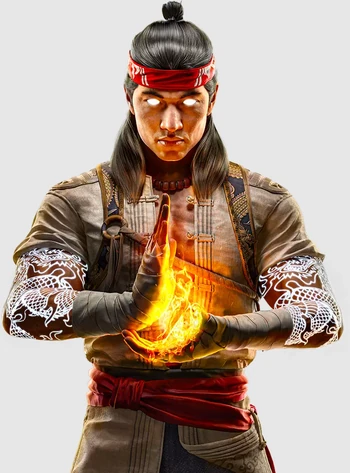
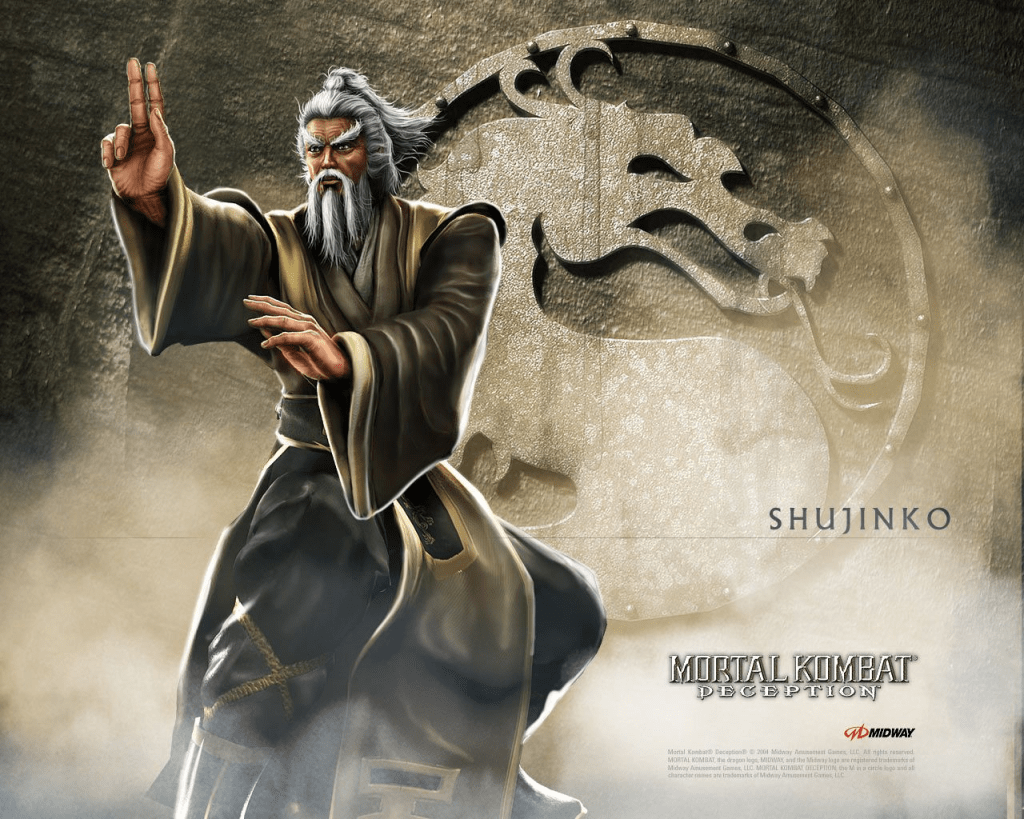
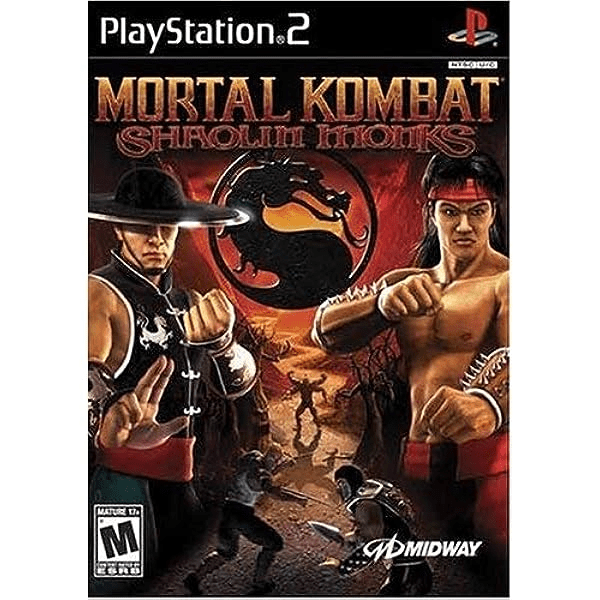

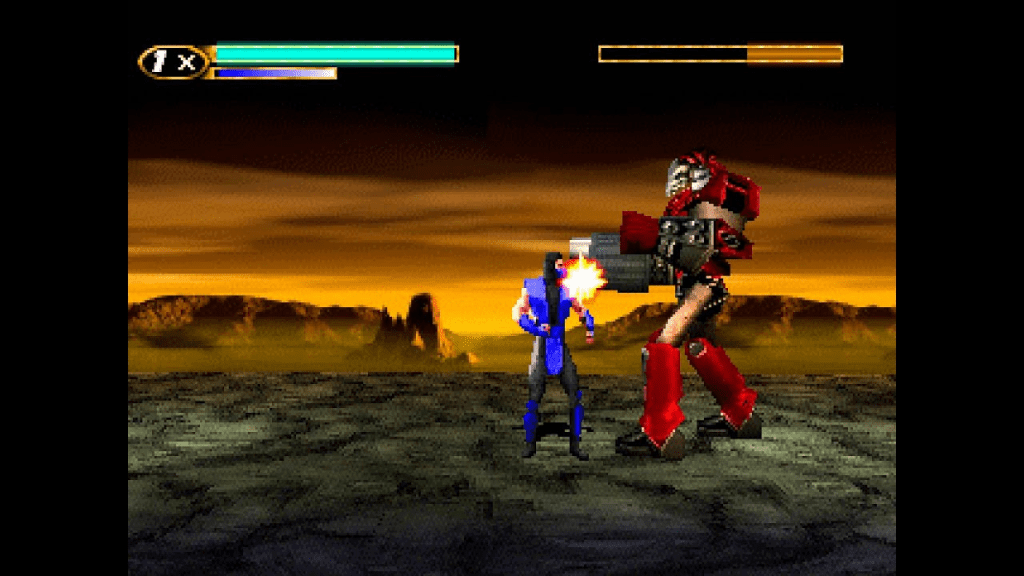


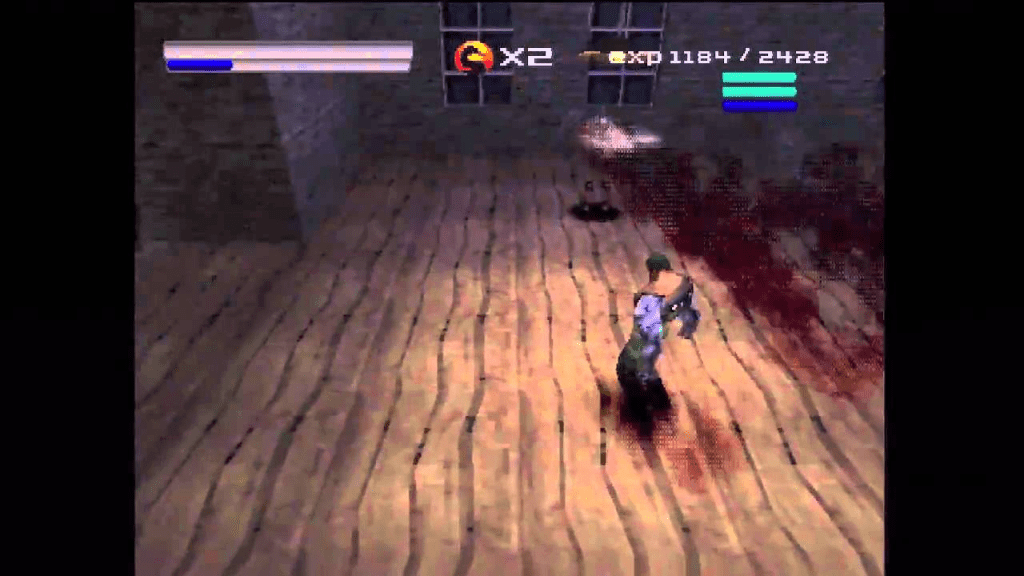

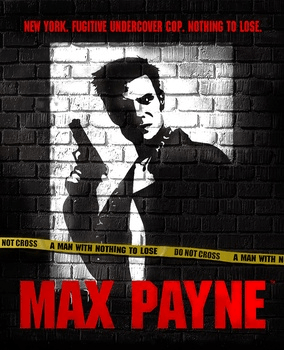
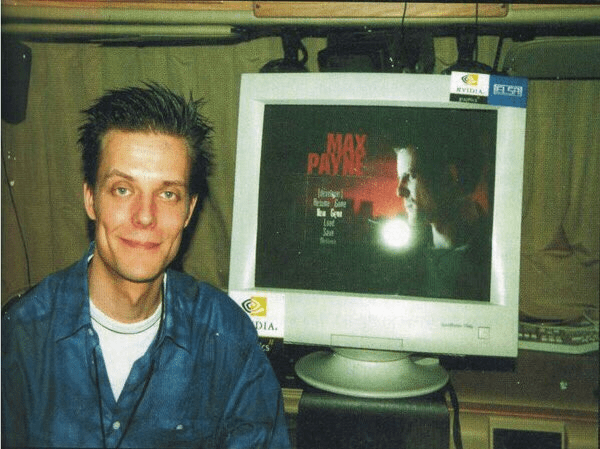


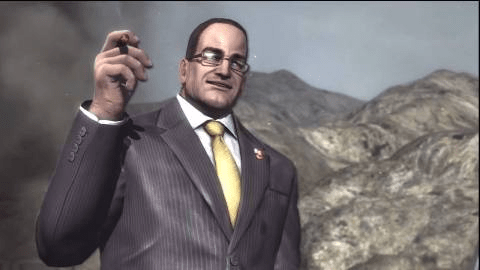


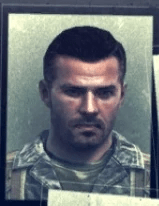


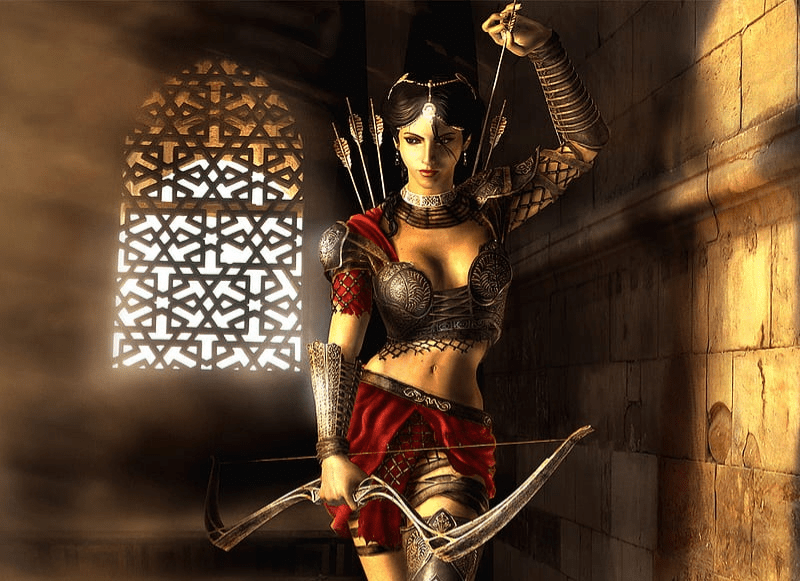

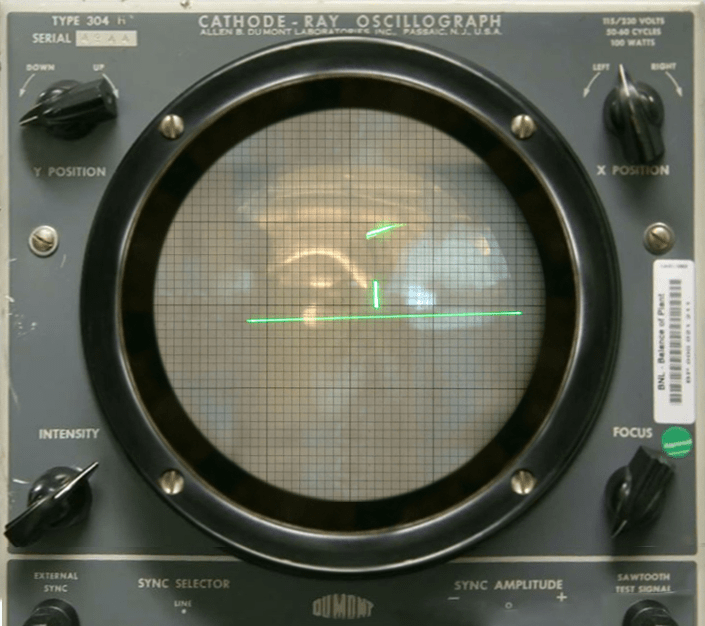
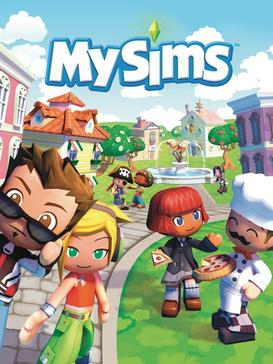
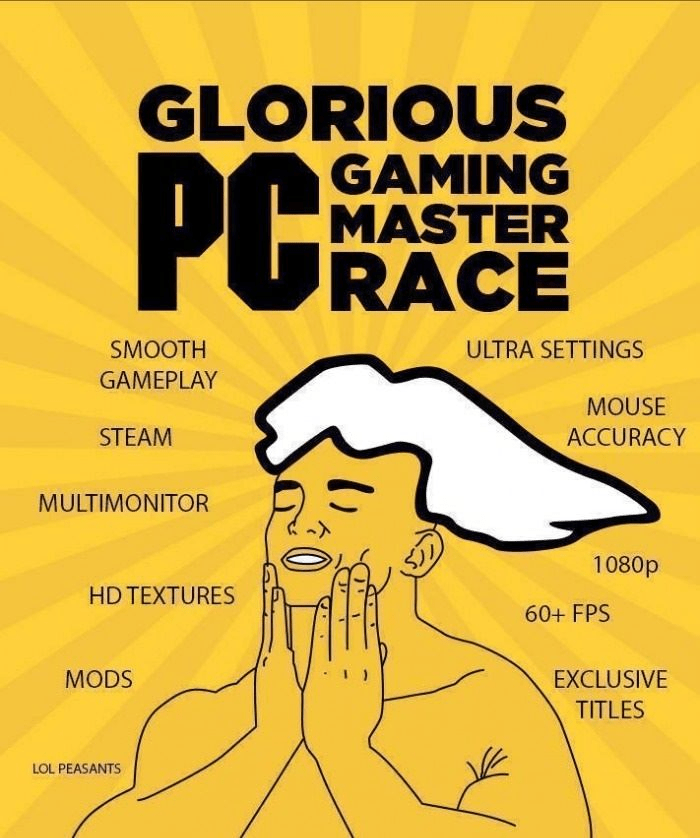




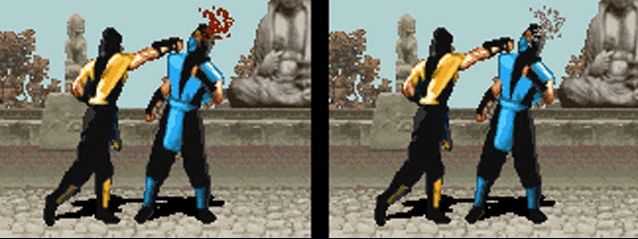


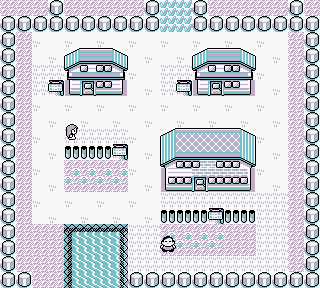

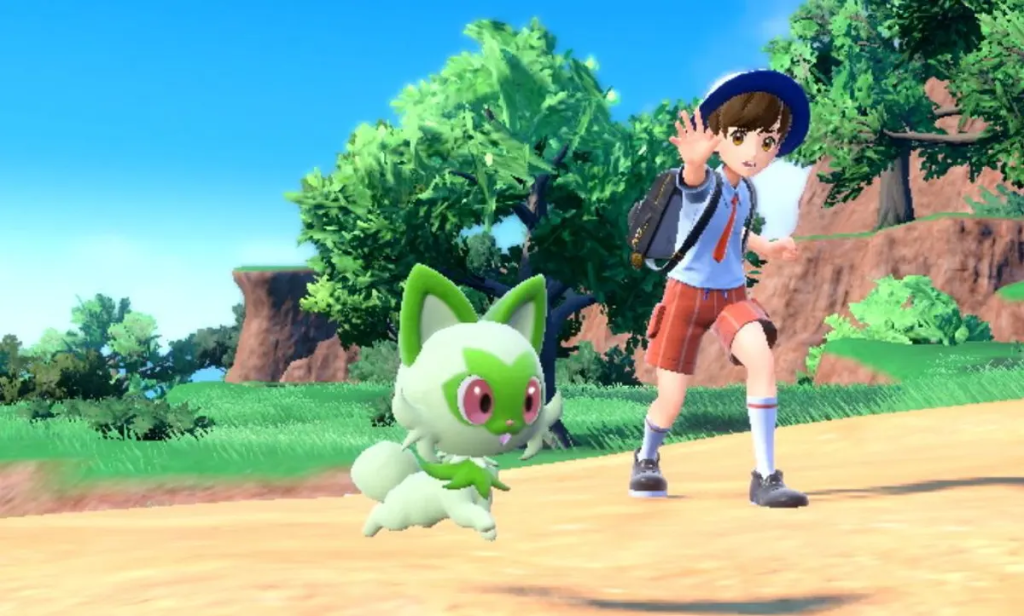
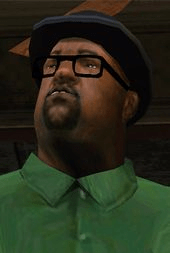



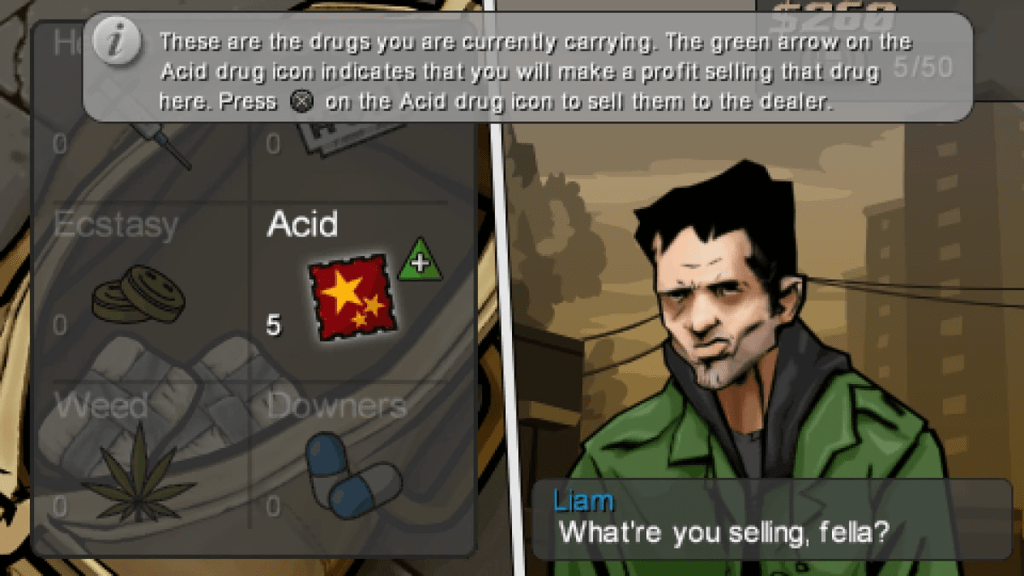






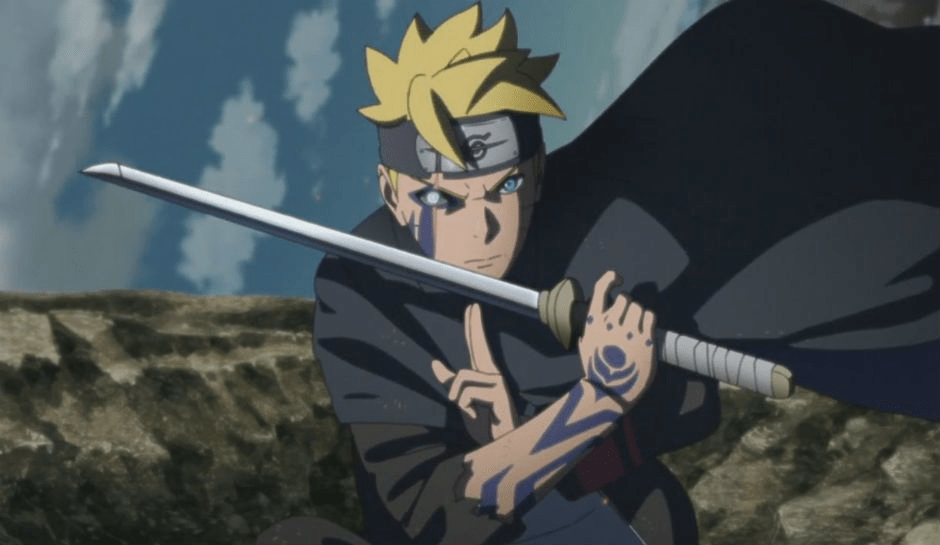
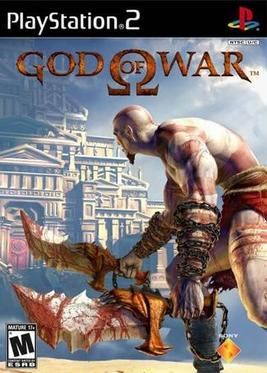

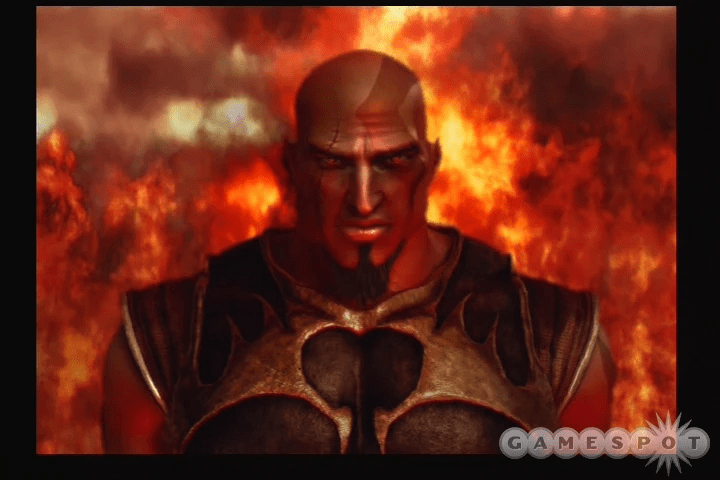










 Opinions on Entertainment