At this point in time, I’ve got to propose a chicken and egg question about the origin of cute girls in dystopian fiction in East Asia. Whatever the case, there’s enough in the world to inspire such a setting for a mobile game. The one I’m referring to being Girls’ Frontline
Developed by MICA Team in 2016 in mainland China before spreading its wings overseas, Girls’ Frontline (Chinese name: 少女前线) is set in a distant future where the widespread integration of androids is commonplace in numerous walks of life from services to retail to even the military, more so than what we currently have in the world’s most developed militaries, so those drones have a human-looking face for once.
A devastating global war breaks out (probably even worse than nightmare scenarios of a WWIII) and these androids in the shape of cute girls are repurposed en masse to make up for the military shortfall. They’re designed and programmed in a way to effectively and efficiently handle specific firearms and their classifications, whatever those classifications may be. Outsiders, welcome to the wacky world of North American gun laws (because Canada does weird s[bang!]t with their guns too). For instance an android, called a T-Doll, that’s specifically designed for the M16A2 will only operate the M16A2. Modifications can be made to get them to adopt other rifles of a similar platform, though this requires some amount of recalibration beyond what can be expected for the military use of automatons.
Whatever you’ve conceptualized as an android, it’s a different beast being depicted here. They’re machines to the core, yes, but they’re not exactly soulless or anything. It’s not like there are military formations of androids with Android 16’s personality. That’d make for a boring game.
They’re programmed with their own personalities. Some are charming, others are sweet, a third category is more varied with the typical animanga tropes like -dere types, and the rest you can fill in the blanks of this Mad Lib if you’d like. I wonder if the different depictions of robots in the east and west can be counted as a culture clash. With only a few exceptions, most western stories view robots as a menace compared to East Asia where they fit right in with society. As for the plot, well, it’s got the foundation of the wider lore of the Terminator franchise, in that advanced AI goes rogue and after a catastrophe reduces the human population to near-extinction by the early 2060s.
The offending AI in question is called Sangvis Ferri (SF) and starts terrorizing what’s left of mankind and setting up human-free areas. The unaffected androids are contracted by a private military company called Griffin & Kryuger (G&K) to stop the reign of terror, reduce SF’s numbers and destroy them. So this belongs in the rare category where androids are more complicated than originally presented.
Looking back, both sides can be viewed for the general use of androids for military purposes and it can be seen as a distinction without a difference, which it is on the surface. Digging into the nuance reveals what G&K does differently with their own T-Dolls: saving humanity. Thus morphing from distinction to false dichotomy.
Now, my memories with the game were during the Spring and Summer of 2022 and a bit in 2023 before interest died off. It was during the time when I was trying to join the Army and the recruiter I was directed to at the time kept dragging his heels. Or I wasn’t being proactive — either way, I invite someone to tell me why there’s a two-year wait for Glossary Non-Prior Service types. But I digress.
The best way to describe the gameplay is a hybrid of “deploy unit to achieve task” and “move and reposition unit to impact effectiveness.” The same system I recall being used in Assassin’s Creed: Black Flag where Edward can deploy ships to specific parts of the world to lessen the danger levels and make use of established trading ports, like a real pirate.
The gacha-ness of the games comes from spending points to unlock more T-Dolls which can be upgraded individually or used to upgrade existing dolls. For instance, if I have one who uses a MAC-10 and get another MAC-10 doll, I can keep on building the older one and eventually build the second, newer one. Or I can cannibalize the newer one for parts for the first one. There’s not exactly a wrong way to go about this provided it’s the same type of doll being used for the upgrade. An MP-40 doll doesn’t have parts compatible with a Mosin-Nagant doll and etc.
Sounds like a neat experience, right? Well, remember when I wrote about You’re Under Arrest/Taiho Shichauzo? The Buddy Cop anime series from the mid-1990s and it’s revitalization as a meme? Specifically this one:
Channe: Vinicius Costa
Meme tourism is a hit or miss for me. It can introduce people to a series that may not have the same marketing as something else more popular or it can backfire and drive people away or bring in the wrong types of people. JoJo fans get a bad rap for being obnoxious if you ever scroll down the comments of a song or artist referenced in the series.
The way I found out about Girls’ Frontline was through a different video. Moonshine Animations’ stop-motion toy review of a figure of one of the characters: UMP9.
Channel: MOONSHINE ANIMATIONS
In the video itself, Moonshine contacted a voice actor on Twitter to voice the character in Japanese as a gag. Having dabbled in stop-motion before, I was pulled in by the presentation and after doing more research on the game downloaded it myself. I was doing rather well at the time making it to the second chapter, but ultimately the game bent me over and painted my ass creamy white. It defeated me and made me feel like a whore wearing thick tooth floss while doing so. Gacha games have a drawback for repetitive gameplay and grinding for those who can’t fork over cash to advance. (Still more honest than EA’s bulls[ka-ching]t lootboxes and Konami’s pachinko machines, I guess.) And Girls’ Frontline is no different.
Multiple attempts to get past a level had me repeatedly grinding earlier levels to get more tokens to progress and upgrade, though doing so meant waiting literally minutes to hours to get anywhere. I don’t remember if it had a system to use real money, but it was at a time where I also wasn’t making any money of any kind, so putting a few bucks on the game at the time wasn’t an option for me. These days, the most I’ve done was drop a few bucks on monochromes for Zenless Zone Zero because I have a MIGHTY NEED to get the shark maid.
No! Miss Ellen! You can’t give up now! You’ve got to have pride in yourself!!
— Vegeta Corin Wickes
Perhaps I’m showing my bias or whatever but MICA Team’s first installment in this franchise left a boot print in my ass and I haven’t looked back. Until I learned that it had an anime adaptation. In the case of media franchises Girls’ Frontline has a leg up on, say, Touhou Project or Idolmaster in terms of foreign accessibility, and my experiences are unique. Should you choose to engage in the mobile game, I’d better hope you have a better strategy than simply press buttons and whatnot. As for the anime, there’s better series and there’s worse series. Make of that what you will.
The final part of this Legacy Video Game Trilogy concludes with a hard reboot that still has the sensibilities to pay homage to the most awkward yet charmingly nostalgic part of its existence. So to recap: MK Deadly Alliance gave us an ungodly pairing in the two sorcerers Quan Chi and Shang Tsung, whose combined strength and abilities gave them the leverage to revive the Dragon King’s Army and wreak havoc on all the realms, without Shao Kahn f[screams]king them over or Liu Kang stopping them.
Not without Raiden’s intervention and before I continue on that, I had time to watch some MK 4 endings and in both Raiden’s and Fujin’s endings, Raiden accepts ascension to the position of Elder God while Fujin replaces him as Protector of Earthrealm. Raiden chose him as a successor and Fujin accepted it. But in Deadly Alliance, Fujin doesn’t appear until 2006’s Armageddon. Plot-hole? Not so. On the production side of things, the devs didn’t think Fujin had the recognition and popularity as the Thunder God so they put him back in this game in arguably one of his better looks.
Canonically, 7 feet tall.
Lore-wise, the death of Liu Kang made all the difference. Fujin hasn’t been demoted by way of a performance review; it’s just that Raiden’s attachment to half of his Shaolin Monk disciples influenced his decision to step down and see the fall of the Deadly Alliance personally. I don’t completely see this as an official source, since it came from r/MortalKombat and I wasn’t there when they were developing the game for release in 2002, but I’m glad I did.
Anyway, Raiden saw to it personally to essentially raise a militia of Earth’s best allies and defenders to destroy the Deadly Alliance. They failed, so much so that nearly all of them had become sacrifices for the undead army. Come Deception time, Raiden stood as the final bastion between freedom and conquest. At his defeat, the partnership between Quan Chi and Shang Tsung effectively evaporated and with the holder of Shinnok’s amulet (namely Quan Chi) being the one who can control the army, the two fight in Shang Tsung’s palace… and are immediately greeted by Onaga himself, coming to reclaim his rightful army that he knew was in the hands of the sorcerers.
The wiki explains that the Amulet has control over the army somehow (Boon and Tobias must’ve skipped that step), but its power and influence are superseded by Onaga’s heart. So you know you’re f[metal clanking]ked when the undead soldiers you painstakingly spent so much time and effort to revive, bow to their original master and not you. That reminds me of a Martin Mystery episode where an evil wizard attempts to revive Qin Shi Huang and the terracotta army only to realize that Emperor Qin was the furthest thing from a stable ruler and that in the show the terracotta army was created to keep the old emperor from getting out.
Misplaced balance of power and all that, Quan Chi, Shang Tsung, and Raiden temporarily work together to destroy Onaga, but two sorcerers and a temporary Elder God aren’t enough to destroy Onaga. Raiden’s last ditch effort doesn’t even dent him and worse he has the Kamidogu and Shinnok’s Amulet. He doesn’t need that for the army, but he does need it to merge the Kamidogu into one and morph into the One Being from which the realms were created. Oof, heavy stuff, huh?
By Armageddon time, it’s become apparent that the warriors in the realms are too aware of the forces that created them, and the Elder Gods consult with Argus and Delia, the Protectors of Edenia, to seek a solution so that none can threaten existence again. Argus suggested death, Delia suggested annulment, and so millennia ago, they created the firespawn Blaze so that his death in Mortal Kombat could bring about one of these outcomes, but a cascading effect seen over the course of the games led to an unintended outcome: even distribution of power. Not to mention, part of this plan was a quest which would test which of Argus’ and Delia’s sons, Taven and Daegon, would handily succeed them. The rules of primogeniture determined Taven the successor as the older brother, but Blaze was kidnapped and enslaved by Onaga’s holy men to guard the last dragon egg.
Blaze kept constant mental contact with their guardian dragons, Orin and Caro, but when he was kidnapped, that contact was lost and Caro mistakenly revived Daegon earlier than expected, kicking off much of the plot of the 3D era of games. At this revelation, Taven’s quest morphed from competition to a race to become the successor of Argus, seeing as the alternative was the Edenian equivalent of Shao Kahn. And they already had that… in the form of Shao Kahn!
Some of the endings, once again, connect as Taven is rewarded while Daegon is punished in Daegon’s ending. Raiden’s is a culmination of what he endured from Deadly Alliance to this, and Shao Kahn’s ending flows nearly seamlessly into the intro for Mortal Kombat 9. Rather than Taven become a full-god and see the failure of the quest, Shao Kahn ascended to the top of the Pyramid of Argus to defeat Blaze. In Armageddon, it was shown that Dark Raiden struck a deal with Outworld to spare Earthrealm if Raiden stopped Taven and Daegon from completing their quest. Something Light Raiden would NEVER do, even in desperation.
The opening cinematic of MK9 shows that this didn’t pan out as he’d hoped, seeing as Shao Kahn unsurprisingly reneged on that deal and used his newfound godhood to pummel Raiden before Raiden used his last moments to relay a message to his past self. The overarching crux of the message being “don’t become me,” but the most important one being “He must win,” where Past Raiden spends the game finding out who “he” refers to.
Thus, this game in the HD timeline redoes the first three MK games. The first third of the game is a near-mirror of the previous 1992 one, even with Sub-Zero’s death at Scorpion’s hands. And like the original it ends with Liu Kang’s victory in Mortal Kombat, but the intended outcome worsens the damage in Raiden’s amulet. It cracked when Raiden received the original “he must win” message and the course of the game shows it getting worse and worse.
The second third of the game is essentially a different Mortal Kombat II, and much so. Shang Tsung still got reduced to that of a fighter like in the original, but rather than it being simply a punishment for failure, the sorcerer convinced Shao Kahn to move the tournament to Outworld and fight on their terms. Raiden obviously said no, but this was less of an agreement between equals and more of a demand from a tyrant who forced his hand by unleashing Baraka’s Tarkatan horde on the Wu Shi Academy.
And that game is fantastic if you ignore its writing.
Forced to compete now on Shao Kahn’s terms, Raiden and the gaggle of Earthrealm warriors he’s recruited go to Outworld but also to investigate the real source of the cracks in the amulet and discover why Raiden’s efforts are failing fate. One of several notable changes here is that instead of Smoke becoming a cyborg like before, that becomes the fate of the new Sub-Zero Kuai Liang. If you recall, in the old timeline, Noob and Sub-Zero were brothers. Noob the more ruthless of the two when he was Grandmaster seeing as he led the charge against the Shirai Ryu and slaughtered them wholesale, but was further blamed for the murder of Scorpion’s family.
This didn’t change in the new timeline and Noob (originally Bi-Han) is still brutal, and is still innocent of the death of Harumi and Satoshi Hasashi. Nevertheless, Quan Chi pulling the strings from the sidelines once again birthed Noob Saibot and, in this timeline, Cyber Sub-Zero. Meanwhile, the tournament in Outworld commences and if you’ve ever played the original MKII and made it that far, you’ll notice that Kano and Sonya Blade are shackled in the background of the arena. This time around, Kano has no reason to be Shao Kahn’s prisoner since he’d sold him the Black Dragon’s service and arsenal, and Sonya was freed by Johnny Cage, Raiden, and Jax. Kitana, though, getting ideas from the Thunder God, investigated Shang Tsung’s flesh pits to discover her hybrid clone Mileena. With Kitana being the last remnant of Edenia’s ruling family, Shao Kahn’s plan in this and the other timeline was to replace Kitana with a loyal daughter.
Shao Kahn loses his Outworld tournament, but the future remains unchanged largely because of Quan Chi and his hidden agenda seeing as he hastens Shao Kahn’s recovery, revives and essentially reprograms Sindel to be evil, and kicked off an invasion of Earthrealm itself. Previously, Shao Kahn could never do this due to Sindel’s ward keeping him from setting foot there, but her revival and Quan Chi’s spell over her psyche making her more receptive to Shao Kahn’s tactics, lifts that barrier.
Raiden recruits even more warriors to defend Earth and repel the invasion, but finds failure after failure in the last third of this game’s glorified HD remake of Mortal Kombat 3. Kabal joins up, Cyber Sub-Zero is reprogrammed, Noob Saibot is defeated, but Raiden’s attempts at repelling Shao Kahn’s advances fail each time. Finally, he goes straight to the Elder Gods themselves who prove equally worthless in this timeline, barely batting an eye at Shao Kahn’s atrocities quoting: “Invasion itself is not a transgression, it is the merger of realms that is proscribed.” A distinction without a difference fallacy that the almighty Elder Gods fail to see themselves. Sort of like granting rights based not on race but on wealth.
In the time it took for the Elder Gods to heroically sit it out until the eleventh hour, Sindel herself decimated the defenders in no time, even her daughter. Johnny and Sonya got through with only bruises and so Earth’s final defenders were reduced to a four-man team, very much to Liu Kang’s growing resentment at Raiden’s ad hoc decision making.
Remember how I said, Light Raiden would never strike a deal with Shao Kahn to spare Earth? Well, those words are looking mighty delicious right about now as it seems that he’s about to bargain for Quan Chi’s participation to stop Shao Kahn, offering his soul and those of the fallen. But Quan Chi being a necromancer, he already has their souls in possession and after battling their revenants, Raiden realizes once again at the apex of destruction that evil needs to get within a stone’s throw of victory before the Elder Gods show themselves. “He must win” meant Shao Kahn merging the realms illegally. Mortal Kombat being the magical arbitration to decide this, violating it through conquest finally gets the Elder Gods to pass judgment and punishment.
This comes with protest from Liu Kang, who falls for the same pitfalls, as the original Raiden and doggedly vows to stand against Shao Kahn even in futilely. It costs him his life and true to his vision, Raiden does allow Shao Kahn to enter Earthrealm undeterred, feigning submission in an effort to get the Elder Gods to act, though not without taking his hits. Fans have called out Raiden for this foolishness, but across the game it shows how much he’s being put to the test. You can’t pass malice onto him for trying so hard to keep everyone alive and Earthrealm undamaged by Shao Kahn’s poison.
The pyrrhic victory gives us a glimpse into what comes in the next game. Mortal Kombat X (technically Roman numeral for 10) immediately follows the post-invasion chaos of Shao Kahn’s entry into Earthrealm. With Shinnok and Quan Chi leading coordinated attacks, Johnny, Sonya, and Kenshi (who made a glorious comeback in the new timeline even for a guest appearance in the last game) lead the charge from the ground while Raiden and Fujin intercept Quan Chi and Shinnok at the Sky Tower, home of Earth’s energy forces in the form of the Jinsei chamber.
They even meet the remnant versions of friends long passed, under the service of Quan Chi. With Shinnok now freed from the Netherrealm and facing the Earthrealm forces personally, like the other games we reach the apex of near destruction, but in a deus ex machina twist, Johnny Cage follows up from his character arc in the last game and becomes the unlikely hero we didn’t know we needed.
Yeah, one thing you’ll notice over the course of just MK9 is that while Johnny understands the gravity of the situation before him, writing it off as but a simple competition, his tone and attitude changes with each chapter. Meanwhile, Liu Kang is the one who grows further disillusioned and rightfully so. Witnessed the death of his best friend, tended to his wounded comrades, saw the Elder Gods sit by and let s[neighs]t unfold in unflattering ways, and he was witness to Master Raiden reach desperate levels to save Earth. I can’t say whether he would’ve had the same reaction in the original timeline if he lived to see it all since Shang Tsung killed him in Deadly Alliance. But if Taven’s reaction in Armageddon’s Konquest mode is any indicator, Dark Raiden was brilliant in how unexpected it was at the time, and it was after the sixth main installment where Raiden went off the deep end. Does he show up again here outside of a flashback? We’re getting to that.
After his defeat at Johnny’s hands, Shinnok is sealed within his own talisman, begging the question somewhat of why he’d have it, but going by the rules of a gun, it’s not designed to have any loyalty. The amulet is also incapable of being destroyed, so the most they can do is closely guard it round the clock, which they continually do for the next 25 years, after which the remaining combatants have moved on with their lives and the like.
Trauma bonding pushed Johnny and Sonya close enough to marry, reproduce, and divorce in that time frame over which we learn that their daughter, Cassie, has felt stuck between two worlds: Hollywood brat or military brat? Which seems like a really unique childhood to have though not necessarily envy. One lifestyle has you hounded by paparazzi for room temperature IQ tabloids, and the other has you moving at the same time as your parents depending on the needs of the branch of service, provided the marriage is strong enough to get through the military.
Then again, Jax’s daughter may have the comparatively more enviable of these two. Jacqui Briggs isn’t explicitly stated to be a military brat herself, but she more than likely has the hallmarks of one if we dissect the finer details. Unlike Cassie, Jacqui’s mother is simply an unseen NPC who most likely passed away long before the start of the game. For Jax, he, Scorpion, and Sub-Zero were the revenants who helped to defend Quan Chi’s lair during a raid by the Special Forces. In that particular mission, Johnny nearly died, but Sonya beat the piss outta Quan Chi while Raiden reversed the spell that would’ve created remnant Johnny Cage. Quan Chi’s defeat brought Jax, Scorpion, and Sub-Zero back to life and already this quasi-Mortal Kombat 4 is markedly different from the original in more ways than simply graphics.
Kenshi himself had a son named Takeda, and from the Kung family comes Lao’s cousin, Kung Jin. The MK kids are meant to be the new bloods though the fan reception was mixed to put it lightly. They’re tasked with assuring all of Earthrealm’s bonds and alliances and aiding Kotal Kahn, the new ruler and admittedly usurper of Outworld causing a civil war between himself and those loyal to Mileena who was chosen to succeed Shao Kahn after the Elder Gods ate him.
I personally like his portrayal and physical appearance, being Aztec inspired. Character-wise, he’s not a conqueror like Shao Kahn or power-hungry like Onaga. To use real political terms, he gives me “populist, isolationist” vibes. That said, he doesn’t really do away with Shao Kahn’s old policies like the liberal use of execution. He also keeps his own cabinet of characters old and new. The civil war between him and Mileena revealed everyone’s true colors. Without his original masters, Ermac defected. As did Reptile, suggesting he never respected Mileena very much as a construct of Edenian flesh and Tarkatan blood. The ones willing to serve Mileena as Kahnum of Outworld boil down to Tanya, who returns (yay!), Baraka, who doesn’t (boo!), Rain who isn’t DLC this time around *throws controller into next week*, and Kano, who’s loyalty is for rent. He’s still a treacherous money-hungry thug, but I doubt he’s as foolish as last time, even after a quarter-century sending Black Dragon-brand brutality to both sides to come out on top regardless… like Simeon Weisz in Lord of War.
Maybe I should review movies again, I’ve been watching a handful of them as of late.
I like the intricacies of this civil war so far, but they’re better experienced than explained, especially seeing as Kotal wins out over Mileena and immediately turns on the Kombat Kids for the greater good in his words. Between scares and enemy espionage, Kotal Kahn concluded that Earthrealm can’t be trusted to safeguard the amulet so it’s in the best interest of Outworld and the rest of existence if Outworld held onto it until Raiden could set his priorities straight.
Meanwhile, one of Kotal’s most trusted, D’Vorah, a Kytinn bug woman is revealed to be a disciple of Quan Chi and servant of Shinnok. Sonya resorts to bringing Jax out of retirement as a means to get Earth’s defenders back into the light and out from Netherrealm’s influence. This goes on for the last quarter of the game, though with significant trouble in the way. Jax helps apprehend Quan Chi, but this is short-lived when Scorpion learns from Sub-Zero that the mastermind behind his agony came from within the Lin Kuei. Seeing as the original Sub-Zero was also a victim, the trend of “inside job conspiracies” reappears in this game to haunt Hanzo Hasashi ’til the end of days.
Ever played the GTA IV mission where you bust out one of Derrick’s old friends only to blow his brains out? Similar thing here, Scorpion breaks into a military prison to kill Quan Chi who uses his last breath to summon Shinnok behind enemy lines. With D’Vorah’s aid, they invade the sky temple again, trap Raiden and infect the Jinsei chamber, with less effort than the initial invasion 25 years ago. And since Shinnok is a petty little bitch, he imprisons Johnny too. As Dark Shinnok, the fallen Elder God becomes Raiden’s worst nightmare.
At this point, the Kombat Kids have broken out of imprisonment and returned to Earth right as this all unfolds and stand as the last beacon of hope for Earth, a role Raiden played in Deception before turning dark himself.
Every time Mortal Kombat gets Dark Raiden, they chicken out before they can use him. The most action he gets is his own ending in Armageddon where he obliterates all realms except Earth to destroy all outside threats to Earth. MK X teased him at the end with a stern warning to the Netherrealm under new leadership to not even think about trying anything or they’ll share Shinnok’s fate.
Dark Raiden is a major part of the first two chapters or so of MK 11, but thanks to time travel shenanigans, he’s written out before he can exercise the fullest extent of his wrath. The mission from MK X is more or less complete with Shinnok defeated though I doubt Raiden was forthcoming with his fate. Not to mention, the villain this time around is the titan Kronika who masters an hourglass that writes the fates of all. I’m pretty sure I’ve played this trope before.
Time travel shenanigans aside, MK 11 takes away the heavy lifting Raiden would’ve done to protect Earthrealm by simply bringing everyone back from when they were at their best. This game does have a DLC arc that’s best explored away from the main series even though it flows into 2023’s M1K soft reboot. Re-touched upon in this game, Kronika not only manipulated events, but claims responsibility for driving a wedge in between Raiden and Liu Kang. Timeline after timeline, their power combined has shown to be a threat to Kronika. Using this to his advantage, Raiden stops fighting Liu Kang and they merge to form Fire God Liu Kang who was last seen in that god-awful Mythologies spin-off. Depending on the player, the game can end with human Raiden aiding Liu Kang as he remakes reality, or with Kitana long after she wins big as the new Kahnum of Outworld when a career-ending injury removes Kotal Kahn from power.
I’m not certain on whether M1K is the beginning of a new arc in the Mortal Kombat franchise. It’s the first one for the 2020s and has a hell of a lot of callbacks which thoroughly entertained the legacy fan in me. I’ve seen full gameplay of it, but haven’t experienced the rest of the game for myself yet, so I’ll cap this long post with my thoughts on the HD continuation. It almost follows the beats of the original series but diverges beginning in the third arc of MK9 and doesn’t look back in the rearview mirror. Shinnok still makes his comeback in this timeline’s answer to MK4, but doesn’t fall victim to Quan Chi’s machinations. Quan Chi isn’t even acknowledged as the true mastermind and even when they do treat him as such, the focus goes toward Shinnok who manipulated events from the start. So he’s no different from Armageddon’s Konquest mode, the point of divergence being that Daegon is the one who serves him instead of Quan Chi… or rather he plays them both. Honestly, MK’s biggest flaw is having loyal characters serving untrustworthy villains. Say what you want about Deadly Alliance, but Quan Chi and Shang Tsung understand fully that the partnership is purely transactional.
The villains this time around are aware of this aspect though seem to be blind to Quan Chi’s reach and influence. Not that he’s the most powerful villain or remains so for long as Kronika beats him to the punch in MK 11. It ultimately screwed over the revenants still under Quan Chi’s influence at the time of his death, but I say its for the best that he wasn’t alive to witness Kronika emerge from her chamber. Besides, the revenants can be restored after consultation with the Elder Gods, as long as they don’t take it literally.
All in all, this era in Mortal Kombat history gets a lot of praise in the beginning followed by loads of critique over what should’ve been done by whom during XYZ. All well and good, but it suffers from the same problem exhibited by the God of War series in that the games of the past are written off as weird and off-putting. But as a defender of this era of Mortal Kombat, flawed or not, this was a necessary step toward greatness, and the only regret(s) are that Shaolin Monks hasn’t been rewritten and remastered and we haven’t seen anything in the form of Chess Kombat, Motor Kombat or Puzzle Kombat in the last 20 years. I would gladly do embarrassing things to see this in the modern day again.
In Part 2 of this 3D Video Game Lookback Series, I bring you to the Midway era of the Mortal Kombat franchise. For this post, I’m largely going to include the games I have played from this era being Deadly Alliance (2002), Deception (2004), and Armageddon (2006). For those seeing this lineup and wondering about the others, I will briefly touch up on MK4 (1997), bear in mind that my exposure to that game is limited as I’ve never been able to play it even emulated or remastered as the Midway library only ever mentions the three arcade games, most likely due to the little love it received for being a subpar transition to 3D from 2D, written well in this blog from February 2020 and explained by Ed Boon himself in this documentary video included in Deadly Alliance, most likely recorded prior to the game’s October 2002 release window:
Channel: Ro Sohryu
On YouTube, MK4 gets its spotlight about five minutes in.
Suffice it to say, MK4’s experiment with 3D showed the desire to follow a trend that would shape the future of the video game industry roughly indefinitely save for a few outliers calling for a simpler time.
Thinly-veiled marriage proposal to 2D platforming, I say.
With MK4 designed as an arcade game like its original predecessors, it doesn’t necessarily follow a canon ending, though some individual characters’ endings flow into Deadly Alliance. The only one so far that I know does this is Scorpion’s ending. After defeating Sub-Zero, the Grandmaster of the Lin Kuei accepts responsibility for the destruction of the Shirai Ryu clan, but reveals that no Lin Kuei ever touched his family. Quan Chi reveals himself to be the mastermind behind Scorpion’s vengeance and attempts to trap him in the Netherrealm. Fruitless endeavor as Scorpion drags the sorcerer to hell with him for the torturing. This is consistent up until 2004 where Shujinko has a hand in helping to find Quan Chi in the Netherrealm while there for his own reasons, but we’re jumping forward a bit, let’s bring it back.
Deadly Alliance follows on from Scorpion’s MK4 ending, with Raiden as the narrator of Quan Chi’s escape through a portal. On the other side, he found a tomb housing the legendary undefeatable army of the long, deceased Dragon King, deciphered the ancient rune stone, and the one that disturbs Raiden the most, he’d formed an alliance (based on ignorance) with Shang Tsung of all people. Per this deal, Quan Chi will help Shang Tsung gather the souls necessary to revive the mummified army of budget samurai warriors.
Wonder if the inspiration came from the Chinese terracotta army design-wise…
Shang Tsung meanwhile will teach Quan Chi the soul transfer spells that achieve this mass revival. Evil as they are, you’d probably expect them to singlehandedly lay waste to some innocent village, and as either of the two that’d be my first suggestion… and one I’d personally shoot down considering the types of souls I’d like to inhabit these skeleton warriors. Any old soul would likely not make the cut–if I’m bringing an army back from the dead, I’d want the souls of trained fighters, warriors!
And going with that thought process, the sorcerers went to concoct a plan to lure them all into one place. Two great problems lie in the way however: Emperor Shao Kahn and Liu Kang. No, the Emperor of Outworld isn’t aligned with the Champion of Mortal Kombat. Just that the two know they’d face heavy resistance from these guys. Shao Kahn would want to take part in the tournament and Liu Kang won’t stop until all threats to Earthrealm are beaten fair and square, this last part biting him in the ass. Naturally, they feign loyalty to kill Shao Kahn and make a beeline for the Wu Shi Academy where the Mortal Kombat Champion trains extensively. Shang Tsung could still not hold a candle to Liu Kang, unassisted at least. Enter Quan Chi to put him in a vulnerable position allowing Shang Tsung to take the killing blow.
The body of Liu Kang is the first of several transported back to Shang Tsung’s palace (whose construction has an interesting story that unfolds in Deception’s Konquest mode). An undead soldier is voluntold to get the Shaolin monk’s soul, and the intro cinematic warns of impending doom should the Deadly Alliance succeed, bringing Raiden to his closing argument. He turned away from the realm of Elder Godhood to mount a resistance against the sorcerers.
Channel: merocch
Spoiler alert: it fails. And looking at how Deception starts, miserably. Raiden might as well have been feeding them soul after soul. Shang Tsung didn’t necessarily need them, but knowing his greed, there’s never enough souls. It’s never explained how many of the souls in the Soulnado in his palace are suitable for transplantation to the undead army, nor is it ever explained if there’s a purpose beyond prolonging death. The most we get out of his use of that Soulnado is to prop himself back up after a devastating blow from Raiden.
Deadly Alliance still suffers from the Arcade framework of all the other games before it, but its not like Midway couldn’t write a compelling story in the MK-Verse. Deception proves it with Shujinko’s narration of events that bring us up to speed on the results of Raiden’s impromptu militia. Needless to say, it got so bad, he had to face the Deadly Alliance himself. The final bastion against misery and terror.
Thunder god or not, the man couldn’t do much against the Deadly Alliance’s plans. And when they merged their own powers, they took him out of the fight for at least five minutes max. Naturally, treachery followed this short-lived victory. In either of their endings in Deadly Alliance, both have secret alliances with third parties: both used Kanoin their respective endings, although Shang Tsung allied with the Oni that were about to feast on Quan Chi’s innards in the Netherrealm (which does happen in Drahmin’s ending); and Quan Chi with anyone who’s capable of putting the squeeze on Shang Tsung before he destroys the traitor he hired to carry out the initial betrayal. In the Deception intro, they simply betray each other for power, knowing that the command “Obey he who possesses the amulet,” depends on who he is. Quan Chi won out and kept the amulet on his belt.
In the distance, Quan Chi could hear a loud and approaching stomping, a crescendo of an even worse danger than even he or Shang Tsung could threaten to unleash on reality. The one-eyed man may be king in the land of the blind, but in this instance, the undead army would never bow to a pretender. They knelt in recognition of their one true ruler as he revealed himself to the lone sorcerer.
An ancient prophecy kept alive by the remaining holy men of the Dragon King, the last Dragon Egg had hatched, and had taken on a host in the form of the gradually devolving Reptile (further confirmed in his own ending). The true emperor of Outworld had returned to show everyone what a real monster is, stopped only by a duo of treacherous sorcerers and a thunder god in a desperate attempt to reverse course.
Even with their powers combined, Raiden realized it would take more to defeat Onaga, and so made a final sacrifice… that ultimately failed to even scratch Onaga. The blame falls largely on Shujinko for bringing this ungodly power to him. To take responsibility, he vows to right wrongs committed by his unknowing service to the Dragon King.
Channel: MKIceAndFire
To make sense of these dire straits, we go back forty years to Shujinko’s youth. A bright-eyed young man with a special place in his heart for the Great Kung Lao. Sadly, he lacks his idol’s martial arts’ skills and seeks to learn from one of his teachers, Bo’ Rai Cho, an Outworlder who has taught warriors for the last few Mortal Kombat tournaments to include the Shaolin Monks among others. Stuck in the confines of his village, Shujinko is essentially forbidden from venturing into the outside world until a strange entity called Damashi visits him in the street. With an offer of adventure and the chance to save reality from destruction, he gracefully accepts a quest that will take him throughout the Mortal Kombat universe (and expose players to some neat and interesting level design).
Over the years, he adopts the fighting styles of numerous warriors, is exposed to different rivalries between established characters of old and newer characters, and finds himself the star of several complicated overarching plots that resolve relatively quickly, to include one that involves a sorcerer and a ninja specter. Keep in mind, this is all for the sake of collecting six tools known as Kamidogu. Hiccups abound, but at the ripe old age of approximately 65, Shujinko concludes his quest in the Nexus.
…or so he thought. The last Kamidogu is in place, but not immediately taken to the Elder Gods. The final piece needed to achieve this is Shinnok’s amulet, attached to Quan Chi whom he found in the Netherrealm twenty years prior. The Kamidogu now sitting in Onaga’s palace, Shujinko’s ending suggests he uses the fighting abilities acquired over the decades to destroy Onaga. All’s well that ends–no, that’s not what happens either. He does redeem himself in his ending, but in Raiden’s ending, he’s tortured over this mistake. And this isn’t the same Raiden that narrated Deadly Alliance. Deception gives birth to Dark Raiden, ironically hellbent on protecting Earthrealm.
Channel: i’m playing it!
Unbeknownst to the rest of the cast, Raiden doesn’t die very easily. He came back heavily corrupted and negatively influenced by the doings of mortals. No longer content with playing defender, he’ll take a page from Shao Kahn and directly challenge his adversaries, and effectively press any fighter into defending Earthrealm to the death. This new thunder god was a force to be reckon with.
For Armageddon, it’s exactly as advertised. If you noticed over the course of this entry, numerous factors I mentioned specifically as well as those I couldn’t specify for brevity’s sake, have a grave impact on the health and future of the realms. The sorcerers were always a threat, though the original timeline shows that the Elder Gods’ hardline inaction was what would ultimately doom the realms.
Armageddon explains that their solution to this was to brainstorm ideas with the parents of Taven and Daegon, Argus the Protector God (read: Raiden) of Edenia, and his sorceress wife, Delia. Argus outright proposes extinction, but Delia, levelheadedly, asks to render them powerless in recognition of the heroes that sacrificed themselves to save the realms, even if it was only their own homes. Thus was given the Armageddon Konquest plot where it was passed off as a competition between the brothers to defeat the firespawn, Blaze. Taven and Daegon were told what their respective dragons, Orin and Caro, were told, in that the quest was intended to challenge the brothers to see who could succeed Argus as the Protector of Edenia. Defeating Blaze grants this as well as full godhood to the victor.
Over the course of the quest, however, Taven discovers numerous details that don’t add up. His parents have temples in Earthrealm, which I personally don’t find all that unheard of. It’d be the equivalent of a cult of Raiden in Outworld or Edenia, presumably in defiance of Shao Kahn or worse. MK lore does establish holy men responsible for the upkeep of these temples, and when they abandon it (or get killed), it inevitably falls into disrepair. So imagine how surprised Taven was to find that red-clad warriors bearing the mark of a Red Dragon occupying it.
It wouldn’t be the last time he finds the Red Dragon clan on his journey. They hide amongst the traps outside his mother’s temple, the same one commandeered by the Lin Kuei generations before, and the same one where Shujinko learns Lin Kuei martial arts at from Sub-Zero himself. After a confrontation with the same Grandmaster of the Lin Kuei and an impromptu offer of help when Noob and Smoke plan an infiltration on the grounds, Taven is led to the Red Dragon stronghold where he discovers a twist for the ages.
The founder of the Red Dragon clan was his own brother, Daegon.
Further exploring the Red Dragon stronghold, Taven is made aware of a sickening series of science experiments to physically alter the appearance of individual members into dragons themselves. Funny enough, Kano clues him in to all of this. He’s a Black Dragon member with no love for the Red Dragon and if spilling the secrets of a hated enemy means anything, who, besides Mavado, was gonna stop him?
Taven reunites with Daegon’s companion dragon, Caro, imprisoned and forced to scatter the Red Dragon clan throughout the realms. From Caro, Taven learns that the entire course of events that precede Armageddon relied on a mental connection to Blaze. However, he was kidnapped by Onaga’s holy men and enslaved to safeguard the last dragon egg. Since it hatched in Deception, his purpose there had concluded and a side quest in Deception resets his path to continue the quest.
Except the damage had been done. Daegon was awoken prematurely and pretty much singlehandedly set the course of events from Deadly Alliance onward. Blaze made cameos in earlier games, but didn’t come into prominence until Deadly Alliance as a secret playable character.
Caro had felt personally responsible for setting this course of events to occur, but Taven is right. The dragon was being too hard on himself. No victim plans their own kidnapping unless they’re in on it. As Daegon also knew the quest wasn’t all it was said to be, he sought the answers from the source and killed them where they stood. Taking responsibility for all of that, Caro sent Taven to follow Daegon and stop him while Caro stayed behind to destroy the Red Dragon Clan by himself.
Following Taven into the Netherrealm, he happens upon a weakened fallen Elder God, and here we learn how long Taven had been in slumber. The gap in his memory seems to begin with Mortal Kombat 3 and ends in this game. Oh, to fill him in on all the lore.
Shinnok offers to help Taven find and stop Daegon from corrupting the quest further, but he puts Taven through a series of trials first to reclaim his spire. When all is said and done, Taven had been delayed by an elaborate ruse orchestrated by Shinnok and Daegon to advance Daegon’s position as Protector and by extension, god. He also revealed the quest’s existence and prize to other combatants as a means to slow Taven down, from Sektor’s initial ambush at Argus’ temple in Earthrealm to Prince Rain challenging him outside Delia’s.
Taven goes back to Earthrealm where Orin was subject to fatal wounds by Quan Chi. In pursuit, he follows him to Outworld and fights his way through Shao Kahn’s fortress to learn that A. death is a bitch ass in the Mortal Kombat world since Shao Kahn’s fortress would’ve been reclaimed by Onaga and B. Onaga, Shao Kahn, and the former Deadly Alliance have all formed an alliance (still based on ignorance, they all betray each other in the intro cinematic) and fled to Edenia.
Dark Raiden rears his corrupted head once again, having struck an uneasy truce to stop Taven so long as Shao Kahn ignores Earthrealm. A desperate Raiden would definitely do this, but a smarter Raiden would incapacitate Shao Kahn and company. Finally in Edenia, Taven is ambushed by the last of Daegon’s impromptu agents, Scorpion himself. After his defeat in Edenia, Daegon shows up to finish the job but is interrupted by the firespawn himself. The quest didn’t have to and ultimately did not pan out how Argus and Delia foresaw, but by the Elder Gods, if Blaze had to make sure it ended a certain way than gods dammit he will!
Taven and Daegon were taken to the rim of the crater where Armageddon would begin. Finally able to confront Daegon over his corruption and evil, Daegon revealed that he would’ve been a potential victim of primogeniture. Taven earns a pyrrhic victory, and almost walks away from the quest being the sole survivor of his own family.
He finishes the quest after Blaze reveals the truth of the quest to him. If anything, Taven chose to do so because the role needed to be filled. As a result of the events of the other games, Armageddon’s stated mission purpose was to resolve the instability of the realms. It did nothing of the sort. The godlike power wound up empowering the rest of the combatants in Taven’s ending.
Channel: MKIceAndFire
If things went right, Argus and Delia would’ve annulled the combatants of their abilities and made Taven the successor. No Red Dragon, no atrocities, nothing.
Everything does connect in the long run, though. Dark Raiden shows what he’d do to save earth, Onaga shows himself the most treacherous and self-serving, and Blaze reappears to fulfill a greater role since 1993. But as I’ve said before in a prior post, if it wasn’t for the last-minute distractions, most of the plot would have more neat and tidy endings. Not that I’m asking for rewrites after twenty years since the HD Continuation is the rewrites, but more like there were a few areas of the 3D games that could’ve used some ironing out.
The hunt for lore and information is there, and it’s deliberately hidden so that the player can be challenged into finding it, but it’s an uphill battle of sorts when things don’t flow neatly from game to game. Some stuff is left too open to interpretation and while I maintain that Mortal Kombat is guilty of abandoning plot points, the ones they leave in place weren’t any better. Maybe this is a consequence of doing the same thing over the course of thirty years, the same story beats rhyme like an epic, but unfortunately Mortal Kombat ain’t no Beowulf. All in all, this all sounds like a job for The4thSnake on YouTube.
The 3D era of Mortal Kombat is, what I’d call, a conglomerate of rough gems. The beauty exists in the lore than in the visuals and I’m sick to death of this part of the franchise’s history being buried by many so-called fans.
Bring back Chess Kombat, and I’ll wear clothing too explicit, even for pornography.
I rearranged my notes for this, and for once in two years, I’m glad I did
It’s been dog’s years since I rearranged my notes to get to topics I thought would take me longer to complete than normal. Work has had me begging for relief of some kind (more than I can get from a dakimakura or a viewing of my favorite anime):
Unsurprisingly, this is the only SFW version of this I could find.
And outside of The Saga of Lady Rias and Straw Hat Pirate Crusade, I’ve been busy playing a series of games I’ve played before for old time’s sake, and also for some analysis of gameplay and plot details. Additionally, this is going to be a series of posts spanning three weeks, so I’m going to cover the Max Payne series, this week; the 3D era Mortal Kombat games next week, (excluding Shaolin Monks having covered that before); and the HD Mortal Kombat games the week after that. I haven’t gotten through the HD games yet partly because MK9 doesn’t run as well on RPCS3, and it would take a while to grab my PS3 from back home and some of its corresponding games, but this was a quicker and less expensive process. Off topic: American Airlines upsets me greatly.
You may know this as my favorite video game series of all time from this post, but if you’re just joining us, Max Payne holds a special place in my heart. Although it was a culmination of gun-fu cinema that began in the early 1990s, it did wonders to popularize bullet time as a gameplay mechanic helped up by the likes of Hard Boiled and The Matrix. Narratively, the entire series is baked with the type of writing prose that would make The Bard even slightly jealous.
Conjured in a laboratory deep in the recesses of Remedy Entertainment with Sam Lake as its prime director, writer, and face model, the series contains three games all with contemporary settings: Max Payne released in July 2001 set in a brutal winter that may remind some New Yorkers of the city’s worst blizzards; Max Payne 2: The Fall of Max Payne released in October 2003, focusing more on the psychological horror elements; Max Payne 3, doing something completely different by putting it’s titular character in São Paulo, but following some of the same narrative story beats that he’s been through before. So the more things changed, the more they stayed the same… at least on the surface.
This is going to be a spoiler heavy post, but considering I’ve played through the series at least four times before, it goes to show the replayability of the games while also adding in some criticism of the games that I omitted from the first time I wrote about the series.
They were all dead. The final gunshot was an exclamation mark to all that had led to this point. I released my finger from the trigger, and then it was over.
Following a trend that would define select games of the 2000s, Max Payne begins with establishing shot of then-current NYPD-colored vehicles answering to a distress call at the fictional Aesir Plaza. Shots fired/firearm discharges, malicious destruction of public property, numerous charges of manslaughter, and a man who became public enemy number 1 in a New York Minute. Beginning at the end, it works its way back through the narration told in a graphic novel style. NYPD Detective Max Payne in 1998 is offered an accession to the Drug Enforcement Administration by Agent Alex Balder. Max declines and puts away what he promises is his final cigarette for the sake of his infant daughter, Rose’s, health. The offer is still there as Max heads back to his New Jersey home where his family would be.
Unbeknownst to him, his wife, Michelle, and their newborn daughter would be victims of a disgusting drug experiment. The first thing to pop out at Max aside from the dead silence is a tag in the parlor of the house: a V with a syringe running through it like the sword in the Adventure Time logo: the central plot device behind the game, a designer drug known as Valkyr. Next to that, the phone rings and a raspy-voiced woman coldly asks Max to confirm that this is indeed the Payne residence, while he fails to convince her to phone the police. Now that she knows this is Max’s house, she hangs up and leaves him to discover the American Dream being torn to shreds in no time. His loved ones brutally slaughtered by junkies in his own home, Max avenges their deaths there and after the funeral expenses, transfers to the DEA under Balder’s supervision.
Three years of undercover work in the Punchinello family reveal them as the main suppliers of Valkyr by February of 2001. With fellow agent, B.B., Max and Balder are summoned to Roscoe Street Subway Station and are nearly gunned down by the same mobsters in an elaborate robbery through a web of tunnels connecting to a bank where Aesir Corporation bonds are being housed. Max pushes through, though, and stops the in-progress robbery, meeting Balder in the process. Unfortunately for Max, an assassin nails Balder in the head before he’s able to reveal a critical piece of evidence, and to make things worse for Max, with him as the last one to see Agent Balder alive, the NYPD finger him as the prime suspect, so he now has to evade the law while going on his next mission: taking the fight to underboss Jack Lupino himself.
The intricacies and complexities of Mafia hierarchy makes Lupino the second most untouchable man in the underworld, which was what Max expected. Fighting his way through several key figures at a mob-run brothel, Max picks up crucial evidence to clue him in to the wider plot at large. One of these pieces concerns a hooker named Candy Dawn selling sex tapes as blackmail material; the other is the office of Lupino’s lieutenant, Vinnie Gognitti.
An icy rooftop chase leads to Vinnie getting cornered and confessing under duress the location of his boss, who, to put it lightly, has gone mad. “Don’t get high on your own supply” exists for a reason and Lupino is patient zero for why you should never do that. One too many Valkyr injections and the entire Prose Edda sits where his brain should be. Notes collected prior to arriving at his club hint at the frustrations and concerns levied at him at all levels, but Lupino’s lunacy drowned it all out. Taking residence in an occult club, the Ragna Rock, Max explores the gothic revival building in search of the man he believes is responsible for his pain.
You can’t blame Max for pumping Lupino full of lead after their death-defying battle when he squawks at you like this:
Channel: Adddicteddd
Knowing damn well the dangers of Valkyr, Max did to him what law enforcement did to Bonnie and Clyde, the best replica of human Swiss cheese, until hitwoman Mona Sax waltzes in to reveal that Lupino wasn’t even in the right state of mind to try to frame Max for anything, let alone the death of Alex Balder. The real prize lies with the Punchinello family don, Angelo. Lupino was simply a [mad] middleman.
Max can’t refute her claims, but doesn’t. Instead, the only thing he can do is accept it as a lead to the truth. But before he can embark on the warpath to the don’s manor, Mona spikes his drink at the bar. The first of two run-ins with Valkyr puts him into a nightmare he was trying not to acknowledge. He was already living in one, so why put him in another. After that, he’s taken by the mob back to the same brothel he shot up and whacked several times in the head by Francesco “Frankie the Bat” Niagara.
Undefeated and undeterred, Max walks away from the slowest execution to exact revenge on the last of the Punchinello mob, picking up more evidence along the way of the rest of his enemies in the process. Once the Bat is broken in twain, Russian mobster, Vladimir Lem, appears with a deal he can’t refuse. He’s always wanted to say that!
Both men are after Punchinello, and Lem has the means to get him to the don if Max kills a turncoat at the harbor, Boris Dime. Accepting this offer before him, Max manages to anger Punchinello enough to set fire to his own restaurant in an elaborate way to get rid of Max, but the deficit wasn’t worth it when Lem circled back around to pick Max up and drop him off at the manor. Gun-kwon-do ensues and brings Max to the desk of Angelo Punchinello himself.
Crying and begging for a chance to explain himself before the installation of a new ventilation system, the evidence he’s searching for kills him in his own home under the command of the real villain of the game: Aesir Corp. President Nicole Horne. The ruthless, avaricious killer in the midst; the destroyer of Max’s life and livelihood; the one who arguably set the entire series off to begin with. Her lapdogs gun down the mob boss and torture Max with a worse dosage of Valkyr where things get too real for a moment.
Channel: YianKutHexy
The nightmare subsides and he gets his next lead: Cold Steel. A steel mill hiding an abandoned military bunker where the source of Valkyr was found. Stumbling upon Gulf War-era archives, Max makes the same discovery that got his wife and daughter killed three years ago. Following the first of many of Saddam’s Ls, US troops came home with a mysterious illness that today is known only as Gulf War syndrome. Seeing it as a lack of morale, the US government spearheaded a project based on Norse mythology in mid-1991 to invent a drug that would turn our warfighters into war machines.
Four years later, the project was halted due to observations of habit-forming properties and behavior, but being the main benefactor behind the project, Horne was dead set on getting her investment’s worth. Unauthorized, the project was rebooted through dark means and motives. Due to a data leak, Michelle discovered the ongoing project and was thus silenced in order to keep it secret. Horne hoped the junkies, the mob, and the rest of the city would put Max down for her, but proving tougher than a cockroach forced her hand.
Max had seen enough, he had more than enough motive to avenge Michelle and Rose, but there was another loose end to tie up: B.B. Putting the pieces all together, there was a reason he hadn’t seen B.B. since the Roscoe Street Station robbery. Another turncoat, he was also on Horne’s payroll and had been trying to get him killed on her dime. Max realized it late, but better late than never seeing as B.B.’s confirmation as a bent cop had grown irrelevant over the course of the game.
With him gone, Max was contacted by a secret society with deep ties to Horne, the Inner Circle, and its leader, Alfred Woden. The very man Candy Dawn was making sex tapes of for Horne to use as blackmail in revenge and to stop him from pursuing her further.
The amount of influence she had over him as well as the rest of NYC was impossible to measure or imagine, but seeing as she was able to cut the mob itself in on a deal and keep the Inner Circle from going public for years, leveraging their own sins against them, it was a dead ringer for why Max was the only candidate capable of stopping her. Which he does.
Max escapes the attempts on the Inner Circle’s life and heads straight to the Aesir Plaza where the final showdown commences. Numerous obstacles fail to stop Max from getting the revenge he was entitled to, and the fiery send off couldn’t feel any more appropriate, short of hand-delivering Horne to the devil personally.
Channel: KLB TV
His revenge complete, Max willingly surrenders to the NYPD confident that Woden would be a man of his word and bury the charges deep into the hole where his adversaries were sent. But this was merely the beginning of a cacophony of pain.
And we keep driving into the night It’s a late goodbye, such a late goodbye And we keep driving into the night, it’s a late goodbye
— Poets of the Fall
After the revenge fantasy of the last game, the conspiracies that were supposed to remain buried reemerged, this time with new faces. The complicated web Max found himself entangled in started to unravel.
This game takes place in medias res, in the aftermath of a mess Max had made for himself, but right before it resolves itself. Woden kept his word and put Max back at his old job, where a new case involving a series of contract killings, reveals an old face once thought dead before: Mona Sax.
The new love interest, she was last seen taking a bullet to the face at the end of the previous game, only for her “corpse” to vanish after a quick exchange of gunfire. She reappears, revealing her connection to the killings, and due to the conflict of interest, Max’s new partner, Valerie Winterson, takes him off the case and apprehends Mona for further questioning. Max is behaving unethically by choosing her over his job, but unbeknownst to him, Valerie herself is another conflict of interest. Being a lover of and enforcer for Vladimir Lem, he and Mona have both started up a feud, one that ties a third series of people Max has faced before: the Punchinellos.
Old enemies return, loyalties are challenged, and the cobweb breaks apart under intense scrutiny. This game, honestly, suffers under the weight of its own conspiracies, but makes up for it in small increments with more weapon variety and the changing of protagonist perspectives from Max to Mona in a couple of chapters. Mona doesn’t play any differently from Max, but is more long distance combat focused almost always seen with a sniper rifle than the armory Max keeps in his pants.
There may be one too many connecting elements in the second game, but the course of events shows its unraveling. No real friends this time around, seeing as you go from gunning after old enemies to helping them help you uncover the series of killings. And it all circles back to Vlad, his bratva connections, Valerie being his personal mole and mistress, and his pursuit of power in the Inner Circle.
Speaking of which, Alfred Woden’s still the leader of the Inner Circle and a sitting US Senator for New York, but a cancer diagnosis is what emboldens Vlad’s hostile takeover this time around, seeing as the old man would be physically unable to challenge Vlad, even personally. Well, thanks to Max’s tenacity in the face of it all, he puts a permanent end to Vladimir Lem once and for all.
Channel: iPhantom3D
The ending credits are supposed to be the original song Late Goodbye by Poets of the Fall, but they’re not included in the linked video. Here’s a separate link.
So I guess I became what they wanted me to be, a killer. Some rent-a-clown with a gun who puts holes in other bad guys. Well that’s what they had paid for, so in the end that’s what they got. Say what you want about Americans but we understand capitalism. You buy yourself a product and you get what you pay for, and these chumps had paid for some angry gringo without the sensibilities to know right from wrong. Here I was about to execute this poor bastard like some dime store angel of death and I realized they were correct, I wouldn’t know right from wrong if one of them was helping the poor and the other was banging my sister…
Cop work is no longer Max’s forte, but even in the final installment, his detective skills come as naturally as a footballer’s natural instincts to kick or block an incoming soccer ball. From playing it Bogart to letting the depression catch up to being done with the world, Max Payne 3 puts our favorite pill-popping, alcoholic in São Paulo, working a private security detail for a quasi-aristocratic entrepreneur family, the Brancos, who are routinely targeted by the local favela hoodlums among other honorable enemies.
Starting at a party for some of SP’s best and brightest, it’s quickly hijacked where Max and new partner, Raul Passos, spring into action to save their boss and his family from impending doom.
Targeted attacks against their boss, Rodrigo, and his trophy wife, Fabiana, were nothing new. The game and the wiki and some marketing material are evidence that they’ve been targeted many times before. This time, it gets worse, and clues in the game point to it being an inside job.
Fabiana was taken by the Comando Sombra gang during a party and the CS send a ransom demanding three million reais for the safe return of Fabiana at a football club after hours. Things go wrong when a rightwing paramilitary known as Crachá Preto ambush the two parties. Max and Passos fight their way out of the football stadium, tooth and nail, but no closer to getting Fabiana back home. In between the leads directing them to Fabiana and the Comando Sombra, the next chapter of the game shows what brought Max to Brazil and why.
It’s shown that Passos found him in a dive bar in Hoboken with the offer of a better paying job that would be a step above simple law enforcement, but the two are ambushed by New Jersey mob brats led by Tony DeMarco. In a crime of passion, Max guns the boy down and has to get through this dollar store posse of Jersey Shore rejects. Away from that, Max hears more about the private security sales pitch but is ambushed by real mobsters in the form of Tony’s father, Anthony Sr.
Back to the present, the impromptu investigation puts them on a boat on the Tiete River where the CS operate a large scale trafficking ring. Fabiana is confirmed to be alive, though suffering under their malice. The two try to close in on the CS and their leader, Serrano, but were outsmarted and outmatched, unable to recover Rodrigo’s wife.
A ruthless favela gang leader, Serrano was marketed as the top boss, but in later game production, and based on the clues, he’s one of several puppets in yet another grand conspiracy, the likes of which would rival any LATAM telenovela. It certainly has the drama of one and was definitely inspired by movies like Tropa de Elite and Cidade de Deus, in case you wanted to see what true police brutality, militarization, and corruption looked like. Incidentally, those two films are the main inspiration for Max Payne 3’s plot.
Back to it, the Crachá Preto make another appearance in this chapter, serving as the distraction to the main event: killing Rodrigo and bombing his office with the survivors inside. Crachá isn’t necessarily responsible for the flames, as their main grudge centers around Max. As for Fabiana’s fate, she was taken by Serrano’s ilk up to Nova Esperança favela, presumably to wring more money out of the remaining Brancos.
Max goes up once again to risk his life for this family he swore to protect, only to fail them once again. Fabiana gets killed shortly before the corrupt 55th Battalion of the Unidade de Forças Especiais conduct a regularly scheduled raid on the favela in search of some fresh meat. The death of the trophy wife reminds Max of another pair of women he failed to protect in the past. Flashback to a late and final goodbye at the Hoboken cemetery before darting off to protecting the rich from the filthy poors, and the mob miss their own opportunity to be rid of Max once and for all, though that wouldn’t matter seeing as how he’d be far and away from the mess to follow.
In the present, Max learns first hand that the brutality and corruption of São Paulo law enforcement firsthand, with the appearance of a PMC and the military discipline of an even more broken junta. Call it a hunch, but I wonder how much of the junta days still haunt Brazil to this day, same with other countries who’ve suffered under such circumstances. In any case, Max is witness once again to the cutthroat gangland violence, as the Brancos lose another son in Marcelo.
Max immediately kills Marcelo’s killer on the spot with his own machete. Fabiana’s sister, Giovanna, is all that remains and Max does succeed in getting her out of Dodge whilst avoiding the Crachá Preto, but is left behind by Passos who picks up Giovanna, pregnant with his child, and helicopters away. Meanwhile, Max is approached by a character we meet earlier in the game, Officer Wilson da Silva, an incorruptible cop and one of a handful in Brazil, all things considered. Da Silva was the one to give Max the names of most of the villains we’ve been introduced to.
He returns to question one of Max’s and Passos’ failures, a job in Panama, ferrying a rich New York divorcée, Daphne Bernstein. Remember when I mentioned that the plot is suggested to be an inside job? Funny enough, it’s not the first instance of one. The Panama job was a set up to get Bernstein and her peers maimed and robbed and use Max as a scapegoat for a botch job, but things go south when Max makes an attempt to be a good man and rescue his client from a rightwing Colombian death squad called the AUP. All in all, Max is only a stone’s throw away from deception.
The mother of all nightmares comes when it’s discovered that the UFE and Crachá Preto have a hand in an organ smuggling operation based out of an abandoned condemned hotel. The corruption runs deep and playing up the themes of corruption and loose ends, Max, for the third time in his life, finds himself at the forefront of a great scandal involving people he’s either supposed to protect or get protection from. This time, it’s wearing a green-yellow-navy blue flag, speaks Portuguese and is the third worst offender of police and military corruption and brutality, as well as being the home of several ratline users after the fall of the Nazi regime.
Serrano, gets a slight redemption, in that Max lets him kill the main surgeon responsible for the organ theft while he deals with the bigger fish, the Crachá Preto leader Álvaro Neves.
The penultimate arc puts him deep in the heart of the 55th Battalion of the UFE, their leaders, Armando Becker and Bachmeyer, and the main benefactor, Victor Branco, the middle child and rightwing politician using tragedy and scandalous donations to fund his struggling mayoral campaign. With Da Silva’s help, the villains behind this wicked plot are put to bed and Max lives out the rest of his retirement as a Brazilian resident of Bahia (or Americana if we wanna get creative), with his voice actor James McCaffrey losing the fight to cancer in December 2023.
James McCaffrey (1958-2023)
All an exciting plot, right? Well, there are criticisms especially of the second and third games to be addressed. Mechanically, an attempt to play the older games on modern hardware runs into problems that will leave Max stuck fighting the physics engine one too many times to count. I’ve gotten stuck on staircases and such trying to get through the first game. As for the second, no such problems, with even the bosses becoming more manageable than simply being tougher to kill in this instance; however, as I’ve said, there seems to be too much intrigue-ception going on. Makes Game of Thrones look like a Roald Dahl storybook due to the complexities–I retreated to the wiki pages to play catch ups.
Two cops in the same department on opposing sides have fugitive/criminal lovers who are getting each other’s way, one attempting to get to the bottom of the Cleaners’ case with the other feigning indifference to let her lover get away and finance his front companies off the corpse of the Mafia, facing an unkillable painkiller addicted cop. Is that a good summary? Do fish piss where they eat?
In my research, I heard that Max Payne 2 was a flop, which contradicts to the praise it gets nowadays with most considering it to be better than the final installment. For what it’s worth, I say that the themes don’t change even if the language does. To defend Max Payne 3, it was a technical marvel, a RockStar Games brainchild featuring many of the minor details and aspects that would bring the following year’s Grand Theft Auto V to its lofty heights for the next decade. Weapons that flow from gameplay to cutscene and vice versa; different exiting messages when you click/press the Exit Game button; some avoidable fire fights; an added focus on bullet camera; an added cover system; and a more realistic arsenal that the player can pick and choose from over the course of the game as opposed to merely picking from an invisible weapon statistic to choose from the numerous weapons you run into in the game. This video linked below shows this in action:
Channel: o Knightz o
2012 in video games was stacked with heavy hitters like Halo 4, Borderlands, Diablo and others overshadowing the game’s release with the previous years’ series still dominating the landscape while the succeeding year’s game release window made for incredible hype, and I was not immune to this. GTA 5 being around the corner and my at-the-time lack of then-current gen hardware meant that I would have to experience the Max Payne series later than normal, but like all those who discovered Avatar: The Last Airbender due to Netflix acquiring the series for streaming in 2020, better late than never. Now we can all enjoy things at our own pace.
If you stuck it out for this long and drawn-out plot summary of a whole series, this is a full-on recommendation of the series as are most of the entries in this blog. Apologies if it was too long or there weren’t enough (or somehow too many) paragraph breaks. For the next series of games to cover, I’m gonna shorten as much as possible.
These days, you can only play these by way of an emulator, but based on my experience, it’s worth the effort and unlike an emulator of a 7th generation console, these all run as smoothly as possible so long as you don’t nitpick too hard.
The Sega division, Ryu ga Gotoku Studio 「龍が如く」, exclusively works on the Yakuza/Like a Dragon series and has done so for the last 20 years.
An urban modern-day RPG-lite with a gangster skin, Yakuza features characters that are a part of a connected web of Tokyo-based Yakuza groups with the main character, Kazuma Kiryu, AKA the Dragon of Dojima, so called for his dragon tattoo and association with the Dojima family Yakuza group. From what I’ve gathered, the early games have a serious tone coupled with areas of humor and, in the long run, satire. The primary inspiration comes from decades of yakuza media with each game being something of a movie with a nuanced plot populated with characters of shifting motives.
Kazuma is a primary protagonist across the first few games, but since the series follows him throughout his life from his youth to middle-age, some of the later games feature a character-switching mechanic before Kazuma himself is retired in favor of the new face of the franchise: Ichiban Kasuga.
Less complex than Kazuma-san, Ichi-kun is introduced as a sillier character but with a heart of gold, so not at all dissimilar from Kazuma. Full disclosure, I’m still in the process of exploring the series, having emulated the 2005 game on PCSX2 back in 2023. So far, I’ve explored one of its spinoffs, Ishin, a fictional retelling of the life of Sakamoto Ryoma with our beloved Kazuma filling the role of the Bakumatsu-era samurai. Seems Sega really loves to reuse its characters.
I’d explain more about the series from game to game, but the games, though long, are worth the experiences they give you. Even if I was that involved in the games, I’d know better than to spoil them. So instead, the rest of this post will be about the gameplay features between the old games and something fairly recent.
Perhaps its because I started with emulating the first game in the series, I didn’t realize how clunky the controls could get until I bought and loaded up Ishin for the first time. Comparing the two shows how far the series has come since debut gameplay-wise. The first game has a fixed camera when moving that fixes itself closer to Kazuma when in combat. The right analog stick merely moves the minimap in the corner of the screen. The face buttons are all different combat attacks and interactive buttons in exploration and work fine on their own, but the movement in combat coupled with the block/evade functions defaulted to the shoulder buttons makes combat more than a little bit stiff and awkward.
Thankfully, 2005 and the 2006 sequel, Yakuza 2, were given the reboot treatment a decade later, thus revamping, among other things, the combat system. I’d say, the beat ’em up formula was in its prime in this era of video games seeing as Yakuza debuted at the same time the west was gifted God of War and Mortal Kombat: Shaolin Monks. You can’t really go wrong with either the original or the remake, but if you value sturdier controls and a more fluid combat system, I and other Yakuza players implore you to buy the Kiwami games. They’re near-mirrors of the original games with extra bells and whistles to keep it modern along with the textures and graphics while staying true to the original.
Speaking of modern games, the latest installment in the Yakuza series was last year’s Infinite Wealth coupled with yesterday’s spin-off Pirate Yakuza in Hawaii.
Before you speculate, this was a coincidence. Nothing more.
The most recent modern release I played is a spin-off, the aforementioned Ishin. I can’t say whether its framework and UI are similar to the main games, but for what its worth, Ishin, being a retelling of sorts of the life of Sakamoto Ryoma, incorporates multiple combat styles from hand-to-hand to swordplay to even gunplay. In real life, Sakamoto was a samurai who adopted several western styles and customs. Western-style loafers, a revolver he used to try to escape the attempt on his life, and light dabbling with western tech like the telegram with hopes that it would change the face of Japan… and it did! Approximately 20 years after his death, so influence still counts.
In Ishin, the character of Sakamoto Ryoma doesn’t change just because he’s wearing Kazuma-san’s face like some Japanese parody of Face/Off.
Insert Spongebob licking meme.
Kazuma’s Bakumatsu fever dream plays like its modern contemporary games with all the modern settings and defaults found in the games, so it plays much better than the PS2 games, but doesn’t sacrifice the difficulty curve. In fact, since the first game’s release, the Yakuza series has always incorporated RPG mechanics, notably upgrading, collecting, potions, and skills; between this and last week’s RPG adventure with tits and ass, I really can’t get away from RPG and RPG-likes. Maybe I’ll put it in the pipeline in the future for review.
Obviously the modern games look prettier with the facelift and play better with the new tools that have defined gaming since debut–what does this mean for me and my enjoyment of the series? Well, I do plan on exploring them all further in some capacity. The pandemic may have ruined console gaming for me with all the scalpers reselling the newer consoles at f[dial-up]k you prices, but I probably might return to console. I’m already emulating my favorites on a console (RPCS3 has more kinks to iron out), which may speak volumes about what I remember as a great era in gaming.
Credit: u/TheUndeadGunslinger, r/gaming
F[button mashing]k modern gaming, these are hard to find in the US these days. As a result, that Xbox is now $800. Well, I’m exaggerating, but these things being collector’s items now, I don’t think I’m that far off from what they’d go for now. Whether you can run them on a modern monitor is another story. At least the Yakuza series is fully available on Steam as of this writing… ‘Scuse me, I have a series to blaze through.
By now, dear reader, you are well aware of my tastes. I played coy in the early days of this blog, but with time comes growth, exploration, and experience. Many forms of media have been covered on this blog, but even two years after starting, I’ve a few blind spots here and there.
My marriage proposal masquerading as a blog about three lewd and pivotal anime series many moons ago was arguably the loudest I’ve been of my tastes and while I admit it was a gateway to the horny, it’s mostly stopped there…
…until in late December when I added an Adults Only game to my Steam library. For the longest time, I was under the impression that these types of games couldn’t be bought or accessed normally. And in the context of brick and mortar game stores, I was kinda right. They wouldn’t be on the shelves next to Pokémon or Kirby or even Mortal Kombat and Grand Theft Auto, but there were (and are) developers who continually release envelope-pushing games for maturer audiences beyond the M-17+ rating. Games that, if put in a RockStar game, would easily get it the legendary AO rating.
The game I’m playing that has this rating is known as Scarlet Maiden by Otterside Games, a developer whose stated purpose is to make pornographic hentai games alongside publisher Critical Bliss. Scarlet Maiden is one of several fielded by this dev and by its nature leaves nothing to the imagination. It starts out with the titular character Scarlet, the last of a group of Maidens of the Flame on a quest to defeat an enemy known as the Prime Evil, previously sealed away by the First Maiden. On the way, you meet a smorgasbord of the typical RPG characters during your runs who can equip you with all the weapons necessary to navigate the dungeon. Melee weapons, magics, enhancing trinkets et al; you discover more with each run you take along with different enemy types that also come from just about any other RPG from orcs to fairies to slimes, etc.
As for the lewd content… actually, lewd suggests that there’s teasing and nothing is teasing in this game. Every character and enemy type either has but one inch of fabric over their genitalia or nothing over their genitalia, they’re just hiding a massive dong in between their legs. Or stickers are covering their nipples. Or… they’re either designed to be comfortable enough to leave their bits out in the open for all to see (something something exhibitionism kink), or they have a d[ding]k so big that they need to wheel it around…
I told you I wasn’t making it up.
Scarlet herself is covered by an abnormally thick piece of tooth floss that’s easily removed over the course of the game. In combat, sometimes when an enemy is downed she can remove the necessary parts of her outfit to f[anh]k the enemy (which is how you add them to the game’s Castlevania-like bestiary) or whenever you come across a chest or weapon/item swap/upgrade, the guardian/being resting in the room can simply be sexually pleasured to get to the shinies through the in-game currency called Sin. More sin = more upgrades. Sounds like pornstars when I put it that way…
Credit: ⎛⎝𝖘𝖍𝖆𝖗𝖕⎠⎞ (on Steam)
There’s a subsect of anime fans (read: tourists) who’ve sworn off all lewd and pornographic or porn-lite content, a legacy of the old GamerGate controversy that espouses the consequences of a generations of objectifying women in video gaming, and truth be told the number of games that still do this would only be found in Mature and up rated games and other media. For my take, if it’s plot essential, I welcome it, hence my shrine to Lady Rias…
IF I HAD ONE!!!!
Fanservice, however, is a broader brush to stroke. I can make the argument that a series like Black Lagoon has it in spades in the English dub in the form of anything coming out of Revy’s mouth.
For those who’re apprehensive of even fanservice or scantily clad women in media, rest assured that this game takes what I call the JoJo’s Bizarre Adventure approach to character design. When I say, every character has only about an inch of fabric covering their bodies, I don’t just mean the women. At the Maiden of the Flame house, there’s a thinly covered nun, a blacksmith with bulging muscles, a wizard who’s wearing nothing beneath the robe (except probably a c[rooster call]k ring), and others.
As you explore the dungeon, one of the maidens will ask you to recover ten of something which unlocks a sexy minigame, and as you may have picked up earlier in this post, there’s a wide appeal to many a kink/fetish most commonly found in hentai, though thankfully not so many that would put off a newcomer. Futanari, huge tits, giant d[bells]k, masquerade, naughty nun; from what I’ve seen, BDSM is an umbrella term that more than accurately describes the sexual content in Scarlet Maiden. And to build on that observation, using BDSM terms, I can safely deduce that Scarlet is a switch. She f[kcuf]ks and gets f[gasp!]ked by roughly all manner of creature and character that the game will allow.
As for the gameplay, there’s one attack button, there’s a double jump, you can use a magic spell, and you can dash to avoid the traps inside on your way to pleasure the traps and get some new stuff to help you conquer the dungeon. See what I did there?
The last thing to mention is the permadeath feature. The game doesn’t have lives or save points, but it does save your Sin points for upgrades and displays your progress each time you die or if you complete a successful run–the latter of which I haven’t done yet as of this writing.
Do I recommend this game? Abso-f[horse neighs]king-lutely.
This “Lewdtroidvania” (that’ll never stick) is but one of several in the Otterside/Critical Bliss library in particular and one of several I’ve seen on that side of Steam as a whole. Full disclosure, it’s more than just one of those sex games hiding behind the skin of a visual novel or even a puzzle game (the latter of which has more gameplay interaction than a bog-standard VN), the types you might see in any one of those s[horse dung]tty ads on the porn sites. On a whim, I tried one of those and I can’t deny there’s an audience for that type of porn game, but all things considered, you might as well just read hentai, or better yet, play Scarlet Maiden. You’ll get your money’s worth and you’ll get the same level of entertainment you would from booting up the old 2D Castlevania or Metroid games.
Also, don’t let the abundance of milkers distract from the fact that everything in this game is f[plastic wrap]kable. I may or may not play more of these types of games in the future.
Last week, I talked about different anime series that have crossed my radar. Popular series that everyone but me has seen. Some of them I was avoiding due to the reputation of their fandoms or a disinterest in the content of the show.
I don’t know if the person who posted this is the same person who made the meme format. Exaggerated or not, I never had an interest in idol culture. I find it too poisonous an industry to support or even look into. No industry is perfect (and anime and video games both have their controversies), but East Asian idol culture (Japan and Korea especially) is the only industry I’ve heard of where the idol has been lambasted for having a normal life or worse driven to suicide or been the victim of assault, deadly or sexually. I admit, these are cherry-picked but my point still stands.
Back to gaming, I’ve been around long enough to recall gaming’s most pivotal moments. The release of GTA: San Andreas 20 years ago (if you didn’t feel old already, here you go); Sonic steadily one-upping the Hindenburg as a 3D series; Lara Croft’s second return in a more grounded approach (as grounded as a series about a British archaeologist can get when thrown against the supernatural); and the first of two Mortal Kombat reboots where smashing together the first three arcade games worked surprisingly well.
But there’s still a few gaps in my library that I haven’t filled yet. Gaps I’ll be sharing in this post. Like last time, the list is not exhaustive; and there are more I’d like to talk about, but won’t be able to for brevity’s sake.
A series of reputations, one negative one that it managed to break, thanks in no small part to the Netflix series, but another one that it traded in return through no fault of its own. If Konami was in the hands of better people, the series would either have a better send-off or at least a more recent reboot that honors its legacy while roping in new players… like MK9.
My exposure to the series comes from Castlevania: Lords of Shadow on the PS3 and a pirated version of Aria of Sorrow for the PAL region on a bootleg PSP. That’s it, so far. Based on my observations, there’s an old love for the 2D games compared to 3D. Yahtzee Croshaw and the Angry Video Game Nerd both tackled Castlevania games with both wondering what went wrong with the series. Aria of Sorrow and Symphony of the Night get praise compared to something as ridiculous as Castlevania 64, and at least by that time we had over 15 years to iron out good games from bad.
To give credit to Castlevania’s 3D/HD ventures, it’s not like all of them are bad. Enough can be said about the 2D games, but from what I recall of Lords of Shadow, it’s a solid 6/10 game. To pull from Yahtzee Croshaw’s 2010 review of the game, it combines elements of God of War, Shadow of the Colossus, and Dante’s Inferno from weapons to enemies to character design. Hell, it starts off with the main character Gabriel Belmont, a holy knight in the 11th century, who goes on a journey to rid the world of all evil in search of a way to return his wife to the land of the living. Servant of a god fights monsters with a chained weapon as penance for the death of loved ones — God of War comparison made. Some of the bosses are huge hulking monsters you have to climb on whilst pecking away at glowing weakspots — Shadow of the Colossus. And Satan’s appearance draws comparison to his appearance in the Dante’s Inferno games.
Channel: The Escapist
But the main draw of the series back in the 1980s was Dracula as well as open-ended level designs and exploration encouraging multiple runs of the same levels and therefore birthing the concept of the Metroidvania (more on that later). As such, my desire to look into the Castlevania series will have to go to the older games. Symphony of the Night may get all the praise for being one of the best games of all time, but to this end, I’d rather judge it by itself than where it stands in the series or with its contemporaries.
Another historic series getting f[bombs]ked by its Konami Overlords because pachinko and claw machines make a lot of money, as a certain Welsh monkey can attest.
Playlist by: Kim Kalliope, Videos by: CDawgVA, ConnorDawg
Still, Metal Gear is still releasing games to this day with another entry set for release later this year, tarnished as the series may be, thanks to Konami. A strategic stealth game that lampoons the s[blyat]t out of the Cold War, long after the joke died. Though, considering Metal Gear is still doing that, is the joke really dead or is it just on life support?
The best excuse I have for why I never played Metal Gear would probably be due to lack of interest. Sort of like what kept me away from Yu-Gi-Oh! or Pokémon for so many years. What ties these three together for me is that there wasn’t anything physically keeping me from collecting a few of the games. Metal Gear Solid was on the PS2, which I had; Pokémon Red or Green were on the GameBoy, of which I had several (they were fragile or we kept losing them amongst our other stuff in the house); and Yu-Gi-Oh! is a card game. Cards are inexpensive, and they have been for years. But leave it to me to stand out and not get lost in the shuffle back then. Average oddball behavior.
But of course, Metal Gear is neither Pokémon nor Yu-Gi-Oh! It didn’t begin with collectible cards (but might have them as part of a collector’s edition of sorts) and I didn’t know a lot of people playing the games growing up, though I wouldn’t be surprised if I was friends with a long time Metal Gear fan but didn’t know it at the time. Pokémon and Yu-Gi-Oh! were just more visible at school by the nature of the games. With my experiences in games like Outlast, or Sekiro, or the hackneyed stealth sections in numerous action-games, I want to say that it’s in my corner, but I know different games do stealth differently. Sekiro’s stealth isn’t Outlasts and neither compare to the sometimes stealth of Max Payne 3. Metal Gear is a legacy series ripe for the emulating; PCSX2 still works for me and I’ve been getting remarkably lucky with the likes of RPCS3 on another machine that I own (though I’ve still got a bit to learn about extracting games on it).
RPGs and JRPGs
As far as genres go, I have a decent amount of exposure to some RPGs and JRPGs, more so the latter, but largely due to some western games having semi-RPG elements in them. GTA: San Andreas has more of it with the ability to let CJ’s waist expand or shrink; same thing with his muscles which was the approach I took the last time I played it two years ago. It’s more muted in GTA V, but still there even in GTA Online. JRPGs, on the other hand, are another blind spot I hope to fill. How I achieve that will need to be more finely detailed, but for the most part a look through of time-honored series as well as more recent releases can help me out. Octopath Traveler, for instance, is one that’s currently on my radar.
During Army AIT, a few of my classmates played around a bit in a Final Fantasy 14 RPG (and stopped after making a dedicated Minecraft server). I played some of the Naruto turn-based RPGs as a kid as well as a Dragon Ball-themed one. Fun fact, my exposure to Dragon Ball started with the PS2 games. The anime (specifically the Kai dub) came way later. And I feel like I’m selling myself short experience-wise without more JRPGs to call from. I’m starting to rectify this by way of some of the Souls’ games, which are developed by a Japanese studio, but Japan liking medieval Europe for a fantasy setting undercuts the experience aesthetics-wise. Dark Souls is still enjoyable, I’ll never debate that, but I don’t think it’s enough to fill the void. I’d like more to experience, Soulslike or not be damned.
The first-half of the Metroidvania genre, the fact that major elements from both Metroid and Castlevania combined to form a new genre is remarkable. It was a groundbreaking game when it debuted in the mid-1980s, and is still going strong with its star character, the tall, beautiful, kick-ass Samus Aran.
Practically, Ellen Ripley’s disciple, both women are space adventurers blasting away at evil aliens. Couple that concept with a Mega Man-esque arm-blaster, the core of Metroid has been a blend of its contemporaries with a few things to make it stand out. Early example of female video game character (though probably not the grandmother of female protagonists in games), sci-fi setting, nonlinear game structure and retraversable levels, different weapons; it’s a great game series that I have limited exposure to.
All my knowledge comes from Wikipedia and I’d rather not have to go to a third party for my education. My s[splash]tbag college days allowed for this absolutely, but I’m not in college anymore. I may not be guaranteed more time to do it, but whatever excuse there is to keep avoiding it is no longer valid. Emulators for the older games (because no one is crazy enough to track down a still working NES/Famicom in 2025) and I can get a Nintendo Switch or wait for the Switch 2 to release and hook it up to my monitor, if that’s allowed.
Interestingly, I’m hard at work fixing this gap with a series of Adults Only roguelike Metroidvanias made possible through Steam. Especially one I’ve discovered with permadeath elements in it. But before I cross it off the list, I do still have more to say about these types of games. I really love my narrative driven Max Paynes, Mafias, Spec Ops, CoDs, etc., etc., BUT! A huge but.
Sometimes, I just want to push buttons and make the enemy collapse into a puff of smoke. You don’t need to convince me to boot up a game of Kirby; that itself is the oil. Need I any reason to play it? If it can be accessed by any means necessary, there’s no need for me to avoid it. As for Metroidvanias themselves, never mind games that make you think through their narrative; games that make you think through their gameplay are another favorite of mine. Puzzle games used to get lambasted for being “girl games,” but I still like them as well as physical jigsaw puzzles for helping to prepare me for visual puzzles. Nonlinear gameplay structures meanwhile have their place and depending on the Metroidvania in question, the puzzle elements and level design can be really innovative and creative or boring and uninspired. Or worse, convoluted. But I’ve seen a separate category of randomly generated levels with each separate run. Sometimes this leads to perpetual recycling, but it can still feel fresh if the enemies themselves are varied, especially within the level itself.
Well, now that I’m rereading this before publishing, I think this could apply to any old adventure puzzle platformer, but the distinction between those and Metroidvanias relates to going back with new abilities to get more items, powerful items especially. So while your first run will be predictably terrible (unless you’re a based Metroidvania titan), a few more runs and experience points later, you should be able to get through to the final boss largely unassisted, like a true gamer.
That’s an admittedly short list of all the games and game types I’d like to get into more in the future. Not exhaustive, certainly and not the end, as there are more games I could mention, some of which are on my Steam library for example but I haven’t touched yet (I’m a damn hoarder). The Senran Kagura games, more of the Yakuza series (GOATed series by the way), unconventional shooters (The Suffering is a start even though its a hybrid), horror games, Resident Evil, and even more to follow. F[slurp]k me, my Discord description is too profound when I said my anime and gaming list was an expanding castle…
I might make another list about those games in the future. I filled up the list in my notes for half of this year, but not the rest so I have a backlog of free space to fill. Maybe I’ll bring back the YouTube channel recs, but I’ve been watching mostly Vtubers and I don’t want to only recommend those.
Hopefully I come up with a better name for next year.
2024 is behind us and we are now in the futuristic year of 2025, as predicted by Call of Duty: Black Ops II. From January to mid-March, I was in Army basic training where access to technology was reduced to 30 minutes a week for training purposes. Too little time for me to organize my thoughts into a blog entry, so to supplement that I had a notebook full of journal (read: diary) entries as training went on. It helped me trudge through training, though looking back, it wasn’t as bad as I dreaded. Keep in mind that your mileage may vary depending on where you do training if you choose to join the military. Most accounts sing the praises of Relaxin’ Fort Jackson whereas Chill Fort Sill is either ironic or on-brand due in large part to the cold winds in that part of the country.
January to mid-March was a blank period for obvious reasons, but I got myself a new machine and made a comeback post where not much needs to be said. On an unrelated note, I learned at the tail end of training that the man, the myth, the legend Akira Toriyama passed away in early March and thus made my own separate tribute to the God of Shonen.
So long, father of Goku and Dr. Slump. You changed and influenced millions of people the world over with the story of a monkey-tailed little boy eating bullets and growing up to be the strongest fighter in the universe. My goal will be to get around to reviewing the new Dragon Ball DAIMA arc. I’m not the biggest Dragon Ball fan, but it holds a special place in my heart.
Once I was properly back into the fold during AIT, I started April off with a reflection of my first attempt at writing an anime-themed blog. I’ve tried to forget about it, but having this one up reminds me of what I could’ve had damn near four years ago if things went swimmingly, and if I broke it up with an extra focus on other forms of media. Thankfully, this blog has rectified that issue and has branched out many times over to other forms of media, even with animanga keeping me anchored.
Something something lead a horse to water and all that jazz.
Speaking of which, when it came to reviewing animanga I started off with obscure series that flew under the radar. Titles you may have heard but haven’t investigated further, or titles you’ve never heard of until recently, either through me or another medium. This continues the trend I started here from 2023 and continues to be a personal crusade of mine. Not limited to Shonen titles, less celebrated and mostly unheard of titles give room for a few surprises; like how the creator of Prison School also wrote the Robert Johnson manga.
The man who gave us Dommy Mommy Imprisonment wrote a manga about an enigmatic black Mississippi blues artist.
I dare you to tell me that that’s not cultured!
Of course my regular content throughout the year kept to standards, games and animanga kept on pumping through the summer, and I got to writing about two awaited topics: the long-awaited anime adaptation of The Elusive Samurai as well as a Paradox game that couldn’t happen.
As much as I loved Running from the Ashikaga, it really kneecaps itself with a 12-episode run. Fortunately, a second season is in the works and in the drafting of this post, I was gonna say that going without a second season would be illegal. The art direction, the soundtrack, the name behind the series, even the soundtrack and corresponding merch set for release this year would speak volumes of marketing another season. Even if Sprinting Level MAX’s claim to fame is coming from the same mangaka as How to Kill Your Tentacle Sensei, it was enough of a motivating factor for me to check out the manga when it was licensed for an English release in 2021. I admit I was stunned at Japanese Twitter’s reaction to that one scene, and I’m keeping my eyes and ears peeled for the next viral reaction.
Elsewhere, Paradox joined the shortlist of game devs attempting to dethrone The Sims with a life sim of their own under the title “Life By You.” It was announced and showcased in the latter half of 2023 with an early March 2024 release day, later moved to June before it was unceremoniously put to bed for good. In the meantime, people continually string together campaigns connecting Crusader Kings to Europa Universalis to Victoria to Hearts of Iron for a mega campaign. One day, I’ll join those people because it sounds ambitiously fun.
Going further down the list, my entries stepped away from animanga to address other forms of media. I don’t review movies as much as I do animanga and video games, and I really wish I did. The military-sphere said goodbye to Evan Wright who tragically took his own life over summer after years getting raw stories to put into novel form from the widely celebrated Generation Kill to dozens of other publications in magazines and websites throughout his life. I doubt everyone will appreciate his work as much as military and adjacent types usually do, but there’s no denying his work over the years.
And the blog posts after did address more serious topics surrounding the medium interspersed with regular reviews. You know me as the chief advocate of anime piracy as an alternative when streaming decides to get funny. I continue to stand by that claim and I will do so for many years to follow. It was how I watched many of my favorite series over the years, and I continue to do so to this day. There’s no telling when a series will suddenly drop from, say, Netflix or Hulu and sites like Crunchyroll prove unreliable and at the worst of times dangerous. If more news crosses my feed, I’ll write about it as I had back in August.
Going back to regular reviews with more and more interesting titles until it stops making sense, I hadn’t had to reorganize my notes as much for 2024 as I did for ’23, merely putting them in the list set for weeks to a couple months at most down the line. It got messy when I did it like that back in 2023, but it made things interesting personally. It also kept me in the loop before the topic died off, but the consequence of that is some topics had more information about them come out and were at risk of aging rapidly. Such was the case of a couple of YouTube recommendations. I used to do that for channels I like and enjoy from a content standpoint instead of a personality standpoint. So far, only two of those didn’t work out as well with one getting flack for abusive behavior and the other following shareholders and causing a mass exodus of the media team, the latter of which I wrote about a week after it happened.
The last quarter of 2024 was based primarily around animanga, which was fun to write about, but I left a mildly large gap between that and other media. I definitely watched more than anime at the tail end, some of these are gonna get posts in the future. For just January, I plan on covering series I haven’t seen but would like to both in animanga and in video games with that nifty emulator on my devices, as well as another form of manga/comics that is quite celebrated but is mostly slept on. What I mean is, there’s good series from this medium, but I rarely see most anitubers address it. It might be due to its country of origin, but it that doesn’t make it any less worthwhile.
It’s manhwa. I had a whole arc dedicated to this with an interesting start point.
As of writing this, my notes are filled out ’til at least May, covering most of the first half of 2025. After that, I’ve gotta wait and see what I’ll fill it out with.
What I’m about to bring you is a video game series that is completely out of season and extraordinary mainly because of the team that developed it: The Suffering and its sequel Ties That Bind.
Yeah, I wasn’t kidding about it being a Midway game.
Released in 2004, The Suffering is set on a former POW island, now a regular civilian-operated prison under the control of the Maryland state prison system, and one with a nasty history. Think of the reputation of Andersonville prison camp or a few historical British or continental European prisons; the age-old “scrubbing a turd doesn’t make it not a turd” approach to refurbishing a place as accursed as this.
The protagonist is Torque and he’s on death row for brutally murdering his wife and two sons. Just one problem, he can’t recall ever doing such a thing, but not much can be done as he’s set to walk the green mile… or he would be if s[metal clanging]t didn’t turn sideways. Not ten minutes into his cell with fellow death row inmates–an Aryan Nations member, a pedophile, and a man convicted of an unspecified heinous crime (for giggles, let’s say he’s perma-banned from 15 states)–the prison island releases the Devil’s cologne and a legion of monsters, possibly created from the mummified remains of those who were executed return to exact their revenge on everything and everyone on the island, because no one can have s[gunshots]t in Baltimore. Not even The Wire.
These supernatural hybrid undead creatures hastily held together by nails, duct tape, and rusty scalpels prances about killing anything that breathes, doesn’t even have to move. The first victims are the prison guards, whom we see in the game don’t have the prisoners’ best interests at heart. Even those with a slated release date get stepped on. Next are the prisoners, and all of Torque’s cellies get sashimied. The rest of the prisoners aren’t as lucky but with law and order sliced and stabbed and even shot at, there’s a chance for the inmates to make their escape and Torque is of the same mindset, though he also spends his escape piecing together the course of events that put him on death row.
The horror elements of the game do wonders for the action and action is how the game was advertised. Critics at the time tried to compare it to Silent Hill or Resident Evil and the Wikipedia page states that that doesn’t work because the game is more “action-horror” than “survival-horror.” I’m not above making the comparison considering the game sets itself up for it, releasing at or around the same time as some of these; then again, the game’s reputation and comparison to other games weren’t why I chose to emulate it.
Its sequel, Ties That Bind, has a demo in the game Mortal Kombat: Shaolin Monks, following on from Deception’s Area 51 demo.
Maybe I’ll emulate this one. Maybe not. Who knows?
The game’s designer, Richard Rouse III, made it clear as crystal in interviews that survival isn’t the focus of the game. Action is, since Torque, despite being a silent protagonist, feels like a twisted version of Ashley J. Williams from the Evil Dead movies. I haven’t finished the first game and I’ve only played the demo for the sequel (many years ago, I might add so what I’m about to say next may be inaccurate), but I believe both games give you a variety of weapons to use. So far, I’ve got a shiv and a revolver in my current run through of the first game. Different weapons will work on different enemies and truth be told, looking at the enemy variety necessitates a semi-strategic approach.
The lore plays a huge part in the enemies that pop up. Contributing to this carnval of carnage and misery, the fictional history of the prison reveals a diverse range of creative execution methods from hanging to firing squad to even lethal injection. The enemies’ appearance is a reflection of many of these and I’ve found that fighting them with the most applicable weapons in accordance to how they died. The ones who died by firing squad are weakest against a gun. What kind? The revolver you pick up off a prison guard is sufficient enough. Sorta like how in Max Payne 1 every cutscene shows Max with his work weapon, even if you shot everyone with the Dual Ingrams.
Interestingly enough, Torque shares the same healing method as Max Payne, the painkiller.
The game also features a moral choice system that gives way to three openings, each influenced by player actions and a trio of spirits who haunt the prison. The three Ghosts of Prison’s Past are a doctor named Killjoy, a former executioner named Hermes Haight, and an executed prisoner named Horace Gauge. Killjoy ran the insane asylum in the 1920s and naturally his ghost wants to comb through Torque’s quirks, discover why he does what he does. Hermes the executioner has killed a handful of inmates in his nearly 30 years at the prison before taking his last victim: himself. To him, Torque is gonna free the beast and he is gonna like it! Lastly, Horace, is himself a prisoner who was also put to death for killing his lover during a conjugal visit, something he blamed on the evil atmosphere of the island. He maintained the regret and professed his innocence up until boarding the Ol’ Sparky Express, and from beyond the grave he believes he has a kinship with Torque, spending his afterlife convincing Torque that he’s not a bad guy. All three work together to influence Torque from within his mind and even drive him to transform into a grotesque Lovecraftian creature, though this transformation is wholly psychological.
The themes exhibited by these three ghosts harkens to a brief health lesson I got from my high school English class on personality traits as explained by famous psychoanalyst Sigmund Freud: the id, the ego, and the superego. The shortest explanation of that is the id is the force behind your desires, no matter how wicked; the superego is the force that houses your principles, even the naïve thoughts you had as a child; and the ego where reality keeps these ambitions and ideals in your head where they belong. Gauge is the closest to the superego, Hermes is the literal id, and Dr. Killjoy is the ego.
Not a bad video game overall, it did a lot of neat things, some new things and even makes good use of its moral choice system. It screws with canon a little though I’ve yet to discover by how much come the second game. Now that all the good is out the way, let’s discuss the bad.
The 2000s weren’t a good era for Midway. The YouTube channel Matt McMuscles explains in his Wha Happun? series that the good idea fairy invaded the Midway offices and greenlit yearly releases, ramping up in 2004 with this game and Mortal Kombat: Deception and ending around 2008 when the bankruptcy rumors were turning into reality. Here’s a video he did on The Suffering:
Channel: Matt McMuscles
Focusing on Midway’s darling franchise of Mortal Kombat, the magnum opus became a cultural phenomenon in the early 1990s when those arcade cabinets were first hooked up and internal troubles had been slowly boiling since at least 1997 when MK4 didn’t live up to it’s proposed potential. Coupled with that specific game’s subpar induction of 3D technology and it would take a while for Midway to recover from such an embarrassment. Failed spinoffs from Ed Boon and John Tobias’ side, the company drowning in debt to pay off pre-existing debt, and a few small gems buried under layers of s[cow moos]t, it was reported that Midway’s prestige as one of the Top 5 video game developers in 2000 dropped to Top 20 in just a few years. But as we know, it came back like a phoenix with help from Warner Bros. and is f[pimp slap]king with timelines once again.
The anonymous editors of the Wikipedia page for the 1992 game must not have been happy to specify which game having been rebooted a second time.
For what it’s worth, The Suffering is a victim of time, in that better timing could’ve helped it escape cult status, same for the second game. Executive shenanigans also hurt it severely as a yearly release was Midway’s answer to its financial woes. The “Band-Aid on a gunshot wound” approach to solving the issue, and one that if rumors are true, are looking to roost in Ubisoft’s nest. Whether that’s a good or bad thing is up to you–I haven’t played a Ubisoft game in years and I know I’m sleeping on a library of peak.
Let’s rewrite history a bit: The Suffering releases to such fanfare in 2004 and gets a sequel in 2005. Does it escape cult status? From within Midway, sure. From within the horror genre, not really. It would still have to fight against Konami, Capcom, and Tecmo’s Fatal Frame for attention, and what Raccoon City, New England and Project Zero do that The Suffering didn’t (or probably couldn’t) was have a voiced protagonist. This is what tears me up a bit; on the one hand, a silent protagonist can have character without a tongue, if analyses of Claude from GTA III can attest, but on the other hand, the era the game released in would’ve had more reverence for a protagonist who can voice their opinions. Midway may not have been as ambitious with casting at the time like RockStar was, but even an up and coming voice actor with an impressive range or future could’ve done wonders to guide us further into Torque’s mind.
Don’t get me wrong, I like that the lore of the island speaks for the game itself, but a silent protagonist with a backstory this heavy sells itself so depressingly short that it would need to wait some time before it can ride anything worth its salt at Disney World or Six Flags.
You could argue that it would rob the game of the mystery of the fate of Torque’s family, but it’s not like we’ve never had amnesiac protagonists before and a lot of them are pretty bad ass. Lest we forget:
And his animated forms have always had a beautifully raspy voice to carry those raw, unfiltered emotions. Sure, the cartoons have to be censored because the real Wolverine reeks of other people’s blood, but I’ll take the sacrifice for peak storytelling.
We don’t necessarily need a remake of The Suffering, but a game that does something similar or perfects what it did could be bless us in the future.
If I have time to do so, before the New Year, I’ll do something I’ve never done before and breakdown a 3×3 of my favorite anime characters. I’m still on leave as of writing so I’ll have time to push that out and even a New Year’s Day review of this blog. Anime was king for me this year.
If it releases before GTA 6 does (and some outletsseem to suggestthis as the case), the opening joke will become more prophetic than I meant it to. Anime and the Grand Theft Auto series aren’t too things that always mix themselves, but talking to any gamer or anime fan, you may find that they’re the same people. One of them is writing this blog right now! Matter of fact, GTA Online has a few cars that can be customized with anime liveries. You can have your very own Itasha of the GTA anime parody Princess Robot Bubblegum.
For some reason, I was more embarrassed of this than I was of High School DxD, and that series proudly shows boobs and ass in nearly every scene!
But to get away from a parody of an East Asian medium present in a game developed by Northern Englishmen and Scots, let’s go to an upcoming game whose development team is in East Asia and is drawing comparisons to a game developed by Northern Brits.
Announced in August 2023 under the working title Project Mugen, Ananta is described as a fantasy urban RPG open-world, not dissimilar from Zenless Zone Zero but with much more to do gameplay-wise. Driving, city exploration, minigames, and Spider-Man’s wrists.
Not much is known about the plot as of writing, but the associated Wikipedia page (which will definitely be updated post-release and interviews) explains that its protagonists are paranormal investigators with some kind of extrasensory perception (ESP). These abilities are being used to fight against the main antagonistic force known as Chaos.
Channel: Mugen Official
I haven’t the slightest idea who specifically asked for this, but I want to buy them a present. A six-foot tall cake with a stripper or porn star of their choosing.
It’ll be hard to see this as a gacha game with how it looks and what it’s supposed to have, being an amalgamation of GTA, Honkai: Star Rail, Spider-Man for PS4, and Zenless Zone Zero, with a dash of Mob Psycho 100. Write what you know, learn more so you can know more, write even more. It’s also worth making the distinction between the devs of this game and Mihoyo. They’re another Chinese company based in Hangzhou called Naked Rain. Due to the whales that coalesce around paid DLC and many gacha games, they most likely do have the capacity and resources to make a game like this, but they’re not. ZZZ comes close and it’s still not a 1 to 1.
Ananta’s trailer seems to promise the ability to drive around the city, or, according to the Wikipedia, cities with planned updates. A game with multiple cities. It might be due to the resources needed to include multiple cities, but I would love it if more games had more maps to explore without locking it behind an expansion pack, DLC, or any other paywall. Even a loading screen would be serviceable, to me at least. It’s what made Midnight Club 3 and the old Need for Speed games so memorable and exciting.
Also, I have to circle back to GTA for a rant. Liberty City, Vice City, Los Santos: the big three stand-ins for NYC, Miami, and Los Angeles and victims of the RockStar game design of “take well-known big city and make it an island.” There’s a few theories floating around that the reason for this is a great big satire on the old “self-absorbed Americans live in their own world” stereotype and to be honest, I’d say the joke is quite old. It may have worked before, but with GTA: San Andreas having stand-ins for Vegas and Frisco as Las Venturas and San Fierro respectively as well as an area that can be viewed as the rural part of NorCal, there’s evidence from RockStar that they can and could (read: should) make a multi-city game. Or frankenstein their three cities together. Multiple fan artists have done it in the years since.
Source: sengin*
* The source for that map is hard to find seeing as it’s nearly 10 years old. Nevertheless, we have a good base, even if conceptual in design. There was also Ubisoft’s The Crew which had a truncated map of the lower 48, and most MMORPGs to go off of for a true open-world GTA-esque game. Come on, RockStar, give us what we really want.
Sorry, back on topic. Ananta is available for pre-registration so you can be among the first get it once it’s available. And you can bet you’re bottom dollar, I’ve already pre-registered and I’ll definitely be one of the first to play it as soon as I acquire the yottabytes necessary to house them all. Maybe I should make a rant of modern gaming, there’s enough material online for me to use as examples… as well as anecdotes and memes of people moving files around for storage; a story I know all too well.
It’s easy to say that I’m excited for Ananta and want it to succeed. That kind of goes without saying, gacha games are plenty successful as shown by Mihoyo’s output and I don’t just mean the whales funding it better than any Wall Street investor. But I’m going to take a page from the Det. Cole Phelps Institute and match that excitement with some skepticism. No assumptions, wait for more trailers and information to be revealed, look into some theories, and most importantly, prioritize the facts. To quote the God of War:
Expect the worst;
Assume nothing, and;
Always anticipate [danger]
Credit: alexloai64
A series of great quotes to follow, not just in a hack-n-slash god-pulverizing simulator, and something I’ll keep in mind whilst eagerly awaiting more updates on Ananta/Mugen.


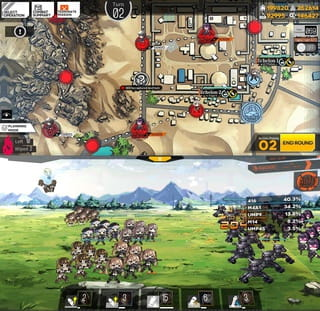
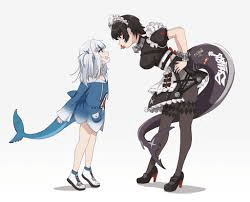
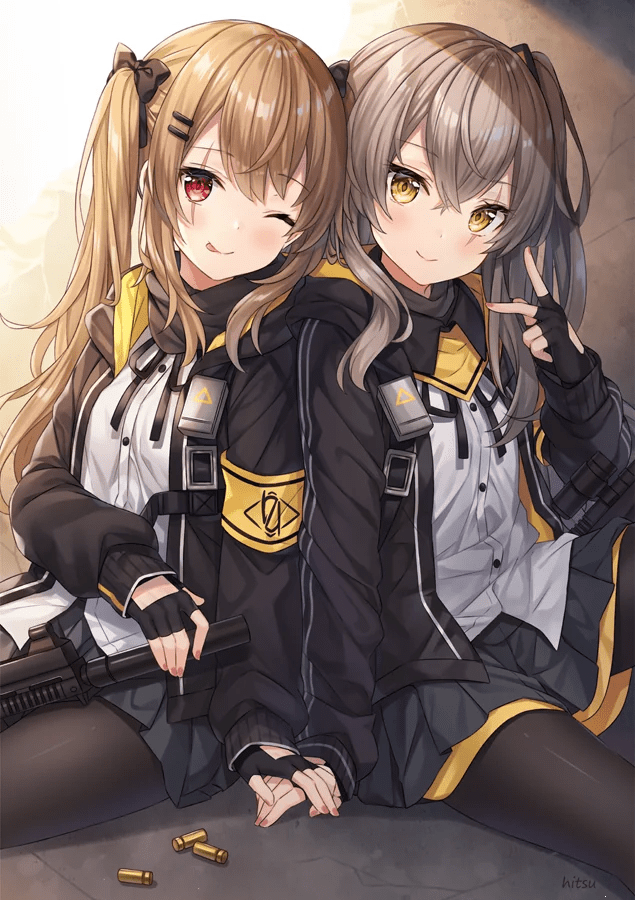


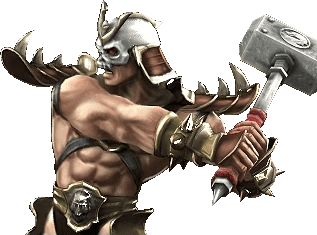


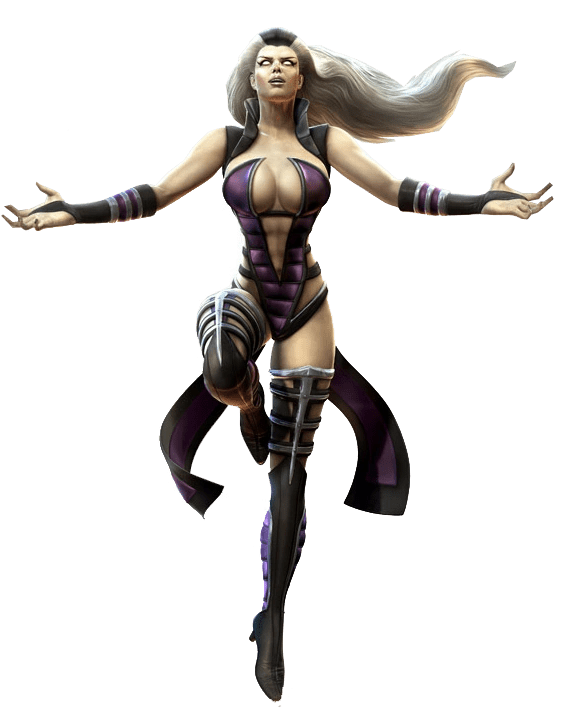

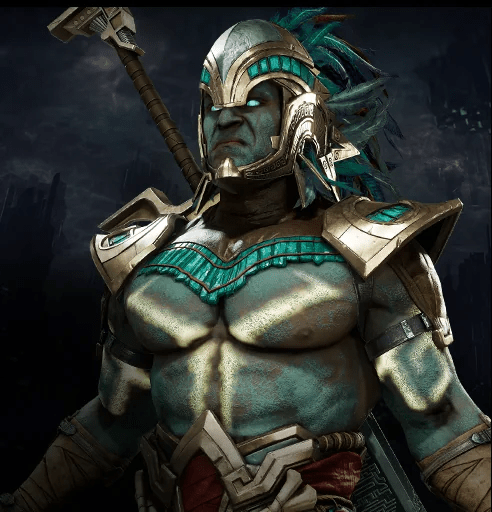
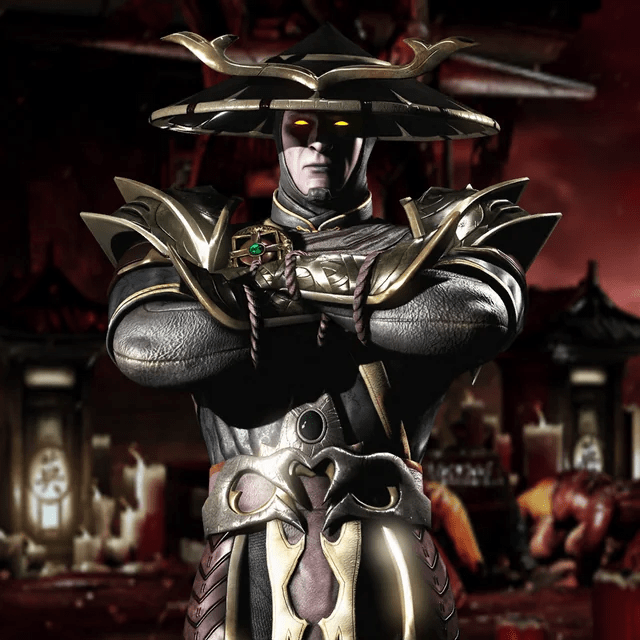

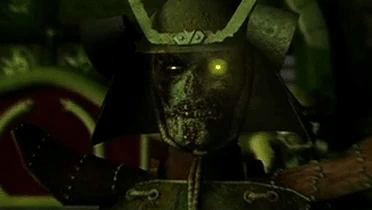
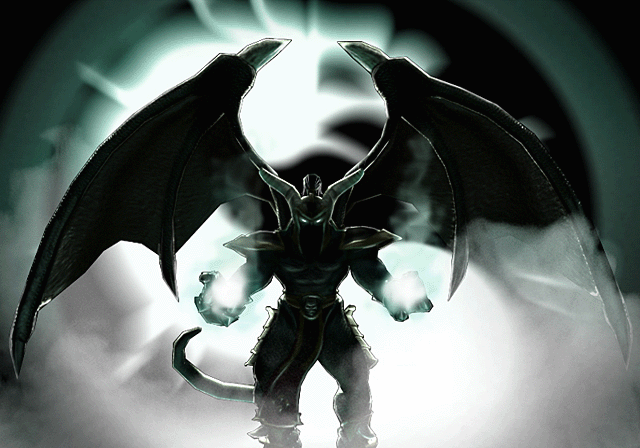


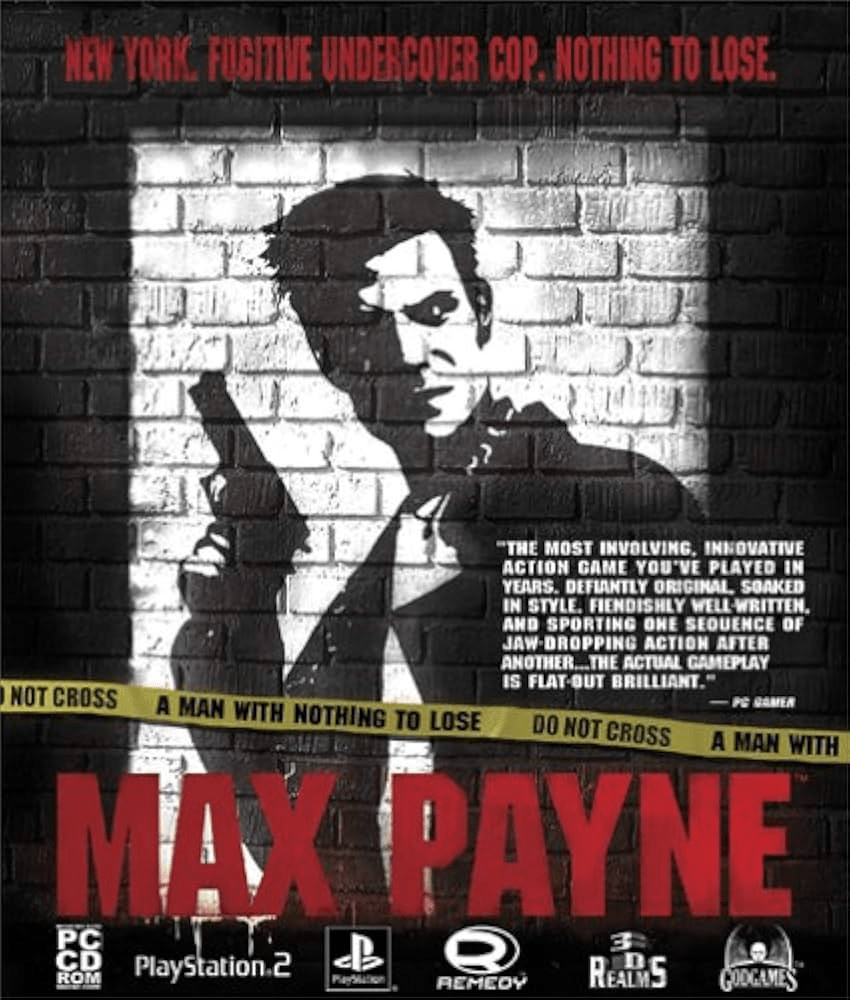





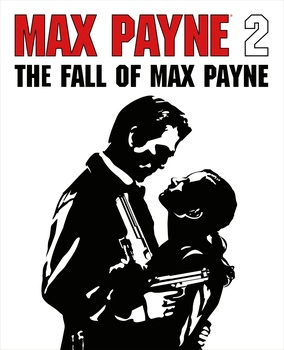

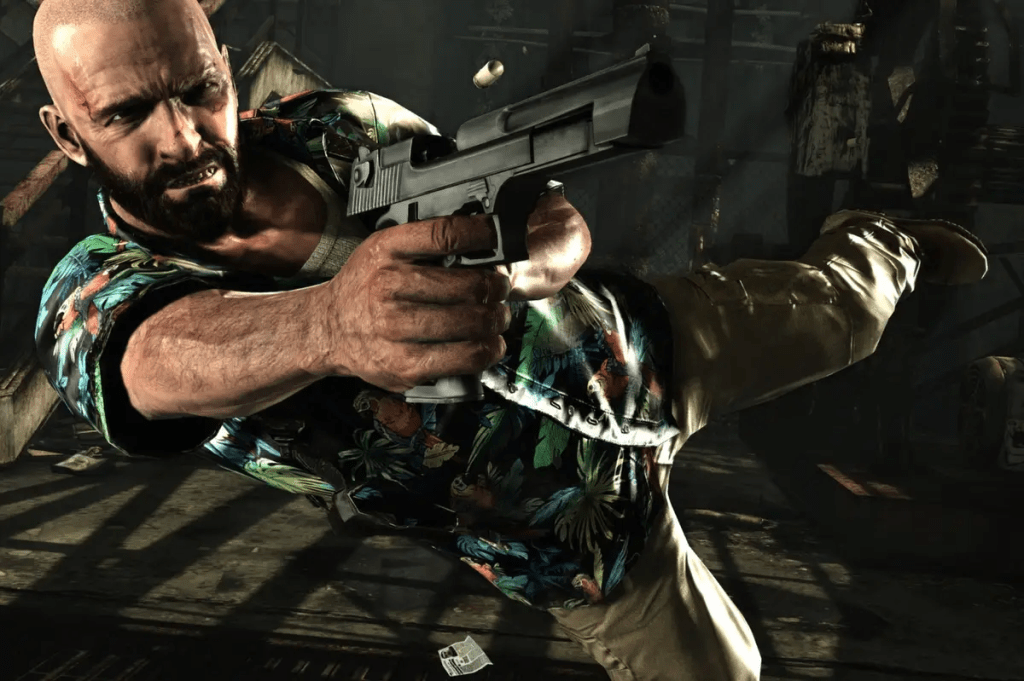
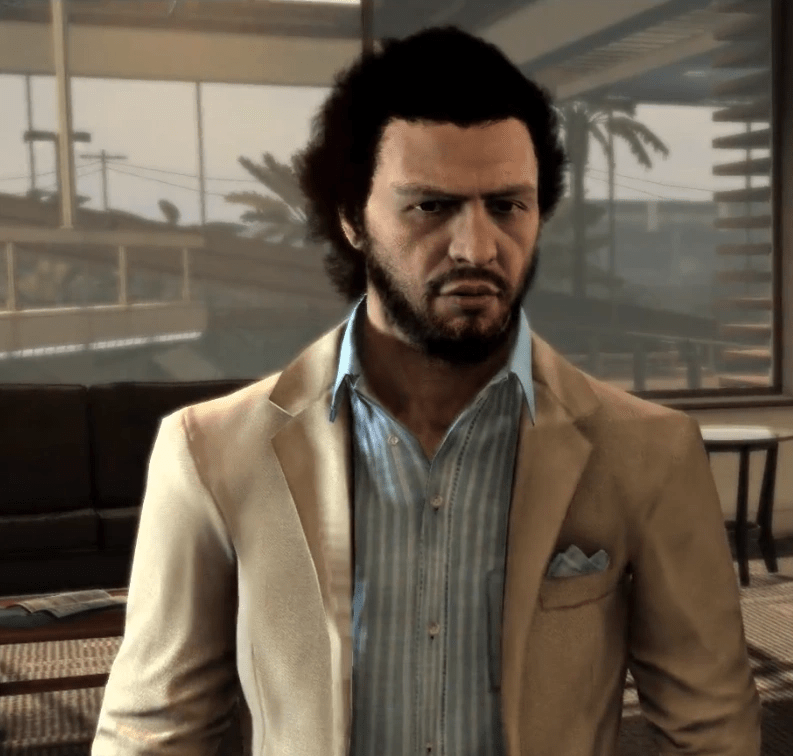
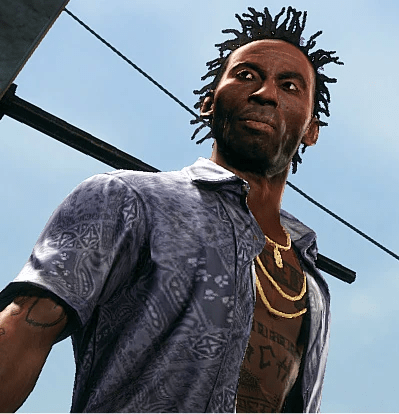



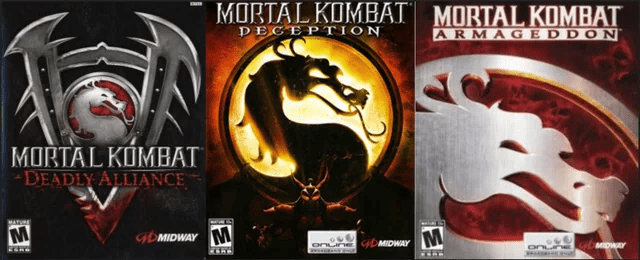

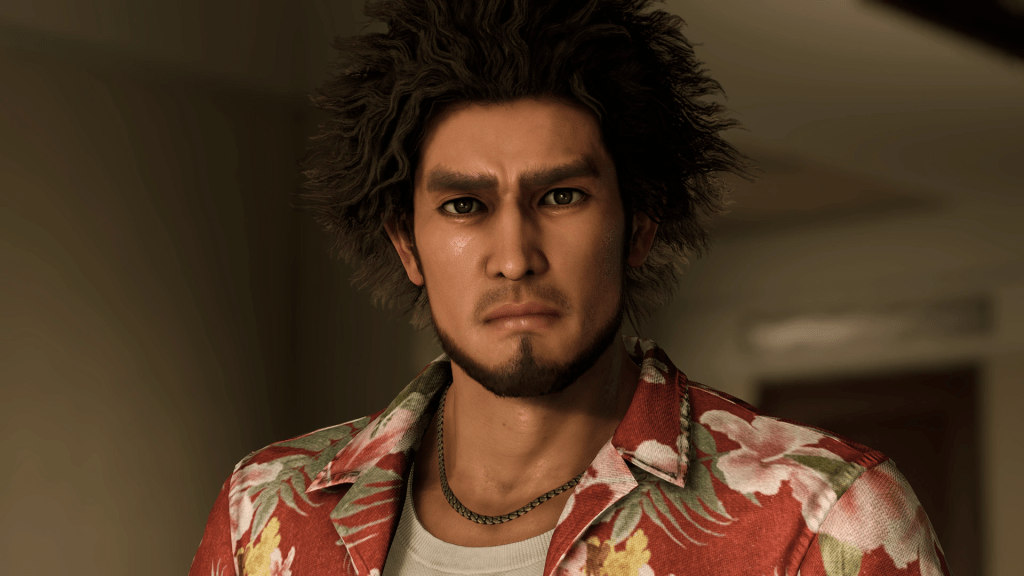


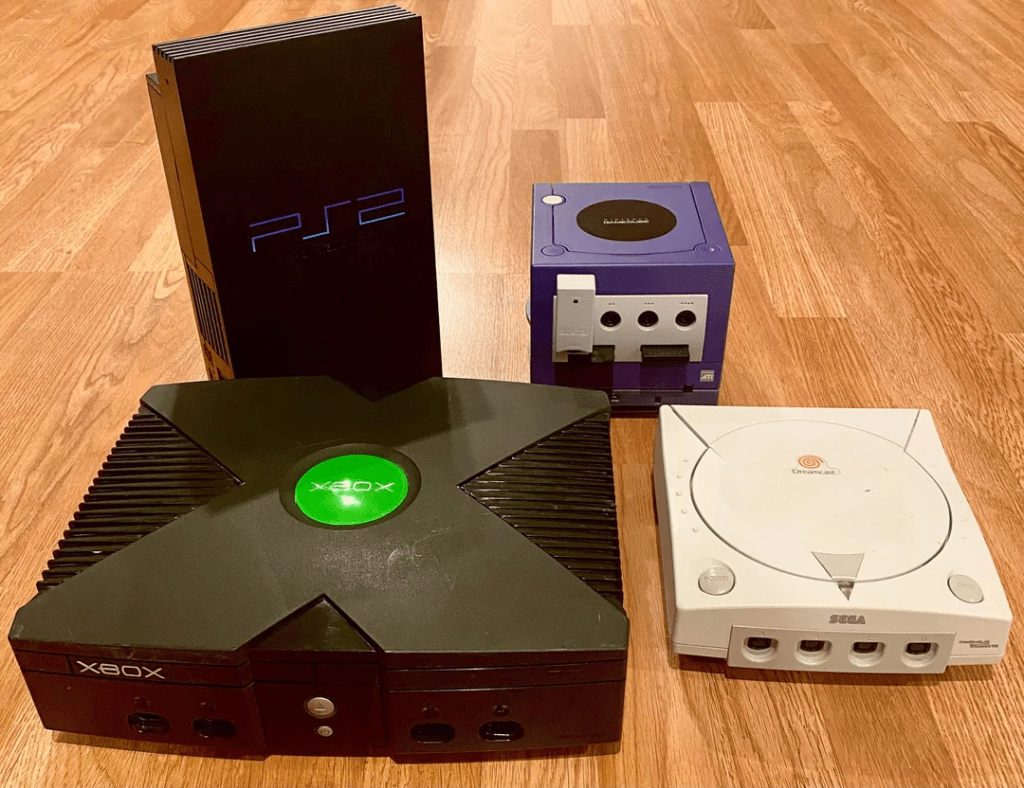







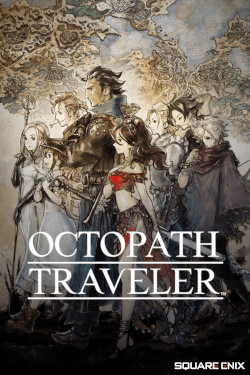
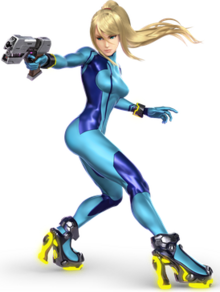










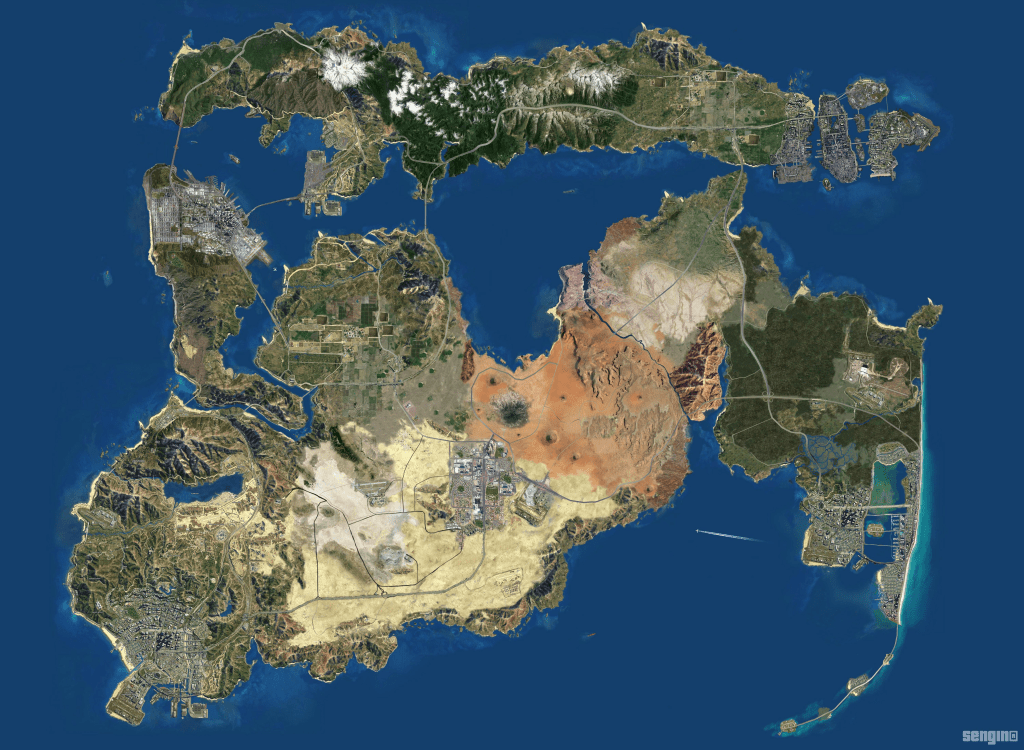
 Opinions on Entertainment