Разве это не то, чего ты хотела?

Forgive me for using Google Translate for the title

Advanced weebs reading this are all too familiar with the Yandere trope, also known as “If I’m not the only woman you know, I will do things that will put me on a watchlist in multiple countries~!”

“You mean… you weren’t already…?” wondered the Wonder Bread male MC before he gets assaulted and threatened with snu snu.

To catch the newcomers up to speed, a yandere is any character (the most common ones being female) who’s so obsessively infatuated with the object of their lustful desires that they will cross legal and physical boundaries to be one with them. I made a joke in my Taste My Saliva post that Mikoto Urabe was Yandere-shaped what with the hentai protagonist haircut, her detached attachment (oxymoron?) to Tsubaki-kun, and her black belt in scissor-fu, but a common trait shared by many Yanderes is that they almost always follow through on the threats of violence and in more ways than one double as serial predators if not outright rapists. The objects of their “affection” rarely get a chance to consent, everything is a weapon if their creative enough, and short of a horror movie scenario, even if the object of their affection died naturally or by their hand, it doesn’t necessarily mean death would stop them.

I wouldn’t put it past NHentai or another such sight to have a tag in the same vein of “post-mortem erection.” Please do not introduce me to such a thing, I already have a hard time accepting Revenge of the Molesting Mage despite the decent, if formulaic, plot progression.

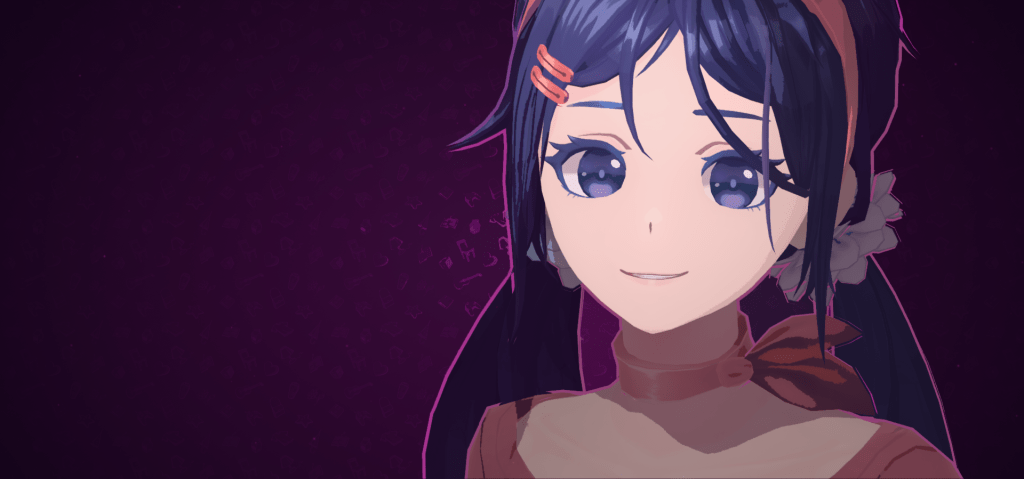
Now, with the knowledge that the Yandere is essentially a horny for romance horror monster archetype, I humbly introduce you to the horror game that took the Internet by storm at launch and has birthed a dynasty’s worth of memes: MiSide!

Awww, look at her! Look at how cute she is. Almost makes gore-y sex with your bloody, mangled corpse worth it…

…is what I would say if the rational part of my brain was missing. Her top is red and so are her flags. Developed by a pair of Russian coders forming the group, AIHASTO, MiSide is about a nameless, generic male protagonist getting suckered into an interactive video game about being a loving boyfriend/husband/significant other type to a fictional girl with a dark side that makes her the star of nearly any given true crime documentary and an average Tuesday in Rossiya.

After days of playing the game, you get literally suckered into the game to potentially live the rest of your life (trapped depending on how you look at it) with Yandere antagonist Mita. If you do certain actions beforehand, you can unlock the prerequisites to live a false life in the Matrix as the prized plaything of this drop dead gorgeous sociopath. Do something else and down the rabbit hole you go where you specifically are the rabbit and Mita the wolf on the prowl.

Fans of Beastars, erase this from your mental imagery right this second. The romance exhibited in the series is in no way comparable to the absolute horror in MiSide.

Slight spoilers for the specifics, there’s a few moments where you can poke around in the beginning when Mita says you don’t have to or even help her with more than what she asks for, as a sort of obedience test. Thanks to my gentlemanly behavior, I failed and was witness to real terror. So, the game contains more than one Mita and the one advertised on the game on Steam is Crazy Mita. The other variants have multiple different shapes and personalities and if I were to scrutinize more heavily, I’d say, they absorb elements from different genres and, dare I say, different horror movies; some of which I might have seen and some others I really need to, even a second viewing. I s[blyat]t you not, there’s a Playable Teaser reference in the game.

Never mind looking at legacy British and American horror movies and games, AIHASTO looked at Japan for this one.

This part also reminded many that Konami can’t get f[yarou!]ked hard enough for cancelling Silent Hills. But anyway, the carnival horrors gets progressively disturbing, surreal, and at times paranormal. That’s the most I’ll speak of on the plot because I wish for you to experience it for yourself.

How’s the gameplay? Well, looking back on it, I figure some extra inspiration came from Resident Evil 7’s and Outlast’s use of first-person POV. Jump scares come up in the select bits that they’re supposed to, but what else is implemented is the destruction of the 4th wall. Not dissimilar from the likes of Eternal Darkness or Doki Doki Literature Club (or even the nightmare sections in Max Payne plus its fourth wall break), Mita in her many forms talks directly to both the protagonist and the player. Although you choose the protagonist’s name, he still has dialogue and is as involved in the story as any other character, one of Mita’s several victims and the next on her impromptu serial killer list. Not content to mess about with the player, Mita also interacts with the environment in some manner. It’s not as extensive as tricking you into thinking you’re suffering from an audio problem or asking you to create a new folder in your files. But there was a clear inspiration from elsewhere.

For you the player, since the framework is a dark twist on a dating/life/social sim like… The Sims, the horror elements make a lasting impression, but so does the down time with some of the other Mita variants. Puzzle gameplay, dating sim gameplay, PvE co-op; all these elements would conflict with each other in a worse designed game, but for an indie, they play so well, that AIHASTO hasn’t just cooked–they have a whole recipe and MiSide is their beef stew. Please, sir. May I have some more?

Channel: Movieclips

Knowing Mita though, it’ll be my own still-beating heart or pumping veins…

You’re not entirely limited to running the f[gong]k away, as select sequences have you engaging in puzzle gameplay or even interacting in a playful way with some of the other Mita clones as the game by this point wants to still believe it’s a dating sim, even if Mita wants to harvest your organs for even worse purposes than making a couple thousand on the black market. Frankenstein’s monster…?

Horror is one thing, but some kind of horror comedy video game would be appreciated even slightly.

Suffice it to say, MiSide pays homage to all the old tropes within whilst putting its own spin on what it brings to the table, sort of like the video game equivalent of the Scream franchise when it debuted in 1996. Taking the piss out of every horror movie as the respective franchise lost favor to trends at the time and pumping it full of blood it harvested from a pig farm. For MiSide, I can’t say for certain whether horror games have lost their knife edge since, like isekai anime, I don’t particularly gun for it exclusively nor can I say that MiSide was trying the same thing here. For all I know, AIHASTO have been working on this brainchild for yonks before they decided to show the world what they were making. Add me to the list of other reviewers when I say that they succeeded.

Even post-release, it was still a work-in-progress of sorts what with all the patches since it released in December. Nevertheless, praise should go to all the voice actors who could convey the emotion in each of the featured languages. As an American, Russian anything can sound intimidating to me even if I’m just looking to get some pizza. With the devs being Russian, it was the first language patch to get the voicework. Down the line came the Japanese voicework and a quick clip of Japanese-speaking Mita vs Russian-speaking Mita, my American ears quickly applied different levels of dread on Mita in that one example. Finally, English-speaking Mita who finally translated the weight of the emotions in her scenes. Language, tone of voice, or merely silently reading the text as it appears on screen, the dialogue lines do well to translate the weight of a given scene to the player, and when it goes hand-in-hand with the gameplay, I can’t help but line up for seconds.

Chibi or not, this smug aura emits superiority… I am compelled to defeat her in a competition!

Robot Girl War Mobile Game

A Brief Fling with Girls Frontline

At this point in time, I’ve got to propose a chicken and egg question about the origin of cute girls in dystopian fiction in East Asia. Whatever the case, there’s enough in the world to inspire such a setting for a mobile game. The one I’m referring to being Girls’ Frontline

Developed by MICA Team in 2016 in mainland China before spreading its wings overseas, Girls’ Frontline (Chinese name: 少女前线) is set in a distant future where the widespread integration of androids is commonplace in numerous walks of life from services to retail to even the military, more so than what we currently have in the world’s most developed militaries, so those drones have a human-looking face for once.

A devastating global war breaks out (probably even worse than nightmare scenarios of a WWIII) and these androids in the shape of cute girls are repurposed en masse to make up for the military shortfall. They’re designed and programmed in a way to effectively and efficiently handle specific firearms and their classifications, whatever those classifications may be. Outsiders, welcome to the wacky world of North American gun laws (because Canada does weird s[bang!]t with their guns too). For instance an android, called a T-Doll, that’s specifically designed for the M16A2 will only operate the M16A2. Modifications can be made to get them to adopt other rifles of a similar platform, though this requires some amount of recalibration beyond what can be expected for the military use of automatons.

Whatever you’ve conceptualized as an android, it’s a different beast being depicted here. They’re machines to the core, yes, but they’re not exactly soulless or anything. It’s not like there are military formations of androids with Android 16’s personality. That’d make for a boring game.

They’re programmed with their own personalities. Some are charming, others are sweet, a third category is more varied with the typical animanga tropes like -dere types, and the rest you can fill in the blanks of this Mad Lib if you’d like. I wonder if the different depictions of robots in the east and west can be counted as a culture clash. With only a few exceptions, most western stories view robots as a menace compared to East Asia where they fit right in with society. As for the plot, well, it’s got the foundation of the wider lore of the Terminator franchise, in that advanced AI goes rogue and after a catastrophe reduces the human population to near-extinction by the early 2060s.

The offending AI in question is called Sangvis Ferri (SF) and starts terrorizing what’s left of mankind and setting up human-free areas. The unaffected androids are contracted by a private military company called Griffin & Kryuger (G&K) to stop the reign of terror, reduce SF’s numbers and destroy them. So this belongs in the rare category where androids are more complicated than originally presented.

Looking back, both sides can be viewed for the general use of androids for military purposes and it can be seen as a distinction without a difference, which it is on the surface. Digging into the nuance reveals what G&K does differently with their own T-Dolls: saving humanity. Thus morphing from distinction to false dichotomy.

Now, my memories with the game were during the Spring and Summer of 2022 and a bit in 2023 before interest died off. It was during the time when I was trying to join the Army and the recruiter I was directed to at the time kept dragging his heels. Or I wasn’t being proactive — either way, I invite someone to tell me why there’s a two-year wait for Glossary Non-Prior Service types. But I digress.

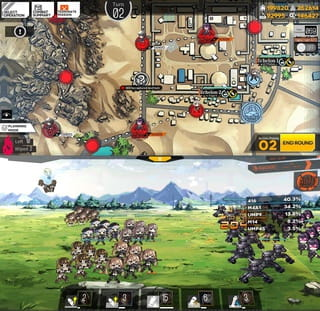
The best way to describe the gameplay is a hybrid of “deploy unit to achieve task” and “move and reposition unit to impact effectiveness.” The same system I recall being used in Assassin’s Creed: Black Flag where Edward can deploy ships to specific parts of the world to lessen the danger levels and make use of established trading ports, like a real pirate.

The gacha-ness of the games comes from spending points to unlock more T-Dolls which can be upgraded individually or used to upgrade existing dolls. For instance, if I have one who uses a MAC-10 and get another MAC-10 doll, I can keep on building the older one and eventually build the second, newer one. Or I can cannibalize the newer one for parts for the first one. There’s not exactly a wrong way to go about this provided it’s the same type of doll being used for the upgrade. An MP-40 doll doesn’t have parts compatible with a Mosin-Nagant doll and etc.

Sounds like a neat experience, right? Well, remember when I wrote about You’re Under Arrest/Taiho Shichauzo? The Buddy Cop anime series from the mid-1990s and it’s revitalization as a meme? Specifically this one:

Channe: Vinicius Costa

Meme tourism is a hit or miss for me. It can introduce people to a series that may not have the same marketing as something else more popular or it can backfire and drive people away or bring in the wrong types of people. JoJo fans get a bad rap for being obnoxious if you ever scroll down the comments of a song or artist referenced in the series.

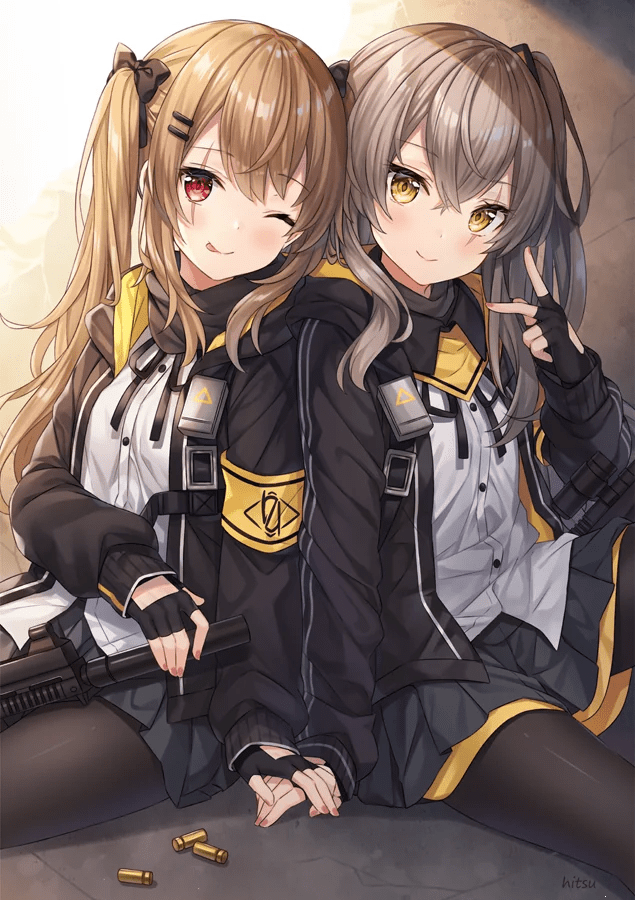
The way I found out about Girls’ Frontline was through a different video. Moonshine Animations’ stop-motion toy review of a figure of one of the characters: UMP9.

Channel: MOONSHINE ANIMATIONS

In the video itself, Moonshine contacted a voice actor on Twitter to voice the character in Japanese as a gag. Having dabbled in stop-motion before, I was pulled in by the presentation and after doing more research on the game downloaded it myself. I was doing rather well at the time making it to the second chapter, but ultimately the game bent me over and painted my ass creamy white. It defeated me and made me feel like a whore wearing thick tooth floss while doing so. Gacha games have a drawback for repetitive gameplay and grinding for those who can’t fork over cash to advance. (Still more honest than EA’s bulls[ka-ching]t lootboxes and Konami’s pachinko machines, I guess.) And Girls’ Frontline is no different.

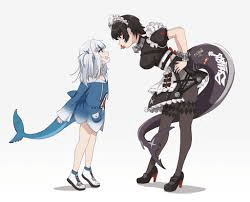
Multiple attempts to get past a level had me repeatedly grinding earlier levels to get more tokens to progress and upgrade, though doing so meant waiting literally minutes to hours to get anywhere. I don’t remember if it had a system to use real money, but it was at a time where I also wasn’t making any money of any kind, so putting a few bucks on the game at the time wasn’t an option for me. These days, the most I’ve done was drop a few bucks on monochromes for Zenless Zone Zero because I have a MIGHTY NEED to get the shark maid.

No! Miss Ellen! You can’t give up now! You’ve got to have pride in yourself!!

— Vegeta Corin Wickes

Perhaps I’m showing my bias or whatever but MICA Team’s first installment in this franchise left a boot print in my ass and I haven’t looked back. Until I learned that it had an anime adaptation. In the case of media franchises Girls’ Frontline has a leg up on, say, Touhou Project or Idolmaster in terms of foreign accessibility, and my experiences are unique. Should you choose to engage in the mobile game, I’d better hope you have a better strategy than simply press buttons and whatnot. As for the anime, there’s better series and there’s worse series. Make of that what you will.

Credit: hitsukuya

Forgotten Mortal Kombat Plot Points that Had Potential

With more time and care, these could’ve helped the old games

This post was originally supposed to be about different archetypes in anime, though I’m delaying that to sometime in December as I don’t yet have enough research to discuss those in full detail. This week, however, I’ll bring up something that has crossed my mind before, but not with enough frequency to expand upon: forgotten plot points from the 3D Mortal Kombat universe.

The original idea came from a MojoPlays video that I couldn’t f[head rip]king find until a few minutes before writing this because I misremembered the title. Abandoned Story Threads instead of Forgotten Plot Points; potato, potahto. Either way, the video can be viewed on the MojoPlays channel through the link below.

Credit: MojoPlays

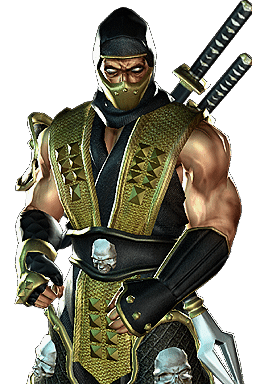
The gist of the video is that throughout the series, the Mortal Kombat games have introduced plot points that were about to heat up only for the devs to go in a different direction. With over 30 years out on the market, you’ve got your pick of the litter to choose from. For this week, it’s the 3D games from MK Deadly Alliance to Armageddon. Here’s the f[scream of pain]king short version: starting with Deadly Alliance, Quan Chi escaped from a fiery ass-whoopin’ at Scorpion’s hands, discovering the Dragon King’s “undefeatable” army in the process and bringing these mummified warriors to Shang Tsung where they formed a bond based on ignorance.

Context:

Channel: Kamidogu

After the Deadly Alliance is formed, they remove all obstacles that would block them from ruling all existence. Not happy sucking up to Shao Kahn for millennia, they kill him in his throne room then make their way to the Wu Shi Academy where Shang Tsung finally gets to consume the soul of the greatest warrior in Mortal Kombat History: The Great Kung Lao I mean, Liu Kang!

OGs can’t be beat!

So with Liu Kang and Shao Kahn dead, they operate a tournament under false pretenses in Outworld and use the defeated to return the mummified army to life with the goal of marching on Earthrealm with malicious intent. Raiden saw this from the heavens and organized the remaining warriors across the realms to stop them. Fun fact, you can find archived websites and forums debating the plot points of then-upcoming games, like this website MKSecrets.net, which for some reason still looks like it was made in 2001 even though it has details on MK1 (2023)… I thought that was most Japanese websites…?

Anyway, MK: Deception picks up from the premise of Deadly Alliance only the sorcerers were too powerful for all of the warriors (could’ve probably sent them all as a group, but MK9 proves that that wouldn’t have helped much) and so at his wits end, Raiden challenges them himself. Not even a thunder god could defeat the sorcerers and realizing that their goals were nearly complete, what was left was the amulet Quan Chi stole from Shinnok in MK4. He hangs onto it defeating Shang Tsung in the process, only to have Onaga reborn (hinted at from Reptile’s ending in the last game) and return to reclaim the army that the sorcerers so generously returned to life with the souls of conquered fighters.

All three men realize that danger was marching towards them and while they managed to temporarily hold them back, Raiden uses a last ditch attack on the Dragon King. It failed to even scratch him and he grabs a hold of the amulet which will be needed to form the six Kamidogu into a single entity.

Channel: MKIceAndFire

As for how Onaga acquired the Kamidogu, well it involved tricking a young boy named Shujinko and leading him across reality by the nose for 40 years. If this game were canon, that would’ve come back to bite Onaga in the ass, only for Shujinko’s efforts to go unrecognized as redemption and still get punished by a Dark Raiden. This will become important later.

Shaolin Monks was a bit of a beat ’em up remake of MKII (kinda) and I’d already talked about that before, so we’re skipping it considering it has nothing to do with the 3D trilogy anyway.

Armageddon was supposed to cap it all off and the more I’ve thought about it, the more it felt like a final send off before Midway got the crappy ideas out of the way in time to file for Chapter 11 bankruptcy in 2010.

Let’s not be too harsh though, it did help pave the way for the Injustice line.

Story-wise, the protector god of Edenia, Argus, is made aware that between the actions of the sorcerers and Shujinko being duped for that long, the warriors of the realms were learning more about the construction of the realms than the Elder Gods would be comfortable with and proposed to Argus to come up with a solution. He suggested total annihilation to protect the realms from their own residents, but his wife Delia suggested depowering them all since there were many heroes who fought tooth and nail to defend the realms from evil, not the least of which was Shao Kahn and Shinnok (whom we learn later was banished to the Netherrealm for eternity for treachery, leaving Quan Chi to do the heavy lifting through the Brotherhood of Shadow).

They’re granted the power to do this and choose to do so by making a competition of things for their sons Taven and Daegon. If things went to plan, the two men would engage in a friendly competition, grab their weapons and armor and race to defeat their mother’s firespawn (half-brother?) Blaze to achieve full godhood as both of them are demigods. In reality, the two brothers, under the watchful eye of a pair of dragons, Orin and Caro, are set on a different path. Caro, who was the guardian dragon of Daegon, lost contact with Blaze believing it to be an early sign to set him on his path. Instead, Daegon forms the Red Dragon clan in Caro’s name and signs off on unethical science experiments for the purpose of choking existence into coughing Blaze up. The way its presented makes me think of Unit 731 in Manchuria and its surgeon general Shiro Ishii. If you don’t know, look it up at your own peril.

This makes Daegon the antagonist of the Konquest mode and through no fault of his own Taven loses sight of the purpose of his quest. And his frustration and confusion at this whole course of events is best reflected at the several times he’s questioned and even considered abandoning ship. The quest stopped being fun for him as he lost the things he cherished. Blaze appeared at the end to catch him up to at least what the true purpose of the quest was and Taven is a hero if we compare him to the Ancient Greek model similar to Perseus or Theseus. Self-serving at times, but the guy still knows the difference between good and evil. Daegon’s descent into evil seems random until he learned that he was supposed to lose the quest and decided to take matters into his own hands, hence the birth of the Red Dragon.

Dropped and abandoned plot points are still a problem for the series as it’s developed a reputation for introducing points and leaving them to collect dust. We barely get five minutes with the concept before the devs (read: Ed Boon and John Tobias) moved onto something else. You could say the fandom is also to blame for this as dedicated fans have asked (demanded) the team to release canonically deceased characters as DLC, but staying with the 3D games where the problem expanded, there’s more to say about it during this era than anywhere else in the series.

Starting with Deadly Alliance, Shao Kahn was established to be killed in the intro to this game, with Deception and Shujinko’s story acting as a prequel taking place some years before the events of Deadly Alliance where it all converges. Shujinko himself was invited twice by the White Lotus Society and later by Shang Tsung himself to represent Earthrealm in the tournament but couldn’t attend for different reasons. The White Lotus got tired of waiting for him to power up (never mind that the tournament is hosted every 50 years) and due to his cleansing journey with Nightwolf, he had to go back to the Netherrealm to gather more hatred, from none other than the ghost of Hanzo Hasashi.

This part doesn’t necessarily screw around with the timeline as egregiously as following plot points, but Armageddon is where it all breaks down. Canonically dead characters are resurrected off-screen and based on what we know we can connect the dots, but often the devs are a bit cagey when it comes to showing how, who and/or why characters are returned to life. The 2011 continuity shows that Quan Chi has brought Noob and Sindel back to life and claimed the souls of those killed by Sindel herself in the eleventh hour, but it’s not shown whether he brought Shao Kahn back to life or if he did why he’d do so, or even why the rest of the villains would agree to this arrangement.

Channel: BruskPoet

I’m not saying this moment in the story is bad, I like it a lot. But the nonexistent explanation for how all this can come to be is what sours me on it somewhat. I’d say there’s no care for a consistent timeline especially in a fighting game (something that doesn’t escape Tekken), but I think it’s more along the lines of the devs wanting their personal favorites to shine brighter than the others, which is why the franchise works better as video games and toy lines than it does movies.

Most of the time…

For what it’s worth, the characters have been mostly consistent with a few touch ups here and there, but if you ask people like The4thSnake, there’s a lot under the hood that could use some light to heavy rewiring from individual characters to whole ass f[swords clashing]king plot points, like what I’ve been writing about here. I’m a bit torn personally, because it brings a charm not found in other series, but this many plot holes treats the timeline like a redheaded step child. Doesn’t stop people from trying, as I’ve stated before, I rewrote MK: Shaolin Monks myself like it was Dragon Ball as that was what I was watching at the time.

Why bother with the 3D games, though? Well, of all the plot points introduced and left by the wayside, the 3D games did it the most and the worst of any other era, which seems to be the result of developmental inconsistencies prior to release on store shelves. It certainly hasn’t stopped people from trying though and it likely will keep going for as long as there is a Mortal Kombat to fix. Nothing too serious at this point, but it’s both fun to expand on what was and offer critique for one of the series most tumultuous times in its history.