Crime Games: An Answer to the Mobster Movie

The trifecta is complete

Before we begin, hope you all had filling Thanksgiving festivities for those who celebrate. I went through a slight hiccup with frozen food, but the other stuff was taken care of, so nothing to worry about. Now to the post.

If you’re looking at the title and thinking, “didn’t you do this two weeks ago?” Technically, yes I did. But that was about true crime, documentaries or media next to documentaries about real life crimes that have happened before, i.e. the Five Families, the Winter Hill gang, Al Capone, Bonnie and Clyde, and countless other criminal figures of yesteryear, all of them inspiring many of our fictional crime lords and kingpins in other media like Gus Fring and Don Eladio in Breaking Bad/Better Call Saul, Clay and Jax Teller in Sons of Anarchy, or for this post, most of the GTA and Mafia games’ lineup of characters. These are long-running series with colorful casts so allow me to preview the short version:

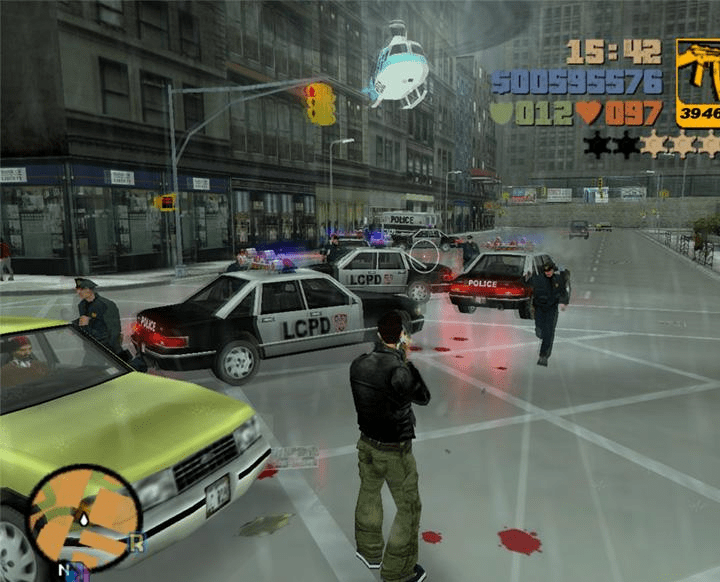
If I were a documentarian, I’d put characters like Tommy Vercetti in the bin of “Amalgamation of Prior Characters Seen in Media.” And not just him; other GTA protagonists and/or GTA moments have taken inspiration from movies released in the past. Some of the games take place in a specific time period and thus take inspiration from movies released around the same time. This video from WatchMojo.com lists different examples:

Channel: WatchMojo.com

Some of these may be easter eggs, but it goes to show how many fans of [Insert Movie Here] work or worked at RockStar. Call it a tradition to sneak some of these in, but they come in full force in GTA V, coupled with call backs to older games, including but not limited to:

  • a car that references James Bond on its license plate, equipped with spy gadgets
  • the cargo train’s registration number on the front referencing the year of the PS2’s highest selling video game (San Andreas)
  • Lester listing off successful heists initiated by prior protagonists; one of those characters being recruitable for a job later in the game
  • Michael’s special ability calling back to the bullet time mechanics of Max Payne
  • and if you wanna get technical, the five-year release gap between GTA’s IV and V, also calling back to CJ’s opening lines in San Andreas

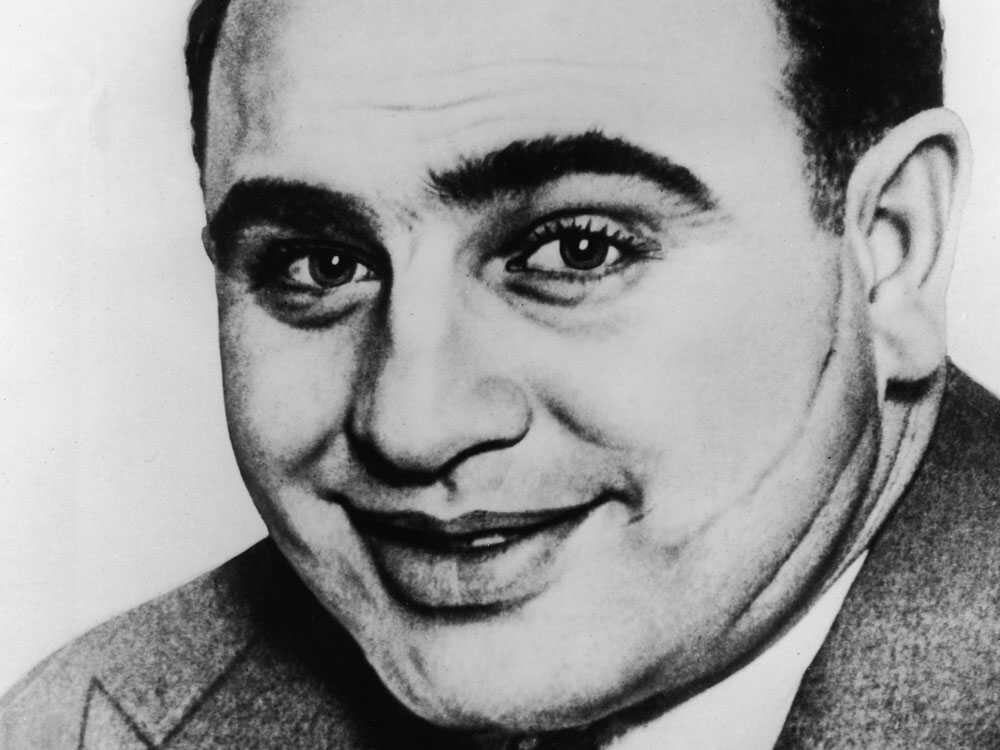
As for real-life inspirations in the GTA series, well, that’s complicated. Vice City provides the easiest example taking inspiration from 1983’s Scarface which is a remake of the 1932 movie of the same name which was about its real-life namesake, Alphonse “Snorky/Scarface” Capone.
From my research, GTA’s influences do call back to high crime eras in American (and sometimes British history), but don’t take direct inspiration from any named criminal or mobster, comfortable to let Hollywood do it for generations before developing a love-letter masquerading as a video game. Sounds like a bit of a letdown, but a series that collects controversy like Yu-Gi-Oh! cards would probably try its hardest to let the games speak for itself, hence why RockStar’s problems weren’t in the headlines until later. Gratuitous cartoon violence was still thought of at the time as limited to Hanna-Barbera cartoons, so facsimiles of someone’s granny legging it after a gun goes off, or rural folk from D[bell noise]k-Fart, NorCal going hog wild thanks to cheat codes would be unheard of in the series’ early days.

I doubt it was much the same for the Mafia series, since that one could sneak past unnoticed, and if it did, the Mafia movie comparisons were proudly warn on its chest like a veteran’s war medals. You didn’t need to convince me that Tommy Angelo was Al Capone or that Mafia II was The Sopranos. It admits that by way of the title, and in stride. The Mafia series also heavily fictionalizes real-life locales, but thankfully offers more than the New York-Miami-Los Angeles trifecta that contemporary media blows its load over. It may just be me, but as a native New Yorker, I could do with a lot less New York. If a thousand monkeys can eventually produce Shakespeare, surely it can take a greater than or equal to number of monkeys to make modern-day Amarillo, Texas more exciting. The Coen brothers achieved that with Fargo back in the day.
So getting away from the usual three, Mafia: The City of Lost Heaven’s titular city is meant to be a fictionalization of Chicago in the 1930s, during and after Prohibition. Mafia II takes place in the mid-1940s and early-50s in Empire Bay, a fictionalized version of several East Coast cities, but having the trademark Mid-Atlantic accents that later defined New York and, depending on who you ask, Baltimore. Mafia III comes right out of left field by throwing the player into the Deep South in the 1960s, stuck between the counterculture movement at home and Vietnam abroad. Specifically, it creates a more in-depth though still fictional version of New Orleans, this time known as New Bordeaux, complete with all the neighborhoods that are said to be in New Orleans, though as I’ve writing, I’d never been. I wouldn’t mind a trip though, I hear Mardi Gras is a hoot.

So while the RockStar series is content with pure fiction, the Mafia series uses history as a jumping ground. Having said that, crime games have proven to be more imaginative than just these examples; I just have a lot of expertise in this field as an avid player of both GTA and Mafia. I believe I said this a few weeks ago, but this isn’t exclusively an American or British thing. Throw a dart on a map, and the country the dart lands on may have something next to a fictional depiction of organized crime–even if it’s beat out by a more popular neighbor. Consider how the western populace learned about organized crime in East Asia or the former Soviet Union, or how crime and law enforcement probably goes back even further than Hammurabi and Babylon.

And obviously not all crime games put you at odds with the law; sometimes it’s you flashing the badge instead of blasting away at the guys who do. Followers already know about my love life with Max Payne, but I’ve definitely watched more crime drama shows and played more games where you are the law. One of the earliest games I played called back to Max Payne: may I present to you Stranglehold:
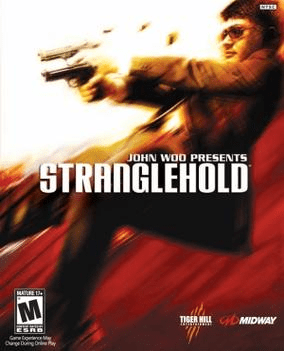
Full disclosure, I have this game (I don’t remember how I got it, it might’ve been from a bargain bin at Target or Game Stop), but I don’t recall ever finishing it. I’d play it again, but I need to check if it’s backwards compatible with the Xbox One before I try, or failing that, emulation or a YouTube Let’s Play can be found to catch me up to speed.

All I remember is that famed Hong Kong cinema director John Woo was contacted by Midway Games, makers of NFL Blitz and Mortal Kombat, to help produce a Max Payne clone with the likes of Chow Yun-fat reprising his role as Inspector Tequila from the 1992 film Hard Boiled, which I haven’t seen. Not that seeing the movie first would put me in the right head space to play the game since I started with the game, but if it helps me get an idea of who Tequila is supposed to be then it’s a good thing it’s in my long-ass watchlist because I’ve got some time to kill.

Traditionally, video games based on movies have been notoriously terrible, but some select developers have tried their best with the material given, sometimes even expanding on the formula established. I know that RockStar paid homage to the 1979 cult classic film The Warriors with a 2005 video game based on the movie, and I remember having fun with Stranglehold, so not all of them are crapshoots.

A more memorable game featuring Hong Kong-based Triad groups came out a few years later. We all know it as Sleeping Dogs, developed by the now-defunct United Front Games and published by the still-in-business Square Enix.

This one does have the Max Payne style of combat and maneuverability. In fact, it’s not comparable to Max Payne aside from the fact that both the respective protagonists are law enforcement officers deep undercover in an organized crime syndicate, but I’m getting ahead of myself. It’s meant to be a spiritual successor to the True Crime series.

Sleeping Dogs is set in contemporary Hong Kong where the protagonist, former San Francisco police officer Wei Shen is transferred to the Hong Kong Police Force to go deep undercover in the Sun On Yee. This presents an interesting dichotomy for Shen as he’s caught between two loyalties: the Triads and the law. I’d elaborate even further, but this ventures into spoiler territory and from what I recall the latter half of the game doesn’t stay as close to this as it originally set out to. This review has more insight.

Channel: The Escapist

Then there’s L.A. Noire, which I’ve mentioned at length or featured videos and articles that have mentioned it at length before, especially the development side of things.

The gist of all this would have to be that life influences culture, I guess. This all had to come from somewhere and the North Side Gang wasn’t gonna emerge from the dirt like Adam in Genesis. But it’s a generally good way to comment on contemporary society. Other times, people just wanna tell a story and whether a million people find it mediocre or one hundred start a fan club around it, the primary focus of entertainment had been fulfilled.

For crime dramas, that succeeds in spades taking home more gold than the original California 49ers. Part of the downside to the crime drama is that it’s come under scrutiny before for inspiring similar crimes, and not just the true crime genre. Violence in media is heavily scrutinized and when it’s in a video game, it’s a media circus that brings more attention than what was previously projected. I know I’ve harped on this before, but I feel that it bears repeating. Sorry to leave on a sour note, but calling back to a video put out by Alternate History Hub: the news should stop glorifying and perpetuating violence. It’s shown time and time again to do more harm than good.

Last thing, before I properly close off: I wanted to make a post about the fourth chapter of Boruto: Two Blue Vortex, but Thanksgiving preparations kept me from properly preparing the notes. I’ll try to get one out sometime in the next week, ideally before next week’s post.

True Crime/Noir Media

My third favorite genre

There’s no question by now as to what I like. Most of my posts here have a video game or animanga focus, but let it be known that I have more in store than Japanimation and rhythmic button-pressing. It’s the title of this post which I should clarify. While I used to gravitate mainly mobster/organized crime centered media, for the most part the characters and organizations therein were largely fictional or fictionalized. Stop me if this sounds familiar: mobster movies tend to require a bigger commitment compared to video games like the Mafia series, select GTA games, or the video game version of The Godfather. All solid series and franchises in their own right still, but even within a genre we each have our preferences.

But obviously fictional media interpretations of the Mob didn’t come from nothing. Crime fiction as a genre’s always been there, just look at the westerns. Lawmen, gunslingers, outlaws, big names like Billy the Kid, Bass Reeves, the Earp brothers. Whatever the criteria is for crime media, if it involves someone stepping on the law to get to a goal while someone else representing the law is stopping at nothing to stop them, then by all accounts it’s a crime movie… which probably means Lord of War falls into that too by my standards.

Yuri Orlov may as well have been Major General Smedley Butler: they both had rackets on three continents.

And this is quite apt, as Yuri Orlov was said to draw inspiration from the real life Merchant of Death Viktor Bout. And he’s not the only fictional criminal to be based on a real mobster. Sometimes the real life mobster themselves is fictionalized. If you know anything about Prohibition, you no doubt know about Al Capone and his ability to fool the cameras at least until St. Valentine’s Day. And since that time and following his death, countless movies have come out with him as the prime inspiration.

As for how I got to this genre, that’s really hard to say. At first, I thought it was from the GTA series, but looking back that’s probably inaccurate in my case. Movies? Kind of… my grandma does have The Godfather trilogy and numerous westerns, but I didn’t see some of these until I was at least 12. TV? Definitely not, my mom barred me from watching Family Guy until I was a teen due to sexual content. So in lieu of a true origin, I’ll explain some of my favorite media pieces from this genre. Starting with a game that puts you in the same boat as the law instead of against it.

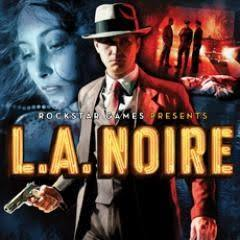
Post-WWII, Los Angeles, war hero turned LAPD lawman Cole Phelps fights crime in the City of Angels. This is how it starts, but later in the game a conspiracy spearheaded by some of the city’s top officials is underway. The game gives the player glimpses of this in a string of newspaper clippings that can be found during gameplay, coupled with an interspersing of Cole’s service in the Marines during the war. Once everything is put together by the end, you have a near-perfect storyline.

I say near-perfect because the development of this game bogged down its own potential. A video game director who’s behavior would be welcomed in a Brazilian junta; a poorly populated 1940s rendition of L.A.; a finnicky motion capture technique that made interrogation impractical; a piss-poor implementation of a penalty system; and most disturbing of all, a dead studio.

Mechanically, it had great and interesting ideas, and if given the room to spread (read: taken out of McNamara’s hands at the time), these ideas could have inspired future developers for the better. Instead, it and the firing of Jason West and Vincent Zampella of Call of Duty fame unearthed a culture of toxicity that the video game industry is still trying to shake off. No matter the intention, eight years in the inferno for a paradoxically half-baked product tells anyone reading up on Team Bondi all they need to know about how things were handled from beginning to end.

To my knowledge, we haven’t had a story that nightmarish before or since then, but there’ve been several close calls. Needless to say, the behind-the-scenes drama that unfolded at Bondi is why I put L.A. Noire so low on my personal tier list. Without the crunch and a better management of time (and perhaps sacking McNamara), L.A. Noire could’ve turned out better than what we got in our timeline.

For a series I’d put firmly in the middle:

So far, I’ve had three different hot takes:

  1. Kratos was right mostly
  2. Boruto’s not that bad mostly
  3. Chainsaw Man is predictable

We’ve got another on the list: The Godfather is Mid. And depending on who you ask, this is either sacrilegious or moot. It’s an influential novel and movie trilogy. It adds nuance to otherwise dastardly characters. It’s a source of inspiration for numerous directors on the big and small screens, but to me, much of this is a little lost in translation. It’s like playing GTA III after reading a list of all the game that have drawn inspiration from it, narratively or mechanically.

It’s not so much that I think it’s unbelievable (as in the laws of logic would never allow it), or that I think it’s terrible (clearly false), or that I’m saying it’s overrated, though others have said that before. It’s more like before and since The Godfather, there’ve been truckloads of mobster movies that I think did better than The Godfather. It might be the emphasis on subtlety that bogs it down for me, but a visual medium like film–while capable of telling instead of showing–should still show instead of tell, or in this case, show more than it tells. From what I remember it was 2/3s tell and 1/3 show.

But it does its job phenomenally well. Inspiration, references, inside jokes (even bad ones); I haven’t found a single person who hasn’t heard of the franchise in one form or another. It took the tropes of the old 1930s and 40s noir films and put new spins on them while also inventing some of their own. Watch a mobster movie or TV show made in recent memory, there’s a good chance that it’ll draw at least one thing from Mario Puzo’s novels or Francis Ford Coppola’s movies.

At this point, I’ve thrown shade at a big movie, suggesting I think there’s something better. Well, not exactly better but more so one I like a whole lot more than The Godfather:

For this one, I was a bit late. The other stuff I’d known about for years; I was first introduced to Black Mass the year it’s film adaptation released.

Channel: Warner Bros. Pictures

In the lead up to the release I read the book by Boston Globe journalists Dick Lehr and Gerard O’Neill, intent on getting the full story of it’s star, James “Whitey” Bulger. Interestingly, the movie released a few years after the F.B.I. closed in on him in the summer of 2011 after 12 years on the lam. At first, I thought that the idea was exercised shortly after his arrest in California, but ever since the book was published in 2000 (and of course re-released 15 years later for marketing purposes), different ideas were thrown around to get an adaptation off the ground, but they didn’t exactly take off until 2015.

For my take, I’m sort of glad we got the final product that year as opposed to, say 2005. The movie mostly focuses on Whitey’s activities between 1975 and the mid-80s, but the epilogue detailing Whitey’s and his associates’ fates after the fun’s over is what sticks with me. Some of them snitched and got comparatively lenient sentences, others were thrown in jail for life or were sentenced with lifelong shame for colluding with Whitey Bulger himself, and the rest of the snitches were released earlier than the others for cooperation and continual good behavior.

As for Whitey himself, well as previously mentioned, an unnamed source warned the F.B.I. field office in L.A. that he was seen in Santa Monica, and he faced the consequences of his actions to the tune of two life sentences plus five years and a civil asset forfeiture of his riches totaling $25.2 million and another $19.5 million in restitution. Unfortunately for him, he’d fully serve these sentences on October 30, 2018 when he was bludgeoned to death by another inmate. Seems it was only fitting that his end was as grizzly as his life and leadership of the Winter Hill Gang.

As it stands, this is really the only mobster story that concerns an Irish mobster instead of Italian ones, and I’m always looking for stories on other mobsters the world over, not necessarily Cosa Nostra style. As of writing this, I’m trying to do some research on the Triads and the Yakuza for a story idea I have set in East Asia and concerning some of these characters. Fingers crossed, the research I do on these serves me well when I open a new Word document and get to typing. And it’ll also serve me when it comes to researching organized crime in other parts of the world. I know that they’re all there, it’s just that perhaps that I’m a New Yorker, a resident of the city where arguably the Mafia started and thrived, the origins of the Mafia and subsequent media genres thrives in this city, and most mobsters here being Italian or Jewish (see Kosher Nostra/Jewish-American organized crime for more details) sort of colors my view and at times my expectations of organized crime rackets, even fictional ones I hear about or create myself.

I also want to give a few honorable mentions to a few other properties I either haven’t seen but heard were good or I have seen but haven’t given them a proper ranking yet.

  • Casino (1995) — owing to what I’d been talking about with mobsters inspiring Hollywood, Frank Rosenthal’s gambling prospects were an interesting choice that I believe paid off quite well.
  • Fear and Loathing in Las Vegas (1998) — it meets my personal criteria of a crime movie and while I’ve neither read the book nor watched the movie, the premise seems like it’s worth a watch or read or both. If you’ve read the book, watched the movie, or both, don’t spoil me. I wanna go in blind.
  • To Live and Die in Los Angeles (1988) — also meets my criteria, but deals more with high crimes. I’ll rank it properly once I see it… in 10 years.
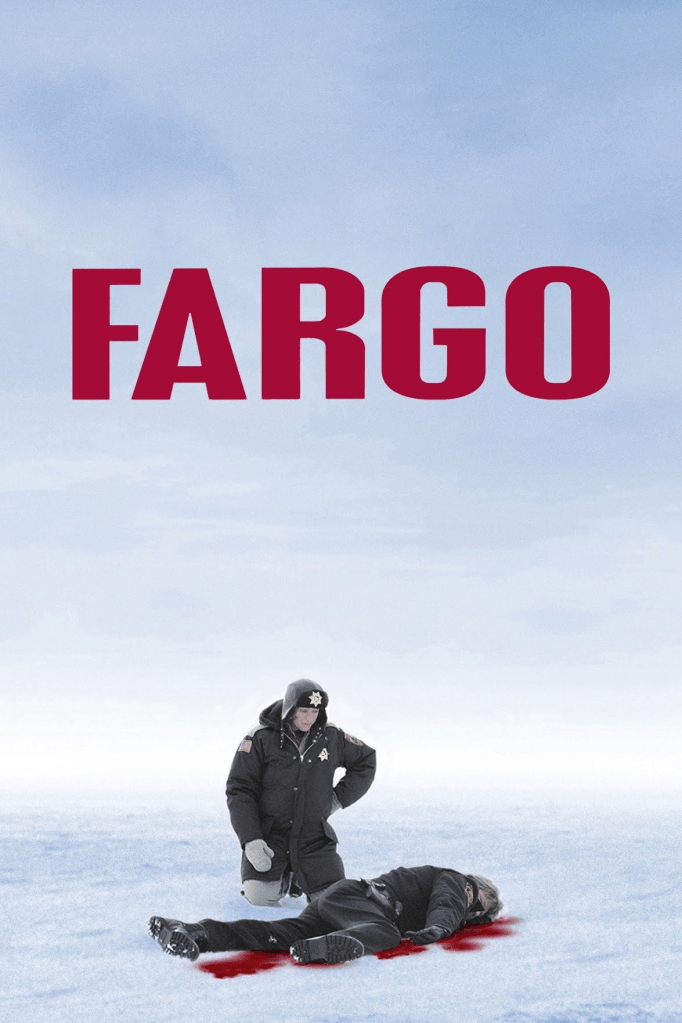
  • Fargo (1996) — The cinematic equivalent of you don’t have to do anything wrong for a plan to cock up disastrously. If anything, if anyone before this thought the Upper Midwest was to chaste for criminal behavior than digging through news archives of high profile crimes should change that perception. Fun fact: I watched this prior to typing my third manuscript. I anticipated a few scenes where the characters would pass the time talking about recently released movies and this was up there along with Waterworld, Fatal Attraction, and Pretty Woman. Fargo didn’t make the cut, as I recall.
  • Miller’s Crossing (1990) — You can’t really go wrong with the Coen brothers. The synopsis itself sounds quite complicated, wait ’til I see it in action; and finally;
  • No Country For Old Men (2007) — another Coen bros. flick, I saw this at a relative’s house a few years ago, and as cool as it was then, I think it’s worth a rewatch. I don’t know why films did and some still do this, but quiet mumbling as dialogue interspersed with operatic action noise is goddamn annoying. Dramatic or not, it makes me feel like I’m getting long in the tooth when a dialogue scene is near mute while the action scenes have the loudness of artillery volley fire.

Quite a list to try and rank properly. Maybe I’ll come back to this in the future.