
It’s about time I got to something more personal
Since this blog’s inception, its mission has been to provide interesting opinions, takes, predictions, and whatnot on different parts of entertainment. I think it’s safe to say that as of September 1, 2023, I’ve achieved that and then some, but most of the opinions expressed have ironically not been as personal as advertised. So to address that, I’m going to help expand the shortlist of video games I enjoy by bringing you all to a game that I can return to 100% of the time without fault.
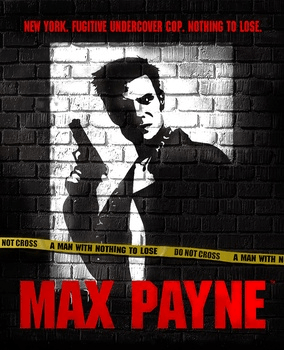
Yes, unquestionably, the game that ropes me in like a pest in a snare is that of the hard-boiled ex-NYPD detective Max Payne. In a bit of a contrast to the video games I’ve talked about before, my introduction to MP was late. Very late, and at the end of the series’ ropes. It was an advert for the third game in Spring 2012 that caught my eye and a local brick and mortar game store near me had a sale on the other two video games.
I pulled a genius move and began with a first-time experience with the PS2 version of MP1, and interesting features of the game make it many times more memorable than anything put out by RockStar, Midway/NetherRealm, or any other developer from the era. I popped the disc into the console and got to playing the tutorial. Games these days have a nasty habit of holding your hand very tightly, so something like MP1 giving this much slack on the choke chain was a breath of fresh air for a start. If the tutorial is necessary, I say they adopt this model, or since we’re fast moving away from that era, we should bring it back.
The titular protagonist is as I described before, an ex-detective who accepts a transfer to the DEA after a tragedy breaks into his house and murders his family. That’s how the first game starts actually. There’s a part of me that simultaneously wants to recount the plot of the games, and avoid all spoilers and instead direct you to your online marketplace of choice so you can wish list it for a sale or pirate it if that’s not applicable, so to compromise we’ll summarize the main points of the games, introduce some of the characters, and layout some features that I’ve yet to see repeated anywhere else.
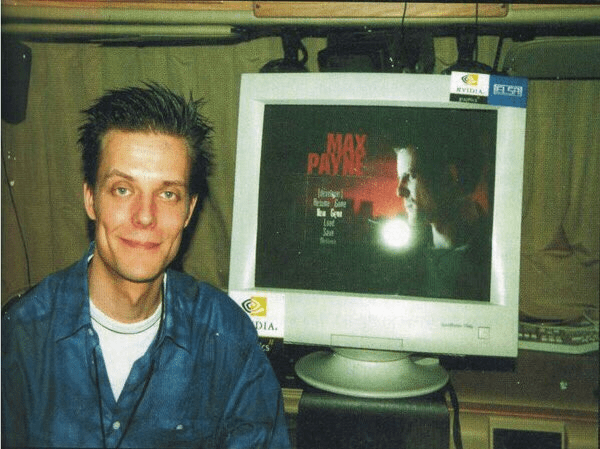
Credit: u/postalesgames, https://www.reddit.com/r/maxpayne/comments/fuslxa/sam_lake_playing_max_payne_the_year_is_2001/
The first game begins with titular Max Payne talking to a colleague about a transfer to the DEA, which Max declines to stay close and safe with his family. Unfortunately, a tragedy barges in, murders his family, and purely for vengeance, he accepts the transfer into the DEA. It takes a few years but by the early winter of 2001, Max reaches the source of his pain. Buried deep within the wall of mobsters and junkies is a complicated plot spearheaded by a secret conspiracy that on reflection stands on par with something along the lines of 9/11, JFK, and moon landing conspiracies.

Set two years after the first game’s events, Max returns to the NYPD cleared of anything he did the last time with connections to powerful people. In this game, it’s learned that despite all their work and collaborating, the secret society that gets him out of dodge in this game isn’t the most loyal. They serve themselves first and the collaboration between themselves and Max was pure happenstance. The stars wouldn’t align that way again. Not to mention, another man who aided Max the first time was serving his own ends separate from the society.
Based on the characters you meet the first time around, you could probably take a bet or two on who would stick around and who would put a bullet in your head. Well, get ready to go broke because the circumstances flip like an overactive light switch. At times, it makes The Romance of the Three Kingdoms look like a schoolyard brawl, and Three Kingdoms is an appropriate comparison since most of the same enemies and then some come back for round two.

Now for something completely different. After almost a decade in hibernation, Max Payne 3 came to the shelves in 2012 and we’re far divorced from the setting of the first two games. Closing off the trilogy, MP3 gives us a protagonist with a severe drinking and painkiller dependency deep in Sao Paulo as a private contractor for an aristocratic family. Disaster follows Max like a wet dog and brings harm to the family he’s meant to protect.
A trophy wife gets abducted and Max has to fight tooth and nail to bring her back safe and sound. Following a bullet ridden trail through a river, Max investigates a favela, or Brazilian slum, for answers and finds out firsthand how cutthroat and unpredictable the arms trade can get. In the end, he learns that the family he’d been working for had been sold out by one of their own to corrupt officers and a militia involved in the human trafficking trade.
Yeah, the tone grew darker and darker with this final installment. Makes for some neat action, though.
The action tends to take a bigger focus than the story, as with most games. For the Max Payne series, the perfection lies in the shootdodging/bullet time mechanic.
Based on the video above, the way the mechanic works is that when Max dodges a hail of bullets, time slows down allowing the player to aim the weapon precisely at the enemies. Time stops when everyone is down or when the player lands on the other side of the room, whichever comes first.
Alternatively, there’s a manual slow-down that functions the same as the shootdodge, but without the dodging. Time just slows down and allows Max the freedom of movement to gun down everything from the dandelions on upwards. Yahtzee Croshaw of Zero Punctuation fame makes a point as well for the mechanic being a double-edged sword. It’s mostly effective when every enemy is down. If any are missed, just pop back up, finish the job, and to the next area you go.
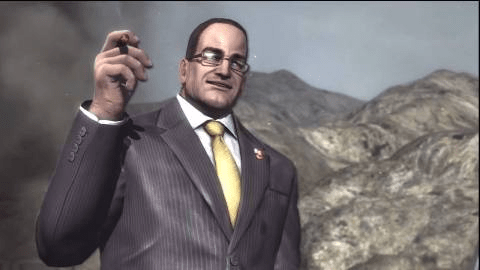
The manual slowing of time is marginally better since you can toggle it on command and execute a plan to eradicate everyone in sight. One flaw with this would be the weapons in the enemy’s arsenal. Generally, the enemy’s are armed with pistols, machine pistols, and shotguns, but occasionally the one special enemy has something like a rifle or a grenade launcher that can send you into orbit in three seconds flat. Without clairvoyance, you’re left with trial and error to solve this problem and you’d better hope you’re allotted enough time to grab enemy weapons and ammo because the bosses can take hits like Senator Armstrong in Metal Gear Rising.
Across the games, there’s been a healthy cast of characters. I’ve already explained the man whose name is on the box art and newspapers, but there’s more. Such as the female counterpart to, and potential love interest of Max Payne: Mona Sax.

Mona Sax is a gun for hire, found to be chasing many of the same enemies that are also after Max. What also sets her apart is that unlike the typical assassin seen in media like, for example, Agent 47, Mona is shown to have a sly personality. As for her contracts, for the most part, it’s all business. If the target is competing for the devil’s position in hell, then she’s guaranteed to set her sights on you, especially for the money. But if the target is someone she happens to like or tolerate, then I can bet money myself that she can fake the target’s death.
The love angle comes into swing in the second game, but the circumstances going on in the background complicate things tremendously. They still have a lot of the same enemies, but not all of them. Sometimes Max’s enemies are Mona’s convenient allies and vice versa.

A head of the Russian mob, Vladimir Lem is a convenient ally in the first game. When he’s first introduced, he can be seen from afar eyeing Max’s exploits undercover within the mob, so his actual introduction is a long-time coming. When he finally shows his face, he lives up to many of the mobster movie stereotypes of old.
His first lines are a Corleone-style proposal to help Max get to the truth while Max solves a problem for him. Fast-forward two years, and there was more to Vlad than he was willing let on. Just goes to show that this isn’t business where people trust easily.

Alfred Woden is the mysterious one-eyed man drip feeding Max information on those who caused his pain years ago. You’d think he’d give it to him within first contact, but the details of the game keep him in his position of trickle down note-taking. But once everything is revealed in full, it’s go time.
This all goes well until the second game where the whole concept of trust experiences another Ring of Fire tremor.

The only supporting character to appear in the third game, Raul Passos fits the role of helping to isolate both Max and the player from a familiar environment, even though the lore explains that the two were coworkers in the NYPD before. Passos was the one who helped Max relocate to Brazil to start working as a contractor for the family, but even with a helping hand, things go terribly wrong.
Unlike the others, Passos doesn’t have anything else under the hood that royally screws Max over. Well, there is (minor spoiler), but it’s handily resolved rather quickly. Passos doesn’t betray Max and makes it long enough to escape without any scratches. If you’re looking for more details on the games, the Wikipedia, associated wiki pages, and reviews from back then are all available. And of course if you can afford to do so, Steam or similar online game stores are at your disposal and to my knowledge, RockStar hasn’t delisted the game from Steam. But on the off chance they choose to do so in their infinite wisdom, there’s another way to experience the series for yourself:

 Opinions on Entertainment