Live Action Avatar: Honoring a Classic?

Bringing nostalgia back for new and old audiences

I had gotten news of the live-action Avatar remake on Netflix through the grapevine. Stirrings online in r/TheLastAirbender brought it up sometime last summer and I was holding my opinions until I saw the series for myself, which I did so this week. Even with all the news and assurances that it would do its best to honor the series while putting a new spin on it for a 2024 audience I still felt dubious for a number of reasons.

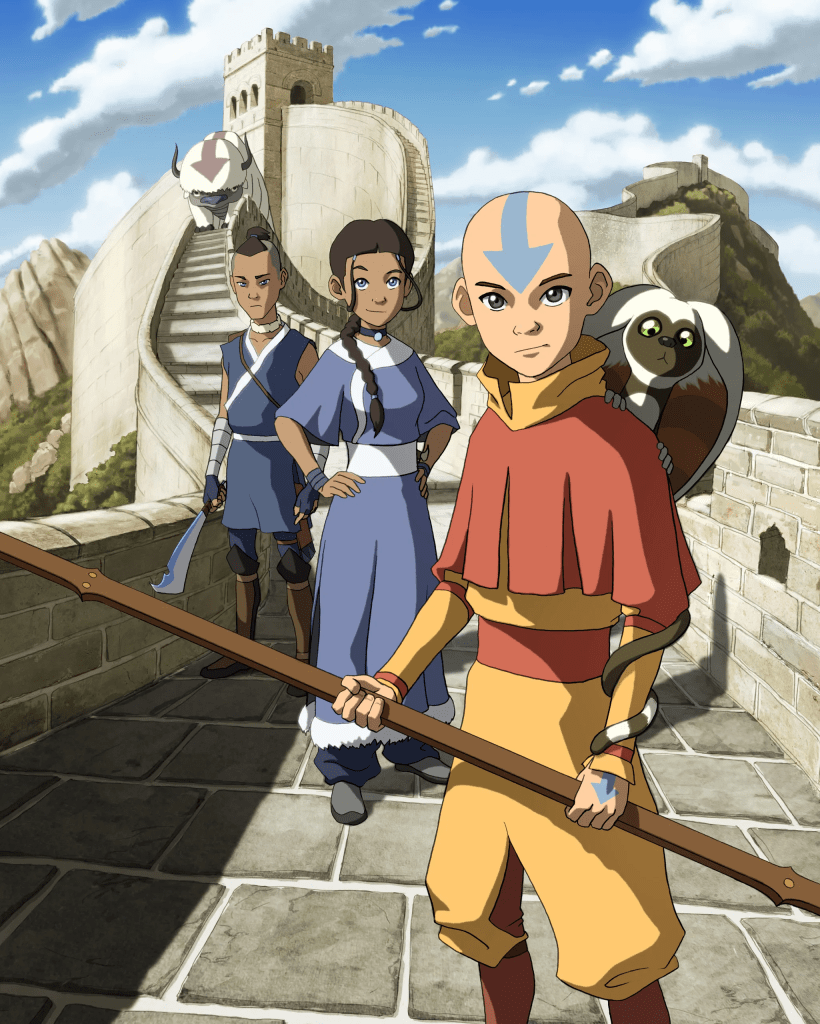
For one point, the original 2005 cartoon debuted on Nickelodeon, presenting itself as a goofy cartoon about practitioners of the four elements, one, the Avatar, being the master of them all in a bid to bring harmony to a world almost completely victimized and under threat from a militaristic, ultranationalist empire. Goofy moments when the time calls for it surely, but it’s a surprisingly mature cartoon that treats the subject of war, death, genocide, and loss with the maturity those all deserve.

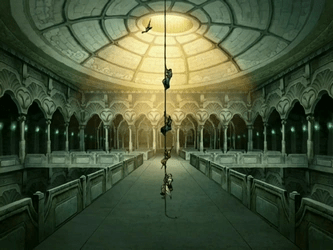
It was a beloved show and those who were there when it aired (myself among them) remember very well many key events and moments from the show from Aang’s discovery by the Southern Water Tribe siblings, to the hunt for the nearly completely buried library managed by a spiritual being, to the planned for and failed invasion of the Fire Nation mainland by a coalition of Earth- and Waterbenders.

Forgive me if those were spoilers for those of you who couldn’t see it even until it recently came to Netflix, but I bring those plot points up to set up what it was like for me watching the show, eagerly awaiting for Book 3: Fire to finally launch in 2007.

I won’t pretend that it was the perfect series even at the time. Some episodes dragged on in places, character flaws that were acceptable back then show the age of the era select episodes were written in, and some plot points were either never addressed or outright dropped for mysterious reasons (the fate of Zuko’s mother was the biggest mystery back then), but I forgive a lot of these for the progress from beginning to end. The mark of good, if not, great writing is the kind where the character shows considerable growth from beginning to end, hence why you learn to hate Walter White towards the end of Breaking Bad.

Another point to bring up would be the early production issues experienced shortly after the announcement of the series. The series had been in the works for a few years prior to the filming of any trailers of announcements of which actors would be cast as which characters as told by original co-creators Bryan Konietzko and Michael D. DiMartino. Initially, they were all on board with the idea, but Netflix being Netflix seemed to have made a decision that drove them away from the project, and it would be up in the air as to what that would be until the series debuted in February of this year.

Either way, things weren’t looking very good for the live-action series, especially since this had the Netflix stamp of approval, a now-diminished status that at one point was worth a mouthful of gold crowns.

I personally had been critical of Netflix, at first for contrarian reasons. Since at least high school, even with the streaming service gaining ground as far back as the mid-2010s, I was the one going against the grain failing to see the point. Call it my upbringing; classic cable television hadn’t disappointed me yet. I was still a kid watching cartoons. It wasn’t until high school actually that I got a taste as to why some shows continued over others. Ratings were often the name of the game, which seems to be the core of the philosophy for Netflix now that they’re a streaming service.

It works for some, but the millions they spend even on single episodes, their original series being hit or miss at times, and their pioneering of the batch release takes some others getting used to if they ever do. But with a bunch of other apps and streaming services putting their own spin on the formula, some of them established brands and others newcomers, the crown jewels of the Netflix empire start to look and feel like old paperweights. Guess I still have those old opinions despite being on Netflix for the sake of a few shows that are on the service. Hahaha!

These days though, what makes me so cautious of Netflix is its reputation. I’m not gonna knock all of their originals — I’ve heard critics sing the praises of the likes of Stranger Things, Orange is the New Black, and Bojack Horseman among others — but f[bricks falling]k me some of their other s[farting]t stinks to high heaven. I’m scared as hell to include the promotional poster for that one movie of theirs that caused such a stink online a few years ago for numerous reasons. IYKYK.

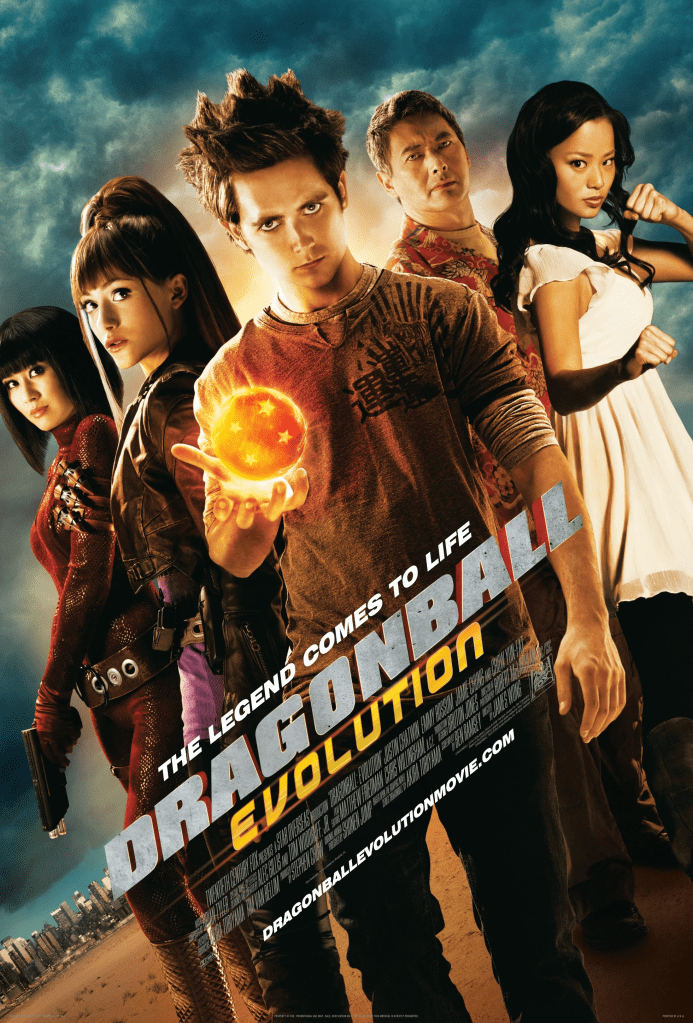
Narrowing it down further is the reputation of its live-action adaptations of popular anime. For years, live-action adaptations of anime, be it western or Japanese, has come under scrutiny for a lot of reasons, many of which are obvious. Impractical set pieces and designs, the absurdity of a lot of anime plots and character designs, and the awkwardness of introducing a lot of tropes known only to weebs apropos of nothing is a major killer of a lot of non-anime fans interest at the first hurdle. It’s a hard lesson that most western studios learn and forget rather quickly. I’ll never forget the ham-fisted attempts at hyping some of these movies up for release. Notably, this one:

For Netflix’s case, they thoroughly bungled the Death Note movie (forgive me for mentioning that… mess) and they screwed up the Cowboy Bebop movie with its god awful writing. Only recently did they nab themselves a mining pan of silver with the live-action One Piece, but flubbing it time after time, is that the only victory they have to flex? Probably.

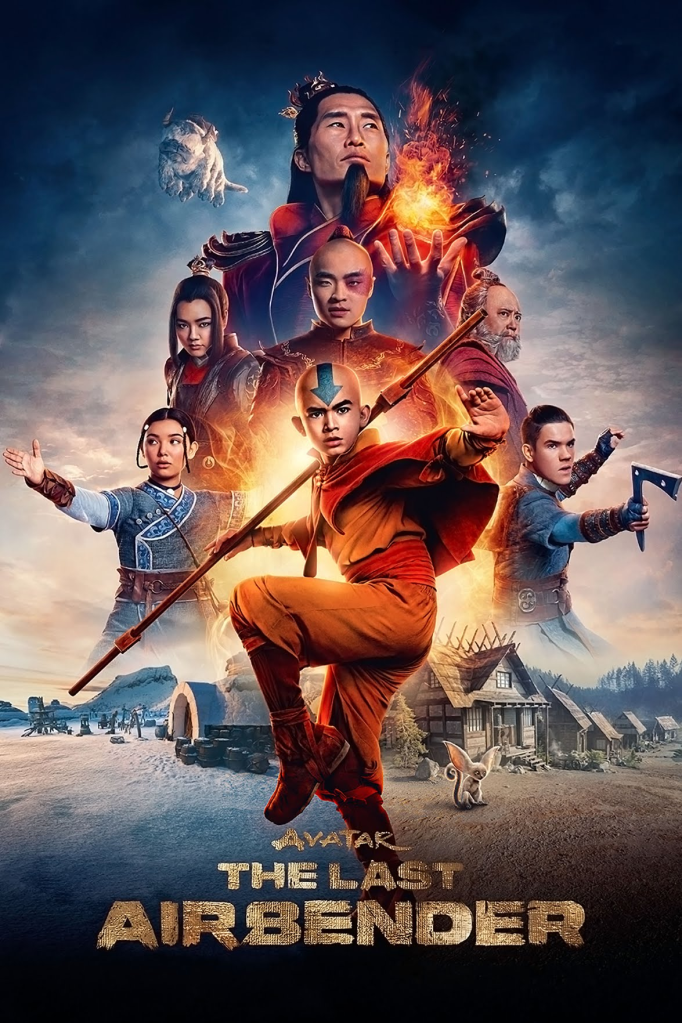
Now they’ve come out with an eightfold batch of Avatar: the Last Airbender filmed and remade in the third dimension for our viewing pleasure.

I can’t make this a complete review as I’m only two episodes deep, but I already see the differences that Konietzko and DiMartino likely had an issue with. It’s not a shot-for-shot reshoot of the original series. Instead, it has the groundwork but interweaves easter eggs for the original audience watching with the new layer they built for themselves. Of the things I remember from Book 1, Zuko and Zhao were butting heads trying to capture Aang for Fire Lord Ozai until the end when Zhao was killed in the raid on the Northern Water Tribe, eliminating one of several of Zuko’s rivals.

Speaking of which, the circumstances behind Zuko’s scar are also rewritten. I didn’t get this far in the series yet, but in the clips I saw when the original and new shows were being compared, instead of cowering when he found out he had to face Ozai in an Agni Kai, he seemed to have put up a fight until the last minute. Something I’ve gotta praise personally because it hits a bit close to home. You or someone you know may have had that kind of parent, the type who wants to show their child the world is made up of enemies to fight with your fists by volunteering to be the first enemy they have to overcome.

And there’s more moments in the show that differ slightly or greatly from the original in a lot of ways. But are the humorous moments still there? Actually, yes. Select moments and characters do stand out quite a bit like Momo, Sokka, and my personal favorite so far, Uncle Iroh. But others did raise an eyebrow of curiosity, namely the early introduction of the Spirit World and the first Avatar Aang encounters when there.

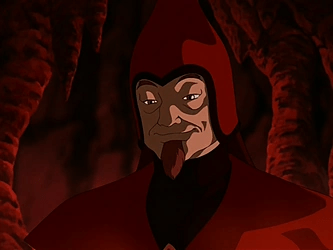
If you remember, the first Avatar he encountered in the cartoon was Roku, first from his statue in the Southern Air Temple, then through his pet dragon Fang before finally meeting him on the eve of the solstice aided by an underrated character, Shyu the Fire Sage.

In the live-action series, Kyoshi’s the first Avatar he encounters and its at her temple where she’s pretty much having a DBZ: Abridged moment with Aang while he’s looking for easy answers to a complicated problem. Personally, I feel this would’ve worked well at the end when he’s nailed every element and the fight with Ozai is on the horizon, just like it is in the original. That works so well because Aang is at a crossroads and is looking for answers from as many of his past lives as he can contact.

In that moment, Roku didn’t much left to offer the teenage Aang; Kyoshi practically told the boy to make a decision or suffer the consequences; Kuruk used his life’s regrets as an example of what not to do in the face of danger; and Yangchen, the last Airbender Avatar, while understanding the disciplines instilled in all Air Nomads (Aang being the living legacy of such), she reiterated that Airbending Avatars like them are exempt from such expectations due to their duty, and in this moment, it was up to Aang to save the world from evil by lopping off the snake’s head. In the live-action though, it seems more than a little bit rushed. The original series gave Aang and co. roughly the length of a year to master the bending disciplines and concepts. The circumstances of the show may have forced him to rush it at at faster pace than his predecessors, but he’d matured well-enough to understand what was at stake.

The live-action series dumps all this on him at the first hurdle, before he has time to at least try to get a better understanding of this world he was awaken from. At this point in the series, all he knows is that thanks to Sozin’s Fire Nation, he’s the last of his kind. Again, everything was revealed both to him and the audience in snippets. The Netflix batch release hinders this, I feel, as it forces the series to do a lot more with a lot less, specifically condense 20 episodes into eight. It feels to me that it’s jumping the gun when it doesn’t really have to.

If Netflix were a different company, they could probably dedicate more time to retelling the story over the course of more episodes (probably 12-13 instead of eight), maybe giving the series more seasons than what it got back in the 2000s, but that’s just what I feel. Maybe a second season gets greenlit and we’re in business or maybe it follows a trend of million-dollar-an-episode shows getting canceled because someone hit the bulls[cattle bellowing]t button. Who knows what’s in store?

As I said, this is less of a full review (I hardly ever do those these days), and more of a first impression of sorts. It’s bound to change the more I watch.

For Saturday, May 11, 2024, I introduce you all to The Japan Reporter.

https://www.youtube.com/@TheJapanReporter/videos

Also known as Nobita from Japan until recently, The Japan Reporter is another Japanese YouTuber with a bridge to the western and Japanese worlds, reporting on a variety of different things that do or have the ability to impact Japanese every day life from societal norms, social issues, and environmental factors to political stirrings, culture, and a bunch of other stuff.

Far from being the only channel to openly discuss these topics for a broad audience, if you were looking for more windows into Japan perhaps for an upcoming visit or for your own personal curiosity, have a look at this channel.

How and Why I Recommend YouTube Channels

Jumping from channel to channel

Since it’s a month that’s divisible by 2, and I’ve gotten into the habit of recommending interesting YouTube channels every other month, I figure I shed some light on how such a system came to be. In the last quarter of 2022, I had come across a channel called The4thSnake, dedicated mainly to video game lore, but most importantly the Mortal Kombat series. For the 20th anniversary of the release of Mortal Kombat: Deadly Alliance, the British YouTuber released a video that went into detail explaining every single nook and cranny hidden within the game, sort of like a visual love letter to the 3D era when for the most part, WB Games — who now holds the MK franchise — won’t or can’t re-release the 3D era games. Other videos like this of his heap praise on the old MK games while criticizing NetherRealm and wishing Ed Boon and the Mortal Kombat team in the modern day would do more or at least change some things from the established canon in the reboot series. Towards the end of these videos, The4thSnake would recommend a video that also talked about Mortal Kombat, but in different aspects, and not all of those channels or videos were very big. Sometimes these are small channels with a sub count only a few hundred strong.

Here’s the video in question:

The video is over 40 minutes, so grab some snacks and a drink.

Part of why I love this video so much is because it taps into what I remember most about this era of Mortal Kombat. The nostalgia of the PS2 and Xbox days were strong in these types of games. The hardware limitations of both at the time allowed for more creativity in some areas, but now that I think about it, it also meant more work which is why most entertainment has fallen back on algorithms and computers.

As for the recommendation itself, I like to take in information without their being an expectation that I have to recite what I learned. Miniature rant: presentations were what bugged me so much about school. From my own observations, YouTubers who make informational videos with extra content or information tend to leave a video card up in the description or a pinned comment in the comments section below. History YouTubers like Cynical Historian put in a bunch of information citing sources and such and corrections wherever applicable if there was an error that slipped by until the editing process.

Additionally, there’s a sort of unofficial collaborative effort in the recommendations. Unlike the system YouTube uses, which is a glorified time sink, YouTubers recommending other channels/videos slightly differs since the recommendation will relate to what the recommending YouTuber was talking about in said video. For instance, a historian recommending a mythology video for context behind a cult/religion in an ancient civilization makes sense at the outset, whereas a recommendation for something completely unrelated may rely mostly on the context.

The way I’ve done it doesn’t necessarily relate to entertainment as this blog does, or rather the channels I recommend are people I subbed to or I just like to watch even occasionally. It’s also one of the ways you can tap into what I like at the moment, though the last three words in that phrase are the most important. I’ve been on YouTube since at least 2009, back when entertainment boiled down to trolling the viewer by way of putting a jump scare over stock footage of a sedan driving down a winding highway. I didn’t officially start on YouTube until June 2012 and the videos I watched and at times made were all Lego stop-motion films or brickfilms. A term coined in 1989 by the independently filmed and produced short-film The Magic Portal by Australian filmmaker Lindsay Fleay, presented below:

Production on this film began in 1985 and despite being completed in four years, it clocked in at over 16 minutes long. Over the years, brickfilms have surpassed that video length and have taken considerably less time to film and edit, bar a few individual cases of technical difficulties. At the time, I collected Lego sets and I even dabbled in brickfilming myself. From the outside looking in, the illusion of making inanimate objects walk was amazing, and easier to absorb as a concept for me than hand-drawn animation. However, when I did it myself as a 13-14-year-old I discovered several problems that can make the process a nightmare.

As noted above, the process is very time-consuming. There are methods to make sure continuity in animation is consistent with each passing frame, like the onion-skinning method, though some errors still slip through the cracks and can be noticed in the final product. Unless you’re an editing master, you’ll have to redo a scene or even the entire animation. Over time, my interests evolved. With YouTube channels like pantsahat or Moonshine Animations expanding to action figures, Figma, and S.H. Figuarts, new limits have been achieved, though in that small circle I was briefly involved in, it was limited to Lego and only Lego. That community had no love for Duplo or Mega Bloks and likely still doesn’t. Mega Bloks to us were Tiger Electronic handhelds for video games; a cheap imitation ripping off what’s popular without understanding the why.

Ever since, I’d come to watch and even subscribe to YouTubers who covered a variety of different topics, though staying within the same entertainment umbrella. Video games, TV shows, movies, comics to a lesser extent, and by 2017 around the same time I was in college, anime and manga, which I had gradually come back into since. Of course, there was Toonami, but it was around this time that I realized backdoor shenanigans were largely responsible for why some TV shows aired episodes either out of order or simply stopped without warning. So imagine how let down I was when Toonami ended in 2008, or when Nicktoons put Invader Zim or The Legend of Korra in the dead zone of TV, or when Disney XD just stopped airing the dubbed episodes of Naruto: Shippuden in 2009. Fitting something into your schedule and then having it disappear from beneath you is the one surprise I never wanted to face. And on that note, I really feel for the current iteration of Toonami being unable to air the second season of Mob Psycho 100.

I also don’t think I’m alone on that front. A variety of studies have since come out to announce that cable TV has fallen out of favor with YouTube largely replacing it over the years. What started as a video-sharing sight in 2005 has grown into a huge network that after 18 years has begun to inherit the problems that were already there with cable television. Think about it: ads (skippable or not), sponsors, individual channels, verification systems, a form of monetary support for the channel in question, a ratings system; YouTube is pretty much television made for a modern audience. And they also seem to agree with the introduction of Original shows, Premium, and TV, three systems I don’t see myself supporting because I don’t even have that kind of money to spend on entertainment.

Having said that, most YouTubers appreciate support even if the most you’re capable of giving is viewership, likes, and subscriptions, all of which are for free. The same thing goes for sharing and linking videos across the web. Since I use reddit regularly, these links are all over comment threads on the site, typically as memes and reference humor but also for some interesting finds. Holding for a phone call may have cost us our time and caused us grief waiting for an operator to connect us to a business, but of all the choices for generic hold music, Tim Carleton’s Opus No. 1, when you actually listen to it uninterrupted, is a solid soundtrack. Personally, I’d choose it over elevator music.

All things considered, my bimonthly recommendations might as well be a share button in a fancy suit, and so far only once have I had to retract one due to backdoor misconduct. A single slip up can sully a YouTuber’s reputation and the platform will deem it necessary to write an entirely new set of guidelines to keep every content creator from making an already bad image even worse, sometimes at the cost of content.

PewDiePie dropping a slur by accident or Logan Paul filming a suicide victim in Japan are two examples of recklessness leading to a near-total disaster, but if I have to throw them a bone, they’ve at least learned from their mistakes to be more careful if there’s ever a next time. Regarding the redacted recommendation, Blair Zon of iilluminaughtii fame has garnered slight after slight and the more information that gets out the worse she looks. When I retracted the recommendation back in April in favor of two others who were slated for later dates, the initial controversy was in its infancy. Looking at video essays now, some of which clock in at over two-and-a-half hours, it’s gotten much worse. And the self-awareness is in another castle. The view may be excellent from a glass house, but if you want to keep it that way, don’t throw stones.

Then again, stuff like this is hard to predict. Even if you do pay attention, the signs of trouble can be very hard to see, from a distance or even up close. Which brings back awful memories of when Rooster Teeth booted one of theirs a few years ago for grooming allegations. For what it’s worth, my recommendations don’t have to be adhered to very strongly. They’re there for those who are interested or who want to know more about XYZ. I have no way of knowing how helpful they are, but as I wrote above I like to think of the recommendations on this blog as a share button in a set of new clothes.

And for this week’s recommendation, the YouTube channel The Professional.

https://www.youtube.com/@theprofessional155/about

The Professional is a gaming and current events channel that focuses primarily on action and stealth games. His chief areas of focus are the GTA and Red Dead series, but also Call of Duty, Medal of Honor, Hitman, and several others. Additionally, there are lore and explanation videos on individual topics and subjects around the games played and occasionally current events, some of which may have crossed your news radar in recent memory. I recommend this channel for the games and the information about the games in question.