
And now for something completely different
Before we start, I’ll say that I meant to have something up either by Friday evening or sometime yesterday, but I missed it because I was tired after work and yesterday there was a local comic con in town that me and some friends wanted to attend. Also the two topics I had lined up for coverage–a review of the Undead Unluck anime adaptation, and a chronicling of the reboot Planet of the Apes series–would require me to both finish the anime, and to at least see the new Kingdom of the Planet of the Apes movie. The first of those can be done more easily than the second since while in TRADOC (Training and Doctrine Command) if you go off post, you need to be with at least two more people, and I haven’t found anyone to go with yet. So my thoughts on the anime adaptation will come later, and my series review of the Apes movies will also come later. Back to the topic.
I’ve gotta be honest and say that I had forgotten why I put this up as one of the many topics to blog about. As much as I like sci-fi, the dystopian side of things isn’t something I actively seek out on purpose. Often, what I find just so happens to have dystopian elements in the plot. This might’ve been on my mind at the same time as the Civil War movie back in April. I haven’t seen that movie myself yet, but based on what I’ve heard from people like Brandon Herrera, there seemed to be a lot of build up with little pay off. That, or everyone was expecting the same kind of hullabaloo that came with the political landscape of releasing a movie like this during an election year, and most people’s expectations weren’t in line with what the movie had in store. If I see the movie, I may share what I saw.

Jesse Plemons’ appearance in the trailer certainly added to the hype until release.
Anyway, I’d say that for me, the appeal of dystopian sci-fi comes from an added appeal to the fantasy, as in a lot can be done even with this one specific filter. It could be and often is a world similar to ours but with a few new rules that make it a darker and bleaker place. Think of Fahrenheit 451 by Ray Bradbury. The theme of this world is that of suppressing dissent. One way to go about this is burning books. All of them. It’s illegal in this world to even own a book let alone read it, so firemen are employed to do the opposite of what we know firemen in the real world do: light the books on fire. But with all the calls to burn the books, it can only mean that there’s a resistance of some kind to this draconian law and sure enough there is. An underground society of sorts that serves as a gathering of rebellious readers, sort of like a book club in tacit defiance of the Gestapo-like firemen.

As we can see from the book and its movie adaptation, the world is not dissimilar from ours except reading and literature are criminal acts where the offender is disappeared while their illegal library goes up in flames. In this case specifically, it calls back to the pre-war Nazi German laws where anything critical to national socialism was up for a mass purging, writings included. Of course, knowing Nazi Germany, this boiled down to anything perceived to be penned or endorsed by their enemies, namely communists and Jews.
Based on that example, the dystopian genre can also provide some social commentary on the real world, and it doesn’t necessarily have to take itself seriously. Comedic examples like Futurama, select episodes of South Park, or even certain skits in Robot Chicken do a lot to make a commentary on the real world, often through speculative warnings. And the operative word here is “speculative.” In my research for this blog, I found that utopia and dystopia normally go hand in hand, often as a response to one another and from my perspective either of them can and do address the issue of logical fallacies, namely slippery slopes and depending on the writing and phrasing tu quoque and/or middle ground fallacy; slippery slope since the more pessimistic of the two can be argued that X will happen if blank is allowed, tu quoque since either side can argue convincingly that the other is behaving naively and unethically, and middle ground since a third party can attest that the most ideal solution lies the furthest away from the two extremes and unlike the extremes, the middle ground attestation isn’t under the same expectation to provide supporting arguments.

Sounds familiar, right?
Well, like real-world politics, utopia/dystopia and everything under that umbrella can come in many different forms. As such, there’s a lot of elbow room over what a work of fiction can look like and/or talk about. Tell me your favorite examples. Mine has to be the beginning chapters of the Dr. Stone manga. Shortly after awakening, Senku, Taiju, and Tsukasa all agree to harness the titular anti-petrifying agent to awaken humanity and reclaim the Earth from that evil queen we call nature, but the conflict arises over who to revive. Senku chooses all of humanity should be revived no matter what, but Tsukasa disagrees, citing the existence of bastards and monsters in this world, many of them bitter geriatrics that we could do without and essentially starts off as an antagonist reviving a handful of warriors he believes are incorruptible while Senku, Taiju, and later Yuzuriha continue on without Tsukasa’s might and brute strength.

The question dealt with here in the beginning is that of morals. Both the antagonist and protagonist in this arc accuse the other of being nonsensical and provide compelling arguments for this case.
The manga obviously follows the protagonist who won out and eventually recruited Tsukasa to his side, save for several dissenters spouting his original tenets for the next arc or so, but if the manga was more Seinen instead of Shonen, we probably might see the perspectives of both sides or even a third side emerge, though depending on who you ask a third side already exists and its called the legal system.
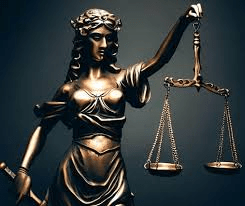
Joking aside, since I’m already a fan of sci-fi and more specifically the alternate history side of things (See: my recommendations for Alternate History Hub and Monsieur Z/Dean Mosley), the dystopian side of things has its appeal for me for a lot of the reasons listed, offering interesting stories and scenarios to explore.
And since the subject is on dystopian fiction, I offer these novels as my personal recommendations:
Stand on Zanzibar (1968) by John Brunner
A Clockwork Orange (1962) by Anthony Burgess
Anything by Mary Shelley (1797-1851) (I’d be more specific, but there are too many examples to choose just one, though I do encourage looking beyond Frankenstein)
A Scanner Darkly (1977) by Philip K. Dick
Planet of the Apes (US)/Monkey Planet (UK) (1963) by Pierre Boulle
 Opinions on Entertainment