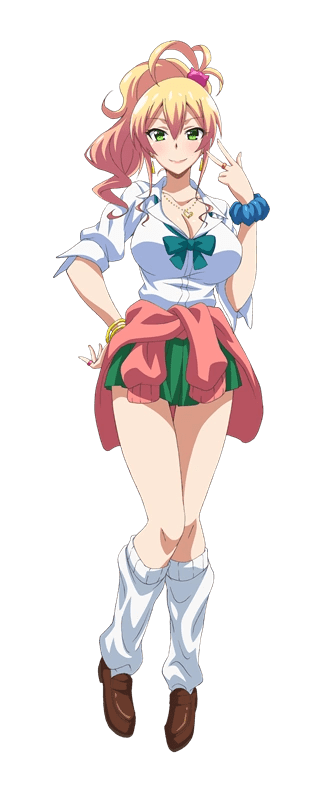
The Shy Shark-toothed High School Tomboy with Resting Bitch Face

That… could’ve been shorter

Stop me if this sounds familiar in, not just animanga, but in media on the whole. A short guy way in over his head takes chances with the taller, at times stoic or stoic-presenting girl. By way of his bumbling charm, he wears her down and she agrees to one date. Turns out shortman is a charmer beyond all and the two are an item. Maybe they have a family and live on a tropical island with a talking turtle.
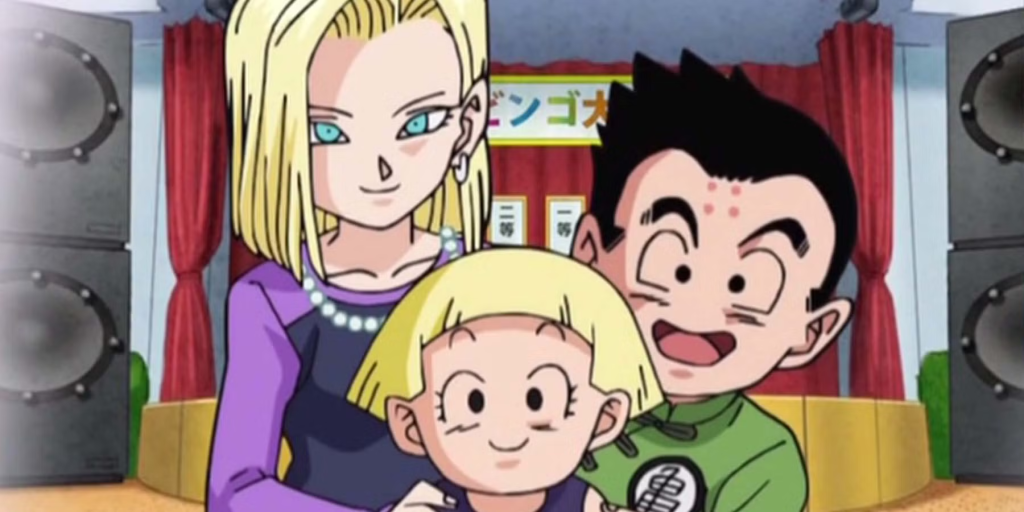
Admittedly, she made the first move, but Krillin won out in the end, so why split the hairs that Krillin has now been able to grow out?

Even if you weren’t thinking about a specific pairing, you may have seen it enough times to consider its frequency in media. I definitely have… if only just now. There’s quite a few of these in the trope that come to mind right now

  • Fix-it Felix and Sgt. Calhoun from Wreck-it Ralph: aside from the villain walking away from villainy, the protagonist finds his way into the arms of a top soldier woman, and by the end of the movie, he’s her groom.
  • Krillin and 18: the very picture above clearly didn’t happen overnight. Being the last one left standing when the remaining Z fighters were pummeled by Gero’s Androids, 18 was the one to proposition Krillin with a kiss on the cheek, when she was strong enough to fold Vegeta like a gyoza while 17 punched Piccolo’s and Tien’s spines out. Why the short bald one of all people? Perhaps Toriyama was feeling merciful on our favorite monk.
  • Mario and Peach: there’s probably better couples from the Nintendo Universe, but going to what’s easy, the Italian plumber working in Brooklyn gets suckered into a strange world where mushrooms are enemies, flowers let you throw fireballs, and a giant firebreathing turtle kidnaps a princess. Doing this for over 40 years (happy anniversary, Mario!!), I doubt they’re the progenitors of the trope, but they’re an early example, or at least Mario is from the Donkey Kong days.

And now the subject of this week’s post: Hitomi-chan is Shy with Strangers
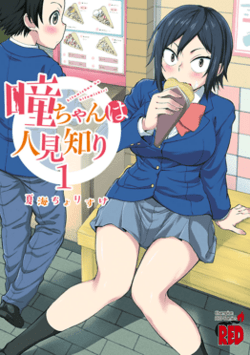
Japanese name: Hitomi-chan wa Hito Mishiri

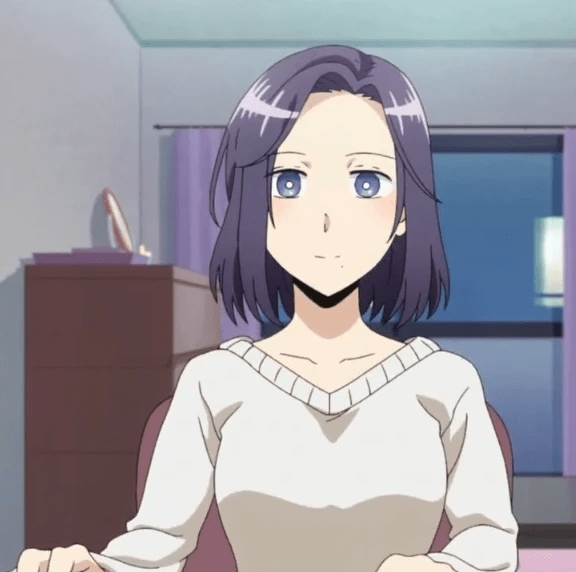
The plot of this manga is that a second-year high school student, Yuu Usami, is taking a train to school and gets the most menacing glare from a scary looking taller girl. He figures out pretty quickly that that’s just her default face (many such cases), and noticing that he’s wearing the same uniform as her, once Usami gets off the train, the girl follows him. He’s expecting some kind of beat down, but she simply walks over to him, looks him straight in the eye… and asks for directions to the high school, seeing as she’s a new student and first year. She eventually introduces herself as Hitomi Takano.

Sounds awkward in retrospect, doesn’t it? Cold hard truth, I relate to this very much. I’ve been the shy guy and the introvert involuntarily adopted by the boisterous extroverts who have attention at their beck and call. The shy part is getting someone’s attention, whether they’re with someone or not — and the introvert part is choosing to be in another world than with people on average. Not like it’s hard for me to make friends; I do, but there’s only so much I can take before I feel like I ran from the southernmost part of Chile to the Aleutian Island chain. Those of you who absorb geography like Galactus the Planet Eater know what that means. Those who need that spelled out, over 9800 miles/15,800 kilometers.

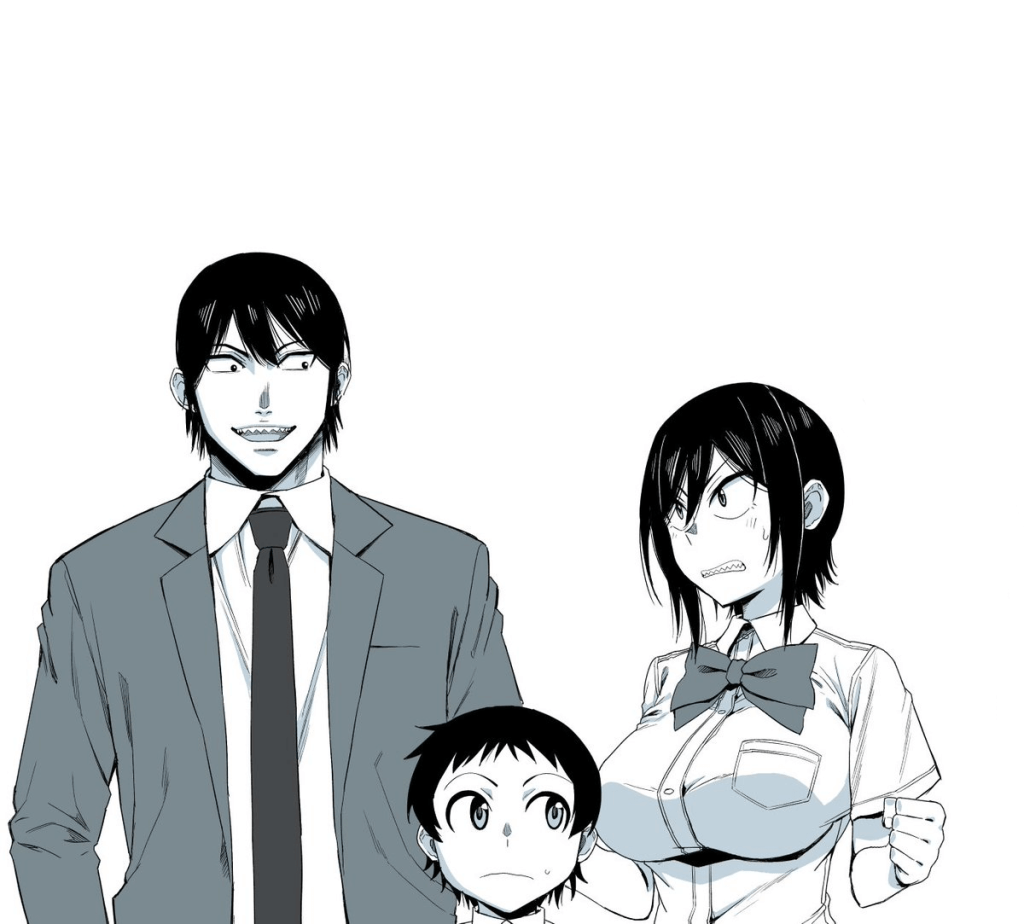
An exaggeration, sure, but it feels like this sometimes. This feature of Hitomi-chan is the most consistent aspect of the whole manga from start to finish, but overtime she gradually opens up. Originally, Hitomi only talked to Yuu, but then she met his sister, some delinquent girls, an American exchange student (because the good old red, white and blue needs to make a presence in animanga somewhere), and even introduces these lot to her older brother and little cousin.
Seems even growing up with siblings can make you deathly shy, though Hinata Hyuga knows this by heart.

For that matter, tall girl short guy trope also meets gentle giant(ess) trope seeing as she’s quite harmless. She’s a kind girl who hates resorting to violence, but her height (6’1″/185.4 cm), and her intimidating face at rest would usually be enough to scare someone straight, such as her first introduction to the delinquent girls who later became her best of friends.

If you’re drawing comparisons between this and Komi Can’t Communicate, I haven’t seen or read that series, but from those who have, they claim that her “shyness” is more selective mutism, and there’s this reddit post that claims, she’s a silent extrovert more so than an introvert, and the premise of the series confirms that long before you read the first chapter. Wants to have a hundred friends, lacks the natural charisma necessary. Fortunately, she at least does things the old fashioned way unlike some others:

Some artists pair her with Konata Izumi to contrast their personalities as otaku, and I say it works.

Does the series suffer from any flaws? What series isn’t flawed? Even my beloved Max Payne and High School DxD have flaws and the flaws that accompany Shy Shark-tooth Girl are much of the same ones that accompany My Boss is Beautifully Busty. Based on the trope I started this post with, you can bet your sweet bippy it has romance, and like the other manga, it takes 20 years, a career, a marriage, and a divorce proceeding to gain steam, but is still Mercury-making-a-full-orbit faster than Takeda and Takizawa, Sitting in a Tree. Maybe the former is based on teens generally moving faster than adults for the simple reason that adults have more maturity and have more nuances to wade through before popping the big question of whether r/Animemes is really about anime. And in my life, I’ve seen both. High school romances reenacting the Hindenburg and adult romances advancing at the speed of ZZZZZzzzzz…… ah, whah?! Whozzat?

Sometimes the reverse or a combination of these, and there’s a chance you have as well. Another mark against the manga may be the idealized, romanticized, unchallenged romance. For the most part, there’s few rough patches that test Hitomi’s and Yuu’s relationship, but examining the manga panels closely shows that it does get tested a fair bit. Not so much in the name of drama, but more so transitioning from casual to romantic dialogue, so to speak. The two acknowledge each other’s feelings and are hilariously led to believed that their dynamic needs to change and fit this arbitrary criteria, when in the real world if this happens, the most that’ll change is that the universe stops standing in the way and lets them hold hands.
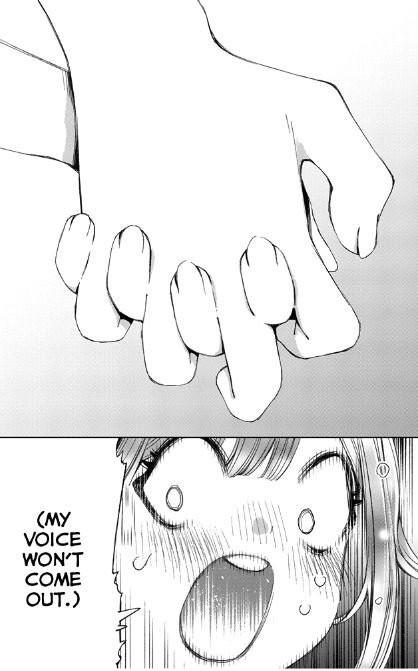
Not that adults can’t be this naive either, sheltered and dense adults will struggle with much of the same things teens do when they first start dating.

To further compare and contrast Cute Shork with Well-Endowed Superior, one is a 4-panel/yonkoma series set in a professional work environment, the other is a typical high school romance. Both put the male and female leads together and have the balls to continue on even after they finally get what their friends and family have acknowledged for ages. AdoraShark has a slightly larger cast though like Russian demographics, the women outnumber the men. In contrast, the smaller cast of the 4-panel manga has slightly more men than women characters, but is still equal. It’s also suited to maintaining this small cast while Hitomi-chan can and has introduced new characters piecemeal, each newcomer melding well with the established cast.

Even characters introduced at the beginning are given a chance to come back and get properly fleshed out, like the delinquent girls who were first seen antagonizing Yuu, until returning some 60 chapters later with more meat to chew on.

Chorisuke Natsumi seems to have a type.

12 volumes running from September 2018 to May 2025, the entire series is available for reading on MangaDex, being spared the grip of the Copyright Coalition in its most DMCA raid on the site. I haven’t heard news of anything in the way of any adaptation or OVAs as of yet, but like all the other times that’s crossed my radar, you can guarantee that I’ll post an update as news trickles out.


Music and Tea with Cute Girls

Or Cute Girls Doing Cute Things Cutely

Animanga came to the western Anglophone world in the early 1960s with Osamu Tezuka’s magnum opus Astro Boy, and about 20 years later came Dragon Ball and its more famous successor Dragon Ball Z, both penned by Akira Toriyama. Since then, the floodgates have introduced not only more anime to follow, but also different ways in which one defines a certain era.

If you’re a weeb/otaku like myself, you can probably point to pivotal series of each decade. Dragon Ball in the 1980s; Ghost in the Shell, Yu Yu Hakusho, and Cowboy Bebop of the ’90s; Clannad, Azumanga Daioh, Lucky Star, and K-On! across the 2000s; Sword Art Online, Attack on Titan, Date A Live, Kill la Kill and Is it Wrong to Try to Pick Up Girls in a Dungeon? of the 2010s; and finally this decade, we’ve had Keep Your Hands off Eizouken, Oshi no Ko, Bocchi the Rock, Jujutsu Kaisen and several more slated for release this decade.

Basically what I’m saying is that different anime define a decade. The 2000s in anime was defined by the moeblob, where many animanga series ascribed to a cutesy art-style and theme. Not just in character design, the characters themselves did things “cutely” too. Or rather, they did normal things in a cute way. They didn’t fight monsters or go on fantastical journeys or acquire magic relics. Often they attended their daily lives which overwhelmingly revolved around high school. Joining the moe trifecta of Azumanga Daioh and Lucky Star comes K-On! A series about an extracurricular club centered around light music.

It starts in a nonspecific part of Japan (since the mangaka Kakifly is from Kyoto, I’m gonna imagine it’s somewhere in Kansai), four high school girls become a part of an after school music club in order to save it from disbandment. The four main leads are Yui Hirasawa, the ditsiest, silliest guitarist in the series; Mio Akiyama, the lead guitarist afflicted with stage fright; Ritsu Tainaka, the loudest girl even without a drum kit; and Tsumugi “Mugi” Kotobuki, the rich and physically strong one on keyboard.

For a series dedicated to light music, the actual musicmaking takes a backseat to the girls simply goofing off after school. There is musicmaking but a given estimate would put it at somewhere near 35 to 40% of the actual screentime, across both seasons. Not to mention, this is still a series that debuted in the 2000s, so music players like the iPod and digital song downloading wouldn’t be as popular and prominent as opposed to cassette tapes, Walkmans and the like. Even then, keep in mind, these then-new devices wouldn’t look like anything what we have nowadays. Touchscreens and smart devices have come a long way.

From what I’ve seen though, analog tech is one of the few ways the series shows its age and that’s merely 16 years old, in line with the corresponding ages of the characters at the beginning. Come the second season, they gain a fifth member, the pigtailed rhythm guitarist, Azusa “Azunyan” Nakano, who takes her role as guitarist more seriously than Yui or even Ritsu does with her drums. You’ll notice that at this point in this post, I haven’t mentioned plot and this ties in with including the likes of Lucky Star and AzuDaioh in that all three have the same basic plot: f[guitar riff]k and all.

Gigguk, at the time, was less forgiving of the anime as a whole, with most episodes in some manner boiling down to goofing off with a cup of tea, something that didn’t really jive with him, which may be in some way related to his musical past.

In contrast, Gigguk’s good buddy Joey “The Anime Man” Bizinger favors K-On! over Bocchi the Rock, and that’s an opinion I hold though not for the same reasons as Joey. I don’t doubt the existence of people that stiflingly shy; part of it has to do with everyone praising it at the first hurdle. Perhaps for Gigguk, there’s more realism to Bocchi than K-On! and I can’t do much with either man’s opinions on the show.

For what it’s worth, he did warm up to it after a few years have passed though not by much. For me, ignoring outside influences and the layman’s opinion on one or the other, I haven’t seen Bocchi yet and I don’t think I will, at least not this year. I had trouble wading through the first episode of WataMote, but at least Bocchi’s not a sleep-deprived femcel.

For me, this puts Tomoko one flight of stairs lower than Bocchi, at least in the beginning. I’m not really one for cringe humor.

On its own, K-On! gives me the impression that it’s not trying to take itself seriously in the slightest. It’s not exactly a comedy like AzuDaioh or Lucky Star and fortunately for it, the jokes aren’t subject to translation mishaps like the former. I humbly accept it as a show about high school friends goofing off outside their club activities and their studies.

Is this why I like it? Well, call it a palate cleanser from all the one-piece finding, dragon-ball hunting, Hokage-aspiring, soul-reaping action of most Shonen series. I don’t always want action, sometimes I just wanna kick back, grab a drink of my choosing, and watch people somewhat like me just screw around. If this isn’t a convincing argument to at least check out some of the first season, consider the uncommon music scenes. Adding music or musical anything as a genre type to a series means adding some original scores and music to the series beyond the opening and ending music, both of which are impressive in their own right. Select scenes in the anime dazzle with the change in lighting and art aesthetic giving it an animated music video feel which is not necessarily the same as an AMV, though it does set itself up for that. I did some quick googling and there are some AMVs with K-On! as the main animation piece, and the series has produced some original songs, so it’s not the most devoid of music, but it could’ve benefitted from a few more scenes at the end of a few episodes.

You can still enjoy the series for being all warm and fuzzy but for those of you who want a series dedicated to musicmaking, my recommendation there goes into Beat & Motion. It’s coupled with a look in animation so it feels more like an AMV-centric manga.

No word yet on whether it’s been slated for an anime, but if it is, yes please. I want more.

What is Life Without My MMOs? (T^T)

Life is not Daijoubu

On a day ending in Y, I decided to get through another anime in my never-ending fortress: Recovery of an MMO Junkie

Although a manga, it began serialization as a webtoon before getting physical. The story is described as budding romcom between two successful adults, one who abandons the route of salarywoman to become Queen NEET (Not in Education, Employment or Training) and one who is still a gainfully employed salaryman. NEET extraordinaire is female MC, Moriko Morioka, who spends at least 48 hours a day on an MMO called Fruits de Mer. Next to her is the male deuteragonist, Yuta Sakurai, a man in the same position that Moriko left in favor of the NEET life, and more seasoned in FdM than Mori-mori. So much so that he offers to help her learn the game.

The twist here is that both are playing the opposite gender in the game with Mori-mori creating a male character named Hayashi and Yuta creating a female character named Lily. Accurate depiction of gamers thus far, creating eye candy for personal ogling for every 12 hour session.

I couldn’t find any other examples for this. Just know that it’s common, even I do it.

Unbeknownst to the players, however, is their knowledge of each other outside the game. They meet first in passing and then are set to connect over the course of the anime, but in a case of dramatic irony, the viewer is privy to their connection in the game. So while the relationship is developing virtually, reality playing catch-ups to what’s going on elsewhere.

The crux of the series is largely about shutting in from the outside world due to overwhelming circumstances. Life throws so much at people that sometimes disconnecting is a way to recover from the barrage of hits. However, this can easily turn into a double-edged sword if the shut-in/NEET is not careful.

It’s pretty much this meme except the top and bottom images would be separated by a text that reads “[Length of Time] Later” in this specific context. Moriko started off rather well as a salarywoman, but the workload got its own growth spurt and she was unable to keep up the pace. Shackled only to her desires now, she games and goes about her days as she sees fit. As a consequence, her diet is negatively impacted, her sleep “schedule” is interrupted, and I’m pretty sure she touches grass only slightly.

This does touch on a concept that is all too common across East Asia. Most of these nations are culturally collective and most of the societies therein tacitly demand that everyone pulls their weight no matter what. You’re still free to choose the path you walk, but the culture means that whatever path you choose must be committed to absolutely. No slacking, no sticking out; individuality stays home where it belongs. This concept has supporters and critics and writing critically about this, the detriment can at times be twofold. The pace can be too much for some to bear but for those who can stomach it can only take so much, such is the case with Moriko and her choice to become a shut-in.

It’s not unique to East Asia, but it tends to be quite pronounced, especially if the culture reveres the words of its elders extremely highly. Having said that, Moriko’s life as a NEET isn’t the end of the world for her, which sounds like a variation of “I can quit whenever,” but the circumstances that led to her meeting Yuta/Lily do help.

For Yuta, nearly the opposite is true for him. Not a NEET and most likely wouldn’t be one by choice unlike our Queen Moriko. Fruits de Mer is but a hobby that costs a fraction of his earnings, though likely not as much as Mori’s. A socially awkward man using the game to help him communicate, although I call it luck that he met Mori in real life and her character Hayashi in the game, this is a mutually beneficial relationship for them both.

Based on Mori’s past life as an overworked horse, she clearly didn’t have many problems connecting to other people. Yuta, however, does have this difficulty and it shows several times across the series. In FdM, the script is flipped once again, Mori only knew how to brain herself on a bit of crumbling wall in comparison to Yuta who, through experience, learned how to break the wall down with more than just his head.

The series definitely lives up to its name, it falls under the spoiler category all things considered, but knowing the MMO junkie returns to the real world (while occasionally logging into the game) isn’t a turn-off. Matter of fact, the magic is in seeing how the characters develop. I know I mentioned that tuning the outside world can be detrimental, but with the context of this series, it’s both subjective and spontaneous. Each case is unique and whatever gets the person in question to go back to developing healthy relationships varies. There are real-life tragic cases of people dying in seclusion, but there are beautiful tales of people coming back from these dark places.

The series also serves as a connection for those who’ve personally walked down the path of the reclusive hermit. No matter who you are or where you’ve been in life, I wholeheartedly give this a recommendation, especially since it’s bound to connect to a wider audience post-COVID.

Also, Moriko is cute as heck. OBSERVE!

One more thing: this blog post from 2022 offers a more personal story.

My First Gyaru Anime

This may or may not ring some bells

A while ago, I stated that the YouTuber Knowing Better claimed that Hollywood has a greater influence on the military than you’d believe. Sticking with that logic, based on my observations, I want to say that it’s a bit similar in Japan. Stories get told and retold and inspire mangaka to start putting pen to panel. In this context, the subject is that of subcultures. If you’re familiar with western culture, you’re familiar with some age-old subcultures: the goths, the jocks, the nerds, the popular kids, the emos, the preps, and the townies–all of which can be found in RockStar’s hidden gem Bully.

You already know I recommend the s[marbles falling]t out of this.

In Japan, there are several other subcultures that have come and gone over the years: bosozoku (motorcycle enthusiasts), delinquents (bancho/sukeban), otaku (nerds but extra), and the topic of this post: gyaru.

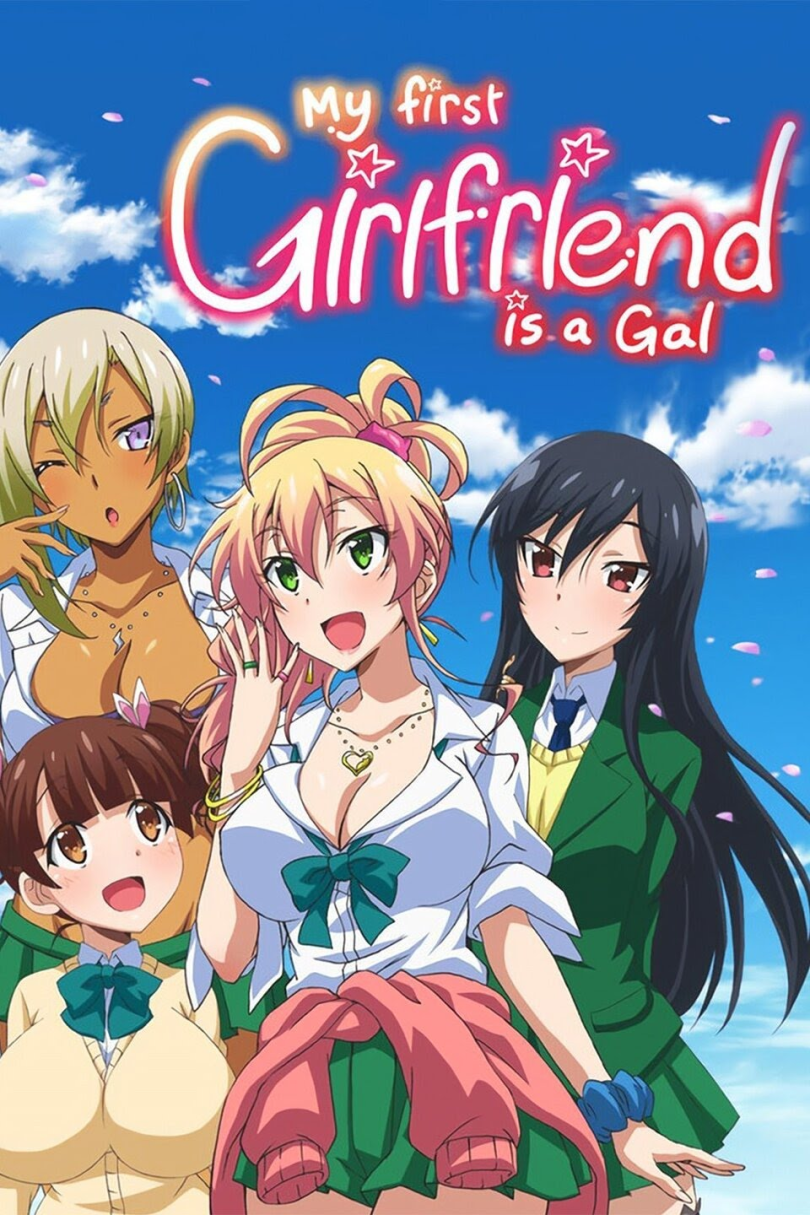
I’ve talked before about gyaru/gal animanga, including one that got an adaptation this year. Now, we’re taking a look at another gyaru-centric series: My First Girlfriend is a Gal (alternative title: Hajimete no Gal).

Another relic from my community college days, I was made aware of it from a WatchMojo Top 10 list on the worst girlfriends in anime voiced by Todd Haberkorn when they kept him locked away in their basement. Don’t worry, it was more of a mancave; think of it like the Scandinavian approach to imprisonment.

In that list, one of the characters from the anime, deuteragonist and love interest, Yukana Yame, made the list for essentially leading the protagonist, Junichi Hashiba, on. Not an unfair or untrue assessment, but when I had a look, I felt that there was more to it than that. But I’m somersaulting over a battleship here, let’s build up.

Typical romcom anime, a trio of dudes have a conversation describing perverted and sexual things about the girls in their class. One such girl makes the topic of conversation and on a dare, Junichi is challenged to ask her out on a date. Scummy. And Yukana entertains it. Also scummy. Honestly, I remember being that horny both at that age and when I watched this series, and I did watch it from beginning to end, mainly because of the eye candy.

These days, the terminally online “crusaders” would cry fowl at a busty teenage girl, but this is where I play the hypocrisy card as just about every single one of us knew or knows someone whose bodies developed that fast. I definitely did. What the hell happened to “no bodyshaming?” Hmmm? But f[anime girl moaning]k it.

Now that I look back on it, with the experience I’ve gained (mostly from observing other relationships flop around my single ass), never mind a bond formed by ignorance, this is a bond formed by deception. They didn’t even start out taking each other seriously; Junichi was expecting the hardest rejection while Yukana initially planned on milking him dry without using her hands. I’m very sorry about that; it’ll happen again.

But to play Saul Goodman and defend these clients, there is some character development for them both. They hang out more often, and Junichi gradually adheres to the lessons imparted to us by history’s greatest philosophers: the Spice Girls

If you wanna be my lover, you gotta get with my friends

And Yukana’s BFFs include but are not limited to Ranko Honjo, a contendor for the Bimbo Olympics who wants to f[snaps fingers]k both Junichi and Yukana (most likely at the same time); Yui Kashi, a Twitch streamer whose desire is to wrap everyone around her finger (she ain’t beating Makima, just saying); Nene Fujinoki, Junichi’s childhood friend and one of the bustiest lolis I’ve ever seen until Ilulu (also the subject of a specific character’s troubling fetish; more to follow later); and a few others who, although reportedly got more love in the anime than the manga, not enough to make a big enough impact over the course of 10 episodes.

Even though it doesn’t really start out with the best of intentions, the character development does leave them marginally better than when they began. Junichi stops letting his penis think for him the more he learns about Yukana and her… well, it’s not a harem, but she functionally has more women than Junichi will hope to have. Out-rizzed by your own girl…

Fortunately, you know who to turn to whenever you want a threesome.

If Yukana was ever the subject of salacious rumors, her behavior on screen discredits such slander. Like Junichi, it’s highly suggested that not only is she too a virgin, she may be even more nervous about her first time than Junichi is. The gyaru aesthetic is all for show and tell, as in she’s showing her friends and the audience while telling us that she just likes pretty things. But that’s a given.

Conversely, to use the teachings of Lao Zi, within this light side is a bit of a dark side. I mentioned earlier that one of Junichi’s friends, Minoru Kobayakawa, has a troublingly illegal fetish that conjures up the message of the Oingo Boingo song Little Girls. Not lolis or short girls, young girls. He does nothing to hide it in the anime (no clue if its subdued in the manga) and will remind you what his ideal type is. He’s a disturbingly honest Harvey Weinstein sans the influence of Hollywood kickbacks.

The series plays it off as a joke which is probably lost on me since I cringed every time Minoru made an appearance. All things considered, the other Minoru from My Hero Academia was divisive in his own right, but probably shouldn’t have had as much hate directed towards him as this Minoru. Inappropriate and depraved, at least he eyed up adults.

Also, he gets humbled at every turn so whatever debt he owes, he’s overpaid it.

The other Minoru… one of the other guys said it best when he claimed he’d end up on the sex offender registry. Don’t take this as a dissuasion or an argument against watching the anime; this is still a recommendation, just keep in mind that this troubling aspect is in the show. It’s a short viewing, 10 episodes and an OVA that I haven’t seen myself. And of course, you have the choice of sitting through ads like a trooper and joining the dark side and becoming a pirate. The side effect of the latter choice is fighting Luffy.

Azumanga Daioh: A Classic

Tsukurimashou

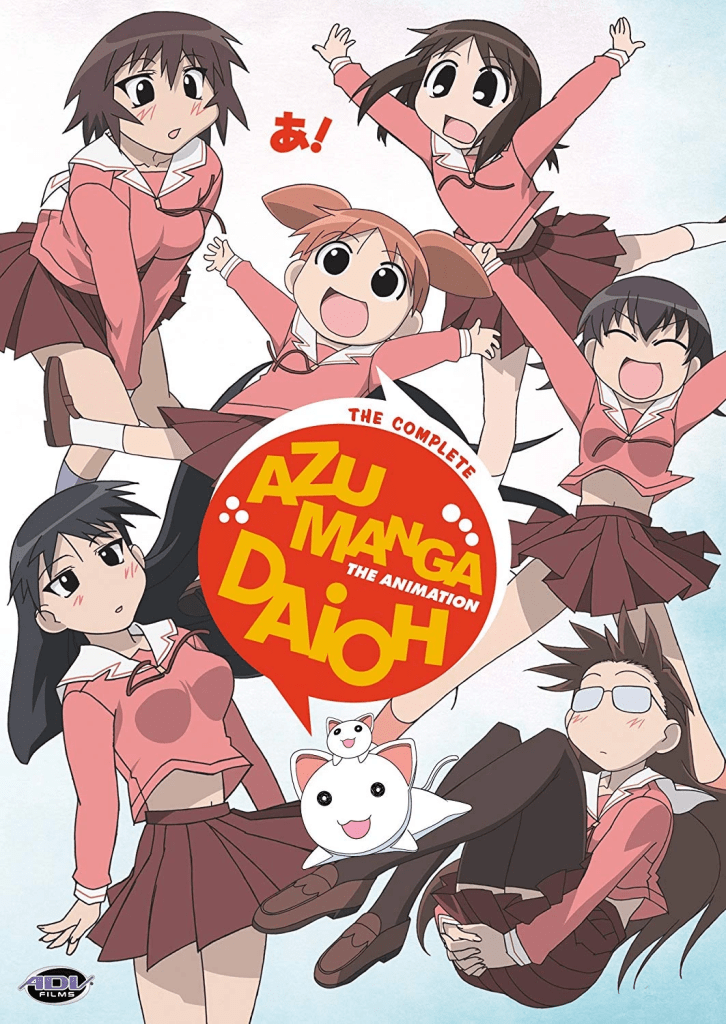
Calling back to a recent post, I once again searched for anime to watch on a whim and with how easy it is to pirate and upload on YouTube (for a time at least), my search led me to another series that needs no introduction: Azumanga Daioh.

A four-panel manga series running from 1999 to 2002, Kiyohiko Azuma’s famous series is about a group of girls navigating their high school and personal lives, with occasional peeks into the lives of two of their teachers. Its anime adaptation follows the manga nearly beat for beat in the sense that every episode is split into different segments. Four-panel manga all have the same layout and are most commonly found in comedy manga series like Azumanga, and are not limited only to Japan. Western comics also have the formula down pat if you’ve ever read the comic strips in newspapers.

As far as plot is concerned, Azumanga is a slice of life series under the “Cute Girls Doing Cute Things” umbrella, a legacy of its era in the moe blob of the 90s going into the 2000s. From start to finish, the manga panels have the star characters and their friends doing really uninteresting stuff, but often in a comedic way. The anime is the same, and having seen it from start to finish the anime translates the humor quite well to the small screen.

Channel: DarkDecietNarcissu

But it still requires a working knowledge of Japanese culture and comedy to understand why it’s like this. Going in blind may not leave as much of an impression compared to going in with this knowledge. The cultural barrier was still standing strong in 2002, and a problem one can see at least with the dub is an old bugbear that only exists when trying to view older anime dubbed in English: poor translations.

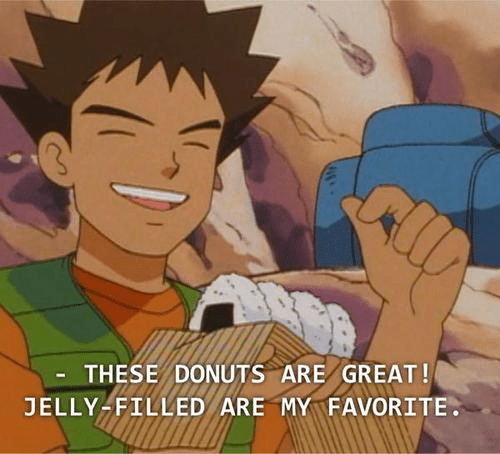
One of the strongest concerns in the dub vs sub debate online is whether the translators/localizers, etc. can correctly interpret the scenes and localize them for western audiences without doing away with the original context and humor. Numerous examples of poor translations in the early days exist, but one that makes the rounds regularly online is the Pokémon scene where Brock shares his onigiri rice balls.

By now, everyone has seen onigiri. When it comes to cultural boundaries breaking apart, food also plays a role in that–not just language or history. The faulty dubbing issue isn’t as persistent as it was back in the day, but the concern still exists for many anime fans in the form of internet/video game slang showing up in the subtitles. Personally, I see why this specifically can ruffle some feathers since more and more people watch anime these days and may not always be the same people browsing social media regularly.

From my perspective, Azumanga has a few of these issues here and there, but they didn’t stop me from watching it all the way to the end. As a matter of fact, this series and Azuma’s other series, Yotsuba to!, are a pair of internet darlings. The off-color humor in both series is a source of numerous memes and no-context compilations of the funniest moments from the Azumanga anime due to the style of surreal comedy employed.

Channel: Brolita

Humor like this can show the author’s attention to detail, especially when a seemingly unimportant gag or detail returns in a later episode or two.

Of course, the series isn’t just a barrel of laughs from start to finish. The characters all share intimate moments between each other and in their own personal lives. The character, Yomi, for example is featured in the opening weighing herself, highlighting an insecurity that gets light in the series. Chiyo, being the youngest character, has big shoes to fill with being gifted enough to attend high school at the age of 10. Osaka, real name Ayumu Kasuga, is the outsider, the awkward round peg outnumbered by a bunch of square holes. Her nickname is based on her home city of Osaka and the general perception non-Osakans have of the locals in that prefecture, sorta like how in the U.S. everyone has perceptions of everyone else based on what state they’re from.

Little moments like these help to flesh the characters out and with a small cast to work with, Azuma wasn’t as bogged down trying to give everyone the time of day. This doesn’t necessarily mean that smaller casts are better, but that it takes real care to ensure everyone in a work of fiction is given a piece of the pie. It isn’t always perfect and it doesn’t always need to be as long as all loose ends are tied up. Thankfully, the details in the series are all easy to keep track of through easy-to-remember clauses: one likes animals and tries to pet a finnicky alley cat; one is extra hyper and loaded with energy; one is prone to zoning out at random; one is a sports fanatic; and the list goes on.

Azumanga Daioh is the type of series that one can sit down and relax and have a few laughs while watching these girls go through high school. Its last episode is a neat and tidy conclusion that offers thanks to the viewers as a final goodbye, though I see myself going back for little things in the show.

If the playlist was still available in the English dub I’d provide a link but sadly, the channel that had all 26 episodes dubbed has been removed as of writing this. There still exists the subbed versions on YouTube and the good old-fashioned eyepatch wearing, peg legged, hook hand approach to viewing this series.

With any luck I’ll finally get done with the Undead Unluck anime and provide my thoughts. I’ll do what I can to have it out before the end of the month.

Wave, Listen to Me!

Radio Coming Back from the Dead

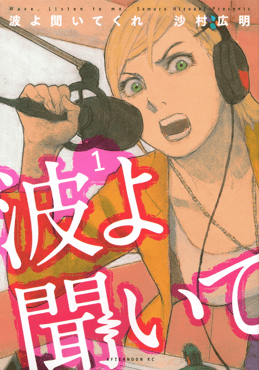
You’d be surprised what a spontaneous Google search can reveal. It’d been yonks since but I remember stumbling upon an anime adaptation of a manga that unfortunately flew under the radar for reasons I’ll share later. Known in English as Wave, Listen to Me! and in Japanese as Nami yo Kiitekure!, the manga tells of a Sapporo-based restaurant worker who finds herself as the newest voice of a late night radio show by proxy. A drunken rambling to an ex-TV executive gets her into this world and she doesn’t even realize what had happened until she and her peers recognized her voice coming out of the radio in the restaurant she works at. Talk about stumbling face first into fortune, right?

Well, fortune isn’t exactly how she sees it and legally no lawyer would unless a negotiation and settlement would be reached. Reasonable people call this a discussion, we here in the real world call this the high road most copyright strikers on YouTube refuse to take.

All things considered, this is the kind of series that lives up to its stated mission goal. Although I’m not a wave, I certainly am listening. (See what I did there?) The protagonist, Minare Koda, found herself in this world thanks in no small part to Mr. Al Cohol. For me, I found my way into blogging purely out of desperation for employment of some kind. I had just graduated from community college and I didn’t want the degree to just sit there and look nice, though now I know that this is a fate that befalls many arts degrees.

A majority of the focus in the series is on the radio, the station, the show Minare works on, etc. but it doesn’t focus on the inner workings of running a radio show or performing in one. It’s not like Akane-banashi where the story introduces the reader to the history and culture behind rakugo performances. And honestly, it’s not like it really needs to. If the pandemic was proof of anything, it doesn’t take a lot to just grab some equipment and start podcasting. Some of the people who gained popularity through the medium have been doing it for years or decades by then. They just got more listeners because of the lockdowns.

Rather, Wave, Listen to Me! reminds me of a couple of other series I happened to stumble upon from that old article a few years ago: House of Five Leaves and Ristorante Paradiso both written by Natsume Ono, both of which I’ve seen, and one of which I tried talking about on my first blog, but will likely devote time to again once I get to rewatching them both.

The connecting element between the three Seinen series is that it’s not about the practice, it’s about the people engaged in the practice. Wave, Listen to Me! takes care to dive into the people’s personal lives and show you what goes on in their lives outside of work. Pretty much how a slice of life should be. Describing the rest of the cast, well, do you remember when you were a kid you saw all the adults engaged in admittedly mundane activities, but it looked like they had everything sorted out? Then when you became an adult you realized everyone was essentially bulls[bull noises]ng the entire way and no one had anything sorted out? That’s what it felt like watching Wave, Listen to Me! except me being 25 (around the same age as Minare in the series) I had gotten smart to this around the time I was in college.

Minare is given a lot of responsibilities in the restaurant, not all of them relating to waitstaff, but that and coupled with her personal woes may or may not be the reason she drowns herself at the bottom of a beer glass weekly. She’s such a mess that her downstairs neighbor brings her back up to her apartment on his back. Her boss and coworkers aren’t all that much better either. The ex-TV exec, Kanetsugu Matoh, recorded her without her consent and even though it works out in both of their favors, an even worse person could easily have a lot of fun with that. Hell, her boss at the restaurant is one such example, and this could be a minor indictment on the series itself. For starters, this character gropes the bums of men whenever he takes pictures with male celebrities who come to dine. Do with that information what you will.

Now, all of that is interesting on its own, but what about the diminished attention this series has? Why haven’t I heard about it until now or before? Normally, with unsung and unknown series, that’s a matter of debate unless outright stated by the creator themselves on the status of the series and in the case of the anime adaptation, it was like a bunch of other short term anime series: an advertisement for the manga. But I think I have a few theories on why Wave, Listen to Me! slid through the cracks.

One part of it may have to do with the release schedule: April 2020, so exactly four years ago (my, how time flies). The year of the pandemic, the riots, and what amounts to an almost-pocalypse in retrospect.

Barely a week in and people were crying about a potential war! It’s just a dark joke now.

I don’t know about the rest of the world, but the month before Wave, Listen to Me! debuted, the U.S. went into a lockdown and news of lifts kept getting pushed back every three weeks with TV moving out of studios and podcasts dropping from the sky left and right to pass the time until a vaccine could be mobilized. As for Japan, a more health-conscious country, guidelines were stricter and generally everyone was encouraged to maintain safety and even move their work home with them, hence why a look at 2020’s anime repertoire doesn’t look as stacked as what preceded or succeeded it since. Loads of projects were canceled or postponed until the pandemic was declared reduced or over.

That said, I believe that even if there wasn’t a pandemic that year, the marketing would’ve done a lot to make or break the reception of the series. Don’t get me wrong, this is a great series. But a bad or badly received trailer can straight up assassinate interest in a show, as explained in this video about demos:

Channel: Extra Credits/History

There’s also this trailer for the 2018 TV series Titans:

Channel: Rotten Tomatoes TV

In both of these examples, Spec Ops: The Line and Titans were both given positive reviews post-release, but the initial reception based on their respective marketing led to a lot of people counting their chickens before they began to hatch.

For Wave, Listen to Me!, good marketing could help promote it at the time. No clue if it would have the longevity to still be talked about even now if this were the case, but we’ve seen stranger things happen. To quote a smooth-talking, galactic smuggler:

YouTube recommendations are still a thing, albeit biweekly for now. And for this week, I bring you Mrs. Eats.

https://www.youtube.com/@MrsEats

One of a handful of Japanese YouTubers whose content is in both Japanese and English, Mrs. Eats likes to show people the ground perspective of life in Japan, at times in a comedic way with her husband. Additionally, her videos uncover several misconceptions many people, especially foreigners, may have about Japanese culture, lifestyle, or even entertainment. Sounds like it’s up your alley? See the link above.

My Favorite Podcasts

How I found my favorite series to listen to

Before I start off proper, I want to say that I had a draft lined up for a hypothetical compare and contrast post between God of War’s Kratos and Grand Theft Auto V’s Michael DeSanta/Townley, based on some throwaway lines that I looked too into, specifically Thor lamenting that Kratos wasn’t the same as the Ghost of Sparta that physically deconstructed Mt. Olympus the hard way; and Trevor refusing to let Michael forget that he was a bank robber, a thief, a career criminal like he is and trying tooth and nail to bring him back into the fold. As you would expect, the comparison was very apples to oranges. RockStar doesn’t hang onto most of their cast from previous games. There’s a balance there between old nostalgia and new characters, and RockStar has a rotating body of protagonists compared to SCE Santa Monica. As a result, most RockStar characters have self-contained arcs while Kratos spent the better part of about nine games growing from pride to mournful to determined to vengeful in a manner of writing that whether by accident or on purpose mirrors the story structure of ancient Greek epics and recently Norse epics. One is a parody of American pop culture and the other is loosely inspired by Greco-Roman tales of adventure. If there’s a grain of truth to something like infinite monkey theorem, then I could probably produce a Shakespearean comparison between these convincingly, but until then I’ll keep it on the backburner.

So let’s get to the topic of podcasts.

I’m writing this from the perspective of a listener, not a seasoned podcaster. But I’ve spent a pretty long time listening to several so I figured I’d throw some pennies into that fountain. How I started was with Rooster Teeth Productions’ namesake podcast. It began around 2009 as the Drunk Tank, but at the time needed to switch names at a later date if it hoped to attract sponsors. I think, after a few years, Drunk Tank as a name would’ve been great for a podcast.

I found this out a few years ago on YouTube thumbing through the old videos because I wanted to see how much they’ve grown over the years. The first episode of the Rooster Teeth Podcast/Drunk Tank was much, much shorter than anything that had been produced after nearly a decade as an active podcast. An hour and ten minutes in 2009 compared to about three hours or more after 2014. Incidentally, the podcast wasn’t what made me an active subscriber of Rooster Teeth’s website or their YT channel. There were honestly different opportunities for me to become a subscriber early on that were brushed off. The first time was in 2013 around the Halloween season when I was 20 videos deep into a Dead Space 3 Let’s Play video, and RT’s gaming division, Achievement Hunter, bought ad space for an admittedly creative Halloween costume to show off. Almost fifteen-year-old me wanted to get back to the sci-fi action horror. I subbed to RT in 2018 after catching clips of their anime-style show RWBY in a WatchMojo.com video, and have since discovered their network of content in the Rooster Teeth podcast and Achievement Hunter’s Off Topic podcast, both of which I listened to while in college and during the pandemic.

As of writing this, they have several more podcasts that they produce, including Red Web, Black Box Down, F**kface (yes, really), and a few others, some of which I’ve listened to or are still listening to to this day. Halfway through the pandemic and in the leadup to my enlistment in the Army, I was somewhat spoiled for choice and bounced around podcasts like I bounce around YouTube channels.

A podcast I was tuned into briefly was the Joe Rogan Experience podcast. Weird story for that one, select media outlets had mentioned Joe Rogan’s name before but in a negative light. Naturally, I took to listening to some episodes myself and the context of the conversation about Rogan was out of a concern that he’d been inadvertently promoting then-unproven COVID-19 precautions as cure-alls by allowing controversial practitioners to speak on his show. When I thumbed through his episodes, I found that as an entertainer and commentator by trade, there’s no shortage of eccentric people. Rogan knows this and going back to WatchMojo.com, they have different videos detailing Rogan’s many different guests, some of which have gotten “interesting.” Here’s one video:

The sensationalism seen in modern media tends to lift firebrand personalities and ideologues to a point where a full story isn’t guaranteed. Personally, I put the blame on sensationalism around horror stories and reports, but an unintended benefit of that is wherever I see this type of outrage media, I’m at least patient enough to keep an ear to the ground and wait for every detail to be discovered before I pass judgment.

For the JRE itself, I like to think of it as a catch-all type of podcast. There’s no single point of focus; every guest is unique and brings many individual takes and opinions with them. This rotating body of personalities makes for a unique experience for each episode. Political outlets would make me believe that he’s made his platform a home for fringe ideals and beliefs, but that’s not what I found. Individuals of this stride do come on the JRE but so do many others. All in all, my conclusion is that outrage bait in modern media is very ineffective as expressed in this video:

For Joe Rogan, it’s also very misleading. Talking heads in American media can make you believe the wrong thing about a person, but then you see more of what they have to show for themselves and in my experience I’ve shaken my fists at demagogic rhetoric for lying to me and I’ll continue to do so. For more obviously political podcasts, Tim Pool is more consistent in that field, among others who were also guests on the JRE. I also think he was dealt a bad hand, especially during the height of the pandemic. All things considered, the U.S. at the time had a frustrating response to the pandemic, and I think some journalists really wanted to vent at the time. I’ve no horse in that race, so I won’t comment further on that.

As for the rest of the podcasts I’ve listened to or subscribe to regularly, the ones under the RT umbrella do have a singular focus most of the time. Red Web is hosted by Achievement Hunter personalities Trevor Collins and Alfredo Diaz and delves into unsolved mysteries, some of which have a criminal element, others tend to be centered around modern phenomena like cryptocurrency or strangely placed architecture or local abnormalities and cryptids. I emailed them once in 2021 to see if they had plans on doing an episode about the Toynbee tiles which I have seen in Lower Manhattan when I was in college.

They do have an episode on these mysterious tiles, though I can’t claim to have been the inspiration for that episode. Black Box Down is all about aviation incidents throughout history. From the early days of Wilbur and Orville Wright to modern airline industries and carriers, there’s always a story surrounding an aviation mishap of some sort. One thing I’ve noticed during a filler episode (don’t remember which one) was that most of the audience had either never flown, rarely flown, or held some irrational fear of flying in some capacity. But when they learn more about aviation and planes, the fears are alleviated somewhat.

Personally, we never made enough to fly continuously growing up. Other family members have taken me flying twice to Miami and Orlando for Disney World and Universal Studios theme park respectively, so I never had a fear of flying or aviation. Nor have I really had as much of an interest in flying. So what’s the draw for me? Well, I also wanted to know the secrets behind why planes fall out of the sky and whatever you think that may be, a lot of times it comes down to luck. It may have something to do with terrorism in a post-9/11 world, but flashy articles about aviation are likely to be older than that. You’d be shocked to learn that air hijackings were common during the Cold War era and most of the time the planes landed safely.

BBD’s hosts are also Rooster Teeth personalities, Gus Sorola and Chris Demarais. To my knowledge, this podcast is going to cease production soon as one of the hosts, Gus, has plans elsewhere, but if you want to catch up, the Rooster Teeth website and podcast apps have all the episodes.

F**kface is hosted by three more RT personalities, Geoff Ramsey, Gavin Free and Andrew Panton. The premise behind this podcast is a series of personal stories of the three guys being idiots. Funny and embarrassing stories from childhood, school, work, etc. It’s the podcast equivalent of “if you ever feel like an idiot, remember [insert overlooked example of stupidity here].” F**kface is one of my favorite podcasts, partly because its relatable and also because I’m not always in a learning mood like with Red Web and BBD. Sometimes I wanna turn my brain off.

Speaking of which:

Trash Taste Podcast is the crown jewel podcast that I subscribed to back in 2020 during the pandemic and haven’t looked back ever since. Of all the podcasts I’ve looked at (and they aren’t that numerous honestly), TT is the one that I could forget about for a while and come back to, which was what happened after I was medically separated from the Army.

Trash Taste started off with the goal of being the prime anime podcast and has gradually morphed into a slice of life experience about living in Japan, specifically the Tokyo Metro area which might itself be a city-state like Singapore. Just sayin’, I’d love a manga series at least that took place in Matsuyama or Fukuoka or something. I won’t stop ’til I find that series.

If the name is familiar to readers, then you may recall that I recommended Trash Taste and the three hosts’ YouTube channels all the way back in February of this year. The three hosts are the anime YouTubers, British-based Connor Colquhoun or CDawgVA and Garnt Maneetapho or Gigguk, and Australian-based Joey Bizinger or The Anime Man. All three of them began their journeys on YouTube mostly independent of each other, but with a soft spot for anime.

Garnt’s first videos were reuploads from 2007 reviews he did of series like Bleach, FLCL, Lucky Star, and K-On! as examples. Early on, the inspiration of Zero Punctuation was strong, but similar to what befalls many creators, Garnt eventually found his footing and got to reviewing anime his way. So if the first video is titled “Bleach Review,” a review of Chainsaw Man or Call of the Night would be something along the lines of “Manga’s Newest Best Boy,” with Pochita in the thumbnail somewhere. Additionally, with many anime getting slated for adaptations in a year, a smart move on Gigguk’s part was to quickly summarize the anime of the season.

Connor’s early videos were made up of prank calls while impersonating the star character of the Black Butler anime. He also briefly hosted a podcast based around voice acting, which is what the VA in his online handle stands for. Connor’s content doesn’t really separate himself from his hobbies; he makes himself quite clear that he’s a gamer, a JoJo fan, a Hunter x Hunter fan, a Black Butler enjoyer, and a voice actor. As an added bonus, he mentioned a few times on his channel, in collabs and on the podcast itself that initially, his audience was 93% female, hence the moniker on the associated subreddit “The 93%.”

Finally, Joey. Unlike the other two, Joey the Anime Man has a closer connection to Japanese pop culture being half-white, half-Japanese, or in Japanese law, a hafu. He’s very in tune with his Japanese side to the point where his articulation is better than most Japanese people in Japan. Much of his older content, from my point of view, was rather short form. He started off with anime-centered content (read: hot takes), but was also doing a bunch of other stuff as well. Anime news, manga recommendations, and also gameplay videos, which he has long since moved away from.

All three do still make content on their individual channels, stream on Twitch and upload the VODs for those who are unable to tune in on Twitch live. All of these are recommendations all their own if you’re capable of supporting their content.

The reasons for choice in podcasts are all complex and varied, but I remember listening more closely to the Rooster Teeth and Off Topic podcasts so that I could have non-distracting background noise for homework assignments. I had the radio in the background tuned to my city’s classic rock radio station perpetually since around middle school. It relaxes me. But around the time I was in college, I wanted more. So I turned to podcasts, which admittedly was rough around the edges in the beginning. Only now have I realized after trial and error that you don’t exactly need to put all of your undivided attention into a podcast episode 100% of the time. You can, but all in all, I like to think most podcasters expect a healthy mix of active and passive listeners.

I should also mention that years before Trash Taste debuted in 2020, Gigguk had an anime podcast on his own channel known as Podtaku, a portmanteau of Podcast and Otaku, but as explained in this video, that podcast ran into a whole host of problems surrounding direction and timing:

I’m certain there are OGs who remember these days, and thanks to these experiences, the anime community arguably has one of the best podcasts to date, even if it’s more about living in Japan then just anime alone. And I think that’s for the best — Podtaku practically walked so Trash Taste could run.