Boruto: Timeskip Update 2

Two Blue Vortex

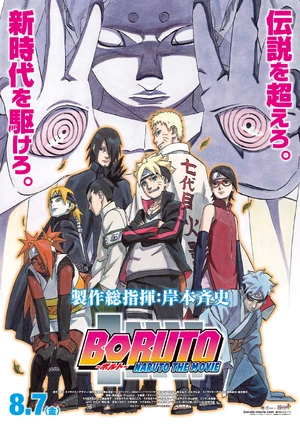
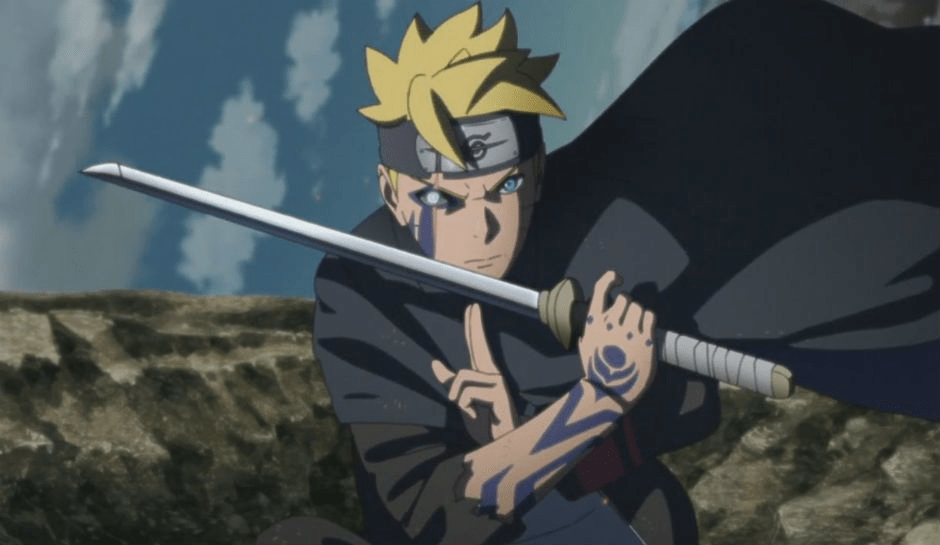
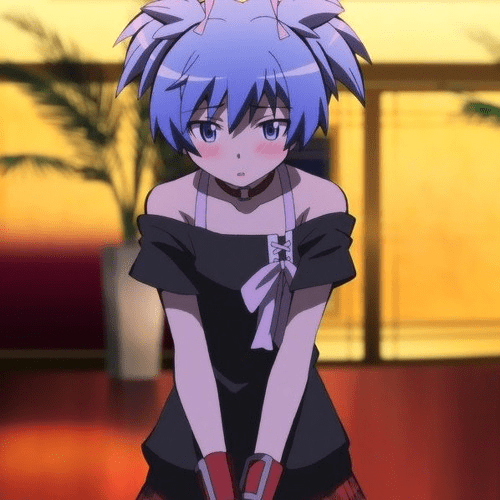
As much as I’ve written about not wanting to be the Boruto guy, I honestly don’t mind such a connotation just as long as I’m allowed more topics to cover and in that regard on this blog, I’ve succeeded. But to circle back to the topic of this week’s post, Boruto’s timeskip arc has an update. Last week, third party sources brought news to the Boruto community concerning the upcoming timeskip arc. The next chapter is expected to release on August 21 under the new subtitle, Two Blue Vortex, and joining Kawaki and Boruto who both have future redesigns is Sarada Uchiha.
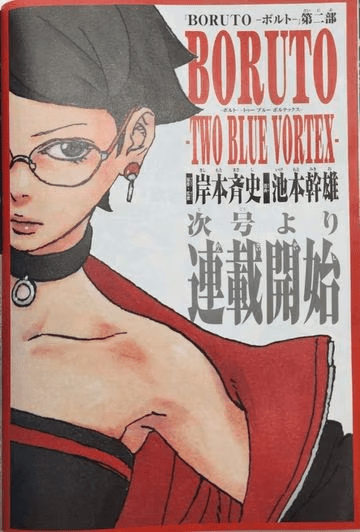
Consistent with trends, there’s already fan art of the new design. Here’s a personal favorite of mine:
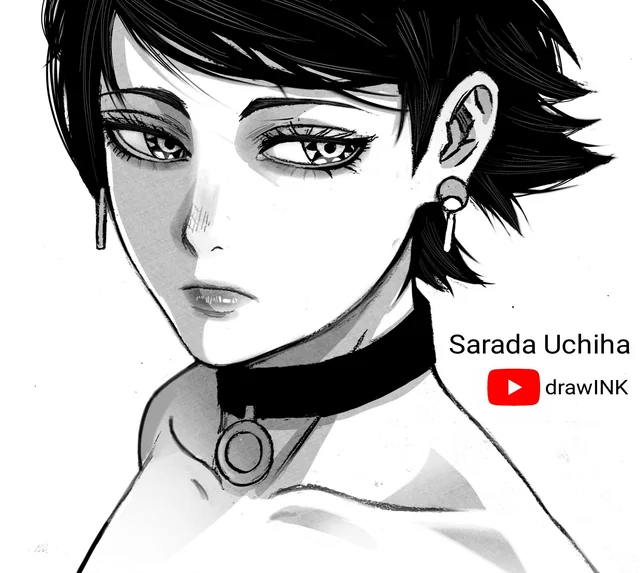
And no, the Bayonetta comparisons aren’t lost on the community. Simultaneously, the reveal debunks previous predictions made years prior while also shedding some light on existing concepts. For starters, rather than follow the Naruto convention of the subtitle Shippuden with Raiden and the associated kanji for lightning (雷), Two Blue Vortex deviates significantly from the formula used to craft Naruto and Naruto Shippuden as further proof that Boruto is simply not that kind of guy. Naruto had Sage Mode, was a Jinchuriki, shunned by the village for being the host of the Nine-tailed fox and fought tooth and nail to be seen as more than just the sum of his parts. Boruto, in contrast, was designed with nearly everything handed to him on a silver platter, largely because his parents either had none of it or weren’t allowed all that much to enjoy what they got. And seemingly overnight, he eventually loses it all.
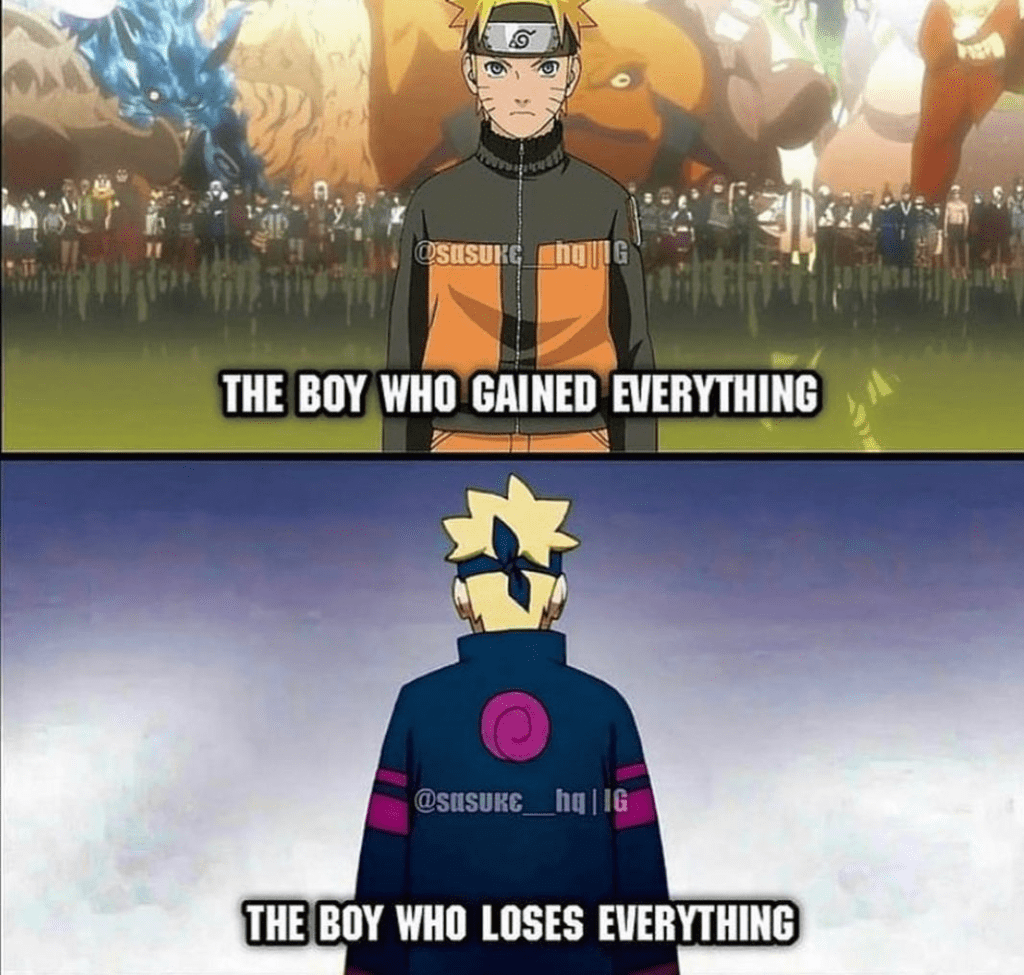
When the story starts proper, Boruto is pretty much a spoiled little brat with a legacy over his head. Naruto was inaugurated as the Seventh Hokage, following a lifelong dream that everyone said was impossible, and his grandfather Minato Namikaze, had the distinction of being the Leaf Village’s shortest serving Fourth Hokage. Considering the negative connotations associated with the number four in East Asia, the Four is Death trope is a time-honored tradition. Guido Mista was right to worry.

Boruto being spoiled is a direct consequence of the shaping of the Ninja World in both his father’s and grandfather’s times. From Minato’s time period, it was expected and tacitly accepted that ninja would have enemies. Constant warfare meant friends were made as fast as they were lost and often from a young age. Minato’s ninja cell were the equivalent of child soldiers during the Third Shinobi War. Even after becoming Fourth Hokage, the peace was tenuous at best, and the ninja villages would essentially shift from fighting organized militaries to disorganized terror cells. This problem didn’t really begin because of anything Minato did, but Naruto’s adolescence was where it got worse.

The Akatsuki, close to achieving its’ goal under false pretenses, and with only a few members left, outright started the Fourth Shinobi War, by way of necromancy and cloning. Initially, through desperation and gradually through teamwork, the ninja villages set aside all differences to combat a worse threat: Madara, Obito, and soon Kaguya Ohtsutsuki. After their defeat, it was a time to rebuild a better world for the future. Naruto’s tenure as the seventh led to many gifted children, some of them directly from the old Konoha 12 of before. They essentially lived so that Boruto’s generation would have it easy, but the down side to that is they don’t see what others are lacking in until it’s missing from them. Which does happen to Boruto gradually. Starting with the seal on his hand and the control that Momoshiki is always threatening to take away, though for the most part he doesn’t have to as long as he leaves things up to Kara, Isshiki, or Kawaki.

With Kara in tatters and Isshiki soundly defeated, Kawaki and Code are the last enemies Boruto has to face in the timeskip. How that comes to pass will be revealed after August 21 when TBV debuts properly so for now, here’s what I know and what I see from the reveal. It’s been confirmed from years prior how Kawaki and Boruto would look. Kawaki would wield a staff/rod-like weapon in the future, and aside from a change in attire, he wouldn’t differ all that much from the Chapter/Episode 1 teaser. In the redesign, he sports longer hair and a tunic and haori that bears a striking resemblance to what Isshiki had.

Boruto meanwhile had a scar over his eye, a headband with two perpendicular scratches, slightly longer hair, a cloak, a sword, and better control of his Jougan. The updated design stays true to what was seen in the manga in 2017, but with a few noticeable changes. The cloak is similar to how Sasuke wears his, the scar is shorter, and the hair is almost the same if not shorter than his current look. We haven’t seen the sword yet, so it’s not known if he’s using one of his own or if Sasuke has an arsenal and let him have an old relic.

From what we saw of Sarada’s design, with all the talks and fanart depicting her with longer hair and a longer tunic similar to what Sakura had in Shippuden, but the Bayonetta-style design immediately tosses that out of the window and calls back to when fans of Naruto thought or expected Naruto himself to have longer hair as he aged.

Additionally, Sarada’s presence on the cover may suggest that the new chapter will include her somewhere in it. As I recall, a beginning scene in Shippuden shows now-genin Konohamaru running into Teuchi. We’ve already made clear that Boruto as a character and as a manga is not the same as Naruto so the tone may be a bit more sullen or serious compared to this classic Shonen slapstick.

Some on the Boruto subreddit also noticed the symbolism in this preliminary design for Sarada, with Uchiha clan earrings, the ring on the choker, and the cloak she seems to be donning. If it’s a cloak she’s wearing, then it may be paying homage to Sasuke. If it’s a jacket, then it could be an homage to Boruto. Or both, but with everyone under the shinjutsu and believing Boruto to be the traitor, everyone’ll think it’s only to remember Sasuke who seemingly abandoned the village once again.

Speaking of shinjutsu, Eida, love her or not, still has a critical role to play in the plot. The shinjutsu she subconsciously used to reverse Kawaki’s and Boruto’s lives has yet to be fully explained. The same goes for her Senrigan.

All we have on both are what was shown in the manga and Amado’s exposition. According to Amado, shinjutsu, like omnipotence, essentially make facts out of fiction and as Amado has surmised, all ninjutsu are humans’ best attempt at recreating the shinjutsu. If that’s the case, then the Omnipotence that kicked off this predicament would function at an even higher level than that of Madara’s or Kaguya’s Rinnegan/Rinnesharingan. Whatever has been the most powerful genjutsu shown in canon or in filler, Omnipotence is even more broken than that.

As for the Senrigan, since it literally translates to “clairvoyance” Eida essentially knows everything that’s going on anywhere in the world and what has happened. Like a very powerful librarian or historian.

As powerful as the Senrigan, it’s not like Eida will know what’s going to happen next in general or to individual people. Again, it’s more like reaching into the past than it is about the future. So far, it’s served as a means of communication between Eida and Shikamaru, her and Amado, and whoever else she likes or can tolerate. Circling briefly back to the Omnipotence, of all the people affected, Sarada remains unchanged which appears to be linked to how much Eida liked being with her and Sumire. As such, it was also shown that Sumire was unaffected by the shinjutsu.

I can’t promise anything on accuracy for this next chapter as shown by my track record thus far. Any predictions I make are going to play it fast and loose until the chapter proper comes out. Having said that, there are some things I can’t see with any degree of accuracy. There are three that are, as of writing this, anyone’s guess: Sumire, Himawari, and Daemon.

Starting with the most significant one plot-wise:
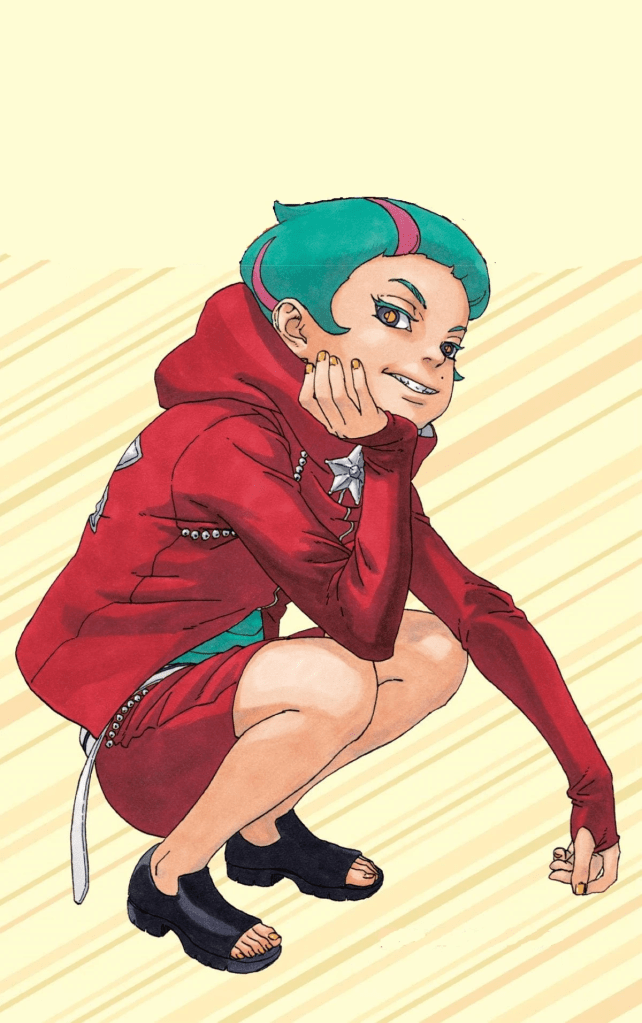
The extent of Daemon’s abilities are that just thinking about harming him is reflected in real time back at the would-be attacker. For instance, there’s a panel where Boruto and Kawaki both think about teaching the little runt a lesson only for it to literally backfire. So they both need to put up with his silliness to keep Eida from running off until further notice. For what can be said about him going forward, the only level of development seen was that he sensed an energy from Himawari, and we don’t know for certain how well the manga will follow up on that until then. Speaking of which:

The latter episodes of the anime put her in an academic setting with Kawaki going in as well on an undercover mission. For Himawari’s abilities, the Byakugan emerged in her the same day as Naruto’s inauguration and she’s shown to attack with the signature killing intent that each ninja knows about in battle. But for the most part, it’s been depicted as subconscious and while she was shown to be effective during this late anime arc, it remains to be seen if it even gets a reference in the manga if not an accompanying light novel.

Finally, there’s Sumire Kakei, who admittedly got a more generous treatment in the show, despite her starting out as a spawn of a former member of Danzo Shimura’s Foundation within the ANBU Black Ops. The show and the children accepted her with open arms and since the students graduated, she took on an apprenticeship with Dr. Katasuke Tohno. As far as a prediction, this will likely continue unabated, save for the subject area of their study being Boruto instead of Kawaki, but on the side she might be keeping in touch with Sarada on her progress to the best of her ability. And this is just the Hidden Leaf Village. The anime might bring the Sand Ninja back into the fold, but for what or how I can’t foresee. Even if it feels like Shinki et al don’t impact the story much, they’re not unaffected by the events thus far, and are at the mercy of the Sand Village’s moves as shinobi as well. Even a short filler or catch up for the audience to remind us they exist would be acceptable to me.

No matter what happens, Code is still a problem and it’s all up in the air how they choose to address that. Either way, I’m eagerly awaiting the manga’s and anime’s return.
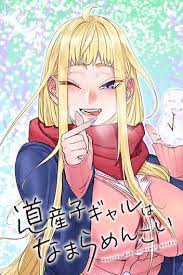

Hokkaido Gals are Super Adorable Coming Soon

Reorganizing my list is sometimes a blessing in disguise.

Over the course of this blog, I’ve put sneak peeks at the end for the next week’s topic, and I did that last week in light of some recent news. The manga Hokkaido Gals are Super Adorable (alternate name: Dosanko Gyaru is Mega Cute) has been greenlit for an anime adaptation in January of 2024.

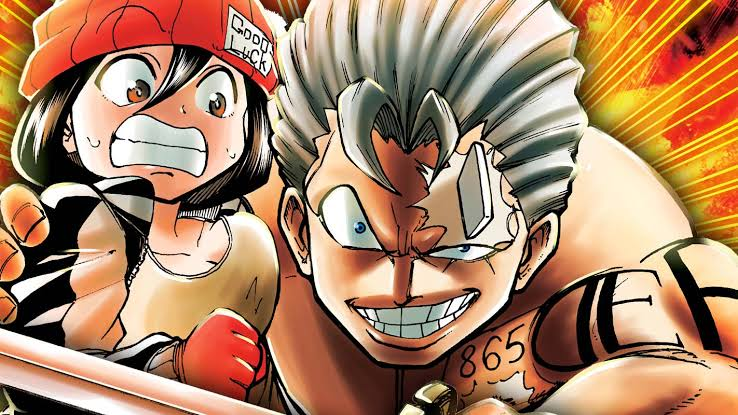
I believe I’ve also made it aware that more often than not manga series I champion just sit in the back of the class unnoticed and unsung by handful of devotees while popular manga that I don’t pay a lot of attention to are the ones that get a greenlight relatively quickly. This is a rare instance of another manga I happen to enjoy getting the anime treatment, and soon. I recall reporting about adaptational rumors in late June concerning the My Hero Academia spinoff, but so far, no further reports on that have surfaced as of this writing, sadly. But at least you have a complete arc to round out the picture of the MHA franchise.
For Hokkaido Gals, let’s catch up to speed. In Japanese pop culture, the gal (or gyaru) is a subculture of usually teenage girls engaging in fashion trends. The typical gyaru is seen normally with a sweater (wrapped around their waist or actually wearing it), a bright-colored mini skirt, thigh socks or leg warmers, a blouse with the top few buttons undone, often light or even blonde-dyed hair, makeup, jewelry, and an attachment to her cell phone. Derisively, gyarus are said to also have a stigma of being loose and promiscuous. Call it fanservice or a mean-spirited inside joke, but of the gal-focused series I’ve seen or observed, in all but demeanor they give me the impression of Hollywood’s idea of the popular girl/cheerleader archetype.

All things considered, I think these tropes were the writers’ best attempt at therapy for an unresolved wrong. But between Galko-chan, Hajimete no Gal, and even Dosanko Gyaru among others, I’m finding that this negative stereotype is getting debunked as we go on, though its replacement isn’t all that much better.

Hokkaido Gals are Super Adorable does a few things differently than previous gyaru-centric series. The typical trope is that it’s centered in Tokyo, the male MC is from elsewhere in Japan, and the gyaru MC is a native who knows her way around the Tokyo Metro. In reality, it’s a statement that means she can navigate the tens of millions of citizens, residents, and tourists who coalesce around the main hot spots of Akihabara and the famous Shibuya crossing. It’s really no different from highlighting any given tourist-y spot in any major city like NYC or L.A.

So to turn this trope on its head, the main MC is himself a Tokyoite who comes up to Hokkaido. This teaches me the power of a popular thing physical or conceived, so there might be an equivalent in other parts of Japan. The male protagonist of this manga is Tsubasa Shiki, the rather upper-class sheltered Tokyoite who has moved north to Hokkaido with his grandmother. On the way to school, he runs into gyaru and female protagonist of this manga, Minami Fuyuki, and while he attends the high school up in Hokkaido, Tsubasa meets other gyaru characters in the form of Sayuri Akino, Rena Natsukawa, and interestingly, Fuyuki’s mother.

When I say Tsubasa’s a sheltered upper-class guy, I mean it in the sense that he grew up comfortably and averagely enough to openly declare his main attraction to a very average type of Japanese woman; dark hair, composed, reserved, prim and proper — none of which are inherent in Fuyuki. As a matter of fact, she’s the type of gyaru I described earlier in this post. As for that stereotype that seems to have replaced the derisive promiscuity one, Fuyuki is also somewhat ditzy and short-sighted. In the early chapters of the manga, she’s shown to struggle with studying and even test-taking as Tsubasa and Sayuri make strides when all of them study together while Fuyuki struggles to catch up. It would be more accurate and charitable to say that she doesn’t have the kind of academic intelligence. Honestly, for all the sightseeing done in the manga, she’s a shoe-in for Hokkaido tourism, especially in a place like Sapporo or Hakodate.

Sayuri combines two tropes into one, but also comes with several surprises of her own. In appearance, she’s exactly Tsubasa’s type of girl and in fashion she dresses like a gyaru, even if only slightly. For the surprises, early in the manga, there’s two and they have an uneven connection. Sayuri has a condition known as hyperhidrosis, or excessive sweating, and thus she refrained from intense physical activity. Instead, she’s become a hardcore gamer goth girl, probably the type to skip over cutscenes and 100% a game. Sounds like someone else I know of.

Rena Natsukawa is a third gyaru character, but is also a hafu, meaning that she has one parent who isn’t ethnically Japanese. She’s also a high-achieving student who just so happens to have near-unrestricted access to the library and is a tutor to her peers. Moreover, she’s admired by Fuyuki herself, so if Fuyuki ever needs help with her studies, Natsukawa-san is not too hard to find.

What’s interesting about this manga is the common tropes that are broken down. It borrows from series like Hajimete no Gal and Sono Bisque Doll, while also carving something new for itself. Call it for what it is, but with so many series alluding to or stating that they’re set in Tokyo, it’s nice to see other parts of Japan get the spotlight they need. It’s something I welcome personally when someone outside the U.S. goes to a place that probably doesn’t have a strong tourism industry, though on the other hand, the isolation tends to suit places like this better. No outside disturbances to ruin what makes a certain place unique.

The gyaru characters come into stride in their own unique ways. Since I’m only about twenty chapters in with the manga clocking in about almost 100 so far, I can’t say with certainty if there are more gyaru characters who show up down the line, but keeping the cast so small thus far does a lot to flesh them out evenly and gradually as the series progresses. Most of what I described of the characters thus far is in the chapters they each debut in with more to be revealed, but again, I’m not that far as of writing this so even if I wanted to spoil, I couldn’t. I really want those who’re interested to catch up to the manga in time for Silver Link to start distributing the anime next January.

Once it airs, if there’s nothing else taking my time away, I’ll report my findings as it airs.

While my hopes are up, some poking around in associated forums on Reddit leave me with a few concerns. I refrained from spoiling myself, but I’ve heard through the grapevine, that the most recent chapters haven’t been as good in regard to characterization, seemingly undoing the character development since the beginning and, to my interpretation, trapping Tsubasa in a needless love triangle. But I’m regarding these observations as rumors until I see it for myself, and I advise anyone to do the same. As for where to read the manga, it is getting released in volumes here in the west, but to catch the chapters as they release, my source has been the Manga Plus website and app run by Shueisha themselves.

https://mangaplus.shueisha.co.jp/titles/100116

Alternatively, there’s pirate sites, though it’s best to use caution. I recommend Manga Plus for this series specifically, because every chapter is available without subscription if you’re short of cash yourself. It’s a fun series overall and I hope it makes a seamless transition to anime. Still, holding out hope for Vigilantes though…

Mob Psycho 100

Of the boy who lifted… with his mind

And now to turn your attention to a series that needed to be moved to the first week of July to make way for anime rumors: Mob Psycho 100.

This series was started by the mangaka One of One Punch Man fame as a contrast of sorts to both his previous manga and its central protagonist, Saitama. The protagonist of Mob Psycho is middle schooler Shigeo Kageyama, a boy who possesses the power of telekinesis but is remarkably restrained with their application. In fact, when we’re first introduced to the boy, at times he activates these powers accidentally.

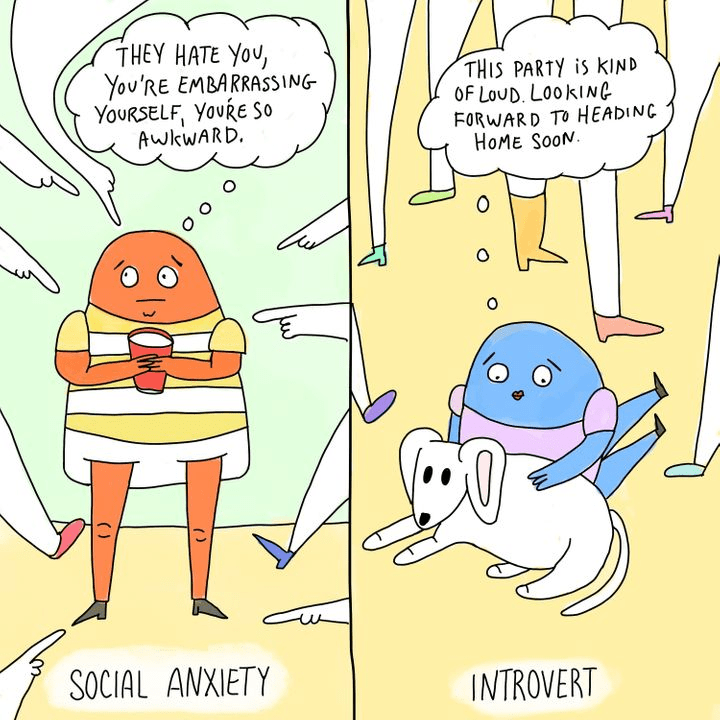
Growing up, Shigeo, nicknamed “Mob,” is well-aware of his abilities and how much it makes him stand out. His main goals are to fit in with the rest of his peers at school and hopefully tell his crush his true feelings unimpeded, but there’s a bit of a snag: the boy has trouble reading social cues. Being an introvert is one thing, and it tends to overlap a lot with social anxiety and/or awkwardness, but they’re not the same thing. In summary, introversion in practice means that while the introvert has no problem interacting with folks, they don’t always favor having a rotating body of friends. In my experience in high school, in college, and in the Army, as much as I interacted with most of my peers, I stuck around with the same five or six people I always had, and that was fine for me.

Mob is generally similar, starting small and having, by my count, around ten people he talks to the most, over half of them outside of the school they all attend. Whereas Saitama from One Punch Man looked and often behaved disinterested in his job as a hero due to every single battle ending in a single punch and somewhat ruining the fun, Mob may look disinterested in a lot of things, but this is a trademark of his personality.

He has trouble expressing himself physically or verbally and often falls back on short sentences and responses in contrast to these hyperactive classmates of his. You could argue that this is a tell that he might be on the autism spectrum as noted by this Tumblr post:

And this video:

Keep in mind, the opinions expressed in both of these are those of the creators based on their own observations and are meant to be points of debate rather than absolute truth, so read and watch with an open mind, but take these opinions for what they are.

To achieve his goals, Mob shacks up with a fitness club at his school. In context, this is a direct snub to the club that had originally requested (read: begged) for him to join their numbers: the telepathy club. This club, started by student Tome Kurata is focused mainly on paranormal like that of telekinesis and extrasensory perception or ESP, which is applicable to Mob’s physical traits rather than something more personal. As another example of Mob being treated differently, the club tries to get him to join based on that alone, and was more of an excuse for a bunch of nerds to eat snacks and hang out compared to the body improvement club that actively works out every day.

When I say being treated differently based on a single trait, it’s easy to look at that as being dismissive or distracted by that single trait instead of treating it as part of a whole and think of bullying or teasing, but on the other end of the spectrum is parading that difference as though it’s the most amazing thing in the world when the reality is markedly different.

Largely by virtue of possessing such powers, Mob’s difficulty with others is that he wants to stand shoulder to shoulder with his peers, but his inability to read the atmosphere holds him back. Conversely, others want him to be able to react to the environment of a situation, but can’t understand themselves why he’s unable to do so. In the scene I described where he joins the fitness guys instead of the paranormal folks, the student council president in a somewhat hostile tone of voice doesn’t chide him for his indecision, but emphasizes that Mob should neither be pressured nor judged for his choices. It all needs to come from within, and so his decision to join a body improvement club may seem random at first until you recall that he wants to impress his crush. He didn’t let the telepathy club pull him in, instead he chose the team that would yield positive results, and one where his powers could reliably take a backseat.

Having said that, as the series goes on the paranormal finds him one way or another, sort of like Stands in JoJo’s Bizarre Adventure, he turns out to be a huge ESP magnet. Most of these people start off highlighting these traits as the be-all, end-all and expect Mob to follow suit, but as I’ve noticed, he’s not that kind of kid. As much as he doesn’t want these abilities to be hindrance, he doesn’t want them to be a highlight either; Mob wants them to be seen as regular as anyone who, say, has double-joints or light gray eyes or a scar or blemish–it’s a part of him, not all of him. And while a few characters learn to see him as they see themselves — a kid who wants to fit in no matter what — others, mostly antagonists, zero in on that aspect because it worked for them and they hoped to accomplish similar success after pairing or using Mob for themselves.

Outside of Mob’s immediate family, another person who shows him respect no matter what is his boss and mentor: Arataka Reigen.

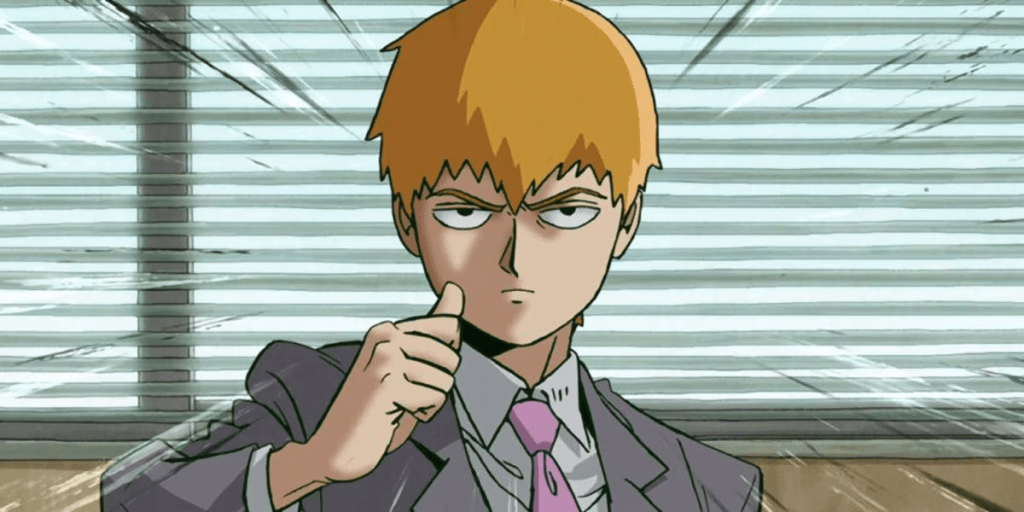
In contrast with the boy, Reigen is an extrovert who can read people so well, if humans came with a manual, he could convince you that he co-wrote it. Note that I said “convince” as this is a part of Reigen’s character. While Mob is honest and kindhearted for the most part, Reigen is a con-man with all the confidence of an old west snake oil salesman. I jest, but these are lines referenced in either the manga or the anime. Reigen is fully aware of the scam he operates at his paranormal consulting firm Spirits and Such Consultation Office, where Mob works part-time after school. The name of the business doesn’t take itself all that seriously, and he knows that he’s more or less a glorified masseuse who markets home remedies as foolproof methods against ghosts and hauntings, but what makes him such a draw for many in the series and even people reading/watching the series is that in the face of adversity he can think on the fly.

Only some folks can stay composed under pressure and Reigen belongs in that camp. He consciously uses lying and exaggeration as a tool in almost every aspect of his life, professional and personal. It doesn’t work all the time, but it gets him quite far when it does. Mob though tries his best to fit in as honestly as he can but finds more difficulty in this aspect than Reigen, who can stumble his way into fame if he could. And this is largely the point, they’re opposites in personality but neither let’s that get in the way of what is portrayed as a fruitful mentor-pupil relationship.

Reigen is knowingly duplicitous to everyone, but doesn’t want Mob to become a shady individual like he is. Mob is honest and pure, but largely because he’s just a kid, he’s also somewhat naïve to how people really behave. Mob, above all, wants to fit in and have friends, and Reigen wants him to be kind, but also smart, which is part of what I love so much about the series. Mob’s a quiet boy, who wouldn’t hurt a fly unless pushed to do so, but still his a lot of growing up to do. Reigen will gladly help him out in this aspect, but doesn’t really throw him in at the deep end.

In regard to Mob’s telekinesis, it’s in line with his emotions. In response to different situations in the series, there’s a counter from 0 to 100. The more stressful a situation, the higher the number climbs and when he reaches his limit, his powers go into overdrive. How he’s feeling when he gets there also plays a factor and his powers are proportional to his emotions. On a good day, Mob can pass the telekinesis off as the parlor trick he would want it to be, but extreme feelings of rage, sadness, compassion, or even ecstasy results in great and, depending on the circumstances, dire consequences.

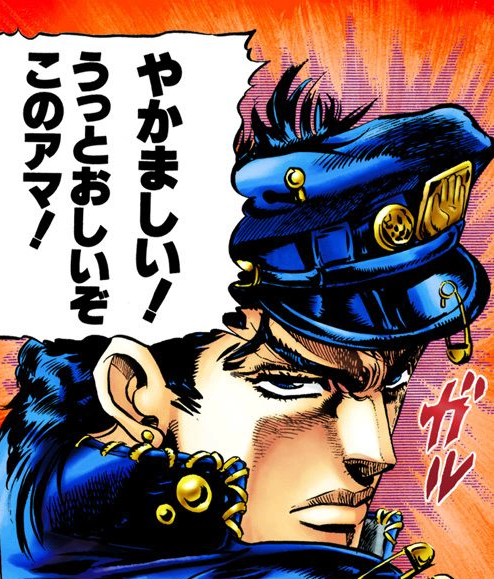
I’ve watched all three current seasons of Mob Psycho 100 and only recently did I discover the theory that he may be autistic. The two sources I pointed to at the beginning of this post hold a lot of weight, but I’m not sure how I feel about the theory. Both the sources provided are stating their own opinions, but I’ve heard similar theories thrown around for different characters in manga and anime, often as a joke due in large part to the overlapping of autism and similar disorders like Asperger’s, social anxiety, or just plain old introversion. The two prime examples that have taken residence in my head as of late are those of Chainsaw Man’s Asa Mitaka and JoJo’s Bizarre Adventure’s Jotaro Kujo. Even if it’s also a joke, the CSM fanbase has some more evidence of Asa’s traits than the JoJo base does regarding Jotaro. He just doesn’t like loud and boisterous people, and even wants his own mother to lay off a bit.

But it’s not like Jotaro is careless. Just rough around the edges.

For Mob though, the theory does highlight the complexity of autism and similar disorders, but most internet theories throw terms around like darts on a dartboard. And I think the only way to be certain is to ask One himself, but then again, these are just theories so I’ll just leave them be. It is interesting viewing for those who are interested. But of course if you wanna form your own conclusions, you can watch the anime or read the manga for yourself.

Before I leave, I want to preview next week’s topic in light of more anime news.

As far as I’m concerned, we’re getting a good serving.

My Hero Academia: Vigilantes Might Get an Adaptation

An overlooked spin-off may finally get some attention

In my notes, the topic of this spin-off was in the pipeline for at least a few months now, but thanks to recent rumors, it’s possible that the fabled adaptation may be entering its production stage. And as a follower of the series for a time, this has been a long time coming.

The original My Hero Academia launched in 2014 by mangaka Kohei Horikoshi, and was given an adaptation about two years later which, as of writing this, has wrapped up its sixth season a few months ago. Additionally, it’s had a series of light novels, video games, associated apparel and other accessories, and a pair of spin-offs in the form of the aforementioned Vigilantes and a chibi four-panel comic, both of which are much shorter than the original MHA manga which, as of writing this, is nearing 400 chapters and over 30 volumes. All things considered, since Horikoshi was a fan of Naruto growing up, I think it’s safe to say that if part of the dream was to have the same impact that Naruto had in the early 2000s then on that front, he’s succeeded.

The Vigilantes manga meanwhile sat in the back, being released in April 2016 and running up until May 2022, concluding its story in 15 volumes, so it can be cleared at a faster rate than it would take to catch up to the original manga from the beginning. The protagonists are Koichi Haimawari, a college student and part-time vigilante who mostly patrols a single area of Tokyo under the alter ego of the Crawler, jokingly mispronounced “Cruller”; Kazuho Haneyama, the trademark, pink-haired tsundere high school student who moonlights as an impromptu pop-star under the guise of Pop-Step; and Knuckleduster, a crusty Batman-like archetype, who embraces his quirklessness and dishes out justice the old-fashioned way.

At the outset, you can see the differences between the original’s Izuku Midoriya and this one’s Koichi Haimawari. Izuku, or Deku, began the story quirkless and with zero prospects to become a world-class professional hero until his idol, the world’s Number 1 superhero All Might, observed a hallmark of bravery and allowed him to prepare enough to inherit his quirk One For All, which has been handed down through generations of world-class heroes. Koichi, on the other hand, has a quirk called Slide n’ Glide which allows him to glide around and connect to flat surfaces with three points of contact. Kazuho’s quirk is leap which allows her to jump at great distances; this allows her to live out the idol persona she puts on.

Not just limited to these unofficial heroes, pros from the original series also make an appearance to include, the big man himself All Might, Shota Aizawa, Midnight, Present Mic, Detective Tsukauchi and several more, most of these folks being pros before teaching at UA Hero Academy. Most notably, the tone of Vigilantes is darker and a bit more mature than that of the original as it focuses on a college student this time around than a high school class. As I wrote above, All Might is there, but his presence is more of a backdrop than as a prominence. Koichi’s part-time hobby as a vigilante puts him in a tough spot legally. The original manga introduces the pro heroes who are licensed to step in alongside the proper authorities like the police and courts, and the villains are their polar opposite, but the Vigilantes manga clarifies what this means.

When quirks were first discovered in the MHA world, the laws were nonexistent. Vigilantes were the original unlicensed heroes who stepped up to answer to the rampant chaos borne from the emerging quirk era. The law eventually came up, not to explain the makings of a hero but to classify villains. The first place to have laws written on heroism or villainy was the U.S. state of Rhode Island. Of 189 vigilantes whose candidacy for heroism was up for review, only seven were allowed to continue on as the U.S.’s first pro heroes. The issue for the other 182 candidates was that they didn’t have the qualities that made the trademark hero and either continued on as vigilantes or villains. Ironically, the law’s adherence to licensing puts vigilantes in the same spot as villains despite vigilantes being the origins of the laws and most vigilantes running counter to full-blown villainy. The causal loop is definitely not lost on the manga though.

Burgeoning heroes who find themselves in vigilante limbo though aren’t hopeless thankfully; there’s a program that allows pro heroes to recruit vigilantes as sidekicks and incidentally, some big name pros in the original began as sidekicks before finding their own paths in the hero world. Vigilantes also has a sort of slice of life element to it as well. If Koichi was up for hero candidacy, there’s no shortage of witnesses to his do-gooding in the immediate neighborhood, as well as some pro heroes who can give him a leg up if he needs it. There’s glimpses of him aiding people with minor inconveniences just as he assists his fellow vigilantes and pros in stopping villains in any capacity.

There are also several plot points in the original that have origins in the spin-off series. Another notable difference between Deku and the Crawler were how they both deal with their lots in life: Deku’s aspirations would’ve been impossible even if he had a relatively worthless quirk; meanwhile Crawler’s initial poor handling of his own quirk didn’t really stop him from attempting to help, even if it was with a stray dog (that’s sort of a joke, there is a dog in trouble later in the manga; not so much of a spoiler since it gets resolved in about five panels). Deku obviously starts off in high school with his head in the clouds; Koichi tends to keep it realistic and is more in it for the good of the locals, so if he went the pro hero route, the money wouldn’t be his main motivation, though the same would apply to Deku.

The Vigilantes manga’s place in canon can be interpreted as a sort of foil for the checkerboard presentation of the main plot. Vigilantes as unlicensed, illegal heroes are shown to be a necessary evil in the law’s eyes, and a digestible aid from a practical standpoint. With pro heroes, there’s laws that rein a hero in from overstepping the established boundaries, but vigilantes being unregulated could go a step further to prevent an escalation before it becomes a problem for the pros, which turns out to be Knuckleduster’s own philosophy in the manga.

Personally, I welcome Vigilantes as a bit more grounded in its approach to what the original is doing. It’s still a Shonen series at heart, but in practice it takes things a bit further with an older, more mature protagonist who is still optimistic about his future even though he’s buried pretty deep in the gray muck of hero laws. It also has a bit of an edgier portrayal that would really challenge the cast of the original MHA, but not grotesquely or irreverently as Amazon’s The Boys. In the MHA world, Homelander and A-Train would be high on hero killer Stain’s crap list.

If the rumors are to be true, then a notable rarity in anime production would be the adaptation of a complete manga. The only other case that comes to mind would be that of JoJo’s Bizarre Adventure reaching a successful adaptation in 2012, one year after the eighth arc of the manga was being written. That said, all we have are the rumors, so it might not be true until an animator or someone else in the industry has more concrete evidence of an adaptation in the pipeline.

For now, the chapters are available on Viz Media and Shueisha, and its 126 chapters are spread across 15 volumes. To my knowledge there’s no collection or box set to speak of for the lesser known Vigilantes arc, but don’t let that stop you from making your own. For my take, it’s a B+. Avoiding spoilers, there are minor instances that could’ve been reworked or omitted, but the rest of the time it’s a solid manga.

To go along with this overlong recommendation wearing the mask of a blog post is the last YouTube recommendation for the month of June. Adding onto the cadre of Trash Taste affiliates and allies is the YouTube channel Abroad in Japan.

https://www.youtube.com/@AbroadinJapan/about

The channel and other associated Abroad channels are run by British grammar educator and YouTuber Chris Broad who first moved to Japan in 2010. Ever since, he’s made video after video on daily life in Japan going by prefecture, sights to be seen, activities to perform, and generally places to visit. While not a full-blown weeb, his guest appearances on Trash Taste have introduced him to several anime series and he has revealed to the TT boys that his favorites included most of Studio Ghibli’s lineup and anything directed by Hayao Miyazaki or Satoshi Kon or even Kenichiro Watanabe to name a few directors. Normally, when it comes to Japan-based YouTubers, one of the first people to go to is someone who’s native, but spending over a decade and change in Japan should put him in the same room as other Japan-based YouTubers, especially since he’s been up and down the country.

If you’re still looking for a slice of Japan, but you’ve had your fill of anime, Chris Broad’s always got a video or series up, to include the likes of Dr. Jelly as part of a collaboration with The Anime Man, and Wacky Weekends and Journey Across Japan done mostly in collaboration with CDawgVA.

A Somewhat Complex Introduction to Pokémon

Better late than never?

This will serve as both an indictment against me, and as an explanation for what I’ve always thought about the Pokémon franchise. Before we start proper, my original notes were going to say that this was a “Late Intro to Pokémon,” but that’s inaccurate and misleading considering what I grew up with. Such a title would suggest that I had never heard of Pokémon before or bothered to look into the series itself, which just isn’t true of the rest of the franchise outside of the games. The games were what I was late to, not the anime, or the toys, or the cards. So, this post will be mostly about the games.

I say that my introduction to Pokémon is inaccurate because growing up in the 2000s meant seeing some variation of the franchise on TV through the anime or through advertising. I certainly recall tuning in to Pokémon when it was on channels like Cartoon Network, or Nicktoons or 4KidsTV alongside Yu-Gi-Oh!, but admittedly, it hadn’t really caught me the same way Dragon Ball Z did at the time. Still, it was one of the two properties with something that can be imitated in real life in the form of the card games.

If you also grew up in the 2000s and 2010s, you or someone you know probably had a booklet or folder or something similar that had a full deck of cards or more. Like Yu-Gi-Oh!, I was normally just the bystander watching some of my friends play and battle it out from the sidelines. It got the most focus in the latter years of elementary and all throughout middle school, especially during recess. For me, the allure of Shonen series was the more intense battles that could be seen through the original big three: Naruto, One Piece, and Bleach, with a special mention to Dragon Ball. I didn’t know it at the time, but the rest of the franchise went hand in hand with the anime, similarly to Yu-Gi-Oh!, so the point flew over my head on a supersonic jet.

I always thought all of this was enough to get a fill of the series, but there’s a noticeable difference between watching the show, engaging with the cards, and playing the video games; a difference I never saw until recently.

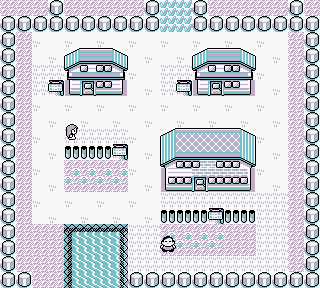
I knew how the games started for the most part: name character, choose starting Pokémon, adventure, battle. Sometime last year, I started the game on a browser emulator which as a sidenote, was not very hard to find, probably because the technology for a handheld is seemingly less complicated than that of a home console (don’t quote me on that), and I began with the first game in the series: Pokémon Red. My starting Pokémon was Squirtle, whom I advanced up to Wartortle after fighting off several wild Pidgeys and Ratatas. Then it hit me… like a wild Pidgey.

When I started this post, I was certain it was mainly about the Pokemon games’ layout and such, but it seems to be a bit more complicated than even I thought and opened up with. For all the love I give to adventure games and RPGs, some of the gripes came down to leveling up and the random fights that happened no matter what. Then again, there were other games that had this design philosophy and I remember getting far and playing most of them to completion. Naruto: Path of the Ninja, handheld versions of the Avatar games, in some aspects Genshin Impact and most recently Honkai: Star Rail. I even watched gameplay of a pacifist run of Undertale.

So, I clearly had no real issue with RPGs or JRPGs, but I didn’t start or attempt a Pokemon game until I was 23. So, what gives?

I don’t feel like leaving on a cop out answer, but the only one that makes sense to me would probably be overexposure. A franchise this influential to pop culture, media, and such that South Park can parody it, even when it just breaks ground in the west didn’t feel like there would be too much to discover by myself, which may also explain why I’ve been hugging and cheering on underrated and unsung manga like Undead Unluck, The Elusive Samurai, and one that I also discovered recently, but haven’t written about yet, Rokudenashi Blues.

But if you read all that and recalled that I’m so caught up with Naruto that I could in some aspect be the “Boruto Guy” with all the lore in just that franchise, you might also question how I can be overexposed to Pokemon but not take similar issue with Naruto and the other stuff. Why the bias? Well, first that’s a question to be asked about almost everything in life, and in context… as much as I tried to avoid it, the cop out “I don’t know” might have to suffice. Maybe the appeal wasn’t as strong for the games as it was for the 12,000 anime iterations. Unlike most of my friends at the time, I was way more of a moderate consumer of anything Pokemon compared to the other stuff that ate up my attention. Whatever a superfan of Pokemon hoped to have, I sought the same with Naruto all things considered and the free-roaming, adventure style I personally found more engaging then walking around Pallet Town waiting for the danger to find me like I mixed the paranoia pills with strong Colombian coffee.

I think it also comes down to the early Pokemon games at the time relying on the player’s imagination to fill in the blanks as opposed to what a modern Pokemon game is capable of now.

That being said, I wouldn’t say I’d want to stop trying to get into Pokemon. Googling the franchise will definitely put it in my radar in the form of banner ads down the line and admittedly none of what I bring up is bound to be a staple of the games anymore. The battles happening at random weren’t any fun in Path of the Ninja and from what I remember the furthest I got there was the Land of Waves arc. I might revisit this in the future after looking at gameplay of later Pokemon games. We’ll have to wait and see.

For this week, I recommend the YouTube channel Clownfish TV.

https://www.youtube.com/@ClownfishTV/about

Clownfish TV is an independent media outlet that focuses on games, TV, animation, comics, and pop culture mainstays and staples, chief among them Disney and its growing properties. Co-hosted by husband and wife duo, Kneon and GeekySparkles, the channel makes daily videos about media at a rate of two to three a day. Additionally, they have merchandise up for sale on their own website and as of this writing, a comic strip based on dialogue spoken in the videos.

JoJo’s Bizarre Adventure: Beautifully Blursed

Supernatural music references

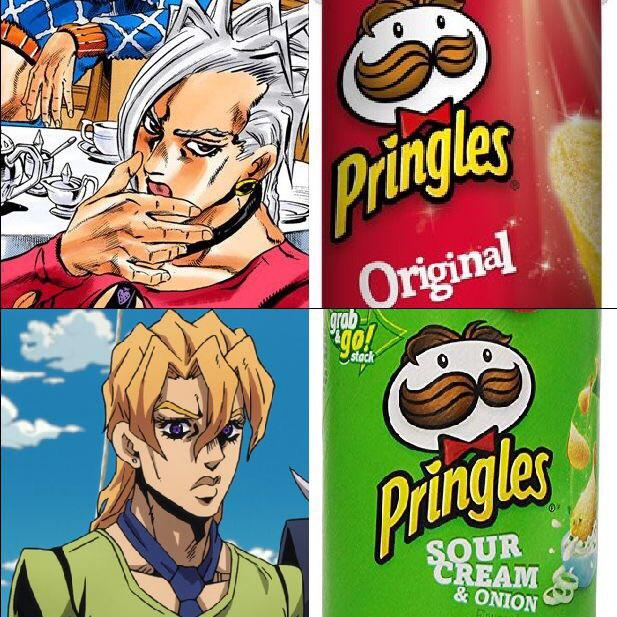
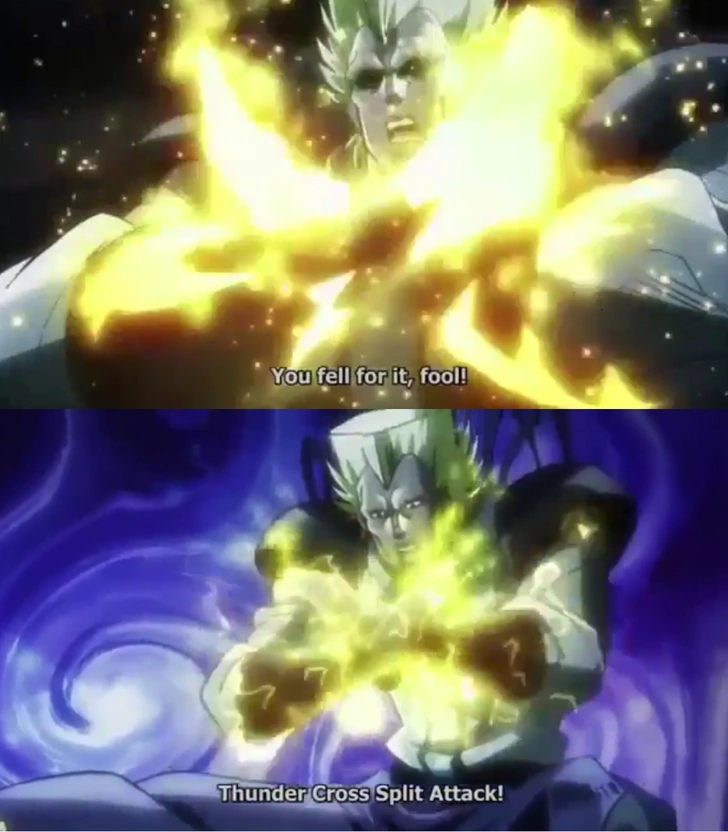
This one is a long-time coming. One of my posts from January of this year included a still frame of a JoJo’s Bizarre Adventure episode that has since been used as one of the countless memes in many anime circles online. For those who need a refresher, it’s not the one where the character Dire feigns incompetence to catch his enemy in a move known as the Thunder Cross Split Attack. Instead, it’s the one where a character named Pesci, notable for his lack of a neck cries in excitement that someone or something took his bait. Example:

The picture I used months ago was larger than that. But swinging back to my point. I won’t be the first person to speak about the JoJo’s Bizarre Adventure series, nor will I expect to be the first person to introduce it to those who haven’t heard of it or were on the fence before. But even if this is the millionth time you’ve heard or read about the series with no clear distinction on whether to see it in action, let me remove the ambiguity: I can’t recommend the series highly enough. I write this with the enthusiasm of a tourist coming back from the best vacation spot ever.

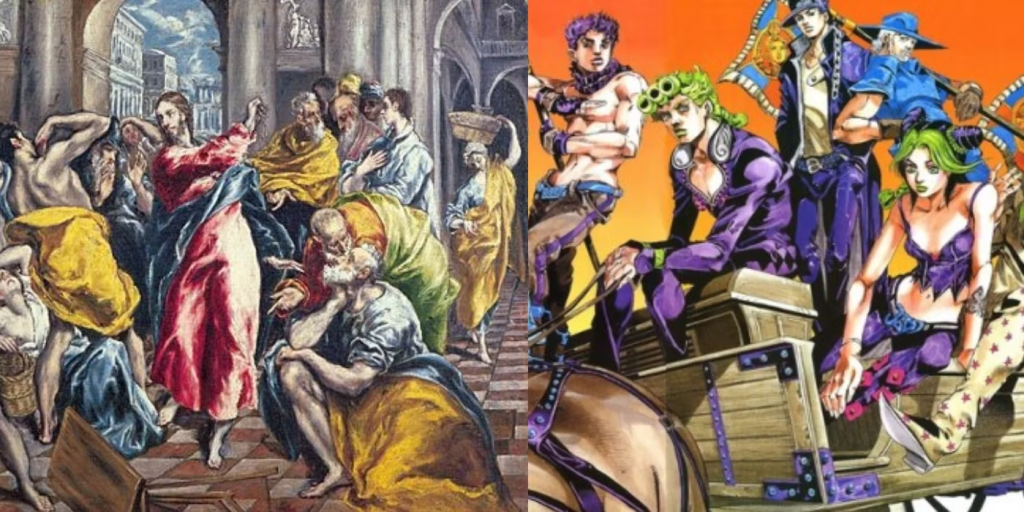
For an introduction, I’m going to try my best to spoil none of the manga or the anime. JoJo’s Bizarre Adventure belongs to the long list of longest running manga series still in production while also sitting on the list of most difficult series to adapt as an anime. For context, the first chapter debuted in December of 1986 with the first volume releasing later in 1987. The modern anime series that you might see on streaming sights like TubiTV or Crunchyroll or even Toonami in the west debuted in April of 2012. There’s a reason for the nearly quarter-century gap between manga and anime and it comes from the way the manga is structured. Artistically, the manga artist, Hirohiko Araki looked more towards Greco-Roman and Renaissance art for inspiration, western fashion magazines, and during the production of the earlier parts of the manga, the days’ most popular musicians to include Michael Jackson, Prince, the Beatles, the Police, and countless others.

The manga itself is divided into nine parts or arcs that center on a different protagonist within the same lineage.

Part 1: Phantom Blood ran from January to October of 1987 and takes place in Victorian England. The protagonist is burgeoning gentleman Jonathan Joestar and the antagonist is his stepbrother Dio Brando.

Part 2: Battle Tendency ran from November 1987 to March 1989 and takes place fifty years later, centering on Jonathan’s grandson Joseph, who is far more rascally and mischievous than his grandfather. The antagonist this time is a trio of ancient Aztec beings known as the Pillar Men named Esidisi, Wamuu, and Kars.

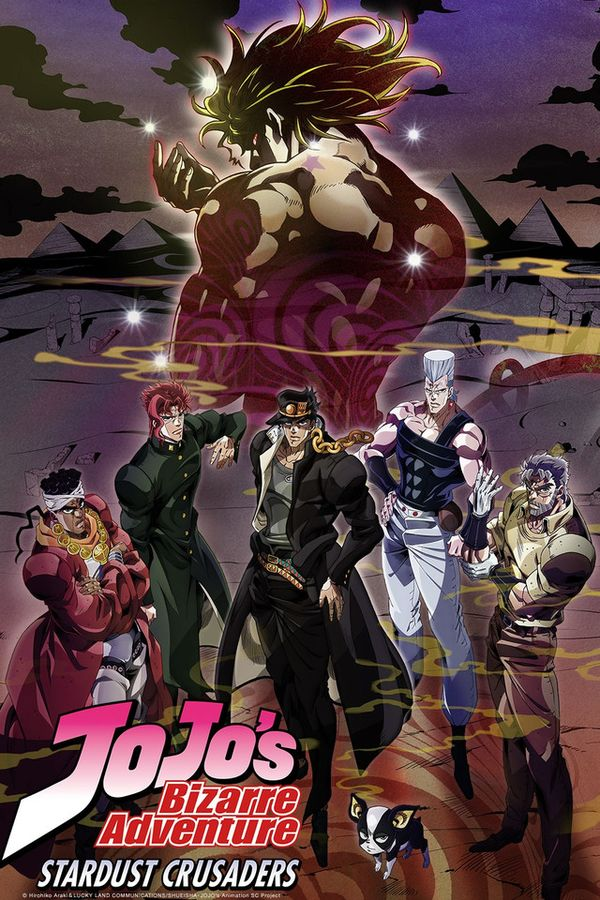
Part 3: Stardust Crusaders ran from the same month the last part ended until April 1992 and this time the protagonist is Japanese delinquent Jotaro Kujo. It begins in Tokyo in the late 1980s, and the antagonist this time is Dio once again, but he’s come back with an upgrade, his name is capitalized as DIO, and this time he has a wider cadre of henchmen in different parts of the world.

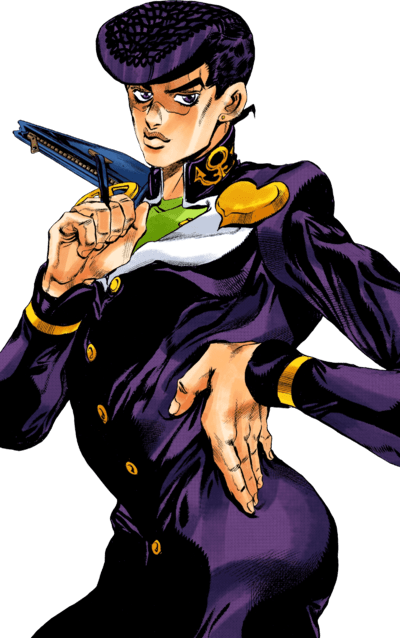
Part 4: Diamond is Unbreakable is set about a decade after the events of the last part. It ran from May of 1992 to December 1995 and features the protagonist Josuke Higashikata. He’s also a delinquent but by the late 1990s, Japanese delinquent culture was losing favor to the emerging gyaru culture to follow in the 2000s. Still, Josuke’s not as rough as Jotaro so long as you don’t badmouth his immaculate hair.

Part 4 is also centered in a fictional town modeled after Araki’s real life home in Sendai and is thus less of a high stakes thriller than the other parts, but there is still an antagonist in the form of department store employee and serial killer Yoshikage Kira.

Part 5: Golden Wind/Vento Aureo also began the same month the previous part ended and ended in April of 1999. It’s set in Spring 2001 around the southern half of the Italian peninsula and features the illegitimate son of DIO, Giorno Giovanna. The antagonist is the mob boss of the Passione mob, Diavolo. Without spoiling much, instead of cooling down like the last part and gradually sprints into its second wind for the plot.

Part 6: Stone Ocean ran from December of 1999 to April 2003 and features the first female protagonist, Jolyne Cujoh/Kujo, the daughter of Jotaro. Its setting this time is in a Florida prison in late 2011 and the antagonist is the prison’s chaplain and protege of DIO himself, Father Enrico Pucci. This part specifically along with Part 5 suffered from a long streak of unpopularity until the Part 6 anime adaptation was announced online in April of 2021. I covered that as it happened in another blog that I started two years ago and needless to say, it was one of the rare moments of hype I’ve ever felt for an upcoming product or series continuation of the sort.

Part 7: Steel Ball Run is set in an alternate continuity and sets the clock back to the 1890s but with a different protagonist who pays homage to the original British Jonathan Joestar. It begins in the western U.S. and ran in Weekly Shonen Jump magazine from January to October 2004 before switching to the more seinen demographic magazine of Ultra Jump for the remainder of its publication from March 2005 to April 2011. The protagonist is Johnny Joestar, a disabled ex-jockey and the antagonist is the 23rd President of the United States, not Benjamin Harrison like in real life, but Union Army cavalryman Funny Valentine.

Part 8: JoJolion (the -lion pronounced the same as in “Evangelion”) was actually set during the modern day. It ran from May 2011 to August 2021 and does almost quite what Part 4 does, supplanting Sendai with the fictional town of Morioh, but uses a real-world disaster as part of its setting. In Spring 2011, an earthquake struck the east coast of the Tohoku region of Japan. It features a similarly named protagonist to Josuke Higashikata from Part 4 (who also has a distant connection to the first guy), but differentiated by way of a different kanji in Japanese, and radically different circumstances. Like the rest of the plot, this time around it’s a more complicated affair with complicated characters and motives who run into each other. As such, the antagonist isn’t easily defined and is absent for a majority of the run, at least until the end.

Part 9: The JOJOLands is the most recent edition to the JoJo saga and is still in production as of this writing. In fact, it just started in February. It’s set in Hawaii in the modern day and its protagonist is Jodio Joestar.

At the outset, this sounds like a lot to get through because it is, but the modern anime adaptation is the best representation of the events in the manga. There have been attempts to adapt it a few years after the first two arcs had concluded with OVAs from the 90s until 2002, a movie from 2007, and in the case of translations that front was even more troubled.

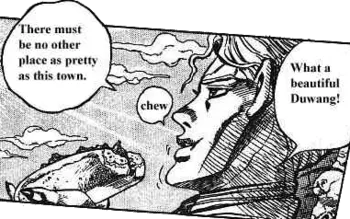
This is one of many examples of troubled attempts to translate the manga from Japanese to English. The problem in this case is that it wasn’t done professionally and Araki, consciously or unconsciously, hasn’t been as definitive in providing details and context until he was interviewed at different points during the production of the manga. For the panel above, which takes place in the middle of Part 4’s run, it was translated from Japanese to English in Taiwan, and the translations were so subpar that for many trying to get into the series, even illegally, had to wade through bad grammar and language until it was given a proper re-publication for the international market in the years leading up to and following the 2012 anime adaptation.

Part 5 had a similar issue back in the day as well and was a large part of its initial disdain from the community until re-publications with better translations rectified the mistakes. And mistakes would follow on even after this. Araki himself is also inconsistent with color schemes when it comes to coloring in the manga, then again, a lot of the monochrome manga is up to interpretation which explains why some characters are colored differently in the anime adaptations than their depictions in the manga.

This example was used as a meme in r/ShitpostCrusaders, but is an example of the degree of freedom afforded to publishers and distributors in the case of JoJo’s Bizarre Adventure. Thankfully, these days it’s gotten exceptionally easier to start JoJo and however you get there, love it or not, it’ll leave a lasting impression.

The art styles of the characters, as I mentioned before aren’t the same as most manga in either the 1980s or even now. It’s art style is a bit of a beefier and more elaborate type found in Berserk, Fist of the North Star, Rokudenashi Blues, or even Yu Yu Hakusho. On reflection, it reminds me of some of the comics from the west like Martin Mystere or the erotic series Druuna, and it’s like that on purpose.

Ever since he debuted as a manga artist, Araki has looked at western styles for inspiration and just about any western artist does well for him, even the ones we learn about like Leonardo da Vinci or Michelangelo.

In anime/manga communities, the term for someone who consumes copious amounts of Japanese media and entertainment, not always limited to manga and anime itself is known as a weeaboo or weeb for short. The term began as an insult in the mid-2000s on forum sites like 4chan and at the time anime hadn’t taken as much of a grip as it does today. Now that the internet is what it is today, the opposite end of the spectrum is the “westaboo,” a term for a Japanese person who consumes more than the doctor’s recommended weight in western comics and cartoons, which would make Araki one of the first to be described as such. And since this appears to be the case, I’d like to be the fly on the wall of a bunch of Japanese internet users having their own dub vs. sub debate on King of the Hill which I learned recently is also popular in Japan.

We’ve come full circle now!

Not limited to just appearances, Araki also looks to music for inspiration. Earlier in this post, you may recall the names of the antagonists of Part 2 are Esidisi, Wamuu and Kars. These are direct references to the real life bands AC/DC, Wham!, and The Cars. This has become one of the numerous features of the JoJo’s Bizarre Adventure series since the beginning. Direct references to artists by name or characters in the books.

This is an interesting source of controversy for the series with specific artists and their estates or just the record labels that worked with them in the past getting uppity over their depictions. It’s also worth noting how complicated this gets in the case of copyright laws the world over, not just in Japan. Because of this, international distribution has had to put in the legwork censoring or altering or requesting alterations from Araki’s team to be able to distribute it in select countries. As an example, there have been more direct references to Michael Jackson and Prince as people than through characters or concepts. The reasons for this come down to when both men were still alive, they were both likely to use the courts to their advantage. I doubt Prince’s estate has kept that up since, but the Jackson family still lives and ex-members of the Jackson five for example can definitely waste that much time, money, and effort in a drawn out legal battle just to change a joke character on page 36 of the 17th volume in the manga. That’s a joke, but it’d be one hell of a read in a newspaper or on the associated wiki. Speaking of which, here’s a link to that:

https://jojowiki.com/JoJo_Wiki

One of the more iconic moments of the JoJo series comes in the supernatural abilities. Parts 1 and 2 begin with an ability known as “Hamon” or the Ripple in English. It functions as an ability that can harness a power similar to that of the sun. Its name derives from the ripples that appear in liquids and its mirroring of the sun’s power makes it an effective tool against vampires. After Part 3, Hamon is mostly done away with in favor of the Stand.

Stands are different from Hamon in the sense that they’re physical representations of one’s soul and can appear in diverse ways. The most common appearance they take is a ghostly humanoid form that stands beside its user and their powers, but can appear is different things; animals, plants, a gun, vehicles, concepts–the sky’s the limit. The only caveat is that only a Stand user can see another Stand, but they impact everyone. So you don’t have to be a Stand user to come under the impact or influence of one. For example, a Stand user who can control the weather can theoretically make it rain or snow on command. When they first debuted in Part 3, they took the names of Tarot cards and Egyptian gods before taking the names of music or musicians.

Following the successful 2012 adaptation, it’s hard to imagine western distribution of anime without JoJo, but the in-between years have a bunch of eye-catching references that a trained eye can find on review. It wasn’t until the most recent and currently produced adaptation that the JoJo’s reach became international and for better or worse, JoJo fans have taken the JoJo’s reference far beyond its roots. Copypastas, poses, iconic characters, parodies; you could sneeze and it would be a JoJo’s reference. Minor spoiler, but that’s also not a joke. On Reddit, there’s two dedicated subreddits centered around the franchise. For fanart, discussions, analyses, and announcements, there’s r/StardustCrusaders, and for memes and meme-related events, there’s the aforementioned r/ShitpostCrusaders.

As hard as it was for JoJo to make it to the west, now that it’s here, the newer debate comes in the form of where to start and how to start. Reading about that sounds absurd. If you’ve never heard of JoJo, but know that it’s divided into parts, your first thought would probably be to start at Part 1. The reason this debate exists is because different people have different opinions on certain parts. Similar to how there are beloved and reviled episodes of a certain cartoon or TV show. Some people will recommend different parts for different reasons revolving around plot and concept and others will recommend starting at the beginning, myself included, so as to get the entirety of the story.

If you want to hear it from me, I’ll start off with how I got into JoJo. It began with Toonami acquiring the license to air Part 3 in 2016 when I was in high school.

Stardust Crusaders was divided into two parts for the anime the Road to Egypt arc and the Battle in Egypt arc. In the middle of the second arc, one of the episodes begins with a character at gunpoint attempting to warn his comrades that an old enemy is back to challenge them and he does this by pointing his tongue in the shape of an arrow.

The art style put me off at first, but I started watching it and watching it even more until eventually, we reached the climax at the end of the arc. I wound up looking for it on YouTube where there are loads of videos in segments and/or playlists, and rewatching it with my fullest attention, made Stardust Crusaders one of my most favorite parts in JoJo.

That being said, the way the other parts are structured might shape your opinion on the part as a whole. As much as I recommend Part 3, I also highly recommend beginning at Part 1 and judging for yourself as you go along. The most recent part to get adapted to the anime was Stone Ocean in December 2021 which finished its batch release in December 2022. So whatever your watch pace, wherever you finish you can look at sources like Mangadex to start on Part 7. The black and white manga isn’t hard to find and recently, fans as well as the distributor Shueisha have been coloring the manga but it isn’t always perfect. All of the anime is also dubbed in English, so there’s pretty much no wrong way to get into JoJo’s Bizarre Adventure. Even if you begin somewhere in the middle, you can also go back to an earlier part or skim through the wiki for a better understanding of an arc or concept.

One more thing before I go:

Just about any frame in the series, anime or manga, can be used as a meme if you’re creative enough. But for the love of all things holy, do not under any circumstances consume the series through just memes. The series is tough to read or watch as it is, and out of context memes don’t help with comprehension. For the most part, those are for people who do understand the series well enough to joke about it. I recommend the wiki and several JoJo-based YouTubers who can explain it in a concise fashion if you’re lost. And you might get lost on the way.

FLCL: New Seasons?

A beloved, obscure anime with a bizarre lack of fanfare

The subtitle might seem a bit misleading, and it is in some manner. Thing is, I found out about this last week, but it seems that Adult Swim released a teaser in March of 2022 advertising two new seasons subtitled Grunge and Shoegaze.

Yeah, I used the same video as I teased in last week’s post. And that’s the point, this was all the evidence I could find of the new seasons. Normally, my posts are long-form, even if I do on-the-fly research (which tends to be most of the time, honestly speaking), but with so little news about the new seasons of FLCL, I couldn’t help but wonder if it did fly under the radar, which is a shame honestly. It premiered on Toonami in 2001 a short time after the original six episodes were made in Japan, and came back in 2018, during the April Fool’s joke as a promotional piece for FLCL: Alternative and Progressive later that year. The most I could find on it were a few articles and some extra videos providing analysis on the ten-second teaser.

That said, FLCL original, Alternative, and Progressive still give me something to work with. So the most I can do is write about what the other three seasons entailed, fan reception, and perhaps I’ll try my best to speculate on what Shoegaze and Grunge are meant to be, though considering the nature of the property, those names may not mean anything.

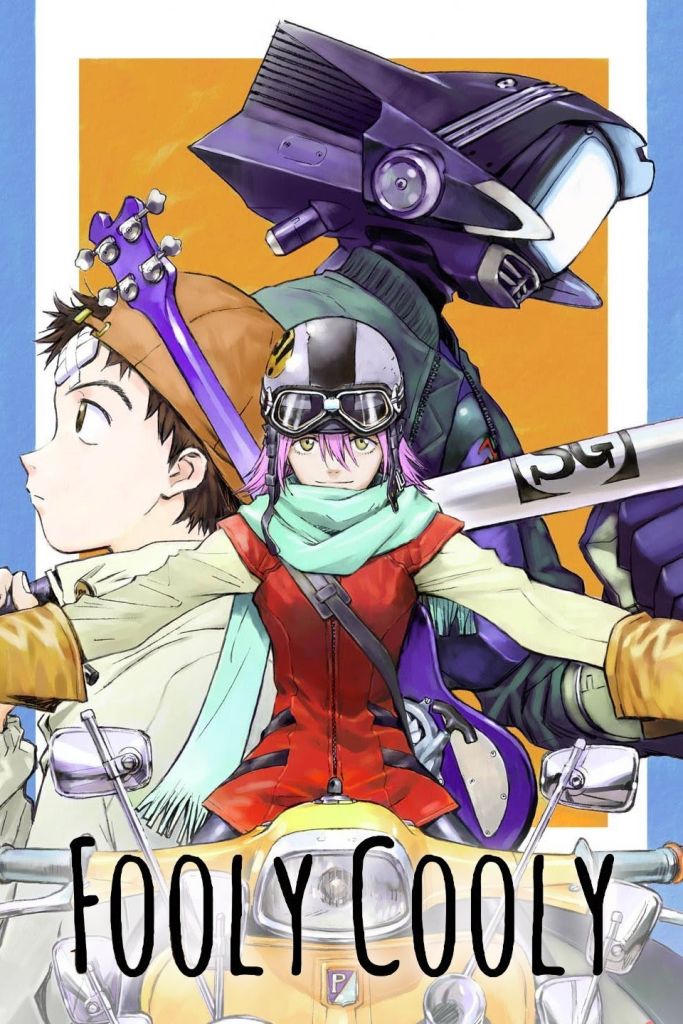
Starting with the original, FLCL (read as Fooly Cooly) was launched in Spring 2000 and is remarkably short at six episodes. On the surface, it looks like wacky nonsense that not even JoJo’s Bizarre Adventure would touch with a Stand holding a 5-meter barge pole, but fans of the series recommend watching the entire thing multiple times with a notepad nearby for some homework.

Depending on what you’re focusing on — which is its own feat because there’s a lot that goes on in just this show — you may be looking at the main character, Naota Nandaba, learn what it means to be mature while trying to speedrun childhood or you may be looking at the highlighted character, Haruko Haruhara, prepare to face off against organizations known as Medical Mechanica and the Fraternity so she can steal ultimate power from the pirate king Atomsk.

Just kidding!

Now maybe it’s me, but I’ve heard people focus on one or the other without considering that they run concurrent. Most often, I hear people focus on one or the other, likely because Naota has nothing to do with Atomsk or Medical Mechanica… except that the connecting piece between them is Haruko herself, who introduces herself to the scene by speeding on a Vespa and braining the boy with a bass guitar. The impact gives him a ginormous bump that morphs into a horn that acts as a portal for which a robot emerges from his forehead. Even if Naota isn’t directly involved with these intergalactic shenanigans, it doesn’t stop Haruko from pulling him along while some of the other people in his life come along for the ride. Hell, looking at the rest of the townsfolk, Naota might as well be out of place, which is part of the point of FLCL’s meaning as the plot goes along. I’m not saying it’s bad to focus on one aspect over the other, there’s no wrong way to interpret something, even if the conclusions you come across are different from the general consensus, but thinking one is more important than the other is a bit misleading, even if the two don’t connect directly. As an example, William Shakespeare’s play King Lear was said to be performed on Boxing Day in 1606 and a few months later the Kingdom of England successfully set up the Virginia colony after failing the first two times twenty years earlier, yet there’s no connection between them aside from the country because Shakespeare’s contributions to geopolitics and colonialism are nonexistent.

On the whole though, most fans of FLCL original have lots of love for it. The points of divergence are sharp and clear between that of Progressive and Alternative. Progressive is about a girl named Hidomi Hibajiri whose personality is a match with that if Naota, except she’s most defined by her cat-ear headphones and unlike Naota, she chooses to ignore everything. The boy at least interacted with people; this girl would honestly be mistaken as a “relatable character” by some. Off topic, but I hate how relatable has come to equal jaded and gloomy. Is it hard to relate to a smily, joyful character? I haven’t seen it in full, but the clips of Tomo-chan is a Girl that feature Carol Olston specifically are some of my favorite, and we are nothing alike.

Anyway, like Naota, Hidomi was hit by a weird woman in a weird vehicle who goes on to live with her and her mother, Hinae, as the maid and of course Medical Mechanica returns to bear its fangs. But where’s Haruko in this? Well, she’s the teacher and this time she goes by the name Haruha Raharu. Now based on that description, this sounds like a skeleton wearing the skin of FLCL, and to some, it is. It’s not the same FLCL with a hidden meaning about growing up and boyhood; the original meaning is lost without Naota anywhere to be seen. Then again, I say that this is a fallacy from a fallacy, which draws the conclusion that Naota’s story is the only thing worth focusing on while all that other tomfoolery is going on in the background. This is true, but I’m hard-pressed to say that it should be isolated as much as it is. I’m more of the belief that it’s a coming-of-age story with a challenge for the boy to overcome as opposed to two separate things that barely interact with each other.

The widespread attachment to Naota at the cost of the rest of the plot might be an attribution to the general weirdness of anime being taken as normal and so the plot with Haruko and Atomsk and Medical Mechanica and what not isn’t seen as important as a jaded young boy growing up with unreliable relationships, and I understand that argument, but I also don’t like that. Not that I think it’s a bad faith argument to emphasize the boy’s importance, but to me, it’s more that Naota Nandaba’s story, while as important to the meaning of the show, isn’t what I would call the be-all, end-all.

I also don’t think the Haruko-Atomsk plot is meant to be the main focus of the show either. A video by akidearest on YouTube explains that the director, Kazuya Tsurumaki, wanted to break the rules as much as possible when making the show.

For Alternative, it’s got a wider cast and a more sociable protagonist, Kana Koumoto, and her friends, Mossan, Pets, and Hijiri, all of whom are in the latter half of high school and all of whom are also said to lead unremarkable lives until the giant monster jellyfish shows up and incinerates everything… oh, my mistake, that’s SpongeBob. Same as before: Haruko, bass guitar, Atomsk, the whole shebang.

If you’ve been following along, you’ll notice that as we progress, the protagonists get older and older. Naota is 12 years old, Hidomi is 14, and Kana et al are around 17-18. So for the most part, everyone is growing up and whatever we can expect from Grunge and Shoegaze, slated for release later this year might follow this path or do something completely different.

Across all three of them, FLCL at least maintains the relationships theme, whether it highlights how unreliable they can be as we age, learning to soften up to people, or how hard it can be to maintain them over time. Akidearest’s video linked above shows that FLCL’s plot is a complicated mess of many things and my research on the show and this blog reflect how hard it is to understand. It’s not just a distraction, it’s a fractal distraction, or at least that’s the frame that it’s wearing.

Part of the intention of this specific blog was to look at why a lot of fans of OG FLCL don’t give Progressive and Alternative as much of a chance with a lot of them seeing clones that wear the name as a mask while also questioning the necessity of a double-sequel after seventeen or so years in naptime, but for me, this highlights a number of false conclusions about FLCL and the coming-of-age genre. I didn’t get it at the time, but when I read Catcher in the Rye in high school, I just wrote Holden Caulfield off as a spoiled brat. While I still think that, I’ve come to realize that sometimes he has a point and it’s not all about misunderstanding the world from the mind of an adolescent.

All things considered, Progressive and Alternative follow the coming-of-age model quite nicely, even in the piecemeal fashion as presented. Do I think any one of them are better than the other? That’s a loaded question for me as I think there’s an audience for each type of animation style within the confines of any given animation and specifically FLCL, but as far as plot goes, I can’t really find one I prefer to the other. I feel about all of FLCL the same way I feel about JoJo’s Bizarre Adventure. Everyone has criticisms for and against some aspect of it, and I’m not above that, but the connecting element for JJBA is the family legacy of the Joestar clan’s fight against Dio and his cronies or just fate itself. I don’t have a part I dislike, but I do have some that I lean more towards than most.

Similarly, there’s a lot to examine about all three seasons of FLCL so far. In isolation or association, they all do their job well enough while following different stages in life. But that doesn’t answer if I think one of them is superior. To that I say–

Cop out answer incoming: declaring preference for one over the other is complicated for me. I tend to do it selectively, and with full expectations that what I like now will be different in the next few years. So not superior to anything else, but circling back to my point about relatable characters being gloomy and dejected, I like FLCL: Alternative because of the extra cast of characters to work with than just what I see in the others as a textbook case of how not to communicate. The others are still good in their own right, though.

April Fools’ Day and Adult Swim

Pranks and Adult Animation

April 1 is a golden opportunity for a lot of people to play practical jokes on each other, and there’s often no rules as to how this can go. As long as no one gets hurt then have at it. In the case of TV, even the news likes to have their go at the festivities. Personally, I think there’s more mileage in animation which brings me to the topic of this post’s title.

Perhaps by virtue of being an adult animation TV channel, Adult Swim has a knack for partaking in the jokes and merriment of April Fools’ Day. In some cases, where the program runs from late night March 31 to early morning April 1, they’ll engage in some tomfoolery on the shows they plan on airing, messing with the schedule, or other such on-air silliness. As a bonus for them, it’s an opportunity to air shows set to debut sometime in the future.

What interests me the most of all is that this isn’t exclusive to just the Adult Swim block. In the US, Cartoon Network, Adult Swim, and Toonami, all air on the same channel. CN is the primary daytime block; by 9:00 PM every night Adult Swim airs from Sunday to Friday all night, handing the reins back to CN at 5:00 AM; and on Saturday from midnight to 5:00 AM, Toonami airs.

All three have a rotating body of regular shows, some of which have gone down in animation history from Johnny Bravo, Dexter’s Laboratory, Power Puff Girls, and Teen Titans on Cartoon Network; King of the Hill, Futurama, Family Guy, Aqua Teen Hunger Force on Adult Swim; and Toonami’s had a variety of different anime, the most common ones ranging from Cowboy Bebop, to FLCL, to Naruto, Dragon Ball Z, Bleach, and One Piece, some of which are still on the block albeit in the dead of night.

Every April 1, viewers of Adult Swim and sometimes Toonami are in for any given treat. The first round of AS pranks began back in 2004 as a series of slight alterations to the channel’s shows. They were quick to do the same to Toonami and as the years went on, they got progressively more spontaneous. The tradition was still ongoing even after Toonami was canned in 2008. The Wikipedia page for Toonami describes the cancellation of Toonami as low-ratings. But I think I know what the true culprit was for that. Toonami is normally hosted by a robot character known as TOM who introduces the audience to the show and over the years the first time around, he’s gone through more than a few appearance changes through interactive events known as Total Immersion Events.

These events have been a staple of the block for years and generally involve a crisis of some sort attacking TOM’s station where he and AI partner SARA host the programming block. After the crisis is solved or averted or sometimes succeeded into killing TOM, a new appearance is adopted and the appearance of TOM 4 in 2007 was why it was axed the following year.

I wouldn’t say TOM 4’s appearance straight up assassinated the block, but it was a major contributor to the dip in viewership.

For about four years, Toonami was dead until it was revived for April Fools 2012 with a return to form. TOM 3, or in this case 3.5, returned to catch the viewers up to speed that night, by airing some old shows that have been on the block years prior, notably Fullmetal Alchemist and Tenchi Muyo. It wasn’t until a month later that executives confirmed on social media that Toonami was back for good this time.

Ever since, the April Fools’ Day pranks haven’t stopped and occasionally there’s a crossover into Toonami as previously mentioned. One of my personal favorites has to come from 2018. Being a western animation block airing English dubbed anime, the block normally doesn’t air anything in Japanese unless it’s something along the lines of an interview with a mangaka, a director, a studio in Japan or something else. Well, for 2018, not only were Japanese-dubbed anime put on the TV, TOM and SARA themselves were also given Japanese dubs, as was the logo.

Normally, April Fools’ is where AS markets the premiere of an upcoming show or a show’s next season later in the year, and for Toonami, I believe they were especially excited for this as FLCL: Alternative and Progressive were slated to air later that year. Additionally, they put on the 2004 Masaaki Yuasa produced movie Mind Game, also in Japanese, because this April Fools’ wasn’t weird enough.

This still goes down as one of my favorite April Fools’ events from Adult Swim and I was almost expecting them to do it again especially recently. Last month, they stuck it out with the April Fools’ tradition as expected and poking around on the associated subreddit, I kinda got my hopes up a bit. Part of the charm of these events is that its unpredictable. The only thing a viewer can expect from these is a deviation from the schedule and an introduction to a new show or new season of an existing show. This tradition was honored and for 2023, audiences got a taste of new show Royal Crackers and another season was confirmed for The Eric Andre Show and Teenage Euthanasia.

I was expecting something for Toonami this year, but it seemed Adult Swim took the glory. The daily discourse these days has been that of the progress in AI technology, so to capitalize on that, Adult Swim used a generative AI (think DALL-E or Midjourney) to run their programs in the early morning hours of April 1, mildly disrupting the run of Smiling Friends and putting a rerun of Space Ghost: Coast to Coast. It’s hard to explain in wording or writing so have a look at the livestream from that day.

In contrast, Toonami aired the shows as normal whilst paying homage to the joke that put them back on TV. The reason I expected a 2018-style makeover was because Toonami comes on every Saturday night at midnight and April began on a Saturday, but this was more of a miscalculation on my end. Toonami began about three hours earlier than the midnight setup that it has now. Double bills are also quite rare in this regard, so while Adult Swim did give us something stupid to laugh at early Saturday morning, this wasn’t guaranteed for Toonami. Again, April Fools’ Day pranks on AS are unpredictable after all.

So the joke is very much on me, but I still think it was fun this year. Another possible double bill April Fools’ Day prank could probably occur the next time April begins on a Saturday and because 2024 is a Leap Year, the next time that’ll happen coincidentally will be another Leap Year: 2028, which is the year I turn 30. Again, this is speculation. I’m not Nostradamus trying to see what’s in the future…

Significant changes to your life are in the future.

One more thing before I end this blog post, I may have a topic for the next week that’ll throw my schedule into the fray and it concerns FLCL mentioned above. Here’s a sneak peek:

Admittedly, this was from March 2022, but I’m gonna write about it next week because I didn’t know about it at the time.

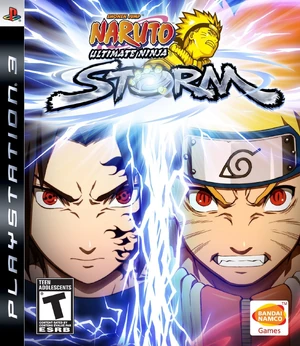
What Happened to the Naruto: Ultimate Ninja series?

The series that had to be soft rebooted

Before we start, I just want to say that I think I meant for last week’s post to be about rewriting the God of War Greek Era narrative in a more cohesive manner considering all the silliness that unearths its plot holes. I’ve defended some overarching stuff since most ancient myths have multiple retellings due to oral tradition, but some specific details are hard to ignore. So, I’ll save that for a future post. This time, we’re gonna talk about the Naruto franchise, more importantly a series of video games based on the franchise that sort of went through a soft reboot about halfway through.

Masashi Kishimoto’s magnum opus, the Naruto franchise, had grown to be a smash hit since its first chapter debuted in 1999. Manga/anime fans hold it in high regard, and it’s part of that generation’s Big Three with the others being Bleach by Tite Kubo and One Piece by Eiichiro Oda. Both of which have gotten their own video games, accessories, figures and more.

With Naruto, part of me wants to say the ninja/shinobi aesthetic was what helped it explode when it began to make waves in the west, so much so that when the anime began dubbing it in English in 2005, the Japanese video games were getting the same treatment soon after. Generally, anime adaptations in Japan are promotional material for the manga, as are the manga’s associated figures, light novels, and other materials. Hence why some of us in the west are still waiting on a second seasons to anime that may never come.

The benefit of releasing in an era where shinobi were the coolest thing since an arctic winter might have heavily tipped the scales in Naruto’s favor, thus explaining the numerous video games associated with it. Specifically, the Ultimate Ninja series. Five main games following the timeline of the manga were released in Japan from October 2003 to December 2007, and ported to the west from June 2006 to November 2009. Likely due to the release of the anime and its western dub, the games loosely follow the events of the manga until they cut off and each successive game adds to the cast of characters to play as.

Ultimate Ninja 1, for instance, starts off with a small cast because it follows the story from the Land of Waves arc until the Destruction of the Leaf/Konoha Crush arc. Many of the important characters are assisting characters during fights, and mostly follow them individually as opposed to staying consistent with the manga, such as the changing around of one or more outcomes of certain battles. The Naruto wiki claims that as far as a presentation goes, critics felt that it left a lot to be desired. Personally, I was introduced to the series through a friend who had the second installment on his PS2 and later I went to buy the first game. From what I’d seen, I agreed with those critics’ statements that more could’ve been done at the outset, and the players and critics got that wish in Ultimate Ninja 2.

In 2004 in Japan and 2007 in the west, the second installment followed up on what the first game brought to the table. Continuing with the rest of the Konoha Crush arc and ending narratively with the Search for Tsunade arc. What became a bit of a trend for the series starting with this game was a game-exclusive arc that can be compared to filler or something along the lines of an OVA. Spoilers to follow: get ready.

After Tsunade is returned to the village to serve as the Fifth Hokage, Orochimaru who didn’t learn his lesson the first time he tried this malarkey has another go at swaying Tsunade’s decision. This time he as an ace in the hole. He and Kabuto were intercepted at the Training Grounds by Kakashi. At this time, Orochimaru’s arms have been sealed and so he needs Kabuto to use his chakra and perform ninjutsu. One such jutsu, is known as the Forbidden Jutsu: Gedo Mark and its main purpose is to limit its opponents.

There’s better pictures for this, I’m sure. Actually, I think it’s better to see it in action.

Sidenote, the YouTube channel in question has a full playthrough of this game among others. I recommend giving it a look.

This next arc sees Orochimaru and Kabuto to try multiple avenues at once to coerce Tsunade into reconsidering releasing Orochimaru’s arms. First, he cripples the more troublesome ninja, namely Kakashi and Naruto, then he uses Reanimation to revive Zabuza Momochi, Haku, and the Third Hokage. After the Leaf ninja find a way to release the Gedo Mark, they soundly defeat Orochimaru and Kabuto and the game ends. Seems even your video games aren’t free from filler. For my take, it’s an interesting story with a lot of stuff that doesn’t make sense. I don’t doubt that Orochimaru’s hunt for the greatest Jutsu ever would lead him to unethical methods, we see this all the way until Boruto confirms that he’s been under lifelong house arrest, but even if he could inhabit another body, the risk to his health in his current state would have even him rethinking his decisions to use ninjutsu willy-nilly like that. Kabuto even says as much. Still enjoyable, and as an added bonus: Taijutsu Naruto.

The Japanese release had characters from the Ninja Clash in the Land of Snow movie.

There’s also a free-roaming mode where players explore the world of Naruto, though considering it stops at the Tsunade Search arc in canon, only a few locations are available. Nonetheless, there’s different activities that can be done with other characters or solo and some of my best memories of the game come from playing with friends at their houses, even if my skills were subpar. Now that the developers were seeing gold, they expanded on this even further in Ultimate Ninja 3.

Released around Christmas 2005 in Japan and in March of 2008 in the west, Ultimate Ninja 3 covers the entirety of Part I from the Land of Waves to the Sasuke Retrieval Mission albeit with some notable omissions, chief among them the Chunin Exam Preliminary Rounds. There might not have been a way get those into the game since the main focus is fighting, but it’s a not insignificant difference that could potentially shape the way someone views the anime if this was their first exposure to the series.

Still, there’s more characters to use, more minigames with the characters, and just like its predecessor there’s an exclusive arc that interestingly got its own OVA for promotional purposes.

Titled “Finally a Clash! Jonin vs. Genin,” the main gist of the OVA is that the Leaf Village in association with the Sand Village puts together a tournament based on a points system. Genin and lower start with one blue crystal worth one point while Chunin and up start with one red crystal worth five points each. Passing a threshold of points advances the ninja to the next round, and passing that threshold allows the victor to pass a regulation that the two villages would follow for a week straight.

It’s initially suggested that battling was the only way to earn crystals but these being physical points you can hold in your hand, you’re not necessarily limited to that kind of all-out battle. Select characters trade them as currency for favors or use them in wagers. There’s also simply looking for the crystals on the ground as they fall out of people’s pockets like change. As for the free-roaming open world element, there’s now jumping and double jumping and the exploration isn’t limited to a few locales, but it’s not the same open world that you’d see in the later Ultimate Ninja Storm series.

This one does a lot more, though I think the limitations of the hardware still did a number on this game since it compresses large arcs into a few battles. I’m not saying I want all the battles and dialogue to be redone in the game, just that a few of the important, plot battles be given theirs. Additionally, it was quite clever of them to hide the Fourth Hokage’s name as simply his nickname in the manga: Yellow Flash, but I’m not sure why he has no speaking role in the game. Something I forgot to mention when talking about Ultimate Ninja 2, that game had a notoriously difficult substitution/rebound system that made it near impossible to properly counter attacks. UN3 and up dumbed that down significantly and I praise the change.

Japanese release: April 2007, and Western release: March 2009, UN4 as seen on the cover starts in the Shippuden era and like its predecessors it has an exclusive arc that is separate from the canon manga arcs and its own open-world RPG-type game mode. This time around, Naruto is still training with Jiraiya. To conclude this round of training, he’s given prayer beads to wrap around each limb and Jiraiya uses a weighting Jutsu to alter the weight of the beads. They change color with experience and when Naruto’s beads glow red, he’s instructed to find Jiraiya who’ll take them off to conclude his training.

In the meantime, the two head to the Tree Felling Village where a girl, Aoi, is to be used as human sacrifice to satisfy a demon known as Black Shadow who lives in the caves. Naruto’s disgust with the practice results in him chasing after the girl who’s determined to go deeper into the cave. Black Shadow physically stops the shinobi, though by now his beads turn red and he’s eager to get them off so he can come back and break down the barrier Black Shadow had summoned earlier.

Before that though, he and Jiraiya gather some information on Aoi and her path as a sacrifice. As it turns out, Aoi was using a desperate though dangerous method to help her ailing mother, Tsubaki, who’s introduced at around the same time Naruto and Jiraiya make it to the Tree Felling Village. The village’s namesake is derived from a tree that blossomed flowers with healing properties. As a bonus, these flowers were a barrier keeping Black Shadow at bay, but when it was chopped down by the villagers and subsequently consumed by Black Shadow all hell broke loose. The villagers then offered an annual sacrifice to the demon to keep him satisfied.

As for Tsubaki’s and Aoi’s lineage, their ancestors were closely linked to the tree and their connects to the tree are limited to a charm with the flower petals inside it since the tree was felled. Aoi’s father died of illness and Tsubaki was on the same path; this culminated in her decision to feign sacrifice as a means of getting close to the tree within Black Shadow and using it as some sort of cure.

After the demon reveals its true form, Naruto fights it, aided by Aoi, and soundly defeats Black Shadow. Unfortunately, the leaves from the tree have long since wilted, save for one that Aoi picks up and I presume is used in tea. Then Naruto falls into a weeklong coma and at awaking, he finds that Tsubaki made a full recovery and Naruto and Jiraiya return to the Leaf Village having made a difference in this family’s life.

Afterwards, the game starts in the Kazekage Rescue arc, but ends halfway through before the Kazekage proper has been saved. I don’t have evidence to support this, but I think the game released as Shippuden was beginning. The only evidence I see is the release date being consistent with the beginning of Shippuden’s anime adaptation.

It’s pretty much the same as the other games, but with more characters, more movement, etc. But even though, the Shippuden arc leaves a lot to be desired, fortunately in the open-world game mode, there are coins known as Pieces of Memory where you can view the story of all of Part I from the Land of Waves arc to the Sasuke Retrieval Mission, so it’s not a total loss.

Naturally, you could assume that a fifth game was on the horizon to restart the first arc of Shippuden and keep it going to at least the end of the Tenchi Bridge Arc where we see Shippuden Sasuke. This was what I thought too at the time and I found out as recently as a few years ago that there was a fifth game that never made it to North America.

In the UN series by itself this is the last of the main Ultimate Ninja games until Ultimate Ninja Storm on the next generation of consoles. Do note that I’m not saying it has no English language release. When the UK was still an EU country, it was eligible for most EU ports of certain games, this being one of them, so while I managed to find an emulated version of the EU release, this game doesn’t exist outside of Japan or Europe and I don’t think my preschool level Japanese is gonna help me if I play with Japanese subtitles and audio.

This game actually is what motivated this post. Four games bear the Ultimate Ninja tag all released on the PS2 and the fifth one was never made for fans from the Americas. What’s the reason for this? My closest source again comes from the Naruto wiki and it can be boiled down to time constraints and dubbing issues. I can’t say with certainty as I have no evidence that this is the case, but I’m at least somewhat positive that the release dates and the evidence in the games is enough of a clue to work with.

Almost all of them released concurrent with the anime adaptation, but several years after the manga was a few arcs ahead of what was depicted, which explains why UN4’s main story is so short compared to the others. Episode 15 was the most recent episode when that game came out. As for time constraints, with the other games coming out as fast as they did, of course time was Namco’s enemy here. I only made it to the title screen as I wanted to finish the UN games before making it to five, but from what I saw even the EU release was botched with only Japanese audio with the selected nation’s language for subtitles.

From what I can gather, they were going to keep up with this trend of releasing the games around the same week as a new arc, but it seems fate forced the devs to rethink things a bit. I could see a UN6 continuing from the emergence of the Akatsuki’s Zombie Combo up until Sasuke’s formation of Team Hebi (later Taka) to finally exact revenge on Itachi for the Uchiha Clan Downfall all those years ago. And follow that trend until the manga concluded with some extra ideas for other exclusive/filler arcs.

Realistically, the problems with keeping this up grew to be untenable. At the same time some of these games were being made, the similar graphics were being used for most of the spin-off and mobile/handheld titles like the Ultimate Ninja Heroes series on the PSP and Ultimate Ninja Impact. It’s not like the Japan-only games that weren’t meant for the west; bad luck essentially forced them to hit the reset button and try again with a better series.

Better graphics, new engine, more characters, more to do with the environment and make it feel as though the player is playing the anime, the UN Storm series is in all aspects a technical upgrade. However, there’s a bunch of from the previous series that several gamers may be disappointed to learn were done away with. It took some getting used to to learn that UN3 onwards discarded the multiple screens for an ultimate jutsu as well as different ultimate jutsu in gameplay, and the RPG-esque text reading at least felt like it was advancing faster because the characters would always voice the lines so you did more than read and listen to the background music.

My exposure only comes in the last game Ultimate Ninja 4 which wraps the story up admittedly more beautifully than the anime. At least they did something with the Boruto movie adaptation. And since this was the last of Naruto’s story, if this game was using the Boruto plot to promote the movie then cool!

Though now that I think about it, it’s possible that the reputation of Naruto was what made loads of people expect better from the Boruto series. As much as I’ve been cheerleading Boruto, I also wish it would improve in some areas, though it looks like I’ll get my wish when both the manga and anime return later this year, along with a new game set for release soon.

For this week, I recommend the YouTube channel Alternate History Hub.

https://www.youtube.com/@AlternateHistoryHub/about

This channel specializes mostly in what’s on the tin: alternate history. What if the US stayed out of both world wars? What if Spain stayed Muslim? What if Japan went Catholic? What if the Ottomans colonized the Americas? and other such topics that explore what would happen if history took a different path than what happened in our timeline.

Just like my Trash Taste recommendation from a few months ago, there’s other associated channels with Alternate History Hub. Cody Franklin oversees this channel, he used to oversee the channel Knowledge Hub which is now Knowledge Husk until he gave it to his brother Tyler, and recently, Cody launched the channel Pointless Hub which looks more at entertainment media than something along the lines of geopolitics. You can even support him and his channels through the associated Patreon links.

If alternate history seems right up your alley, give him a follow. If not, then there’s other stuff of his to view.

The Elusive Samurai

The life and times of Hojo Tokiyuki

Clawing out of the deep recesses like the happiest Spartan breaking free from Hades wasn’t without its few perks. To date, this is the third manga presented to me by Viz, so if it feels as though they’re sponsoring me, they aren’t. But I’d be open to covering the works they’re allowed to license to the west if the opportunity comes knocking especially now that two of those series are set for anime releases in the near future: this series and the one about the zombie or something. I don’t know…

But while Bad Luck Unkillable has a trailer with voice over and all that, Running from the Samurai in Medieval Japan only gave us a teaser trailer which works for me as I have as much time as I feel is appropriate to play catch-ups with the manga.

For research on this post, I’ve had to skim through and remind myself of who’s who, while also brushing up on this period of Japanese history, so wherever there’s a mistake, I’ll amend and correct it once I read up on both. The premise of The Elusive Samurai is thus: the Hojo clan, who held sway over the shogunate and sent most of their own members to work with the imperial family and court, is represented by their two members, current shikken (regent) Hojo Takatoki and his son and heir, Hojo Tokiyuki. Ambitious members of the Ashikaga samurai clan allied with the Emperor Go-Daigo in an attempt to return the imperial court to its seat of power, i.e. overthrow the Hojo-ruled Kamakura shogunate in favor of the emperor. During festivities, the Ashikaga launch their siege on Kamakura and nearly exterminate the Hojo clan. When the dust settles, the Ashikaga realize that the heir, now-shogun, Hojo Tokiyuki has survived and escaped. With the Ashikaga now in power, they use their resources to hunt down and exterminate the boy and every one of his allies.

Brief history lesson: on paper, the imperial court sat at the top of the pillar with the most power, followed by the shogunate, and while they were in power, the shikken. In reality, the Hojo clan shikkens were more powerful than both the shogunate and the imperial court combined. This was the result of the 12th century Genpei War that pitted the Taira and Minamoto clans against each other. Minamoto no Yoritomo won out and as part of the spoils of victory, the imperial court behaved as a figurehead, a position that Go-Daigo was clearly not happy with, hence the Kenmu Restoration’s goal of reversing these circumstances. Fun fact: Kublai Khan found this out the hard way in the lead up to military actions against the imperial court and shogunate when the Mongol-led Yuan dynasty attempted to add the Japanese islands to their list of possessions. Couldn’t go east in the long run so he went hard west.

And thus we learned from the Mongols why it pays to think very hard about an amphibious invasion. Back to the manga, over the course of the Kenmu Restoration period, Tokiyuki-sama embarks on a quest to gain allies and build a force of formidable warriors who can return the Hojo clan to their former glory. It might go in a different direction in the long run considering in real life, the Kenmu Restoration was short-lived and to my interpretation the Ashikaga turned on Go-Daigo and restored the shogunate long enough to stay in power until 1573. Interestingly, this created a split in the historicity of the Japanese emperor’s line of succession briefly with Japan holding two capitals until the Azuchi-Momoyama period.

Seriously, I’ve gotta stop jumping the gun here. Alright, so Tokiyuki isn’t completely alone in his quest. He starts out with a few retainers at his side and actually has support from the head of the nearby Suwa clan in the form of Suwa Yorishige who I believe is loosely inspired by the samurai of the same name, though the real life Suwa Yorishige succeeds the fictional one by two centuries. Also, manga Yorishige is reimagined as medieval Japanese Nostradamus with all his predictions about the future and funny enough common manga tropes. Makes me think of Koro-sensei though more self-aware of the manga he’s in.

Structurally, I see a bunch of references to JRPGs like Chrono Trigger or early Final Fantasy. Protagonist with a long term goal, comrades at his side, godlike guide, encroaching force of evil closing in from all sides; the comrades especially exhibit several archetypes in several RPGs, the thief, the brute, the mage, etc. If I was alive in the 1980s, I probably wouldn’t have imagined how many manga series became franchises with spin-offs and video games in tow, but if I had Yorishige’s level of foresight and I could see Dragon Ball getting video games and all that, then I think I can also see other manga following suit. Whether The Elusive Samurai follows suit remains to be seen, but even if it was a fan creation, I could see an Elusive Samurai RPG-style game soon. It’s also worth noting that the art style and writing will feel familiar to fans of Assassination Classroom and that’s because it’s from the same man: Yusei Matsui. Overall, by itself, it seems to be having fun with the historical setting and subject material. Taking the piss outta historical figures is a worldwide pastime, after all. In comparison with Kill School, the most comparable thing they have is the femboy protagonist. Not sure if that’s Matsui’s bread and butter, but these days that might be the case.

The YouTube channel recommendations are coming back for April. Also, Tomorrow being April Fool’s Day, I’ll cover Toonami and Adult Swim’s yearly tradition when those stars align. Look forward to that.