That Manga About Robert Johnson

Seems there’s a manga for everything

I remember long ago writing about searching high and low for obscure series to read or watch. Unknown, underappreciated, undersold series that have very little audience, very little fanfare, very little recognition of any kind out there. And I believe I have another one that not only is largely unheard of by the layman, but is also on the subject of an individual who lived and died in obscurity, forever doomed to posthumous recognition for his talents… or curse depending on how you look at it. But I’m jumping the gun. What I’m talking about is this:
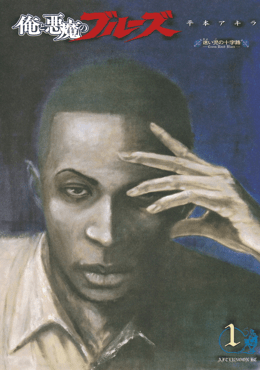
An unknown artist and blues pioneer of the early 20th century, Robert Johnson lived a life familiar to many black Americans at the time. Born and raised in the Deep South on a sharecrop with an almost predetermined future. Brief history lesson: post-Civil War America and Reconstruction came with a wave of new changes for the formerly enslaved, but not all of it implemented unanimously, cleanly, or with regard to the realities of the situation. Between ex-Confederates skipping country, finding their way back into the U.S. political machine, or in some uglier cases, becoming the first members, if not, founders of the first Ku Klux Klan, there was a lot of infighting in the Reconstruction era. A lot was promised for black Americans, but so little was implemented with the recently reunited government figuring out how to kill two birds with one stone at the time.

The reason I include that brief history lesson is to show how long the system actually lasted. It was not too long after the Civil War ended that these sharecrops became so prevalent and it wasn’t until midway through the 20th century that they were on their way out, and Johnson’s early childhood as well as that of his family was in the middle of that. What separates sharecropping from full-on slavery was how someone found themselves in the sharecropping system. It was basically like debt on steroids. You’d agree to live on and tend to a farm, with roughly everything stacked against you. Negotiations are virtually nonexistent and you hardly ever get to live off your hard work. Someone else enjoys themselves while you literally bend over backwards to pay off a HUGE amount of debt.

For Johnson, there’s evidence that he started off like this, but major details of his life are missing from the historical record, and that’s largely on him allegedly vanishing and showing up back home or around home with large gaps of time in between them. You were lucky if you could sit down with him for five minutes as a researcher to write his story, and whether what he or others told you was true was all up in the air.

Getting concrete proof of what this guy did outside of music was one of the toughest things historians and researchers could do, and the ones who tried should be applauded for their efforts. You think you can do some investigative reporting while chasing shadows at the same time? What’re the odds there was a rumor he never even existed to begin with? (Actually, in my research, I found out that the few surviving photos of him available were discovered decades after his death, so this certainly adds to the legend/conspiracy theory/rumor, etc. of Robert Johnson. What are the odds?) Me bringing this up is probably the first time you’ve ever heard of him. I only found out about him a few years ago, and I can’t remember where; nevermind where the mangaka Akira Hiramoto learned. That all said, the fact that Hiramoto wrote about an obscure blues pioneer from Nowhere, Mississippi is proof that America continues to fascinate Japan to odd degrees. It would be the equivalent of a westerner (read: American) writing a novel about the samurai Sakanoue no Tamuramaro… well, I think I fit that bill somewhat considering what the last few posts have been about.

Back to the subject at hand, owing to the name of the manga which is also the name of an album recorded by Johnson, part of his biography claims that he became an expert guitarist in little over a few days, which is impossible for seasoned guitarists who spend years learning to strum and pick before choosing what suits them best personally. How he even learned to do so and claim to in such a short amount of time is questionable and a huge part of the legend. Johnson was said to have heard from the grapevine that playing a tune of any sort at a crossroads is how one acquires the gift of music… from the devil.

Channel: RobertJohnsonVEVO

In all likelihood, all that time spent traveling alone or with peers would’ve allowed for a hell of a lot of time to practice the guitar and pick up lessons from musicians like Son House or Lead Belly or any other blues musician who was alive at the time. So the poor guy from the Deep South pours his heart and soul into the guitar and becomes a local legend. One could reasonably chalk up the black codes and segregation especially in the Deep South for the reason he had almost little fame, but I see it as a combination of factors for why he was only destined for posthumous success.

Keep in mind, he never stayed in one place for very long. Historians did have a hard time finding and even writing about him, or if they did it was more often from a secondary source. Music is definitely a way to gain fame and riches, but only if you can stay long enough to record the song and see the royalties rolling in. Johnson’s behavior was quite atypical. He was often in a juke joint strumming for s[guitar twangs]s and giggles. Not a very stable way to grab some cash, but it surely earned him women’s affection. Most often married women’s affection, and this would lead to conflict. The last one being fatal.

His life and his death are a riddle wrapped in a mystery inside an enigma. He never had an autopsy done on him, presumably due to the circumstances of the period, but adding to the deal with the devil legend, once his flame was out, it was time for him to cash his check. It’s said that an irate husband of one of the women enamored by his skills slipped him some beer laced with poison and it killed him in a matter of days.

Less interesting, but still serious was the possibility that he may have had congenital syphilis which offers a better explanation of his unusual behavioral patterns. For a very long time, and even now, the medical sciences didn’t treat black Americans with a modicum of respect, so if the syphilis theory checks out, whoever passed it on likely died as terribly as Johnson did.

Whatever happened is all up in the air. What is a true blue(s) fact is that he and others of his time had a massive impact on music and rock n roll for generations to come. And the manga is proof that he didn’t just inspire westerners or musicians. As one of the pioneers of the blues genre, specifically Delta blues, a lot of effort was put into researching the man, with many researchers spending decades compiling enough information about his life to open the Robert Johnson Blues Foundation museum in Mississippi.

This might be where the author of Prison School found his inspiration. Yes, this Prison School:

I honestly didn’t believe it either. From a manga about a 27 Club inductee to one about pervy highschoolers getting the crap kicked out of them by a cadre of all-female sadistic school wardens. Should I bother making sense of that? Probably not.

The manga largely retells what we know about Robert Johnson along with some conjecture. I’m not even 100% sure about the historicity of some of the events I looked up considering what I’ve seen of the manga or read in my research, but all things considered, I can only assume that this is probably one of the best things we have to a historical record next to the aforementioned museum in his name. As for what I think about the manga itself, Hiramoto seems to be quite well-learned of the Deep South to know what life would’ve been like for the average black American in the 1910s and ’20s. I like that it’s as honest and realistic about life back then while also acknowledging the myths and legends around the musician.

For criticisms though, it’s hard to think of any. Semilegendary figures seldom have anything to disprove especially if it isn’t recorded anywhere, so all we’re left with is the guesswork put together by the historians of yesteryear. It could even be claimed that we don’t even have all of his songs. Another victim of lost media, possibly.

I’m still reading the manga as of writing this, and last I checked it was still ongoing even after a seven-year hiatus. Certainly worth the read, especially if you want to see in manga form how legends are born.

For this week’s YouTube recommendation, look no further than That Japanese Man Yuta.

https://www.youtube.com/channel/UCn7LyBvG5LEBXK9I4W5dGdA

Run by YouTuber, blogger, and polyglottal language teacher Yuta Aoki, That Japanese Man Yuta is a channel dedicated to uncovering all the little bits and pieces that have come to construct the Japanese language. He stands as one of a handful of Japanese YouTubers who can and has crossed over to a western/English-speaking audience. A majority of his videos are about dissecting the Japanese language wherever it appears from his own videos, to interviews, to manga and of course anime.

They also end with the same message: an offer to learn from him personally about how to speak Japanese in a way that most natives would believe you’d been living there all your life. I personally haven’t signed up for that due to time constraints, but if you see yourself brushing up on your Japanese, learning for the first time, or wanting to test a different method, especially if you’re going to Japan sooner or later, perhaps Mr. Aoki can tutor you in the language. He’s definitely confident with how often he mentions it and structures his channel around it.

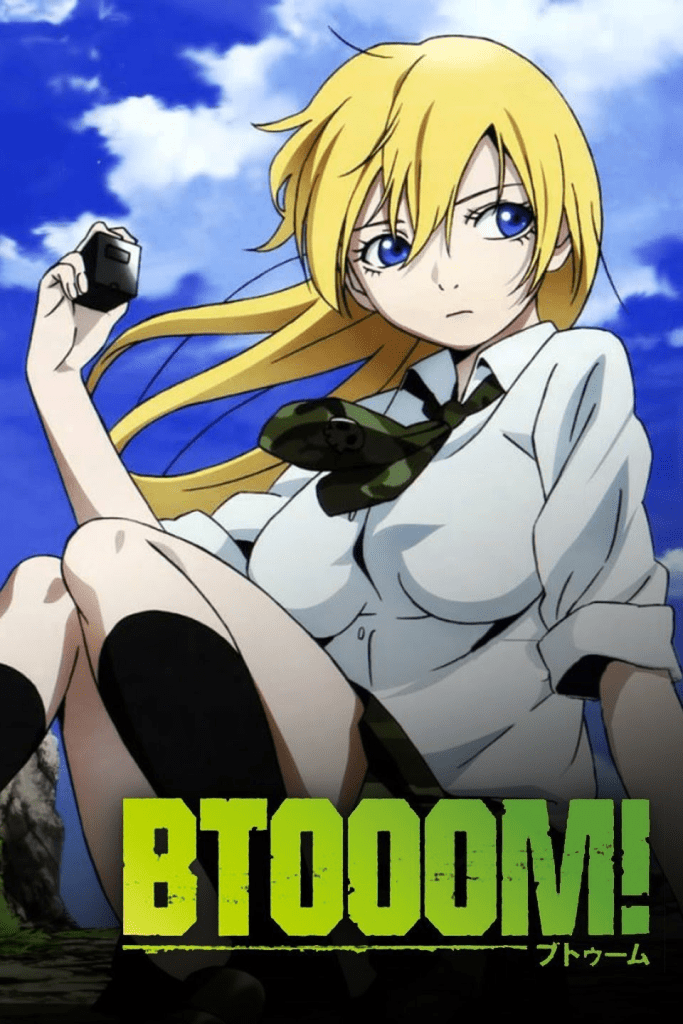
Stumbling Blind into Btoom!

I didn’t know what to expect from this one

My discovery of this series was quite an interesting one. I couldn’t remember where I first heard of it, but after watching more of it I realized I’d seen bits and pieces of it in WatchMojo.com’s anime top 10 lists. So not as blind as advertised.

Still, all I remembered from it was the name of the series and on a whim, I found that someone was pirating it for their viewing pleasure on YouTube. In the time between when I saw the first two episodes and completed Army basic training, I found that the channel had been taken down, though as of writing, there’s still a video of all 12 episodes in a 4+ hour marathon, so if you wanna game the system without risking malware Trojan horsing into your devices, have a looksee. Otherwise, go in with a shield and beware the spam on your hard drive.

I talked briefly about Btooom! at the end of December when I wanted to speedrun the topics I had on my mind at the time before I stepped off to new adventures, but I didn’t have enough time to properly explore my thoughts on the series, especially since it only has 12 episodes to boast compared to similar series like SAO that have franchises and can simultaneously earn the praise of some and the ire of others. So let’s give Btooom! some love it should have by now.

As of writing I’m only six episodes deep into Btooom! which I’d say is good enough to fully write about what I’ve witnessed thus far. From what I remember of the first two episodes I watched in December, as a Seinen series, it’s not the type of series to highlight the good in everyone. It knows its characters are bastards and scoundrels in some shape or form. The protagonists are definitely antiheroes. We’ve got three of them: Sakamoto, Himiko, and Taira. Each of them have at least something to balance out their negative qualities.

Sakamoto was a 20-something NEET with no passion or future in anything more productive than just lazing in front of the screen and keeping his high scores. This part is understandable since not everyone is required to behave like the heroes and crusaders they might be raised to believe, but what makes Sakamoto quite s[fart noises]t is that he’s that kind of toxic gamer. Abusive to his mother, refuses to find a stable job or training and move out of the house, no affection even for his stepdad (honestly this fits a lot of toxic gamer tropes that even I myself fell into as a teen at one point), and really hot-tempered. All those jokesters and mouth-breathers who argued that video games caused violence probably would’ve been onto something if Btooom! was used as an example.

Himiko’s the second character we see in the anime and her flaw was being a bit two-faced. Prior to being sent to the island to play the game IRL, she and some school friends were going to be the groupies for some musicians, but when the band mass molested them, she was the only one to book it and leave her friends to their fate. Now they don’t want anything to do with her seeing as she abandoned them when they needed help, but it wouldn’t be long before, in their eyes, she’d get a taste of her own medicine. I talked before about the molestation scene and I don’t want to elaborate further on that aspect as it was harrowing to watch only once, but to catch you up to speed: the one decent person who helped her got rejected, physically assaults and rapes her, she pulls out a bomb and explodes him to the seventh circle of hell.

You might begin to cheer her on for defending herself, but down the road she appears to be killing men left and right as a trauma response. And I think that’s one of Btooom!’s highlights. Trauma in western media tends to be hit or miss with more strike outs than home runs to speak of, which would be why so few of them handle it very well and with the maturity the subject matter demands.

I heard this show handles trauma pretty well. I haven’t seen it myself yet. I might…

For Himiko as a rape survivor, the reactions sound valid but get less and less rational as the series goes on, which may be the point. She narrowly dodges an assault, is the victim of one, and is motivated to never, ever be the victim of such an act again, even if it means a series of pre-emptive strikes that could easily be mistaken for Unabomber attacks, especially considering this series.

Finally, there was Taira, a middle-aged convenience store manager who meant well to his friends and family, but according to himself, was a great bastard to his subordinates. Allegedly, he’s the type of guy you’d talk about in order to not be like him. The example of what toxicity at work looks like, so to speak.

Now that I think about it, the series felt like the Saw franchise but anime and with bombs instead of overelaborate traps. Also, few people are genuine do-gooders in the series. The characters are either believable or wickedly f[power tool noises]d in the head. Each of these characters are ripped from their familiar surroundings and dropped into a real-life version of the Btooom! video game, only it’s more like The Most Dangerous Game with more evidence left behind for a forensics team to analyze.

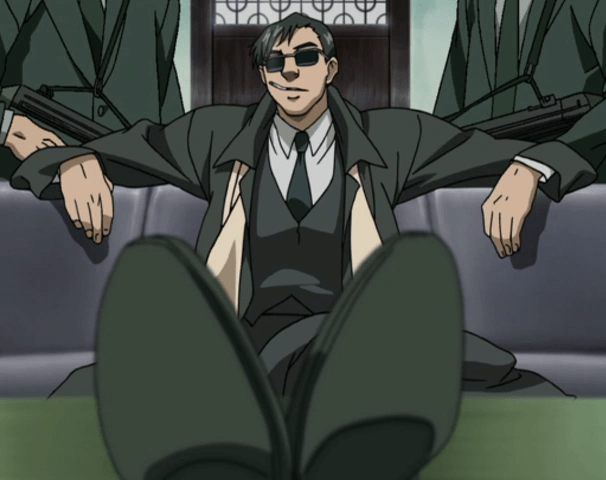
The game Btooom! is pretty much a battle royale, deathmatch style video game similar to Call of Duty’s or Halo’s multiplayers, though more Halo style since everyone is kitted up in sci-fi looking armor and in place of guns and small arms, it’s all bombs of different types, from incapacitation to full-on lethality, and seeing the types of characters running around in only six episodes thus far, a lawless, free-for-all for keeps is exactly what would attract more than a handful of psychopaths who just felt like killing. Some of the nobodies who get gunned down in Black Lagoon would feel right at home in a series like this.

Sounds like an exciting watch, right? Well, I and whoever ran that now-deleted channel and whoever is still uploading clips of the anime to this day all thought so, but at only 12 episodes with the manga lasting far longer than that, I’d at least want to know why the anime died off while a similar yet comparatively lighthearted series like Sword Art Online became an overnight global success. Well, I came across one video that pretty much explains the reason behind Btooom!’s faults and failures.

Channel: thisvthattv

In short, the series was a sufferer of a vintage anime bugbear where the anime releases before the manga is even halfway done. For the most part, up to two or three chapters of a manga can make one episode while depending on the style, that’s one or more volumes making a full arc, and it looks like there wasn’t enough time given between the first episode and the release of the 9th volume in January of 2013, which sounds like time constraints or nonexistent timetables made a mess of things anime-wise.

The manga at least finished all the way up until 2018 with creator Junya Inoue’s assistant Hiroki Ito releasing a spinoff series called Btooom! U-18 the same year as the manga’s conclusions. Yes, plural. There’s a light ending and a dark ending; U-18 follows the former. But even with an interesting premise, the biggest culprit is that the manga was never financially successful, almost forever doomed to cult status. This fate followed the home releases of the anime with only a few collectors having it on Blu-Ray and DVD in Japan at least. Japanese publishers notoriously ignore foreign data and market share so there’s no way to know for certain if they know that the show had an audience overseas. My best guess for why this is for a lot of studios at least is that they agree to let western studios and voice actors dub it over and immediately call it a day. That, or they go straight to work either on the rest of the series or something else until another season is announced.

Speaking of which, a second season was promised under the condition that the tie-in online mobile game stay within the top 5 in Japan for a set amount of time. In 2016, the mobile game developer Asobimo developed a mobile game based on the series as a bit of a glorified promotion and also as an early pioneer in the battle royale genre which in turn was based on the manga which itself was based on the series that gave the genre its name.

Holy Christopher Nolan, Batman. We’re discovering fractal layers left and right!

So all of these conditions needed to be met before an animator could get to work on a second season of the show, but alas it wasn’t meant to be. The success of the game was short-lived and it lost its high marks and status after a month and change. It wasn’t even in the top 100 in Japan anymore and I don’t think Asobimo was doing much to help promote or maintain it. It’s last updates were in the Spring of 2017 and it lost support two years later. A second season is a long shot, and a well-done second season is aiming at a gas station sign from five miles away. With only one arrow.

It can be done, we’ve seen more unlikelier series come back for a second season even years later…

…but assuming that of every series is like assuming every coffeehouse makes joe the same way, like they follow an industry standard. It just doesn’t work that way. Maybe we’ll get more Btooom!, maybe we won’t. My crystal ball is looking kinda gray, but if there’s a silver lining, it’s this. It’s finished. The manga’s done, so an extended continuation is in no way off the table if the cards are played well and the season is properly formatted. I just hope it doesn’t go the way of Rising of the Shield Hero season 2 or The Promised Neverland’s season 2.

Wave, Listen to Me!

Radio Coming Back from the Dead

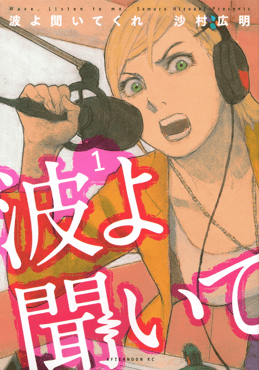
You’d be surprised what a spontaneous Google search can reveal. It’d been yonks since but I remember stumbling upon an anime adaptation of a manga that unfortunately flew under the radar for reasons I’ll share later. Known in English as Wave, Listen to Me! and in Japanese as Nami yo Kiitekure!, the manga tells of a Sapporo-based restaurant worker who finds herself as the newest voice of a late night radio show by proxy. A drunken rambling to an ex-TV executive gets her into this world and she doesn’t even realize what had happened until she and her peers recognized her voice coming out of the radio in the restaurant she works at. Talk about stumbling face first into fortune, right?

Well, fortune isn’t exactly how she sees it and legally no lawyer would unless a negotiation and settlement would be reached. Reasonable people call this a discussion, we here in the real world call this the high road most copyright strikers on YouTube refuse to take.

All things considered, this is the kind of series that lives up to its stated mission goal. Although I’m not a wave, I certainly am listening. (See what I did there?) The protagonist, Minare Koda, found herself in this world thanks in no small part to Mr. Al Cohol. For me, I found my way into blogging purely out of desperation for employment of some kind. I had just graduated from community college and I didn’t want the degree to just sit there and look nice, though now I know that this is a fate that befalls many arts degrees.

A majority of the focus in the series is on the radio, the station, the show Minare works on, etc. but it doesn’t focus on the inner workings of running a radio show or performing in one. It’s not like Akane-banashi where the story introduces the reader to the history and culture behind rakugo performances. And honestly, it’s not like it really needs to. If the pandemic was proof of anything, it doesn’t take a lot to just grab some equipment and start podcasting. Some of the people who gained popularity through the medium have been doing it for years or decades by then. They just got more listeners because of the lockdowns.

Rather, Wave, Listen to Me! reminds me of a couple of other series I happened to stumble upon from that old article a few years ago: House of Five Leaves and Ristorante Paradiso both written by Natsume Ono, both of which I’ve seen, and one of which I tried talking about on my first blog, but will likely devote time to again once I get to rewatching them both.

The connecting element between the three Seinen series is that it’s not about the practice, it’s about the people engaged in the practice. Wave, Listen to Me! takes care to dive into the people’s personal lives and show you what goes on in their lives outside of work. Pretty much how a slice of life should be. Describing the rest of the cast, well, do you remember when you were a kid you saw all the adults engaged in admittedly mundane activities, but it looked like they had everything sorted out? Then when you became an adult you realized everyone was essentially bulls[bull noises]ng the entire way and no one had anything sorted out? That’s what it felt like watching Wave, Listen to Me! except me being 25 (around the same age as Minare in the series) I had gotten smart to this around the time I was in college.

Minare is given a lot of responsibilities in the restaurant, not all of them relating to waitstaff, but that and coupled with her personal woes may or may not be the reason she drowns herself at the bottom of a beer glass weekly. She’s such a mess that her downstairs neighbor brings her back up to her apartment on his back. Her boss and coworkers aren’t all that much better either. The ex-TV exec, Kanetsugu Matoh, recorded her without her consent and even though it works out in both of their favors, an even worse person could easily have a lot of fun with that. Hell, her boss at the restaurant is one such example, and this could be a minor indictment on the series itself. For starters, this character gropes the bums of men whenever he takes pictures with male celebrities who come to dine. Do with that information what you will.

Now, all of that is interesting on its own, but what about the diminished attention this series has? Why haven’t I heard about it until now or before? Normally, with unsung and unknown series, that’s a matter of debate unless outright stated by the creator themselves on the status of the series and in the case of the anime adaptation, it was like a bunch of other short term anime series: an advertisement for the manga. But I think I have a few theories on why Wave, Listen to Me! slid through the cracks.

One part of it may have to do with the release schedule: April 2020, so exactly four years ago (my, how time flies). The year of the pandemic, the riots, and what amounts to an almost-pocalypse in retrospect.

Barely a week in and people were crying about a potential war! It’s just a dark joke now.

I don’t know about the rest of the world, but the month before Wave, Listen to Me! debuted, the U.S. went into a lockdown and news of lifts kept getting pushed back every three weeks with TV moving out of studios and podcasts dropping from the sky left and right to pass the time until a vaccine could be mobilized. As for Japan, a more health-conscious country, guidelines were stricter and generally everyone was encouraged to maintain safety and even move their work home with them, hence why a look at 2020’s anime repertoire doesn’t look as stacked as what preceded or succeeded it since. Loads of projects were canceled or postponed until the pandemic was declared reduced or over.

That said, I believe that even if there wasn’t a pandemic that year, the marketing would’ve done a lot to make or break the reception of the series. Don’t get me wrong, this is a great series. But a bad or badly received trailer can straight up assassinate interest in a show, as explained in this video about demos:

Channel: Extra Credits/History

There’s also this trailer for the 2018 TV series Titans:

Channel: Rotten Tomatoes TV

In both of these examples, Spec Ops: The Line and Titans were both given positive reviews post-release, but the initial reception based on their respective marketing led to a lot of people counting their chickens before they began to hatch.

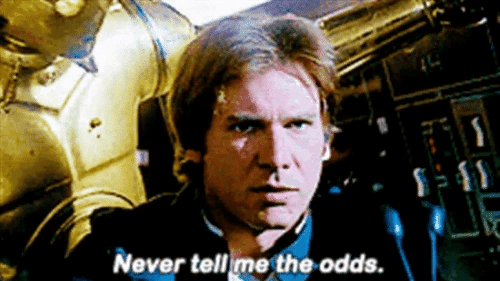
For Wave, Listen to Me!, good marketing could help promote it at the time. No clue if it would have the longevity to still be talked about even now if this were the case, but we’ve seen stranger things happen. To quote a smooth-talking, galactic smuggler:

YouTube recommendations are still a thing, albeit biweekly for now. And for this week, I bring you Mrs. Eats.

https://www.youtube.com/@MrsEats

One of a handful of Japanese YouTubers whose content is in both Japanese and English, Mrs. Eats likes to show people the ground perspective of life in Japan, at times in a comedic way with her husband. Additionally, her videos uncover several misconceptions many people, especially foreigners, may have about Japanese culture, lifestyle, or even entertainment. Sounds like it’s up your alley? See the link above.

The Hunt for Unsung Manga

I’ve come across a lot of manga series over the years, and while I don’t remember all of them, if I had something similar to My Anime List, I’d probably rank the ones I’ve read or heard of in terms of read (past tense), reading, going to read, or no interest; and based on what I’ve recommended across this blog this year, I’d say that there’s going to be a lot of series that the average manga reader has never heard of or can’t find through conventional means. However long you’ve read manga or watched some of their corresponding anime, you’ve undeniably heard of series like Naruto, Bleach, Dragon Ball, or One Piece. And you know some recent trendsetters by name: Attack on Titan, Sword Art Online, KonoSuba, My Hero Academia, etc.

But be honest with me: before reading some of my entries from this year, did you ever know about Wave, Listen to Me? Or Rokudenashi Blues? How about House of Five Leaves? Mashle? Black Torch? No? Well, that’s to be expected. Some of these have only recently gotten their well-earned press and praise and the others rode that ship ages ago. Rokudenashi, for instance, is from the 1980s and it shows.

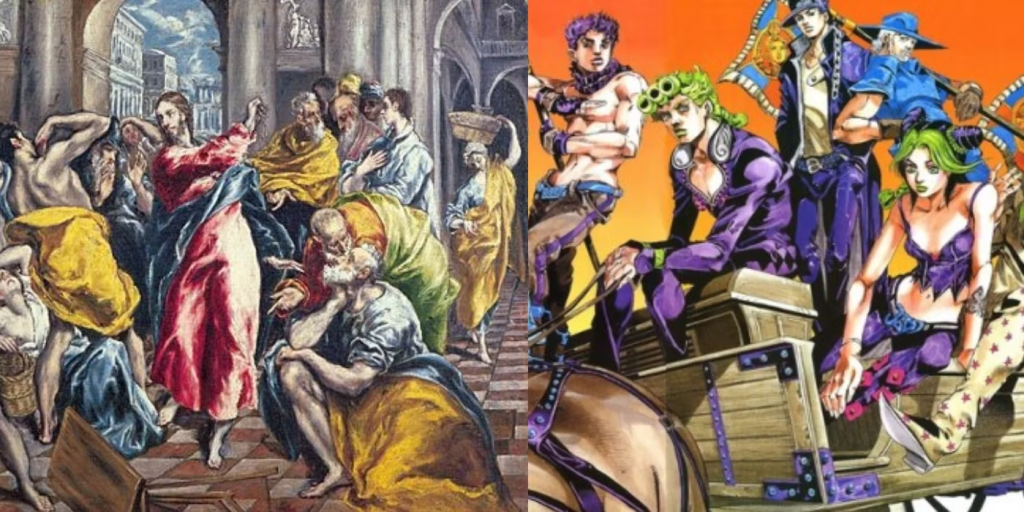
Only JoJo’s Bizarre Adventure still looks like this.

This quest of mine to find and screen through manga we’ve never heard of or haven’t heard much about is in equal measures personal and exciting. Personally, I don’t mind much of the series that get praised online these days or even IRL, but sometimes the praise can be a bit much. Although I enjoyed Chainsaw Man, my previous excursion with Black Torch by Tsuyoshi Takaki subconsciously colored my perception of the anime. It took me a while to realize how similar they were in structure, but fortunately for Tatsuki Fujimoto, CSM is more comical in comparison. Takaki’s manga seems to have been a victim of the times.

As for the excitement, call it the general sense of joy that comes with discovering something new. And it’s not these are hard to find. Google and Bing are likely to have them indexed and sites like Mangadex may have it in the archives. As for discovering the series myself, some series were the result of accidental Google searches. Others came from digging through the Manga Plus front page or reading an article about supposedly underrated series.

This one specifically came from when I was trying to Google Do You Love Your Mom, AKA the MILF-sekai.

Alternatively, there’s online forums dedicated to discussing manga, the most common one for me being Reddit. It is worth keeping in mind that sites like this will have a younger audience (i.e. early middle school to middle high school age), so what was popular when you were graduating is gonna be seen as old by the time some of these users are your age. I’m writing from personal experience and the weight of this gap is felt for me, but hey, at least Yu-Gi-Oh! and Pokémon still make the rounds, even through memes.

Another point to bear in mind is availability. There’s a difference between knowing the name of a series and knowing where to read it. Mangadex is a weeb’s go-to for series that are running but can’t be easily found, but there’s a chance the series in particular is available to the public in some form or another elsewhere. The only barrier in that aspect would perhaps be the age of the reader or just a trip to the local bookstore. Any Barnes & Noble employee worth their salt would know better than to let a high schooler go home with a raunchy series, but let’s be real there’s always a loophole. Grab a friend who’s older than 18 or go online like everyone else.

Going back to Mangadex, there’s no shortage there of the big four genres of Shonen, Seinen, Shojo and Josei, but if you want something 18+/hentai, then Mangadex will not help you. Even these sites have their limits, and that’s fine. Digging through a pirate site that’ll have what you’re looking for is tricky. In my experience, some pirate sites are overridden with pop-up ads that open a new tab bursting with malware, and it isn’t always when looking for hentai. Some Korean manhwa get scanned and translated into multiple languages by groups advertising these services on donation/contributor sites like Patreon, and many of the pirate sites that they end up on are all third party hosts.

Other sites like Webtoon or Toomics do host them free of all the issues that come with a pirate site, but sometimes have a string or two attached. I’m not lambasting these sites for putting walls up to entry. That’s what deserves praise. It may sound odd of me to admit to pirating while also condemning it, but I’ve been clear on where I stand on that. For some things that, thanks to the passage of time, have grown increasingly difficult to find conventionally, piracy is the most convenient* way to experience it firsthand; and I apply these same rules for series that have concluded or ongoing series that aren’t available in your region (*it’s not always reliable though).

For something ongoing, general or NSFW audience notwithstanding, if you’ve got the means to do so, it’s heavily implored that official releases are supported and as tempting as it is to head for the raw, untranslated version, I won’t act like I have the authority to stop you but for some series, unless you can read and speak fluent Japanese or Korean, I don’t recommend pulling double duty running the dialogue and speech bubbles through Google Translate. Depending on how it’s written, straight translations will contain slang and references that are gonna get lost that way. Translate has gotten better over the years, but it’s no substitute for a structured class. And finally, these languages have scripts that can and do show up as calligraphic works of art. I find it beautiful, but tracing the damn characters into Translate, especially on mobile, gets tedious quickly.

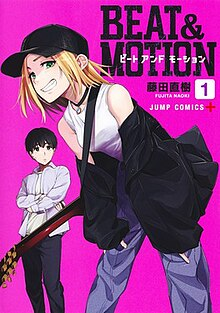
Now I’ve not abandoned or wholly used uncommon means of getting to my favorite series. I recently downloaded the Shonen Jump app on my phone and I have a tab on my computer logged into Manga Plus, and true to the title of this week’s post, I’ve discovered a new manga series that I’d like to explore further called Beat & Motion.

Take this as more of an exploration for how to discover new or underappreciated series and my experiences doing so. My method of doing so, though, is quite slapdash and haphazard, so if there’s a more sensible way of going about this, use that method to the fullest extent. Only go on sites you trust, and please use a VPN of some kind. Opera and its GX variant go a long way, but if you have the means to my recommendations come from those that I’ve seen sponsored on YouTube including but not limited to Dashlane, Atlas, Express, Nord, and Private Internet Access. I like to think everyone is in wide agreement that nothing ruins the fun of reading manga/watching anime more than when a simple mouse click puts you on a site with malware on it.

But of course remember to have fun with what you find.

Black Lagoon Motherf[sheep noises]r

*gunshots*

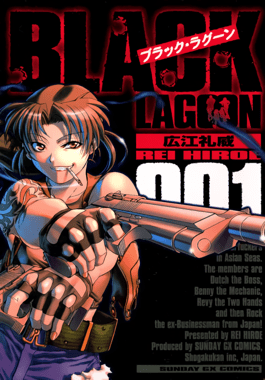
This series needs no introduction. It’s famous in the animanga circle for its name, its reputation, its characters, its violence and most of all its f[Boost mobile chirp]ng swear count.

Channel: Edwin De Paz

It’s mostly famous by its anime, but it started off as a manga by Rei Hiroe in April 2002 and has run ever since in the Seinen manga magazine Gene-X, for far, far longer than the anime and its OVA ever did. The clip above (which is understandably though unfortunately age-restricted) is one I will see sometimes on YouTube or Reddit because of course. It’s badass, it’s f[monkey screeches]ng awesome, but around the gratuitous gory action is an appropriately mature story.

I don’t remember when or how I learned of Black Lagoon, but I think it was through some WatchMojo clips about anime gunslingers that introduced me to the series, and it wasn’t until I was in the middle of college that I got around to watching it properly. Before we begin describing the series, no matter your opinion on subs or dubs, I heavily implore you to watch it however you can in English. I mean zero disrespect or offense to the original Japanese VAs, but the writing of the dub makes all the swearing necessary. F[gun cocking]k hits far harder in this anime when accompanied by the sounds of a firing range in comparison.

The premise is this: in the mid-1990s, Tokyo-based salaryman 25-year-old Rokuro “Rock” Okajima and a department chief are hijacked in the South China Sea by a trio of pirates onboard the Black Lagoon PT boat and calling themselves Lagoon Company. The chief leaves Rock to his fate and he joins up with Lagoon Company’s members consisting of Vietnam vet Dutch, Chinese-American gunslinger Rebecca “Revy” Lee, and South Florida computer programmer, Benny.

As the fourth face of Lagoon Company, Rock is the glorified diplomat if Dutch is unavailable, especially since there’s an equal or greater amount of time on land than on sea, mostly in the fictional border city of Roanapur, Thailand. This base of theirs is also home to many more organized crime syndicates the world over including but not limited to Colombian cartels, Russian and Sicilian mobs, the Triads, and the Yakuza.

As for the cast of characters Lagoon Company faces, it’s quite a mixed bag. Just about everyone in the story is motivated by coin, though there’s a fair few who have their own ideals and tenets, not all of them savory or agreeable. Criminals, extremist organizations, drug lords, and general psychopaths are drawn like moths to flame.

Hiroe’s inspiration for Black Lagoon was inspired in triplicate: news reports about piracy in the South China Sea from the 1990s (hence the setting), the writing drew from a variety of influence like Stephen King and James Ellroy, filmmakers like Quentin Tarantino and John Woo, and overall crime noir and Hong Kong action cinema, and other mangaka like Kenichi Sonoda who created Gunsmith Cats (another series I wish to cover one day) and Akihiro Ito who created Geobreeders.

The characters and setting are all diverse in appearance and in skillset, especially protagonist Rock who skirts by on a lack of battle sense with the powers of negotiation and diplomacy. The setting of Roanapur among other places would make the guy an ill fit since he’s not really seen as bloodthirsty as the others, but then again, the wider cast of characters is exactly that unpredictable, or (spoiler incoming) you wouldn’t really expect a guy like this to be an arsonist, would you?

Speaking of which, this speaks to the creativity of Hiroe, understanding that there’s no bog-standard look for a criminal. Some dress in suits, others are tattered, and the rest are casually dressed. The same goes for some of the child characters in the show. Conceptually, almost everything is thrown into the kitchen sink when designing a character and putting them in the story.

As for the chapters themselves, Hiroe has stated in interviews that unlike mangaka who release weekly chapters, he employs a slower approach, often taking as long as a month to release a new chapter, and normally for two reasons: to avoid burnout experienced by mangaka of several popular series still running, and also for mental health reasons. For what its worth, if the research for the series has him glued to news screens and snippets combing over crime on international waters, then it can get daunting keeping it plausible yet exciting. Or if its a series of other things that see him taking multiple hiatuses from Black Lagoon, then whatever happens, the series already gets high praise online and in real life from Japanese and western audiences alike, and not to sign a Death Note of sorts, but even in the worst case scenario, his flagship series will progress toward an ending, even if it isn’t him specifically who will finish it.

Someone will be there to finish it, with him or for him. And no matter what, Black Lagoon started with a bang and I sure hope that when it eventually ends, it ends with a f[swords clanging]ng bang.

This week’s recommendation is the YouTube channel RunJDRun.

https://www.youtube.com/@runJDrun/about

RunJDRun is the gaming channel of John David “JD” Witherspoon, son of late comedian John Witherspoon. Beginning in June 2009, he hosts Let’s Plays primarily on this channel either by himself or with friends, but also has commentary videos on video games or just in general. JD also has a podcast that he co-hosts with his friend Paul. He normally uploads daily, and like his father, he also has TV appearances and performs stand-up from time to time in the Los Angeles area.

JoJo’s Bizarre Adventure: Beautifully Blursed

Supernatural music references

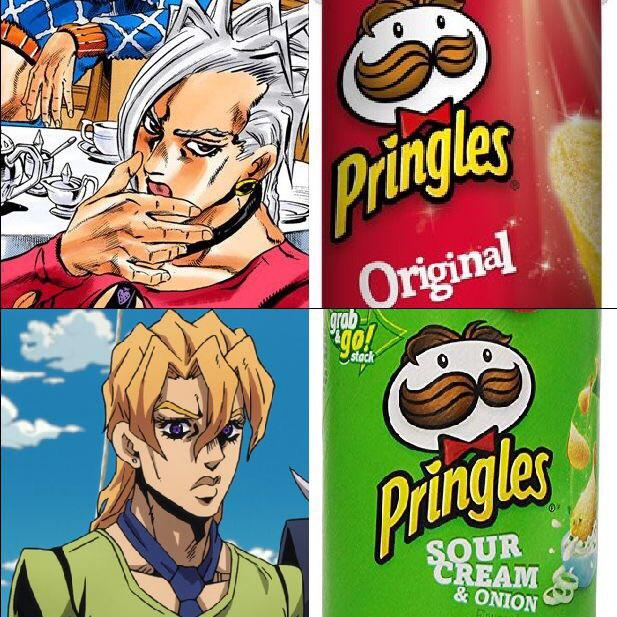
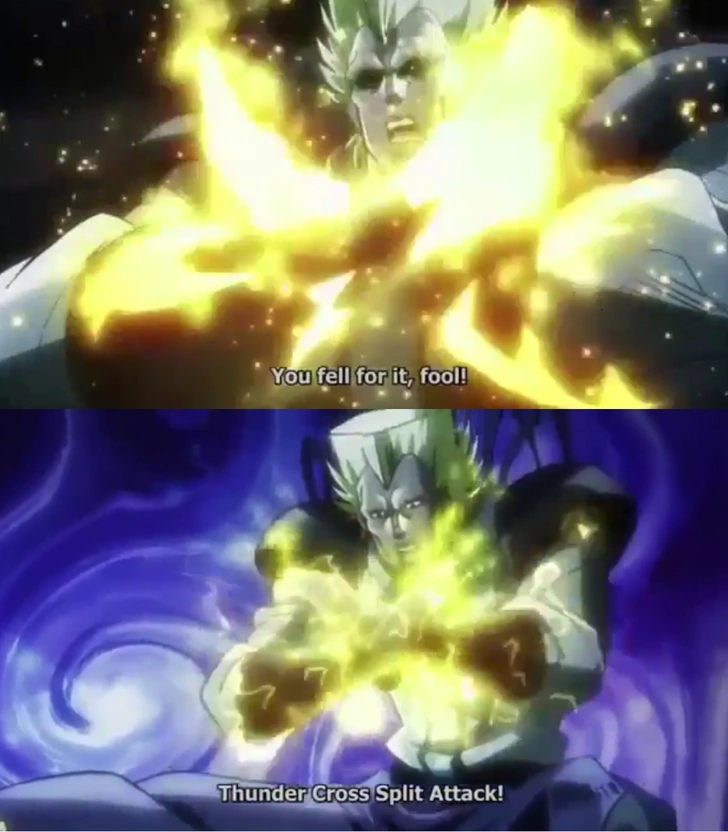
This one is a long-time coming. One of my posts from January of this year included a still frame of a JoJo’s Bizarre Adventure episode that has since been used as one of the countless memes in many anime circles online. For those who need a refresher, it’s not the one where the character Dire feigns incompetence to catch his enemy in a move known as the Thunder Cross Split Attack. Instead, it’s the one where a character named Pesci, notable for his lack of a neck cries in excitement that someone or something took his bait. Example:

The picture I used months ago was larger than that. But swinging back to my point. I won’t be the first person to speak about the JoJo’s Bizarre Adventure series, nor will I expect to be the first person to introduce it to those who haven’t heard of it or were on the fence before. But even if this is the millionth time you’ve heard or read about the series with no clear distinction on whether to see it in action, let me remove the ambiguity: I can’t recommend the series highly enough. I write this with the enthusiasm of a tourist coming back from the best vacation spot ever.

For an introduction, I’m going to try my best to spoil none of the manga or the anime. JoJo’s Bizarre Adventure belongs to the long list of longest running manga series still in production while also sitting on the list of most difficult series to adapt as an anime. For context, the first chapter debuted in December of 1986 with the first volume releasing later in 1987. The modern anime series that you might see on streaming sights like TubiTV or Crunchyroll or even Toonami in the west debuted in April of 2012. There’s a reason for the nearly quarter-century gap between manga and anime and it comes from the way the manga is structured. Artistically, the manga artist, Hirohiko Araki looked more towards Greco-Roman and Renaissance art for inspiration, western fashion magazines, and during the production of the earlier parts of the manga, the days’ most popular musicians to include Michael Jackson, Prince, the Beatles, the Police, and countless others.

The manga itself is divided into nine parts or arcs that center on a different protagonist within the same lineage.

Part 1: Phantom Blood ran from January to October of 1987 and takes place in Victorian England. The protagonist is burgeoning gentleman Jonathan Joestar and the antagonist is his stepbrother Dio Brando.

Part 2: Battle Tendency ran from November 1987 to March 1989 and takes place fifty years later, centering on Jonathan’s grandson Joseph, who is far more rascally and mischievous than his grandfather. The antagonist this time is a trio of ancient Aztec beings known as the Pillar Men named Esidisi, Wamuu, and Kars.

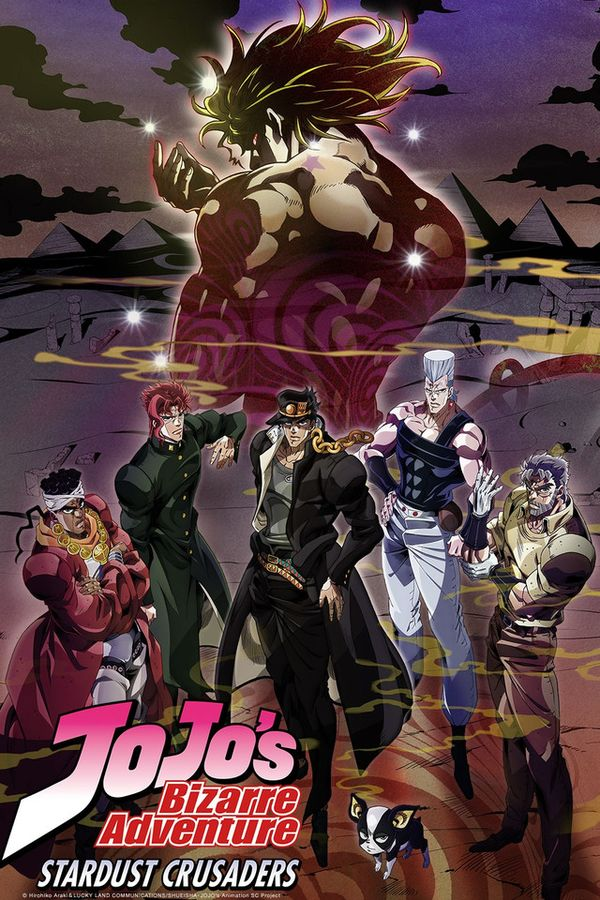
Part 3: Stardust Crusaders ran from the same month the last part ended until April 1992 and this time the protagonist is Japanese delinquent Jotaro Kujo. It begins in Tokyo in the late 1980s, and the antagonist this time is Dio once again, but he’s come back with an upgrade, his name is capitalized as DIO, and this time he has a wider cadre of henchmen in different parts of the world.

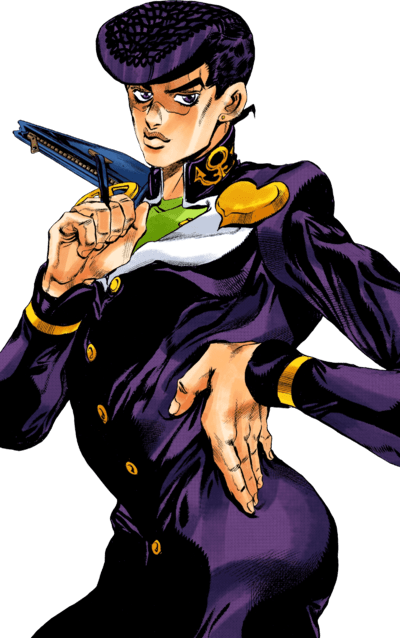
Part 4: Diamond is Unbreakable is set about a decade after the events of the last part. It ran from May of 1992 to December 1995 and features the protagonist Josuke Higashikata. He’s also a delinquent but by the late 1990s, Japanese delinquent culture was losing favor to the emerging gyaru culture to follow in the 2000s. Still, Josuke’s not as rough as Jotaro so long as you don’t badmouth his immaculate hair.

Part 4 is also centered in a fictional town modeled after Araki’s real life home in Sendai and is thus less of a high stakes thriller than the other parts, but there is still an antagonist in the form of department store employee and serial killer Yoshikage Kira.

Part 5: Golden Wind/Vento Aureo also began the same month the previous part ended and ended in April of 1999. It’s set in Spring 2001 around the southern half of the Italian peninsula and features the illegitimate son of DIO, Giorno Giovanna. The antagonist is the mob boss of the Passione mob, Diavolo. Without spoiling much, instead of cooling down like the last part and gradually sprints into its second wind for the plot.

Part 6: Stone Ocean ran from December of 1999 to April 2003 and features the first female protagonist, Jolyne Cujoh/Kujo, the daughter of Jotaro. Its setting this time is in a Florida prison in late 2011 and the antagonist is the prison’s chaplain and protege of DIO himself, Father Enrico Pucci. This part specifically along with Part 5 suffered from a long streak of unpopularity until the Part 6 anime adaptation was announced online in April of 2021. I covered that as it happened in another blog that I started two years ago and needless to say, it was one of the rare moments of hype I’ve ever felt for an upcoming product or series continuation of the sort.

Part 7: Steel Ball Run is set in an alternate continuity and sets the clock back to the 1890s but with a different protagonist who pays homage to the original British Jonathan Joestar. It begins in the western U.S. and ran in Weekly Shonen Jump magazine from January to October 2004 before switching to the more seinen demographic magazine of Ultra Jump for the remainder of its publication from March 2005 to April 2011. The protagonist is Johnny Joestar, a disabled ex-jockey and the antagonist is the 23rd President of the United States, not Benjamin Harrison like in real life, but Union Army cavalryman Funny Valentine.

Part 8: JoJolion (the -lion pronounced the same as in “Evangelion”) was actually set during the modern day. It ran from May 2011 to August 2021 and does almost quite what Part 4 does, supplanting Sendai with the fictional town of Morioh, but uses a real-world disaster as part of its setting. In Spring 2011, an earthquake struck the east coast of the Tohoku region of Japan. It features a similarly named protagonist to Josuke Higashikata from Part 4 (who also has a distant connection to the first guy), but differentiated by way of a different kanji in Japanese, and radically different circumstances. Like the rest of the plot, this time around it’s a more complicated affair with complicated characters and motives who run into each other. As such, the antagonist isn’t easily defined and is absent for a majority of the run, at least until the end.

Part 9: The JOJOLands is the most recent edition to the JoJo saga and is still in production as of this writing. In fact, it just started in February. It’s set in Hawaii in the modern day and its protagonist is Jodio Joestar.

At the outset, this sounds like a lot to get through because it is, but the modern anime adaptation is the best representation of the events in the manga. There have been attempts to adapt it a few years after the first two arcs had concluded with OVAs from the 90s until 2002, a movie from 2007, and in the case of translations that front was even more troubled.

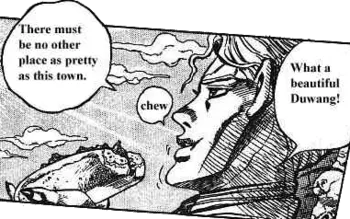
This is one of many examples of troubled attempts to translate the manga from Japanese to English. The problem in this case is that it wasn’t done professionally and Araki, consciously or unconsciously, hasn’t been as definitive in providing details and context until he was interviewed at different points during the production of the manga. For the panel above, which takes place in the middle of Part 4’s run, it was translated from Japanese to English in Taiwan, and the translations were so subpar that for many trying to get into the series, even illegally, had to wade through bad grammar and language until it was given a proper re-publication for the international market in the years leading up to and following the 2012 anime adaptation.

Part 5 had a similar issue back in the day as well and was a large part of its initial disdain from the community until re-publications with better translations rectified the mistakes. And mistakes would follow on even after this. Araki himself is also inconsistent with color schemes when it comes to coloring in the manga, then again, a lot of the monochrome manga is up to interpretation which explains why some characters are colored differently in the anime adaptations than their depictions in the manga.

This example was used as a meme in r/ShitpostCrusaders, but is an example of the degree of freedom afforded to publishers and distributors in the case of JoJo’s Bizarre Adventure. Thankfully, these days it’s gotten exceptionally easier to start JoJo and however you get there, love it or not, it’ll leave a lasting impression.

The art styles of the characters, as I mentioned before aren’t the same as most manga in either the 1980s or even now. It’s art style is a bit of a beefier and more elaborate type found in Berserk, Fist of the North Star, Rokudenashi Blues, or even Yu Yu Hakusho. On reflection, it reminds me of some of the comics from the west like Martin Mystere or the erotic series Druuna, and it’s like that on purpose.

Ever since he debuted as a manga artist, Araki has looked at western styles for inspiration and just about any western artist does well for him, even the ones we learn about like Leonardo da Vinci or Michelangelo.

In anime/manga communities, the term for someone who consumes copious amounts of Japanese media and entertainment, not always limited to manga and anime itself is known as a weeaboo or weeb for short. The term began as an insult in the mid-2000s on forum sites like 4chan and at the time anime hadn’t taken as much of a grip as it does today. Now that the internet is what it is today, the opposite end of the spectrum is the “westaboo,” a term for a Japanese person who consumes more than the doctor’s recommended weight in western comics and cartoons, which would make Araki one of the first to be described as such. And since this appears to be the case, I’d like to be the fly on the wall of a bunch of Japanese internet users having their own dub vs. sub debate on King of the Hill which I learned recently is also popular in Japan.

We’ve come full circle now!

Not limited to just appearances, Araki also looks to music for inspiration. Earlier in this post, you may recall the names of the antagonists of Part 2 are Esidisi, Wamuu and Kars. These are direct references to the real life bands AC/DC, Wham!, and The Cars. This has become one of the numerous features of the JoJo’s Bizarre Adventure series since the beginning. Direct references to artists by name or characters in the books.

This is an interesting source of controversy for the series with specific artists and their estates or just the record labels that worked with them in the past getting uppity over their depictions. It’s also worth noting how complicated this gets in the case of copyright laws the world over, not just in Japan. Because of this, international distribution has had to put in the legwork censoring or altering or requesting alterations from Araki’s team to be able to distribute it in select countries. As an example, there have been more direct references to Michael Jackson and Prince as people than through characters or concepts. The reasons for this come down to when both men were still alive, they were both likely to use the courts to their advantage. I doubt Prince’s estate has kept that up since, but the Jackson family still lives and ex-members of the Jackson five for example can definitely waste that much time, money, and effort in a drawn out legal battle just to change a joke character on page 36 of the 17th volume in the manga. That’s a joke, but it’d be one hell of a read in a newspaper or on the associated wiki. Speaking of which, here’s a link to that:

https://jojowiki.com/JoJo_Wiki

One of the more iconic moments of the JoJo series comes in the supernatural abilities. Parts 1 and 2 begin with an ability known as “Hamon” or the Ripple in English. It functions as an ability that can harness a power similar to that of the sun. Its name derives from the ripples that appear in liquids and its mirroring of the sun’s power makes it an effective tool against vampires. After Part 3, Hamon is mostly done away with in favor of the Stand.

Stands are different from Hamon in the sense that they’re physical representations of one’s soul and can appear in diverse ways. The most common appearance they take is a ghostly humanoid form that stands beside its user and their powers, but can appear is different things; animals, plants, a gun, vehicles, concepts–the sky’s the limit. The only caveat is that only a Stand user can see another Stand, but they impact everyone. So you don’t have to be a Stand user to come under the impact or influence of one. For example, a Stand user who can control the weather can theoretically make it rain or snow on command. When they first debuted in Part 3, they took the names of Tarot cards and Egyptian gods before taking the names of music or musicians.

Following the successful 2012 adaptation, it’s hard to imagine western distribution of anime without JoJo, but the in-between years have a bunch of eye-catching references that a trained eye can find on review. It wasn’t until the most recent and currently produced adaptation that the JoJo’s reach became international and for better or worse, JoJo fans have taken the JoJo’s reference far beyond its roots. Copypastas, poses, iconic characters, parodies; you could sneeze and it would be a JoJo’s reference. Minor spoiler, but that’s also not a joke. On Reddit, there’s two dedicated subreddits centered around the franchise. For fanart, discussions, analyses, and announcements, there’s r/StardustCrusaders, and for memes and meme-related events, there’s the aforementioned r/ShitpostCrusaders.

As hard as it was for JoJo to make it to the west, now that it’s here, the newer debate comes in the form of where to start and how to start. Reading about that sounds absurd. If you’ve never heard of JoJo, but know that it’s divided into parts, your first thought would probably be to start at Part 1. The reason this debate exists is because different people have different opinions on certain parts. Similar to how there are beloved and reviled episodes of a certain cartoon or TV show. Some people will recommend different parts for different reasons revolving around plot and concept and others will recommend starting at the beginning, myself included, so as to get the entirety of the story.

If you want to hear it from me, I’ll start off with how I got into JoJo. It began with Toonami acquiring the license to air Part 3 in 2016 when I was in high school.

Stardust Crusaders was divided into two parts for the anime the Road to Egypt arc and the Battle in Egypt arc. In the middle of the second arc, one of the episodes begins with a character at gunpoint attempting to warn his comrades that an old enemy is back to challenge them and he does this by pointing his tongue in the shape of an arrow.

The art style put me off at first, but I started watching it and watching it even more until eventually, we reached the climax at the end of the arc. I wound up looking for it on YouTube where there are loads of videos in segments and/or playlists, and rewatching it with my fullest attention, made Stardust Crusaders one of my most favorite parts in JoJo.

That being said, the way the other parts are structured might shape your opinion on the part as a whole. As much as I recommend Part 3, I also highly recommend beginning at Part 1 and judging for yourself as you go along. The most recent part to get adapted to the anime was Stone Ocean in December 2021 which finished its batch release in December 2022. So whatever your watch pace, wherever you finish you can look at sources like Mangadex to start on Part 7. The black and white manga isn’t hard to find and recently, fans as well as the distributor Shueisha have been coloring the manga but it isn’t always perfect. All of the anime is also dubbed in English, so there’s pretty much no wrong way to get into JoJo’s Bizarre Adventure. Even if you begin somewhere in the middle, you can also go back to an earlier part or skim through the wiki for a better understanding of an arc or concept.

One more thing before I go:

Just about any frame in the series, anime or manga, can be used as a meme if you’re creative enough. But for the love of all things holy, do not under any circumstances consume the series through just memes. The series is tough to read or watch as it is, and out of context memes don’t help with comprehension. For the most part, those are for people who do understand the series well enough to joke about it. I recommend the wiki and several JoJo-based YouTubers who can explain it in a concise fashion if you’re lost. And you might get lost on the way.