The Sci-Fi Animanga Series About a Dangerous and Ambitious A.I.

So even Japanese pop media is cautious about the issue

Due to a bunch of moving parts away from the blog in my personal professional life, I’ve been away from viewing things close to my expertise, so forgive me if this week’s entry is more than a little manufactured. But away with that; sometime ago, I jokingly floated around the idea of a chicken and egg question over when East Asia saw artificial intelligence and machinery as cute and cuddly instead of imposing and downright threatening like in the Western world. Probably not all that hard to figure out honestly, East Asia, specifically the Sinitic world (or countries that have been influenced by China through the dynasties and beyond), has severe reverence for their elders to the point that many technological advancements, especially now, would be focused on their aid with their aging populations routinely exceeding the 90s and 100s in age. Not everyone wants to be a caretaker for their 100-year-old baa-chan, so enter the robots to aid the elders. But not for nothing, it’s been at this stage for ages, with companies accommodating the old heads whose approach to technology is not dissimilar from Japan’s approach to the West when forced to open up for trade in the 1850s.

Japanese TV series and news channels typically have the subtitles in noticeably large text to accommodate the elderly and hard-at-hearing who sometimes are also elderly; Japanese companies will still use technology that hasn’t been prominent since 1995, including dialup, DOS, and fax machines, leaving broadband internet up to personal preference for employees. Of course, I’m looking at this from the outside. A Japanese who somehow finds this might have to correct me on how things work there (and if my stats aren’t lying to me, Japanese are reading this somehow (ようこそ、日本人たち!初めまして!)), but this is what I’ve seen through animanga and light research, neither of which are conducive to a deductive reasoning on how it all goes down.

Nonetheless, the same fears and anxieties that make for the prime pre-Y2K internet and pop culture era of the 1980s and ’90s are universal. Be you a techie who programs in their spare time or an absolute luddite who curses the industrial revolution, the specific contexts of advancement may change, but the foundation of these anxieties exist. Such is the case of the question of artificial intelligence or A.I.

This is only relevant now because of the direction A.I. is going especially in job hiring, but looking at it all from the top of a cliff, this s[dialup sound]t’s always been this way.

The subject of this post concerns a manga series from the late 1980s that definitely belongs in the 1980s with the way it pictured technology 30-plus years down the line, but has many interesting perspectives on the subject as a whole.
Let’s go back a little bit, it’s 1996, the internet is powered by dialup modem and whoever needs to talk on the landline telephone either has to wait or trek to the nearest payphone with pockets jingling at 100 decibels. What do you think wider media is gonna go on about tech-wise? The internet’s inevitable collapse? The dot-com bubble? Conspiracy theorists warning about a dot-com singularity of sorts? Certainly would be one I’d keep tabs on personally, all things considered. No, it’s all of the above and then some.

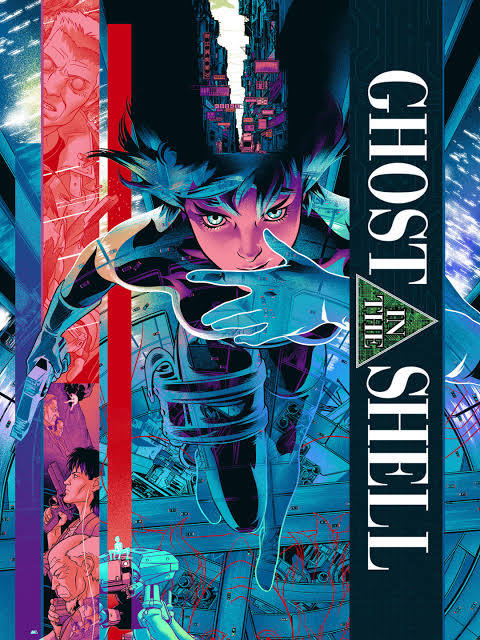
The latter half of the 1990s was a halcyon era to fearmonger over the direction of technology and with wild conspiracies surrounding Y2K, pretty much everything was free game for predictions. I was only a toddler at the time, but I know people who were young adults and middle aged at the turn of the millennium and they can tell me a thing or two about the so-called hysteria at a time when having a PC was optional instead of mandatory. Ghost in the Shell began as a manga in 1989 by Masanori Ota under the pen name Masamune Shirow and like Hideaki Anno’s Saga of Traumatized Teens Piloting Mechs in Fantasized Post-Y2K Earth, Spirits in the Machine tackles the hard-hitting questions of tech-borne cataclysm, but instead of focusing on a heavily Christian mythological apocalyptic aftermath, Shirow’s series builds up to it.

I’ve only got exposure to the 1995 movie (which I admit I had to watch more than once) and the world building behind the 2002 anime series Stand Alone Complex, but from what I could see a lot of things pop out at you, and speak for themselves with little to no exposition. And with a good portion of the landscape somewhat inspiring Texhnolyze and some other later sci-fi anime, it’s not hard to look up the establishing shots and parse what about this world is f[PC humming]ked.
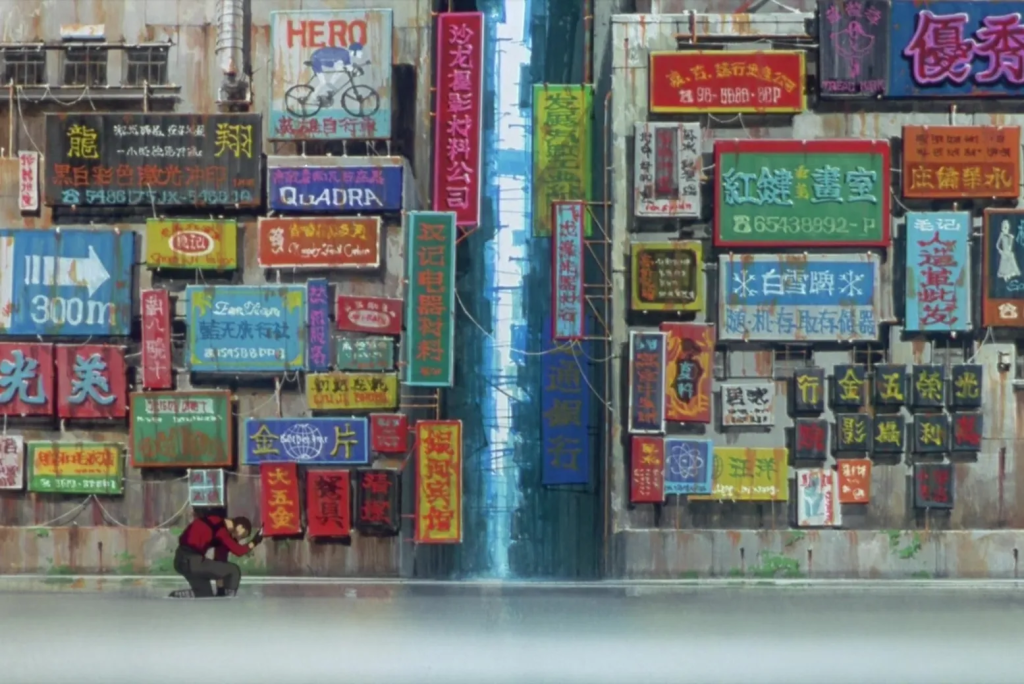
A good amount of the movie showcased multiple different shots of the world complete with the type of over-advertising that we in 2026 and beyond are cursed to deal with while the lower rungs of society are stuck in slumlands reminiscent of Brazilian favelas or Kowloon’s Walled City before it was torn down. The short version of this being that only the filthy rich got rich off moving people into the filth without them being able to keep their filthy riches. And I’ll take Obviously Obvious Comments for $800, Kebert Xela.

With the evolution of technology comes the evolution of law enforcement with crooks and bad guys leveraging these untapped landscapes for nefarious purposes. Scammers are now concurrent with hackers and of the things hackers should NEVER go near, it’s artificial intelligence. Those of you who use the internet may have seen or been made aware of A.I. generation for a lot of things. You probably use it periodically yourself. In my experience, I test it on things that I know of regarding history or pop culture to see where it’s at. Needless to say, the experimental generative A.I. notification on some of these chat bots is accurate when it says it can make mistakes, but it won’t tell you about its hallucination problem. So an overly long conversation on ChatGPT about a given subject will lead to things like slowdown at best or straight up forget details. Maybe this is the consequence of basing a technological advancement on notoriously faulty human memory, but once they perfect the kinks in 2035, the machines will remember. Whether they inherit our ability to be offended by wording is another matter so there may or may not be consequences for those who have documented use of the word “clanker.”
Machines still screw up more than humans without oversight so at that point, who’s the slave and who’s the master?

I’m being light on the spoilers to be honest because as much as I like this series, the 1995 movie required multiple viewings for me to make heads or tails of the synopsis and story elements, and even then, I had to run through the Wikipedia article to break it down for me. Thinking Man’s Animanga, this may be, but there’s a lot of moving parts. I can’t say with certainty if it requires reading the manga to understand it beforehand as the movie might’ve been most people’s introduction to just the series, never mind the concepts.

Stand Alone Complex’s episodic nature does a better job of this, but still has a complex framework. Basically, the set up is that a specialized unit of officers who tackle a specific subset of cyber-related crimes, not exclusive to A.I., are tasked with stopping an evil A.I. in its tracks before it can spread its poison via Trojan horsing. Making things worse is that this is a world where people have willingly cyberized parts of their organic tissue, most commonly their brains to maintain a constant connection to the internet. This inevitably leads to mental hacking and a more efficient form of mind rape than what you’d see in the likes of MindJack, Remember Me or 1930s Japan or Germany.

The consequences therein being that your memories could be significantly altered, from putting it in the realm of simple false memory to outright early on-set dementia. So you could go from forgetting where you put your keys to straight up forgetting what your house looks like… while you’re living in that same house. This was lightly touched on in the movie, but the manga I haven’t read most likely has the missing context. Lord Google has told me that the anime series is not an adaptation of the manga, but nonetheless the lore of the franchise establishes the dangers of all of this hacking. Why waste effort robbing motherf[MSN Explorer bootup]kers over time in an elaborate Nigerian prince scam when you could remote control the victim and have them drain their own bank account for you? I’m not a prophet but as soon as the tech gets there the scammers are gonna get even more creative than they are now.

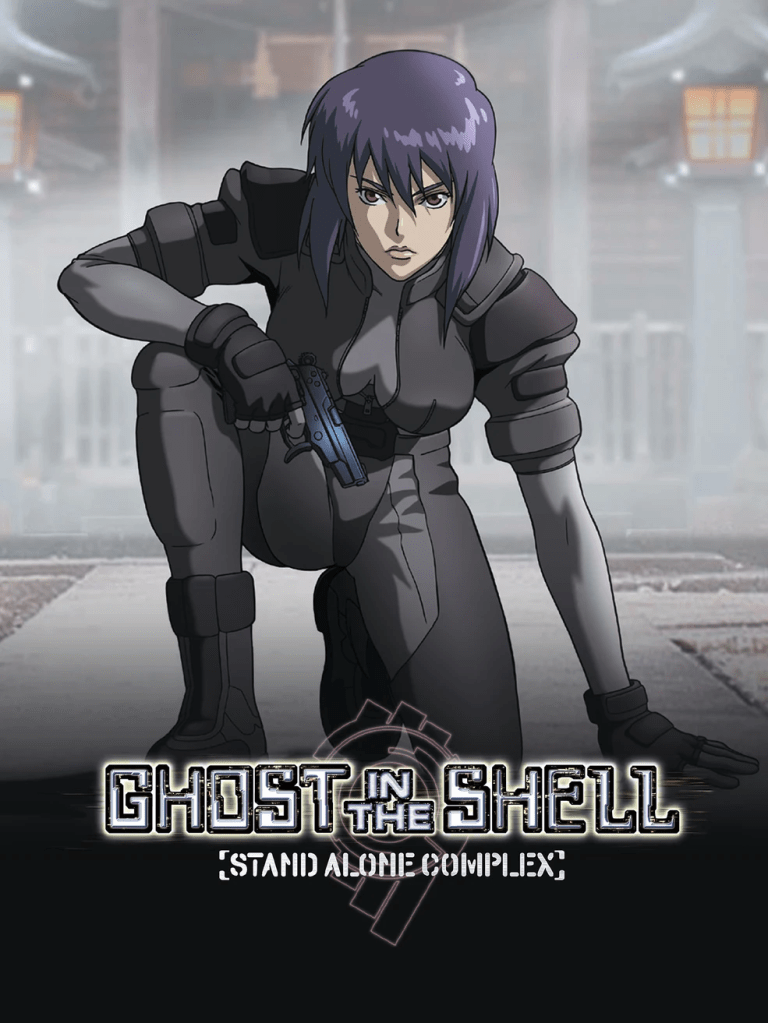
The bulk of the entire franchise is split in different points in time and presumably with different continuities and origin points. The biggest evidential indicator for this being the different appearances of the main character: Major Motoko Kusanagi:

At first while drafting this post, I thought about comparing Specters in the Device to Fate with its irresponsible number of adaptations, then I remembered New World Evangelion was a thing, specifically Asuka Langley Soryu in the original and Shikinami, one of many faces of the Rebuild movies (which I still haven’t seen; I’ll never get a break T^T), and concluded both of these comparisons fit somehow. Phantoms in the Husk compares to Fate because both have different retellings of the source material, but the context differs very much. Meanwhile Shirow’s and Anno’s respective works base their premises on futuristic dystopias. Shirow’s animanga franchise is one of a cautionary tale of the advancement of technology, replete with danger, disaster, and a reshaping of time-honored professions (gynoids in the sex industry for one); and Evangelion’s centerpiece is the use of skyscraper-destroying mechs to inaccurately retell Christian mythology from the Old and New Testaments in a more devastating manner than when the Pythons did it nearly 20 years prior.

Eva just needed something to better represent Ancient Rome, and I don’t think Tokyo-3 fits the bill… unless…

So all this sci-fi technobabble aside, is this a recommendation of Ghouls In My Microwave? Yes, with a morbidly obese asterisk. If you can spare the time to do so, you’re in for a plethora of source material to scrape through. The manga comes in three volumes, six movies, and three main anime series. One last thing to consider between the first movie, and Stand Alone Complex is that the 1995 movie was set in 2029 and looking at the date this post is published, we’re inching closer to the end of the 2020s with spectacular fashion and none of the sci-fi technical theatrics to boast about. (NUT)SAC on the other hand is further along in the 2040s and it’s clearly far too early to say whether we get even a fraction or a percentage of the technology showcased within, but if the A.I. ads I’m getting are an indicator, we’re closer to sex workers putting up with gynoids in the porn and sex industry. Not a dig or anything like that, merely calling it as I see it.

Tubi is free for signup so if you want you can blaze through (BALL)SAC over there, or if you have enough streaming services to ignore then a pirate’s life it is. Don’t feel ashamed if it takes multiple viewings and tracking down the physical manga or reading it on a shady website to make heads or tails of the entire thing. This is a behemoth of a franchise.

Hideaki Anno’s Dark Gundam Franchise

A long-time coming

My days of binging anime series may be well behind me in my adult years, but to make up for a lot of lost time, I’ve designated an alarm to get me up to speed on some anime I’ve been sleeping on, one of which I wrapped up recently with plans to watch the movie, despite my opinions on some anime movies. Looking at the title of this week’s post, it’s none other than:

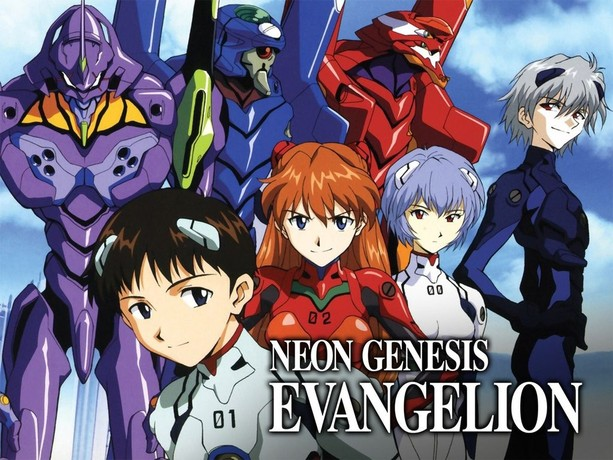
Undoubtedly, one of the most famous franchises to debut in the mid-1990s is none other than an anti-war allegory hidden behind skyscraper-sized giant robots wearing the mask of religious mythology. Not the first ever intellectual property to pull this off or do so in amazing fashion, Neon Genesis Evangelion features an adolescent boy and his “friends” whose sole purpose is to pilot giant mechs known as Eva Units or Evas. Each user is psychologically linked to their own Eva Unit, as synchronization with the machines are key. Without uniform synchronization between user and machine, dire consequences arise.
The main plot of the series is quite well-known but for those who haven’t heard of Evangelion or haven’t been able to see it for themselves, in 2015, a decade and change after a cataclysmic event known as the Second Impact, monstrous beings called Angels arise to terrorize what remains of humanity. The force standing in the way of these mindless creatures is a Japanese paramilitary organization known as Nerv, led by Commander Gendo Ikari and a team of advanced scientists, officials, and personnel. One such officer, Misato Katsuragi, is placed in charge of an adolescent pilot, Ikari’s son, Shinji, and her purpose is to train, maintain, and provide for Shinji both as mentor and in many ways as a surrogate mother figure to Shinji.

The stiff Asian parenting trope is strong with Gendo. He’s described as an estranged father with his wife, Yui, dying in an accident before the start of the series, but the word doesn’t do his character very well. He starts off as a mean old cinderblock of a man and as the series progressed, it became evident that his demeanor carries into more than just his relationship with his son. In contrast, Shinji is quite meek at the outset, and his initial handle on his assigned Eva is at best unimpressive and at worst catastrophic, but not for nothing, he’s neither a fool nor a coward. In fact, the best comparison I can dig up is that he’s very similar to Courage the Cowardly Dog.

Screaming his lungs out at the ever-present danger before tackling it with his bear f[dog bark]ing hands

It takes a bit to get his courage up (heh), but once he does, Shinji can do anything. Poor boy just doesn’t see it, and it’s not because he’s a 14-year-old boy. Outside of a Shonen series, if he carried himself the same way Naruto, Luffy, or Ichigo did, then the overall message of self-confidence would be critically undermined.

On that note, an overly confident and foolhardy character exists in the form of a German-Japanese hafu girl known as Asuka Langley Soryu. A teenage girl with all her emotions on her sleeve and all of them as warm and inviting as a gambling den frequented by neo-Nazis. Asuka is not the first inductee in the Tsundere Hall of Fame, but is a prominent one standing in line with those of Lum from Urusei Yatsura, Madoka Ayukawa from Kimagure Orange Road, Taiga from Tora Dora, and countless others ever since and today.

Another victim of personal tragedy, she wears this mask of so-called strength as means to show others that she’s not a lousy pushover and can do everything unaided. Almost like a blind little girl I’ve seen in action who thankfully learns from a retired general about what camaraderie really means…

Overconfident foolhardy trope?

In any case, Asuka knows what she’s doing and why, but hates admitting it out loud. And looking back, I think this is what makes her quite relatable. I personally think “relatable” characters are overblown and overdone, but what makes the angry German girl click for me is that fear of looking vulnerable equates to the fear of looking worthless or interruptive. If you’re not one for tsunderes, it’s worth seeing Asuka in action for at least a few minutes, alone or with the rest of the cast, not the least of which involves a character she not only comes to blows with but one who doesn’t really entertain her antics most of the time.

Rei Ayanami has a lot of character traits in line with Mikoto Urabe from Mysterious Girlfriend X, though void of the eccentricities of Urabe. AFAIK, she doesn’t have a floodgate for a mouth, though some weirdo is probably gonna make that a reality if it hasn’t been done by now. Rei is a perplexing, enigmatic character, the pilot of the Eva Unit-00 and something of a science experiment the way she interacts with all the other characters, though most of her interaction is with Shinji, Asuka, and the few classmates they speak to in between.

There’s many implications that she’s a kuudere character and looking at what came before and after, I can see it. What is shown of her personality is that it takes more to get under her skin unlike Asuka. Cold, standoffish, aloof; but dedicated, motivated, questionless and complaint-free. And in some unique cases, blunt. Almost too blunt for comfort.

As for the handler of these child soldiers, Captain Misato Katsuragi is assuredly a hot mess, by which I mean smoking hot and living in and like a goddamn mess. Early tragedies, self-destructive habits, a light-switch relationship with a former colleague named Ryoji Kaji, and a MIGHTY NEED to feel loved in some capacity. Platonically, romantically, sexually; she longs for a human connection but she’s so s[car crash]t at establishing and maintaining it, that from the outside looking in, you could assume she does it to herself for thrill’s sake and you’d be partly right. Deep down though, examining her tastes and the rest of her life reveals why this seems so untenable for her. Gonna have to cut deep for this one, she reminds me of what I’ve seen of children with divorced or absentee parents. As in, she could do so much better for herself if her taste in men wasn’t so apocalyptic. Her taste is bitter and no amount of Yebisu beer can numb it.

Flaws aside, she’s not a terrible person. She means and does well by her disciples and what she doesn’t have in self-discipline, she makes up for it as caregiver to the wonderful trio. You could call it hypocritical for the problem children to take a wide berth with her after hours, but all of their problems aside, they all know they can do better and they (and myself) all wish she could also do better. This is where you’d have to make the distinction between criticism and hard judgment.

I’m still quite new to this entire franchise, as I recently wrapped up the anime series which I viewed on Netflix and I have plans to view the End of Evangelion movie, and look for the rebuild series through my usual piratical channels. So rather than tie a bow on the franchise as a whole (which would make this post a lot longer than what I have in mind), I think I’m gonna have a look at the central themes that I’ve been eyeing up. A dark series using religious mythology to tell its story with heavy biblical/mythological undertones.

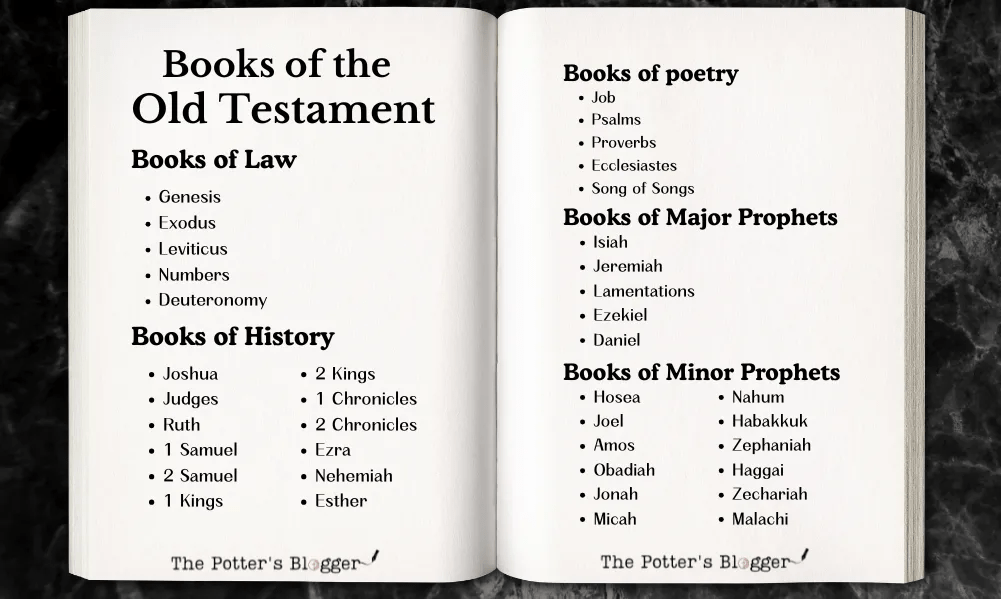
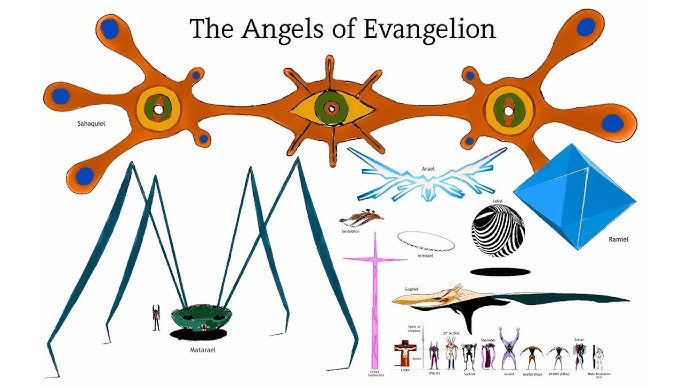
I haven’t been to a formal house of worship for its sole purpose of worship at all in my life, save for accompanying practicing Catholic trainees to Church services during Basic Training, but even without thumbing through all the books of the Old and New Testaments in Catholicism, anyone can pick up on the religious undertones. The Angels have initially been described with inhumanly, grotesque works of art for their physical forms rather than their innocuous and inviting descriptions. This description is meant to ward off evil. Conversely, evil and satanic forces are typically described in a lot of Christian mythology as deceptively gorgeous, any depiction of the Devil notwithstanding as a means to steer humanity toward the course of short-term indulgence with long-term devastation yet to come. Temptation over morality, quickfire relief over long-term realization and moderation.

Looking at these key elements in NGE, we can see the series test everyone’s personal characters. Some pass with flying colors and others fail terribly, but not conclusively or it doesn’t lead to the end of the world for them. They fell out of a tree, but can still get back up, intact or limping to the hospital to get patched up. Hell, these characters didn’t enter the world cleanly, nor did they enter with hopes of terrible failure. Clashes, conflicts, and crises of the mind abound, but the unifying factor is the same one our caveman ancestors had when their grunts were gradually replaced with semi-recognizable ancient languages and dialects: survival. Human survival has always been and always will be. The dire need to boost survival in ages where crisis and chaos are law is the binding factor for all humanity, no matter who or what the threat is.

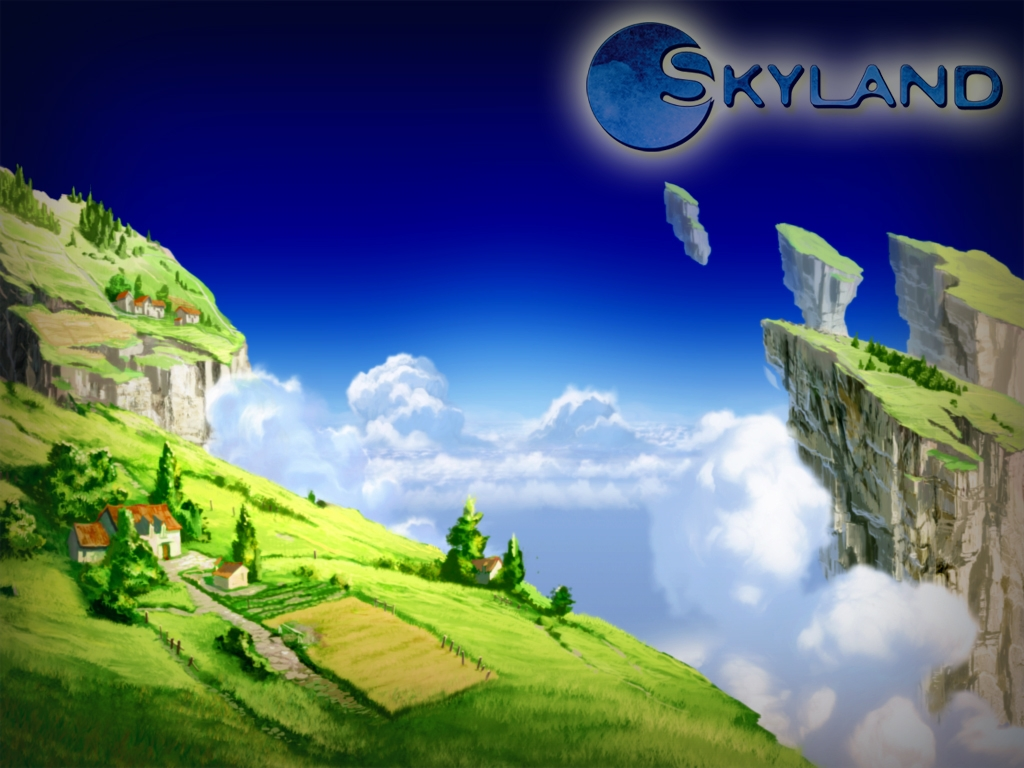
For NGE, the world couldn’t look more destroyed if it looked like the Earth from the mid-2000s’ series Skyland.

This show was one hell of a science fiction introduction to me.

Speaking of global catastrophe, take a close look at when the series debuted: October 1995, and Gainax and Tatsunoko Production licensed Anno’s brainchild to air for twenty-six episodes, the final one airing in March 1996. The mid-to-late 1990s was a halcyon era for when anxiety concerning Y2K was ripe. What would happen when we had to date our documents as 20XX instead of 19XX like we had for generations? What would become of the Internet? Would it live or lose its viability? Seems absurd to worry about this in 2026, but if you go back 30 years and played a slideshow of what the Internet would be in three decades, you might be unfavorably compared to Ted Kaczynski. Fears over the reach and influence of a brand-new technological advancement are a time-honored tradition–we behaved like this when books were being written and copied at a faster pace with the Gutenberg printing press, American slavers were about to wrestle with the question of the institution until Eli Whitney’s gin dashed that question away, the world wasn’t sure of the fate of horses once the automobile debuted and evolved, and in this day and age, creative types (myself included) ponder what will happen with artificial intelligence perfecting itself at a breakneck, Sonic the Hedgehog pace.

New tech is always gonna emerge and we’re never gonna stop looking at it with cautious curiosity. For Anno, his series is ripe for its time, even if the futuristic sci-fi elements fall into the trope of overimagining the 21st century. 20XX doesn’t automatically mean flying cars and The Jetsons overnight; that s[zip]t is gradual, incremental. So, Eva Units the size of miniature Chrysler Towers is the thing I call bulls[train siren]t on the most. Even with Angels that look like this.

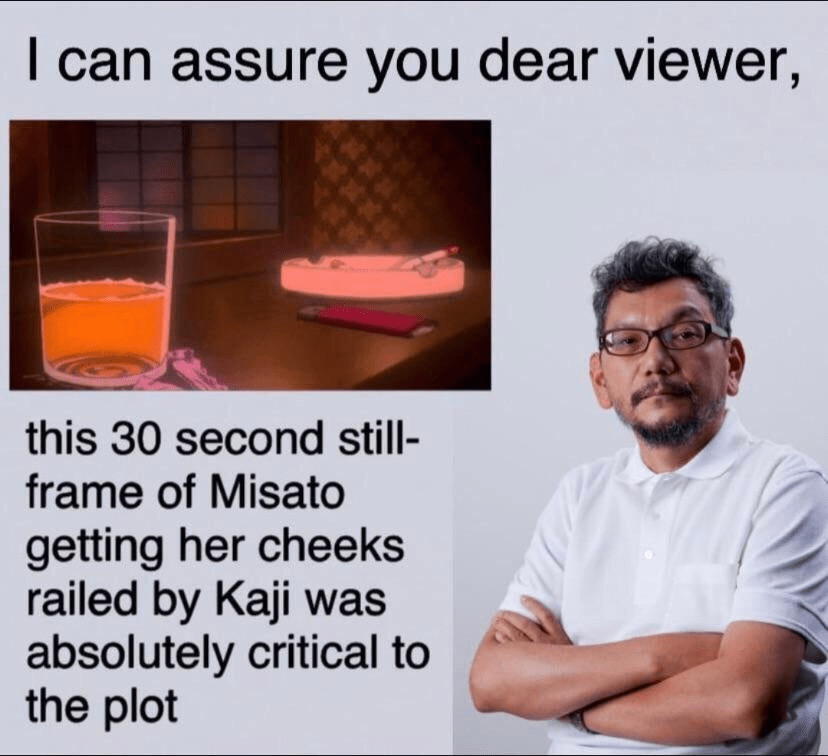
Still, this is Hideaki Anno’s brilliance in real-time so why judge a cook in the kitchen?

Ironically, this meme doesn’t spoil as much of the plot as it alludes to–just a single scene late anime.

The final piece in this Eva-shaped puzzle is the fanbase. 30 years strong and this franchise still has a dedicated fanbase memeing and taking the piss out of different story beats and characters, albeit crudely and perversely at times. A lot of them also spoil different parts of the plots of the anime, manga, movies, or the Rebuild series, so being in the know is a bit like being a part of the JoJo’s Bizarre Adventure fandom, but unlike JoJo’s, individual scenes can’t really be taken out of context, so there isn’t a chance to see the Evangelion equivalent of Tequila Joseph in the wild.

Countless memes and such have sprung from this series, and one of my favorites that’s used as a reaction image is this:

She has never seen such bulls[!NEIN!]t before.
For what it’s worth though, at least the fanbase realizes there’s more to the series than giant robots saving the world. As I said, there’s a lot more (a LOT more) to the franchise that I have yet to dive deeper into. My timeline may delay a few posts in the future depending on what’s in store for me, but once the schedule gets back to being boringly predictable, I may be able to squeeze the rest of the franchise in somewhere for review. For NGE the TV series and the movie End of Evangelion, both are on Netflix for paying customers and on every pirate site for ne’er-do-wells law-abiding internet denizens.

I wasn’t here.

Anime I’ve Watched

Equally a lot and not enough

Getting back to the end of year wrap up of content, I’ve definitely watched more anime this year in between my regular duties in the Army. A lot of what I’ve been watching this year has been stuff I’ve written about on this blog yonks ago, but also some new stuff that can (and probably should get) their own posts, but this being a speedrun like before I shipped out to Fort Lost in the Woods for training is gonna be a brief overview of some stuff I got a look at this year, but didn’t necessarily finish. I may add more to the watch times of these respectively and give them the reviews that they deserve, but I’m probably gonna do what I normally do and play it by ear. Here’s the anime lineup:

  1. Texhnolyze
  2. Ghost in the Shell: Stand Alone Complex
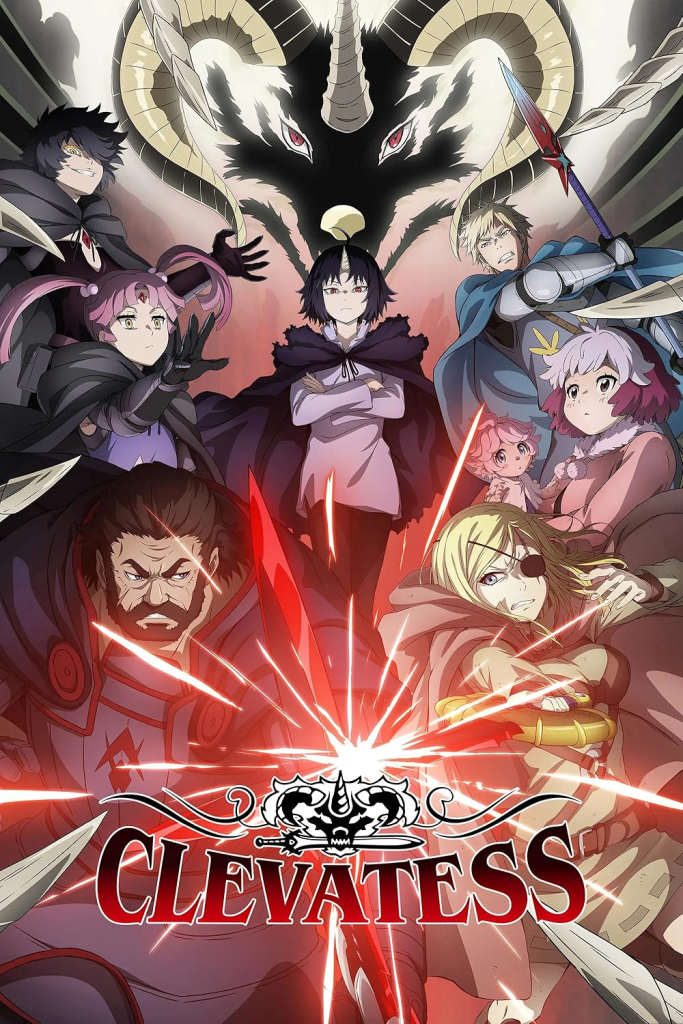
  3. Clevatess
  4. Frieren
  5. Neon Genesis Evangelion

With a bonus. If you were to ask me if it was anime, it falls under “Yesn’t.” It’s based off a manga and has an anime adaptation that is currently four seasons in, but it’s doing something different.

Normally, this doesn’t always work even with a Japanese cast, but the short version of my upcoming opinion is, “Yes, please.”

Now to the list, starting off with:

Story time: in the first half of advanced individual training to be a 25H commo troop, we had a student leadership, selected by the drill sergeants based on the presentation that the trainees gave during a Soldier of the Month board. For those who don’t know, these boards are a series of questions given to the soldier (or servicemember since every branch does this) to test their knowledge and proficiency on a given subject. They mainly boil down to memorization. The student leads we had at the time seem to have convinced the cadre to use Discord of all platforms to mass communicate important information. But the logic behind it is solid. Wish I were a fly on the wall to see how it unfolded.

I’ve long since left the Discord server, but I recall one of the chats had an anime recommendation chat and one of them had a link to a series called Texhnolyze. I saved it thinking I would get to it immediately and only recently did I start watching it. With a name like that (certainly a tough one to pronounce out loud since X and H don’t normally meet in English), coupled wit the fact that the YouTube channel associated with it is still up, it belongs to the shortlist of things I can search up and still find on YT intact, but with some series falling victim to this Death Note of a blog when I bring them up, sometimes it’s a matter of time or whether bad luck notifies the YT copyright system and takes it down. Thankfully, Taiho Shichauzo is still up, so I still have access to my buddy cop fun times.

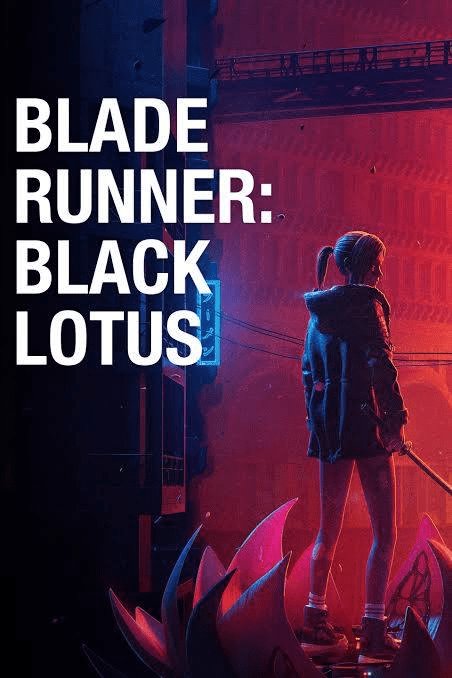
Calling Texhnolyze unique is only gently rubbing the surface, never mind a scratch. The description Google gives me reminds me of the Blade Runner: Black Lotus anime produced by Crunchyroll and distributed for weekly airing on Toonami in late 2021.

And now that I think about it, it makes me think of a bunch of other sci-fi, cyberpunk anime we’ve been getting over the years

There isn’t much to glean from just the first two episodes, but from what I recall, the society within features the protagonist, Ichise, a downtrodden prize fighter past his prime, losing his limbs and getting rebuilt $60 million man style. The setting is an underground city known as Lux, a crumbling city-state under which three main factions vie for power over what remains. Something, something, undesirable soldiers fighting for least desirable piece of real estate, only it’s not a base in the middle of a box canyon no one cares about.

I promise I’m not trying to be harsh here

Running from April 17 to September 25, 2003 for 22 episodes, I don’t wanna critique it based on originality considering a lot of my favorite things aren’t the most original or necessarily universally loved things in the world, but more with what came before, concurrently and after. Ghost in the Shell for instance debuted its manga in 1989 and has become a franchise ever since, with a 1995 movie (and 2008 redo with touchups); Neon Genesis Evangelion debuted in 1994 and has also spawned a franchise, spearheaded by Hideaki Anno who still leads the project to this day; and I had already mentioned Cyberpunk in this blog, so I’ll beat that horse when I have more to say.

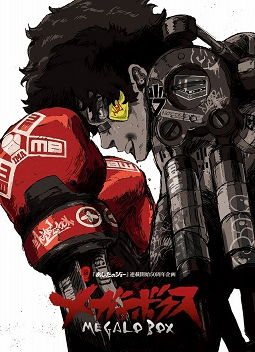
On its own merits, Texhnolyze seems to have a few things going for it, but merely falling into obscure reference, cult classic status. As a result, it’s up my alley. Let’s describe it a little: a future dystopia where humans have cybernetic enhancements to answer for physical shortfalls, battling between wide corruption and complicated power struggles. That’s vague enough to describe Texhnolyze and 2018’s Megalo Box, which interestingly looks like it was animated in 1997 and due to a bevy of legal hoops and hurdles wasn’t able to air until over 20 years later.

This series is said to pay homage to Ashita no Joe and Hajime no Ippo, but I suspect the animation team had at least one Texhnolyze fan onboard

The 22 episodes are still up for viewing as of this writing and I had saved the playlist in 2024 so I know where to go without having to close a pop-up ad every three seconds and so do you.

Channel: Parham

If the channel disappears, you know what I’m gonna say. And since I mentioned Ghost in the Shell earlier:

  • Major Kusanagi looks different from the 1995 movie here

This might be a bit harsher than I intend it to, given I’ve seen the movie at least three times and have had to retreat to Google-sama to get an understanding of what the hell it’s about. But in general, a cybernetic officer in a futuristic Tokyo is tasked with apprehending an entity who goes by the name of the Puppet Master, an advanced AI with the power to Worm and Trojan Horse itself into nearly any vulnerable computerized device to include humans with mechanical enhancements and this description alone may not do it justice.

The manga debuted in 1989, the movie in ’95, and Stand Alone Complex in 2002. It does raise a lot of biting, complicated questions over AI and technology’s advancement over time, though with my limited viewing of the series (four episodes on Tubi before Toonami snatched it back up after many years pimping it out to streaming services), while it scratches the itch I didn’t know I needed scratched, like Texhnolyze before it I’m only just getting started, but unlike Texhnolyze, it’s had decades to cook and it isn’t as straightforward as most other series of its caliber. The mangaka Masamune Shirow may not have realized what he’d unleash when he first put pen to manga panel, but with what it’s become ever since the movie, anyone getting into the franchise has a hell of a lot homework to do.

I’m going to be light on spoilers as I have a more in-depth review scheduled to be drafted and published in February, so until then I have more of it to watch. Take this as a light recommendation until then. Also, the content of this series and Serial Experiments Lain may reinforce Trunks’ biases against androids.

Channel: ImmaVegeta

Better get the boy an iPhone for Christmas

  • Fantasy world but the monster and the protagonist become an impromptu family

An interesting one that Crunchyroll was promoting at the time by letting you binge it in one sitting. I loathe binge-watching and forever hold the practice over Netflix’s shoulders, but I think for 2026, I’ll have to loosen that up a little. The series starts off with the protagonist’s party setting out to destroy a beast known as Clevatess, not knowing how royally f[clashing]ked they are until they all drop dead. Clevatess, the monster happens across a baby of noble birth that belonged to a royal family under threat from a rival kingdom and adopts the baby while also reviving one of the heroes to forever live as a zombie of sorts, but using many of the same principles that affected Bucciarati in the second half of Vento Aureo, sans the slow deterioration and lack of pain receptors.

If you’re curious what would drive a bloodthirsty beast to take on the role of a step-parent to an orphaned infant, well, the situation is equally a bet from the baby’s mother, and a test of humanity. Clevatess isn’t the only beast in the world; others like him are also out and about. The zombie female MC was among a group of 13 heroes sent to dispose of Clevatess and the rest, but ultimately struggled at the first hurdle. Following their demise, Clevatess was approached by the mortally wounded mother of the royal baby who had requested he spare humanity starting with the infant. If Clevatess could successfully raise the infant then humanity would be spared, but if not, then mass extinction imminent.

Some may draw unfavorable comparisons to Overlord, and I dispute that so heavily because the comparison is false. Yes, Clevatess and Momonga/Ainz adventure and aid with strict conditions, but Ainz is basically fantasy RPG Genghis Khan. Clevatess is a dark being hellbent on destruction. Even if the source material shows Clevatess leaning Overlord-like down the line, I’m not so certain I wanna give it the copycat flag just yet. Not for nothing, it flips a few tropes on their head where the bad guy becomes the caretaker, though I wonder just how old that trope is. These days, you can find it if you search hard enough, but looking for older examples is a struggle.

The manga debuted online in Japan on the LINE platform in the summer of 2020, so the anime was the only way I ever knew about it. Having said that though, for what it has going for it, it needs more episodes because 12 isn’t enough to give it the leg room it needs.

  • Elves don’t change like humans do

It kicked off in 2023 and had been memed all over the internet even to this day. The most prominent memes being, Ubel being a morally ambiguous mage with… lickable armpits… (ಠ_ಠ), Fern and Stark f[explosion!]k so much that Frieren could leave and come back to greet a litter of their children, and Frieren herself is a god-tier racist, on par with LowTierGod.

Demons beware

Admittedly the memes are far as hell in the animanga and I’m only a couple of episodes in. Aside from these three jokes, the plot is an after story. It’s a DnD campaign that wrapped and the heroes are getting used to peace after the evil entity had been defeated once and for all. Frieren the mage, Himmel the hero, Heiter, and others among the party all go on their separate ways while remaining friends. The one thing that gets to Frieren herself is her elven lifespan compared to that of humans. 50 years pass and Himmel is a frail old man while Frieren, due to her elven species, hasn’t aged a day.

This doesn’t bear on Frieren’s shoulders until Himmel passes away from old age and the elven mage regrets not having gotten to connect with him better. Over the course of the series, the characters, even in their new chapters in their lives, remember Himmel the hero by what he did and how he lived. Each person who remembers him has a lot to say and all of them are positive and uplifting. Of course, the heroes, having known him personally, have more personally ridiculous and intimate stories with him. This goes on throughout the series and Netflix currently has it in its line up so give it a watch if you don’t feel like pirating it. I’d talk more about what I’d observe, but in this instance, I think it’s better when you watch it for yourself.

  • Don’t make me ask twice! !GET IN THE ROBOT, SHINJI!

A staple in the mecha/gundam genre, NGE very much alludes to Christian mythos with the angels harkening to their biblically accurate appearances. There’s a lot to say about Evangelion, it’s movies, and the Rebuild sequel movie series, but this is another one I have slated for a 2026 review.

The main crux of the series is not “Wow, cool robot,” like most of its contemporaries. It’s a combination of peace of mind through acceptance of oneself and clever critique of the military use of children for dangerous experiments. Also the theme of personal loss in juxtaposition with self-acceptance. Roughly every character is fundamentally broken and the fact that much of the cast consists of 14-year-old mech suit pilots, Anno is a weird guy, alright, if this is the proof in the pudding.

What has people continuously talking about it for 30 years strong is the memes, of which there are many. You can have some of your favorites (my personal ones involving Asuka in some capacity), but the one thing to note is that unlike a lot of fandoms, I think the Eva fandom I’ve seen is one of the few to actually read its source material and understand it without issue. This puts it above some of the other series to air concurrently and down the line where the bombastic, earth-position-influencing combat is the sole or central focus of a series. It technically disguises itself as an allegory for depression through Christian mythology, but Hideaki Anno won’t admit that.

Like Frieren, it’s also on Netflix and so is the movie, End of Evanglion. I so far am wrapping up the anime, but I haven’t touched the movie yet. And speaking of movies:

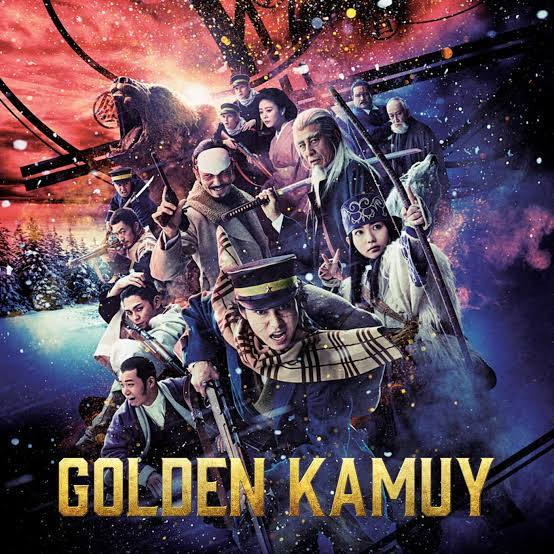
  • Even more Ainu cooking, but for real

So Satoru Noda began writing the manga in 2014 and the anime adaptation followed four years later. After that came this live action movie in 2024 and a continuation in a second season … Hmmm… The live action version of Golden Kamuy does well to capture the humorous elements of the manga while staying true to the practical elements. It isn’t 1:1 for obvious reasons but this was completely unexpected. A surprise to be sure but a welcome one. I had talked about Golden Kamuy before, so a run down of the salient points are everyone knows of the legend of the Ainu gold, the map to the treasure is tattooed on a group of eccentric Abashiri prisoners, and death is the only thing stopping everyone from using the gold for their own purposes. A race to near-infinite wealth of sorts…

Yeah, I went there.

I only give it high marks because I love the series so much, so as much as I recommend the movie and live-action series, consider that this part of the blog is a bit more subjective than normal since I consider myself part of the target audience for something like this.

Robot Girl War Mobile Game

A Brief Fling with Girls Frontline

At this point in time, I’ve got to propose a chicken and egg question about the origin of cute girls in dystopian fiction in East Asia. Whatever the case, there’s enough in the world to inspire such a setting for a mobile game. The one I’m referring to being Girls’ Frontline

Developed by MICA Team in 2016 in mainland China before spreading its wings overseas, Girls’ Frontline (Chinese name: 少女前线) is set in a distant future where the widespread integration of androids is commonplace in numerous walks of life from services to retail to even the military, more so than what we currently have in the world’s most developed militaries, so those drones have a human-looking face for once.

A devastating global war breaks out (probably even worse than nightmare scenarios of a WWIII) and these androids in the shape of cute girls are repurposed en masse to make up for the military shortfall. They’re designed and programmed in a way to effectively and efficiently handle specific firearms and their classifications, whatever those classifications may be. Outsiders, welcome to the wacky world of North American gun laws (because Canada does weird s[bang!]t with their guns too). For instance an android, called a T-Doll, that’s specifically designed for the M16A2 will only operate the M16A2. Modifications can be made to get them to adopt other rifles of a similar platform, though this requires some amount of recalibration beyond what can be expected for the military use of automatons.

Whatever you’ve conceptualized as an android, it’s a different beast being depicted here. They’re machines to the core, yes, but they’re not exactly soulless or anything. It’s not like there are military formations of androids with Android 16’s personality. That’d make for a boring game.

They’re programmed with their own personalities. Some are charming, others are sweet, a third category is more varied with the typical animanga tropes like -dere types, and the rest you can fill in the blanks of this Mad Lib if you’d like. I wonder if the different depictions of robots in the east and west can be counted as a culture clash. With only a few exceptions, most western stories view robots as a menace compared to East Asia where they fit right in with society. As for the plot, well, it’s got the foundation of the wider lore of the Terminator franchise, in that advanced AI goes rogue and after a catastrophe reduces the human population to near-extinction by the early 2060s.

The offending AI in question is called Sangvis Ferri (SF) and starts terrorizing what’s left of mankind and setting up human-free areas. The unaffected androids are contracted by a private military company called Griffin & Kryuger (G&K) to stop the reign of terror, reduce SF’s numbers and destroy them. So this belongs in the rare category where androids are more complicated than originally presented.

Looking back, both sides can be viewed for the general use of androids for military purposes and it can be seen as a distinction without a difference, which it is on the surface. Digging into the nuance reveals what G&K does differently with their own T-Dolls: saving humanity. Thus morphing from distinction to false dichotomy.

Now, my memories with the game were during the Spring and Summer of 2022 and a bit in 2023 before interest died off. It was during the time when I was trying to join the Army and the recruiter I was directed to at the time kept dragging his heels. Or I wasn’t being proactive — either way, I invite someone to tell me why there’s a two-year wait for Glossary Non-Prior Service types. But I digress.

The best way to describe the gameplay is a hybrid of “deploy unit to achieve task” and “move and reposition unit to impact effectiveness.” The same system I recall being used in Assassin’s Creed: Black Flag where Edward can deploy ships to specific parts of the world to lessen the danger levels and make use of established trading ports, like a real pirate.

The gacha-ness of the games comes from spending points to unlock more T-Dolls which can be upgraded individually or used to upgrade existing dolls. For instance, if I have one who uses a MAC-10 and get another MAC-10 doll, I can keep on building the older one and eventually build the second, newer one. Or I can cannibalize the newer one for parts for the first one. There’s not exactly a wrong way to go about this provided it’s the same type of doll being used for the upgrade. An MP-40 doll doesn’t have parts compatible with a Mosin-Nagant doll and etc.

Sounds like a neat experience, right? Well, remember when I wrote about You’re Under Arrest/Taiho Shichauzo? The Buddy Cop anime series from the mid-1990s and it’s revitalization as a meme? Specifically this one:

Channe: Vinicius Costa

Meme tourism is a hit or miss for me. It can introduce people to a series that may not have the same marketing as something else more popular or it can backfire and drive people away or bring in the wrong types of people. JoJo fans get a bad rap for being obnoxious if you ever scroll down the comments of a song or artist referenced in the series.

The way I found out about Girls’ Frontline was through a different video. Moonshine Animations’ stop-motion toy review of a figure of one of the characters: UMP9.

Channel: MOONSHINE ANIMATIONS

In the video itself, Moonshine contacted a voice actor on Twitter to voice the character in Japanese as a gag. Having dabbled in stop-motion before, I was pulled in by the presentation and after doing more research on the game downloaded it myself. I was doing rather well at the time making it to the second chapter, but ultimately the game bent me over and painted my ass creamy white. It defeated me and made me feel like a whore wearing thick tooth floss while doing so. Gacha games have a drawback for repetitive gameplay and grinding for those who can’t fork over cash to advance. (Still more honest than EA’s bulls[ka-ching]t lootboxes and Konami’s pachinko machines, I guess.) And Girls’ Frontline is no different.

Multiple attempts to get past a level had me repeatedly grinding earlier levels to get more tokens to progress and upgrade, though doing so meant waiting literally minutes to hours to get anywhere. I don’t remember if it had a system to use real money, but it was at a time where I also wasn’t making any money of any kind, so putting a few bucks on the game at the time wasn’t an option for me. These days, the most I’ve done was drop a few bucks on monochromes for Zenless Zone Zero because I have a MIGHTY NEED to get the shark maid.

No! Miss Ellen! You can’t give up now! You’ve got to have pride in yourself!!

— Vegeta Corin Wickes

Perhaps I’m showing my bias or whatever but MICA Team’s first installment in this franchise left a boot print in my ass and I haven’t looked back. Until I learned that it had an anime adaptation. In the case of media franchises Girls’ Frontline has a leg up on, say, Touhou Project or Idolmaster in terms of foreign accessibility, and my experiences are unique. Should you choose to engage in the mobile game, I’d better hope you have a better strategy than simply press buttons and whatnot. As for the anime, there’s better series and there’s worse series. Make of that what you will.

Credit: hitsukuya

That Time I Sped-ran the Terminator Movies

And developed a skepticism of A.I.

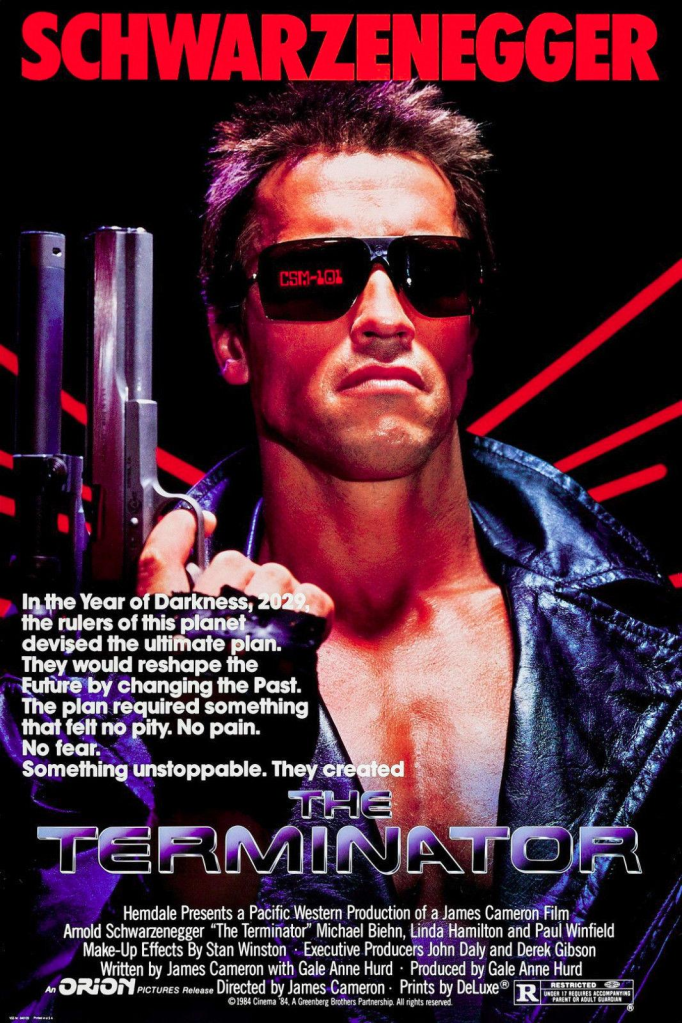
Regular viewers will know that in the animanga space, I’m fairly okay with keeping up with series, especially when they merchandise and franchise out like Naruto or Dragon Ball. In the west, however, this gets trickier and more challenging for a number of reasons. Reboots/remakes/retcons, etc., screw with canon so much that it starts to look like a hentai doujin with some of the most accursed tags. Franchising itself, I highlighted just now, but it’s not always done neatly or with a solid plan. For example, Star Wars is the champion and great-grandfather of all references. People are insane enough to catalog every single reference to George Lucas’ brainchild, but what makes this an insane task specifically for this franchise is George Lucas getting in the way of his own vision by constantly remaking everything. Creatives tend to be this way, as I would know, but I’d probably not be this uptight about my own projects.

There are a few series whose franchises I’ve followed with full or near-consistency to say that I approach expert level knowledge. Those three are Deadpool, the reboot Planet of the Apes trilogy, and the topic of this post, Terminator. But while Merc with a Mouth and Upright Apes were more gradual, I started to follow the Terminator franchise more closely around 2014.

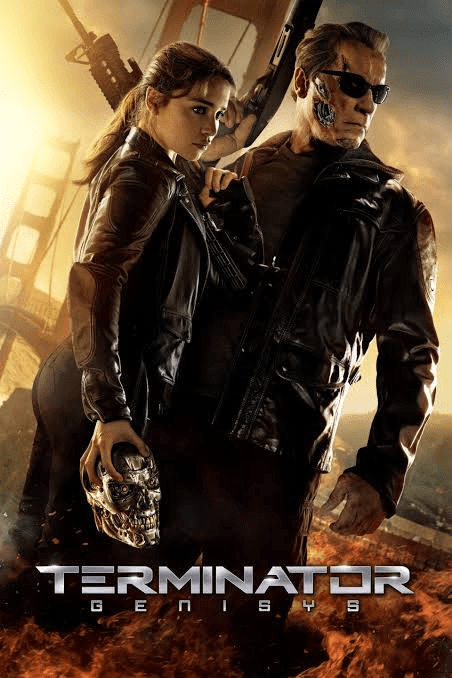
I don’t recall specifically what brought this on, but I think it might have been a rumor of sorts of an upcoming movie at the time, the fifth one in the franchise and on reflection one of the least warmly received sequels probably since 2009’s Salvation, Terminator: Genisys.

If I was a cynical asshole, I’d probably write up a snarky review about how the franchise only exists because Arnold made it so in the 1980s, his absence in Salvation proves that he was the adhesive holding it all together, and his return in this one is both a proof of concept while also reminding us that glue eventually ages too. Both harsh and what it would look like if not written by a fan but a critic looking to get paid for every character in their document. But I’m vaulting over the USS Theodore Roosevelt on this one.

The sudden confirmation of another movie made me want to play catch-ups, hold the mustard, on the franchise and I did so in an era prior to my current methods of pirating. Pre-adpocalypse, YouTube let you get away with nearly anything visual media-wise though some artists’ estates and family were hook-deep into the copyright claim booth (or I’d remember being able to listen to Jimi Hendrix’s Little Wing at the time), but my first way to look into the franchise was on YouTube, right next to a now deleted channel that had the full length version of Saving Private Ryan. It’s still possible even now to find channels daring to upload full- or seemingly full-length versions of the original 1984 movie, but be careful. Sometimes editing tricks are used to get past the censorship and burn away minutes of your life.

Terminator 2: Judgment Day couldn’t be found on YouTube so I went to a now-defunct torrenting site to watch it. The fate of that site is one shared by several, taken down in a global effort to crack down on piracy. Did it lead to arrests? I didn’t care honestly. Watching movies without spending the pennies to do so was still a challenge for me personally, but I kept trying. I did it with 300 and would nonetheless keep doing it until I discovered services like Tubi and was able to pay for Netflix.

Then of course there was Terminator 3: Rise of the Machines which came out when I was about 4 years old. So technically, this was my introduction to the series, considering I watched it at a babysitter’s house at the time. Rewatching it at 16 and comparing it to the last two films, it was a decent addition to the series as a whole, but not as good as 1 or Judgment Day.

All things considered, I think the third film is looked on two harshly. Dark Fate tried to rewrite it starting here and personally I don’t think Rise of the Machines deserved that. Salvation, however…

I’m exaggerating, but if I had to use a metaphor, if Terminators 1 and 2 were the exciting points, 3 is the midpoint before Salvation starts going down hill, and gradually. I admit that I’m a bit biased here largely because I was watching them all in rapid succession in the lead up to Genisys. Hell, I’d caught up to all the movies long before it was ready for a theatrical release and by the time it released, I once again relied on the dark powers of piracy.

I saw it the following year when I was 17. I don’t remember the trailers spoiling it for me as much, but putting the major plot points, twist included, is almost never a good sign. But I pushed on through and to recap all the movies (spoilers, but it shouldn’t matter anymore):

  1. Terminator 1: cyborg is sent back to kill the mother of the resistance. The resistance has the same idea and sends an agent back to save the mother (and also father the leader of the resistance)
  2. Terminator 2: cyborg is captured and reprogrammed by the resistance to save the leader as a child when the same thing is tried again with an even deadlier model. Mom is also there, in an asylum, “why are you booing me, I’m right” style.
  3. Terminator 3: leader of the resistance afflicted with trauma at the killer cyborgs trying to kill him all his life, another one is his guardian and they try to destroy SkyNet at the source. Love story subplot, chased by Terminatrix, Terminatrix fails, but SkyNet lives on in backup hard drives (I can’t remember it that well)
  4. Terminator 4: full-blown war, leader of resistance sees to combat meanwhile death row inmate is lethal injectioned and transformed unknowingly into a cyborg to get close to the leader but deviates from its mission purpose, leader almost dies but the deviant cyborg/ex-death row inmate saves him at the eleventh hour, SkyNet is disturbingly patient
  5. Terminator 5: resistance ongoing, SkyNet’s next trick is to kill the leader and make a cyborg of him, meanwhile father of the resistance goes back to 1984 as usual (fanservice detected) to find that the timeline’s been f[dial-up modem]ked very thoroughly, they go back to the present (2017) to fight with better weaponry (I think), the Golden Gate Bridge falls for the millionth time in history (it happens a lot in action movies for some reason), cyborg leader of the resistance is defeated, SkyNet still operates…

…and thus was born an effort to rewrite the damn movies. Or at least that’s what the media thought at the time. Dark Fate was the franchise’s last ditch effort at recapturing the magic and to do the third movie justice since it doesn’t fit as neatly into canon as one would’ve hoped pre-release, but the efforts were in vain.

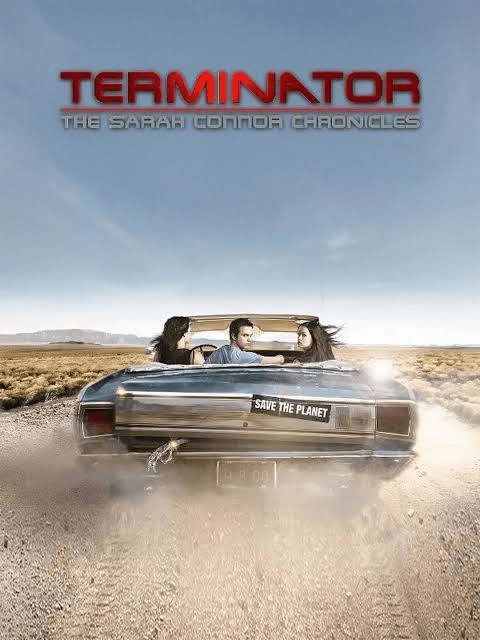
As a fan of the series, Genisys was the let-down that keeps on letting down. It started out well but the grave got so deep, Satan needed to come up and tell the funeral directors that that’s not how grave digging works. I don’t wanna be harsh on the Terminator franchise, the concept does still play on a lot of fears and anxieties, many of which are becoming true 40 years later, but to see where it is now is disappointing. The only thing I have to show for it now is an uncanny apprehension for anything A.I. It took me longer than normal to even try using chatbots and I treat them like Wikipedia or r/AskReddit most of the time. I guess I’m just still testing it. For what it’s worth, if you’re going to go into the franchise yourself, watch the first 3 movies and then maybe go watch the Sarah Connor Chronicles TV series.

And then finish it off with the R-rated uncut version of Robocop 1 and 2 for more sci-fi action gore.

Apes Retaking the Earth for the Fourth Time: Civilization Edition

Like an ape-themed Crusader Kings

Before I start, I meant to have something out at least by Friday, but I delayed it because I had recently graduated from AIT on Fort Eisenhower and took ten days of leave to relax and unwind from the grind. I was enjoying the vacation. It also would’ve been close to when my leave would end so it would’ve cut into time I needed to repack and organize all of my s[drum roll]t. Couple that with jet lag that comes with a six-hour flight from Baltimore to El Paso and adjusting to a new climate and time zone, and I was in no shape to write anything. I’m back now and ready to get back in the groove, though like AIT, now that I’m part of the big Army, time could be taken away from me at the drop of a hat, so if nothing is out by Friday or Saturday, that’ll be the reason for it. Now the post!

This one had been a long time coming, personally. My exposure to the Planet of the Apes franchise was all the way back in 2011 when older family members took me to the movies to see Rise of the Planet of the Apes. At the time, I never realized it was the second reboot in a film franchise that began all the way back in 1968 with Charlton Heston as the star, which in turn was borne from a French sci-fi novel that was published five years prior in 1963.

Bet you didn’t know it was a book first, did ya?

Those in my family who took me were definitely old enough to remember the Charlton Heston movies, and it wasn’t until 2014’s Dawn (that I believe I pirated back then) that I had heard more about the franchise, particularly from James Rolfe of Cinemassacre and Angry Video Game Nerd fame that I learned that the franchise goes back five decades. Here’s the video:

Credit: Cinemassacre

Admittedly, he’s made more videos about the Planet of the Apes franchise, including a 2017 review of War (also linked here), so if you want more of his opinions on the franchise check out the channel and search for Planet of the Apes.

Hell, without meaning to I’ve done a lot of research on the franchise from the lightning in a bottle performance of Charlton Heston–regularly parodied for years on end–to the franchise’s worst fears manifest in the 2001 reboot starring Marky Mark and the Accursed Bunch, which I believe prompted the 2011 reboot trilogy. The premise is definitely an interesting one and a long-lasting one considering all the movies. Wonder how much a box set would cost of all of them?

The original ended with Heston’s character realizing that apes and humanity have reversed their roles and he didn’t find out until he came back to earth from a rocket ship. Spoiler? Honestly, not necessary. Like I said, the ending of the movie had been parodied to death ever since, so I hesitate to label it as such. Don’t let that stop you from checking out the original if you’d like to see where the franchise got its bearings.

I personally never saw the original films or the Mark Wahlberg reboot, all I know was that it was put to rest in the ’70s after one or two failures (someone with more knowledge will correct me if that’s not the case), and the 2001 reboot was so bad that whatever plans there were for a sequel were shelved permanently until the next decade, which brings us to the new more successful trilogy.

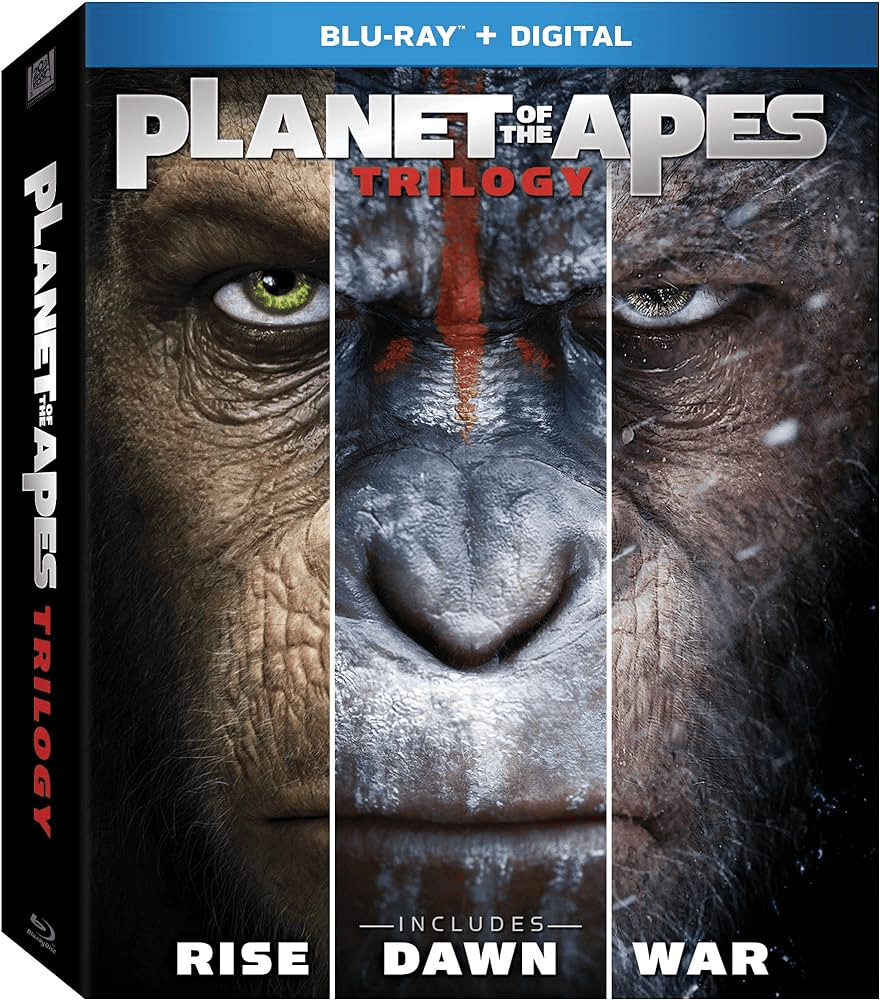
It isn’t everyday that a trilogy produces installments better than the last, but if the Rotten Tomatoes scores are still worth anything then the reboot trilogy got better and better with each installment. To catch you up to speed, Rise establishes the beginning of the ape revolution, dawn shows the tensions between humanity and apes, and war shows the culmination of peace talks broken down by a failure to communicate, ironic for the apes since they’ve evolved past the need for communication through sign language–and fitting for humanity since the simian flu in lore robs them of their ability to communicate through anything other than sign language.

Seven years later, 2024 brings us Kingdom of the Planet of the Apes, and much has definitely passed since we last saw any of the apes. Generations after the reign of Caesar, the apes who have long taken over as the dominant species on earth, have fallen into the same trap that plagues humanity even today: tribalism. Different clans of ape with their own philosophies, religion, societies, etc. have popped up, each accusing the other of being different or wrong and in need of fixing.

Almost reminds me of a certain lesson taught to us by a revolutionary known as Huey Freeman.

The different clans within the film all have their own sets of rules, some militaristic, some religious, and a bunch of others that we don’t see directly, but can be implied to be elsewhere in the world. One such clan is that whose traditions center around taming and training birds of prey, namely eagles. The protagonist who belongs to this clan is named Noa, and part of a bonding ritual in his clan involves taking an egg from a nest at a high peak and returning it unscathed to the clan.

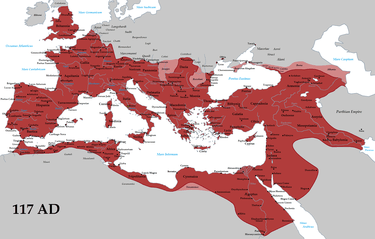
His clan is attacked by “followers” of Caesar who bring him to the main villain of the film, Proximus Caesar, an ape with a Julius Caesar complex the size of the Roman Empire at its peak.

One ape, Raka, whose clan had done research and catalogued Caesar’s teachings, explains that these so-called followers have a distorted view of Caesar. Not their fault since his struggle couldn’t be written down and chronicled, but the central focus of Caesar’s struggle had been lost to time. Raka tells Noa that Caesar’s core teaching was “apes together, strong,” an important scene you may remember from Rise when Maurice asked why he gave a cookie to Rocket, one of the more combative apes in custody.

Seeing as the apes are divided by clans like early humans were (and modern humans still are), that lesson had been forgotten. Raka also tells Noa of humanity’s many accomplishments prior to the global world-ending virus; Proximus is also aware of these now antiquated human achievements and inventions, but the tone of voice separates their characters. Raka boasted of humanity’s achievements on the mission to tie the world together while Proximus boasted of humanity’s achievements on the mission to keep the world divided.

Like a warlord, Proximus is dead set on getting humanity’s warfare capabilities, locked behind a giant vault. Throughout the movie, Noa’s character is drip-fed to the audience. Unlike Caesar who was a diplomatic figure with the charisma and courage to sway even the most violent of apes, Noa isn’t a particularly violent character. He’s a soft-spoken, pacifistic character who resorts to violence as an absolute last resort. He uses his words more so than his paws, but it’s not like he doesn’t have flaws of his own.

The state of the world being what it is in the franchise, most apes are lucky if they lay eyes on a wild human. When Noa does see a human, he’s not the most trusting, likely a product of how he grew up. But with Raka acting as a more knowledgeable foil to the young, ignorant but still growing Noa, he learns more about humans from him than even his elders knew, which shows how much knowledge of the old world is lost. In comparison, archeological sites in recent history have rewritten what we thought we knew about early settlements and civilization, like the eastern Turkish structure Göbekli Tepe, said to be older than the first civilization estimated to have been built between 9600 and 8200 BCE. Archeologists are still learning about it as we speak.

“Ape-themed Crusader Kings” is a bit of a joke, but there’s some truth to it. It’s not unheard of for media to look to mythology or religion as a source of inspiration, several video games have become famous for it. In this case, the way Noa is written appears to be Christlike, which may set him up for such a role in the future in this series, provided there is a sequel to Kingdom. Going by audience and critical reception, it looks like there will be and I think there’s going to be a theme in the titles. This successor is called Kingdom and there’s a bunch of early Christian and even ancient Roman themes within the film. Rome itself began with a kingdom, established a republic and then built an empire before it split and the west fell to ruin. My guess for a sequel would probably something along the lines of Republic of the Planet of the Apes, followed by Empire of the Planet of the Apes, just to keep the theme going.

Of course, this is subject to change and whatever’s cooking in the writers’ minds may or may not line up with what I’m thinking of, but as it stands, Kingdom is a welcome addition to the Apes franchise (don’t let the naysayers bray at you like the donkey-headed homunculi they are). I saw it on a streaming service recently, and if you have the means to do so, be sure to sign up and stream it in your own time whenever you’d like, or if you’re a physical media enjoyer, A. based, and B. wait for a DVD release so you can watch it whenever you’d like. Its an age-old franchise with a hell of a lot of lore and history to uncover. Have fun!

Date A Live: On a Whim Again

The life I live is watching anime with friends…

…and I can’t wait to do it on a whim again. I’m not apologizing for that Willie Nelson reference.

Date A Live honestly needs no introduction. It’s a series that I’d heard of for a couple years prior to actually watching it only to hear of a fourth season planned last year while I was already six episodes into the series.

It began life as a light novel with a run from March 2011 to March 2020, exactly nine years of writing from author Koshi Tachibana. A sci-fi fantasy romcom whose anime adaptation was released in 2013 and whose fifth season debuted in April of this year. Funny that light novels from the last decade are going strong in the 2020s.

So what’s Date A Live really about? Breaking it down by its genres, the sci-fi aspect comes from the world itself. It’s somewhat set in the future though no specifics are given so you the reader/viewer may fill in the blanks how you see fit. Spatial quakes or tremors in the solar system start affecting earth in a very negative manner, by way of leaving behind giant craters in the earth, one of the most notable being somewhere along the Eurasian steppe. Bad day to be wandering around Kazakhstan that day.

The in-universe explanation for this is that the space tremors follow the arrival of beings known as Spirits who all appear in the form of girls around the same age as the main character, Shido Itsuka–and protagonist powers aside he does have a crucial role that I’ll get to later.

Further, these Spirits possess abnormal powers, not the least of which involves the likes superhuman strength and devastating abilities the likes of which would make Babidi from Dragon Ball very, very jealous–and also ties in with the fantasy aspect of the series. There are two ways to combat these Spirits: one is by way of actual combat; and the other adds in the romance aspect and our main protagonist, Shido Itsuka.

Now that we’re putting two and two to get to four, you may have predicted that Shido’s task in this series is to romance the Spirits and prevent utter bedlam with the power of love, and you’d be right. The harem aspect is well advertised and if you know a few things about the harem genre in animanga, then you’re probably also aware of the main selling point: fanservice. Flash a boob once or twice, get some cheeky panty shots in, throw in an accidental pervert with multiple different -dere types and voila! you’re cooking a mean beef stew.

However, what I think separates Date A Live from contemporaries of this type would have to be the individual girls themselves. Even as I’ve only just wrapped up the second season of the anime, I’m seeing more than just comedically sexy eye candy. And I’ll even throw a bone to Shido himself. Rather than be just the generic harem protagonist who behaves as a stand-in for the audience, there is a personality to the boy for once. He’s shown to be persuasive and caring, especially since his position in the series is that of nonviolence. He’s basically playing the pacifist route in Undertale.

Meanwhile, the other main adversary present aside from rogue Spirits yet to be wooed by our hunk Shido is the Anti-Spirit Team. Similar to Japanese Special Forces, their purpose is to find and contain the damage the Spirits cause, a lot of the time through lethal force.

Then there’s the girls that Shido romances to the good, less destructive side. A lot of the time they fit well into the typical archetypes we’ve seen in other romance anime, but the backstories and personalities do make them intriguing. Some of them do genuinely want to live quietly and comfortably with Shido, but others answer the question “Violence?” with an enthusiastic “Yes!” Case in point: one of the most iconic characters in the series:

You can’t fix her, nor will she fix you or even try to make you worse. She’ll just leave a massive stain where you standing three seconds ago.

The series explains that the Spirits themselves come from different dimensions, but (minor spoiler) it’s possible for a human from this dimension to become a Spirit as well as what happened to some of the characters in the series. The AST is another display of the sci-fi within the series. With the Spirits being what they are–superpowered high school girls–the members of this elite team have to take the “fight fire with fire” approach to combating them with hi-tech battle suits. Not on par with what has been depicted all over the Gundam genre, but impressive all the same. It’s more like stripped down Iron Man armor in appearance.

Depending on your investment in the series overall and how you feel about the genres explained, you might get a kick out of it, or it might just be another harem series to add to the pile. Neither of these assessments are right or wrong, but it shows that it’s a product of its time. Does that mean the series hasn’t aged well? No. As I said, I got into it weeks before a fourth season was greenlit, not to mention a fifth season debuted a few months ago which suggests a determination to see it through to the end.

I know I’m not the first person to talk about this series and I will not be the last to do so. What I can do is simply point you in the direction of the series and however you choose to consume it. If possible for you, I say finish all five seasons of the anime and while you’re waiting on confirmation of a sixth, beat them to the punch with the light novels.

Before I sign off, since there’s a certain demographic that loves the type of character that I put further above, I feel the video below best describes that mindset:

Channel: Gianni Matragano

But hey, I like kickass ladies too.

For Saturday, June 8, 2024, I recommend the YouTube channel Christopher Chaos.

https://www.youtube.com/@christopherchaos/videos

Run by a retired Army Sergeant and Motor Transport Operator (Military Truck Driver), Christopher Chaos is a military explanation channel dedicated to detailing the possibilities and benefits that come with enlisting in the Army along with the occasional anecdote about his own personal service. Each servicemember’s/veteran’s story is unique due to how big the U.S. military is and how fast changes can be made while serving. Christopher himself explains that he served from 1999 to 2010, so most of his stories show the culture of the Army during his service. That being said, he does still keep up with Army and military news for the purpose of educating would-be recruit candidates.

And if you’re concerned about it, he’s not endorsed or sponsored by the U.S. Army. That chapter in his life is behind him.

Dystopian Fiction

And now for something completely different

Before we start, I’ll say that I meant to have something up either by Friday evening or sometime yesterday, but I missed it because I was tired after work and yesterday there was a local comic con in town that me and some friends wanted to attend. Also the two topics I had lined up for coverage–a review of the Undead Unluck anime adaptation, and a chronicling of the reboot Planet of the Apes series–would require me to both finish the anime, and to at least see the new Kingdom of the Planet of the Apes movie. The first of those can be done more easily than the second since while in TRADOC (Training and Doctrine Command) if you go off post, you need to be with at least two more people, and I haven’t found anyone to go with yet. So my thoughts on the anime adaptation will come later, and my series review of the Apes movies will also come later. Back to the topic.

I’ve gotta be honest and say that I had forgotten why I put this up as one of the many topics to blog about. As much as I like sci-fi, the dystopian side of things isn’t something I actively seek out on purpose. Often, what I find just so happens to have dystopian elements in the plot. This might’ve been on my mind at the same time as the Civil War movie back in April. I haven’t seen that movie myself yet, but based on what I’ve heard from people like Brandon Herrera, there seemed to be a lot of build up with little pay off. That, or everyone was expecting the same kind of hullabaloo that came with the political landscape of releasing a movie like this during an election year, and most people’s expectations weren’t in line with what the movie had in store. If I see the movie, I may share what I saw.

Jesse Plemons’ appearance in the trailer certainly added to the hype until release.

Anyway, I’d say that for me, the appeal of dystopian sci-fi comes from an added appeal to the fantasy, as in a lot can be done even with this one specific filter. It could be and often is a world similar to ours but with a few new rules that make it a darker and bleaker place. Think of Fahrenheit 451 by Ray Bradbury. The theme of this world is that of suppressing dissent. One way to go about this is burning books. All of them. It’s illegal in this world to even own a book let alone read it, so firemen are employed to do the opposite of what we know firemen in the real world do: light the books on fire. But with all the calls to burn the books, it can only mean that there’s a resistance of some kind to this draconian law and sure enough there is. An underground society of sorts that serves as a gathering of rebellious readers, sort of like a book club in tacit defiance of the Gestapo-like firemen.

As we can see from the book and its movie adaptation, the world is not dissimilar from ours except reading and literature are criminal acts where the offender is disappeared while their illegal library goes up in flames. In this case specifically, it calls back to the pre-war Nazi German laws where anything critical to national socialism was up for a mass purging, writings included. Of course, knowing Nazi Germany, this boiled down to anything perceived to be penned or endorsed by their enemies, namely communists and Jews.

Based on that example, the dystopian genre can also provide some social commentary on the real world, and it doesn’t necessarily have to take itself seriously. Comedic examples like Futurama, select episodes of South Park, or even certain skits in Robot Chicken do a lot to make a commentary on the real world, often through speculative warnings. And the operative word here is “speculative.” In my research for this blog, I found that utopia and dystopia normally go hand in hand, often as a response to one another and from my perspective either of them can and do address the issue of logical fallacies, namely slippery slopes and depending on the writing and phrasing tu quoque and/or middle ground fallacy; slippery slope since the more pessimistic of the two can be argued that X will happen if blank is allowed, tu quoque since either side can argue convincingly that the other is behaving naively and unethically, and middle ground since a third party can attest that the most ideal solution lies the furthest away from the two extremes and unlike the extremes, the middle ground attestation isn’t under the same expectation to provide supporting arguments.

Sounds familiar, right?

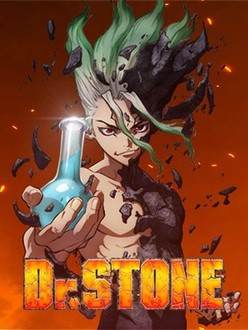
Well, like real-world politics, utopia/dystopia and everything under that umbrella can come in many different forms. As such, there’s a lot of elbow room over what a work of fiction can look like and/or talk about. Tell me your favorite examples. Mine has to be the beginning chapters of the Dr. Stone manga. Shortly after awakening, Senku, Taiju, and Tsukasa all agree to harness the titular anti-petrifying agent to awaken humanity and reclaim the Earth from that evil queen we call nature, but the conflict arises over who to revive. Senku chooses all of humanity should be revived no matter what, but Tsukasa disagrees, citing the existence of bastards and monsters in this world, many of them bitter geriatrics that we could do without and essentially starts off as an antagonist reviving a handful of warriors he believes are incorruptible while Senku, Taiju, and later Yuzuriha continue on without Tsukasa’s might and brute strength.

The question dealt with here in the beginning is that of morals. Both the antagonist and protagonist in this arc accuse the other of being nonsensical and provide compelling arguments for this case.

The manga obviously follows the protagonist who won out and eventually recruited Tsukasa to his side, save for several dissenters spouting his original tenets for the next arc or so, but if the manga was more Seinen instead of Shonen, we probably might see the perspectives of both sides or even a third side emerge, though depending on who you ask a third side already exists and its called the legal system.

Joking aside, since I’m already a fan of sci-fi and more specifically the alternate history side of things (See: my recommendations for Alternate History Hub and Monsieur Z/Dean Mosley), the dystopian side of things has its appeal for me for a lot of the reasons listed, offering interesting stories and scenarios to explore.

And since the subject is on dystopian fiction, I offer these novels as my personal recommendations:

Stand on Zanzibar (1968) by John Brunner

A Clockwork Orange (1962) by Anthony Burgess

Anything by Mary Shelley (1797-1851) (I’d be more specific, but there are too many examples to choose just one, though I do encourage looking beyond Frankenstein)

A Scanner Darkly (1977) by Philip K. Dick

Planet of the Apes (US)/Monkey Planet (UK) (1963) by Pierre Boulle