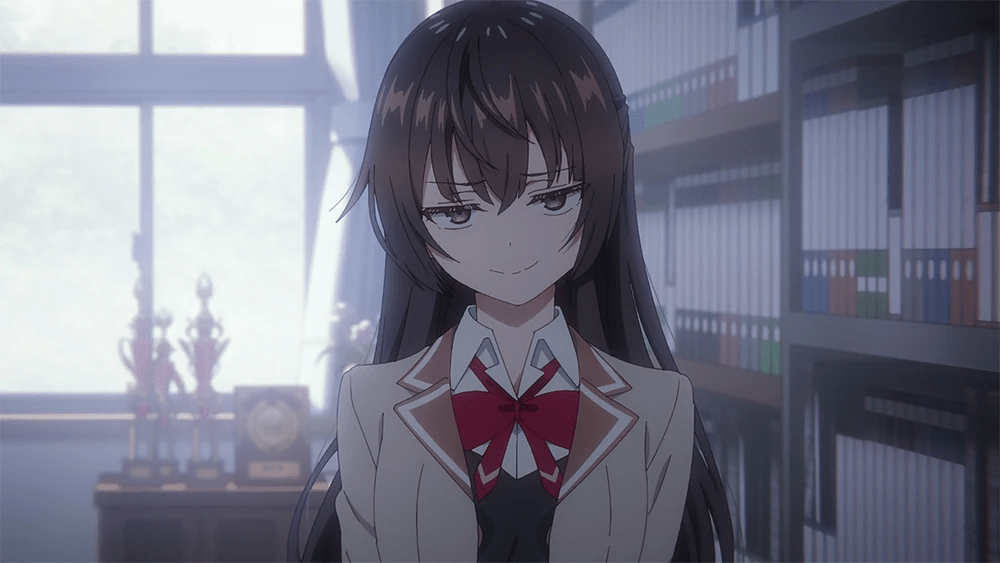
The Shy Shark-toothed High School Tomboy with Resting Bitch Face

That… could’ve been shorter

Stop me if this sounds familiar in, not just animanga, but in media on the whole. A short guy way in over his head takes chances with the taller, at times stoic or stoic-presenting girl. By way of his bumbling charm, he wears her down and she agrees to one date. Turns out shortman is a charmer beyond all and the two are an item. Maybe they have a family and live on a tropical island with a talking turtle.
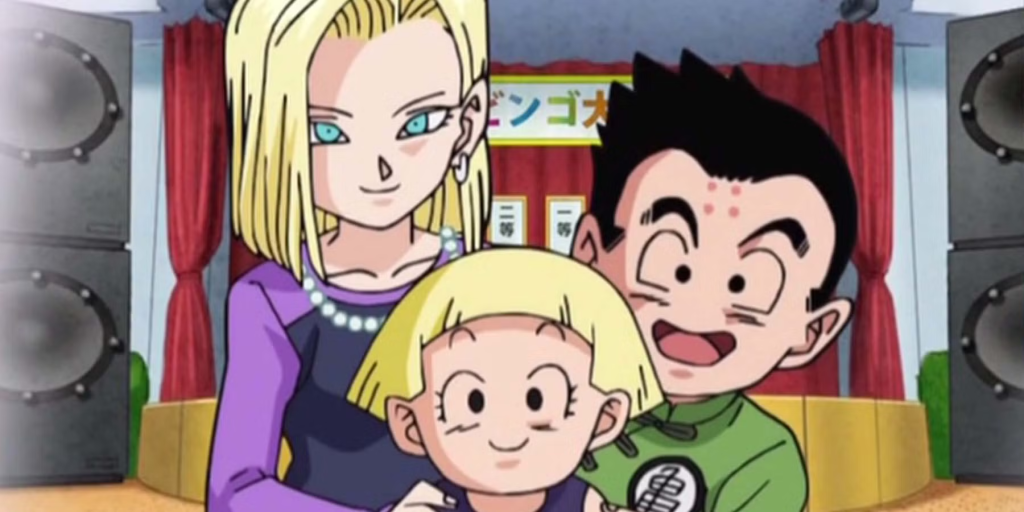
Admittedly, she made the first move, but Krillin won out in the end, so why split the hairs that Krillin has now been able to grow out?

Even if you weren’t thinking about a specific pairing, you may have seen it enough times to consider its frequency in media. I definitely have… if only just now. There’s quite a few of these in the trope that come to mind right now

  • Fix-it Felix and Sgt. Calhoun from Wreck-it Ralph: aside from the villain walking away from villainy, the protagonist finds his way into the arms of a top soldier woman, and by the end of the movie, he’s her groom.
  • Krillin and 18: the very picture above clearly didn’t happen overnight. Being the last one left standing when the remaining Z fighters were pummeled by Gero’s Androids, 18 was the one to proposition Krillin with a kiss on the cheek, when she was strong enough to fold Vegeta like a gyoza while 17 punched Piccolo’s and Tien’s spines out. Why the short bald one of all people? Perhaps Toriyama was feeling merciful on our favorite monk.
  • Mario and Peach: there’s probably better couples from the Nintendo Universe, but going to what’s easy, the Italian plumber working in Brooklyn gets suckered into a strange world where mushrooms are enemies, flowers let you throw fireballs, and a giant firebreathing turtle kidnaps a princess. Doing this for over 40 years (happy anniversary, Mario!!), I doubt they’re the progenitors of the trope, but they’re an early example, or at least Mario is from the Donkey Kong days.

And now the subject of this week’s post: Hitomi-chan is Shy with Strangers
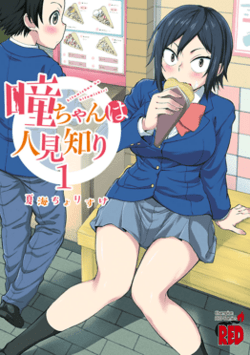
Japanese name: Hitomi-chan wa Hito Mishiri

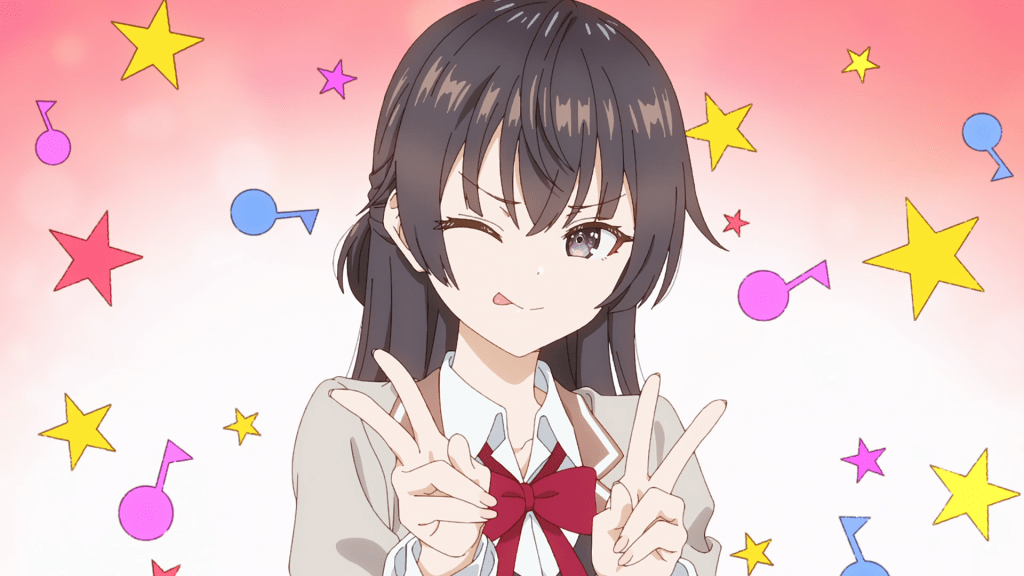
The plot of this manga is that a second-year high school student, Yuu Usami, is taking a train to school and gets the most menacing glare from a scary looking taller girl. He figures out pretty quickly that that’s just her default face (many such cases), and noticing that he’s wearing the same uniform as her, once Usami gets off the train, the girl follows him. He’s expecting some kind of beat down, but she simply walks over to him, looks him straight in the eye… and asks for directions to the high school, seeing as she’s a new student and first year. She eventually introduces herself as Hitomi Takano.

Sounds awkward in retrospect, doesn’t it? Cold hard truth, I relate to this very much. I’ve been the shy guy and the introvert involuntarily adopted by the boisterous extroverts who have attention at their beck and call. The shy part is getting someone’s attention, whether they’re with someone or not — and the introvert part is choosing to be in another world than with people on average. Not like it’s hard for me to make friends; I do, but there’s only so much I can take before I feel like I ran from the southernmost part of Chile to the Aleutian Island chain. Those of you who absorb geography like Galactus the Planet Eater know what that means. Those who need that spelled out, over 9800 miles/15,800 kilometers.

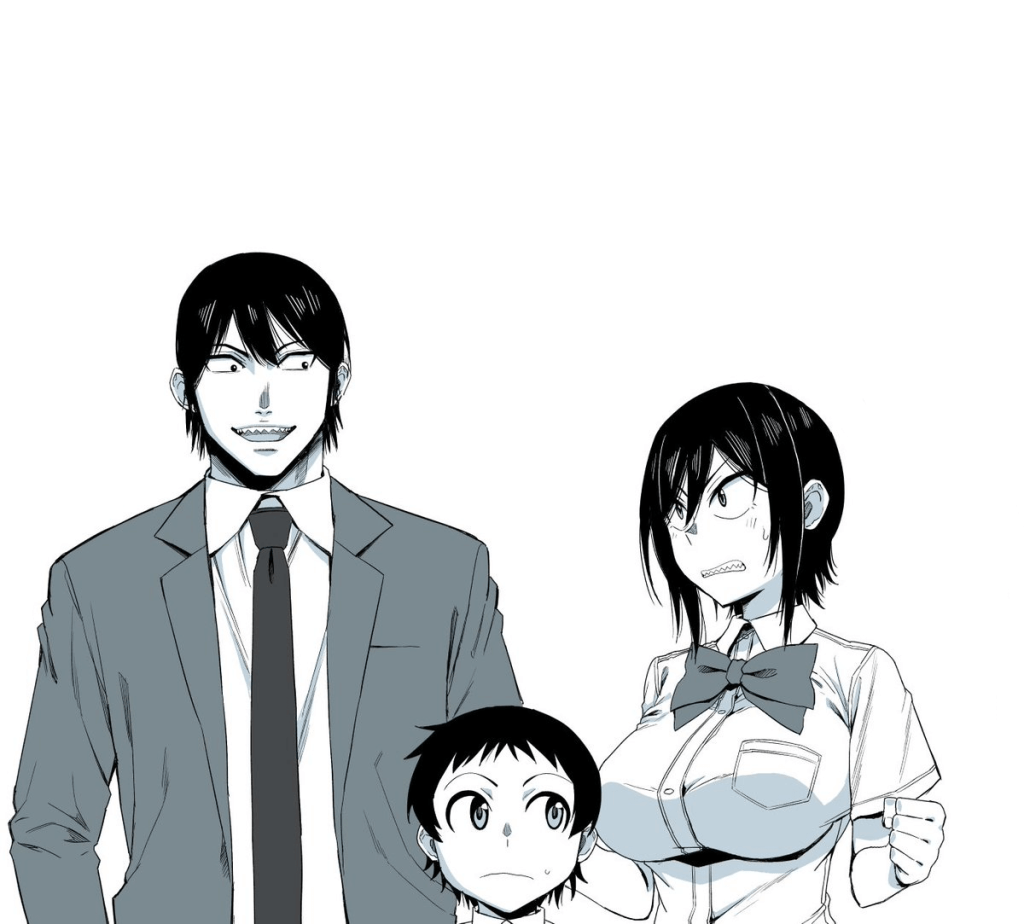
An exaggeration, sure, but it feels like this sometimes. This feature of Hitomi-chan is the most consistent aspect of the whole manga from start to finish, but overtime she gradually opens up. Originally, Hitomi only talked to Yuu, but then she met his sister, some delinquent girls, an American exchange student (because the good old red, white and blue needs to make a presence in animanga somewhere), and even introduces these lot to her older brother and little cousin.
Seems even growing up with siblings can make you deathly shy, though Hinata Hyuga knows this by heart.

For that matter, tall girl short guy trope also meets gentle giant(ess) trope seeing as she’s quite harmless. She’s a kind girl who hates resorting to violence, but her height (6’1″/185.4 cm), and her intimidating face at rest would usually be enough to scare someone straight, such as her first introduction to the delinquent girls who later became her best of friends.

If you’re drawing comparisons between this and Komi Can’t Communicate, I haven’t seen or read that series, but from those who have, they claim that her “shyness” is more selective mutism, and there’s this reddit post that claims, she’s a silent extrovert more so than an introvert, and the premise of the series confirms that long before you read the first chapter. Wants to have a hundred friends, lacks the natural charisma necessary. Fortunately, she at least does things the old fashioned way unlike some others:

Some artists pair her with Konata Izumi to contrast their personalities as otaku, and I say it works.

Does the series suffer from any flaws? What series isn’t flawed? Even my beloved Max Payne and High School DxD have flaws and the flaws that accompany Shy Shark-tooth Girl are much of the same ones that accompany My Boss is Beautifully Busty. Based on the trope I started this post with, you can bet your sweet bippy it has romance, and like the other manga, it takes 20 years, a career, a marriage, and a divorce proceeding to gain steam, but is still Mercury-making-a-full-orbit faster than Takeda and Takizawa, Sitting in a Tree. Maybe the former is based on teens generally moving faster than adults for the simple reason that adults have more maturity and have more nuances to wade through before popping the big question of whether r/Animemes is really about anime. And in my life, I’ve seen both. High school romances reenacting the Hindenburg and adult romances advancing at the speed of ZZZZZzzzzz…… ah, whah?! Whozzat?

Sometimes the reverse or a combination of these, and there’s a chance you have as well. Another mark against the manga may be the idealized, romanticized, unchallenged romance. For the most part, there’s few rough patches that test Hitomi’s and Yuu’s relationship, but examining the manga panels closely shows that it does get tested a fair bit. Not so much in the name of drama, but more so transitioning from casual to romantic dialogue, so to speak. The two acknowledge each other’s feelings and are hilariously led to believed that their dynamic needs to change and fit this arbitrary criteria, when in the real world if this happens, the most that’ll change is that the universe stops standing in the way and lets them hold hands.
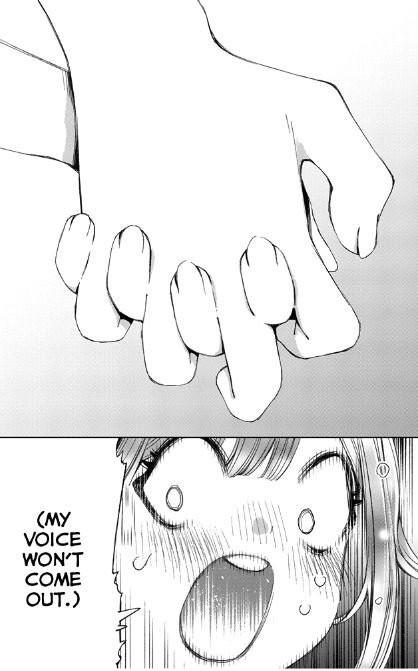
Not that adults can’t be this naive either, sheltered and dense adults will struggle with much of the same things teens do when they first start dating.

To further compare and contrast Cute Shork with Well-Endowed Superior, one is a 4-panel/yonkoma series set in a professional work environment, the other is a typical high school romance. Both put the male and female leads together and have the balls to continue on even after they finally get what their friends and family have acknowledged for ages. AdoraShark has a slightly larger cast though like Russian demographics, the women outnumber the men. In contrast, the smaller cast of the 4-panel manga has slightly more men than women characters, but is still equal. It’s also suited to maintaining this small cast while Hitomi-chan can and has introduced new characters piecemeal, each newcomer melding well with the established cast.

Even characters introduced at the beginning are given a chance to come back and get properly fleshed out, like the delinquent girls who were first seen antagonizing Yuu, until returning some 60 chapters later with more meat to chew on.

Chorisuke Natsumi seems to have a type.

12 volumes running from September 2018 to May 2025, the entire series is available for reading on MangaDex, being spared the grip of the Copyright Coalition in its most DMCA raid on the site. I haven’t heard news of anything in the way of any adaptation or OVAs as of yet, but like all the other times that’s crossed my radar, you can guarantee that I’ll post an update as news trickles out.

Ladies and Gentlemen, the Dumbest Otome Villainess Protagonist

Her braincell is always out to lunch

Multiple times on this blog, I’ve explained that I don’t make a beeline for the Isekai genre. My tastes are varied and, if I had to look at it objectively, inconsistent. But if it wasn’t me being lazy, it was life reminding me that the big picture exists.

Thank god for stock imagery

With the case of Isekai, recently I’ve had a look at some of the shows I’ve been watching, some of which have appeared on this blog before, and I don’t think the statement holds up anymore. Matter of fact, some earlier anime I watched as a kid technically count as Isekai by the slimmest margins and the loosest definitions. Similar to when I watched Shield Bro Loli Pokemon, I came across the subject of this post on Crunchyroll sometime in 2020. It’s not in my watch history for some reason, but I did see the entire first season and part of the second season, so I definitely remember the plot beats going on for this series.

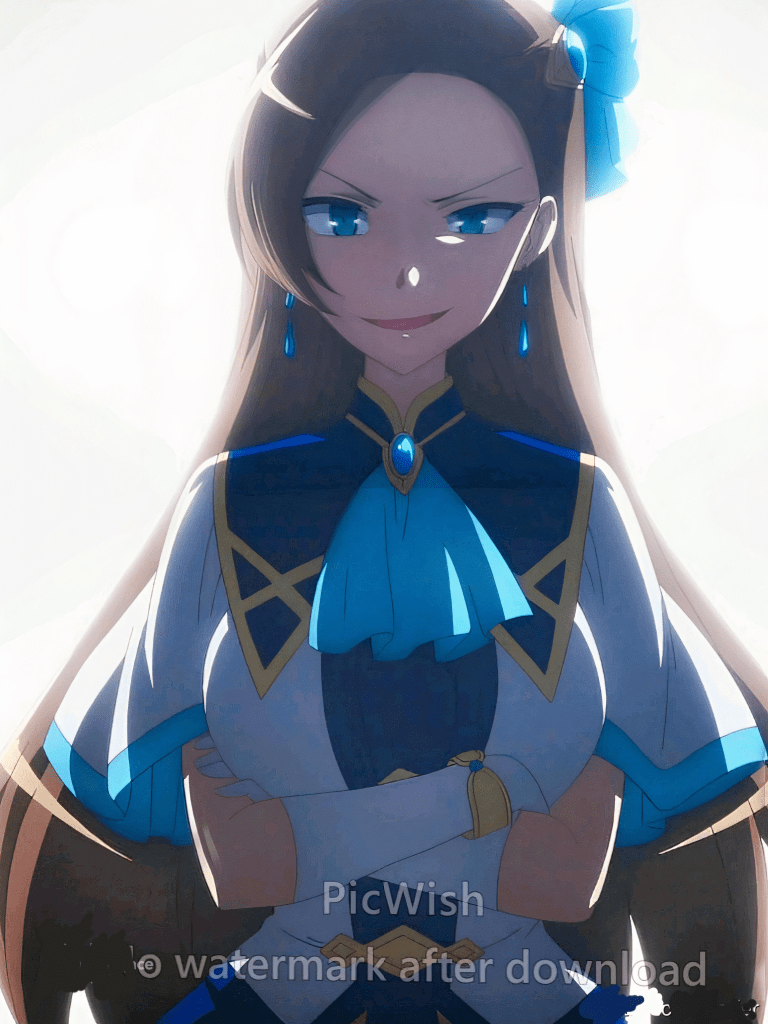
This series is an otome harem Isekai that would become more and more commonplace after 2020 for some s[piano]ing reason. As I recall, the anime skips over the Isekai-ing action, and drops the protagonist into the shoes of the villainess/antagonist, Catarina Claes, who is known to the Japanese audience as Bakarina for having an IQ level as big as her shoe size. The full English title doesn’t really do the series any favors, as the point of the game she’s isekai-ed into is to avoid all the doom flags. The game, known as Fortune Lover, has a series of different paths for the player to follow given specific conditions. One ending sees the villainess exiled, another puts her behind bars, and the third sees her killed in a crime of passion.

When the protagonist takes command of Bakarina’s braincell, the roles are reversed in even the design. Robbing the game of the villainess irreversibly changes the flow of the game to the point that the game semi-acknowledges the takeover, although the major consequences of this aren’t even that punishing, given the English translation of the Japanese title being “I Reincarnated into an Otome Game as a Villainess with only Destruction Flags” as opposed to the subtitle All Routes Lead to doom. A distinction I make seeing as the former explains the concept of and subsequent obsession with doom flags as opposed to the latter that leaves it largely vague. Couldn’t help but get pedantic about that…

Be it the villainess or the actual protagonist of the video game (to distinguish from the Female MC), the opportunity to romance any of the archetypes characters is, on the surface, divvied between the two, but with Bakarina being the queen of this series, that’s a decision largely left to her. Bakarina’s definitely different from how the original Catarina behaves, being more charitable than selfish, all to avoid the death flags. In so doing, she unlocks a secret ending that most games won’t give you until you 100% it once at the minimum.

Without a real window into the game before Catarina’s mind was taken over, all we the audience have to go off is what Bakarina claims she was. To be fair, there’s a few scenes that show what would happen to Catarina if she was the same as she was before the plot of the series kicked off. Now, as for concrete proof that this is an Isekai, again, the anime never shows the action, but it does have a flashback to what the pilot of the Catarina mech-suit looks like, all without ever giving her an actual name.

Another thing done differently is a semi-timeskip. The first five or so episodes start off in Bakarina’s childhood before transitioning to her and the rest of the cast as first- or second-years in high school. And although they’re all adolescents going forward, the recurring gag is that before a major life-altering decision is made, Bakarina retreats to an inner council within her own mind where five younger-somehow chibi-er versions of her debate the pros and cons of a certain path before moving forward with the decision.

And to put the cherry on top, the reason she’s referred to as Bakarina has to do with a variety of weird and idiotic moves prior she’d become famous for. I guess I would also find it difficult to explain that the world is an otome game from a different world, but with death acting as a portal from one world to another, the most I can do is reflect on my previous life before pulling a “when in Rome.” While Bakarina acknowledges the doom flags and bends over backwards to avoid them, she brings mannerisms and habits from her old world into this one.

Funny enough, I did a quick Google search and found this Reddit post that posits, with evidence, that she’s on the spectrum. It’s credible, but medical and mental health professionals make the distinction between autism, ADHD, and simply having those symptoms without fitting into either category. But their is also evidence that she is simply braindead. A lot of it having to do with her being clueless to a lot of things going on in the lives of the romancibles, notably their feelings towards her.

The show is entertaining enough and deserving of its second season when you keep in mind that Bakarina is a moron, though not completely. She does have her moments, though the plot doesn’t give much in the way of character development for Bakarina. She stays mostly the same from beginning to end, even after realizing how much of the plot of the game she’d changed. This isn’t necessarily a bad thing, but it’s a noticeable thing to keep in mind, especially for puzzles, such as one episode where everyone else was in despair while Bakarina kept stuffing her face.

But on the subject of idiocy, a distinction needs to be made between intelligence and wisdom. There’s overlap between the two concepts and some believe that they’re merely interchangeable. But that’s false. In layman’s terms, it’s merely the book smart VS street smart debate. A professor can tell you all about physics and maths, but will probably be lost in the worst parts of the Bronx. On the other end of the spectrum for wisdom, someone may be unable to do complex maths, but they can still learn you a thing or two about life.

The anime’s has two seasons with 12 episodes each plus an OVA. It was adapted from a 2017 manga which in turn was adapted from a 2014 light novel.

Need I elaborate?

Before I go, I have plans for a post concerning the corruption subplots of the video games, Max Payne 3, Sleeping Dogs, and Spec Ops: The Line, with all three handling it all differently. I can’t say for sure when it’ll be done, especially since Spec Ops had been delisted in most online retailers, leaving me the only option to pirate over it. Once I’ve finished at least the last two games (having finished MP3 before), I’ll have the full context of all three ready.

Miss Kyoko Takizawa, My Beautiful (Busty) Boss

The Life and Times of a Busty Office Lady

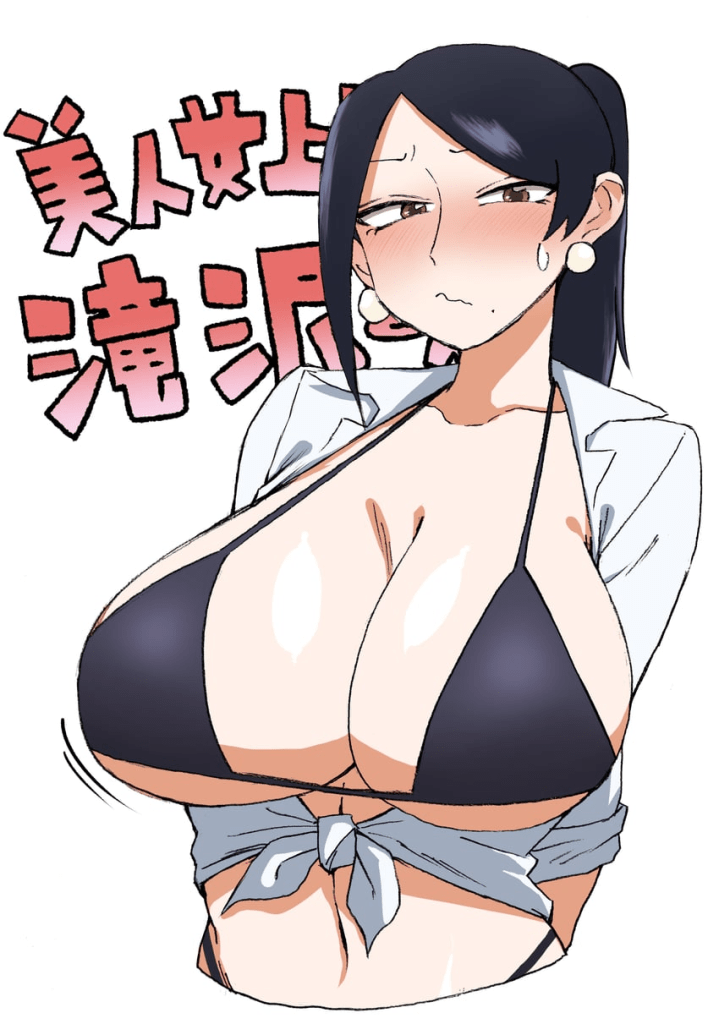
After over 150+ chapters of this manga, and years of fanart, I’ve come to the conclusion that its existence was used as an excuse for artists try and draw its title character in various outfits and hairstyles. Except by “artists,” I mean “creator” Yanbaru, though countless other artists have aped his art style in order to draw Takizawa-san.

Artist: AfterProject

Oops, I’m jumping the gun. Let’s properly introduce the series. Created by mangaka Yanbaru, Bijin Onna Joushi Takizawa-san (rough translation: My Beautiful Female Superior, Miss Takizawa), is a yonkoma/4-panel manga about office workers. A slice of life that cheekily takes the piss out of Japanese work culture, at least on the mild end where the bosses aren’t evil. You’d need Japan’s answer to Trey Parker and Matt Stone if you wanna take the piss out of Japanese black company culture, and biting satire, though honest, requires an above average number of braincells before the powers that be realize that it’s a plea for change masquerading as a comedy act.

But I digress, it’s primarily a comedy with romantic elements thrown in later into the manga, and quite late I might add, at least 50 or 60 chapters. Sounds like a dissuasion, but the benefit of a yonkoma format is that you can blaze through the first 20 chapters in under five minutes. It would surely explain Azumanga’s popularity back in the day.

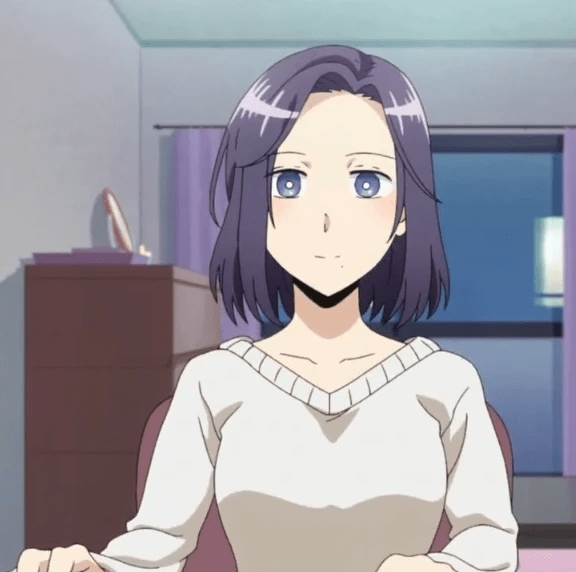
Lovely Boss Takizawa starts off with baby-faced new hire, Kota Takeda, starting his job at a company under which he’s accepted into Takizawa’s department as her underling. The first few chapters show Takeda getting accustomed to the office life at this place and his slow introduction to some other characters. The unnamed Section Chief is meant to be written as a comic relief character, but with the gag being that he makes off hand comments about Takizawa’s extra large bust size, very much to her chagrin. This adds him to the shortlist of manga characters with a sexual harassment case as thick as a Yellow Pages. A step above Minoru “Grape Juice” Mineta of MHA fame, but somewhat below Minoru Kobayakawa who’s a lolicon at best, and pedophile at worst.

Mingling with his contemporaries, Takeda meets Shimizu who can best be described as a slacker, but not necessarily harmful to his own or Takeda’s personal development. A middling bro who means well but if given a character to bounce off of with a similar personality comes across as a Rigby to that character’s Mordecai. Wait, that’s pretty much Takeda’s role when I think about it, but the Regular Show comparison ends there since there aren’t any supernatural elements that damn near explode a local park every day.

By the time Takeda’s largely embedded into the company, another newcomer joins up in the form of Aya Miyamoto, a nervous young woman whose exposure to men her age was so severely limited as a consequence of graduating from an all-girls’ school. She has a bit of an anxiety towards men and thanks to her being introduced to Shimizu and the Chief of all people, her anxieties are realized. Thankfully, she makes contact with Miss Takizawa who metaphorically slaps them into gear and helps reintroduce Miyamoto to Takeda whom she regards as more trustworthy and less “dangerous” than the other two.

Away from the 9 to 5, Takizawa and Takeda grow closer and closer to the point where Everybody Knows but Them rears its ugly head, but more to the viewer than towards the other characters. Some, like Shimizu have their suspicions, but no one knows better than Takeda’s sisters, imouto Yuki…

…not that one.

And anee-san, Kaoru. I jest about Yuki Takeda and Yuki Suou right here, but the comparison isn’t as apt as I teased. They both read manga, though Yuki Takeda favors Shojo romance then Suou’s outright smut. I’m still catching up to the manga, but from what I’ve seen of Yuki, she shows her love for her brother in a funny way. Practically screaming at him to be a gentleman when around Takizawa, even though he was already doing that on and off work. Aggressive wingwoman box ticked.

For the more passive wingwoman, Kota’s older sister, Kaori, is more foxy in a manner of speaking. Being the first born, she teases her siblings left and right, and seems to do so indiscriminately every time she hangs out with Takizawa. In one such instance at an arcade, they’re playing all the games, and Kaori ends the trip getting more than a little invasive. Poor Takizawa. She’s already playing dodge harassment at work and Takeda’s older sister shows that she’s not safe from the same treatment around Kaori. Still, she exemplifies the opposite end of the spectrum where she seems to be pushing Takizawa towards Kota while Yuki does the same for Kota, pushing him towards Takizawa. I say passive in the sense that Kaori’s intensity shines less in how she accomplishes her mission compared to Yuki, but going by my description she’s still aggressive towards Takizawa. In that category, we may have to hold off on that tick or at least add an asterisk.

Does their hard work finally pay off? Well, after over 100 chapters of “will they, won’t they” teasing, I’m pleased to report that they do become an item, and some of the reactions around the office are funny. Most of the time, it’s generally seen as a bad idea to date a coworker, least of all someone in a managerial position, but in reality it’ll still happen and under ideal conditions, with a relationship that grows organically, this can blossom into something beautiful. So that’s the romantic aspect, the comedy aspect zeroes in on Takizawa’s F-cups… or G-cups or larger.

For an easily lewded character, I’ve yet to see someone even try to get her measurements. Even Yanbaru himself hasn’t bothered with this, AFAIK. I’ll just leave it at G-cup and call it a day. If that’s the case than most of her bras would either be special order (not too hard considering her position and its regular salary) or she’d have to look online for bras normally marketed to heavy-set women in Britain and America.

Do I give this series a recommendation? Depends on what you’re looking for honestly. If you’re looking for boob jokes or commentary, most of them come from the Chief or Shimizu and they’re not good parameters for comedy. If you’re looking for something akin to Kiyohiko Azuma, then you’ll find that in spades. The later chapters do still have visual gags like Takizawa’s boobs bouncing every which way, but I figure when your chest is big enough to shake your table if you plop them on the top, that mostly comes with the territory. And if you want to see a romance develop in a yonkoma, well you’re in for the long haul. Slice of life stories tend to have to fight to be seen or heard when every animanga these days is about balletic, bombastic fights and pseudo-kung fu mysticism, but this works in Great Boss Takizawa’s favor seeing as it can be break from the Jujutsu Kaisens and Solo Levelings getting all the praise these days.

For as much as I like this manga, pacing can summon the Sandman in some areas and the Azumanga Daioh is strong in the story structure seeing as this kind of format favors nonlinear storytelling. There is progression in the story, but with each chapter being written the way it is (usually apropos of nothing until a prior plot point is connected), it can be something of a chore in some areas. But the announcement of Takeda and Takizawa’s relationship developing is something to look forward to at least. For now, all the chapters are available on MangaDex with regular updates, but if you wanna find a pirate site to read it, then by all means. Beware the sidebar and pop-up ads.

Artist: yan-baru

Yanbaru may be having fun with putting Takizawa in outfits like this, but reading the manga shows why she’d never wear something so provocative.

My Wife Was My Teacher

Forbidden love made into a comedy

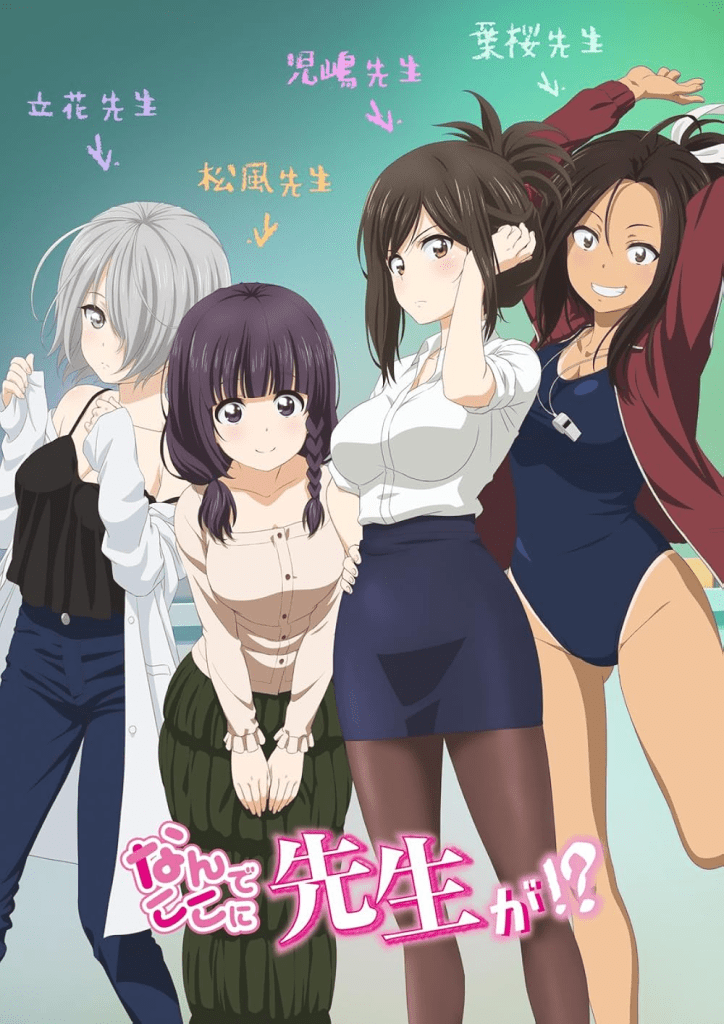
Don’t let the title of this post deceive you, reader. This isn’t a sharp left turn into chronicling French President Emmanuel Macron’s married life, nor is it me announcing that I contacted an old teacher and got down on one knee for a short-lived matrimony. Instead, we’re diving back into my community college days where I watched an ecchi anime known only as Why the Hell Are You Here, Teacher!?

Known in Japanese as Nande Koko ni Sensei ga!?, the series is about a quartet of female high school teachers of different personalities and subjects who develop romantic feelings for their students. A slice of forbidden fruit that can’t work due to a power dynamic that this anime seems to have a lot of fun with and far from the only series animated or not to try this. Most other anime go the “incest = wincest” route of forbidden fruit. From what I’ve seen, there’s a bit of overlap between teacher-student romance and office worker romance, appearance-wise as both tend to feature smartly dressed love interests with professional presentations, but under scrutiny these “professionals” aren’t immune to clumsy f[clicks]k-ups from time to time.

What I remember from Sexy Teacher, Bombshell Wife was that the four teachers all behaved different in front of their respective classes compared to their love interests. Language teacher Kana Kojima was dubbed “Kojima the Demon” because she’s known to be demanding in class, but in front of her love interest, Ichiro Sato, she can behave just like Hinata Hyuga, albeit less creepy. Art teacher Mayu Matsukaze is a busty shortstack with a demure personality, affectionately nicknamed “Lady Matsukaze” for her kind personality. Cupid’s Arrow also makes a fool of her when she’s next to her love interest, the towering gentle giant Rin Suzuki who “helped” her deliver important paperwork. For romantic backstories, this is right up there with a comedic plot of being helped by the protagonist and the “help” in question was just a dropped pencil, or a notice of an untied shoe. Well, it’s simple…

Gym teacher Hikari Hazakura is a trademark, tanned, big tittied tomboy, the kind who’d encourage a novice swimmer to improve by starting at the deep end and giving an after action report, hoping to see her students become Michael Phelps. One student, Takashi Takahashi, is the one she gets real touchy-feely with. They later develop romantic feelings with each other. Finally, there’s the school nurse: a Kuudere named Rei Ayanami Chizuru Tachibana, who’s been dubbed “Absolute Zero,” and the nickname isn’t lost on her in the series. She wants to be closer to the students, notably one Ko Tanaka, and over the course of their arc, they grow so close they lose their virginities together in a love hotel. Going further than Kojima who was engaged to Sato at the end, a bonus chapter reveals that they started a family together. Obligatory, “silent in the streets, freaky in the sheets.”

Ecchi funtimes all around, but with most anime these days merely advertising the manga without guaranteeing a longer run, the anime covered four arcs spread across a miserable 12 episodes. We’re far and away from the likes of Azumanga Daioh and few are expecting a Yotsuba-to! adaptation anytime soon, but AzuDaioh was able to stretch and progress a four-panel manga over the course of 26 episodes in 2002.

But expanding on a romcom could ruin it, you’d argue and if The Way of the Househusband on Netflix is an indicator, then yes, putting effort where it isn’t needed and ignoring it where it is needed would’ve netted us a piss-poor adaptation of Yakuza Yesterday, Husbando Today. So why don’t I look back at Why Does My Teacher Want My Heart? as fondly as others? Largely because of its length.

I gave it some slack yonks ago when I watched it because it did make me laugh with the short time I had with it and also the horniness at the time was on autopilot. My braincells fired up at the end when all the teachers and love interests got together toward the end to announce that some of them were dating, engaged, married, or expecting.

And then it just ended. I didn’t know at precisely at the time, but with only 12 episodes, it felt like more could’ve done even with just the Fab Four and their Lovely Maidens. The source material even lists more than just the characters that got to the anime. So, is this a recommendation in favor of the series or not?

Again, the braincells were out to lunch while the horniness took command, but looking back it’s nothing more serious than a “haha look at this fanservice” gradually evolving into “you may now kiss the bride.” My post history is the evidence needed when I say that I’ve seen this s[bells]t before. It’s also evidence that I know what I like and while I’m not gonna say it wasn’t up my alley, if I’m gonna watch ecchi/fanservice/hentai, a plot can go a long way. Came for the booba, stayed for the story gambit and this may be part of the pipeline into erotic fiction, or it may have been a bit earlier than that… Hmmm…

I cannot say with certainty. For my recommendation, you’re more than welcome to see I Found My Wife in High School, and She Wasn’t a Fellow Classmate up to the last episode and continue in the manga to see what didn’t make the cut, it has 12 volumes and the anime was followed up with an OVA I haven’t seen in 2019. But for something somewhat more grounded, feel free to pair it with 2002’s Please Teacher!

Off topic, I simultaneously adore this old art style and can’t disassociate it from some hentai I’ve seen or read recently.

Happy 4th of July, fellow Americans!

What is Life Without My MMOs? (T^T)

Life is not Daijoubu

On a day ending in Y, I decided to get through another anime in my never-ending fortress: Recovery of an MMO Junkie

Although a manga, it began serialization as a webtoon before getting physical. The story is described as budding romcom between two successful adults, one who abandons the route of salarywoman to become Queen NEET (Not in Education, Employment or Training) and one who is still a gainfully employed salaryman. NEET extraordinaire is female MC, Moriko Morioka, who spends at least 48 hours a day on an MMO called Fruits de Mer. Next to her is the male deuteragonist, Yuta Sakurai, a man in the same position that Moriko left in favor of the NEET life, and more seasoned in FdM than Mori-mori. So much so that he offers to help her learn the game.

The twist here is that both are playing the opposite gender in the game with Mori-mori creating a male character named Hayashi and Yuta creating a female character named Lily. Accurate depiction of gamers thus far, creating eye candy for personal ogling for every 12 hour session.

I couldn’t find any other examples for this. Just know that it’s common, even I do it.

Unbeknownst to the players, however, is their knowledge of each other outside the game. They meet first in passing and then are set to connect over the course of the anime, but in a case of dramatic irony, the viewer is privy to their connection in the game. So while the relationship is developing virtually, reality playing catch-ups to what’s going on elsewhere.

The crux of the series is largely about shutting in from the outside world due to overwhelming circumstances. Life throws so much at people that sometimes disconnecting is a way to recover from the barrage of hits. However, this can easily turn into a double-edged sword if the shut-in/NEET is not careful.

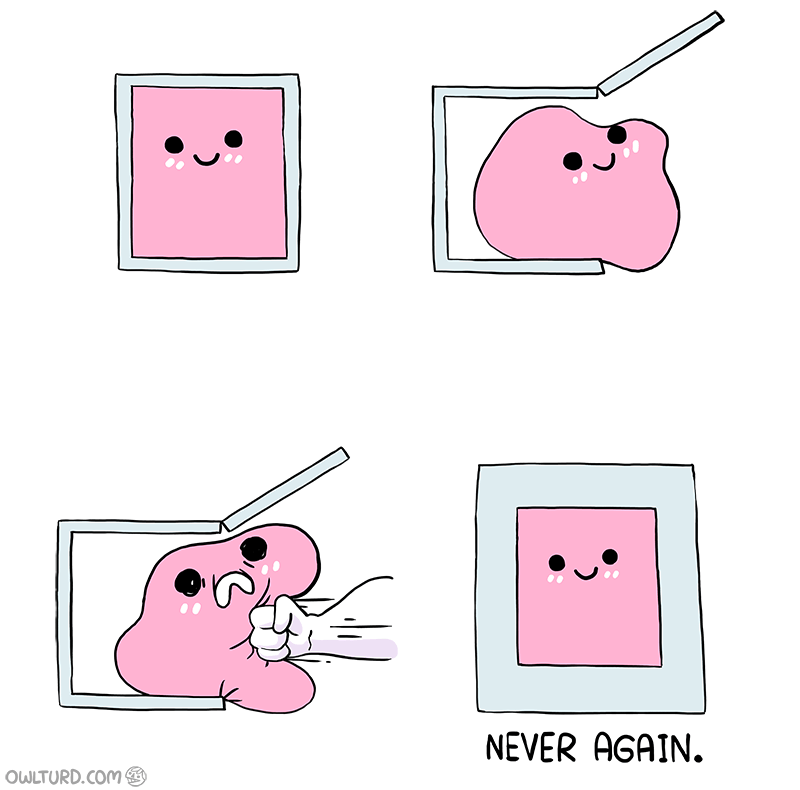
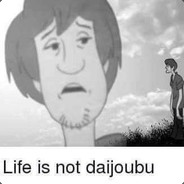
It’s pretty much this meme except the top and bottom images would be separated by a text that reads “[Length of Time] Later” in this specific context. Moriko started off rather well as a salarywoman, but the workload got its own growth spurt and she was unable to keep up the pace. Shackled only to her desires now, she games and goes about her days as she sees fit. As a consequence, her diet is negatively impacted, her sleep “schedule” is interrupted, and I’m pretty sure she touches grass only slightly.

This does touch on a concept that is all too common across East Asia. Most of these nations are culturally collective and most of the societies therein tacitly demand that everyone pulls their weight no matter what. You’re still free to choose the path you walk, but the culture means that whatever path you choose must be committed to absolutely. No slacking, no sticking out; individuality stays home where it belongs. This concept has supporters and critics and writing critically about this, the detriment can at times be twofold. The pace can be too much for some to bear but for those who can stomach it can only take so much, such is the case with Moriko and her choice to become a shut-in.

It’s not unique to East Asia, but it tends to be quite pronounced, especially if the culture reveres the words of its elders extremely highly. Having said that, Moriko’s life as a NEET isn’t the end of the world for her, which sounds like a variation of “I can quit whenever,” but the circumstances that led to her meeting Yuta/Lily do help.

For Yuta, nearly the opposite is true for him. Not a NEET and most likely wouldn’t be one by choice unlike our Queen Moriko. Fruits de Mer is but a hobby that costs a fraction of his earnings, though likely not as much as Mori’s. A socially awkward man using the game to help him communicate, although I call it luck that he met Mori in real life and her character Hayashi in the game, this is a mutually beneficial relationship for them both.

Based on Mori’s past life as an overworked horse, she clearly didn’t have many problems connecting to other people. Yuta, however, does have this difficulty and it shows several times across the series. In FdM, the script is flipped once again, Mori only knew how to brain herself on a bit of crumbling wall in comparison to Yuta who, through experience, learned how to break the wall down with more than just his head.

The series definitely lives up to its name, it falls under the spoiler category all things considered, but knowing the MMO junkie returns to the real world (while occasionally logging into the game) isn’t a turn-off. Matter of fact, the magic is in seeing how the characters develop. I know I mentioned that tuning the outside world can be detrimental, but with the context of this series, it’s both subjective and spontaneous. Each case is unique and whatever gets the person in question to go back to developing healthy relationships varies. There are real-life tragic cases of people dying in seclusion, but there are beautiful tales of people coming back from these dark places.

The series also serves as a connection for those who’ve personally walked down the path of the reclusive hermit. No matter who you are or where you’ve been in life, I wholeheartedly give this a recommendation, especially since it’s bound to connect to a wider audience post-COVID.

Also, Moriko is cute as heck. OBSERVE!

One more thing: this blog post from 2022 offers a more personal story.

The Gyaru Trifecta: Years Ago, Recently Finished and Going to See?

I’ve had quite a lot of time to think about this genre.

Since this blog began, my specialty has been animanga coupled with video games, film, and television. Within animanga, there are several genres within this medium I always make a beeline for and in recent memory it’s focused on a single archetype: gyaru-centric romcoms. I know I don’t write the most about these, but they are noticeable enough that I can’t help but circle back to them. From a series I took a peak at thanks in no small part to a WatchMojo video about s[flies buzzing]ty girlfriends to one that I’m pretty sure was in the line up of Google searches whilst looking up the first one. Completing the trilogy of gyaru romance anime is one that was fawned over in online forums and by anime-themed media outlets for breaking some old tropes… apparently.

Even though I’m a writer, some things still fly over my head at times. Not gonna say outlets like Kotaku or Comic Book Reader are straight-up drowning in manure but to borrow a quote from Tactical Bacon Productions, if games journalism is the corpse that keeps in twitching, animanga journalism in the hands of guys like these are the gasses that keep causing that same corpse to burp every now and then. Be that as it may, these outlets have their moments of journalistic brilliance; and to compare the likes of My First Girlfriend is a Gal to Hokkaido Gals are Super Adorable to My Dress-up Darling would seem impractical considering what they all cover, not to mention Dress-up Darling forms the “Going to See?” part of this post’s title. Still, it got enough love and exposure (and memes) for me to get the gist of it from just the introductory blurb, so rather than treat my imminent analysis of This Gyaru Wants me to Make Her the Cosplay Queen as a holy text, take it more as a shaky summary from a dubious narrator.

Years Ago:

I’ve went over this before, but this was the first series I ever viewed with a gyaru deuteragonist and based on the writing and characterization it’s 100 percent a relic of its time. Basically, Junichi Hashiba asks a popular gyaru, Yukana Yame, out on a dare who teases him at every turn only for this mutual joke of theirs to form into something genuine. It’s a 10 episode series whose purpose was to promote the original written source material, and at the outside. Junichi’s prime motivation was to punch his V-card with an anatomically-blessed girl, personality notwithstanding, and you initially get the impression that Yame is the queen of keep away, dangling a carrot in front of a stick like Makima from Chainsaw Man but way less malicious or vile.

The initial motivation by Junichi puts him in the same shoes as Highschool DxD’s Issei Hyodo but they diverge not just in the types of characters they are or are going to be or even the types of series they represent. Issei may be a pervy degenerate, but I don’t recall him having friends that low. The most they’ve ever done as a trio was spy on the girls changing a la Porky’s, but without Issei, they’ve just been getting jealous that the school bombshell and occult club leader Rias Gremory reciprocates wife vibes. For Junichi, what he’s gone through was a series of shot-in-the-dark dares with little expectation and even build-up so his Surprise Pikachu face is apt considering his reaction in episode 1.

Channel: Ben Senpai

All things considered, for all the praise Dress-up Darling got for breaking the mold, it’s not like any of that was absent in Hajimete no Gal, though this series didn’t break the mold 100 percent. There were still a few tropes, some of which may or may not disgust you, the viewer, but the one that separates this from the other two series is the characterization of the gyaru. Yukana’s not a walking Hokkaido Tourist associate like Minami Fuyuki, nor is she a doujin otaku like Marin Kitagawa. She’s the embodiment of the stereotypical gyaru and by all accounts, your countries archetype of the standoffish, at times bitchy popular girl. When I was growing up the centerpieces for this archetype on TV wound up being the cheerleader types, the overconfident pretty girls even though this flies in the face of the reality on the ground. Not that there aren’t those types of girls, but that the description is grossly overrepresented when they really might only make up some 5 percent of the actual high school or even college cheerleaders. F[broken glass]g Hollywood and their f[meows]g tropes.

But I digress. Both Junichi and Yukana start the series as sleazy opposites, but they later grow to become two sides of the same coin, especially when they realize how much they have in common. Now I have to dig into the reserves of my memory banks to specify those commonalities, but on the surface, they both have a series of friends who root for them every step of the way. Last time, I focused on Junichi’s loli-loving, pedophilic friend, Minoru Kobayakawa, but on the other side is Ranko Honjo who holds sole self-proclaimed rights to Yukana’s virginity, downright threatening to take both hers and Junichi’s before he gets a turn. And that description alone is probably vague enough to make the more cultured among you think back to a similar sounding doujin… one that I don’t mind checking out. No, not for research purposes, I wanna add to this fortress I’ve begun building for myself. I wanna build an NSFW dungeon.

Have my opinions deviated any from my initial description of this series? Hardly. Even now that I’ve got a summary open in another tab on my browser, I’m glad to know my memory isn’t that f[plastic wrap]ked. Recommendations? Well, the anime’s only 10 episodes so finish those 10 then go to the source material if you want some more.

Recently Finished

At the risk of sounding like I’m pissed or making this post a correction of the record from s[burps]t said before by the typical media outlets, Hokkaido Gals is another one that breaks the mold especially in the Gyaru space. Actually, that aspect isn’t even worth mentioning anymore with more and more romcoms debuting with gyaru protagonists/deuteragonists who are less and less of the standoffish type and more and more of the lovey-dovey, “How to Be a Loving Wife” type, which calls back to another meme that floats around especially some of the wholesome forum posts online.

More power to you, ghost of Shinzo Abe, but your subliminal messaging seems to be working more on the mangaka’s mindscapes than it does on their audience. Not to mention the international audience being more likely to have started families than the Japanese and Korean audiences if the demographic statistics aren’t completely fudged over.

For tropes broken and in serious disrepair, Kitami Gals Are Like C-U-T-E, puts us in a notoriously freezing part of Japan. Gone are the days of waiting for a regular winter in Tokyo of all places; come up to Hokkaido where it feels like the northernmost part of Minnesota regularly. Speaking of which, that’s precisely the accent used in the English dub of this series. Fuyuki, Sayurin, and Natsukawa all were cute in the manga, thanks to Kai Ikada’s magic, but the gongs of kawaii sounded the loudest when they were given upper Midwest accents! Holy North Dakota, I didn’t think it would open up a blindspot in my US geography; exploring the Deep South at the expense of the Midwest and Mountain states.

It doesn’t deviate that much from the established gyaru norms though, seeing as the girls all still dress like gyaru albeit adjusted for a colder climate… somewhat. Fuyuki is definitely the equivalent of that one kid you know who’s worn shorts and sneakers in at least 20 inches of snow. I’m not sure if there’s a European or Asian variant of this, but I wouldn’t put it past a Korean or Finnish kid to try it at least once before. Maybe in the age of pen pals they might’ve heard of the phenomenon through the grapevine, who knows?

Refreshingly, Fuyuki, Sayurin, Natsukawa, and Tsubasa, the main male protagonist, aren’t fickle like the protagonists of My First Gyaru GF. Naive and wishy-washy, definitely, but not fickle. Comparatively, they may be less confident seeing as Tsubasa grew up in probably the most average, traditional Japanese household prior to moving to northern Hokkaido while Fuyuki was born to be a gyaru, fashion accessories and cell phone in hand, Sayurin adopting the look sometime in between intense sessions of Animal Crossing and Natsukawa unconsciously marrying the library. They each get along swimmingly as friends, but unlike Yukana and Junichi who have plans to f[door closes]k in the imminent future (or at least entertain the idea), none of the characters in either the anime or the manga (up to the chapters I’ve read, which isn’t that far from where the anime ended) have expressed anything beyond a close bond crossing into romantic development. Spoilers to follow: the latest of these developments involves a friend of Sayurin’s practicing for a swimming competition where after practice has concluded, Sayurin tearfully confesses to the friend (a tan gyaru, holy s[surprise music]t, there’s a lot of them) that she’s fallen in love with Tsubasa. As far as I’ve read, she’s the only girl to announce these feelings publicly to anyone and there’s tens of chapters for me to thumb through so I’m in for further developments as soon as I can find a manga hosting site that doesn’t redirect me to another series or refresh with every click. The things I face as a content pirate.

Going to See?

The darling of 2022, My Dress-up Darling did get its praise for breaking the mold in several areas, notably for giving us another shy, uncharismatic protagonist. Wakana Gojo isn’t Monkey D. Luffy; he’s more like Tanjiro Kamado in the sense that he has a big heart. From what I’ve seen at the outset, he wouldn’t take up arms or get into a street fight, not at least without a kick in the pants to get him up to speed. Gojo seemed to be more the type to let things wash over him without resistance stemming from an incident where his love of hina-doll making was grossly insulted to his face by a girl who we later learn had a crush on him.

Add the Guts theme from Berserk and you’re accurate to what little Gojo-tan felt that day. Fast-forward a decade and hiding his passion was what got him through the years until Marin Kitagawa, our lovely gyaru deuteragonist and thinly-veiled stand-in for Sydsnap, plays the part of the extrovert adopting the introvert. It was a joke at the time that this blonde girl looks and behaves like the actual aforementioned YouTuber down to a T, but the joke was scarily accurate to Kitagawa’s character wholesale. Like Sydsnap, Kitagawa does have a passion for a lot of the typical otaku interests and hobbies, especially the ones specific to female otaku (IYKYK), among them hentai and eroge and the less savory tags for each of them.

But the one that makes up the title of the series is cosplay, which she’d like to do with more polish but is unable to due to a lack of dress-making experience. Enter Wakana Gojo whose specialty is dress-making for hina-dolls. These combined forces make her an unstoppable force in the cosplay scene and the more they hang out the more Kitagawa realizes that this off-the-cuff ad hoc union has developed into a blossoming romance, though only she realizes this as it takes Gojo more time to understand what he feels when she’s around–which circles around to an age-old trope that has its roots in many series across the globe called “Everyone Knew but Them” where the couple is unaware that they’re a couple, but the hints were picked up more easily by their friends and other outside observers. Let this meme explain:

Are they dating? Worse, they’re stupid.

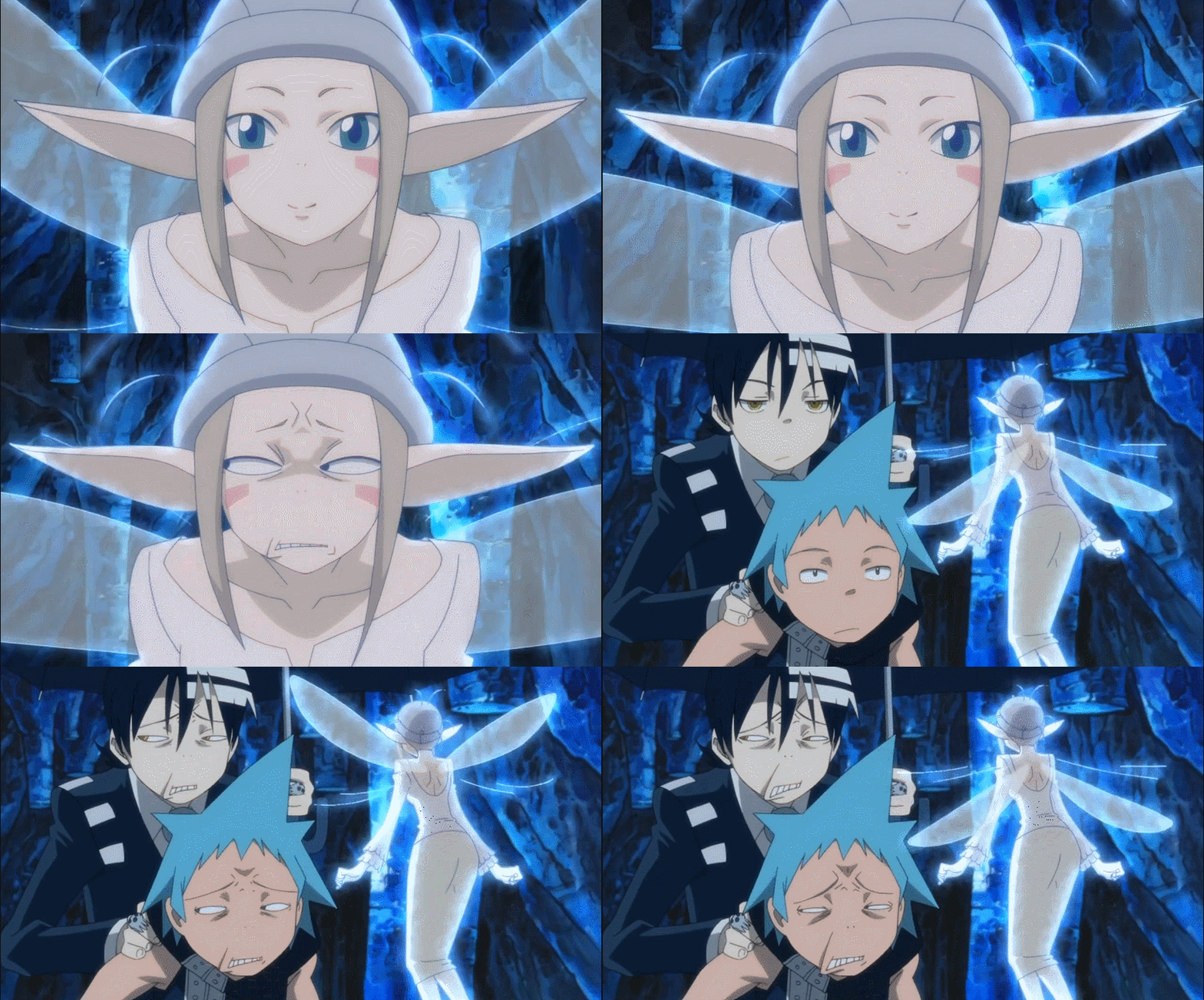
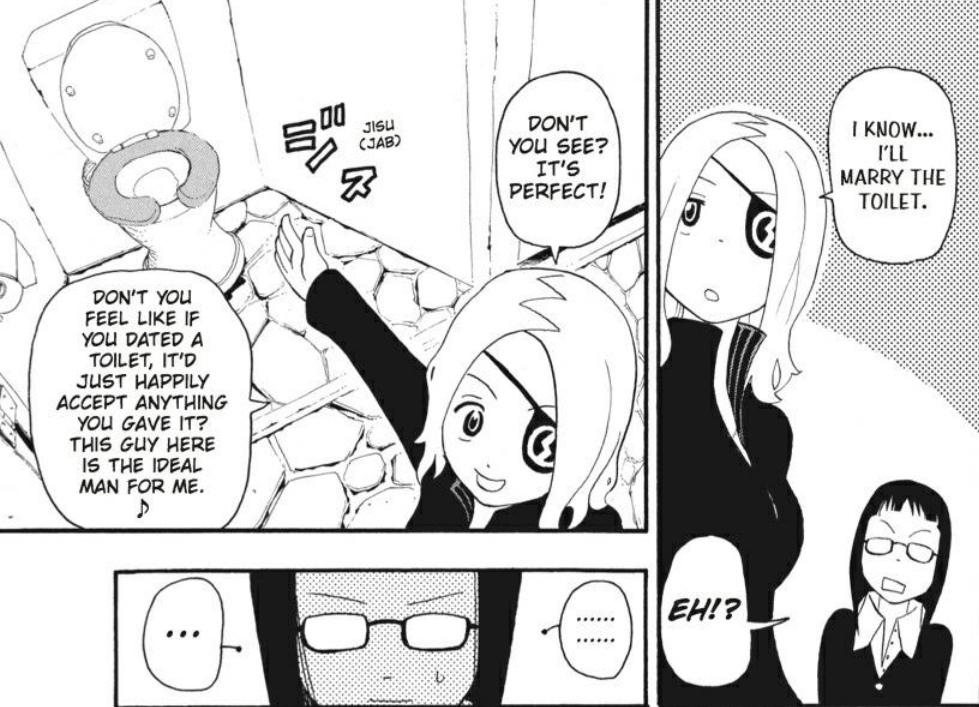
But whoever said love was straightforward? We weebs and otaku would fall for inanimate objects if they came to us with a bouquet of roses and dinner plans to an expensive French restaurant. I’m not making that up, by the way. One of the teachers from the Soul Eater series was about to drop everything to be happily wed… to a toilet.

I’ve talked before about thumbing through the latest chapters of the Dress-up Darling manga out of curiosity and hearing that the girl who first prompted Gojo to isolate himself and his hobbies from the rest of the world was coming back to apologize for her childish behavior back then, claiming jealousy over his hina-dolls. Unreciprocated crush plus dense boy equals “what’s that? you like something more than me?! You’re stupid!! I hope [my lawyer has advised me not to continue this example]!!!!”

While writing this post, I was curious if I was able to watch the full series without having to upgrade to premium and sure enough as of writing, Crunchyroll is feeling generous with this series in particular and it isn’t even a legacy series like One Piece or Dragon Ball. I may see it for myself and continue on in the manga where the anime finishes like normal. It’s just a matter now of putting it in the timeline somewhere.

This is gonna be the biggest animanga fortress I’ve ever built.

My First Gyaru Anime

This may or may not ring some bells

A while ago, I stated that the YouTuber Knowing Better claimed that Hollywood has a greater influence on the military than you’d believe. Sticking with that logic, based on my observations, I want to say that it’s a bit similar in Japan. Stories get told and retold and inspire mangaka to start putting pen to panel. In this context, the subject is that of subcultures. If you’re familiar with western culture, you’re familiar with some age-old subcultures: the goths, the jocks, the nerds, the popular kids, the emos, the preps, and the townies–all of which can be found in RockStar’s hidden gem Bully.

You already know I recommend the s[marbles falling]t out of this.

In Japan, there are several other subcultures that have come and gone over the years: bosozoku (motorcycle enthusiasts), delinquents (bancho/sukeban), otaku (nerds but extra), and the topic of this post: gyaru.

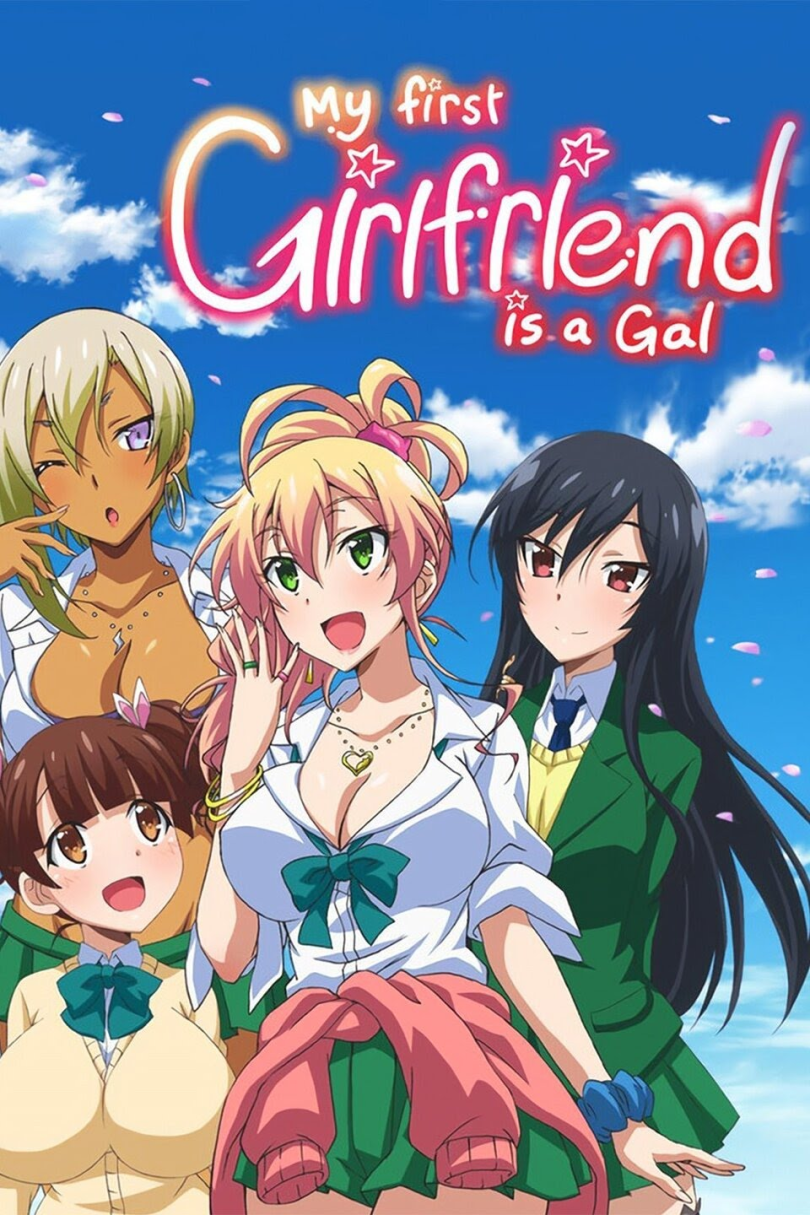
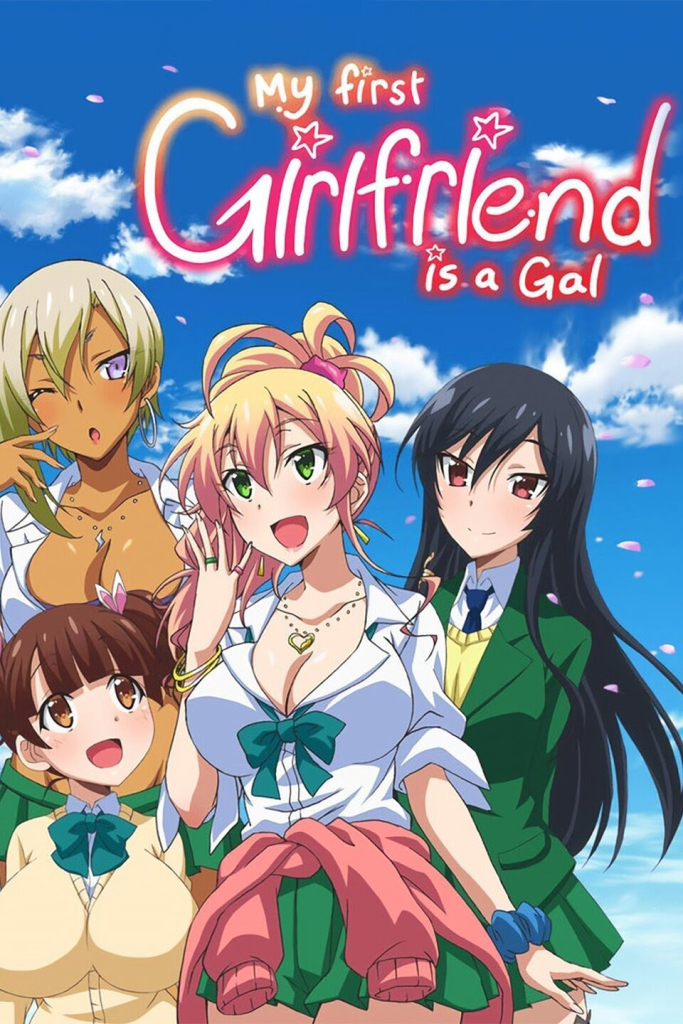
I’ve talked before about gyaru/gal animanga, including one that got an adaptation this year. Now, we’re taking a look at another gyaru-centric series: My First Girlfriend is a Gal (alternative title: Hajimete no Gal).

Another relic from my community college days, I was made aware of it from a WatchMojo Top 10 list on the worst girlfriends in anime voiced by Todd Haberkorn when they kept him locked away in their basement. Don’t worry, it was more of a mancave; think of it like the Scandinavian approach to imprisonment.

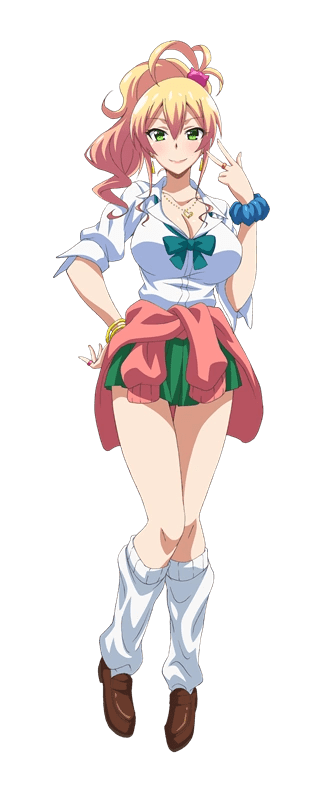
In that list, one of the characters from the anime, deuteragonist and love interest, Yukana Yame, made the list for essentially leading the protagonist, Junichi Hashiba, on. Not an unfair or untrue assessment, but when I had a look, I felt that there was more to it than that. But I’m somersaulting over a battleship here, let’s build up.

Typical romcom anime, a trio of dudes have a conversation describing perverted and sexual things about the girls in their class. One such girl makes the topic of conversation and on a dare, Junichi is challenged to ask her out on a date. Scummy. And Yukana entertains it. Also scummy. Honestly, I remember being that horny both at that age and when I watched this series, and I did watch it from beginning to end, mainly because of the eye candy.

These days, the terminally online “crusaders” would cry fowl at a busty teenage girl, but this is where I play the hypocrisy card as just about every single one of us knew or knows someone whose bodies developed that fast. I definitely did. What the hell happened to “no bodyshaming?” Hmmm? But f[anime girl moaning]k it.

Now that I look back on it, with the experience I’ve gained (mostly from observing other relationships flop around my single ass), never mind a bond formed by ignorance, this is a bond formed by deception. They didn’t even start out taking each other seriously; Junichi was expecting the hardest rejection while Yukana initially planned on milking him dry without using her hands. I’m very sorry about that; it’ll happen again.

But to play Saul Goodman and defend these clients, there is some character development for them both. They hang out more often, and Junichi gradually adheres to the lessons imparted to us by history’s greatest philosophers: the Spice Girls

If you wanna be my lover, you gotta get with my friends

And Yukana’s BFFs include but are not limited to Ranko Honjo, a contendor for the Bimbo Olympics who wants to f[snaps fingers]k both Junichi and Yukana (most likely at the same time); Yui Kashi, a Twitch streamer whose desire is to wrap everyone around her finger (she ain’t beating Makima, just saying); Nene Fujinoki, Junichi’s childhood friend and one of the bustiest lolis I’ve ever seen until Ilulu (also the subject of a specific character’s troubling fetish; more to follow later); and a few others who, although reportedly got more love in the anime than the manga, not enough to make a big enough impact over the course of 10 episodes.

Even though it doesn’t really start out with the best of intentions, the character development does leave them marginally better than when they began. Junichi stops letting his penis think for him the more he learns about Yukana and her… well, it’s not a harem, but she functionally has more women than Junichi will hope to have. Out-rizzed by your own girl…

Fortunately, you know who to turn to whenever you want a threesome.

If Yukana was ever the subject of salacious rumors, her behavior on screen discredits such slander. Like Junichi, it’s highly suggested that not only is she too a virgin, she may be even more nervous about her first time than Junichi is. The gyaru aesthetic is all for show and tell, as in she’s showing her friends and the audience while telling us that she just likes pretty things. But that’s a given.

Conversely, to use the teachings of Lao Zi, within this light side is a bit of a dark side. I mentioned earlier that one of Junichi’s friends, Minoru Kobayakawa, has a troublingly illegal fetish that conjures up the message of the Oingo Boingo song Little Girls. Not lolis or short girls, young girls. He does nothing to hide it in the anime (no clue if its subdued in the manga) and will remind you what his ideal type is. He’s a disturbingly honest Harvey Weinstein sans the influence of Hollywood kickbacks.

The series plays it off as a joke which is probably lost on me since I cringed every time Minoru made an appearance. All things considered, the other Minoru from My Hero Academia was divisive in his own right, but probably shouldn’t have had as much hate directed towards him as this Minoru. Inappropriate and depraved, at least he eyed up adults.

Also, he gets humbled at every turn so whatever debt he owes, he’s overpaid it.

The other Minoru… one of the other guys said it best when he claimed he’d end up on the sex offender registry. Don’t take this as a dissuasion or an argument against watching the anime; this is still a recommendation, just keep in mind that this troubling aspect is in the show. It’s a short viewing, 10 episodes and an OVA that I haven’t seen myself. And of course, you have the choice of sitting through ads like a trooper and joining the dark side and becoming a pirate. The side effect of the latter choice is fighting Luffy.

Now That You’ve Tasted My Saliva, Wanna be My Boyfriend?

Perhaps romance has always been weird

No matter your relationship status, you’ve definitely seen pictures and memes or heard stories through the grapevine about how certain people are made for each other. When applied to fiction, fanbases notoriously put certain characters together and creatively put whatever circumstances they can concoct to make it happen in their own fanfics. Sometimes it works, but other times it’s more or less an appeal to a certain character for a variety of reasons. And as you might expect, other aspects of the fanbase can get perverse in this matter. This typically happens when a series is presented as neutrally as possible. The series I’m talking about here starts off in a strange position by virtue of its own title:

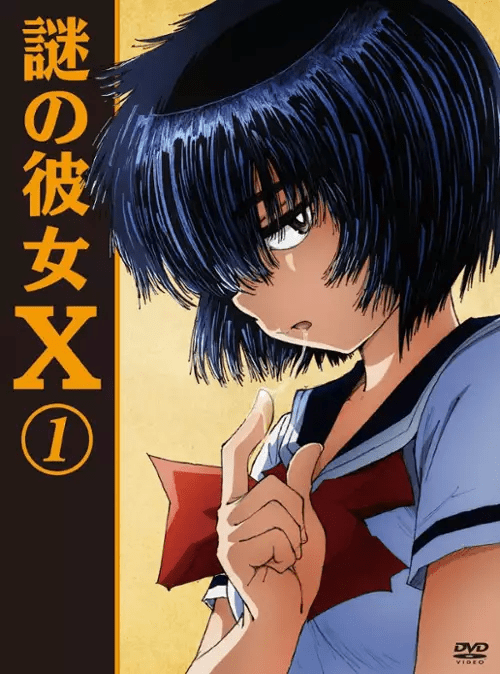
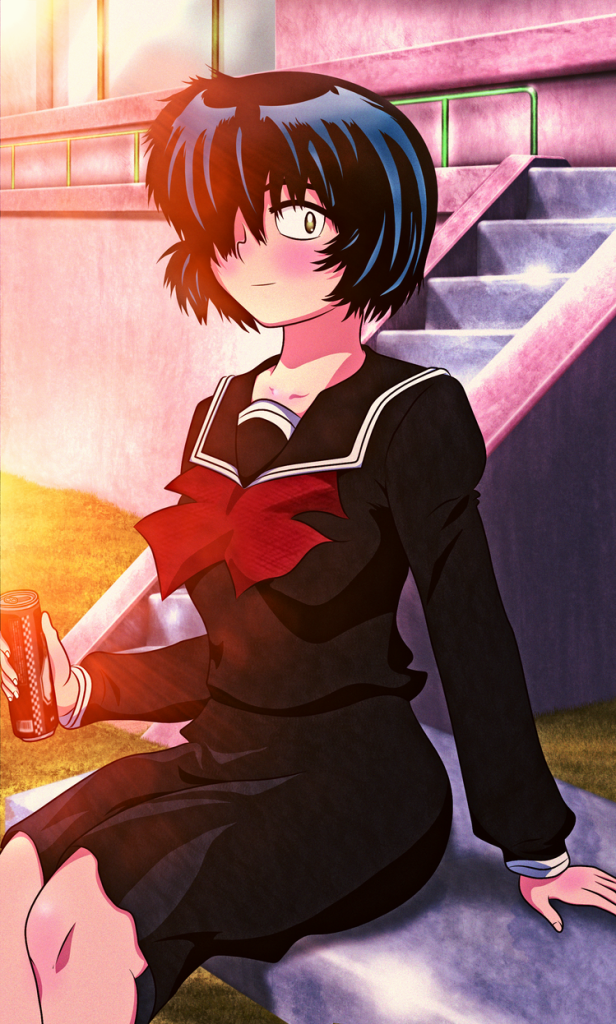
Nazo no Kanojo X or Mysterious Girlfriend X gained fame at the time of release for one of its characters, Mikoto Urabe, releasing the sluice gate she has for a mouth and leaking all of her drool. A sane man would probably be put off by this aspect, but curiosity overrules sanity and the other character, Akira Tsubaki, licks some of the drool she leaves on her desk while napping during lunch. Why would he do that? Don’t bother looking for answers to that question because it goes unacknowledged for the remainder of the show.

Urabe is a riddle inside a mystery wrapped in an enigma. She’s introduced as the new girl and in the first episode bursts into uncontrollable laughter. She’s awfully cagey for a girl romantically involved with Tsubaki, and more or less prefers this sort of arrangement, even keeping a pair of scissors tucked into her underwear. Of all the talk you hear on social media of fighting back suspected and would-be rapists, Urabe is ready to make sashimi out of anyone. S[sword unsheathing]t-talking is for the weak.

Credit: SoundwaveSuperior69 on DeviantArt

Tsubaki meanwhile is the polar opposite of his girlfriend. An open book with an evident circle of friends and interests, you don’t really have to guess what’s on his mind, what he did or what he’s gonna do next. Obligatory: run-of-the-mill male protagonist ends up with “quirky” female protagonist. There’s a name for this specific trope and I won’t rest until I learn it! The closest would probably be manic pixie dream girl, but I personally think that’s a dubious label to throw into this.

Either way, the two are practically ripped from the bizarro world of shipping. Whereas established characters will be randomly paired by the fandom, mangaka Riichi Ueshiba started out that way. Call Urabe a foil to this slice of bread we call a male protagonist with her hentai protagonist hair, anti-molestor blades, unorthodox outlook on life, and obsession with saliva. The last of those being the tamest fetish I’ve seen or heard of, and no I won’t elaborate on what I think is the wildest one I’m aware of.

So that’s them as individuals, how do they behave as a couple? Initially, I was gonna say that her cagey personality gets in the way of things, but on closer inspection, it feels a bit more like she wears a slightly longer pair of pants. Think of it this way, Tsubaki is smitten yet nervous around her due to a lack of dating/romantic experience whereas Urabe has scissors rated E for everyone… and I do mean everyone. She sets hard boundaries, but will make concessions to let her Tsubaki into her space. Her flavor of introvert is honest yet taciturn as she won’t even fake a smile for a picture. Lack of sportsmanship? Considering, she talks to only like two or three people all anime, that’s an easy assumption to make though I’ve heard it explained (can’t remember where, sorry) that most of the action happens offscreen. In this case, any number of wild stories can be made about the girl and Ueshiba may or may not elaborate further. Actually, it’s possible to argue that Urabe herself is in some capacity an extension of Ueshiba, the mangaka.

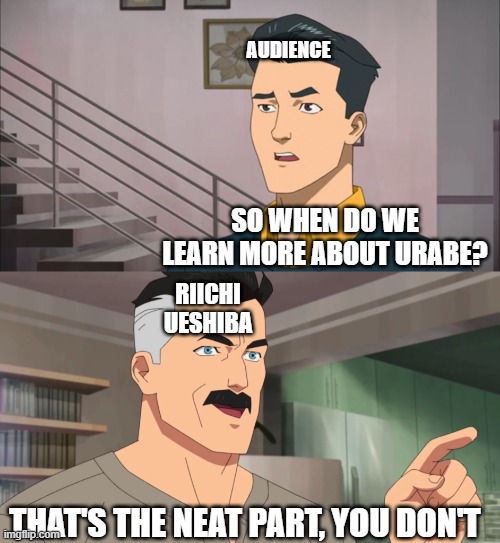
A quick googling shows that the number of interviews he’s done is close to the number of fingers on the average human hand. Photographs are even more elusive as I’m certain there don’t exist any that he’s agreed to share. Even without any expectations, I knew for a fact that Urabe would live up to the mysterious moniker but for it to likely be connected to the man who conceptualized her character is practically “write what you know” in living color. And in this instance, Ueshiba seems to be the only one who knows. Not that he’s the first or only one to subscribe to that philosophy.

Now why am I watching this anime? Once again, I’m doing so on a whim. The romance does intrigue me, but more so the appeal of Who’s This Drooling Girl? is the fact that it’s a break from the action-heavy series we’re getting these days. It had its 15 minutes of fame a decade ago, but now that more people are paying attention to other things developing in contemporary manga (as well as disappointing endings), going to series only five people globally know about is a nice change of pace.

I’d also like to highlight how much of a deconstruction of many tropes Urabe is.

Unlike most other characters, she leaves the audience and the characters guessing. Again, not the first character to do this, but one of the few who does it in less overt ways. The most she’ll do is test whether you can stomach her drool (that sounded better in my head (>_<)); if you can succeed, you two are meant to be. If not, well the effort was made and the question was answered.

Based on my description of her in regard to Tsubaki in general, it sounds like I described a yandere, but Urabe isn’t like that. She shows that she cares about him, but is the last person who’d reach out for a hug from him, especially in public. She’s like a planet: her gravitational pull reels him in, but not too close. As explained in the series (and this blog from 2018), she doesn’t need him to be physically close for there to be a bond. Her drool does the heavy lifting for her there. More than just a test of her connection to whomever tastes it, it’s properties seem to activate different senses and feelings especially in Tsubaki. It’ll make him sick, feel pain, give him a window into Urabe’s true feelings; I’ve never heard of anyone’s saliva doing that so the bond is either that strong or she’s aN aLiEn?!?!?

Again, neither Urabe nor Ueshiba will elaborate, so that’s up to you to decide. For what it’s worth, the manga has 12 volumes, 13 episodes and an OVA ripe for the pirating. Enjoy having questions go unanswered.

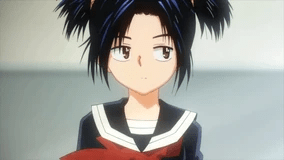
Also, Urabe can definitely make twintails work. Shame it’s only in one episode, but fanart thankfully picks up the slack.

In Soviet Russia, Waifu Confesses To You

She doesn’t know you’re also fluent in Russian

Summer romcoms have seen a boost as of late as seen by the evidence below:

Credit: Gigguk

The sussy sisters suspiciously spouting sexually suggestive sayings was far from expected, but also far from uncommon. Yosuga no Sora fans and Coffin of Andy and Leyley fans know what’s up. In this case where a romance anime has comedy and a sussy imouto, I present to you Alya Sometimes Hides Her Feelings in Russian.

The most interesting thing about this is that it may or may not be responsible for a new -dere type. For those who’re new, -dere in Japanese is a onomatopoeic term for “lovey dovey” or “fawning over someone.” The suffix refers to the type of affection displayed by the love interest. The most common types being:

Tsundere – where the love interest feigns disgust while secretly wanting you to lust after them (think: playing hard to get on hard mode)

Deredere – where the love interest wakes up with you on their mind, erection notwithstanding and counting down the days where they wake up next to you as a loving spouse

Kuudere – where the love interest acts distant and uninterested but keeps a heart-shaped locket with a picture of you inside, longing for the days where you two can be one; and

Yandere – where the love interest only thinks of you and no one else and you yourself better not think of anyone else or you’ll lose other people you care about in your life. It’s not the obsession that can lead to complete disaster, it’s the suspicion that this obsession isn’t reciprocated that makes yanderes so dangerous.

In the case of -dere types, the origin of this archetype–RoshiDere–is a derivative of the light novel’s Japanese title: Tokidoki Bosotto Roshiago de Dereru Tonari no Ārya-san. RoshiDere is a romcom about a highschooler named Masachika Kuze and his budding relationship with a childhood friend Alisa Mikhailovna Kujo. Being half-Russian, Alisa and her sister Maria have the distinct honor of being hafu characters. Short summary: a hafu is anyone of partial Japanese dissent, as in only one parent is Japanese (alternately known as half-Japanese).

There aren’t very many characters of this kind in most Japanese media, but there are a few that stand out, some of which you probably didn’t think about.
Japanese dad, British-American mom (that the fandom keeps forgetting; his knowledge of the English language is not a surprise whatsoever).

Plot-wise, Alya-san is a bog standard romcom but nearly functions like a harem anime of sorts all things considered. Circling back to -dere types, Alya the Russian GF is the chief RoshiDere, but sometimes has her tsuntsun moments.

Not that locking a character into a specific archetype makes them a one-trick pony, but the course of the anime opens viewers up to multiple different sides of the characters. Call it the benefit of a small cast, the creators can focus on a small band of misfits as opposed to tripping over their own two feet trying to make the audience fall in love with everyone else. Shortfalls plagued by a lot of Shonen manga, especially My Hero Academia and Naruto.

For what the characters do in the series, Alya’s an overachiever with the beauty to match her brains while Masachika engages in the otaku lifestyle watching the best series of all time until 3AM (obligatory: he just like me fr), leaving him the narcoleptic, sleepyheaded underachiever and the subject of Alya’s romantic teasing. She thinks she’s being coy by speaking русский язык (Russkiy yazyk), but little does she know Masa-kun is no stranger to the Russian language. As a matter of fact (spoiler), she’s not the first girl to speak it to him, having had a childhood friend from Russia itself. So her passing her flirting off as snide remarks is merely her footing herself in the mouth.

To my knowledge, the only other person who knows his bilingual fluency is his sister, Yuki Suou, as seen in this clip:

Credit: Momka Weeb

I haven’t read the light novels yet (will I? Maybe I will and write about it [patrick_scheming.jpg]), but I imagine a scene where Alya shouts in Russian, Masa-kun walks up to her, translating outloud and Alya’s cool and confident demeanor shatters under the weight of her crush’s knowledge of her native tongue.

Not so much as a gotcha, remember she has tsundere traits and will likely be upset that he knew and didn’t reciprocate up until that point, but part of me can’t help but be the fly on the wall who witnesses that encounter. Gonna pop some popcorn real quick, BRB.

Away from the main events of Russian Girlfriend Problems, Masa-kun’s sister, Yuki, is the Queen of the Otaku vying for the Degeneracy Crown currently resting on the head of one Sydsnap.

Link to her channel if you’re interested.

https://www.youtube.com/channel/UCWH4JkQWioU3vTAritHDnAA

It’s explained that Masa’s and Yuki’s parents divorced and went to live separately. Yuki grew up as a quasi-aristocrat being viewed by the school as rivaling Alya academically, but Masa-kun knows how she’s like behind closed doors. A hardcore otaku who makes numerous references, points to the camera Deadpool-style, and wears her otaku flag on her sleeve. Don’t let her perception of innocence deceive you, she’s actually a cunning young lady and wanted for theft of every scene she’s in:

If the romance between Alya and Masa is the main course, I think we can safely call Yuki’s shenaniganry as the appetizer or dessert. It’s a cutesy little series that has a lot of fun with the premise and the use of multiple languages, that I haven’t seen really since Golden Kamuy, and considering that series takes place mostly in Hokkaido and Sakhalin (with flashbacks to the Korean peninsula where the Russo-Japanese war was fought), that part goes without saying.
Alya Likes to Flirt in Russian is available on Crunchyroll and other streaming sites of questionable legality. If you can stomach the ads, Crunchyroll is the way to go. If you have the cash to spend and can go premium, by all means. And for those of us, who are learning the right lessons from One Piece, HiAnime, AniWatch, and similar piracy sites are still up as of writing this. Enjoy them while they last, especially HiAnime which appears to have caught the eye of the U.S. government.

This week’s YouTube recommendation is NFKRZ.

https://www.youtube.com/@roman_nfkrz

Run by Russian-born Roman Abalin, NFKRZ is a channel that makes videos on Russian life, life in the former Soviet Union along with personal anecdotes sprinkled in. It’s a hybrid vlog/semi-documentary commentary channel that sheds light on this part of the world, often dispelling popular myths of this region with personal anecdotes having grown up in the city of Chelyabinsk (which is close to Kazakhstan). The link to his channel is above.