The Year in Manga

What I’ve been reading this year

Right before we get to the crux of this post, I had a second look at my notes and noticed a gap between November 28 and December 12. I forgot to fill that in in time so before we properly wrap it up, next week will be something of an intermission discussing a controversial video game even by RockStar’s standards. Here’s a few vague hints: Jack Thompson tried to have it made illegal, it was banned in several countries, including the US at first, and the real kicker, it’s primarily a stealth game, so you get rewards when you knock skulls around without people noticing. Now for the real focus of this post.

The end of the year is on the horizon and before we close out the Year of Cordis Die, let’s recap some of the manga I’ve been pirating. I’ve talked at length about manga I’ve been pirating and recommending for as long as this blog has been up, some series I’ve recommended and others I haven’t mentioned yet. So for this post, there will be updates on what I’ve been reading this year, coupled with some looks at manga I’ve yet to mention on the blog. Here’s some series I have lined up, unordered:

  1. Dosanko Gyaru wa Namaramenkoi/is Mega Cute/Hokkaido Gals are Super Adorable
  2. Torako, Anmari Kowashicha Dame Da Yo
  3. Shihai Shoujo Kubaru-chan
  4. Redo of Healer (T^T)
  5. Hitomi-chan is Shy Around Strangers

Some of these are familiar to the long-timers, others I haven’t spoken a word of once on this blog, even in passing. Take these as holiday recommendations to get you through the time-honored tradition of repeating yesterday’s Christmas songs until Boxing Day.

    Having finished the anime adaptation last year, along with its stellar opening soundtrack, I wanted to continue into the manga. The last episode of the manga covers chapters 31 to 32.5 and right after that the rest is saved for the next season set to air sometime in the distant future when apes walk upright again after millions of years subservient to the superior human and AI starts thinking about installing an emotions software (and those electric f[dial-up]kos can keep dreaming because I want my clankers to be as unaware of the outside world as possible), so after October 2026 or April 2027.

    Now, animanga taking us away from Tokyo because everyone goes there and letting us see the rest of Japan like Hokkaido in this one and Fukuoka historically in Excel Saga (that series doesn’t tell you explicitly that it’s Fukuoka but the mangaka is from there so who else but him, right?) is a neat little tradition when the lights of the world’s largest metro start to get blinding. We’ve still yet to see a mainstream series go to Shikoku (Matsuyama is right there) and until the prefectures on that island band together and spit out a series for us, we’ve got to make-do with RNGesus Japan edition.

    So what has happened ever since Tsubasa charmed these Minnesota-accented Hokkaidoans with his rich boy Tokyo Prefecture charm? Well, I’m still in the middle of that arc but we finally see Tsubasa’s mother, Renka. Hospitalized from running herself ragged trying to raise the perfect Japanese son, it’s a good thing she’s already bound to a hospital bed because knowing a son of hers is besties with a trio of gyaru-tachi would give her a heart attack. Also, it’s interesting that the grandmother, Kaede, is healthier than her own daughter, but that’s the thing about that RNGesus character, he’s a funny guy. Less of a downer than Buddha, all things considered.

    As it happens, Tsubasa was brought to Hokkaido largely to prove that he can excel even outside his comfort zone and on the friends and family front, he has passed, but Renka being the type of mother who’d disown her child on her deathbed for getting an A and not an A+ while also being captain of the chess club and the like concludes that frolicking with the popular girls has led him astray and will return him to Tokyo no questions asked to return to his former glory as a golden boy.
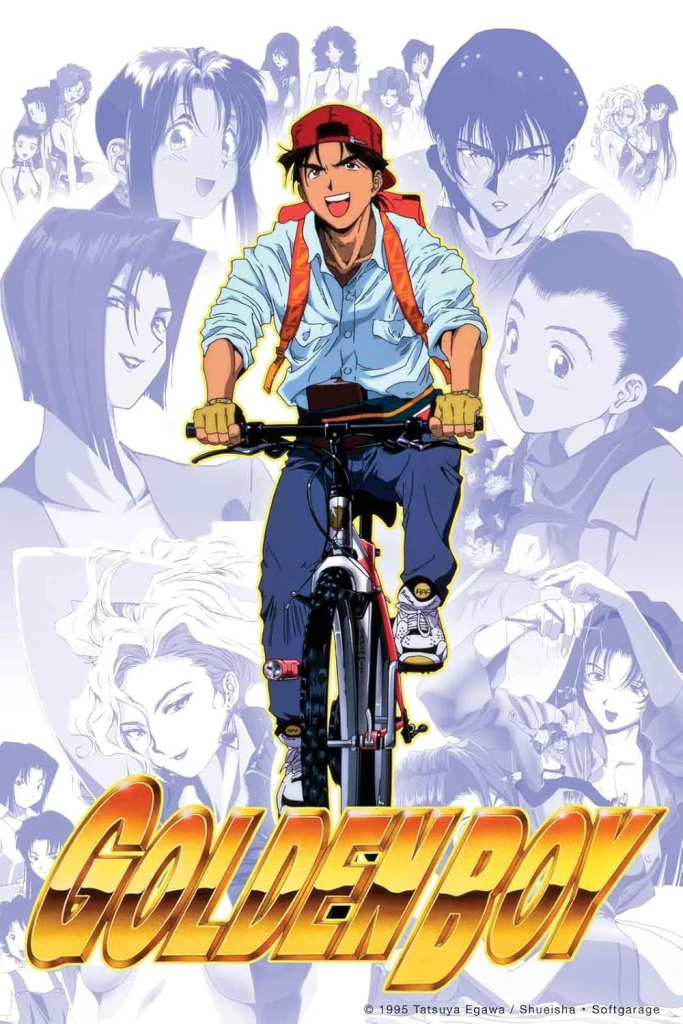
    Not that one.

    Until Kaede, Hirotaka, and Minami herself show Renka that this level of control over the boy’s future and lifestyle is utterly unnecessary, releasing a weight from his shoulders (sort of) under the condition that she be allowed to witness his growth in real time. I’m still reading the manga online and expect to report back either when the second season is announced or around the same time next year, whichever comes first.

    • What the f[punch]k are you lookin’ at, jackass?!

    Japanese subcultures come and go over the years and the subculture that had its halcyon days in the 1970s through 90s was that of the bancho/yankii, the delinquent of sorts. Numerous characters fit the mold from Jotaro Kujo, who was in his element in 1989; to Taison Maeda, who was conceptualized right in the middle of this era at the same time Stardust Crusaders started serializing; from Eikichi Onizuka, who represented the progenitors as they were growing up even at the time, to Josuke Higashikata, who Hirohiko Araki knew would be seen as dated even by 1999 as gyaru were starting to emerge and become more popular.

    Even now as Japan has crossed over into the cholo era (yes, really), some mangaka and anime dedicate characters to a bygone era because nostalgia for an earlier era is not just a time-honored tradition, but a worldwide phenomenon, if fans of pre-revival Doctor Who are anything to go by.

    !EXTERMINATE!

    And I’m not immune to that myself with how often I look for content from the early 2000s, when immediately following a geopolitical tragedy the decade chose to be edgy and serious and smiling was against the law, but I digress.

    Mangaka Nujima got a kick out of introducing East Asian folklore and horror stories in Mysteries, Maidens, and Mysterious Disappearances, but next to that we were given another series, this time about a shy tomboy who gets moved to a rough and tumble high school where the most ferocious girls challenge her… and get humbled at every step. Even the boss Sukeban girl was utterly embarrassed in the first chapter after having her breasts exposed by accident and she hasn’t been able to forget it.

    The translated name is Torako, Don’t Break Anything, and when you’re built like you were supposed to accompany Arthur, King of the Britons on the quest for the Holy Grail, trying not to break s[porcelain]t gets harder and harder, especially when the school you’re in has it as official policy to be a delinquent. Most of the student body looks like it could take on Jotaro Kujo, not necessarily successfully.

    Protagonist Aiko “Torako” Torasawa transfers to a delinquent school and without consent must dodge attacks from the main delinquent girl group that gradually accepts her as one of their own. This manga being an older work of Nujima’s some of what he put in the East Asia version of Urban Legends can be seen in this one. So are there giant boobs in this one as was the case for Whereabouts Unknown? Yes, and multiple… but this is a short series that ran for 20 chapters in 2016. I couldn’t find any associated wiki pages for this series and MangaDex is not the most reliable regarding this information, so I’m adding a pinch of salt to this timeline.

    This series doesn’t take itself as seriously as the other one so funny fanservice is more prevalent than in the other one. Be mindful though that before we got Sumireko’s Oppai of Truth, we have Torako-chan’s Premium Mediums. Would help if we had a medium with premium mediums, but I so far haven’t seen a manga about a fortune teller lady with an average chest size.

    • Before you think about killing yourself, you wanna be my puppet and fall in love with a random chick?
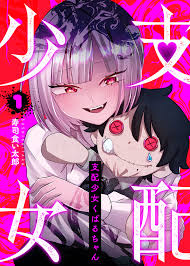
    The official title translates to Ruling Girl Kubaru-chan and the plot of the manga lives up to that ideal with the main male protagonist submitting himself to his female classmate’s whims not by force but by coercion. Given the state he’s in after the first chapter, the poor boy doesn’t have much of an opportunity to resist; he was already driven to ending it all anyway, so the man feels like has nothing worth living for until Kubaru tries to play him like a chess piece. Which fate do you consider the worst? Well, looking at it, no one is playing with a full deck and everyone has problems. The characters all feel real but just about every chapter has a giant layer of what the f[siren]k attached. Someone should go ask Nujima if he can lend some of those Mysterious Disappearances warning signs to this manga instead; the tone of the manga makes it very unpredictable.

    What makes it interesting is that the mangaka’s forewords are always humorous little comments. For example, the main character could be bracing to be a disgusting rape victim and then the chapter ends and the mangaka’s like, “check out this butterfly I found in my backyard.” Dude, your own MC is about to get molested, the f[alarms]k is this??

    The manga starts with Yuto Kiba about to toss himself off the roof, due in large part to a series of misunderstandings that have made him a bad bedfellow to his classmates. Then spunky, eccentric Kubaru proclaims that she can change his life for the better… after he breaks his arm trying to kill himself.

    Alive if not exactly well he may be, that was just the beginning. I’d spoil some of the chapters here, but I don’t believe even some of what’s been going on in this damn manga. Still ongoing, still on MangaDex, and I might dedicate an individual post to the series in the future (gotta move some stuff around for that). Just got to wait and see.

    • (ಠ_ಠ)

    I… was curious… to see what else the source material had in store and, uh… this is a job for the big book of reaction memes.

    (ノಠ益ಠ)ノ彡┻━┻

    There’s two versions of the anime and both of their showings are polite. Why do I say that knowing this screenshot exists in the uncensored version?

    Because the manga holds nothing back. I’m serious, the anime was, for lack of a more appropriate term charitable to its cast with all the raping and blasting going on. Visually, it could’ve been even more shocking and the interview between the Rui Tsukiyo and The Anime Man reveals as much:

    Channel: The Anime Man

    (ノ _ <,, )

    I think, if it’s all the same to you, I’m not so sure if I’d like to explore what women consider edgy and dangerous. For a guy, it’d probably be a reading off of every slur and every offensive gesture in every language and culture; groups like the National Socialist Movement and the Klan would have to reconsider their lives having been outdone by the least racist 4channer. A woman’s fantasies–if the internet isn’t completely full of s[honk]t–are being waited on hand and foot by a smartly dressed bison or wolf or lion by day and being bred like the females of these respective anthropomorphic animals…

    Maybe I’ve been watching too many reactions to Shoe0nhead’s video about a certain dark fantasy romance novel that I refuse to name or allude to. Barely counts as romance (and the author needs to reassess what age millennials are, just saying), and that’s the most I’ll ever touch on the subject for the foreseeable future.

    For the finer details of what the manga entails passed the adapted chapters, well, there’s some changes between what got greenlit and what needed to be changed. So dark themes and imagery alone isn’t a deal-breaker, but explicit use of degrading language and BDSM clothing with emphasis on the SM is, especially when a spare-ess princess orders the servant (read: sex slave) to wear it under penalty of death… or worse: unanesthetized castration, and I’ve got the sneaking suspicion that the Jioral Kingdom is familiar with such a tactic, but I’ve yet to prove it.

    (>_<) (~_~)

    Once again, I’m in strong recommendation towards the gender-reverse isekai and the sexual deviant isekai for the simple fact that these two have a lot of fun with the concept. We here in the west have done sex comedy before and animanga shows that it’s not to be outdone. Ecchi is the proof.

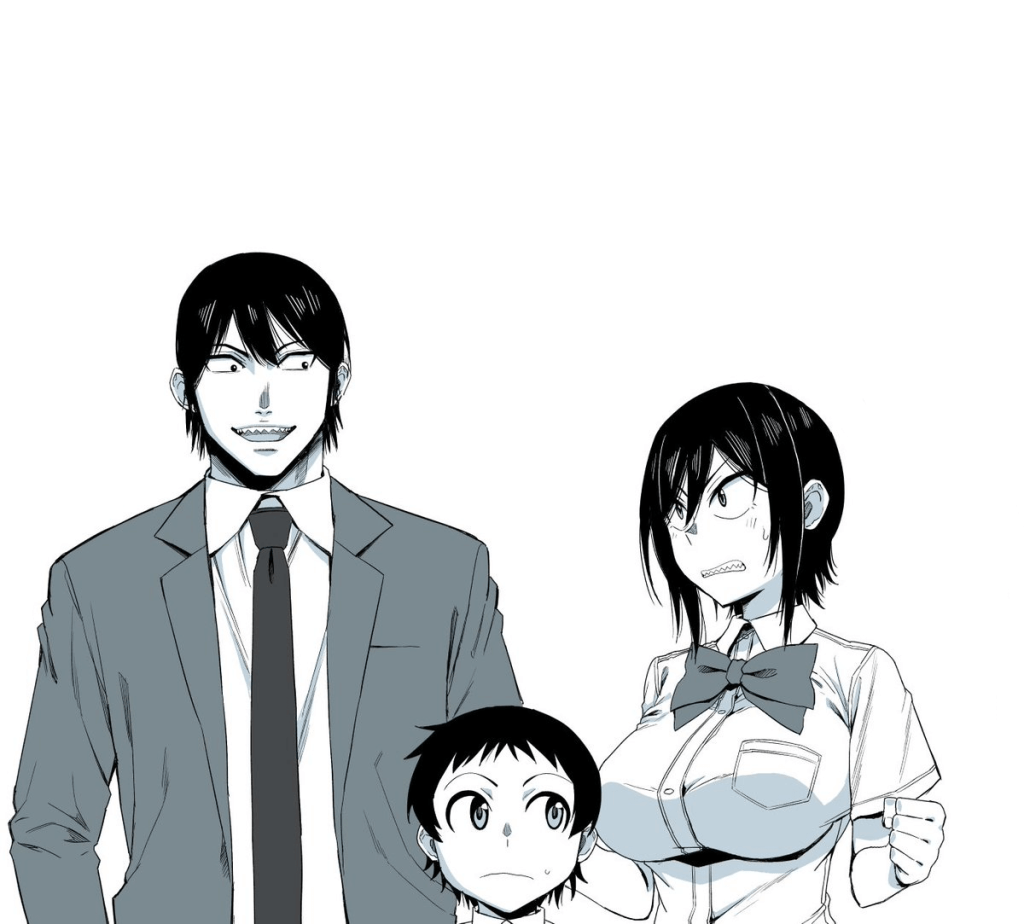
    • For such a tough-looking face, she’s actually just really shy.

    Finally, and for a tonal cleanser, back to high school romcom between a short king and his tall, shy, athletic wife. I haven’t been able to keep up with this series as closely as I used to, but I occasionally check in. With the news that it wrapped up serialization in Spring of this year, my excuse trough has gotten lighter with only work and several more animanga series I have saved in, like, 250 other tabs across all my devices and browsers.

    My muscle memory hasn’t evolved past 2005 Internet Explorer

    From the series’ inception until its conclusion, it’s managed to keep a relatively small fanbase over the years, so it doesn’t attract a lot of newsworthy controversy if at all. On the one hand: great, that means less weirdos barge in and try to change things or “literally me” the characters to death; but on the other hand: dang, how do I know what kind of news is going on with the production of this series? Chorisuke Natsumi doesn’t seem to need the media buzz to get his manga off the ground with social media posts from both fans and himself doing that much of the heavy lifting, but as I said ages ago with the creator of Mysterious Girlfriend X, readily available footage of Natsumi are hard to come by, but at least we know this guy is still alive. He just finished a manga this year.

    Still, Scrutinous Saliva Sucker got a little 12 episode anime and there aren’t any hints that that’s next for Sharkboy‘s Shy Sister. If it happens, neat. If not, alright then; numerous manga don’t get an adaptation for ages if at all with some getting greenlit from the cutting room floor. I don’t have any hard and concrete predictions to make for this, short of what I wrote about in a different post covering it at length. All that’s left to say is that it maintains its cutesy, slice of life, wholesome goodness from start to finish with hints that Hitomi and Yuu become more at the end.
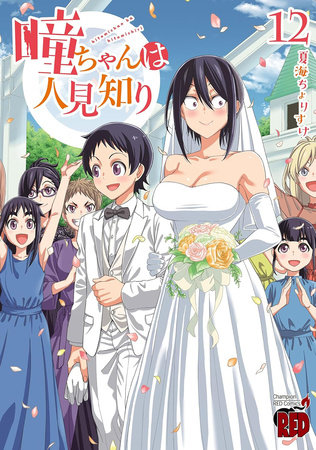
    (^v^)/

    Muscle waifu in wedding attire with friends in attendance, the thing that riles me up the most about the genre is that it ends after the couple ties the knot. Can’t we see Yuu as a dad or Hitomi as a mom? Come on now!!

    But at least there’s something to chew on compared to this:

    And again, ecchi is always stellar, but it can shine even brighter with a strong plot. But that’s true of everything in fiction.
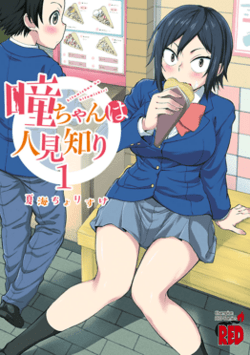
      The Shy Shark-toothed High School Tomboy with Resting Bitch Face

      That… could’ve been shorter

      Stop me if this sounds familiar in, not just animanga, but in media on the whole. A short guy way in over his head takes chances with the taller, at times stoic or stoic-presenting girl. By way of his bumbling charm, he wears her down and she agrees to one date. Turns out shortman is a charmer beyond all and the two are an item. Maybe they have a family and live on a tropical island with a talking turtle.

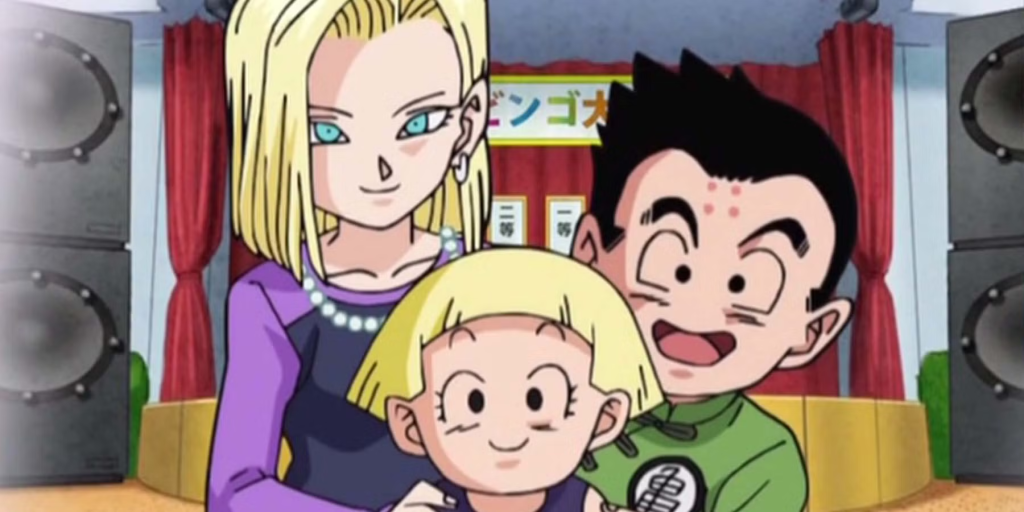
      Admittedly, she made the first move, but Krillin won out in the end, so why split the hairs that Krillin has now been able to grow out?

      Even if you weren’t thinking about a specific pairing, you may have seen it enough times to consider its frequency in media. I definitely have… if only just now. There’s quite a few of these in the trope that come to mind right now

      • Fix-it Felix and Sgt. Calhoun from Wreck-it Ralph: aside from the villain walking away from villainy, the protagonist finds his way into the arms of a top soldier woman, and by the end of the movie, he’s her groom.
      • Krillin and 18: the very picture above clearly didn’t happen overnight. Being the last one left standing when the remaining Z fighters were pummeled by Gero’s Androids, 18 was the one to proposition Krillin with a kiss on the cheek, when she was strong enough to fold Vegeta like a gyoza while 17 punched Piccolo’s and Tien’s spines out. Why the short bald one of all people? Perhaps Toriyama was feeling merciful on our favorite monk.
      • Mario and Peach: there’s probably better couples from the Nintendo Universe, but going to what’s easy, the Italian plumber working in Brooklyn gets suckered into a strange world where mushrooms are enemies, flowers let you throw fireballs, and a giant firebreathing turtle kidnaps a princess. Doing this for over 40 years (happy anniversary, Mario!!), I doubt they’re the progenitors of the trope, but they’re an early example, or at least Mario is from the Donkey Kong days.

      And now the subject of this week’s post: Hitomi-chan is Shy with Strangers

      Japanese name: Hitomi-chan wa Hito Mishiri

      The plot of this manga is that a second-year high school student, Yuu Usami, is taking a train to school and gets the most menacing glare from a scary looking taller girl. He figures out pretty quickly that that’s just her default face (many such cases), and noticing that he’s wearing the same uniform as her, once Usami gets off the train, the girl follows him. He’s expecting some kind of beat down, but she simply walks over to him, looks him straight in the eye… and asks for directions to the high school, seeing as she’s a new student and first year. She eventually introduces herself as Hitomi Takano.

      Sounds awkward in retrospect, doesn’t it? Cold hard truth, I relate to this very much. I’ve been the shy guy and the introvert involuntarily adopted by the boisterous extroverts who have attention at their beck and call. The shy part is getting someone’s attention, whether they’re with someone or not — and the introvert part is choosing to be in another world than with people on average. Not like it’s hard for me to make friends; I do, but there’s only so much I can take before I feel like I ran from the southernmost part of Chile to the Aleutian Island chain. Those of you who absorb geography like Galactus the Planet Eater know what that means. Those who need that spelled out, over 9800 miles/15,800 kilometers.

      An exaggeration, sure, but it feels like this sometimes. This feature of Hitomi-chan is the most consistent aspect of the whole manga from start to finish, but overtime she gradually opens up. Originally, Hitomi only talked to Yuu, but then she met his sister, some delinquent girls, an American exchange student (because the good old red, white and blue needs to make a presence in animanga somewhere), and even introduces these lot to her older brother and little cousin.

      Seems even growing up with siblings can make you deathly shy, though Hinata Hyuga knows this by heart.

      For that matter, tall girl short guy trope also meets gentle giant(ess) trope seeing as she’s quite harmless. She’s a kind girl who hates resorting to violence, but her height (6’1″/185.4 cm), and her intimidating face at rest would usually be enough to scare someone straight, such as her first introduction to the delinquent girls who later became her best of friends.

      If you’re drawing comparisons between this and Komi Can’t Communicate, I haven’t seen or read that series, but from those who have, they claim that her “shyness” is more selective mutism, and there’s this reddit post that claims, she’s a silent extrovert more so than an introvert, and the premise of the series confirms that long before you read the first chapter. Wants to have a hundred friends, lacks the natural charisma necessary. Fortunately, she at least does things the old fashioned way unlike some others:

      Some artists pair her with Konata Izumi to contrast their personalities as otaku, and I say it works.

      Does the series suffer from any flaws? What series isn’t flawed? Even my beloved Max Payne and High School DxD have flaws and the flaws that accompany Shy Shark-tooth Girl are much of the same ones that accompany My Boss is Beautifully Busty. Based on the trope I started this post with, you can bet your sweet bippy it has romance, and like the other manga, it takes 20 years, a career, a marriage, and a divorce proceeding to gain steam, but is still Mercury-making-a-full-orbit faster than Takeda and Takizawa, Sitting in a Tree. Maybe the former is based on teens generally moving faster than adults for the simple reason that adults have more maturity and have more nuances to wade through before popping the big question of whether r/Animemes is really about anime. And in my life, I’ve seen both. High school romances reenacting the Hindenburg and adult romances advancing at the speed of ZZZZZzzzzz…… ah, whah?! Whozzat?

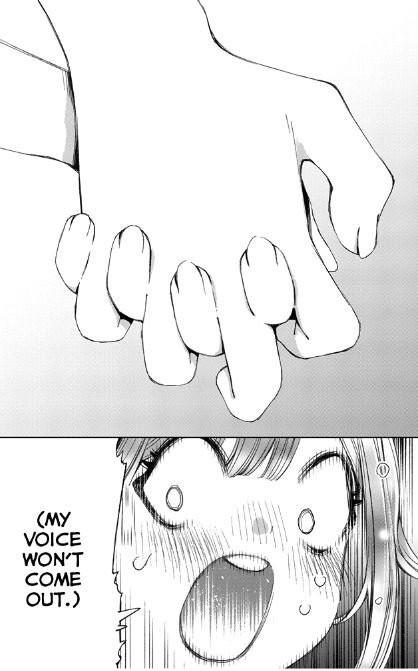
      Sometimes the reverse or a combination of these, and there’s a chance you have as well. Another mark against the manga may be the idealized, romanticized, unchallenged romance. For the most part, there’s few rough patches that test Hitomi’s and Yuu’s relationship, but examining the manga panels closely shows that it does get tested a fair bit. Not so much in the name of drama, but more so transitioning from casual to romantic dialogue, so to speak. The two acknowledge each other’s feelings and are hilariously led to believed that their dynamic needs to change and fit this arbitrary criteria, when in the real world if this happens, the most that’ll change is that the universe stops standing in the way and lets them hold hands.

      Not that adults can’t be this naive either, sheltered and dense adults will struggle with much of the same things teens do when they first start dating.

      To further compare and contrast Cute Shork with Well-Endowed Superior, one is a 4-panel/yonkoma series set in a professional work environment, the other is a typical high school romance. Both put the male and female leads together and have the balls to continue on even after they finally get what their friends and family have acknowledged for ages. AdoraShark has a slightly larger cast though like Russian demographics, the women outnumber the men. In contrast, the smaller cast of the 4-panel manga has slightly more men than women characters, but is still equal. It’s also suited to maintaining this small cast while Hitomi-chan can and has introduced new characters piecemeal, each newcomer melding well with the established cast.

      Even characters introduced at the beginning are given a chance to come back and get properly fleshed out, like the delinquent girls who were first seen antagonizing Yuu, until returning some 60 chapters later with more meat to chew on.

      Chorisuke Natsumi seems to have a type.

      12 volumes running from September 2018 to May 2025, the entire series is available for reading on MangaDex, being spared the grip of the Copyright Coalition in its most DMCA raid on the site. I haven’t heard news of anything in the way of any adaptation or OVAs as of yet, but like all the other times that’s crossed my radar, you can guarantee that I’ll post an update as news trickles out.

      Ladies and Gentlemen, the Dumbest Otome Villainess Protagonist

      Her braincell is always out to lunch

      Multiple times on this blog, I’ve explained that I don’t make a beeline for the Isekai genre. My tastes are varied and, if I had to look at it objectively, inconsistent. But if it wasn’t me being lazy, it was life reminding me that the big picture exists.

      Thank god for stock imagery

      With the case of Isekai, recently I’ve had a look at some of the shows I’ve been watching, some of which have appeared on this blog before, and I don’t think the statement holds up anymore. Matter of fact, some earlier anime I watched as a kid technically count as Isekai by the slimmest margins and the loosest definitions. Similar to when I watched Shield Bro Loli Pokemon, I came across the subject of this post on Crunchyroll sometime in 2020. It’s not in my watch history for some reason, but I did see the entire first season and part of the second season, so I definitely remember the plot beats going on for this series.

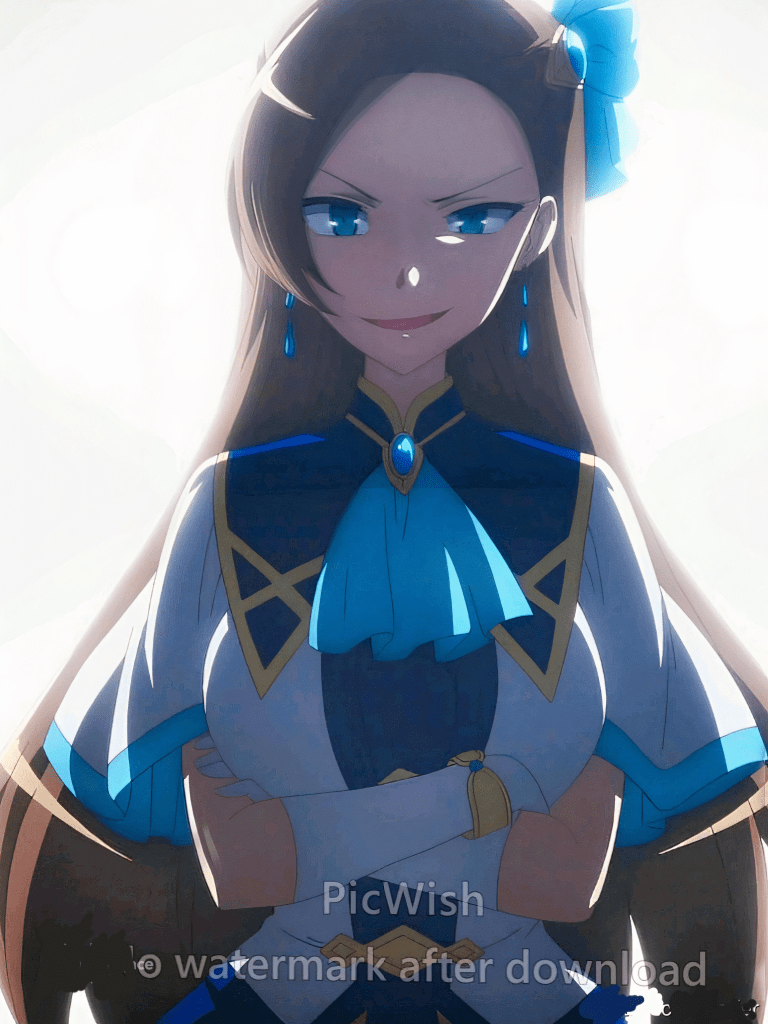
      This series is an otome harem Isekai that would become more and more commonplace after 2020 for some s[piano]ing reason. As I recall, the anime skips over the Isekai-ing action, and drops the protagonist into the shoes of the villainess/antagonist, Catarina Claes, who is known to the Japanese audience as Bakarina for having an IQ level as big as her shoe size. The full English title doesn’t really do the series any favors, as the point of the game she’s isekai-ed into is to avoid all the doom flags. The game, known as Fortune Lover, has a series of different paths for the player to follow given specific conditions. One ending sees the villainess exiled, another puts her behind bars, and the third sees her killed in a crime of passion.

      When the protagonist takes command of Bakarina’s braincell, the roles are reversed in even the design. Robbing the game of the villainess irreversibly changes the flow of the game to the point that the game semi-acknowledges the takeover, although the major consequences of this aren’t even that punishing, given the English translation of the Japanese title being “I Reincarnated into an Otome Game as a Villainess with only Destruction Flags” as opposed to the subtitle All Routes Lead to doom. A distinction I make seeing as the former explains the concept of and subsequent obsession with doom flags as opposed to the latter that leaves it largely vague. Couldn’t help but get pedantic about that…

      Be it the villainess or the actual protagonist of the video game (to distinguish from the Female MC), the opportunity to romance any of the archetypes characters is, on the surface, divvied between the two, but with Bakarina being the queen of this series, that’s a decision largely left to her. Bakarina’s definitely different from how the original Catarina behaves, being more charitable than selfish, all to avoid the death flags. In so doing, she unlocks a secret ending that most games won’t give you until you 100% it once at the minimum.

      Without a real window into the game before Catarina’s mind was taken over, all we the audience have to go off is what Bakarina claims she was. To be fair, there’s a few scenes that show what would happen to Catarina if she was the same as she was before the plot of the series kicked off. Now, as for concrete proof that this is an Isekai, again, the anime never shows the action, but it does have a flashback to what the pilot of the Catarina mech-suit looks like, all without ever giving her an actual name.

      Another thing done differently is a semi-timeskip. The first five or so episodes start off in Bakarina’s childhood before transitioning to her and the rest of the cast as first- or second-years in high school. And although they’re all adolescents going forward, the recurring gag is that before a major life-altering decision is made, Bakarina retreats to an inner council within her own mind where five younger-somehow chibi-er versions of her debate the pros and cons of a certain path before moving forward with the decision.

      And to put the cherry on top, the reason she’s referred to as Bakarina has to do with a variety of weird and idiotic moves prior she’d become famous for. I guess I would also find it difficult to explain that the world is an otome game from a different world, but with death acting as a portal from one world to another, the most I can do is reflect on my previous life before pulling a “when in Rome.” While Bakarina acknowledges the doom flags and bends over backwards to avoid them, she brings mannerisms and habits from her old world into this one.

      Funny enough, I did a quick Google search and found this Reddit post that posits, with evidence, that she’s on the spectrum. It’s credible, but medical and mental health professionals make the distinction between autism, ADHD, and simply having those symptoms without fitting into either category. But their is also evidence that she is simply braindead. A lot of it having to do with her being clueless to a lot of things going on in the lives of the romancibles, notably their feelings towards her.

      The show is entertaining enough and deserving of its second season when you keep in mind that Bakarina is a moron, though not completely. She does have her moments, though the plot doesn’t give much in the way of character development for Bakarina. She stays mostly the same from beginning to end, even after realizing how much of the plot of the game she’d changed. This isn’t necessarily a bad thing, but it’s a noticeable thing to keep in mind, especially for puzzles, such as one episode where everyone else was in despair while Bakarina kept stuffing her face.

      But on the subject of idiocy, a distinction needs to be made between intelligence and wisdom. There’s overlap between the two concepts and some believe that they’re merely interchangeable. But that’s false. In layman’s terms, it’s merely the book smart VS street smart debate. A professor can tell you all about physics and maths, but will probably be lost in the worst parts of the Bronx. On the other end of the spectrum for wisdom, someone may be unable to do complex maths, but they can still learn you a thing or two about life.

      The anime’s has two seasons with 12 episodes each plus an OVA. It was adapted from a 2017 manga which in turn was adapted from a 2014 light novel.

      Need I elaborate?

      Before I go, I have plans for a post concerning the corruption subplots of the video games, Max Payne 3, Sleeping Dogs, and Spec Ops: The Line, with all three handling it all differently. I can’t say for sure when it’ll be done, especially since Spec Ops had been delisted in most online retailers, leaving me the only option to pirate over it. Once I’ve finished at least the last two games (having finished MP3 before), I’ll have the full context of all three ready.

      Miss Kyoko Takizawa, My Beautiful (Busty) Boss

      The Life and Times of a Busty Office Lady

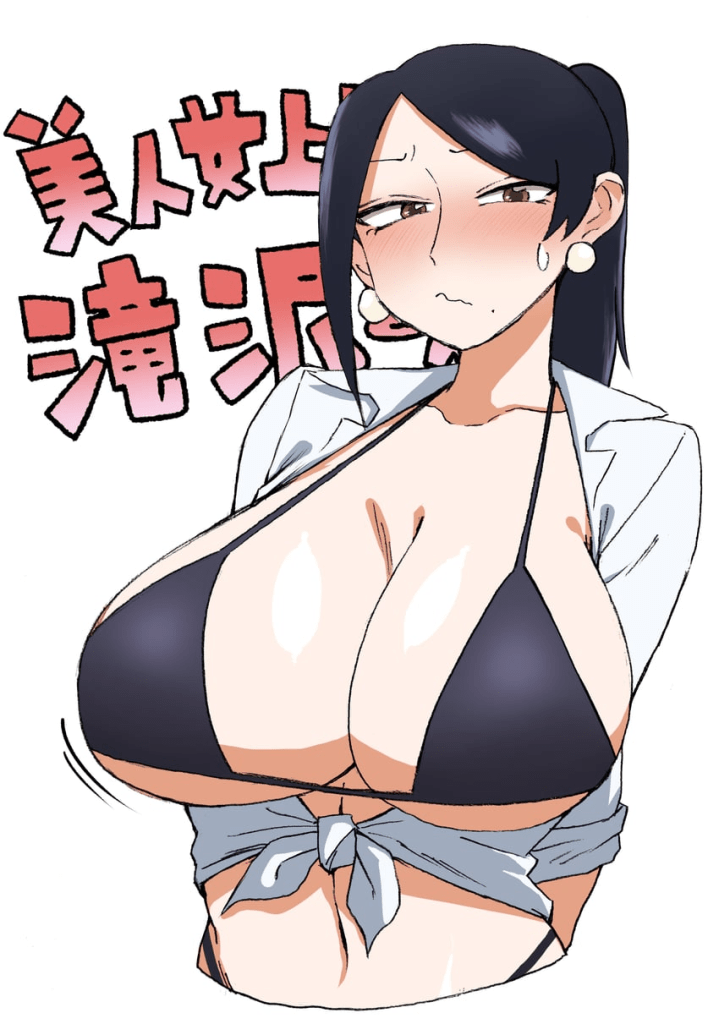
      After over 150+ chapters of this manga, and years of fanart, I’ve come to the conclusion that its existence was used as an excuse for artists try and draw its title character in various outfits and hairstyles. Except by “artists,” I mean “creator” Yanbaru, though countless other artists have aped his art style in order to draw Takizawa-san.

      Artist: AfterProject

      Oops, I’m jumping the gun. Let’s properly introduce the series. Created by mangaka Yanbaru, Bijin Onna Joushi Takizawa-san (rough translation: My Beautiful Female Superior, Miss Takizawa), is a yonkoma/4-panel manga about office workers. A slice of life that cheekily takes the piss out of Japanese work culture, at least on the mild end where the bosses aren’t evil. You’d need Japan’s answer to Trey Parker and Matt Stone if you wanna take the piss out of Japanese black company culture, and biting satire, though honest, requires an above average number of braincells before the powers that be realize that it’s a plea for change masquerading as a comedy act.

      But I digress, it’s primarily a comedy with romantic elements thrown in later into the manga, and quite late I might add, at least 50 or 60 chapters. Sounds like a dissuasion, but the benefit of a yonkoma format is that you can blaze through the first 20 chapters in under five minutes. It would surely explain Azumanga’s popularity back in the day.

      Lovely Boss Takizawa starts off with baby-faced new hire, Kota Takeda, starting his job at a company under which he’s accepted into Takizawa’s department as her underling. The first few chapters show Takeda getting accustomed to the office life at this place and his slow introduction to some other characters. The unnamed Section Chief is meant to be written as a comic relief character, but with the gag being that he makes off hand comments about Takizawa’s extra large bust size, very much to her chagrin. This adds him to the shortlist of manga characters with a sexual harassment case as thick as a Yellow Pages. A step above Minoru “Grape Juice” Mineta of MHA fame, but somewhat below Minoru Kobayakawa who’s a lolicon at best, and pedophile at worst.

      Mingling with his contemporaries, Takeda meets Shimizu who can best be described as a slacker, but not necessarily harmful to his own or Takeda’s personal development. A middling bro who means well but if given a character to bounce off of with a similar personality comes across as a Rigby to that character’s Mordecai. Wait, that’s pretty much Takeda’s role when I think about it, but the Regular Show comparison ends there since there aren’t any supernatural elements that damn near explode a local park every day.

      By the time Takeda’s largely embedded into the company, another newcomer joins up in the form of Aya Miyamoto, a nervous young woman whose exposure to men her age was so severely limited as a consequence of graduating from an all-girls’ school. She has a bit of an anxiety towards men and thanks to her being introduced to Shimizu and the Chief of all people, her anxieties are realized. Thankfully, she makes contact with Miss Takizawa who metaphorically slaps them into gear and helps reintroduce Miyamoto to Takeda whom she regards as more trustworthy and less “dangerous” than the other two.

      Away from the 9 to 5, Takizawa and Takeda grow closer and closer to the point where Everybody Knows but Them rears its ugly head, but more to the viewer than towards the other characters. Some, like Shimizu have their suspicions, but no one knows better than Takeda’s sisters, imouto Yuki…

      …not that one.

      And anee-san, Kaoru. I jest about Yuki Takeda and Yuki Suou right here, but the comparison isn’t as apt as I teased. They both read manga, though Yuki Takeda favors Shojo romance then Suou’s outright smut. I’m still catching up to the manga, but from what I’ve seen of Yuki, she shows her love for her brother in a funny way. Practically screaming at him to be a gentleman when around Takizawa, even though he was already doing that on and off work. Aggressive wingwoman box ticked.

      For the more passive wingwoman, Kota’s older sister, Kaori, is more foxy in a manner of speaking. Being the first born, she teases her siblings left and right, and seems to do so indiscriminately every time she hangs out with Takizawa. In one such instance at an arcade, they’re playing all the games, and Kaori ends the trip getting more than a little invasive. Poor Takizawa. She’s already playing dodge harassment at work and Takeda’s older sister shows that she’s not safe from the same treatment around Kaori. Still, she exemplifies the opposite end of the spectrum where she seems to be pushing Takizawa towards Kota while Yuki does the same for Kota, pushing him towards Takizawa. I say passive in the sense that Kaori’s intensity shines less in how she accomplishes her mission compared to Yuki, but going by my description she’s still aggressive towards Takizawa. In that category, we may have to hold off on that tick or at least add an asterisk.

      Does their hard work finally pay off? Well, after over 100 chapters of “will they, won’t they” teasing, I’m pleased to report that they do become an item, and some of the reactions around the office are funny. Most of the time, it’s generally seen as a bad idea to date a coworker, least of all someone in a managerial position, but in reality it’ll still happen and under ideal conditions, with a relationship that grows organically, this can blossom into something beautiful. So that’s the romantic aspect, the comedy aspect zeroes in on Takizawa’s F-cups… or G-cups or larger.

      For an easily lewded character, I’ve yet to see someone even try to get her measurements. Even Yanbaru himself hasn’t bothered with this, AFAIK. I’ll just leave it at G-cup and call it a day. If that’s the case than most of her bras would either be special order (not too hard considering her position and its regular salary) or she’d have to look online for bras normally marketed to heavy-set women in Britain and America.

      Do I give this series a recommendation? Depends on what you’re looking for honestly. If you’re looking for boob jokes or commentary, most of them come from the Chief or Shimizu and they’re not good parameters for comedy. If you’re looking for something akin to Kiyohiko Azuma, then you’ll find that in spades. The later chapters do still have visual gags like Takizawa’s boobs bouncing every which way, but I figure when your chest is big enough to shake your table if you plop them on the top, that mostly comes with the territory. And if you want to see a romance develop in a yonkoma, well you’re in for the long haul. Slice of life stories tend to have to fight to be seen or heard when every animanga these days is about balletic, bombastic fights and pseudo-kung fu mysticism, but this works in Great Boss Takizawa’s favor seeing as it can be break from the Jujutsu Kaisens and Solo Levelings getting all the praise these days.

      For as much as I like this manga, pacing can summon the Sandman in some areas and the Azumanga Daioh is strong in the story structure seeing as this kind of format favors nonlinear storytelling. There is progression in the story, but with each chapter being written the way it is (usually apropos of nothing until a prior plot point is connected), it can be something of a chore in some areas. But the announcement of Takeda and Takizawa’s relationship developing is something to look forward to at least. For now, all the chapters are available on MangaDex with regular updates, but if you wanna find a pirate site to read it, then by all means. Beware the sidebar and pop-up ads.

      Artist: yan-baru

      Yanbaru may be having fun with putting Takizawa in outfits like this, but reading the manga shows why she’d never wear something so provocative.

      My Wife Was My Teacher

      Forbidden love made into a comedy

      Don’t let the title of this post deceive you, reader. This isn’t a sharp left turn into chronicling French President Emmanuel Macron’s married life, nor is it me announcing that I contacted an old teacher and got down on one knee for a short-lived matrimony. Instead, we’re diving back into my community college days where I watched an ecchi anime known only as Why the Hell Are You Here, Teacher!?

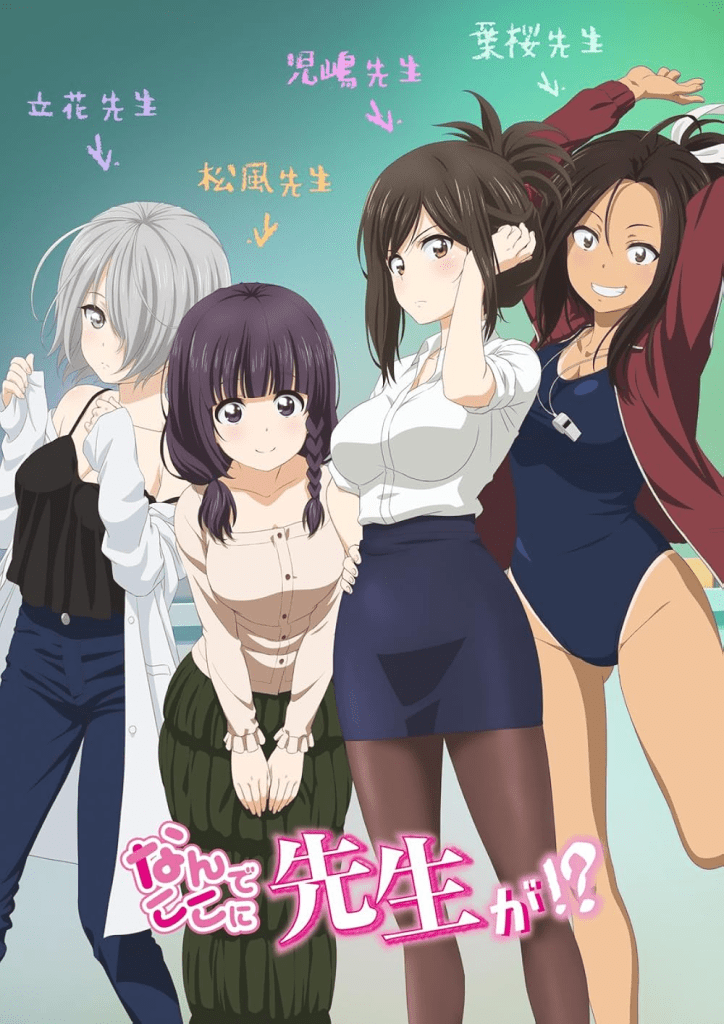
      Known in Japanese as Nande Koko ni Sensei ga!?, the series is about a quartet of female high school teachers of different personalities and subjects who develop romantic feelings for their students. A slice of forbidden fruit that can’t work due to a power dynamic that this anime seems to have a lot of fun with and far from the only series animated or not to try this. Most other anime go the “incest = wincest” route of forbidden fruit. From what I’ve seen, there’s a bit of overlap between teacher-student romance and office worker romance, appearance-wise as both tend to feature smartly dressed love interests with professional presentations, but under scrutiny these “professionals” aren’t immune to clumsy f[clicks]k-ups from time to time.

      What I remember from Sexy Teacher, Bombshell Wife was that the four teachers all behaved different in front of their respective classes compared to their love interests. Language teacher Kana Kojima was dubbed “Kojima the Demon” because she’s known to be demanding in class, but in front of her love interest, Ichiro Sato, she can behave just like Hinata Hyuga, albeit less creepy. Art teacher Mayu Matsukaze is a busty shortstack with a demure personality, affectionately nicknamed “Lady Matsukaze” for her kind personality. Cupid’s Arrow also makes a fool of her when she’s next to her love interest, the towering gentle giant Rin Suzuki who “helped” her deliver important paperwork. For romantic backstories, this is right up there with a comedic plot of being helped by the protagonist and the “help” in question was just a dropped pencil, or a notice of an untied shoe. Well, it’s simple…

      Gym teacher Hikari Hazakura is a trademark, tanned, big tittied tomboy, the kind who’d encourage a novice swimmer to improve by starting at the deep end and giving an after action report, hoping to see her students become Michael Phelps. One student, Takashi Takahashi, is the one she gets real touchy-feely with. They later develop romantic feelings with each other. Finally, there’s the school nurse: a Kuudere named Rei Ayanami Chizuru Tachibana, who’s been dubbed “Absolute Zero,” and the nickname isn’t lost on her in the series. She wants to be closer to the students, notably one Ko Tanaka, and over the course of their arc, they grow so close they lose their virginities together in a love hotel. Going further than Kojima who was engaged to Sato at the end, a bonus chapter reveals that they started a family together. Obligatory, “silent in the streets, freaky in the sheets.”

      Ecchi funtimes all around, but with most anime these days merely advertising the manga without guaranteeing a longer run, the anime covered four arcs spread across a miserable 12 episodes. We’re far and away from the likes of Azumanga Daioh and few are expecting a Yotsuba-to! adaptation anytime soon, but AzuDaioh was able to stretch and progress a four-panel manga over the course of 26 episodes in 2002.

      But expanding on a romcom could ruin it, you’d argue and if The Way of the Househusband on Netflix is an indicator, then yes, putting effort where it isn’t needed and ignoring it where it is needed would’ve netted us a piss-poor adaptation of Yakuza Yesterday, Husbando Today. So why don’t I look back at Why Does My Teacher Want My Heart? as fondly as others? Largely because of its length.

      I gave it some slack yonks ago when I watched it because it did make me laugh with the short time I had with it and also the horniness at the time was on autopilot. My braincells fired up at the end when all the teachers and love interests got together toward the end to announce that some of them were dating, engaged, married, or expecting.

      And then it just ended. I didn’t know at precisely at the time, but with only 12 episodes, it felt like more could’ve done even with just the Fab Four and their Lovely Maidens. The source material even lists more than just the characters that got to the anime. So, is this a recommendation in favor of the series or not?

      Again, the braincells were out to lunch while the horniness took command, but looking back it’s nothing more serious than a “haha look at this fanservice” gradually evolving into “you may now kiss the bride.” My post history is the evidence needed when I say that I’ve seen this s[bells]t before. It’s also evidence that I know what I like and while I’m not gonna say it wasn’t up my alley, if I’m gonna watch ecchi/fanservice/hentai, a plot can go a long way. Came for the booba, stayed for the story gambit and this may be part of the pipeline into erotic fiction, or it may have been a bit earlier than that… Hmmm…

      I cannot say with certainty. For my recommendation, you’re more than welcome to see I Found My Wife in High School, and She Wasn’t a Fellow Classmate up to the last episode and continue in the manga to see what didn’t make the cut, it has 12 volumes and the anime was followed up with an OVA I haven’t seen in 2019. But for something somewhat more grounded, feel free to pair it with 2002’s Please Teacher!

      Off topic, I simultaneously adore this old art style and can’t disassociate it from some hentai I’ve seen or read recently.

      Happy 4th of July, fellow Americans!

      Middle-Aged Salaryman Becomes Otome Villainess

      Isekai strikes again

      Remember when I said that I don’t particularly gun for isekai anime? Well, it’s not because I have strong feelings towards it; it’s quite the opposite. I’m indifferent. A few good isekai will make the rounds and come up on my radar a few months after people finally stop yapping about them… except in this case where I discovered this one due in large part to its upcoming and currently airing anime adaptation that I haven’t been able to access through the usual channels.

      Created in March of 2020 (flashbacks), the manga follows middle-aged salaryman and damn near everyone’s Ojiisan, Kenzaburo Tondabayashi, 50something pencil pusher whose reward for the consideration of a young boy’s life is an isekai journey into an otaku blindspot of his that is more of a specialty of his daughter, Hinako: an Otome video game, known as Magical Academy: Love & Beast. For those who don’t know, the Otome genre of visual novels and JRPGs consists of a female protagonist and series of branching story paths that determine the fate of the characters in relation to the MC. More often than not, the MC faces a challenger in the name of the sadistically evil villainess as a competitor for the affections of the same male romance targets.

      In recent times, the isekai genre has begun to saturate with a twist on the formula by inserting Truck-kun’s victims into the minds of the listed antagonists. And in the case of My Dad’s in an Otome Game?!, Mr. Tondabayashi is an ultimate fish out of water. Or he is in regard to this specific genre. As luck would have it, Kenzaburo and his wife, Mitsuko, are expert otaku having been adolescents and young adults during the boom of the 80s and 90s. So Hinako’s parents are intimately familiar with some old school anime that have found new life online in memes, not the least of which include this:

      There’s a story of a Japanese man who, at his first job in the 90s, spent a significant portion of his paycheck on VHS tapes of Yu Yu Hakusho, Hajime no Ippo, Captain Tsubasa, and Neon Genesis Evangelion. That man now works in a museum where most of his collection was donated. The rest sold well online for a collective hundred thousand yen. I made that all up, but how far outside of reality is that?

      As a result of Kenzaburo’s and Mitsuko’s experience in the medium, they practically raised Hinako on the same animanga series that shaped their youths. And like the child of an otaku, she went on to discover her own favorite animanga genres. Something I share personally having grown up on Naruto, Bleach, and Dragon Ball Z, while my mom and uncle were also present for DBZ’s western debut alongside Speed Racer.

      You just know a series is influential when the west tries to ape it to mixed results and more than once.

      Following the isekai-ing incident, Kenzaburo navigates the game with his limited knowledge unknowingly aided by his family back home. The set up is not dissimilar from tackling a problem with an outdated but still effective solution, sort of like fighting a modern war from the trenches or on horseback. Mounted riflemen!

      The fish out of water comedy in this anime is the contrast between Kenzaburo and the in-game villainess he’s currently piloting. A nasty wench named Grace Auvergne, she has a reputation for being as delightful and radiating as nuclear fallout. Toxicity is more than just a System of a Down song and Grace pre-takeover was a textbook mean princess. Berating the help, unrealistic standards, short temper, a cutthroat attitude, and a silver tongue sharp enough to dice your soul like onions on a chopping board.

      Post-takeover, Kenzaburo overriding her character has transformed her into a firm but considerate character. She respects her servants equally, lifts their unforgiving standards, lengthens her fuse, and although still confident, she’s not a show-stealing showman. She let’s the game’s protagonist Anna Doll get her time of day, assisting and dare I say playing cheerleader for her.

      This is the result of Kenzaburo empathizing as a father, and although I’m currently watching subbed, the comedy has transcended the language barrier. It’s never not funny to watch Grace/Kenzaburo attempt to be an intimidating villain and have his better nature overpower her villainous intent. He’s aware of his role as the primary antagonist, but can’t help but be a gentleman. He simply spent too much of his adult life living well.

      Now you may have caught on that I listed Kenzaburo as another of Truck-kun’s victims and he is, but perhaps because he’s built like a brickhouse compared to the popsicle sticks Truck-kun normally runs over, he’s spared death in favor of a coma. So Truck-kun only gets half a point for this. Aside from that, Kenzaburo’s condition is stable physically while mentally he’s extrapolating with incomplete information on a genre he’s not intimately familiar with, but will try his best to play his part. The keyword being try, because the first few episodes do him no favors whatsoever.

      As of writing, there’s 8 volumes, 4 of which have been translated online and the anime recently concluded with 12 episodes. Of the available services to watch it for yourself, there’s HiDive, any pirate site for our unscrupulous types, and would you have it: YouTube. For now, anyways. It’s only a matter of time before the Chad uploading them as they air gets the channel terminated for theft.

      Channel: WOLF RECAP

      Let me use my Made in China Nostradamus powers and say this channel will go under before October 2025. Watch it while its fresh! Or get HiDive; I’m not your boss.

      What is Life Without My MMOs? (T^T)

      Life is not Daijoubu

      On a day ending in Y, I decided to get through another anime in my never-ending fortress: Recovery of an MMO Junkie

      Although a manga, it began serialization as a webtoon before getting physical. The story is described as budding romcom between two successful adults, one who abandons the route of salarywoman to become Queen NEET (Not in Education, Employment or Training) and one who is still a gainfully employed salaryman. NEET extraordinaire is female MC, Moriko Morioka, who spends at least 48 hours a day on an MMO called Fruits de Mer. Next to her is the male deuteragonist, Yuta Sakurai, a man in the same position that Moriko left in favor of the NEET life, and more seasoned in FdM than Mori-mori. So much so that he offers to help her learn the game.

      The twist here is that both are playing the opposite gender in the game with Mori-mori creating a male character named Hayashi and Yuta creating a female character named Lily. Accurate depiction of gamers thus far, creating eye candy for personal ogling for every 12 hour session.

      I couldn’t find any other examples for this. Just know that it’s common, even I do it.

      Unbeknownst to the players, however, is their knowledge of each other outside the game. They meet first in passing and then are set to connect over the course of the anime, but in a case of dramatic irony, the viewer is privy to their connection in the game. So while the relationship is developing virtually, reality playing catch-ups to what’s going on elsewhere.

      The crux of the series is largely about shutting in from the outside world due to overwhelming circumstances. Life throws so much at people that sometimes disconnecting is a way to recover from the barrage of hits. However, this can easily turn into a double-edged sword if the shut-in/NEET is not careful.

      It’s pretty much this meme except the top and bottom images would be separated by a text that reads “[Length of Time] Later” in this specific context. Moriko started off rather well as a salarywoman, but the workload got its own growth spurt and she was unable to keep up the pace. Shackled only to her desires now, she games and goes about her days as she sees fit. As a consequence, her diet is negatively impacted, her sleep “schedule” is interrupted, and I’m pretty sure she touches grass only slightly.

      This does touch on a concept that is all too common across East Asia. Most of these nations are culturally collective and most of the societies therein tacitly demand that everyone pulls their weight no matter what. You’re still free to choose the path you walk, but the culture means that whatever path you choose must be committed to absolutely. No slacking, no sticking out; individuality stays home where it belongs. This concept has supporters and critics and writing critically about this, the detriment can at times be twofold. The pace can be too much for some to bear but for those who can stomach it can only take so much, such is the case with Moriko and her choice to become a shut-in.

      It’s not unique to East Asia, but it tends to be quite pronounced, especially if the culture reveres the words of its elders extremely highly. Having said that, Moriko’s life as a NEET isn’t the end of the world for her, which sounds like a variation of “I can quit whenever,” but the circumstances that led to her meeting Yuta/Lily do help.

      For Yuta, nearly the opposite is true for him. Not a NEET and most likely wouldn’t be one by choice unlike our Queen Moriko. Fruits de Mer is but a hobby that costs a fraction of his earnings, though likely not as much as Mori’s. A socially awkward man using the game to help him communicate, although I call it luck that he met Mori in real life and her character Hayashi in the game, this is a mutually beneficial relationship for them both.

      Based on Mori’s past life as an overworked horse, she clearly didn’t have many problems connecting to other people. Yuta, however, does have this difficulty and it shows several times across the series. In FdM, the script is flipped once again, Mori only knew how to brain herself on a bit of crumbling wall in comparison to Yuta who, through experience, learned how to break the wall down with more than just his head.

      The series definitely lives up to its name, it falls under the spoiler category all things considered, but knowing the MMO junkie returns to the real world (while occasionally logging into the game) isn’t a turn-off. Matter of fact, the magic is in seeing how the characters develop. I know I mentioned that tuning the outside world can be detrimental, but with the context of this series, it’s both subjective and spontaneous. Each case is unique and whatever gets the person in question to go back to developing healthy relationships varies. There are real-life tragic cases of people dying in seclusion, but there are beautiful tales of people coming back from these dark places.

      The series also serves as a connection for those who’ve personally walked down the path of the reclusive hermit. No matter who you are or where you’ve been in life, I wholeheartedly give this a recommendation, especially since it’s bound to connect to a wider audience post-COVID.

      Also, Moriko is cute as heck. OBSERVE!

      One more thing: this blog post from 2022 offers a more personal story.

      The Gyaru Trifecta: Years Ago, Recently Finished and Going to See?

      I’ve had quite a lot of time to think about this genre.

      Since this blog began, my specialty has been animanga coupled with video games, film, and television. Within animanga, there are several genres within this medium I always make a beeline for and in recent memory it’s focused on a single archetype: gyaru-centric romcoms. I know I don’t write the most about these, but they are noticeable enough that I can’t help but circle back to them. From a series I took a peak at thanks in no small part to a WatchMojo video about s[flies buzzing]ty girlfriends to one that I’m pretty sure was in the line up of Google searches whilst looking up the first one. Completing the trilogy of gyaru romance anime is one that was fawned over in online forums and by anime-themed media outlets for breaking some old tropes… apparently.

      Even though I’m a writer, some things still fly over my head at times. Not gonna say outlets like Kotaku or Comic Book Reader are straight-up drowning in manure but to borrow a quote from Tactical Bacon Productions, if games journalism is the corpse that keeps in twitching, animanga journalism in the hands of guys like these are the gasses that keep causing that same corpse to burp every now and then. Be that as it may, these outlets have their moments of journalistic brilliance; and to compare the likes of My First Girlfriend is a Gal to Hokkaido Gals are Super Adorable to My Dress-up Darling would seem impractical considering what they all cover, not to mention Dress-up Darling forms the “Going to See?” part of this post’s title. Still, it got enough love and exposure (and memes) for me to get the gist of it from just the introductory blurb, so rather than treat my imminent analysis of This Gyaru Wants me to Make Her the Cosplay Queen as a holy text, take it more as a shaky summary from a dubious narrator.

      Years Ago:

      I’ve went over this before, but this was the first series I ever viewed with a gyaru deuteragonist and based on the writing and characterization it’s 100 percent a relic of its time. Basically, Junichi Hashiba asks a popular gyaru, Yukana Yame, out on a dare who teases him at every turn only for this mutual joke of theirs to form into something genuine. It’s a 10 episode series whose purpose was to promote the original written source material, and at the outside. Junichi’s prime motivation was to punch his V-card with an anatomically-blessed girl, personality notwithstanding, and you initially get the impression that Yame is the queen of keep away, dangling a carrot in front of a stick like Makima from Chainsaw Man but way less malicious or vile.

      The initial motivation by Junichi puts him in the same shoes as Highschool DxD’s Issei Hyodo but they diverge not just in the types of characters they are or are going to be or even the types of series they represent. Issei may be a pervy degenerate, but I don’t recall him having friends that low. The most they’ve ever done as a trio was spy on the girls changing a la Porky’s, but without Issei, they’ve just been getting jealous that the school bombshell and occult club leader Rias Gremory reciprocates wife vibes. For Junichi, what he’s gone through was a series of shot-in-the-dark dares with little expectation and even build-up so his Surprise Pikachu face is apt considering his reaction in episode 1.

      Channel: Ben Senpai

      All things considered, for all the praise Dress-up Darling got for breaking the mold, it’s not like any of that was absent in Hajimete no Gal, though this series didn’t break the mold 100 percent. There were still a few tropes, some of which may or may not disgust you, the viewer, but the one that separates this from the other two series is the characterization of the gyaru. Yukana’s not a walking Hokkaido Tourist associate like Minami Fuyuki, nor is she a doujin otaku like Marin Kitagawa. She’s the embodiment of the stereotypical gyaru and by all accounts, your countries archetype of the standoffish, at times bitchy popular girl. When I was growing up the centerpieces for this archetype on TV wound up being the cheerleader types, the overconfident pretty girls even though this flies in the face of the reality on the ground. Not that there aren’t those types of girls, but that the description is grossly overrepresented when they really might only make up some 5 percent of the actual high school or even college cheerleaders. F[broken glass]g Hollywood and their f[meows]g tropes.

      But I digress. Both Junichi and Yukana start the series as sleazy opposites, but they later grow to become two sides of the same coin, especially when they realize how much they have in common. Now I have to dig into the reserves of my memory banks to specify those commonalities, but on the surface, they both have a series of friends who root for them every step of the way. Last time, I focused on Junichi’s loli-loving, pedophilic friend, Minoru Kobayakawa, but on the other side is Ranko Honjo who holds sole self-proclaimed rights to Yukana’s virginity, downright threatening to take both hers and Junichi’s before he gets a turn. And that description alone is probably vague enough to make the more cultured among you think back to a similar sounding doujin… one that I don’t mind checking out. No, not for research purposes, I wanna add to this fortress I’ve begun building for myself. I wanna build an NSFW dungeon.

      Have my opinions deviated any from my initial description of this series? Hardly. Even now that I’ve got a summary open in another tab on my browser, I’m glad to know my memory isn’t that f[plastic wrap]ked. Recommendations? Well, the anime’s only 10 episodes so finish those 10 then go to the source material if you want some more.

      Recently Finished

      At the risk of sounding like I’m pissed or making this post a correction of the record from s[burps]t said before by the typical media outlets, Hokkaido Gals is another one that breaks the mold especially in the Gyaru space. Actually, that aspect isn’t even worth mentioning anymore with more and more romcoms debuting with gyaru protagonists/deuteragonists who are less and less of the standoffish type and more and more of the lovey-dovey, “How to Be a Loving Wife” type, which calls back to another meme that floats around especially some of the wholesome forum posts online.

      More power to you, ghost of Shinzo Abe, but your subliminal messaging seems to be working more on the mangaka’s mindscapes than it does on their audience. Not to mention the international audience being more likely to have started families than the Japanese and Korean audiences if the demographic statistics aren’t completely fudged over.

      For tropes broken and in serious disrepair, Kitami Gals Are Like C-U-T-E, puts us in a notoriously freezing part of Japan. Gone are the days of waiting for a regular winter in Tokyo of all places; come up to Hokkaido where it feels like the northernmost part of Minnesota regularly. Speaking of which, that’s precisely the accent used in the English dub of this series. Fuyuki, Sayurin, and Natsukawa all were cute in the manga, thanks to Kai Ikada’s magic, but the gongs of kawaii sounded the loudest when they were given upper Midwest accents! Holy North Dakota, I didn’t think it would open up a blindspot in my US geography; exploring the Deep South at the expense of the Midwest and Mountain states.

      It doesn’t deviate that much from the established gyaru norms though, seeing as the girls all still dress like gyaru albeit adjusted for a colder climate… somewhat. Fuyuki is definitely the equivalent of that one kid you know who’s worn shorts and sneakers in at least 20 inches of snow. I’m not sure if there’s a European or Asian variant of this, but I wouldn’t put it past a Korean or Finnish kid to try it at least once before. Maybe in the age of pen pals they might’ve heard of the phenomenon through the grapevine, who knows?

      Refreshingly, Fuyuki, Sayurin, Natsukawa, and Tsubasa, the main male protagonist, aren’t fickle like the protagonists of My First Gyaru GF. Naive and wishy-washy, definitely, but not fickle. Comparatively, they may be less confident seeing as Tsubasa grew up in probably the most average, traditional Japanese household prior to moving to northern Hokkaido while Fuyuki was born to be a gyaru, fashion accessories and cell phone in hand, Sayurin adopting the look sometime in between intense sessions of Animal Crossing and Natsukawa unconsciously marrying the library. They each get along swimmingly as friends, but unlike Yukana and Junichi who have plans to f[door closes]k in the imminent future (or at least entertain the idea), none of the characters in either the anime or the manga (up to the chapters I’ve read, which isn’t that far from where the anime ended) have expressed anything beyond a close bond crossing into romantic development. Spoilers to follow: the latest of these developments involves a friend of Sayurin’s practicing for a swimming competition where after practice has concluded, Sayurin tearfully confesses to the friend (a tan gyaru, holy s[surprise music]t, there’s a lot of them) that she’s fallen in love with Tsubasa. As far as I’ve read, she’s the only girl to announce these feelings publicly to anyone and there’s tens of chapters for me to thumb through so I’m in for further developments as soon as I can find a manga hosting site that doesn’t redirect me to another series or refresh with every click. The things I face as a content pirate.

      Going to See?

      The darling of 2022, My Dress-up Darling did get its praise for breaking the mold in several areas, notably for giving us another shy, uncharismatic protagonist. Wakana Gojo isn’t Monkey D. Luffy; he’s more like Tanjiro Kamado in the sense that he has a big heart. From what I’ve seen at the outset, he wouldn’t take up arms or get into a street fight, not at least without a kick in the pants to get him up to speed. Gojo seemed to be more the type to let things wash over him without resistance stemming from an incident where his love of hina-doll making was grossly insulted to his face by a girl who we later learn had a crush on him.

      Add the Guts theme from Berserk and you’re accurate to what little Gojo-tan felt that day. Fast-forward a decade and hiding his passion was what got him through the years until Marin Kitagawa, our lovely gyaru deuteragonist and thinly-veiled stand-in for Sydsnap, plays the part of the extrovert adopting the introvert. It was a joke at the time that this blonde girl looks and behaves like the actual aforementioned YouTuber down to a T, but the joke was scarily accurate to Kitagawa’s character wholesale. Like Sydsnap, Kitagawa does have a passion for a lot of the typical otaku interests and hobbies, especially the ones specific to female otaku (IYKYK), among them hentai and eroge and the less savory tags for each of them.

      But the one that makes up the title of the series is cosplay, which she’d like to do with more polish but is unable to due to a lack of dress-making experience. Enter Wakana Gojo whose specialty is dress-making for hina-dolls. These combined forces make her an unstoppable force in the cosplay scene and the more they hang out the more Kitagawa realizes that this off-the-cuff ad hoc union has developed into a blossoming romance, though only she realizes this as it takes Gojo more time to understand what he feels when she’s around–which circles around to an age-old trope that has its roots in many series across the globe called “Everyone Knew but Them” where the couple is unaware that they’re a couple, but the hints were picked up more easily by their friends and other outside observers. Let this meme explain:

      Are they dating? Worse, they’re stupid.

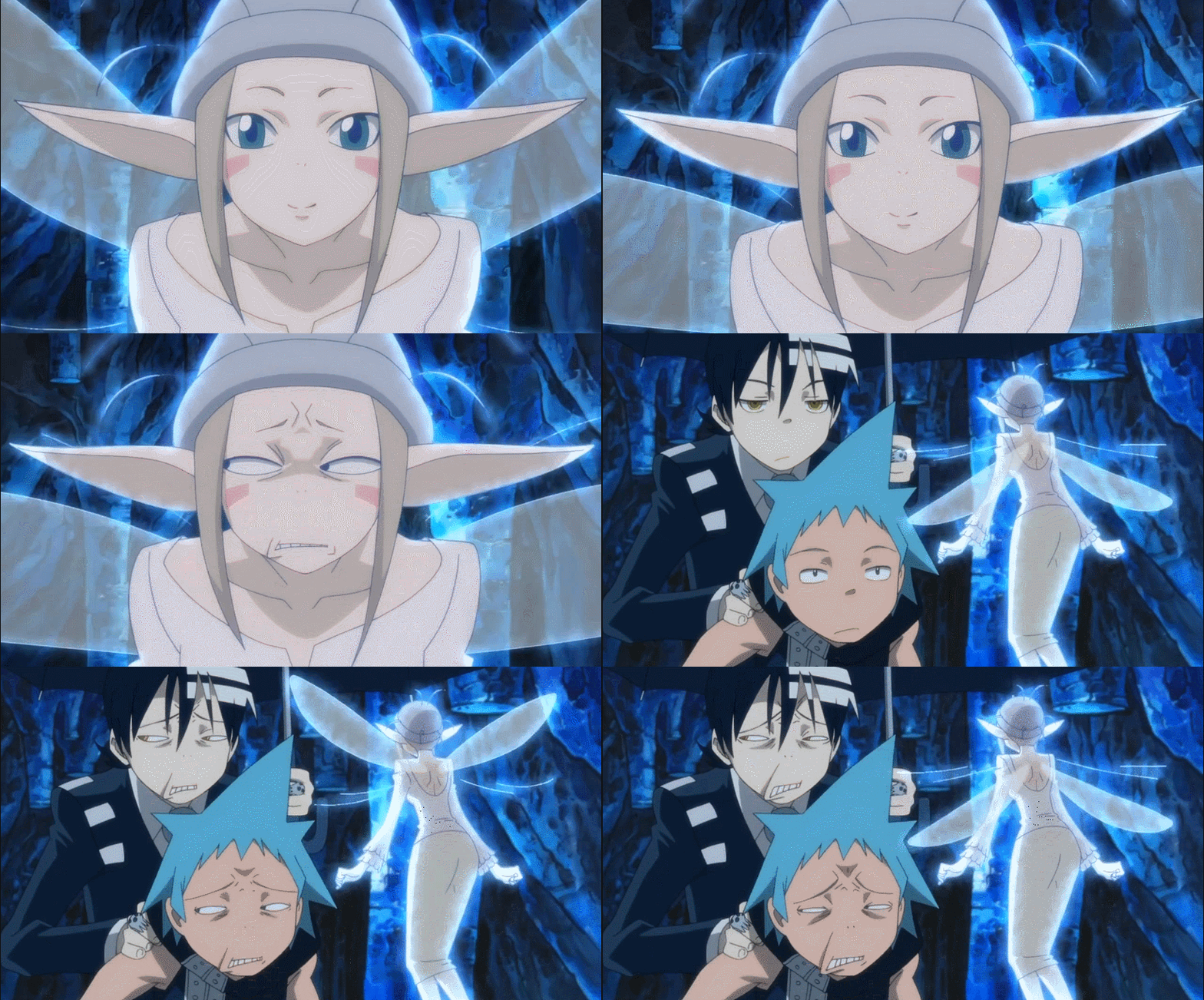
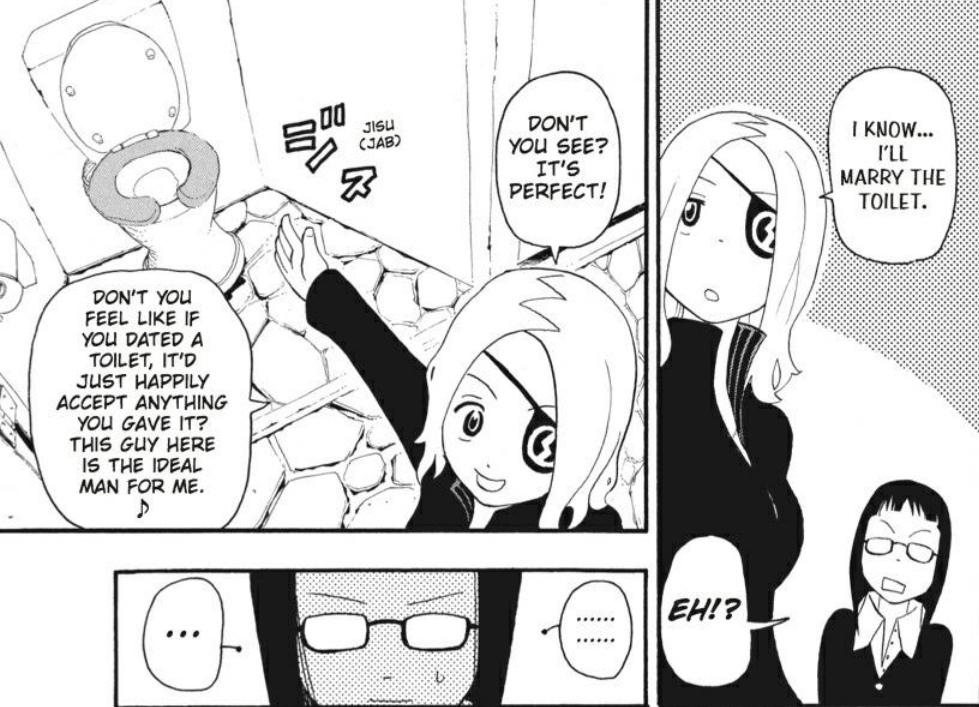
      But whoever said love was straightforward? We weebs and otaku would fall for inanimate objects if they came to us with a bouquet of roses and dinner plans to an expensive French restaurant. I’m not making that up, by the way. One of the teachers from the Soul Eater series was about to drop everything to be happily wed… to a toilet.

      I’ve talked before about thumbing through the latest chapters of the Dress-up Darling manga out of curiosity and hearing that the girl who first prompted Gojo to isolate himself and his hobbies from the rest of the world was coming back to apologize for her childish behavior back then, claiming jealousy over his hina-dolls. Unreciprocated crush plus dense boy equals “what’s that? you like something more than me?! You’re stupid!! I hope [my lawyer has advised me not to continue this example]!!!!”

      While writing this post, I was curious if I was able to watch the full series without having to upgrade to premium and sure enough as of writing, Crunchyroll is feeling generous with this series in particular and it isn’t even a legacy series like One Piece or Dragon Ball. I may see it for myself and continue on in the manga where the anime finishes like normal. It’s just a matter now of putting it in the timeline somewhere.

      This is gonna be the biggest animanga fortress I’ve ever built.

      My First Gyaru Anime

      This may or may not ring some bells

      A while ago, I stated that the YouTuber Knowing Better claimed that Hollywood has a greater influence on the military than you’d believe. Sticking with that logic, based on my observations, I want to say that it’s a bit similar in Japan. Stories get told and retold and inspire mangaka to start putting pen to panel. In this context, the subject is that of subcultures. If you’re familiar with western culture, you’re familiar with some age-old subcultures: the goths, the jocks, the nerds, the popular kids, the emos, the preps, and the townies–all of which can be found in RockStar’s hidden gem Bully.

      You already know I recommend the s[marbles falling]t out of this.

      In Japan, there are several other subcultures that have come and gone over the years: bosozoku (motorcycle enthusiasts), delinquents (bancho/sukeban), otaku (nerds but extra), and the topic of this post: gyaru.

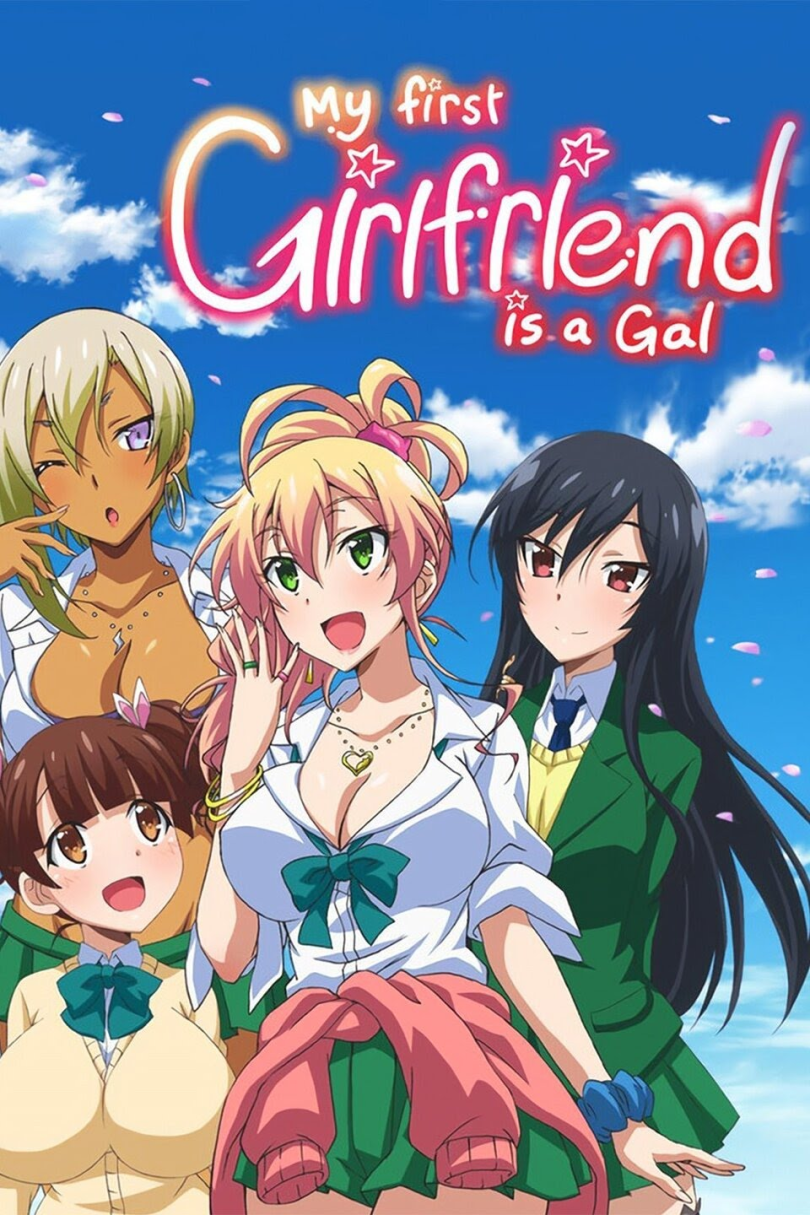
      I’ve talked before about gyaru/gal animanga, including one that got an adaptation this year. Now, we’re taking a look at another gyaru-centric series: My First Girlfriend is a Gal (alternative title: Hajimete no Gal).

      Another relic from my community college days, I was made aware of it from a WatchMojo Top 10 list on the worst girlfriends in anime voiced by Todd Haberkorn when they kept him locked away in their basement. Don’t worry, it was more of a mancave; think of it like the Scandinavian approach to imprisonment.

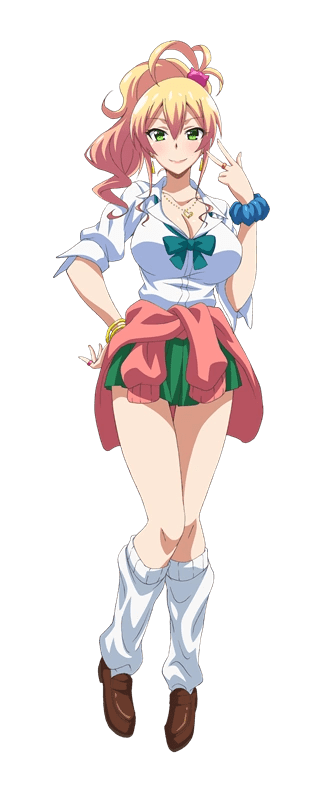
      In that list, one of the characters from the anime, deuteragonist and love interest, Yukana Yame, made the list for essentially leading the protagonist, Junichi Hashiba, on. Not an unfair or untrue assessment, but when I had a look, I felt that there was more to it than that. But I’m somersaulting over a battleship here, let’s build up.

      Typical romcom anime, a trio of dudes have a conversation describing perverted and sexual things about the girls in their class. One such girl makes the topic of conversation and on a dare, Junichi is challenged to ask her out on a date. Scummy. And Yukana entertains it. Also scummy. Honestly, I remember being that horny both at that age and when I watched this series, and I did watch it from beginning to end, mainly because of the eye candy.

      These days, the terminally online “crusaders” would cry fowl at a busty teenage girl, but this is where I play the hypocrisy card as just about every single one of us knew or knows someone whose bodies developed that fast. I definitely did. What the hell happened to “no bodyshaming?” Hmmm? But f[anime girl moaning]k it.

      Now that I look back on it, with the experience I’ve gained (mostly from observing other relationships flop around my single ass), never mind a bond formed by ignorance, this is a bond formed by deception. They didn’t even start out taking each other seriously; Junichi was expecting the hardest rejection while Yukana initially planned on milking him dry without using her hands. I’m very sorry about that; it’ll happen again.

      But to play Saul Goodman and defend these clients, there is some character development for them both. They hang out more often, and Junichi gradually adheres to the lessons imparted to us by history’s greatest philosophers: the Spice Girls

      If you wanna be my lover, you gotta get with my friends

      And Yukana’s BFFs include but are not limited to Ranko Honjo, a contendor for the Bimbo Olympics who wants to f[snaps fingers]k both Junichi and Yukana (most likely at the same time); Yui Kashi, a Twitch streamer whose desire is to wrap everyone around her finger (she ain’t beating Makima, just saying); Nene Fujinoki, Junichi’s childhood friend and one of the bustiest lolis I’ve ever seen until Ilulu (also the subject of a specific character’s troubling fetish; more to follow later); and a few others who, although reportedly got more love in the anime than the manga, not enough to make a big enough impact over the course of 10 episodes.

      Even though it doesn’t really start out with the best of intentions, the character development does leave them marginally better than when they began. Junichi stops letting his penis think for him the more he learns about Yukana and her… well, it’s not a harem, but she functionally has more women than Junichi will hope to have. Out-rizzed by your own girl…

      Fortunately, you know who to turn to whenever you want a threesome.

      If Yukana was ever the subject of salacious rumors, her behavior on screen discredits such slander. Like Junichi, it’s highly suggested that not only is she too a virgin, she may be even more nervous about her first time than Junichi is. The gyaru aesthetic is all for show and tell, as in she’s showing her friends and the audience while telling us that she just likes pretty things. But that’s a given.

      Conversely, to use the teachings of Lao Zi, within this light side is a bit of a dark side. I mentioned earlier that one of Junichi’s friends, Minoru Kobayakawa, has a troublingly illegal fetish that conjures up the message of the Oingo Boingo song Little Girls. Not lolis or short girls, young girls. He does nothing to hide it in the anime (no clue if its subdued in the manga) and will remind you what his ideal type is. He’s a disturbingly honest Harvey Weinstein sans the influence of Hollywood kickbacks.

      The series plays it off as a joke which is probably lost on me since I cringed every time Minoru made an appearance. All things considered, the other Minoru from My Hero Academia was divisive in his own right, but probably shouldn’t have had as much hate directed towards him as this Minoru. Inappropriate and depraved, at least he eyed up adults.

      Also, he gets humbled at every turn so whatever debt he owes, he’s overpaid it.

      The other Minoru… one of the other guys said it best when he claimed he’d end up on the sex offender registry. Don’t take this as a dissuasion or an argument against watching the anime; this is still a recommendation, just keep in mind that this troubling aspect is in the show. It’s a short viewing, 10 episodes and an OVA that I haven’t seen myself. And of course, you have the choice of sitting through ads like a trooper and joining the dark side and becoming a pirate. The side effect of the latter choice is fighting Luffy.

      You Dropped This, Queen of Karuta

      Another niche series about Japanese culture

      Certainly has been a while since I’ve covered a more niche animanga series, one that had a marketing push on the associated streaming sites, notably Crunchyroll and the now-defunct VRV in 2018. I remember as I’d paid them no mind whilst watching Boruto or FLCL or Soul Eater. Recently, I’d been looking more into Chihayafuru as I’d found very few people talking about it and due to more and more action-heavy series getting adapted that year and the years to follow, it’s no wonder it flew under the radar. As I’d looked further into it, it got me thinking about a series I’d talked about sometime last year: Akane-banashi.

      Both are about traditional Japanese cultural products that require research for outsiders to get an idea of what it entails, but can still be enjoyed without prior knowledge; both feature female protagonists engaged in a sport of the mind, further broadening the definition of what a sport is or can entail; both of those female protagonists have a giant competitive edge in said sport; and personality-wise, both girls have a tomboyish history that shines when engaged in their respective sports.

      Akane-banashi’s specialty is rakugo, where a lone performer tells any number of comedic stories on a center stage. Normally, they’re old folktales from Japanese history and mythology, and the last time I read the manga, they hardly strayed from the style of storytelling expected of the time they written/spoken, but can sometimes be adapted to more modern audiences, similar to the 1996 adaptation of Shakespeare’s Romeo and Juliet.

      For Chihayafuru, the tradition this time is Karuta, a card game based on matching similar looking cards, though in the series it’s more about Japanese poetry. This version of the game has a caller who reads a portion of a poem written in Hiragana and the player nabs the card as fast as they can. Experts can get them before the stanza is fully read aloud. The main lead protagonist is Chihaya Ayase.

      Initially, she was (and still is) supportive of her big sister’s modeling future, but became infatuated with Karuta after being introduced to it by a boy from Fukui Prefecture named Arata Wataya. The impoverished little boy didn’t have a lot to his name, living in a dirty, cluttered dwelling with 80% of his clothes being hand-me-downs from relatives. Further isolating him from the rest of his Tokyoite classmates as a child was his “hick” accent. For some reason, people outside of Tokyo Prefecture are referred to like this, which I think is ridiculous, but then again, I live in a country that celebrates even linguistic diversity, so personally, not much separates a Mississippian from a Michigander or a Nevadan. All Americans, different circumstances.

      Still, while Arata struggles to fit in, he’s a Karuta prodigy at a young age, taking to heart the adage of: “If you’re going to do one thing, be good at that one thing,” like Zenitsu’s Thunder Breathing.

      One-trick pony? It’s easy to say that, but different series like Golden Kamuy capitalize hard on one-trick pony characters, from Sugimoto’s extreme (and painful) survivalism to Shiraishi’s Houdini tactics to Ushiyama’s history as a dangerous judoka. Being good at one thing really only matters if its applicable to other things and in this case, Karuta is both the main connecting element for all the characters and the center of a competition within the series.

      Learning from Arata the fundamentals of Karuta, Chihaya is encouraged to go big and make it her dream to become a de facto Karuta world champion, mostly because Karuta doesn’t really exist outside of Japan with the same claim to fame as Mahjong or Hanafuda. Along with the two, an old friend Taichi joins them and his contrast to himself is stark both financially and socially. Taichi is a rich Tokyoite who can actually afford to be petty while Arata’s childhood poverty humbles him greatly. As such, Taichi starts off spoiled and jealous, but his best excuse is due to the high expectations put on him by his family, namely his strict mother. And you thought wealth would be easy!

      Yet as the three rejoin as adolescents, they found an afterschool club called the Mizusawa Karuta club and work towards the goal of becoming Karuta champions. I’m still checking the series out as of writing, having only completed episode 1 and the first chapter (and thus getting the research from the Wikipedia page), but other things that stand out is that it’s my first Josei series. Josei is typically aimed at a demographic of young women and is notorious for its inclusion of romance into the plot. Josei itself, sadly, doesn’t get as much exposure as Shonen, Seinen, or Shojo genres which is part of what hurts series like Chihayafuru compared to Akane-banashi, which is under the Shonen genre and licensed by Shonen Jump and Viz Media.

      Couple these with the niche of Karuta, whoever expected the series to get wide praise would’ve had to fight sleepless nights for something to hardly ever come from conventional animanga media outlets. And that’s quite a shame. No matter what you think of the concept, the series is beautifully drawn and animated–the production quality narrows the gap between itself and something like The Elusive Samurai.

      Channel: Crunchyroll

      Speaking of animation, it’s worth pointing out that Chihayafuru was adapted by Madhouse, responsible for Overlord, Trigun, and No Game No Life. This also brings me to another matter going back to Akane-banashi. Niche subjects especially those that would be found in a book on Japanese history and/or culture don’t often get the animanga treatment and if/when they do, not always successfully. Rurouni Kenshin benefits from the battle aspect more so than its setting, as does Samurai Champloo because both series have a concept that has universal knowledge: the samurai and the ronin.

      Akane-banashi and Chihayafuru differ by offering battles of wit instead of battles of physical strength and power. They both also rely on parts of Japanese culture that rarely get outside notoriety, leading to limited viewership. I have no idea if the performance of the Chihayafuru anime is a case for why not everything will get an anime adaptation or should not, but if by some chance that was the metric in use, then it’s not a fair assessment to make. Even then, it wouldn’t be the first time the art of rakugo was animated.

      Be honest, you only know what this is because of its hyper-energetic ending animation.

      No matter the future of Akane-banashi, it still has a future, whereas Chihayafuru’s manga ran from 2007 to 2022 and its anime running from 2011 to 2020. Once again, I call upon my advocacy of piracy to view the anime and/or the manga with little issue.