One of the few Rockstar products nearly banned in the U.S.
Banning and heavily scrutinizing entertainment products has been a time-honored tradition ever since Mortal Kombat, Night Trap, and Doom were released in the early 1990s. Violence, gore, and in Night Trap’s case, violence against women. All of these follow on a legacy of learning too late that being devil may care about the contents of an entertainment product can lead to controversy and public outcry. Not all of these can be accurately predicted, but if I didn’t do my research on Jaws or Gremlins before taking my kids there, I’d really have only myself to blame if the kids have nightmares.
Never mind the boat, you’re gonna need to explain to the misses why Timmy doesn’t like sharks all of a sudden before sleeping on the couch tonight.
Although not present for the 1993-4 hearings, DMA Design, now Rockstar North (because no true Scotsman would associate themselves with England anything) released a successful series of video games alluding to the act of motor vehicle theft but not necessarily exclusive to such an act. Yes, I am referencing the Grand Theft Auto series and as noteworthy as the attempts to bury this series over the years are, a different Rockstar property was almost the victim of a successful attempt on its life.
For all the flak GTA got against it for its “realistic violence” (let’s be charitable, 2002 graphics were considered realistic at the time), this game originally got what it might as well have been asking for.
The content within was made for the dark web
Released on November 18, 2003 for PS2 and then the other then-current platforms the following April, Manhunt gave the audience very little to the imagination regarding its content. Roughly every object that can cause pain in the real world is itself an equippable weapon, but the weapons themselves weren’t on trial here. Or rather, it wasn’t just the weapons getting a heavier look this time around.
But we’ll get around to that soon. The story is as follows: Carcer City, death row inmate James Earl Cash is put to death by lethal injection in public. Privately, he was merely knocked out by presumably less harmful drugs than what costs millions to pump into an actual live person in the most remote parts of the country. Afterwards, a voice, referring to itself as “The Director” leads Cash around by the nose, whispering into his ears the different functions.
There’s the Hoods, who can best be described as a very loose confederation of low-level blue collar criminals from thieves to murderers to rapists to dealers. This amalgamation of crime and villainy is enough to even get crooked cops on the take. Next to that is the Skinz, a white power skinhead group that, if you know anything about how the Rust Belt came to be, makes for a really depressing state of the region. As for why these neo-Nazi larpers would be after Cash’s head when he’s both white and shaven-headed, well the answer to that has long chain in British and American colonial, citizenship, and race laws on the whole, but the short version deals with perception. Purity, or “join or die” mentality for those who fit the mold on paper, and it’s not like the Nazis were s[nein]t-talkers about that either.
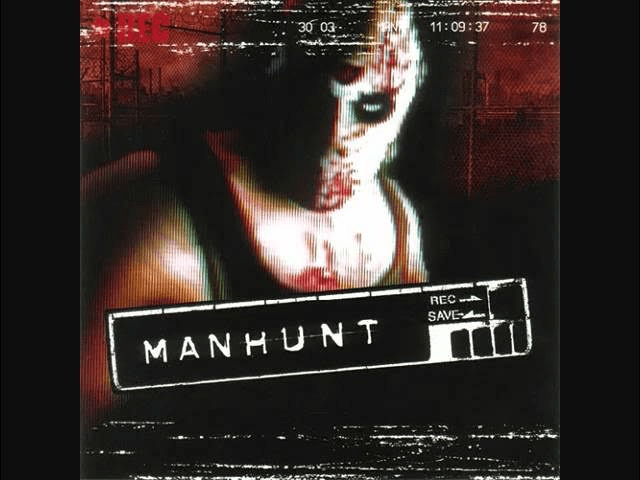
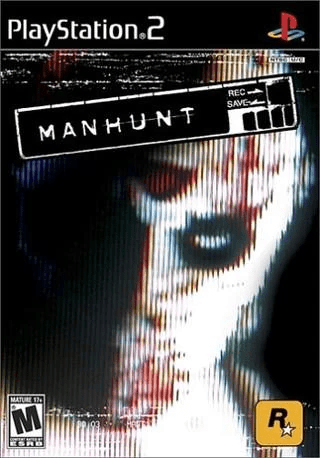
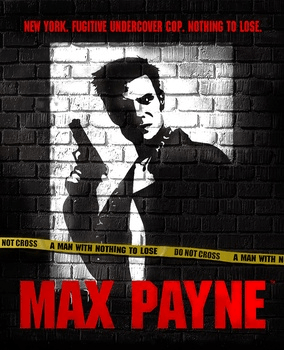
Putting the Skinz on the cover of the game’s box art works for shock value if you ask me
After these yo-yos, it’s the Wardogs, a paramilitary group made up of veterans, survivalists, and mercenaries. Pulling from real-world examples, outside of foreign volunteers and conscripts who choose or are forced to fight respectively, mercenaries have never come cheap and paramilitaries typically fight for themselves or the highest bidder, though sometimes they have an ideological goal in mind. Real world paramilitaries include the historical SS and select conscripts fighting for Imperial Japan, and in more recent history there’s the American militia movement from the early 1990s, the Tamil Tigers from the Sri Lankan Civil War, paramilitaries based in the British Isles during the Troubles, some ethnic-based groups from Southeast Asia, notably the Philippines, and numerous others. And I bring up these examples to suggest that the Director has the resources to finance this s[clapperboard]t himself. I’m not crazy enough to watch snuff films and even doing research on them is murky at best, so I don’t know what kind of budget those cinematic horror shows have. Probably not as much as a Hollywood production, but again I’m showing my lack of knowledge.
Following the doomsday preppers are the Innocentz whose name is an apt and disturbing perversion of their patterns of behavior. It should be kept in mind that all criminal organizations are secret societies, but not all secret societies are criminal organizations. In this case, the Innocentz work in tiers each more terrifying than the last from the trademark gangbanger to the thanatistic cult faction to the mentally deficient pedophilic faction, thereby making them the most disturbing enemy in the gang.
And the last round of nasties you fight are the Smileyz, a gang of escaped mental patients who are bizarrely the most vaguely explained faction. They’re not strictly anything, not gangbangers, or white supremacists, or pedophilic cultists; the Wiki makes them out to be the grayest blur in the game.
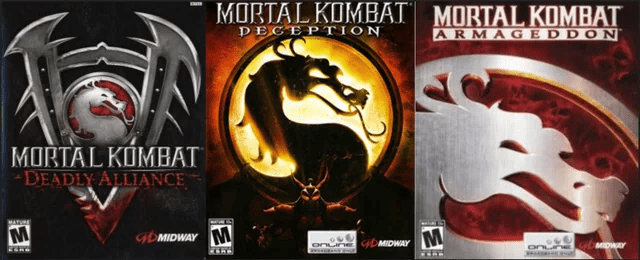
All things considered, this era of games was churning out edgy and thematically dark games left and right. GTA III and Vice City, Mortal Kombat: Deadly Alliance, Max Payne 3 and this. The more emboldened developers felt to release edgier video games, the harder the backlash and the more highly praised the games were to the audience no matter the reviews. A not insignificant portion of these fell victim to cult classic status, neither hurting nor helping the sales of the PS2, but certainly adding to that platform’s library all things considered.
Credit: r/gaming, u/veterinarygamer
And the PS2 clearly had an expansive library!
I highly doubt that Midway Games cared very much about their public image since their revenue came mostly from the arcades, but DMA/Rockstar was taking home the lion’s share of the media’s attention. The fact that their philosophy was too downright tease their critics was nothing short of genius. These days, I know better than to engage with trolls and ragebait, but the savviest of creators can farm their critics for karma, and successfully. This is the philosophy of Rev Says Desu, or more historically, circus freak shows.
The IJA’s 7th Division was a circus all its own
Aside from nanny state countries that historically coddle their populace and refuse their people the right to decide for themselves what they do and don’t like, the US of A damn near banned it thanks to the graphic violence. Mortal Kombat would’ve reasonably been written off as fantasy with all the ninjas, sorcerers, soul-stealing wizards (Farewell Cary-Hiroyuki Tagawa), upright lizards, and whatnot, if it wasn’t for the use of digitized actors and inclusion of blood and finishing moves. For Manhunt and Grand Theft Auto, the fact that these are plausible and can be readily seen by ordinary people away from a computer or TV screen adds to the controversy. No one’s ever seen a fire-summoning ninja throw a grappling hook from his hand, but thanks to the news everyone’s heard of cartels, bank robbers, gangs, and prison escapees.
But even these are classic horror movie tropes. Most of the time, the criminal knows the victim, and most of the time criminals target members of their own communities. The 1 in 10 percent that the media likes to fearmonger over are all rarities. They do still happen but not to the extent that you’d believe.
RNGesus really needs to hate your existence if a guy like this spawns in front of you in the midnight hours.
It’s not like Manhunt is lost on me, the dark atmosphere and easter eggs make it something of a neo-gothic treat, like that time I watched The Addams Family movies and Beetlejuice. But putting it with its contemporaries just makes it a product of the era. As for the gameplay, it’s as strict a stealth game can be, rewarding creativity in sneaking up and killing and punishing any player averse to this gimmick. Not for nothing, it shows that as much of a monster that the Director tries to make Cash out to be (and he’s definitely up there, death row is spared for the worst outside of wrongful convictions), he’s certainly a crafty bastard if you think about it. When there’s 20 of the Skinz or the Innocentz or the Smileys and only one of Cash to go around, your options are limited and outright combat is a last resort.
It certainly demands patience, but can sometimes test your patience. If you’re not careful, the enemy can sense you about to slit them up with a broken piece of glass. Or they can gang up on you with bats or nail guns while all you have are the Kanye West Supreme Brick, your fists, and Philip J. Fry’s lucky seven-leaf clover. Fortunately, the game predates the Ubisoft Assassin’s Creed tailing missions, so there isn’t any worry about having to tail an enemy to a certain location, nor is there a requirement to slice everyone up into lamb chops outside of designated spaces, so you could only cut up a few guys, sneak past the others, get to the goal, rinse and repeat. It might bring down your slasher/snuff film score at the end, but rigid grading systems like this aren’t worth s[grenade]ting your organs out over.
One notable enemy in the game goes by the name of Piggsy. I haven’t reached him yet, but the Director’s use of him as an enforcer when he looks like this:
Definitely harkens to horror movie directors like Wes Craven and Tom Six.
The game and its sequel (which was initially banned in the U.S.) are both available for purchase on Steam, but the game being as old as it is requires some mods to get it working, even if you pirate it from SteamUnlocked. If you’d like to play yourself, consider this guide on the Steam forums if you run into issues like I did.
I rearranged my notes for this, and for once in two years, I’m glad I did
It’s been dog’s years since I rearranged my notes to get to topics I thought would take me longer to complete than normal. Work has had me begging for relief of some kind (more than I can get from a dakimakura or a viewing of my favorite anime):
Unsurprisingly, this is the only SFW version of this I could find.
And outside of The Saga of Lady Rias and Straw Hat Pirate Crusade, I’ve been busy playing a series of games I’ve played before for old time’s sake, and also for some analysis of gameplay and plot details. Additionally, this is going to be a series of posts spanning three weeks, so I’m going to cover the Max Payne series, this week; the 3D era Mortal Kombat games next week, (excluding Shaolin Monks having covered that before); and the HD Mortal Kombat games the week after that. I haven’t gotten through the HD games yet partly because MK9 doesn’t run as well on RPCS3, and it would take a while to grab my PS3 from back home and some of its corresponding games, but this was a quicker and less expensive process. Off topic: American Airlines upsets me greatly.
You may know this as my favorite video game series of all time from this post, but if you’re just joining us, Max Payne holds a special place in my heart. Although it was a culmination of gun-fu cinema that began in the early 1990s, it did wonders to popularize bullet time as a gameplay mechanic helped up by the likes of Hard Boiled and The Matrix. Narratively, the entire series is baked with the type of writing prose that would make The Bard even slightly jealous.
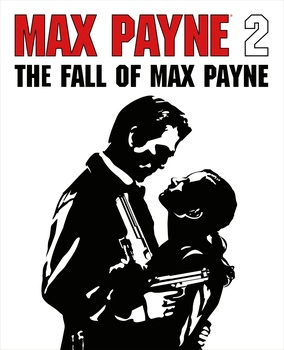
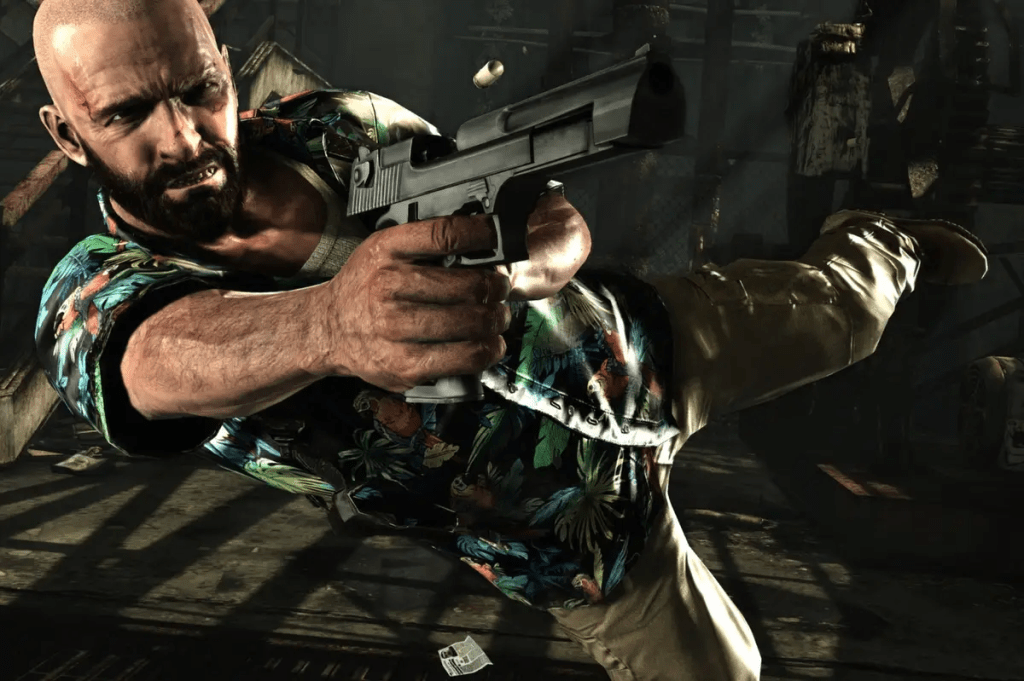
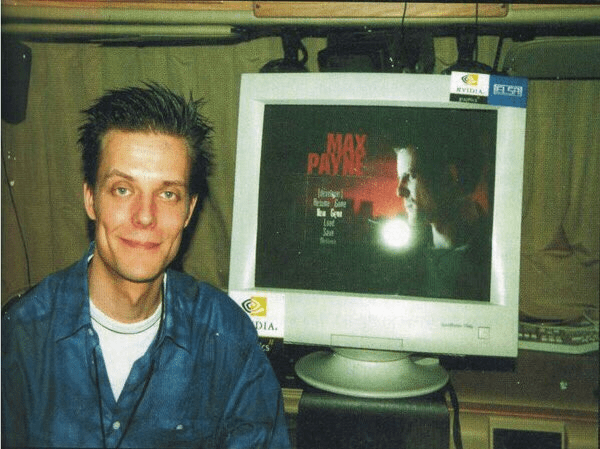
Conjured in a laboratory deep in the recesses of Remedy Entertainment with Sam Lake as its prime director, writer, and face model, the series contains three games all with contemporary settings: Max Payne released in July 2001 set in a brutal winter that may remind some New Yorkers of the city’s worst blizzards; Max Payne 2: The Fall of Max Payne released in October 2003, focusing more on the psychological horror elements; Max Payne 3, doing something completely different by putting it’s titular character in São Paulo, but following some of the same narrative story beats that he’s been through before. So the more things changed, the more they stayed the same… at least on the surface.
This is going to be a spoiler heavy post, but considering I’ve played through the series at least four times before, it goes to show the replayability of the games while also adding in some criticism of the games that I omitted from the first time I wrote about the series.
They were all dead. The final gunshot was an exclamation mark to all that had led to this point. I released my finger from the trigger, and then it was over.
Following a trend that would define select games of the 2000s, Max Payne begins with establishing shot of then-current NYPD-colored vehicles answering to a distress call at the fictional Aesir Plaza. Shots fired/firearm discharges, malicious destruction of public property, numerous charges of manslaughter, and a man who became public enemy number 1 in a New York Minute. Beginning at the end, it works its way back through the narration told in a graphic novel style. NYPD Detective Max Payne in 1998 is offered an accession to the Drug Enforcement Administration by Agent Alex Balder. Max declines and puts away what he promises is his final cigarette for the sake of his infant daughter, Rose’s, health. The offer is still there as Max heads back to his New Jersey home where his family would be.
Unbeknownst to him, his wife, Michelle, and their newborn daughter would be victims of a disgusting drug experiment. The first thing to pop out at Max aside from the dead silence is a tag in the parlor of the house: a V with a syringe running through it like the sword in the Adventure Time logo: the central plot device behind the game, a designer drug known as Valkyr. Next to that, the phone rings and a raspy-voiced woman coldly asks Max to confirm that this is indeed the Payne residence, while he fails to convince her to phone the police. Now that she knows this is Max’s house, she hangs up and leaves him to discover the American Dream being torn to shreds in no time. His loved ones brutally slaughtered by junkies in his own home, Max avenges their deaths there and after the funeral expenses, transfers to the DEA under Balder’s supervision.
Three years of undercover work in the Punchinello family reveal them as the main suppliers of Valkyr by February of 2001. With fellow agent, B.B., Max and Balder are summoned to Roscoe Street Subway Station and are nearly gunned down by the same mobsters in an elaborate robbery through a web of tunnels connecting to a bank where Aesir Corporation bonds are being housed. Max pushes through, though, and stops the in-progress robbery, meeting Balder in the process. Unfortunately for Max, an assassin nails Balder in the head before he’s able to reveal a critical piece of evidence, and to make things worse for Max, with him as the last one to see Agent Balder alive, the NYPD finger him as the prime suspect, so he now has to evade the law while going on his next mission: taking the fight to underboss Jack Lupino himself.
The intricacies and complexities of Mafia hierarchy makes Lupino the second most untouchable man in the underworld, which was what Max expected. Fighting his way through several key figures at a mob-run brothel, Max picks up crucial evidence to clue him in to the wider plot at large. One of these pieces concerns a hooker named Candy Dawn selling sex tapes as blackmail material; the other is the office of Lupino’s lieutenant, Vinnie Gognitti.
An icy rooftop chase leads to Vinnie getting cornered and confessing under duress the location of his boss, who, to put it lightly, has gone mad. “Don’t get high on your own supply” exists for a reason and Lupino is patient zero for why you should never do that. One too many Valkyr injections and the entire Prose Edda sits where his brain should be. Notes collected prior to arriving at his club hint at the frustrations and concerns levied at him at all levels, but Lupino’s lunacy drowned it all out. Taking residence in an occult club, the Ragna Rock, Max explores the gothic revival building in search of the man he believes is responsible for his pain.
You can’t blame Max for pumping Lupino full of lead after their death-defying battle when he squawks at you like this:
Channel: Adddicteddd
Knowing damn well the dangers of Valkyr, Max did to him what law enforcement did to Bonnie and Clyde, the best replica of human Swiss cheese, until hitwoman Mona Sax waltzes in to reveal that Lupino wasn’t even in the right state of mind to try to frame Max for anything, let alone the death of Alex Balder. The real prize lies with the Punchinello family don, Angelo. Lupino was simply a [mad] middleman.
Max can’t refute her claims, but doesn’t. Instead, the only thing he can do is accept it as a lead to the truth. But before he can embark on the warpath to the don’s manor, Mona spikes his drink at the bar. The first of two run-ins with Valkyr puts him into a nightmare he was trying not to acknowledge. He was already living in one, so why put him in another. After that, he’s taken by the mob back to the same brothel he shot up and whacked several times in the head by Francesco “Frankie the Bat” Niagara.
Undefeated and undeterred, Max walks away from the slowest execution to exact revenge on the last of the Punchinello mob, picking up more evidence along the way of the rest of his enemies in the process. Once the Bat is broken in twain, Russian mobster, Vladimir Lem, appears with a deal he can’t refuse. He’s always wanted to say that!
Both men are after Punchinello, and Lem has the means to get him to the don if Max kills a turncoat at the harbor, Boris Dime. Accepting this offer before him, Max manages to anger Punchinello enough to set fire to his own restaurant in an elaborate way to get rid of Max, but the deficit wasn’t worth it when Lem circled back around to pick Max up and drop him off at the manor. Gun-kwon-do ensues and brings Max to the desk of Angelo Punchinello himself.
Crying and begging for a chance to explain himself before the installation of a new ventilation system, the evidence he’s searching for kills him in his own home under the command of the real villain of the game: Aesir Corp. President Nicole Horne. The ruthless, avaricious killer in the midst; the destroyer of Max’s life and livelihood; the one who arguably set the entire series off to begin with. Her lapdogs gun down the mob boss and torture Max with a worse dosage of Valkyr where things get too real for a moment.
Channel: YianKutHexy
The nightmare subsides and he gets his next lead: Cold Steel. A steel mill hiding an abandoned military bunker where the source of Valkyr was found. Stumbling upon Gulf War-era archives, Max makes the same discovery that got his wife and daughter killed three years ago. Following the first of many of Saddam’s Ls, US troops came home with a mysterious illness that today is known only as Gulf War syndrome. Seeing it as a lack of morale, the US government spearheaded a project based on Norse mythology in mid-1991 to invent a drug that would turn our warfighters into war machines.
Four years later, the project was halted due to observations of habit-forming properties and behavior, but being the main benefactor behind the project, Horne was dead set on getting her investment’s worth. Unauthorized, the project was rebooted through dark means and motives. Due to a data leak, Michelle discovered the ongoing project and was thus silenced in order to keep it secret. Horne hoped the junkies, the mob, and the rest of the city would put Max down for her, but proving tougher than a cockroach forced her hand.
Max had seen enough, he had more than enough motive to avenge Michelle and Rose, but there was another loose end to tie up: B.B. Putting the pieces all together, there was a reason he hadn’t seen B.B. since the Roscoe Street Station robbery. Another turncoat, he was also on Horne’s payroll and had been trying to get him killed on her dime. Max realized it late, but better late than never seeing as B.B.’s confirmation as a bent cop had grown irrelevant over the course of the game.
With him gone, Max was contacted by a secret society with deep ties to Horne, the Inner Circle, and its leader, Alfred Woden. The very man Candy Dawn was making sex tapes of for Horne to use as blackmail in revenge and to stop him from pursuing her further.
The amount of influence she had over him as well as the rest of NYC was impossible to measure or imagine, but seeing as she was able to cut the mob itself in on a deal and keep the Inner Circle from going public for years, leveraging their own sins against them, it was a dead ringer for why Max was the only candidate capable of stopping her. Which he does.
Max escapes the attempts on the Inner Circle’s life and heads straight to the Aesir Plaza where the final showdown commences. Numerous obstacles fail to stop Max from getting the revenge he was entitled to, and the fiery send off couldn’t feel any more appropriate, short of hand-delivering Horne to the devil personally.
Channel: KLB TV
His revenge complete, Max willingly surrenders to the NYPD confident that Woden would be a man of his word and bury the charges deep into the hole where his adversaries were sent. But this was merely the beginning of a cacophony of pain.
And we keep driving into the night It’s a late goodbye, such a late goodbye And we keep driving into the night, it’s a late goodbye
— Poets of the Fall
After the revenge fantasy of the last game, the conspiracies that were supposed to remain buried reemerged, this time with new faces. The complicated web Max found himself entangled in started to unravel.
This game takes place in medias res, in the aftermath of a mess Max had made for himself, but right before it resolves itself. Woden kept his word and put Max back at his old job, where a new case involving a series of contract killings, reveals an old face once thought dead before: Mona Sax.
The new love interest, she was last seen taking a bullet to the face at the end of the previous game, only for her “corpse” to vanish after a quick exchange of gunfire. She reappears, revealing her connection to the killings, and due to the conflict of interest, Max’s new partner, Valerie Winterson, takes him off the case and apprehends Mona for further questioning. Max is behaving unethically by choosing her over his job, but unbeknownst to him, Valerie herself is another conflict of interest. Being a lover of and enforcer for Vladimir Lem, he and Mona have both started up a feud, one that ties a third series of people Max has faced before: the Punchinellos.
Old enemies return, loyalties are challenged, and the cobweb breaks apart under intense scrutiny. This game, honestly, suffers under the weight of its own conspiracies, but makes up for it in small increments with more weapon variety and the changing of protagonist perspectives from Max to Mona in a couple of chapters. Mona doesn’t play any differently from Max, but is more long distance combat focused almost always seen with a sniper rifle than the armory Max keeps in his pants.
There may be one too many connecting elements in the second game, but the course of events shows its unraveling. No real friends this time around, seeing as you go from gunning after old enemies to helping them help you uncover the series of killings. And it all circles back to Vlad, his bratva connections, Valerie being his personal mole and mistress, and his pursuit of power in the Inner Circle.
Speaking of which, Alfred Woden’s still the leader of the Inner Circle and a sitting US Senator for New York, but a cancer diagnosis is what emboldens Vlad’s hostile takeover this time around, seeing as the old man would be physically unable to challenge Vlad, even personally. Well, thanks to Max’s tenacity in the face of it all, he puts a permanent end to Vladimir Lem once and for all.
Channel: iPhantom3D
The ending credits are supposed to be the original song Late Goodbye by Poets of the Fall, but they’re not included in the linked video. Here’s a separate link.
So I guess I became what they wanted me to be, a killer. Some rent-a-clown with a gun who puts holes in other bad guys. Well that’s what they had paid for, so in the end that’s what they got. Say what you want about Americans but we understand capitalism. You buy yourself a product and you get what you pay for, and these chumps had paid for some angry gringo without the sensibilities to know right from wrong. Here I was about to execute this poor bastard like some dime store angel of death and I realized they were correct, I wouldn’t know right from wrong if one of them was helping the poor and the other was banging my sister…
Cop work is no longer Max’s forte, but even in the final installment, his detective skills come as naturally as a footballer’s natural instincts to kick or block an incoming soccer ball. From playing it Bogart to letting the depression catch up to being done with the world, Max Payne 3 puts our favorite pill-popping, alcoholic in São Paulo, working a private security detail for a quasi-aristocratic entrepreneur family, the Brancos, who are routinely targeted by the local favela hoodlums among other honorable enemies.
Starting at a party for some of SP’s best and brightest, it’s quickly hijacked where Max and new partner, Raul Passos, spring into action to save their boss and his family from impending doom.
Targeted attacks against their boss, Rodrigo, and his trophy wife, Fabiana, were nothing new. The game and the wiki and some marketing material are evidence that they’ve been targeted many times before. This time, it gets worse, and clues in the game point to it being an inside job.
Fabiana was taken by the Comando Sombra gang during a party and the CS send a ransom demanding three million reais for the safe return of Fabiana at a football club after hours. Things go wrong when a rightwing paramilitary known as Crachá Preto ambush the two parties. Max and Passos fight their way out of the football stadium, tooth and nail, but no closer to getting Fabiana back home. In between the leads directing them to Fabiana and the Comando Sombra, the next chapter of the game shows what brought Max to Brazil and why.
It’s shown that Passos found him in a dive bar in Hoboken with the offer of a better paying job that would be a step above simple law enforcement, but the two are ambushed by New Jersey mob brats led by Tony DeMarco. In a crime of passion, Max guns the boy down and has to get through this dollar store posse of Jersey Shore rejects. Away from that, Max hears more about the private security sales pitch but is ambushed by real mobsters in the form of Tony’s father, Anthony Sr.
Back to the present, the impromptu investigation puts them on a boat on the Tiete River where the CS operate a large scale trafficking ring. Fabiana is confirmed to be alive, though suffering under their malice. The two try to close in on the CS and their leader, Serrano, but were outsmarted and outmatched, unable to recover Rodrigo’s wife.
A ruthless favela gang leader, Serrano was marketed as the top boss, but in later game production, and based on the clues, he’s one of several puppets in yet another grand conspiracy, the likes of which would rival any LATAM telenovela. It certainly has the drama of one and was definitely inspired by movies like Tropa de Elite and Cidade de Deus, in case you wanted to see what true police brutality, militarization, and corruption looked like. Incidentally, those two films are the main inspiration for Max Payne 3’s plot.
Back to it, the Crachá Preto make another appearance in this chapter, serving as the distraction to the main event: killing Rodrigo and bombing his office with the survivors inside. Crachá isn’t necessarily responsible for the flames, as their main grudge centers around Max. As for Fabiana’s fate, she was taken by Serrano’s ilk up to Nova Esperança favela, presumably to wring more money out of the remaining Brancos.
Max goes up once again to risk his life for this family he swore to protect, only to fail them once again. Fabiana gets killed shortly before the corrupt 55th Battalion of the Unidade de Forças Especiais conduct a regularly scheduled raid on the favela in search of some fresh meat. The death of the trophy wife reminds Max of another pair of women he failed to protect in the past. Flashback to a late and final goodbye at the Hoboken cemetery before darting off to protecting the rich from the filthy poors, and the mob miss their own opportunity to be rid of Max once and for all, though that wouldn’t matter seeing as how he’d be far and away from the mess to follow.
In the present, Max learns first hand that the brutality and corruption of São Paulo law enforcement firsthand, with the appearance of a PMC and the military discipline of an even more broken junta. Call it a hunch, but I wonder how much of the junta days still haunt Brazil to this day, same with other countries who’ve suffered under such circumstances. In any case, Max is witness once again to the cutthroat gangland violence, as the Brancos lose another son in Marcelo.
Max immediately kills Marcelo’s killer on the spot with his own machete. Fabiana’s sister, Giovanna, is all that remains and Max does succeed in getting her out of Dodge whilst avoiding the Crachá Preto, but is left behind by Passos who picks up Giovanna, pregnant with his child, and helicopters away. Meanwhile, Max is approached by a character we meet earlier in the game, Officer Wilson da Silva, an incorruptible cop and one of a handful in Brazil, all things considered. Da Silva was the one to give Max the names of most of the villains we’ve been introduced to.
He returns to question one of Max’s and Passos’ failures, a job in Panama, ferrying a rich New York divorcée, Daphne Bernstein. Remember when I mentioned that the plot is suggested to be an inside job? Funny enough, it’s not the first instance of one. The Panama job was a set up to get Bernstein and her peers maimed and robbed and use Max as a scapegoat for a botch job, but things go south when Max makes an attempt to be a good man and rescue his client from a rightwing Colombian death squad called the AUP. All in all, Max is only a stone’s throw away from deception.
The mother of all nightmares comes when it’s discovered that the UFE and Crachá Preto have a hand in an organ smuggling operation based out of an abandoned condemned hotel. The corruption runs deep and playing up the themes of corruption and loose ends, Max, for the third time in his life, finds himself at the forefront of a great scandal involving people he’s either supposed to protect or get protection from. This time, it’s wearing a green-yellow-navy blue flag, speaks Portuguese and is the third worst offender of police and military corruption and brutality, as well as being the home of several ratline users after the fall of the Nazi regime.
Serrano, gets a slight redemption, in that Max lets him kill the main surgeon responsible for the organ theft while he deals with the bigger fish, the Crachá Preto leader Álvaro Neves.
The penultimate arc puts him deep in the heart of the 55th Battalion of the UFE, their leaders, Armando Becker and Bachmeyer, and the main benefactor, Victor Branco, the middle child and rightwing politician using tragedy and scandalous donations to fund his struggling mayoral campaign. With Da Silva’s help, the villains behind this wicked plot are put to bed and Max lives out the rest of his retirement as a Brazilian resident of Bahia (or Americana if we wanna get creative), with his voice actor James McCaffrey losing the fight to cancer in December 2023.
James McCaffrey (1958-2023)
All an exciting plot, right? Well, there are criticisms especially of the second and third games to be addressed. Mechanically, an attempt to play the older games on modern hardware runs into problems that will leave Max stuck fighting the physics engine one too many times to count. I’ve gotten stuck on staircases and such trying to get through the first game. As for the second, no such problems, with even the bosses becoming more manageable than simply being tougher to kill in this instance; however, as I’ve said, there seems to be too much intrigue-ception going on. Makes Game of Thrones look like a Roald Dahl storybook due to the complexities–I retreated to the wiki pages to play catch ups.
Two cops in the same department on opposing sides have fugitive/criminal lovers who are getting each other’s way, one attempting to get to the bottom of the Cleaners’ case with the other feigning indifference to let her lover get away and finance his front companies off the corpse of the Mafia, facing an unkillable painkiller addicted cop. Is that a good summary? Do fish piss where they eat?
In my research, I heard that Max Payne 2 was a flop, which contradicts to the praise it gets nowadays with most considering it to be better than the final installment. For what it’s worth, I say that the themes don’t change even if the language does. To defend Max Payne 3, it was a technical marvel, a RockStar Games brainchild featuring many of the minor details and aspects that would bring the following year’s Grand Theft Auto V to its lofty heights for the next decade. Weapons that flow from gameplay to cutscene and vice versa; different exiting messages when you click/press the Exit Game button; some avoidable fire fights; an added focus on bullet camera; an added cover system; and a more realistic arsenal that the player can pick and choose from over the course of the game as opposed to merely picking from an invisible weapon statistic to choose from the numerous weapons you run into in the game. This video linked below shows this in action:
Channel: o Knightz o
2012 in video games was stacked with heavy hitters like Halo 4, Borderlands, Diablo and others overshadowing the game’s release with the previous years’ series still dominating the landscape while the succeeding year’s game release window made for incredible hype, and I was not immune to this. GTA 5 being around the corner and my at-the-time lack of then-current gen hardware meant that I would have to experience the Max Payne series later than normal, but like all those who discovered Avatar: The Last Airbender due to Netflix acquiring the series for streaming in 2020, better late than never. Now we can all enjoy things at our own pace.
If you stuck it out for this long and drawn-out plot summary of a whole series, this is a full-on recommendation of the series as are most of the entries in this blog. Apologies if it was too long or there weren’t enough (or somehow too many) paragraph breaks. For the next series of games to cover, I’m gonna shorten as much as possible.
These days, you can only play these by way of an emulator, but based on my experience, it’s worth the effort and unlike an emulator of a 7th generation console, these all run as smoothly as possible so long as you don’t nitpick too hard.
If it releases before GTA 6 does (and some outletsseem to suggestthis as the case), the opening joke will become more prophetic than I meant it to. Anime and the Grand Theft Auto series aren’t too things that always mix themselves, but talking to any gamer or anime fan, you may find that they’re the same people. One of them is writing this blog right now! Matter of fact, GTA Online has a few cars that can be customized with anime liveries. You can have your very own Itasha of the GTA anime parody Princess Robot Bubblegum.
For some reason, I was more embarrassed of this than I was of High School DxD, and that series proudly shows boobs and ass in nearly every scene!
But to get away from a parody of an East Asian medium present in a game developed by Northern Englishmen and Scots, let’s go to an upcoming game whose development team is in East Asia and is drawing comparisons to a game developed by Northern Brits.
Announced in August 2023 under the working title Project Mugen, Ananta is described as a fantasy urban RPG open-world, not dissimilar from Zenless Zone Zero but with much more to do gameplay-wise. Driving, city exploration, minigames, and Spider-Man’s wrists.
Not much is known about the plot as of writing, but the associated Wikipedia page (which will definitely be updated post-release and interviews) explains that its protagonists are paranormal investigators with some kind of extrasensory perception (ESP). These abilities are being used to fight against the main antagonistic force known as Chaos.
Channel: Mugen Official
I haven’t the slightest idea who specifically asked for this, but I want to buy them a present. A six-foot tall cake with a stripper or porn star of their choosing.
It’ll be hard to see this as a gacha game with how it looks and what it’s supposed to have, being an amalgamation of GTA, Honkai: Star Rail, Spider-Man for PS4, and Zenless Zone Zero, with a dash of Mob Psycho 100. Write what you know, learn more so you can know more, write even more. It’s also worth making the distinction between the devs of this game and Mihoyo. They’re another Chinese company based in Hangzhou called Naked Rain. Due to the whales that coalesce around paid DLC and many gacha games, they most likely do have the capacity and resources to make a game like this, but they’re not. ZZZ comes close and it’s still not a 1 to 1.
Ananta’s trailer seems to promise the ability to drive around the city, or, according to the Wikipedia, cities with planned updates. A game with multiple cities. It might be due to the resources needed to include multiple cities, but I would love it if more games had more maps to explore without locking it behind an expansion pack, DLC, or any other paywall. Even a loading screen would be serviceable, to me at least. It’s what made Midnight Club 3 and the old Need for Speed games so memorable and exciting.
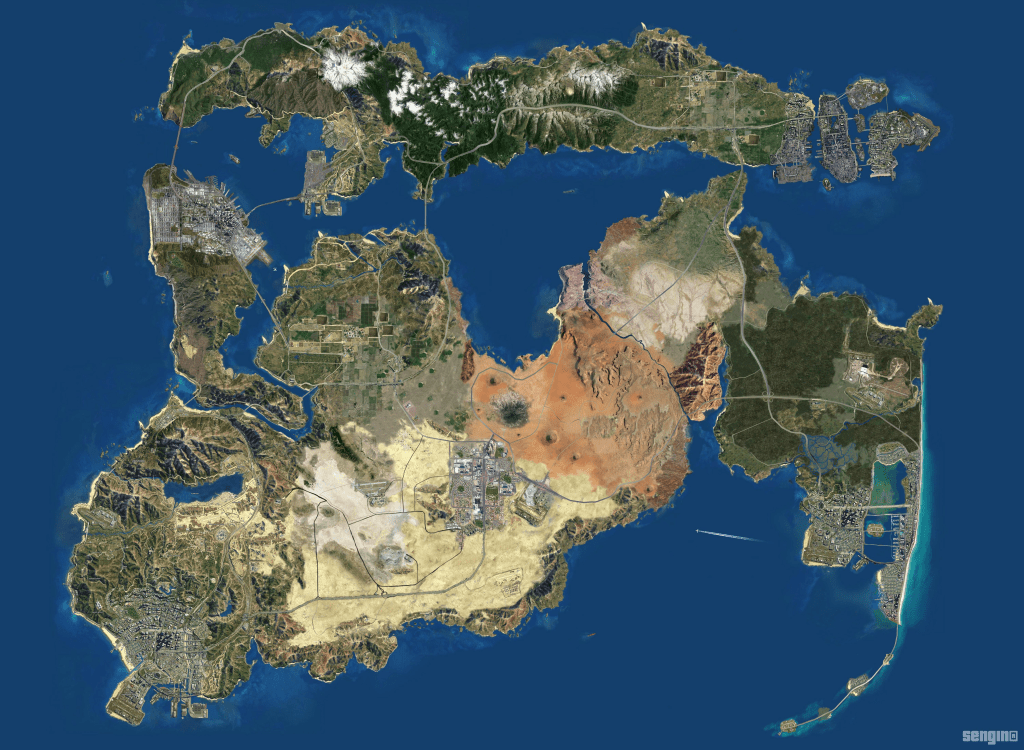
Also, I have to circle back to GTA for a rant. Liberty City, Vice City, Los Santos: the big three stand-ins for NYC, Miami, and Los Angeles and victims of the RockStar game design of “take well-known big city and make it an island.” There’s a few theories floating around that the reason for this is a great big satire on the old “self-absorbed Americans live in their own world” stereotype and to be honest, I’d say the joke is quite old. It may have worked before, but with GTA: San Andreas having stand-ins for Vegas and Frisco as Las Venturas and San Fierro respectively as well as an area that can be viewed as the rural part of NorCal, there’s evidence from RockStar that they can and could (read: should) make a multi-city game. Or frankenstein their three cities together. Multiple fan artists have done it in the years since.
Source: sengin*
* The source for that map is hard to find seeing as it’s nearly 10 years old. Nevertheless, we have a good base, even if conceptual in design. There was also Ubisoft’s The Crew which had a truncated map of the lower 48, and most MMORPGs to go off of for a true open-world GTA-esque game. Come on, RockStar, give us what we really want.
Sorry, back on topic. Ananta is available for pre-registration so you can be among the first get it once it’s available. And you can bet you’re bottom dollar, I’ve already pre-registered and I’ll definitely be one of the first to play it as soon as I acquire the yottabytes necessary to house them all. Maybe I should make a rant of modern gaming, there’s enough material online for me to use as examples… as well as anecdotes and memes of people moving files around for storage; a story I know all too well.
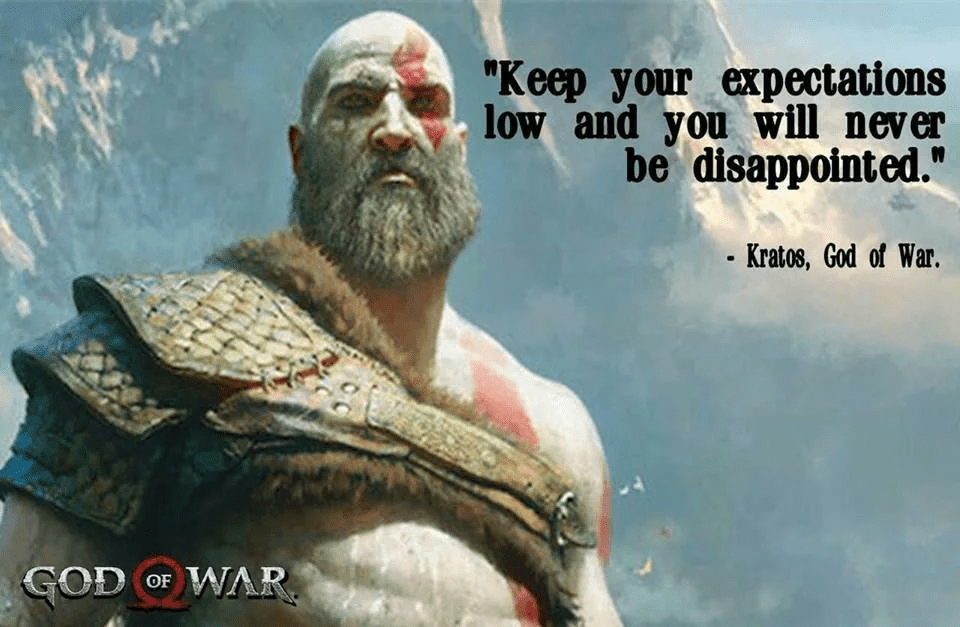
It’s easy to say that I’m excited for Ananta and want it to succeed. That kind of goes without saying, gacha games are plenty successful as shown by Mihoyo’s output and I don’t just mean the whales funding it better than any Wall Street investor. But I’m going to take a page from the Det. Cole Phelps Institute and match that excitement with some skepticism. No assumptions, wait for more trailers and information to be revealed, look into some theories, and most importantly, prioritize the facts. To quote the God of War:
Expect the worst;
Assume nothing, and;
Always anticipate [danger]
Credit: alexloai64
A series of great quotes to follow, not just in a hack-n-slash god-pulverizing simulator, and something I’ll keep in mind whilst eagerly awaiting more updates on Ananta/Mugen.
Citizens of the internet will know that fake trailers make the rounds several years or so after a popular franchise entry is on the market. I recall looking at fake videos of what GTA V would look like shortly after announcement in the middle of 2012. Me and my friends were hyped for the latter half of that year and 2013 waiting for the game to come out and when it did, in a nutshell it broke records back to back.
A few weeks after initial release, GTA Online debuted and despite an initial hiccup for those who were there (I was one of them), Online alone probably counted for lifetime revenue for the game. The most expensive piece of media in history made back all of its money and then some. If Rockstar was feeling philanthropic, every employee could probably retire and have enough savings for their descendants.
Over the years, critics have popped up questioning Rockstar’s design philosophy and direction. GTA V was said to have a DLC that was functionally stolen by GTA Online, which has enough DLC on its own to be released as a standalone semi-RPG (an idea that Rockstar could capitalize on if done more honestly), and even after the release of the phenomenally made, if overdone Red Dead Redemption 2, players often defaulted to GTA. Answering to the money (read: gold) found in the criminal funhouse that GTA Online was and still is, Red Dead Online suffered as a result and some haven’t forgiven Rockstar for it.
Nevertheless, Rockstar’s reputation as a more patient company has paid off. Gone are the days where they were a small team of British programmers asset flipping successful titles with only a year in difference. Projects have gotten bigger and bigger since at least 2007 coming to fruition with the following year’s GTA IV.
I think I have a theory on why the games have taken a more contemporary approach as opposed to the older unnumbered titles like Vice City or Liberty City Stories, and that theory starts with “it’s easier to capture what is than thumb through records looking at what was.” Maybe there’ll come a day when I elaborate further, but today we’re talking about a very long, very awaited installment in the GTA franchise.
On December 1, Rockstar announced the trailer would release on December 5, at 9:00 AM but the full trailer was leaked 15 hours ahead of schedule, racking up a record breaking view-count in minutes.
Channel: Rockstar Games
The internet has been demanding a follow-up to GTA V for a number of reasons, the most popular of them being criticism over the gluttonous mass that is GTA Online. I can’t say with certainty if these are the same people who default to GTA Online, but if there is some of that overlap, then it’s true what they say about a view from a glasshouse.
So following up on GTAs IV and V, GTA VI is yet another entry into the contemporary setting of modern-day Miami/South Florida. After looking myself, commenters who are from or have been to Florida have applauded the downright authentic portrayal of life as a Florida man or woman. Exploration of the Everglades and Keys, run ins with alligators, regular folks putting bizarre twists on normal activities and other easter eggs to the unpredictable nature of Florida man. Here’s a fun game you can play: google your birthday and put Florida man in and see what comes up.
Unlike the portrayal of South Florida from Vice City, where it takes home the allegations of a copy of 1983’s Scarface with a few references to Miami Vice, this time the game incorporates pretty much any given report on life in Florida. Much of the in-game footage captured seems to be recorded on Rockstar’s as of yet released parody of TikTok. Allow me to repeat a similar soundbite when I say that the graphics have never looked so amazing. YongYea recorded a video on this the previous night speaking similarly about the graphics and there’s no hyperbole when I say that minor things like hair and clothing affected by the wind, or facial rendering right down to the muscles, or even the local wildlife all come alive in just the trailer.
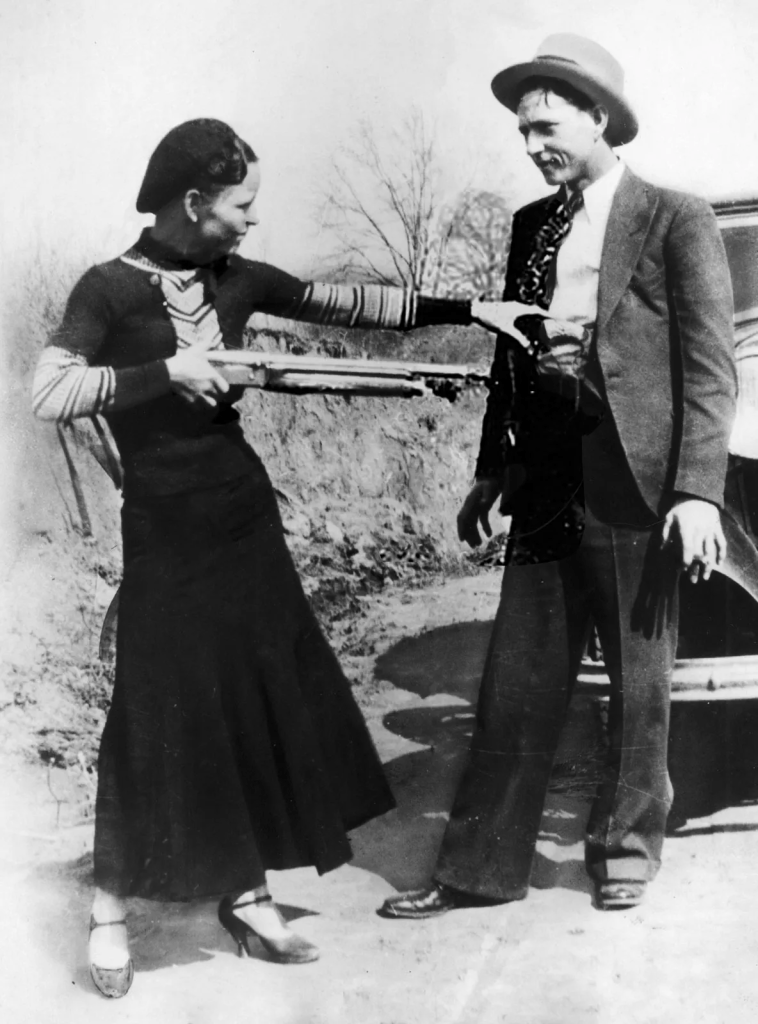
As for the plot, I’m personally saving my viewing eyes for later trailers to follow in 2024 and ’25, but from what we’ve heard and seen, it’s heavily inspired by the 1930s outlaw pairing of Bonnie and Clyde.
Also a first for GTA is a female protagonist. Rather than make your own in Online (as I have), the female lead is named Lucia and the male lead is named Jason. Plot details are obviously scarce and I intend to keep myself surprised until release even though select details have leaked yonks ago. From what I can gather from the trailer, it begins not dissimilar from JoJo’s Bizarre Adventure: Stone Ocean.
Think about it: young Florida woman begins in the prison system; Lucia herself most likely dodging worse versions of what Jolyne was forced to share a detention complex with during her own incarceration; a boyfriend with an equally sketchy history… and again without anymore information from that, I can’t say where else the story goes, but it clearly doesn’t take place in a prison, though the prison is likely to play a role in the story in some capacity. By the way, the initial comparisons weren’t lost on the JoJo community.
Credit: u/klydex210, r/ShitPostCrusaders
I honestly thought, as did others, that the release window would be, say, Q4 2024, but the trailer ends with a vague 2025 release window. As of writing this, in-depth analyses of the trailer are releasing on YouTube and more will follow with more trailers in 2024. All that time cooking up a five-course meal, so many people have been waiting for the main dish and it looks like whatever trailers are releasing next year and after until release will hold us all over as appetizers. I’m excited, but all throughout this post, I’ve been keeping a level and realistic outlook on this. As exciting as this reveal trailer was, I’ve learned from past mistakes and disappointments to wait for as much information to be made available. Remember Kratos’s words:
Credit: u/Shaho99, r/GodofWar
Open your mind to the possibilities and all that. Now have some analysis videos to hold you over until the next trailer.
Since this blog’s inception, its mission has been to provide interesting opinions, takes, predictions, and whatnot on different parts of entertainment. I think it’s safe to say that as of September 1, 2023, I’ve achieved that and then some, but most of the opinions expressed have ironically not been as personal as advertised. So to address that, I’m going to help expand the shortlist of video games I enjoy by bringing you all to a game that I can return to 100% of the time without fault.
Yes, unquestionably, the game that ropes me in like a pest in a snare is that of the hard-boiled ex-NYPD detective Max Payne. In a bit of a contrast to the video games I’ve talked about before, my introduction to MP was late. Very late, and at the end of the series’ ropes. It was an advert for the third game in Spring 2012 that caught my eye and a local brick and mortar game store near me had a sale on the other two video games.
I pulled a genius move and began with a first-time experience with the PS2 version of MP1, and interesting features of the game make it many times more memorable than anything put out by RockStar, Midway/NetherRealm, or any other developer from the era. I popped the disc into the console and got to playing the tutorial. Games these days have a nasty habit of holding your hand very tightly, so something like MP1 giving this much slack on the choke chain was a breath of fresh air for a start. If the tutorial is necessary, I say they adopt this model, or since we’re fast moving away from that era, we should bring it back.
The titular protagonist is as I described before, an ex-detective who accepts a transfer to the DEA after a tragedy breaks into his house and murders his family. That’s how the first game starts actually. There’s a part of me that simultaneously wants to recount the plot of the games, and avoid all spoilers and instead direct you to your online marketplace of choice so you can wish list it for a sale or pirate it if that’s not applicable, so to compromise we’ll summarize the main points of the games, introduce some of the characters, and layout some features that I’ve yet to see repeated anywhere else.
The first game begins with titular Max Payne talking to a colleague about a transfer to the DEA, which Max declines to stay close and safe with his family. Unfortunately, a tragedy barges in, murders his family, and purely for vengeance, he accepts the transfer into the DEA. It takes a few years but by the early winter of 2001, Max reaches the source of his pain. Buried deep within the wall of mobsters and junkies is a complicated plot spearheaded by a secret conspiracy that on reflection stands on par with something along the lines of 9/11, JFK, and moon landing conspiracies.
Set two years after the first game’s events, Max returns to the NYPD cleared of anything he did the last time with connections to powerful people. In this game, it’s learned that despite all their work and collaborating, the secret society that gets him out of dodge in this game isn’t the most loyal. They serve themselves first and the collaboration between themselves and Max was pure happenstance. The stars wouldn’t align that way again. Not to mention, another man who aided Max the first time was serving his own ends separate from the society.
Based on the characters you meet the first time around, you could probably take a bet or two on who would stick around and who would put a bullet in your head. Well, get ready to go broke because the circumstances flip like an overactive light switch. At times, it makes The Romance of the Three Kingdoms look like a schoolyard brawl, and Three Kingdoms is an appropriate comparison since most of the same enemies and then some come back for round two.
Now for something completely different. After almost a decade in hibernation, Max Payne 3 came to the shelves in 2012 and we’re far divorced from the setting of the first two games. Closing off the trilogy, MP3 gives us a protagonist with a severe drinking and painkiller dependency deep in Sao Paulo as a private contractor for an aristocratic family. Disaster follows Max like a wet dog and brings harm to the family he’s meant to protect.
A trophy wife gets abducted and Max has to fight tooth and nail to bring her back safe and sound. Following a bullet ridden trail through a river, Max investigates a favela, or Brazilian slum, for answers and finds out firsthand how cutthroat and unpredictable the arms trade can get. In the end, he learns that the family he’d been working for had been sold out by one of their own to corrupt officers and a militia involved in the human trafficking trade.
Yeah, the tone grew darker and darker with this final installment. Makes for some neat action, though.
The action tends to take a bigger focus than the story, as with most games. For the Max Payne series, the perfection lies in the shootdodging/bullet time mechanic.
Based on the video above, the way the mechanic works is that when Max dodges a hail of bullets, time slows down allowing the player to aim the weapon precisely at the enemies. Time stops when everyone is down or when the player lands on the other side of the room, whichever comes first.
Alternatively, there’s a manual slow-down that functions the same as the shootdodge, but without the dodging. Time just slows down and allows Max the freedom of movement to gun down everything from the dandelions on upwards. Yahtzee Croshaw of Zero Punctuation fame makes a point as well for the mechanic being a double-edged sword. It’s mostly effective when every enemy is down. If any are missed, just pop back up, finish the job, and to the next area you go.
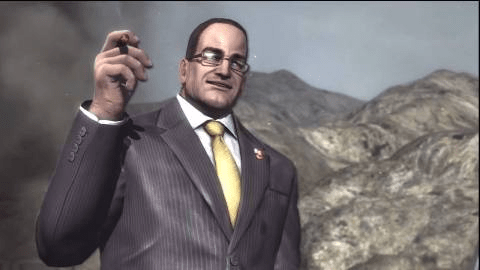
The manual slowing of time is marginally better since you can toggle it on command and execute a plan to eradicate everyone in sight. One flaw with this would be the weapons in the enemy’s arsenal. Generally, the enemy’s are armed with pistols, machine pistols, and shotguns, but occasionally the one special enemy has something like a rifle or a grenade launcher that can send you into orbit in three seconds flat. Without clairvoyance, you’re left with trial and error to solve this problem and you’d better hope you’re allotted enough time to grab enemy weapons and ammo because the bosses can take hits like Senator Armstrong in Metal Gear Rising.
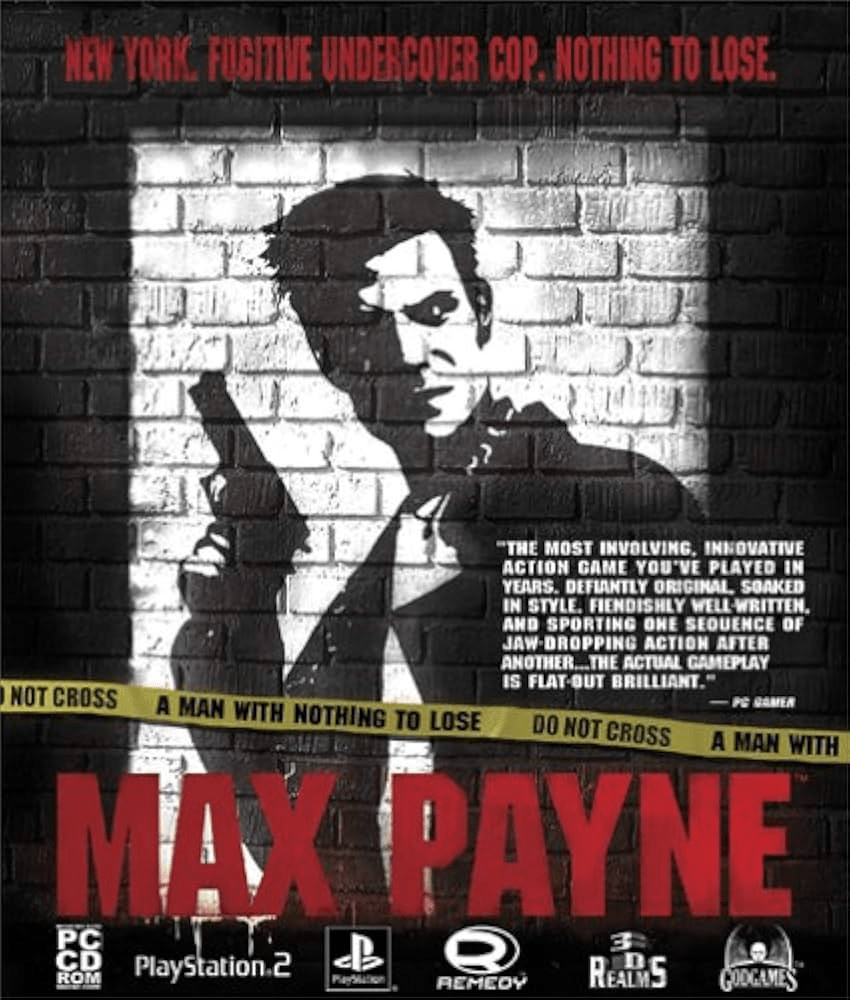
Across the games, there’s been a healthy cast of characters. I’ve already explained the man whose name is on the box art and newspapers, but there’s more. Such as the female counterpart to, and potential love interest of Max Payne: Mona Sax.
Mona Sax is a gun for hire, found to be chasing many of the same enemies that are also after Max. What also sets her apart is that unlike the typical assassin seen in media like, for example, Agent 47, Mona is shown to have a sly personality. As for her contracts, for the most part, it’s all business. If the target is competing for the devil’s position in hell, then she’s guaranteed to set her sights on you, especially for the money. But if the target is someone she happens to like or tolerate, then I can bet money myself that she can fake the target’s death.
The love angle comes into swing in the second game, but the circumstances going on in the background complicate things tremendously. They still have a lot of the same enemies, but not all of them. Sometimes Max’s enemies are Mona’s convenient allies and vice versa.
A head of the Russian mob, Vladimir Lem is a convenient ally in the first game. When he’s first introduced, he can be seen from afar eyeing Max’s exploits undercover within the mob, so his actual introduction is a long-time coming. When he finally shows his face, he lives up to many of the mobster movie stereotypes of old.
His first lines are a Corleone-style proposal to help Max get to the truth while Max solves a problem for him. Fast-forward two years, and there was more to Vlad than he was willing let on. Just goes to show that this isn’t business where people trust easily.
Alfred Woden is the mysterious one-eyed man drip feeding Max information on those who caused his pain years ago. You’d think he’d give it to him within first contact, but the details of the game keep him in his position of trickle down note-taking. But once everything is revealed in full, it’s go time.
This all goes well until the second game where the whole concept of trust experiences another Ring of Fire tremor.
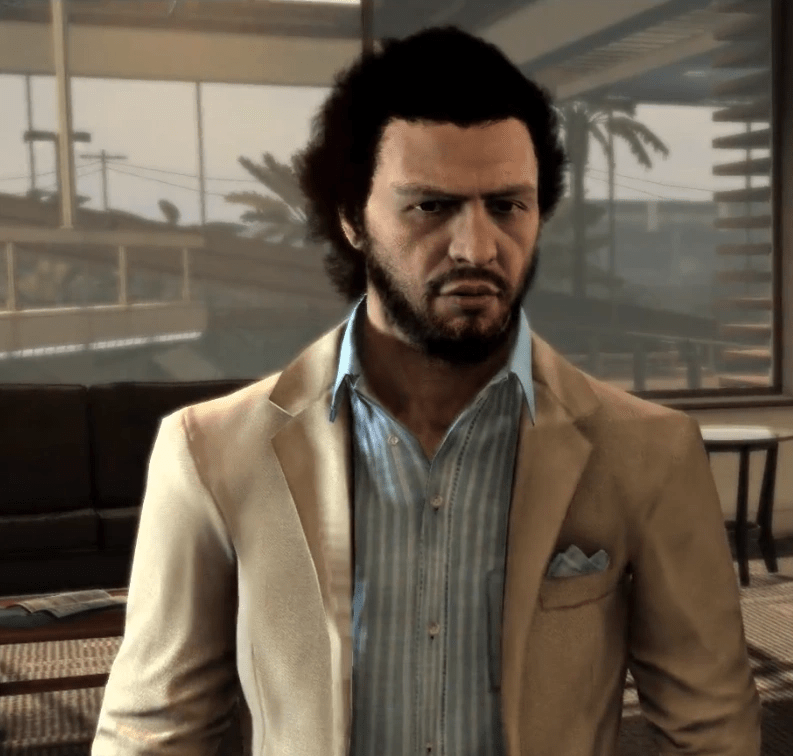
The only supporting character to appear in the third game, Raul Passos fits the role of helping to isolate both Max and the player from a familiar environment, even though the lore explains that the two were coworkers in the NYPD before. Passos was the one who helped Max relocate to Brazil to start working as a contractor for the family, but even with a helping hand, things go terribly wrong.
Unlike the others, Passos doesn’t have anything else under the hood that royally screws Max over. Well, there is (minor spoiler), but it’s handily resolved rather quickly. Passos doesn’t betray Max and makes it long enough to escape without any scratches. If you’re looking for more details on the games, the Wikipedia, associated wiki pages, and reviews from back then are all available. And of course if you can afford to do so, Steam or similar online game stores are at your disposal and to my knowledge, RockStar hasn’t delisted the game from Steam. But on the off chance they choose to do so in their infinite wisdom, there’s another way to experience the series for yourself:























 Opinions on Entertainment