Haibane Renmei and Mysterious Disappearances: Mystery Double Bill

The long-awaited two-in-one special

I put this off for a week so I could do some more research on both, by which I mean reading the Wikipedia page for one and advancing in the manga for the other. Haibane Renmei is but a short 1-cour anime series from 2002. I found out about it from the same article that introduced me to House of Five Leaves a few years ago (along with another one), and without delving into details, a friend of mine challenged me to recommend him some anime he’s never heard of. Well, he didn’t challenge me per se, but I took it as such and I figured I might as well put another brick in this anime wall I chose to build. No, it still ain’t finished.

Japanese for Charcoal Feather Federation, Haibane Renmei starts with a young girl experiencing a very vivid dream about falling from the sky. This being the only memory she has, the theme of the series is that the Haibane–angel-like beings–are named after the dream they had. Shortly after that, their wings grow from their back and they’re given halos to wear above their heads.

It was based on an unfinished manuscript by the same mind responsible for the surprisingly well-aged Serial Experiments Lain, which when it comes to trying to label it, makes it difficult, at least for me. There’s anime that are adapted from manga, which is the most common adaptation style; anime that are adapted from light novels, which is probably the second most common adaptation style; sometimes anime are home grown originals (a.k.a. anime originals), proof that the studios animating them can make something special from thin air; and sometimes anime are adapted from novels:

It’s definitely irregular for a rough draft to get a green light for an adaptation, but it’s not like it’s unheard of. Stranger things have happened in media.

Part of my research for Haibane Renmei involved looking over this blog post from 2017. The writer explains that the cult-classic series has been the topic of such fierce debate over the meaning of the series, not helped by Yoshitoshi Abe’s notoriously enigmatic writing style. As a mystery series, this can be viewed as a double entendre both due to the cryptic writing and because the only source available lies with the writer and short of booking a flight to Japan to ask him directly, I highly doubt he’s ready to share the raw words with a wider audience so the anime adaptation had to make do.

That said, this isn’t the type of Scooby-Doo, CSI, Columbo type mystery series where you’re given a puzzle to solve. It leaves a lot open to interpretation and according to that post I linked above, a lot of it tends to be incorrect. From a writer’s perspective, there’s a fine line between treating the audience like they’re five years old and throwing them out of a plane and expecting them to catch the parachute on the way down.

Is this me being too harsh? Perhaps, but the creative world is pretty cutthroat in a manner of speaking. We criticize ourselves in a much harsher tone than any other critic, yet both the critic and the artist are given a near equal amount of outside exposure so doesn’t that mean we’re both talented groups of people?

Something, something pot calls the kettle black…

I like to think of it as an art house project. I believe the late 90s to late 2000s was the era of moe and this series does something different from most shows of the era. It was the equivalent of taking an extended museum tour and filling out a survey at the end before being released to the gift shop. It’s for thinkers; the door is open enough for observers to take a peek but is neither too wide nor too narrow. If it were too wide, important stuff goes missing, but if it were too narrow then you wouldn’t be able to see the contents very well. It sits neatly in the middle and once you’re done with the series you can walk away with your own interpretations of what you think the series is about. Here’s a link to the playlist. Enjoy it while it lasts:

Channel: Jesse M

From a series you probably never heard of before now to a series you still probably haven’t heard of unless you eat anime memes like black beans: Mysterious Disappearances.

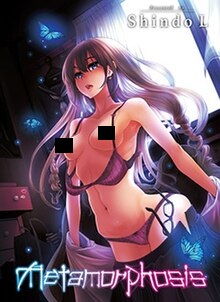
Before I elaborate on this series, I want to get this out of the way right now: giant boobs.

Alright, we’re done with that. Well, I’m done with that aspect. Explaining the fanservice in this series will honestly get redundant especially since both the anime and the manga do that in spades. The first chapter especially ends with an uncensored shower scene (spoiler alert).

As for the rest of the series, Mysterious Disappearances is a blending together of urban legend and centuries-old Japanese folktales. The name doesn’t do the series enough justice. Looking to legends and myths for inspiration, Mysterious Disappearances has it all in droves. The first episode actually drops hints from an old urban legend about the fictional haunted Kisaragi Station. Akidearest explains it further in this video below:

Channel: akidearest

Basically, a few years ago, a Japanese vocaloid YouTuber’s videos spread by way of the recommendation system and the one thing that stood out was that their username and videos were mostly untitled, making use of zero width non-joiners or “invisible characters” read only by the computer. Anyway, the video referenced an old urban legend/creepypasta that only existed at the time on Japanese forums, namely 2chan in 2004. The urban legend in question was Kisaragi Station and was about a woman who noticed the train continued on for longer than usual. She gets off at the namesake station which was left unmapped and catalogs all of her interactions and findings at the phantom station, even wandering the tunnels until she was eventually picked up by a mysterious man who quickly dropped his helpful demeanor once she took the bait. Forums posters eagerly awaited for updates that never came after that.

This was one of several references to Japanese urban legend in the anime. Many more follow as the series progresses. Unlike The Society of Gray Feathers, Dangerous and Disturbing Puzzles has more exposition baked into it. Both the manga and the anime explore the phenomena as they happen. Part of the appeal for me is the urban legend side of things. Fictional or not, these ghost stories tend to be somewhat credible even if they don’t match beat for beat. They’re the fun little stories about things that go bump in the night. The supernatural element keeps me engaged, much like when I was first introduced to The Adventures of Shigeo Kageyama: Boy ESPer.

The protagonist is the big breasted woman we saw earlier, Sumireko Ogawa, a novelist working in a bookstore. Aided by her coworker Ren Adashino and his sister Oto, the trio investigate and confront the sources of the mysteries personally, unraveling their secrets along the way.

One of the main plot devices is a droplifted book picked up by the bookstore owner himself and gifted to Ogawa on her birthday. The anonymous writer catalogued ancient poems from the real-life Manyoshu, a collection of anonymously written Japanese poems going all the way back to the Nara period (circa 750s C.E.). If read aloud, the poems act as a spell cast on the reader themselves provided certain conditions are met. The “spell” can be broken by way of reading the poem backwards, but as shown in the series, when Ogawa does so, she’s able to control the effects of the poems on herself at will.

Other important plot devices are the siblings themselves and the signs that only they can see: yellow diamonds with exclamation points in the middle. They appear whenever a supernatural event has occurred. Once the event has been solved, the siblings are shown to use anything recovered from their findings as payment for tickets back to their own home through–you’ll never guess–Kisaragi station! It all comes together! There’s a lot more to this, though I haven’t gotten that far yet and the manga is still ongoing so it’ll be years before we see where the author, Nujima, is taking this series.

What is certain though is that for those who like creepypasta fanservice and closeup shot style fanservice are going to be intrigued by the blend here. It seems quite ridiculous to highlight Ogawa’s body as the connecting element when Ogawa herself is the protagonist, but the series finds a way to make it work. Rather than fall into the age-old trap of “damsel in distress,” Ogawa being the adult amongst the children here gives her more of a leg up as the woman in charge here. You could argue that she’s technically the mother figure based on this description, but the counterargument to that is that while the three do work together, they’re not inseparable.

Scenes exist with all of them together or just one of them alone or with other minor characters. All of them are well-written with their own goals and desires and none of them feels as though they’re held up by the other. That it’s mainly psychological horror is another plus for me. Honestly, I would’ve been turned off by anything horror as a kid, but now that I’m an adult and I’ve watched a few of the classic horror movies before they were ruined by their own franchising (Friday the 13th, Halloween, Scream, etc.), I realized that there’s still better ways to horror and thriller and Mysterious Disappearances is a better example of that.

All 12 episodes are available on Crunchyroll, but if you don’t feel like watching 12 of the same old advertisements, then you already know what I’m gonna say.

Because I’m behind schedule, I doubt I can guarantee a full review of Undead Unluck season 1 by the 30th, not to mention another topic lined up was pushed back due to the research I did for these two series in this post, so instead I’ll try to get back on track either the 29th (tomorrow) or sometime during the 4th of July weekend. The next topic I have concerns a manga that never got off the ground. Here’s a sneak-peek:

Also, the recommendations should return too.

Azumanga Daioh: A Classic

Tsukurimashou

Calling back to a recent post, I once again searched for anime to watch on a whim and with how easy it is to pirate and upload on YouTube (for a time at least), my search led me to another series that needs no introduction: Azumanga Daioh.

A four-panel manga series running from 1999 to 2002, Kiyohiko Azuma’s famous series is about a group of girls navigating their high school and personal lives, with occasional peeks into the lives of two of their teachers. Its anime adaptation follows the manga nearly beat for beat in the sense that every episode is split into different segments. Four-panel manga all have the same layout and are most commonly found in comedy manga series like Azumanga, and are not limited only to Japan. Western comics also have the formula down pat if you’ve ever read the comic strips in newspapers.

As far as plot is concerned, Azumanga is a slice of life series under the “Cute Girls Doing Cute Things” umbrella, a legacy of its era in the moe blob of the 90s going into the 2000s. From start to finish, the manga panels have the star characters and their friends doing really uninteresting stuff, but often in a comedic way. The anime is the same, and having seen it from start to finish the anime translates the humor quite well to the small screen.

Channel: DarkDecietNarcissu

But it still requires a working knowledge of Japanese culture and comedy to understand why it’s like this. Going in blind may not leave as much of an impression compared to going in with this knowledge. The cultural barrier was still standing strong in 2002, and a problem one can see at least with the dub is an old bugbear that only exists when trying to view older anime dubbed in English: poor translations.

One of the strongest concerns in the dub vs sub debate online is whether the translators/localizers, etc. can correctly interpret the scenes and localize them for western audiences without doing away with the original context and humor. Numerous examples of poor translations in the early days exist, but one that makes the rounds regularly online is the Pokémon scene where Brock shares his onigiri rice balls.

By now, everyone has seen onigiri. When it comes to cultural boundaries breaking apart, food also plays a role in that–not just language or history. The faulty dubbing issue isn’t as persistent as it was back in the day, but the concern still exists for many anime fans in the form of internet/video game slang showing up in the subtitles. Personally, I see why this specifically can ruffle some feathers since more and more people watch anime these days and may not always be the same people browsing social media regularly.

From my perspective, Azumanga has a few of these issues here and there, but they didn’t stop me from watching it all the way to the end. As a matter of fact, this series and Azuma’s other series, Yotsuba to!, are a pair of internet darlings. The off-color humor in both series is a source of numerous memes and no-context compilations of the funniest moments from the Azumanga anime due to the style of surreal comedy employed.

Channel: Brolita

Humor like this can show the author’s attention to detail, especially when a seemingly unimportant gag or detail returns in a later episode or two.

Of course, the series isn’t just a barrel of laughs from start to finish. The characters all share intimate moments between each other and in their own personal lives. The character, Yomi, for example is featured in the opening weighing herself, highlighting an insecurity that gets light in the series. Chiyo, being the youngest character, has big shoes to fill with being gifted enough to attend high school at the age of 10. Osaka, real name Ayumu Kasuga, is the outsider, the awkward round peg outnumbered by a bunch of square holes. Her nickname is based on her home city of Osaka and the general perception non-Osakans have of the locals in that prefecture, sorta like how in the U.S. everyone has perceptions of everyone else based on what state they’re from.

Little moments like these help to flesh the characters out and with a small cast to work with, Azuma wasn’t as bogged down trying to give everyone the time of day. This doesn’t necessarily mean that smaller casts are better, but that it takes real care to ensure everyone in a work of fiction is given a piece of the pie. It isn’t always perfect and it doesn’t always need to be as long as all loose ends are tied up. Thankfully, the details in the series are all easy to keep track of through easy-to-remember clauses: one likes animals and tries to pet a finnicky alley cat; one is extra hyper and loaded with energy; one is prone to zoning out at random; one is a sports fanatic; and the list goes on.

Azumanga Daioh is the type of series that one can sit down and relax and have a few laughs while watching these girls go through high school. Its last episode is a neat and tidy conclusion that offers thanks to the viewers as a final goodbye, though I see myself going back for little things in the show.

If the playlist was still available in the English dub I’d provide a link but sadly, the channel that had all 26 episodes dubbed has been removed as of writing this. There still exists the subbed versions on YouTube and the good old-fashioned eyepatch wearing, peg legged, hook hand approach to viewing this series.

With any luck I’ll finally get done with the Undead Unluck anime and provide my thoughts. I’ll do what I can to have it out before the end of the month.

Working in a Hidden Away Restaurant in Rome

Been a while since we did a double bill

Part of the fortune of covering a series done by the same author is that I don’t have to thumb through another file to look for another series. Last time I did this was when I was covering the two GTAs that seemed to get ignored by modern Rockstar Games: Liberty City Stories and Vice City Stories. These double bills are rare sadly, but this time around I’ve got another series by Natsume Ono: Ristorante Paradiso.

Definitely not the first time a mangaka took their audience to Italy for a story, but instead of chasing an enigmatic mob boss with dissociative identity disorder, this Seinen series is largely crime free. Drama on the other hand goes hand in hand with the panna cotta and insalata mista. Similar to the other series, House of Five Leaves, Ristorante Paradiso also features a diverse cast of characters in background and thought. The story follows a young culinary school graduate, Nicoletta, who started her journey tracking down her estranged mother for the purpose of sabotaging her livelihood after discovering she operates a restaurant in a small corner in Rome. The reason for this vendetta stems from her mother, Olga, leaving Nicoletta with Nicoletta’s grandparents while she went off to get remarried. I can see a number of ways to handle this immaturely, but from what I’ve seen, Ono handles it better than some of the other works where a connecting element is a character’s issues with an absentee parent or abandonment, then again some of those other works portray it as a balding punchline. That, or they try to take it seriously but it falls flat on its face.

Doesn’t exactly mean Nicoletta’s forgiven her mother for that, only that her priorities are elsewhere for the time being. As for the other characters, there’s one older man named Claudio who is legally separated from his wife, so he’s free to date whomever he pleases, but keeps the ring on to dissuade any women from pursuing him, though Nicoletta developed a crush on him after working with him.

Speaking of men who just want to live their lives drama free, another one of the older characters is Luciano. He keeps to himself and also turns down most women’s advances to remain loyal to his departed wife. The anime presents him as cold and stonelike, but he secretly cares a lot about his daughter and grandson. Vito is a flirty type though his heart belongs to a college student he met while working out. And there’re several other characters working at the restaurant, all with different backgrounds and connections to one another.

The series is more about the people working and dining at the restaurant than the meals so don’t expect anything of the likes of, say, Shokugeki no Soma or Dagashi Kashi where the focus is on the eats. Rather, it’s related to a joke within the Golden Kamuy community about the series being an Ainu cooking show that just so happens to feature gold treasure and a rogue unit of IJA soldiers. The restaurant ties everyone together in a way.

What I have to praise about Natsume Ono is that she creates her characters from nearly every angle. Of all the aspects that aren’t given a lot of mind, she chisels out the finest details from those characters and puts them at the forefront of her writing. I also like how she includes minor details. In Ristorante Paradiso, what is addressed is that a lot of the male staff is wearing glasses and this is by design. Nicoletta’s mother, Olga, has a thing for men in thin frames and thus makes it a part of the dress code. And you don’t need a real prescription for glasses. I forget who, but one of the characters got around this by wearing glasses without any lenses in them.

It’s a short series that has the skeleton of an anthology but isn’t as rigid as one. Ono seems to do quite a lot with very little, and as I’d found out for the research of this post, that’s not a hyperbolic statement considering Ristorante Paradiso lasts only one volume despite running for a year. House of Five Leaves, however, ran for eight volumes over the course of five years. It’s also worth noting that Ono writes BL manga under the pen name of basso, so this may have to do more with these stories being very short as opposed to a writing philosophy. Juggling multiple works at a time can get to be a hassle, but this is me thinking, so don’t quote me on anything.

Funnily enough, there is a playlist of the Ristorante Paradiso episodes, but the one I found has a few missing episodes, so if you can stand to do so, a Crunchyroll subscription should do it or if for whatever reason (I won’t judge) you don’t want them to have access to your credit card information then put on a straw hat and challenge the world government from the seven seas.

For May 25, 2024, I introduce you to Kaho Shibuya.

https://www.kaho-shibuya.com

This is a bit unorthodox for a recommendation. Google lied to me about her having a YouTube channel all her own; the closest she is to being on YouTube is multiple collaborations with the Trash Taste podcast, either individually with the hosts or on select episodes as a guest, or in interviews about her previous life, but fortunately Ms. Shibuya does have her own website as you can see linked above.

Kaho Shibuya left the life of an adult video actress (read: Japanese porn star) behind her to pursue something closer to her heart. These days, Ms. Shibuya has begun streaming on Twitch, she cosplays as different characters from anime and video games, she’s dabbled a few times in voice acting, and she even has a book on what she’s witnessed of the Japanese porn industry. These days, people discover her from her cosplays or collabs than of her previous work. If all that sounds like it’s up your alley, click the link above and see what’s in store.

You’re Under Arrest: The Buddy Cop Anime

Meme tourism brought me here

I’m not making up that statement by the way, I did find this anime through a meme. This one specifically:

Channel: Vinicius Costa

I highly doubt that a single meme motivated everyone who saw it to dig deeper into what the anime was about, especially since on My Anime List it’s quite low in popularity for a ’90s anime, but reviews on both MAL, and even on Amazon for the novelization going as far back as 2000 give it high praise, so the conclusion to draw from this observation is that the series is yet another cult classic series.

Created by Kosuke Fujishima and running from 1986 to 1992, You’re Under Arrest, also known as Taiho Shichauzo in Japanese, is essentially a buddy cop manga. Like Gunsmith Cats, the series has a pair of tomboy protagonists with a rotating cast, but unlike Gunsmith Cats, it has more than the manga and an OVA to its name. Actually, the Wikipedia page lists three TV seasons, multiple OVAs, a movie and even a video game. One essentially wins a popularity contest at the time of release and then some while the other sees renewed interest after decades of sitting on a shelf with a family of dust bunnies. Maybe this is an indictment on the cultures of the targeted audiences–the western audience championing the lampooning of a government agency (even though they’re not that bad in the series) whereas the Japanese audience loves and adores the portrayal of the police in the series because it rings somewhat true of Japanese police behavior IRL.

It could be something else I haven’t looked at, but for all intents and purposes, You’re Under Arrest had a lot more going for it so if Fujishima had any doubts of success, those doubts must’ve been dashed when it came time for the anime release. Released in 1996, season 1 of the series starts off with an introduction to our two leads, Natsumi Tsujimoto and her partner against crime, Miyuki Kobayakawa. Other characters include but are not limited to Ken Nakajima, Yoriko Nikaido, and interestingly a trans character Aoi Futaba.

As a buddy cop series, it sorta fits the bill of what could be seen in shows like Brooklyn Nine-Nine. It doesn’t take itself too seriously and shows the more relatable human elements between the cast members. Uniformed or not, there will never not be an organization of people being weird or spontaneous on an off day. Talk to veterans about the stupid things they’ve done in service during their time off and you’ll be cracking like an egg from all the jokes and off-color humor.

Credit: 22 January 2016; Uriarte, Maximilian; Terminal Lance Comics

For plot, most of the time the characters are either goofing off or just performing their duties as police officers. It’s framed as the sort of episodic anime series that you can kick your feet up to, though it’s not light on the action either. The policing part of the job in You’re Under Arrest is a mix of the standard issuing of tickets, tracking down minor law violations and whatnot to tracking down and arresting criminals, aiding the elderly and defenseless, and overall being a pillar of the community. And spending enough time on the internet may open you up to some snarky comments about policing in most western countries, but that’s getting off topic.

Unless you are that type of person, it’s an unoffensive series that has a lot of heart, humor, and complexity to it. The characters are fun and energetic, and (slight spoiler) for those who have feelings for each other, there comes the question of whether this is a conflict of interest. Are the risks worth it to be with each other and whatnot.

This video also says much of the same about the series:

Channel: Anime Top Scholar

While viewing the series, one thing I noticed was the meticulous attention to detail, especially for a hand-drawn ’90s anime. Little to no details are left out from objects or people reflected in windows, to water effects during rain or storms even to the response of the gauges in the vehicles. Fujishima and the people at Studio Deen did well on their research for the series. There are some minor errors as expected–no one is perfect–but it’s not too much of a distracting unless you’re a certain type of person.

Users on MAL gave it an overall score of 7.6 out of 10. Normally, I stray away from a numbers system not so much out of principle or preference, but largely because to a certain degree I understand the argument that a numbers rating system trivializes or undermines the whole review. Spending all that time to write a long- if not well-thought out opinion piece on a certain piece of entertainment, brought to its knees by a scale. Not changing my rule, but for the most part, I’d bump it up to a solid 8 out of 10.

The full series is available on YouTube, as someone was based enough to share it for the rest of us without concern for monetization. Trying my best not to jinx it, but if you search it up on YouTube one day and the playlist is absent, you already know what to do.

I was never here.

Stumbling Blind into Btoom!

I didn’t know what to expect from this one

My discovery of this series was quite an interesting one. I couldn’t remember where I first heard of it, but after watching more of it I realized I’d seen bits and pieces of it in WatchMojo.com’s anime top 10 lists. So not as blind as advertised.

Still, all I remembered from it was the name of the series and on a whim, I found that someone was pirating it for their viewing pleasure on YouTube. In the time between when I saw the first two episodes and completed Army basic training, I found that the channel had been taken down, though as of writing, there’s still a video of all 12 episodes in a 4+ hour marathon, so if you wanna game the system without risking malware Trojan horsing into your devices, have a looksee. Otherwise, go in with a shield and beware the spam on your hard drive.

I talked briefly about Btooom! at the end of December when I wanted to speedrun the topics I had on my mind at the time before I stepped off to new adventures, but I didn’t have enough time to properly explore my thoughts on the series, especially since it only has 12 episodes to boast compared to similar series like SAO that have franchises and can simultaneously earn the praise of some and the ire of others. So let’s give Btooom! some love it should have by now.

As of writing I’m only six episodes deep into Btooom! which I’d say is good enough to fully write about what I’ve witnessed thus far. From what I remember of the first two episodes I watched in December, as a Seinen series, it’s not the type of series to highlight the good in everyone. It knows its characters are bastards and scoundrels in some shape or form. The protagonists are definitely antiheroes. We’ve got three of them: Sakamoto, Himiko, and Taira. Each of them have at least something to balance out their negative qualities.

Sakamoto was a 20-something NEET with no passion or future in anything more productive than just lazing in front of the screen and keeping his high scores. This part is understandable since not everyone is required to behave like the heroes and crusaders they might be raised to believe, but what makes Sakamoto quite s[fart noises]t is that he’s that kind of toxic gamer. Abusive to his mother, refuses to find a stable job or training and move out of the house, no affection even for his stepdad (honestly this fits a lot of toxic gamer tropes that even I myself fell into as a teen at one point), and really hot-tempered. All those jokesters and mouth-breathers who argued that video games caused violence probably would’ve been onto something if Btooom! was used as an example.

Himiko’s the second character we see in the anime and her flaw was being a bit two-faced. Prior to being sent to the island to play the game IRL, she and some school friends were going to be the groupies for some musicians, but when the band mass molested them, she was the only one to book it and leave her friends to their fate. Now they don’t want anything to do with her seeing as she abandoned them when they needed help, but it wouldn’t be long before, in their eyes, she’d get a taste of her own medicine. I talked before about the molestation scene and I don’t want to elaborate further on that aspect as it was harrowing to watch only once, but to catch you up to speed: the one decent person who helped her got rejected, physically assaults and rapes her, she pulls out a bomb and explodes him to the seventh circle of hell.

You might begin to cheer her on for defending herself, but down the road she appears to be killing men left and right as a trauma response. And I think that’s one of Btooom!’s highlights. Trauma in western media tends to be hit or miss with more strike outs than home runs to speak of, which would be why so few of them handle it very well and with the maturity the subject matter demands.

I heard this show handles trauma pretty well. I haven’t seen it myself yet. I might…

For Himiko as a rape survivor, the reactions sound valid but get less and less rational as the series goes on, which may be the point. She narrowly dodges an assault, is the victim of one, and is motivated to never, ever be the victim of such an act again, even if it means a series of pre-emptive strikes that could easily be mistaken for Unabomber attacks, especially considering this series.

Finally, there was Taira, a middle-aged convenience store manager who meant well to his friends and family, but according to himself, was a great bastard to his subordinates. Allegedly, he’s the type of guy you’d talk about in order to not be like him. The example of what toxicity at work looks like, so to speak.

Now that I think about it, the series felt like the Saw franchise but anime and with bombs instead of overelaborate traps. Also, few people are genuine do-gooders in the series. The characters are either believable or wickedly f[power tool noises]d in the head. Each of these characters are ripped from their familiar surroundings and dropped into a real-life version of the Btooom! video game, only it’s more like The Most Dangerous Game with more evidence left behind for a forensics team to analyze.

The game Btooom! is pretty much a battle royale, deathmatch style video game similar to Call of Duty’s or Halo’s multiplayers, though more Halo style since everyone is kitted up in sci-fi looking armor and in place of guns and small arms, it’s all bombs of different types, from incapacitation to full-on lethality, and seeing the types of characters running around in only six episodes thus far, a lawless, free-for-all for keeps is exactly what would attract more than a handful of psychopaths who just felt like killing. Some of the nobodies who get gunned down in Black Lagoon would feel right at home in a series like this.

Sounds like an exciting watch, right? Well, I and whoever ran that now-deleted channel and whoever is still uploading clips of the anime to this day all thought so, but at only 12 episodes with the manga lasting far longer than that, I’d at least want to know why the anime died off while a similar yet comparatively lighthearted series like Sword Art Online became an overnight global success. Well, I came across one video that pretty much explains the reason behind Btooom!’s faults and failures.

Channel: thisvthattv

In short, the series was a sufferer of a vintage anime bugbear where the anime releases before the manga is even halfway done. For the most part, up to two or three chapters of a manga can make one episode while depending on the style, that’s one or more volumes making a full arc, and it looks like there wasn’t enough time given between the first episode and the release of the 9th volume in January of 2013, which sounds like time constraints or nonexistent timetables made a mess of things anime-wise.

The manga at least finished all the way up until 2018 with creator Junya Inoue’s assistant Hiroki Ito releasing a spinoff series called Btooom! U-18 the same year as the manga’s conclusions. Yes, plural. There’s a light ending and a dark ending; U-18 follows the former. But even with an interesting premise, the biggest culprit is that the manga was never financially successful, almost forever doomed to cult status. This fate followed the home releases of the anime with only a few collectors having it on Blu-Ray and DVD in Japan at least. Japanese publishers notoriously ignore foreign data and market share so there’s no way to know for certain if they know that the show had an audience overseas. My best guess for why this is for a lot of studios at least is that they agree to let western studios and voice actors dub it over and immediately call it a day. That, or they go straight to work either on the rest of the series or something else until another season is announced.

Speaking of which, a second season was promised under the condition that the tie-in online mobile game stay within the top 5 in Japan for a set amount of time. In 2016, the mobile game developer Asobimo developed a mobile game based on the series as a bit of a glorified promotion and also as an early pioneer in the battle royale genre which in turn was based on the manga which itself was based on the series that gave the genre its name.

Holy Christopher Nolan, Batman. We’re discovering fractal layers left and right!

So all of these conditions needed to be met before an animator could get to work on a second season of the show, but alas it wasn’t meant to be. The success of the game was short-lived and it lost its high marks and status after a month and change. It wasn’t even in the top 100 in Japan anymore and I don’t think Asobimo was doing much to help promote or maintain it. It’s last updates were in the Spring of 2017 and it lost support two years later. A second season is a long shot, and a well-done second season is aiming at a gas station sign from five miles away. With only one arrow.

It can be done, we’ve seen more unlikelier series come back for a second season even years later…

…but assuming that of every series is like assuming every coffeehouse makes joe the same way, like they follow an industry standard. It just doesn’t work that way. Maybe we’ll get more Btooom!, maybe we won’t. My crystal ball is looking kinda gray, but if there’s a silver lining, it’s this. It’s finished. The manga’s done, so an extended continuation is in no way off the table if the cards are played well and the season is properly formatted. I just hope it doesn’t go the way of Rising of the Shield Hero season 2 or The Promised Neverland’s season 2.

What Was Lost from L.A. Noire

It was underbaked all along

I’ve brought up L.A. Noire before as an example of what went wrong with it on the developer’s side. To not repeat myself a third time, here’s the short version: Australian developer and programmer Brendan McNamara used his experiences working on the 2002 video game The Getaway to open his own studio in Sydney called Team Bondi with the goal of developing their only game L.A. Noire, based on old noir films from the 1940s and 50s. The problems that arose came from McNamara’s corrosive personality, crunch, and, according to ex-developers under his wing, explicit approval of sweatshop hours. Numerous people quit or got sick either physically or mentally of his open berating of “slackers” and loads of people who contributed to the project were omitted from the credits, especially if they didn’t see it to its May 2011 release. Keep in mind, Team Bondi started working on the game in 2004.

Over the course of nearly eight years, Team Bondi lost a lot of people and with a high turnover rate and new people not knowing what their predecessor was specifically working on, lots of stuff was scrapped. It wasn’t until Rockstar themselves made a personal investment in the game’s release, but by the time it released, it never broke even and Team Bondi’s assets were sold off in October 2011. The studio was said to have spent over $50 million on the game, making it one of the most expensive video games at the time, but it only made back less than half, even with all the marketing in the years prior to release.

After 12 years and a series of remasters and graphical upgrades especially on newer consoles, Rockstar clearly has a place in its heart for the game. As for what would’ve been different if more level heads were allowed to direct or manage the project, it’s difficult to say. Maybe someone could’ve reined in McNamara or fired him from his own studio for the toxic sludge he spewed from his mouth. Maybe the game would still be in development with graphics and physics engines changing over time. Maybe it’ll get cancelled and all we’ll have are numb, carpal tunnel afflicted hands to show for it. No one can say for certain at least not until we master interdimensional travel.

As for what should’ve made it into the game, it’s clear to see that some content was missing. Select characters seem to know the protagonist Cole Phelps without a proper introduction for the audience, especially on the game’s ad vice desk which handles drug crimes. Spoilers incoming, there’s also a subplot in the latter quarter of the game tying together (though haphazardly) the fate’s of the characters Cole Phelps, an ex-Marine who fought with him in the Pacific Jack Kelso, and a German immigrant jazz singer Elsa Lichtmann. Part of the subplot is meant to hint at Cole becoming smitten with Elsa and beginning a love affair with her despite him being married with children.

Following this revelation, his partner on the vice desk rats him out due to personal reasons (he lost out on a boxing match and Cole pretty much ruined the fun for him by promising one of the potential victims a ticket to catch a ferry from New York), and he’s demoted for adultery. The scandal makes the headlines and left with no one but Elsa, after a few cases on the arson desk, Cole looks into a personal conflict Elsa’s been looking into for a while: the most likely (read: confirmed) fraudulent death of her friend. This is where Kelso comes in as an investigator for the California Fire and Life insurance company. Elsa’s friend was a construction worker who was contracted in the development of new homes for returning G.I.’s but the house he was working on collapsed and killed him. It’s revealed from Kelso’s investigation that most of the houses were build with subpar wood and brickwork, some of it from shut down silent-era film sets.

I bring all this up because the adultery subplot comes in quite apropos of nothing. Call it subtlety or a hint at the rushed development cycle, but the closest we get to a build up of Cole’s and Elsa’s relationship is him visiting the club that she sings at most nights. The scenes where they get even somewhat intimate are rare and in the last few cases in the game. It also seems that much of Cole’s character development is absent. Throughout the patrolman cases and going to the traffic and homicide desks, he’s portrayed as levelheaded and quite straightlaced, even chiding fellow officers for not sticking to his personal definition of justice no matter how slight, though keeping to himself for some other officers’ personalities.

By the time he’s on the arson desk, he’s back to his old professional ways and he’s still the type to chase a victory, even with the power of slippery slopes, but I personally never saw him as the type of guy to think himself as a hypocrite, nor did I think that his preaching morality was in some way a shield for his own personal conduct. Some moments do stand out, but don’t have that much of an effect on the story, such as his pride in his own job as a cop while his first partner, Stefan Bekowsky, complains about aspects of his tenure on the traffic desk; or his taking the homicides more seriously on that desk while his partner there, Rusty, is busy drinking half the time, and several others.

Still, if the devs weren’t dodging an interpretive clock or a nasty boss, it could’ve seen a lower turnover rate and some of the original ideas that were cut could’ve been added back, if not in the game itself than as an expansion pack or DLC. The finer points of this implementation can be better explored elsewhere if they haven’t been already, but of the ideas that were scrapped, there were two crime desks that were abandoned: the fraud desk and the burglary desk.

According to McNamara himself, the desks were exactly as described: burglary dealing in thefts and robberies, stuff going missing, and all that entails; fraud would’ve dealt with scams, conmen, forgeries and everything in between. We don’t know who would’ve been the officer in charge of dispatching detectives to investigate these cases, but we have one clue as to who would’ve been partnered with Cole at least on the burglary department: a minor character named Harold Caldwell.

Caldwell was seen getting along famously with Cole. During the final case on the vice desk, he lends a hand to Cole and his vice desk partner, the sleazeball Roy Earle. Caldwell was suggested to have been Cole’s partner on the burglary desk which would’ve had around 11 cases to play, which is the closest explanation for how he has such a good chemistry with Cole at this point in the game. Because the game skips forward six months between the traffic and homicide desks, it’s suggested that the timeskip was supposed to be the burglary desk, but the reason for its omission comes down to formatting and storage.

The PS3 version has the benefit of a large capacity Blu-Ray disc, but there’s no equivalent feature for the Xbox 360 version. Having played it myself after getting it loaned to me by a friend, I remember the game case having a total of three discs. Leaving extra content in the game would’ve necessitated a fourth disc and to my knowledge, few, if any, games would’ve come with so many discs. Without the cut content, L.A. Noire clocked in at a 20 hour campaign depending on your playstyle, but with 11 more cases focused on burglary, who knows how many more hours and gigs would’ve been dedicated to the game?

As for the fraud desk, we know even less. All we have is speculation based on what probably would’ve counted as fraud in the late 1940s since this game was also released in a time before the Miranda rights afforded criminal suspects protection while in police custody along with a defense attorney. It might not be obvious playing it, but if you ever look at gameplay of L.A. Noire or play it yourself, you’ll notice that Cole never reads the suspects their rights. The landmark Miranda rights case was argued in Arizona in 1966, less than 20 years after the events of L.A. Noire, so a lot of what the LAPD could’ve been implied to play fast and loose with in 1947 would’ve largely ceased by then.

Regarding people involved in the fraud desk, that’s also not well known. Who would’ve been the dispatcher? Cole’s partner? Is there a desk that challenges Cole’s lawman philosophy and awaken him to the shades of gray in law enforcement? All of this is up for interpretation. McNamara claimed to have had some levels and concept art for the burglary at least, but I couldn’t find any screenshots of these to verify. Not that I’m calling McNamara a liar, but he was the only public face during the development of the game.

The attitudes and accounts of the disgraced ex-employees of Team Bondi (especially those who left before the game released) may suggest that McNamara had all the cards, so unless an artist or designer snuck away a copy of a potential level, this cut content exists as lost media. Instances of both still exist in the game, but you would only be able to see it in the game’s free roam mode, looking at fliers and ledgers and whatnot.

Would the cut content have made the game any better than what we got? Well, I doubt it would make as big an impact as expected, though it could still change a lot of things. Like what? Probably an in-depth look at how theft was prosecuted post-war or what defined fraud. The examples I listed above are clearly not exhaustive and people smarter and more experienced than me in those fields may have more to add to those, but those would be the more obvious ones to me as I’d never investigated a missing object in any capacity, nor have I investigated fraud. Certainly, Caldwell would join the list of partners Cole has had over the course of the game and likely one of the more respectable ones compared to Roy Earle who takes home loads of allegations of racism and misconduct, even for an America pre-integration.

For formatting and storage, if Team Bondi was able to commit as much as possible to leaving everything in undisturbed, then the game case may look more like a binder or folder with well over four discs dedicated to each case on the Xbox 360 and probably two or three Blu-Rays for the PS3. Subsequent re-releases for PCs would occupy more storage than can possibly fit on an unmodified computer. If I was a part of that alternate reality, I could easily see myself budgeting for more than one high capacity hard drive for just one game or even a series.

On that note, there’s also a part of me that sees this as being a series given the same treatment as the multiple expansions for The Sims franchise or Battlefield and Medal of Honor, which probably says a lot about how EA’s design philosophy compared to what was inherited from Team Bondi into the Rockstar family.

The only notable changes for later releases of L.A. Noire is the interrogation going from Truth, Doubt, and Lie to Good Cop, Bad Cop, and Accuse. All things considered, what counts as speculation for a different game solely exists in criticisms for what didn’t work or go far enough in the version we got. Then again, it takes a game with enough hard work going into it to spark debates and discussion years after the original developer went under and the closest thing we had to DLC or a sequel was seemingly shelved forever. This video by Real Pixels explains all the faults in L.A. Noire. Based on what I wrote, there’s a lot so take this as a brass tacks examination of L.A. Noire.

Channel: Real Pixels

Finally, is L.A. Noire even good? It clearly doesn’t live up to its purported expectations and as I’ve explained there’s a lot under the hood that’s missing or what’s left over isn’t perfectly aligned, but considering I’ve dedicated one post to the game and sections within two separate blog posts to the game, I have a relatively high opinion of the game, and so do others given how many people dream about there being a better version of L.A. Noire or even a Whore of the Orient.

We end 2023 with a YouTube recommendation for the channels Business Basics and Geopolitics Daily.

https://www.youtube.com/@BusinessBasicsYT

https://www.youtube.com/@GeopoliticsDaily247

The twin channels cover news coverage and geopolitics across the world keeping viewers up to date on major issues that affect us directly or indirectly, typically from a consequences of conflict standpoint especially in the case of territorial disputes like those of Russia, Israel, and China among other places across the world. Both channels began as business and investment guides before the shift to global events, but do still offer tips and guides for business and investing.