Forgive me for using Google Translate for the title
Advanced weebs reading this are all too familiar with the Yandere trope, also known as “If I’m not the only woman you know, I will do things that will put me on a watchlist in multiple countries~!”
“You mean… you weren’t already…?” wondered the Wonder Bread male MC before he gets assaulted and threatened with snu snu.
To catch the newcomers up to speed, a yandere is any character (the most common ones being female) who’s so obsessively infatuated with the object of their lustful desires that they will cross legal and physical boundaries to be one with them. I made a joke in my Taste My Saliva post that Mikoto Urabe was Yandere-shaped what with the hentai protagonist haircut, her detached attachment (oxymoron?) to Tsubaki-kun, and her black belt in scissor-fu, but a common trait shared by many Yanderes is that they almost always follow through on the threats of violence and in more ways than one double as serial predators if not outright rapists. The objects of their “affection” rarely get a chance to consent, everything is a weapon if their creative enough, and short of a horror movie scenario, even if the object of their affection died naturally or by their hand, it doesn’t necessarily mean death would stop them.
I wouldn’t put it past NHentai or another such sight to have a tag in the same vein of “post-mortem erection.” Please do not introduce me to such a thing, I already have a hard time accepting Revenge of the Molesting Mage despite the decent, if formulaic, plot progression.
Now, with the knowledge that the Yandere is essentially a horny for romance horror monster archetype, I humbly introduce you to the horror game that took the Internet by storm at launch and has birthed a dynasty’s worth of memes: MiSide!
Awww, look at her! Look at how cute she is. Almost makes gore-y sex with your bloody, mangled corpse worth it…
…is what I would say if the rational part of my brain was missing. Her top is red and so are her flags. Developed by a pair of Russian coders forming the group, AIHASTO, MiSide is about a nameless, generic male protagonist getting suckered into an interactive video game about being a loving boyfriend/husband/significant other type to a fictional girl with a dark side that makes her the star of nearly any given true crime documentary and an average Tuesday in Rossiya.
After days of playing the game, you get literally suckered into the game to potentially live the rest of your life (trapped depending on how you look at it) with Yandere antagonist Mita. If you do certain actions beforehand, you can unlock the prerequisites to live a false life in the Matrix as the prized plaything of this drop dead gorgeous sociopath. Do something else and down the rabbit hole you go where you specifically are the rabbit and Mita the wolf on the prowl.
Fans of Beastars, erase this from your mental imagery right this second. The romance exhibited in the series is in no way comparable to the absolute horror in MiSide.
Slight spoilers for the specifics, there’s a few moments where you can poke around in the beginning when Mita says you don’t have to or even help her with more than what she asks for, as a sort of obedience test. Thanks to my gentlemanly behavior, I failed and was witness to real terror. So, the game contains more than one Mita and the one advertised on the game on Steam is Crazy Mita. The other variants have multiple different shapes and personalities and if I were to scrutinize more heavily, I’d say, they absorb elements from different genres and, dare I say, different horror movies; some of which I might have seen and some others I really need to, even a second viewing. I s[blyat]t you not, there’s a Playable Teaser reference in the game.
Never mind looking at legacy British and American horror movies and games, AIHASTO looked at Japan for this one.
This part also reminded many that Konami can’t get f[yarou!]ked hard enough for cancelling Silent Hills. But anyway, the carnival horrors gets progressively disturbing, surreal, and at times paranormal. That’s the most I’ll speak of on the plot because I wish for you to experience it for yourself.
How’s the gameplay? Well, looking back on it, I figure some extra inspiration came from Resident Evil 7’s and Outlast’s use of first-person POV. Jump scares come up in the select bits that they’re supposed to, but what else is implemented is the destruction of the 4th wall. Not dissimilar from the likes of Eternal Darkness or Doki Doki Literature Club (or even the nightmare sections in Max Payne plus its fourth wall break), Mita in her many forms talks directly to both the protagonist and the player. Although you choose the protagonist’s name, he still has dialogue and is as involved in the story as any other character, one of Mita’s several victims and the next on her impromptu serial killer list. Not content to mess about with the player, Mita also interacts with the environment in some manner. It’s not as extensive as tricking you into thinking you’re suffering from an audio problem or asking you to create a new folder in your files. But there was a clear inspiration from elsewhere.
For you the player, since the framework is a dark twist on a dating/life/social sim like… The Sims, the horror elements make a lasting impression, but so does the down time with some of the other Mita variants. Puzzle gameplay, dating sim gameplay, PvE co-op; all these elements would conflict with each other in a worse designed game, but for an indie, they play so well, that AIHASTO hasn’t just cooked–they have a whole recipe and MiSide is their beef stew. Please, sir. May I have some more?
Channel: Movieclips
Knowing Mita though, it’ll be my own still-beating heart or pumping veins…
You’re not entirely limited to running the f[gong]k away, as select sequences have you engaging in puzzle gameplay or even interacting in a playful way with some of the other Mita clones as the game by this point wants to still believe it’s a dating sim, even if Mita wants to harvest your organs for even worse purposes than making a couple thousand on the black market. Frankenstein’s monster…?
Horror is one thing, but some kind of horror comedy video game would be appreciated even slightly.
Suffice it to say, MiSide pays homage to all the old tropes within whilst putting its own spin on what it brings to the table, sort of like the video game equivalent of the Scream franchise when it debuted in 1996. Taking the piss out of every horror movie as the respective franchise lost favor to trends at the time and pumping it full of blood it harvested from a pig farm. For MiSide, I can’t say for certain whether horror games have lost their knife edge since, like isekai anime, I don’t particularly gun for it exclusively nor can I say that MiSide was trying the same thing here. For all I know, AIHASTO have been working on this brainchild for yonks before they decided to show the world what they were making. Add me to the list of other reviewers when I say that they succeeded.
Even post-release, it was still a work-in-progress of sorts what with all the patches since it released in December. Nevertheless, praise should go to all the voice actors who could convey the emotion in each of the featured languages. As an American, Russian anything can sound intimidating to me even if I’m just looking to get some pizza. With the devs being Russian, it was the first language patch to get the voicework. Down the line came the Japanese voicework and a quick clip of Japanese-speaking Mita vs Russian-speaking Mita, my American ears quickly applied different levels of dread on Mita in that one example. Finally, English-speaking Mita who finally translated the weight of the emotions in her scenes. Language, tone of voice, or merely silently reading the text as it appears on screen, the dialogue lines do well to translate the weight of a given scene to the player, and when it goes hand-in-hand with the gameplay, I can’t help but line up for seconds.
Chibi or not, this smug aura emits superiority… I am compelled to defeat her in a competition!
Speak, penis, for you have the floor… and the p[nyan]y.
My reluctant review of F[crash]k You! Actually F[horn]ks You Into the Harem ended with a mention of another series that was pushing the envelope, so much so that it took Funimation three episodes to realize it might as well have been hentai. And looking at it’s content, I really wanna go back in time to Funimation’s as of yet unclaimed office, stare the big boss/manager/whatever in the face and say, “With a premise like this, what were you expecting? Raunchier KonoSuba?”
No matter the intention, learning about this led to a Streisand effect in the animanga community, whereby, those who weren’t watching it yet, checked it out to see why Funimation would choose not to continue airing a current anime series. Once they saw why, it made sense.
If I was in charge of a streaming service, I’d put this behind an older teen or 18+ section. Simply change your user settings to be able to view hentai and ecchi freely and voila! Enjoy your culture, ladies and gentlemen.
The premise is simple: a fantasy world where every monster girl is available and about 90% of them work in a legalized sex industry, Stunk the human and his bestie Zel the elf embark on an adventure to f[crumble]k every monster girl they can find. Shortly after their quest begins, they meet an angel named Crimvael who has both sets of genitalia, but defaults male to lessen the confusion when being addressed by others. And wouldn’t you have it, the little angel is the most well-endowed of the three. It’s like Team Four Star’s take on Krillin, smacking him around all throughout the Abridged Dragon Ball run until finally giving him the golden ticket in Android 18.
A typical episode begins with the trio heading to a brothel under the ownership of a type of monster girl, they ask for the services and perhaps through power of Post Nut Enlightenment, their reviews of the girls read like Dante Alighieri’s Divine Comedy at times. Aiding your prostate apparently brings out the poet when describing how well (or poorly) these girls use their bodies to help the reviewer reach a satisfying climax. Not the first or last time such an observation would be made, as PornHub comments and the Zenless Zone Zero community can attest.
D[clank]ks out, tits out, spurt like a faucet and cover in baby batter, rate us on Yelp, hope to clean your fluids off our floors again… but would you believe me if there was more than an absurd number of fetishes in this series? The culture of individual monster girls plays a significant role to some degree. For instance, minotaur/cow-girls have the biggest breasts and their speech patterns are cattle-influenced; the succubi are so extremely depraved that they can f[pop!]k you to death; fairy girls are predictably Tinker Bell-sized, so good look trying something remotely kinky; elf girls are all GILFs by default due their aging process compared to human beings, etc. etc. etc.
This also leads to a few dark moments in the series. Away from the brothels where penises get played with like any other toy, sometimes venues make a strip show of things. Venturing into even more inappropriate territory sheds light on a certain episode involving egg-laying. And that’s the most I’ll reveal about that episode. Another moment involves them making a sex doll in the shape of their bird girl friend and tavern waitstaff, Meidri. After the men take their turns, word gets around and let’s just say arms and legs don’t bend in three places for a reason.
Yeah, it begins on a funny note and evolves into WTF?! over the course of its twelve episodes. The manga is apparently still going on and it has two light novels. Competitive Harem Rapist still outmatches it by it’s sheer gratuitous sex and sexual assault scenes (everyone sins in that goddamn anime!!), but an animanga based around sex work and the various girls that can be found in the Red Light district… outclassed or not, I’d give it a watch. I saw it through to the end in 2021, and it’s worth a rewatch, especially for the opening:
Channel: mediafactory
Knowing what ecchi is now, it’s nice to see the ones that helped push the envelope, no matter how they age.
Don’t let the title of this post deceive you, reader. This isn’t a sharp left turn into chronicling French President Emmanuel Macron’s married life, nor is it me announcing that I contacted an old teacher and got down on one knee for a short-lived matrimony. Instead, we’re diving back into my community college days where I watched an ecchi anime known only as Why the Hell Are You Here, Teacher!?
Known in Japanese as Nande Koko ni Sensei ga!?, the series is about a quartet of female high school teachers of different personalities and subjects who develop romantic feelings for their students. A slice of forbidden fruit that can’t work due to a power dynamic that this anime seems to have a lot of fun with and far from the only series animated or not to try this. Most other anime go the “incest = wincest” route of forbidden fruit. From what I’ve seen, there’s a bit of overlap between teacher-student romance and office worker romance, appearance-wise as both tend to feature smartly dressed love interests with professional presentations, but under scrutiny these “professionals” aren’t immune to clumsy f[clicks]k-ups from time to time.
What I remember from Sexy Teacher, Bombshell Wife was that the four teachers all behaved different in front of their respective classes compared to their love interests. Language teacher Kana Kojima was dubbed “Kojima the Demon” because she’s known to be demanding in class, but in front of her love interest, Ichiro Sato, she can behave just like Hinata Hyuga, albeit less creepy. Art teacher Mayu Matsukaze is a busty shortstack with a demure personality, affectionately nicknamed “Lady Matsukaze” for her kind personality. Cupid’s Arrow also makes a fool of her when she’s next to her love interest, the towering gentle giant Rin Suzuki who “helped” her deliver important paperwork. For romantic backstories, this is right up there with a comedic plot of being helped by the protagonist and the “help” in question was just a dropped pencil, or a notice of an untied shoe. Well, it’s simple…
Gym teacher Hikari Hazakura is a trademark, tanned, big tittied tomboy, the kind who’d encourage a novice swimmer to improve by starting at the deep end and giving an after action report, hoping to see her students become Michael Phelps. One student, Takashi Takahashi, is the one she gets real touchy-feely with. They later develop romantic feelings with each other. Finally, there’s the school nurse: a Kuudere named Rei Ayanami Chizuru Tachibana, who’s been dubbed “Absolute Zero,” and the nickname isn’t lost on her in the series. She wants to be closer to the students, notably one Ko Tanaka, and over the course of their arc, they grow so close they lose their virginities together in a love hotel. Going further than Kojima who was engaged to Sato at the end, a bonus chapter reveals that they started a family together. Obligatory, “silent in the streets, freaky in the sheets.”
Ecchi funtimes all around, but with most anime these days merely advertising the manga without guaranteeing a longer run, the anime covered four arcs spread across a miserable 12 episodes. We’re far and away from the likes of Azumanga Daioh and few are expecting a Yotsuba-to! adaptation anytime soon, but AzuDaioh was able to stretch and progress a four-panel manga over the course of 26 episodes in 2002.
But expanding on a romcom could ruin it, you’d argue and if The Way of the Househusband on Netflix is an indicator, then yes, putting effort where it isn’t needed and ignoring it where it is needed would’ve netted us a piss-poor adaptation of Yakuza Yesterday, Husbando Today. So why don’t I look back at Why Does My Teacher Want My Heart? as fondly as others? Largely because of its length.
I gave it some slack yonks ago when I watched it because it did make me laugh with the short time I had with it and also the horniness at the time was on autopilot. My braincells fired up at the end when all the teachers and love interests got together toward the end to announce that some of them were dating, engaged, married, or expecting.
And then it just ended. I didn’t know at precisely at the time, but with only 12 episodes, it felt like more could’ve done even with just the Fab Four and their Lovely Maidens. The source material even lists more than just the characters that got to the anime. So, is this a recommendation in favor of the series or not?
Again, the braincells were out to lunch while the horniness took command, but looking back it’s nothing more serious than a “haha look at this fanservice” gradually evolving into “you may now kiss the bride.” My post history is the evidence needed when I say that I’ve seen this s[bells]t before. It’s also evidence that I know what I like and while I’m not gonna say it wasn’t up my alley, if I’m gonna watch ecchi/fanservice/hentai, a plot can go a long way. Came for the booba, stayed for the story gambit and this may be part of the pipeline into erotic fiction, or it may have been a bit earlier than that… Hmmm…
I cannot say with certainty. For my recommendation, you’re more than welcome to see I Found My Wife in High School, and She Wasn’t a Fellow Classmate up to the last episode and continue in the manga to see what didn’t make the cut, it has 12 volumes and the anime was followed up with an OVA I haven’t seen in 2019. But for something somewhat more grounded, feel free to pair it with 2002’s Please Teacher!
Off topic, I simultaneously adore this old art style and can’t disassociate it from some hentai I’ve seen or read recently.
Earlier this year in February, I wrote about an Adults Only game called Scarlet Maiden, about a scantily clad heroine on a quest to defeat the Prime Evil one lewdening at a time. Once again, under the Critical Bliss publishing flag, I’ve found another AO-rated 16-bit game about slashing mooks and exposing boobs but with an emphasis on magic. The game in question: FlipWitch – Forbidden Sex Hex:
Should’ve known there’d be a bunch of fanart when looking for the title screen for this game, short of booting it up for the screenshot…
As the Flip Witch under the tutelage of a great witch named Beatrix, you’re main objective is to defeat the Chaos Witch, an Egypt-themed triclops witch messing with you and all the creatures of the land from her very own castle behind a door with six unique pyramid-shaped locks. To get them all, you have to traverse different realms and defeat the bosses to get the keys. Depending on your level, you’ll either eat dirt and be shown a game over screen where the monsters of a specific realm have their way with you, or you’ll blaze through relatively unscathed. This time, I’m torn over whether to conclude that this game uses permadeath as a feature since it doesn’t have a lives’ system, but on the other hand, there’s designated save points where you gain everything you used during your playthrough, crystal teleporters to fast travel between places you’ve been and a health restoration-like system in the form of a peach that gets upgraded with each quest you complete.
Speaking of quests, Beatrix’s secondary focus is to partake in such quests for health and magic upgrades. Some of these are found interspersed across the game enlarging your health and magic bars so that you can use more, to include the more taxing magic items, and others are gained by completing a certain number of quests. Reaching said number adds a little notification in the form of Beatrix’s sprite in the upper righthand corner to let you know that upgrades are available.
More quests mean more upgrades until you max everything out and steamroll the monsters like a one-man army. Or more like one man and one woman, both of which are you. The “flip” in FlipWitch refers to your ability to switch genders at will, an acquired skill that factors both into the quests and the game over screens, so male or female, something is gonna rise and ain’t gonna be a shield hero.
Didn’t even have to censor this one.
Combat this time around doesn’t give you the option to sex up a monster for upgrade points like Sin in Scarlet Maiden or even to add to the bestiary. For the most part, the monsters are more or less segregated to their own designated parts of the game map. For instance, only goblins roam the woodlands, demons stay in the demon realm of Jigoku, mermaids are in Umi Umi, etc., etc. and they all have their own unique game over screens for when you die and for what gender you were when you died.
The weapon variety is also limited to just your wand as opposed to any number of swords and other fantasy weapons like in Scarlet Maiden. Not to mention, the only enemy-types that do show genitalia are the female enemy types. The males do show d[spurt!]k, but often after the game over screen. So unlike Scarlet Maiden, the BDSM term “switch” has a different context. A more literal context. Where the game lacks weapon variety, it makes up for it in magic variety, by giving you more magical powers to use against enemies. The wand is capable of firing projectiles and select characters of different types that don’t give you quests give you different magic powers to use which require short tutorials to get the hang of.
As for the quests, the standard format they use is go to place, get quest, deliver thing to X, get sexy rewards. Like so:
The one twist these types of quests use is that specific costumes need to be bought with the coins you acquire through gameplay. Different costumes unlock different quests for different variations of a similar reward (sexy times), which ties into the whole Metroidvania aspect the game advertises. Nonlinear gameplay allowing for backtracking to important locations with new knowledge and more rewards and potential upgrades to finally defeat the Chao Witch…!
…which I’m very close to doing as of this writing. I’m so close!!
Recommendations? Give it a go. There’s keyboard controls like in Scarlet Maiden, but unless you’ve got the fingers for it, plug in a controller. Do what I did and program a PS3 controller to read like an Xbox controller; it’ll work the same. The fact that I’m very close to 100% completion and very close to defeating the Chaos Witch should all the recommendation needed for this game. The controls will feel slightly more sluggish at the beginning, but once you get used to it, especially after Scarlet Maiden’s fluidity and — for lack of a better term — bounciness, it’s pretty much a breeze. Currently on sale for the Summer Steam sales, but even not, $15 is a pretty good deal.
This post had a different title in my notes, but I figure the current title was a much better one than what I originally had. Last week, I wrote about a rape and revenge animanga series where the morally dark gray protagonist renamed his penis Divine Punishment and used it to add more and more women to his sadistic fantasy harem in an effort to take down a morally nonexistent kingdom. This time, I’ve got a manga that follows similar story beats, but the question isn’t about consent, but about kinks and the supposed absence of lines to draw.
Gigguk was right; animanga has been moving gradually towards the “I can’t believe it’s not hentai” genre as of late. A not insignificant portion of my reading and viewing experience either plays with pornographic content or just practically walks up to me and says, “Nice shoes, wanna f[clash!]k?”
The series in question is I May Be a Villainess, But Please Make Me Your Sex Slave, Japanese title Akuyaku Reijou desu ga, Watashi o Anata no Seidorei ni Shite Kudasai! and it wears its premise on its sleeve and in its chapters. Most online manga viewing sites like MangaDex, for instance, have 10 chapters translated so far, and I’m eagerly awaiting updates. This post may be shorter than the rest so I may bring it up again if we get more. It follows the isekai tropes we all know and love, but the protagonist, Kaito, isn’t Kazuma Sato or Keyaru/Keyaruga. He begins the series as the servant to a duchess named Christina “Chris” Febster, a.k.a. the silver-haired girl whose image graces the cover of the manga.
She begins the manga in a role similar to My Next Life as a Villainess’ Kata(baka)rina Claes or From Bureaucrat to Villainess’ Grace Auvergne/Kenzaburo Tondabayashi. Icy, vain, unforgiving, cruel; think of every negative thing said about Mandy from Billy and Mandy during the Keeper of the Reaper episode.
A single smirk puts her into the Powerpuff Girls’ universe, I s[buzzing]t you not.
So Duchess Chris Febster’s attitude is so distasteful and inappropriate that her fiance calls off the engagement. Protagonist Kaito feels like a failure understandably as her personal servant attempting to avoid the Otome game doom flags (these have been popping up a lot as of late, I guess I should add otome games into the pipeline if I can find any in English). Kaito expected he and Chris to face the worst of the worst of outcomes, but in a twist not only is she relieved to be free from her noble status, she U-turns into the world of sexual deviancy.
Kaito grew up next to Chris and while this reincarnated young man grew to accept his role as a loyal servant, Chris had grown attached and at one point in her past asked about how to sexually satisfy a man. Following up on that, she requests (read: demands) to become subservient to Kaito’s penis in a sort of role reversal… or role… correction…? Normally, role reversal is when traditional gender roles are flipped on their head (working wife, house husband structure), but this is flipping the roles back on their feet.
It’s the opposite of this, and far smuttier.
So, Kaito accepts and Chris is arguably too proud to be a nun in this Church of D[whistles]k. As for the base of the story, by day, Kaito and Chris are slaying monsters and conquering dungeons in a typical fantasy adventure and, by night, Kaito plays along to Chris’ strange addiction and reinforces her infatuation as a pervert.
I mentioned this isn’t a hentai, right? And yet it’s structured like it would have the corresponding tags. So far, there’s not an ugly bastard yet, but I just wanna show you all what its categorized under.
Erotica tracks, but romance… I’m exaggerating, there’s a bunch of freaky couples out there and considering the recent chapters have roleplay in them, these tags give the author free reign to put whatever is in so long as it gets readers.
So, this manga, I felt, was more honest than Revenge of the Rapist due to its title alone and ironically I find it tamer largely because the parties consented to the arrangement, but it’s still strange that Chris needs to tell everyone with ears that her purpose in life is to take Kaito’s d[squirt!]k. Is this why I like it more? Honestly… yes. I did give some amount of praise for Angry Penis, but this time around I give more praise to the 10 chapters of Punish Me With Your Penis, Master largely for the consent aspect, and also because the protagonists weren’t victims of the most corrupt, vile, wicked people to ever exist nor were they so evil they didn’t realize a demon was in the mirror. Actually, there’s little showing of Christina’s villainy and more of Kaito being a servant/butler type. Even he didn’t expect to suddenly be a Penis Master, but here he is, f[gunshot]king Chris’ brains out because she’s down horrendous.
Now, this won’t be everyone’s cup of tea. I’m still uneasy about Redo of Healer after eight episodes and at times, I feel that All Hail My Master’s Howitzer gets into ridiculous territory, but away from all of that, the chapters are usually somewhere around 30 pages on average. A majority of the panels, in some way, feature the two main leads f[wood planks]king like they’re the last two people on earth, and one of the tags that should be considered is comedy because they f[hoot]k so loud that it can wake up the dead.
Source: Chapter 5, Page 23.
This is one of the tamer pages I could find. Before you is the face of a woman who secretly always wanted to live the life of a whore. Spoiler alert: she gets that and more.
I’m not even kink-shaming or kink-asking like I did last time. I wanna see more of this and I hate that we currently only have 10 chapters. If you so choose to read this yourself, MangaDex is my recommended go to for the lack of ads on the sides. The site did suffer from a DMCA and several series were scrubbed in some capacity, some wholesale. You’re more than welcome to find a different underground manga hosting site for your viewing pleasure. Actually, disregard my summary of this series, the meme below is a better summary:
Out-of-schedule topics haven’t been a thing on this blog in over two months since I wrote about BLACK TORCH rising from the grave. The next topic will cover an anime I was really on the fence about watching, so take this one as a calm before the storm, so to speak. And thankfully one I’d been looking forward to for years.
I’ve written about this manga before in the past, so here’s the cliffnotes version: college student Koichi Haimawari doesn’t fit the bill to be an officially licensed hero and so moonlights as Nice Guy in his neighborhood, as a sort of friendly neighborhood Spider-Man sans the tragic death of a popular brand of rice. One night, he and wannabe popstar idol, Pop-Step get jumped by a roving band of misfits and saved by this universe’s answer to Batman with a dash of Frank Castle sprinkled in.
Keep in mind, that that’s how the manga begins. The rest of the story covers a pivotal plot detail in the main storyline involving the Shie Hassaikai Yakuza’s use of an experimental Quirk-altering drug called Trigger, used to boost an individual’s Quirk to often disastrous results. The main tell that someone’s been using it is through their tongues, leaving them stained black from overuse. The main structure of Vigilantes is that the Pro-Heroes often can’t or (according to Stain) won’t stop smaller slice-of-life crimes as they’re expected to, so vigilantes tend to pick up the slack though under the cloak of darkness because vigilantism is illegal.
The hero system in this universe is used to denote what makes a villain, not a hero. Strict boundaries are put on heroes to stay within the law and legal limits, but villains and vigilantes aren’t bound by the same obligation. Even though a vigilante can cover a hero’s blindspots, not all of them subscribe to the same heroic ethos that binds most ordinary Pros so the legal system sees them as villains too, even though vigilantism birthed this same system. This is explained by one of Koichi’s senpai, Makoto Tsukauchi.
I’d highlight these as spoilers, but they’re more an explanation of the hero system as portrayed in all MHA media, adding nuance to a picture portrayed as black and white. Obligatory, honorable thieves, untrustworthy law enforcement; we’ve seen it all before, but to apply to superheroes tilts the picture significantly. The anime debuted last month and as of writing this is currently at eight episodes.
I cannot say for certain how many episodes or seasons it will have, but considering the cultural phenomenon MHA has become as a franchise in the last decade, it’s more than just a welcome addition to the franchise as a whole. It also fills in a few missing plot points from the original as a prequel set two years before Midoriya and Bakugo step off for UA High.
Going off the first episode, the anime opening follows the art style of the manga sticking closer to its western comic inspiration than the original does. Observe below:
Channel: TOHO Animation チャンネル
Studio BONES doesn’t miss a beat. Establishing shots of all the characters present, stylistic choices and art direction to fit them all with their appropriate themes – Koichi is shown using his Slide and Glide Quirk with the animation beginning with All Might and ending with Knuckleduster to show he’s gonna be different than his idol; Pop-Step dancing first with silhouettes of herself before they’re supplanted with fans who take heavy inspiration from Cyclops and Wolverine especially; and Knucklduster appropriately left an enigma for an upcoming reveal that manga readers already know. I made a promise not to spoil anything until we get there, so my lips are sealed and I will not ruin the surprise. The internet’s gonna lose it, I swear on it.
It sets up the anime well and I once again have to come to terms with simuldub. Growing up, most anime would take years to dub in English, let alone a different language from Japanese. Nowadays, thanks to social media, budding voice actors can contact dubbing studios, showcase their talents and through some other methods the public won’t see, they may be considered for certain roles. Voice actors have more insight into how this works, so don’t look to me for gospel in this aspect. I’m not a voice actor.
For what it’s worth though, the English VAs get the tone of voice really well. Kudos to their director. Confession: I was imagining the voices of Koichi, Pop, and Knuckleduster to be some variation of Todd Haberkorn, Kari Wahlgren, and Christopher Sabat respectively, though that may just be my own fantasy. Natsu Dragneel, Haruko Haruhara, and Piccolo walk into a bar… well, that’s just a fanfic now, but the manga gave a lot of leeway to imagine their voices until they were confirmed. Instead of legacy, the industry is giving rise to new faces. They don’t exactly have any household recognition yet like the aforementioned, but the grind of voice acting should put them on the map for future projects.
Credit: u/LolyHumter, r/TrashTaste
Characters this time are more varied and complex being on the older side. In the case of Koichi, with him being in college as opposed to high school, he’s shown to be much less insecure of his Quirk than Deku was. Granted, he wasn’t Quirkless at the outset, but we see the differences in a protagonist with a recently acquired Quirk and a protagonist who was born with one. Also being older makes him somewhat more humble in my eyes. Deku still has admirable goals, but I recall in the first episode how foolish several people thought he was wanting to be a Quirkless hero, until All Might saw him in action. I like underdog stories as much as the next guy, but there’s something refreshing about a character who doesn’t think about their powers all that much, merely using it as another tool in their arsenal.
Pop-Step is written completely differently than Uraraka. Not wanting to be a hero for the sake of her family or thinking that much about heroics on the whole. She already uses her Quirk for impromptu concerts so it’d be a bit ridiculous of her to try, although in the Vigilantes storyline, she technically is one by proxy. As the youngest one, she’s in high school being hinted at being around 16 or 17 years old (despite what some online have been saying, especially concerning her choice of costume).
Those tights are an anime addition. Beneath that in the manga it’s all skin. The manga art shows more funny enough.
Lore-wise, this was her choice, but character design-wise, sometimes you gotta look at the writers and wonder…
But why get anal (no pun intended) about character designs? Manga readers know that Midnight used to look like this:
This costume design caused lawmakers to rewrite acceptable costume laws. If it wasn’t for that, a good portion of her career would be even more scandalous than it probably already is.
Kazuho Haneyama is instead very tsundere-coded. She’ll lend a helping hand and use her online influence to implore her loyal fans to keep a keen eye for Trigger users and encourage them to stay away from it. I’ve talked before briefly about my thoughts on East Asian idol culture, but if there’s an argument in favor of it, it can positively influence followers of a certain idol to raise awareness where it’s necessary. So Kazuho means well, but the tsuntsun comes out a lot when in close proximity to Koichi who unfortunately falls for a lot of the same traps that most would in his position when next to a tsundere. But she at least didn’t become the same type of Shonen female the genre’s been stuck with for decades.
I’m not as hostile to her as others have been, but Part I left a lot to be desired.
Finally, there’s Knuckleduster whose backstory is so heavy it needs to be shipped on a transpacific cargo ship. So keeping in line with where the anime is, he’s a dark gray character who lives up to the Batman comparisons even more than he lets on. Not to mention his first encounter with Shota Aizawa – better known as Erasure Hero: Eraserhead – shows that even pure adrenaline and energy can leave even the Pros tapping out for a breath of air. Coupled with the rest of his screen time and that brief encounter with just Aizawa reveals a few things about them. 1. Next to his first encounter with Koichi and Soga Kugisaki, you get more clues that he’s done this type of thing before, most likely in a past life; 2. The Pros shouldn’t rely so much on their Quirks for work, because they’ll eventually meet a villain or worse who’ll give them a run for their money (see the Paranormal Liberation War arc for more details); 3. Without endorsing his methods, Stain has a point about the Pros. Save for All Might, far too many heroes never know what they’re up against until they meet a Sisyphean endeavor, like the War arc in the main series.
On a final note, this post should be even more persuasion to check out the series in whatever medium you see fit. It’s still airing on Crunchyroll as I write this, so if you have the means to do so, check out it there. Or if you can’t or won’t for personal reasons (I won’t judge, and I can’t considering what I’ve been talking about for the better part of two-and-a-half years), you already know what I’m gonna say.
Animanga came to the western Anglophone world in the early 1960s with Osamu Tezuka’s magnum opus Astro Boy, and about 20 years later came Dragon Ball and its more famous successor Dragon Ball Z, both penned by Akira Toriyama. Since then, the floodgates have introduced not only more anime to follow, but also different ways in which one defines a certain era.
If you’re a weeb/otaku like myself, you can probably point to pivotal series of each decade. Dragon Ball in the 1980s; Ghost in the Shell, Yu Yu Hakusho, and Cowboy Bebop of the ’90s; Clannad, Azumanga Daioh, Lucky Star, and K-On! across the 2000s; Sword Art Online, Attack on Titan, Date A Live, Kill la Kill and Is it Wrong to Try to Pick Up Girls in a Dungeon? of the 2010s; and finally this decade, we’ve had Keep Your Hands off Eizouken, Oshi no Ko, Bocchi the Rock, Jujutsu Kaisen and several more slated for release this decade.
Basically what I’m saying is that different anime define a decade. The 2000s in anime was defined by the moeblob, where many animanga series ascribed to a cutesy art-style and theme. Not just in character design, the characters themselves did things “cutely” too. Or rather, they did normal things in a cute way. They didn’t fight monsters or go on fantastical journeys or acquire magic relics. Often they attended their daily lives which overwhelmingly revolved around high school. Joining the moe trifecta of Azumanga Daioh and Lucky Star comes K-On! A series about an extracurricular club centered around light music.
It starts in a nonspecific part of Japan (since the mangaka Kakifly is from Kyoto, I’m gonna imagine it’s somewhere in Kansai), four high school girls become a part of an after school music club in order to save it from disbandment. The four main leads are Yui Hirasawa, the ditsiest, silliest guitarist in the series; Mio Akiyama, the lead guitarist afflicted with stage fright; Ritsu Tainaka, the loudest girl even without a drum kit; and Tsumugi “Mugi” Kotobuki, the rich and physically strong one on keyboard.
For a series dedicated to light music, the actual musicmaking takes a backseat to the girls simply goofing off after school. There is musicmaking but a given estimate would put it at somewhere near 35 to 40% of the actual screentime, across both seasons. Not to mention, this is still a series that debuted in the 2000s, so music players like the iPod and digital song downloading wouldn’t be as popular and prominent as opposed to cassette tapes, Walkmans and the like. Even then, keep in mind, these then-new devices wouldn’t look like anything what we have nowadays. Touchscreens and smart devices have come a long way.
From what I’ve seen though, analog tech is one of the few ways the series shows its age and that’s merely 16 years old, in line with the corresponding ages of the characters at the beginning. Come the second season, they gain a fifth member, the pigtailed rhythm guitarist, Azusa “Azunyan” Nakano, who takes her role as guitarist more seriously than Yui or even Ritsu does with her drums. You’ll notice that at this point in this post, I haven’t mentioned plot and this ties in with including the likes of Lucky Star and AzuDaioh in that all three have the same basic plot: f[guitar riff]k and all.
Gigguk, at the time, was less forgiving of the anime as a whole, with most episodes in some manner boiling down to goofing off with a cup of tea, something that didn’t really jive with him, which may be in some way related to his musical past.
In contrast, Gigguk’s good buddy Joey “The Anime Man” Bizinger favors K-On! over Bocchi the Rock, and that’s an opinion I hold though not for the same reasons as Joey. I don’t doubt the existence of people that stiflingly shy; part of it has to do with everyone praising it at the first hurdle. Perhaps for Gigguk, there’s more realism to Bocchi than K-On! and I can’t do much with either man’s opinions on the show.
For what it’s worth, he did warm up to it after a few years have passed though not by much. For me, ignoring outside influences and the layman’s opinion on one or the other, I haven’t seen Bocchi yet and I don’t think I will, at least not this year. I had trouble wading through the first episode of WataMote, but at least Bocchi’s not a sleep-deprived femcel.
For me, this puts Tomoko one flight of stairs lower than Bocchi, at least in the beginning. I’m not really one for cringe humor.
On its own, K-On! gives me the impression that it’s not trying to take itself seriously in the slightest. It’s not exactly a comedy like AzuDaioh or Lucky Star and fortunately for it, the jokes aren’t subject to translation mishaps like the former. I humbly accept it as a show about high school friends goofing off outside their club activities and their studies.
Is this why I like it? Well, call it a palate cleanser from all the one-piece finding, dragon-ball hunting, Hokage-aspiring, soul-reaping action of most Shonen series. I don’t always want action, sometimes I just wanna kick back, grab a drink of my choosing, and watch people somewhat like me just screw around. If this isn’t a convincing argument to at least check out some of the first season, consider the uncommon music scenes. Adding music or musical anything as a genre type to a series means adding some original scores and music to the series beyond the opening and ending music, both of which are impressive in their own right. Select scenes in the anime dazzle with the change in lighting and art aesthetic giving it an animated music video feel which is not necessarily the same as an AMV, though it does set itself up for that. I did some quick googling and there are some AMVs with K-On! as the main animation piece, and the series has produced some original songs, so it’s not the most devoid of music, but it could’ve benefitted from a few more scenes at the end of a few episodes.
You can still enjoy the series for being all warm and fuzzy but for those of you who want a series dedicated to musicmaking, my recommendation there goes into Beat & Motion. It’s coupled with a look in animation so it feels more like an AMV-centric manga.
No word yet on whether it’s been slated for an anime, but if it is, yes please. I want more.
The final part of this Legacy Video Game Trilogy concludes with a hard reboot that still has the sensibilities to pay homage to the most awkward yet charmingly nostalgic part of its existence. So to recap: MK Deadly Alliance gave us an ungodly pairing in the two sorcerers Quan Chi and Shang Tsung, whose combined strength and abilities gave them the leverage to revive the Dragon King’s Army and wreak havoc on all the realms, without Shao Kahn f[screams]king them over or Liu Kang stopping them.
Not without Raiden’s intervention and before I continue on that, I had time to watch some MK 4 endings and in both Raiden’s and Fujin’s endings, Raiden accepts ascension to the position of Elder God while Fujin replaces him as Protector of Earthrealm. Raiden chose him as a successor and Fujin accepted it. But in Deadly Alliance, Fujin doesn’t appear until 2006’s Armageddon. Plot-hole? Not so. On the production side of things, the devs didn’t think Fujin had the recognition and popularity as the Thunder God so they put him back in this game in arguably one of his better looks.
Canonically, 7 feet tall.
Lore-wise, the death of Liu Kang made all the difference. Fujin hasn’t been demoted by way of a performance review; it’s just that Raiden’s attachment to half of his Shaolin Monk disciples influenced his decision to step down and see the fall of the Deadly Alliance personally. I don’t completely see this as an official source, since it came from r/MortalKombat and I wasn’t there when they were developing the game for release in 2002, but I’m glad I did.
Anyway, Raiden saw to it personally to essentially raise a militia of Earth’s best allies and defenders to destroy the Deadly Alliance. They failed, so much so that nearly all of them had become sacrifices for the undead army. Come Deception time, Raiden stood as the final bastion between freedom and conquest. At his defeat, the partnership between Quan Chi and Shang Tsung effectively evaporated and with the holder of Shinnok’s amulet (namely Quan Chi) being the one who can control the army, the two fight in Shang Tsung’s palace… and are immediately greeted by Onaga himself, coming to reclaim his rightful army that he knew was in the hands of the sorcerers.
The wiki explains that the Amulet has control over the army somehow (Boon and Tobias must’ve skipped that step), but its power and influence are superseded by Onaga’s heart. So you know you’re f[metal clanking]ked when the undead soldiers you painstakingly spent so much time and effort to revive, bow to their original master and not you. That reminds me of a Martin Mystery episode where an evil wizard attempts to revive Qin Shi Huang and the terracotta army only to realize that Emperor Qin was the furthest thing from a stable ruler and that in the show the terracotta army was created to keep the old emperor from getting out.
Misplaced balance of power and all that, Quan Chi, Shang Tsung, and Raiden temporarily work together to destroy Onaga, but two sorcerers and a temporary Elder God aren’t enough to destroy Onaga. Raiden’s last ditch effort doesn’t even dent him and worse he has the Kamidogu and Shinnok’s Amulet. He doesn’t need that for the army, but he does need it to merge the Kamidogu into one and morph into the One Being from which the realms were created. Oof, heavy stuff, huh?
By Armageddon time, it’s become apparent that the warriors in the realms are too aware of the forces that created them, and the Elder Gods consult with Argus and Delia, the Protectors of Edenia, to seek a solution so that none can threaten existence again. Argus suggested death, Delia suggested annulment, and so millennia ago, they created the firespawn Blaze so that his death in Mortal Kombat could bring about one of these outcomes, but a cascading effect seen over the course of the games led to an unintended outcome: even distribution of power. Not to mention, part of this plan was a quest which would test which of Argus’ and Delia’s sons, Taven and Daegon, would handily succeed them. The rules of primogeniture determined Taven the successor as the older brother, but Blaze was kidnapped and enslaved by Onaga’s holy men to guard the last dragon egg.
Blaze kept constant mental contact with their guardian dragons, Orin and Caro, but when he was kidnapped, that contact was lost and Caro mistakenly revived Daegon earlier than expected, kicking off much of the plot of the 3D era of games. At this revelation, Taven’s quest morphed from competition to a race to become the successor of Argus, seeing as the alternative was the Edenian equivalent of Shao Kahn. And they already had that… in the form of Shao Kahn!
Some of the endings, once again, connect as Taven is rewarded while Daegon is punished in Daegon’s ending. Raiden’s is a culmination of what he endured from Deadly Alliance to this, and Shao Kahn’s ending flows nearly seamlessly into the intro for Mortal Kombat 9. Rather than Taven become a full-god and see the failure of the quest, Shao Kahn ascended to the top of the Pyramid of Argus to defeat Blaze. In Armageddon, it was shown that Dark Raiden struck a deal with Outworld to spare Earthrealm if Raiden stopped Taven and Daegon from completing their quest. Something Light Raiden would NEVER do, even in desperation.
The opening cinematic of MK9 shows that this didn’t pan out as he’d hoped, seeing as Shao Kahn unsurprisingly reneged on that deal and used his newfound godhood to pummel Raiden before Raiden used his last moments to relay a message to his past self. The overarching crux of the message being “don’t become me,” but the most important one being “He must win,” where Past Raiden spends the game finding out who “he” refers to.
Thus, this game in the HD timeline redoes the first three MK games. The first third of the game is a near-mirror of the previous 1992 one, even with Sub-Zero’s death at Scorpion’s hands. And like the original it ends with Liu Kang’s victory in Mortal Kombat, but the intended outcome worsens the damage in Raiden’s amulet. It cracked when Raiden received the original “he must win” message and the course of the game shows it getting worse and worse.
The second third of the game is essentially a different Mortal Kombat II, and much so. Shang Tsung still got reduced to that of a fighter like in the original, but rather than it being simply a punishment for failure, the sorcerer convinced Shao Kahn to move the tournament to Outworld and fight on their terms. Raiden obviously said no, but this was less of an agreement between equals and more of a demand from a tyrant who forced his hand by unleashing Baraka’s Tarkatan horde on the Wu Shi Academy.
And that game is fantastic if you ignore its writing.
Forced to compete now on Shao Kahn’s terms, Raiden and the gaggle of Earthrealm warriors he’s recruited go to Outworld but also to investigate the real source of the cracks in the amulet and discover why Raiden’s efforts are failing fate. One of several notable changes here is that instead of Smoke becoming a cyborg like before, that becomes the fate of the new Sub-Zero Kuai Liang. If you recall, in the old timeline, Noob and Sub-Zero were brothers. Noob the more ruthless of the two when he was Grandmaster seeing as he led the charge against the Shirai Ryu and slaughtered them wholesale, but was further blamed for the murder of Scorpion’s family.
This didn’t change in the new timeline and Noob (originally Bi-Han) is still brutal, and is still innocent of the death of Harumi and Satoshi Hasashi. Nevertheless, Quan Chi pulling the strings from the sidelines once again birthed Noob Saibot and, in this timeline, Cyber Sub-Zero. Meanwhile, the tournament in Outworld commences and if you’ve ever played the original MKII and made it that far, you’ll notice that Kano and Sonya Blade are shackled in the background of the arena. This time around, Kano has no reason to be Shao Kahn’s prisoner since he’d sold him the Black Dragon’s service and arsenal, and Sonya was freed by Johnny Cage, Raiden, and Jax. Kitana, though, getting ideas from the Thunder God, investigated Shang Tsung’s flesh pits to discover her hybrid clone Mileena. With Kitana being the last remnant of Edenia’s ruling family, Shao Kahn’s plan in this and the other timeline was to replace Kitana with a loyal daughter.
Shao Kahn loses his Outworld tournament, but the future remains unchanged largely because of Quan Chi and his hidden agenda seeing as he hastens Shao Kahn’s recovery, revives and essentially reprograms Sindel to be evil, and kicked off an invasion of Earthrealm itself. Previously, Shao Kahn could never do this due to Sindel’s ward keeping him from setting foot there, but her revival and Quan Chi’s spell over her psyche making her more receptive to Shao Kahn’s tactics, lifts that barrier.
Raiden recruits even more warriors to defend Earth and repel the invasion, but finds failure after failure in the last third of this game’s glorified HD remake of Mortal Kombat 3. Kabal joins up, Cyber Sub-Zero is reprogrammed, Noob Saibot is defeated, but Raiden’s attempts at repelling Shao Kahn’s advances fail each time. Finally, he goes straight to the Elder Gods themselves who prove equally worthless in this timeline, barely batting an eye at Shao Kahn’s atrocities quoting: “Invasion itself is not a transgression, it is the merger of realms that is proscribed.” A distinction without a difference fallacy that the almighty Elder Gods fail to see themselves. Sort of like granting rights based not on race but on wealth.
In the time it took for the Elder Gods to heroically sit it out until the eleventh hour, Sindel herself decimated the defenders in no time, even her daughter. Johnny and Sonya got through with only bruises and so Earth’s final defenders were reduced to a four-man team, very much to Liu Kang’s growing resentment at Raiden’s ad hoc decision making.
Remember how I said, Light Raiden would never strike a deal with Shao Kahn to spare Earth? Well, those words are looking mighty delicious right about now as it seems that he’s about to bargain for Quan Chi’s participation to stop Shao Kahn, offering his soul and those of the fallen. But Quan Chi being a necromancer, he already has their souls in possession and after battling their revenants, Raiden realizes once again at the apex of destruction that evil needs to get within a stone’s throw of victory before the Elder Gods show themselves. “He must win” meant Shao Kahn merging the realms illegally. Mortal Kombat being the magical arbitration to decide this, violating it through conquest finally gets the Elder Gods to pass judgment and punishment.
This comes with protest from Liu Kang, who falls for the same pitfalls, as the original Raiden and doggedly vows to stand against Shao Kahn even in futilely. It costs him his life and true to his vision, Raiden does allow Shao Kahn to enter Earthrealm undeterred, feigning submission in an effort to get the Elder Gods to act, though not without taking his hits. Fans have called out Raiden for this foolishness, but across the game it shows how much he’s being put to the test. You can’t pass malice onto him for trying so hard to keep everyone alive and Earthrealm undamaged by Shao Kahn’s poison.
The pyrrhic victory gives us a glimpse into what comes in the next game. Mortal Kombat X (technically Roman numeral for 10) immediately follows the post-invasion chaos of Shao Kahn’s entry into Earthrealm. With Shinnok and Quan Chi leading coordinated attacks, Johnny, Sonya, and Kenshi (who made a glorious comeback in the new timeline even for a guest appearance in the last game) lead the charge from the ground while Raiden and Fujin intercept Quan Chi and Shinnok at the Sky Tower, home of Earth’s energy forces in the form of the Jinsei chamber.
They even meet the remnant versions of friends long passed, under the service of Quan Chi. With Shinnok now freed from the Netherrealm and facing the Earthrealm forces personally, like the other games we reach the apex of near destruction, but in a deus ex machina twist, Johnny Cage follows up from his character arc in the last game and becomes the unlikely hero we didn’t know we needed.
Yeah, one thing you’ll notice over the course of just MK9 is that while Johnny understands the gravity of the situation before him, writing it off as but a simple competition, his tone and attitude changes with each chapter. Meanwhile, Liu Kang is the one who grows further disillusioned and rightfully so. Witnessed the death of his best friend, tended to his wounded comrades, saw the Elder Gods sit by and let s[neighs]t unfold in unflattering ways, and he was witness to Master Raiden reach desperate levels to save Earth. I can’t say whether he would’ve had the same reaction in the original timeline if he lived to see it all since Shang Tsung killed him in Deadly Alliance. But if Taven’s reaction in Armageddon’s Konquest mode is any indicator, Dark Raiden was brilliant in how unexpected it was at the time, and it was after the sixth main installment where Raiden went off the deep end. Does he show up again here outside of a flashback? We’re getting to that.
After his defeat at Johnny’s hands, Shinnok is sealed within his own talisman, begging the question somewhat of why he’d have it, but going by the rules of a gun, it’s not designed to have any loyalty. The amulet is also incapable of being destroyed, so the most they can do is closely guard it round the clock, which they continually do for the next 25 years, after which the remaining combatants have moved on with their lives and the like.
Trauma bonding pushed Johnny and Sonya close enough to marry, reproduce, and divorce in that time frame over which we learn that their daughter, Cassie, has felt stuck between two worlds: Hollywood brat or military brat? Which seems like a really unique childhood to have though not necessarily envy. One lifestyle has you hounded by paparazzi for room temperature IQ tabloids, and the other has you moving at the same time as your parents depending on the needs of the branch of service, provided the marriage is strong enough to get through the military.
Then again, Jax’s daughter may have the comparatively more enviable of these two. Jacqui Briggs isn’t explicitly stated to be a military brat herself, but she more than likely has the hallmarks of one if we dissect the finer details. Unlike Cassie, Jacqui’s mother is simply an unseen NPC who most likely passed away long before the start of the game. For Jax, he, Scorpion, and Sub-Zero were the revenants who helped to defend Quan Chi’s lair during a raid by the Special Forces. In that particular mission, Johnny nearly died, but Sonya beat the piss outta Quan Chi while Raiden reversed the spell that would’ve created remnant Johnny Cage. Quan Chi’s defeat brought Jax, Scorpion, and Sub-Zero back to life and already this quasi-Mortal Kombat 4 is markedly different from the original in more ways than simply graphics.
Kenshi himself had a son named Takeda, and from the Kung family comes Lao’s cousin, Kung Jin. The MK kids are meant to be the new bloods though the fan reception was mixed to put it lightly. They’re tasked with assuring all of Earthrealm’s bonds and alliances and aiding Kotal Kahn, the new ruler and admittedly usurper of Outworld causing a civil war between himself and those loyal to Mileena who was chosen to succeed Shao Kahn after the Elder Gods ate him.
I personally like his portrayal and physical appearance, being Aztec inspired. Character-wise, he’s not a conqueror like Shao Kahn or power-hungry like Onaga. To use real political terms, he gives me “populist, isolationist” vibes. That said, he doesn’t really do away with Shao Kahn’s old policies like the liberal use of execution. He also keeps his own cabinet of characters old and new. The civil war between him and Mileena revealed everyone’s true colors. Without his original masters, Ermac defected. As did Reptile, suggesting he never respected Mileena very much as a construct of Edenian flesh and Tarkatan blood. The ones willing to serve Mileena as Kahnum of Outworld boil down to Tanya, who returns (yay!), Baraka, who doesn’t (boo!), Rain who isn’t DLC this time around *throws controller into next week*, and Kano, who’s loyalty is for rent. He’s still a treacherous money-hungry thug, but I doubt he’s as foolish as last time, even after a quarter-century sending Black Dragon-brand brutality to both sides to come out on top regardless… like Simeon Weisz in Lord of War.
Maybe I should review movies again, I’ve been watching a handful of them as of late.
I like the intricacies of this civil war so far, but they’re better experienced than explained, especially seeing as Kotal wins out over Mileena and immediately turns on the Kombat Kids for the greater good in his words. Between scares and enemy espionage, Kotal Kahn concluded that Earthrealm can’t be trusted to safeguard the amulet so it’s in the best interest of Outworld and the rest of existence if Outworld held onto it until Raiden could set his priorities straight.
Meanwhile, one of Kotal’s most trusted, D’Vorah, a Kytinn bug woman is revealed to be a disciple of Quan Chi and servant of Shinnok. Sonya resorts to bringing Jax out of retirement as a means to get Earth’s defenders back into the light and out from Netherrealm’s influence. This goes on for the last quarter of the game, though with significant trouble in the way. Jax helps apprehend Quan Chi, but this is short-lived when Scorpion learns from Sub-Zero that the mastermind behind his agony came from within the Lin Kuei. Seeing as the original Sub-Zero was also a victim, the trend of “inside job conspiracies” reappears in this game to haunt Hanzo Hasashi ’til the end of days.
Ever played the GTA IV mission where you bust out one of Derrick’s old friends only to blow his brains out? Similar thing here, Scorpion breaks into a military prison to kill Quan Chi who uses his last breath to summon Shinnok behind enemy lines. With D’Vorah’s aid, they invade the sky temple again, trap Raiden and infect the Jinsei chamber, with less effort than the initial invasion 25 years ago. And since Shinnok is a petty little bitch, he imprisons Johnny too. As Dark Shinnok, the fallen Elder God becomes Raiden’s worst nightmare.
At this point, the Kombat Kids have broken out of imprisonment and returned to Earth right as this all unfolds and stand as the last beacon of hope for Earth, a role Raiden played in Deception before turning dark himself.
Every time Mortal Kombat gets Dark Raiden, they chicken out before they can use him. The most action he gets is his own ending in Armageddon where he obliterates all realms except Earth to destroy all outside threats to Earth. MK X teased him at the end with a stern warning to the Netherrealm under new leadership to not even think about trying anything or they’ll share Shinnok’s fate.
Dark Raiden is a major part of the first two chapters or so of MK 11, but thanks to time travel shenanigans, he’s written out before he can exercise the fullest extent of his wrath. The mission from MK X is more or less complete with Shinnok defeated though I doubt Raiden was forthcoming with his fate. Not to mention, the villain this time around is the titan Kronika who masters an hourglass that writes the fates of all. I’m pretty sure I’ve played this trope before.
Time travel shenanigans aside, MK 11 takes away the heavy lifting Raiden would’ve done to protect Earthrealm by simply bringing everyone back from when they were at their best. This game does have a DLC arc that’s best explored away from the main series even though it flows into 2023’s M1K soft reboot. Re-touched upon in this game, Kronika not only manipulated events, but claims responsibility for driving a wedge in between Raiden and Liu Kang. Timeline after timeline, their power combined has shown to be a threat to Kronika. Using this to his advantage, Raiden stops fighting Liu Kang and they merge to form Fire God Liu Kang who was last seen in that god-awful Mythologies spin-off. Depending on the player, the game can end with human Raiden aiding Liu Kang as he remakes reality, or with Kitana long after she wins big as the new Kahnum of Outworld when a career-ending injury removes Kotal Kahn from power.
I’m not certain on whether M1K is the beginning of a new arc in the Mortal Kombat franchise. It’s the first one for the 2020s and has a hell of a lot of callbacks which thoroughly entertained the legacy fan in me. I’ve seen full gameplay of it, but haven’t experienced the rest of the game for myself yet, so I’ll cap this long post with my thoughts on the HD continuation. It almost follows the beats of the original series but diverges beginning in the third arc of MK9 and doesn’t look back in the rearview mirror. Shinnok still makes his comeback in this timeline’s answer to MK4, but doesn’t fall victim to Quan Chi’s machinations. Quan Chi isn’t even acknowledged as the true mastermind and even when they do treat him as such, the focus goes toward Shinnok who manipulated events from the start. So he’s no different from Armageddon’s Konquest mode, the point of divergence being that Daegon is the one who serves him instead of Quan Chi… or rather he plays them both. Honestly, MK’s biggest flaw is having loyal characters serving untrustworthy villains. Say what you want about Deadly Alliance, but Quan Chi and Shang Tsung understand fully that the partnership is purely transactional.
The villains this time around are aware of this aspect though seem to be blind to Quan Chi’s reach and influence. Not that he’s the most powerful villain or remains so for long as Kronika beats him to the punch in MK 11. It ultimately screwed over the revenants still under Quan Chi’s influence at the time of his death, but I say its for the best that he wasn’t alive to witness Kronika emerge from her chamber. Besides, the revenants can be restored after consultation with the Elder Gods, as long as they don’t take it literally.
All in all, this era in Mortal Kombat history gets a lot of praise in the beginning followed by loads of critique over what should’ve been done by whom during XYZ. All well and good, but it suffers from the same problem exhibited by the God of War series in that the games of the past are written off as weird and off-putting. But as a defender of this era of Mortal Kombat, flawed or not, this was a necessary step toward greatness, and the only regret(s) are that Shaolin Monks hasn’t been rewritten and remastered and we haven’t seen anything in the form of Chess Kombat, Motor Kombat or Puzzle Kombat in the last 20 years. I would gladly do embarrassing things to see this in the modern day again.
I rearranged my notes for this, and for once in two years, I’m glad I did
It’s been dog’s years since I rearranged my notes to get to topics I thought would take me longer to complete than normal. Work has had me begging for relief of some kind (more than I can get from a dakimakura or a viewing of my favorite anime):
Unsurprisingly, this is the only SFW version of this I could find.
And outside of The Saga of Lady Rias and Straw Hat Pirate Crusade, I’ve been busy playing a series of games I’ve played before for old time’s sake, and also for some analysis of gameplay and plot details. Additionally, this is going to be a series of posts spanning three weeks, so I’m going to cover the Max Payne series, this week; the 3D era Mortal Kombat games next week, (excluding Shaolin Monks having covered that before); and the HD Mortal Kombat games the week after that. I haven’t gotten through the HD games yet partly because MK9 doesn’t run as well on RPCS3, and it would take a while to grab my PS3 from back home and some of its corresponding games, but this was a quicker and less expensive process. Off topic: American Airlines upsets me greatly.
You may know this as my favorite video game series of all time from this post, but if you’re just joining us, Max Payne holds a special place in my heart. Although it was a culmination of gun-fu cinema that began in the early 1990s, it did wonders to popularize bullet time as a gameplay mechanic helped up by the likes of Hard Boiled and The Matrix. Narratively, the entire series is baked with the type of writing prose that would make The Bard even slightly jealous.
Conjured in a laboratory deep in the recesses of Remedy Entertainment with Sam Lake as its prime director, writer, and face model, the series contains three games all with contemporary settings: Max Payne released in July 2001 set in a brutal winter that may remind some New Yorkers of the city’s worst blizzards; Max Payne 2: The Fall of Max Payne released in October 2003, focusing more on the psychological horror elements; Max Payne 3, doing something completely different by putting it’s titular character in São Paulo, but following some of the same narrative story beats that he’s been through before. So the more things changed, the more they stayed the same… at least on the surface.
This is going to be a spoiler heavy post, but considering I’ve played through the series at least four times before, it goes to show the replayability of the games while also adding in some criticism of the games that I omitted from the first time I wrote about the series.
They were all dead. The final gunshot was an exclamation mark to all that had led to this point. I released my finger from the trigger, and then it was over.
Following a trend that would define select games of the 2000s, Max Payne begins with establishing shot of then-current NYPD-colored vehicles answering to a distress call at the fictional Aesir Plaza. Shots fired/firearm discharges, malicious destruction of public property, numerous charges of manslaughter, and a man who became public enemy number 1 in a New York Minute. Beginning at the end, it works its way back through the narration told in a graphic novel style. NYPD Detective Max Payne in 1998 is offered an accession to the Drug Enforcement Administration by Agent Alex Balder. Max declines and puts away what he promises is his final cigarette for the sake of his infant daughter, Rose’s, health. The offer is still there as Max heads back to his New Jersey home where his family would be.
Unbeknownst to him, his wife, Michelle, and their newborn daughter would be victims of a disgusting drug experiment. The first thing to pop out at Max aside from the dead silence is a tag in the parlor of the house: a V with a syringe running through it like the sword in the Adventure Time logo: the central plot device behind the game, a designer drug known as Valkyr. Next to that, the phone rings and a raspy-voiced woman coldly asks Max to confirm that this is indeed the Payne residence, while he fails to convince her to phone the police. Now that she knows this is Max’s house, she hangs up and leaves him to discover the American Dream being torn to shreds in no time. His loved ones brutally slaughtered by junkies in his own home, Max avenges their deaths there and after the funeral expenses, transfers to the DEA under Balder’s supervision.
Three years of undercover work in the Punchinello family reveal them as the main suppliers of Valkyr by February of 2001. With fellow agent, B.B., Max and Balder are summoned to Roscoe Street Subway Station and are nearly gunned down by the same mobsters in an elaborate robbery through a web of tunnels connecting to a bank where Aesir Corporation bonds are being housed. Max pushes through, though, and stops the in-progress robbery, meeting Balder in the process. Unfortunately for Max, an assassin nails Balder in the head before he’s able to reveal a critical piece of evidence, and to make things worse for Max, with him as the last one to see Agent Balder alive, the NYPD finger him as the prime suspect, so he now has to evade the law while going on his next mission: taking the fight to underboss Jack Lupino himself.
The intricacies and complexities of Mafia hierarchy makes Lupino the second most untouchable man in the underworld, which was what Max expected. Fighting his way through several key figures at a mob-run brothel, Max picks up crucial evidence to clue him in to the wider plot at large. One of these pieces concerns a hooker named Candy Dawn selling sex tapes as blackmail material; the other is the office of Lupino’s lieutenant, Vinnie Gognitti.
An icy rooftop chase leads to Vinnie getting cornered and confessing under duress the location of his boss, who, to put it lightly, has gone mad. “Don’t get high on your own supply” exists for a reason and Lupino is patient zero for why you should never do that. One too many Valkyr injections and the entire Prose Edda sits where his brain should be. Notes collected prior to arriving at his club hint at the frustrations and concerns levied at him at all levels, but Lupino’s lunacy drowned it all out. Taking residence in an occult club, the Ragna Rock, Max explores the gothic revival building in search of the man he believes is responsible for his pain.
You can’t blame Max for pumping Lupino full of lead after their death-defying battle when he squawks at you like this:
Channel: Adddicteddd
Knowing damn well the dangers of Valkyr, Max did to him what law enforcement did to Bonnie and Clyde, the best replica of human Swiss cheese, until hitwoman Mona Sax waltzes in to reveal that Lupino wasn’t even in the right state of mind to try to frame Max for anything, let alone the death of Alex Balder. The real prize lies with the Punchinello family don, Angelo. Lupino was simply a [mad] middleman.
Max can’t refute her claims, but doesn’t. Instead, the only thing he can do is accept it as a lead to the truth. But before he can embark on the warpath to the don’s manor, Mona spikes his drink at the bar. The first of two run-ins with Valkyr puts him into a nightmare he was trying not to acknowledge. He was already living in one, so why put him in another. After that, he’s taken by the mob back to the same brothel he shot up and whacked several times in the head by Francesco “Frankie the Bat” Niagara.
Undefeated and undeterred, Max walks away from the slowest execution to exact revenge on the last of the Punchinello mob, picking up more evidence along the way of the rest of his enemies in the process. Once the Bat is broken in twain, Russian mobster, Vladimir Lem, appears with a deal he can’t refuse. He’s always wanted to say that!
Both men are after Punchinello, and Lem has the means to get him to the don if Max kills a turncoat at the harbor, Boris Dime. Accepting this offer before him, Max manages to anger Punchinello enough to set fire to his own restaurant in an elaborate way to get rid of Max, but the deficit wasn’t worth it when Lem circled back around to pick Max up and drop him off at the manor. Gun-kwon-do ensues and brings Max to the desk of Angelo Punchinello himself.
Crying and begging for a chance to explain himself before the installation of a new ventilation system, the evidence he’s searching for kills him in his own home under the command of the real villain of the game: Aesir Corp. President Nicole Horne. The ruthless, avaricious killer in the midst; the destroyer of Max’s life and livelihood; the one who arguably set the entire series off to begin with. Her lapdogs gun down the mob boss and torture Max with a worse dosage of Valkyr where things get too real for a moment.
Channel: YianKutHexy
The nightmare subsides and he gets his next lead: Cold Steel. A steel mill hiding an abandoned military bunker where the source of Valkyr was found. Stumbling upon Gulf War-era archives, Max makes the same discovery that got his wife and daughter killed three years ago. Following the first of many of Saddam’s Ls, US troops came home with a mysterious illness that today is known only as Gulf War syndrome. Seeing it as a lack of morale, the US government spearheaded a project based on Norse mythology in mid-1991 to invent a drug that would turn our warfighters into war machines.
Four years later, the project was halted due to observations of habit-forming properties and behavior, but being the main benefactor behind the project, Horne was dead set on getting her investment’s worth. Unauthorized, the project was rebooted through dark means and motives. Due to a data leak, Michelle discovered the ongoing project and was thus silenced in order to keep it secret. Horne hoped the junkies, the mob, and the rest of the city would put Max down for her, but proving tougher than a cockroach forced her hand.
Max had seen enough, he had more than enough motive to avenge Michelle and Rose, but there was another loose end to tie up: B.B. Putting the pieces all together, there was a reason he hadn’t seen B.B. since the Roscoe Street Station robbery. Another turncoat, he was also on Horne’s payroll and had been trying to get him killed on her dime. Max realized it late, but better late than never seeing as B.B.’s confirmation as a bent cop had grown irrelevant over the course of the game.
With him gone, Max was contacted by a secret society with deep ties to Horne, the Inner Circle, and its leader, Alfred Woden. The very man Candy Dawn was making sex tapes of for Horne to use as blackmail in revenge and to stop him from pursuing her further.
The amount of influence she had over him as well as the rest of NYC was impossible to measure or imagine, but seeing as she was able to cut the mob itself in on a deal and keep the Inner Circle from going public for years, leveraging their own sins against them, it was a dead ringer for why Max was the only candidate capable of stopping her. Which he does.
Max escapes the attempts on the Inner Circle’s life and heads straight to the Aesir Plaza where the final showdown commences. Numerous obstacles fail to stop Max from getting the revenge he was entitled to, and the fiery send off couldn’t feel any more appropriate, short of hand-delivering Horne to the devil personally.
Channel: KLB TV
His revenge complete, Max willingly surrenders to the NYPD confident that Woden would be a man of his word and bury the charges deep into the hole where his adversaries were sent. But this was merely the beginning of a cacophony of pain.
And we keep driving into the night It’s a late goodbye, such a late goodbye And we keep driving into the night, it’s a late goodbye
— Poets of the Fall
After the revenge fantasy of the last game, the conspiracies that were supposed to remain buried reemerged, this time with new faces. The complicated web Max found himself entangled in started to unravel.
This game takes place in medias res, in the aftermath of a mess Max had made for himself, but right before it resolves itself. Woden kept his word and put Max back at his old job, where a new case involving a series of contract killings, reveals an old face once thought dead before: Mona Sax.
The new love interest, she was last seen taking a bullet to the face at the end of the previous game, only for her “corpse” to vanish after a quick exchange of gunfire. She reappears, revealing her connection to the killings, and due to the conflict of interest, Max’s new partner, Valerie Winterson, takes him off the case and apprehends Mona for further questioning. Max is behaving unethically by choosing her over his job, but unbeknownst to him, Valerie herself is another conflict of interest. Being a lover of and enforcer for Vladimir Lem, he and Mona have both started up a feud, one that ties a third series of people Max has faced before: the Punchinellos.
Old enemies return, loyalties are challenged, and the cobweb breaks apart under intense scrutiny. This game, honestly, suffers under the weight of its own conspiracies, but makes up for it in small increments with more weapon variety and the changing of protagonist perspectives from Max to Mona in a couple of chapters. Mona doesn’t play any differently from Max, but is more long distance combat focused almost always seen with a sniper rifle than the armory Max keeps in his pants.
There may be one too many connecting elements in the second game, but the course of events shows its unraveling. No real friends this time around, seeing as you go from gunning after old enemies to helping them help you uncover the series of killings. And it all circles back to Vlad, his bratva connections, Valerie being his personal mole and mistress, and his pursuit of power in the Inner Circle.
Speaking of which, Alfred Woden’s still the leader of the Inner Circle and a sitting US Senator for New York, but a cancer diagnosis is what emboldens Vlad’s hostile takeover this time around, seeing as the old man would be physically unable to challenge Vlad, even personally. Well, thanks to Max’s tenacity in the face of it all, he puts a permanent end to Vladimir Lem once and for all.
Channel: iPhantom3D
The ending credits are supposed to be the original song Late Goodbye by Poets of the Fall, but they’re not included in the linked video. Here’s a separate link.
So I guess I became what they wanted me to be, a killer. Some rent-a-clown with a gun who puts holes in other bad guys. Well that’s what they had paid for, so in the end that’s what they got. Say what you want about Americans but we understand capitalism. You buy yourself a product and you get what you pay for, and these chumps had paid for some angry gringo without the sensibilities to know right from wrong. Here I was about to execute this poor bastard like some dime store angel of death and I realized they were correct, I wouldn’t know right from wrong if one of them was helping the poor and the other was banging my sister…
Cop work is no longer Max’s forte, but even in the final installment, his detective skills come as naturally as a footballer’s natural instincts to kick or block an incoming soccer ball. From playing it Bogart to letting the depression catch up to being done with the world, Max Payne 3 puts our favorite pill-popping, alcoholic in São Paulo, working a private security detail for a quasi-aristocratic entrepreneur family, the Brancos, who are routinely targeted by the local favela hoodlums among other honorable enemies.
Starting at a party for some of SP’s best and brightest, it’s quickly hijacked where Max and new partner, Raul Passos, spring into action to save their boss and his family from impending doom.
Targeted attacks against their boss, Rodrigo, and his trophy wife, Fabiana, were nothing new. The game and the wiki and some marketing material are evidence that they’ve been targeted many times before. This time, it gets worse, and clues in the game point to it being an inside job.
Fabiana was taken by the Comando Sombra gang during a party and the CS send a ransom demanding three million reais for the safe return of Fabiana at a football club after hours. Things go wrong when a rightwing paramilitary known as Crachá Preto ambush the two parties. Max and Passos fight their way out of the football stadium, tooth and nail, but no closer to getting Fabiana back home. In between the leads directing them to Fabiana and the Comando Sombra, the next chapter of the game shows what brought Max to Brazil and why.
It’s shown that Passos found him in a dive bar in Hoboken with the offer of a better paying job that would be a step above simple law enforcement, but the two are ambushed by New Jersey mob brats led by Tony DeMarco. In a crime of passion, Max guns the boy down and has to get through this dollar store posse of Jersey Shore rejects. Away from that, Max hears more about the private security sales pitch but is ambushed by real mobsters in the form of Tony’s father, Anthony Sr.
Back to the present, the impromptu investigation puts them on a boat on the Tiete River where the CS operate a large scale trafficking ring. Fabiana is confirmed to be alive, though suffering under their malice. The two try to close in on the CS and their leader, Serrano, but were outsmarted and outmatched, unable to recover Rodrigo’s wife.
A ruthless favela gang leader, Serrano was marketed as the top boss, but in later game production, and based on the clues, he’s one of several puppets in yet another grand conspiracy, the likes of which would rival any LATAM telenovela. It certainly has the drama of one and was definitely inspired by movies like Tropa de Elite and Cidade de Deus, in case you wanted to see what true police brutality, militarization, and corruption looked like. Incidentally, those two films are the main inspiration for Max Payne 3’s plot.
Back to it, the Crachá Preto make another appearance in this chapter, serving as the distraction to the main event: killing Rodrigo and bombing his office with the survivors inside. Crachá isn’t necessarily responsible for the flames, as their main grudge centers around Max. As for Fabiana’s fate, she was taken by Serrano’s ilk up to Nova Esperança favela, presumably to wring more money out of the remaining Brancos.
Max goes up once again to risk his life for this family he swore to protect, only to fail them once again. Fabiana gets killed shortly before the corrupt 55th Battalion of the Unidade de Forças Especiais conduct a regularly scheduled raid on the favela in search of some fresh meat. The death of the trophy wife reminds Max of another pair of women he failed to protect in the past. Flashback to a late and final goodbye at the Hoboken cemetery before darting off to protecting the rich from the filthy poors, and the mob miss their own opportunity to be rid of Max once and for all, though that wouldn’t matter seeing as how he’d be far and away from the mess to follow.
In the present, Max learns first hand that the brutality and corruption of São Paulo law enforcement firsthand, with the appearance of a PMC and the military discipline of an even more broken junta. Call it a hunch, but I wonder how much of the junta days still haunt Brazil to this day, same with other countries who’ve suffered under such circumstances. In any case, Max is witness once again to the cutthroat gangland violence, as the Brancos lose another son in Marcelo.
Max immediately kills Marcelo’s killer on the spot with his own machete. Fabiana’s sister, Giovanna, is all that remains and Max does succeed in getting her out of Dodge whilst avoiding the Crachá Preto, but is left behind by Passos who picks up Giovanna, pregnant with his child, and helicopters away. Meanwhile, Max is approached by a character we meet earlier in the game, Officer Wilson da Silva, an incorruptible cop and one of a handful in Brazil, all things considered. Da Silva was the one to give Max the names of most of the villains we’ve been introduced to.
He returns to question one of Max’s and Passos’ failures, a job in Panama, ferrying a rich New York divorcée, Daphne Bernstein. Remember when I mentioned that the plot is suggested to be an inside job? Funny enough, it’s not the first instance of one. The Panama job was a set up to get Bernstein and her peers maimed and robbed and use Max as a scapegoat for a botch job, but things go south when Max makes an attempt to be a good man and rescue his client from a rightwing Colombian death squad called the AUP. All in all, Max is only a stone’s throw away from deception.
The mother of all nightmares comes when it’s discovered that the UFE and Crachá Preto have a hand in an organ smuggling operation based out of an abandoned condemned hotel. The corruption runs deep and playing up the themes of corruption and loose ends, Max, for the third time in his life, finds himself at the forefront of a great scandal involving people he’s either supposed to protect or get protection from. This time, it’s wearing a green-yellow-navy blue flag, speaks Portuguese and is the third worst offender of police and military corruption and brutality, as well as being the home of several ratline users after the fall of the Nazi regime.
Serrano, gets a slight redemption, in that Max lets him kill the main surgeon responsible for the organ theft while he deals with the bigger fish, the Crachá Preto leader Álvaro Neves.
The penultimate arc puts him deep in the heart of the 55th Battalion of the UFE, their leaders, Armando Becker and Bachmeyer, and the main benefactor, Victor Branco, the middle child and rightwing politician using tragedy and scandalous donations to fund his struggling mayoral campaign. With Da Silva’s help, the villains behind this wicked plot are put to bed and Max lives out the rest of his retirement as a Brazilian resident of Bahia (or Americana if we wanna get creative), with his voice actor James McCaffrey losing the fight to cancer in December 2023.
James McCaffrey (1958-2023)
All an exciting plot, right? Well, there are criticisms especially of the second and third games to be addressed. Mechanically, an attempt to play the older games on modern hardware runs into problems that will leave Max stuck fighting the physics engine one too many times to count. I’ve gotten stuck on staircases and such trying to get through the first game. As for the second, no such problems, with even the bosses becoming more manageable than simply being tougher to kill in this instance; however, as I’ve said, there seems to be too much intrigue-ception going on. Makes Game of Thrones look like a Roald Dahl storybook due to the complexities–I retreated to the wiki pages to play catch ups.
Two cops in the same department on opposing sides have fugitive/criminal lovers who are getting each other’s way, one attempting to get to the bottom of the Cleaners’ case with the other feigning indifference to let her lover get away and finance his front companies off the corpse of the Mafia, facing an unkillable painkiller addicted cop. Is that a good summary? Do fish piss where they eat?
In my research, I heard that Max Payne 2 was a flop, which contradicts to the praise it gets nowadays with most considering it to be better than the final installment. For what it’s worth, I say that the themes don’t change even if the language does. To defend Max Payne 3, it was a technical marvel, a RockStar Games brainchild featuring many of the minor details and aspects that would bring the following year’s Grand Theft Auto V to its lofty heights for the next decade. Weapons that flow from gameplay to cutscene and vice versa; different exiting messages when you click/press the Exit Game button; some avoidable fire fights; an added focus on bullet camera; an added cover system; and a more realistic arsenal that the player can pick and choose from over the course of the game as opposed to merely picking from an invisible weapon statistic to choose from the numerous weapons you run into in the game. This video linked below shows this in action:
Channel: o Knightz o
2012 in video games was stacked with heavy hitters like Halo 4, Borderlands, Diablo and others overshadowing the game’s release with the previous years’ series still dominating the landscape while the succeeding year’s game release window made for incredible hype, and I was not immune to this. GTA 5 being around the corner and my at-the-time lack of then-current gen hardware meant that I would have to experience the Max Payne series later than normal, but like all those who discovered Avatar: The Last Airbender due to Netflix acquiring the series for streaming in 2020, better late than never. Now we can all enjoy things at our own pace.
If you stuck it out for this long and drawn-out plot summary of a whole series, this is a full-on recommendation of the series as are most of the entries in this blog. Apologies if it was too long or there weren’t enough (or somehow too many) paragraph breaks. For the next series of games to cover, I’m gonna shorten as much as possible.
These days, you can only play these by way of an emulator, but based on my experience, it’s worth the effort and unlike an emulator of a 7th generation console, these all run as smoothly as possible so long as you don’t nitpick too hard.
I’ve made it a point several times that I don’t default to isekai, but I don’t remember clarifying what that means. I make a beeline for shows I find interesting, that some of them are isekai is pure coincidence. I’m not an isekai junkie like Gigguk or an isekai avoider like The Anime Man. I’m in the middle of it, all things considered. Of course, I’ve made it clear that I don’t always find contemporary anime to watch, but the subject of this week’s blog was all the rage when it was airing.
Alternatively titled Okaasan Online, Do You Love Your Mom and Her Two-Hit Multi-Target attacks began life as yet another light novel but from the late 2010s rather than the early 2010s, complete with a manga adaptation as a companion piece running concurrently with the light novel. Shame it was subject to a simple 13-episode series, though this might be par for the course for series that only run for the same length of time as a single US presidential term. The unofficial name for this series is called MILF-sekai and the reasons below explain it better than the cover for the light novel:
The MMORPG parody is strong with this one.
The gist of the story is an ungrateful, angsty teenage boy named Masato Osuki tries to push his clingy mother, Mamako, away. Both of them are suckered into an isekai video game and go on an adventure together, interacting with other characters who have fallen for the same trap. The best joke this series tells is that it plays coy with the incestuous, MILF-y tropes that accompany the genres without exploring them on purpose. The most the anime will do is strip Mamako naked and have her son comedically fall on top of her in the second episode. Damn, I’ve read NTR doujins and felt less cucked there than in this series. That’s pretty much the height of the MILF antics, but the OVA has more to show in that regard.
As far as actual plot goes, Masato’s relatability comes in the form of wishing he were someone else with a doting mother whom he wishes was a different person, at the outset. Then he meets the future members of his party and their mothers and annoying as it may be to have a mom, let alone parents, who embarass you at every turn, it’s better than one with godly expectations or one who can’t help but let their vices enslave them. In the former example, one party member, Medhi, has a mother who’ll chastise her in private for not being perfect like a Cell after losing a competition, leading to feelings of doubt and self-loathing in the poor girl. For the latter example, party member Wise and her own mother, had a frought relationship in real life and used the game as a means to better bond, but when Wise’s mother learned that she could make a harem of men at her beck and call, she made a beeline for that and never went back. At least it beats what this girl was going through:
I’m almost tempted to catalogue some of the worst mother’s in media, but I don’t wanna abandon my faith in humanity just yet.
The show’s ecchi-leaning comedy make it the butt of a few jokes, but it’s not like it doesn’t know what its talking about. It’s different from a thinking man’s anime, but has a lot of the same story beats as one. Between the JRPG satire and the ecchi satire, it tries its best to split them evenly, though lacks in some other areas. I want to blame this on the anime for cramming so much into so little time, but on the whole that does nothing to specify which anime I’m talking about, for this series specifically, that’s an inaccurate and misleading conclusion to draw seeing as the light novel and manga were still running when the anime was airing in 2019, putting it in the category of yet another anime promoting the source material. And as a manga reader, I’d rather explore manga naturally than be given homework. At least not every series does that to me:
I’ll put this one in the timeline somewhere.
So how does Okaasan Online work as a series? Fine… it knocks out the important points like Kazuma at the batting cages, and generally speeds through them in about one or two episodes. But it also doesn’t really explore anything in much detail beyond “here’s a trope, give me my laughs.” Funny enough, the anime doesn’t do this as perfectly as presented. Two characters’ origins with their own mothers are explored, but one such character, Porta, is a one-off. No such relationship status between her and her own mother are revealed in the source material or the anime; she’s simply the little mage that behaves the most like a little sister to Masato and young daughter to Mamako.
Now that I’ve written that, Porta behaves the most like a little puppy or a kitten. The party leader status is shared between mother and son and awkward as it seems to point this out, they’re like the parents to the other three girls even though Masato and Mamako are mother and son. F[Nyan]k, even I couldn’t avoid the incest trope. Again, not explicit or even acted upon in any media, but it’s there.
So, Tiberius, do you recommend it? Eh, I’m indifferent. I watched it all the way through and 20-year-old me felt naughty things thanks in no small part to the visuals. Fast-forward five-and-a-half years later and looking back, it may have served as a gateway to lewder and racier things without meaning to. Basically, what I’m saying is, before, during, and after its run, the series has been outdone. I won’t persuade you to watch it or dissuade you from doing so, just know that while you could sit down and spare some time to give this one a watch, it co-exists with better shows, so don’t expect me to show up at your door at 3AM like this:
Add it to your isekai library if you feel like it.


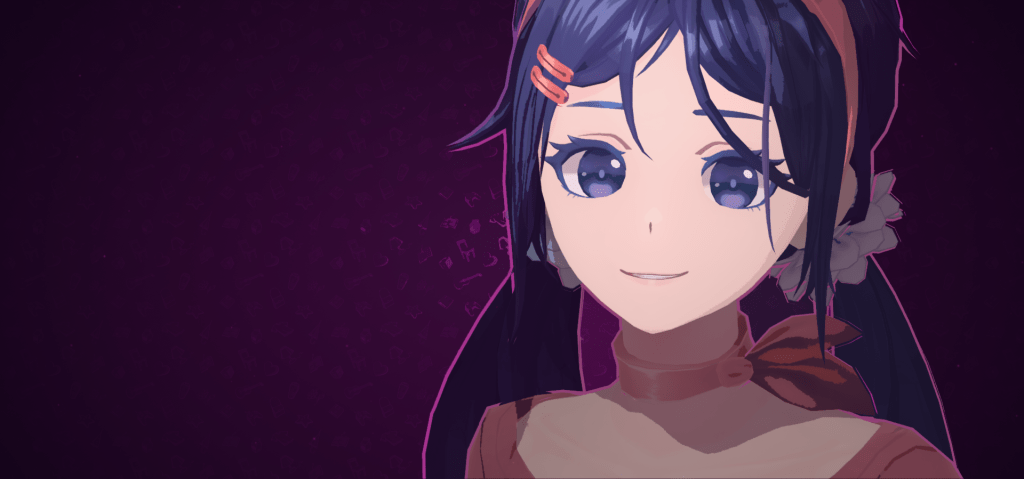

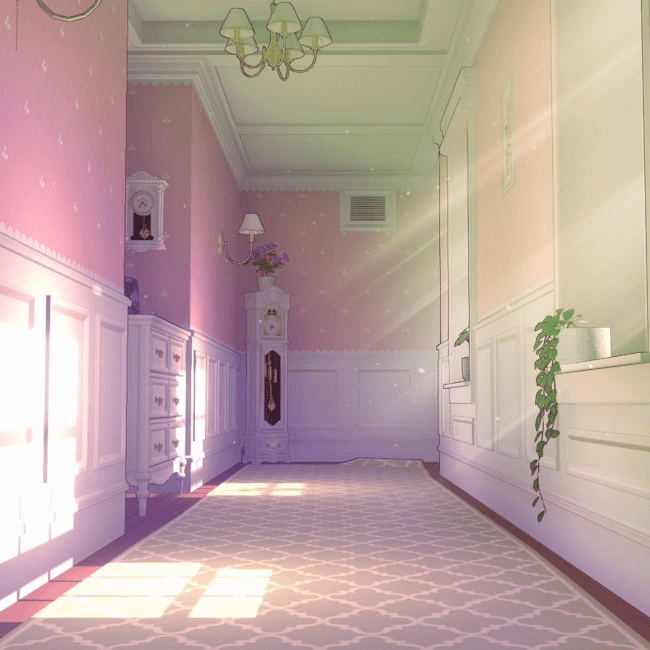


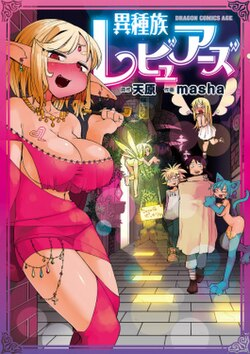






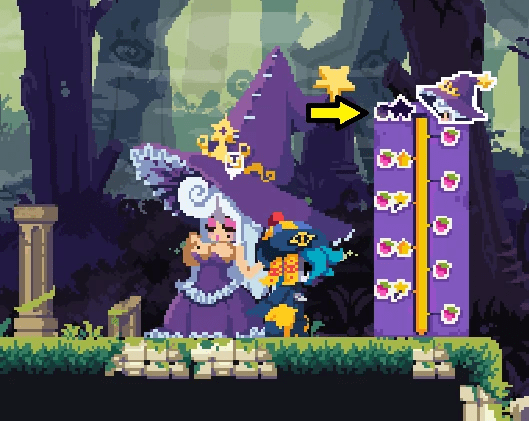



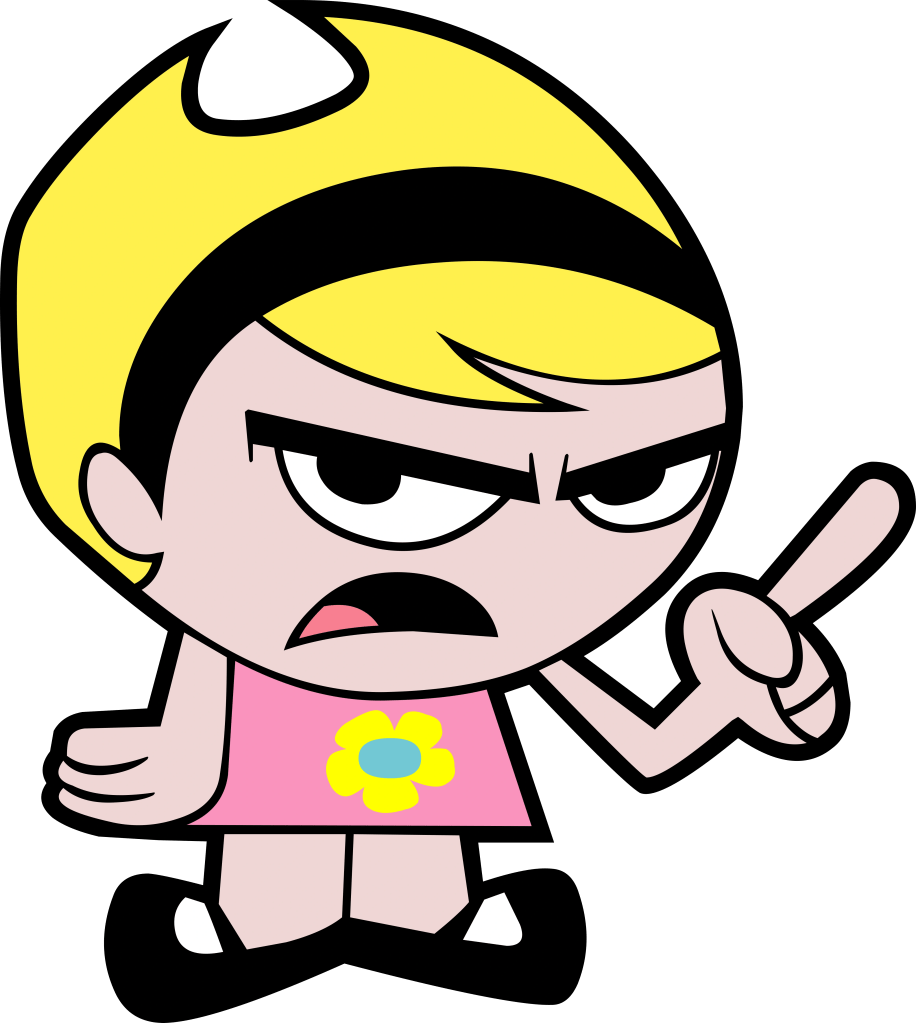



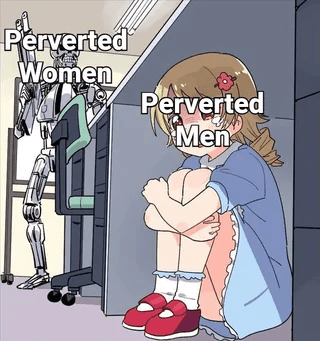
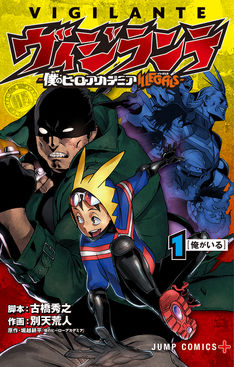


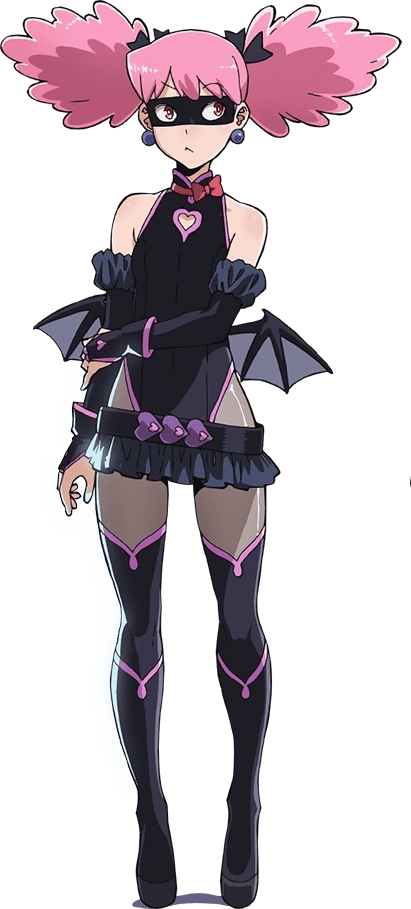
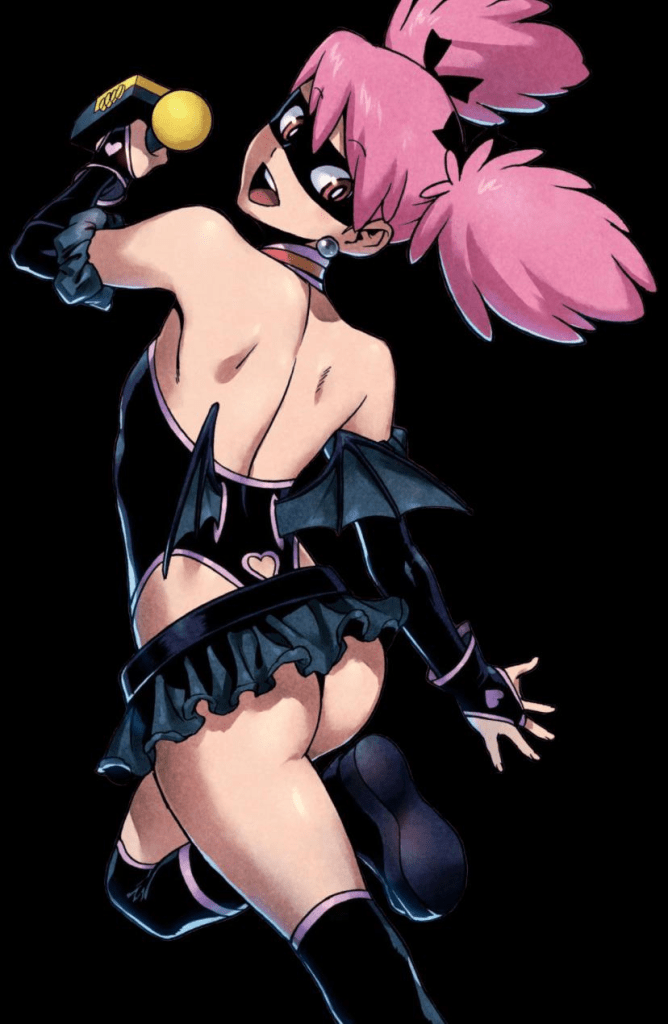





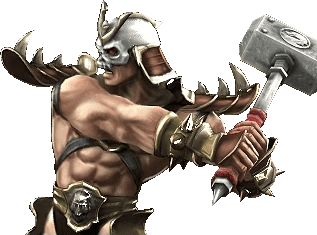


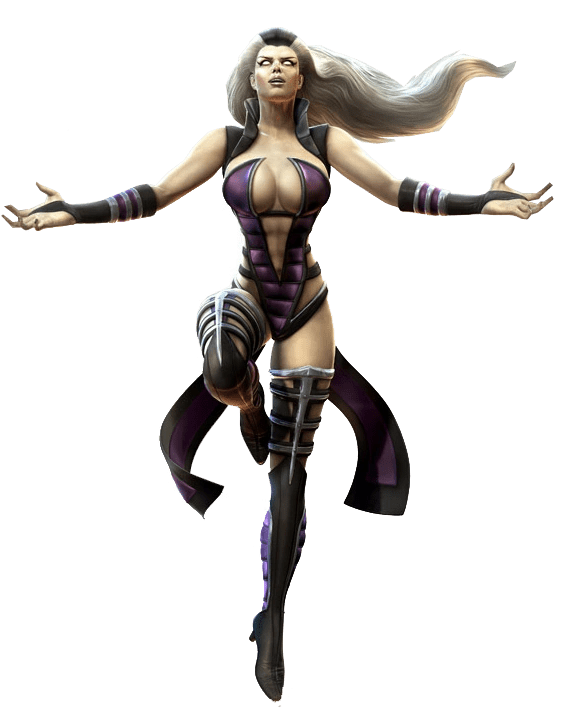

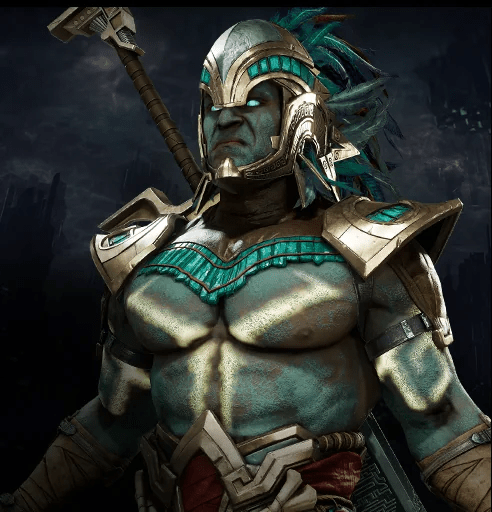
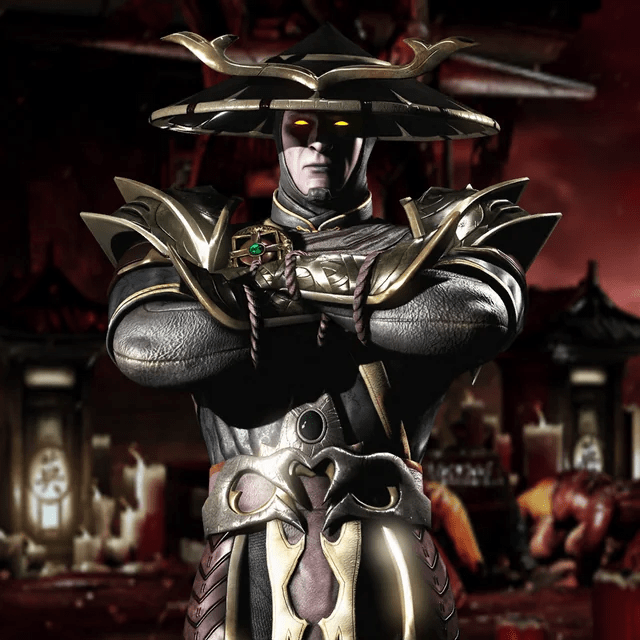


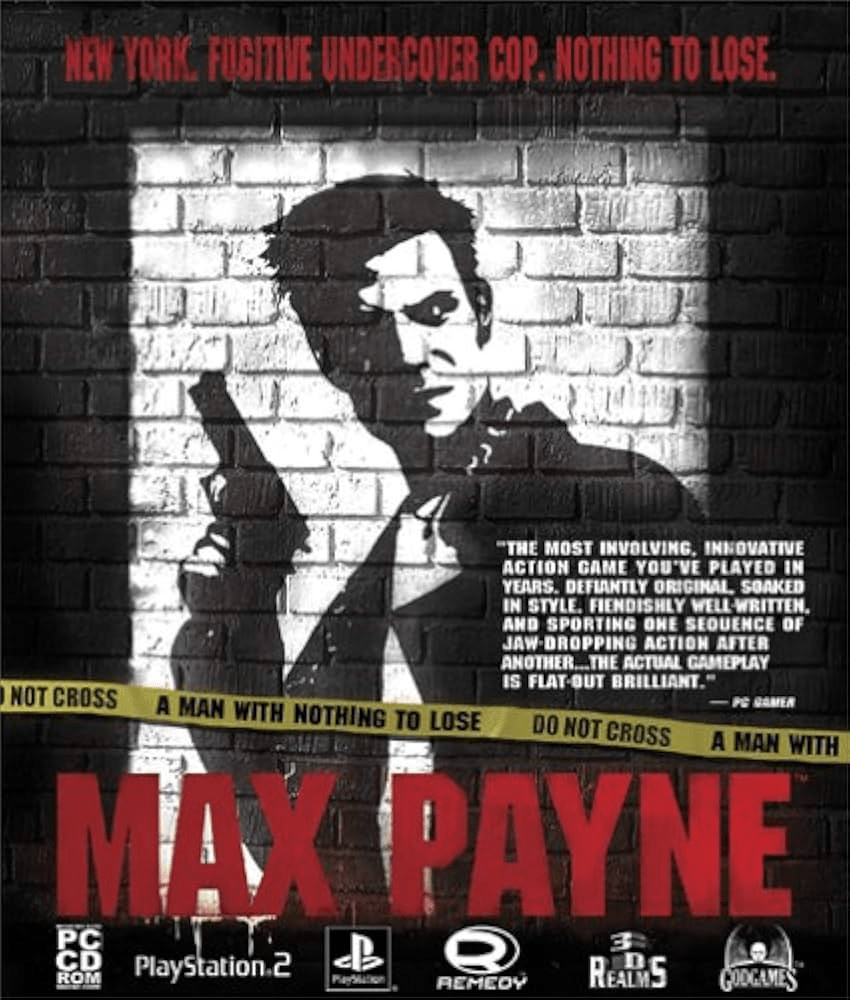





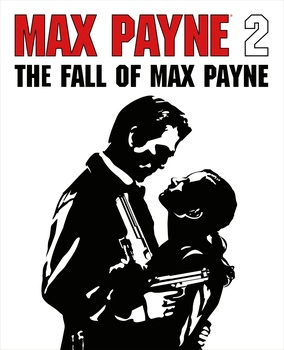

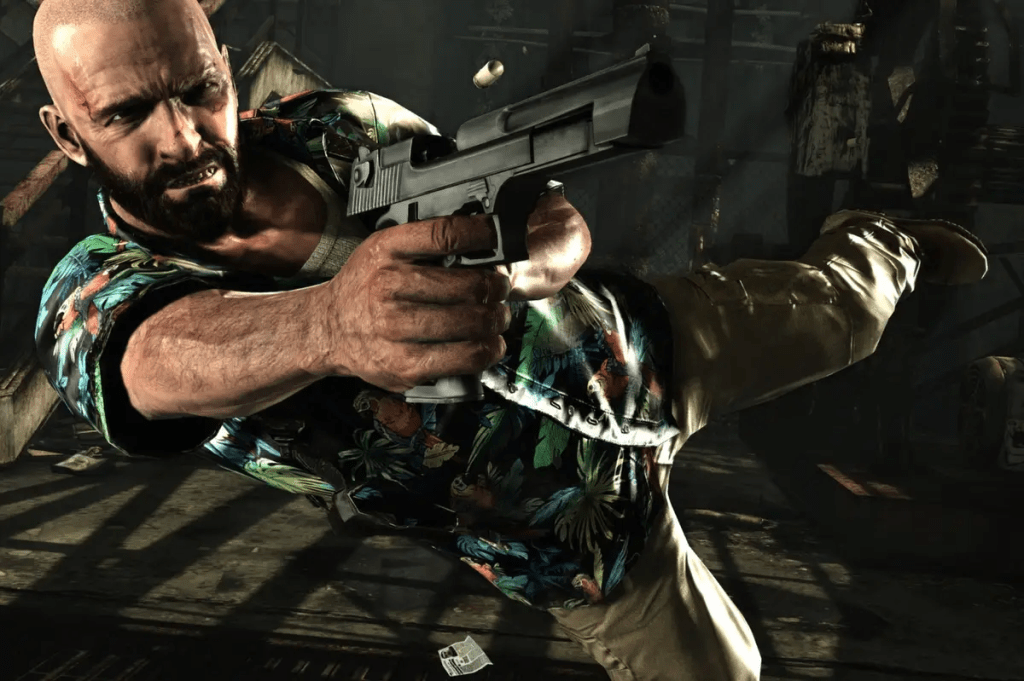
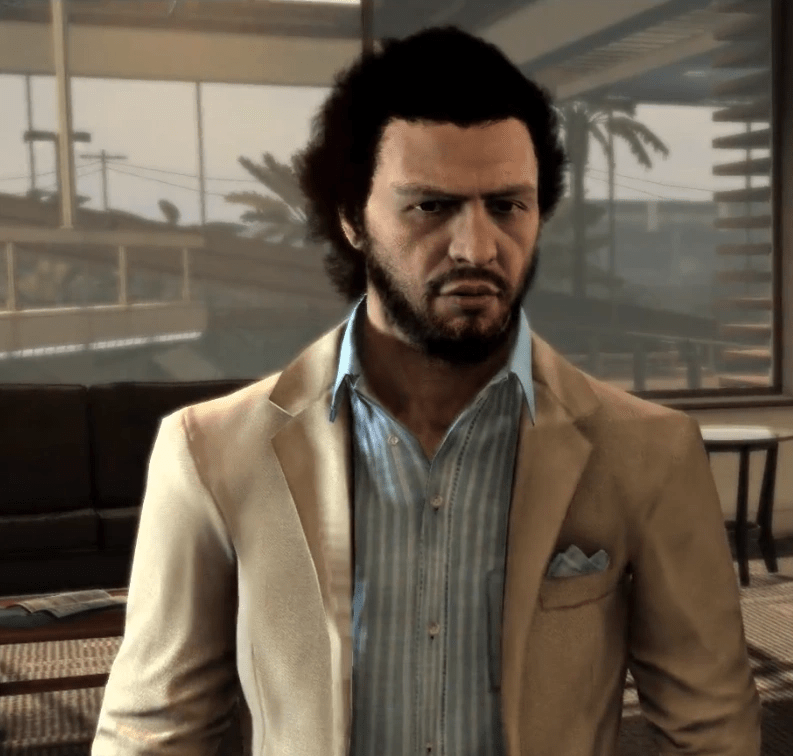
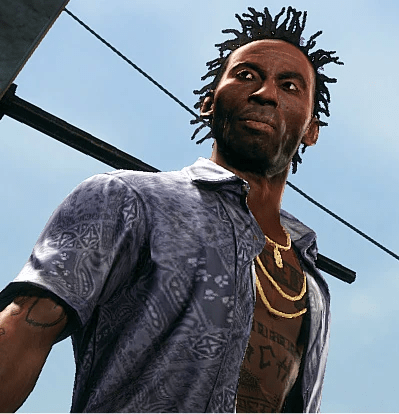



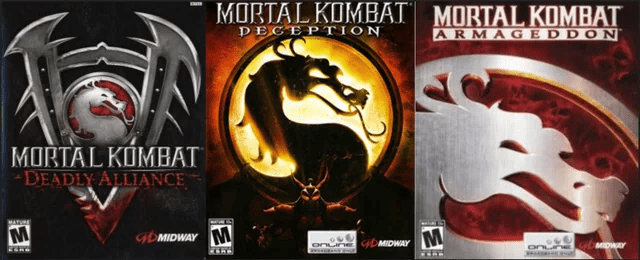





 Opinions on Entertainment