Freelance Journalist VS Insane Asylum

You sure you’re a sane man?

A couple of times and long before I joined the Army, I watched and eventually bought and played the video game Outlast and its DLC: Whistleblower. A first-person view indie horror video game that markets an age-old, but classic trope of haunted abandoned asylum with a twist.
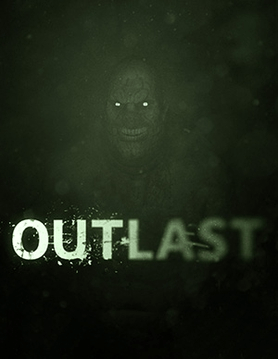
Beginning with a demo in late 2012, Outlast exposed its player-base to what the game would feature in the final product the following year. The base game centers on freelance journalist, Miles Upshur, who receives an anonymous email requesting outside documentation to record the crimes against humanity being kept secret inside the Mount Massive asylum. The asylum itself was shuttered in 1971 as we learn in game because of those human rights abuses, but was reopened in 2009 by the Murkoff Corporation for an unknown purpose. This is Miles’ specialty.

The mission is simple on paper: get in, record abuses, get out. But the time in which Miles receives that email and when he shows up to document crimes that disgusted the Dirlewanger Brigade is enough that large parts of the asylum are devoid of human life and in grievous disrepair. The front door isn’t even open when he shows up, forcing him to trespass through an open window. The first person to talk to him is a mutilated mercenary who uses his convenient last breath to tell Miles to just quit. Leave. Jump ship. Skip town. Memory hole this motherf[doors]ker. Down enough absinthe to make the little green fairy tell you you’re about to die of liver failure.

Excellent advice if going back was still an option. No, the unwritten motto follows the spirit of the old Toyota slogan “keep moving forward,” and in that vein, the further you progress the more f[AAAHH!]ked up the place gets. Bodies, tortured prisoners, mutilation and experiments conducted that physically cripple the patients more so than their own limited mental capacities already show, and for another obviously obvious observation, there isn’t anything to suggest anyone besides the staff consented to them all.

It gets worse in the base game. The demons in charge of the “hospital” affect non-medical staff too. Basically, anyone who sets foot, has been, or probably even thinks about the place is setting themselves up for an ancient Germanic hex that takes the form of a being known as a Walrider. It merely only exists in mumblings among the patients though, which is either a premonition, an omen, or an extension of the curse.

WHAT THE F[dial-up]K!!?!

Well, f[belch]k. I guess it was real all along… So humanity and decency is a rare thing to find in the game among the patients. All things considered, the wide variety of them, known as variants, either leave you alone, have a casual chat with you, or if they’re hostile, smack you once and bug off. Others are named and tied in one way or another to the hospital’s past being staff members or patients, some of whom show up only in writing on lost documents you can find throughout.

One is “Father” Martin Archimbaud. One of the better characters to act as a “guide” to Miles, he believes him to be an Apostle with a message to share to the world. That may be his schizoaffective disorder telling him to encourage Miles to record everything he can in the hopes that the footage will reach the outside world, but in his delusions it’s framed as confirmation that the Walrider is to be acknowledged, feared, and respected all in one. Documents and notes on him can be found or written respectively detailing his condition and Miles’ personal opinions on the old man. He’s about as trustworthy as an elderly scorpion who can’t sting anymore, but the majority of the variants who are still “able-bodied” and not mangled corpses torn apart by the Walrider itself adhere to his word to spare Miles and allow him safe passage. Some of them are slaves to their own pre-existing mental conditions and defy him and attempt to kill Miles for sport. Such is the case of the Twins.

They aren’t named, though there’s evidence to suggest they were based on a pair of South African twins, Dresie and Casie, who gained worldwide fame by way of the photographer Roger Ballen whose photo of the two was used as an argument in the dismantling of South Africa’s white supremacist apartheid government.

There’s more images of them in nicer attire.

See?

The Twins in Outlast speak casually of dismembering and harvesting Miles’ body parts in defiance of the Priest’s wishes. They’re a rarer appearance compared to other variants in the hospital and typically nude and armed with machetes. Their final appearance is at the chapel before the last leg of the game. And serve as more of a nuisance compared to the face of the game: former MP Chris Walker.

The single most persistent variant in the game, and one of the more intelligent ones, Miles’ notes suggest her may be more aware of the Walrider’s possession ability and hauntings than we’re led to believe, and thus his own mission is to rob the Walrider of potential hosts… by separating heads from bodies with his inhuman strength.

He’s present in about 90% of the levels. If it’s true that he knows more than can communicate about the Walrider, then his persistent chasing of Miles means he knows that a fresh face is a prime target for possession. But going back to what I said about him being an MP–Military Police–that’s not an exaggeration. His file can be found in the game and it details being an Army MP in Afghanistan and taking his obsession with tuatara lizards and their parietal eye with him. Yeah, the Army has weirdos like that. We’re an unusual bunch who f[Ten HUT]k all the way around in peacetime.

Multiple stacked on tours to Afghanistan though may suggest he was God’s lucky winner of the Stop Loss award. For my civilian readers, stop loss is a Defense/War Department program that allows Uncle Sam to involuntarily hold a servicemember for a longer than they’re supposed to relocate or leave the military. Basically, if the government decides that your military occupational specialty (MOS) is valuable enough to keep and hurting for bodies, they’ll keep what they have and expand that pool whether they want it or not, and a soldier in an in-demand MOS may not get to go home until the mission is complete. This also being around 2007-09 when standards were dropped to keep and recruit less desirable servicemembers, Chris having an undisclosed medical condition or leaving Afghanistan with one checks out surprisingly well. I did mention the developers are Canadian, right? No clue whatsoever if they knew this, but whether they did or not doesn’t really matter, though it does play up the military equals PTSD aspect to a violent degree. The operative word in post-traumatic stress disorder is, of course, traumatic, and anything can activate or intensify it outside of a combat environment. Sexual assault/rape survivors, cops, atrocity survivors, etc. can and do have it. I’m pretty sure there are people who were supposed to be in the Alfred P. Murrah Federal Building on April 19, 1995 who don’t feel very lucky to have missed going to work that day.

All of this coupled with the crimes against humanity that was Mount Massive Insane Asylum had a really bad effect on Walker, where a portion, though perhaps not the lion’s share of the handiwork, is attributed to him. Much of the carnage is split between him, the Walrider, and some others, but if a Columbo archetype was present to investigate the damage, parsing who did what would fall apart faster than attempting to figure out how. These guys are consistent in their M.O.s, but counting all the bodies would become arduous after the 12th or 13th ambulance sped away from the premises with the Walrider, or perhaps it’s mythological enemy, the Horerczy, in hot pursuit. And where Walker and Father Martin are two sides of damaged men who think they’re trying to help, a minor, though annoying variant has zero contradictions in his mission to stop that by any means necessary.

Murkoff Corporation executive Richard Trager. He’s not a doctor or has any medical experience, but has access to all the tools and with what’s left of his cognitive abilities, he designs a method of torture to harvest organs from still-living patients for profit. He’s a minor antagonist who dies in the same level he’s the main antagonist in, so there’s no love lost. He dies quicker than the antagonists who claim to want to help Miles; makes you think, now doesn’t it?

So, Miles navigates the horrors of the asylum, gets physically assaulted by nearly every mental patient who can still show their Caveman Lessons, hit thing with stick, and has the keys to the way out of this place of hell on earth only to be deceived by the faulty wiring of the asylum and brought to an underground lab where the nightmares, namely the Walrider, were born. The entire project is revealed to be spearheaded by the now elderly (and dying) Nazi scientist Rudolf Wernicke, who lives as one of the aging remnants of Operation Paperclip, bringing his notes on a Wunderwaffe with him: the Morphogenic Engine.

“Deutsche Wissenschaft ist die beste der Welt!”

The old man’s last request to Miles is to destroy the monster he created. Turning valves, tearing out wiring, and ultimately killing the man whom the Walrider is based on, the very-much imprisoned William “Billy” Hope, who was being used as the main vessel for the Walrider.

Mimir knows this pain of indeterminate imprisonment.

Unjustly subject to experimentation in exchange for a lump sum of cash, his mother allowed Murkoff to use his body to bring the project to life. The game shows the aftermath of that, and the Whistleblower DLC is an exploration of it unfolding in real time. If the environment of the base game is crawling to its death leaving a blood trail behind, Whistleblower is the disembowelment with the Toy-Box Killer as the architect whose Rube-Goldberg machine goes into overdrive. Once that’s done, Miles tries to make his way to the exit only for the Murkoff SWAT team (there’s a surprising number of companies that have dedicated SWAT teams in America when you look hard enough) on Wernicke’s orders to gun him down. But Death doesn’t stop the Walrider, in fact, the Wiki claims it’s been roaming for decades, so the Nazi scientist had been attempting to use it for as long as he’d been in the US after World War II. My theory is that this was yet another wacky CIA attempt to counter the Soviets in the Cold War by showing people what happens if they submit to communism, but like all the others, it went haywire. It’d be foolish to say that this is the case or that the CIA’s main work is storming communist houses and destinations like SEAL Team 6 with pamphlets on freedom and democracy, American flags, and our best in media. We achieve that merely by exporting movies, TV, and video games everywhere.

Credit: r/GameCollecting, u/oribaa11

This is the real time-honored American tradition.

The Whistleblower DLC centers on the author of the email that dragged Miles Upshur to the middle of nowhere, Colorado to investigate the asylum, Wayland Park. He has a different route out of the hospital and goes through his own torture series at the hands of DLC specific variants, but eventually makes it out, exposes Murkoff the WikiLeaks and now lives with his family supposedly in seclusion in a very remote part of the country.

No one will ever find them.

Moving to gameplay, the main draw is run, duck, hide. There’s no fighting that Miles or Wayland does, not even the desperation from Shimizu Hinako or James Sunderland of Silent Hill fame, and it can be argued that the game’s sequel releasing after Resident Evil 7 is why Outlast II did poorly thanks in no small part to the fact that RE7 is FPS and allows the player to fight back though would rather they didn’t save on scarce ammunition, same for RE8. I have only memory of gameplay of Outlast II and it got a bad rap for being an FPS game that took away the ability to defend yourself from all the crazies.

I bought into the hype and avoided it when it was revealed it wasn’t even that good–but comparing it to other games of the genre doesn’t do the game very well. Perhaps it’s worth revisiting that game and seeing for myself where it falters and where it doesn’t. That’d make for an interesting research project.

Outlast and the rest of the series can be found on Steam, it has a dedicated comic, and all that. Buy it if you’d like or pirate if Red Barrels pisses you off for some reason.