
The humble beginning
I call this one a humble brag of sorts as I look back to the games I had available on my old PS2. From the day I got it (c. 2003) to the day I canned it (March 2013), I had a large library of games. Not exactly enough to fill a whole bookcase, but large enough to dedicate one of the shelves of the bookcase to them for storage. My ever reliable memory may fail me here, but I’ll go ahead with the ones that I remember dedicating the most time to, starting with this.
3D Mortal Kombat Games (2002-06): Starting with a classic series, you might be surprised to learn how I got into Mortal Kombat. My mother actually was a fan during the 90s’ 2D era Mortal Kombat games.
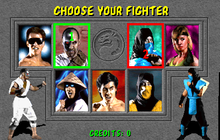
Considering the steps the franchise has taken since and now with a new game debuting in the middle of September, it’s nostalgic to look back at these 2D sprites of digitized martial artist-actors and think that this was the first of a phenomenal and influential video game series. The blood, the characters, the story, the moves, and best of all the fatalities; something this popular and this controversial — so much so that it helped birth the ESRB — was not lacking in graphic content, nor even imitators for that matter.
There were always fighting games before, during, and after MK’s big debut, but I’m not sure if any other fighting franchise can boast about having as many imitators as MK did at the time, and probably still does. Then again, a few come to mind…
https://www.cbr.com/mortal-kombat-rip-offs-good-bad/
MK’s transition to 3D in 1997 wasn’t without its missteps however. It tried its best, but Ed Boon even admitted that Mortal Kombat 4’s quality wasn’t up to snuff, and this isn’t even mentioning the media getting in on the then-hyper realistic graphics and their supposed influence on the impressionable and possible contribution to real-world violence–an accusation that video games couldn’t seem to shake off for years. But nevertheless, Midway trudged on and met the 2000s swinging at the fences.
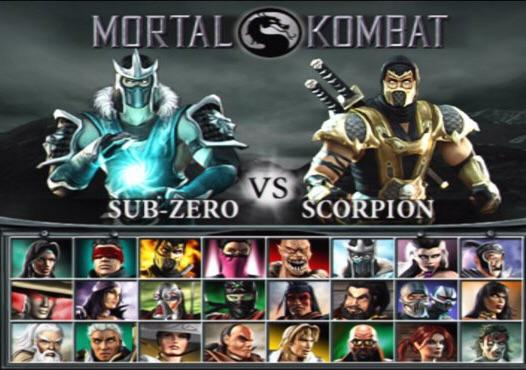
Although Deadly Alliance came first in 2002, the first MK game I had was 2004’s Deception. The simple numbering system for sequels isn’t concrete giving way to creativity most of the time, but an average consumer without even a bit of knowledge in what they’re buying may not notice until after they buy the game. Fortunately for us, Blockbuster Video was a popular rental store for those who wanted to test an entertainment medium before committing or just didn’t see themselves owning it for good.
This was how I found out about Deadly Alliance. Being a bit older than Deception, most of the features in Deception aren’t in Deadly Alliance. It did have the 3D animations, fighting styles, and arenas that followed it into Armageddon and MK vs DC Universe (I personally don’t count this as an MK game), but what it was lacking in is what makes Deception look like an upgrade by comparison. This doesn’t mean Deadly Alliance was barebones, far from it. It’s Konquest mode was a great big tutorial for how to move and maneuver the characters and their combos, the endings were all unique with some connecting to others, the krypt had loads of secrets and collectibles to find, and the soundtrack stands as one of my favorites in video gaming.
On the later end of the 3D era, Armageddon had the same fighting mechanics of the last two games with several more added features, several mini-games and an in-depth plot about the fate of existence like that of Deception, and has possibly featured nearly every character ever introduced in Mortal Kombat since its inception 14 years earlier, but seems more than a little bit barebones compared to its predecessors. The previous two games gave the characters two fighting styles and a weapon, an arsenal of special moves, one fatality in Deadly Alliance and two in Deception including a Hara-Kiri/suicide move. Deception and Armageddon fixed the error that Deadly Alliance committed by omitting the stage fatalities, but committed some of its own cardinal sins.
Technically, it’s possible to have mastery over two or more martial arts styles. I was never the biggest fan of the old style-branching combos with so many of them being so difficult to pull off in rapid succession, but for the most part, the variety they added to a fight by chaining multiple combos between styles and sometimes ending with a strong weapon attack was the definition of a power move, or dare I say, a pro gamer move.

So while they might be gone from Armageddon, at least the characters feel and play differently: males apart from females apart from creature-types like Motaro or Baraka apart from the literal beasts like Goro, Onaga or even Blaze himself after the glow up from his addition as a secret character from MK Deadly Alliance.
The other cardinal sin committed, one that’s less forgivable or defendable is that of the fatalities. If you’ve played these older games, you’ll know that the window of opportunity was notoriously unforgiving and the combos so precise that one slip-up could turn a head ripper into a slap in the face which some would say added to the reward. I actually discovered Armageddon’s fatality system by accident after trying to finish a character off by way of special move only to unintentionally dismember them and squeeze his head. Yeah, Armageddon got lazy with the fatalities.
No room for practicing something difficult anymore, everyone regardless of physicality is capable of committing many of the same fatalities and input combos, with different tiers depending on what’s done to the victim. Single moves aren’t anything special where as a full-on prolonged dismemberment and maiming before the big finish creates what the game calls an “Ultimate Fatality.”
I can call this a lot of things, but part of me used to believe the titling of Armageddon was a glimpse into what was going on behind the scenes. Just now, a Google search revealed that there was more going on under the hood that resulted in Midway shutting down in 2009, not the least of which was an overdependence on Mortal Kombat along with financial mishandling, so while I wasn’t off the mark, I wasn’t entirely accurate either.
3D Grand Theft Auto Games (2001-2006): This brings me back to an arguable bygone era of RockStar Games, a time when the next game was literally a few years or even months away than a full-on decade and change. Think about it: the last GTA game will turn ten years old in less than a month as of writing this. Also, the most recent release was an ambitious project that lived up to its purported hype if not beyond and RockStar is seeking to abandon it.
But we’re getting off track. The most iconic games of the GTA era were released seemingly back to back between October 2001 and October 2004 and have set the precedent for 3D gaming ever since, finding the solution to a complex problem. For GTA III, full 3D graphics have been realized and helped struggling developers hit the ground running when they eventually tried it in their own IPs (though I argue this was also perfected in another game published that year, Max Payne). For 2002’s Vice City, while admittedly an asset flip that has helped with the influence of future methods of lazy rip-offs and asset flips (arguable again, I can’t put fault for all of that on one game), it added more to the GTA franchise and gaming in general with the setting, plot, characters, star studded voice actors and features. Finally, for 2004’s San Andreas, the features present in that game got an even bigger boost across a much larger open-world game. It incorporated several RPG-like elements regarding character customization, had expanded on bonuses featured in prior entries, expanded on the ownership of assets from Vice City and many more features that are too numerous to name.

Additionally, there were spin-offs set in between these games like Vice City Stories and Liberty City Stories, both of which I’ve covered on this blog earlier this year. From GTA III to 2006’s VCS, the 3D era games show the most innovation and imagination to me. GTA III walked so the succeeding games could sprint, to the point that in lists describing games that have aged poorly, GTA III consistently places in the middle for what the succeeding games have that it didn’t.
It’s hard to say when silent protagonists lost their favor with developers with them becoming more rare as personable protagonists became more commonplace, but Claude having no voiced lines would make him forgettable if it wasn’t for his attire. Green cargos, a leather jacket, and what looks like navy blue Nikes or Vans; at least he’s recognizable. But without a voice, players are left with his actions to characterize him. The Professional makes a case for him being a textbook psychopath. Although the game is majority player-driven, Claude not even second guessing his own actions before nodding and blasting sounds like a worry spot for criminal profilers to watch out for.
His successor, Tommy Vercetti, was much more animated and well-acted, which may have something to do with his voice actor.

An ambitious move on RockStar’s part, hiring A-list actors for main roles was an ingenious move that continued well into the 2010s to help shape the numerous protagonists going forward. Tommy Vercetti is an embittered ex-mobster who was given all the freedom to screw over a boss who wronged him ages ago. To this end, he’s mostly stuck working with a hapless, cocaine-addled lawyer whose voice lines whenever you get busted by the cops are some of the most humorous in the game.
He was initially supposed to go down to Vice City, Florida to make money for the mob and send the earnings back to the Forelli family, but with all that’s happening in VC thus far, coupled with a complicated past of betrayal, Tommy’s choices are clearer than they were. Forget the mob, Vercetti’s the big boss of this neon-lit city, and the ownership of assets from a cab company to a print shop to a cocaine distributor masquerading as an ice cream factory reflects this. It all comes to a head when the news and not the money reaches the mob’s ears and thus comes the final mission paying homage to the 1983 remake of Scarface.

I’m not kidding, this is a remake of a 1930s movie.
Anyway, GTA: San Andreas’s use of RPG elements was peak customization. VC allowed you to change your clothing, but SA gives you way more freedom. Whole outfits can be created by changing a simple article of clothing, the player can ink themselves up, and get any haircut they desire. There’s also a sort of leveling system based on how often you perform such an action. From my own experience, I’ve employed what some could consider a Call of Duty method to shooting. What I mean is, most of the time, my accuracy in shooting got a boost each time I crouched down and took aim. So I started on the AK firing at the hip and ended the game firing it from the shoulder as God intended.
Relationships also got an upgrade. The protagonists of the last games had more business partners than personal friendships, but CJ sets this apart since he’s a native San Andrean coming back to settle debts with friends and old gang members, especially when corrupt LSPD officers Frank Tenpenny and Eddie Pulaski (voiced by legends Samuel L. Jackson and Chris Penn respectively) instruct (read: coerce) them to do their dirty work. Interestingly, the inspiration for much of SA’s plot comes from the 1992 L.A. Rodney King riots and the Rampart scandal in the LAPD. There’s a chance an Angeleno who witnessed either or even both of these personally got an ugly reminder of these events while playing the game.
Of all the games from the 3D era, due to them being released before the internet and multiplayer games caught up with each other, these were the ones that got remastered more than the other games between their respective ten-year anniversaries and GTA III’s 20th anniversary culminating in the largely reviled Grove Street Games definitive edition.
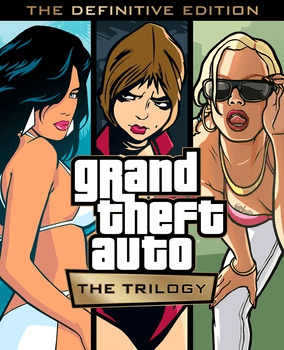
Take my opinion for what it’s worth as this section of this week’s entry as well as opinions made earlier this year have made it quite clear where I stand on games this old, but not only was this a black eye to the image of a company that might be doing too much with one franchise while neglecting another and moving too slowly to get a long-awaited sequel out, it was also somewhat unnecessary. In the lead up to the Definitive Edition’s release, the originals were all delisted on Steam. Fortunately for me, I managed to blaze through the originals on PC. I bought and beat VC on Steam before that happened, I pirated and beat GTA III and I managed to snag San Andreas for free from the RockStar Games Launcher. So, have at it RockStar.
Naruto: Ultimate Ninja and Uzumaki Chronicles Games (2002-07): The influence and spread of the Naruto franchise at the outset is not to be understated. It did not take long for cartoon distributors to air it soon after getting the green light. Naturally, this lead to widespread marketing across the western world, even with western toymakers like Mattel, some of which I owned myself. The video games themselves each centered around different arcs from the series. 1-3 covered the whole of Part 1, 4 and 5 covered about a fifth or so of Shippuden, though only Japan and Europe got a hold of the fifth installment of the Ultimate Ninja series before it got another chance as the Storm series, finishing all of Naruto and adapting the Boruto movie in the game.
As for the rest of the game, with the entirety of the main arc being relatively easy to clear, there were game exclusive arcs that could be boiled down to an OVA. In UN2, after Tsunade returns to the village to become the Fifth Hokage, Orochimaru returns to again coerce her into healing his arms after getting his sealed during his fight with the Third, even going as far as using forbidden jutsu like the the Gedo Mark and Reanimation to destroy the Leaf Village until she capitulates. Interesting from a plot perspective but ignorant of established lore with its own set of plot holes.
Ultimate Ninja 3 had its exclusive arc adapted into an OVA to promote the game. In it, Tsunade hosts a battle royale featuring Leaf and Sand shinobi with the promise that the winner can put up a regulation of their own choosing for a week. You don’t know what everyone’s is, but the biggest one is the one that eventually becomes canon and sits in the background while Naruto’s son does the plot things. Rather than precede or even succeed any of the adapted arcs, it’s its own separate thing altogether.
Ultimate Ninja 4, has its OVA-like arc before Naruto and Jiraiya returns to the village. Arguably, one of my favorites, Naruto and Jiraiya are wrapping up their training with a final lesson. Naruto wears weighted beads on his wrists and ankles for an extended period of time. They change color as he goes on. Meanwhile, he and Jiraiya stumble on a village that made use of its mining industry at the expense of safety. An ancient spirit from within dwells within and takes regular sacrifices, one of them being a little girl that Naruto tries to Talk no Jutsu into coming back to her village. As he learns more about her and her motives, he eventually comes through to her, aids in her predicament and makes a new friend. However, due to her being non-canon and this being Naruto, he got used to not being able to keep her as a friend. Then the rest of Shippuden happens all the way up until Gaara is taken back to the Akatsuki hideout.
The fifth game includes that and the Tenchi Bridge arc but North America wouldn’t be able to witness that through conventional means, culminating in this:

For the gameplay, it was on a pair of 2D planes with one acting as the background and the other the fore ground allowing players to transition between them whenever they desired. As for move sets, unlike Mortal Kombat, the same buttons do the same things across the games: there’s one attack, one charge, one ultimate move button, a jump, and a throwables button. This sounds like the games are one note, but most of the move sets are unique to the characters and true to their depictions in the series.
It was a working formula for the games, but according to the Naruto Wiki they were pumped out at a breakneck pace which may explain the issues with continuing it past Number 5 and getting it to the rest of the world. Fortunately, Ultimate Ninja Storm fixed what was broken and gets to a proper, more complete adaptation instead of simply cutting corners.
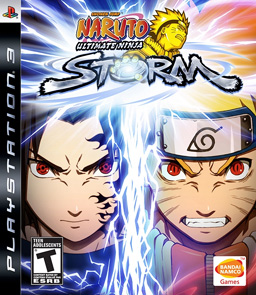
I think it was for the best that Ultimate Ninja got the boot. Rapid adaptations before the series is even finished is good for marketing, but if the game catches up to the series, it tends to force the devs to get creative. Unlike original IPs like GTA or MK or even Mario for that matter, adapting something that exists isn’t always easy. In the case of Naruto, it allegedly made things easy by way of all the fillers it has separating the canon from the actual plot, but for something that was still in serialization, Bandai Namco seemed to have struggled in some areas.
Earlier when I mentioned the UN2 exclusive arc about reanimation and forbidden jutsu, if you don’t know, powerful jutsu often demand large chakra reserves and a critically crippled Orochimaru trying this even through Kabuto shows his desperation but there’s a fine line between desperation and suicide. According to the lore, it should’ve killed him. Then again, Kishimoto’s method of storytelling was by way of drip feed then downpour, so are the devs still at fault for that arc? Well, I don’t think so. It’s all fiction anyway.
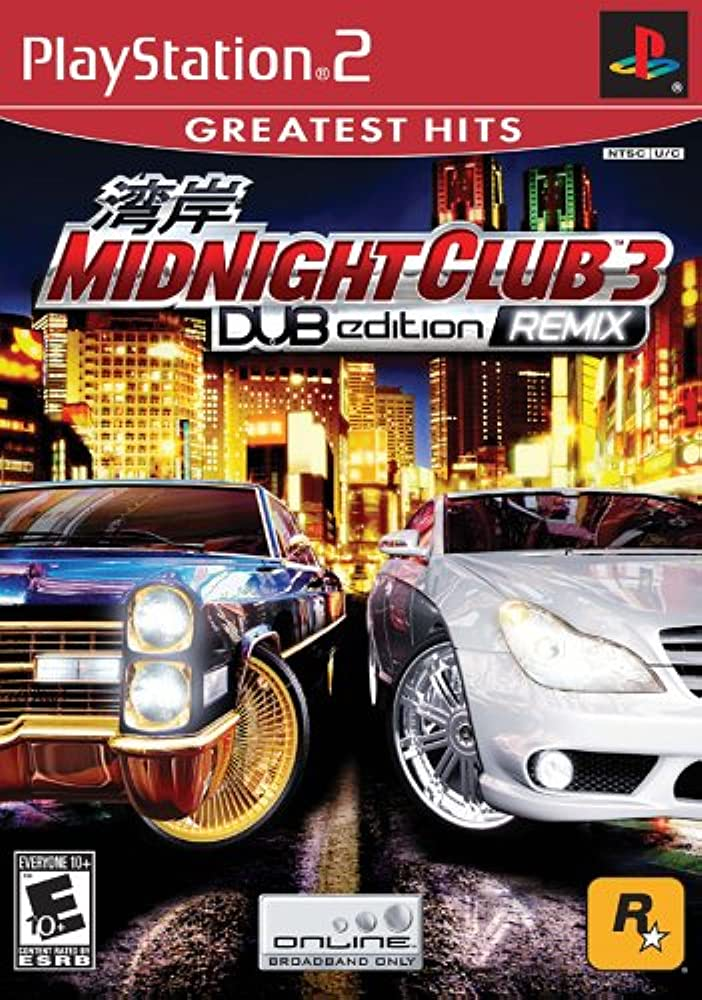
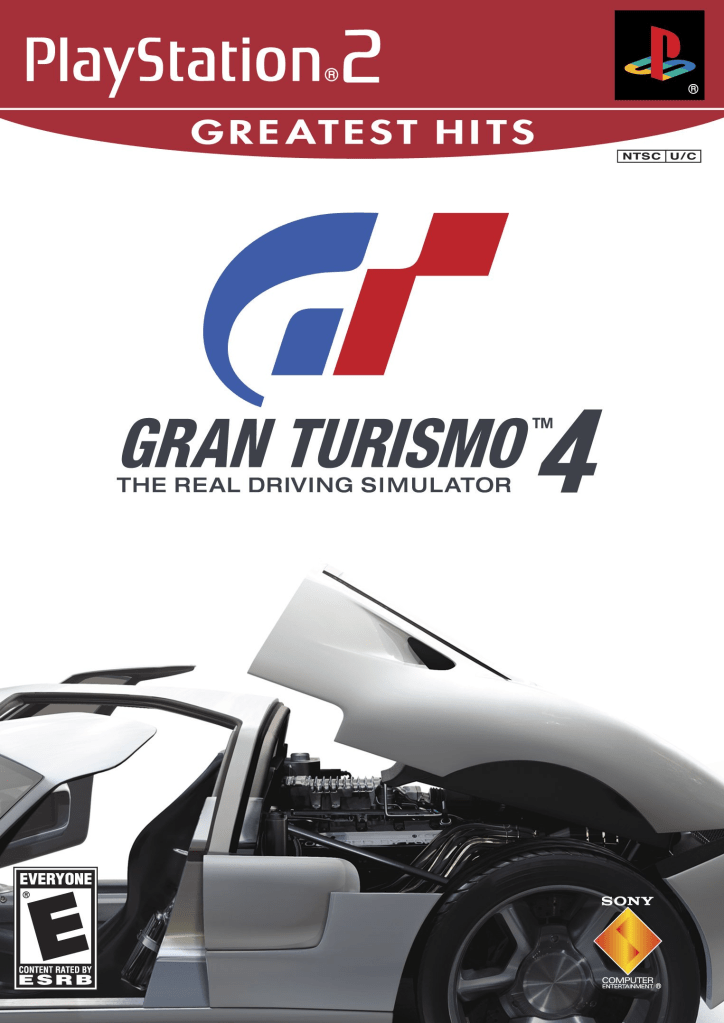
Racing Games (2000-07): I’ll close off with the racing games I played with. Back in April (time surely flies), I made a post about my top 3 racing games from best to worst and in that order mine were Midnight Club 3, Need For Speed: Hot Pursuit 2 and L.A. Rush. Thanks to a video by the YouTuber BlueTag, I was reminded of how much I hated the last of those three. But just because those three were the most memorable doesn’t mean those were the only games I engaged in regarding racing. I vaguely remember the Gran Turismo series though I don’t remember engaging that much with it. L.A. Rush definitely turned me off of that game for reasons expressed many moons before.
Midnight Club however motivated me to check out the earlier entries and while they weren’t bad, they reminded me of what I wrote about GTA in this post. The succeeding games got better and better and better and as a result the older games aged so badly that you have to get used to a whole new set of rules, like transitioning from horses to cars but backwards in this case. Also, a feature that is underappreciated is the freedom to cruise around a given city. I remember Midnight Club 2 incessantly reminding you to race other racers, whereas in MC3, you could do what you want in the world. The racers and races and tournaments were there, but there was almost no pressure to knock them all off the streets as fast as possible. Above all, the series always harped praise and reward on you the player to be the best racer ever and get 1st place all the time. MC3 to me was the easiest game to 100% complete.
On the other end of the spectrum, skill and learning have almost always been a cornerstone of EA games as I found out playing Battlefield 1. It takes some getting used to but once you get the hang of an EA game, you’ll feel like a master in no time. NFS: Hot Pursuit 2 had a noticeable difficulty curve and didn’t always drive you (get it?) to be number 1 all the time. By working on a points system, it carries over from race to race, so there’s no pressure to be 1st all the time, but it does help. Tournaments and knockouts also make a difference regarding the rules of the race, so few races played the same.
The downside though was that the customization wasn’t as extensive as MC3. If you’re a creative or artsy type of person, the cosmetics in Midnight Club make it feel as though you’ve walked into God’s personal workshop ready to design your greatest fleet of dream cars. As part of an experiment, I played MC3 last winter on PCSX2 without a controller. Thanks to my abnormally long fingers I was able to 100% the game and unlock all the collectibles on the keyboard. But it was so tedious that I resorted to using a program that tricks Windows into thinking my PS3 controller was an Xbox controller and haven’t really looked back since. Even now that I got Flight Simulator working I used the controller for that among others. So the game and whichever program I’m running will depend on what control scheme I need.
As far as my library goes, I mentioned all these games on this nostalgia trip but it’s not an exhaustive list. I didn’t even mention the Dragon Ball Z games, Ribbit King, Max Payne, other anime-esque games and puzzle games that my mom really liked, some of the arcade collections; as I said, my memory is unreliable and bound to fail me once again. I might do this for other game systems I had, though I’ve gotta reach deep. Some are iconic, others are weird and obscure.
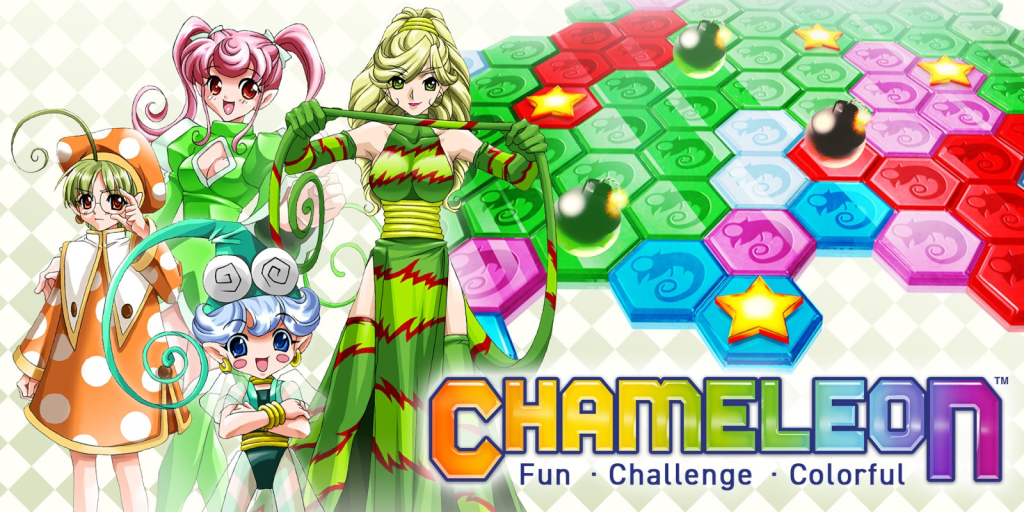
Looking at this now reminds me of most of the anime from the early 2000s just by the art style. Oh, how the times change before our giant anime eyes.
The last recommendation for the month of August is DashieGames a.k.a. DashieXP.
https://www.youtube.com/@DashieGames/about
This is a throwback for me. I was introduced to DashieXP through a friend while we were looking for gameplay of the new Tomb Raider reboot and after pushing me to check out the rest of his content, I was momentarily obsessed with catching everything he put out, truth be told. I don’t watch everything he puts out and occasionally go back to select videos and gameplays for old time’s sake. DashieXP actually has his start as a rapper and skit actor of sorts online. His skit channel DashieXP was where he started with a bunch of different parodies and whatnot. After a year on that channel, he started DashieGames in 2011 and gradually turned that channel into his main one with all the time it steals from him.
The comedy style is a bit of an acquired taste. When I was in high school, his schtick would glue me to the computer but as I got older, I found other channels and my tastes have matured a bit. I do still have a soft spot for the guy, but thankfully he’s not the only YouTuber I watch anymore. If you’re interested, give him a watch.






 Opinions on Entertainment