If you don’t deal with your demons, they will deal with you
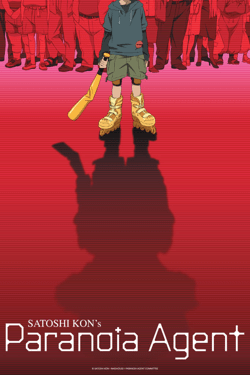
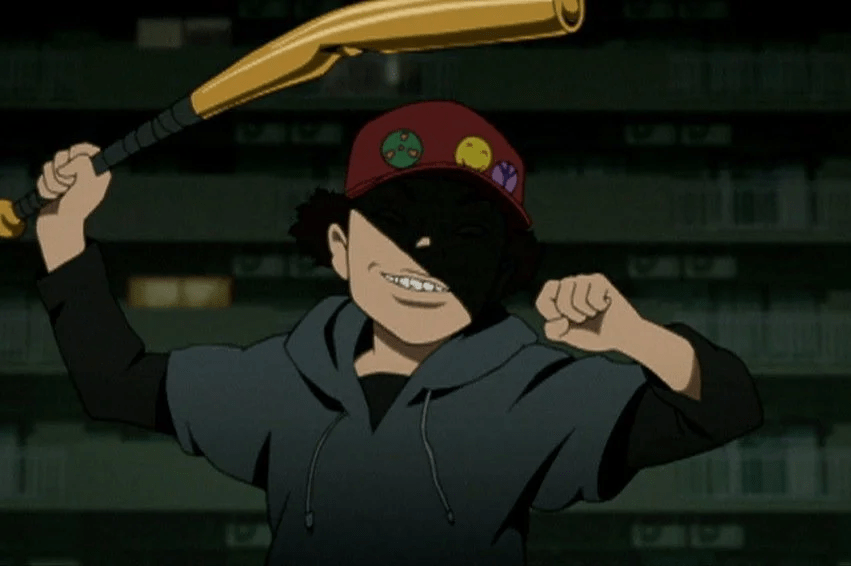
Late anime director Satoshi Kon created and directed the 2004 anime series Paranoia Agent. In 2020, Toonami picked up the series for broadcast for my viewing pleasure. It follows a timid character designer known as Tsukiko Sagi who gains fame from a pink dog mascot known as Maromi. Under pressure from higher-ups to imitate and essentially mass produce her prior success, she finds herself knocked unconscious by a mysterious boy on golden skates wielding a crooked gold bat. The detectives on the scene, Keiichi Ikari and Mitsuhiro Maniwa, don’t fully buy the story until another victim shows up and after that come more and more victims of the attacks. Every victim has essentially the same description of the perp: young buy with inline skates, a crooked bat, and a baseball cap. There’s two names for the kid in sub and dub: the sub refers to him as Golden Bat; and the dub refers to him as Lil’ Slugger. The dub name for the “antagonist” might be some holdover from times past, but I prefer Golden Bat because it’s one of the most identifiable objects on the antagonist’s person.
From a plot standpoint, Kon’s creation is a mystery thriller with some psychological horror blended into this cocktail. You don’t know who the antagonist is beyond the victim’s descriptions so that nails down the mystery. He’s a serial assaulter who attacks without warning, which adds to the thriller elements. And the psychological horror element has to do with the nature of the attacks. Post-assault all of the characters can consistently describe what was going on when they were attacked and what the assailant looked like or was wielding, but prior to that just about every one of them has some sort of mental health condition that makes them somewhat unreliable. That, or they’re some kind of opportunist with an ulterior motive or they’re hiding a deep, dark secret that they’d rather bring with them to the grave than make peace with.
For character design, knowing Japanese kinda spoils the main plot, which I’ll get to momentarily, but only if you know what kanji is being used and how. The main element to them all is animal based and is also based on their nature with a double entendre to boot for some characters, notably those with a mental disorder of some kind. From what I recall of the anime when Toonami broadcast it, it starts with the victims of Golden Bat before transitioning to detectives Ikari and Maniwa, but doesn’t want you to forget that Tsukiko and her creation, Maromi, are the first people who’re introduced in the series, despite transitioning to other characters.
It also has something of a supernatural element to Golden Bat. We’re gonna venture into spoiler territory right about now, so if you wanna open another tab and blaze through the series, you’re welcome to do so. Interspersed with the genuine attacks against them, there was a copycat perpetrator who personally singled out some of the victims while the real culprit was still at large and incidentally the real culprit was the one who killed the copycat while the copycat was in police custody, thereby ruining Ikari’s and Maniwa’s careers as detectives.
Disgraced and kicked to the curb, Ikari and Maniwa handle expulsion for f[metal clanking]ng up the case so royally in different ways. Ikari finds himself as extra help at a construction site that seemingly scoops up what society tosses out not the least of which was an ex-convict that Ikari himself arrested ages ago. Maniwa, meanwhile, doesn’t necessarily quit working on the case just because he no longer has a badge.
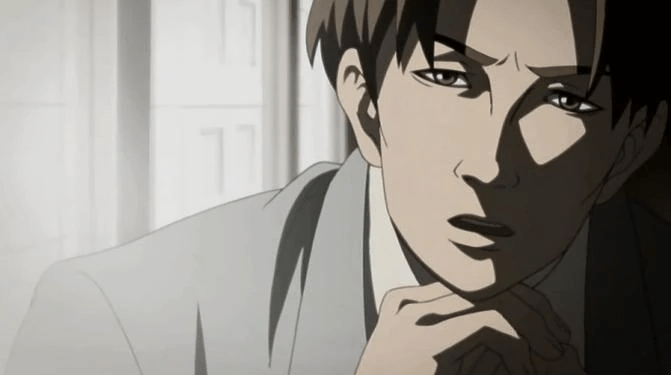
Ikari and Maniwa fill the buddy cop dynamic that I haven’t really seen since Rush Hour and wouldn’t again until Taiho Shichauzo. Ikari is the gruff, older, experienced cop who doesn’t have room for surprises anymore. His belief in the supernatural is as tight as the victims’ grips on reality and what especially makes the gears grind against each other is that his family’s future was torn apart. His wife, Misae, was expecting a child, but due either to a mishap or medical condition, she miscarried. Worse still, her health deteriorated significantly toward the end of the series.
Based on that description, she would be a prime target for the likes of Golden Bat to strike, considering he had an affinity for striking the mentally or even physically unwell throughout the series. But Misae in her final hours proved to be an indestructible show of force, refusing to let this manifestation of everyone’s darkest insecurities destroy her, even if her body is failing her.
Maniwa is Ikari’s counterpart. Young, bright, and more flexible than his older partner who’d rather stick to tradition than explore nifty and novel ideas to crime-stopping and problem-solving. While on the case, Ikari doesn’t even bother to explore the paranormal elements, writing them off as unintelligible drivel, but Maniwa examines these more closely, sometimes letting his own sanity get violently abused just to reach a conclusive answer. If it gets results I suppose… but I’m not so sure this would be advised outside of undercover work. Max Payne pushed it with his vigilantism while undercover in the Punchinello family, and the Valkyr trips were done to him than him doing it himself. Maniwa chooses to dance with the devil for a bit to parse what separates most of these cases.
Now the series does return to Sagi at the end to reveal that the pink dog mascot, Maromi, was in fact based on Sagi’s pet dog when she was a child who was run over by a car. Fearing reprisal for being an irresponsible dog owner, she makes up a false story that a random bat-wielding psycho clubbed the dog to death, and has lived with the lie for ages until she finally confronts the truth and confesses that she let the dog go. Clearly, this isn’t the series that deals with right or wrong, nor does it roll the die on its setup. Kon’s work on this was based on a bunch of ideas that were drafted during the production of some of his other movies, Perfect Blue, Millennium Actress, and Tokyo Godfathers. I’m really not well versed in anime movies, in fact, rare magmatic take: most anime movies disappoint me greatly, and that extends to modern day films like the Chainsaw Man: Reze movie. I read the manga already and as much as I wanna see it animated, when it comes to movie adaptations of manga arcs, it felt to me that a lot needed to be sacrificed to truncate it to a specific runtime. And that’s only of manga to movie adaptations; Kon’s original movies might be different, but who knows?
Anyway, Kon stated at the time that working on movies required his undivided attention from beginning to end whereas a TV series, least of all a semi-anthology series like Paranoia Agent allowed for more creativity from episode to episode. And I get that, similar to how I get some of the logic behind most anthology series, or back when they actually mattered video game DLCs and expansion packs. Nothing wrong with linear series, in fact, doing them right leaves players and in the case of film, moviegoers, with a lasting experience, but sometimes you wanna do something different.
The director of this series was promptly sacked for being 0.2 seconds late. .·°՞(˃ ᗜ ˂)՞°·.
I admit that this is the only Satoshi Kon production I can name that I’ve seen, partially or fully, but I recommend it nonetheless for the mystery thriller angle by itself. Especially if you enjoy series like Taiho Shichauzo/You’re Under Arrest or Columbo. Roughly all the details are there for you to see in real time, but to uncover each one requires close examination of each detail to a Maniwa-like level. Perhaps even re-examining the same scenes once or twice to see what is missed or will come back later in the episode or the next one. Also, red herrings. Red herrings everywhere.
The draft for the triple comparison between Max Payne 3, Sleeping Dogs, and Spec Ops: The Line has been finished, but before I publish that I first wanted to get my thoughts on the last of these three out of the way. Spec Ops: The Line, a 2012 third-person shooter whose stated-mission purpose was to examine the era of the “modern military shooter,” and knock it down a peg. Unfortunately for it in that regard, the message was very ignored as Call of Duty and surprise return Medal of Honor had both had their releases around the same time. Black Ops II on November 13 and Warfighter on October 5. When did Spec Ops release? June 26 that year. It was released at a time when these types of games were all the rage, wearing the skin of a similar game while also lambasting the Bush administration for the Iraq and Afghanistan Wars. By my estimate, it was successful at only one of those, but only because so many other media outlets talked about it as it was happening. For a laugh though, take a gander at this:
Channel: Bloomberg News
Right after the Russo-Ukrainian War went hot.
But I’m somersaulting over the howitzer — let’s rewind. The main inspiration behind Spec Ops: The Line aside from the U.S.’s concurrent foreign policy in West Asia and a criticism of the state of the modern military shoot ’em up was the novel Heart of Darkness by Joseph Conrad and it’s very successful(ly troubled) film adaptation Apocalypse Now. The book was written to highlight the controversy of Leopold II outright owning and micromanaging his personal territory of the Congo in 1899 while the film took that, applied it to the Johnson and Nixon administration’s handling of the Vietnam War, very soon after the pullout and the fall of Saigon to the communists. Suffice it to say, not only was Spec Ops well within its own element by critiquing Bush and the war on terror, it follows a time-honored tradition of satirizing current events in a widely popular medium.
If it wasn’t obvious at the outset, there’s going to be spoilers. I’d encourage you to play the game for yourself, but after 13 years and a new generation of consoles and updates to operating systems, Yager Development hasn’t ported it to modern consoles and most digital storefronts have delisted it. It was a hassle for me to even find an emulated version and the one I have is beset with technical issues. None of them game-breaking, but if you’ve ever dealt with emulation before, you know that the game you emulate/pirate, etc. isn’t going to be the same game that would’ve been released years ago. An emulated game isn’t the same as one bought at GameStop or Best Buy. Alternatively, there’s searching endlessly online for a seventh-generation console and then ultimately a hard copy of the game, but as we progress further into digitization, hard copies will simultaneously be a thing of the past and a priceless collector’s item. Apologies for the rant. Now let’s get to Spec Ops.
The cover alone would’ve cost it sales if the gameplay didn’t after reviewers got their hands on it.
The game begins with Lieutenant Colonel John Konrad, commander of the 33rd Infantry Regiment authorizing a relief mission in Dubai after the city get’s blasted with wall-to-wall sandstorms. Trouble starts to sprout with the native Emiratis who take issue with the high and mighty US of A walking around as if they own the place. A peace deal/non-aggression pact is taken, but very soon broken by rogue actors among either the Emiratis or the Americans. Whatever the case, the ceasefire is short-lived and insurgents emerge to take back Dubai and handle it themselves. From what I know of history and geopolitics, this sounds eerily close to a similar problem that Somalia has been facing since theearly 1990s, but far less complicated than Somalia’s entrenched clan system. Or more like post-Gaddafi Libya. For a brief overture, the United Arab Emirates, where Dubai is located, didn’t suffer as terribly as its North African brothers in the Arab Spring, so trouble in paradise is somewhat unheard of but still within the realm of possibility.
The 33rd Infantry gets swamped with each of these problems and Col. Konrad declares the mission a miserable failure. He could’ve abandoned ship at the first sign of trouble and allowed his men to go back home, but he knuckled down and kept them there. As a result, the soldiers have gone stir-crazy fighting an unknown enemy, and I have to stop here momentarily. I fully understand what the game is intending, but I’m not so certain the devs at Yager know what they’re talking about. In Heart of Darkness, the Belgians were very much an invasive species meddling in on Congolese affairs, but there wouldn’t be a war to fight in the territory until 1915, because when empires go to war, so too do the colonies. Load up, Taiwan and Korea, you’re taking Tsingtao because Tokyo said so.
For Apocalypse Now, the Vietnamese were an amalgamation of southern Vietnamese communists receiving aid from the North Vietnamese Army, China, Laotian and Khmer communist forces and the Soviet Union. There were also veteran guerrillas who fought the Japanese in WWII, so this is the ultimate conflict where the U.S. wouldn’t be able to tell friend from foe anymore. Come Iraq and Afghanistan… the same problem from Southeast Asia followed into West and South Asia, but looking at the leaders and the countries of the time, stability was the one thing neither country had. Afghanistan had nearly as many civil wars as Rome did in the 3rd century and wouldn’t really have a case for nationalism whatsoever. Iraq, on the other hand, had a tenuous government in the hands of a dictator with an iron fist who would suffer from his own consequences thrice in a row over the years. What I’m getting at is, the situation for Iraq and Afghanistan was a top-down problem. The Belgian Congo had a “government” not much better than Leopold’s personal property, but nothing was threatening the Belgians until 1914; Vietnam had a series of governments from themselves to the French to Japan to the French again until decolonization, so there wasn’t a question of who would lead from where once the guns stopped firing. For Iraq, the cradle of civilization had rough years after Saddam’s capture and execution, but was able to get back on its feet and keep ISIS from rising to prominence ever again. Afghanistan’s last stable government was when it was a kingdom, toppled by communists, invaded by the Soviets, and subject to civil wars in the 1990s that saw the Taliban rise, fall, and gradually rise once again after playing the long game. And it hasn’t really been the same ever since.
I’m more than a little torn on this. On the one hand, Al-Qaeda and the Taliban weren’t an unknown enemy, but on the other, they blended in so well with civilian populations that the U.S. handling it personally was why there were accusations and even admissions of war crimes against an unarmed populace, but then again I don’t recall stories of soldiers rounding up civilians in concentration camp-style living conditions. Not from this conflict at least—the Philippines in 1900 surely but nothing from the Middle East in living memory. And no, Abu Ghraib doesn’t count because no one with the right mind was okay with that. All the soldiers involved have been shamed and disgraced. Say what you will about Bush-era foreign policy but for the love of God, don’t lie about it. Especially now, that we pulled out of Iraq during Obama’s first term.
Sorry about all the tangents, when it comes to myths surrounding the war on terror, I can’t help it.
The entire thing is incredibly complicated, so I look at criticism with an electron microscope. To get back to the meat of this review: 1st Special Forces Operational Detachment-Delta (SFOD-D), colloquially known as Delta Force sends a squad of soldiers, Capt. Martin Walker, Lt. Alphonso Adams, and Sgt. John Lugo to extract Col. Konrad and assess the physical and mental readiness of the Damned 33rd. They learn that the Emiratis may have been incensed to rise up thanks to meddling from Langley, and allow me this tangent. Every time I hear about the CIA, I get the urge to have sloppy drunken sex with a loaded shotgun. I’ve come to loathe the use of the CIA as a plot device for a lot what goes on in the world. True or not, it’s gotten lazy as hell, and I’m pretty sure it births new myths or perpetuates existing myths, some of which can be dispelled by the CIA themselves, but I doubt they’re allowed to do so, in case the public meddling is ruining an ongoing project.
Certainly would explain their Cold War behavior, eh?
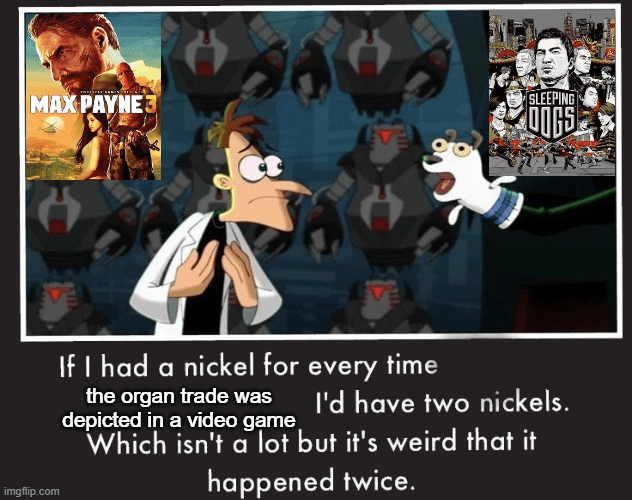
Anyway, CIA perpetuates conflict in the UAE between the Army and the rebelling Emiratis and either neither the soldiers nor rebels are none the wiser or the “rogue” unit knows what’s up, but can’t get it through to the rebelling Emiratis because of high tensions. Meanwhile, these Delta Force operators have declared the unit rogue, their commander MIA, but still have faith that the mission can go on (it can’t), and over the course of the game, things keep getting worse and worse. The culmination of all of this cascades into one of the most disturbing moments in this game. More disturbing than the doctor harvesting organs from the Comando Sombra in Max Payne 3… or the doctor harvesting organs for the 18K in Sleeping Dogs… hmmm…
In Sleeping Dogs’ case, the police missions tend to be optional, but if you want super cop Wei Shen, then get to tagging and bagging!
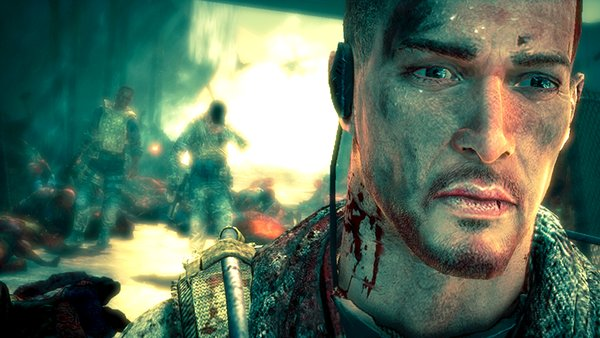
They screwed up with the chargrill and have to make do with 70% of a burned meal. You know the trope of the traumatic experience being handwaved away with a hasty generalization? Like the one creepypasta where trauma victims, most commonly rape victims, retreat to a fantasy where they’re not being raped, heavily repressing the memory for as long as possible, at times for life? Well, that’s precisely what happens to Capt. Walker in this moment. This virtuous Special Forces officer who makes no mistakes and does nothing wrong f[gunshots]ks up once… colossally so, and admittedly should face a court-martial for the incident. In an admittedly weak defense, all three men weren’t in the right mind to make a sound decision, but to counter that, a period of R&R would be granted so that they could go and investigate the situation properly. For all that’s been going on in the plot so far, even the most bad ass Special Forces soldier would need to rest and Walker (because the plot wants it) doesn’t even rest for a second; and depending on your mindset, this is either a two-cent excuse for shock value or a magnificent pants-pull. Admittedly, I lean more pants-pull-wards, but this was well after the game was out and before my time in the Army. Now I’m towards the middle because I can see how someone would think this was cheap.
And the rest of the mission is almost never the same. The mental games and break from reality, Walker’s gradual descent into mental hell (complete with hallucinations of actual hell); the game stops pretending you’re the protagonist and downright calls you a monster for continuing to play. On the one hand, this can seem manipulative especially towards the end when you finally confront “Konrad,” but on the other hand, it takes “follow the objective marker” and kicks it into high gear. It reminds me of the Milgram experiment where participants were deceived into dutifully obeying atrocious directions. That experiment was one of several used to explain how the Nazis and German society could be complicit in crimes against humanity… though slightly undercut that the penalty was execution, even for the last-ditch militia propped up by Hitler himself, the Volkssturm.
Towards the end, you finally reach Konrad’s HQ, only to learn that he’s been dead the whole time and the voice in Walker’s ear was an auditory hallucination. That circles back to what I said earlier about traumatic experiences being hyper-repressed by the victim/survivor. “I’m not wrong! The world is wrong!!” Yeah, the devs didn’t want anyone to enjoy this, and this may have been where players kept yelling at Walker to abandon ship and declare the mission a failure. Being in the Army, I was doing that at the first sign of trouble, that being when a CIA agent was torturing a junior officer about three chapters in.
The series finale of the TV Show M*A*S*H revealed that the character Hawkeye blames himself for the death of an infant when a Korean woman smothers it, playing it off as a chicken all along. Walker did the same thing, passing off the deaths of civilians on Konrad.
Now there’s two endings in the penultimate chapter: 1. Let the apparition of Konrad gun you down, or 2. Shoot first and proceed to the final chapter which has three endings. Soldiers come to retrieve you and there are three responses: 1. Shoot them all dead and continue to live in the ruins of Dubai as a mad man; 2. Shoot and commit suicide by soldier because you’ve seen enough and this is the closest you’ll get to answering for your sins; 3. Surrender and let the soldiers take you back presumably for questioning and a court-martial. The last of these would see a mental health specialist determine Walker’s mental condition. If able to stand trial, that’s a burial plot 60 feet under Fort Leavenworth. If not, then wherever the line is drawn depends on whether Walker disobeyed orders and took charge of an authorized mission playing vigilante. He did and he did, which would be grounds for conduct unbecoming, though probably means something along the lines of a discharge of either general under honorable conditions or other than honorable discharge if evidence comes up short. As for the use of weapons on civilians, dishonorable. War crimes tribunal. 600 feet under the prison, let the casket melt. To further elaborate on the apparition of Konrad, him shooting you (or you shooting yourself) is an admission that the mission was an even worse failure than what Konrad tried to do by intervening, but shooting the apparition is an insistence that Walker was in the right all along and that every end justified the means, even the deaths of soldiers and civilians. No matter the outcome, Walker’s mind is essentially mashed potatoes. He might have been able to wave it off as Konrad’s doing, but after the shocking moment, the hallucinations, and the search for a golden nugget in a world of s[avalanche]t, there was no way.
Do I recommend the game then? Like I said, it was a struggle to find it as it’s since been delisted from digital stores, leaving emulation as the only way to experience it firsthand. And I don’t recommend it for the gameplay. It’s purposely clunky and cumbersome as an overall critique on the genre at the time but learning that neither CoD nor BF nor even Medal of Honor, belching its last before indefinite hiatus, took that lesson particularly to heart. Or rather the first two put their battlefields elsewhere while, as said before, MoH, went to sleep for the time being.
Also keep in mind that it was a critique on the Iraq and Afghanistan wars, which began under Bush Jr., continued under Obama (who by many accounts droned more people than his predecessor and successor), kept on under Trump’s first and officially ended under Biden, though to clarify, Obama saw the end of Iraq and Biden saw the pullout of Afghanistan. Being 13 years away from the release of the game and long after both conflicts have concluded, the message of the game has certainly aged. It’s not like a WWI-based game where warfare changed, but wars didn’t. The war on terror isn’t the same as a war against a nation where POWs are expected to be repatriated at the end. Knowing how Iraq ended, if the message was to end the wars or at least get out of Afghanistan at the time, it kind of falls flat with how complicated the whole ordeal was. Unless the message was, don’t make it America’s mess, we don’t need to keep seeing to it personally, there’s better ways to go about this, then fair enough, we didn’t need to commit as many to either conflict as we actually did. But would we still be Americans if we didn’t watch the tower fall in person?
America after winning a war, confident that the ideas died with the men…
Yahtzee Croshaw reviewed the game at the time and may have put it more succinctly as an outsider of sorts to American boondoggles in the sand. Now that all of that is done, to look at three 2012 releases and how well they tackle corruption.
Forgive me for using Google Translate for the title
Advanced weebs reading this are all too familiar with the Yandere trope, also known as “If I’m not the only woman you know, I will do things that will put me on a watchlist in multiple countries~!”
“You mean… you weren’t already…?” wondered the Wonder Bread male MC before he gets assaulted and threatened with snu snu.
To catch the newcomers up to speed, a yandere is any character (the most common ones being female) who’s so obsessively infatuated with the object of their lustful desires that they will cross legal and physical boundaries to be one with them. I made a joke in my Taste My Saliva post that Mikoto Urabe was Yandere-shaped what with the hentai protagonist haircut, her detached attachment (oxymoron?) to Tsubaki-kun, and her black belt in scissor-fu, but a common trait shared by many Yanderes is that they almost always follow through on the threats of violence and in more ways than one double as serial predators if not outright rapists. The objects of their “affection” rarely get a chance to consent, everything is a weapon if their creative enough, and short of a horror movie scenario, even if the object of their affection died naturally or by their hand, it doesn’t necessarily mean death would stop them.
I wouldn’t put it past NHentai or another such sight to have a tag in the same vein of “post-mortem erection.” Please do not introduce me to such a thing, I already have a hard time accepting Revenge of the Molesting Mage despite the decent, if formulaic, plot progression.
Now, with the knowledge that the Yandere is essentially a horny for romance horror monster archetype, I humbly introduce you to the horror game that took the Internet by storm at launch and has birthed a dynasty’s worth of memes: MiSide!
Awww, look at her! Look at how cute she is. Almost makes gore-y sex with your bloody, mangled corpse worth it…
…is what I would say if the rational part of my brain was missing. Her top is red and so are her flags. Developed by a pair of Russian coders forming the group, AIHASTO, MiSide is about a nameless, generic male protagonist getting suckered into an interactive video game about being a loving boyfriend/husband/significant other type to a fictional girl with a dark side that makes her the star of nearly any given true crime documentary and an average Tuesday in Rossiya.
After days of playing the game, you get literally suckered into the game to potentially live the rest of your life (trapped depending on how you look at it) with Yandere antagonist Mita. If you do certain actions beforehand, you can unlock the prerequisites to live a false life in the Matrix as the prized plaything of this drop dead gorgeous sociopath. Do something else and down the rabbit hole you go where you specifically are the rabbit and Mita the wolf on the prowl.
Fans of Beastars, erase this from your mental imagery right this second. The romance exhibited in the series is in no way comparable to the absolute horror in MiSide.
Slight spoilers for the specifics, there’s a few moments where you can poke around in the beginning when Mita says you don’t have to or even help her with more than what she asks for, as a sort of obedience test. Thanks to my gentlemanly behavior, I failed and was witness to real terror. So, the game contains more than one Mita and the one advertised on the game on Steam is Crazy Mita. The other variants have multiple different shapes and personalities and if I were to scrutinize more heavily, I’d say, they absorb elements from different genres and, dare I say, different horror movies; some of which I might have seen and some others I really need to, even a second viewing. I s[blyat]t you not, there’s a Playable Teaser reference in the game.
Never mind looking at legacy British and American horror movies and games, AIHASTO looked at Japan for this one.
This part also reminded many that Konami can’t get f[yarou!]ked hard enough for cancelling Silent Hills. But anyway, the carnival horrors gets progressively disturbing, surreal, and at times paranormal. That’s the most I’ll speak of on the plot because I wish for you to experience it for yourself.
How’s the gameplay? Well, looking back on it, I figure some extra inspiration came from Resident Evil 7’s and Outlast’s use of first-person POV. Jump scares come up in the select bits that they’re supposed to, but what else is implemented is the destruction of the 4th wall. Not dissimilar from the likes of Eternal Darkness or Doki Doki Literature Club (or even the nightmare sections in Max Payne plus its fourth wall break), Mita in her many forms talks directly to both the protagonist and the player. Although you choose the protagonist’s name, he still has dialogue and is as involved in the story as any other character, one of Mita’s several victims and the next on her impromptu serial killer list. Not content to mess about with the player, Mita also interacts with the environment in some manner. It’s not as extensive as tricking you into thinking you’re suffering from an audio problem or asking you to create a new folder in your files. But there was a clear inspiration from elsewhere.
For you the player, since the framework is a dark twist on a dating/life/social sim like… The Sims, the horror elements make a lasting impression, but so does the down time with some of the other Mita variants. Puzzle gameplay, dating sim gameplay, PvE co-op; all these elements would conflict with each other in a worse designed game, but for an indie, they play so well, that AIHASTO hasn’t just cooked–they have a whole recipe and MiSide is their beef stew. Please, sir. May I have some more?
Channel: Movieclips
Knowing Mita though, it’ll be my own still-beating heart or pumping veins…
You’re not entirely limited to running the f[gong]k away, as select sequences have you engaging in puzzle gameplay or even interacting in a playful way with some of the other Mita clones as the game by this point wants to still believe it’s a dating sim, even if Mita wants to harvest your organs for even worse purposes than making a couple thousand on the black market. Frankenstein’s monster…?
Horror is one thing, but some kind of horror comedy video game would be appreciated even slightly.
Suffice it to say, MiSide pays homage to all the old tropes within whilst putting its own spin on what it brings to the table, sort of like the video game equivalent of the Scream franchise when it debuted in 1996. Taking the piss out of every horror movie as the respective franchise lost favor to trends at the time and pumping it full of blood it harvested from a pig farm. For MiSide, I can’t say for certain whether horror games have lost their knife edge since, like isekai anime, I don’t particularly gun for it exclusively nor can I say that MiSide was trying the same thing here. For all I know, AIHASTO have been working on this brainchild for yonks before they decided to show the world what they were making. Add me to the list of other reviewers when I say that they succeeded.
Even post-release, it was still a work-in-progress of sorts what with all the patches since it released in December. Nevertheless, praise should go to all the voice actors who could convey the emotion in each of the featured languages. As an American, Russian anything can sound intimidating to me even if I’m just looking to get some pizza. With the devs being Russian, it was the first language patch to get the voicework. Down the line came the Japanese voicework and a quick clip of Japanese-speaking Mita vs Russian-speaking Mita, my American ears quickly applied different levels of dread on Mita in that one example. Finally, English-speaking Mita who finally translated the weight of the emotions in her scenes. Language, tone of voice, or merely silently reading the text as it appears on screen, the dialogue lines do well to translate the weight of a given scene to the player, and when it goes hand-in-hand with the gameplay, I can’t help but line up for seconds.
Chibi or not, this smug aura emits superiority… I am compelled to defeat her in a competition!
“Dysfunctional” implies that there was a solid function to begin with.
Before we start, I wanna say that I had planned originally on comparing and contrasting the Black Mass novel with its movie adaptation, but I couldn’t. Too much time had passed since I read the book or watched the movie, and assuming my memories aren’t that crooked and misshapen, there weren’t many comparisons to make between them. The book mentioned horseracing and bookmaking, but not Whitey Bulger’s son, Douglas while the movie did mention his son whilst omitting the horseracing aspect, though both did mention the Winter Hill Gang’s involvement in the assassination of World Jai Alai owner Roger Wheeler in 1981. Maybe I do have a comparison to make, but then again, I’d have to reread the book (or go over the footnotes) or watch the movie again.
So instead, I’m going to write about a point-and-click mental horror game about a pair of siblings and the dark world they call home.
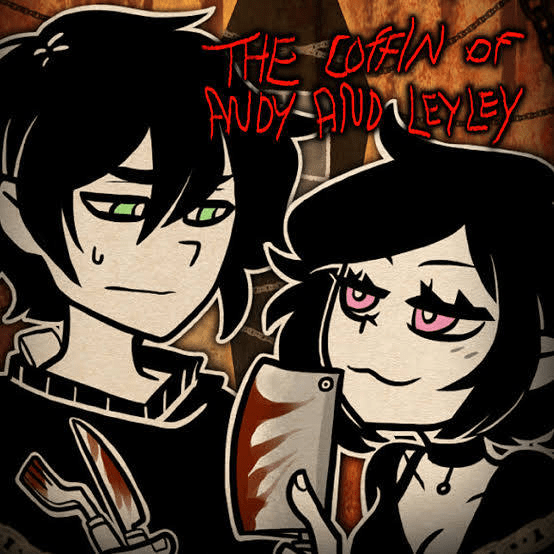
Brought to us by the minds at Nemlei and Kit9 Studio, it’s an episodic psychological horror game that takes us into the minds and lives of the Graves siblings, Andrew and Ashley. They’re essentially trapped in a condemned building with a few other people who are all monitored by very uncharitable wardens who feign kindness for the cameras, but are content letting them starve for months on end. As of writing, there’s only two episodes with a third and fourth one coming out later this year and sometime in 2025 respectively.
I’m halfway done with the second episode, but I’ve seen enough Coffin of Andy and Leyley memes online to see where the story ends up.
It’s probably been spoiled to death since release, but I’ll be light on the details about the two episodes. The first one has the two going to drastic measures first to feed themselves (understandable, all things considered; months without food is hell), and then to get out alive. The second one involves them going on the run and taking their revenge against their parents for what they did to them. It’s an interesting carnival of horrors that feels like it’d fit with any given horror film franchise. You can pick your favorites, I’m going with Halloween… coupled the original The Hills Have Eyes.
As far as characters go, the attractive quality of the game’s writing leads me to believe that some of the characters are loosely based on real people. Focusing only on the titular characters this time (because I don’t want online discourse regarding their parents to color my own observations), Andrew and Ashley Graves are an interesting pair.
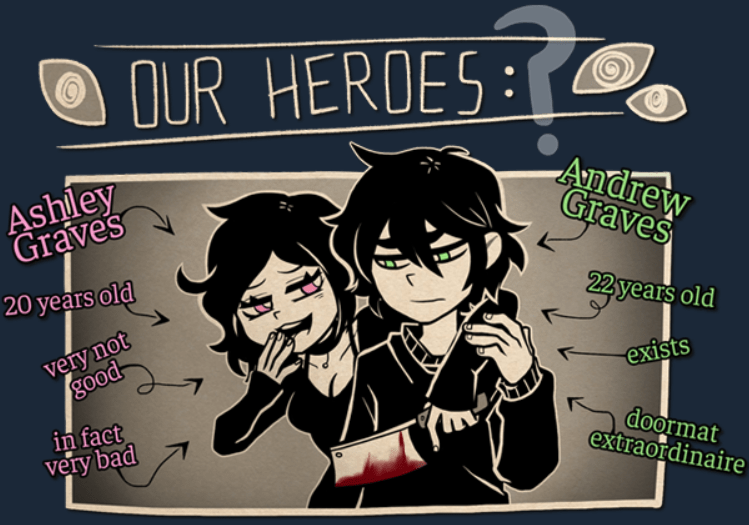
Yeah, let’s take the kid gloves off for this one. They’re a very disturbed pair of individuals in a world so black, Deimos retired and gave the position of God of Terror to someone else. As noted by the screenshot above, Ashley is marketed as the more disturbed of the two with her wicked and unorthodox ideas. Based on my observations, this is definitely in line and an accurate description of her character.
Most of her ideas she writes off as mischief and childish whimsy, but her callousness is reflected in her devil-may-care attitude and her lack of concern for the consequences of her actions. She knows she’s doing wrong, but she does it anyway, and the flashback scenes show that she hasn’t changed at all. As a matter of fact, her manipulative personality is why her brother is hopelessly attached to her, yet she doesn’t have absolute control over the guy. To pull from a box of nerdy, lines on maps enjoyer things to say, the power dynamic they share makes me think of the Investiture Controversy, where medieval German nobility kept attempting to buy favors for themselves in the Catholic Church, the papacy included. If that interests you, look to this video for a few more (oversimplified) details:
Channel: Oversimplified
Basically, what I’m saying is that there’s an illusion of power between them. Both of them think they’re stuck with each other, but honestly, they don’t have to be with each other… or rather, they wouldn’t have to be if Ashley wasn’t so clingy. Does that mean Andrew is a better person? Nope.
Also in reference to the screenshot from above, he’s subject to his sister throwing her weight around. Canonically, he has no problem talking to girls, having had romantic interests in other women and even an ex-girlfriends in both high school and college, but the more I think about his past relationships the more evident it becomes that he’s using them to hide from his sister. Not that there’s no genuine romance between Andrew and his lovers, and while not saying it’s not normal to cycle through dates in your lifetime, but the armchair therapist in me sees a MIGHTY NEED to be away from Ashley, even slightly.
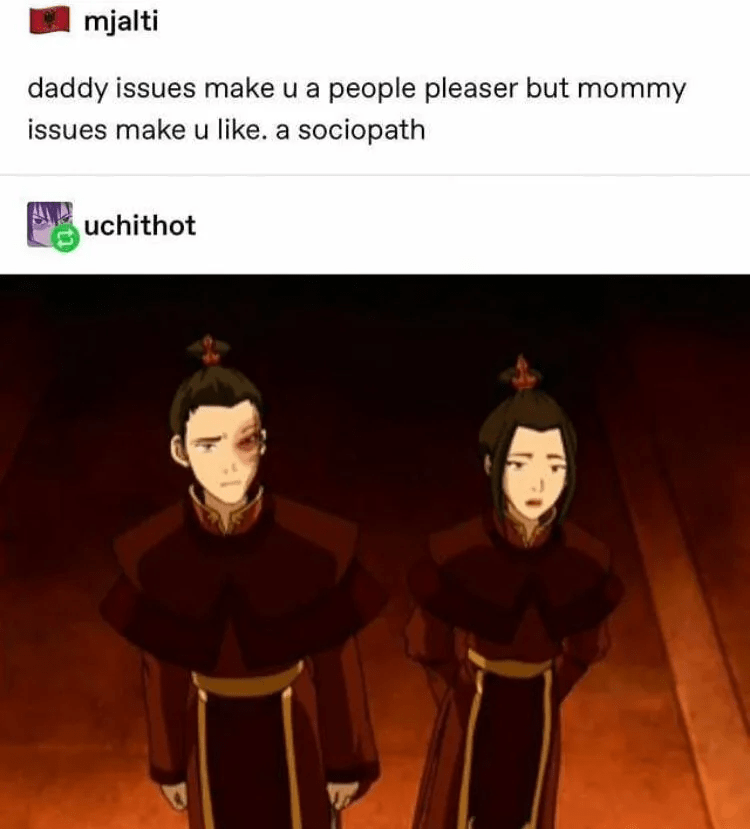
Thinking about it even more, the two may share the same problem Zuko and Azula from Avatar have. Andrew doesn’t want to cause anyone any trouble, but Ashley couldn’t care less. Observe this meme from r/TheLastAirbender
It may be a joke, but look at all the scenes in the show that display or mention them and this becomes disturbingly closer to the truth than you’d like to admit, though in regards to the game, it’s worse since everyone has issues.
Having said all that, it’s not all doom, gloom and things go boom. One of the tags listed on Steam for the game is dark comedy. This part also shines in the game as the dark elements are campy. Dark and probable as it may be, it doesn’t really stop the game from being ridiculous at times. When I say you can compare it to some aspect of an old horror movie, I was not exaggerating. Michael Myers shrugging off six bullets is ridiculous; Jason Voorhees bouncing back up from life-threatening injury is very ridiculous; and the antics the siblings find themselves in is absurdly comical at times, you can’t help but wonder sometimes. The writers put a lot of care into making the game what it is and seem to be hard at work still drafting up the script of the final two episodes.
Obviously, a property this popular has its naysayers and harassers, neither of which deserve even a sliver of my attention, but on the “positive” attention the game has received, online forums, especially the game’s associated subreddit. Due to a scene in the second episode, the fanbase has run wild with fanart of the siblings in action. Again, being light on the details because I recommend this game and think going in blind is a sound approach, but IYKYK.
If in fact, you do know, then you also already know about the millions of other copy-pasted fan art of different sibling characters in the art style. This kinda leaves me divided, on the one hand, I commend the talent; but on the other hand,
And this is coming from a guy who has seen both Shimoneta and Highschool DxD yonks ago, both of which I plan on writing about in a future double bill. It was a certain aspect that kept me from playing it for the longest, but for curiosity’s sake (and to snub the naysayers and doombringers) I bit the bullet and I recommend a play through of your own.
For this YouTube recommendation, I present an up and coming Canadian YouTuber known as Art Chad.
At over 82,000 subscribers and counting, Art Chad is a channel run by a young man who asks a lot of important questions about modern topics and issues in our society and attempts to answer them from as broad and unbiased a viewpoint as he can. Often with the tone of one who wishes to make a better world for this generation and its succeeding ones a la Superman, or in a gradual yet noticeable approach instead of the ad hoc, hasty changes we’ve grown accustomed to. The link to his channel is up above.
I put this off for a week so I could do some more research on both, by which I mean reading the Wikipedia page for one and advancing in the manga for the other. Haibane Renmei is but a short 1-cour anime series from 2002. I found out about it from the same article that introduced me to House of Five Leaves a few years ago (along with another one), and without delving into details, a friend of mine challenged me to recommend him some anime he’s never heard of. Well, he didn’t challenge me per se, but I took it as such and I figured I might as well put another brick in this anime wall I chose to build. No, it still ain’t finished.
Japanese for Charcoal Feather Federation, Haibane Renmei starts with a young girl experiencing a very vivid dream about falling from the sky. This being the only memory she has, the theme of the series is that the Haibane–angel-like beings–are named after the dream they had. Shortly after that, their wings grow from their back and they’re given halos to wear above their heads.
It was based on an unfinished manuscript by the same mind responsible for the surprisingly well-aged Serial Experiments Lain, which when it comes to trying to label it, makes it difficult, at least for me. There’s anime that are adapted from manga, which is the most common adaptation style; anime that are adapted from light novels, which is probably the second most common adaptation style; sometimes anime are home grown originals (a.k.a. anime originals), proof that the studios animating them can make something special from thin air; and sometimes anime are adapted from novels:
It’s definitely irregular for a rough draft to get a green light for an adaptation, but it’s not like it’s unheard of. Stranger things have happened in media.
Part of my research for Haibane Renmei involved looking over this blog post from 2017. The writer explains that the cult-classic series has been the topic of such fierce debate over the meaning of the series, not helped by Yoshitoshi Abe’s notoriously enigmatic writing style. As a mystery series, this can be viewed as a double entendre both due to the cryptic writing and because the only source available lies with the writer and short of booking a flight to Japan to ask him directly, I highly doubt he’s ready to share the raw words with a wider audience so the anime adaptation had to make do.
That said, this isn’t the type of Scooby-Doo, CSI, Columbo type mystery series where you’re given a puzzle to solve. It leaves a lot open to interpretation and according to that post I linked above, a lot of it tends to be incorrect. From a writer’s perspective, there’s a fine line between treating the audience like they’re five years old and throwing them out of a plane and expecting them to catch the parachute on the way down.
Is this me being too harsh? Perhaps, but the creative world is pretty cutthroat in a manner of speaking. We criticize ourselves in a much harsher tone than any other critic, yet both the critic and the artist are given a near equal amount of outside exposure so doesn’t that mean we’re both talented groups of people?
Something, something pot calls the kettle black…
I like to think of it as an art house project. I believe the late 90s to late 2000s was the era of moe and this series does something different from most shows of the era. It was the equivalent of taking an extended museum tour and filling out a survey at the end before being released to the gift shop. It’s for thinkers; the door is open enough for observers to take a peek but is neither too wide nor too narrow. If it were too wide, important stuff goes missing, but if it were too narrow then you wouldn’t be able to see the contents very well. It sits neatly in the middle and once you’re done with the series you can walk away with your own interpretations of what you think the series is about. Here’s a link to the playlist. Enjoy it while it lasts:
Channel: Jesse M
From a series you probably never heard of before now to a series you still probably haven’t heard of unless you eat anime memes like black beans: Mysterious Disappearances.
Before I elaborate on this series, I want to get this out of the way right now: giant boobs.
Alright, we’re done with that. Well, I’m done with that aspect. Explaining the fanservice in this series will honestly get redundant especially since both the anime and the manga do that in spades. The first chapter especially ends with an uncensored shower scene (spoiler alert).
As for the rest of the series, Mysterious Disappearances is a blending together of urban legend and centuries-old Japanese folktales. The name doesn’t do the series enough justice. Looking to legends and myths for inspiration, Mysterious Disappearances has it all in droves. The first episode actually drops hints from an old urban legend about the fictional haunted Kisaragi Station. Akidearest explains it further in this video below:
Channel: akidearest
Basically, a few years ago, a Japanese vocaloid YouTuber’s videos spread by way of the recommendation system and the one thing that stood out was that their username and videos were mostly untitled, making use of zero width non-joiners or “invisible characters” read only by the computer. Anyway, the video referenced an old urban legend/creepypasta that only existed at the time on Japanese forums, namely 2chan in 2004. The urban legend in question was Kisaragi Station and was about a woman who noticed the train continued on for longer than usual. She gets off at the namesake station which was left unmapped and catalogs all of her interactions and findings at the phantom station, even wandering the tunnels until she was eventually picked up by a mysterious man who quickly dropped his helpful demeanor once she took the bait. Forums posters eagerly awaited for updates that never came after that.
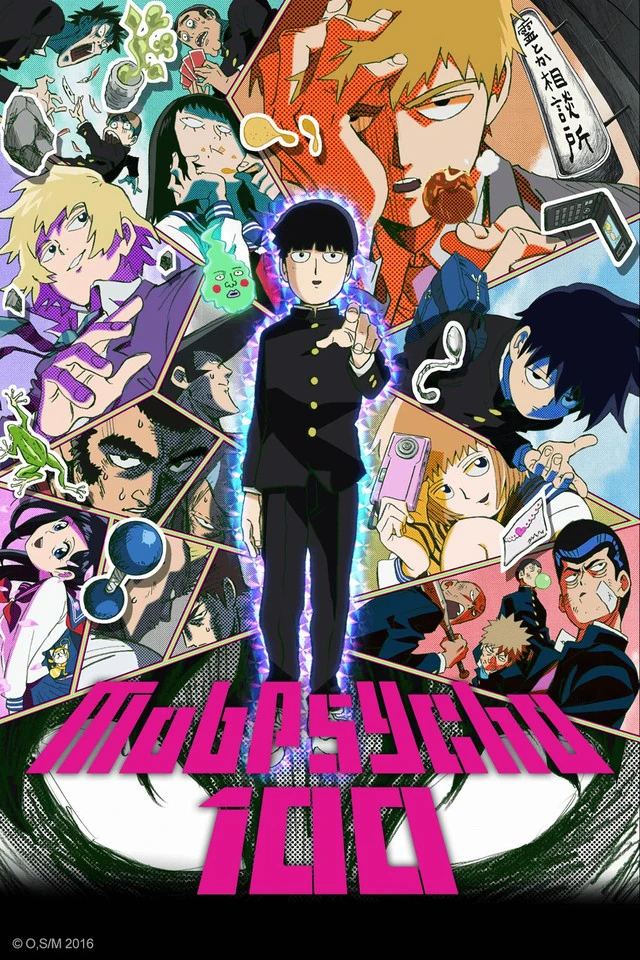
This was one of several references to Japanese urban legend in the anime. Many more follow as the series progresses. Unlike The Society of Gray Feathers, Dangerous and Disturbing Puzzles has more exposition baked into it. Both the manga and the anime explore the phenomena as they happen. Part of the appeal for me is the urban legend side of things. Fictional or not, these ghost stories tend to be somewhat credible even if they don’t match beat for beat. They’re the fun little stories about things that go bump in the night. The supernatural element keeps me engaged, much like when I was first introduced to The Adventures of Shigeo Kageyama: Boy ESPer.
The protagonist is the big breasted woman we saw earlier, Sumireko Ogawa, a novelist working in a bookstore. Aided by her coworker Ren Adashino and his sister Oto, the trio investigate and confront the sources of the mysteries personally, unraveling their secrets along the way.
One of the main plot devices is a droplifted book picked up by the bookstore owner himself and gifted to Ogawa on her birthday. The anonymous writer catalogued ancient poems from the real-life Manyoshu, a collection of anonymously written Japanese poems going all the way back to the Nara period (circa 750s C.E.). If read aloud, the poems act as a spell cast on the reader themselves provided certain conditions are met. The “spell” can be broken by way of reading the poem backwards, but as shown in the series, when Ogawa does so, she’s able to control the effects of the poems on herself at will.
Other important plot devices are the siblings themselves and the signs that only they can see: yellow diamonds with exclamation points in the middle. They appear whenever a supernatural event has occurred. Once the event has been solved, the siblings are shown to use anything recovered from their findings as payment for tickets back to their own home through–you’ll never guess–Kisaragi station! It all comes together! There’s a lot more to this, though I haven’t gotten that far yet and the manga is still ongoing so it’ll be years before we see where the author, Nujima, is taking this series.
What is certain though is that for those who like creepypasta fanservice and closeup shot style fanservice are going to be intrigued by the blend here. It seems quite ridiculous to highlight Ogawa’s body as the connecting element when Ogawa herself is the protagonist, but the series finds a way to make it work. Rather than fall into the age-old trap of “damsel in distress,” Ogawa being the adult amongst the children here gives her more of a leg up as the woman in charge here. You could argue that she’s technically the mother figure based on this description, but the counterargument to that is that while the three do work together, they’re not inseparable.
Scenes exist with all of them together or just one of them alone or with other minor characters. All of them are well-written with their own goals and desires and none of them feels as though they’re held up by the other. That it’s mainly psychological horror is another plus for me. Honestly, I would’ve been turned off by anything horror as a kid, but now that I’m an adult and I’ve watched a few of the classic horror movies before they were ruined by their own franchising (Friday the 13th, Halloween, Scream, etc.), I realized that there’s still better ways to horror and thriller and Mysterious Disappearances is a better example of that.
All 12 episodes are available on Crunchyroll, but if you don’t feel like watching 12 of the same old advertisements, then you already know what I’m gonna say.
Because I’m behind schedule, I doubt I can guarantee a full review of Undead Unluck season 1 by the 30th, not to mention another topic lined up was pushed back due to the research I did for these two series in this post, so instead I’ll try to get back on track either the 29th (tomorrow) or sometime during the 4th of July weekend. The next topic I have concerns a manga that never got off the ground. Here’s a sneak-peek:












 Opinions on Entertainment