
One of the most consistent formulas since 1985
Before I begin proper, I’m basing this blog post on on-the-fly research and my own observations. Don’t take everything I put here seriously, I am going to be wrong somewhere in here.
Nintendo needs no introduction. There’s a strong percentage that a property belonging to them has come into your possession somehow. Donkey Kong? Mario? Kirby? Pokémon? Pikmin? Maybe it was something more action-oriented like Metroid, or something a bit more obscure with a cult following?
Well, no matter how it started, it almost always goes pretty well for what started as a hanafuda card company. Even the cult classics have devotees of their own. Just try to find someone who doesn’t know about the following:
A little bit of the background: in 1983, the movie E.T. was so popular, it franchised remarkably quickly for a film released at the time. As such, Atari got the million-dollar idea to make a video game out of the property over the course of about five or six weeks. And a lesson we continually forgot even after Sonic ’06 is that games are to NEVER BE RUSHED. Nothing good comes from kicking a game out the door before it’s ready. Like a beef hamburger, you need to cook it thoroughly.
In what became a lesson to burgeoning devs at the time, E.T. for the Atari 2600 went down in history as both the worst video game in all of gaming history and a mass murderer in the video game industry, almost killing it en masse before it got a chance to grow. Developers fell off left and right with how poorly received and sold E.T. was which might as well be an ironic twist of fate. This was E.T., one of Spielberg’s crown jewels, and the aftermath of its failure proved a few things:
- If the best of the best can’t take a W, then it certainly lowers morale for most witnesses
- Games based on movies would go on to have the worst W/L ratio of all time
- Considering Spielberg movie-based games to be released after this, it was for the better that the man quit while he was behind or we would’ve had Saving Private Ryan the game.

And no, I don’t mean World War II games which do work. I mean a game based on this movie above.
The mid-1980s were when the pool of video game developers had shrunk in record time. Then came Nintendo in October of 1985 to save the industry and breathe new life into the industry with a full library of launch titles, unlicensed games, and even to this day homebrew games. In the west, Nintendo became something of a god. They gave us the templates for nearly everything that made for great games, and as the years went on and more and more developers and studios worked with Nintendo to develop games, consoles, or distribute on their platforms, Nintendo has been running home with the gold.
In the modern day, they took the crown from Sega who abandoned console manufacturing in 2001 after the failure of the Dreamcast. Then again, to not sound like a propaganda piece for the Nintendo Empire, they’ve shot themselves in the foot several times. Censorship and a heavy push for a family friendly image turned off some of the more core players in the 1990s and 2000s for a start. Mortal Kombat’s Nintendo ports have been major misses than hits with all the blood, which can be turned off at least in Deadly Alliance, but of all the things to censor in the game, turning the blood to sweat is something I’d expect of a modern day Chinese distribution of Demon Slayer or Spy x Family.
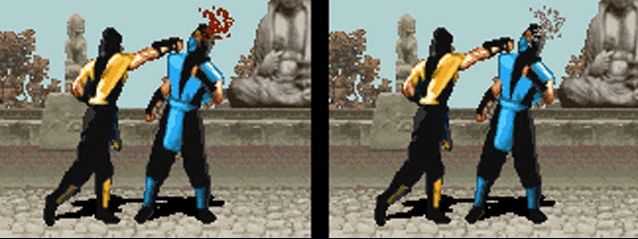
At least Sega had the fans’ backs on this with the blood code.
Another failure was found in several of the consoles they released over the years. The GameCube was meant to be what the Switch is now, a console that can switch between mobile and home functions at will, but it wasn’t to be. The tech wasn’t there yet. By 2006, the Wii launched with high intensity motion controls that proved to be a fad at best and a nuisance at worst. Never mind the fact that Xbox tried it with the Kinect and PlayStation with the Move around the same time; the motion controls mostly worked with things like Wii Sports and other games encouraged to be played with families or with friends at parties and whatnot. Core gamers wouldn’t have been down for that, so third party devs were more likely to work with Xbox and Sony than stick with Nintendo’s wacky rules long term. Props to those who stuck it out though; we got some really creative games out of that.
The biggest one in recent memory was the Wii U, which was either worse than the Wii or better than nothing depending on who you ask. Honestly, the Wii U circled back to issues that plagued other consoles from the 90s, in the sense that the tech was too much and the devs weren’t capable of adapting to this new fangled machinery, hence why the 3DO and Neo Geo sold so poorly and had a tinier library compared to the Great Library that would eventually become modern day Nintendo. Of course, these all had their own hidden gems. Metal Slug anyone?

But the one notable blunder in Nintendo’s history that gets overlooked these days is that they technically created one of their rivals in PlayStation. Sony and Nintendo had worked with each other prior to the mid-1990s and in the lead up to the PSX’s debut console, Sony and Nintendo had been developing a game-changing console that would incorporate early 3D graphics and transition to CD-ROM technology. Unfortunately, Nintendo’s paranoia caused them to renege on an agreement and in a fit of rage, Sony made Sony Computer Entertainment as the ultimate vengeance. Basically, Nintendo is PlayStation’s father.

Despite the decades of video game development under Nintendo’s belt, their flagship series haven’t changed all that much. Even when Donkey Kong and Brooklyn’s least infamous plumber became well-known across the world, the core of their respective games hasn’t really changed since then. For as long as there’s been a Mario, there’s been a princess in another castle. Donkey Kong used to lob barrels at him, but retiring from that put him in the crosshairs of the crocodiles and King K Rule, paid for in part by the United States Marine Corps. If you don’t get that reference, watch this:
Third parties tend to get a pass when developing for a Nintendo console, but their own properties have been on the same script with almost no change whatsoever. Even the spinoffs don’t make much of a difference when they have little impact on story canonicity. I don’t mean the spinoffs from after Mario and Donkey Kong made names for themselves after the original 1981 game.
In another instance revealing how little I play Nintendo games, I can’t recall Mario making mention of saving Pauline from the ape, nor are there any mentions of the plumber dodging Donkey’s barrels. So what, did they have a professional relationship only? Because every spinoff suggests elsewise. For a franchise with 5% story, the spinoffs do a better job at fleshing all the characters out than the main games, so this is Nintendo’s fault for sticking with the same storyboard for almost 40 years.
Tennis, sports, partaking in the Olympics themselves, go-karting; if I fell into a coma and woke up decades later, oblivious to what Mario even is and I got into through one of the spinoffs, I would’ve initially thought they were all good buddies who play games together, which is probably a reference to a Nintendo ad campaign. This all being said, its a formula that works for nearly every Nintendo game. The only one I recall trying something different was Kirby with more enemies to fight, more complex plots at least during the GBA and DS eras, and callbacks to old mechanics or concepts from previous installments. And that pink round thing almost always has a score to settle with Dedede, even if things are different for Forgotten Land.
The crux in my custard here is that if they can throw more ideas at Kirby’s pink mass, then surely Nintendo has what it takes to try something else with some of their other properties. The Zelda series alone has a new idea with each release. Consider how different each Zelda game is from each other. Windwaker, Majora’s Mask, Ocarina of Time, A Link to the Past, and about 4,000 other Zelda games. There’s always variety in the story of Princess Zelda and the mute, canonical femboy.

Zelda’s tastes are exquisite and pristine.
Even if Kirby is owned more by HAL Laboratory, Zelda is a wholly-owned Nintendo property and the ideas trough is always going to that hungry pig while the rest of the zoo animals starve. Maybe it’s due to the way Japan does things (what with most companies being run by old men who loathe change), but it really isn’t gonna hurt them to try something new with the rest of their lineup. Even one-off experiments are worth the effort. No one was really feeling it at the time, but the XCOM hybrid that was Mario and Rabbids was something different. Good? Bad? Don’t ask me, I didn’t play it. But there is gameplay of it in full on YouTube and it stands as the second thing I recommend aside from Nintendo picking a different direction after almost 40 years.
The third recommendation is a YouTube channel called Ryan McBeth.
https://www.youtube.com/@RyanMcBethProgramming/about
Ryan McBeth is a retired US Army platoon sergeant and expert in software engineering and development, cybersecurity, military analysis and open source intelligence. He has a lineup of t-shirts, makes videos and YouTube shorts (and probably also TikTok videos) about the military and battlefield analysis. Ever since the Russian invasion of Ukraine started in February of 2022, he’s made videos about several aspects of the ground operations with some other stuff sprinkled on the side. I highly recommend his channel and as an added bonus, if you have any inquiries on software development or cybersecurity, try reaching out to him for that as well. And to top it all off, with YouTube being what it is regarding censorship, full length explanations and videos can be found on his associated Substack page.


 Opinions on Entertainment