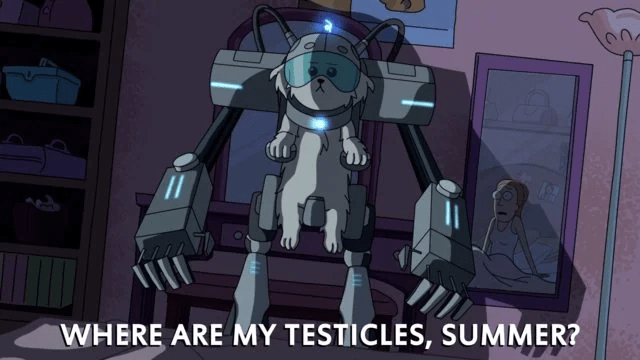
Where the F[bells]k are My Balls?!

Where are they, Summer?
Normally, I’m not one for popular and currently airing anime darlings. You know that by this very blog, but if it wasn’t for Creepy Nuts performing the opening of Dandadan then I probably would’ve given it a wide berth until it died down. Something I’m still trying to do with the likes of Frieren before I let it bless my eyeballs beyond the memes.

Credit: Twitter (x.com@TopGyaru)

I’ll be patiently waiting for a while.

Dandadan comes to us from another disciple of Tatsuki Fujimoto’s, one Yukinobu Tatsu, who like his sensei used his talent to bring us a story about a pair of occult chasers, one nerdy one gyaru and the quest to find the nerd’s testicles.

Don’t bother competing in No Nut November anymore, lads. This boy has won for eternity. But I’m jumping the nutcracker, let’s rewind a bit.

It begins with gyaru and Ken Takakura enjoyer, Momo Ayase, breaking up with a guy after he behaves like a jerk with a load of beef jerky. A final plea is answered with a kick to cheek and before we know it, she drags her depressed ass back to her gyaru friends, Miko and Muko, who do show to have their girl’s back in times like these. In another classroom, aspiring ufologist, coincidentally also named Ken Takakura (though baring zero resemblance to the late actor), reads his space and extraterrestrial magazines in disturbance while other boys pick on him. Typical.

Momo barges in like any other gyaru and equally shows and feigns interest by inspecting his reading material. It shuts the bullies down for the time being, but little Ken goes back to find her, confessing that she’s the first person to ever show even 1% interest in an interest of his. Momo doesn’t really care about aliens, initially claiming they’re not real in favor of ghosts. Ken himself also shows indifference in ghosts and the paranormal. Part of the gag involves the two initially connecting only to fire back at each other with fierce debate over what’s real and what isn’t.

In the first of these gags, we get the plot where they challenge one another to investigate areas of interest notorious for ghost or alien sightings: Ken is challenged to take on the myth of Turbo Granny, based on a real-life yokai of the spirit of an elderly woman said to run 100 km/h. This isn’t the yokai’s first appearance in anime; other references exist, but my favorite comes from season 2 of Mob Psycho 100. In kind, Momo investigates an abandoned building said to be famous for a number of UFO sightings. Both think the other is full of it, and are subsequently proven wrong: Ken gets got by Turbo Granny and Momo is damn near sexually assaulted by the aliens, all of whom are identical and reproduce by harvesting the genitalia of the females of other planets, so Momo’s not the first almost victim of such a thing. Harrowing.

That’s the first episode and it gets even nuttier and squirrel-ier than that, ironic since Ken, from then on dubbed Occult-kun/Okarun to keep the fantasy of the real late Ken Takakura alive, spends the duration of the series finding his nuts hoping they haven’t been taken by wild squirrels. This introduction to the other’s paranormal belief exposes/curses them with supernatural abilities. Momo gains the ability of telekinesis while Okarun gets possessed by the sonic-footed yokai, able to transform into a being with the same powers as the namesake urban legend at the sacrifice of his testicles. The lore differs depending on who’s telling the story, but it consistently shows little variance between tellings. Turbo Granny is said to be the protector of the spirits of young girls who were the victims of malicious crimes. Sort of like if the real life Highway of Tears had a protector deity for all of its victims.

Don’t let this spoiler for the first episode turn you off from the rest of the series or the manga. I’ve said before that I live for the occult and mystery stories like this and Dandadan satisfied that itch for a time. It’s not what I’d call unique, but it’s definitely crazy enough to get a recommendation from me, especially when demons show up halfway through the anime’s run. It’s a supernatural adventure story to retrieve a boy’s d[gong]k and balls. The anime has 12 episodes available for view on Netflix, Hulu, Crunchyroll, and Muse for those of you in Southeast Asia, or your favorite pirate site of your choosing with 18 volumes of the manga continuing the story past that.

Now to live up to this blog’s name and make a declaration: I think Dandadan is a better series than Chainsaw Man. Here’s my explanation:

Characters: the cast of Chainsaw Man are all inherently flawed compared to the cast of Dandadan given that in the former, they’re mostly adults or confused teens. Real-life adults as we know aren’t guaranteed to act their age assuming the adage of “we don’t grow up, we grow old” is true. And CSM is proof of concept. In contrast, Dandadan, though ridiculous, focuses on a bunch of high school kids who I never really expect to be better or know more than the adults, though I’m not really here for that. My viewership comes from the display of supernatural powers and beings f[glitch]ng around on Earth.

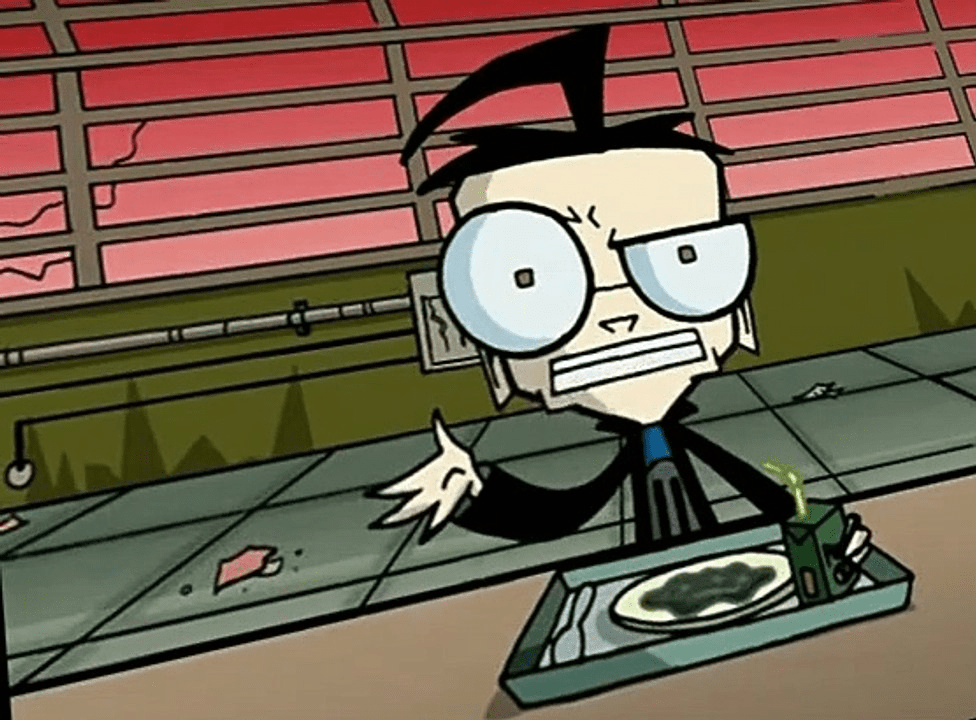
Setting: I know CSM is a dark series, but at times I feel it does its job a bit too well in some areas. Denji, through no fault of his own, is an uneducated circumstantial victim. No home, no family or friends that live to see tomorrow, and seemingly no future beyond surviving and finding true love and bonds. A lost puppy who tries no matter how many times he gets kicked to the curb. Meanwhile, damn near every woman he talks to is, for lack of a better term, a hot f[tiger roar]ng mess. Spoilers incoming: Power rarely showers and has the B.O. to prove it; Reze played with Denji’s feelings just to get to his chainsaw heart; the Justice Devil cut down Asa where she awoke with the powers of the War Devil; and Makima, one of the worst offenders so far, groomed and puppeted an absurd number of people. This video explains it more concisely. Dandadan is also quite dark if you think about it, but it has more fun with its premise in an Invader Zim/Johnny the Homicidal Maniac sort of way. There is an existing threat, but consider how embarrassing it would be if an alien race or a ghost or a demon was bested by a 15-year-old. Just about an average episode of Invader Zim, except where Dib gets a W for once.
Plot: Let it be known, dear reader, that CSM debuted in December of 2018. Denji, having no family, wants one as a stepping stone to a normal life, but the world of CSM gets in the way to an absurd degree. Rotten luck or not, forget bad actors being the reason we can’t have nice things — nice things just don’t exist in this world. Dandadan has a similar level of craziness about it, but reading its chapters or watching the anime, there’s no sense of dread or despair. This could be a quirk of Fujimoto’s unpredictable writing in contrast to Tatsu, their storytelling philosophies, the themes in their respective stories or some combination of the lot, but if Dandadan is taking me to an amusement park, Chainsaw Man is burning it down not five minutes after we’re done for the day and went home. Speaking of which…

Art: The grotesqueness of Chainsaw Man is a big give away that the world inside is quite ugly in contrast Dandadan where the world is colorful and quirky and doesn’t take itself as seriously as CSM does. Different philosophies again in the making of the respective manga perhaps, but I don’t feel that Dandadan’s characters are assholes. CSM tends to leave me feeling indifferent with each chapter, increasingly reluctant to wish Denji good luck when there’s no such thing as a guarantee. I used to be able to predict story trajectories, but congratulations, Fujimoto. You’ve done away with the fun of theorizing.

All that said, I still wanna see where Fujimoto is going with Chainsaw Man. Dandadan? I’ve yet to hear news of a second season, and with the manga still running, nothing’s stopping me from picking up where episode 12 ends. Though more to the point, I’m getting tired of anime releasing 12 or 13 episode series. We used to have two-cour series, now we’re lucky if a series’ first season can get more than 10 episodes. I’d rather the Undead Unluck method of 24 episodes like the old days, as long as the animators get to go home.

Live Action Avatar: Honoring a Classic?

Bringing nostalgia back for new and old audiences

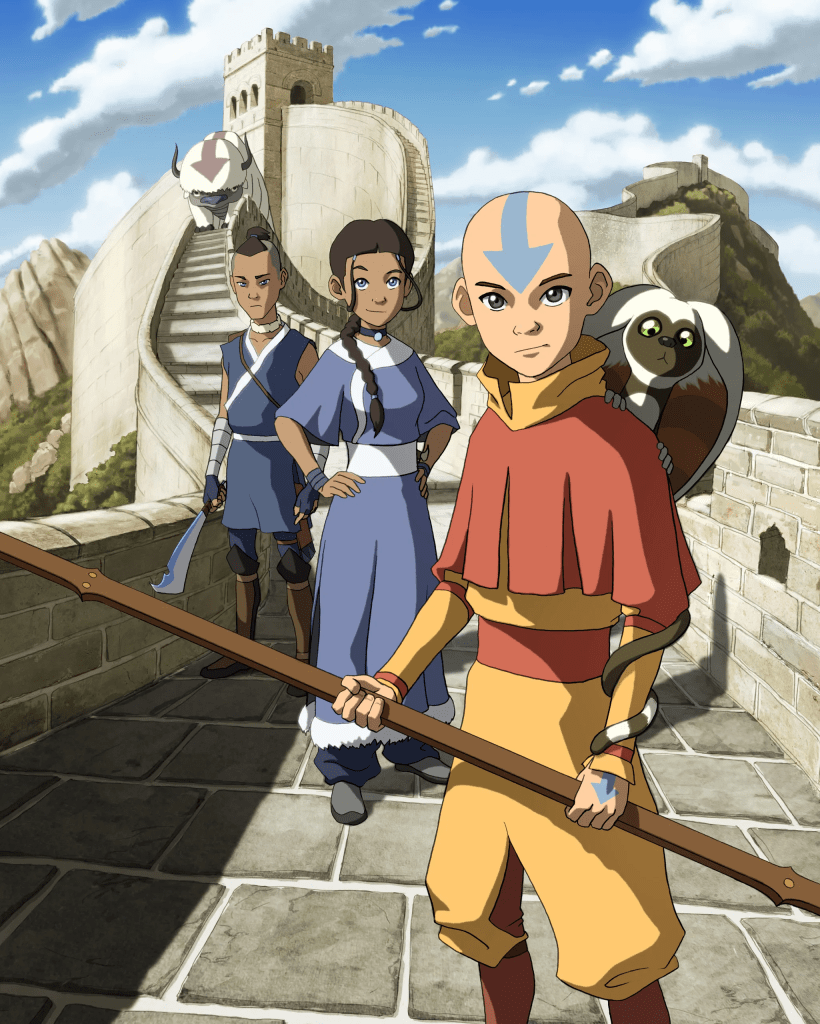
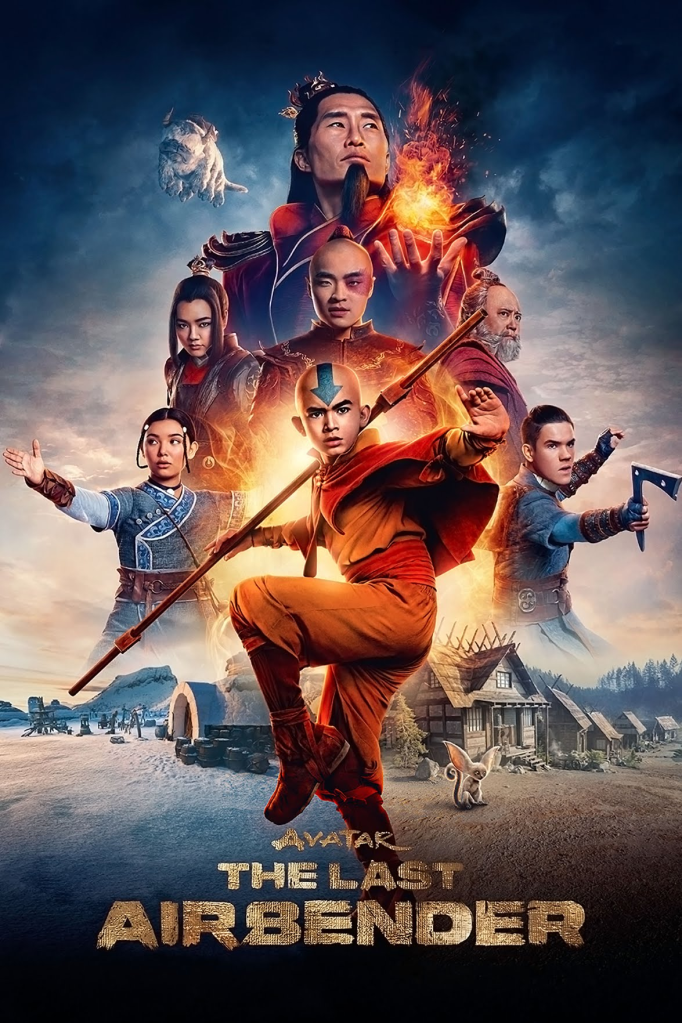
I had gotten news of the live-action Avatar remake on Netflix through the grapevine. Stirrings online in r/TheLastAirbender brought it up sometime last summer and I was holding my opinions until I saw the series for myself, which I did so this week. Even with all the news and assurances that it would do its best to honor the series while putting a new spin on it for a 2024 audience I still felt dubious for a number of reasons.

For one point, the original 2005 cartoon debuted on Nickelodeon, presenting itself as a goofy cartoon about practitioners of the four elements, one, the Avatar, being the master of them all in a bid to bring harmony to a world almost completely victimized and under threat from a militaristic, ultranationalist empire. Goofy moments when the time calls for it surely, but it’s a surprisingly mature cartoon that treats the subject of war, death, genocide, and loss with the maturity those all deserve.

It was a beloved show and those who were there when it aired (myself among them) remember very well many key events and moments from the show from Aang’s discovery by the Southern Water Tribe siblings, to the hunt for the nearly completely buried library managed by a spiritual being, to the planned for and failed invasion of the Fire Nation mainland by a coalition of Earth- and Waterbenders.

Forgive me if those were spoilers for those of you who couldn’t see it even until it recently came to Netflix, but I bring those plot points up to set up what it was like for me watching the show, eagerly awaiting for Book 3: Fire to finally launch in 2007.

I won’t pretend that it was the perfect series even at the time. Some episodes dragged on in places, character flaws that were acceptable back then show the age of the era select episodes were written in, and some plot points were either never addressed or outright dropped for mysterious reasons (the fate of Zuko’s mother was the biggest mystery back then), but I forgive a lot of these for the progress from beginning to end. The mark of good, if not, great writing is the kind where the character shows considerable growth from beginning to end, hence why you learn to hate Walter White towards the end of Breaking Bad.

Another point to bring up would be the early production issues experienced shortly after the announcement of the series. The series had been in the works for a few years prior to the filming of any trailers of announcements of which actors would be cast as which characters as told by original co-creators Bryan Konietzko and Michael D. DiMartino. Initially, they were all on board with the idea, but Netflix being Netflix seemed to have made a decision that drove them away from the project, and it would be up in the air as to what that would be until the series debuted in February of this year.

Either way, things weren’t looking very good for the live-action series, especially since this had the Netflix stamp of approval, a now-diminished status that at one point was worth a mouthful of gold crowns.

I personally had been critical of Netflix, at first for contrarian reasons. Since at least high school, even with the streaming service gaining ground as far back as the mid-2010s, I was the one going against the grain failing to see the point. Call it my upbringing; classic cable television hadn’t disappointed me yet. I was still a kid watching cartoons. It wasn’t until high school actually that I got a taste as to why some shows continued over others. Ratings were often the name of the game, which seems to be the core of the philosophy for Netflix now that they’re a streaming service.

It works for some, but the millions they spend even on single episodes, their original series being hit or miss at times, and their pioneering of the batch release takes some others getting used to if they ever do. But with a bunch of other apps and streaming services putting their own spin on the formula, some of them established brands and others newcomers, the crown jewels of the Netflix empire start to look and feel like old paperweights. Guess I still have those old opinions despite being on Netflix for the sake of a few shows that are on the service. Hahaha!

These days though, what makes me so cautious of Netflix is its reputation. I’m not gonna knock all of their originals — I’ve heard critics sing the praises of the likes of Stranger Things, Orange is the New Black, and Bojack Horseman among others — but f[bricks falling]k me some of their other s[farting]t stinks to high heaven. I’m scared as hell to include the promotional poster for that one movie of theirs that caused such a stink online a few years ago for numerous reasons. IYKYK.

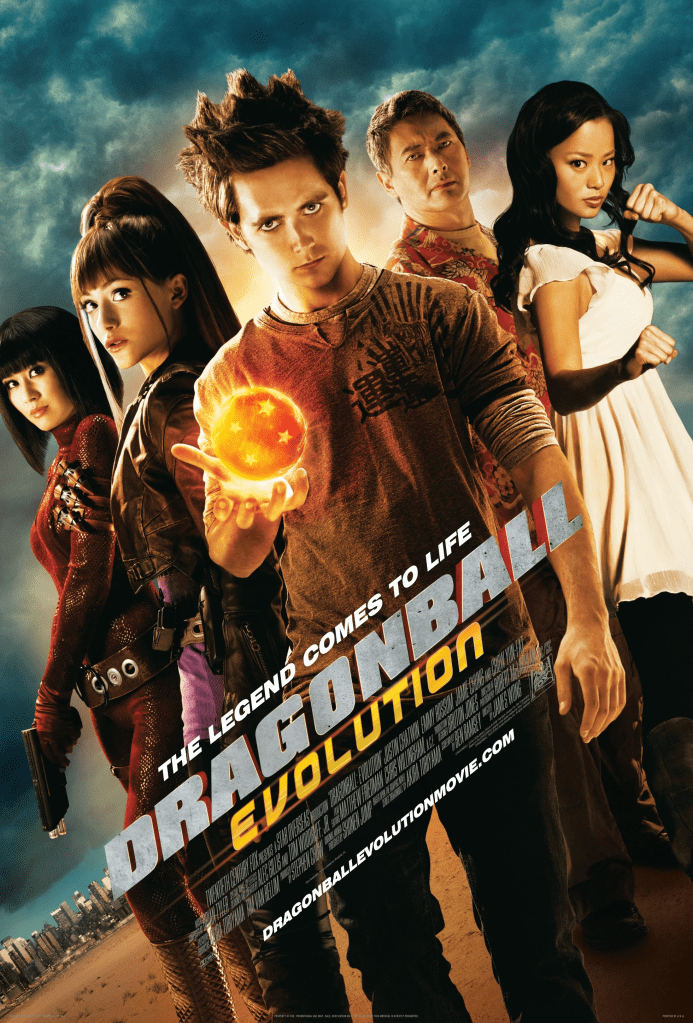
Narrowing it down further is the reputation of its live-action adaptations of popular anime. For years, live-action adaptations of anime, be it western or Japanese, has come under scrutiny for a lot of reasons, many of which are obvious. Impractical set pieces and designs, the absurdity of a lot of anime plots and character designs, and the awkwardness of introducing a lot of tropes known only to weebs apropos of nothing is a major killer of a lot of non-anime fans interest at the first hurdle. It’s a hard lesson that most western studios learn and forget rather quickly. I’ll never forget the ham-fisted attempts at hyping some of these movies up for release. Notably, this one:

For Netflix’s case, they thoroughly bungled the Death Note movie (forgive me for mentioning that… mess) and they screwed up the Cowboy Bebop movie with its god awful writing. Only recently did they nab themselves a mining pan of silver with the live-action One Piece, but flubbing it time after time, is that the only victory they have to flex? Probably.

Now they’ve come out with an eightfold batch of Avatar: the Last Airbender filmed and remade in the third dimension for our viewing pleasure.

I can’t make this a complete review as I’m only two episodes deep, but I already see the differences that Konietzko and DiMartino likely had an issue with. It’s not a shot-for-shot reshoot of the original series. Instead, it has the groundwork but interweaves easter eggs for the original audience watching with the new layer they built for themselves. Of the things I remember from Book 1, Zuko and Zhao were butting heads trying to capture Aang for Fire Lord Ozai until the end when Zhao was killed in the raid on the Northern Water Tribe, eliminating one of several of Zuko’s rivals.

Speaking of which, the circumstances behind Zuko’s scar are also rewritten. I didn’t get this far in the series yet, but in the clips I saw when the original and new shows were being compared, instead of cowering when he found out he had to face Ozai in an Agni Kai, he seemed to have put up a fight until the last minute. Something I’ve gotta praise personally because it hits a bit close to home. You or someone you know may have had that kind of parent, the type who wants to show their child the world is made up of enemies to fight with your fists by volunteering to be the first enemy they have to overcome.

And there’s more moments in the show that differ slightly or greatly from the original in a lot of ways. But are the humorous moments still there? Actually, yes. Select moments and characters do stand out quite a bit like Momo, Sokka, and my personal favorite so far, Uncle Iroh. But others did raise an eyebrow of curiosity, namely the early introduction of the Spirit World and the first Avatar Aang encounters when there.

If you remember, the first Avatar he encountered in the cartoon was Roku, first from his statue in the Southern Air Temple, then through his pet dragon Fang before finally meeting him on the eve of the solstice aided by an underrated character, Shyu the Fire Sage.

In the live-action series, Kyoshi’s the first Avatar he encounters and its at her temple where she’s pretty much having a DBZ: Abridged moment with Aang while he’s looking for easy answers to a complicated problem. Personally, I feel this would’ve worked well at the end when he’s nailed every element and the fight with Ozai is on the horizon, just like it is in the original. That works so well because Aang is at a crossroads and is looking for answers from as many of his past lives as he can contact.

In that moment, Roku didn’t much left to offer the teenage Aang; Kyoshi practically told the boy to make a decision or suffer the consequences; Kuruk used his life’s regrets as an example of what not to do in the face of danger; and Yangchen, the last Airbender Avatar, while understanding the disciplines instilled in all Air Nomads (Aang being the living legacy of such), she reiterated that Airbending Avatars like them are exempt from such expectations due to their duty, and in this moment, it was up to Aang to save the world from evil by lopping off the snake’s head. In the live-action though, it seems more than a little bit rushed. The original series gave Aang and co. roughly the length of a year to master the bending disciplines and concepts. The circumstances of the show may have forced him to rush it at at faster pace than his predecessors, but he’d matured well-enough to understand what was at stake.

The live-action series dumps all this on him at the first hurdle, before he has time to at least try to get a better understanding of this world he was awaken from. At this point in the series, all he knows is that thanks to Sozin’s Fire Nation, he’s the last of his kind. Again, everything was revealed both to him and the audience in snippets. The Netflix batch release hinders this, I feel, as it forces the series to do a lot more with a lot less, specifically condense 20 episodes into eight. It feels to me that it’s jumping the gun when it doesn’t really have to.

If Netflix were a different company, they could probably dedicate more time to retelling the story over the course of more episodes (probably 12-13 instead of eight), maybe giving the series more seasons than what it got back in the 2000s, but that’s just what I feel. Maybe a second season gets greenlit and we’re in business or maybe it follows a trend of million-dollar-an-episode shows getting canceled because someone hit the bulls[cattle bellowing]t button. Who knows what’s in store?

As I said, this is less of a full review (I hardly ever do those these days), and more of a first impression of sorts. It’s bound to change the more I watch.

For Saturday, May 11, 2024, I introduce you all to The Japan Reporter.

https://www.youtube.com/@TheJapanReporter/videos

Also known as Nobita from Japan until recently, The Japan Reporter is another Japanese YouTuber with a bridge to the western and Japanese worlds, reporting on a variety of different things that do or have the ability to impact Japanese every day life from societal norms, social issues, and environmental factors to political stirrings, culture, and a bunch of other stuff.

Far from being the only channel to openly discuss these topics for a broad audience, if you were looking for more windows into Japan perhaps for an upcoming visit or for your own personal curiosity, have a look at this channel.