That Manga About Robert Johnson

Seems there’s a manga for everything

I remember long ago writing about searching high and low for obscure series to read or watch. Unknown, underappreciated, undersold series that have very little audience, very little fanfare, very little recognition of any kind out there. And I believe I have another one that not only is largely unheard of by the layman, but is also on the subject of an individual who lived and died in obscurity, forever doomed to posthumous recognition for his talents… or curse depending on how you look at it. But I’m jumping the gun. What I’m talking about is this:
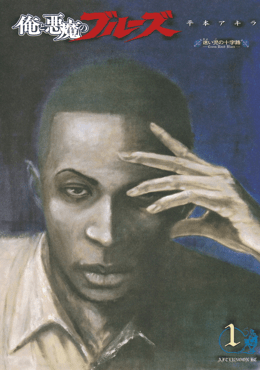
An unknown artist and blues pioneer of the early 20th century, Robert Johnson lived a life familiar to many black Americans at the time. Born and raised in the Deep South on a sharecrop with an almost predetermined future. Brief history lesson: post-Civil War America and Reconstruction came with a wave of new changes for the formerly enslaved, but not all of it implemented unanimously, cleanly, or with regard to the realities of the situation. Between ex-Confederates skipping country, finding their way back into the U.S. political machine, or in some uglier cases, becoming the first members, if not, founders of the first Ku Klux Klan, there was a lot of infighting in the Reconstruction era. A lot was promised for black Americans, but so little was implemented with the recently reunited government figuring out how to kill two birds with one stone at the time.

The reason I include that brief history lesson is to show how long the system actually lasted. It was not too long after the Civil War ended that these sharecrops became so prevalent and it wasn’t until midway through the 20th century that they were on their way out, and Johnson’s early childhood as well as that of his family was in the middle of that. What separates sharecropping from full-on slavery was how someone found themselves in the sharecropping system. It was basically like debt on steroids. You’d agree to live on and tend to a farm, with roughly everything stacked against you. Negotiations are virtually nonexistent and you hardly ever get to live off your hard work. Someone else enjoys themselves while you literally bend over backwards to pay off a HUGE amount of debt.

For Johnson, there’s evidence that he started off like this, but major details of his life are missing from the historical record, and that’s largely on him allegedly vanishing and showing up back home or around home with large gaps of time in between them. You were lucky if you could sit down with him for five minutes as a researcher to write his story, and whether what he or others told you was true was all up in the air.

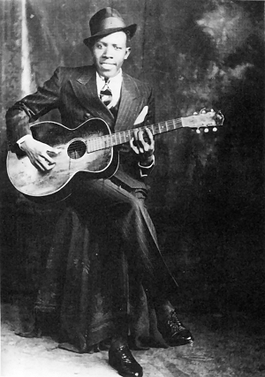
Getting concrete proof of what this guy did outside of music was one of the toughest things historians and researchers could do, and the ones who tried should be applauded for their efforts. You think you can do some investigative reporting while chasing shadows at the same time? What’re the odds there was a rumor he never even existed to begin with? (Actually, in my research, I found out that the few surviving photos of him available were discovered decades after his death, so this certainly adds to the legend/conspiracy theory/rumor, etc. of Robert Johnson. What are the odds?) Me bringing this up is probably the first time you’ve ever heard of him. I only found out about him a few years ago, and I can’t remember where; nevermind where the mangaka Akira Hiramoto learned. That all said, the fact that Hiramoto wrote about an obscure blues pioneer from Nowhere, Mississippi is proof that America continues to fascinate Japan to odd degrees. It would be the equivalent of a westerner (read: American) writing a novel about the samurai Sakanoue no Tamuramaro… well, I think I fit that bill somewhat considering what the last few posts have been about.

Back to the subject at hand, owing to the name of the manga which is also the name of an album recorded by Johnson, part of his biography claims that he became an expert guitarist in little over a few days, which is impossible for seasoned guitarists who spend years learning to strum and pick before choosing what suits them best personally. How he even learned to do so and claim to in such a short amount of time is questionable and a huge part of the legend. Johnson was said to have heard from the grapevine that playing a tune of any sort at a crossroads is how one acquires the gift of music… from the devil.

Channel: RobertJohnsonVEVO

In all likelihood, all that time spent traveling alone or with peers would’ve allowed for a hell of a lot of time to practice the guitar and pick up lessons from musicians like Son House or Lead Belly or any other blues musician who was alive at the time. So the poor guy from the Deep South pours his heart and soul into the guitar and becomes a local legend. One could reasonably chalk up the black codes and segregation especially in the Deep South for the reason he had almost little fame, but I see it as a combination of factors for why he was only destined for posthumous success.

Keep in mind, he never stayed in one place for very long. Historians did have a hard time finding and even writing about him, or if they did it was more often from a secondary source. Music is definitely a way to gain fame and riches, but only if you can stay long enough to record the song and see the royalties rolling in. Johnson’s behavior was quite atypical. He was often in a juke joint strumming for s[guitar twangs]s and giggles. Not a very stable way to grab some cash, but it surely earned him women’s affection. Most often married women’s affection, and this would lead to conflict. The last one being fatal.

His life and his death are a riddle wrapped in a mystery inside an enigma. He never had an autopsy done on him, presumably due to the circumstances of the period, but adding to the deal with the devil legend, once his flame was out, it was time for him to cash his check. It’s said that an irate husband of one of the women enamored by his skills slipped him some beer laced with poison and it killed him in a matter of days.

Less interesting, but still serious was the possibility that he may have had congenital syphilis which offers a better explanation of his unusual behavioral patterns. For a very long time, and even now, the medical sciences didn’t treat black Americans with a modicum of respect, so if the syphilis theory checks out, whoever passed it on likely died as terribly as Johnson did.

Whatever happened is all up in the air. What is a true blue(s) fact is that he and others of his time had a massive impact on music and rock n roll for generations to come. And the manga is proof that he didn’t just inspire westerners or musicians. As one of the pioneers of the blues genre, specifically Delta blues, a lot of effort was put into researching the man, with many researchers spending decades compiling enough information about his life to open the Robert Johnson Blues Foundation museum in Mississippi.

This might be where the author of Prison School found his inspiration. Yes, this Prison School:

I honestly didn’t believe it either. From a manga about a 27 Club inductee to one about pervy highschoolers getting the crap kicked out of them by a cadre of all-female sadistic school wardens. Should I bother making sense of that? Probably not.

The manga largely retells what we know about Robert Johnson along with some conjecture. I’m not even 100% sure about the historicity of some of the events I looked up considering what I’ve seen of the manga or read in my research, but all things considered, I can only assume that this is probably one of the best things we have to a historical record next to the aforementioned museum in his name. As for what I think about the manga itself, Hiramoto seems to be quite well-learned of the Deep South to know what life would’ve been like for the average black American in the 1910s and ’20s. I like that it’s as honest and realistic about life back then while also acknowledging the myths and legends around the musician.

For criticisms though, it’s hard to think of any. Semilegendary figures seldom have anything to disprove especially if it isn’t recorded anywhere, so all we’re left with is the guesswork put together by the historians of yesteryear. It could even be claimed that we don’t even have all of his songs. Another victim of lost media, possibly.

I’m still reading the manga as of writing this, and last I checked it was still ongoing even after a seven-year hiatus. Certainly worth the read, especially if you want to see in manga form how legends are born.

For this week’s YouTube recommendation, look no further than That Japanese Man Yuta.

https://www.youtube.com/channel/UCn7LyBvG5LEBXK9I4W5dGdA

Run by YouTuber, blogger, and polyglottal language teacher Yuta Aoki, That Japanese Man Yuta is a channel dedicated to uncovering all the little bits and pieces that have come to construct the Japanese language. He stands as one of a handful of Japanese YouTubers who can and has crossed over to a western/English-speaking audience. A majority of his videos are about dissecting the Japanese language wherever it appears from his own videos, to interviews, to manga and of course anime.

They also end with the same message: an offer to learn from him personally about how to speak Japanese in a way that most natives would believe you’d been living there all your life. I personally haven’t signed up for that due to time constraints, but if you see yourself brushing up on your Japanese, learning for the first time, or wanting to test a different method, especially if you’re going to Japan sooner or later, perhaps Mr. Aoki can tutor you in the language. He’s definitely confident with how often he mentions it and structures his channel around it.


An Important Announcement and a Desired Topics Any% Speedrun

Nearing the corner on a new year

Since I started writing this blog in January, I expected and prepared for real life to momentarily take me away from the blog for a time. We’re approaching that milestone. Originally, I had attempted to sign up for a volunteer program with AmeriCorps in the Southwest. Moments before clearing the hurdle, however, technical issues held me back and I’d missed the June deadline. This wouldn’t be the first time real life interfered with this weekly blog and I doubt it’ll be the last. Life is like that sometimes; you can lead a horse to water.

This time around, I’d pursued a different endeavor, one that lasted from the latter half of the summer until now. I’d mentioned in blogs before that I had little experience in the Army. To elaborate on that journey, it had been a long time coming. I wanted to join ever since I graduated high school in 2016, even in a reserve capacity which my mom would’ve expected me to do at the time. I was 17 when I graduated and if I wanted to move forward I’d need parental approval. We were also still seeing deployments to Afghanistan at the time and the potential of me going on such a deployment mostly torpedoed any argument I had at joining before I was 18. Not even a list of non-combat deployments would be able to sway her. Like most people, they hear “Army” and immediately think “infantry, cannons, tanks, helicopters.”

Don’t get me wrong, that’s all cool. But from what I’ve seen and read about from films to movies to video games like Call of Duty, the cool guy stuff tends to be limited to combat branches like Infantry, Artillery, Cavalry, etc. For specific missions like those of modern Call of Duty and Battlefield games, if you pay close attention you’ll notice that the units mentioned are Special Forces groups. Delta Force, SEAL Teams, Marine Spec Ops, Air Force Pararescue; units whose training alone demands extra mental fortitude and fitness that I’ve known all my life was impossible for me to achieve. Which was why when I looked for specialties on the goarmy.com website, I looked at support specialties.

Specifically, the Signal Corps where soldiers in this field potentially work on or with networking, telecommunications, satellites, computers, and anything else that kept technical and electrical systems up and running. Nevertheless, my mom thought I should try college first, but I never stopped eyeing the Army. In case you’re curious why the Army specifically, the Marines took everything a bit too seriously, my family in general has an influx of ex-sailors, and the Air Force practices camouflage a little too well. Not to mention the Army recruiting office was right down the street from my home. It was easier to find the Army guys than anyone else.

My first attempt was in 2020, deep into the pandemic. My original goal was to serve close to home (National Guard), and make use of VA home loans to nab a house and a car. That’s still part of my goals, though I’ve had more time to do research on what that looks like. I don’t crap cash so something new is off the table for me. I’d been looking at cars known for their reliability and durability than their ability to show me what I look like in the light.

Never mind the fact that the pandemic made everything difficult, I was determined and sure enough I’d gotten to the recruiter. After a few snags, we were getting to what I’d discover would be the first round of paperwork. The recruiter and I discussed my health in private. Growing up, I had asthma trouble and it would’ve kept me indoors. Conversely, I liked going out and running around as a kid, so asthma attacks were so rare, I can only ever point to one in my life and it’s far before the U.S. military’s cut off of age seven. Didn’t stop doctors from prescribing medicines unnecessarily as a safety precaution. By the time I was turning 22, the asthma was so diminished I didn’t really need anything.

I took a pulmonary function test soon after and I was certain I had failed it, but the doctor who referred me told me I’d pass and if I still wanted to, I could go forward with the National Guard. After all, the most I’d done with them was take the Armed Services Vocational Aptitude Battery or ASVAB, a series of tests that determine your strengths and weaknesses. No disrespect to the National Guard, but COVID slowed a lot of things to a crawl, recruitment being one of them. It worked out for me though, I’d waited long enough to get vaccinated in Spring 2021 and by then I was talking to an active duty recruiter.

We talked about my health again, but surprisingly, the asthma wasn’t as strong a focus this time around. I wear glasses and the recruiters saw fit to put in a vision waiver because of a lazy eye. This pushed my ship out date to two months that year and I was gone by the evening of August 9. My preparation for basic training was subpar as seen by my amazing ability to run at the speed of a continental drift. I was also nursing a leg injury and going back and forth to the docs there to get told to do some stupid band exercises wasn’t helping. They did give me pills to eat after each meal, but I don’t like the idea of popping to keep up the pace, not to mention one of them came with a blood thinning side effect.

So in my infinite wisdom, I thought it’d be easier to leave and come back. Well, that would be all wrong. I spent all of 2022 and the first half of 2023 trying to get back into the Army. And the real kicker was that the last IRL recruiter I talked to was the one to get me in the first time two years ago. Fortunately, there’s r/Army on reddit, not administered by the Army themselves, but administered by individuals who are or did serve in the Army. I’m not sure if the Army themselves approved it’s creation, but I’m not discounting it since every business has a social media page of some kind these days.

One of the soldiers I’d been messaging is an active duty recruiter who has a record of helping people enlist even from out of their home state. Now this isn’t exactly a one-off. It’s 100% possible to get aid from a recruiter in, say, Tennessee, even though you live in Wisconsin. On the Army’s side, every recruiter can go through an applicant’s paperwork and help push it forward, especially if the entrant suspects that a recruiter isn’t following through on their duties.

Like last time, it was a series of electronically signing papers and using the power of lucky charms, crossed fingers, and the hands of time to get my waiver approved. By October of this year, I was given the greenlight from my recruiter and the sun started shining brighter that day.

The next hard part was getting a recruiter in my immediate area to taxi me to the processing station to choose my military occupational specialty or MOS. Three games of musical phones later, we get a date for the second week of November and I sign for an MOS that would potentially see me working on telecommunications with a secret security clearance. The important thing to know about secret and top secret security clearances is that they allow those with access to sensitive information. It can’t be shared, reproduced, or tampered with without appropriate authorization. Doing so brings forth dire consequences. If you don’t f[horse noises]k around, you won’t find out. No one wants to share the same fate as Airman 1st Class Jack Teixeira.

No one can stress hard enough how crucial it is that you follow this like a mantra. No one would dare show the likeness of the prophet Muhammad, and no one should do anything with sensitive information that they’re not supposed to.

As of writing this, my ship out date is January 2. I’ll swear in and ship out that day. Last time I was at Fort Jackson, South Carolina. I might go there again to train, but other entrants in a similar MOS as me are slated to train at Fort Leonard Wood, Missouri. It might be related to the weather since I was at Jackson in the summer and it’s currently winter, but I’ll know for certain on the day of.

Doing the math, the timeline should have me in training from January 2 to around the second or third week of March, then to train specifically for my MOS, it’s 19 weeks so I should be done with that by July. This means that this blog will be dark until I can find a way to access it in the summer and depending on my first duty station, I’ll either have the free time to continue this though with less frequency, or not at all.

I have a lot of stuff I’d still like to talk about and I want to try to speed through them here before it goes dark proper. I plan on fully elaborating on these at some point, but I can’t say when or if I’ll get that chance. So here’s a brief on three projected topics I won’t get to discuss further.

My First Blog Should Be Forgotten

This blog is actually my second. The first I launched on blogger in February 2021 and ran until my ship out date in August that year, plus another two or so posts in October and December. It was originally supposed to be animanga focused and serve as a launch pad for a side gig on Fiverr.

I wasn’t all that lucky however and it became more of a hobby where I can improve my writing without feeling locked to the commitment of a novel. As time went on, I involved several of my political views which don’t have a place in an entertainment-focused blog and looking back I don’t like how I worded a lot of things. I’d like for it to fade into obscurity but bringing it here will yield the curious. For those of you who’d like to skim through the muck, I’ll leave a link below so you can see what 22-year-old me thought was a stellar blog. Please be nice.

Stumbling Blind into Btooom!

As a viewer of the Trash Taste podcast, I’m aware of how clear the hosts are on certain genres. Joey Bizinger can’t stand most isekai anime while Gigguk wolves them down like Mars bars. If I could use them as a scale, I’d be a couple notches Gigguk-ward. I’ll watch a few isekai, but it’s not a genre I’ll make a beeline for. Sometimes I investigate things on a whim and that’s how I managed to find all 12 episodes of the Btooom! anime on YouTube, concealed and unlisted so the algorithm has to work hard to find and delete it.

It might not call itself isekai, but to me it fits the criteria, though I’m using The Rising of the Shield Hero, KonoSuba, and Re:Zero as my measuring sticks. The protagonist is a NEET named Ryota Sakamoto who excels in an online video game where instead of guns, players fight each other with different types of explosives.

As of writing, I’m only two episodes deep into this 1-cour anime, so my assessment of it as an isekai anime may not be completely accurate. It has one hallmark of an isekai that of seen so far, though instead of the lone NEET heading to a fantasy world, multiple people are present from the real world. Then again, Sword Art Online did something similar and both received their anime adaptations in 2012. The Btooom! anime only ran for 12 episodes while SAO became a franchise in and of itself.

In only two episodes of Btoom!, it appears to be a darker series. My memories of SAO are hazy as I haven’t seen it in years, but I remember the golden rule being that death in-game means actual death for the player. In the first two episodes that I saw of Btooom!, Sakamoto lived up to the reputation of most incels while in the next episode, the girl, Himiko, was sexually assaulted by fat nerd. Junya Inoue wasn’t pulling any punches with the writing it seems. As much as I want to write about this anime, I haven’t seen enough of it to throw my hat into the ring, nor have I any memories of SAO to make a good enough comparison.

However much free time I’ll get in Advanced Individual Training will determine if I can use what’s left to play catch-ups with either series, but at least there’ll be enough time for me to absorb what I’m gonna see soon.

That Manga about Robert Johnson

Of the YouTubers I’ve discovered, one called NFKRZ — real name Roman — released a video sometime last month or so about how he took Chinese and practiced enough of it to become fluent. Under the comments of that video, some made a joke about globalization. As hilarious as the next YouTube comment, but a more serious and more interesting case of globalization to me is less on someone learning a notoriously difficult language and more on the manga artist who decided to illustrate the life of early 20th century blues musician Robert Johnson.

There’s a manga for everyone.

I stumbled upon the manga whilst reading a Looper article on unsung and underrated manga and the manga in question takes the name of one of the musician’s posthumous albums: Me and the Devil Blues. Like Btooom!, I’m also early in this series, but from what I’ve read so far it appears to be an apocryphal retelling of how a black man from Mississippi became a legendary blues musician and pioneer. I say apocryphal because the focal point seems to be a legend.

When Johnson was growing up (mid 1910s to late 1920s), adherence to religion, especially in Mississippi — a Bible belt state — was societally enforced as opposed to legislatively enforced. No matter your color or creed, you were assumed or expected to be a churchgoer, even if you didn’t give a damn about what the preacher had to say. Somehow, someway, the Bible made its way into ordinary people’s lives and in the case of the manga, it’s marketed as a devil’s contract/monkey’s paw sort of deal. You get talent in exchange for your mortal soul [evil laughter].

I hesitate to call the rest of it a spoiler. You can’t really spoil history, but I want to implore readers to check out the manga. It’s only five volumes, so you can knock it out in a few days or a week at most. It’s available for reading on MangaDex. I have no idea where to find physical copies, but if you do and you want to read more about one of the 20th century’s earliest blues pioneers and 27 club inductees, I can’t recommend it enough. I’d certainly love to read more of it myself and give a more expansive opinion. Akira Hiramoto’s manga deserves it, so does this sadly forgotten musician.

Those are three of the topics I had lined up for 2024. They all will soon get their own more in depth blog posts in the future, ideally in the summer, but this is subject to change. My job in the Army will take precedence over this blog for 2024, but I’m glad I could get something off the ground this year and with a small but growing following of readers. Glad to have had some people checking out this… admittedly poorly named blog site. Fingers crossed 2024 doesn’t keep me too far away from this.

My Preference for Older Music

Always the classics

Since this blog went up in January, I’ve written several weekly posts about primarily interactive and visual forms of entertainment, but the title of this post is about a form of entertainment that I don’t see most people discuss online a lot: music.

I hang around on the anime-based subreddits more so than anything music related, so these two fields collide mostly in passing than directly. The outliers here would be the JoJo’s Bizarre Adventure series and anime themed around music like Your Lie in April, Carole and Tuesday, K-On!, and Detroit Metal City. Does this mean the fundamentals of the discussion are different in music? Nope.

In anime, one of the most enduring discussions is dubs or subs. Video games have the console wars, and TV in general tends to have heated debate over what show is good or if X show is better than Y. All bog standard really, and regarding music, fittingly the songs are all the same. Old people music, dad rock, new age music… the debate around music has ties to the generational gaps. In modern history, it took pioneers within an established group to form something new, and in western music in particular, most music genres were spearheaded by black Americans in history. In the 1910s and during the First World War, 1st. Lt. James Reese Europe was known as the father of ragtime music. The interwar era and after had musicians like Robert Johnson, Lead Belly, Louis Armstrong who led the music world in jazz during and following the Roaring 20s; and during the counterculture, civil rights era, Marvin Gaye, Aretha Franklin, Jimi Hendrix, and the Jackson 5 helped open doors for more music genres to follow.

You might know more about the last group considering the reach they’ve all had since the 1960s compared to the musicians from before. And they all tend to reflect the differences in musical genres that they all grew up with and eventually grew to develop all their own. My family is definitely familiar with a lot of these musicians and the people they inspired or even collaborated with. Being with my mom, and being one of the younger people in my family, I was normally exposed to the older musicians and such.

In the eighth grade going onto high school, I started listening to AC/DC. My friend brought over his Xbox 360 which I didn’t have at the time yet, and one of the games for the system (GTA IV) had AC/DC on the in-game classic rock radio station at the time. After that I listened to more of the band in the first half of high school and continued on to more classic rock bands by day and metal bands at night. Most often my introduction came from hearing the music in a different medium. Chief among them: TV.

Above all, AC/DC and other bands like Guns n’ Roses benefitted fairly well from commercial advertising like the video above. I discovered other bands through a variety of different media. If it wasn’t TV or video games like GTA, it was different fan projects and animations. As much as I prefer older music, it’s clearly not the only type I listen to.

Online, there’s a series of stick figure animatics called Killing Spree created by Australian animator Sam Green. Going by the name of the series, the nature of its content is inherently violent even for a stick figure animatic. Fittingly, part of the soundtrack makes use of metal as a whole, the most common soundtracks coming from the band Disturbed.

Some of the tracks from their albums were used for background music in the animations and they inspired me to look through the rest of the band’s track list when I was in the tenth and eleventh grades. By the time I was a senior, this part of my metal phase influenced most of my tastes. Some of these aspects I still have and others I’ve abandoned because looking back, it was just stupid.

Black on everything gets a bit dull after a while, but one of the more memorable moments from this point in my life was a hand-me-down Led Zeppelin T-shirt that was a good luck charm to me about 85% of the time I had it on or near me. Then I graduated and the power of luck was seemed to have been wasted in high school. It was good while it lasted, but it didn’t stop me from listening to multiple different musicians. Throughout college and even now, I’ve diversified my tastes quite a bit. Rock, metal, and grunge are my top three all around, but I have since branched out. Though, I have a line drawn at certain genres and artists.

The spotlight makes it extremely difficult to be a controversy-free figure and I acknowledge that many of my favorite rock and metal icons have been under fire for various reasons. Looking deeper at the context though, there’s a difference between a minor legal trouble and being a ginormous jerk. In the case of the God of War series, the protagonist Kratos was an a-hole, but there were things he still cared about: glory, Sparta, and his family. Musicians across different genres have courted controversy and once or twice, especially by accident, tends to be forgiven. Sure, it’s embarrassing to learn that this musician got a DUI or an unpaid parking ticket or — if the rumors are true — flushed their drugs down the toilet to avoid the police, not realizing The Police was another British rock band, as what I’d heard had happened to the Rolling Stones. Sidenote: I just googled that to see if it was true and several articles seemed to have confirmed it. Like this one below:

https://www.latimes.com/archives/la-xpm-2005-may-21-et-quick21.5-story.html

But some of this stuff is peanuts compared to what some other musicians have done off stage. Rappers like XXXTentacion and Tekashi 69 have been in hot water for more serious offenses like assault or trafficking, Kanye in December of 2022 sung the praises of Adolf Hitler while on a show with Alex Jones, and the less said about neo-Nazi hate music, the better.

But of course, I’m cherry picking. We each have our tastes and if I played the role of the old man yelling at the clouds any further, I’d live up to the old satanic panic narrative that followed metal bands and funny enough DND for years.

And the “ban this filth” nonsense has been around for ages, and around most aspects of media and entertainment. It’s all but lost on us now, but if you ask an old person who was there, two of the most outrageous topics of discussion would’ve either been Elvis shaking those hips or John Lennon placing the Beatles’ fame above that of Jesus Christ in the Bible Belt states.

For me personally, my mom was the one to introduce and inspire my affection for classic rock and such so she didn’t resist or protest my tastes. My grandma, on the other hand, tried at the start but she stopped when she realized some of the bands I listened to were all around her age now, and there were more important stuff to focus on than who I was listening to. Call me the oddball, but if it was hard for me to take violent video games seriously, then there was really no hope for the supposed satanic messages in Stairway to Heaven.

This week’s YouTube recommendation is akidearest. Months ago, I recommended the Trash Taste podcast and the individual hosts’ YouTube channels. This time, one of them, Joey “The Anime Man” Bizinger’s girlfriend, Agnes “akidearest” Diego, is also a content creator with a channel of her own. She began in 2014 describing different aspects of anime as a whole from associated conventions to a bunch of different tropes across many shows.

Since moving to Japan, she has continued with this type of content while also adding in different aspects of life in Japan, particularly different customs and conveniences that contribute to the culture shock likely to be experienced by foreigners to Japan. As a bonus, both Akidearest and The Anime Man have a video about their most recent trip to the Philippines.

https://www.youtube.com/@akidearest/about