Mortal Kombat HD Continuation

The continuation of a legacy

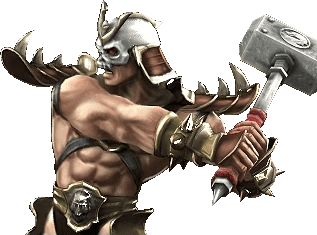
The final part of this Legacy Video Game Trilogy concludes with a hard reboot that still has the sensibilities to pay homage to the most awkward yet charmingly nostalgic part of its existence. So to recap: MK Deadly Alliance gave us an ungodly pairing in the two sorcerers Quan Chi and Shang Tsung, whose combined strength and abilities gave them the leverage to revive the Dragon King’s Army and wreak havoc on all the realms, without Shao Kahn f[screams]king them over or Liu Kang stopping them.

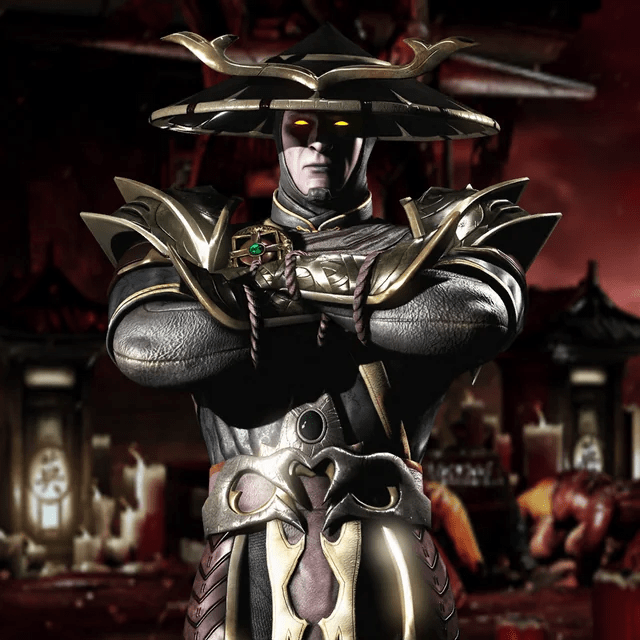
Not without Raiden’s intervention and before I continue on that, I had time to watch some MK 4 endings and in both Raiden’s and Fujin’s endings, Raiden accepts ascension to the position of Elder God while Fujin replaces him as Protector of Earthrealm. Raiden chose him as a successor and Fujin accepted it. But in Deadly Alliance, Fujin doesn’t appear until 2006’s Armageddon. Plot-hole? Not so. On the production side of things, the devs didn’t think Fujin had the recognition and popularity as the Thunder God so they put him back in this game in arguably one of his better looks.

Canonically, 7 feet tall.

Lore-wise, the death of Liu Kang made all the difference. Fujin hasn’t been demoted by way of a performance review; it’s just that Raiden’s attachment to half of his Shaolin Monk disciples influenced his decision to step down and see the fall of the Deadly Alliance personally. I don’t completely see this as an official source, since it came from r/MortalKombat and I wasn’t there when they were developing the game for release in 2002, but I’m glad I did.

Anyway, Raiden saw to it personally to essentially raise a militia of Earth’s best allies and defenders to destroy the Deadly Alliance. They failed, so much so that nearly all of them had become sacrifices for the undead army. Come Deception time, Raiden stood as the final bastion between freedom and conquest. At his defeat, the partnership between Quan Chi and Shang Tsung effectively evaporated and with the holder of Shinnok’s amulet (namely Quan Chi) being the one who can control the army, the two fight in Shang Tsung’s palace… and are immediately greeted by Onaga himself, coming to reclaim his rightful army that he knew was in the hands of the sorcerers.

The wiki explains that the Amulet has control over the army somehow (Boon and Tobias must’ve skipped that step), but its power and influence are superseded by Onaga’s heart. So you know you’re f[metal clanking]ked when the undead soldiers you painstakingly spent so much time and effort to revive, bow to their original master and not you. That reminds me of a Martin Mystery episode where an evil wizard attempts to revive Qin Shi Huang and the terracotta army only to realize that Emperor Qin was the furthest thing from a stable ruler and that in the show the terracotta army was created to keep the old emperor from getting out.

Misplaced balance of power and all that, Quan Chi, Shang Tsung, and Raiden temporarily work together to destroy Onaga, but two sorcerers and a temporary Elder God aren’t enough to destroy Onaga. Raiden’s last ditch effort doesn’t even dent him and worse he has the Kamidogu and Shinnok’s Amulet. He doesn’t need that for the army, but he does need it to merge the Kamidogu into one and morph into the One Being from which the realms were created. Oof, heavy stuff, huh?

By Armageddon time, it’s become apparent that the warriors in the realms are too aware of the forces that created them, and the Elder Gods consult with Argus and Delia, the Protectors of Edenia, to seek a solution so that none can threaten existence again. Argus suggested death, Delia suggested annulment, and so millennia ago, they created the firespawn Blaze so that his death in Mortal Kombat could bring about one of these outcomes, but a cascading effect seen over the course of the games led to an unintended outcome: even distribution of power. Not to mention, part of this plan was a quest which would test which of Argus’ and Delia’s sons, Taven and Daegon, would handily succeed them. The rules of primogeniture determined Taven the successor as the older brother, but Blaze was kidnapped and enslaved by Onaga’s holy men to guard the last dragon egg.

Blaze kept constant mental contact with their guardian dragons, Orin and Caro, but when he was kidnapped, that contact was lost and Caro mistakenly revived Daegon earlier than expected, kicking off much of the plot of the 3D era of games. At this revelation, Taven’s quest morphed from competition to a race to become the successor of Argus, seeing as the alternative was the Edenian equivalent of Shao Kahn. And they already had that… in the form of Shao Kahn!

Some of the endings, once again, connect as Taven is rewarded while Daegon is punished in Daegon’s ending. Raiden’s is a culmination of what he endured from Deadly Alliance to this, and Shao Kahn’s ending flows nearly seamlessly into the intro for Mortal Kombat 9. Rather than Taven become a full-god and see the failure of the quest, Shao Kahn ascended to the top of the Pyramid of Argus to defeat Blaze. In Armageddon, it was shown that Dark Raiden struck a deal with Outworld to spare Earthrealm if Raiden stopped Taven and Daegon from completing their quest. Something Light Raiden would NEVER do, even in desperation.

The opening cinematic of MK9 shows that this didn’t pan out as he’d hoped, seeing as Shao Kahn unsurprisingly reneged on that deal and used his newfound godhood to pummel Raiden before Raiden used his last moments to relay a message to his past self. The overarching crux of the message being “don’t become me,” but the most important one being “He must win,” where Past Raiden spends the game finding out who “he” refers to.

Thus, this game in the HD timeline redoes the first three MK games. The first third of the game is a near-mirror of the previous 1992 one, even with Sub-Zero’s death at Scorpion’s hands. And like the original it ends with Liu Kang’s victory in Mortal Kombat, but the intended outcome worsens the damage in Raiden’s amulet. It cracked when Raiden received the original “he must win” message and the course of the game shows it getting worse and worse.

The second third of the game is essentially a different Mortal Kombat II, and much so. Shang Tsung still got reduced to that of a fighter like in the original, but rather than it being simply a punishment for failure, the sorcerer convinced Shao Kahn to move the tournament to Outworld and fight on their terms. Raiden obviously said no, but this was less of an agreement between equals and more of a demand from a tyrant who forced his hand by unleashing Baraka’s Tarkatan horde on the Wu Shi Academy.

And that game is fantastic if you ignore its writing.

Forced to compete now on Shao Kahn’s terms, Raiden and the gaggle of Earthrealm warriors he’s recruited go to Outworld but also to investigate the real source of the cracks in the amulet and discover why Raiden’s efforts are failing fate. One of several notable changes here is that instead of Smoke becoming a cyborg like before, that becomes the fate of the new Sub-Zero Kuai Liang. If you recall, in the old timeline, Noob and Sub-Zero were brothers. Noob the more ruthless of the two when he was Grandmaster seeing as he led the charge against the Shirai Ryu and slaughtered them wholesale, but was further blamed for the murder of Scorpion’s family.

This didn’t change in the new timeline and Noob (originally Bi-Han) is still brutal, and is still innocent of the death of Harumi and Satoshi Hasashi. Nevertheless, Quan Chi pulling the strings from the sidelines once again birthed Noob Saibot and, in this timeline, Cyber Sub-Zero. Meanwhile, the tournament in Outworld commences and if you’ve ever played the original MKII and made it that far, you’ll notice that Kano and Sonya Blade are shackled in the background of the arena. This time around, Kano has no reason to be Shao Kahn’s prisoner since he’d sold him the Black Dragon’s service and arsenal, and Sonya was freed by Johnny Cage, Raiden, and Jax. Kitana, though, getting ideas from the Thunder God, investigated Shang Tsung’s flesh pits to discover her hybrid clone Mileena. With Kitana being the last remnant of Edenia’s ruling family, Shao Kahn’s plan in this and the other timeline was to replace Kitana with a loyal daughter.

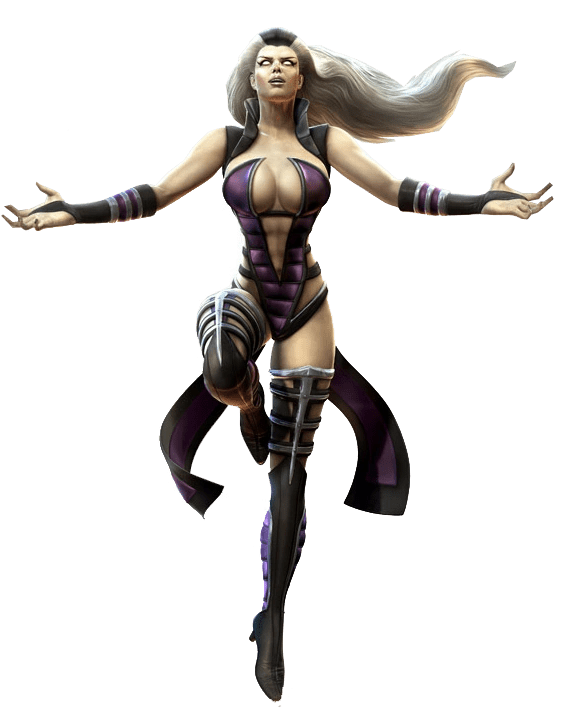
Shao Kahn loses his Outworld tournament, but the future remains unchanged largely because of Quan Chi and his hidden agenda seeing as he hastens Shao Kahn’s recovery, revives and essentially reprograms Sindel to be evil, and kicked off an invasion of Earthrealm itself. Previously, Shao Kahn could never do this due to Sindel’s ward keeping him from setting foot there, but her revival and Quan Chi’s spell over her psyche making her more receptive to Shao Kahn’s tactics, lifts that barrier.

Raiden recruits even more warriors to defend Earth and repel the invasion, but finds failure after failure in the last third of this game’s glorified HD remake of Mortal Kombat 3. Kabal joins up, Cyber Sub-Zero is reprogrammed, Noob Saibot is defeated, but Raiden’s attempts at repelling Shao Kahn’s advances fail each time. Finally, he goes straight to the Elder Gods themselves who prove equally worthless in this timeline, barely batting an eye at Shao Kahn’s atrocities quoting: “Invasion itself is not a transgression, it is the merger of realms that is proscribed.” A distinction without a difference fallacy that the almighty Elder Gods fail to see themselves. Sort of like granting rights based not on race but on wealth.

In the time it took for the Elder Gods to heroically sit it out until the eleventh hour, Sindel herself decimated the defenders in no time, even her daughter. Johnny and Sonya got through with only bruises and so Earth’s final defenders were reduced to a four-man team, very much to Liu Kang’s growing resentment at Raiden’s ad hoc decision making.

Remember how I said, Light Raiden would never strike a deal with Shao Kahn to spare Earth? Well, those words are looking mighty delicious right about now as it seems that he’s about to bargain for Quan Chi’s participation to stop Shao Kahn, offering his soul and those of the fallen. But Quan Chi being a necromancer, he already has their souls in possession and after battling their revenants, Raiden realizes once again at the apex of destruction that evil needs to get within a stone’s throw of victory before the Elder Gods show themselves. “He must win” meant Shao Kahn merging the realms illegally. Mortal Kombat being the magical arbitration to decide this, violating it through conquest finally gets the Elder Gods to pass judgment and punishment.

This comes with protest from Liu Kang, who falls for the same pitfalls, as the original Raiden and doggedly vows to stand against Shao Kahn even in futilely. It costs him his life and true to his vision, Raiden does allow Shao Kahn to enter Earthrealm undeterred, feigning submission in an effort to get the Elder Gods to act, though not without taking his hits. Fans have called out Raiden for this foolishness, but across the game it shows how much he’s being put to the test. You can’t pass malice onto him for trying so hard to keep everyone alive and Earthrealm undamaged by Shao Kahn’s poison.

The pyrrhic victory gives us a glimpse into what comes in the next game. Mortal Kombat X (technically Roman numeral for 10) immediately follows the post-invasion chaos of Shao Kahn’s entry into Earthrealm. With Shinnok and Quan Chi leading coordinated attacks, Johnny, Sonya, and Kenshi (who made a glorious comeback in the new timeline even for a guest appearance in the last game) lead the charge from the ground while Raiden and Fujin intercept Quan Chi and Shinnok at the Sky Tower, home of Earth’s energy forces in the form of the Jinsei chamber.

They even meet the remnant versions of friends long passed, under the service of Quan Chi. With Shinnok now freed from the Netherrealm and facing the Earthrealm forces personally, like the other games we reach the apex of near destruction, but in a deus ex machina twist, Johnny Cage follows up from his character arc in the last game and becomes the unlikely hero we didn’t know we needed.

Yeah, one thing you’ll notice over the course of just MK9 is that while Johnny understands the gravity of the situation before him, writing it off as but a simple competition, his tone and attitude changes with each chapter. Meanwhile, Liu Kang is the one who grows further disillusioned and rightfully so. Witnessed the death of his best friend, tended to his wounded comrades, saw the Elder Gods sit by and let s[neighs]t unfold in unflattering ways, and he was witness to Master Raiden reach desperate levels to save Earth. I can’t say whether he would’ve had the same reaction in the original timeline if he lived to see it all since Shang Tsung killed him in Deadly Alliance. But if Taven’s reaction in Armageddon’s Konquest mode is any indicator, Dark Raiden was brilliant in how unexpected it was at the time, and it was after the sixth main installment where Raiden went off the deep end. Does he show up again here outside of a flashback? We’re getting to that.

After his defeat at Johnny’s hands, Shinnok is sealed within his own talisman, begging the question somewhat of why he’d have it, but going by the rules of a gun, it’s not designed to have any loyalty. The amulet is also incapable of being destroyed, so the most they can do is closely guard it round the clock, which they continually do for the next 25 years, after which the remaining combatants have moved on with their lives and the like.

Trauma bonding pushed Johnny and Sonya close enough to marry, reproduce, and divorce in that time frame over which we learn that their daughter, Cassie, has felt stuck between two worlds: Hollywood brat or military brat? Which seems like a really unique childhood to have though not necessarily envy. One lifestyle has you hounded by paparazzi for room temperature IQ tabloids, and the other has you moving at the same time as your parents depending on the needs of the branch of service, provided the marriage is strong enough to get through the military.

Then again, Jax’s daughter may have the comparatively more enviable of these two. Jacqui Briggs isn’t explicitly stated to be a military brat herself, but she more than likely has the hallmarks of one if we dissect the finer details. Unlike Cassie, Jacqui’s mother is simply an unseen NPC who most likely passed away long before the start of the game. For Jax, he, Scorpion, and Sub-Zero were the revenants who helped to defend Quan Chi’s lair during a raid by the Special Forces. In that particular mission, Johnny nearly died, but Sonya beat the piss outta Quan Chi while Raiden reversed the spell that would’ve created remnant Johnny Cage. Quan Chi’s defeat brought Jax, Scorpion, and Sub-Zero back to life and already this quasi-Mortal Kombat 4 is markedly different from the original in more ways than simply graphics.

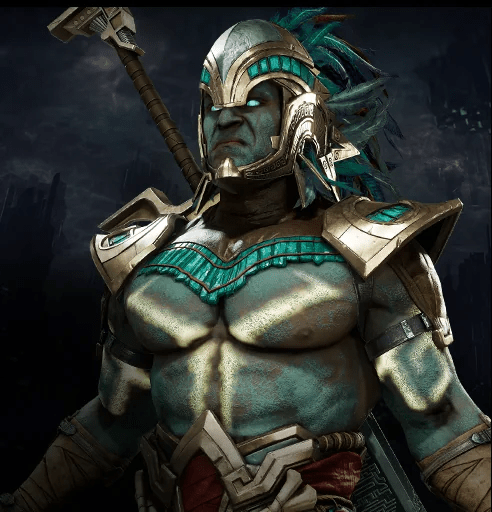
Kenshi himself had a son named Takeda, and from the Kung family comes Lao’s cousin, Kung Jin. The MK kids are meant to be the new bloods though the fan reception was mixed to put it lightly. They’re tasked with assuring all of Earthrealm’s bonds and alliances and aiding Kotal Kahn, the new ruler and admittedly usurper of Outworld causing a civil war between himself and those loyal to Mileena who was chosen to succeed Shao Kahn after the Elder Gods ate him.

I personally like his portrayal and physical appearance, being Aztec inspired. Character-wise, he’s not a conqueror like Shao Kahn or power-hungry like Onaga. To use real political terms, he gives me “populist, isolationist” vibes. That said, he doesn’t really do away with Shao Kahn’s old policies like the liberal use of execution. He also keeps his own cabinet of characters old and new. The civil war between him and Mileena revealed everyone’s true colors. Without his original masters, Ermac defected. As did Reptile, suggesting he never respected Mileena very much as a construct of Edenian flesh and Tarkatan blood. The ones willing to serve Mileena as Kahnum of Outworld boil down to Tanya, who returns (yay!), Baraka, who doesn’t (boo!), Rain who isn’t DLC this time around *throws controller into next week*, and Kano, who’s loyalty is for rent. He’s still a treacherous money-hungry thug, but I doubt he’s as foolish as last time, even after a quarter-century sending Black Dragon-brand brutality to both sides to come out on top regardless… like Simeon Weisz in Lord of War.

Maybe I should review movies again, I’ve been watching a handful of them as of late.

I like the intricacies of this civil war so far, but they’re better experienced than explained, especially seeing as Kotal wins out over Mileena and immediately turns on the Kombat Kids for the greater good in his words. Between scares and enemy espionage, Kotal Kahn concluded that Earthrealm can’t be trusted to safeguard the amulet so it’s in the best interest of Outworld and the rest of existence if Outworld held onto it until Raiden could set his priorities straight.

Meanwhile, one of Kotal’s most trusted, D’Vorah, a Kytinn bug woman is revealed to be a disciple of Quan Chi and servant of Shinnok. Sonya resorts to bringing Jax out of retirement as a means to get Earth’s defenders back into the light and out from Netherrealm’s influence. This goes on for the last quarter of the game, though with significant trouble in the way. Jax helps apprehend Quan Chi, but this is short-lived when Scorpion learns from Sub-Zero that the mastermind behind his agony came from within the Lin Kuei. Seeing as the original Sub-Zero was also a victim, the trend of “inside job conspiracies” reappears in this game to haunt Hanzo Hasashi ’til the end of days.

Ever played the GTA IV mission where you bust out one of Derrick’s old friends only to blow his brains out? Similar thing here, Scorpion breaks into a military prison to kill Quan Chi who uses his last breath to summon Shinnok behind enemy lines. With D’Vorah’s aid, they invade the sky temple again, trap Raiden and infect the Jinsei chamber, with less effort than the initial invasion 25 years ago. And since Shinnok is a petty little bitch, he imprisons Johnny too. As Dark Shinnok, the fallen Elder God becomes Raiden’s worst nightmare.

At this point, the Kombat Kids have broken out of imprisonment and returned to Earth right as this all unfolds and stand as the last beacon of hope for Earth, a role Raiden played in Deception before turning dark himself.

Every time Mortal Kombat gets Dark Raiden, they chicken out before they can use him. The most action he gets is his own ending in Armageddon where he obliterates all realms except Earth to destroy all outside threats to Earth. MK X teased him at the end with a stern warning to the Netherrealm under new leadership to not even think about trying anything or they’ll share Shinnok’s fate.

Dark Raiden is a major part of the first two chapters or so of MK 11, but thanks to time travel shenanigans, he’s written out before he can exercise the fullest extent of his wrath. The mission from MK X is more or less complete with Shinnok defeated though I doubt Raiden was forthcoming with his fate. Not to mention, the villain this time around is the titan Kronika who masters an hourglass that writes the fates of all. I’m pretty sure I’ve played this trope before.

Time travel shenanigans aside, MK 11 takes away the heavy lifting Raiden would’ve done to protect Earthrealm by simply bringing everyone back from when they were at their best. This game does have a DLC arc that’s best explored away from the main series even though it flows into 2023’s M1K soft reboot. Re-touched upon in this game, Kronika not only manipulated events, but claims responsibility for driving a wedge in between Raiden and Liu Kang. Timeline after timeline, their power combined has shown to be a threat to Kronika. Using this to his advantage, Raiden stops fighting Liu Kang and they merge to form Fire God Liu Kang who was last seen in that god-awful Mythologies spin-off. Depending on the player, the game can end with human Raiden aiding Liu Kang as he remakes reality, or with Kitana long after she wins big as the new Kahnum of Outworld when a career-ending injury removes Kotal Kahn from power.

I’m not certain on whether M1K is the beginning of a new arc in the Mortal Kombat franchise. It’s the first one for the 2020s and has a hell of a lot of callbacks which thoroughly entertained the legacy fan in me. I’ve seen full gameplay of it, but haven’t experienced the rest of the game for myself yet, so I’ll cap this long post with my thoughts on the HD continuation. It almost follows the beats of the original series but diverges beginning in the third arc of MK9 and doesn’t look back in the rearview mirror. Shinnok still makes his comeback in this timeline’s answer to MK4, but doesn’t fall victim to Quan Chi’s machinations. Quan Chi isn’t even acknowledged as the true mastermind and even when they do treat him as such, the focus goes toward Shinnok who manipulated events from the start. So he’s no different from Armageddon’s Konquest mode, the point of divergence being that Daegon is the one who serves him instead of Quan Chi… or rather he plays them both. Honestly, MK’s biggest flaw is having loyal characters serving untrustworthy villains. Say what you want about Deadly Alliance, but Quan Chi and Shang Tsung understand fully that the partnership is purely transactional.

The villains this time around are aware of this aspect though seem to be blind to Quan Chi’s reach and influence. Not that he’s the most powerful villain or remains so for long as Kronika beats him to the punch in MK 11. It ultimately screwed over the revenants still under Quan Chi’s influence at the time of his death, but I say its for the best that he wasn’t alive to witness Kronika emerge from her chamber. Besides, the revenants can be restored after consultation with the Elder Gods, as long as they don’t take it literally.

All in all, this era in Mortal Kombat history gets a lot of praise in the beginning followed by loads of critique over what should’ve been done by whom during XYZ. All well and good, but it suffers from the same problem exhibited by the God of War series in that the games of the past are written off as weird and off-putting. But as a defender of this era of Mortal Kombat, flawed or not, this was a necessary step toward greatness, and the only regret(s) are that Shaolin Monks hasn’t been rewritten and remastered and we haven’t seen anything in the form of Chess Kombat, Motor Kombat or Puzzle Kombat in the last 20 years. I would gladly do embarrassing things to see this in the modern day again.

Mortal Kombat 3D Legacy

Controversial, but for different reasons

In Part 2 of this 3D Video Game Lookback Series, I bring you to the Midway era of the Mortal Kombat franchise. For this post, I’m largely going to include the games I have played from this era being Deadly Alliance (2002), Deception (2004), and Armageddon (2006). For those seeing this lineup and wondering about the others, I will briefly touch up on MK4 (1997), bear in mind that my exposure to that game is limited as I’ve never been able to play it even emulated or remastered as the Midway library only ever mentions the three arcade games, most likely due to the little love it received for being a subpar transition to 3D from 2D, written well in this blog from February 2020 and explained by Ed Boon himself in this documentary video included in Deadly Alliance, most likely recorded prior to the game’s October 2002 release window:

Channel: Ro Sohryu

On YouTube, MK4 gets its spotlight about five minutes in.

Suffice it to say, MK4’s experiment with 3D showed the desire to follow a trend that would shape the future of the video game industry roughly indefinitely save for a few outliers calling for a simpler time.

Thinly-veiled marriage proposal to 2D platforming, I say.

With MK4 designed as an arcade game like its original predecessors, it doesn’t necessarily follow a canon ending, though some individual characters’ endings flow into Deadly Alliance. The only one so far that I know does this is Scorpion’s ending. After defeating Sub-Zero, the Grandmaster of the Lin Kuei accepts responsibility for the destruction of the Shirai Ryu clan, but reveals that no Lin Kuei ever touched his family. Quan Chi reveals himself to be the mastermind behind Scorpion’s vengeance and attempts to trap him in the Netherrealm. Fruitless endeavor as Scorpion drags the sorcerer to hell with him for the torturing. This is consistent up until 2004 where Shujinko has a hand in helping to find Quan Chi in the Netherrealm while there for his own reasons, but we’re jumping forward a bit, let’s bring it back.

Deadly Alliance follows on from Scorpion’s MK4 ending, with Raiden as the narrator of Quan Chi’s escape through a portal. On the other side, he found a tomb housing the legendary undefeatable army of the long, deceased Dragon King, deciphered the ancient rune stone, and the one that disturbs Raiden the most, he’d formed an alliance (based on ignorance) with Shang Tsung of all people. Per this deal, Quan Chi will help Shang Tsung gather the souls necessary to revive the mummified army of budget samurai warriors.

Wonder if the inspiration came from the Chinese terracotta army design-wise…

Shang Tsung meanwhile will teach Quan Chi the soul transfer spells that achieve this mass revival. Evil as they are, you’d probably expect them to singlehandedly lay waste to some innocent village, and as either of the two that’d be my first suggestion… and one I’d personally shoot down considering the types of souls I’d like to inhabit these skeleton warriors. Any old soul would likely not make the cut–if I’m bringing an army back from the dead, I’d want the souls of trained fighters, warriors!

And going with that thought process, the sorcerers went to concoct a plan to lure them all into one place. Two great problems lie in the way however: Emperor Shao Kahn and Liu Kang. No, the Emperor of Outworld isn’t aligned with the Champion of Mortal Kombat. Just that the two know they’d face heavy resistance from these guys. Shao Kahn would want to take part in the tournament and Liu Kang won’t stop until all threats to Earthrealm are beaten fair and square, this last part biting him in the ass. Naturally, they feign loyalty to kill Shao Kahn and make a beeline for the Wu Shi Academy where the Mortal Kombat Champion trains extensively. Shang Tsung could still not hold a candle to Liu Kang, unassisted at least. Enter Quan Chi to put him in a vulnerable position allowing Shang Tsung to take the killing blow.

The body of Liu Kang is the first of several transported back to Shang Tsung’s palace (whose construction has an interesting story that unfolds in Deception’s Konquest mode). An undead soldier is voluntold to get the Shaolin monk’s soul, and the intro cinematic warns of impending doom should the Deadly Alliance succeed, bringing Raiden to his closing argument. He turned away from the realm of Elder Godhood to mount a resistance against the sorcerers.

Channel: merocch

Spoiler alert: it fails. And looking at how Deception starts, miserably. Raiden might as well have been feeding them soul after soul. Shang Tsung didn’t necessarily need them, but knowing his greed, there’s never enough souls. It’s never explained how many of the souls in the Soulnado in his palace are suitable for transplantation to the undead army, nor is it ever explained if there’s a purpose beyond prolonging death. The most we get out of his use of that Soulnado is to prop himself back up after a devastating blow from Raiden.

Deadly Alliance still suffers from the Arcade framework of all the other games before it, but its not like Midway couldn’t write a compelling story in the MK-Verse. Deception proves it with Shujinko’s narration of events that bring us up to speed on the results of Raiden’s impromptu militia. Needless to say, it got so bad, he had to face the Deadly Alliance himself. The final bastion against misery and terror.

Thunder god or not, the man couldn’t do much against the Deadly Alliance’s plans. And when they merged their own powers, they took him out of the fight for at least five minutes max. Naturally, treachery followed this short-lived victory. In either of their endings in Deadly Alliance, both have secret alliances with third parties: both used Kano in their respective endings, although Shang Tsung allied with the Oni that were about to feast on Quan Chi’s innards in the Netherrealm (which does happen in Drahmin’s ending); and Quan Chi with anyone who’s capable of putting the squeeze on Shang Tsung before he destroys the traitor he hired to carry out the initial betrayal. In the Deception intro, they simply betray each other for power, knowing that the command “Obey he who possesses the amulet,” depends on who he is. Quan Chi won out and kept the amulet on his belt.

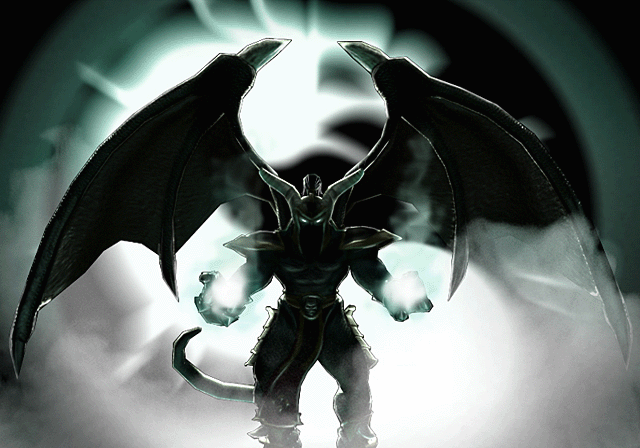
In the distance, Quan Chi could hear a loud and approaching stomping, a crescendo of an even worse danger than even he or Shang Tsung could threaten to unleash on reality. The one-eyed man may be king in the land of the blind, but in this instance, the undead army would never bow to a pretender. They knelt in recognition of their one true ruler as he revealed himself to the lone sorcerer.

An ancient prophecy kept alive by the remaining holy men of the Dragon King, the last Dragon Egg had hatched, and had taken on a host in the form of the gradually devolving Reptile (further confirmed in his own ending). The true emperor of Outworld had returned to show everyone what a real monster is, stopped only by a duo of treacherous sorcerers and a thunder god in a desperate attempt to reverse course.

Even with their powers combined, Raiden realized it would take more to defeat Onaga, and so made a final sacrifice… that ultimately failed to even scratch Onaga. The blame falls largely on Shujinko for bringing this ungodly power to him. To take responsibility, he vows to right wrongs committed by his unknowing service to the Dragon King.

Channel: MKIceAndFire

To make sense of these dire straits, we go back forty years to Shujinko’s youth. A bright-eyed young man with a special place in his heart for the Great Kung Lao. Sadly, he lacks his idol’s martial arts’ skills and seeks to learn from one of his teachers, Bo’ Rai Cho, an Outworlder who has taught warriors for the last few Mortal Kombat tournaments to include the Shaolin Monks among others. Stuck in the confines of his village, Shujinko is essentially forbidden from venturing into the outside world until a strange entity called Damashi visits him in the street. With an offer of adventure and the chance to save reality from destruction, he gracefully accepts a quest that will take him throughout the Mortal Kombat universe (and expose players to some neat and interesting level design).

Over the years, he adopts the fighting styles of numerous warriors, is exposed to different rivalries between established characters of old and newer characters, and finds himself the star of several complicated overarching plots that resolve relatively quickly, to include one that involves a sorcerer and a ninja specter. Keep in mind, this is all for the sake of collecting six tools known as Kamidogu. Hiccups abound, but at the ripe old age of approximately 65, Shujinko concludes his quest in the Nexus.

…or so he thought. The last Kamidogu is in place, but not immediately taken to the Elder Gods. The final piece needed to achieve this is Shinnok’s amulet, attached to Quan Chi whom he found in the Netherrealm twenty years prior. The Kamidogu now sitting in Onaga’s palace, Shujinko’s ending suggests he uses the fighting abilities acquired over the decades to destroy Onaga. All’s well that ends–no, that’s not what happens either. He does redeem himself in his ending, but in Raiden’s ending, he’s tortured over this mistake. And this isn’t the same Raiden that narrated Deadly Alliance. Deception gives birth to Dark Raiden, ironically hellbent on protecting Earthrealm.

Channel: i’m playing it!

Unbeknownst to the rest of the cast, Raiden doesn’t die very easily. He came back heavily corrupted and negatively influenced by the doings of mortals. No longer content with playing defender, he’ll take a page from Shao Kahn and directly challenge his adversaries, and effectively press any fighter into defending Earthrealm to the death. This new thunder god was a force to be reckon with.

Channel: Kamidogu

Further explained in his Armageddon ending.

For Armageddon, it’s exactly as advertised. If you noticed over the course of this entry, numerous factors I mentioned specifically as well as those I couldn’t specify for brevity’s sake, have a grave impact on the health and future of the realms. The sorcerers were always a threat, though the original timeline shows that the Elder Gods’ hardline inaction was what would ultimately doom the realms.

Armageddon explains that their solution to this was to brainstorm ideas with the parents of Taven and Daegon, Argus the Protector God (read: Raiden) of Edenia, and his sorceress wife, Delia. Argus outright proposes extinction, but Delia, levelheadedly, asks to render them powerless in recognition of the heroes that sacrificed themselves to save the realms, even if it was only their own homes. Thus was given the Armageddon Konquest plot where it was passed off as a competition between the brothers to defeat the firespawn, Blaze. Taven and Daegon were told what their respective dragons, Orin and Caro, were told, in that the quest was intended to challenge the brothers to see who could succeed Argus as the Protector of Edenia. Defeating Blaze grants this as well as full godhood to the victor.

Over the course of the quest, however, Taven discovers numerous details that don’t add up. His parents have temples in Earthrealm, which I personally don’t find all that unheard of. It’d be the equivalent of a cult of Raiden in Outworld or Edenia, presumably in defiance of Shao Kahn or worse. MK lore does establish holy men responsible for the upkeep of these temples, and when they abandon it (or get killed), it inevitably falls into disrepair. So imagine how surprised Taven was to find that red-clad warriors bearing the mark of a Red Dragon occupying it.

It wouldn’t be the last time he finds the Red Dragon clan on his journey. They hide amongst the traps outside his mother’s temple, the same one commandeered by the Lin Kuei generations before, and the same one where Shujinko learns Lin Kuei martial arts at from Sub-Zero himself. After a confrontation with the same Grandmaster of the Lin Kuei and an impromptu offer of help when Noob and Smoke plan an infiltration on the grounds, Taven is led to the Red Dragon stronghold where he discovers a twist for the ages.

The founder of the Red Dragon clan was his own brother, Daegon.

Further exploring the Red Dragon stronghold, Taven is made aware of a sickening series of science experiments to physically alter the appearance of individual members into dragons themselves. Funny enough, Kano clues him in to all of this. He’s a Black Dragon member with no love for the Red Dragon and if spilling the secrets of a hated enemy means anything, who, besides Mavado, was gonna stop him?

Taven reunites with Daegon’s companion dragon, Caro, imprisoned and forced to scatter the Red Dragon clan throughout the realms. From Caro, Taven learns that the entire course of events that precede Armageddon relied on a mental connection to Blaze. However, he was kidnapped by Onaga’s holy men and enslaved to safeguard the last dragon egg. Since it hatched in Deception, his purpose there had concluded and a side quest in Deception resets his path to continue the quest.

Except the damage had been done. Daegon was awoken prematurely and pretty much singlehandedly set the course of events from Deadly Alliance onward. Blaze made cameos in earlier games, but didn’t come into prominence until Deadly Alliance as a secret playable character.

Caro had felt personally responsible for setting this course of events to occur, but Taven is right. The dragon was being too hard on himself. No victim plans their own kidnapping unless they’re in on it. As Daegon also knew the quest wasn’t all it was said to be, he sought the answers from the source and killed them where they stood. Taking responsibility for all of that, Caro sent Taven to follow Daegon and stop him while Caro stayed behind to destroy the Red Dragon Clan by himself.

Following Taven into the Netherrealm, he happens upon a weakened fallen Elder God, and here we learn how long Taven had been in slumber. The gap in his memory seems to begin with Mortal Kombat 3 and ends in this game. Oh, to fill him in on all the lore.

Shinnok offers to help Taven find and stop Daegon from corrupting the quest further, but he puts Taven through a series of trials first to reclaim his spire. When all is said and done, Taven had been delayed by an elaborate ruse orchestrated by Shinnok and Daegon to advance Daegon’s position as Protector and by extension, god. He also revealed the quest’s existence and prize to other combatants as a means to slow Taven down, from Sektor’s initial ambush at Argus’ temple in Earthrealm to Prince Rain challenging him outside Delia’s.

Taven goes back to Earthrealm where Orin was subject to fatal wounds by Quan Chi. In pursuit, he follows him to Outworld and fights his way through Shao Kahn’s fortress to learn that A. death is a bitch ass in the Mortal Kombat world since Shao Kahn’s fortress would’ve been reclaimed by Onaga and B. Onaga, Shao Kahn, and the former Deadly Alliance have all formed an alliance (still based on ignorance, they all betray each other in the intro cinematic) and fled to Edenia.

Dark Raiden rears his corrupted head once again, having struck an uneasy truce to stop Taven so long as Shao Kahn ignores Earthrealm. A desperate Raiden would definitely do this, but a smarter Raiden would incapacitate Shao Kahn and company. Finally in Edenia, Taven is ambushed by the last of Daegon’s impromptu agents, Scorpion himself. After his defeat in Edenia, Daegon shows up to finish the job but is interrupted by the firespawn himself. The quest didn’t have to and ultimately did not pan out how Argus and Delia foresaw, but by the Elder Gods, if Blaze had to make sure it ended a certain way than gods dammit he will!

Taven and Daegon were taken to the rim of the crater where Armageddon would begin. Finally able to confront Daegon over his corruption and evil, Daegon revealed that he would’ve been a potential victim of primogeniture. Taven earns a pyrrhic victory, and almost walks away from the quest being the sole survivor of his own family.

He finishes the quest after Blaze reveals the truth of the quest to him. If anything, Taven chose to do so because the role needed to be filled. As a result of the events of the other games, Armageddon’s stated mission purpose was to resolve the instability of the realms. It did nothing of the sort. The godlike power wound up empowering the rest of the combatants in Taven’s ending.

Channel: MKIceAndFire

If things went right, Argus and Delia would’ve annulled the combatants of their abilities and made Taven the successor. No Red Dragon, no atrocities, nothing.

Everything does connect in the long run, though. Dark Raiden shows what he’d do to save earth, Onaga shows himself the most treacherous and self-serving, and Blaze reappears to fulfill a greater role since 1993. But as I’ve said before in a prior post, if it wasn’t for the last-minute distractions, most of the plot would have more neat and tidy endings. Not that I’m asking for rewrites after twenty years since the HD Continuation is the rewrites, but more like there were a few areas of the 3D games that could’ve used some ironing out.

The hunt for lore and information is there, and it’s deliberately hidden so that the player can be challenged into finding it, but it’s an uphill battle of sorts when things don’t flow neatly from game to game. Some stuff is left too open to interpretation and while I maintain that Mortal Kombat is guilty of abandoning plot points, the ones they leave in place weren’t any better. Maybe this is a consequence of doing the same thing over the course of thirty years, the same story beats rhyme like an epic, but unfortunately Mortal Kombat ain’t no Beowulf. All in all, this all sounds like a job for The4thSnake on YouTube.

The 3D era of Mortal Kombat is, what I’d call, a conglomerate of rough gems. The beauty exists in the lore than in the visuals and I’m sick to death of this part of the franchise’s history being buried by many so-called fans.

Bring back Chess Kombat, and I’ll wear clothing too explicit, even for pornography.

The Mortal Kombat Game that Never Was

Growing pains

Mortal Kombat 1 released on September 19, 2023 and continues with the new continuity left over from the last game MK11. For a recap, MK 2011 (MK9) retold the story of the first three arcade games but with twists. MK X can be considered a divergent timeline than what was seen in Mortal Kombat 4 and Deadly Alliance. MK 11 is what I personally consider a joining together of Deception and Armageddon, and the new game goes full circle.

I had the pleasure of watching the YouTube channel MKIceAndFire play the game from start to finish, I believe with a review copy. I won’t spoil too much for the game, but continuing the trend of reboots, rehashes, and retcons like a late 2010s Marvel or DC Comic there are some changes that I welcome and some I think could’ve been done better. Of those I won’t change: Fire God Liu Kang.

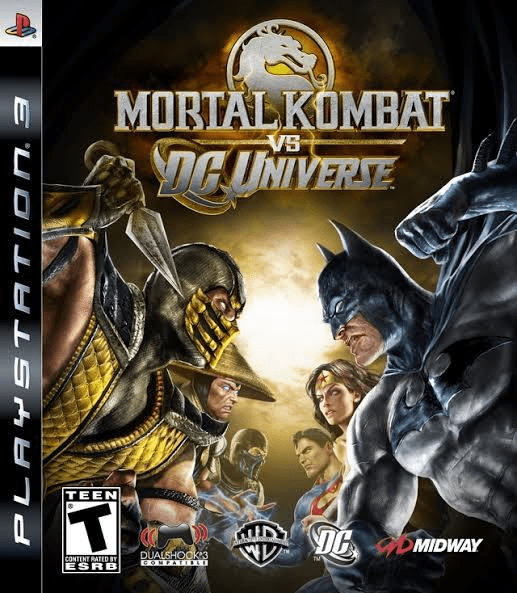
From 1992 to 2023, seeing this franchise evolve over the years is amazing as a fan, so in celebration, I thought today I’d take a look at the franchise’s attempts at spinoffs; and I exclusively mean spinoffs, so updates like Ultimate MK3, Mortal Kombat Gold, or MK vs DC don’t count as most of these are laid out the same as their main contemporaries and don’t do anything different from the others or if they do, not enough.

Video games spawning spinoffs and spiritual successors is a time-honored tradition. Sleeping Dogs succeeds True Crime, the BioShock series to System Shock, and several others. Generally focusing on individual characters or inventing something new comes easy to video games and Mortal Kombat does that in spades, many times over. The first success coming from 2004’s Deception.

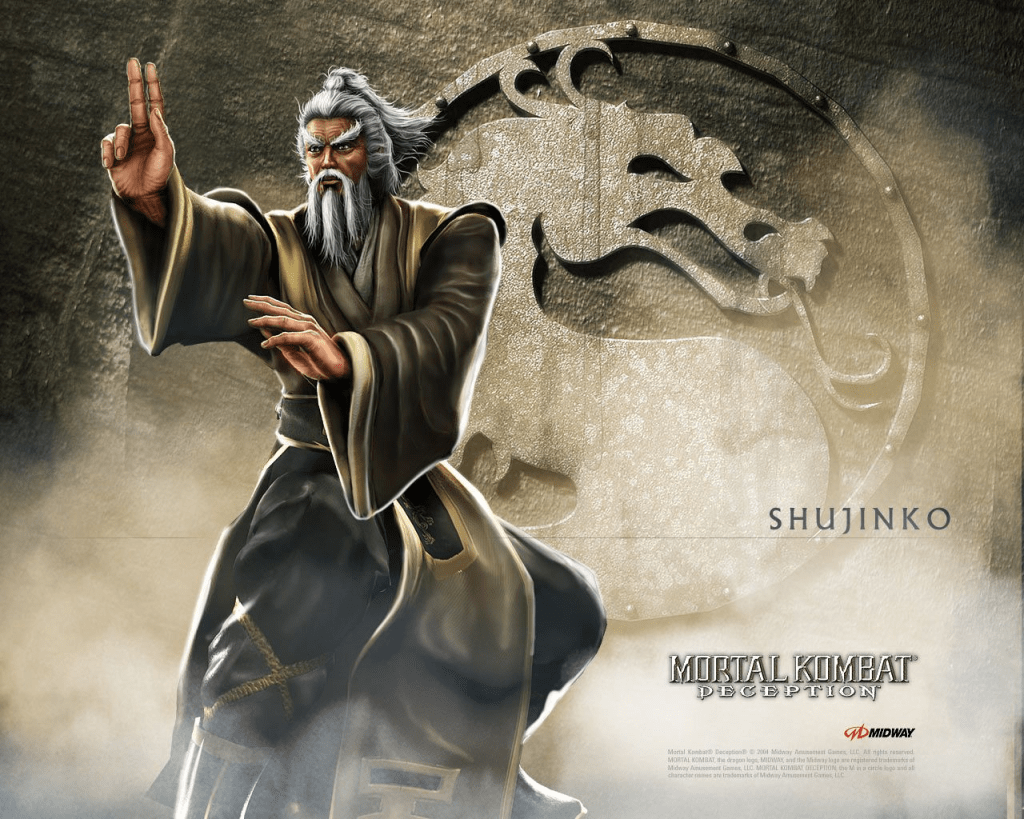
By himself, Shujinko’s journey across the realms to gather the Kamidogu though (spoiler) under false pretenses is a solid and interesting story to follow. The boy who dreamt of great things. As an addition to the MK franchise, his story definitely stands out while also adhering to age-old kung fu cinema tropes like that of the wise old foolish master. A combining of the old and new, though he’s currently limited to the 3D era with few references beyond that.

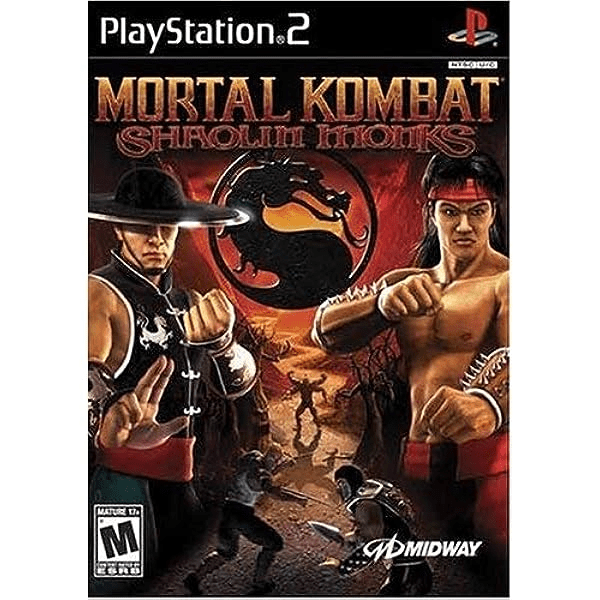
Fortunately, there’s a spinoff that by all accounts is considered perfect. Fluidic combat, leveling abilities, a reimagining of the characters, and a great big tournament with traversable realms, along with a co-operative mode. It’s MK: Shaolin Monks.

With all that had occurred in the franchise’s history, I like to think of this game itself along with the Konquest modes of Deception and Armageddon as culminations of what worked in the past coupled with new ideas that carried these games in particular to new heights. Having said that and considering the title of this post, it’s not hard to see the struggles endured by the franchise.

With even some main games struggling at the first hurdle, some of the updated versions helped somewhat to pick up the slack and can thus be forgiven for their faults. Few games age as well as some others. For spinoffs, though, Ed Boon and John Tobias seemingly had a desire to branch out beyond the main Mortal Kombat tournament or reimagine it somehow. The ideas they had were interesting, but the execution wasn’t what it could’ve been.

Starting with the first of these, the 1997 spinoff featuring the failed Mythologies series.

The Development section of the game’s Wikipedia page states that John Tobias wanted Mythologies to be a separate series, not dissimilar from the multiple series within the Sonic or Mario franchises. The reason for this was to better flesh out and develop the individual stories of the characters far exceeding the limits of the character endings and bios. The people at Midway chose Sub-Zero as their candidate and went with a side-scrolling platformer, also not unlike the more family friendlier video games of the era, or even Castlevania.

Unfortunately for Midway, the results of these efforts were executed poorly. If they were perfect, then the shape of the Mortal Kombat franchise as of now would be different. For their efforts, Mythologies failed at what it set out to do. Awful graphics for the time (and even now), frustrating controls, confusing layout, and uninspired enemy designs, and a difficult loop instead of a curve put this game below the bottom of the barrel.

Probably would’ve been better to spend more time in the oven. That same development section of the Wikipedia article explained that the team working on this game was much smaller and the techniques used a whole bunch of green screen and overlays. Not saying that more cooks in the kitchen would’ve produced a better meal, but if the size of the dev team was the culprit than a few more hands would’ve helped. Or if not that, then the old ways that worked for the other games were still available.

Could Mythologies have been made better? Perhaps. Whatever the defining factor is that gave us the Mythologies of this timeline than whatever another timeline got, I can’t say with certainty. As a positive for that game though, the costumes and set design were true to the original character designs and it’s cool to see someone loved Quan Chi’s appearance in MK4 enough to make that his alternate costume going forward. Observe.

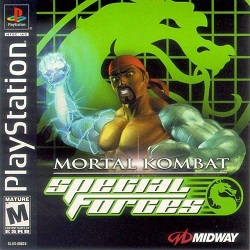
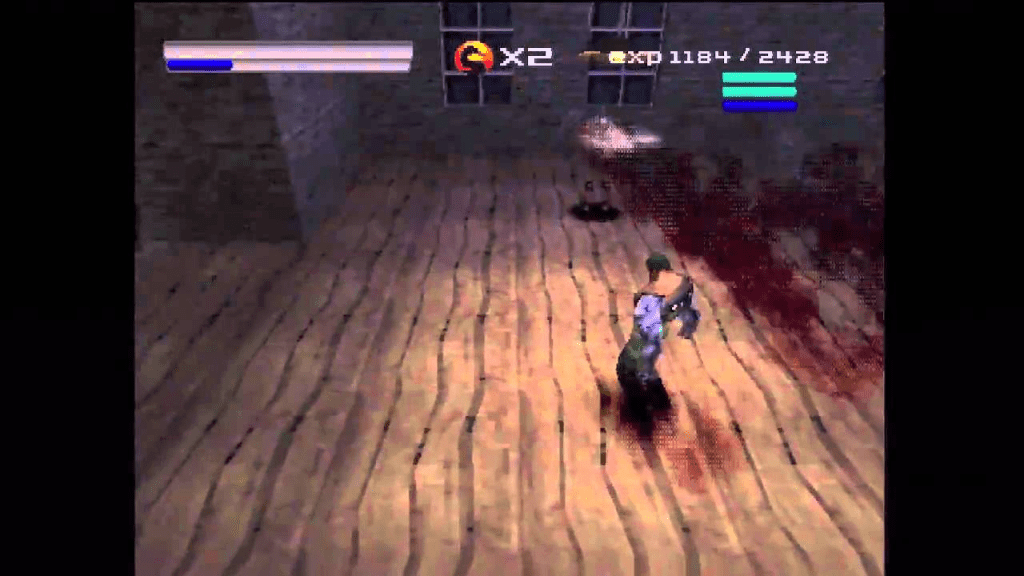
Not to be deterred by one failure, the alchemists of Midway sought to try again some three years later with a worse attempt at a spinoff: Mortal Kombat: Special Forces. The specter of video game development hell would have it out for Midway at this stage it seemed. The moderately-sized dev team behind MK Mythologies was unlucky, but according to this game’s Wikipedia article and this article by Gaming Bolt, the development of the game was way more trouble for subpar returns.

Comparing MK4 from 1997 to Deadly Alliance from 2002 shows that for the former, the transition to 3D was neither easy nor pretty while the latter made use of what was learned the first time around to produce a better looking product. But MK4 is a game the old heads of Midway are at least somewhat proud of for not breaking too much and experimenting with a new trend at the time. Special Forces is infamous for being so maligned that Ed Boon hasn’t acknowledged it since its 2000 release on the almost retired PlayStation and for good reasons.

The technology at the time was well outside the dev team’s scope and experience, given how much of a chore it was just to get MK4 and the subsequent Gold up and running. As for what gameplay consisted of, it was quite ambitious at the time. An action-adventure beat ’em up with a revolving door of abilities and even weapons at the player’s disposal sounded way too good to be true for a 2000 game and it unfortunately was. These difficulties mounted with distressed developers jumping ship and leaving new folks with a mess to sort through.

Of these departures was John Tobias himself. One of the two men who brought us this franchise needed to dip out and take a much needed breather, and with news of this during the dev cycle, rumors abound that Special Forces was set to be cancelled soon. But the remaining devs continued forth in this perilous journey to bring the game out and their efforts sadly did go to waste.

Never mind cooking with a missing number of cooks; this is what happens when some of the cooks leave and new cooks fill their shoes without filling them in on what they’re finishing. Needless to say, ugly graphics, bad controls, a convoluted story, and last-minute changes to who the protagonist was supposed to be, the wider MK community has little love for this game and those who are joining but don’t know about this game, take it from those who do, you’re not missing much. Deadly Alliance has more bang for your buck.

I’d already said above that Shaolin Monks was perfection as far as spinoffs go and for a while I didn’t realize that it was also supposed to have a sequel. I tried looking into this more and for games that get canned for XYZ, many of those that don’t see the light of day at least have footage for the public to gaze upon. Like Eight Days, or Sonic X-Treme or Scalebound to name a few. In my research, I’d found that a developer known as Paradox Studios (not the makers of Europa Universalis or Hearts of Iron) were supposed to spearhead a sequel focusing on Scorpion and Sub-Zero with the working subtitle of Fire & Ice.

It would’ve been loosely based on the Mortal Kombat II ending to Scorpion’s arcade run where to atone for killing Sub-Zero’s brother, he vows to protect him as a savior and guardian. If you’ve played any of the recent Mortal Kombat games, there are several nods to this in a few select endings. My personal favorite being guest character Spawn’s from MK11.

Credit: MKIceAndFire

All things considered, the great focus paid to Sub-Zero and Scorpion culminating in an almost game that was canned on the drawing board makes it seem as though Fire & Ice was the one that got away. The reasons behind the cancellation had to do with Paradox Studios suffering from financial woes, as explained in this article from Game Informer. The most they could do was a concept level and character design before the project was tossed out with the bath water.

Still, the concept resonated enough for Ed Boon et al to keep referencing it some 15 years after the project’s premature death and for fans to produce a bevy of fanart and fanfics over what the story could’ve been about. Perhaps it could’ve been something like what Mythologies would’ve been with the fleshing out of other character stories; maybe the two would combine to beat down on Quan Chi only for him to be saved by one of the Brothers of Shadow or even Shinnok himself. The sky was the limit back then, and it still is. For all its faults, Armageddon was onto something with the character customization, something that made a comeback in MK11 with the different loadouts for each character.

Since the reboot in 2011, NetherRealm Studios (probably with insistence from WB Games) has been focusing on the main plot with nothing to show for a side plot to explore aside from the associated comics that most folks probably won’t realize are being released until they do some more digging. I’m hesitant to say that WB Games won’t allow a new Fire & Ice; while backwards compatibility is off the table for them, it’d help me greatly if I knew what their game plans were before I say anything. And with studios so tightlipped about projects and pitches, speculation is the best we can do until a statement is made.