A promise was made a few weeks ago to make a post about corruption in three action/adventure games released on 2012. This will be that post. As for what I have on the schedule, expect a review about a gender-role flipped isekai manga over the weekend.
Max Payne 3, Sleeping Dogs, and Spec Ops: The Line are a trio of 2012 video games that all deal with corruption and were in several ways criminally underrated by gamers at the time. Three pretty niche series, even despite the graphical showing with something to say about each of their own themes plot-wise. We’re going to look over the plots of all three and what I believe are the reasons they were all overlooked even now.
The changes you notice when you’re in those boots too
By now, regular viewers know that I’m currently in the U.S. Army, but if you’re just joining us: Hello, I run an entertainment-based blog during my free time in the Army. I do what I can to not make it my personality, and sometimes I’ll update you if it interferes with this blog (especially deployments and whatnot); occasionally, I add insight in my experiences in training whenever I see the military in media and the military shows up a handful of times in media.
Not the few times where they’re a side piece to the main event, but when they are the main event, and within the military and veteran communities, because of how we’re trained, the issues that fly over the heads of those who never served are all too obvious to those who have. I don’t normally go out of my way to hunt down military movies to watch; the most recent movie I saw was a touching love story about a man with a metallic skeleton traveling across the multiverse with his dumbest friend because they’re both too dangerous to be left alive.
All things considered, Deadpool is a menace to existence. Can’t wait to see him do it again with the web slinger.
Of the military movies I did see in recent memory were Black Hawk Down, Saving Private Ryan, and Full Metal Jacket, and I’ll go over them one by one based on what I know now that I’m in the Army. I’ve seen others, but these are the ones I can remember vividly.
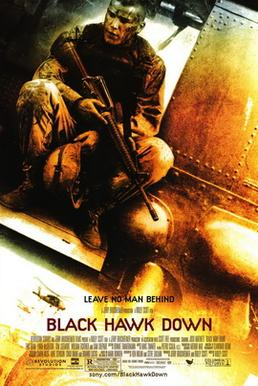
Released in 2001, Black Hawk Down is a retelling of an actual event that happened to U.S. Soldiers overseas. For context, Somalia has a lot of the problems that were present in Afghanistan at least in the lead up to the Taliban’s first takeover in 1996. Post-colonialism was an opportunity for Cold War politicking and with Somalia and Ethiopia barking at each other, the U.S. and Soviets got involved. Glossing over the latter half of the Cold War in the Horn of Africa, the regimes changed, Somalia’s communist government was overthrown by an anticommunist government that was just as ruthless as the last and the most infamous man at the helm was warlord, Mohamed Farrah Aidid.
In the middle of the Somali Civil War which began at the end of the Cold War (no one can agree on a starting year, just that it’s still going on), one of the warlords Mohamed Farrah Aidid made a name for himself when those loyal to him attacked Pakistani military personnel in June 1993, followed by attacks on UN peacekeepers, prompting an American retaliation on his lieutenants. Aidid spat back by deliberately targeting American troops in the area, and the Clinton administration was done playing games, sending in Special Forces Group Delta and spearheading Operation Gothic Serpent with the sole purpose of bringing him to justice for crimes against humanity.
This was easier said than done and probably foreshadows the logistical issues of the later War on Terror which the Somali Civil War folded into down the line: who’s the enemy? The inciting incident that kept Delta Force in Mogadishu overnight in October 1993 was the downing of a pair of Black Hawk attack choppers. U.S. soldiers never leave a fallen comrade behind, so a garrison was tasked with finding the downed soldiers and bringing them home broken or in a box. It may be a trope these days, but we do take care of our own.
To put it mildly, U.S. soldiers were lost in a horror show even Satan would reject. Aidid’s paramilitary, the Somali National Alliance, wasn’t exactly a uniformed entity. The movie depicts them as dressed casually albeit adorned with military gear over their everyday attire, and scenes like this would come back to bite U.S. forces in the ass in the Middle East, especially in Iraq in the early years and after during the ISIS years.
The movie focuses mainly on the U.S. Army and its special forces contingents, but the reality was that more troops from other services (Navy SEALs and Air Force Parajumpers) were also involved. Those who survived the initial crash were trapped in the downed chopper, desperately awaiting help from other U.S. forces while the Somali population barreled down on them. Of the two Delta Force operators killed that day, Sergeants First Class Gary Gordon and Randy Shughart were the two who were given posthumous Medals of Honor. As for the rest of U.S. forces, the situation forced them to retreat with their fallen comrades in tow. Photos exist of what was done to the bodies afterward, but I’m not comfortable showing it. Just know that it was grizzly.
From what I’ve heard of people who’s family members served, those who were sent to Somalia would 9 out of 10 times rather be deployed literally anywhere else. Even Vietnam vets of the time, would rather fight the Viet Cong and NVA again than take their chances with Aidid’s forces again. Normally, I’d question the validity of these statements, but there’s enough evidence from retired servicemembers who were there to pretty much write it off as a living nightmare. Somalia is still a grave danger to residents and guests alike, but U.S. Special Forces are training Somali military units so that’s a silver lining.
Channel: Warographics
The thing about the movie that stood out to me the most was a moment when Nelson and Twombly were left behind to cover for their unit while they headed to the crash site. Some time later, Yurek returns and presumably following their training, Twombly and Nelson fired until they realize it was another soldier. Yurek asks why they’re pulling security for a single deserted street corner where the two reveal that they were left there, assured that the rest of the unit would return shortly and that they have no radio or other means of communication because it was unnecessary.
Shortsighted orders are not unheard of at all in the military–in fact, it happens a lot. Military-based subreddits have members past and present sharing stories of commanders and senior enlisted leaders lying to themselves about the worst orders sent from the top down. Often they’re in a humorous light, but in the case of this scene in Black Hawk Down, a soldier stranded with no means of getting aid is above and beyond a blue falcon moment. Even if the unit didn’t know how long that rescue mission would take, leaving with just one radio would’ve been far better than deeming it unnecessary.
Overall, I can’t dispute the numbers. Critics liked it, audiences liked it, servicemembers talk about it, I liked it; inaccuracies exist about the finer details of the involved units, but isn’t enough to turn you off from the movie. It’s one of the good war movies. Give it a watch if you haven’t already.
Next is: Saving Private Ryan.
A classic 1998 war film about a platoon-sized element sent on a mission to find a sole survivor whose three other brothers perished at Normandy and send him home. Fun fact: when the movie debuted, it ignited a flurry of calls to the PTSD hotline because the Omaha landing scene triggered PTSD in veterans young and old.
The characters within this film are all fictional, but director Steven Spielberg relied on real-life accounts of families being drafted into World War II and losing brothers along the way. One such family whose sons were sent to Europe in the 1940s was that of the Niland brothers from Tonawanda, New York. Journalist Stephen Ambrose wrote of stories like those of the Niland brothers, and it wasn’t uncommon at the time for entire families of soldiers to get sent to combat. In World War I, for instance, Ike Sims, a former slave from Georgia, fathered 11 sons, all of whom died in combat.
The little details I noticed in Saving Private Ryan were numerous but the ones that stood out to me was when Corporal Reiben called attention for Captain Miller while in garrison, with Miller responding “as you were.” This is the rule for whenever an officer enters or exits a room. The troops stand at the position of attention and render a salute accompanied by the greeting of the day. The officer returns the salute and replies, “carry on,” to let the troops return to their previous activities.
Speaking of officers, while I’m not one, the rule of thumb that I know of with officers is that once they reach the rank of Major (Lieutenant Commander in the Navy and Coast Guard), they stop leading troops on the frontlines and work as battalion support, unless otherwise directed by higher-ups. I don’t know if that’s true, so don’t quote me on that. I just noticed that during the movie, more field-level officers are dressed in service uniforms than in combat/field uniforms. The exception is the lieutenant colonel who updates Miller on the situation and what he needs to do next, i.e. the plot of the movie.
There’s always praise to go around in a Spielberg flick, no matter how it turns out and while I did love this movie, there are criticisms or comments to make about it. It might be because of Spielberg’s professional background (with Schindler’s List under his belt), his religious upbringing, or the general portrayal of World War II as a black-and-white war, or all of these, but Saving Private Ryan can be viewed as a typical “saving the world” movie. Not that that’s a bad thing, but the reality on the ground was more complicated than western contemporary sources would have us believe. The Nazis had set up conscript battalions of nonethnic Germans in most of their occupied territories, feeding them the same old nationalistic manure to get them into the meat grinder. This was far more prevalent on the Eastern Front where there were more opponents of the Soviets than the Nazis until the war crimes were committed by both swastika and hammer and sickle standard-bearers, though I think Spielberg acknowledged this. It’s not an overall World War II film about stopping Hitler; it’s about a soldier who survived when his brothers gave their lives and is eventually sent back home.
Don’t let that discourage you from watching it if you haven’t already. You’re bound to have done so; Matt Damon aging five decades is a timeless meme for when you’re feeling old.
I put the template instead of an actual meme because I come across this one daily. Put your own spin on it; bonus points if it’s dark.
Lastly, is the movie that was supposed to decry war and the military, but ironically inspired more young men to sign up.
The most striking of this movie is that the character who would fill the role of Senior Drill Instructor Hartman wasn’t supposed to be R. Lee Ermey, but someone essentially coached by him. But looking at the final product, Ermey put the hat on once again and delivered a performance that’s been inspiring real and fictional servicemembers to this day. I’m pretty sure one of the senior drill sergeants from my basic at Fort Leonard Wood was in some way inspired by Ermey’s performance.
The first half is Marine Corps Boot Camp, and the second half is the characters in South Vietnam. The Marines are there own branch, and I don’t know what chicanery they get up to in boot camp, but it’s an extra month of training. Maybe if I find a Marine, I can ask, but I’m looking in from the outside for now. Being a Vietnam War-era film, it’s quite nuanced in some of the characters, the most famously nuanced character being Private Leonard Lawrence, i.e. Gomer Pyle. Knowing Better said it best when he said that Hollywood influences the military more than the other way around. Gomer Pyle was a satirical TV show from the 1960s, so every character in the film knows who DI Hartman is talking about, compared to my company at basic who might not know the origins of Gomer Pyle, U.S.M.C…. or funnily enough, Yogi Bear.
It’s a long story. Look up the “Yogi Bear is dead” marching cadence for context.
Other Hollywood characters regularly referenced in the movie is Mickey Mouse. Three little circles printing infinite money that Venezuela and Zimbabwe could’ve used when s[dial tone]t got flipped turned upside down.
For Leonard “Gomer Pyle” Lawrence, he’s a character who reflects a controversial policy launched by Secretary of Defense Robert McNamara. Dubbed Project 100,000 or derisively as McNamara’s Morons or Misfits or Folly, the goal of the project was to bring the active duty troop number across the military from five to six figures in an effort to turn the tides of the war in the U.S.’s favor. This meant an aggressive draft that targeted the most disadvantaged in America, most notably those who would’ve suffered physically and/or mentally from training alone, let alone a combat deployment to South Vietnam. These ranged from the nearly mentally retarded to the high school dropouts to the literal illiterates with a 4th grade education.
Pvt. Pyle fits the category of McNamara’s Misfit to a T. He’s quite slow mentally, is about 150 pounds of chewed bubblegum, can barely understand the simplest of instructions until the entire platoon starts paying for his f[Attention!]k ups, and overall brings the platoon down, largely by accident. He struggles, yes, but he does try his best until he suffers a mental breakdown that leads to the death of both Hartman and himself in a murder-suicide.
The movie then cuts to Pvt.’s Cowboy and Joker in Vietnam, but in reality, an investigation would’ve been conducted. Different time or no, it’s not different enough where the service’s law enforcement agency wouldn’t investigate the death of both a drill instructor and a recruit. The predecessor to the modern Naval Criminal Investigative Service (then-called the Naval Investigative Service) would’ve questioned everyone about the incident and possibly divvied up the blame based on hazing. None of those Marines would’ve been sent to Vietnam. If charged and convicted of hazing, that’s turning in the olive greens in favor of prison denim or civilian clothing with barriers to re-entry. That, or barrier to promotion depending on how a JAG officer would like to see things. It does get the McNamara’s Folly part right that mass conscription of those deemed unfit would get mixed results at best. A lesson we swiftly forgot when it came time for the 2007 Iraq War troop surge if accounts from troops of the time are to be believed.
But whatever, Kubrick never served, he just directed the movie. The war part of the war film is something I don’t have experience with and–god-willing–it stays like that, but much of the film is essentially a repetition of the central “war is bad” message seen in insert work of art here. Even Saving Private Ryan is an antiwar movie with three out of four brothers going back in one piece.
I kinda pulled my punches selecting these movies for assessment only because I was sparing myself the disappointment that would come with other war/military movies that would get the military egregiously wrong. Sooner or later, I’ll bite the bullet and bring out the worst military movie I’ll have seen by then. Of the worst, The Hurt Locker is regularly decried and maligned by the veteran community.
Before we start, concerning last week’s surprise destruction of The Escapist’s video team, the YouTube channel Clownfish TV (which I’ve recommended before) uploaded a video a few days later that I contemplated dedicating a post to, but ultimately decided that it wasn’t worth it. The minds behind the channel are staunchly independent of any corporate oversight and maintain this position above all else for a better deal in the long-run. The Escapist was bought by a conglomerate which complicated things, and while the team of Kneon and Geeky Sparkles have zero love for dishonest games journalism, part of what motivated a possible post would’ve been to correct the record and clarify what actually went on… or at least I would have.
After sitting back and analyzing what the video concerned, I realized that most of the criticism was elsewhere on The Escapist site and that one’s opinions seldom influence business rules especially from the outside looking in. For me, it didn’t feel like that because the comments section was what got to me.
It’s worth noting that this tends to be the nature of YouTube communities; channels do have their dedicated base and this often leads to biased echo chambers with again very little influence on what goes on in the afflicted realm. Also worth keeping in mind was that reporting on pop culture in any capacity is merely another day in the office for Clownfish TV. Malice can’t be assumed all things considered. As for the community, the one piece of advice that works for me is to get the entire story before judgment is passed. Get all the context and then give your final thoughts.
Now for the real topic I want to write about: military novels. Personally, I’ve never been all that interested in them, and since I’ve been around on r/Army, reading the occasional news stories of controversiessurrounding thespecial forces community in particular, I’ve held a dash of skepticism to go along with what describe as a Heroic Tit-wank in Print form. If you don’t know, special forces like Army Green Berets or Rangers, Navy SEALs, Recon Marines, Air Force Combat Controllers and all of them tend to get the Hollywood treatment more often than not. I’m not saying they don’t deserve the recognition for their sacrifices, their missions, their stories, but they’re not exactly a monolith.
For every Medal of Honor recipient of any capacity like Dan Daly or Ralph Puckett or Alwyn Cashe, there’s also these guys making fools of themselves:
Credit: Getty Images
Credit: Getty Images
Clearly, the worst or more embarrassing stories of the military’s finest aren’t reflective of everyone including the HR folks or the intelligence or signal branches or anyone else who sees it as just another job, but sometimes it gives me pause for thought. As a history buff, I do like military history as well. The Elusive Samurai motivated me to research the Kenmu Restoration and the Ashikaga Shogunate in medieval Japan, for instance, and more than once I’ve done some light research on Civil War battle orders or even the Roman Empire, among numerous other things.
Channel: Metatron
Before even entertaining the idea of the military as a whole, the movies and whatnot all seemed so cool. Call of Duty and Battlefield led the way in cinematic experiences and memorable characters. After watching some more movies, and going to basic training myself, it’s safe to say that if you’ve been in the military — any military — you’re preconceptions are going to be challenged and your newfound knowledge on how things go in the real military will ruin a lot of movies for you.
Prior to shipping, I thought the boot camp portion of Full Metal Jacket was the highlight of that movie, primarily because of the characters: Joker, Pyle, Cowboy, and Gunny Hartman all make that movie, but stepping back from that, it’s divided first into how Marines are trained (sort of), followed by an active combat deployment to South Vietnam. The greatest irony of that movie is that for an anti-war film, so many incoming recruits watch and quote it ad infinitum, and expectedly so. The actors are the highlights of the movie and if it wasn’t for R. Lee Ermey and the jelly doughnut scene, then it probably wouldn’t have the same influence as it does almost 40 years post-release.
In the veteran community, lots and lots of media is heavily scanned and scrutinized based on what we’re all taught in boot camp and when we go off to train for the occupation we chose or have chosen for us based on test scores. This explains why movies like Generation Kill and the Hollywood misfit In The Army Now are more beloved amongst veterans and servicemembers compared to something like Zero Dark Thirty, American Sniper, or The Hurt Locker. Even vets who’ve never deployed to a combat zone (yes, this happens, ask around) will tell you that an overwhelming majority of the time is spent waiting to do something and that something goes by exceptionally fast. Such urgency…
Also, fair warning: the military has a frat house mentality. Keep in mind the ages of the people signing up.
So I’ve been rattling on over about military/war media and the reception based on the community viewing it, but I haven’t mentioned what I’ve been reading. As I said, I hardly ever had an interest, even in passing about these kinds of things, and even over time, now that I’ve been in a military training environment, I trend quite lightly these days. You’re drilled day and night about how to properly wear a uniform and even mishaps in film can get a vet’s dander up more so than stolen valor incidents.
I try my best not to overanalyze this stuff or make a monolith or standard-bearer of military/war media since a lot of it is for the public and like a lot of their real-life units, the special forces movies tend to play by their own rules. My rule for whether I should give something a watch or a read is wide reception. Even if the community hates it, it’s not good to let those opinions overtake or form future opinions on XYZ. But so far I have been enjoying Generation Kill, and I do like Saving Private Ryan and Dunkirk. Some of these I’m introduced to by proxy and they wind up being pretty good.
For Generation Kill, I went for the book first for comparison to the HBO miniseries. Nearly done with the book and the show so I might come back with some final thoughts. And getting back to controversies in the special forces community, there was one book that caught my eye. I don’t remember how I found it, but it’s called Code over Country by Matthew Cole. It’s based on the wide range of corruption and lax oversight within Navy SEAL Team Six. Once I get my hands on the book and get through reading it, I’ll try to make an effort to give my thoughts. Bear in mind, most vets and servicemembers won’t run into anything close to a special forces unit and for security reasons, most of what they do isn’t revealed until after the fact, so corroborating what I hear will have to be done by way of news reports like those featured on Military Times or its branch specific variants.
This post was kind of a misnomer all around, but before I close off, I want to make a case for the manga series Golden Kamuy.
I say this is a military series for a lot of the obvious reasons: veterans of a major war (Russo-Japanese War), active duty soldiers in uniform, commanders doling out orders by their judgment, and more. But it also takes the tropes of traditional westerns like those of the Clint Eastwood or Dances with Wolves variety.
I have a post in the pipeline regarding Golden Kamuy itself so look forward to it in the next few weeks. I’ll elaborate further on my case then.










 Opinions on Entertainment