Military Novels: A Recent Discovery of Mine

Practically just started

Before we start, concerning last week’s surprise destruction of The Escapist’s video team, the YouTube channel Clownfish TV (which I’ve recommended before) uploaded a video a few days later that I contemplated dedicating a post to, but ultimately decided that it wasn’t worth it. The minds behind the channel are staunchly independent of any corporate oversight and maintain this position above all else for a better deal in the long-run. The Escapist was bought by a conglomerate which complicated things, and while the team of Kneon and Geeky Sparkles have zero love for dishonest games journalism, part of what motivated a possible post would’ve been to correct the record and clarify what actually went on… or at least I would have.

After sitting back and analyzing what the video concerned, I realized that most of the criticism was elsewhere on The Escapist site and that one’s opinions seldom influence business rules especially from the outside looking in. For me, it didn’t feel like that because the comments section was what got to me.

It’s worth noting that this tends to be the nature of YouTube communities; channels do have their dedicated base and this often leads to biased echo chambers with again very little influence on what goes on in the afflicted realm. Also worth keeping in mind was that reporting on pop culture in any capacity is merely another day in the office for Clownfish TV. Malice can’t be assumed all things considered. As for the community, the one piece of advice that works for me is to get the entire story before judgment is passed. Get all the context and then give your final thoughts.

Now for the real topic I want to write about: military novels. Personally, I’ve never been all that interested in them, and since I’ve been around on r/Army, reading the occasional news stories of controversies surrounding the special forces community in particular, I’ve held a dash of skepticism to go along with what describe as a Heroic Tit-wank in Print form. If you don’t know, special forces like Army Green Berets or Rangers, Navy SEALs, Recon Marines, Air Force Combat Controllers and all of them tend to get the Hollywood treatment more often than not. I’m not saying they don’t deserve the recognition for their sacrifices, their missions, their stories, but they’re not exactly a monolith.

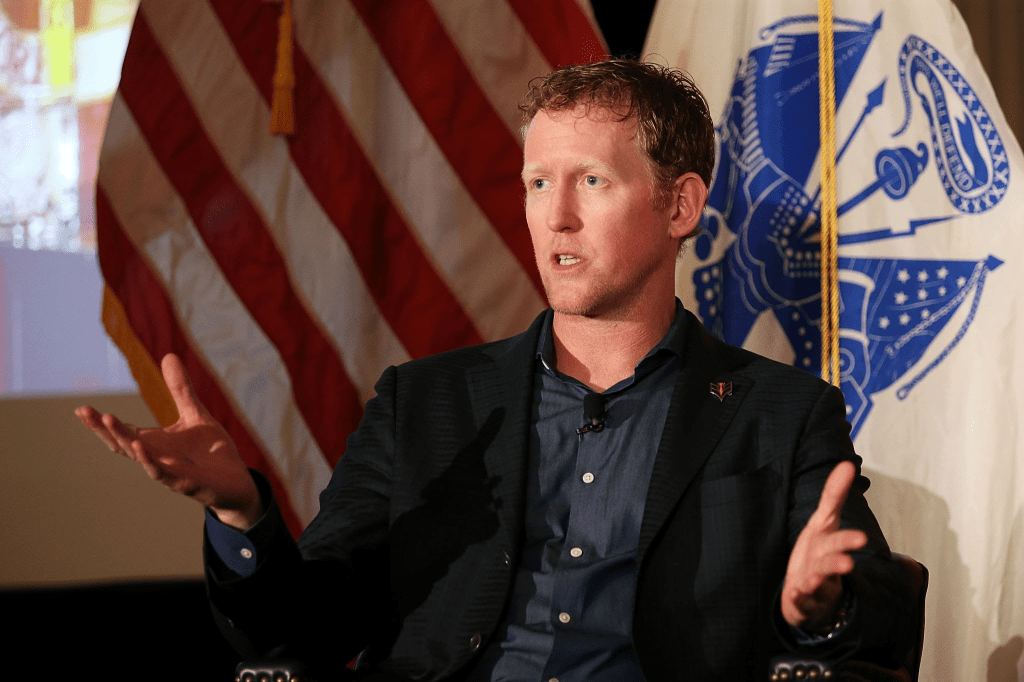
For every Medal of Honor recipient of any capacity like Dan Daly or Ralph Puckett or Alwyn Cashe, there’s also these guys making fools of themselves:

Credit: Getty Images
Credit: Getty Images

Clearly, the worst or more embarrassing stories of the military’s finest aren’t reflective of everyone including the HR folks or the intelligence or signal branches or anyone else who sees it as just another job, but sometimes it gives me pause for thought. As a history buff, I do like military history as well. The Elusive Samurai motivated me to research the Kenmu Restoration and the Ashikaga Shogunate in medieval Japan, for instance, and more than once I’ve done some light research on Civil War battle orders or even the Roman Empire, among numerous other things.

Channel: Metatron

Before even entertaining the idea of the military as a whole, the movies and whatnot all seemed so cool. Call of Duty and Battlefield led the way in cinematic experiences and memorable characters. After watching some more movies, and going to basic training myself, it’s safe to say that if you’ve been in the military — any military — you’re preconceptions are going to be challenged and your newfound knowledge on how things go in the real military will ruin a lot of movies for you.

Prior to shipping, I thought the boot camp portion of Full Metal Jacket was the highlight of that movie, primarily because of the characters: Joker, Pyle, Cowboy, and Gunny Hartman all make that movie, but stepping back from that, it’s divided first into how Marines are trained (sort of), followed by an active combat deployment to South Vietnam. The greatest irony of that movie is that for an anti-war film, so many incoming recruits watch and quote it ad infinitum, and expectedly so. The actors are the highlights of the movie and if it wasn’t for R. Lee Ermey and the jelly doughnut scene, then it probably wouldn’t have the same influence as it does almost 40 years post-release.

In the veteran community, lots and lots of media is heavily scanned and scrutinized based on what we’re all taught in boot camp and when we go off to train for the occupation we chose or have chosen for us based on test scores. This explains why movies like Generation Kill and the Hollywood misfit In The Army Now are more beloved amongst veterans and servicemembers compared to something like Zero Dark Thirty, American Sniper, or The Hurt Locker. Even vets who’ve never deployed to a combat zone (yes, this happens, ask around) will tell you that an overwhelming majority of the time is spent waiting to do something and that something goes by exceptionally fast. Such urgency…

Also, fair warning: the military has a frat house mentality. Keep in mind the ages of the people signing up.

So I’ve been rattling on over about military/war media and the reception based on the community viewing it, but I haven’t mentioned what I’ve been reading. As I said, I hardly ever had an interest, even in passing about these kinds of things, and even over time, now that I’ve been in a military training environment, I trend quite lightly these days. You’re drilled day and night about how to properly wear a uniform and even mishaps in film can get a vet’s dander up more so than stolen valor incidents.

I try my best not to overanalyze this stuff or make a monolith or standard-bearer of military/war media since a lot of it is for the public and like a lot of their real-life units, the special forces movies tend to play by their own rules. My rule for whether I should give something a watch or a read is wide reception. Even if the community hates it, it’s not good to let those opinions overtake or form future opinions on XYZ. But so far I have been enjoying Generation Kill, and I do like Saving Private Ryan and Dunkirk. Some of these I’m introduced to by proxy and they wind up being pretty good.

For Generation Kill, I went for the book first for comparison to the HBO miniseries. Nearly done with the book and the show so I might come back with some final thoughts. And getting back to controversies in the special forces community, there was one book that caught my eye. I don’t remember how I found it, but it’s called Code over Country by Matthew Cole. It’s based on the wide range of corruption and lax oversight within Navy SEAL Team Six. Once I get my hands on the book and get through reading it, I’ll try to make an effort to give my thoughts. Bear in mind, most vets and servicemembers won’t run into anything close to a special forces unit and for security reasons, most of what they do isn’t revealed until after the fact, so corroborating what I hear will have to be done by way of news reports like those featured on Military Times or its branch specific variants.

This post was kind of a misnomer all around, but before I close off, I want to make a case for the manga series Golden Kamuy.
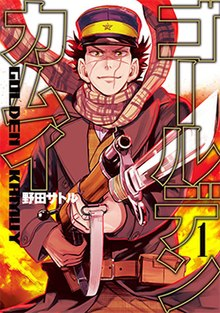
I say this is a military series for a lot of the obvious reasons: veterans of a major war (Russo-Japanese War), active duty soldiers in uniform, commanders doling out orders by their judgment, and more. But it also takes the tropes of traditional westerns like those of the Clint Eastwood or Dances with Wolves variety.

I have a post in the pipeline regarding Golden Kamuy itself so look forward to it in the next few weeks. I’ll elaborate further on my case then.

The Hunt for Unsung Manga

I’ve come across a lot of manga series over the years, and while I don’t remember all of them, if I had something similar to My Anime List, I’d probably rank the ones I’ve read or heard of in terms of read (past tense), reading, going to read, or no interest; and based on what I’ve recommended across this blog this year, I’d say that there’s going to be a lot of series that the average manga reader has never heard of or can’t find through conventional means. However long you’ve read manga or watched some of their corresponding anime, you’ve undeniably heard of series like Naruto, Bleach, Dragon Ball, or One Piece. And you know some recent trendsetters by name: Attack on Titan, Sword Art Online, KonoSuba, My Hero Academia, etc.

But be honest with me: before reading some of my entries from this year, did you ever know about Wave, Listen to Me? Or Rokudenashi Blues? How about House of Five Leaves? Mashle? Black Torch? No? Well, that’s to be expected. Some of these have only recently gotten their well-earned press and praise and the others rode that ship ages ago. Rokudenashi, for instance, is from the 1980s and it shows.

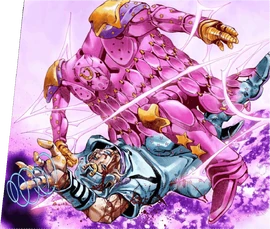
Only JoJo’s Bizarre Adventure still looks like this.

This quest of mine to find and screen through manga we’ve never heard of or haven’t heard much about is in equal measures personal and exciting. Personally, I don’t mind much of the series that get praised online these days or even IRL, but sometimes the praise can be a bit much. Although I enjoyed Chainsaw Man, my previous excursion with Black Torch by Tsuyoshi Takaki subconsciously colored my perception of the anime. It took me a while to realize how similar they were in structure, but fortunately for Tatsuki Fujimoto, CSM is more comical in comparison. Takaki’s manga seems to have been a victim of the times.

As for the excitement, call it the general sense of joy that comes with discovering something new. And it’s not these are hard to find. Google and Bing are likely to have them indexed and sites like Mangadex may have it in the archives. As for discovering the series myself, some series were the result of accidental Google searches. Others came from digging through the Manga Plus front page or reading an article about supposedly underrated series.

This one specifically came from when I was trying to Google Do You Love Your Mom, AKA the MILF-sekai.

Alternatively, there’s online forums dedicated to discussing manga, the most common one for me being Reddit. It is worth keeping in mind that sites like this will have a younger audience (i.e. early middle school to middle high school age), so what was popular when you were graduating is gonna be seen as old by the time some of these users are your age. I’m writing from personal experience and the weight of this gap is felt for me, but hey, at least Yu-Gi-Oh! and Pokémon still make the rounds, even through memes.

Another point to bear in mind is availability. There’s a difference between knowing the name of a series and knowing where to read it. Mangadex is a weeb’s go-to for series that are running but can’t be easily found, but there’s a chance the series in particular is available to the public in some form or another elsewhere. The only barrier in that aspect would perhaps be the age of the reader or just a trip to the local bookstore. Any Barnes & Noble employee worth their salt would know better than to let a high schooler go home with a raunchy series, but let’s be real there’s always a loophole. Grab a friend who’s older than 18 or go online like everyone else.

Going back to Mangadex, there’s no shortage there of the big four genres of Shonen, Seinen, Shojo and Josei, but if you want something 18+/hentai, then Mangadex will not help you. Even these sites have their limits, and that’s fine. Digging through a pirate site that’ll have what you’re looking for is tricky. In my experience, some pirate sites are overridden with pop-up ads that open a new tab bursting with malware, and it isn’t always when looking for hentai. Some Korean manhwa get scanned and translated into multiple languages by groups advertising these services on donation/contributor sites like Patreon, and many of the pirate sites that they end up on are all third party hosts.

Other sites like Webtoon or Toomics do host them free of all the issues that come with a pirate site, but sometimes have a string or two attached. I’m not lambasting these sites for putting walls up to entry. That’s what deserves praise. It may sound odd of me to admit to pirating while also condemning it, but I’ve been clear on where I stand on that. For some things that, thanks to the passage of time, have grown increasingly difficult to find conventionally, piracy is the most convenient* way to experience it firsthand; and I apply these same rules for series that have concluded or ongoing series that aren’t available in your region (*it’s not always reliable though).

For something ongoing, general or NSFW audience notwithstanding, if you’ve got the means to do so, it’s heavily implored that official releases are supported and as tempting as it is to head for the raw, untranslated version, I won’t act like I have the authority to stop you but for some series, unless you can read and speak fluent Japanese or Korean, I don’t recommend pulling double duty running the dialogue and speech bubbles through Google Translate. Depending on how it’s written, straight translations will contain slang and references that are gonna get lost that way. Translate has gotten better over the years, but it’s no substitute for a structured class. And finally, these languages have scripts that can and do show up as calligraphic works of art. I find it beautiful, but tracing the damn characters into Translate, especially on mobile, gets tedious quickly.

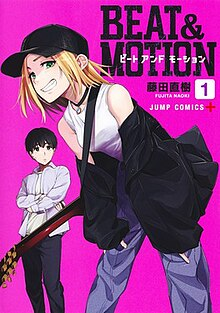
Now I’ve not abandoned or wholly used uncommon means of getting to my favorite series. I recently downloaded the Shonen Jump app on my phone and I have a tab on my computer logged into Manga Plus, and true to the title of this week’s post, I’ve discovered a new manga series that I’d like to explore further called Beat & Motion.

Take this as more of an exploration for how to discover new or underappreciated series and my experiences doing so. My method of doing so, though, is quite slapdash and haphazard, so if there’s a more sensible way of going about this, use that method to the fullest extent. Only go on sites you trust, and please use a VPN of some kind. Opera and its GX variant go a long way, but if you have the means to my recommendations come from those that I’ve seen sponsored on YouTube including but not limited to Dashlane, Atlas, Express, Nord, and Private Internet Access. I like to think everyone is in wide agreement that nothing ruins the fun of reading manga/watching anime more than when a simple mouse click puts you on a site with malware on it.

But of course remember to have fun with what you find.

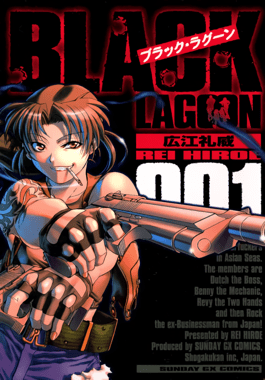
Black Lagoon Motherf[sheep noises]r

*gunshots*

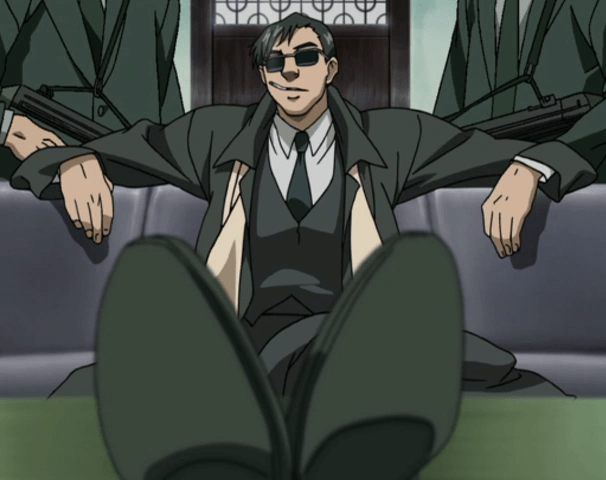
This series needs no introduction. It’s famous in the animanga circle for its name, its reputation, its characters, its violence and most of all its f[Boost mobile chirp]ng swear count.

Channel: Edwin De Paz

It’s mostly famous by its anime, but it started off as a manga by Rei Hiroe in April 2002 and has run ever since in the Seinen manga magazine Gene-X, for far, far longer than the anime and its OVA ever did. The clip above (which is understandably though unfortunately age-restricted) is one I will see sometimes on YouTube or Reddit because of course. It’s badass, it’s f[monkey screeches]ng awesome, but around the gratuitous gory action is an appropriately mature story.

I don’t remember when or how I learned of Black Lagoon, but I think it was through some WatchMojo clips about anime gunslingers that introduced me to the series, and it wasn’t until I was in the middle of college that I got around to watching it properly. Before we begin describing the series, no matter your opinion on subs or dubs, I heavily implore you to watch it however you can in English. I mean zero disrespect or offense to the original Japanese VAs, but the writing of the dub makes all the swearing necessary. F[gun cocking]k hits far harder in this anime when accompanied by the sounds of a firing range in comparison.

The premise is this: in the mid-1990s, Tokyo-based salaryman 25-year-old Rokuro “Rock” Okajima and a department chief are hijacked in the South China Sea by a trio of pirates onboard the Black Lagoon PT boat and calling themselves Lagoon Company. The chief leaves Rock to his fate and he joins up with Lagoon Company’s members consisting of Vietnam vet Dutch, Chinese-American gunslinger Rebecca “Revy” Lee, and South Florida computer programmer, Benny.

As the fourth face of Lagoon Company, Rock is the glorified diplomat if Dutch is unavailable, especially since there’s an equal or greater amount of time on land than on sea, mostly in the fictional border city of Roanapur, Thailand. This base of theirs is also home to many more organized crime syndicates the world over including but not limited to Colombian cartels, Russian and Sicilian mobs, the Triads, and the Yakuza.

As for the cast of characters Lagoon Company faces, it’s quite a mixed bag. Just about everyone in the story is motivated by coin, though there’s a fair few who have their own ideals and tenets, not all of them savory or agreeable. Criminals, extremist organizations, drug lords, and general psychopaths are drawn like moths to flame.

Hiroe’s inspiration for Black Lagoon was inspired in triplicate: news reports about piracy in the South China Sea from the 1990s (hence the setting), the writing drew from a variety of influence like Stephen King and James Ellroy, filmmakers like Quentin Tarantino and John Woo, and overall crime noir and Hong Kong action cinema, and other mangaka like Kenichi Sonoda who created Gunsmith Cats (another series I wish to cover one day) and Akihiro Ito who created Geobreeders.

The characters and setting are all diverse in appearance and in skillset, especially protagonist Rock who skirts by on a lack of battle sense with the powers of negotiation and diplomacy. The setting of Roanapur among other places would make the guy an ill fit since he’s not really seen as bloodthirsty as the others, but then again, the wider cast of characters is exactly that unpredictable, or (spoiler incoming) you wouldn’t really expect a guy like this to be an arsonist, would you?

Speaking of which, this speaks to the creativity of Hiroe, understanding that there’s no bog-standard look for a criminal. Some dress in suits, others are tattered, and the rest are casually dressed. The same goes for some of the child characters in the show. Conceptually, almost everything is thrown into the kitchen sink when designing a character and putting them in the story.

As for the chapters themselves, Hiroe has stated in interviews that unlike mangaka who release weekly chapters, he employs a slower approach, often taking as long as a month to release a new chapter, and normally for two reasons: to avoid burnout experienced by mangaka of several popular series still running, and also for mental health reasons. For what its worth, if the research for the series has him glued to news screens and snippets combing over crime on international waters, then it can get daunting keeping it plausible yet exciting. Or if its a series of other things that see him taking multiple hiatuses from Black Lagoon, then whatever happens, the series already gets high praise online and in real life from Japanese and western audiences alike, and not to sign a Death Note of sorts, but even in the worst case scenario, his flagship series will progress toward an ending, even if it isn’t him specifically who will finish it.

Someone will be there to finish it, with him or for him. And no matter what, Black Lagoon started with a bang and I sure hope that when it eventually ends, it ends with a f[swords clanging]ng bang.

This week’s recommendation is the YouTube channel RunJDRun.

https://www.youtube.com/@runJDrun/about

RunJDRun is the gaming channel of John David “JD” Witherspoon, son of late comedian John Witherspoon. Beginning in June 2009, he hosts Let’s Plays primarily on this channel either by himself or with friends, but also has commentary videos on video games or just in general. JD also has a podcast that he co-hosts with his friend Paul. He normally uploads daily, and like his father, he also has TV appearances and performs stand-up from time to time in the Los Angeles area.

Boruto: TBV Chapter 3

Trickle down exposition

I haven’t forgotten about this month’s release of the latest chapter. Just spent the last two days studying it and organizing my thoughts so far. Based on what I saw of this chapter, we have more exposition of what we saw in the first two chapters followed by a last-minute twist.

Of the things introduced and explained in the chapter, Boruto expands on what the Uzuhiko technique. The basics are that it’s tied to the planet’s rotation. If hit with the Jutsu, the afflicted will be hit with a semi-permanent sense of “the spins,” so to speak. It can run for as long as the Jutsu caster (read: Boruto) desires, or until the afflicted (read: Code) dies — and this new teenage Boruto seems to be happy with the latter.

A technique that causes whoever’s hit by it to nearly infinitely spin in some manner… that sounds familiar…

Honestly, not the first time the franchise made a JoJo reference.

So let’s backtrack a bit in regard to the Rasengan. So far we have the following users:

  • Jiraiya
  • Minato Namikaze
  • Konohamaru Sarutobi
  • Naruto Uzumaki
  • Boruto Uzumaki
  • Sasuke Uchiha*
  • Kakashi Hatake

For Sasuke, he used it as a demonstration before asking Boruto if he could develop it himself. After that, he went through an intense and heated training session from Konohamaru before revealing to Sasuke the results of admittedly three days of training. Before him, Naruto worked on the Jutsu with Jiraiya’s guidance for little over a week, and before him, Minato developed the Jutsu over the course of three years.

Furthermore, Minato’s direct legacy has accidentally or deliberately put their own spin on the Jutsu, no pun intended. Naruto developed the Rasenshuriken, a powerful Jutsu that was unfortunately shelved as a double-edged sword, at least until the Akatsuki brought Pain to the Leaf Village.

For Boruto, the first of several variants had come in the form of the Vanishing Rasengan, though he didn’t acknowledge it until he, Sasuke, and the Gokage fought Momoshiki in the other dimension.

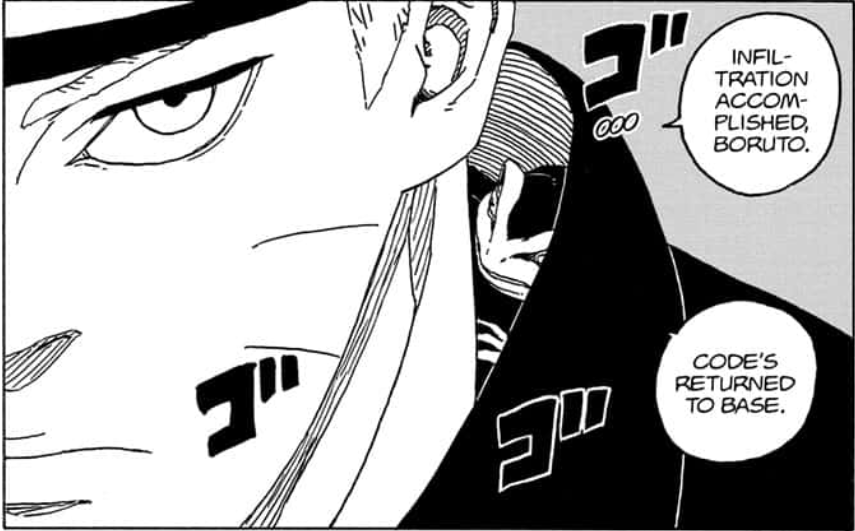
So this Jutsu keeps Code immobile yet conscious to answer a question on Boruto’s mind: the location and status of the Ten Tails. Keep this nugget in mind, it’ll be important toward the end. Just as the interrogation gets moving, Leaf ninja respond to the rogue ninja in their village, among the responding party is the object of Boruto’s vengeance: Kawaki. Speaking of Kawaki, he was in contact with Shikamaru who gives him the go-ahead for a kill order, but the opportunity is missed when Code summons a claw grime to escape through.

Earlier I wrote that Boruto was asking about whether Code knew the location and status of the Ten Tails. Out of concern for the safety of the world? Well, let me clarify: the tone of voice suggested by the panel was less of a desperation and concern and more of a boast, as if to say that after 2.5 years of training and keeping an eye out for Code, Boruto is finally one step ahead. This is where that twist comes in: before Code could get away, Boruto planted a mechanical toad on Code’s person.

Credit: Shueisha, Mikio Ikemoto, Masashi Kishimoto

Kawaki lost his chance to deliver the final blow and will most likely blame Boruto for allowing him to run off, but the last panel reveals why he allowed him to get away. Observe:

Creator: Shueisha, Mikio Ikemoto, Masashi Kishimoto

So now we wait for the week of November 20 to learn how this happened to the Ten Tails. Was it Boruto’s doing? Borushiki? Did he learn it from Sasuke? However we get to that answer it will likely be over the course of the next few months. As far as this chapter goes, it steadily creeps back into the trickle down expositional method that seems to be more emblematic of Kishimoto than Kodachi who seemed to employ what I believe was a healthy zigzag pattern of storytelling.

Clearly, I’d like to see more of this from the succeeding chapters, but it’ll probably be until at least January or February when we get more of these types of answers, and while this is largely fantasy, some of the answers to be revealed may ironically be less fantastical than whatever theories are out there proposing. But we’ll get them soon enough.

Undead Unluck First Impressions

This is a long-time coming.

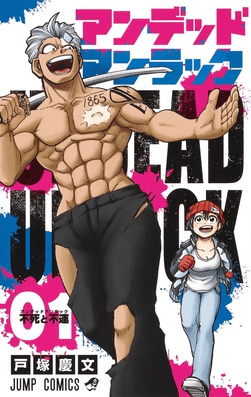
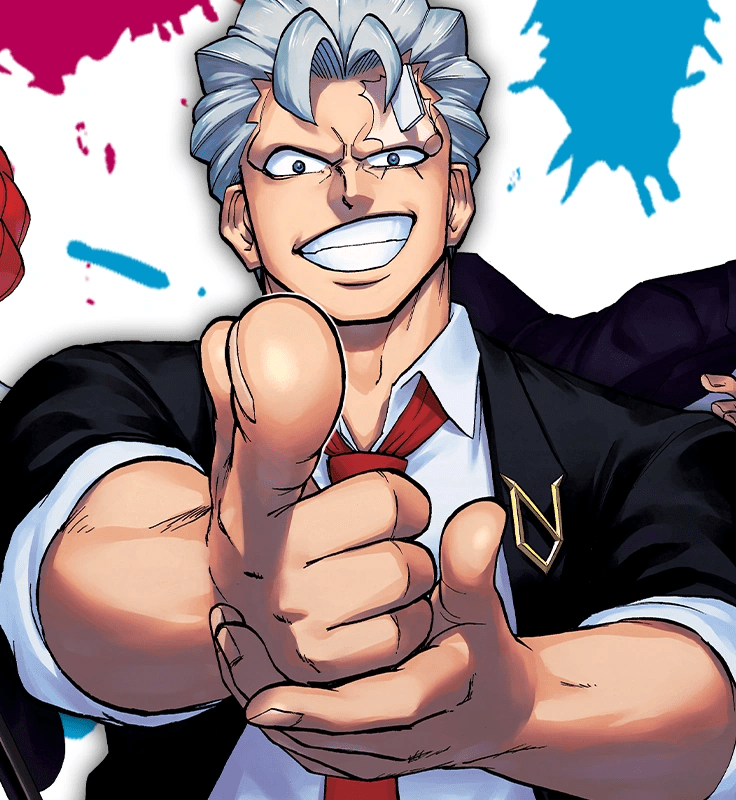
If you’ve been following this blog since the beginning, you may recall months ago when I wrote about a manga where select people get random powers of negation, as in what would normally happen to someone else doesn’t happen to the negator themselves. Lots of luck? This person gets none. Mortal? Not gonna happen. Approachable? There’s a literal barrier that keeps you from getting close. This manga is known as Undead Unluck. Created by Yoshifumi Tozuka on January 20, 2020 (the events since, my god), it’s up to 18 volumes as of writing this with 11 currently translated for an international audience. It was recently picked up for an anime adaptation in August 2022, and it’s first episode debuted on October 7, 2023 on Hulu with weekly releases to follow.

It’s too early to tell whether it’ll run for 12-13 episodes or 24-26 episodes, so this post will be a first impression of the first episode and whenever the first season ends, I’ll review it in bulk with comparisons to the manga. If the title, didn’t give it away, I’m gonna spoil episode 1. So go watch the first episode if you haven’t already, then come back when you’re all caught up.

Speaking of which, the first episode is already markedly different from the first chapter. Being early 2020, no one could predict the global impact of the COVID-19 pandemic then. On a side note: I first read about it in December 2019 and said to myself, “That’s unfortunate, but as long as it stays there [in Wuhan], we have nothing to worry about.” My words were delicious, thanks for asking.

Anyway, no one knew about the pandemic’s global impact in January, news was still getting out back then, and I bring this up because the manga starts in August 2020, deep into the pandemic with lockdown and travel restrictions in place across the world. This is reflected in the anime as the first scene shows the protagonist Fuuko Izumo set to self-delete from atop a trainline with only Andy, a.k.a. Undead watching from the other side. In the manga, she was surrounded by bystanders who were attempting to bring her back to safety but were stopped when she produced a knife.

Andy still walks into the blade and touches Fuuko’s face hoping to catch some of her Unluck ability, and like clockwork, the platform collapses beneath him, causing him to fall onto an incoming train. In the manga, they show the disruption of service due to the fall, but the anime skips past that and immediately shows Undead sprouting a new body from his head.

In the anime, members of an antagonistic agency (revealed later in the manga, I won’t spoil too much) show up to apprehend Undead, but he takes Fuuko with him and flees. In the manga, with the world still being populated, a civilian witness attempts to alert the cops on an out-of-context scenario involving a naked man and a young woman in public (honestly, much of the manga is just “Out of Context” the series; it’s unbelievable).

In both the manga and the anime, Undead and Fuuko stop at a building rooftop with Undead dangling Fuuko over the edge until she explains her Unluck ability. She explains it and although it was given a single page in the manga, the anime elaborated further on this. It starts with scenes alternating between Fuuko’s last connection with her parents before the accident, and scenes from the romance manga she was reading.

The anime had introduced them early, but by this point in the manga, after being saved from an accidental slip and fall from the rooftop, the antagonistic agency, represented by men in black suits observes their target making a run for it to an abandoned site. At the site, Fuuko’s jacket snags and she loses her beanie which kept her hair under wraps for years since no hairdresser or stylist could cut it without dropping dead. At the same time, Undead is maintaining as much skin contact with Fuuko while he cuts her hair so that he can test a few hypotheses, mainly is the impact influenced by duration or surface area?

Well, he doesn’t really get that answer since this agency of black suits tracks him down to his hideout and lops off his head. They put the head in a container and handcuff Fuuko, but the Unluck comes in clutch to save the two as one of the black suits gets zapped. Undead regenerates everything below the neck and removes the card he keeps in his head as a restrictor of sorts to cut them all down to size. Between the manga and the anime, this scene is a mix of gore and action.

The main guy in a black suit holds Fuuko at sword-point and threatens to behead her too if Undead doesn’t surrender his own head. Neither of them agree to that and when Fuuko breaks free and kisses Undead on the cheek, a meteorite decimates the abandoned hospital. With just a single cell of him left, Undead regenerates full and takes the black suit’s sword as a keepsake. Putting two and two together, he realizes that neither duration nor surface area have anything to do with the Unluck reciprocated and that it may be more connected to feelings of affection. Working with that as the going hypothesis, Undead, now christened “Andy” as a play on words (works better in Japanese) by Fuuko, half-jokingly proposes that they’ll both get their desired death if they have sex… which Fuuko is clearly not keen on as they both just met. And that’s where chapter 1/episode 1 leaves off.

For my impression, I say that if follows the manga as best as it can with a few nods to real life changes. Then again, for obvious reasons, the COVID pandemic and probably by extension the year 2020 aren’t going to be referenced very heavily in media unless it’ll be for alternate changes to reflect real life or for an alternate timeline of sorts. I liked what they did in just the first episode. This being, David Production, the people who brought us JoJo’s Bizarre Adventure, I didn’t worry all that much about how it would look or turn out.

This studio tends to live up to their reputation and they made Undead Unluck look pretty good for the beginning. I didn’t think they’d expand further on the origin of Fuuko’s Unluck ability with the plane explosion, but from a narrative standpoint, it’s cool to see what we’re expecting going forward. The same goes for the scenes of Fuuko’s romance manga. This is connected to the plot many chapters into the manga, but without spoiling this again, DP seems to be playing the long game of adaptation with the foreshadowing in just this episode and likely more to follow.

If the anime is 1-cour running for 12 or 13 episodes, then the last episode should air on December 23 or 30 of this year. Alternatively, if it’s 2-cour running for 24 or 26 episodes then it should wrap up its first season by either March 16 or March 30, 2024. Whichever of those comes first, I’ll save a spot in my schedule for that and cover it in a post in the future.

Call me biased in favor of the series, but I’m glad to see something I cheerlead for in the beginning get one of its dues and I hope I can say the same for The Elusive Samurai when it releases in 2024.

Tomorrow I’ll be covering a media company that is on a slow and steady decline. Stay tuned. Here’s a hint:

BLACK TORCH Had Potential

Wasted potential sadly

Regular readers know the nature of this blog: obscure, unheard of, niche unsung series; and occasionally something popular that’s ongoing. Following that trend, I bring to you a manga that not only had a small fanbase for its duration, but was also cancelled before it could spread its wings and take proper flight: Black Torch by Tsuyoshi Takaki

I caught onto this quite early in 2017. It’s first chapter was included in a manga published by Viz Media about upcoming series at the time, and fun fact: this same manga showcase series had the first chapter of Demon Slayer in it.

Black Torch is about a young man named Jiro Azuma, a street punk who has the gift of Eliza Thornberry — talking to animals. One day, he meats a Mononoke taking the form of a black cat called Rago who tells him (with a cynical tone) that there are many more Mononoke like him who exist to cause chaos in the world. One of them mortally wounds Jiro and Rago possesses the boy, bringing him back to life and they defeat the Mononoke that killed him, only for he and Rago to be subdued by a special operations unit trained in shinobi martial arts for the purpose of tracking and eliminating evil Mononoke.

There’s some nuance to the plot. In Japanese folklore, Mononoke are perceived the same way as demons here in the West; wicked creatures who lurk in the dark and take possession of the innocent. The concept is similar in Japan, though in Black Torch, as seen in Rago and one or two other characters, not all Mononoke are pure evil. And for Rago’s case, well, he’s a cat and I think cat owners can relate to this aspect.

So let’s rewind and assess that for a bit. A demon that takes the shape of a household pet takes possession of an adolescent after he dies in a violent manner, and both the demon and the young man are recruited into a special division of demon hunters whose mission is to destroy the evil demons, sometimes working with the good ones or those not powerful enough to be a world-ending threat. Where have I heard that plot before?

You can chalk this up more so to coincidence than an outright ripoff of sorts. Black Torch ran for five volumes between December 2016 and March 2018. CSM debuted December 2018 and is still running today. No doubt you’ve seen what the community regards as season 1 of the anime. I know I did. 12 different ending themes; imagine being the accountant for MAPPA.

It’s easy to make it look like I’m jealous that a manga that tried this first failed while another one succeeded, but delving deeper into the Black Torch manga reveals why. It was more than just the framework of the manga. Yonks ago, I learned that a dispute between Takaki and the publisher were why his manga was axed so early in its run. In my research for this post, I found that online discourse has its own opinions for why the manga suffered. In animanga spaces around forums like Reddit, some believe that it was trying to copy Bleach but was about a decade late and a yen short. Others thought it was a case of style over substance. And a third opinion, by this blog called Tower City Media Video, proclaims that the second biggest killer was pacing. I’d like to go over these points, though I won’t be talking about the publication issue since most of the time that stuff is handled away from public eyes, presumably to keep the press from ruining an ongoing process.

It’s not like there’s no market for edgy manga. Bleach, Tokyo Ghoul, Chainsaw Man and even Black Torch have that approach among others, but they all do it differently. Chainsaw Man does it by having the protagonist be an orphan with missing limbs thanks to his deadbeat dad’s irresponsible debt to the Yakuza, and when the boy can’t make a dent in that he’s chopped into pieces until best boy Pochita possesses and revives those pieces. Black Torch goes more for a rug pull of sorts. Jiro lives with his grandfather who generally has the strength of other old men in manga like Golden Kamuy’s Youichirou the Manslayer or Naruto’s Third Hokage. In fact, there’s a scene in the manga where Jiro is forced to fight his grandfather who plans to kill him and then end his own life for failing to protect his grandson from the Mononoke as well as letting a Mononoke possess him, only to walk it back as a test of conviction when Jiro fights back just as hard, as explained by this Screen Rant article.

As for style over substance, this one is a bit of a stretch for me personally. There’s no shortage of good looking series that don’t have a lot beneath the surface, but that’s not a problem I recall from Black Torch in particular. Really, without the space needed to take flight, the hints that there was a deeper story than we realize are mostly lost. I mentioned earlier that it shows that this unit of shinobi is willing to work with some of the Mononoke so long as they’re harmless, but that may also hint at a sort of mutual exchange between unlikely partners. But now that the manga’s been long cancelled, who knows whether that’s the case?

The final one by Tower City Media about turtle pacing was something I didn’t notice at first, but after reading that article and looking back, if the manga could’ve done better to pick up the pace, it probably wouldn’t have been cancelled so soon, if at all. Rago the cat isn’t the only animal Jiro talks with. In the beginning, he used to have a dog that he often spoke with while washing her, and I recall in the third volume that while he was traipsing about the woods, he spoke with a snake.

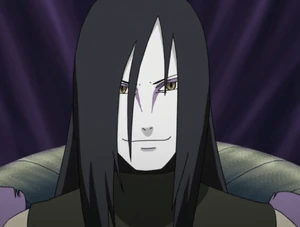
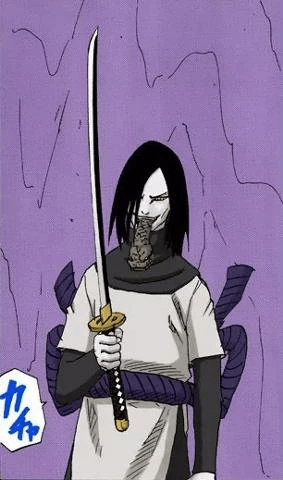
I joke, but Orochimaru wouldn’t look all that out of place in a manga like this.

If any of these points are true or there’s another factor contributing to Black Torch’s cancellation, then what may have helped Takaki would’ve been to trim the fat, get a move on with the pacing, and add more character to the characters. Jiro Azuma does well enough to make himself interesting, but he couldn’t carry the manga by himself, and going back to coincidences between Black Torch and Chainsaw Man, both had their own version of the super serious stoic type, but thankfully for CSM, Aki wasn’t copy-pasted twelve times over.

For all of Black Torch’s faults, it was at least able to end with a whimper as opposed to a bang. At least it didn’t run around like a headless chicken trying to end with an overdue bang. When I bought the manga during college, Viz charged $10 per volume up from $8 from around 15 years ago, and at five volumes, $50 plus tax is cheap for a cancelled series compared to the 20-something box sets of Demon Slayer or the 72 volumes in triplicate box sets for the Naruto manga. But of course, if you want the story that did it better, it’s not too late to catch up on Chainsaw Man.

It’s a month divisible by 2 and for this month’s recommendation is Escapist Magazine.

https://www.youtube.com/@theescapist/about

Beginning as a video game journalism site by Nick Calandra in 2005, The Escapist has branched out into general media with classic series like Yahtzee Croshaw’s Zero Punctuation, Jim Sterling’s Jimquisition, Movie Bob’s the Big Picture and many more. Although they have a YouTube channel (linked above), they also have a website where their series are hosted before being made public on YouTube.

www.escapistmagazine.com

No, they’re not sponsoring me, impressive as that may be. I’m just a fan.

Good for Nothing Blues: A Delinquent’s Manga

More unsung manga recs

Back into the fold with a manga that I genuinely tried to research reviews for but this time I came up short. Google helps with pages of individual reviews on different sites, but video reviews are what’s lacking. A quick search on YouTube (as of this writing) brings me to about seven or eight videos that don’t really have a great audience number collectively, only a few cracking a thousand views, at least on English YouTube; Japanese YT has more to talk about it seems. On the one hand, I want to see that change, but on the other hand, the subject matter of what I’m about to talk about in this post may highlight why this is for the best.

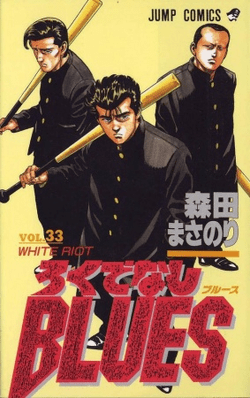
The manga I bring to you is called Rokudenashi Blues, known alternatively as Good For Nothing Blues.

I’ve made a small mention of this manga in earlier post (can’t remember which one), but here I’d like to elaborate on what it’s about. Created by Masanori Morita, it ran from May 1988 to February 1997 in Shueisha, spawned several OVAs, a couple of films and TV dramas with the most recent one listed having run for the summer of 2011 in Japan on the Nippon TV network.

It’s about a highschooler named Taison Maeda, a bullheaded delinquent who dreams of becoming a world-class boxer, racking up a gnarly fight count along the way. In Japan from around the late 1970s to the early 90s, the delinquent subculture is more of a lifestyle than an indicator of anything more sinister; it’s not like Japanese delinquents have ties to the Yakuza or anything else organized crime-like. Some do or did, but they’d be the outlier, not the standard. For an idea of what a delinquent is in media, look no further than Jotaro Kujo or Yusuke Urameshi.

The first discernable aspect of the delinquent is to compare them to any other student. The delinquent’s hair is loose, long, messy, or sometimes combed into a pompadour; their uniforms are loose-fitting and scruffy with unfastened buttons, and in some cases they’re elaborately decorated with kanji or any other lettering or symbolism. I’m not sure if there’s a meaning behind it; some depictions I can see relate to luck or strength, so that might be a theme with select individuals who partake.

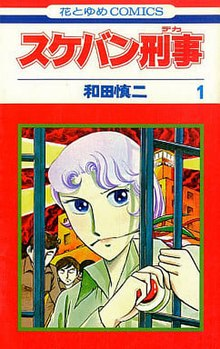
It should also be highlighted that it wasn’t exclusively a boys thing to engage in delinquent culture — girls did it too. In contrast with their more studious counterparts, girl delinquents, or sukeban, wore longer skirts, down to the ankle, and also tended to have their hair as messy as their male counterparts. Of all the examples of a sukeban in media, the best example comes from the movie Sukeban Deka, a Shoujo manga that has climbed to popularity thanks to its live-action adaptation.

If this aesthetic looks familiar, there was a bit of a crossover between the greasers of the 1950s in the US and the punks of the 70s and 80s in the US, UK, and Australia. So keep this in mind when you come across Japanese media from the 80s or 90s; it’s a classic. Since the late 1990s and early 2000s, delinquents have fallen to the wayside while gyarus and by extension the kogal has taken over with media featuring the subculture still slated for release in the near future.

But I think nostalgia will either bring the delinquent back, or put the archetype side-by-side with the gyaru.

In Rokudenashi Blues, the protagonist Maeda and at times his friends, Katsuji and Yoneji clash with rivals first within the school and then in different parts of the Tokyo Metropolis as the series progresses, sort of like the huge fight between different middle schools in Mob Psycho 100.

The clashes with these numbskulls are weekly, if not daily, and the popularity of the delinquent’s outfit makes it easy to lose among the scuffle, but in both a character design and personality sense, there’s a few that stand out from the mold: Wajima and Hatanaka.

Wajima’s designed to be a physically imposing character. Think of your typical brawler or weightlifter body type from a beat ’em up video game. He leads one of the groups known as the Cheer Squad in the school and these guys have fought with Maeda and co. at times. Personality-wise, he’s as bullheaded and shortsighted as Maeda, at least in the beginning. I’m still reading the manga so it remains to be seen how he grows as a character.

Another one who mirrors Maeda in looks, but succeeds him in overall intelligence would be Yutaro Hatanaka. These two have clashing goals and in classic Shonen Jump fashion, he’s set up as the rival to Maeda, but unlike him, Hatanaka has a clear plan that he can recite with steps toward his final goal. Basically, what I’m saying is, he seems to be more studious and articulate with his thoughts, though when it’s time to play rough he can do it in stride. He’s a bit like Sasuke though far less brooding and more laidback compared to the energetic Maeda. It also remains to be seen how he grows over the course of the manga. I have a few ideas on the trajectory, but I want to see the surprise for myself.

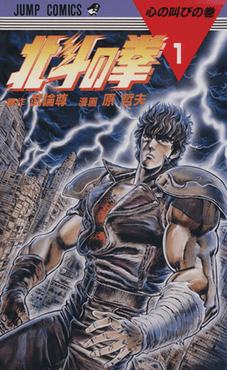
The art style of the manga may also be familiar to fans of Fist of the North Star/Hokuto no Ken, and the reason for that is because the mangaka, Masanori Morita, previously worked as an assistant for the creator of Fist of the North Star, Tetsuo Hara.

This art style became the face of 1980s action manga with several mangaka taking elements from Hara’s magnum opus. It was a ground breaking inspiration for many creators over the years and according to some accounts serves as the main inspiration for characters like Jonathan Joestar and Dio Brando. Several more characters of this caliber would follow over the years, but it’s hard to say how many were developed in a vacuum or took on the shape of Kenshiro in some capacity.

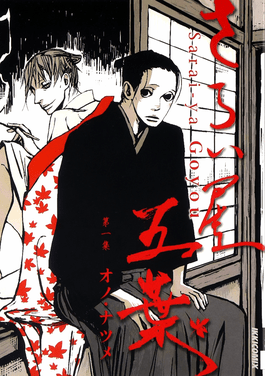
I stumbled upon this manga after I remembered an article that mentioned other underrated series a few years ago and went to explore some of those suggestions for myself. In fact, on another blog, I talked about one of those series after watching it from start to finish on YouTube; it was the series House of Five Leaves/Sarai-ya Go You by Natsume Ono.

I plan on redoing it on this blog one day as I wasn’t all that proud of what I said in the last one.

Even if you’re not one for boxing or sports in general, I still give Rokudenashi Blues a solid recommendation. It’s got a lot of heart and it’s not exactly the most complex sports manga ever, but the manga focuses more so on the characters and their lives as they go (read: brawl) through school and later, as I’ve been told, through other schools. I may return with an update once I’m finished with the manga, though that’s not a fixed and consistent schedule so it remains to be seen.

Boruto: TBV Chapter 2

I promised myself that I’d release more Boruto-related news on or after the day of release and to live up to that promise, I have one for September. Sticking with the monthly schedule of its previous part, Vortex released one on September 20, with the third chapter releasing the week of October 20. From what I’ve read, it’s sticking with the drip-feed/cliffhanger method of storytelling not seen since Dragon Ball Z.

In that regard, Omnipotence is still in effect, and like select Boruto fans and many critics who at least try to read the series, I stand with them in voicing a flaw that sites like CBR and Screen Rant seem to be ignoring. There are several minor details that eagle-eyed viewers can’t help but consider that average readers don’t. Under Sasuke’s mentorship, Boruto was given his old scarred headband which now has the new scar given by Kawaki prior to the Omnipotence. Kawaki himself has been confirmed by Amado and Team Konohamaru to be genetically enhanced with the Scientific Ninja Tools, all from Kara’s (read: Isshiki’s) dime. When the Omnipotence happened, everything we knew about them had been reversed as far as those affected by it are concerned with only Sumire and Sarada learning the truth, so why does the village accept that Kawaki–an Uzumaki–doesn’t have the headband while Boruto the “Traitor” has it?

The Vortex manga explained the first time around that Omnipotence gradually does that, but doesn’t specify how that becomes working from the fumes of “trust me bro.” Even Himawari isn’t so sure about the situation.

Credit: @hinatahyugamzng

Then again, I might be jumping the gun expecting an explanation yesterday. Amado lore dumped on the audience over the course of a few chapters and that may just be what’s going on next. Be that as it may, everything that’s been established up to now is a reversal makes the circumstances all so tenuous. Boruto didn’t mind Mitsuki calling him the sun all the time, but Kawaki takes notice asks him to knock it off. Boruto grew up with an entire village expecting the best and the most of him, but Kawaki was born a vessel, used and seen as such until Naruto showed himself to be the only caregiver to actually give care to the boy who needed it the most.

Whatever happens, the village is gonna be rightly confused when their preconceptions about Boruto are challenged.

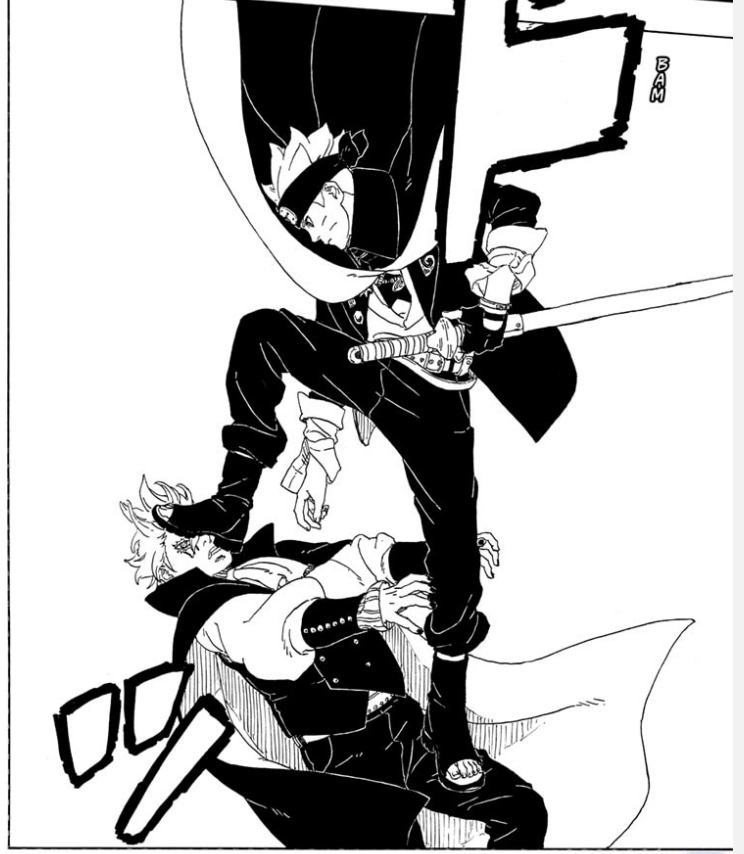
For Chapter 2, Code recovered from getting a face full of Boruto’s foot in the last chapter whereupon the latter advised Sarada to help out the rest of the village by taking out Code’s claw grimes while he and Boruto had a talk about the Ten Tails. Along the way, we also learn that Boruto claims responsibility for scarring Code’s eye and while he admits there would be no issue in killing him, but the information he has on the Ten Tails and the Chakra Fruit is too precious to resort to that. As for individual shinobi’s performance, as far as we know, Hima’s lessons came straight from Inojin, Shikadai, and Cho-Cho and we mostly have scenes of her training in action so far. The new generation of Ino-Shika-Cho surely has kept up its regimen as well; their parents wouldn’t let that slide especially with two mutually deadly enemies nipping at the heels of the village leadership.

We haven’t seen anyone else emphasize proof of concept though. Sarada got to use her clan’s trademark Fireball Jutsu and herself use Chidori on some claw grimes, but that’s about it. From what I remember, spamming Chidori puts undue strain on the shinobi, something she’d never be able to surpass even with her Mangekyou Sharingan and a curse mark like that of her father’s would be out of the question. On the flip side, Boruto seems to have learned swordsmanship quite well, downing several grimes himself in no time.

Actually, having Googled a reference picture just now, I was brought to a post on the Naruto subreddit about other swordsmen/kenjutsu users in the Narutoverse, among them Orochimaru.

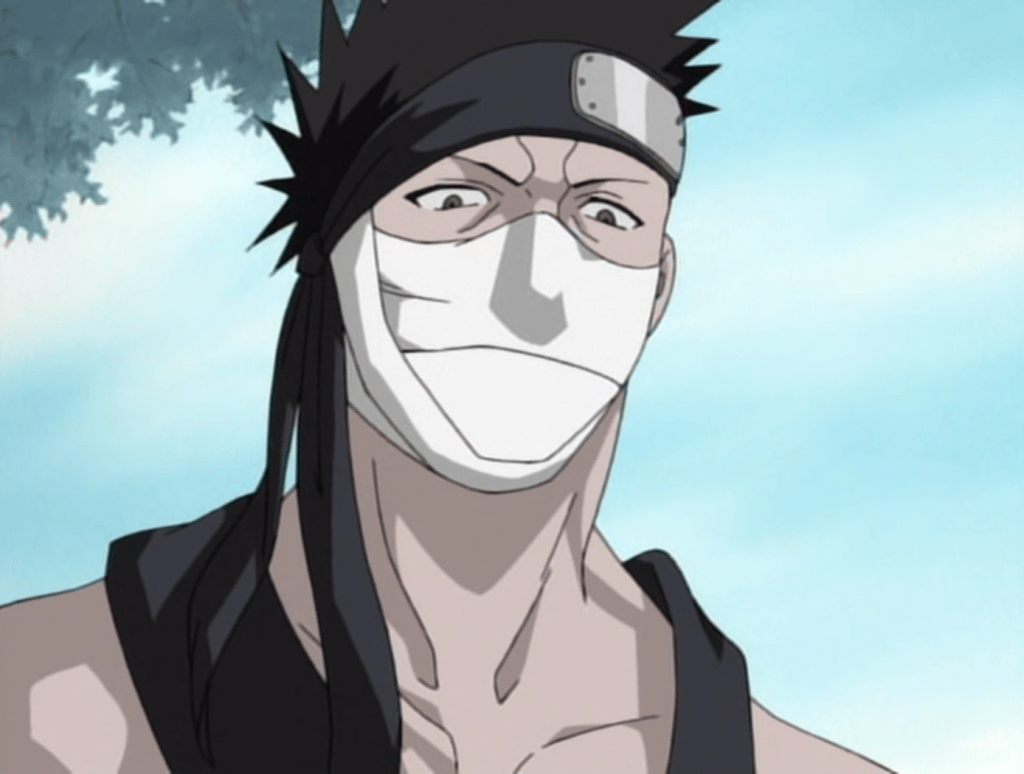
We’re likely to see more of Boruto’s moves in the coming chapters, so we’ll likely see some more posts between the Naruto and Boruto subreddits or even Twitter comparing the fighting styles across all of those who’ve used it over the course of the series. For my definition, I’m not counting the Seven Ninja Swordsmen of the Mist because all of their swords are abnormally shaped and mostly make use of Chakra in some form or another. We’ve also hardly seen individual members wield anything close to a normal sword long enough to try something fancy against an enemy. So I doubt we’ll see a comparison to this guy.

Code’s grimes have been shown to use the same transportation technique that he uses: traversal through the claw markings, not necessarily limited to a nonliving object. The latter chapters of Boruto original boasted a grime count of six figures, equal to the number of enemies deployed on the shinobi during the Fourth Shinobi War–and most of them were made of the dead and reanimated.

This time around, Code’s crusade is even more faceless, an amalgamation of beings made from an imprisoned Ten Tails from another dimension. Which reminds me; in the movie, the DLC for Ultimate Ninja Storm 4, and even the anime, it was shown that Sasuke was on a mission before to investigate anything Ohtsutsuki related, including Kaguya’s old temple where he was ambushed by Momoshiki and Kinshiki.

His absence for the first two chapters might be in some way related to that. Before the timeskip, Sarada only asked that he help Boruto and get him to safety, never specifying what else would happen, but the Uchihas trust each other dearly so whatever was up Sasuke’s arsenal (it’s a long list of jutsu, combined with all the other stuff might not have seen) would have been partly passed on to Boruto over the course of those three years.

Credit: u/BarlasLewis

Now that they’re both outcast cyclopes, they can connect even better than Naruto and Jiraiya did. I’ve only got speculation for what Sasuke taught him and where they trained, but one thing that closed off the chapter was the new technique Rasengan Uzuhiko or Rasengan Vortex. It’s not uncommon to joke that Rasengan is the number one technique Naruto defaults to, but the twist this time is that the swirl engulfs Boruto’s body than just the palm of his hand.

It might be in some way related to the sparingly-used Vanishing Rasengan. In the anime and the game, Boruto showed off the new technique to Sasuke who began unimpressed, but before he could close off his honest thoughts, Boruto through the miniature Rasengan at a tree where it dissipated… or so you think because a few seconds later the impact was seen on a nearby tree.

It was explained later that the Lightning Release had an affect on the shape and impact of the Rasengan itself. Further working with speculation in this case, Boruto might’ve convinced to some degree that he’s the one who can use the jutsu like that of Naruto and Minato before him, enough for Sasuke to take full advantage of that and enhance what exists while throwing in something new.

Gotta wait till October to see what the Vortex looks like, but for something we have data on now that the chapter’s out, it looks like Boruto TBV is hot on the heels of another popular manga.

Never thought I’d see the day where a somewhat new series would catch up to an established quarter-century long manga series. If you’re curious what was in third place, it’s Chainsaw Man.

Boruto: Two Blue Vortex Debut

Surprise Post: Boruto’s time-skip has finally arrived

When I say the time-skip was a long-time coming, I mean it. The anime’s first episode in Spring 2017 dedicates the opening scene to a flashforward between Boruto and Kawaki battling on the destroyed Hokage Stone Faces. So does the first volume of the manga.

As an out-of-left-field scene, it was one of the most vague scenes in anime/manga. With almost no prior context, newcomers to the series would have to piece together the preceding events as the manga went on. As the chapters released, fan theories and articles arose attempting to contextualize the scene better, the most popular one that I’ve seen being Ohtsutsuki possession.

It’s become even stronger with the exposition provided by Amado about both Kara and its leader, Jigen. The karma seals on Jigen, Boruto, and Kawaki are the marks of Ohtsutsuki vessels and the series has introduced a couple of ways to get the seal. Boruto got his after defeating Momoshiki with one of the largest rasengans ever seen at this point. Kawaki was one of a number of candidates to survive having his implanted by Jigen himself. And Jigen interestingly was a vessel for one of the strongest Ohtsutsuki seen: Isshiki.

Further evidence to turn this theory into a fact were the different times that both Boruto and Kawaki have either been possessed or activated their seals in some manner. The opening scene of the series suggested that they’d both found a way to do so on command, but Kawaki’s own anecdotes and Boruto’s performance reveal the curse that the karma seal really is, especially if a vessel’s chakra level is near-depletion.

Fortunately, Amado has developed a medicine that can help keep the symptoms down long enough so that karma could be studied without any further surprises. Speaking of which, Kawaki’s solution to the Ohtsutsuki/karma problem thus far has verged on the extreme side with an attempt on Boruto’s life… that failed.

When Momoshiki emerged to explain the circumstances of Boruto’s “death,” he explained that the karma was supposed to convert the vessel into an Ohtsutsuki, similar to what had happened to Jigen who, before his encounter with Isshiki, was a monk, and Kawaki who was in the middle of becoming a vessel for Isshiki to migrate to. But when Boruto was killed, the Ohtsutsukification had accelerated to revive him. As of recent, the manga has made it clear that Kawaki’s mission is to kill Boruto and prevent Momoshiki from coming back, but the first time this happened, Boruto specifically requested it. But now that Boruto is officially 100% Ohtsutsuki, Kawaki hasn’t stopped and a few of the answers to the questions about their time-skip appearances among others have been found in the latter chapters of the manga.

First up: the line about Kawaki having sent the Seventh Hokage somewhere. Nothing about that line suggested Naruto was dead, and even if Naruto was under threat, he’s always found a way to bypass it. From Naruto original to the Boruto manga, he’s had close calls but hardly ever died as I can recall. Kawaki followed that trend by sparing Naruto and Hinata. After declaring that he intends to finish off Boruto for good, he anticipated the resistance from his parents and sent them away to another dimension with the space-time ninjutsu leading directly to this part.

Number two: Without the strongest ninja in the Leaf Village to stop him, Kawaki makes a beeline for Boruto for an assuredly fatal round two. Sarada is standing in his way though and in a nostalgic repeat for those who remember how Kakashi got his scar, Boruto got his while protecting an Uchiha with aspirations for higher office. Not content with this outcome, he attempts once again to do it the right way, but fails to consider the rest of the Hidden Leaf Jonin and other shinobi on standby. Shikamaru, Sasuke, Konohamaru and others all witness the aftermath and get an update as to Naruto’s and Hinata’s whereabouts. With no other options, he flees the scene with Eida in tow.

Scene three: Kawaki’s on the ropes after learning about the immediate kill order on him for threatening/maiming the Hokage’s family. In desperation, he confesses to Eida who inadvertently activates her Omnipotence ability. Immediately after, Kawaki’s and Boruto’s roles are literally reversed. To all but a handful of ninja, Boruto is now remembered as an ungrateful outsider who seemingly killed the Hokage while Kawaki is remembered as the Hokage’s son. Now Boruto’s the one with a kill/capture order. With Sarada and Sumire being the only confirmed individuals who know what happened before the Omnipotence event, Sarada makes a desperate plea to her father to protect Boruto from harm, culminating in her awakening the Mangekyou Sharingan.

Part Four: Reluctantly agreeing to honor his daughter’s wishes, Sasuke helps Boruto escape. This doesn’t mean he’s unaffected by the Omnipotence — he very much is. But Sarada’s Mangekyou Sharingan and Boruto holding Sasuke’s old headband was enough to convince him to protect and train Boruto, even if it means risking his life and the ire of the ninja villages again.

Now that Two Blue Vortex has recently debuted, it opens with everyone’s new designs. Boruto, Kawaki, and Sarada were all seen before this, but some others were missing. Mitsuki, the new Ino-Shika-Cho trio, Himawari, Code, and even Shikamaru and Honohamaru in probably the last positions I was ever expecting them to be.

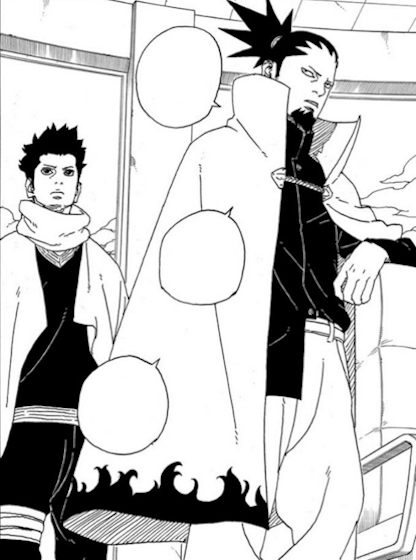
Make no mistake, I’ve never doubted Shikamaru’s intellect. His old sensei, Asuma Sarutobi, said himself that Shikamaru’s wit is unmatched. With an IQ level at 200, Naruto was wise to make him an advisor. Yet, for a lot of people that’s arguably the best position for him and nothing else. Since Kawaki’s been in the village, he’s been skeptical of his motives, practically pleading with Naruto to put him literally anywhere else besides under his own roof. It’s possible that he knew Kawaki wouldn’t be a threat as he was just a kid, or even if he was, there’s no getting past a Hokage who’s both a Jinchuriki and a master of Sage Mode, but the series has made it clear that Naruto saw him as a guest, then a son, and a possible reflection of himself if he’d gone down a darker path. A familiar sentiment to another shinobi in the series.

Talk no jutsu jokes aside, Naruto does have an innate ability to connect with people and subvert expectations. If you told a random villager that that demon fox boy would soon become Hokage, you’d probably get laughed out of the room if not sectioned for such bonobo babble. Over the course of the series though, the boy who had nothing eventually gained a vast wealth of friends which morphed into wide respect from the village. It was only natural that he’d ascend to the level of Kage, especially with the high-level ninjutsu that comes with being a Kage.

Shikamaru’s a master tactician, but we haven’t seen him use a lot of high-level ninjutsu. As a Nara clan member, his specialty has always been Shadow Possession along with other conventional shinobi tactics. These would be fine for, say, a Chuunin even one who’s up for promotion, but considering the threats that have come close to killing some of the Kage, sometimes successfully, Shikamaru has to come up with new strategies to battle someone as dangerous as Code and his army of claw grimes.

As for Konohamaru, this felt a bit like a slap in the face to me. Of all the characters I could see becoming Hokage, despite getting bodied in nearly every battle, I a least forgave Konohamaru for trying his best as a teacher, as a team captain, as a protégé of sorts to Naruto, and as another user of the famed rasengan. Maybe I can blame this on the writing.

For character trajectories, there’s a few interesting changes that I can get behind, one of which subverted my expectations though in a positive way.

Details don’t exist yet, but I have a theory based on Himawari’s appearance in the debuting chapter. Since she’s shown to be training with the Ino-Shika-Cho trio, and has admitted that she thinks Boruto is innocent, I think she’s another one who was largely unaffected by both Eida’s Omnipotence and her charm. Moreover, Eida’s brother Daemon said he could detect something powerful within her. Whatever it could be might also explain why Daemon felt so intimidated or why she feels the Leaf Village is wrong about Boruto for the most part.

If my theory has merit, then along with Sarada and Sumire, Himawari may stand as another player in the crusade to prove Boruto’s innocence and unmask Kawaki. She probably doesn’t need to do much against Code the walking L, but just in case, she has innate knowledge of the Hyuuga clan’s Gentle Fist technique to go with her Byakugan, if the rest of the cast allow her or anyone else to get a hit in at all.

This is the most recent Code L to take the cake. I saw on the Boruto subreddit that someone drew comparisons between Boruto’s trajectory and that of Dragon Ball Z with Code being compared unfavorably to Cell, a hilarious if misleading statement considering what’s above. But to entertain that theory for a bit, if Code is functionally similar to Cell than I’d hate to see what happens when he reaches perfection.

Finally, there’s time-skip Boruto.

With as many introductions, fan theories, articles, fan art pieces and more about time-skip or, according to the Naruto Wiki, Vortex Boruto, he really doesn’t need anymore intros. But what he does still need is context. In 2017, the introductory scene came apropos of nothing and put as much as it could on display for us to watch. Over the course of the series, though, we’ve been given gradual clues as to what’s become of him during the series’ run. Curse mark? Karma. Scratched headband? A gift from Sasuke. Scar? A parting gift from Kawaki himself. And this only covers his appearance.

His performance on the field remains to be seen and the next chapter might explain piecemeal what he learned from Sasuke. Clearly, he was influential enough for Boruto dress in a cloak and bear a sword. He’s also been shown to have a talent for certain chakra natures, the most important ones for Boruto being Wind, Water, and Lightning; all of which Sasuke also knows very well. Whatever he learned from Sasuke might incorporate one or more of those.

As it stands, the follow-up is on the same level as its predecessor and will likely release the second chapter after September 20. This gives me an idea. On the one hand, surprise updates are a highlight for me and the blog, but on the other hand, honestly speaking, squeezing it into my schedule and rearranging things gets to be tedious. The 20th day of the month isn’t also guaranteed to land on a Friday in accordance with this blog’s schedule. So instead, whenever I get more Boruto news, manga or anime related, I’ll make a post on or the day after as they release.

I still hesitate to call myself the Boruto guy as I personally consider Twitter user Abdul Zoldyck to hold that honor for their largely spot-on news and leaks. This is also an experiment of sorts before I try it with other series from different mediums. Who knows? I might be there in time to watch the first episode of Hokkaido Gals. And by the way, yes, I do still have a topic for Friday.

Boruto: Timeskip Update 2

Two Blue Vortex

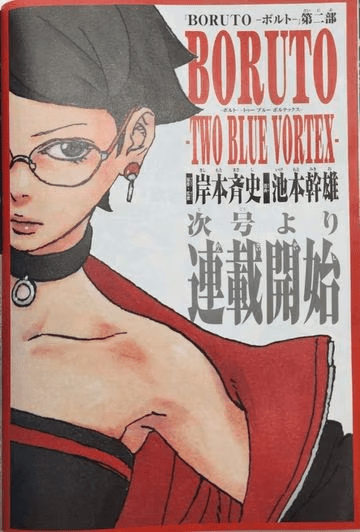
As much as I’ve written about not wanting to be the Boruto guy, I honestly don’t mind such a connotation just as long as I’m allowed more topics to cover and in that regard on this blog, I’ve succeeded. But to circle back to the topic of this week’s post, Boruto’s timeskip arc has an update. Last week, third party sources brought news to the Boruto community concerning the upcoming timeskip arc. The next chapter is expected to release on August 21 under the new subtitle, Two Blue Vortex, and joining Kawaki and Boruto who both have future redesigns is Sarada Uchiha.

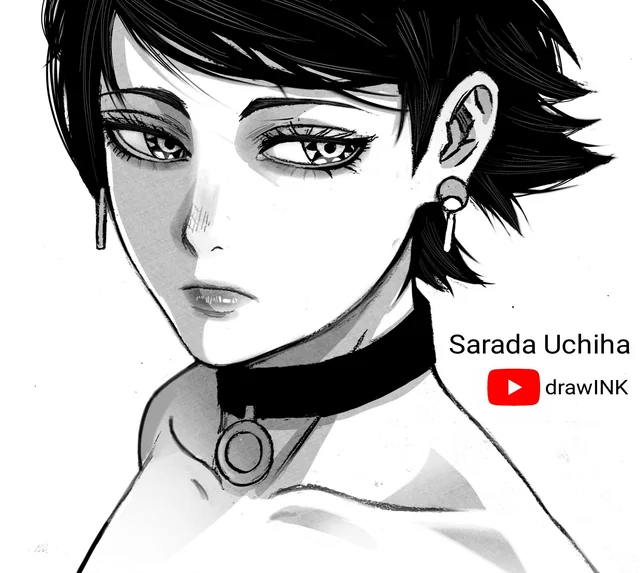
Consistent with trends, there’s already fan art of the new design. Here’s a personal favorite of mine:

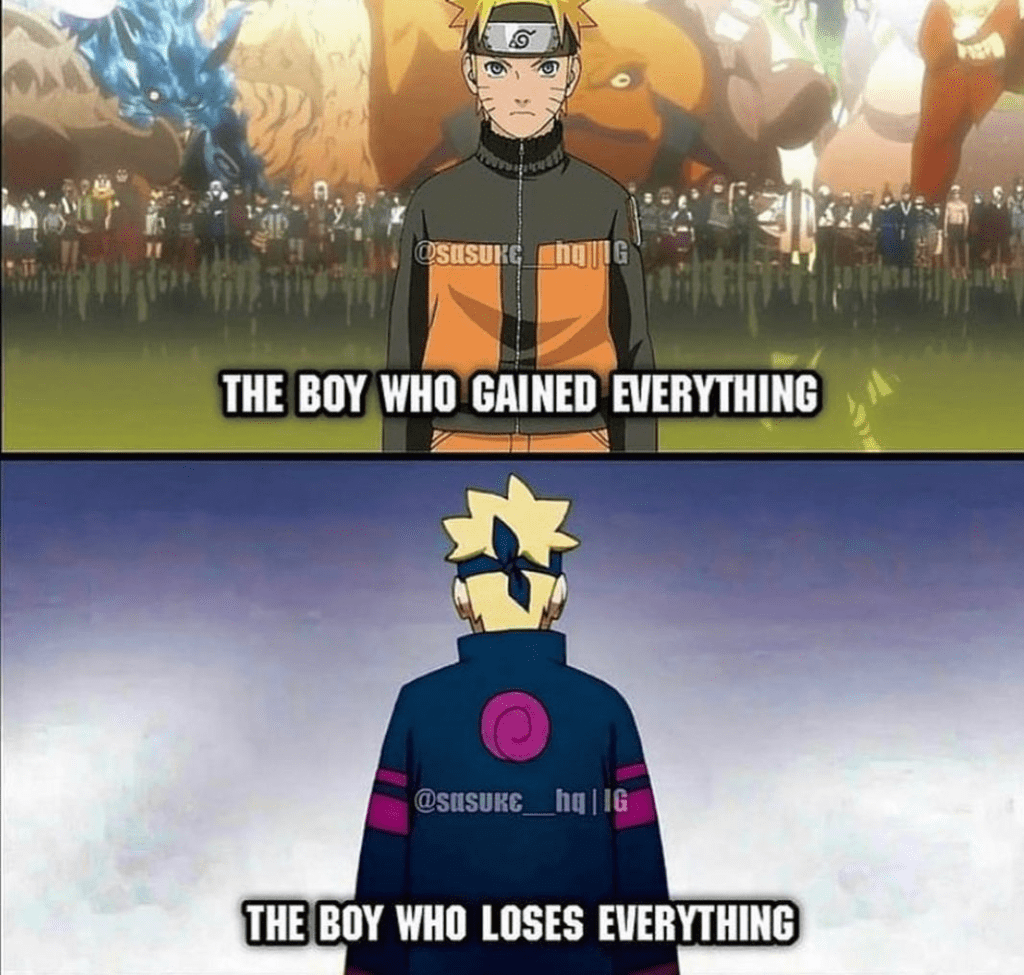
And no, the Bayonetta comparisons aren’t lost on the community. Simultaneously, the reveal debunks previous predictions made years prior while also shedding some light on existing concepts. For starters, rather than follow the Naruto convention of the subtitle Shippuden with Raiden and the associated kanji for lightning (雷), Two Blue Vortex deviates significantly from the formula used to craft Naruto and Naruto Shippuden as further proof that Boruto is simply not that kind of guy. Naruto had Sage Mode, was a Jinchuriki, shunned by the village for being the host of the Nine-tailed fox and fought tooth and nail to be seen as more than just the sum of his parts. Boruto, in contrast, was designed with nearly everything handed to him on a silver platter, largely because his parents either had none of it or weren’t allowed all that much to enjoy what they got. And seemingly overnight, he eventually loses it all.

When the story starts proper, Boruto is pretty much a spoiled little brat with a legacy over his head. Naruto was inaugurated as the Seventh Hokage, following a lifelong dream that everyone said was impossible, and his grandfather Minato Namikaze, had the distinction of being the Leaf Village’s shortest serving Fourth Hokage. Considering the negative connotations associated with the number four in East Asia, the Four is Death trope is a time-honored tradition. Guido Mista was right to worry.

Boruto being spoiled is a direct consequence of the shaping of the Ninja World in both his father’s and grandfather’s times. From Minato’s time period, it was expected and tacitly accepted that ninja would have enemies. Constant warfare meant friends were made as fast as they were lost and often from a young age. Minato’s ninja cell were the equivalent of child soldiers during the Third Shinobi War. Even after becoming Fourth Hokage, the peace was tenuous at best, and the ninja villages would essentially shift from fighting organized militaries to disorganized terror cells. This problem didn’t really begin because of anything Minato did, but Naruto’s adolescence was where it got worse.

The Akatsuki, close to achieving its’ goal under false pretenses, and with only a few members left, outright started the Fourth Shinobi War, by way of necromancy and cloning. Initially, through desperation and gradually through teamwork, the ninja villages set aside all differences to combat a worse threat: Madara, Obito, and soon Kaguya Ohtsutsuki. After their defeat, it was a time to rebuild a better world for the future. Naruto’s tenure as the seventh led to many gifted children, some of them directly from the old Konoha 12 of before. They essentially lived so that Boruto’s generation would have it easy, but the down side to that is they don’t see what others are lacking in until it’s missing from them. Which does happen to Boruto gradually. Starting with the seal on his hand and the control that Momoshiki is always threatening to take away, though for the most part he doesn’t have to as long as he leaves things up to Kara, Isshiki, or Kawaki.

With Kara in tatters and Isshiki soundly defeated, Kawaki and Code are the last enemies Boruto has to face in the timeskip. How that comes to pass will be revealed after August 21 when TBV debuts properly so for now, here’s what I know and what I see from the reveal. It’s been confirmed from years prior how Kawaki and Boruto would look. Kawaki would wield a staff/rod-like weapon in the future, and aside from a change in attire, he wouldn’t differ all that much from the Chapter/Episode 1 teaser. In the redesign, he sports longer hair and a tunic and haori that bears a striking resemblance to what Isshiki had.

Boruto meanwhile had a scar over his eye, a headband with two perpendicular scratches, slightly longer hair, a cloak, a sword, and better control of his Jougan. The updated design stays true to what was seen in the manga in 2017, but with a few noticeable changes. The cloak is similar to how Sasuke wears his, the scar is shorter, and the hair is almost the same if not shorter than his current look. We haven’t seen the sword yet, so it’s not known if he’s using one of his own or if Sasuke has an arsenal and let him have an old relic.

From what we saw of Sarada’s design, with all the talks and fanart depicting her with longer hair and a longer tunic similar to what Sakura had in Shippuden, but the Bayonetta-style design immediately tosses that out of the window and calls back to when fans of Naruto thought or expected Naruto himself to have longer hair as he aged.

Additionally, Sarada’s presence on the cover may suggest that the new chapter will include her somewhere in it. As I recall, a beginning scene in Shippuden shows now-genin Konohamaru running into Teuchi. We’ve already made clear that Boruto as a character and as a manga is not the same as Naruto so the tone may be a bit more sullen or serious compared to this classic Shonen slapstick.

Some on the Boruto subreddit also noticed the symbolism in this preliminary design for Sarada, with Uchiha clan earrings, the ring on the choker, and the cloak she seems to be donning. If it’s a cloak she’s wearing, then it may be paying homage to Sasuke. If it’s a jacket, then it could be an homage to Boruto. Or both, but with everyone under the shinjutsu and believing Boruto to be the traitor, everyone’ll think it’s only to remember Sasuke who seemingly abandoned the village once again.

Speaking of shinjutsu, Eida, love her or not, still has a critical role to play in the plot. The shinjutsu she subconsciously used to reverse Kawaki’s and Boruto’s lives has yet to be fully explained. The same goes for her Senrigan.

All we have on both are what was shown in the manga and Amado’s exposition. According to Amado, shinjutsu, like omnipotence, essentially make facts out of fiction and as Amado has surmised, all ninjutsu are humans’ best attempt at recreating the shinjutsu. If that’s the case, then the Omnipotence that kicked off this predicament would function at an even higher level than that of Madara’s or Kaguya’s Rinnegan/Rinnesharingan. Whatever has been the most powerful genjutsu shown in canon or in filler, Omnipotence is even more broken than that.

As for the Senrigan, since it literally translates to “clairvoyance” Eida essentially knows everything that’s going on anywhere in the world and what has happened. Like a very powerful librarian or historian.

As powerful as the Senrigan, it’s not like Eida will know what’s going to happen next in general or to individual people. Again, it’s more like reaching into the past than it is about the future. So far, it’s served as a means of communication between Eida and Shikamaru, her and Amado, and whoever else she likes or can tolerate. Circling briefly back to the Omnipotence, of all the people affected, Sarada remains unchanged which appears to be linked to how much Eida liked being with her and Sumire. As such, it was also shown that Sumire was unaffected by the shinjutsu.

I can’t promise anything on accuracy for this next chapter as shown by my track record thus far. Any predictions I make are going to play it fast and loose until the chapter proper comes out. Having said that, there are some things I can’t see with any degree of accuracy. There are three that are, as of writing this, anyone’s guess: Sumire, Himawari, and Daemon.

Starting with the most significant one plot-wise:

The extent of Daemon’s abilities are that just thinking about harming him is reflected in real time back at the would-be attacker. For instance, there’s a panel where Boruto and Kawaki both think about teaching the little runt a lesson only for it to literally backfire. So they both need to put up with his silliness to keep Eida from running off until further notice. For what can be said about him going forward, the only level of development seen was that he sensed an energy from Himawari, and we don’t know for certain how well the manga will follow up on that until then. Speaking of which:

The latter episodes of the anime put her in an academic setting with Kawaki going in as well on an undercover mission. For Himawari’s abilities, the Byakugan emerged in her the same day as Naruto’s inauguration and she’s shown to attack with the signature killing intent that each ninja knows about in battle. But for the most part, it’s been depicted as subconscious and while she was shown to be effective during this late anime arc, it remains to be seen if it even gets a reference in the manga if not an accompanying light novel.

Finally, there’s Sumire Kakei, who admittedly got a more generous treatment in the show, despite her starting out as a spawn of a former member of Danzo Shimura’s Foundation within the ANBU Black Ops. The show and the children accepted her with open arms and since the students graduated, she took on an apprenticeship with Dr. Katasuke Tohno. As far as a prediction, this will likely continue unabated, save for the subject area of their study being Boruto instead of Kawaki, but on the side she might be keeping in touch with Sarada on her progress to the best of her ability. And this is just the Hidden Leaf Village. The anime might bring the Sand Ninja back into the fold, but for what or how I can’t foresee. Even if it feels like Shinki et al don’t impact the story much, they’re not unaffected by the events thus far, and are at the mercy of the Sand Village’s moves as shinobi as well. Even a short filler or catch up for the audience to remind us they exist would be acceptable to me.

No matter what happens, Code is still a problem and it’s all up in the air how they choose to address that. Either way, I’m eagerly awaiting the manga’s and anime’s return.