Azumanga Daioh: A Classic

Tsukurimashou

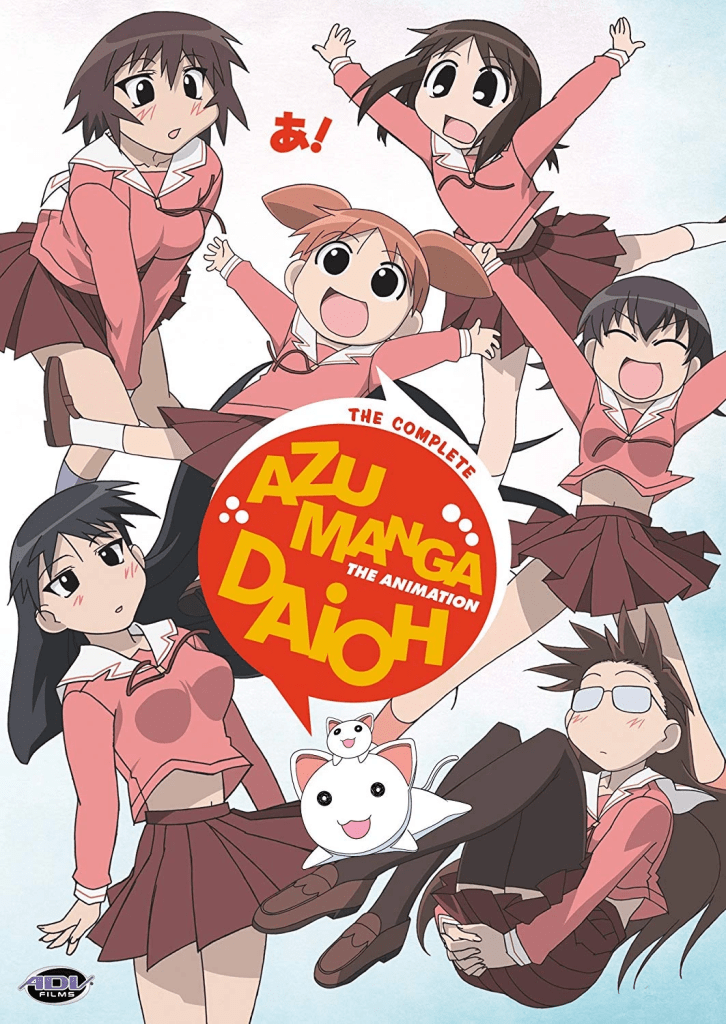
Calling back to a recent post, I once again searched for anime to watch on a whim and with how easy it is to pirate and upload on YouTube (for a time at least), my search led me to another series that needs no introduction: Azumanga Daioh.

A four-panel manga series running from 1999 to 2002, Kiyohiko Azuma’s famous series is about a group of girls navigating their high school and personal lives, with occasional peeks into the lives of two of their teachers. Its anime adaptation follows the manga nearly beat for beat in the sense that every episode is split into different segments. Four-panel manga all have the same layout and are most commonly found in comedy manga series like Azumanga, and are not limited only to Japan. Western comics also have the formula down pat if you’ve ever read the comic strips in newspapers.

As far as plot is concerned, Azumanga is a slice of life series under the “Cute Girls Doing Cute Things” umbrella, a legacy of its era in the moe blob of the 90s going into the 2000s. From start to finish, the manga panels have the star characters and their friends doing really uninteresting stuff, but often in a comedic way. The anime is the same, and having seen it from start to finish the anime translates the humor quite well to the small screen.

Channel: DarkDecietNarcissu

But it still requires a working knowledge of Japanese culture and comedy to understand why it’s like this. Going in blind may not leave as much of an impression compared to going in with this knowledge. The cultural barrier was still standing strong in 2002, and a problem one can see at least with the dub is an old bugbear that only exists when trying to view older anime dubbed in English: poor translations.

One of the strongest concerns in the dub vs sub debate online is whether the translators/localizers, etc. can correctly interpret the scenes and localize them for western audiences without doing away with the original context and humor. Numerous examples of poor translations in the early days exist, but one that makes the rounds regularly online is the Pokémon scene where Brock shares his onigiri rice balls.

By now, everyone has seen onigiri. When it comes to cultural boundaries breaking apart, food also plays a role in that–not just language or history. The faulty dubbing issue isn’t as persistent as it was back in the day, but the concern still exists for many anime fans in the form of internet/video game slang showing up in the subtitles. Personally, I see why this specifically can ruffle some feathers since more and more people watch anime these days and may not always be the same people browsing social media regularly.

From my perspective, Azumanga has a few of these issues here and there, but they didn’t stop me from watching it all the way to the end. As a matter of fact, this series and Azuma’s other series, Yotsuba to!, are a pair of internet darlings. The off-color humor in both series is a source of numerous memes and no-context compilations of the funniest moments from the Azumanga anime due to the style of surreal comedy employed.

Channel: Brolita

Humor like this can show the author’s attention to detail, especially when a seemingly unimportant gag or detail returns in a later episode or two.

Of course, the series isn’t just a barrel of laughs from start to finish. The characters all share intimate moments between each other and in their own personal lives. The character, Yomi, for example is featured in the opening weighing herself, highlighting an insecurity that gets light in the series. Chiyo, being the youngest character, has big shoes to fill with being gifted enough to attend high school at the age of 10. Osaka, real name Ayumu Kasuga, is the outsider, the awkward round peg outnumbered by a bunch of square holes. Her nickname is based on her home city of Osaka and the general perception non-Osakans have of the locals in that prefecture, sorta like how in the U.S. everyone has perceptions of everyone else based on what state they’re from.

Little moments like these help to flesh the characters out and with a small cast to work with, Azuma wasn’t as bogged down trying to give everyone the time of day. This doesn’t necessarily mean that smaller casts are better, but that it takes real care to ensure everyone in a work of fiction is given a piece of the pie. It isn’t always perfect and it doesn’t always need to be as long as all loose ends are tied up. Thankfully, the details in the series are all easy to keep track of through easy-to-remember clauses: one likes animals and tries to pet a finnicky alley cat; one is extra hyper and loaded with energy; one is prone to zoning out at random; one is a sports fanatic; and the list goes on.

Azumanga Daioh is the type of series that one can sit down and relax and have a few laughs while watching these girls go through high school. Its last episode is a neat and tidy conclusion that offers thanks to the viewers as a final goodbye, though I see myself going back for little things in the show.

If the playlist was still available in the English dub I’d provide a link but sadly, the channel that had all 26 episodes dubbed has been removed as of writing this. There still exists the subbed versions on YouTube and the good old-fashioned eyepatch wearing, peg legged, hook hand approach to viewing this series.

With any luck I’ll finally get done with the Undead Unluck anime and provide my thoughts. I’ll do what I can to have it out before the end of the month.

The Elusive Samurai Anime Adaptation Confirmed

A manga I’m following is greenlit

Long time followers of this blog may recall when I reviewed the manga The Elusive Samurai or Nige Jouzu no Wakagimi by Yusei Matsui, the same man responsible for My Teacher is a World-Ending Tentacle Monster?!

The Light-footed Hojo debuted in January of 2021 and I had been following it for months leading up to my first enlistment. Even now I still read it whenever I get the chance and a lot has transpired within the manga. Enough that there’s a whole time skip arc after 3.5 years in publication.

Now I come to report on an update regarding the manga, in that it joins my small but not insignificant list of manga I’m reading that is also getting an anime adaptation. So far, that makes this the fourth time it’s happened, the first three being, Demons Deserve Death, Gyarus of Hokkaido and Immortal Misfortune.

Channel: AnimeWakana

It started with a teaser sometime last year around the same time I actually reviewed the original manga before hibernating until now. With more time to simmer, it was now revealed to us further that the studio meant to bring life to this manga is none other than CloverWorks, the same studio that brought us many a work including but not limited to Bunny Girl Senpai, Spy x Family, Bocchi the Rock, Dress Up Darling, and several of the Fate adaptations.

An impressive repository of series to check out, right? That said, even godly studios have their off times and CloverWorks has made a few mistakes. We can each point to a studio and wonder what went wrong with XYZ and the number one anime to get brutally slaughtered without sound reason is:

An interesting cutesy horror story comparable to that of Made in Abyss, and interestingly another one I skipped over yonks ago to get to other manga I was and am still reading, Boruto and My Hero Academia: Vigilantes being among them.

I did watch all of season 1 when it premiered on Toonami years ago and I was planning on catching up with season 2, but knowing what became of that by word of mouth, to do so would be to waste time spent on other anime that’s worth my time. Namely:

I’ve still not started Season 3 yet, but now that it’s concluded, I can watch at my own pace.

For years since it’s conclusion readers have wondered why The Promised Neverland’s second season was so lackluster and divorced from the manga. I also occasionally try to look for answers and the most I get is mild speculation. I can’t say for certain how tight-lipped studios can be or will be about these sorts of things, especially Japanese studios, but with the news that studios like MAPPA have developed a crunch culture not seen since Team Bondi’s efforts to burn the candle at both ends or ufotable pulling an Al Capone tax-wise, there probably aren’t that many things besides language and traditions that separate Japanese animation studios from western ones.

Having said that, CloverWorks is one of the best studios in production today, standing tall with KyoAni, Pierrot, and David Production, and with more successes than failures to boast, especially in recent memory, I’ve no reason to believe CW will louse this up, even through malice, though a more mature way to look at it is that weirder stories have come from the animation industry and if it happens during the production of The Last of the Hojo, I’m damned sure gonna write about it. Bet on it.

For now, the scheduled date is July 6, 2024. I will save a spot for a first impression.

Date A Live: On a Whim Again

The life I live is watching anime with friends…

…and I can’t wait to do it on a whim again. I’m not apologizing for that Willie Nelson reference.

Date A Live honestly needs no introduction. It’s a series that I’d heard of for a couple years prior to actually watching it only to hear of a fourth season planned last year while I was already six episodes into the series.

It began life as a light novel with a run from March 2011 to March 2020, exactly nine years of writing from author Koshi Tachibana. A sci-fi fantasy romcom whose anime adaptation was released in 2013 and whose fifth season debuted in April of this year. Funny that light novels from the last decade are going strong in the 2020s.

So what’s Date A Live really about? Breaking it down by its genres, the sci-fi aspect comes from the world itself. It’s somewhat set in the future though no specifics are given so you the reader/viewer may fill in the blanks how you see fit. Spatial quakes or tremors in the solar system start affecting earth in a very negative manner, by way of leaving behind giant craters in the earth, one of the most notable being somewhere along the Eurasian steppe. Bad day to be wandering around Kazakhstan that day.

The in-universe explanation for this is that the space tremors follow the arrival of beings known as Spirits who all appear in the form of girls around the same age as the main character, Shido Itsuka–and protagonist powers aside he does have a crucial role that I’ll get to later.

Further, these Spirits possess abnormal powers, not the least of which involves the likes superhuman strength and devastating abilities the likes of which would make Babidi from Dragon Ball very, very jealous–and also ties in with the fantasy aspect of the series. There are two ways to combat these Spirits: one is by way of actual combat; and the other adds in the romance aspect and our main protagonist, Shido Itsuka.

Now that we’re putting two and two to get to four, you may have predicted that Shido’s task in this series is to romance the Spirits and prevent utter bedlam with the power of love, and you’d be right. The harem aspect is well advertised and if you know a few things about the harem genre in animanga, then you’re probably also aware of the main selling point: fanservice. Flash a boob once or twice, get some cheeky panty shots in, throw in an accidental pervert with multiple different -dere types and voila! you’re cooking a mean beef stew.

However, what I think separates Date A Live from contemporaries of this type would have to be the individual girls themselves. Even as I’ve only just wrapped up the second season of the anime, I’m seeing more than just comedically sexy eye candy. And I’ll even throw a bone to Shido himself. Rather than be just the generic harem protagonist who behaves as a stand-in for the audience, there is a personality to the boy for once. He’s shown to be persuasive and caring, especially since his position in the series is that of nonviolence. He’s basically playing the pacifist route in Undertale.

Meanwhile, the other main adversary present aside from rogue Spirits yet to be wooed by our hunk Shido is the Anti-Spirit Team. Similar to Japanese Special Forces, their purpose is to find and contain the damage the Spirits cause, a lot of the time through lethal force.

Then there’s the girls that Shido romances to the good, less destructive side. A lot of the time they fit well into the typical archetypes we’ve seen in other romance anime, but the backstories and personalities do make them intriguing. Some of them do genuinely want to live quietly and comfortably with Shido, but others answer the question “Violence?” with an enthusiastic “Yes!” Case in point: one of the most iconic characters in the series:

You can’t fix her, nor will she fix you or even try to make you worse. She’ll just leave a massive stain where you standing three seconds ago.

The series explains that the Spirits themselves come from different dimensions, but (minor spoiler) it’s possible for a human from this dimension to become a Spirit as well as what happened to some of the characters in the series. The AST is another display of the sci-fi within the series. With the Spirits being what they are–superpowered high school girls–the members of this elite team have to take the “fight fire with fire” approach to combating them with hi-tech battle suits. Not on par with what has been depicted all over the Gundam genre, but impressive all the same. It’s more like stripped down Iron Man armor in appearance.

Depending on your investment in the series overall and how you feel about the genres explained, you might get a kick out of it, or it might just be another harem series to add to the pile. Neither of these assessments are right or wrong, but it shows that it’s a product of its time. Does that mean the series hasn’t aged well? No. As I said, I got into it weeks before a fourth season was greenlit, not to mention a fifth season debuted a few months ago which suggests a determination to see it through to the end.

I know I’m not the first person to talk about this series and I will not be the last to do so. What I can do is simply point you in the direction of the series and however you choose to consume it. If possible for you, I say finish all five seasons of the anime and while you’re waiting on confirmation of a sixth, beat them to the punch with the light novels.

Before I sign off, since there’s a certain demographic that loves the type of character that I put further above, I feel the video below best describes that mindset:

Channel: Gianni Matragano

But hey, I like kickass ladies too.
For Saturday, June 8, 2024, I recommend the YouTube channel Christopher Chaos.

https://www.youtube.com/@christopherchaos/videos

Run by a retired Army Sergeant and Motor Transport Operator (Military Truck Driver), Christopher Chaos is a military explanation channel dedicated to detailing the possibilities and benefits that come with enlisting in the Army along with the occasional anecdote about his own personal service. Each servicemember’s/veteran’s story is unique due to how big the U.S. military is and how fast changes can be made while serving. Christopher himself explains that he served from 1999 to 2010, so most of his stories show the culture of the Army during his service. That being said, he does still keep up with Army and military news for the purpose of educating would-be recruit candidates.

And if you’re concerned about it, he’s not endorsed or sponsored by the U.S. Army. That chapter in his life is behind him.

Dystopian Fiction

And now for something completely different

Before we start, I’ll say that I meant to have something up either by Friday evening or sometime yesterday, but I missed it because I was tired after work and yesterday there was a local comic con in town that me and some friends wanted to attend. Also the two topics I had lined up for coverage–a review of the Undead Unluck anime adaptation, and a chronicling of the reboot Planet of the Apes series–would require me to both finish the anime, and to at least see the new Kingdom of the Planet of the Apes movie. The first of those can be done more easily than the second since while in TRADOC (Training and Doctrine Command) if you go off post, you need to be with at least two more people, and I haven’t found anyone to go with yet. So my thoughts on the anime adaptation will come later, and my series review of the Apes movies will also come later. Back to the topic.

I’ve gotta be honest and say that I had forgotten why I put this up as one of the many topics to blog about. As much as I like sci-fi, the dystopian side of things isn’t something I actively seek out on purpose. Often, what I find just so happens to have dystopian elements in the plot. This might’ve been on my mind at the same time as the Civil War movie back in April. I haven’t seen that movie myself yet, but based on what I’ve heard from people like Brandon Herrera, there seemed to be a lot of build up with little pay off. That, or everyone was expecting the same kind of hullabaloo that came with the political landscape of releasing a movie like this during an election year, and most people’s expectations weren’t in line with what the movie had in store. If I see the movie, I may share what I saw.

Jesse Plemons’ appearance in the trailer certainly added to the hype until release.

Anyway, I’d say that for me, the appeal of dystopian sci-fi comes from an added appeal to the fantasy, as in a lot can be done even with this one specific filter. It could be and often is a world similar to ours but with a few new rules that make it a darker and bleaker place. Think of Fahrenheit 451 by Ray Bradbury. The theme of this world is that of suppressing dissent. One way to go about this is burning books. All of them. It’s illegal in this world to even own a book let alone read it, so firemen are employed to do the opposite of what we know firemen in the real world do: light the books on fire. But with all the calls to burn the books, it can only mean that there’s a resistance of some kind to this draconian law and sure enough there is. An underground society of sorts that serves as a gathering of rebellious readers, sort of like a book club in tacit defiance of the Gestapo-like firemen.

As we can see from the book and its movie adaptation, the world is not dissimilar from ours except reading and literature are criminal acts where the offender is disappeared while their illegal library goes up in flames. In this case specifically, it calls back to the pre-war Nazi German laws where anything critical to national socialism was up for a mass purging, writings included. Of course, knowing Nazi Germany, this boiled down to anything perceived to be penned or endorsed by their enemies, namely communists and Jews.

Based on that example, the dystopian genre can also provide some social commentary on the real world, and it doesn’t necessarily have to take itself seriously. Comedic examples like Futurama, select episodes of South Park, or even certain skits in Robot Chicken do a lot to make a commentary on the real world, often through speculative warnings. And the operative word here is “speculative.” In my research for this blog, I found that utopia and dystopia normally go hand in hand, often as a response to one another and from my perspective either of them can and do address the issue of logical fallacies, namely slippery slopes and depending on the writing and phrasing tu quoque and/or middle ground fallacy; slippery slope since the more pessimistic of the two can be argued that X will happen if blank is allowed, tu quoque since either side can argue convincingly that the other is behaving naively and unethically, and middle ground since a third party can attest that the most ideal solution lies the furthest away from the two extremes and unlike the extremes, the middle ground attestation isn’t under the same expectation to provide supporting arguments.

Sounds familiar, right?

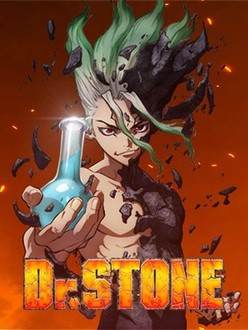
Well, like real-world politics, utopia/dystopia and everything under that umbrella can come in many different forms. As such, there’s a lot of elbow room over what a work of fiction can look like and/or talk about. Tell me your favorite examples. Mine has to be the beginning chapters of the Dr. Stone manga. Shortly after awakening, Senku, Taiju, and Tsukasa all agree to harness the titular anti-petrifying agent to awaken humanity and reclaim the Earth from that evil queen we call nature, but the conflict arises over who to revive. Senku chooses all of humanity should be revived no matter what, but Tsukasa disagrees, citing the existence of bastards and monsters in this world, many of them bitter geriatrics that we could do without and essentially starts off as an antagonist reviving a handful of warriors he believes are incorruptible while Senku, Taiju, and later Yuzuriha continue on without Tsukasa’s might and brute strength.

The question dealt with here in the beginning is that of morals. Both the antagonist and protagonist in this arc accuse the other of being nonsensical and provide compelling arguments for this case.

The manga obviously follows the protagonist who won out and eventually recruited Tsukasa to his side, save for several dissenters spouting his original tenets for the next arc or so, but if the manga was more Seinen instead of Shonen, we probably might see the perspectives of both sides or even a third side emerge, though depending on who you ask a third side already exists and its called the legal system.

Joking aside, since I’m already a fan of sci-fi and more specifically the alternate history side of things (See: my recommendations for Alternate History Hub and Monsieur Z/Dean Mosley), the dystopian side of things has its appeal for me for a lot of the reasons listed, offering interesting stories and scenarios to explore.

And since the subject is on dystopian fiction, I offer these novels as my personal recommendations:

Stand on Zanzibar (1968) by John Brunner

A Clockwork Orange (1962) by Anthony Burgess

Anything by Mary Shelley (1797-1851) (I’d be more specific, but there are too many examples to choose just one, though I do encourage looking beyond Frankenstein)

A Scanner Darkly (1977) by Philip K. Dick

Planet of the Apes (US)/Monkey Planet (UK) (1963) by Pierre Boulle

Working in a Hidden Away Restaurant in Rome

Been a while since we did a double bill

Part of the fortune of covering a series done by the same author is that I don’t have to thumb through another file to look for another series. Last time I did this was when I was covering the two GTAs that seemed to get ignored by modern Rockstar Games: Liberty City Stories and Vice City Stories. These double bills are rare sadly, but this time around I’ve got another series by Natsume Ono: Ristorante Paradiso.

Definitely not the first time a mangaka took their audience to Italy for a story, but instead of chasing an enigmatic mob boss with dissociative identity disorder, this Seinen series is largely crime free. Drama on the other hand goes hand in hand with the panna cotta and insalata mista. Similar to the other series, House of Five Leaves, Ristorante Paradiso also features a diverse cast of characters in background and thought. The story follows a young culinary school graduate, Nicoletta, who started her journey tracking down her estranged mother for the purpose of sabotaging her livelihood after discovering she operates a restaurant in a small corner in Rome. The reason for this vendetta stems from her mother, Olga, leaving Nicoletta with Nicoletta’s grandparents while she went off to get remarried. I can see a number of ways to handle this immaturely, but from what I’ve seen, Ono handles it better than some of the other works where a connecting element is a character’s issues with an absentee parent or abandonment, then again some of those other works portray it as a balding punchline. That, or they try to take it seriously but it falls flat on its face.

Doesn’t exactly mean Nicoletta’s forgiven her mother for that, only that her priorities are elsewhere for the time being. As for the other characters, there’s one older man named Claudio who is legally separated from his wife, so he’s free to date whomever he pleases, but keeps the ring on to dissuade any women from pursuing him, though Nicoletta developed a crush on him after working with him.

Speaking of men who just want to live their lives drama free, another one of the older characters is Luciano. He keeps to himself and also turns down most women’s advances to remain loyal to his departed wife. The anime presents him as cold and stonelike, but he secretly cares a lot about his daughter and grandson. Vito is a flirty type though his heart belongs to a college student he met while working out. And there’re several other characters working at the restaurant, all with different backgrounds and connections to one another.

The series is more about the people working and dining at the restaurant than the meals so don’t expect anything of the likes of, say, Shokugeki no Soma or Dagashi Kashi where the focus is on the eats. Rather, it’s related to a joke within the Golden Kamuy community about the series being an Ainu cooking show that just so happens to feature gold treasure and a rogue unit of IJA soldiers. The restaurant ties everyone together in a way.

What I have to praise about Natsume Ono is that she creates her characters from nearly every angle. Of all the aspects that aren’t given a lot of mind, she chisels out the finest details from those characters and puts them at the forefront of her writing. I also like how she includes minor details. In Ristorante Paradiso, what is addressed is that a lot of the male staff is wearing glasses and this is by design. Nicoletta’s mother, Olga, has a thing for men in thin frames and thus makes it a part of the dress code. And you don’t need a real prescription for glasses. I forget who, but one of the characters got around this by wearing glasses without any lenses in them.

It’s a short series that has the skeleton of an anthology but isn’t as rigid as one. Ono seems to do quite a lot with very little, and as I’d found out for the research of this post, that’s not a hyperbolic statement considering Ristorante Paradiso lasts only one volume despite running for a year. House of Five Leaves, however, ran for eight volumes over the course of five years. It’s also worth noting that Ono writes BL manga under the pen name of basso, so this may have to do more with these stories being very short as opposed to a writing philosophy. Juggling multiple works at a time can get to be a hassle, but this is me thinking, so don’t quote me on anything.

Funnily enough, there is a playlist of the Ristorante Paradiso episodes, but the one I found has a few missing episodes, so if you can stand to do so, a Crunchyroll subscription should do it or if for whatever reason (I won’t judge) you don’t want them to have access to your credit card information then put on a straw hat and challenge the world government from the seven seas.

For May 25, 2024, I introduce you to Kaho Shibuya.

https://www.kaho-shibuya.com

This is a bit unorthodox for a recommendation. Google lied to me about her having a YouTube channel all her own; the closest she is to being on YouTube is multiple collaborations with the Trash Taste podcast, either individually with the hosts or on select episodes as a guest, or in interviews about her previous life, but fortunately Ms. Shibuya does have her own website as you can see linked above.

Kaho Shibuya left the life of an adult video actress (read: Japanese porn star) behind her to pursue something closer to her heart. These days, Ms. Shibuya has begun streaming on Twitch, she cosplays as different characters from anime and video games, she’s dabbled a few times in voice acting, and she even has a book on what she’s witnessed of the Japanese porn industry. These days, people discover her from her cosplays or collabs than of her previous work. If all that sounds like it’s up your alley, click the link above and see what’s in store.

A Lookback at House of Five Leaves

Filling in some time during the pandemic

The accursed year of 2020 was a lot of things to people and only a few of those things were good. I recall searching for something to occupy my time while trapped in the dungeon and going back to that Looper article, I thought about looking for a review for a certain anime I’d definitely not heard of prior to reading it: House of Five Leaves, known in Japanese as Sarai-ya Goyou. Created by Natsume Ono.

Set during the Edo period, it’s about a samurai warrior named Akitsu Masanosuke who very much has the skills of a seasoned warrior, but his timid demeanor loses him a client. The perfect samurai is meant to be intimidating, tough, and unflinching and this guy is shy, unassuming, and nervous. Sort of like Season 1 Mob.

Masanosuke doesn’t really meet the expectations or idea of a warrior even for the time period, which is the point of the series. It takes all the tropes associated with most samurai media and flips them on their head while also grounding the Edo period into reality. One could reasonably put two and two together based on what they know about the Tokugawa period and the Sakoku policy that a class of people defined by war in a time where there aren’t any wars anymore makes for a band of money-hungry and utterly reckless scoundrels… for the most part.

In reality, most samurai were just as diabolically malicious as the enemies they claimed to defeat in combat. Just like medieval knights, both of these warriors have a lot of stories real and mythical surrounding them.

This doesn’t reflect either class as a whole as lots of knights and samurai did have human decency and protect the weak as servants of the people, but being of nobility in Europe and Japan respectively, it meant that there was a lot of power shared by a diverse group of people of different thoughts and intentions. Focusing on Japan, some samurai were excellent and deserving of their position, others were fine with just the bare minimum of simply being there and the rest were heinously dangerous criminals abusing their positions for personal gain. Yeah, there’s no shortage of all three of these the world over; it’s the same old song no matter where you go. And I like that. It reminds you that there’s a difference between being something and being able to do something on a moral level.

So House of Five Leaves is generally about a nervous man who’s too gentle to throw the first punch, or in this case, swing the blade first. Plot wise, he finds himself in with the wrong crowd. Part of the downside of being gentle is not having the spine to put your foot down, which is how Masanosuke finds himself embedded with a group of criminals, functionally early inductees of what we now know as the Yakuza.

It’s hard to say when and how the Yakuza started, but based on my description of the Edo period making for restless ronin eager for battle some theories suggest that this is the most likely case for how the Yakuza morphed over centuries to become recognized as an organized crime group in Japan. For Masanosuke, these criminals specialize in theft and call themselves the Five Leaves. Their enigmatic leader, Yaichi, offers him the position of bodyguard which he reluctantly agrees to.

Again, he has the skills of a samurai, but doesn’t have the intimidation reflective of most other warriors in the Edo period. A worse person would jump at the offer and use whatever excuse there is to cut anyone in two. That said, there’s more to the series than just Masanosuke’s navigating this group of thieves and savages he just said yes to out of desperation.

Yaichi is one of the more interesting characters in the story. He keeps his personal history very close to his chest, playing things off as though he’s simply living life to the fullest. Other members of his gang or known associates who have some kind of connection to him or the gang share their own stories. An ex-thief named Matsukichi works as a beauty ornament manufacturer by day and a spymaster by night, contributing to the beauty of the women while also listening in on the Five Leaves’ potential targets. A tavern owner named Umezo who walked in the same sandals as the others but requested retirement from that lifestyle for safety’s sake, which was granted surprisingly enough. If you know a thing or two about organized crime groups, cults, secret societies, etc., they rarely let you go without a type of debt to pay…

…but in this case (slight spoiler), the loss of his skills weren’t gonna change how the gang operated. He also had a young family to put ahead of himself. Finally, there’s a geisha named Otake who was made to work off a large debt by way of entertainment (as was the standard practice/purpose of a geisha at the time) until Yaichi intervened financially.

Only a 1-cour anime series, it takes you into their eyes and what they go up against. The struggles, the nuances, the desires expressed; this was the anime that inspired my first accursed blog back in 2021… before it cha-cha slid off a cliff. I don’t want to link to that blog anymore; I’m trying to put it behind me, but it keeps coming back and I don’t even think it was a good showcase of my writing. But at least it inspired me to start this one which I’m more proud of.

Back to Five Leaf Clover Gang: my search for a review and recommendation on YouTube led to a playlist with all the episodes on it. People are really getting around YouTube’s copyright strike hammer to get some classics onto the platform like Azumanga Daioh and Lucky☆Star. There exists one spoiler free review on YouTube from over nine years ago following the trends that I’ve been going with so far with anime, awesome reception s[DIO wrryyyy]t sales.

Channel: AnimeEveryday

Keep in mind that this isn’t an action-heavy series, at least the anime isn’t. Don’t go in expecting Masanosuke to swing a sword all the time, because he’s not that kind of guy. He wasn’t written to be that kind of guy and I think it’s an advantage the series has over its contemporaries and progenitors. I like to think of it as the kind of anime that explores the issues people face daily, even if it’s set in the Edo period and if you choose to give it a watch as well, you think so too. The link is up above. Happy watching!

You’re Under Arrest: The Buddy Cop Anime

Meme tourism brought me here

I’m not making up that statement by the way, I did find this anime through a meme. This one specifically:

Channel: Vinicius Costa

I highly doubt that a single meme motivated everyone who saw it to dig deeper into what the anime was about, especially since on My Anime List it’s quite low in popularity for a ’90s anime, but reviews on both MAL, and even on Amazon for the novelization going as far back as 2000 give it high praise, so the conclusion to draw from this observation is that the series is yet another cult classic series.

Created by Kosuke Fujishima and running from 1986 to 1992, You’re Under Arrest, also known as Taiho Shichauzo in Japanese, is essentially a buddy cop manga. Like Gunsmith Cats, the series has a pair of tomboy protagonists with a rotating cast, but unlike Gunsmith Cats, it has more than the manga and an OVA to its name. Actually, the Wikipedia page lists three TV seasons, multiple OVAs, a movie and even a video game. One essentially wins a popularity contest at the time of release and then some while the other sees renewed interest after decades of sitting on a shelf with a family of dust bunnies. Maybe this is an indictment on the cultures of the targeted audiences–the western audience championing the lampooning of a government agency (even though they’re not that bad in the series) whereas the Japanese audience loves and adores the portrayal of the police in the series because it rings somewhat true of Japanese police behavior IRL.

It could be something else I haven’t looked at, but for all intents and purposes, You’re Under Arrest had a lot more going for it so if Fujishima had any doubts of success, those doubts must’ve been dashed when it came time for the anime release. Released in 1996, season 1 of the series starts off with an introduction to our two leads, Natsumi Tsujimoto and her partner against crime, Miyuki Kobayakawa. Other characters include but are not limited to Ken Nakajima, Yoriko Nikaido, and interestingly a trans character Aoi Futaba.

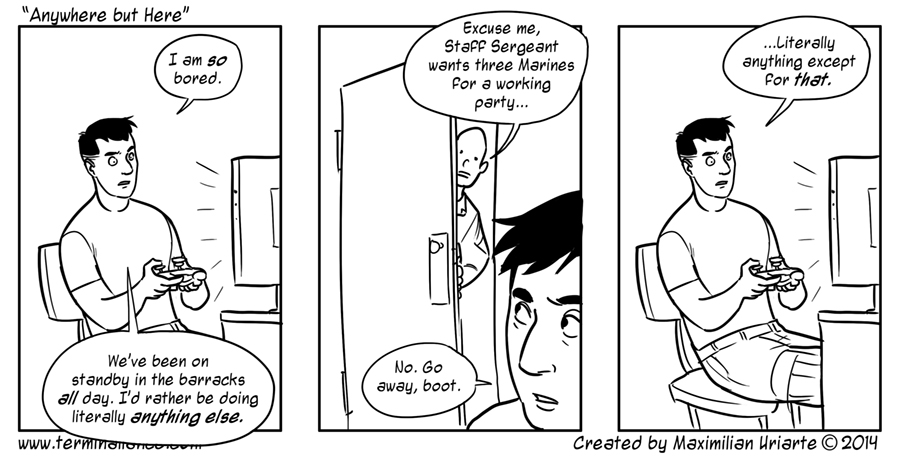
As a buddy cop series, it sorta fits the bill of what could be seen in shows like Brooklyn Nine-Nine. It doesn’t take itself too seriously and shows the more relatable human elements between the cast members. Uniformed or not, there will never not be an organization of people being weird or spontaneous on an off day. Talk to veterans about the stupid things they’ve done in service during their time off and you’ll be cracking like an egg from all the jokes and off-color humor.

Credit: 22 January 2016; Uriarte, Maximilian; Terminal Lance Comics

For plot, most of the time the characters are either goofing off or just performing their duties as police officers. It’s framed as the sort of episodic anime series that you can kick your feet up to, though it’s not light on the action either. The policing part of the job in You’re Under Arrest is a mix of the standard issuing of tickets, tracking down minor law violations and whatnot to tracking down and arresting criminals, aiding the elderly and defenseless, and overall being a pillar of the community. And spending enough time on the internet may open you up to some snarky comments about policing in most western countries, but that’s getting off topic.

Unless you are that type of person, it’s an unoffensive series that has a lot of heart, humor, and complexity to it. The characters are fun and energetic, and (slight spoiler) for those who have feelings for each other, there comes the question of whether this is a conflict of interest. Are the risks worth it to be with each other and whatnot.

This video also says much of the same about the series:

Channel: Anime Top Scholar

While viewing the series, one thing I noticed was the meticulous attention to detail, especially for a hand-drawn ’90s anime. Little to no details are left out from objects or people reflected in windows, to water effects during rain or storms even to the response of the gauges in the vehicles. Fujishima and the people at Studio Deen did well on their research for the series. There are some minor errors as expected–no one is perfect–but it’s not too much of a distracting unless you’re a certain type of person.

Users on MAL gave it an overall score of 7.6 out of 10. Normally, I stray away from a numbers system not so much out of principle or preference, but largely because to a certain degree I understand the argument that a numbers rating system trivializes or undermines the whole review. Spending all that time to write a long- if not well-thought out opinion piece on a certain piece of entertainment, brought to its knees by a scale. Not changing my rule, but for the most part, I’d bump it up to a solid 8 out of 10.

The full series is available on YouTube, as someone was based enough to share it for the rest of us without concern for monetization. Trying my best not to jinx it, but if you search it up on YouTube one day and the playlist is absent, you already know what to do.

I was never here.

That Manga About Robert Johnson

Seems there’s a manga for everything

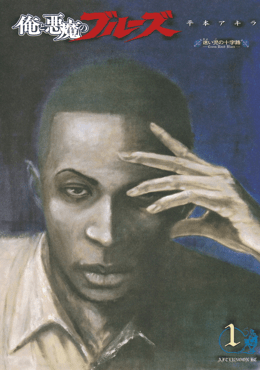
I remember long ago writing about searching high and low for obscure series to read or watch. Unknown, underappreciated, undersold series that have very little audience, very little fanfare, very little recognition of any kind out there. And I believe I have another one that not only is largely unheard of by the layman, but is also on the subject of an individual who lived and died in obscurity, forever doomed to posthumous recognition for his talents… or curse depending on how you look at it. But I’m jumping the gun. What I’m talking about is this:

An unknown artist and blues pioneer of the early 20th century, Robert Johnson lived a life familiar to many black Americans at the time. Born and raised in the Deep South on a sharecrop with an almost predetermined future. Brief history lesson: post-Civil War America and Reconstruction came with a wave of new changes for the formerly enslaved, but not all of it implemented unanimously, cleanly, or with regard to the realities of the situation. Between ex-Confederates skipping country, finding their way back into the U.S. political machine, or in some uglier cases, becoming the first members, if not, founders of the first Ku Klux Klan, there was a lot of infighting in the Reconstruction era. A lot was promised for black Americans, but so little was implemented with the recently reunited government figuring out how to kill two birds with one stone at the time.

The reason I include that brief history lesson is to show how long the system actually lasted. It was not too long after the Civil War ended that these sharecrops became so prevalent and it wasn’t until midway through the 20th century that they were on their way out, and Johnson’s early childhood as well as that of his family was in the middle of that. What separates sharecropping from full-on slavery was how someone found themselves in the sharecropping system. It was basically like debt on steroids. You’d agree to live on and tend to a farm, with roughly everything stacked against you. Negotiations are virtually nonexistent and you hardly ever get to live off your hard work. Someone else enjoys themselves while you literally bend over backwards to pay off a HUGE amount of debt.

For Johnson, there’s evidence that he started off like this, but major details of his life are missing from the historical record, and that’s largely on him allegedly vanishing and showing up back home or around home with large gaps of time in between them. You were lucky if you could sit down with him for five minutes as a researcher to write his story, and whether what he or others told you was true was all up in the air.

Getting concrete proof of what this guy did outside of music was one of the toughest things historians and researchers could do, and the ones who tried should be applauded for their efforts. You think you can do some investigative reporting while chasing shadows at the same time? What’re the odds there was a rumor he never even existed to begin with? (Actually, in my research, I found out that the few surviving photos of him available were discovered decades after his death, so this certainly adds to the legend/conspiracy theory/rumor, etc. of Robert Johnson. What are the odds?) Me bringing this up is probably the first time you’ve ever heard of him. I only found out about him a few years ago, and I can’t remember where; nevermind where the mangaka Akira Hiramoto learned. That all said, the fact that Hiramoto wrote about an obscure blues pioneer from Nowhere, Mississippi is proof that America continues to fascinate Japan to odd degrees. It would be the equivalent of a westerner (read: American) writing a novel about the samurai Sakanoue no Tamuramaro… well, I think I fit that bill somewhat considering what the last few posts have been about.

Back to the subject at hand, owing to the name of the manga which is also the name of an album recorded by Johnson, part of his biography claims that he became an expert guitarist in little over a few days, which is impossible for seasoned guitarists who spend years learning to strum and pick before choosing what suits them best personally. How he even learned to do so and claim to in such a short amount of time is questionable and a huge part of the legend. Johnson was said to have heard from the grapevine that playing a tune of any sort at a crossroads is how one acquires the gift of music… from the devil.

Channel: RobertJohnsonVEVO

In all likelihood, all that time spent traveling alone or with peers would’ve allowed for a hell of a lot of time to practice the guitar and pick up lessons from musicians like Son House or Lead Belly or any other blues musician who was alive at the time. So the poor guy from the Deep South pours his heart and soul into the guitar and becomes a local legend. One could reasonably chalk up the black codes and segregation especially in the Deep South for the reason he had almost little fame, but I see it as a combination of factors for why he was only destined for posthumous success.

Keep in mind, he never stayed in one place for very long. Historians did have a hard time finding and even writing about him, or if they did it was more often from a secondary source. Music is definitely a way to gain fame and riches, but only if you can stay long enough to record the song and see the royalties rolling in. Johnson’s behavior was quite atypical. He was often in a juke joint strumming for s[guitar twangs]s and giggles. Not a very stable way to grab some cash, but it surely earned him women’s affection. Most often married women’s affection, and this would lead to conflict. The last one being fatal.

His life and his death are a riddle wrapped in a mystery inside an enigma. He never had an autopsy done on him, presumably due to the circumstances of the period, but adding to the deal with the devil legend, once his flame was out, it was time for him to cash his check. It’s said that an irate husband of one of the women enamored by his skills slipped him some beer laced with poison and it killed him in a matter of days.

Less interesting, but still serious was the possibility that he may have had congenital syphilis which offers a better explanation of his unusual behavioral patterns. For a very long time, and even now, the medical sciences didn’t treat black Americans with a modicum of respect, so if the syphilis theory checks out, whoever passed it on likely died as terribly as Johnson did.

Whatever happened is all up in the air. What is a true blue(s) fact is that he and others of his time had a massive impact on music and rock n roll for generations to come. And the manga is proof that he didn’t just inspire westerners or musicians. As one of the pioneers of the blues genre, specifically Delta blues, a lot of effort was put into researching the man, with many researchers spending decades compiling enough information about his life to open the Robert Johnson Blues Foundation museum in Mississippi.

This might be where the author of Prison School found his inspiration. Yes, this Prison School:

I honestly didn’t believe it either. From a manga about a 27 Club inductee to one about pervy highschoolers getting the crap kicked out of them by a cadre of all-female sadistic school wardens. Should I bother making sense of that? Probably not.

The manga largely retells what we know about Robert Johnson along with some conjecture. I’m not even 100% sure about the historicity of some of the events I looked up considering what I’ve seen of the manga or read in my research, but all things considered, I can only assume that this is probably one of the best things we have to a historical record next to the aforementioned museum in his name. As for what I think about the manga itself, Hiramoto seems to be quite well-learned of the Deep South to know what life would’ve been like for the average black American in the 1910s and ’20s. I like that it’s as honest and realistic about life back then while also acknowledging the myths and legends around the musician.

For criticisms though, it’s hard to think of any. Semilegendary figures seldom have anything to disprove especially if it isn’t recorded anywhere, so all we’re left with is the guesswork put together by the historians of yesteryear. It could even be claimed that we don’t even have all of his songs. Another victim of lost media, possibly.

I’m still reading the manga as of writing this, and last I checked it was still ongoing even after a seven-year hiatus. Certainly worth the read, especially if you want to see in manga form how legends are born.

For this week’s YouTube recommendation, look no further than That Japanese Man Yuta.

https://www.youtube.com/channel/UCn7LyBvG5LEBXK9I4W5dGdA

Run by YouTuber, blogger, and polyglottal language teacher Yuta Aoki, That Japanese Man Yuta is a channel dedicated to uncovering all the little bits and pieces that have come to construct the Japanese language. He stands as one of a handful of Japanese YouTubers who can and has crossed over to a western/English-speaking audience. A majority of his videos are about dissecting the Japanese language wherever it appears from his own videos, to interviews, to manga and of course anime.

They also end with the same message: an offer to learn from him personally about how to speak Japanese in a way that most natives would believe you’d been living there all your life. I personally haven’t signed up for that due to time constraints, but if you see yourself brushing up on your Japanese, learning for the first time, or wanting to test a different method, especially if you’re going to Japan sooner or later, perhaps Mr. Aoki can tutor you in the language. He’s definitely confident with how often he mentions it and structures his channel around it.

Stumbling Blind into Btoom!

I didn’t know what to expect from this one

My discovery of this series was quite an interesting one. I couldn’t remember where I first heard of it, but after watching more of it I realized I’d seen bits and pieces of it in WatchMojo.com’s anime top 10 lists. So not as blind as advertised.

Still, all I remembered from it was the name of the series and on a whim, I found that someone was pirating it for their viewing pleasure on YouTube. In the time between when I saw the first two episodes and completed Army basic training, I found that the channel had been taken down, though as of writing, there’s still a video of all 12 episodes in a 4+ hour marathon, so if you wanna game the system without risking malware Trojan horsing into your devices, have a looksee. Otherwise, go in with a shield and beware the spam on your hard drive.

I talked briefly about Btooom! at the end of December when I wanted to speedrun the topics I had on my mind at the time before I stepped off to new adventures, but I didn’t have enough time to properly explore my thoughts on the series, especially since it only has 12 episodes to boast compared to similar series like SAO that have franchises and can simultaneously earn the praise of some and the ire of others. So let’s give Btooom! some love it should have by now.

As of writing I’m only six episodes deep into Btooom! which I’d say is good enough to fully write about what I’ve witnessed thus far. From what I remember of the first two episodes I watched in December, as a Seinen series, it’s not the type of series to highlight the good in everyone. It knows its characters are bastards and scoundrels in some shape or form. The protagonists are definitely antiheroes. We’ve got three of them: Sakamoto, Himiko, and Taira. Each of them have at least something to balance out their negative qualities.

Sakamoto was a 20-something NEET with no passion or future in anything more productive than just lazing in front of the screen and keeping his high scores. This part is understandable since not everyone is required to behave like the heroes and crusaders they might be raised to believe, but what makes Sakamoto quite s[fart noises]t is that he’s that kind of toxic gamer. Abusive to his mother, refuses to find a stable job or training and move out of the house, no affection even for his stepdad (honestly this fits a lot of toxic gamer tropes that even I myself fell into as a teen at one point), and really hot-tempered. All those jokesters and mouth-breathers who argued that video games caused violence probably would’ve been onto something if Btooom! was used as an example.

Himiko’s the second character we see in the anime and her flaw was being a bit two-faced. Prior to being sent to the island to play the game IRL, she and some school friends were going to be the groupies for some musicians, but when the band mass molested them, she was the only one to book it and leave her friends to their fate. Now they don’t want anything to do with her seeing as she abandoned them when they needed help, but it wouldn’t be long before, in their eyes, she’d get a taste of her own medicine. I talked before about the molestation scene and I don’t want to elaborate further on that aspect as it was harrowing to watch only once, but to catch you up to speed: the one decent person who helped her got rejected, physically assaults and rapes her, she pulls out a bomb and explodes him to the seventh circle of hell.

You might begin to cheer her on for defending herself, but down the road she appears to be killing men left and right as a trauma response. And I think that’s one of Btooom!’s highlights. Trauma in western media tends to be hit or miss with more strike outs than home runs to speak of, which would be why so few of them handle it very well and with the maturity the subject matter demands.

I heard this show handles trauma pretty well. I haven’t seen it myself yet. I might…

For Himiko as a rape survivor, the reactions sound valid but get less and less rational as the series goes on, which may be the point. She narrowly dodges an assault, is the victim of one, and is motivated to never, ever be the victim of such an act again, even if it means a series of pre-emptive strikes that could easily be mistaken for Unabomber attacks, especially considering this series.

Finally, there was Taira, a middle-aged convenience store manager who meant well to his friends and family, but according to himself, was a great bastard to his subordinates. Allegedly, he’s the type of guy you’d talk about in order to not be like him. The example of what toxicity at work looks like, so to speak.

Now that I think about it, the series felt like the Saw franchise but anime and with bombs instead of overelaborate traps. Also, few people are genuine do-gooders in the series. The characters are either believable or wickedly f[power tool noises]d in the head. Each of these characters are ripped from their familiar surroundings and dropped into a real-life version of the Btooom! video game, only it’s more like The Most Dangerous Game with more evidence left behind for a forensics team to analyze.

The game Btooom! is pretty much a battle royale, deathmatch style video game similar to Call of Duty’s or Halo’s multiplayers, though more Halo style since everyone is kitted up in sci-fi looking armor and in place of guns and small arms, it’s all bombs of different types, from incapacitation to full-on lethality, and seeing the types of characters running around in only six episodes thus far, a lawless, free-for-all for keeps is exactly what would attract more than a handful of psychopaths who just felt like killing. Some of the nobodies who get gunned down in Black Lagoon would feel right at home in a series like this.

Sounds like an exciting watch, right? Well, I and whoever ran that now-deleted channel and whoever is still uploading clips of the anime to this day all thought so, but at only 12 episodes with the manga lasting far longer than that, I’d at least want to know why the anime died off while a similar yet comparatively lighthearted series like Sword Art Online became an overnight global success. Well, I came across one video that pretty much explains the reason behind Btooom!’s faults and failures.

Channel: thisvthattv

In short, the series was a sufferer of a vintage anime bugbear where the anime releases before the manga is even halfway done. For the most part, up to two or three chapters of a manga can make one episode while depending on the style, that’s one or more volumes making a full arc, and it looks like there wasn’t enough time given between the first episode and the release of the 9th volume in January of 2013, which sounds like time constraints or nonexistent timetables made a mess of things anime-wise.

The manga at least finished all the way up until 2018 with creator Junya Inoue’s assistant Hiroki Ito releasing a spinoff series called Btooom! U-18 the same year as the manga’s conclusions. Yes, plural. There’s a light ending and a dark ending; U-18 follows the former. But even with an interesting premise, the biggest culprit is that the manga was never financially successful, almost forever doomed to cult status. This fate followed the home releases of the anime with only a few collectors having it on Blu-Ray and DVD in Japan at least. Japanese publishers notoriously ignore foreign data and market share so there’s no way to know for certain if they know that the show had an audience overseas. My best guess for why this is for a lot of studios at least is that they agree to let western studios and voice actors dub it over and immediately call it a day. That, or they go straight to work either on the rest of the series or something else until another season is announced.

Speaking of which, a second season was promised under the condition that the tie-in online mobile game stay within the top 5 in Japan for a set amount of time. In 2016, the mobile game developer Asobimo developed a mobile game based on the series as a bit of a glorified promotion and also as an early pioneer in the battle royale genre which in turn was based on the manga which itself was based on the series that gave the genre its name.

Holy Christopher Nolan, Batman. We’re discovering fractal layers left and right!

So all of these conditions needed to be met before an animator could get to work on a second season of the show, but alas it wasn’t meant to be. The success of the game was short-lived and it lost its high marks and status after a month and change. It wasn’t even in the top 100 in Japan anymore and I don’t think Asobimo was doing much to help promote or maintain it. It’s last updates were in the Spring of 2017 and it lost support two years later. A second season is a long shot, and a well-done second season is aiming at a gas station sign from five miles away. With only one arrow.

It can be done, we’ve seen more unlikelier series come back for a second season even years later…

…but assuming that of every series is like assuming every coffeehouse makes joe the same way, like they follow an industry standard. It just doesn’t work that way. Maybe we’ll get more Btooom!, maybe we won’t. My crystal ball is looking kinda gray, but if there’s a silver lining, it’s this. It’s finished. The manga’s done, so an extended continuation is in no way off the table if the cards are played well and the season is properly formatted. I just hope it doesn’t go the way of Rising of the Shield Hero season 2 or The Promised Neverland’s season 2.

Wave, Listen to Me!

Radio Coming Back from the Dead

You’d be surprised what a spontaneous Google search can reveal. It’d been yonks since but I remember stumbling upon an anime adaptation of a manga that unfortunately flew under the radar for reasons I’ll share later. Known in English as Wave, Listen to Me! and in Japanese as Nami yo Kiitekure!, the manga tells of a Sapporo-based restaurant worker who finds herself as the newest voice of a late night radio show by proxy. A drunken rambling to an ex-TV executive gets her into this world and she doesn’t even realize what had happened until she and her peers recognized her voice coming out of the radio in the restaurant she works at. Talk about stumbling face first into fortune, right?

Well, fortune isn’t exactly how she sees it and legally no lawyer would unless a negotiation and settlement would be reached. Reasonable people call this a discussion, we here in the real world call this the high road most copyright strikers on YouTube refuse to take.

All things considered, this is the kind of series that lives up to its stated mission goal. Although I’m not a wave, I certainly am listening. (See what I did there?) The protagonist, Minare Koda, found herself in this world thanks in no small part to Mr. Al Cohol. For me, I found my way into blogging purely out of desperation for employment of some kind. I had just graduated from community college and I didn’t want the degree to just sit there and look nice, though now I know that this is a fate that befalls many arts degrees.

A majority of the focus in the series is on the radio, the station, the show Minare works on, etc. but it doesn’t focus on the inner workings of running a radio show or performing in one. It’s not like Akane-banashi where the story introduces the reader to the history and culture behind rakugo performances. And honestly, it’s not like it really needs to. If the pandemic was proof of anything, it doesn’t take a lot to just grab some equipment and start podcasting. Some of the people who gained popularity through the medium have been doing it for years or decades by then. They just got more listeners because of the lockdowns.

Rather, Wave, Listen to Me! reminds me of a couple of other series I happened to stumble upon from that old article a few years ago: House of Five Leaves and Ristorante Paradiso both written by Natsume Ono, both of which I’ve seen, and one of which I tried talking about on my first blog, but will likely devote time to again once I get to rewatching them both.

The connecting element between the three Seinen series is that it’s not about the practice, it’s about the people engaged in the practice. Wave, Listen to Me! takes care to dive into the people’s personal lives and show you what goes on in their lives outside of work. Pretty much how a slice of life should be. Describing the rest of the cast, well, do you remember when you were a kid you saw all the adults engaged in admittedly mundane activities, but it looked like they had everything sorted out? Then when you became an adult you realized everyone was essentially bulls[bull noises]ng the entire way and no one had anything sorted out? That’s what it felt like watching Wave, Listen to Me! except me being 25 (around the same age as Minare in the series) I had gotten smart to this around the time I was in college.

Minare is given a lot of responsibilities in the restaurant, not all of them relating to waitstaff, but that and coupled with her personal woes may or may not be the reason she drowns herself at the bottom of a beer glass weekly. She’s such a mess that her downstairs neighbor brings her back up to her apartment on his back. Her boss and coworkers aren’t all that much better either. The ex-TV exec, Kanetsugu Matoh, recorded her without her consent and even though it works out in both of their favors, an even worse person could easily have a lot of fun with that. Hell, her boss at the restaurant is one such example, and this could be a minor indictment on the series itself. For starters, this character gropes the bums of men whenever he takes pictures with male celebrities who come to dine. Do with that information what you will.

Now, all of that is interesting on its own, but what about the diminished attention this series has? Why haven’t I heard about it until now or before? Normally, with unsung and unknown series, that’s a matter of debate unless outright stated by the creator themselves on the status of the series and in the case of the anime adaptation, it was like a bunch of other short term anime series: an advertisement for the manga. But I think I have a few theories on why Wave, Listen to Me! slid through the cracks.

One part of it may have to do with the release schedule: April 2020, so exactly four years ago (my, how time flies). The year of the pandemic, the riots, and what amounts to an almost-pocalypse in retrospect.

Barely a week in and people were crying about a potential war! It’s just a dark joke now.

I don’t know about the rest of the world, but the month before Wave, Listen to Me! debuted, the U.S. went into a lockdown and news of lifts kept getting pushed back every three weeks with TV moving out of studios and podcasts dropping from the sky left and right to pass the time until a vaccine could be mobilized. As for Japan, a more health-conscious country, guidelines were stricter and generally everyone was encouraged to maintain safety and even move their work home with them, hence why a look at 2020’s anime repertoire doesn’t look as stacked as what preceded or succeeded it since. Loads of projects were canceled or postponed until the pandemic was declared reduced or over.

That said, I believe that even if there wasn’t a pandemic that year, the marketing would’ve done a lot to make or break the reception of the series. Don’t get me wrong, this is a great series. But a bad or badly received trailer can straight up assassinate interest in a show, as explained in this video about demos:

Channel: Extra Credits/History

There’s also this trailer for the 2018 TV series Titans:

Channel: Rotten Tomatoes TV

In both of these examples, Spec Ops: The Line and Titans were both given positive reviews post-release, but the initial reception based on their respective marketing led to a lot of people counting their chickens before they began to hatch.

For Wave, Listen to Me!, good marketing could help promote it at the time. No clue if it would have the longevity to still be talked about even now if this were the case, but we’ve seen stranger things happen. To quote a smooth-talking, galactic smuggler:

YouTube recommendations are still a thing, albeit biweekly for now. And for this week, I bring you Mrs. Eats.

https://www.youtube.com/@MrsEats

One of a handful of Japanese YouTubers whose content is in both Japanese and English, Mrs. Eats likes to show people the ground perspective of life in Japan, at times in a comedic way with her husband. Additionally, her videos uncover several misconceptions many people, especially foreigners, may have about Japanese culture, lifestyle, or even entertainment. Sounds like it’s up your alley? See the link above.