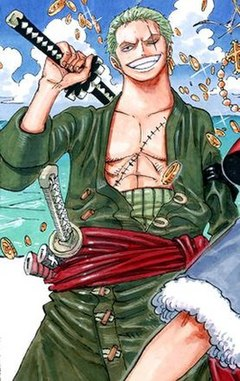
About two months ago, I made a declaration to go back to some classic anime, those being Dragon Ball Z (the Kai dub) and One Piece. Why these two specifically? No particular reason, just that with Kai, it was a redub of the original DBZ anime that aired when I was a kid and in an abridged fashion. The reason Funimation did this was to commemorate the anime’s 20th anniversary. As for One Piece, you’d be hard pressed to find an anime fan who hasn’t heard of or watched or planned on watching One Piece. As I write this, someone just finished the most recent episode of One Piece and is blazing through the manga right now. Someone else has the entire box set and omnibus and a third fan has taken it further, emulating Zoro in appearance, technique and awful sense of direction.
I made the declaration to give One Piece a rewatch and try (keyword: try) to play catch ups. Kind of ridiculous 1,000 episodes in, but not impossible. Thing is, I kept getting held up either by work or my personal desires at the time. That declaration was made in September and as of writing this, I’m only 19 episodes in. It would be more, but I have an explanation for the part that’s within my control. The simplest answer is that I’m not the biggest fan of binge watching.
Netflix spearheaded this phenomenon in the mid-2010s and I had been questioning it for the better part of a decade. The more I learned about Netflix’s formula, the more I began to criticize it. It’s normal for a show to get pulled or stop airing after several years, but Netflix’s pattern of batch releases has created a culture built around rapid mass consumption of media… with little thought given to subcultures built around a particular show. Not to mention, too many great shows of theirs get s[banging metal]t-canned after one season and the hype is lost on me. Shows that have already aired though are the only reason I’m still on that platform for now, but the influence of one can trickle elsewhere and I don’t like how influential Netflix has been over the years.
This blog covers obscure andold media as its bread and butter; and while I do cover recently aired/currently airing shows or recently released video games, I don’t recall covering that many newer series of any kind. That’s more suited to guys like this:
He can afford to watch and talk about anime on a regular basis now that he and Trash Taste are under the GeeXPlus umbrella, whereas I’m currently doing Signal Corps things in the Army. Sidenote: if you join the Army and are put in Air Defense Artillery, I strongly implore you to choose any other branch. You’ll get more time to yourself when able.
As for the time I’ve been able to scrounge up for myself and spend on watching things I like, I’ve been dividing it between One Piece and other shows. I’m still not all that far into Genshiken (and I plan to write that up in two weeks), and I’ve been caught up watching my favorite history documentaries, as well as another manuscript. Can I get all of this done outside of duty? Yes. Is it easy? F[bonobo screech]k no. It’s a very challenging series of feats I’ve taken on for myself, and my laziness has stifled progress in a few areas. Couple it with a gacha game addiction and it’s a miracle I got to the first 20 episodes.
Variety is the spice of life, Terry!
Still, 19 episodes gives me a decent amount to talk about even for an anime this long and old. So how did I enjoy starting from number 1? Pretty well! I can’t recall the last time I watched One Piece before this quest of mine, but the most memorable arc I watched before it became too inconvenient was the one where Nami came down with a bad fever. Quick googling revealed that that’s known as the Five-Day Disease. This was at least ten years ago and Toonami was (and still is) airing the reruns to my knowledge. A show that helped build the block and make these shows household names isn’t gonna be dropped by the network, but it will be moved to make room for new shows. To my knowledge, it had been moved to at least 2:30AM or 3AM and my days of watching episodes in rapid succession are long gone.
C’est la vie.
I’m still watching One Piece and hope to at least clear 250 episodes by sometime next year, probably by Spring or early Summer. So far, Luffy had gathered a crew of three and is about to recruit the fourth member. Zoro was freed from capital punishment, Nami was insistent that her relationship is purely transactional and she’s not a pirate (not dissimilar from the “I’m not a furry” crowd), and Usopp whose sweet little lies would make him a match for Hol Horse in a game of wits. It also goes to show that similar to Hol Horse, he’s not prone to hurting unnecessarily. Lies, yes, but attacking the innocent isn’t something he’ll do. It might be the same for Hol Horse, but until I finish Crazy Diamond’s Demonic Heartbreak, I’ll confirm for sure.
As of writing this, Sanji is set to join the crew next (those who know, don’t spoil anything so I can still see for myself how everyone joins the crew). The wheels turn slowly but they turn either way, so I hope to follow up with an update sometime in the future.
Back to YouTube channel recommendations, this time with Dr Mod
A recent discovery of mine, this channel covers just about everything GTA-related. Older games, recent games, and even the upcoming GTA VI are a staple on this channel. Some of my own early work covers the GTA series, though not to the lengths that Dr Mod does, so if you’d like something to hold you over until we return to modern day Vice City, enjoy Dr Mod.
And maybe also pirate Vice City and Vice City Stories as well. They won’t take up a lot of space on your hard drive. I speak from experience.
Certainly has been a while since I’ve covered a more niche animanga series, one that had a marketing push on the associated streaming sites, notably Crunchyroll and the now-defunct VRV in 2018. I remember as I’d paid them no mind whilst watching Boruto or FLCL or Soul Eater. Recently, I’d been looking more into Chihayafuru as I’d found very few people talking about it and due to more and more action-heavy series getting adapted that year and the years to follow, it’s no wonder it flew under the radar. As I’d looked further into it, it got me thinking about a series I’d talked about sometime last year: Akane-banashi.
Both are about traditional Japanese cultural products that require research for outsiders to get an idea of what it entails, but can still be enjoyed without prior knowledge; both feature female protagonists engaged in a sport of the mind, further broadening the definition of what a sport is or can entail; both of those female protagonists have a giant competitive edge in said sport; and personality-wise, both girls have a tomboyish history that shines when engaged in their respective sports.
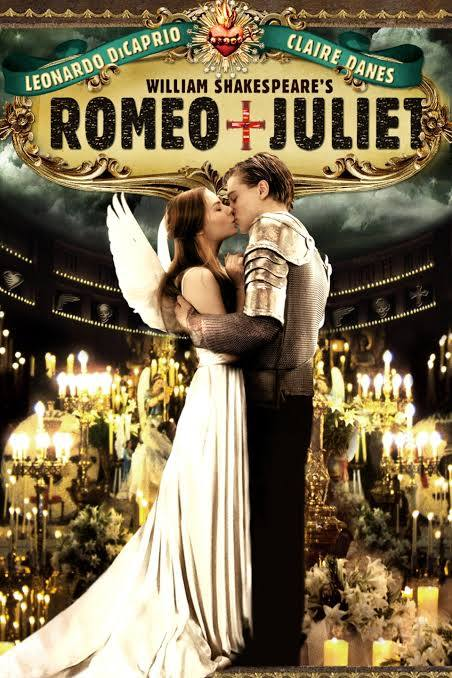
Akane-banashi’s specialty is rakugo, where a lone performer tells any number of comedic stories on a center stage. Normally, they’re old folktales from Japanese history and mythology, and the last time I read the manga, they hardly strayed from the style of storytelling expected of the time they written/spoken, but can sometimes be adapted to more modern audiences, similar to the 1996 adaptation of Shakespeare’s Romeo and Juliet.
For Chihayafuru, the tradition this time is Karuta, a card game based on matching similar looking cards, though in the series it’s more about Japanese poetry. This version of the game has a caller who reads a portion of a poem written in Hiragana and the player nabs the card as fast as they can. Experts can get them before the stanza is fully read aloud. The main lead protagonist is Chihaya Ayase.
Initially, she was (and still is) supportive of her big sister’s modeling future, but became infatuated with Karuta after being introduced to it by a boy from Fukui Prefecture named Arata Wataya. The impoverished little boy didn’t have a lot to his name, living in a dirty, cluttered dwelling with 80% of his clothes being hand-me-downs from relatives. Further isolating him from the rest of his Tokyoite classmates as a child was his “hick” accent. For some reason, people outside of Tokyo Prefecture are referred to like this, which I think is ridiculous, but then again, I live in a country that celebrates even linguistic diversity, so personally, not much separates a Mississippian from a Michigander or a Nevadan. All Americans, different circumstances.
Still, while Arata struggles to fit in, he’s a Karuta prodigy at a young age, taking to heart the adage of: “If you’re going to do one thing, be good at that one thing,” like Zenitsu’s Thunder Breathing.
One-trick pony? It’s easy to say that, but different series like Golden Kamuy capitalize hard on one-trick pony characters, from Sugimoto’s extreme (and painful) survivalism to Shiraishi’s Houdini tactics to Ushiyama’s history as a dangerous judoka. Being good at one thing really only matters if its applicable to other things and in this case, Karuta is both the main connecting element for all the characters and the center of a competition within the series.
Learning from Arata the fundamentals of Karuta, Chihaya is encouraged to go big and make it her dream to become a de facto Karuta world champion, mostly because Karuta doesn’t really exist outside of Japan with the same claim to fame as Mahjong or Hanafuda. Along with the two, an old friend Taichi joins them and his contrast to himself is stark both financially and socially. Taichi is a rich Tokyoite who can actually afford to be petty while Arata’s childhood poverty humbles him greatly. As such, Taichi starts off spoiled and jealous, but his best excuse is due to the high expectations put on him by his family, namely his strict mother. And you thought wealth would be easy!
Yet as the three rejoin as adolescents, they found an afterschool club called the Mizusawa Karuta club and work towards the goal of becoming Karuta champions. I’m still checking the series out as of writing, having only completed episode 1 and the first chapter (and thus getting the research from the Wikipedia page), but other things that stand out is that it’s my first Josei series. Josei is typically aimed at a demographic of young women and is notorious for its inclusion of romance into the plot. Josei itself, sadly, doesn’t get as much exposure as Shonen, Seinen, or Shojo genres which is part of what hurts series like Chihayafuru compared to Akane-banashi, which is under the Shonen genre and licensed by Shonen Jump and Viz Media.
Couple these with the niche of Karuta, whoever expected the series to get wide praise would’ve had to fight sleepless nights for something to hardly ever come from conventional animanga media outlets. And that’s quite a shame. No matter what you think of the concept, the series is beautifully drawn and animated–the production quality narrows the gap between itself and something like The Elusive Samurai.
Channel: Crunchyroll
Speaking of animation, it’s worth pointing out that Chihayafuru was adapted by Madhouse, responsible for Overlord, Trigun, and No Game No Life. This also brings me to another matter going back to Akane-banashi. Niche subjects especially those that would be found in a book on Japanese history and/or culture don’t often get the animanga treatment and if/when they do, not always successfully. Rurouni Kenshin benefits from the battle aspect more so than its setting, as does Samurai Champloo because both series have a concept that has universal knowledge: the samurai and the ronin.
Akane-banashi and Chihayafuru differ by offering battles of wit instead of battles of physical strength and power. They both also rely on parts of Japanese culture that rarely get outside notoriety, leading to limited viewership. I have no idea if the performance of the Chihayafuru anime is a case for why not everything will get an anime adaptation or should not, but if by some chance that was the metric in use, then it’s not a fair assessment to make. Even then, it wouldn’t be the first time the art of rakugo was animated.
Be honest, you only know what this is because of its hyper-energetic ending animation.
No matter the future of Akane-banashi, it still has a future, whereas Chihayafuru’s manga ran from 2007 to 2022 and its anime running from 2011 to 2020. Once again, I call upon my advocacy of piracy to view the anime and/or the manga with little issue.
Yonks ago, I mentioned an upcoming post that was initially meant to be just another double bill, but it occurred to me that there was a third series that I felt was appropriate to lump in with the other two. These are the three anime that I watched all through college:
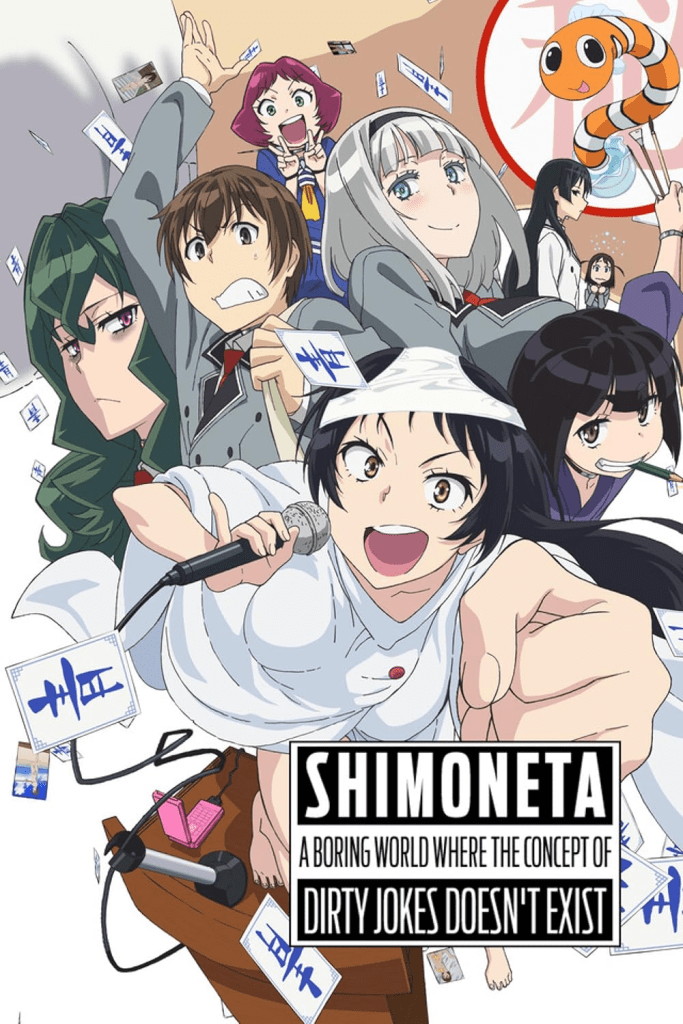
Shimoneta: A Boring World Where the Concept of Dirty Jokes Doesn’t Exist
High School DxD, and;
Monster Musume
And we’ll go through them one-by-one. The titles of each should be a giveaway but just in case: each of these series contains sexually suggestive themes, language and imagery. Reader discretion is advised.
Shimoneta (2015):
Another anime to get its start in the world of early 2010s light novels, Shimoneta’s concept is exactly as it says on the tin. All language of a sexually suggestive or provocative nature is illegal and if uttered, the speaker(s) is/are arrested by the Decency Squad, a specialized morality police unit whose purpose is to track down and subdue anyone who dares utter such obscene words.
How do they know people are saying s[poop]t, f[moans]k, and ass? By the collars around their necks. They’re designed (read: programmed) to monitor different trigger words, I suspect, by way of detecting the movements of the mouth when certain words are spoken, sort of like how most YouTubers, TikTokers, etc. have to censor/monitor their own speech to keep from the Demon of Demonitization at bay. (Side note: f[plastic wrap]k the algorithm for doing that to our favorite creators.)
One such character is the protagonist, Tanukichi Okuma. He’s a brand new student to Tokioka Academy and a witness to the indecency of another character he meets later: Blue Snow, real name Ayame Kajou. Ayame takes the alias of Blue Snow whilst on a crusade to dismantle the shackles of this dystopian system of policing speech by way of challenging the response time of the Decency Squad. Under normal circumstances, suggestive language is how you get slapped on the dick (or in Ayame’s case, the tits), but she evades that by dialing a number on her cellphone that deactivates the collar on her neck for three minutes a day, letting her unleash a bevy of inappropriate sayings.
Based on her appearance here, Ayame adopts a Clark Kent persona when around others only to don a mask (a pair of panties, yes, really) when it’s time for her 180 seconds of lewd infamy.
The series isn’t just a man vs society conflict at play, there’s an actual antagonist in the series and she starts off as innocent and pure until the following happens to her:
Channe: Khánh Senseii Anime Kiss
The birth of the villainess of this series. Anna Nishikinomiya begins the series as the class president of Tokioka, but after a mishap in one of the episodes, Okuma plants a kiss on her by accident. If she had any knowledge of even romance, she’d probably have a normal reaction, but this unleashes metaphorical and literal floodgates. She conflates love with lust and 85% of the scenes that she’s in is a display of female-on-male sexual assault/rape. I’m not kidding.
Obviously, it’s played for laughs in the series and there’s a lot to be said about societal discourse surrounding male victims and their female perpetrators (a discussion I’m not qualified to talk about on a blog based on entertainment, but would have no problem entertaining in mixed company), but without getting too dark and focusing mainly on the central theme of the series, Shimoneta is a display of the consequences of policing morality and human behavior. If you’ve been on the internet for quite some time, you may recall an era when cancel culture went haywire and a small fraction of forum posters chastised trolls online to hell and back for a few racy comments here and there. Not that it was unwarranted, the internet around the time of the GamerGate controversy was an interesting time to be on the internet, but interspersed with genuine policing were impromptu witch hunts conflating ignorance with curiosity, and this went beyond just suggestive or provocative commentary, lest we forget the cultural appropriation vs appreciation argument that was prevalent at the time. Though these days, the conversation has moved towards intentionally ignoring sex organs, due to a variety of factors that have massively influenced the internet. Sorry, digressing.
In Shimoneta’s case, it proves how difficult at the least; Sisyphean at the most such a task of policing even speech can be. Not to mention a shortfall that accompanies the series from start to finish about how to go about this. You’ll notice that speech patterns themselves are the main crime, not the physical aspect itself. Now, there would still be procreation which this world would likely allow for survival’s sake, but another conversation can be had about how conspiracy to commit is addressed more seriously than an actual crime in this world.
This blog from 2018 has more to say about Anna herself and with a finer brush than the broadstrokes I employed here.
Having said all that, I still recommend this anime for anyone wanting a closer look at an example of how bad overpolicing behavior can get or if you just wanna see the most athletic Japanese school girl in the world hunt down the object of her “affection.” Beware her homemade cookies, IYKYK. Now onto:
High School DxD (2012-2018)
My personal favorite for being R-rated and uncensored, the light novel ran from 2008 to 2018, ending around the same time as the anime’s fourth season. Whereas Shimoneta’s content is light on explicit nudity and fan service, High School DxD throws the censorship to the wind. Back during the Funimation days, the English dub played up both the nudity and the jiggle physics. From threatening to get naked to actually getting naked; I like the progression so far.
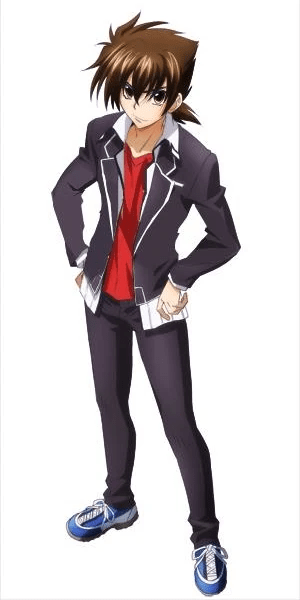
In High School DxD, Kuoh Academy recently transitions into a co-ed school for the new schoolyear. A few male students enroll, likely taking advantage of the 8 to 1 ratio of girls to boys in the hopes of scoring big before Kuoh fully integrates. One of these boys is a massive pervert and otaku named Issei Hyoudo. He initially fits the bill of a stereotypical otaku in all but appearance. Body pillows, an alarm clock with different anime girl archetypes waking him up every morning, an extensive hentai and porn collection shared with his two other friends, and a MIGHTY NEED to get some titty.
It just so happens that one particular set of breasts happens to belong to this devilishly gorgeous redhead, Rias Gremory. More than just a sight for sore eyes, Lady Rias is a fierce fighter and one to defend those she cherishes to her dying breath. Outside of battle, she’s a kindhearted young woman, compassionate, and reliable. She’s the head of Kuoh’s occult club, thinly masking her connection to the paranormal as a devil herself and making great use of the common tropes associated with angels and demons/devils: angels are depicted as bone ugly to ward off evil while demons are depicted as drop dead gorgeous to tempt mankind into following their id. In an ironic twist, the series depicts devils as more heroic than the beings they fight against.
As much as I make that sound like an engagement wearing the clothes of praise, there’s an actual plot behind the plot here. It takes a lot of cues and tropes from the Christian bible with the concept of angels, devils, and fallen angels. Following the devils, their depiction seems more sympathetic in the series as the factions do have a fair share of shady and unscrupulous characters. The overall plot plays up the biblical angle with the fan service going into overdrive, so Rias, Issei, and the Occult club are all (knights) in service of Satan, or in this case, in service of one of those appointed as a satan. To quote Anton Szandor LaVey, founder of the Church of Satan, “if you’re gonna be a sinner, be the best sinner on the block,” and it seems that Issei is guaranteed to live up to those ideals.
The juxtaposition of magical action and theological babble with T and A and convenient panty shots is what kept me going until about halfway through the fourth season. When it comes to censorship, normally I’m an opponent depending on the company I’m with. Throwing out f[crunch]ks, s[footsteps]ts, damns, asses, and other such forbidden words in a room full of bureaucrats allergic to the sun makes you seem immature compared to a gathering of mobsters, gangsters, or even servicemembers, all things considered. I censor swearing and nudity here for presentability and professionalism, but seeing as I’m writing about a trio of anime that joke or outright show you uncensored boobs, if it wasn’t for the presentation, this whole blog would have no reins. Before we move on to the third and final series I want to talk about, let this ending convince you to watch High School DxD if the above hasn’t already:
Channel: SE NPAI
And last but certainly not least:
Monster Musume (2015):
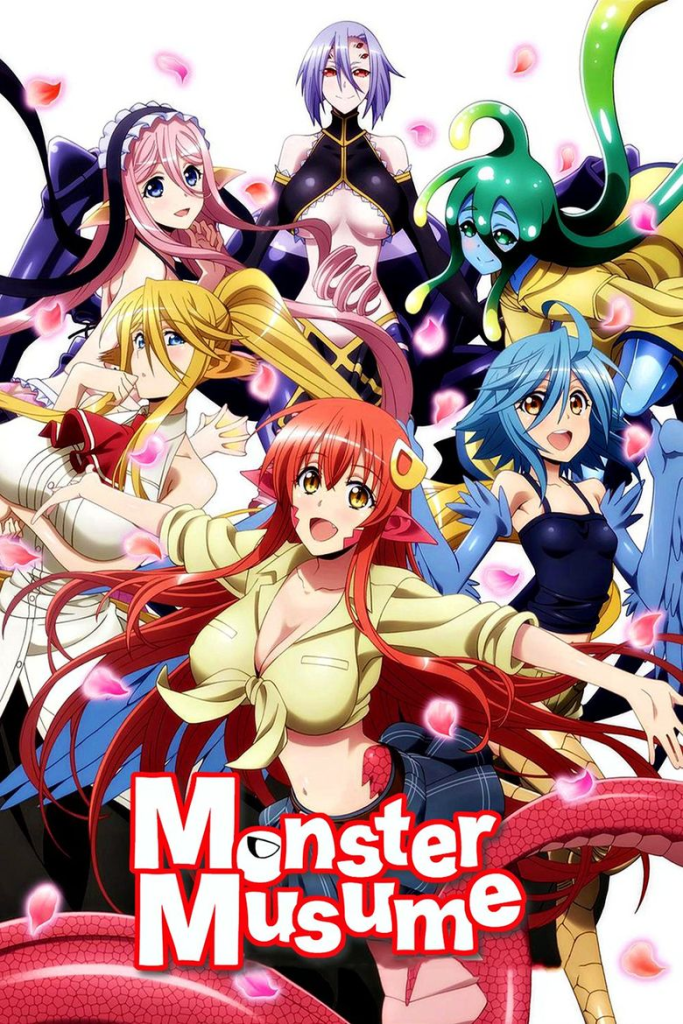
A harem series like High School DxD but appealing to even more fetishes while also putting the protagonist in a tricky situation like Shimoneta, though with a different context. The plot of this horny adjacent series is that monster girls of various mythical origins are enrolled in a program not dissimilar from foreign exchange student programs in real life and one of the people who is accidented/voluntold into the program is regular human person No. 4986 Kimihito Kurusu.
One of the coordinators, Agent Smith, mistakenly sends a lamia (snake girl) Miia to his house to take care of her under the the circumstances that they refrain from conflict or copulation. Easy rules for Kurusu to follow considering the consequences, but as the series goes on and more and more monster girls share a roof with the man, his physical restraints are put to the test seeing as these women are physically capable of bending him like straw. More than once, he’s been grievously injured through accidents as none of the girls are even remotely aware of their gap in human endurance and their own strength.
Basically, it’s the equivalent of swapping Kratos, a character of pure strength and raw anger with Lester the Unlikely from his titular game. Kurusu exists in a world where monster girls damage him even without the promise or threat of snu snu, and yet, he’s not that kind of guy to engage in his temptations. Using Okuma and Issei as a scale of unfortunate to pervy, Kurusu is definitely closer to Okuma, yet we can put in a different category for him specifically seeing as how he doesn’t exactly live to fulfill is silly desires. He’s a blank slate of sorts that the viewer may put themselves in the shoes of.
Monster Musume has the makings of a horror show without the horror. It’s a harem romcom slice of life with horror elements featuring a protagonist who simply wants to live the most normal life allowed by this society, but is forced to share not only this world, but his dwelling with a harem of monster girls he’s forbidden from touching intimately because the agent that f[piano]ked him is functionally identical to Aqua from KonoSuba.
Don’t let the Matrix reference fool you, she’s not as efficient as those clones. But she does look good in a suit.
Another thing worth mentioning is that while the other two series in this post began as light novels, Monster Musume is a manga first, with a spin off light novel series that also got an anime adaptation: Monster Girl Doctor.
Take these three as my recommendations for when you think there’s too much wholesomeness to go around and not enough lewdness. There’s the possibility of getting muscled by the thirstiest girl in the world whilst on a crusade to curtail censorship; a harem of lovely ladies whose tits shake even when still; and a harem of lovely mythical monster ladies who’d each be wife material all their own if it wasn’t for the rules.
Whatever pirate site you watch your anime on (don’t worry, your secret is safe with me), give these all a watch if you haven’t done so already. And if you’ve seen them, see them again! Do it!!
Summer romcoms have seen a boost as of late as seen by the evidence below:
Credit: Gigguk
The sussy sisters suspiciously spouting sexually suggestive sayings was far from expected, but also far from uncommon. Yosuga no Sora fans and Coffin of Andy and Leyley fans know what’s up. In this case where a romance anime has comedy and a sussy imouto, I present to you Alya Sometimes Hides Her Feelings in Russian.
The most interesting thing about this is that it may or may not be responsible for a new -dere type. For those who’re new, -dere in Japanese is a onomatopoeic term for “lovey dovey” or “fawning over someone.” The suffix refers to the type of affection displayed by the love interest. The most common types being:
Tsundere – where the love interest feigns disgust while secretly wanting you to lust after them (think: playing hard to get on hard mode)
Deredere – where the love interest wakes up with you on their mind, erection notwithstanding and counting down the days where they wake up next to you as a loving spouse
Kuudere – where the love interest acts distant and uninterested but keeps a heart-shaped locket with a picture of you inside, longing for the days where you two can be one; and
Yandere – where the love interest only thinks of you and no one else and you yourself better not think of anyone else or you’ll lose other people you care about in your life. It’s not the obsession that can lead to complete disaster, it’s the suspicion that this obsession isn’t reciprocated that makes yanderes so dangerous.
In the case of -dere types, the origin of this archetype–RoshiDere–is a derivative of the light novel’s Japanese title: Tokidoki Bosotto Roshiago de Dereru Tonari no Ārya-san. RoshiDere is a romcom about a highschooler named Masachika Kuze and his budding relationship with a childhood friend Alisa Mikhailovna Kujo. Being half-Russian, Alisa and her sister Maria have the distinct honor of being hafu characters. Short summary: a hafu is anyone of partial Japanese dissent, as in only one parent is Japanese (alternately known as half-Japanese).
There aren’t very many characters of this kind in most Japanese media, but there are a few that stand out, some of which you probably didn’t think about.
Japanese dad, British-American mom (that the fandom keeps forgetting; his knowledge of the English language is not a surprise whatsoever).
Plot-wise, Alya-san is a bog standard romcom but nearly functions like a harem anime of sorts all things considered. Circling back to -dere types, Alya the Russian GF is the chief RoshiDere, but sometimes has her tsuntsun moments.
Not that locking a character into a specific archetype makes them a one-trick pony, but the course of the anime opens viewers up to multiple different sides of the characters. Call it the benefit of a small cast, the creators can focus on a small band of misfits as opposed to tripping over their own two feet trying to make the audience fall in love with everyone else. Shortfalls plagued by a lot of Shonen manga, especially My Hero Academia and Naruto.
For what the characters do in the series, Alya’s an overachiever with the beauty to match her brains while Masachika engages in the otaku lifestyle watching the best series of all time until 3AM (obligatory: he just like me fr), leaving him the narcoleptic, sleepyheaded underachiever and the subject of Alya’s romantic teasing. She thinks she’s being coy by speaking русский язык (Russkiy yazyk), but little does she know Masa-kun is no stranger to the Russian language. As a matter of fact (spoiler), she’s not the first girl to speak it to him, having had a childhood friend from Russia itself. So her passing her flirting off as snide remarks is merely her footing herself in the mouth.
To my knowledge, the only other person who knows his bilingual fluency is his sister, Yuki Suou, as seen in this clip:
Credit: Momka Weeb
I haven’t read the light novels yet (will I? Maybe I will and write about it [patrick_scheming.jpg]), but I imagine a scene where Alya shouts in Russian, Masa-kun walks up to her, translating outloud and Alya’s cool and confident demeanor shatters under the weight of her crush’s knowledge of her native tongue.
Not so much as a gotcha, remember she has tsundere traits and will likely be upset that he knew and didn’t reciprocate up until that point, but part of me can’t help but be the fly on the wall who witnesses that encounter. Gonna pop some popcorn real quick, BRB.
Away from the main events of Russian Girlfriend Problems, Masa-kun’s sister, Yuki, is the Queen of the Otaku vying for the Degeneracy Crown currently resting on the head of one Sydsnap.
It’s explained that Masa’s and Yuki’s parents divorced and went to live separately. Yuki grew up as a quasi-aristocrat being viewed by the school as rivaling Alya academically, but Masa-kun knows how she’s like behind closed doors. A hardcore otaku who makes numerous references, points to the camera Deadpool-style, and wears her otaku flag on her sleeve. Don’t let her perception of innocence deceive you, she’s actually a cunning young lady and wanted for theft of every scene she’s in:
If the romance between Alya and Masa is the main course, I think we can safely call Yuki’s shenaniganry as the appetizer or dessert. It’s a cutesy little series that has a lot of fun with the premise and the use of multiple languages, that I haven’t seen really since Golden Kamuy, and considering that series takes place mostly in Hokkaido and Sakhalin (with flashbacks to the Korean peninsula where the Russo-Japanese war was fought), that part goes without saying.
Alya Likes to Flirt in Russian is available on Crunchyroll and other streaming sites of questionable legality. If you can stomach the ads, Crunchyroll is the way to go. If you have the cash to spend and can go premium, by all means. And for those of us, who are learning the right lessons from One Piece, HiAnime, AniWatch, and similar piracy sites are still up as of writing this. Enjoy them while they last, especially HiAnime which appears to have caught the eye of the U.S. government.
Run by Russian-born Roman Abalin, NFKRZ is a channel that makes videos on Russian life, life in the former Soviet Union along with personal anecdotes sprinkled in. It’s a hybrid vlog/semi-documentary commentary channel that sheds light on this part of the world, often dispelling popular myths of this region with personal anecdotes having grown up in the city of Chelyabinsk (which is close to Kazakhstan). The link to his channel is above.
Long time subscribers (and newcomers who’ve searched the archives) know how I feel about history and even Japanese history as a weeb. I’d been followingthis series by Yusei Matsui since the first chapter was licensed for English by Viz Media in late January of 2021. After three years, about 17 volumes (plus more to follow), an anime adaptation, and figures set for release sometime next year; of all the things that could’ve happened to this series, franchising was probably the last thing I expected even for promotional purposes. Then again, this isn’t the first series to get a boost in merchandise time of debut notwithstanding.
Save for the OVAs and the lost 2007 movie, 25 years is a hell of a wait for a proper adaptation.
I’ve already written about the time period Nige Jouzu no Wakagimi takes place in, but as a refresher and to catch newcomers up to speed: between 1180 and 1185 in the Genpei War between the Taira and Minamoto clans, the Minamoto won out and established the Kamakura shogunate in the namesake city of Kamakura where it would be under the de facto rule of the Hojo clan, a Minamoto ally by the 1330s. The retired Emperor Go-Daigo plotted with Hojo clan retainers, the Ashikaga, with the purpose of returning control of Japan from the shogunate to the imperial court.
Following these plans initially, the Ashikaga betrayed the Hojo and led a siege spearheaded by the Ashikaga brothers, Takauji and Tadayoshi, with the purpose of mass elimination of the Hojo clan.
Of course, they had retainers of their own, Ogasawara Sadamune, Ichikawa Sukefusa, Nitta Yoshisada, and several others who rally to the Ashikaga cause. All but one of the Hojo survives, Tokiyuki, who carries more value as the heir to the previous ruler or shikken Takatoki compared to his half-brother Kunitoki, whose mother was a concubine.
These people all did exist in Japanese records, but English-language sources are scarce and my Japanese isn’t proficient enough to try to search through the original sources to look more into their personal lives, but as a spoiler, Hojo Tokiyuki made it all the way to the 1350s running endlessly from the forces of Ashikaga Takauji, escaping until his eventual capture and execution by forces loyal to Ashikaga in the Spring of 1353.
As for Go-Daigo, well Ashikaga seemed to have used the opportunity to betray the Hojo to also betray the emperor. Paying lip service to the idea of a civilian-run government, Go-Daigo’s Kenmu Restoration as it’s known these days was short-lived and Ashikaga implemented the Ashikaga Shogunate in 1336 until it eventually collapsed during the Sengoku era, paving the way for the last shogunate, Tokugawa, until 1868. Never trust a traitor. Though the entire time of the Ashikaga’s brutal rise to power, there were technically two courts in the north and south of Japan which is why this era is also known as the Nanboku-cho period and why there are two sets of emperors whose claim to legitimacy is dubious.
I remember reading about the anime adaptation last year, prompting the first ever full-length post about it the day of. Now that it’s here, I can finally share my thoughts on the adaptation. Clover Works pulled out all the stops to bring this series to the small screen. I’m almost 26 and in all my years as a weeb, I’ve never seen a more beautifully animated piece of media, not even when Toonami pranked us years ago by showing the original dub of Masaaki Yuasa’s 2004 film Mind Game.
Some sore spots exist with the use of CGI in select scenes in the anime, but they don’t really do anything harmful to the overall plot of the series. I admit, I was worried slightly with how much attention other anime were getting around it especially with regular updates on Reddit, but then again, a single social media forum isn’t and shouldn’t be seen as the poster child for all discussion on media, least of all anime. Healthy discussion does exist, but with how big anime has become, I think it’s time for the medium to go back to its roots as showcased in late 90s-early 2000s discussions are concerned, namely, a small group of friends, enthusiasts and connoisseurs (with a strict member limit) who meet up and talk about the latest series and other anime news. Reddit and Twitter are cramping anime’s style, you know?
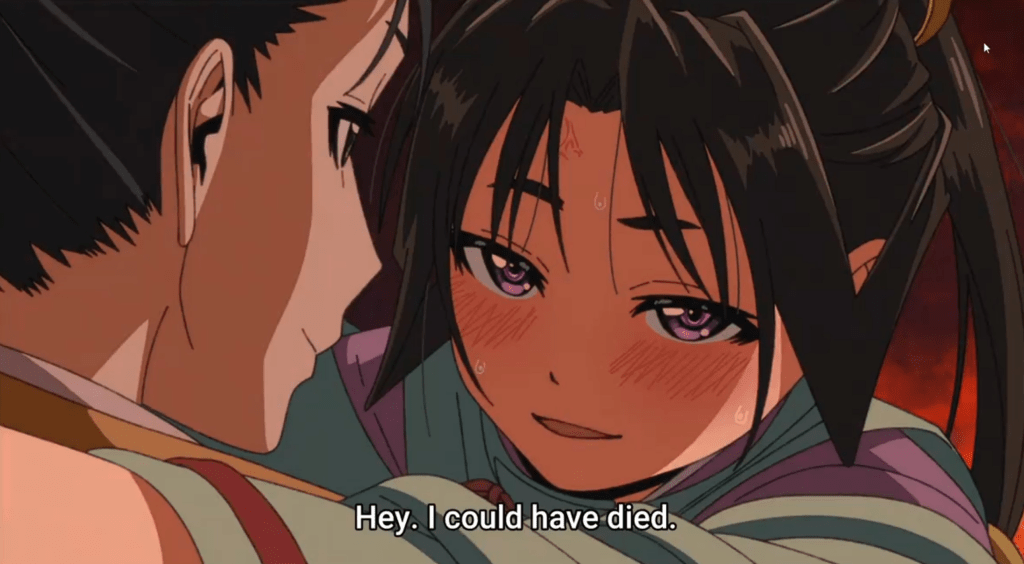
Following on from that point, if you want more evidence that social media is more curse than blessing, I made a discovery about seven or eight episodes in. I didn’t know this at the time, and I know better than to share misery, but in the first episode (spoilers again), there’s a scene where the chief of the Suwa Grand Shrine, Suwa Yorishige, pushes Tokiyuki off a cliff to join his family and be killed, when he shows his max experience in evasion and makes it back up the cliff, he flies into Suwa’s arms, and angrily tells him that he could’ve died down there. Though angrily in this context may not be what you imagine.
Matsui’s pride in femboy characters strikes again, as a disturbingly noticeable percentage of Japanese Twitter saw this scene and exploded with… excitement. I’m not responsible for this scene, but I still feel an apology is owed to someone. Maybe Shinzo Abe’s ghost for all of that excitement going into crumpled up tissues and not the rest of the population for procreation. Sorry, was that vulgar? Have a meme.
Pictured is my reaction to Japanese Twitter’s “awakening.”
Eh, it counts as engagement, so success? I’m still collecting and reading the manga, which I encourage you to do however you see fit. Follow along with the anime (which ends the 1st season at chapter 31), continue in the manga, or if you’ve done/are doing that, then wait with me for the figures to release. Time’s on our side.
On a final note, I heard rumors that a second longer season was in the works. We’ll have to wait for confirmation on that.
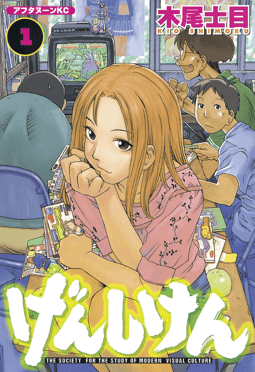
I’m still hard at work at doing the research necessary before I fully write about Genshiken as I’ve only watched two episodes so far. By the time I’m done (ballpark estimate: mid-October at the very least, god willing), I hope to have completed most of the first season. For now, allow me to supplement you with a general impression based on the first two episodes.
The manga started publication in Monthly Afternoon magazine in 2002 in Japan before getting licensed by the Kodansha library for release in English. In online discussion, otaku has fallen out of favor in recent years mostly supplanted by the word weeb but for the time frame we’re observing, otaku would make sense for the series as anime was breaking ground in the U.S. and U.K., but not nearly enough to get the worldwide traction it has right now. It was an underground niche back then; otaku (country of origin notwithstanding) were to the general populace what JoJo’s Bizarre Adventure were to otaku.
Genshiken gives a somewhat appropriate insight into this by way of multiple perspectives: the hardcore otaku who can boast to have the original Astro-Boy manga and the outsiders who believe everyone grows out of their hobbies eventually. Side note: if that were true, then we wouldn’t know people who’re still reading Harry Potter or watching Star Wars. Source: me, emulating the older Mortal Kombat, God of War, and Naruto games.
The name in Japanese is a shortening of the full title: Gendai Shikaku Bunka Kenkyukai or “The Society for the Study of Modern Visual Culture.” If reddit was around when the manga debuted, these guys would be gods on the anime subreddits. Speaking of which, a clip of the second episode was how I found the series. Going over the English translation of the name, you get the impression almost that the runners of this animanga club think themselves high and mighty when they’re just another flavor of nerd. And as a nerd, they kinda stopped being special around the early-to-mid 2010s.
It’s easy to say that now since anime has gotten pitifully easy to access, but going back to the late 1990s and early 2000s, your best bet was the VCR or somehow knowing the guy who makes regular excursions to Shinjuku’s and Akihabara’s electronics zone. So I can excuse the elitism in that regard. The central characters in this club mostly fit common stereotype of the era: Harunobu Madarame, the eccentric leader who will defend his tastes to the ends of the earth no matter what; Soichiro Tanaka, the less eccentric, but still enthusiastic one; Mitsunori Kugayama, the gentle giant who speaks with a stutter; joined by newcomers to the club, Kanji Sasahara, Makoto Kosaka, and begrudgingly Saki Kasukabe.
You know, it’s a 2000s anime if a girl is on the cover, even if thematically she’s an improper fit, which was why I claimed that Saki reluctantly joined Genshiken. Slight spoiler: the first episode shows her having a smoke in a train station (something I believe Japan illegalized over time) and telling some dude to get bent before getting all giddy after seeing her childhood friend, now love interest Kosaka. Where things diverge is when Kosaka reveals that he has since become a weeb and encourages Saki to accompany him to the Genshiken club, learning about anime in general and some of Madarame’s tastes as a whole.
Madarame is who I best describe as anime Twitter’s unacknowledged/ignored id. Western anime Twitter has a giant beef to roast about fanservice in anime, but to hear it straight from the horse’s mouth, there is nothing better than fanservice.
Yes, I know the context behind both of these characters. This isn’t a criticism or anything, I just thought it was funny.
It does illustrate what Saki takes issue with the most in the anime community, and it’s a bit of zombie problem that from the outside looking in you’d think had largely disappeared in the online discourse, but has been eternally mummified and immortalized in several online spaces. Fanservice around women also gets a bad rap because of this.
So at the outset you know that Saki is not the target demographic for what these guys like but puts up with it because her love interest is heavily into it. Not to the extent that Madarame is, but he doesn’t feel out of place in Akihabara or the other popular anime hangout spots. With discourse surrounding the series itself being light (at least in the west, Japanese social media might give me more insight if the weblinks still work), the most I have to go on are the anime itself, its manga, and the accompanying Wikipedia page. It’s described as a Seinen series, which makes a lot of sense as none of what the characters like would be suited for a Shonen demographic.
From what I can gather, 21 volumes released between 2002 and 2016, at least three seasons, a spinoff and an OVA all tell me that it was popular enough for all of that as well as foreign dubbing and licensing by Kodansha themselves even though it has a lot of the hallmarks present in something like Azumanga Daioh.
A slice of life series about a group of friends and they’re daily lives in a school setting, it’s original Japanese name largely untranslated or unaltered, but what splits the two series apart is that as a slice of life series, Azudaioh is very easy to take out of context and make the most baked memes and jokes about as any YouTube compilation shows evidence of, whereas Genshiken takes itself more seriously. Far from the “cute girls doing cute things cutely” subgenre of slice of life, Genshiken is more about the subject of… itself if you think about it. You or someone you know belongs to a group of weebs who talk about this regularly–why not have a series that’s a mirror of your hobbies?
As it stands, I don’t know enough yet to speak definitively on the design philosophy of the show, but the Wikipedia article explains that it’s about the characters moreso than what they do. An assertion I’ll hold it to once I’m done with the first season. For now, short of tracking down the physical media and the means to play it, 9animetv.to and Hianime are my new methods of watching the series and you’d be a fool to not use these reliable resources.
Before we start, quick context: due to a technical issue with attempting to upgrade my computers, I was briefly unable to recover my files until I resynced everything with OneDrive, a service I have a love-hate relationship with. I’m still in the process of sorting the problem out with roughly 90% of my files saved due to OneDrive, one of those being my notes for this blog. Based on what I had scheduled next, it was supposed to be a review of the 2004 anime Genshiken. But due to work presenting me with some interesting surprises, I haven’t been able to relax and set aside some time to view it. I’m still looking for an ideal site to view anime and its a toss-up between Aniwatch, 9animetv, and Hianime, joined up by whatever no-name YouTube channel is brave enough to upload full episodes of insert 20-year-old anime here. I’ll try my best to get at least a few episodes in before I put my opinions down, so for now, have a supplementary post: classic anime!
I know I could’ve put up a picture of the actual anime, but with 25 years on air, I couldn’t resist. One Piece is very memeable. See r/MemePiece for more details. Also, I’ve gotta say that unlike most blogs where I review part, most, or whole series, I wanna make this an opportunity to announce a personal campaign of sorts. That is, to watch a majority of several classic anime that are known the world over. Two of them so far are One Piece and the remaining episodes of Dragon Ball Z, the Kai dub.
Others are in the running to join this grouping, but those are the two that come to mind for now.
There’s no deep reason for wanting to do this, although lately I’d been reading my usual pick of manga on MangaDex, and I thought I’d find Toriyama’s magnum opus. Sure enough, I did. I’m not sure if it’s well-known in the west, but the original manga isn’t exactly split from Dragon Ball. We acknowledge Z as a continuation of the original manga, but it’s all rolled into a giant series unlike the anime.
It might be due to how it was licensed in the west, but although Z is seen as a sequel to the original Dragon Ball manga, Toriyama and his assistants put subtle hints that Z might as well be a part two of sorts, like Naruto: Shippuden or JoJo’s Bizarre Adventure dividing into different parts. Keeping this in mind made it easy for me to go straight to my favorite saga in Dragon Ball, the Namek saga.
When I was a kid and the series was redubbed in Kai for the twentieth anniversary of the anime adaptation in 2009, most of my exposure to Dragon Ball was through the video games and anyone who was a kid/pre-teen, etc. at the time can attest that a fighting manga like Dragon Ball has a Library of Alexandria’s worth of video games. Some are faithful adaptations of the series, others put their own spin on the same story, the rest worked with what they got and a fourth category got creative, for example, making a card game out of the series.
There exists a ROM of this somewhere, and I want to at least get to the first fight between Goku and Vegeta.
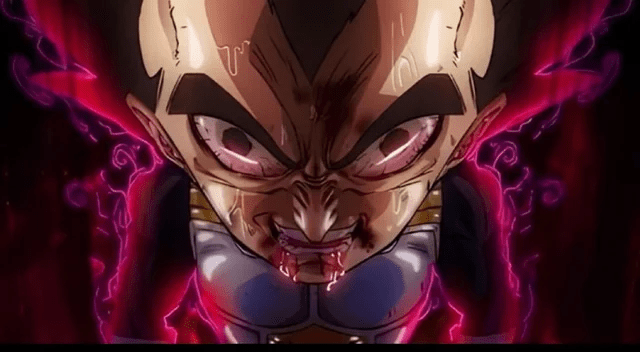
I owned a few of the games myself and with more and more getting released long after the Final Chapters, GT, and Super have all gotten their fifteen minutes of (screaming) fame, Dragon Ball has a hold on the cultural zeitgeist of the early 1990s and beyond. When I was a kid, the Namek saga felt like the home stretch. One more push and the remaining Z fighters will have achieved their goals of recovering the original dragon balls and reviving the others. The only things standing in their way was Vegeta and the forces of Frieza. Both men hate each other and wanted each other dead, Frieza certainly wanted Vegeta out of the picture with his rebellious streak and them both wishing for immortality.
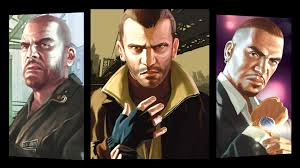
From a writing standpoint, it of course has some of the usual tropes found in other anime of the time and unique to Dragon Ball, but if you’ll excuse the comparison, let me know if this sounds familiar: three parties happen upon a treasure said to bring untold riches and get in each others way to have it, dealing with the consequences that follow the acquisition of this wealth. Pick your favorite story arc from media to fill in the blank; I’m going with a specific plot point from Grand Theft Auto IV and it’s expansion packs: The Lost and Damned and The Ballad of Gay Tony.
I make this comparison because like the Namekian dragon balls, competing forces within GTA IV’s storyline are after another prize which all things considered also bring bad luck. It’s not uncommon for crossover events in the GTA series, in fact the series is famous for it. Vic Vance and Tommy Vercetti nearly close a deal before Riccardo Diaz sends gunmen to snuff them out; CJ wins a race against Claude the Silent before getting some property in San Fierro and in GTA IV’s case, Niko Bellic, Johnny Klebitz, and Luis Lopez all cross paths over one simple thing: blood diamonds. Going by the name it took a funeral pyre to dig them up and the rocks aren’t done taking bodies. Also, blood diamonds are a real thing, with West and Southwest African countries being the most likely to have this problem.
Like their real-life counterpart, in the games, the diamonds were smuggled into Liberty City where the main employers of the three protagonists unknowingly compete with each other to get their hands on them for their own ends. In a somewhat similar circumstance, three foreign parties land on a distant planet to uncover a set of dragon balls for their own ends. But unlike GTA where the trio are all antiheroes, there’s a clear line of good and evil in Dragon Ball, though Vegeta’s convenient alliance with Gohan and Krillin complicates things for him.
I told you these shows were memeable.
Favorite saga it may be, I admit I’ve had trouble keeping up with Dragon Ball ever since Super was on Toonami and without meaning to disparage the network, while it’s done wonders to bring anime to the west, more than once I’ve had a few conflicts with their scheduling in the past. Yes, I know outside circumstances can interfere with schedules, but come on. At least try to fight to keep it consistent at least for the season. And while we’re on the topic of Toonami, will they ever be allowed to air Mob Psycho 100 Season II? Ever?
Anyway, while I’ve been getting my fill of Dragon Ball once again, One Piece, like the titular treasure, surprisingly is difficult to view. Of all the anime I’ve pirated, One Piece hasn’t been it. Most of its western publishers have done a bang up job to host the series, but Crunchyroll proves to be the only one capable of lousing it up. All that time spent bringing your site to the 21st-century, buying up the competition, and nabbing bigoted localizers with an activist mindset, but what do you have to show for it, Crunchyroll-hime?
I highly doubt these afflictions are in One Piece since there is no ruining peak fiction, but the most recent shows that they host on their site do nothing to boost their reputation as of late.
For One Piece though, like Dragon Ball it was a show that made the rounds at school and among my friends in the neighborhood, especially with 4kids telling us without telling us how inexperienced they were with anime, but to their credit, anime was still a niche in the early 2000s. Everyone knew who Naruto was and is these days, but who at the time in the U.S. could name anyone in Azumanga Daioh?
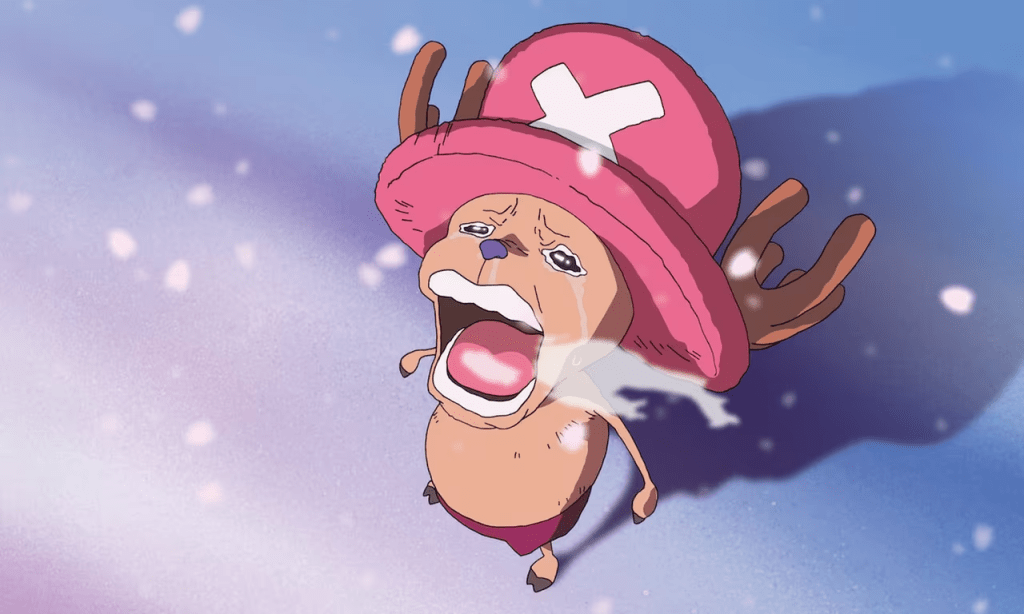
In all seriousness, One Piece is definitely not hard to watch. Toonami had been airing it since it first debuted, bar a few breaks in screen time. Guess it’s only fitting now that I pirate the pirate anime. It’s been yonks since I’ve seen it, but from what I remember of it (a mix of the actual show and memes) moss-haired swordsman gets lost all the time (probably looking for more minorities to hunt), Nami disappeared for a bit before returning to the crew, Chopper is the series cowardly lion, Nico Robin has a dark and complicated past, Boa Hancock wants Luffy but he’s not about that life, and Brook is the tallest skeleton on Earth. Forget a 3-meter statue of the guy, just bronze his bones when he’s dead, put up a sign and call it a day.
That paragraph there is gonna piss off all the One Piece fans. With so many episodes and so little time left in the Year of Our Lord 2024, even if I speedrun, I’m not gonna get through all the episodes. And yes, I know One Pace takes care of the Shonen Recap Syndrome problem it has, similar to how Kai shortens Dragon Ball Z substantially. I think before I sit down and watch Genshiken, I’ll test which is the better way for me to watch One Piece.
Been missing these, this week’s YouTube recommendation is Preston Stewart.
Similar to Ryan McBeth or William Spaniel, Preston Stewart is another channel run by the man who lends his name to the channel. An Army officer in the Reserve, his channel covers national security, world affairs, and the military in as unbiased a manner as possible. He doesn’t focus on cybersecurity like Ryan does, but there is overlap in their respective coverage of world events, especially with disinformation and overseas conflicts like Israel, Ukraine, or Taiwan. Consider this a completed trifecta, considering I recommended the other two in posts from last year. Factual, in-context reporting on real-world events. Need I elaborate further?
Ah, f[swords clashing]k it. I’ve been putting it off long enough and my desire for perfection is clashing with my schedule so, I’m bringing the long-awaited opinion on the anime adaptation of Undead Unluck. Still got a few episodes left in this season, but I’ve reviewed anime halfway through before so there’s no reason to hold this one to a higher standard.
Immortality Misfortune is the story of a man who’s chronologically so old, his birthday is on a different calendar system going on a journey with Japan’s millionth unlucky female protagonist on a quest for the best death the world can offer. It was picked up by Viz Media in January 2020 for weekly distribution in the west and I’ve been keeping up with it leading up to my first try at Army basic training. I’m still following along to the best of my ability, and yes I still recommend the manga.
For the anime, it was picked up by David Production, the same craftspeople responsible for bringing JoJo’s Bizarre Adventure to stunning life after 25 years in limbo and Fire Force, only for that to be delayed by a few weeks due to the tragedy at KyoAni in July 2019. It’s not often that a manga I follow closely gets this treatment, but the industry seems to be enjoying a boost as of late with more and more manga I find getting adaptations later. Speaking of which, The Elusive Samurai’s next episode should be airing right now so a review of that will arrive in time. I will try my best not to delay it as long as I’ve done with this one.
Considering the year of release of the manga and that of the anime, Deathless 13 went through a few changes since it takes place in the modern era. COVID had a slight influence on the first episode as the female MC, Fuuko Izumo, was all by herself before attempting to try her own hand at death, whereas in the manga, there was a crowd gathered attempting to stop her. Then deuteragonist, Andy, shows up attempting to do the same but in style.
The series likes to have a ton of fun with body horror considering the premise: a select group of people possess supernatural abilities that negate the laws of physics. What anyone else can do normally, these “Negators” can do the opposite, hence the abilities like Untouch, Undead, Unstoppable, Unchange, Unmove, etc. No, it doesn’t match with how English works, but longtime weebs know the difficulties of accurate localizations.
A small group of Negators, known as The Union, have made it their mission to uncover the mysteries of the world they live in by challenging God himself. Many obstacles stand in their way, those being the UMAs or Unidentified Mysterious Anomalies/Animals. These beings have an adverse affect of some kind on the rest of the planet and are due in large part to The Union’s performance in the field. If successful, the repercussions are negated and things return to their normal state; but if they fail, the consequences become part of nature, in some cases permanently. Sacrifices tend to be made in order for The Union to reach their goal.
Having followed the series for the better part of 3.5 years, I recall some panels that would look astounding if animated because the action within is limited by the medium it originated from.
Of course, not every manga has that luxury, as Berserk fans know very well. When I learned that DP would be captaining the ship, I recalled their expertise in animation with JoJo, Fire Force and several other series and rested easy that night confident that their ethos of quality animation would not have to suffer. The studio promised us the Sistine Chapel once again and their hard work has paid off. Better yet, no one was breathing down their necks to meet an arbitrary standard so prepare yourselves, people. For the chefs have cooked another perfect dish.
I personally didn’t have much issue with the Stone Ocean adaptation, but I understand the argument that there was interference.
DP’s attention to details is one for the textbooks. Watching Andy regenerate severed limbs and such is phenomenal, and whatever confusion there was about how this world works is enhanced with the motion of all the pictures. No more flipping through pages for visual learners.
Having said that though, much of the series makes it a candidate for the mystery genre. Discoveries are being made all the time, characters keep their pasts well-hidden, motives change regularly, and the changes that influence the world can only be explained by a handful of people. I’d say it meets those prerequisites well with what I remember about it.
I can’t recommend enough that you check out the anime yourself. The manga got back on its feet a while back after a subpar arc, but with the anime adaptation in tow, it’s more than worth the watch. It’s available in dub and sub on Hulu and you already know what I like to frequent.
Years ago as a college student, I’ve spent a handful of late nights scouring the Internet for content in between school days. I’ve spent these nights viewing the Pink Floyd movie, rewatching Naruto: Shippuden to fill in the gaps I missed while watching Boruto (finally find out what happened to Danzo), and in this case, reading the manga Act-Age, written by Tatsuya Matsuki, illustrated by Shiro Usazaki.
I remember the marketing on the Viz Media site as a story of an orphaned girl named Kei Yonagi who is left to raise her little siblings all by herself. To that end, she seeks the path of an actress and discovers that her natural talent for the art of acting is above and beyond what most would expect, even by method or character acting standards. Essentially, she reminds me a bit of Christian Bale’s dedication to his roles.
Now, as a viewer, my knowledge on the acting industry comes from research and stories, made-up and real. As far as I know, there’s a bunch of moving parts that the average person will likely never see unless they enter the field themselves or something like a scandal pops up, the latter of the two being quite commonplace in Hollywood. I can’t say for sure if similar practices exist in acting in Japan or anywhere else in the world, but I wouldn’t put it past anyone. Every organization thinks they’re normal and everyone else is weird. Maybe one day, I’ll make it a blog post.
In the manga, a lot of the ins and outs of acting as a whole are present, but one of the main selling points was the mental health aspect. Show business is a cutthroat industry to break into and has been that way ever since the Ancient Greeks were pioneering and perfecting theater and stage. It’d be something to be the fly on the wall of the original Antigone play.
Act-Age ran from January 2019 until its untimely cancellation in August 2020. Millions of views across 123 chapters, 107 of them collected into book format, spread over 12 chapters with only 2 of them in English, so basically, if that person is you, depending on how you feel about it you practically have gold or pyrite. But I’m jumping the gun.
This blog post explains that the manga is atypical for a Shonen manga at face value, trading physical punches for mental attacks, but after reading through the article, it makes sense. The term battle tends to get used quite loosely these days. Stretching the definition to any kind of struggle, physical or mental, works well in this case because Kei does undergo her own internal struggles while acting or at home. Mental strength is something that I don’t see get praised in the animanga sphere all that much outside of horror. If anyone has any recommendations that fit this mold, do share. I’d like to expand my horizons.
Memorable characters, challenging story arcs, mental fortitude and an inside look at the acting industry (at least on the Japanese side of things); all of these are a smash hit manga make. Probably even an anime adaptation, but it sadly wasn’t meant to be. The manga got the axe when Matsuki was caught performing a heinous crime on middle school girls, and everything associated with the manga was halted, including a planned stage play. As for Usazaki, she was asked whether she wanted to continue the series without Matsuki and she understandably chose not to. So Shueisha and Viz Media both shelved it for good and any and all mention of the series has been s[metal banging]t-canned for good, save for blogs like this that occasionally dig through the annals and archives to write about the tragedy that was Act-Age.
S[clapperboard]t like this makes it even harder to be a weeb. Explaining away weird plot points and out of context images/scenes is very fun and hilarious. It gets all the more dark when the series in question is in some capacity tainted by something the author did. Normally, I have no problem splitting the art from the artist, but with debates like that–and you may have your own concepts about the matter–I think it depends on the attachment between the art and the artist. I remember reading Joe Bonanno’s autobiography A Man of Honor and in that he claimed to have met the likes of Errol Flynn, praising his acting prowess but chastising him as a person, especially with how he treated women. Similarly, I think the Rolling Stones would be directionless without Mick Jagger, or that John Lennon was something of a lyrical genius, but at best it’s creepy that Jagger’s lovers are much younger than him, and at worst Lennon’s romantic life gets less and less opaque the more you read into it. Or just listen to “Run For Your Life” and pay attention to the lyrics.
Most licensed manga hosting sites have done away with the manga, especially Viz Media, out of respect for victims and survivors. I doubt it exists even on pirate sites, making it a candidate for deliberate lost media, where a work is purposely excluded from anything capable of archiving it. As I said, depending on your stance, if you managed to save the chapters for private viewing you may have gold or pyrite.
Act-Age, during serialization, was proof that it could work and was on its way to become the next big thing. There may be an alternate timeline where Matsuki wasn’t a s[horse neighing]t heel and it’s still in publication with its distinctive writing and art aesthetics, but no one can say for sure where it would be now. Maybe like Undead Unluck, it’d suffer a slump until a later arc revived it, or the anime adaptation saved it. Who knows?
But a light exists at the end of the tunnel for the original team that worked on Act-Age. For instance, Usazaki walked away from the project to work on other stuff, be it magazine covers or her very own one-shot manga. The facts were in the fondue during Act-Age’s run; she could clearly do it. The manga cover up above in this post is her own work. The link to the one-shot is right here. Enjoy!
Back into the fold, baby! For this week’s YouTube recommendation, I recommend One Punch Dad.
Run by a current U.S. Army warrant officer, One Punch Dad features TikTok-esque/YouTube Short style skits, a Star Wars parody of all things, and the warrant officer’s opinions on multiple different things from military uniforms the world over to fast food to duty stations and a bunch of other stuff.
While I have recommended channels run by prior service vets, this may be the first recommendation of an active servicemember. If you like the kind of content to be featured, consider subscribing.
I put this off for a week so I could do some more research on both, by which I mean reading the Wikipedia page for one and advancing in the manga for the other. Haibane Renmei is but a short 1-cour anime series from 2002. I found out about it from the same article that introduced me to House of Five Leaves a few years ago (along with another one), and without delving into details, a friend of mine challenged me to recommend him some anime he’s never heard of. Well, he didn’t challenge me per se, but I took it as such and I figured I might as well put another brick in this anime wall I chose to build. No, it still ain’t finished.
Japanese for Charcoal Feather Federation, Haibane Renmei starts with a young girl experiencing a very vivid dream about falling from the sky. This being the only memory she has, the theme of the series is that the Haibane–angel-like beings–are named after the dream they had. Shortly after that, their wings grow from their back and they’re given halos to wear above their heads.
It was based on an unfinished manuscript by the same mind responsible for the surprisingly well-aged Serial Experiments Lain, which when it comes to trying to label it, makes it difficult, at least for me. There’s anime that are adapted from manga, which is the most common adaptation style; anime that are adapted from light novels, which is probably the second most common adaptation style; sometimes anime are home grown originals (a.k.a. anime originals), proof that the studios animating them can make something special from thin air; and sometimes anime are adapted from novels:
It’s definitely irregular for a rough draft to get a green light for an adaptation, but it’s not like it’s unheard of. Stranger things have happened in media.
Part of my research for Haibane Renmei involved looking over this blog post from 2017. The writer explains that the cult-classic series has been the topic of such fierce debate over the meaning of the series, not helped by Yoshitoshi Abe’s notoriously enigmatic writing style. As a mystery series, this can be viewed as a double entendre both due to the cryptic writing and because the only source available lies with the writer and short of booking a flight to Japan to ask him directly, I highly doubt he’s ready to share the raw words with a wider audience so the anime adaptation had to make do.
That said, this isn’t the type of Scooby-Doo, CSI, Columbo type mystery series where you’re given a puzzle to solve. It leaves a lot open to interpretation and according to that post I linked above, a lot of it tends to be incorrect. From a writer’s perspective, there’s a fine line between treating the audience like they’re five years old and throwing them out of a plane and expecting them to catch the parachute on the way down.
Is this me being too harsh? Perhaps, but the creative world is pretty cutthroat in a manner of speaking. We criticize ourselves in a much harsher tone than any other critic, yet both the critic and the artist are given a near equal amount of outside exposure so doesn’t that mean we’re both talented groups of people?
Something, something pot calls the kettle black…
I like to think of it as an art house project. I believe the late 90s to late 2000s was the era of moe and this series does something different from most shows of the era. It was the equivalent of taking an extended museum tour and filling out a survey at the end before being released to the gift shop. It’s for thinkers; the door is open enough for observers to take a peek but is neither too wide nor too narrow. If it were too wide, important stuff goes missing, but if it were too narrow then you wouldn’t be able to see the contents very well. It sits neatly in the middle and once you’re done with the series you can walk away with your own interpretations of what you think the series is about. Here’s a link to the playlist. Enjoy it while it lasts:
Channel: Jesse M
From a series you probably never heard of before now to a series you still probably haven’t heard of unless you eat anime memes like black beans: Mysterious Disappearances.
Before I elaborate on this series, I want to get this out of the way right now: giant boobs.
Alright, we’re done with that. Well, I’m done with that aspect. Explaining the fanservice in this series will honestly get redundant especially since both the anime and the manga do that in spades. The first chapter especially ends with an uncensored shower scene (spoiler alert).
As for the rest of the series, Mysterious Disappearances is a blending together of urban legend and centuries-old Japanese folktales. The name doesn’t do the series enough justice. Looking to legends and myths for inspiration, Mysterious Disappearances has it all in droves. The first episode actually drops hints from an old urban legend about the fictional haunted Kisaragi Station. Akidearest explains it further in this video below:
Channel: akidearest
Basically, a few years ago, a Japanese vocaloid YouTuber’s videos spread by way of the recommendation system and the one thing that stood out was that their username and videos were mostly untitled, making use of zero width non-joiners or “invisible characters” read only by the computer. Anyway, the video referenced an old urban legend/creepypasta that only existed at the time on Japanese forums, namely 2chan in 2004. The urban legend in question was Kisaragi Station and was about a woman who noticed the train continued on for longer than usual. She gets off at the namesake station which was left unmapped and catalogs all of her interactions and findings at the phantom station, even wandering the tunnels until she was eventually picked up by a mysterious man who quickly dropped his helpful demeanor once she took the bait. Forums posters eagerly awaited for updates that never came after that.
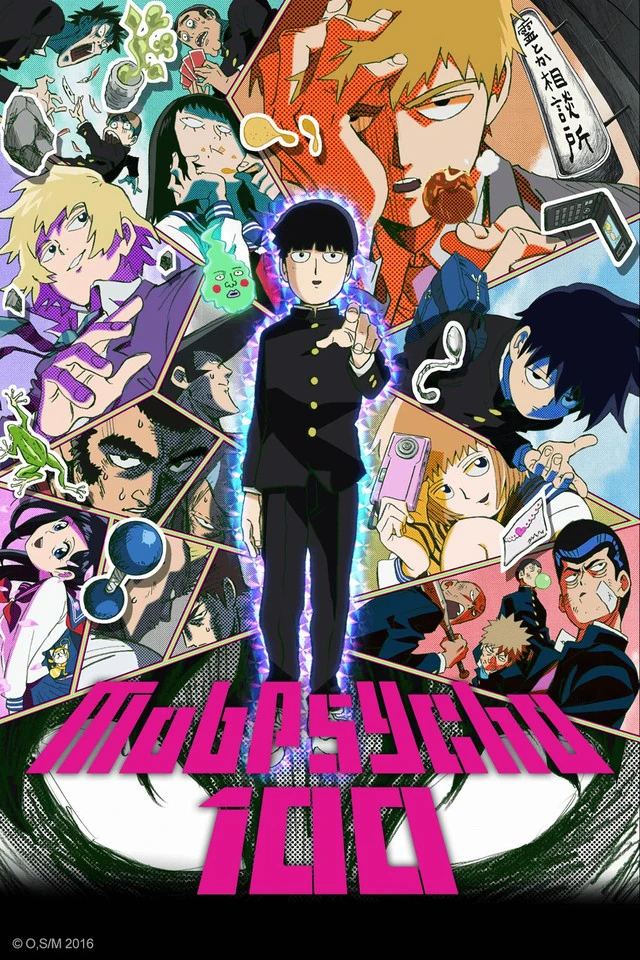
This was one of several references to Japanese urban legend in the anime. Many more follow as the series progresses. Unlike The Society of Gray Feathers, Dangerous and Disturbing Puzzles has more exposition baked into it. Both the manga and the anime explore the phenomena as they happen. Part of the appeal for me is the urban legend side of things. Fictional or not, these ghost stories tend to be somewhat credible even if they don’t match beat for beat. They’re the fun little stories about things that go bump in the night. The supernatural element keeps me engaged, much like when I was first introduced to The Adventures of Shigeo Kageyama: Boy ESPer.
The protagonist is the big breasted woman we saw earlier, Sumireko Ogawa, a novelist working in a bookstore. Aided by her coworker Ren Adashino and his sister Oto, the trio investigate and confront the sources of the mysteries personally, unraveling their secrets along the way.
One of the main plot devices is a droplifted book picked up by the bookstore owner himself and gifted to Ogawa on her birthday. The anonymous writer catalogued ancient poems from the real-life Manyoshu, a collection of anonymously written Japanese poems going all the way back to the Nara period (circa 750s C.E.). If read aloud, the poems act as a spell cast on the reader themselves provided certain conditions are met. The “spell” can be broken by way of reading the poem backwards, but as shown in the series, when Ogawa does so, she’s able to control the effects of the poems on herself at will.
Other important plot devices are the siblings themselves and the signs that only they can see: yellow diamonds with exclamation points in the middle. They appear whenever a supernatural event has occurred. Once the event has been solved, the siblings are shown to use anything recovered from their findings as payment for tickets back to their own home through–you’ll never guess–Kisaragi station! It all comes together! There’s a lot more to this, though I haven’t gotten that far yet and the manga is still ongoing so it’ll be years before we see where the author, Nujima, is taking this series.
What is certain though is that for those who like creepypasta fanservice and closeup shot style fanservice are going to be intrigued by the blend here. It seems quite ridiculous to highlight Ogawa’s body as the connecting element when Ogawa herself is the protagonist, but the series finds a way to make it work. Rather than fall into the age-old trap of “damsel in distress,” Ogawa being the adult amongst the children here gives her more of a leg up as the woman in charge here. You could argue that she’s technically the mother figure based on this description, but the counterargument to that is that while the three do work together, they’re not inseparable.
Scenes exist with all of them together or just one of them alone or with other minor characters. All of them are well-written with their own goals and desires and none of them feels as though they’re held up by the other. That it’s mainly psychological horror is another plus for me. Honestly, I would’ve been turned off by anything horror as a kid, but now that I’m an adult and I’ve watched a few of the classic horror movies before they were ruined by their own franchising (Friday the 13th, Halloween, Scream, etc.), I realized that there’s still better ways to horror and thriller and Mysterious Disappearances is a better example of that.
All 12 episodes are available on Crunchyroll, but if you don’t feel like watching 12 of the same old advertisements, then you already know what I’m gonna say.
Because I’m behind schedule, I doubt I can guarantee a full review of Undead Unluck season 1 by the 30th, not to mention another topic lined up was pushed back due to the research I did for these two series in this post, so instead I’ll try to get back on track either the 29th (tomorrow) or sometime during the 4th of July weekend. The next topic I have concerns a manga that never got off the ground. Here’s a sneak-peek:


























 Opinions on Entertainment