Hokkaido Gals are Super Adorable Coming Soon

Reorganizing my list is sometimes a blessing in disguise.

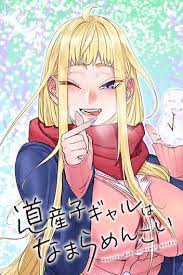
Over the course of this blog, I’ve put sneak peeks at the end for the next week’s topic, and I did that last week in light of some recent news. The manga Hokkaido Gals are Super Adorable (alternate name: Dosanko Gyaru is Mega Cute) has been greenlit for an anime adaptation in January of 2024.
I believe I’ve also made it aware that more often than not manga series I champion just sit in the back of the class unnoticed and unsung by handful of devotees while popular manga that I don’t pay a lot of attention to are the ones that get a greenlight relatively quickly. This is a rare instance of another manga I happen to enjoy getting the anime treatment, and soon. I recall reporting about adaptational rumors in late June concerning the My Hero Academia spinoff, but so far, no further reports on that have surfaced as of this writing, sadly. But at least you have a complete arc to round out the picture of the MHA franchise.

For Hokkaido Gals, let’s catch up to speed. In Japanese pop culture, the gal (or gyaru) is a subculture of usually teenage girls engaging in fashion trends. The typical gyaru is seen normally with a sweater (wrapped around their waist or actually wearing it), a bright-colored mini skirt, thigh socks or leg warmers, a blouse with the top few buttons undone, often light or even blonde-dyed hair, makeup, jewelry, and an attachment to her cell phone. Derisively, gyarus are said to also have a stigma of being loose and promiscuous. Call it fanservice or a mean-spirited inside joke, but of the gal-focused series I’ve seen or observed, in all but demeanor they give me the impression of Hollywood’s idea of the popular girl/cheerleader archetype.
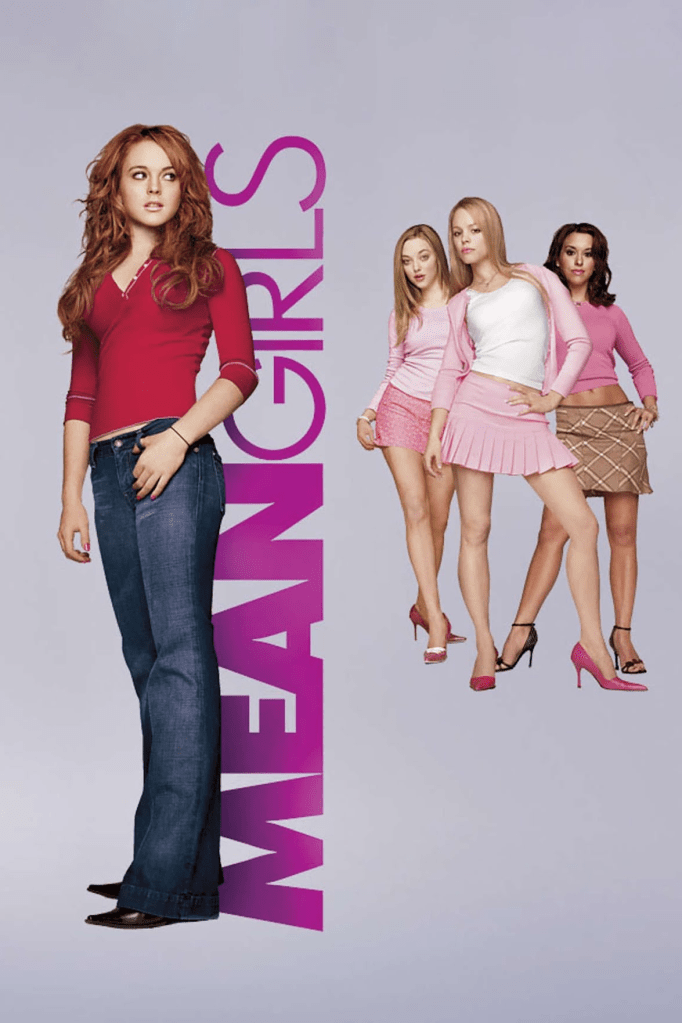
All things considered, I think these tropes were the writers’ best attempt at therapy for an unresolved wrong. But between Galko-chan, Hajimete no Gal, and even Dosanko Gyaru among others, I’m finding that this negative stereotype is getting debunked as we go on, though its replacement isn’t all that much better.

Hokkaido Gals are Super Adorable does a few things differently than previous gyaru-centric series. The typical trope is that it’s centered in Tokyo, the male MC is from elsewhere in Japan, and the gyaru MC is a native who knows her way around the Tokyo Metro. In reality, it’s a statement that means she can navigate the tens of millions of citizens, residents, and tourists who coalesce around the main hot spots of Akihabara and the famous Shibuya crossing. It’s really no different from highlighting any given tourist-y spot in any major city like NYC or L.A.

So to turn this trope on its head, the main MC is himself a Tokyoite who comes up to Hokkaido. This teaches me the power of a popular thing physical or conceived, so there might be an equivalent in other parts of Japan. The male protagonist of this manga is Tsubasa Shiki, the rather upper-class sheltered Tokyoite who has moved north to Hokkaido with his grandmother. On the way to school, he runs into gyaru and female protagonist of this manga, Minami Fuyuki, and while he attends the high school up in Hokkaido, Tsubasa meets other gyaru characters in the form of Sayuri Akino, Rena Natsukawa, and interestingly, Fuyuki’s mother.

When I say Tsubasa’s a sheltered upper-class guy, I mean it in the sense that he grew up comfortably and averagely enough to openly declare his main attraction to a very average type of Japanese woman; dark hair, composed, reserved, prim and proper — none of which are inherent in Fuyuki. As a matter of fact, she’s the type of gyaru I described earlier in this post. As for that stereotype that seems to have replaced the derisive promiscuity one, Fuyuki is also somewhat ditzy and short-sighted. In the early chapters of the manga, she’s shown to struggle with studying and even test-taking as Tsubasa and Sayuri make strides when all of them study together while Fuyuki struggles to catch up. It would be more accurate and charitable to say that she doesn’t have the kind of academic intelligence. Honestly, for all the sightseeing done in the manga, she’s a shoe-in for Hokkaido tourism, especially in a place like Sapporo or Hakodate.

Sayuri combines two tropes into one, but also comes with several surprises of her own. In appearance, she’s exactly Tsubasa’s type of girl and in fashion she dresses like a gyaru, even if only slightly. For the surprises, early in the manga, there’s two and they have an uneven connection. Sayuri has a condition known as hyperhidrosis, or excessive sweating, and thus she refrained from intense physical activity. Instead, she’s become a hardcore gamer goth girl, probably the type to skip over cutscenes and 100% a game. Sounds like someone else I know of.

Rena Natsukawa is a third gyaru character, but is also a hafu, meaning that she has one parent who isn’t ethnically Japanese. She’s also a high-achieving student who just so happens to have near-unrestricted access to the library and is a tutor to her peers. Moreover, she’s admired by Fuyuki herself, so if Fuyuki ever needs help with her studies, Natsukawa-san is not too hard to find.

What’s interesting about this manga is the common tropes that are broken down. It borrows from series like Hajimete no Gal and Sono Bisque Doll, while also carving something new for itself. Call it for what it is, but with so many series alluding to or stating that they’re set in Tokyo, it’s nice to see other parts of Japan get the spotlight they need. It’s something I welcome personally when someone outside the U.S. goes to a place that probably doesn’t have a strong tourism industry, though on the other hand, the isolation tends to suit places like this better. No outside disturbances to ruin what makes a certain place unique.

The gyaru characters come into stride in their own unique ways. Since I’m only about twenty chapters in with the manga clocking in about almost 100 so far, I can’t say with certainty if there are more gyaru characters who show up down the line, but keeping the cast so small thus far does a lot to flesh them out evenly and gradually as the series progresses. Most of what I described of the characters thus far is in the chapters they each debut in with more to be revealed, but again, I’m not that far as of writing this so even if I wanted to spoil, I couldn’t. I really want those who’re interested to catch up to the manga in time for Silver Link to start distributing the anime next January.

Once it airs, if there’s nothing else taking my time away, I’ll report my findings as it airs.

While my hopes are up, some poking around in associated forums on Reddit leave me with a few concerns. I refrained from spoiling myself, but I’ve heard through the grapevine, that the most recent chapters haven’t been as good in regard to characterization, seemingly undoing the character development since the beginning and, to my interpretation, trapping Tsubasa in a needless love triangle. But I’m regarding these observations as rumors until I see it for myself, and I advise anyone to do the same. As for where to read the manga, it is getting released in volumes here in the west, but to catch the chapters as they release, my source has been the Manga Plus website and app run by Shueisha themselves.

https://mangaplus.shueisha.co.jp/titles/100116

Alternatively, there’s pirate sites, though it’s best to use caution. I recommend Manga Plus for this series specifically, because every chapter is available without subscription if you’re short of cash yourself. It’s a fun series overall and I hope it makes a seamless transition to anime. Still, holding out hope for Vigilantes though…

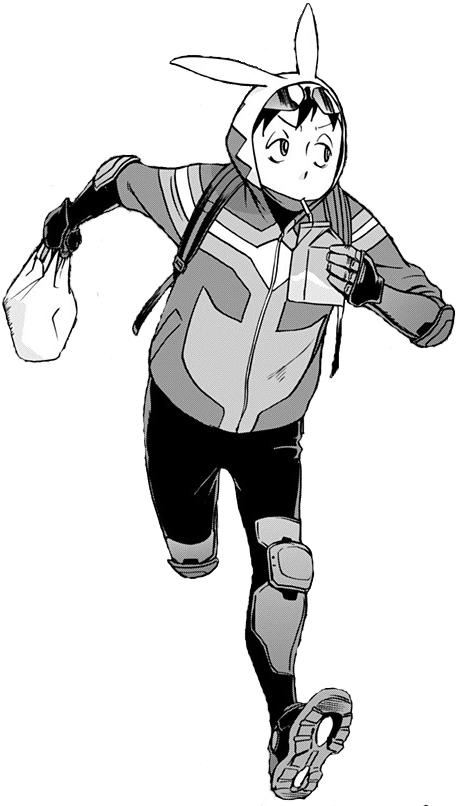
My Hero Academia: Vigilantes Might Get an Adaptation

An overlooked spin-off may finally get some attention

In my notes, the topic of this spin-off was in the pipeline for at least a few months now, but thanks to recent rumors, it’s possible that the fabled adaptation may be entering its production stage. And as a follower of the series for a time, this has been a long time coming.

The original My Hero Academia launched in 2014 by mangaka Kohei Horikoshi, and was given an adaptation about two years later which, as of writing this, has wrapped up its sixth season a few months ago. Additionally, it’s had a series of light novels, video games, associated apparel and other accessories, and a pair of spin-offs in the form of the aforementioned Vigilantes and a chibi four-panel comic, both of which are much shorter than the original MHA manga which, as of writing this, is nearing 400 chapters and over 30 volumes. All things considered, since Horikoshi was a fan of Naruto growing up, I think it’s safe to say that if part of the dream was to have the same impact that Naruto had in the early 2000s then on that front, he’s succeeded.

The Vigilantes manga meanwhile sat in the back, being released in April 2016 and running up until May 2022, concluding its story in 15 volumes, so it can be cleared at a faster rate than it would take to catch up to the original manga from the beginning. The protagonists are Koichi Haimawari, a college student and part-time vigilante who mostly patrols a single area of Tokyo under the alter ego of the Crawler, jokingly mispronounced “Cruller”; Kazuho Haneyama, the trademark, pink-haired tsundere high school student who moonlights as an impromptu pop-star under the guise of Pop-Step; and Knuckleduster, a crusty Batman-like archetype, who embraces his quirklessness and dishes out justice the old-fashioned way.

At the outset, you can see the differences between the original’s Izuku Midoriya and this one’s Koichi Haimawari. Izuku, or Deku, began the story quirkless and with zero prospects to become a world-class professional hero until his idol, the world’s Number 1 superhero All Might, observed a hallmark of bravery and allowed him to prepare enough to inherit his quirk One For All, which has been handed down through generations of world-class heroes. Koichi, on the other hand, has a quirk called Slide n’ Glide which allows him to glide around and connect to flat surfaces with three points of contact. Kazuho’s quirk is leap which allows her to jump at great distances; this allows her to live out the idol persona she puts on.

Not just limited to these unofficial heroes, pros from the original series also make an appearance to include, the big man himself All Might, Shota Aizawa, Midnight, Present Mic, Detective Tsukauchi and several more, most of these folks being pros before teaching at UA Hero Academy. Most notably, the tone of Vigilantes is darker and a bit more mature than that of the original as it focuses on a college student this time around than a high school class. As I wrote above, All Might is there, but his presence is more of a backdrop than as a prominence. Koichi’s part-time hobby as a vigilante puts him in a tough spot legally. The original manga introduces the pro heroes who are licensed to step in alongside the proper authorities like the police and courts, and the villains are their polar opposite, but the Vigilantes manga clarifies what this means.

When quirks were first discovered in the MHA world, the laws were nonexistent. Vigilantes were the original unlicensed heroes who stepped up to answer to the rampant chaos borne from the emerging quirk era. The law eventually came up, not to explain the makings of a hero but to classify villains. The first place to have laws written on heroism or villainy was the U.S. state of Rhode Island. Of 189 vigilantes whose candidacy for heroism was up for review, only seven were allowed to continue on as the U.S.’s first pro heroes. The issue for the other 182 candidates was that they didn’t have the qualities that made the trademark hero and either continued on as vigilantes or villains. Ironically, the law’s adherence to licensing puts vigilantes in the same spot as villains despite vigilantes being the origins of the laws and most vigilantes running counter to full-blown villainy. The causal loop is definitely not lost on the manga though.

Burgeoning heroes who find themselves in vigilante limbo though aren’t hopeless thankfully; there’s a program that allows pro heroes to recruit vigilantes as sidekicks and incidentally, some big name pros in the original began as sidekicks before finding their own paths in the hero world. Vigilantes also has a sort of slice of life element to it as well. If Koichi was up for hero candidacy, there’s no shortage of witnesses to his do-gooding in the immediate neighborhood, as well as some pro heroes who can give him a leg up if he needs it. There’s glimpses of him aiding people with minor inconveniences just as he assists his fellow vigilantes and pros in stopping villains in any capacity.

There are also several plot points in the original that have origins in the spin-off series. Another notable difference between Deku and the Crawler were how they both deal with their lots in life: Deku’s aspirations would’ve been impossible even if he had a relatively worthless quirk; meanwhile Crawler’s initial poor handling of his own quirk didn’t really stop him from attempting to help, even if it was with a stray dog (that’s sort of a joke, there is a dog in trouble later in the manga; not so much of a spoiler since it gets resolved in about five panels). Deku obviously starts off in high school with his head in the clouds; Koichi tends to keep it realistic and is more in it for the good of the locals, so if he went the pro hero route, the money wouldn’t be his main motivation, though the same would apply to Deku.

The Vigilantes manga’s place in canon can be interpreted as a sort of foil for the checkerboard presentation of the main plot. Vigilantes as unlicensed, illegal heroes are shown to be a necessary evil in the law’s eyes, and a digestible aid from a practical standpoint. With pro heroes, there’s laws that rein a hero in from overstepping the established boundaries, but vigilantes being unregulated could go a step further to prevent an escalation before it becomes a problem for the pros, which turns out to be Knuckleduster’s own philosophy in the manga.

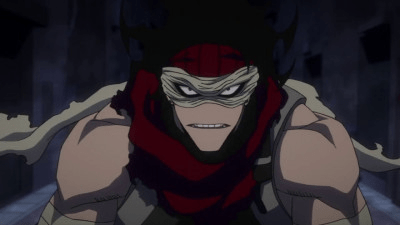
Personally, I welcome Vigilantes as a bit more grounded in its approach to what the original is doing. It’s still a Shonen series at heart, but in practice it takes things a bit further with an older, more mature protagonist who is still optimistic about his future even though he’s buried pretty deep in the gray muck of hero laws. It also has a bit of an edgier portrayal that would really challenge the cast of the original MHA, but not grotesquely or irreverently as Amazon’s The Boys. In the MHA world, Homelander and A-Train would be high on hero killer Stain’s crap list.

If the rumors are to be true, then a notable rarity in anime production would be the adaptation of a complete manga. The only other case that comes to mind would be that of JoJo’s Bizarre Adventure reaching a successful adaptation in 2012, one year after the eighth arc of the manga was being written. That said, all we have are the rumors, so it might not be true until an animator or someone else in the industry has more concrete evidence of an adaptation in the pipeline.

For now, the chapters are available on Viz Media and Shueisha, and its 126 chapters are spread across 15 volumes. To my knowledge there’s no collection or box set to speak of for the lesser known Vigilantes arc, but don’t let that stop you from making your own. For my take, it’s a B+. Avoiding spoilers, there are minor instances that could’ve been reworked or omitted, but the rest of the time it’s a solid manga.

To go along with this overlong recommendation wearing the mask of a blog post is the last YouTube recommendation for the month of June. Adding onto the cadre of Trash Taste affiliates and allies is the YouTube channel Abroad in Japan.

https://www.youtube.com/@AbroadinJapan/about

The channel and other associated Abroad channels are run by British grammar educator and YouTuber Chris Broad who first moved to Japan in 2010. Ever since, he’s made video after video on daily life in Japan going by prefecture, sights to be seen, activities to perform, and generally places to visit. While not a full-blown weeb, his guest appearances on Trash Taste have introduced him to several anime series and he has revealed to the TT boys that his favorites included most of Studio Ghibli’s lineup and anything directed by Hayao Miyazaki or Satoshi Kon or even Kenichiro Watanabe to name a few directors. Normally, when it comes to Japan-based YouTubers, one of the first people to go to is someone who’s native, but spending over a decade and change in Japan should put him in the same room as other Japan-based YouTubers, especially since he’s been up and down the country.

If you’re still looking for a slice of Japan, but you’ve had your fill of anime, Chris Broad’s always got a video or series up, to include the likes of Dr. Jelly as part of a collaboration with The Anime Man, and Wacky Weekends and Journey Across Japan done mostly in collaboration with CDawgVA.

Undead Unluck Anime Adaptation Confirmed?

An obscure manga may be due for an obscure anime adaptation.

Currently on vacation so this might be a quick post with little detail. The end summary will make all the difference.

In January of 2020 whilst browsing the Shonen Jump section of viz.com, I was introduced to that month’s debut manga called Undead Unluck. It opens with our character Fuuko Izumo finishing a romance manga and then declaring to the public that she will end her own life. Dramatic? Yes, but she does have an explanation for this. When she physically interacts with people, the person who touched her suffers a proportional amount of misfortune depending on how long, how she was touched, and with what. Brushing up against someone while navigating a crowded train might delay service; prolonged skin-to-skin contact meanwhile means unimaginably bad luck from an injury to a life-altering injury to sometimes death. And it can range from coincidentally realistic to balls to deez nuts ridiculous.

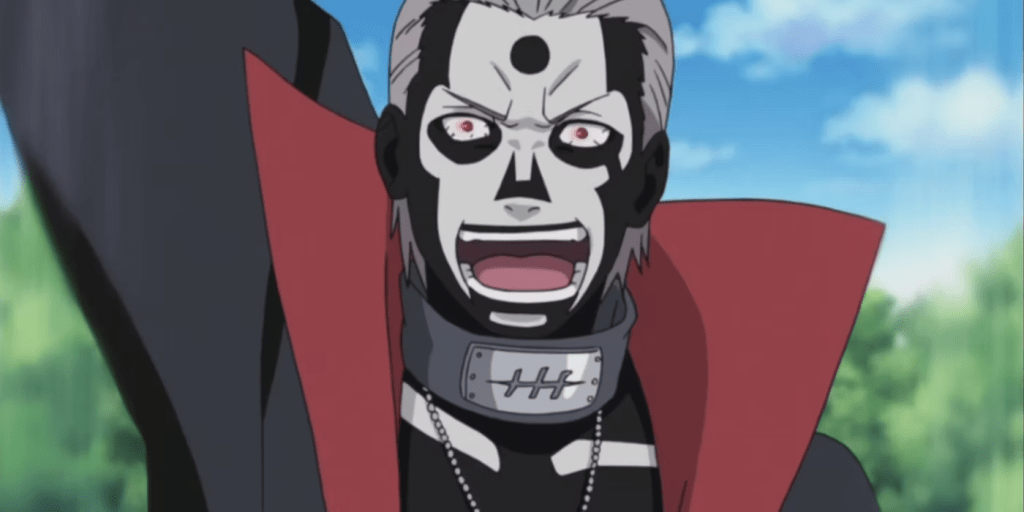
During this confrontation, the second of the titular duo, named Andy, strikes up a conversation and is initially repelled by Fuuko with the same hostility she showed to the others in the vicinity. He falls onto an incoming train and his body cracks the window, but he legit walks it off. Yep. Remember in Naruto when the Leaf ninja were sent to dispose of Hidan, but were continually baffled by his refusal to keel over? It was kind of like that, only Andy hasn’t seen the light of Jashin yet.

And this is how the manga begins. Fuuko begins it wishing to end her life and so does Andy, but his problem is he’s basically Hidan or Deadpool with different rules. As the manga goes along, it’s revealed piecemeal that Andy has a lot of baggage from his life, and he hopes to reach his goal of sweet death by wooing Fuuko along the way. The proportionality is no joke. If intimate contact can topple a building without warning, then according to Andy, rounding third base especially with no condoms should bring about the intensity of Fimbulwinter. Basically, they’re both hoping to go out with a bang. No pun intended.

Fuuko’s and Andy’s abilities of misfortune and immortality surprisingly don’t make them all that special as there are others with similar supernatural abilities that are described as a single word but with the prefix Un- in front of it. Undead, unluck, unbreakable, unjust, untruth, unknown, that sort of thing. It’s a bizarre, indescribable manga that’s best experienced by reading it. I recall going to the Viz Media website to read a chapter weekly that year as the pandemic intensified. In the summer of 2021, this became unachievable as my brief experience with Army basic training by nature limited my access to technology, and keeping up with the outside world doesn’t happen during basic training. After returning from that experience, I found trouble keeping up with the manga as I’d missed so much. These days, I tune in a few times to see what’s going on. I’ll be missing context from one or five or an entire volume’s worth of chapters, but it’s still good reading and reading between the lines as well as a summary from the wiki can help.

Fast-forward to January of this year, and I learn that along the horizon, an anime adaptation is on the table.

Normally, when it comes to burgeoning manga that I lay my eyes on, I’m a historically terrible judge of character. Some manga I wanted to succeed get cancelled twenty chapters in, and others I don’t pay much attention to seem to blow up overnight. Everyone knows who Loid, Yor, and Anya all are because Spy x Family is a massive hit with a solid adaptation to boot, but I’m pretty sure only seven people will have ever heard of Black Torch or Time Paradox Ghostwriter, and I’m one of those seven.

It’s one thing to misjudge the success of something, but this one seems to be completely out of left field until you see what studio is said to be captaining the ship. It’s the same one that fixed with A.P.P.P. broke in the 1990s, the one that got a legendary underground manga to go mainstream for the first time in almost 25 years, the same one that copied Hokuto no Ken‘s homework. You know the one.

Yes, if things go as planned and Undead Unluck goes from print to animation cel to pirate streaming site, David Production will take full responsibility for converting more anime onlies to another underground manga. David Pro has a set standard for adaptations. JoJo’s shown above and Fire Force are the only two anime that I know they worked on, but the quality of both speaks for themselves. The adaptation of Part 6 Stone Ocean can be seen as controversial within the JoJo community over the amount of CG in select episodes coupled with Netflix’s outdated batch release formula that may or may not have influenced the direction of the adaptation. The same can be said about Fire Force’s fanservice, but above all, save for a few tweaks and changes from manga panel to animation cel is nearly 1 to 1. And there’s normally an explanation for a change anyway.

Actually, changes in continuity aren’t all that uncommon or interesting when it comes to an adaptation of anything. It mostly only matters if the adaptation and the source material are on different wavelengths. For Undead Unluck, I can expect the anime to be as faithful to the manga as possible with a few changes here and there. As of writing this, YouTube and Google feed me articles and teasers with short scenes and demos of the anime to come with no real word on the adaptation to speak of in any significant detail. This can be understandable or suspicious depending on several factors. In the gaming-sphere, all the scrutiny goes to the studio and its leadership if all their hard work is shown in a pre-rendered trailer that fakes the intensity of an upcoming video game.

But anime is more or less forgiven considering how dungeon-esque working conditions can look for animators, as well as studios being notoriously tightlipped about the quality of scenes who draws them all. It’s no secret that the folks at Wit, SHAFT, Aniplex, MAPPA, Pierrot, et al outsource some of their work to Good Korea, China, Thailand, and Vietnam, but whether your favorite arc is being drawn by Saigonese Gustav Klimt or the water buffalo filling in for him while he battles a case of ligma is up in the air. r/Boruto just found out why the anime’s been getting a glow up in recent episodes and it’s not just because Eida is a sexy she-devil. If what they say is true, then the Boruto anime might’ve been used for trainees from other studios.

But as I stated before, David Pro is on the case and living up to their goal of being like their biblical namesake, I don’t expect them to miss a beat. I’ll try my best to keep an eye out for more news on Unkillable + Unfortunate.