Last week, I brought up the subject of some video games acquiring the same label that has forever gripped early films: lost media. Where, in some capacity, surviving copies of the original, plus the original, have been destroyed deliberately or accidentally. This time there’s video games that have surviving copies but aren’t made available the world over. In many ways, the gamers are not only innocent, but tend to be victims of arbitrary laws. In places like Brazil, Venezuela, or Argentina, video games are released at ridiculous prices. If an American or British or Australian player can get the same video game for 60 locally, their South American counterparts are paying many times that in reais, pesos, or bolivars (provided that currency hasn’t collapsed again).
This is true of much of the developing world. I’m a proud piracy advocate, as regular readers know, and this extends not just to animanga, but also of video games, movies, and TV. And I still do so despite having the income able to afford multiple subscriptions. Why? Well, circling back to those posts about my history with emulation, as much as I like modern gaming, some classics can’t be beat. And they’re either hard to find or hard to acquire through traditional means.
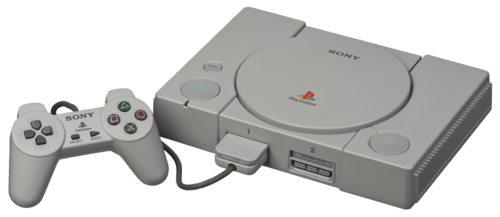
Tell me, who the f[THX sfx]k still has this in 2025? Does it still run? Name the Top 5 Best-Selling PS1 games from memory!!
This is proof in my pudding. Granted, there is a museum dedicated to the history of video games — several, in fact — and I don’t need to take this matter on myself. But I want to. There’s too many godly classics getting shunted to the dustbins and not enough efforts at preservation, nor are there many developers or publishers or even CEOs who care about this matter.
Silence would’ve been better to hear from you, Jimmy boy.
What about the devs, publishers, and other video game heads who do care? Well, the problem that trips them up can come down to the intricacies of development. Never mind the ludicrous projects that are bringing us the likes of Grand Theft Auto VI in 2026 after 13 years in Los Santos, nor the dire straits that kept Duke Nukem Forever cooking for 12 years or Beyond Good and Evil 2 in limbo for longer than that; say a game enters development one year, is announced with trailers and gameplay footage in the next year or year-and-a-half, and finally the full product is delivered after 2.5 to 3 years. If there was trouble, at most it’ll be upwards of five or more years. What kind of trouble could such a game face? Many.
If it covers a touchy subject especially under concurrent politics, it may not see a wide release, if at all. There’ve been efforts to better educate the gaming population about subjects like the Transatlantic slave trade, the Holocaust, and other such concepts, but because of how weighted these subjects are critics have fired back at the idea of using a video game to discuss it when the time-honored tradition of boring the students with the dullest teacher has always been seen as the least controversial, failing to understand that that may not be the most effective means to go about it.
A more dynamic teaching style can mitigate this outcome if the lesson is on Philippine-American reconcentrados.
Creative developers can skirt past this by hiding the lesson in a different narrative, and not even in a completely digital format. It’s possible that there’s a board game or DND campaign whose inner lore includes such a plot point. Several anime I’ve seen touch on the subject with the oppressed being some other humanoid or human-like species.
As for video game series that have adapted other media, the series itself may not be under trouble or has a countermeasure of some kind if the game is unceremoniously canceled for whatever reason. Game can’t release? Reboot the franchise but on more platforms, it’s been done before.
My best example of this.
For the Ultimate Ninja series, I thought for the longest time that there wasn’t a 5th game. There was, but it never got to North America due to timing and dubbing issues, which is why we now have the more successful Ultimate Ninja Storm series. More arcs, better tech, more new moves from the series, and on more platforms than the originals.
Then there’s instances where developer-side things are perfect, but politically things are not. As I mentioned in last week’s post, region-locking/coding can keep you from accessing a product. For instance, the Senran Kagura games are mostly available outside Japan, but not all of them are; the iDOLM@STER series has overseas fans, but the games are largely Japan exclusive. How did it travel the world? Probably a con, or an otaku from Nagoya visited Houston once. Who knows? Then there’s Kantai Collection or KanColle (Japanese: 艦これ) that despite not being accessible to the wider world, has attracted fans outside Japan as well.
Did I mention this is a browser game?
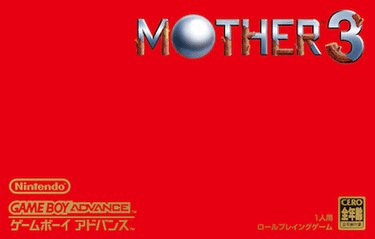
At the part of the politic-side of things, licensing and import restrictions can make things interesting. Oft-times though, politics and laws don’t impede the wider release of a product, but human error within the dev studio keeps it from gaining an overseas audience. Or worse, some type of greed or hesitancy motivates the studio to keep it locally available despite pressure from the wider audience.
Fans have translated and dubbed this in the years since, Nintendo. What f[Mario coins]ing gives!?
Realistically, there won’t always be an opportunity to keep this from happening, and as time marches on, new technology will create new problems, but I’m not gonna stop forgetting what games and wider media used to look like and how patchy our earliest endeavors were at the beginning, and I think it’d be a crime if anyone else did either.
The title of this post is meant to have two purposes: to highlight how media can become lost and the modern era’s means of recovering lost media. There isn’t always a perfect method to prevent lost media nor is there a perfect means to recover lost media without sacrifice to the media in question. I’ve faced this problem personally while gaming and emulating games, but I’ll get to that soon.
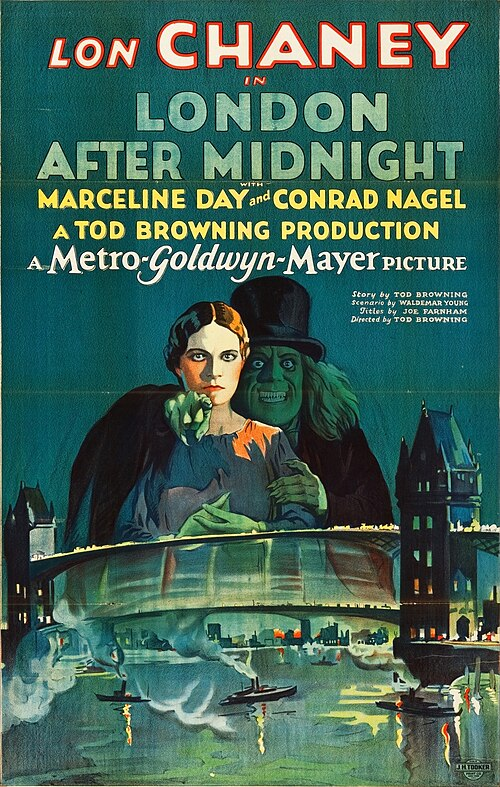
A brief overview of lost media is any piece of media whose preservation methods were either nonexistent or severely compromised to the point that part, most or the entire medium is effectively ruined or destroyed. Surviving copies can’t be located or recovered because they either don’t exist or sometimes won’t be released publicly, even after the copyright expires or the original author dies. For the longest time for obvious reasons, this has mostly applied to film, like so:
This film was released in 1927. It was kept in the MGM vault for decades until all surviving copies were destroyed in the 1965 vault fire. As of this writing, it only survives in posters like this and surviving still shots.
Yet as time has progressed, more and more forms of media have been created, to include video games which can also become vulnerable to media destruction. In one extreme case, Adobe Flash.
Five years have passed and I still miss it.
This critical piece of software was launched in November 1996 and has formed an important cultural touchstone on the internet ever since. Countless creators, new and veteran, have used it to make everything from videos to short films to even video games. There used to be countless flash games and even websites hosting those games. They were inescapable, until Adobe ceased support for the software on New Year’s Eve 2020.
A not insignificant portion of these games couldn’t be saved and are thus forever lost outside of admittedly s[dial-up]ty videos recorded in 144P in 2007. Yeah, they were hard to look at and aged really terribly, but having aged media is better than having no media. It shows the technological progress between, say, VHS tapes and Blu-Ray discs.
The crux in the custard I’m getting to is that efforts to preserve media have been undertaken for over a century, and while not perfect, as an advocate of piracy and emulation, I also advocate the preservation and, by extension, re-release of old media in as many forms as possible, especially when the format in question begins to deteriorate due to age. My grandmother clung tightly to old VHS tapes and while they may have been endlessly playable in 2005 for example, they had problems at the time and have considerably gotten worse since. Same for all the old floppy disks she never threw away.
In my documented experience on this blog, in order of difficulty from easiest to find to Raiders of the Lost Ark, video games have been fairly easier compared to movies. And movies are still easier to search up compared to TV series. I say fairly and not absolutely because digital stores like Steam and Epic Games Store have delisted video games before and will nonetheless do so again for a variety of reasons. MMORPGs are most vulnerable to destruction when the devs can no longer support the servers due to something like acquisition, shutdown, or “cost-cutting measures.” That last one is less excusable because video games haven’t had a better time to be profitable than the modern day. You can pick your favorite examples of this, but my pick for one of the best-selling video games ever goes to:
Once RockStar realized this game s[gunshots]ts platinum, it hasn’t turned the faucets off ever since. Notice the gap in time between this and Red Dead Redemption 2.
Time and tech is another factor for this. Games released on arcade cabinets or 16- and 32-bit consoles are merely a collection of pixels and a third party emulator is seldom needed. In some cases, they function the same as a browser game. Sixth-generation video games do require a third party emulator but I’ve yet to face any problems downloading them. Just needed to make space. Seventh-generation has proven the most difficult to emulate. On average a PS2 game can be downloaded to PCSX2, for instance, in several minutes to an hour or two, but PS3 and Xbox 360 games can take double or triple that, especially with a spotty connection. Maybe a signal booster would help, but the area of El Paso is surrounded by mountains, so the servers in this part of the country may be considerably weaker than more densely populated areas. Testing this out myself would cost me money and resources I don’t have.
I made mention at the end of the last post that I was planning on posting in the future a comparison of three underappreciated 2012 video games that tackled corruption in different aspects, one of those being Yager Development’s Spec Ops: The Line. Unfortunately, I couldn’t find a store front that was carrying the PC release as it had been delisted ages ago. I’ll elaborate on that in the post, but in order to play it, I had to download a console version for four hours.
This is what I mean when I say it’s important to preserve as much media as we can. Spec Ops: The Line was one such example of a hard to find piece of media. I was worried it was only available in YouTube playthroughs from years ago, but digital libraries keeping the files available online were a godsend for this endeavor. For other games, this isn’t going to be the case. All traces of the game in question could be lost forever.
This wasn’t the sole inspiration for this post. Actually, region-locking of movies was the inspiration, but with the Stop Killing Games initiative going viral, I might as well include it here.
Going back to MMORPGs and similar online games, if a developer goes under or gets eaten by another dev, it’s not their fault if their efforts to stay afloat don’t work. And as I said earlier, the argument of keeping the servers up is too expensive faceplants epically when video games continuously make tons of money.
Although not the original victim of media destruction, the earliest films were most vulnerable to it due to attitudes towards them since inception. A lot of the first examples from the late 19th century were admittedly glorified experiments consisting of multiple still shots giving the illusion of a picture moving independently, but these early examples helped to perfect the craft. Science yesterday, artform today. But a lot of these old films were made with hazardous materials, notably cellulose nitrate. It could catch fire easily and long before the marriage between sound and sight, many of the silent films of a century-plus ago can no longer be recovered. At first, the reasons for preservation were balked at, but efforts to try and preserve it have been made. I consider the zenith of home releases to be the VHS and succeeding DVD-Video eras as both formats have re-released tons of TV and movies with estimates in the hundreds of thousands.
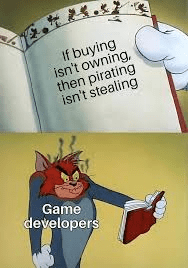
Then we progressed to digital streaming after some time and my main concern with that has to do with licensing and even region locking. If the license expires, you might find yourself unable to view the series you paid for. And if you move from one region to another, you might have to invest in a VPN to see the series you paid for. In a more perfect world, this wouldn’t be the case, but now that buying is no longer owning, piracy is no longer theft.
I do make some concessions with this. I don’t pirate modern games because of the risk of anti-piracy software. Some of the games I do pirate are from dead developers.
No matter the form media takes, it’s always important to save it for the archives. Allow future generations to be able to engage with it, even if it hasn’t aged well graphically. Ed Boon may be perpetually embarassed by Mortal Kombat: Special Forces, but it’s not like nothing was learned from that. Yesterday’s mistakes make for tomorrow’s masterpieces.
I’m still in the process of drafting up that comparison between Max Payne 3, Sleeping Dogs, and Spec Ops: The Line, but I want to preface that with a review on Spec Ops: The Line first. Now that I’m able to play it on RPCS3, I’m in a better position to give my thoughts on more than just its plot.
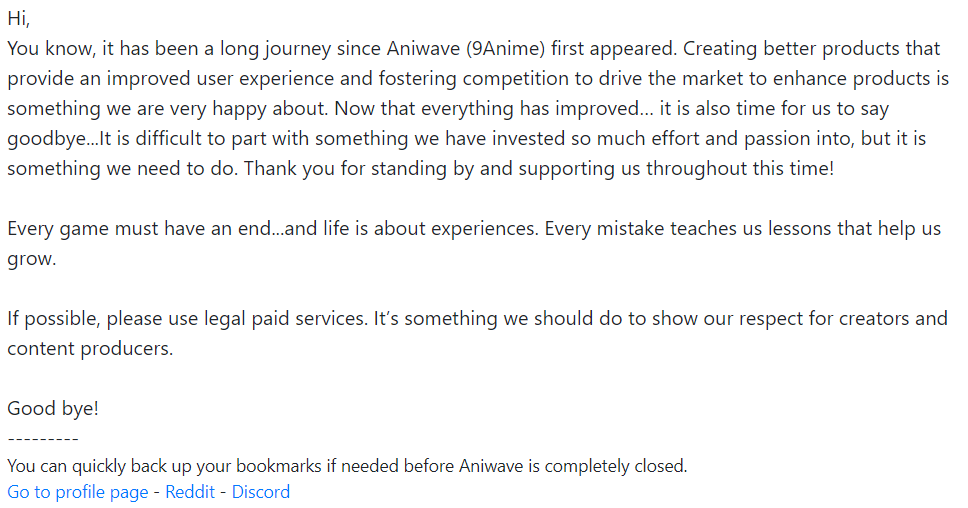
Earlier this week, it come to my attention that a pirate site I frequent called Aniwave was recently taken down.
Aniwave.to to be specific, other copycat sites are up and running, but for how long no one can say for sure… unless one of the web devs for those sites is currently reading in which case, hi! I’m a huge fan. Keep doing the lord’s work.
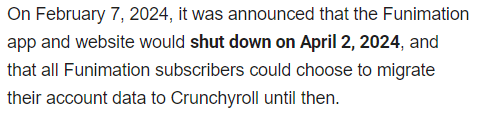
Aniwave.to going under is a huge blow considering it was purported to have one of, if not, the largest database of free anime at over 12,000 series. Regular watchers know that I’m a champion of anime piracy for a lot of reasons boiling down to practicality. Everyone and their great-grandmother has their criticisms and concerns over companies like Crunchyroll essentially monopolizing the anime industry, especially since they ate Funimation this year, Crunchyroll itself being bought by Sony three years before that. Damn, corporate consolidation is a b[slap]ch, isn’t it?
The one saving grace here is that past users of either have their old archives saved, so you can go back and look at the degeneracy you watched like five years ago (Shimoneta and Highschool DxD for me), but the point is fans are running out of options to view their favorite anime free of hassle. Crunchyroll is a mess of advertising for services and products few people asked for, and the library is far too small to satisfy those of a niche taste, like myself.
I make a habit of introducing you all to series you probably never heard of, partly because I found entertainment in it and partly because they can’t be found on the usual streaming services. HiDive, Crunchyroll, Hulu, and others all have their own shows, but often times even for legal reasons (or the creator being an oddball), some stuff is deliberately made impossible to access. Some of the stuff I’ve written about on this blog is thanks to those who take the plunge and go out of their way to search for these series. I get that sometimes copyright law gets in the way of a good anime session and your favorite series is at risk of becoming lost media (like the JoJo’s Bizarre Adventure film from 2007) or are lost media, forever wiped from collective memory, especially if there’s not a lot of marketing behind the series at the time, but it’s a damn shame that the task of archiving is left to fans who are that dedicated to some of the more obscure series.
This isn’t limited to anime as there are a handful of western series and movies that are poorly archived assuming an attempt was made. Most films from the early 20th century are likely forever lost due to faulty viewing methods at the time. But when it comes to preventing this problem and preserving media, copyright laws and the companies that study them closely will put piracy sites through legal hell which is why some of the series I’ve recommended may not be available anymore. Apologies for any dead links that are still up.
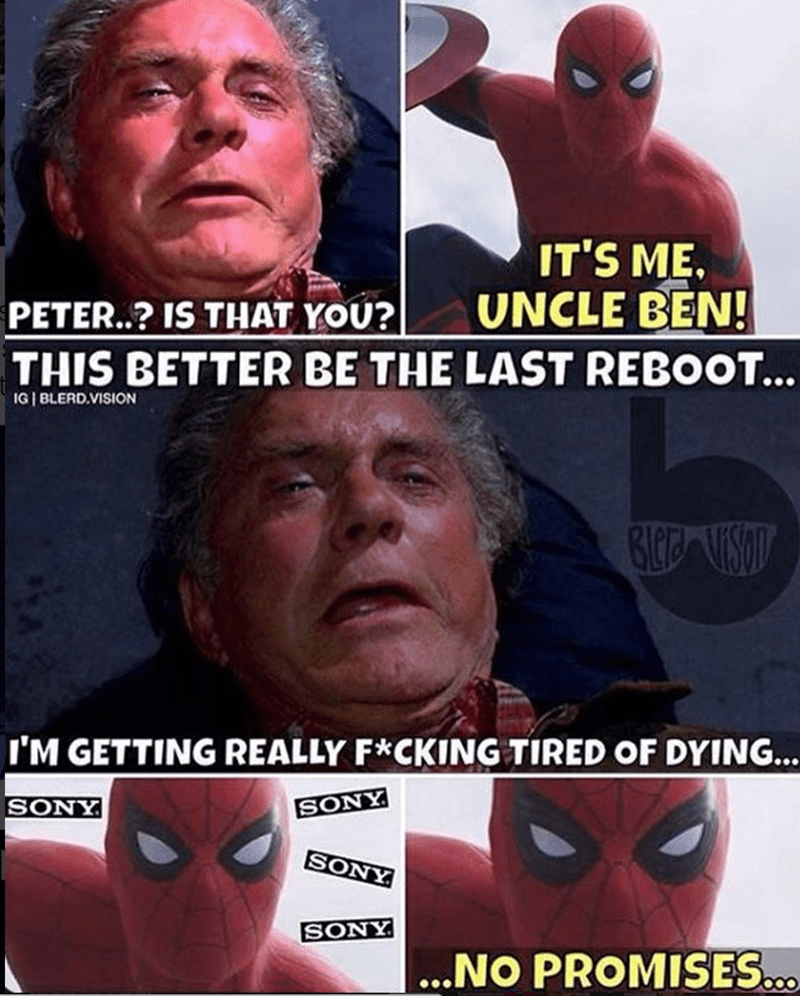
The discussion is healthy in places like Reddit and 4chan where they tend to put the blame on companies like Sony fighting for multiple different properties. If you recall, a few years ago, they got into it with Disney over the rights to the Spider-Man franchise, which led to a tense, uneasy deal where Sony continues ownership of the films while Disney markets everything else. It was a s[thwip]t show.
Canonically, Ben’s been alive and dead twice. Even if it led to an entire Spider-Verse (holy f[yamero!]k there’s a lot of those), Deadpool and Wolverine proved that establishing a multiverse isn’t always what it’s cracked up to be.
Fortunately and obviously, there’s still ways to combat this: other more durable pirate sites, hosting your own site, torrenting (which is a pain in the ass), but this consolidation hurts western anime fans with options for stress-free anime viewing getting increasingly scarce. Physical media is on its deathbed, and fewer studios are putting their series on hard copies these days. I doubt all of them are doing it willingly and likely have their reasons for making this move especially at the breakneck pace we’re seeing. There might also be another reason I haven’t thought of as the viewer looking in from the outside, but this reminds me of an Extra Credits video on why demos lost favor about a decade ago.
Part of the argument for why this happened in the gaming world is that gamers disincentivized devs from including demos in recent titles. Basically, with access to small section of the game, a handful of outcomes makes or breaks the future of the game. If the demo sucked, then the player might not be incentivized to get the full game on release; or if it was awesome, hype may surround a game that would turn out to be mediocre or if it lives up to its reputation, financially the developer doesn’t see a very large return on investment.
For anime, newer technologies are a high risk, high reward endeavor. Golden Kamuy was dropped yonks ago by those who were turned off by the CGI bear fight, but those who trudged along found a peak viewing experience with memorable characters and an interesting plot. Some may have gotten tired of waiting and bought as much of the manga as they could (or continued on MangaDex). I can see why companies and studios would pick and choose to show the anime that are famous instead of risk allowing access to niche markets, especially to minimize the risk of commercial flops.
But to argue in favor of allowing unfettered access to all anime produced, I offer two words: cult following.
Shoestring budget or high development cost, there’s a series out there for everyone. Studio heads and execs may be shortsighted or too cautious to see a property’s reputation grow over time, but if/when it does it can reinvigorate the conversation around the property, not all of it centered on associated products. I don’t know about you, but The Warriors getting a video game in 2005 published by RockStar was a good way to introduce a new audience to the franchise. Reboots also work, but it’s too easy for those to get out of hand like with Spider-Man or Tomb Raider.
It all looks like a tall order, and those of us without the technical expertise to torrent can only watch as the gods fight each other in the heavens, but while that’s going on, there’s other sites up that are picking up the slack. There’s 9animetv.to as well as aniwatchtv.to which seems to be undefeated in piracy if this meme is to be believed.
Credit: u/SpiderGeneralYT
Remember all of those? Good times.
Likely an exaggeration–as I said, more will replace what aniwave was–but if this keeps going on, then the future is pretty bleak with site after site getting taken down.
Sorry for the grim ending, but for a look on the bright side, someone else is currently updating a list of available sites to still watch anime if it hasn’t been done already. Only one way to see now if the sites listed are still up and running flawlessly.
Years ago as a college student, I’ve spent a handful of late nights scouring the Internet for content in between school days. I’ve spent these nights viewing the Pink Floyd movie, rewatching Naruto: Shippuden to fill in the gaps I missed while watching Boruto (finally find out what happened to Danzo), and in this case, reading the manga Act-Age, written by Tatsuya Matsuki, illustrated by Shiro Usazaki.
I remember the marketing on the Viz Media site as a story of an orphaned girl named Kei Yonagi who is left to raise her little siblings all by herself. To that end, she seeks the path of an actress and discovers that her natural talent for the art of acting is above and beyond what most would expect, even by method or character acting standards. Essentially, she reminds me a bit of Christian Bale’s dedication to his roles.
Now, as a viewer, my knowledge on the acting industry comes from research and stories, made-up and real. As far as I know, there’s a bunch of moving parts that the average person will likely never see unless they enter the field themselves or something like a scandal pops up, the latter of the two being quite commonplace in Hollywood. I can’t say for sure if similar practices exist in acting in Japan or anywhere else in the world, but I wouldn’t put it past anyone. Every organization thinks they’re normal and everyone else is weird. Maybe one day, I’ll make it a blog post.
In the manga, a lot of the ins and outs of acting as a whole are present, but one of the main selling points was the mental health aspect. Show business is a cutthroat industry to break into and has been that way ever since the Ancient Greeks were pioneering and perfecting theater and stage. It’d be something to be the fly on the wall of the original Antigone play.
Act-Age ran from January 2019 until its untimely cancellation in August 2020. Millions of views across 123 chapters, 107 of them collected into book format, spread over 12 chapters with only 2 of them in English, so basically, if that person is you, depending on how you feel about it you practically have gold or pyrite. But I’m jumping the gun.
This blog post explains that the manga is atypical for a Shonen manga at face value, trading physical punches for mental attacks, but after reading through the article, it makes sense. The term battle tends to get used quite loosely these days. Stretching the definition to any kind of struggle, physical or mental, works well in this case because Kei does undergo her own internal struggles while acting or at home. Mental strength is something that I don’t see get praised in the animanga sphere all that much outside of horror. If anyone has any recommendations that fit this mold, do share. I’d like to expand my horizons.
Memorable characters, challenging story arcs, mental fortitude and an inside look at the acting industry (at least on the Japanese side of things); all of these are a smash hit manga make. Probably even an anime adaptation, but it sadly wasn’t meant to be. The manga got the axe when Matsuki was caught performing a heinous crime on middle school girls, and everything associated with the manga was halted, including a planned stage play. As for Usazaki, she was asked whether she wanted to continue the series without Matsuki and she understandably chose not to. So Shueisha and Viz Media both shelved it for good and any and all mention of the series has been s[metal banging]t-canned for good, save for blogs like this that occasionally dig through the annals and archives to write about the tragedy that was Act-Age.
S[clapperboard]t like this makes it even harder to be a weeb. Explaining away weird plot points and out of context images/scenes is very fun and hilarious. It gets all the more dark when the series in question is in some capacity tainted by something the author did. Normally, I have no problem splitting the art from the artist, but with debates like that–and you may have your own concepts about the matter–I think it depends on the attachment between the art and the artist. I remember reading Joe Bonanno’s autobiography A Man of Honor and in that he claimed to have met the likes of Errol Flynn, praising his acting prowess but chastising him as a person, especially with how he treated women. Similarly, I think the Rolling Stones would be directionless without Mick Jagger, or that John Lennon was something of a lyrical genius, but at best it’s creepy that Jagger’s lovers are much younger than him, and at worst Lennon’s romantic life gets less and less opaque the more you read into it. Or just listen to “Run For Your Life” and pay attention to the lyrics.
Most licensed manga hosting sites have done away with the manga, especially Viz Media, out of respect for victims and survivors. I doubt it exists even on pirate sites, making it a candidate for deliberate lost media, where a work is purposely excluded from anything capable of archiving it. As I said, depending on your stance, if you managed to save the chapters for private viewing you may have gold or pyrite.
Act-Age, during serialization, was proof that it could work and was on its way to become the next big thing. There may be an alternate timeline where Matsuki wasn’t a s[horse neighing]t heel and it’s still in publication with its distinctive writing and art aesthetics, but no one can say for sure where it would be now. Maybe like Undead Unluck, it’d suffer a slump until a later arc revived it, or the anime adaptation saved it. Who knows?
But a light exists at the end of the tunnel for the original team that worked on Act-Age. For instance, Usazaki walked away from the project to work on other stuff, be it magazine covers or her very own one-shot manga. The facts were in the fondue during Act-Age’s run; she could clearly do it. The manga cover up above in this post is her own work. The link to the one-shot is right here. Enjoy!
Back into the fold, baby! For this week’s YouTube recommendation, I recommend One Punch Dad.
Run by a current U.S. Army warrant officer, One Punch Dad features TikTok-esque/YouTube Short style skits, a Star Wars parody of all things, and the warrant officer’s opinions on multiple different things from military uniforms the world over to fast food to duty stations and a bunch of other stuff.
While I have recommended channels run by prior service vets, this may be the first recommendation of an active servicemember. If you like the kind of content to be featured, consider subscribing.
I’ve brought up L.A. Noire before as an example of what went wrong with it on the developer’s side. To not repeat myself a third time, here’s the short version: Australian developer and programmer Brendan McNamara used his experiences working on the 2002 video game The Getaway to open his own studio in Sydney called Team Bondi with the goal of developing their only game L.A. Noire, based on old noir films from the 1940s and 50s. The problems that arose came from McNamara’s corrosive personality, crunch, and, according to ex-developers under his wing, explicit approval of sweatshop hours. Numerous people quit or got sick either physically or mentally of his open berating of “slackers” and loads of people who contributed to the project were omitted from the credits, especially if they didn’t see it to its May 2011 release. Keep in mind, Team Bondi started working on the game in 2004.
Over the course of nearly eight years, Team Bondi lost a lot of people and with a high turnover rate and new people not knowing what their predecessor was specifically working on, lots of stuff was scrapped. It wasn’t until Rockstar themselves made a personal investment in the game’s release, but by the time it released, it never broke even and Team Bondi’s assets were sold off in October 2011. The studio was said to have spent over $50 million on the game, making it one of the most expensive video games at the time, but it only made back less than half, even with all the marketing in the years prior to release.
After 12 years and a series of remasters and graphical upgrades especially on newer consoles, Rockstar clearly has a place in its heart for the game. As for what would’ve been different if more level heads were allowed to direct or manage the project, it’s difficult to say. Maybe someone could’ve reined in McNamara or fired him from his own studio for the toxic sludge he spewed from his mouth. Maybe the game would still be in development with graphics and physics engines changing over time. Maybe it’ll get cancelled and all we’ll have are numb, carpal tunnel afflicted hands to show for it. No one can say for certain at least not until we master interdimensional travel.
As for what should’ve made it into the game, it’s clear to see that some content was missing. Select characters seem to know the protagonist Cole Phelps without a proper introduction for the audience, especially on the game’s ad vice desk which handles drug crimes. Spoilers incoming, there’s also a subplot in the latter quarter of the game tying together (though haphazardly) the fate’s of the characters Cole Phelps, an ex-Marine who fought with him in the Pacific Jack Kelso, and a German immigrant jazz singer Elsa Lichtmann. Part of the subplot is meant to hint at Cole becoming smitten with Elsa and beginning a love affair with her despite him being married with children.
Following this revelation, his partner on the vice desk rats him out due to personal reasons (he lost out on a boxing match and Cole pretty much ruined the fun for him by promising one of the potential victims a ticket to catch a ferry from New York), and he’s demoted for adultery. The scandal makes the headlines and left with no one but Elsa, after a few cases on the arson desk, Cole looks into a personal conflict Elsa’s been looking into for a while: the most likely (read: confirmed) fraudulent death of her friend. This is where Kelso comes in as an investigator for the California Fire and Life insurance company. Elsa’s friend was a construction worker who was contracted in the development of new homes for returning G.I.’s but the house he was working on collapsed and killed him. It’s revealed from Kelso’s investigation that most of the houses were build with subpar wood and brickwork, some of it from shut down silent-era film sets.
I bring all this up because the adultery subplot comes in quite apropos of nothing. Call it subtlety or a hint at the rushed development cycle, but the closest we get to a build up of Cole’s and Elsa’s relationship is him visiting the club that she sings at most nights. The scenes where they get even somewhat intimate are rare and in the last few cases in the game. It also seems that much of Cole’s character development is absent. Throughout the patrolman cases and going to the traffic and homicide desks, he’s portrayed as levelheaded and quite straightlaced, even chiding fellow officers for not sticking to his personal definition of justice no matter how slight, though keeping to himself for some other officers’ personalities.
By the time he’s on the arson desk, he’s back to his old professional ways and he’s still the type to chase a victory, even with the power of slippery slopes, but I personally never saw him as the type of guy to think himself as a hypocrite, nor did I think that his preaching morality was in some way a shield for his own personal conduct. Some moments do stand out, but don’t have that much of an effect on the story, such as his pride in his own job as a cop while his first partner, Stefan Bekowsky, complains about aspects of his tenure on the traffic desk; or his taking the homicides more seriously on that desk while his partner there, Rusty, is busy drinking half the time, and several others.
Still, if the devs weren’t dodging an interpretive clock or a nasty boss, it could’ve seen a lower turnover rate and some of the original ideas that were cut could’ve been added back, if not in the game itself than as an expansion pack or DLC. The finer points of this implementation can be better explored elsewhere if they haven’t been already, but of the ideas that were scrapped, there were two crime desks that were abandoned: the fraud desk and the burglary desk.
According to McNamara himself, the desks were exactly as described: burglary dealing in thefts and robberies, stuff going missing, and all that entails; fraud would’ve dealt with scams, conmen, forgeries and everything in between. We don’t know who would’ve been the officer in charge of dispatching detectives to investigate these cases, but we have one clue as to who would’ve been partnered with Cole at least on the burglary department: a minor character named Harold Caldwell.
Caldwell was seen getting along famously with Cole. During the final case on the vice desk, he lends a hand to Cole and his vice desk partner, the sleazeball Roy Earle. Caldwell was suggested to have been Cole’s partner on the burglary desk which would’ve had around 11 cases to play, which is the closest explanation for how he has such a good chemistry with Cole at this point in the game. Because the game skips forward six months between the traffic and homicide desks, it’s suggested that the timeskip was supposed to be the burglary desk, but the reason for its omission comes down to formatting and storage.
The PS3 version has the benefit of a large capacity Blu-Ray disc, but there’s no equivalent feature for the Xbox 360 version. Having played it myself after getting it loaned to me by a friend, I remember the game case having a total of three discs. Leaving extra content in the game would’ve necessitated a fourth disc and to my knowledge, few, if any, games would’ve come with so many discs. Without the cut content, L.A. Noire clocked in at a 20 hour campaign depending on your playstyle, but with 11 more cases focused on burglary, who knows how many more hours and gigs would’ve been dedicated to the game?
As for the fraud desk, we know even less. All we have is speculation based on what probably would’ve counted as fraud in the late 1940s since this game was also released in a time before the Miranda rights afforded criminal suspects protection while in police custody along with a defense attorney. It might not be obvious playing it, but if you ever look at gameplay of L.A. Noire or play it yourself, you’ll notice that Cole never reads the suspects their rights. The landmark Miranda rights case was argued in Arizona in 1966, less than 20 years after the events of L.A. Noire, so a lot of what the LAPD could’ve been implied to play fast and loose with in 1947 would’ve largely ceased by then.
Regarding people involved in the fraud desk, that’s also not well known. Who would’ve been the dispatcher? Cole’s partner? Is there a desk that challenges Cole’s lawman philosophy and awaken him to the shades of gray in law enforcement? All of this is up for interpretation. McNamara claimed to have had some levels and concept art for the burglary at least, but I couldn’t find any screenshots of these to verify. Not that I’m calling McNamara a liar, but he was the only public face during the development of the game.
The attitudes and accounts of the disgraced ex-employees of Team Bondi (especially those who left before the game released) may suggest that McNamara had all the cards, so unless an artist or designer snuck away a copy of a potential level, this cut content exists as lost media. Instances of both still exist in the game, but you would only be able to see it in the game’s free roam mode, looking at fliers and ledgers and whatnot.
Would the cut content have made the game any better than what we got? Well, I doubt it would make as big an impact as expected, though it could still change a lot of things. Like what? Probably an in-depth look at how theft was prosecuted post-war or what defined fraud. The examples I listed above are clearly not exhaustive and people smarter and more experienced than me in those fields may have more to add to those, but those would be the more obvious ones to me as I’d never investigated a missing object in any capacity, nor have I investigated fraud. Certainly, Caldwell would join the list of partners Cole has had over the course of the game and likely one of the more respectable ones compared to Roy Earle who takes home loads of allegations of racism and misconduct, even for an America pre-integration.
For formatting and storage, if Team Bondi was able to commit as much as possible to leaving everything in undisturbed, then the game case may look more like a binder or folder with well over four discs dedicated to each case on the Xbox 360 and probably two or three Blu-Rays for the PS3. Subsequent re-releases for PCs would occupy more storage than can possibly fit on an unmodified computer. If I was a part of that alternate reality, I could easily see myself budgeting for more than one high capacity hard drive for just one game or even a series.
On that note, there’s also a part of me that sees this as being a series given the same treatment as the multiple expansions for The Sims franchise or Battlefield and Medal of Honor, which probably says a lot about how EA’s design philosophy compared to what was inherited from Team Bondi into the Rockstar family.
The only notable changes for later releases of L.A. Noire is the interrogation going from Truth, Doubt, and Lie to Good Cop, Bad Cop, and Accuse. All things considered, what counts as speculation for a different game solely exists in criticisms for what didn’t work or go far enough in the version we got. Then again, it takes a game with enough hard work going into it to spark debates and discussion years after the original developer went under and the closest thing we had to DLC or a sequel was seemingly shelved forever. This video by Real Pixels explains all the faults in L.A. Noire. Based on what I wrote, there’s a lot so take this as a brass tacks examination of L.A. Noire.
Channel: Real Pixels
Finally, is L.A. Noire even good? It clearly doesn’t live up to its purported expectations and as I’ve explained there’s a lot under the hood that’s missing or what’s left over isn’t perfectly aligned, but considering I’ve dedicated one post to the game and sections within two separate blog posts to the game, I have a relatively high opinion of the game, and so do others given how many people dream about there being a better version of L.A. Noire or even a Whore of the Orient.
We end 2023 with a YouTube recommendation for the channels Business Basics and Geopolitics Daily.
The twin channels cover news coverage and geopolitics across the world keeping viewers up to date on major issues that affect us directly or indirectly, typically from a consequences of conflict standpoint especially in the case of territorial disputes like those of Russia, Israel, and China among other places across the world. Both channels began as business and investment guides before the shift to global events, but do still offer tips and guides for business and investing.















 Opinions on Entertainment