Revenge of the Shield Bro or Oops, All Lolis

What Went Right and What Went Wrong

I’ve said before that I don’t make a beeline for Isekai. I don’t love or hate it, I’m just indifferent and for a while I was curious why so damn many anime fell under the Isekai genre as of late, but looking at the goings on in Japan, it wasn’t hard to connect the dots. The same could be applied to much of the rest of East Asia, all things considered. There are still a few Isekai that I enjoy and stop me if these sound familiar: KonoSuba, Overlord, I have plans to watch The Saga of Tanya the Evil, Gate, and probably Re:Zero if more people shut up about it. Technically, I got the gist of what to expect from all of these thanks to the Isekai Quartet parodying all of them.

But it’s no substitute for all of them. Watch the originals or read their source material if you haven’t already.

If we use technicalities, Btooom! counts as the fifth Isekai I’ve ever seen. The Rising of the Shield Hero is one of the earliest I’ve seen at the height of its popularity and according to my watch history archived on Crunchyroll, it was about a month before the pandemic was declared as such. Thank goodness I had something to hold me over until the vaccines were made available. It had a decent starting premise for an adaptation of a light novel from 2013, and wound up living up to its name.

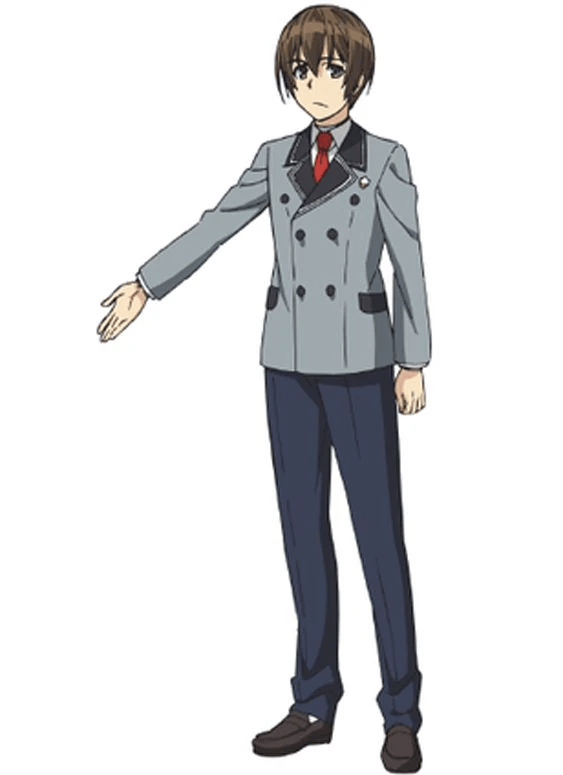
It begins with a college student, Naofumi Iwatani, visiting his local library and thumbing through a magical book that puts him in another world with three other people from alternate versions of Japan. Now that I’ve written that, it took me ’til now to realize that Isekai can be looked at from a multiverse lens than from a reincarnation lens. Anyway, our four noble heroes are awarded four weapons: spear, shield, sword, and bow with shield being the most maligned of the four. For further malice, Naofumi is cursed to team up with what becomes a major antagonist in the series: Princess Malty S Melromarc.
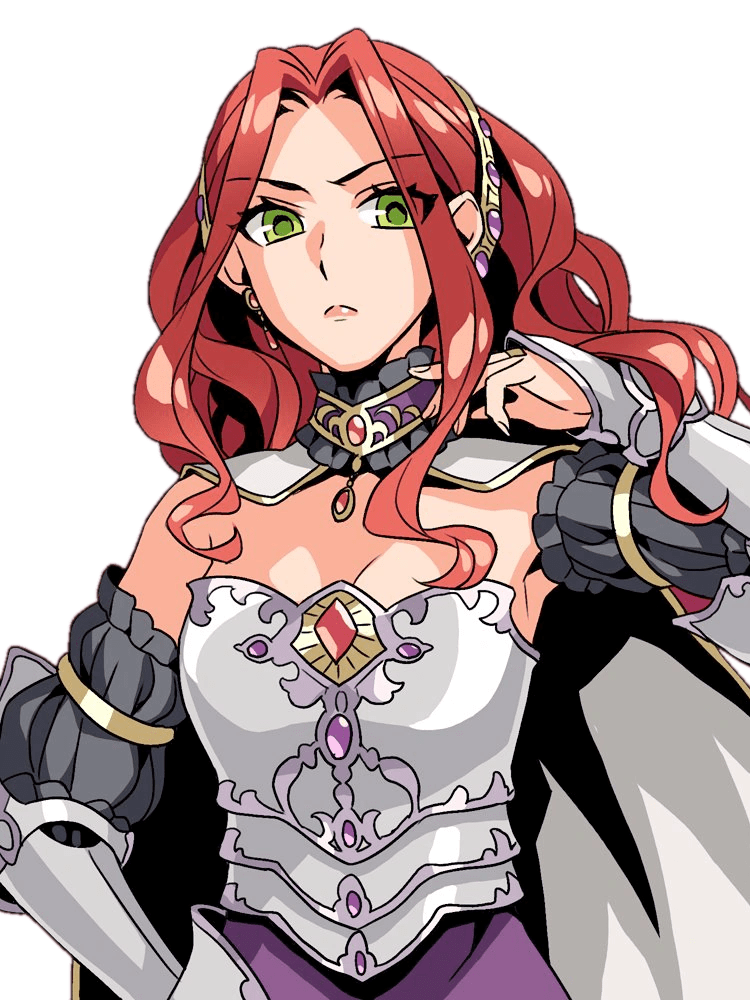
Worse Azula here starts off okay, but after a stay in a motel, she wrongly accused Naofumi of sexual harassment and assault, which burned a hole through the internet at the time due to the ongoing MeToo movement as it was getting hijacked by the worst people we’re forced to share the world with. In a prophetic scene that brings me to the Depp-Heard trial, Naofumi pleaded his innocence, but the kingdom he pledged to serve is a matriarchal society, and using that card to her advantage, she had him stripped of his prestige and ousted, momentarily marked as the Devil of the Shield.

A different series would’ve turned him into Kratos without the family-killing dynamic.

With only a few people to rely on, Naofumi continues on honing his shield skills, and controversially buys a slave. In this world, there’s two types of people: human beings who have the rights and demihumans, blanketly any humanoid with slight anatomical differences, most commonly of the kemonomimi variety, which is applicable to the Thirens of Zenless Zone Zero. This particular slave is a raccoon girl called Raphtalia and I firmly recall the internet falling in love with her for being a reliable companion and most importantly not f[Ore wa!]ng Malty. Even I loved her at one point.

Over the course of the anime, Naofumi occasionally runs into the rest of the dumbasses he was gonna serve the kingdom with, taking snide remarks on the side and dishing them out whilst also proving himself to be more capable in more than just shield tactics. Slave or no, Naofumi taught Raph how to fight as a swordswoman, and act as the offense to his defense. Later, he purchases an egg from which we get a character known as a Filolial named Filo, who can transform between bird and human form; her human form being a loli, which seem to be attracted to him in the same way a planet is attracted to a star. Finally, in the first season, there’s the second princess, the much nicer Melty Melromarc, another loli.

Credit: u/FurySnow47, r/ShieldHero

Guess all the MILFs were taken? Not all of them, though, there is still Queen Melromarc who was conveniently absent until the second half of the first season.

Fortunately, she’s absolutely nothing like her daughter and (spoilers) retries her and her husband, the king, for their harsh treatment and high crimes and misdemeanors on the throne, about to be executed until Naofumi does what most responsible heroes would do and stays their execution in favor of a more humiliating punishment, renaming Malty to “Bitch,” and the king to “Trash.” The first season doesn’t end there, but for loads of people watching, myself included, this was a definite highlight for characters who treated the protagonist like dirt all this time.

Due to the recency bias, an old 3×3 of mine has it included.
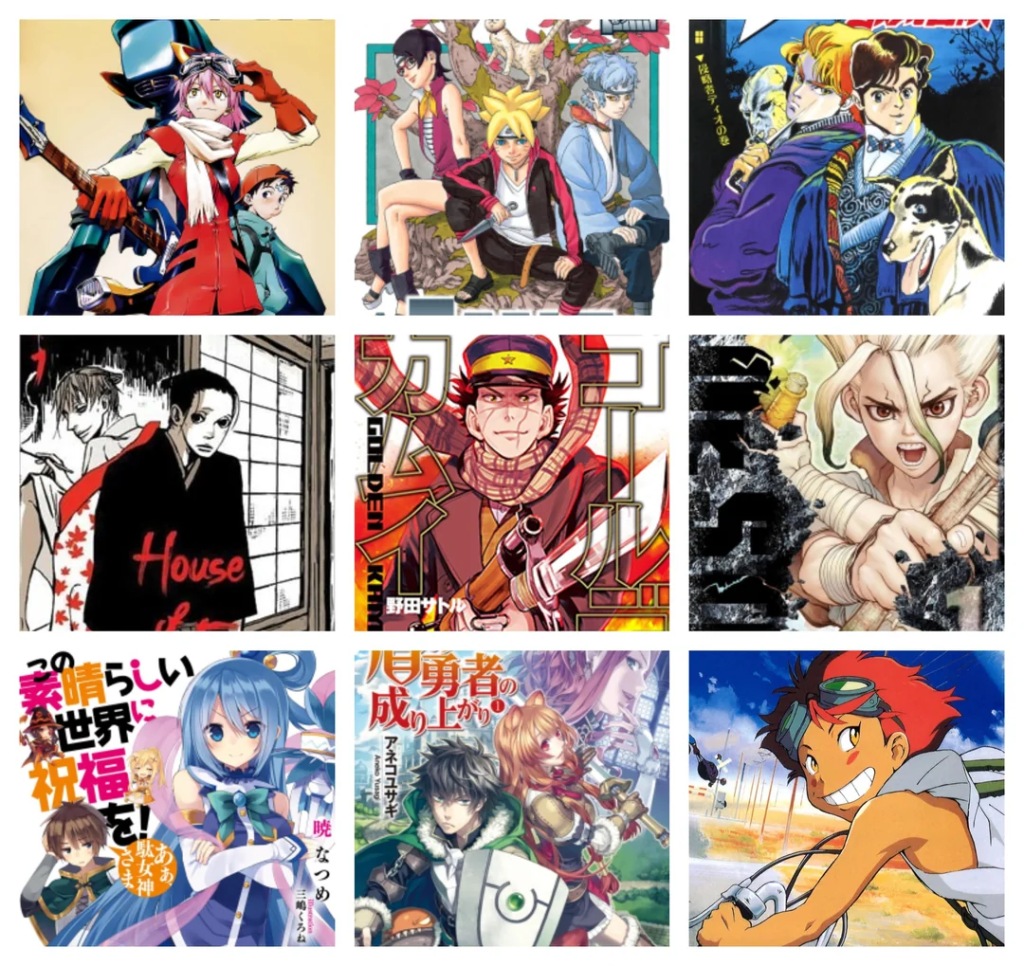
This was in August of 2021, one of my earliest Reddit posts. I do still like some of these series, and in the case of Shield Hero, its first season started strong and went demonstrably well. Where does it falter? By most accounts, season 2 is where it starts to fall.

I didn’t watch it due to the reputation it was carrying as it went on and I was too busy looking for employment as well as working with an extremely slow Army recruiter (2022 wasn’t my year (-_-)), but as I understand it, season 1 started strong, season 2 fumbled it but picked it up, and season 3 did better than season 2’s beginning. I don’t think I’ve said it before but I don’t really plan any of my anime watches out. I definitely watch anime, but I don’t set anything in stone; I just follow my whims. I put more planning in the blog topics than I do in my anime “watchlist,” so I won’t say whether I’ll see for myself if Shield Hero S2 is as bad as it says, but more like if I so choose, I’ll have this video linked below to keep in mind:

Channel: LunarEquinox

But my expectations are already nonexistent so aside from all of you dear readers, who else do I need to tell this to?

I enjoyed the first season for what it was at the time. Looking back, if I’m being honest, Naofumi doesn’t have the makings of our modern definition of a hero, he’s written more in line with the old Greco-Roman classical heroes, like Hercules/Heracles or Theseus or basically Kratos from God of War 2005. He’s not the most selfish or intimidating or morally conflicted character, but the cards he’s been dealt and the people he serves makes him question whether he should quit and what good he’d get out of it aside from a good night’s rest for once. Instead, rather than wait on quests to pop out of nowhere, as a white mage of sorts, he doesn’t really need combat to showcase his heroics; when the other heroes leave to claim their rewards, Naofumi stays behind to deliver medicine and sanctuary to the shaken populace, fitting and expected of a shield. See what I did there?

This is probably the first time I’ve felt conflicted recommending a series. Guess we’re transitioning into the S[oink]t That Exists that Makes me Pissed arc, and while it’d be more fitting for a blog meant to present unconventional opinions, I rarely do such a thing. For this series, I don’t recommend you watch as I recommend you experience the series. Season 1 and season 3 are the cleanest they’ll get, but season 2 might be left to the Pick Your Poison method. Can you stomach the reportedly poorly presented first half or would you rather spare your eyes and delve into the light novels? Maybe that’s your approach if you choose to give it a watch. It’s far from the first light novel adaptation I’ve written about, but it’s one with a complicated legacy after 12 or 13 years on the shelves. I don’t recommend going in with a judgmental or comparative mind as thinking about a different series in the viewing of this one may ruin the experience for you. Rather, what you should do is go in as blind as humanly possible and judge it on its own merits. It’s got light novels, manga, and the anime’s 4th season is supposed to release this year. Hopefully, the 4th one doesn’t ruin anything any further… or worse!

Hashire Sori Yo…

Kaze no you ni/Tsukimi hara wo/Padoru Padoru!

This would’ve come out on Friday, but I had to pack my two bookbags for the holidays. Thought I was gonna look a gift of two weeks* of holiday leave in the mouth? (Actually, 11 days, but I also have a 4-day pass.)

Veteran weebs know what the image above means. ‘Tis the season to be jolly, and everything else Christmas-y. The holidays are a lot of things: great, awful, a mixed bag, an empty bag, and a bunch of other stuff. While this post is gonna be a happy holidays to all, it’s also gonna be a setup for a New Year’s reflection of this blog as well as a look back at the content I’ve written for this year and the content that was released, continued, suspended, or discontinued. Hitting the ground in 2025 with memories and goals. Knowing me, I may entertain theories with plausibility or significant evidence, but for most things I tend to stick with the facts. You’ll almost never hear or see me make a genuine guarantee unless it’s in my notes or I have evidence and research.

Now I do have plans in my notes to review my content for 2024, but that’s a January thing, and seeing as it’s a day before I return to duty, it’ll either be delayed or published ahead of schedule. Preferably the latter so I can focus on packing up, and New Year’s Eve or Day would be perfect ideally. For a look into the future though, of all the animanga I’ve viewed or games I’ve played, a fair few favorites stand out that have wide fanfare, but I’ve either admired out of respect for the reputation or not directly engaged in myself. Others I plan on writing about after a thorough amount of time. For example, I have a decent amount of time on my emulator with the original Yakuza game, though most fans would implore newcomers to try the Kiwami updates instead.

Still, a plus for Yakuza/Ryu ga Gotoku is that it’s generally easy to get into and the number of games released since 2005 gives newcomers a backlog to play catch-ups should they choose. And I do choose that method, real life responsibilities and desires would be damned, but being a responsible adult comes first.

On the opposite end of the spectrum are series I’ve encountered through osmosis. Memes, lore dumps, wikis, explorations; individual fans have tried to explain and recommend their own series, but from the outside looking in, I feel about it the same I feel about the Dune series, best explained with this meme.

Credit: u/netotz, r/dunememes

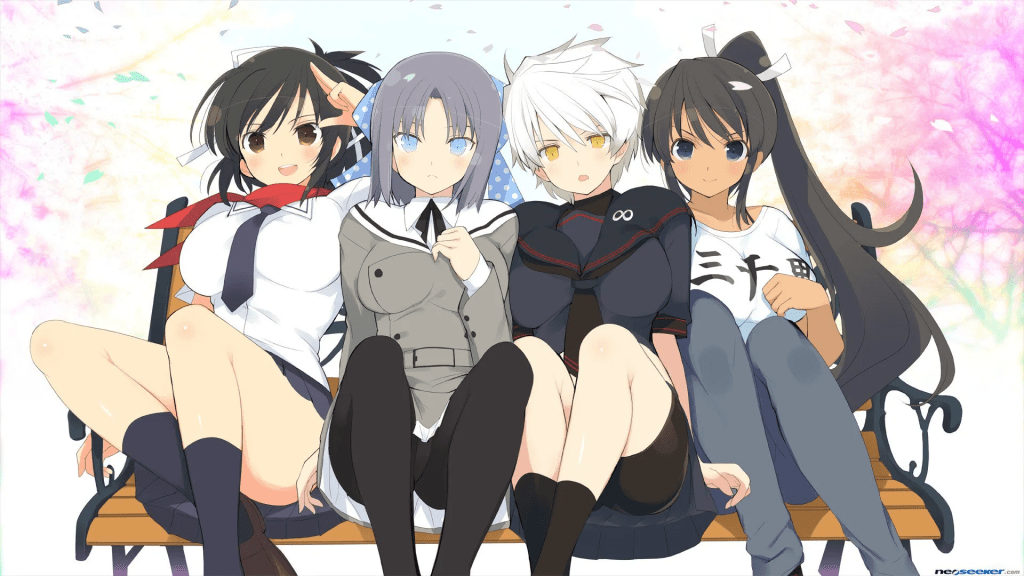
The series’ in question that I’m referring to are Senran Kagura, Fate, and Idolmaster. Each of these has a large following, both foreign and domestic, but my previous attempts to jump into the deeper lore and find a starting point has been met with mixed results. From easiest to hardest to understand, it’s SK, Idolmaster, and Fate. And I’ll start with SK.

The series’ Wikipedia page describes it as a multimedia franchise spearheaded by none other than Kenichiro Takaki, launched in Japan in 2011 with developers Tamsoft and Marvelous. The first game in the series released domestically is translated with the subtitle “Portrait of Girls” and was ported in 2013 with the subtitle Burst. So that’s simple, boot up an emulator or track down a still working 3DS or similar handheld and get some gameplay in, right? Wrong…

Opening up a can of worms called backwards compatibility and legalese, there’s a myriad of reasons why that’s not the most feasible way to do it for most. Of course, any potato computer can run a 3DS emulator–I did it myself to play Kirby: Planet Robobot and Triple Deluxe for old times’ sake–but the difference between eastern and western developers shows in the pudding. Eastern game devs will gladly re-release and remake old games for new hardware, such as the aforementioned Kiwami remakes of the old Yakuza PS2 games, whereas western devs can’t or won’t re-release remakes. Unless it’s Naughty Dog patting themselves too hard on the back with The Last of Us.

Narcissism is calling a PS4 port a remaster, when it was only a one-year release difference.

What I’ve noticed with eastern and specifically Japanese creators is that they’re accommodating enough to make their products available to all, though from what I’ve seen it can get hectic sometimes. If done poorly, a series can have numerous remakes or remasters or be disappeared and reintroduced, such was the case with JoJo’s Bizarre Adventure. Domestically, there weren’t many problems with manga releases, but western distributors either got a bad hand or dealt a bad hand with all the bravado and overconfidence that killed Macbeth. Long ago and today, it was considered sinful by the fandom to skip parts and lo and behold Viz Media was the one to ruin it in the mid-1990s. The approach was sound, but the execution necessitated the cancellation and re-release of a western release. To play devil’s advocate, Araki’s playlist disguised as a manga makes things difficult for copyright reasons, but it’s a miracle it was able to work so well, even if it took a quarter century to reach this goal.

25 years, people, 25 years. That’s how long it took for the first volume of Phantom Blood to get a successful anime adaptation. And the series had been through OVAs and a lost movie. If it was released contemporarily, we’d be halfway through a JoJolion adaptation with rumors of a JoJoLands adaptation getting a greenlight for Q3 2026.

For Senran Kagura, the source of confusion can come from the names they have, especially overseas. This itself isn’t a new concept, going back decades with international releases of Japanese anything, games notably; sorta like how Earthbound outside of Japan is known as Mother (which is its own wormhole of naming and releases). Couple SK with a limited anime adaptation in 2018, an OVA, and several spinoff games and it can seem like a lot to catch up to. I’m only one mission into Shinovi Versus thus far and I have an extended topic discussion lined up for February. This time, I’m going to try my best to get through Shinovi Versus and at least start another game in the series. So, does SK have a tricky starting point? Yes, but personally I found it easier than the next one I’ve been trying to find a starting point for: Idolmaster.

What makes this one trickier is that it didn’t start off with a console release, but with an arcade release in 2005, later ported in 2007 to the Xbox 360 in Japan. Clearly, it was successful to get a franchise of its own, but from what I’ve heard, Xbox and Microsoft don’t enjoy wide popularity in the Land of the Rising Sun. Sony and Panasonic have a wider reach on their native soil, but this series’ Wikipedia claims Xbox Live had better hardware. Who else but a computer company to push the limits, right?

So much for Sony, I suppose? The Wikipedia also suggests that that was just a test with subsequent releases getting PlayStation or mobile releases. Though over the course of 11 years, there’s been many releases. Again, spinoffs are no issue, but the volume of them in games like these makes finding the origin point tougher than it needs to be, especially when they’re neither conventionally named nor released in the right order for an international audience. Circling back to the Earthbound series, even if it’s true that the fanbase isn’t big enough to warrant a wide release, the small headcount was dedicated enough to translate the series themselves.

But the blame for that can’t always fall on the devs; copyright law is no joke no matter what part of the world you’re in. It’s part of the reason JoJo’s was so hard to introduce to the west. Let’s award the Benefit of Doubt in general cases and say that if it wasn’t for the corps of copyright and lawsuits, more players would play more games, no matter how obscure they are to the general populace. On the opposite end of the spectrum, there’s a monolith of a series that has one hell of a reputation. Starting as a visual novel, getting two separate anime adaptations (the latter made to correct the former’s mistakes), and spawning a franchise with more twists and turns than M. Night Shyamalan and Christopher Nolan could think of. Pretzels look at the timeline and think, “Holy knots, guy! The f[crunch]k am I lookin’ at?!” Of course, I’m talking about the Fate franchise.

The emperor of long and convoluted timelines, and the source of upwards of 35 to 40% of all anime-based memes, it started with a visual novel in 2004 and hasn’t stopped running. Even if you messed up the train tracks ahead, the Fate Express continues on through the power of fandom and fanservice. This passage from the associated Wikipedia page says as much:

I’ve wanted to get into Fate for a few years now, but its reputation has held me back from taking the plunge. Also being a seasoned weeb myself, I know how hideous fandoms can get (see the My Hero Academia fanbase for more details, and cleanse yourself afterwards. IYKYK). Thankfully, there’s not much in the way of ugliness for the Fate series, but to quote a Welsh monke, “if Dragon Ball fans are the ghetto, Fate fans are the crack dealers.” Some of the more vocally dedicated types will stop at damn near nothing until every newcomer lives and dies by Fate and has immersed themselves in all the VNs, anime, movies, games, and other merch that a franchise this influential can spawn.

Channel: Trash Taste Highlights

With just this video, I don’t really need to elaborate further. Someone will tell me that Fate is easier to get into than I fear, and I guess I can take their word on that being blinder than Kenshi from Mortal Kombat or Toph Beifong in this regard, but what would help is if there was someone out there who will meet normies and newcomers with some interest at the halfway point instead of leaving us to fight off a pack of wolves with a stick and a book of pressed 4- and 5-leaf clovers. You can expect to see more in-depth opinions about all of these in a post about s[horse neighing] not (yet) reviewed after the New Year.

Going through my notes whilst finishing this up, I realize some stuff should’ve been up at least a week before I thought they’d be (this post included), but life and work had gotten in the way. The holidays aren’t gonna make that any easier for the last few topics, but I’ve been beating the odds for as long as I can remember and come hell or high water, I’m gonna make this work. Figuring it all out will have to come later.

Before I part, why don’t I give you a channel recommendation for the Holidays? Behold, Geopold!

https://www.youtube.com/@Geopoldd/videos

Not dissimilar from Gattsu, Geopold is another YouTube channel that introduces different parts of the world by way of the power of internet memes. Describing himself as “Birmingham’s Travel Agent,” going off of that alone, he’s confident that that he’s well-traveled enough to give an unbiased opinion about the places he’s– okay, I’m joking, he’s gonna meme these places off the map, and keep mememing them. Now that travel agent thing may be a joke, and if that’s what you’re looking for than stop where you are, have a drink of your choosing (Kirin or Asahi for me) and watch him grossly oversimplify white people… or the state of Florida…

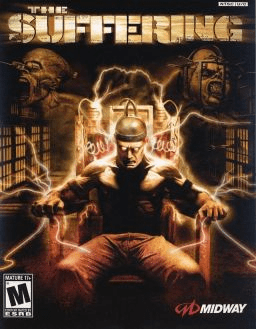
The next topic (fingers crossed, it’ll be out by Friday or Saturday night) will be an out of season third-person shooter game that only eight people remember.

If you’re at all curious about the plot, here’s a small hint: the Maryland prison system has been better, all things considered.

Shimoneta, High School DxD, and Monster Musume: Horny Trio

The three that carried me in community college

Yonks ago, I mentioned an upcoming post that was initially meant to be just another double bill, but it occurred to me that there was a third series that I felt was appropriate to lump in with the other two. These are the three anime that I watched all through college:

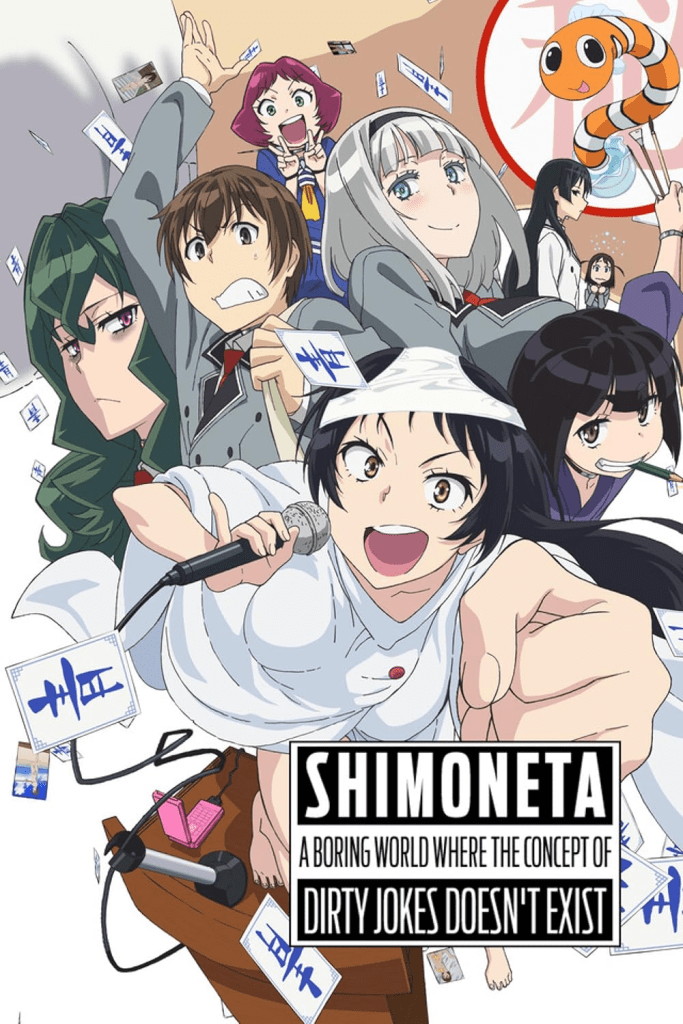
  1. Shimoneta: A Boring World Where the Concept of Dirty Jokes Doesn’t Exist
  2. High School DxD, and;
  3. Monster Musume

And we’ll go through them one-by-one. The titles of each should be a giveaway but just in case: each of these series contains sexually suggestive themes, language and imagery. Reader discretion is advised.

Shimoneta (2015):

Another anime to get its start in the world of early 2010s light novels, Shimoneta’s concept is exactly as it says on the tin. All language of a sexually suggestive or provocative nature is illegal and if uttered, the speaker(s) is/are arrested by the Decency Squad, a specialized morality police unit whose purpose is to track down and subdue anyone who dares utter such obscene words.

How do they know people are saying s[poop]t, f[moans]k, and ass? By the collars around their necks. They’re designed (read: programmed) to monitor different trigger words, I suspect, by way of detecting the movements of the mouth when certain words are spoken, sort of like how most YouTubers, TikTokers, etc. have to censor/monitor their own speech to keep from the Demon of Demonitization at bay. (Side note: f[plastic wrap]k the algorithm for doing that to our favorite creators.)

One such character is the protagonist, Tanukichi Okuma. He’s a brand new student to Tokioka Academy and a witness to the indecency of another character he meets later: Blue Snow, real name Ayame Kajou. Ayame takes the alias of Blue Snow whilst on a crusade to dismantle the shackles of this dystopian system of policing speech by way of challenging the response time of the Decency Squad. Under normal circumstances, suggestive language is how you get slapped on the dick (or in Ayame’s case, the tits), but she evades that by dialing a number on her cellphone that deactivates the collar on her neck for three minutes a day, letting her unleash a bevy of inappropriate sayings.

Based on her appearance here, Ayame adopts a Clark Kent persona when around others only to don a mask (a pair of panties, yes, really) when it’s time for her 180 seconds of lewd infamy.

The series isn’t just a man vs society conflict at play, there’s an actual antagonist in the series and she starts off as innocent and pure until the following happens to her:

Channe: Khánh Senseii Anime Kiss

The birth of the villainess of this series. Anna Nishikinomiya begins the series as the class president of Tokioka, but after a mishap in one of the episodes, Okuma plants a kiss on her by accident. If she had any knowledge of even romance, she’d probably have a normal reaction, but this unleashes metaphorical and literal floodgates. She conflates love with lust and 85% of the scenes that she’s in is a display of female-on-male sexual assault/rape. I’m not kidding.

Obviously, it’s played for laughs in the series and there’s a lot to be said about societal discourse surrounding male victims and their female perpetrators (a discussion I’m not qualified to talk about on a blog based on entertainment, but would have no problem entertaining in mixed company), but without getting too dark and focusing mainly on the central theme of the series, Shimoneta is a display of the consequences of policing morality and human behavior. If you’ve been on the internet for quite some time, you may recall an era when cancel culture went haywire and a small fraction of forum posters chastised trolls online to hell and back for a few racy comments here and there. Not that it was unwarranted, the internet around the time of the GamerGate controversy was an interesting time to be on the internet, but interspersed with genuine policing were impromptu witch hunts conflating ignorance with curiosity, and this went beyond just suggestive or provocative commentary, lest we forget the cultural appropriation vs appreciation argument that was prevalent at the time. Though these days, the conversation has moved towards intentionally ignoring sex organs, due to a variety of factors that have massively influenced the internet. Sorry, digressing.

In Shimoneta’s case, it proves how difficult at the least; Sisyphean at the most such a task of policing even speech can be. Not to mention a shortfall that accompanies the series from start to finish about how to go about this. You’ll notice that speech patterns themselves are the main crime, not the physical aspect itself. Now, there would still be procreation which this world would likely allow for survival’s sake, but another conversation can be had about how conspiracy to commit is addressed more seriously than an actual crime in this world.

This blog from 2018 has more to say about Anna herself and with a finer brush than the broadstrokes I employed here.

Having said all that, I still recommend this anime for anyone wanting a closer look at an example of how bad overpolicing behavior can get or if you just wanna see the most athletic Japanese school girl in the world hunt down the object of her “affection.” Beware her homemade cookies, IYKYK. Now onto:

High School DxD (2012-2018)

My personal favorite for being R-rated and uncensored, the light novel ran from 2008 to 2018, ending around the same time as the anime’s fourth season. Whereas Shimoneta’s content is light on explicit nudity and fan service, High School DxD throws the censorship to the wind. Back during the Funimation days, the English dub played up both the nudity and the jiggle physics. From threatening to get naked to actually getting naked; I like the progression so far.

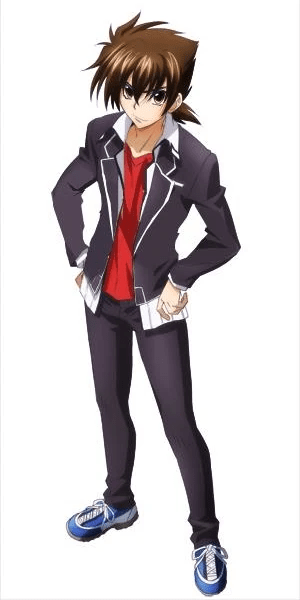
In High School DxD, Kuoh Academy recently transitions into a co-ed school for the new schoolyear. A few male students enroll, likely taking advantage of the 8 to 1 ratio of girls to boys in the hopes of scoring big before Kuoh fully integrates. One of these boys is a massive pervert and otaku named Issei Hyoudo. He initially fits the bill of a stereotypical otaku in all but appearance. Body pillows, an alarm clock with different anime girl archetypes waking him up every morning, an extensive hentai and porn collection shared with his two other friends, and a MIGHTY NEED to get some titty.

It just so happens that one particular set of breasts happens to belong to this devilishly gorgeous redhead, Rias Gremory. More than just a sight for sore eyes, Lady Rias is a fierce fighter and one to defend those she cherishes to her dying breath. Outside of battle, she’s a kindhearted young woman, compassionate, and reliable. She’s the head of Kuoh’s occult club, thinly masking her connection to the paranormal as a devil herself and making great use of the common tropes associated with angels and demons/devils: angels are depicted as bone ugly to ward off evil while demons are depicted as drop dead gorgeous to tempt mankind into following their id. In an ironic twist, the series depicts devils as more heroic than the beings they fight against.

As much as I make that sound like an engagement wearing the clothes of praise, there’s an actual plot behind the plot here. It takes a lot of cues and tropes from the Christian bible with the concept of angels, devils, and fallen angels. Following the devils, their depiction seems more sympathetic in the series as the factions do have a fair share of shady and unscrupulous characters. The overall plot plays up the biblical angle with the fan service going into overdrive, so Rias, Issei, and the Occult club are all (knights) in service of Satan, or in this case, in service of one of those appointed as a satan. To quote Anton Szandor LaVey, founder of the Church of Satan, “if you’re gonna be a sinner, be the best sinner on the block,” and it seems that Issei is guaranteed to live up to those ideals.

The juxtaposition of magical action and theological babble with T and A and convenient panty shots is what kept me going until about halfway through the fourth season. When it comes to censorship, normally I’m an opponent depending on the company I’m with. Throwing out f[crunch]ks, s[footsteps]ts, damns, asses, and other such forbidden words in a room full of bureaucrats allergic to the sun makes you seem immature compared to a gathering of mobsters, gangsters, or even servicemembers, all things considered. I censor swearing and nudity here for presentability and professionalism, but seeing as I’m writing about a trio of anime that joke or outright show you uncensored boobs, if it wasn’t for the presentation, this whole blog would have no reins. Before we move on to the third and final series I want to talk about, let this ending convince you to watch High School DxD if the above hasn’t already:

Channel: SE NPAI

And last but certainly not least:

Monster Musume (2015):

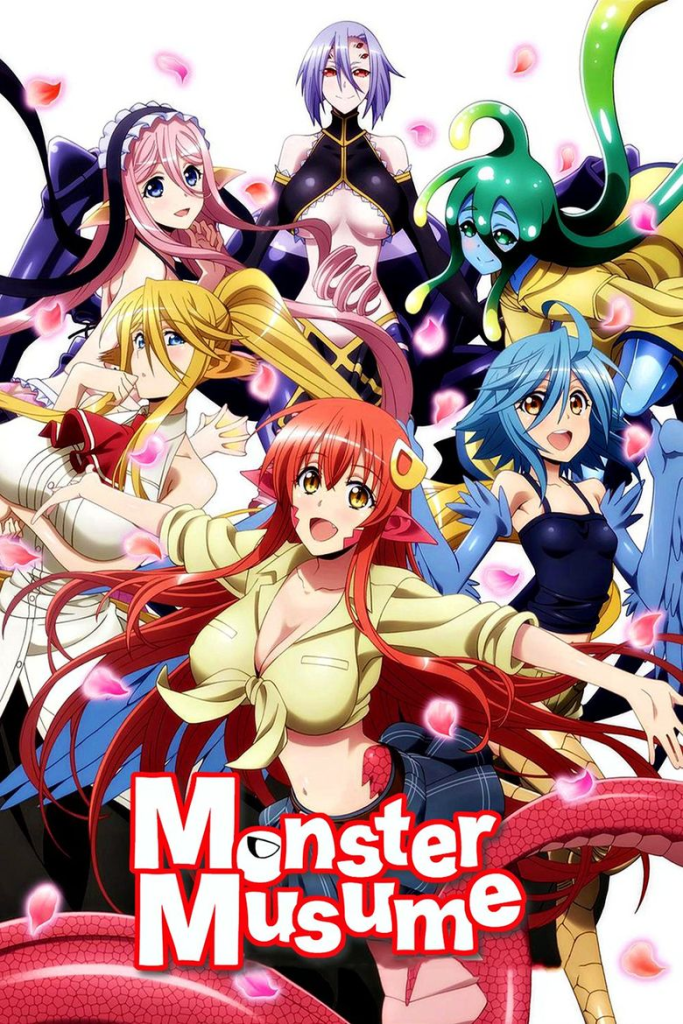
A harem series like High School DxD but appealing to even more fetishes while also putting the protagonist in a tricky situation like Shimoneta, though with a different context. The plot of this horny adjacent series is that monster girls of various mythical origins are enrolled in a program not dissimilar from foreign exchange student programs in real life and one of the people who is accidented/voluntold into the program is regular human person No. 4986 Kimihito Kurusu.

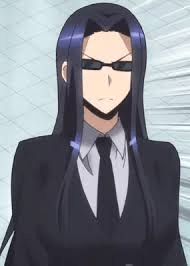
One of the coordinators, Agent Smith, mistakenly sends a lamia (snake girl) Miia to his house to take care of her under the the circumstances that they refrain from conflict or copulation. Easy rules for Kurusu to follow considering the consequences, but as the series goes on and more and more monster girls share a roof with the man, his physical restraints are put to the test seeing as these women are physically capable of bending him like straw. More than once, he’s been grievously injured through accidents as none of the girls are even remotely aware of their gap in human endurance and their own strength.

Basically, it’s the equivalent of swapping Kratos, a character of pure strength and raw anger with Lester the Unlikely from his titular game. Kurusu exists in a world where monster girls damage him even without the promise or threat of snu snu, and yet, he’s not that kind of guy to engage in his temptations. Using Okuma and Issei as a scale of unfortunate to pervy, Kurusu is definitely closer to Okuma, yet we can put in a different category for him specifically seeing as how he doesn’t exactly live to fulfill is silly desires. He’s a blank slate of sorts that the viewer may put themselves in the shoes of.

Monster Musume has the makings of a horror show without the horror. It’s a harem romcom slice of life with horror elements featuring a protagonist who simply wants to live the most normal life allowed by this society, but is forced to share not only this world, but his dwelling with a harem of monster girls he’s forbidden from touching intimately because the agent that f[piano]ked him is functionally identical to Aqua from KonoSuba.

Don’t let the Matrix reference fool you, she’s not as efficient as those clones. But she does look good in a suit.

Another thing worth mentioning is that while the other two series in this post began as light novels, Monster Musume is a manga first, with a spin off light novel series that also got an anime adaptation: Monster Girl Doctor.

Take these three as my recommendations for when you think there’s too much wholesomeness to go around and not enough lewdness. There’s the possibility of getting muscled by the thirstiest girl in the world whilst on a crusade to curtail censorship; a harem of lovely ladies whose tits shake even when still; and a harem of lovely mythical monster ladies who’d each be wife material all their own if it wasn’t for the rules.

Whatever pirate site you watch your anime on (don’t worry, your secret is safe with me), give these all a watch if you haven’t done so already. And if you’ve seen them, see them again! Do it!!